Tag: Visiting Rehoboth Beach DE

Lewes Life Saving Station & Museum                                                            2 Shipcarpenter Street                                                                        Lewes, DE 19958

Lewes Life Saving Station & Museum 2 Shipcarpenter Street Lewes, DE 19958

Lewes Life Saving Station & Museum

2 Shipcarpenter Street

Lewes, DE. 19958

(302) 645-7670

Open: Sunday-Tuesday Closed/Wednesday-Saturday 10:00am-4:00pm (In Season April 1st-October 11th-closed the rest of the year)

Admission: Free but a $5.00 donation is appreciated

My review on TripAdvisor:

https://www.tripadvisor.com/ShowUserReviews-g34028-d17640480-r1060547919-Lewes_Life_Saving_Station_Museum-Lewes_Delaware.html?m=19905

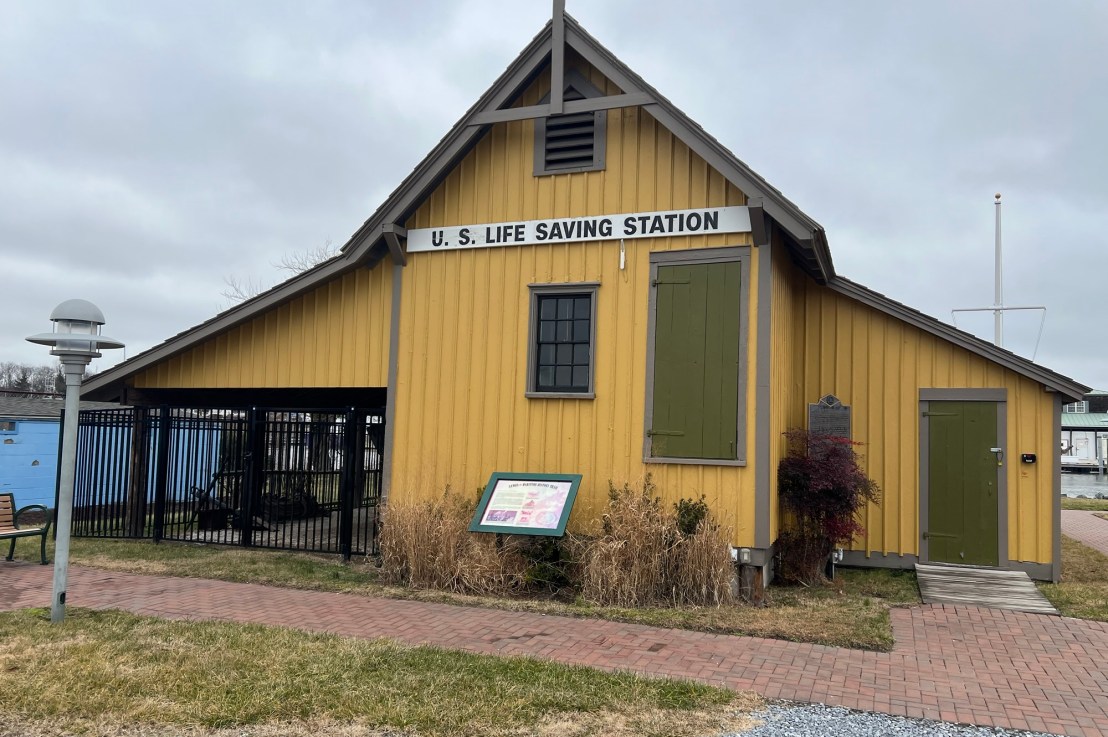
The back of the Lewes Lifeguard Station Museum
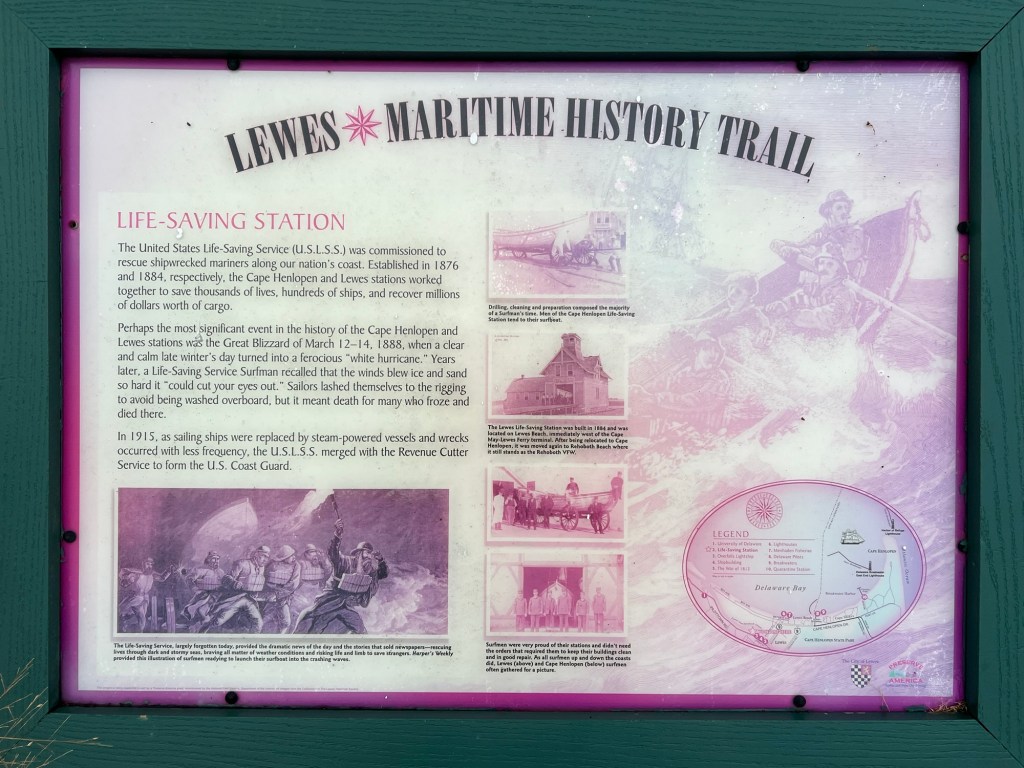
The description sign up front

I recently visited Lewes, DE for ‘Maritime Day’ by the harbor and there were a lot of interesting booths on the watersheds, environmental agencies that discussed their purpose with harbor issues and what the town of Lewes does for the environment.
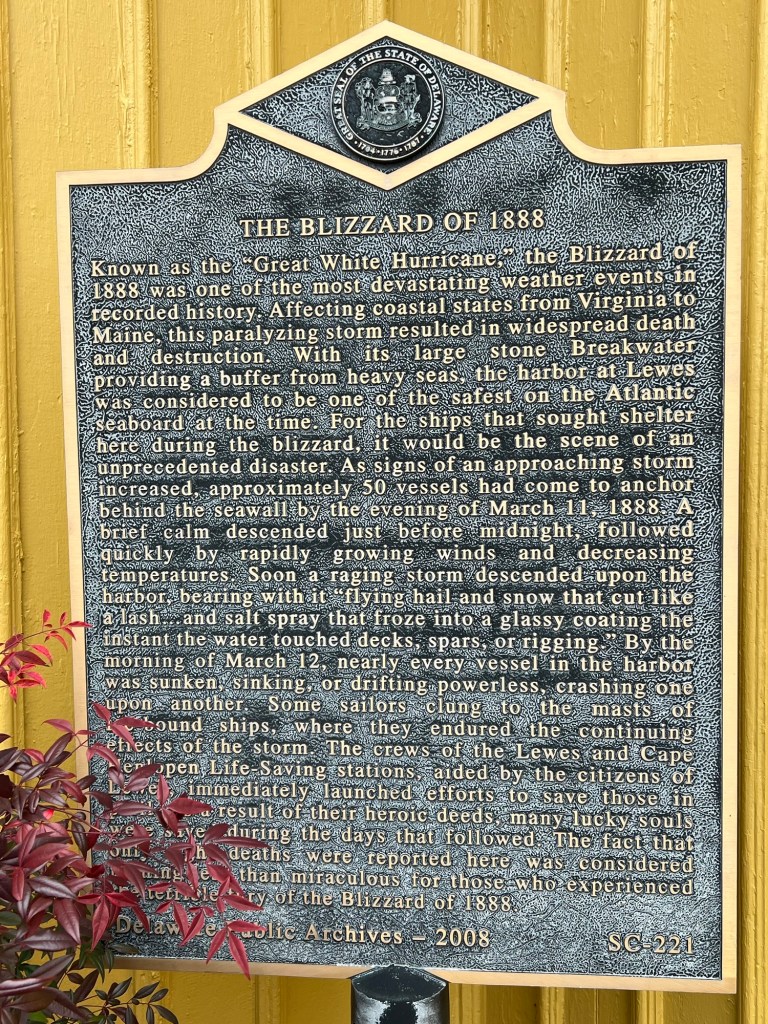
The historic Blizzard from 1888

History of the Lewes Life Saving Station & Museum:

(From Historic Lewes.com)

It was also a busy station, guarding both the mouth of Delaware Bay and the protected waters created by the massive breakwaters of the National Harbor of Refuge. Its string of Keepers and their six- or seven-man crews of Surfmen enacted scores of rescues through the years and in particular won great praise for their tireless heroics during the Great White Hurricane of 1888, when they pulled scores of sailors from the frigid waters and iced-over hulks of wrecked vessels to safety.
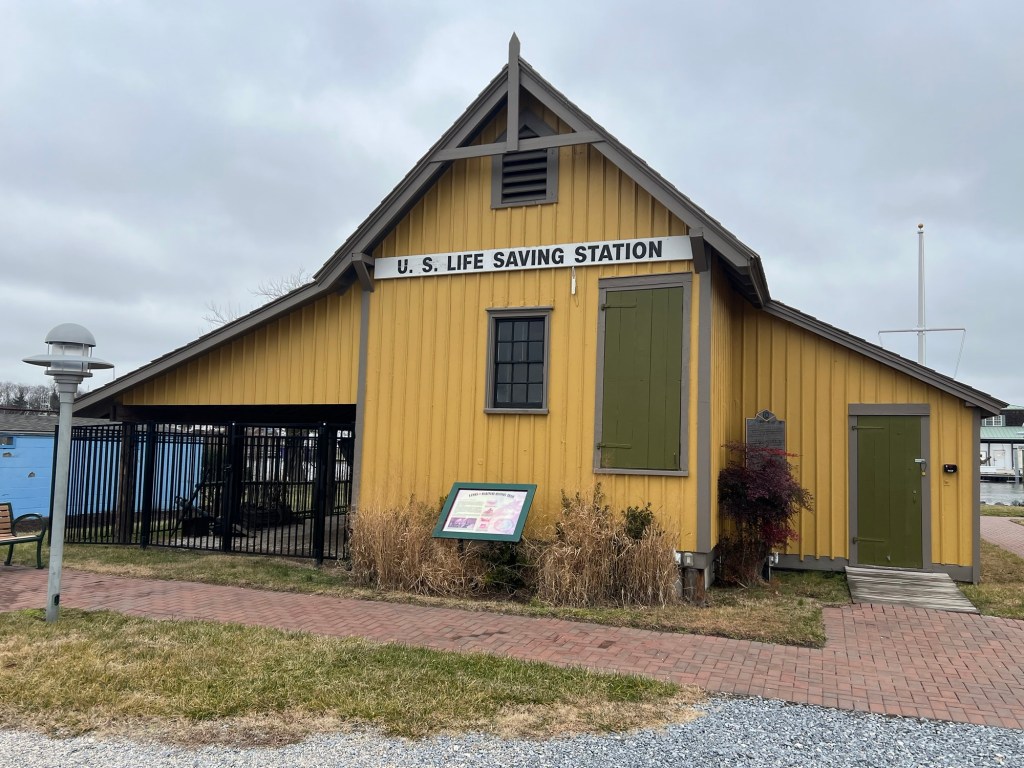
The front of the museum

The History of the Lewes Lifeguard Museum:

(From the Historic Lewes.com)

The United States Life-Saving Service (USLSS) protected the American coast and saved lives in peril at sea from 1871 until 1915, when it became a part of the new United States Coast Guard (USCG). This incredible humanitarian mission came to Lewes in 1884, making it the fourth of six stations to be established in Delaware. Lewes was among the most desirable stations for the Keepers and Surfmen who manned it, with its original location on the site of the present-day Cape May-Lewes Ferry Terminal placing it not far from town and therefore civilization.

The view of the harbor which has changed over the years

I spent my time touring the Lewes Lifeguard Museum, which is an interesting little museum on the history of life saving along the Delaware coast. The museum’s artifacts show some of the earliest and innovative forms of rescue equipment from before the Civil War. This was the precursor to the United States Coast Guard.

The inside of the museum

The lower part of the museum contained most of the equipment, items like rescue ropes, wenches, rescue apparatus, lanterns and uniforms like jackets and boots.

Pulled and equipment used to rescue stranded people

History of the Lewes Historical Museum:

(Historic Lewes.com)

The United States Coast Guard maintained the Station Lewes from 1915 until 1969, when it was closed, declared surplus, and sold. The original main station building was relocated numerous times and still stands today, heavily modified, as the Rehoboth Beach VFW. The Boat House preserved by Historic Lewes, a unique 1884 addition to the USLSS station intended to launch lifeboats on a marine railway directly into the harbor, was acquired from the Pilots’ Association of the Bay & River Delaware in 1979 and moved to its present home at Canalfront Park. It stands proudly beside the Lightship OVERFALLS (LV-118), together commemorating the nation’s and community’s efforts to preserve life on hazardous waters.

The bullies and wenches used by the men

Information in the Lewes Life Saving Station

Biography of the men who worked there

Information on the Boat House

Some of the ropes and wenches used in the rescue procedures

On the other side of the building was the rescue boat the ‘Life Car’, a rudimentary form of rescue boat that the docents said was effective but clunky and hard to use. It shows how we have progressed in life saving.

The Life Car rescue unit

Information on the ‘Life Car’

The ‘Life Car’

The ores and other rescue equipment used

The small rope cannon

The ores

The rope equipment

The story of the ‘Great White Hurricane of March 1888’

The Men’s Dining area in the front of the building

There was no living area in the facility but a place to gather the team, eat and socialize when manning the station.

History of Lewes Lifeguard Museum:

(From the Lewes Lifeguard.com)

Guests visiting the USLSS Boat House today will find it furnished just as Keeper John Clampitt and his courageous Surfmen left it on March 12, 1888, as they pushed out into the roaring gale and whipping snow for their finest hours. It also features a display of early life-saving equipment, including the rope-and-pulley Breeches Buoy rescue system, a steel life-car, and a rare 1887 Long Branch, New Jersey-style surfboat under restoration.

The dining area and the schedule

The dining room table

The Lewes Life Saving Station & Museum is an example of early beach and shipping rescue at the East Coast Shore. It also shows the daily life of these brave men and how lonely and dangerous this job could be. It shows how times have progressed and how they have stayed the same. To save people and property.

Rehoboth Beach Museum/Rehoboth Beach Historical Society                                                  511 Rehoboth Avenue                                                      Rehoboth Beach, DE 19971

Rehoboth Beach Museum/Rehoboth Beach Historical Society 511 Rehoboth Avenue Rehoboth Beach, DE 19971

Rehoboth Beach Museum/Rehoboth Beach Historical Society

511 Rehoboth Avenue

Rehoboth Beach, DE 19971

(302) 227-7310

info@rehobothbeachmuseum.org

http://www.rehobothbeachmuseum.org

http://www.rehobothbeachmuseum.org/

Open:

Memorial Day through October 31st: Monday-Friday-10:00am-4:00pm/Saturday and Sunday-11:00am-3:00pm

November 1st through Memorial Day: Friday-10:00am-4:00pm/Saturday & Sunday-11:00am-3:00pm

Closed: Christmas Eve through New Year’s Day

Fee: Please make a donation

TripAdvisor Review:

https://www.tripadvisor.com/Attraction_Review-g34048-d1488361-Reviews-Rehoboth_Beach_Museum-Rehoboth_Beach_Delaware.html?m=19905

Rehoboth Beach Museum IV

Don’t miss this recently reopened and renovated museum by the shore. The Rehoboth Beach Museum is a treasure trove of artifacts on the history of the resort from a Methodist camp to modern times.

The Rehoboth Beach Museum 511 Rehoboth Avenue

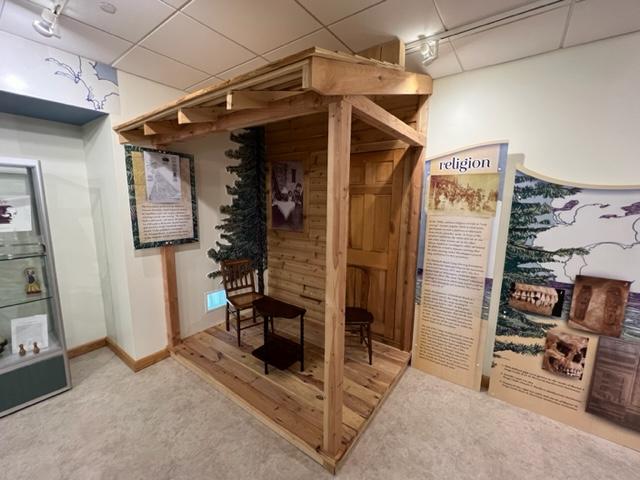
On the first floor, there are displays of early Native American artifacts with the history of the Native tribes that lived in the area. Take some time to look over how the tribes lived in the area and the influence they had before Rehoboth Beach became a Methodist Camp.

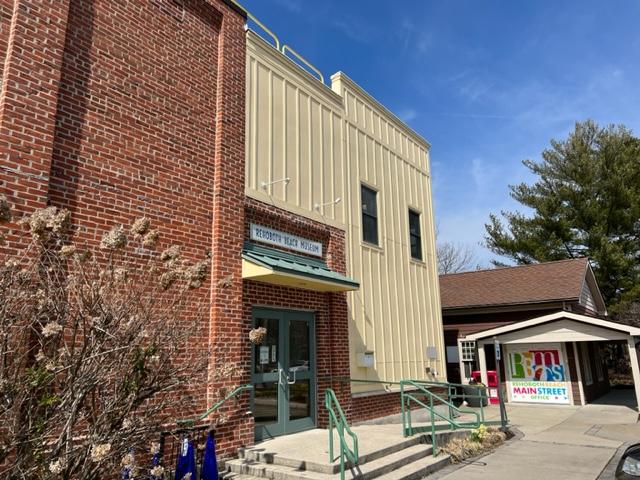
The entrance of the museum

There is the history of the Methodist camps and as an early Victorian resort. 

The front gallery of the Rehoboth Beach Museum and its various displays

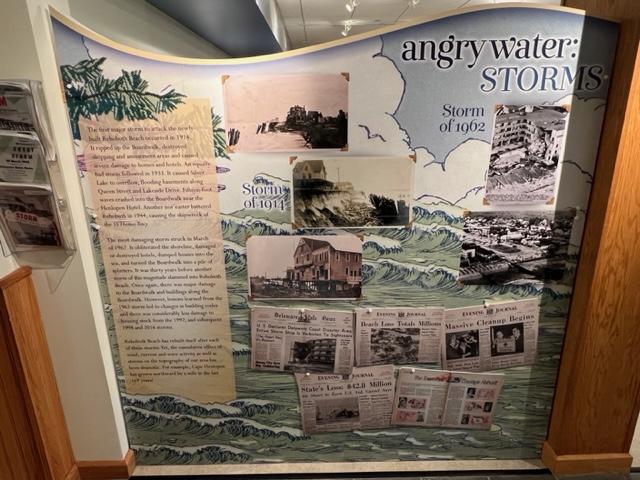
There are maps of the set up of the camps, how the resort developed from a Methodist Camp to the growth of the hotels and amusement areas. They also describe the growth of the Boardwalk and how storms over the years shaped the resort and rebuilding period.

Bathing Suits from the turn of the last century

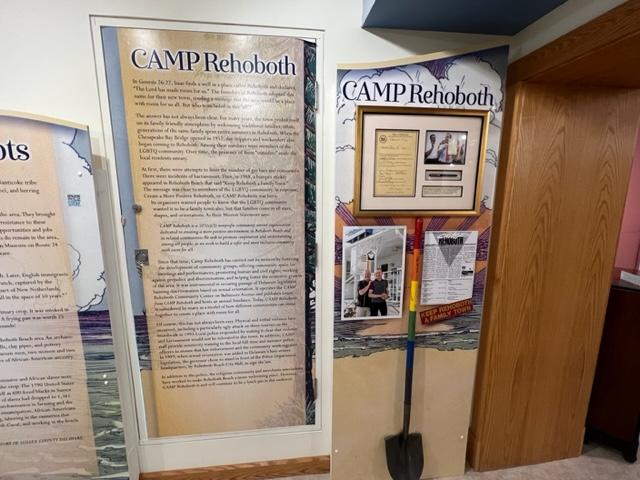
There are all sorts of items such as old post cards, bathing suits, beach items like shovels and pails, amusement items, historical items from all eras of the resorts including hotel and restaurant information and even the history of the LGBT community with the history of Camp Rehoboth.

Rehoboth Beach started as a Mormon Retreat

Camp Rehoboth has shown how much the resort has changed to include everyone

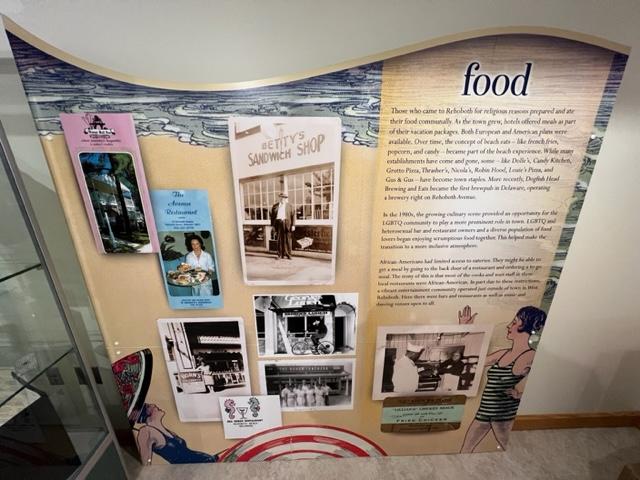
The museum also showcased the restaurants that once dotted the town, hotels that have since disappeared but left their dinnerware, menus and the events that once happened there. The development from a Methodist Camp to resort for the Philly and Washington DC crowd grew very quickly with the popularity of sunbathing and ocean swimming. As the hotels came, so did the restaurants and amusement areas. Rehoboth Beach morphed from a religious colony to one of family please and recreation.

Sand buckets at the Rehoboth Beach Museum

The growth of hotels in the area

The restaurant and food service industry grew as well to cater to the hungry crowds

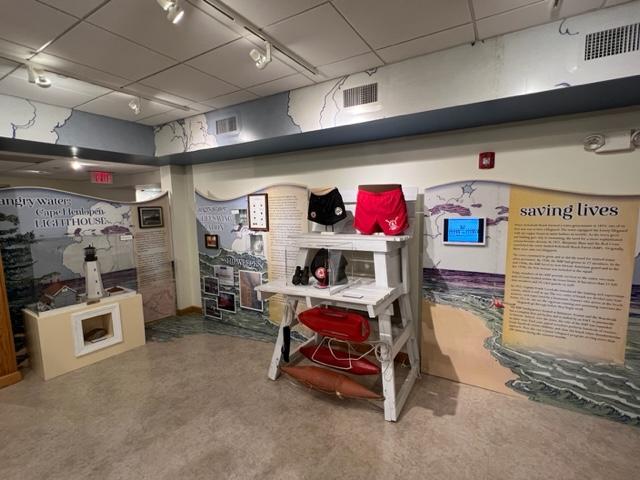
There was also a nice display and video on the Rehoboth Beach Rescue Squad and the development of the lifeguards that watch over the beaches. They showed the various squads over the last fifty years and it was interesting to see how many of them came back year after year.

The top floor is for special exhibits and when I was visiting there, the museum was displaying a needle point exhibition on early works and ‘starter kits’, which young girls would do to practice their needlepoint. There is a current exhibition on ‘Sea life by the Shore’.

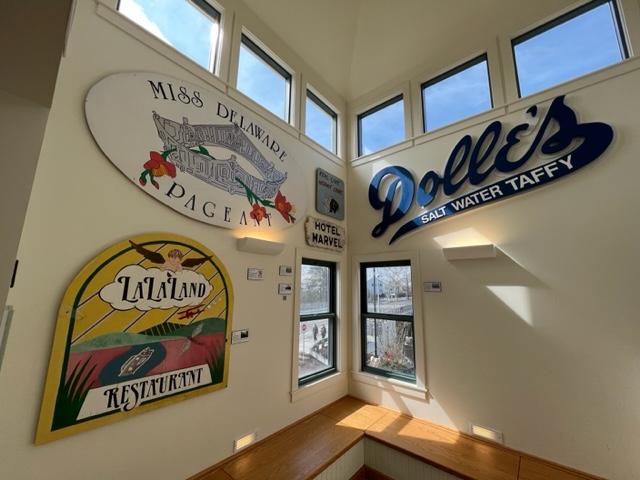
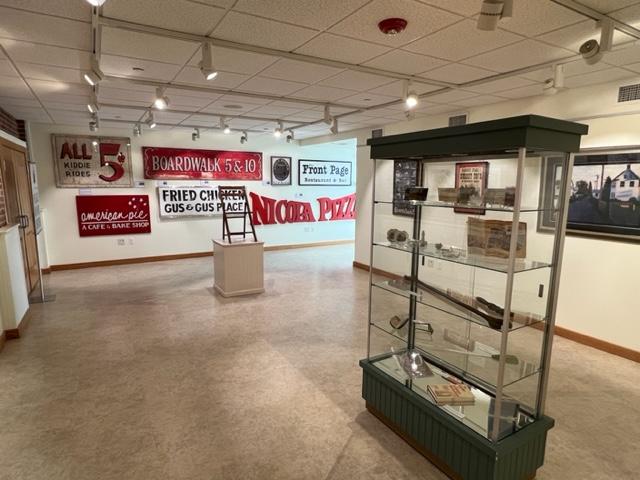
On recent visit, the museum displayed businesses of ‘Rehoboth Beach Past and Present’. It had a lot of old signs from businesses that have been in the resort for years.

The signs of the businesses in Rehoboth Beach DE

The second floor displays

A recent exhibition showed the disastrous “1962 Nor’easter” that destroyed most of the shoreline, all the boardwalk businesses including the Boardwalk and how the town rebuilt quickly to open by Memorial Day that year. Anything that had been along the coastline had been destroyed in this three day period in March of 1962. The Boardwalk looked like matchsticks.

The storms that have hit the resort

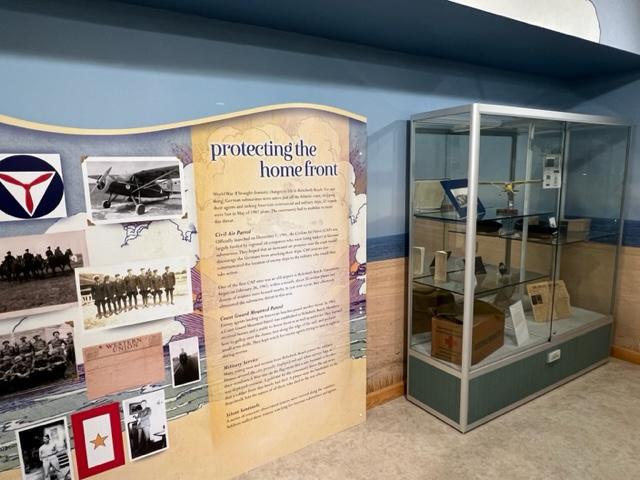
The museum also discusses the people who make Rehoboth Beach their home. This covers regular citizens who live here on a daily basis and tells their story. With the growth of the community so did civic minded people and people who represented the town during the wars. It has a nice display on the high school students and their participation in Rehoboth Beach.

The Military display

The High School display

They offer exhibits, walking and bus tours, programs for adults and children, membership benefits and a gift shop.

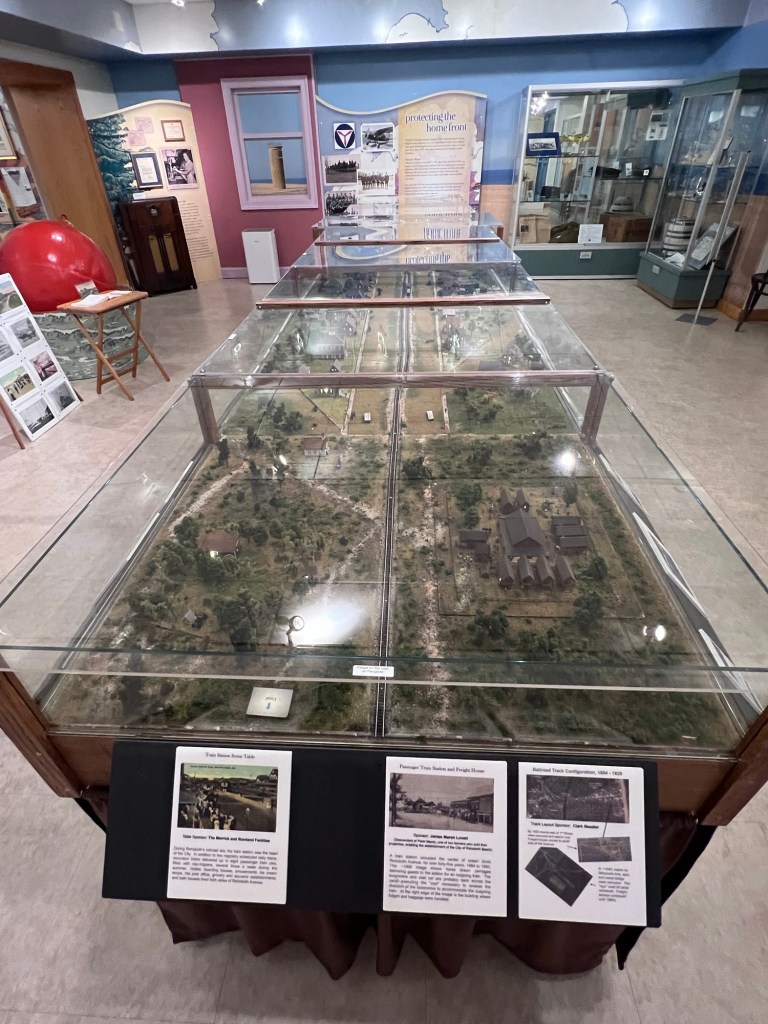
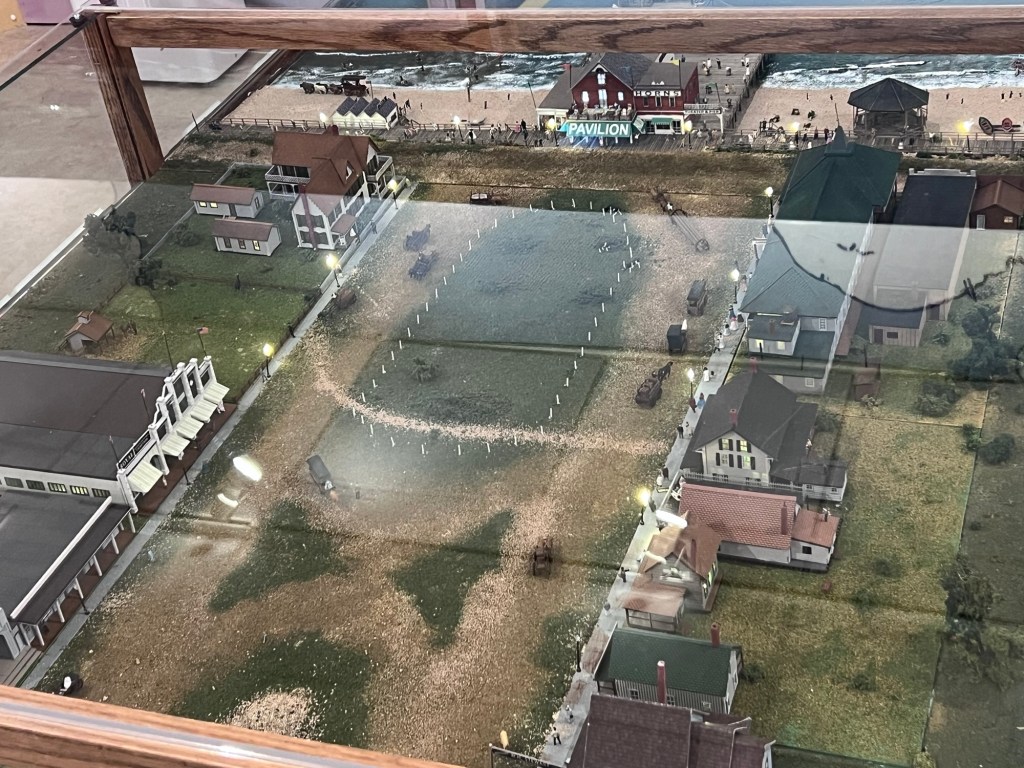
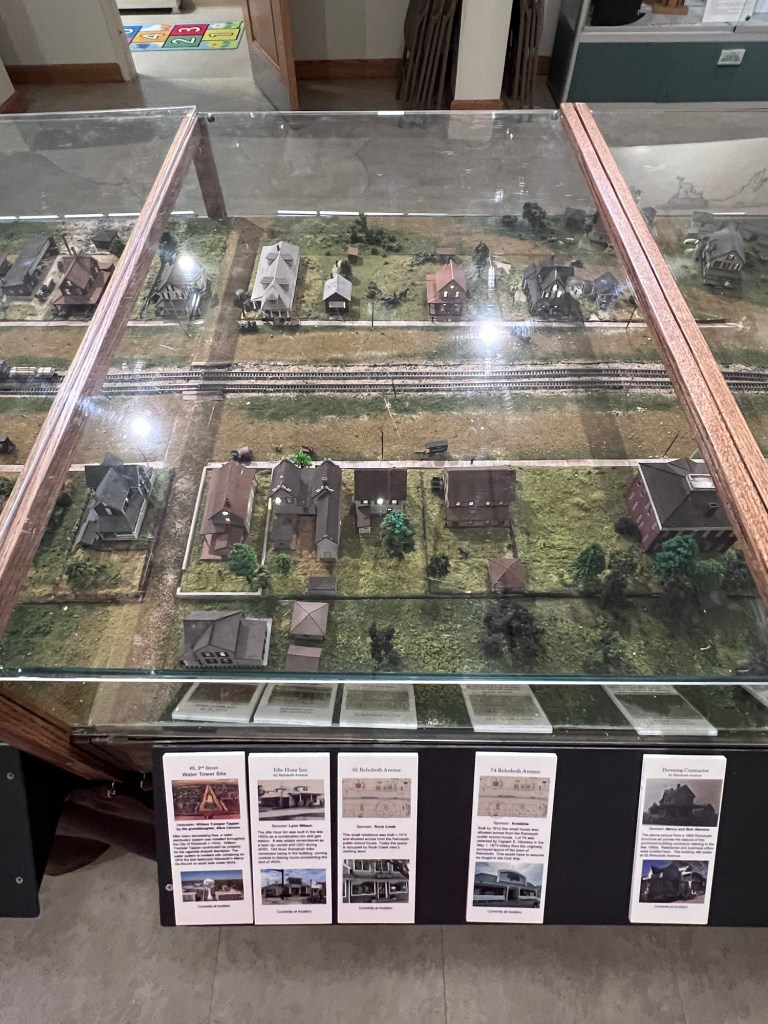
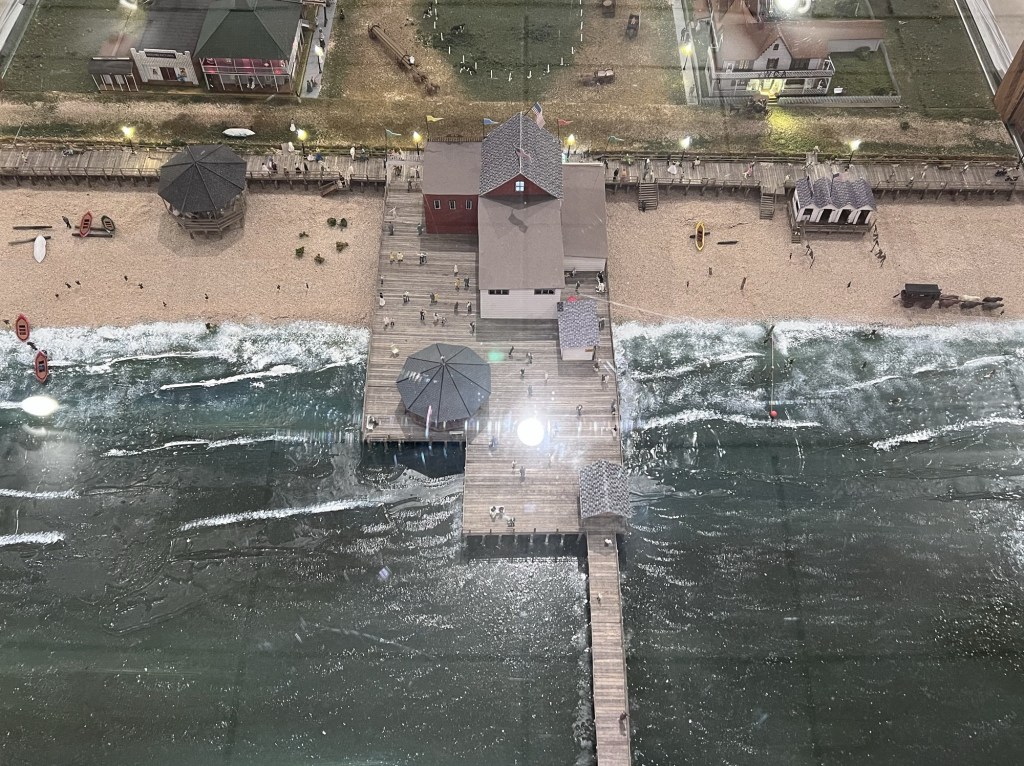
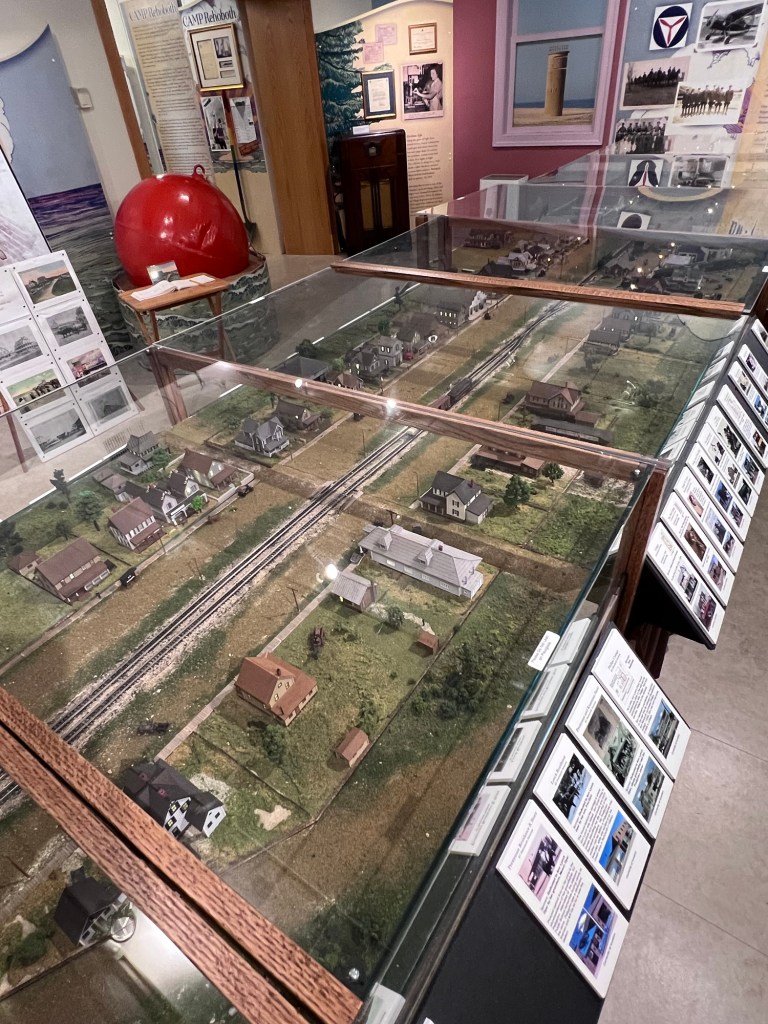
One of the newest displays that the museum is promoting is the diorama of Downtown Rehoboth Beach during the turn of the last century complete with lights and sounds and props moving.

The diorama at the Rehoboth Beach Historical Society

The details of the old beach community

The old homes that used to line the downtown

The very end of the road that faced the ocean

The diorama is a very nice addition to the museum collection

Several long time businesses closed in the downtown, Royal Treat Restaurant and Carlton Clothing and both businesses donated a lot of artifacts and family items from their establishments.

Royal Treatment Restaurant menu

Items from the now closed family restaurant

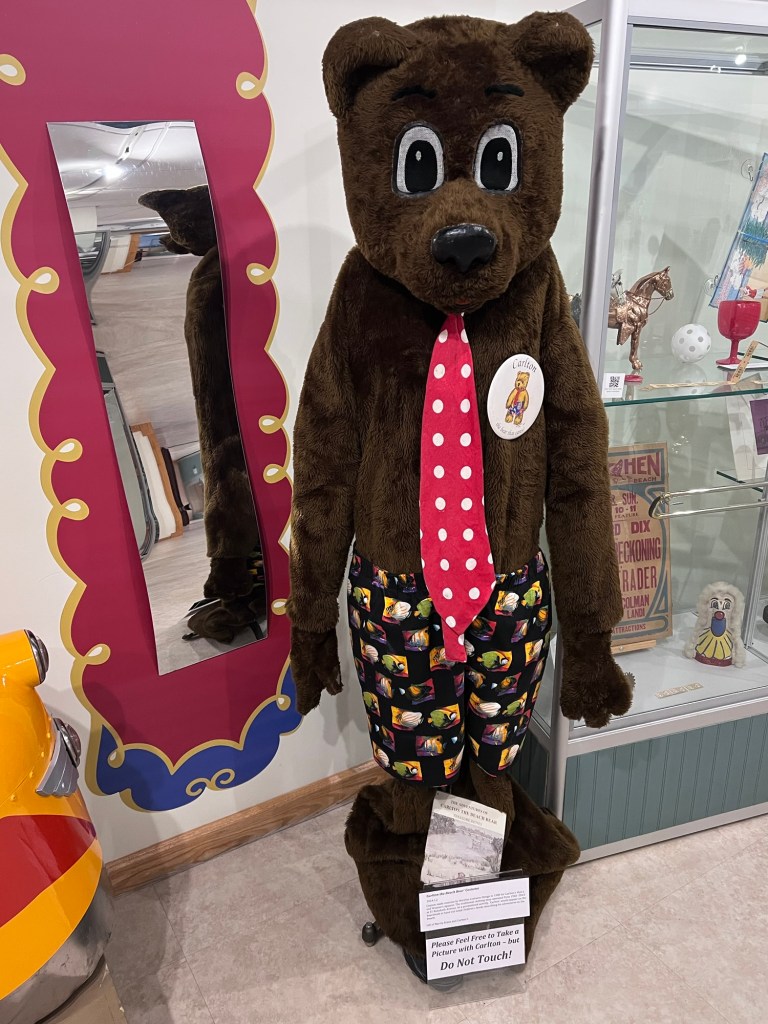
Carlton Clothing had been downtown since the 1960’s and they donated a lot of items to the collection. The bear costume was a promotional prop for the holiday season that Carlton’s used for families.

The Carlton Bear costume

The ‘Bear that Cares’ button on the bear

The sign for the display

Some new toys, games and prizes from the Boardwalk

There was also a lot of new family donations to the museum from families who lived in Rehoboth Beach. These items were part of local life in the area.

The new family donation display

The gift shop has a nice variety of items for sale that are beach themed. They sponsor the Annual Museum Beach Ball, a beach party on the first Saturday of August (Rehoboth Beach Museum).

The Gift Shop at the Rehoboth Beach Museum

The museum, founded in 1975,  collects, preserves and displays artifacts and memorabilia tracing the history of the town’s 19th century Camp Meeting origins through its development into today’s popular summer resort (Rehoboth Beach Museum).

The museum also has a nice gift shop to buy gifts from Rehoboth Beach as well as a selection of beach magazines and books. Check it out.

Think of becoming a Friend of the Rehoboth Beach Museum.

Outside the museum, there is an interesting park along the canal with walking paths and a small dock to walk down. On a nice to it is a great way to cool off.

Grove Park Dock

The path that leads to the dock

The view of the canal behind the museum

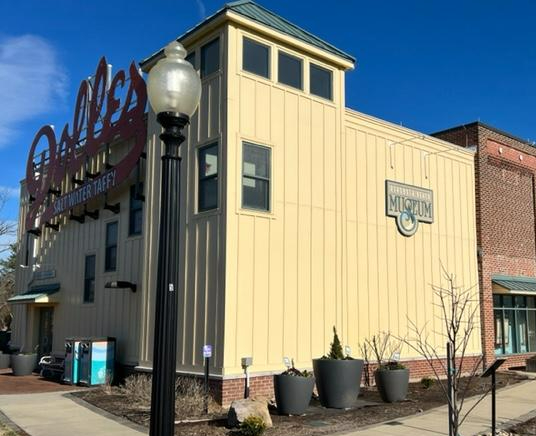
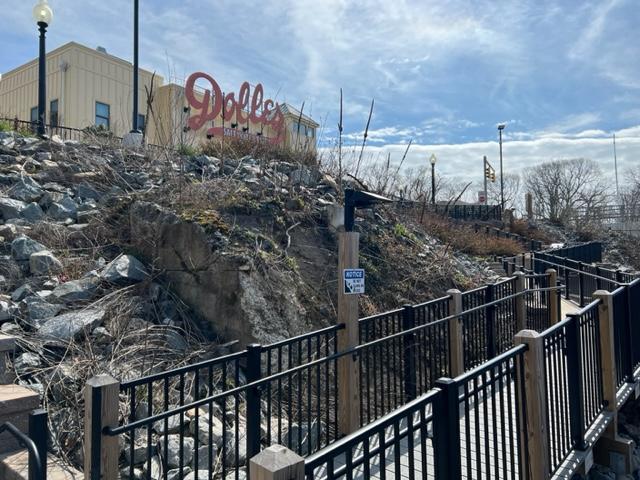
The iconic Dolles sign was moved here when the store closed on the Boardwalk