Tag: Small Museums of New Jersey

Zabriskie-Quackenbush House                                                421 Franklin Avenue                                                       Wyckoff, NJ 07481

Zabriskie-Quackenbush House 421 Franklin Avenue Wyckoff, NJ 07481

Zabriskie-Quackenbush House

421 Franklin Avenue

Wyckoff, NJ  07481

http://www.zabriskiehousewyckoffnj.org

https://www.wyckoff-nj.com/zabriskie-house-board-trustees

https://www.facebook.com/wyckoffzabriskiehouse

Open: Please check out their website for the dates when the house is open to the public.

TripAdvisor Review:

https://www.tripadvisor.com/Attraction_Review-g46945-d10359429-Reviews-The_Zabriskie_House-Wyckoff_New_Jersey.html?m=19905

I visited the Zabriskie House in May 2016 and 2019 for the Northwest Bergen History Coalition 6th Annual History Day. The house is left the way the last owner. Grace Zabriskie,  willed it to the town with all the original furnishings.
The historic signage

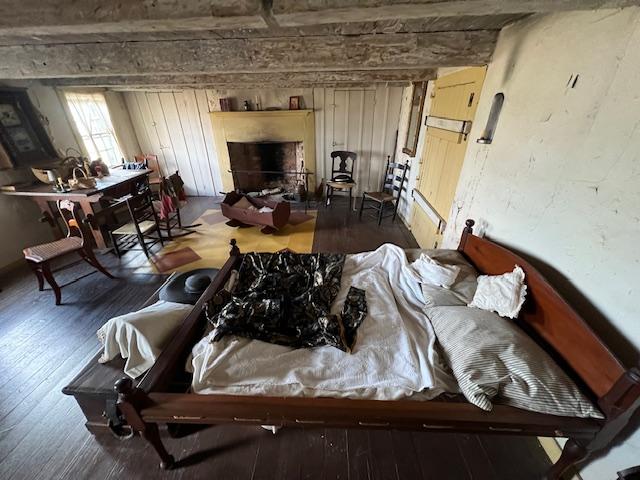
It has period furnishes, family heirlooms and antiques. The docents will take you on a tour of the house and show you where all the later additions were added and how they make up the whole house. As you walk through the house, you can see the difference in structure of the home plus how the last owner lived.
Zabriske House I

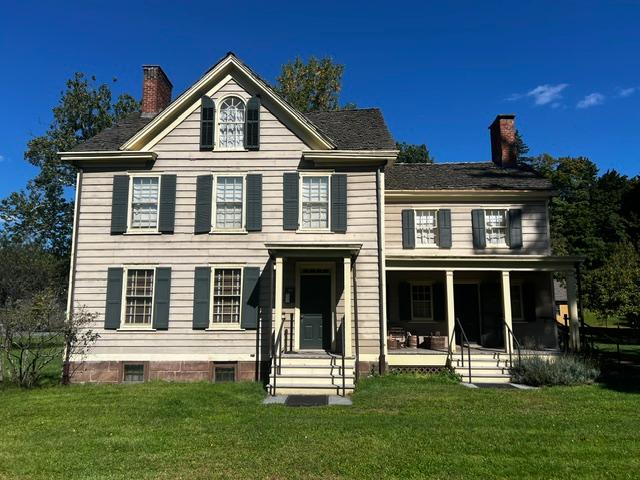
The Zabriske House in Wyckoff, NJ

Don’t miss touring the gardens in the Spring as Mrs. Zabriskie worked with a Botanist to plant the gardens to bloom at different times. She planted it in stages so that she could entertain in them but still treated the gardens similar to the house as if you had to walk into a room. It is very nice and colorful in the Spring.

I have visited the house during the Northwest Bergen History Day and I was able to take a lot of pictures of the gardens next to the house on a rather gloomy day. The gardens were in full bloom in the middle of spring and the rain added a layer of beauty to the flowers and flowering bushes that lined the paths. They did a nice job maintaining the house.

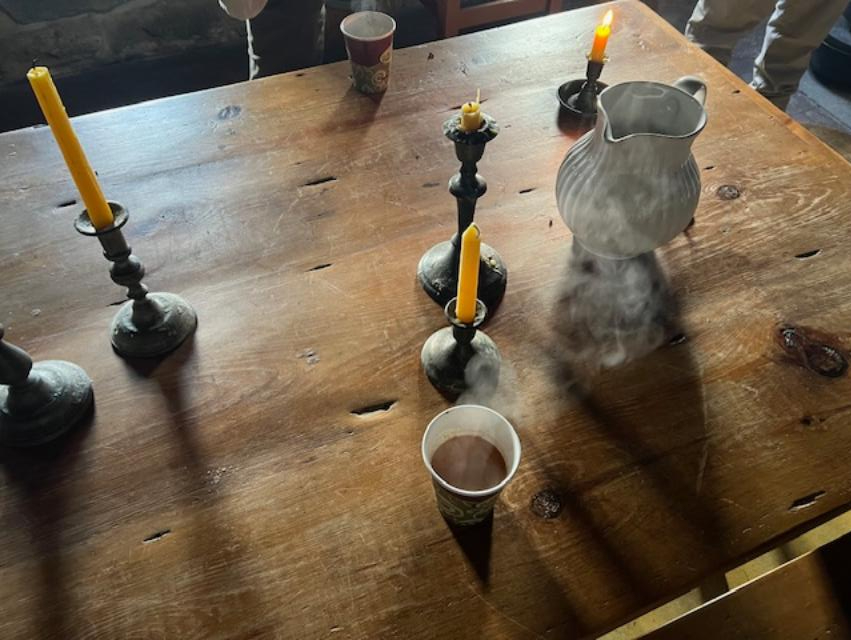
On the terrace there are people to guide you through the house and docents to take tours. The ladies had a nice reception laid out for all of the people who came to visit.

The Van Voorhees-Quackenbush-Zabriskie House in the Fall of 2022

The original stone structure of the Van Voorhees-Quackenbush-Zabriskie House was built in 1730 by William Van Voorhees. It is believed to be the oldest house in Wyckoff, NJ. In 1824, William’s son, Albert, completed a major addition to the house in the classically Dutch colonial style. The original structure then became the dining room (NWBHC).

The historic part of the house from the 1700’s

The entrance of the Zabriskie House

History of the House: (Taken from the Wyckoff History Page)

The Van Voorhees-Quackenbush-Zabriskie House has been a local landmark for over 275 years and is believed to be the oldest structure in the Town of Wyckoff, NJ. In 1720, William and John Van Voor Haze, yeoman of Bergen County, purchases 550 acres of land in what is now Wyckoff. The brothers were descended from Dutch settlers who emigrated from Holland in 1660 (Wyckoff History).

The historic part of the house

The first stone house was built circa 1730 by William. The land was cleared and the family farmed, raising table crops and staples such as grain, corn, potatoes and grapes. Over time, apple orchards and dairy farming became main occupations in the area. The Jersey Dutch were especially skilled at animal husbandry. They were considered the best farmers and gardeners in the American Colonies (Wyckoff History).

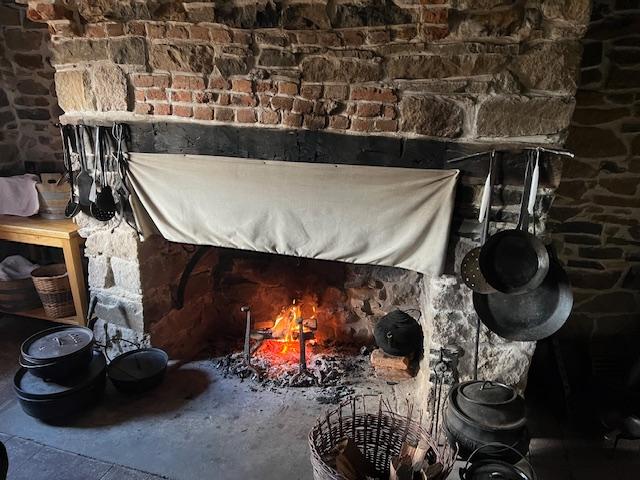
The historic kitchen in the original part of the house

There were only about 20 families in the area in 1775, when the house served as the village store and tavern. William’s son, Albert, served in the Militia in the Revolutionary War. The original stone structure later became the dining room of the house, when a large addition was added in 1824 by William’s son, Albert when he was 86 years old. He had just one son, John, but likely expanded the house for his nine grandchildren and their wives and children. Over the years, in addition to serving as a home, the house served as a not only home, tavern and store but also as a hotel and ballroom for area parties (Wyckoff History).

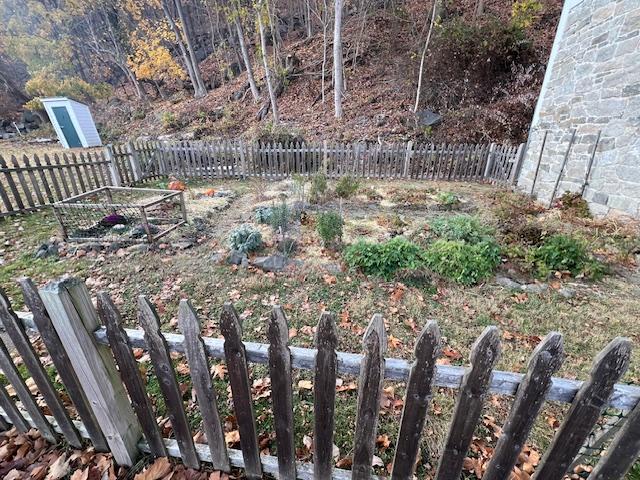
The gardens on the side of the house

The gardens in April 2023 on a gloomy day

The original 1730 house has a steeply pitched roof and overhanging eaves designed to protect the building and foundation from rain. It has a two piece “Dutch” door to allow ventilation while keeping animals outside. Inside is a five foot high fireplace which originally was the sole source of heat and was used for all cooking (Wyckoff History).

The pathways to the gardens to the side of the house

The lawn next to the house

The pathways next to the house

The pathway to the gardens

The much larger 1824 structure is three stories originally tall with a sub-basement. It contains four fire places, again for heat. It has two half and four quarter moon windows and two oval windows. There are four bedroom with pegs to hand clothes on (no closets then). Its exterior demonstrates the classic Dutch Gambrel roof with an upper 23 degree roof line and then a lower 45 degrees roof line. This beautiful design was developed by the Dutch in northern New Jersey and up the Hudson River and is found nowhere else in the world. The typical Dutch front porch has two benches on either side of the entrance (Wyckoff History).

The house in the Fall

The property left the Van Voorhees family in the mid-1800’s. In 1867, it was purchased by Uriah Quackenbush. Uriah and Keziah Quackenbush had one son, John, who died as a young adult. Grace Quackenbush was his only child and was two years old when he died. She was raised in the house by her grandparents, who left the property to her when they passed on, after Grace had married John Zabriskie (Wyckoff History).

The Zabriskie Pond across the street

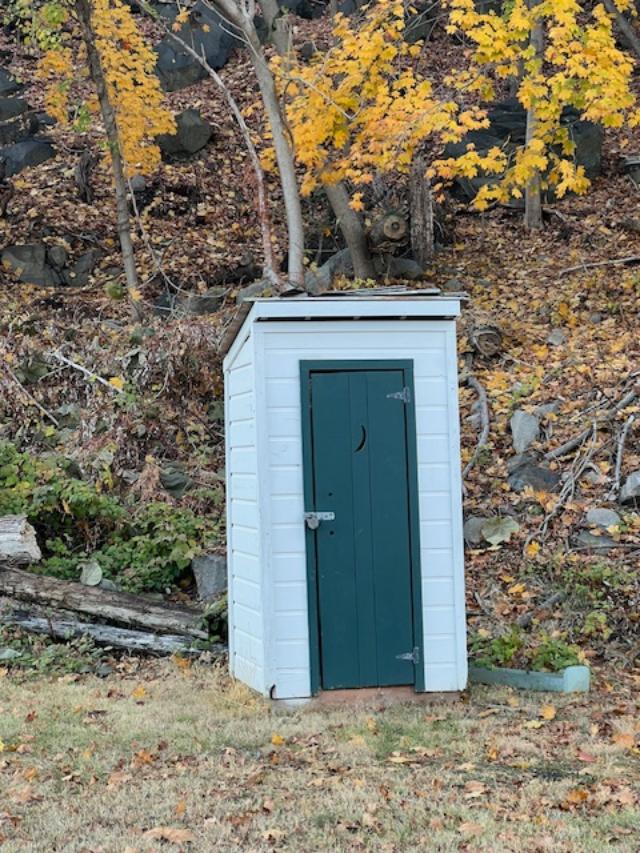
During her lifetime, Grace modernized the house (including adding an indoor bathroom) and restored the appearance of the home using authentic period antique furniture and furnishings. She also created three beautiful formal gardens on the landscaped property with her friend, Mrs. Elizabeth Spencer, a botany major (Wyckoff History).

The house is considered one of the finest examples of American architecture in northern New Jersey. The current House Museum has been called one of the finest in New Jersey. In 1973, Mrs. Grace Q. Zabriskie, who was the last resident, willed the house and its antique furnishings to the Township of Wyckoff, when she died that year. The “Zabriskie” house belongs to everyone in Wyckoff to enjoy (Wyckoff History).

The Zabriskie Pond in the Fall of 2022

Please check out their website for when the house is open to the public.

The African Art Museum of the SMA Fathers (Society of African Missions)                                                                             23 Bliss Avenue                                                                              Tenafly, NJ 07670

The African Art Museum of the SMA Fathers (Society of African Missions) 23 Bliss Avenue Tenafly, NJ 07670

The African Art Museum of the SMA Fathers (Society of African Missions)

23 Bliss Avenue

Tenafly, NJ  07670

(201) 894-8611

http://www.smafathers.org/museum

https://smafathers.org/museum/

https://smafathers.org/museum/about-us/

Open: 8:00am-5:00pm Seven Days a week

Please contact us for group tours.

Fee: Free admission but a donation is suggested.

TripAdvisor Review:

https://www.tripadvisor.com/Attraction_Review-g46863-d3967225-Reviews-African_Art_Museum_of_the_Society_of_African_Missions-Tenafly_New_Jersey.html?m=19905

I recently revisited the African Museum of Art on the SMA Father’s and on this trip really took my time to learn about the Mission and study the art in the various displays. Each country that the Mission is involved with is represented here with detailed information on the meaning of the art and its purpose. It is an interesting approach to understanding the culture of each of these countries.

The beautiful stained glass windows line the ceiling and walls and has a beautiful effect in the room on a sunny day.

The sculpture in the middle of the main hall

The History of the Museum:

(From the museum website)

This museum was established in 1980 and is one of the only rare few in the United States dedicated solely to the arts of Africa. Its permanent collections, exhibited on a rotating basis, offer a unique advantage in the study and research of sub-Saharan sculpture and painting, costumes, textiles and decorative arts, religion and folklore.

The main hall of the museum

The history of the Mission

The history of the Mission

The history of the Mission

The African Art Museum of the SMA Fathers is one of five museums around the world founded and maintained by the Society of African Missions, an International Roman Catholic missionary organization that serves the people of Africa.

The display case that line the main hall

The display case that line the main hall

The art works up close

The descriptions of the works

The display case that line the main hall

Some of the works up close

The description of the masks

The display case that line the main hall

The museum is the continued vision of SMA’s founder, Bishop Melchior de Marion Bresillac (1813-1859). The French-born clergyman urged his Society to respect and preserve the culture of the peoples they serve, the unique among the missionaries of his time. (This information is provided by the museum).

Some of the works being featured in the exhibition

Their current exhibitions is on the “Africanizing of Christian Art” which shows the 20th Century encounter between Catholic Christianity and the visual culture of the Yoruba, a prominent west African people of southwest Nigeria under the conditions of late colonization (This information provided by the museum).

The hallway off the main room

Linking the walls of the main room are wooden carved doors from a palace in Africa. The interesting detail work tells it own story.

The description of one of the doors

Panel One

Panel Two

Panel Three

Panel Four

The collection contains many works in the form of masks, textile work, religious figurines and decorative arts. Each display case shows a different theme in the art.

The works of art in the cases

The puppets in the case

The works of art lining the cases

The engaging Mask collection

The museum is the main hallway of the church. I found it a quiet place where you could really concentrate on the beauty of the art. It grounds are also nice to walk around in in the nice weather.

The Chapel just off the museum is interesting to visit. I wondered how many people came to serve here and how the service was performed.

The main chapel of the mission

The beautiful stained glass windows in the chapel

The museum is a true hidden gem of wonderful and interesting testimonial and contemporary art. An inspiring museum if you take the time to really enjoy it.

Little Red School House Museum/Lyndhurst Historical Society                                                  400 Riverside Avenue                                Lyndhurst, NJ 07071

Little Red School House Museum/Lyndhurst Historical Society 400 Riverside Avenue Lyndhurst, NJ 07071

Little Red School House Museum/Lyndhurst Historical Society

400 Riverside Avenue

Lyndhurst, NJ  07071

(201) 804-2513

http://www.lyndhursthistoricalsociety.org

https://www.facebook.com/LyndhurstHistoricalSociety/

Open: The Second and Fourth Sunday of the month from 2:00pm-4:00pm

TripAdvisor Review:

https://www.tripadvisor.com/Attraction_Review-g46586-d3207980-Reviews-Lyndhurst_Historical_Society_Little_Red_Schoolhouse-Lyndhurst_New_Jersey.html?m=19905

The Lyndhurst Historical Society at 400 Riverside Avenue

The Lyndhurst Historical Society is an interesting look into the early history of both the town of Lyndhurst, NJ and Bergen County. The museum shows how we moved from the agricultural era to the modern era in just one generation. The growth of the county really accelerated after the Civil War into the 1920’s.

Lyndhurst Schoolhouse grounds

The Lyndhurst Schoolhouse historic marker

A child’s statue in the gardens on the grounds of the museum.

The building itself is built on the original 1804 school house that was torn down for the newer one built in 1893. The unique part of the museum’s history is that the building was used as a school house for third graders in the town until 1980.

The museum’s school display

The museum is a treasure trove of memorabilia from the town’s past. One part of the museum is set up as an early school room with desks, blackboards and a whole teacher’s work area while the other side of the display is a nurses office for the kids.

The history of the school over the past hundred years.

The history and school pictures surrounded the display.

What is unique about the museum is that the original bell to call the children for school is still located on the top of the building and the bell can be accessed by the string in the coat room. They even let you ring the original school bell that has been in place all this time.

School nurse display

The original built in chalk boards exist with artwork that had been left on them from the 20’s that have now been preserved. What is interesting about them is that they had been covered up since the 1930’s and a child had drawn out in colored chalk two children’s fairy tales that have now been preserved. They had been hiding under the new chalkboard after the renovation for over fifty years.

The Little Red Riding Hood chalkboard drawing

The Three Bears chalkboard drawing

The other side of the floor plan is items from the 100th Anniversary of Lyndhurst. This had happened a few years earlier and the display is very prominent when you walk in. There is a lot of pride in this town.

The displays are related to the celebration with displays on businesses that have been in town for many years, Indian relics that were found in the town and memorabilia.  Even the basement bathrooms are from the 1920’s and still work!

Music display and heating the school house

The big exhibition in the museum was the history of the ‘Lyndhurst High School Marching Band’, its past events and the teachers who run the program now. They have a very talented Music Department.

The History of the Lyndhurst High School Marching Band

The other big display was the ‘Kingsland Explosion and Fire’ that had occurred over twenty years ago and it is part of the permanent collection. It was interesting to see how it happened, how it was put out by the fire department and the history of the company.

The Kingsland Explosion and Fire Exhibition

This was a new exhibition that the museum is featuring in the Winter and Spring of 2025 on the history of the Lyndhurst Fire Department. This had unique items from the fire service donated by firefighters from the Lyndhurst Fire Department:

‘The History of the Lyndhurst Fire Department’ exhibition

The exhibition on ‘The History of the Lyndhurst Fire Department’

This exhibition will on display through the Spring of 2025.

Lyndhurst Historical Society:

(from the museum website)

The Lyndhurst Historical Society is a private, non-profit organization dedicated to the preservation of local historic sites and the promotion of community pride in our history and traditions.

In 1984, a group of local citizens formed the Lyndhurst Historical Society. One of the Society’s early projects was to restore the “Little Red Schoolhouse” on Riverside Avenue and establish a museum in the schoolhouse for the exhibition of local history memorabilia.

The School Nurse cabinet in the schoolhouse

With community support as well as county and state grants, the Society’s goal to open the Schoolhouse Museum to the public was achieved in 1993.

The Society meets regularly on the third Wednesday of each month (except July and August) to…

*plan and present educational programs and workshops of historical interest.

*raise funds to meet the goals of the organization.

Active members and supporters are vital to the success and growth of the Lyndhurst Historical Society.

The history of the Lyndhurst Historical Society Museum

We welcome:

*those interested in membership.

*anyone wishing to volunteer time.

*offers of financial support (all memberships and donations are tax deductible in accordance with IRS regulations).

Lyndhurst Historical Society Museum grounds

Little Red Schoolhouse History:

(from the museum website)

A one room schoolhouse crowned by a bell, symbolizes a simpler time, 19th and early 20th century America.

In 1804, Jacob Van Winkle presented a strip of land to the school trustees for the construction of River Road School (“The Little Red Schoolhouse”). The yearly rent was one peppercorn if demanded. Thus was born the first known public school system of southern Bergen County. A subsequent building was erected in 1849. In 1893, the present school was built and used for classes until 1980.

Old Class pictures at the museum

The Township purchased the school in 1984. It was leased to the Lyndhurst Historical Society in order to preserve this landmark, now more than a century old, for future generations to appreciate and to use as a local museum.

Lyndhurst Historical Sites:

The Little Red Schoolhouse is one of three historic sites in Lyndhurst.

Just south of the Schoolhouse is the Jeremiah Yearance House, circa 1841. Years ago, teachers assigned to the School often boarded at the Yearance House during the week because the commute by train to their permanent homes would be too long.

One block north of the Schoolhouse is the Jacob Van Winkle House, built in 1797. Van Winkle presented the property for the Schoolhouse in 1804. River Road School is joined by the Van Winkle and Yearance Houses on both the National and New Jersey registries of historic places.

Historical Events & Trivia:

Did you know…

*Lyndhurst was once called Achter Kol?

*The town has three sites on both the New Jersey and National Historic Sites Registry?

*January 9, 2004 marked the 200th anniversary of the deeding of the land to the school house?

*Lewandowski Commons is named for the brothers killed in World War II?

*Palazzo Corner, built in 1905 and located at 262 Ridge Road, was used as the town’s first police state and court clerk’s office?

*The Jacob Van Winkle House, now the Masonic Club is the oldest building in Lyndhurst?

Events sponsored by the Lyndhurst Historical Society include:

*festivals

*re-enactments & historical portrayals

*cultural, artistic and musical presentations

*educational lectures

*bus and walking tours of Lyndhurst

Schoolhouse Museum Information:

The museum is located on the corner of Fern and Riverside Avenue, is open to the general public on the fourth Sundays of each month from 2:00pm to 4:00pm.

Group tours can be arranged at any time by reservation for schools, organizations and individuals. A visit includes a tour of the Schoolhouse, its exhibits and a presentation of local history by one of the Society’s docents. Call (201) 804-2513 for further information on museum tours and special events.

Disclaimer: The second part of the this information was taken directly from the Lyndhurst Historical Society’s pamphlet. The Little Red Schoolhouse is open from 2:00pm-4:00pm on the last Sunday of each month or by appointment only. Please plan accordingly.

In November of 2024, I had my Introduction to Business at Bergen Community College in Paramus, NJ create a Destination Tourism project for the museum. This is their project:

Here is the Blog on project:

It was going to be a tight project as we only had five weeks to pull it off and we had Thanksgiving Weekend break in the middle of the project. I created one less Team and gave them a fair amount of work to develop and then we started the project.

I had an extra credit Team Field trip to the museum that Sunday and about a third of the students showed up. The museum is a one room schoolhouse so it is easy to tour.

Team members touring the museum on the extra credit trip

Touring and planning ideas in the museum’s backyard and gardens

The next week during class time, I took the students on a more formal tour and lecture on the museum where they met with the Museum Board, their volunteers and it was time to ask questions and view the museum from the vantage point of how to we promote this museum and how can we bring people in from outside the Bergen County area.

First we met with the staff at the museum on class night

We started with a discussion of the museum, its history and its direction in the community. We also got to meet the Volunteer Board of the museum.

Then we toured the museum

The Kingsland Explosion Fire display

Going over the project steps with the Museum Board

Our Team picture with the Museum Board of the Lyndhurst Red Schoolhouse Museum

Here is the Marketing Team Project that was created by the students:

The next week on December 12th, 2024, the students presented the project to myself, the Board and members of the Lyndhurst Schoolhouse Museum and to parents and other invited guests. For a four week project, the students did a good job.

The Bergecco-Parc Corporate Website for the Lyndhurst Schoolhouse Museum Team:

https://littleredmuseum.wordpress.com/?_gl=11eisv45_gcl_au*MzA4MzYyMTAxLjE3MzMyNzg1MDU

The start of the Presentation that evening:

The start of the Team Presentation that evening

Video of the Presentation:

PowerPoint of the Presentation:

Team One starting their presentation

Team Two ordering their ideas to the museum board

Team Two presenting their Holiday events to the Board

Team Two presenting their Holiday events budgets

Team Three making their presentation

The Lyndhurst Schoolhouse Museum Team at the end of the presentation

At the end of the Presentation, we had a Q &A with the Board of the Museum, who really loved the ideas that the students came up with and how creative they were with such a small museum. The President even admitted to me that she, like all the other museums I worked with this semester, would miss having the students visiting and touring the museum. That made me feel good, that in some small way we made a difference.

The Blauvelt Art Museum                                   705 Kinderkamack Road                               Oradell, NJ 07649

The Blauvelt Art Museum 705 Kinderkamack Road Oradell, NJ 07649

The Blauvelt Art Museum

705 Kinderkamack Road

Oradell, NJ  07649

Phone: (201) 261-0012

(w) blauveltartmuseum.com

(e) info@blauveltartmuseum.com

https://www.blauveltartmuseum.com/current.html

This interesting little ‘gem’ is located up on the hill next to Blauvelt Mansion and is easy to miss. You will see the signs as you drive past it.

Open: Wednesday, Thursday and Friday: 10:00am-4:00pm/Saturday and Sunday: 2:00pm-5:00pm

Fee: Free donations accepted

The Blauvelt Art Museum is funded by the Blauvelt-Demarest Foundation and is a member of the New Jersey Association of Museums, the Mid-Atlantic Association of Museums and the American Association of Museums.

TripAdvisor Review:

https://www.tripadvisor.com/Attraction_Review-g46706-d10628647-Reviews-Hiram_Blauvelt_Art_Museum-Oradell_New_Jersey.html?m=19905

The Blauvelt Art Museum was established in 1957 by the Blauvelt-Demarest Foundation, a legacy of the late Hiram Blauvelt, philanthropist, conservationist and collector. Through the contribution of his private wildlife art and big game collections, he hoped to promote the cultural value of wildlife art and the need for conservation of its subject and their habitats.

The fountain outside the museum

The entrance to the museum.

During the early part of the 20th Century, wildlife was believe to be abundant. Many dedicated conservationists, notable Theodore Roosevelt, gathered animals from their natural habitats for museums. The beauty of the animals could then be viewed by many.

The entrance to the museum.

Like Roosevelt, Hiram Blauvelt realized the value of his collection and wanted to share it with the public. It was his interest and desire to share his far ranging adventures, his stories of explorations and his collection of these animals. Hiram hoped to educate the coming generations to the diversity and beauty of the wildlife kingdom. He especially wanted to enlighten the public to the challenges we face to preserve the marvels of wildlife and their natural environments.

The interesting artwork by the carriage house of pelicans.

The Pelican art outside the museum.

Founded in 1957 as a natural history museum, it introduced students, scouts and youth groups to the need to support wildlife and habitats conservation. Visiting artists created drawings and paintings from close observations of the specimens.

Embracing Penguins outside the museum dedicated to Wildlife Art.

Twenty-five years later, the Board of Directors of the Blauvelt-Demarest Foundation decided that the original objectives would be best achieved by redesigning the museum to feature the works of contemporary wildlife artists, built on the artistic foundation of the Blauvelt’s early collection of works by Charles Livingston Bull (notably a resident of Oradell at one time), Carl Rungius and a complete Audubon Folio of birds of America.

The interesting wildlife artwork just outside the museum.

The Blauvelt Museum, located in an 1893 cedar shingle and turret carriage house, underwent extensive renovations to accommodate its new and expanded mission. The original carriage house was re-designed to include a large reception area, 4 mini galleries and museum offices, all with original materials from the historic building and preserving its aura.

The Blauvelt Art Museum lion statue “Fides et Virtus” by artist Aaron Yount outside the museum.

Four new galleries were added, providing wall space for mounting museum quality flatwork and generous room for pedestals to hold creative sculpture. Substantial artificial lighting is augmented by natural light from the north.

High on a hill overlooking the Hackensack River, the Oradell Reservoir and parklands to the east, the entrance to the museum is through a curving stone and slate terrace, framed by large oak trees and other indigenous foliage, which serves as a natural sculpture garden.

The open air museum just outside the museum itself dedicated to wildlife art.

Many of  its visitors today, accompanied by their children, are revisiting the museum which they first visited with their parents in past decades. The Blauvelt treasures their comments remarking on the greater beauties of its collections, while preserving the ambiance of their memories.

Blauvelt Museum II

The inside galleries of the museum (from their Facebook page).

Artist in Residence:

The Blauvelt Art Museum established an Artist-in-Residence program in 1985. Artists were selected on the basis of their artistic ability and promise and on their commitment to the museum’s mission for the need for conservation to protect wildlife and their habitats. The museum provides a furnished home for the artist on the museum property, including a studio, painting supplies, etc. Artist-in-Residence have given lectures, led round table discussions, visited schools and demonstrated painting and drawing techniques.

The Carriage House from the outside.

The Current Exhibition (2018):

Artist Brian Jarvi’s African Menagerie is showing right now and the collection has some very interesting and detailed pieces on Mr. Jarvi’s visits to Africa. Don’t miss this exhibition!

The Blauvelt Museum is on the Blauvelt-Demarest Estate.

Disclaimer: This information was take directly from the pamphlet provided by the Blauvelt Art Museum. Please call the museum for any changes to their time schedule and don’t miss the current exhibition.