The Wyckoff Historical Society was established to research, preserve and educate about the rich history of Wyckoff, NJ. The organization was founded in 1974 and is incorporated. Recent programs included a walking tour of Wyckoff.
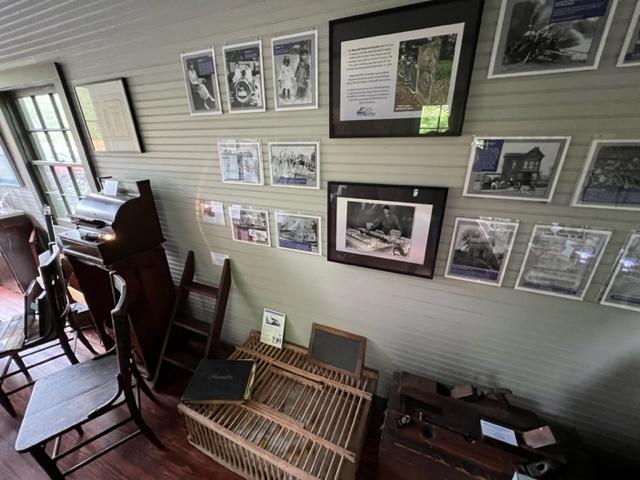
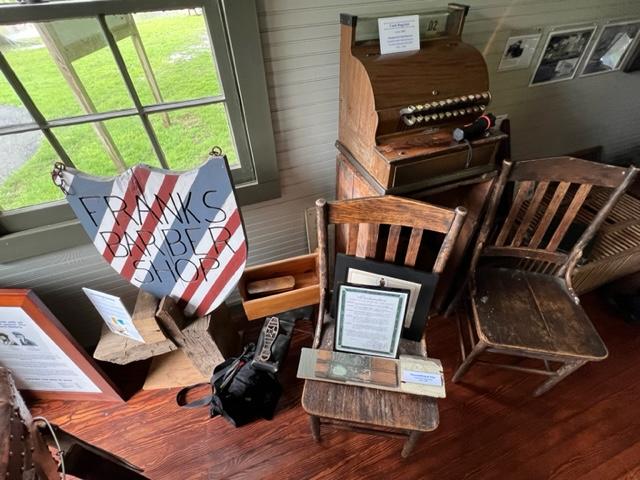
The Society recently restored the old Wyckoff barbershop that was donated to them and now sits on the town property by the Zabriskie Pond and the historic Zabriskie Home. Inside the building houses all sorts of local artifacts, farm tools and vintage furniture along with historic photos of the town of Wyckoff, NJ.
The little building sits right on the Zabriskie Pond.
The Zabriskie Pond in Wyckoff, NJ
History of the Museum:
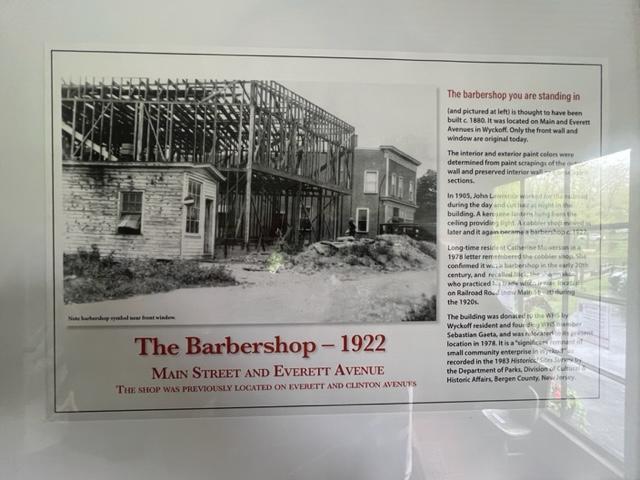
This 1890’s structure was recorded as being a barbershop in 1905 when it was owned by John Lawrence, who worked for the railroad by day and cut hair at night. It was also a cobbler shop for several years and again a barbershop. The building was on Main Street and Everett Avenue relocating to its current home and donated to the Wyckoff Historical Society by resident and member, Sebastian Gaeta.
The farming display at the Barbershop Museum
The history of the building
The building was neglected for several years and was restored several times, most recently in the summer of 2018 by the society including a full paint job of the interior and exterior and refinishing the bare floors.
The barber chair from the old barber shop
On display are artifacts from Russell Farms, a barber chair from longtime Wyckoff barber, Frank Muscara, a 1905 child’s dress, Lenape artifacts, a Hoosier cabinet and photographs.
The Native American Collection
Artifacts from Wyckoff’s past
Artifacts from old businesses in Wyckoff and the surrounding areas
The tiny museum has a display of its own history as a barbershop on the Main Street of Wyckoff, NJ and how the building served as a local center for its citizens. It was eventually moved as times changed and became the museum it is today telling the story of the Town of Wyckoff, NJ.
The history and movement of the building when it left its original location
The history of the barbershop
The history of the building and the barbershop and of Wyckoff, NJ
Where the building was located in Wyckoff, NJ
Please check their website for opening dates.
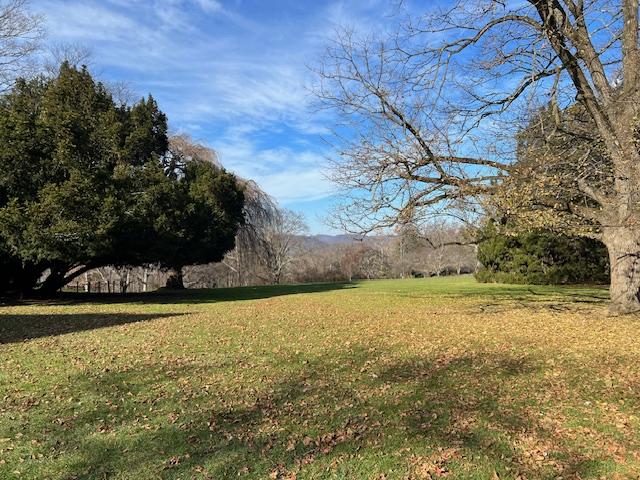
The beauty of the Zabriskie Pond on a fall day in 2022. The area is just beautiful.
The Zabriskie Pond in Wyckoff, NJ
Disclaimer: This information was taken directly from the Wyckoff Historical Society pamphlet and I give them full credit for the information. Please email them for more information.
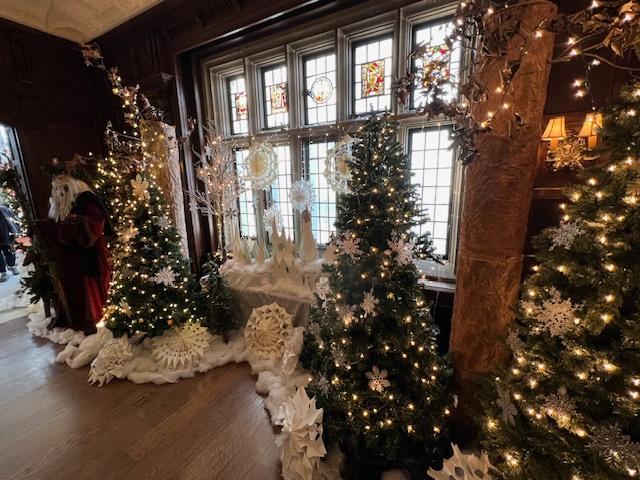
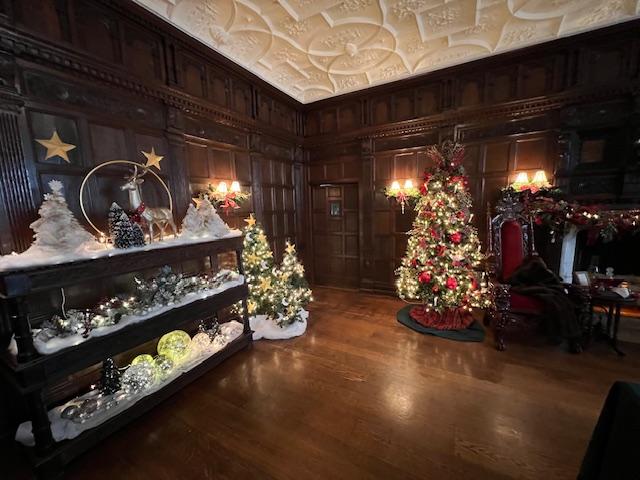
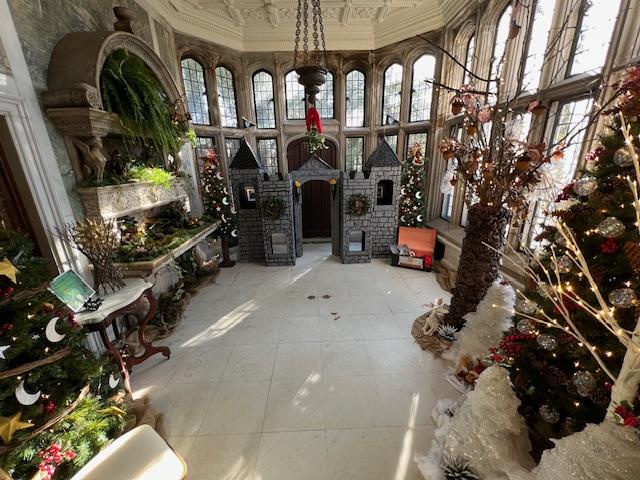
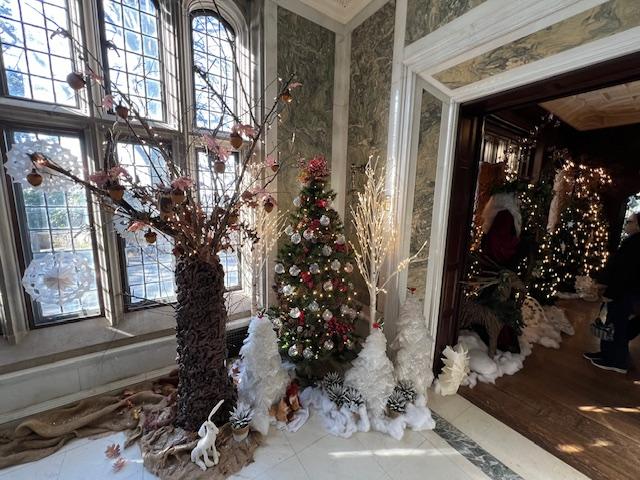
Note: The Skylands Manor is decorated for the holidays during the first week of December and only for one weekend as it used for a banquet facility the rest of the time and as a hotel. The first weekend of December is when local Gardening groups are assigned one room to decorate and they have one week to put it together, display their ideas and explain how they did it to the public.
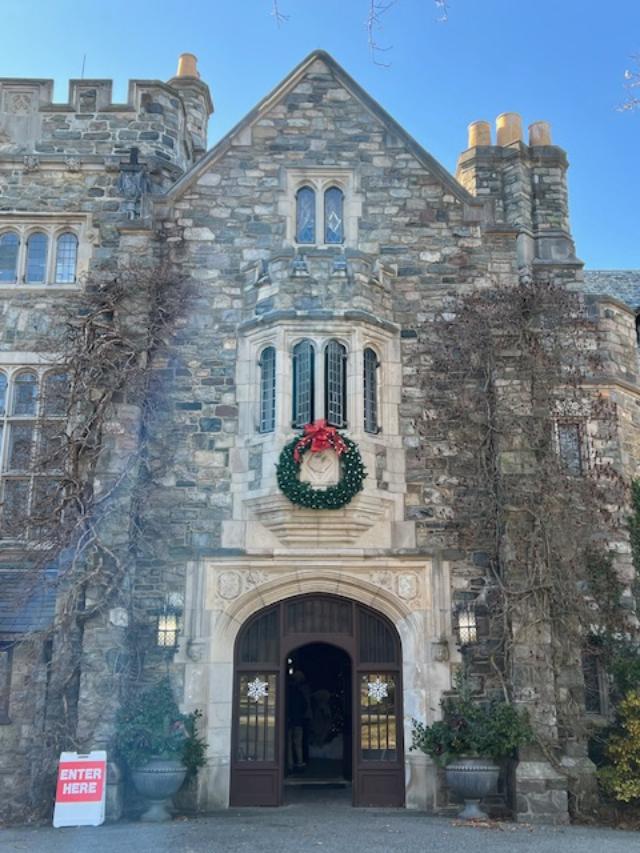
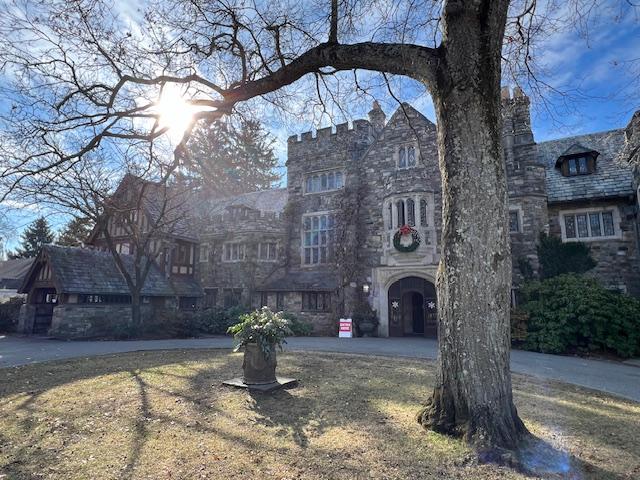
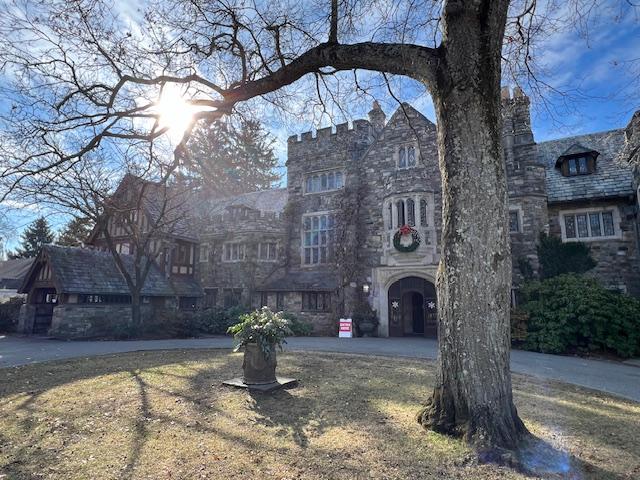
The front of the Skylands Manor during Christmas time.
The best day to go is the Thursday afternoon opening as it is the quietest day of the four day event with Saturday being the busiest. The best time on Thursday to come is in the morning.
In 2019, the decorations were not as elaborate as the previous two years. The snow storm before the event may have put a damper on a few of the groups decorating. Still the best day to visit the manor is Thursday afternoon as it is the quietest time and you can take the best pictures.
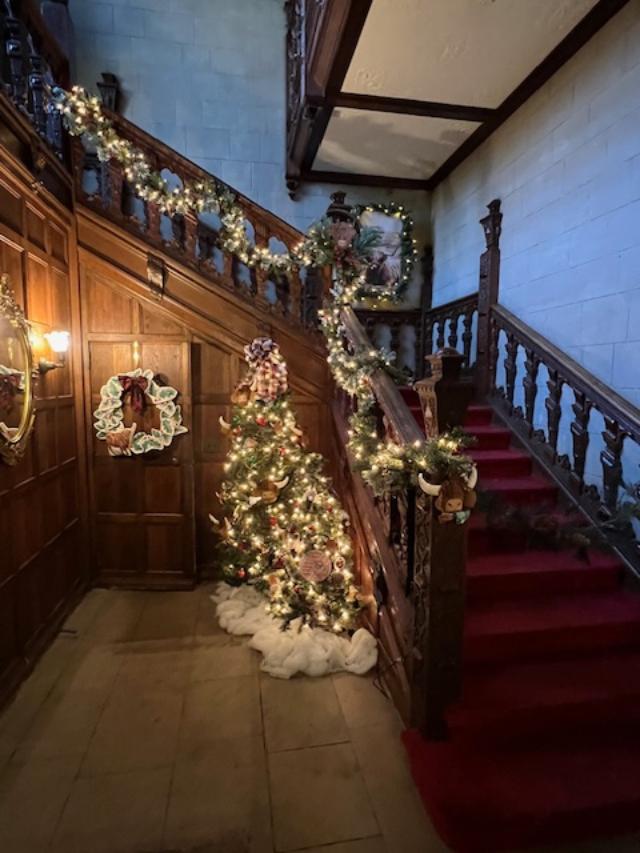
The two best rooms in the manor in 2019 were the Entrance Hall and Grand Staircase decorated by the Magnificent Seven, a group of volunteers whose theme was ‘The Secret Life of Gnomes’ and the trees and staircases were studded with gnomes, large and small, on the trees and wreathes surrounding the stairs.
The other room that was very impressive was the Center Hall whose theme was the “Enchanted Forest, full of little fairies and painted rocks and jeweled winged ornaments. When you looked at the detail work of the trees and table displays you could see the work that went into the decor. Each little fairy on the stands and trees had immense detail and took a lot of time. This display was done by the Friends of Laurelwood Arboretum in Wayne, NJ.
The rest of the rooms in the manor were really pared down from 2018 and did not have the same elaborate details to them. The Library and Study did not have half of the display items that they did in the past.
The Carriage House on the estate.
The Carriage House was used as a restaurant and a gift shop during the event.
The fee to enter the home is still $10.00. The carriage house is being used for a cafe with Chicken Salad sandwiches and hot dogs with toppings. There are all sorts of crafts for sale.
The Carriage House for Lunch.
The menu at the pop-up restaurant at the Skylands Manor.
Watch the calendar for 2024 in early December for the next display.
Visiting Skylands Manor in 2023:
I was able to visit on Thursday morning and the crowds were very small. This is the best time to come to the Skylands Manor.
The front door leading inside of the house.
The house looked amazing as usual and because I came the first day in the morning, it was the perfect time to visit the manor while the crowds were away.
The entrance to the self-guided walking tour of Skylands Manor.
The tour was really spectacular in 2023. The whole house was decorated so beautifully.
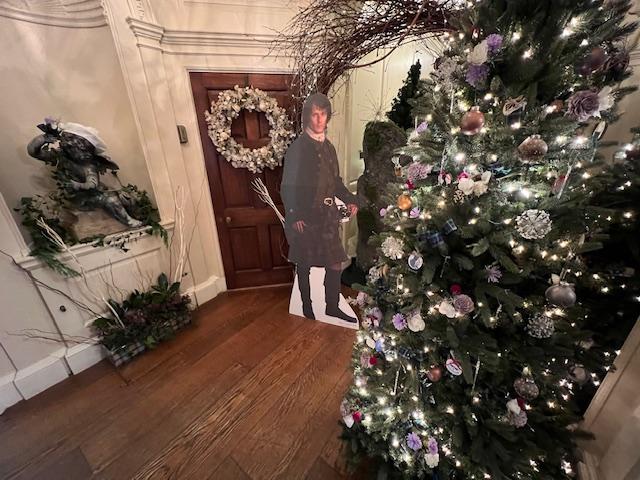
The entrance to the house was decorated by the Passaic County Parks and Recreation. This display was based on the magic of the Scottish Highlands.
After passing through the entrance of the house, it was off to the Ladies Parlor of the home and the decorations of the Garden Club of Teaneck. Then off to the Dining Room that was decorated by the Master Gardeners of Bergen County.
The Dining Room was just breathtaking.
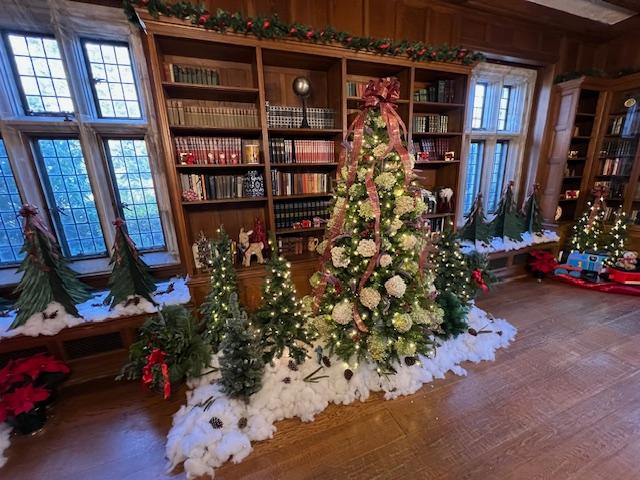
The Dining Room was festive with lots of lit Christmas trees.
The Dining Room was quite elaborate.
The Master Gardeners of Bergen County were very detail orientated with their display spreading the Christmas cheer as you entered the house. The next room was the Breakfast Room with beautiful sunlight coming into the room and views of the gardens that are dormant at this time.
The theme of the Breakfast Room was that of enchanted forests with sacred fairy springs and moss covered meadows. The Breakfast Room was decorated also by the Master Gardeners of Bergen County.
A beautiful view of the Breakfast Room done by the Master Gardeners of Bergen County.
The decorations of the Breakfast Room were quite elaborate.
The side of the Breakfast Room.
As I left the Breakfast Room, I entered The Center Hall where the many faucets of Robert Burns, the Scottish author of “My Heart is in the Highlands” themed room was decorated by the Ringwood Garden Club.
The Center Hall of the manor house.
The Center Hall led to the back porch that was decorated by the Demarest Garden Club.
The Back Porch of the house just off the Center Hall.
The room was done with the theme “We wish you Blythe Yule as you enter a pastoral view of Holidays in the Highlands”.
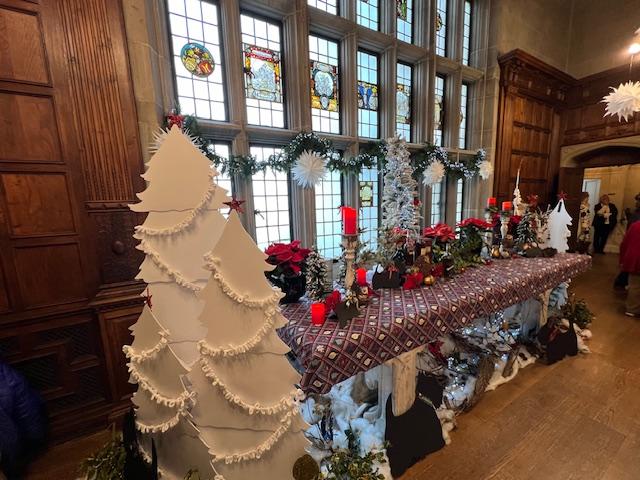
The next room I visited the was The Great Hall, which is a Jacobean style interior designed to impress with its arched beams, paneled walls and spectacular stained glass windows (Skylands pamphlet).
The Great Hall Christmas tree
The Great Hall by the stained glass window.
The Great Hall decorations by the fireplace off to the side.
I next walked through The Octagonal Hall, that is the transition room between The Great Hall and The Withdrawing Room/Living Room. This was transformed into a boutique lounge with custom made furniture and decor. Festive pops of pattern and color create a merry, modern vibe (Skylands pamphlet). The Octagonal Hall was designed by Stephanie Graham and Diane Simon.
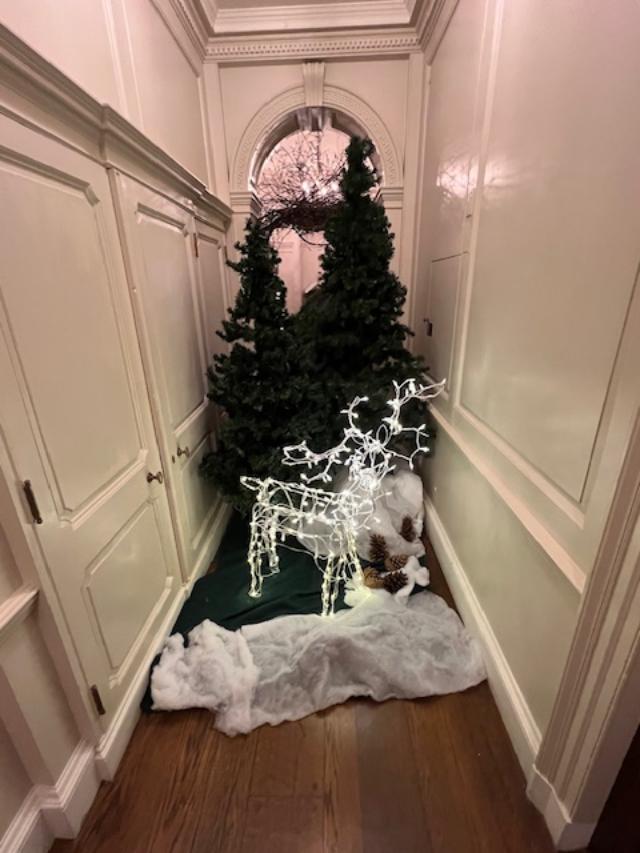
The entrance to the Octagonal Hall
The decorations of The Octagonal Hall
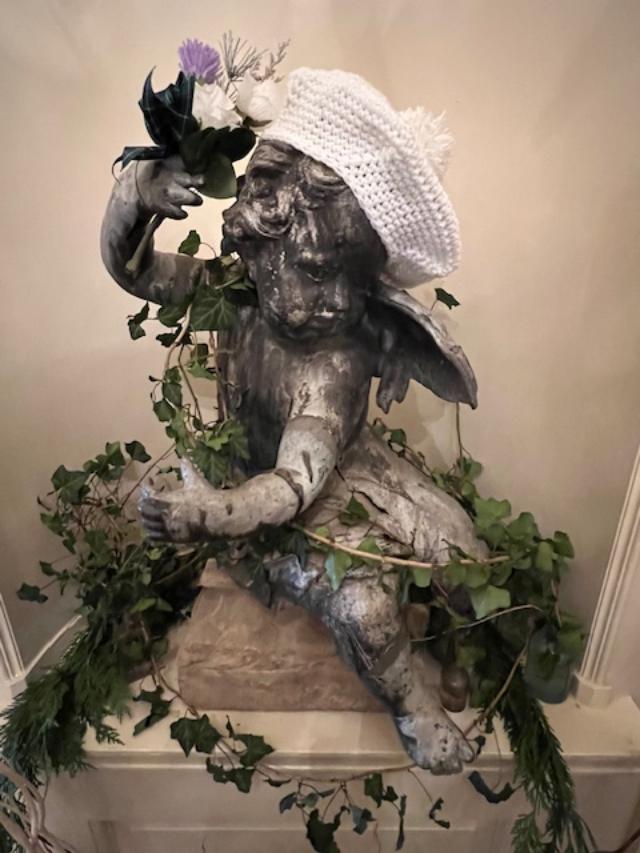
The statuary in the room beautifully embellished.
The Living Room was decorated to celebrate a Hip Highland Holiday and transformed into a boutique lounge with custom made furniture and decor. The Living Room/Withdrawing Room was designed by local artists Nicole Cohen (Teaneck), Brenda Gallagher (Upper Saddle River) and Lisa Williamson (Ridgewood).
The Living Room in full view.
We were joined by the Winter Queen in the Living Room who was roaming around the manor home engaging with all the guests who attended that morning.
A modern twist to the Christmas tree in the Living Room.
The display by the stained glass windows.
The festive trees of the Living Room
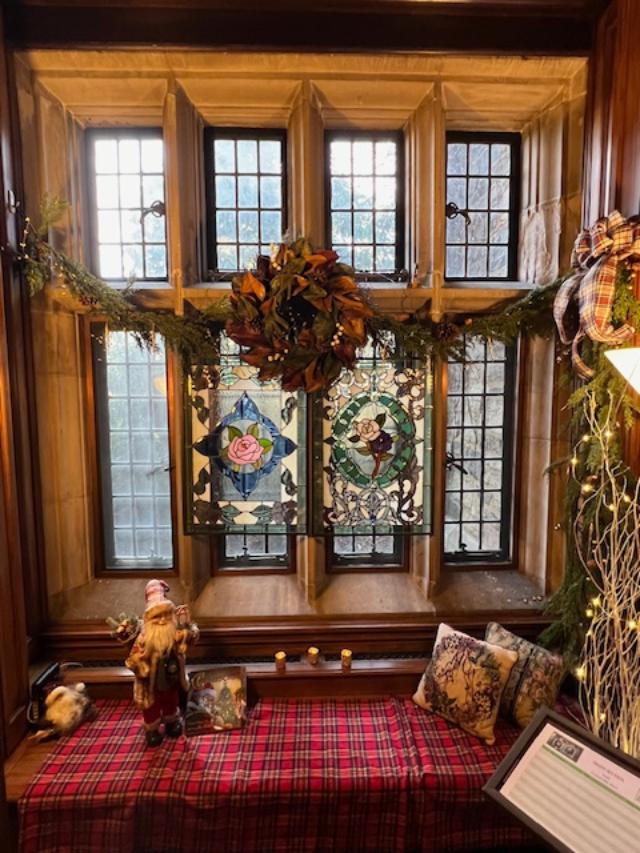
Transitioning out of the Living Room into the The Study, this room with its window seat is the perfect place to curl up with a good book or share stories of Christmas on a snowy afternoon. The study was designed by artist Linda Karen.
The window seat in The Study.
The dark wood paneling of The Study.
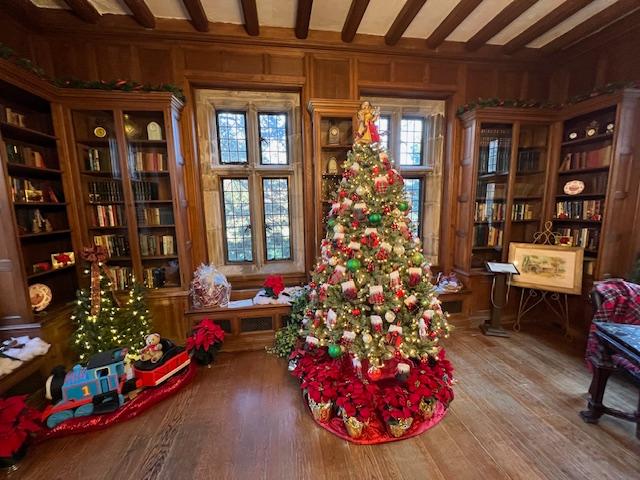
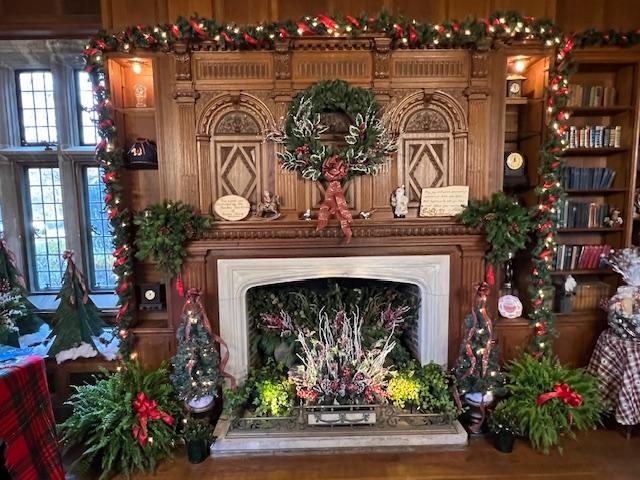
The last room on the tour was The Library that is resplendent with the holiday tree decorated with hundreds of lights and a myriad of ornaments representing the Scottish heritage of its owners (Skylands pamphlet). This room was designed by the Master Gardeners of Passaic County.
The Library at the Skylands Manor decked out for the holidays.
The Library in full view.
The fireplace in The Library is beautifully decorated for the holidays.
The Library in all its Christmas glory.
The Living Room was the last decorated room in the manor home for the holidays. I exited by the back door and then explored the grounds and the dormant gardens and look out areas of the estate that must look quite spectacular in the Spring and Summer months. I headed back to the Carriage House to look at the menu and explore the gift shop. This display is only open the first weekend of December and then for the rest of the year, the manor house is used for banquets and meetings and as a B & B. Until next year.
The front of the Carriage House where the restaurant and gift shop were located during the event.
History of the Skylands Manor & People:
The entrance to the manor that morning.
Clarence McKenzie Lewis bought Skylands in 1922 from the estate of Francis Lynde Stetson, who founded Skylands in 1891. Mr. Lewis was educated in England and Germany. While he was there, his widowed mother, Helen Forbes Lewis married William Salomon, founder of the New York banking house. Upon his return, Lewis attended Columbia University, where he received a Civil Engineering degree in 1898. In 1908, he married and bought a country place in Mahwah; it was there that Lewis became interested in horticulture.
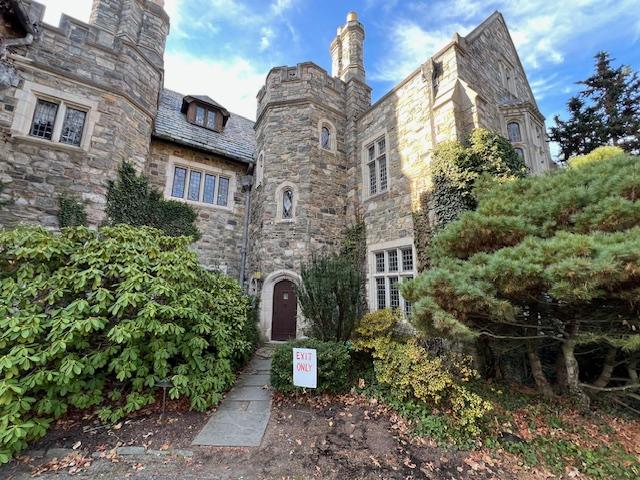
The front of the manor home.
Helen Lewis Salomon, the mother of Clarence Lewis, was widowed in 1919. Not only thereafter, she and her bereaved son agreed to a joint project; she wanted a Tudor-style showplace; he wanted plants and gardens. Mrs. Salomon worked closely with the architect on Skylands Manor but she died in 1927 before its completion.
The entrance to the Walled Gardens.
John Russell Pope (1874-1937) “an architect born to work, in the grand style” was educated at City College, Columbia University, the American Academy in Rome and the Ecole des Beaux Arts in Paris. He trained under Bruce Price, the master builder of Tuxedo Park. Pope designed many outstanding public buildings, such as the Jefferson Memorial and the National Gallery of Art.
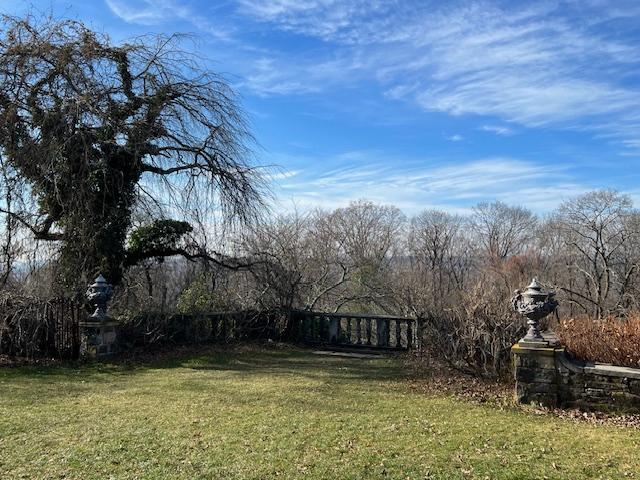
The estate gardens overlooking the mountains and the valley below.
Tutor Architecture originated in England in the late Gothic period and continued to be popular into the Renaissance. It features half-timbering on the exterior, crenelated walls, large groups of rectangular windows, oriel or bay windows and intricate chimney complexes The interiors usually had large central halls, wood paneling, molded plaster ceilings and elaborately carved staircases. Tudor Revival became a popular style for the elegant country houses of wealthy Americans.
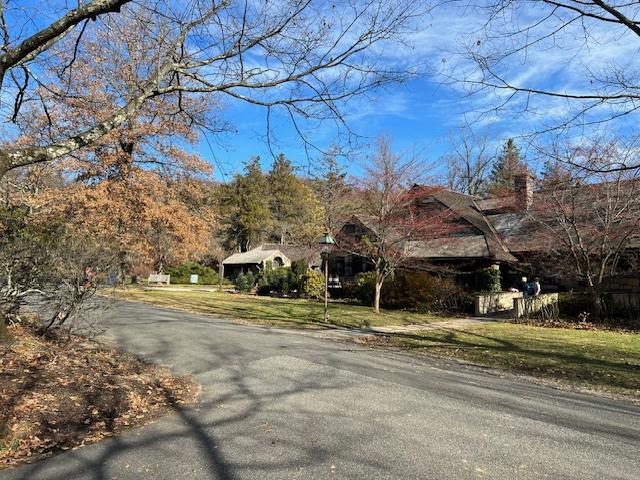
The estate grounds.
The builder of Skylands was the Elliot C. Brown Co., of New York City, which also built the country homes of Franklin Delano Roosevelt at Hyde Park and E. Roland Harriman (Arden House).
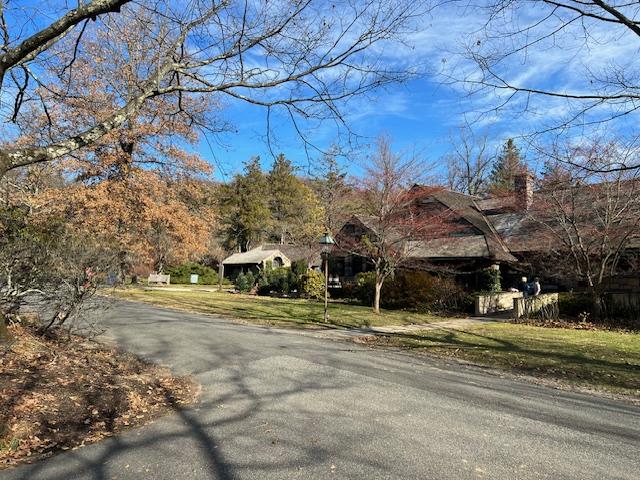
The house as you enter the drive.
Samuel Yellin (1885-1940) decorative metal designer and craftsman, who performed to call himself “the blacksmith”, fashioned the lanterns. electrical fixtures, lamps, gate, and spiral staircase rail for Skylands Manor.
The side of the estate that afternoon in the late fall.
Native Granite for the exterior walls of Skylands was quarried at Pierson Ridge above Emerald Pond in the eastern part of the property in Bergen County.
Mrs. Salomon purchased a collection of antique Stained Glass Medallions from an English collector. The 16th century German, Bavarian and Swiss panes were set in leaded windows by Heinegke & Smith of New York City.
The entrance to the Botanical Garden.
Disclaimer: This information on the details of the history of Skylands Manor was taken directly from their pamphlet and I give them full credit for it. Please call the manor for times that it is open as it is used a banquet/catering facility and a B & B.
The NJ Botanical Gardens just off the Manor House:
I visited the NJ Botanical Gardens in the Fall of 2026 just as all the Fall flowers were in bloom. With the foliage in the background mountains, it gave the whole garden colorful effect on the late afternoon. I will have to remind myself to visit the gardens again in the Spring and early Summer next year. There is a real complexity to these gardens during each season. This warrants a visit again in the Spring and Summer of 2027.
Skylands Manor Garden:
The Pump House at the start of the Gardens
The Pump House used to irrigate the estate
The Orchard on the lawn of the edge of the estate
The Butterfly Garden sign
Even though Fall began the early Fall flowers were still in bloom
The main part of the Gardens
The Gardens with the Fall foliage in the way
The foliage was just beginning in the Gardens
I noticed this beautiful seating area in the corner of the Gardens
Looking at the length of the gardens from the center point stonework
The center point stone vase
The Rose Garden in the second set of Gardens was still in bloom
The Gardens were filled with statuary. Mostly little angels and fairies
The Fall flowers were in full bloom
The second set of Gardens were lined with small bushes and more colorful flowers
The beautiful flowers of the Fall
The Perennial Garden was still in bloom at the time of my visit
The Fall foliage served as a backdrop for the Gardens
The Gardens were so beautifully maintained
The archway into the Gardens from the main house
The beautiful flowers lining the edges of the Gardens
The Rock Garden
I thought this was so beautiful
I thought this garden was so pretty in the third set of Gardens
I though of the angels as a good sign
The flowers were so colorful by the archway
The full view of the Gardens from the lawn and orchard
The view of the mountains in the distance
The Rose Garden on the edge of the lawn
The variety of flowers on the Gardens
The view of the lawn and mountains on the background
The lawn looking north
Leaving the Gardens to head back to the parking lot
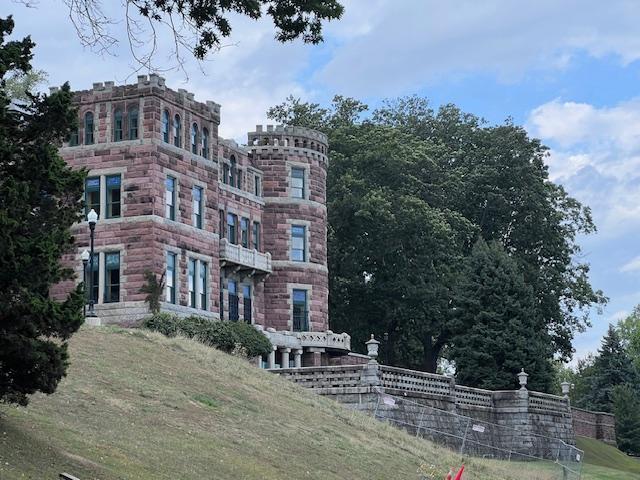
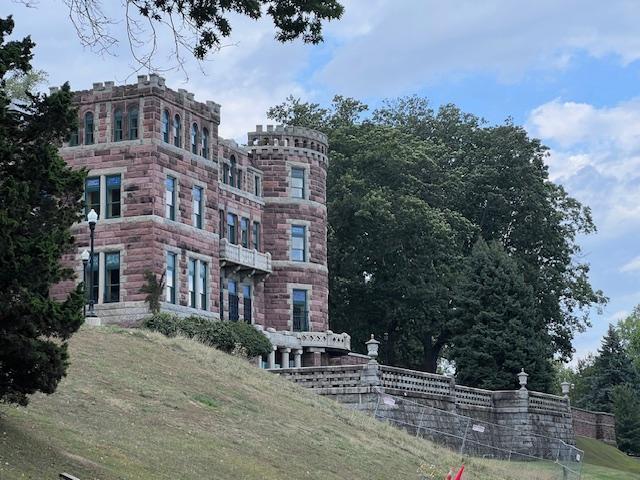
I have visited Lambert Castle a few times, most recently to see the Christmas decorations before they were taken down for the season. I found out from one of the director’s that they had not been put back up since their Holiday Bazaar back in November. I had seen them the year before and they had been very impressive.
Lambert Castle during the renovation in 2025
Right now the Castle is decorated for the Annual Christmas Craft Bazaar and it is just loaded with handmade crafts for the Christmas holidays. There are three floors of crafts and then on the third floor, there is a small restaurant to relax and look over the court of the house. After the bazaar in 2019, the Castle will close for a much needed five year renovation.
The Lambert Castle Christmas Bazaar 2019
I had a chance to visit the floors when they were not decorated for the holidays . The first floor is set up as if the family still lived there with the Billiards Room, Dining Room, Sitting Room, Music Room and Atrium still set as the family resided there. There is period furniture and decorations in all the first floor rooms to give a feel of what it must have been like to live there at that period.
The view of Lambert Castle from the second floor
The second floor galleries hold the collection of the Passaic County Historical Society with all sorts of objects, signs and historical items from all eras of the collection. You are able to see the footprint of the living quarters of the family.
The stained glass windows
The third floor at the time I was there was dedicated to the work of an Italian stone worker and artist who migrated and lived and worked in Paterson.
It is a very interesting way to see life at the turn of the last century in Paterson and the home offers a beautiful view of the City of Paterson and New York in the distance. I have never seen the grounds in the Spring but I am sure that they are quite lovely.
The view alone is worth the visit.
Don’t miss this virtual tour of the Castle and await until the renovations are done to visit again.
Bergecco-Parc Consulting Inc. commercial on Lambert Castle in 2019.
Bergecco-Parc Consulting Inc. Project: “Take me back to Paterson, NJ”.
Catholina Lambert was born in 1834 in Goose Eye, England. In 1851 at the young age of 17, Lambert left home to seek his fortune in the “Land of Opportunity” that was America. After several successful ventures in the silk industry, Lambert decided to build a home that would be reminiscent of the castles he recalled from his boyhood in England. In 1892, he built his own castle on Garret Mountain in Paterson, NJ, then known as the “Silk, City of the New World.”
Catholina Lambert
Lambert’s home was built to showcase his elaborate art collection of fine European and American paintings and sculpture. At one time, his collection was so vast that it was considered to be “the nucleus of an American Louvre.” In 1913, Lambert fell into debt and his fortune started to dwindle. As a result, he was forced to mortgage the Castle and eventually sell much of his art collection. The proceeds allowed him to live comfortably in the Castle until his death at age 89 in 1923.
After Lambert’s death, his son, Walter sold the Castle to the City of Paterson, which later sold it to the County of Passaic. Today the Castle is still owned by the County and serves as the headquarters of the Passaic County Historical Society. The Society, a private not for profit organization, owns the historical artifacts and works of art.
Catholina Lambert and Company
The home and the museum, exist as a reminder of a bygone era and as a tribute to the great accomplishment of the Castle’s creator. Although most of the furnishings today are not original to the Lambert’s home, they represent period furnishings that would have been found in the Castle during the Lambert era.
For more information about the rooms and decor, visit The Lambert Castle Blog at:
The Passaic County Historical Society is a private non-profit educational organization founded in 1926 and dedicated to cultivation of interest in the history and culture of Passaic County and former home of silk magnate Catholina Lambert was built in 1892. The Castle is owned by the County of Passaic and has been the home to the Society since 1934.
Library & Archives:
Located in the lower level of the Castle is the Elizabeth A. Beam Memorial Historical Research Library, operated by the Passaic County Historical Society. Here scholarly researchers, genealogists and historical enthusiasts may find books, manuscripts, maps, photographs, genealogy records and other information that reveals the history of Passaic County. Access to the library is included with regular admission to Lambert Castle.
Membership:
The Society depends upon the support of its membership as well as museum admission to sustain its important mission. Please consider becoming a member and helping to preserve the history of Passaic County.
The Second Floor Galleries:
The Castles’s second floor has several exhibition galleries, each presenting a different historical display from the Society’s collections. To the right of the fireplace on the walls of the second floor balcony is an exhibition of works by noted Paterson artist Julian Rix. On the opposite side are portraits of notable Passaic County residents and a collection of historic engravings of the Passaic Falls. Behind the fireplace are the Lambert’s private rooms. To the left, in the former sitting room and bedroom of Mr. Lambert, are the Curiosities and Local Folk Art galleries and the famous Brass Dog Sculpture that served for many years as an advertising sign for a tinsmith’s shop in nineteenth-century Paterson. In the adjacent room, the former bedroom of Mrs. Lambert, is the Local History Gallery which features historical images of prominent businesses and people.
The Third Floor Exhibition Gallery:
The Third floor of Lambert Castle is reserved for changing or seasonable exhibitions.
Disclaimer: This information comes directly from the Passaic County Historical Society & Museum pamphlet and I give them full credit of it. Rather than transcribing the whole pamphlet with the description of rooms, I attached their website and blog on WordPress.com for more detailed viewing.
I recently visited The American Labor Museum/Botto House National Landmark for the afternoon and learned a lot about the American Labor Union formations and the rights we now take for granted.
A group of us took the tour of the Botto House and learned of its history and its place in the Paterson Silk Strikes of 1913. The first floor which serves as the meeting room has pictures of the Paterson Silk Strike which lasted just over five months and since the Mayor of Paterson at the time would not let the strikers meet, the Botto’s agreed to let the strikers meet at their home which at the time was in a isolated section of Haledon.
The history of the Silk Strike in Paterson
The Mayor of Haledon was sympathetic to the Union cause and let them meet in the town. Their house was situated in the middle of a field so that the strikers could gather around the home and listen to speakers.
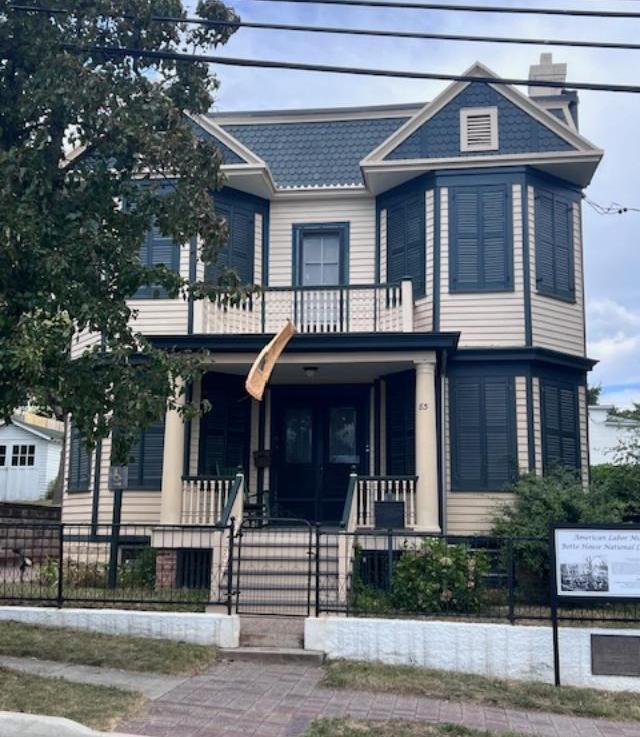
The Botto House during the Paterson Silk Strikes
From their balcony, speakers could talk to the strikers and keep everyone abreast of the situation. Here people gathered and picnicked together and worked together to get their rights heard.
From the main display room, you will tour the home of Pietro and Maria Botto. First stop is the kitchen where Mrs. Botto ran her household. She made extra money selling food to the strikers and arranging meals for Mr. Botto’s co-workers. The family family did what it could to make money for the family.
Mrs. Botto’s kitchen
The sink area
Here she made meals for her family, did her jarring and preserving and the washing was done. Then a tour of the dining room, bedroom and the palour area where the family met and greeted people. The upstairs was formerly two apartments that were built to help ‘pay the bills’.
The Botto House Kitchen
The upstairs is now the display space where a display on the Dock Workers Union is currently being shown. We got to stand on the second floor balcony where so many speeches were made.
The backyard area
We took the back stairs to the backyard where the family had the grape arbor, root cellar where the preserves were kept and the boccie ball court. It seemed the family was very social at the time and self-sufficient.
The root cellar and Vineyard
Things turned bad for the family when both Mr. And Mrs. Botto both passed away two years after the strike. The strike could have taken its toll on the family or the fact that Mr. Botto could not find a job after the strike was over. No one knows.
It is an interesting tour of how one family opened their home to an important cause and it made a difference in the success of the strike and getting it resolved.
The history of the Botto’s:
The museum headquarters was the home of an immigrant family of industrial workers whose story is a fascinating one. In many ways, the telling of their saga is a doorway for museum visitors to step through and make connections with their own ethnic backgrounds.
The European Heritage:
Pietro and Maria Botto hailed from the region of Biella, Piedmonte, Italy. This area, at the foothills of the Alps, was a leading textile producer of linen and wool. The mountainous area was home to a fiercely independent people who, for centuries, wove cloth in their homes on looms which they owned.
The Industrial Revolution forced weavers to give upon cottage-based production to seek employment in large shops or mills. the displacement of workers by mechanized looms and weavers’ lack of economic independence caused people in Biella (as in other European textile areas where Paterson’s workforce originated) to embrace new ideas about worker rights and to be a vocal workforce wherever they roamed.
Pietro decided to leave Italy because he was made eligible for a second draft into the army at the recently united Kingdom of Italy (Italy had quadrupled its army at that time to strengthen unification and to acquire African colonies). A skilled weaver who also painted church interiors, Pietro brought his wife, Maria and daughter, Albina (born 1889) on the long voyage to America in 1892.
The Botto’s settled in crowded West Hoboken, New Jersey (today’s Union City), where they worked in silk mills for 15 years until they had saved enough money to afford a home for their growing family. The family now included three more daughters, Adelia (born 1894), Eva (born 1895) and Olga (born 1899). In 1908, the Botto’s moved to Haledon, a tiny community, growing up along the streetcar line from Paterson, where many other country folk from Biella had already settled.
The Botto’s home became a focal point for a dramatic slice of history in 1913 when the epic Paterson Silk Strike broke out. Pietro was on strike with 24,000 fellow silk workers when massive and constant arrests forced the workers to consider the independent borough of Haledon as a location for great outdoor rallies. Mayor William-Brueckmann guaranteed the safety of the workers and Pietro offered his home as a meeting place for the strikers.
The Botto’s courageous stand allowing their home to be so closely identified with the strike stemmed from a belief in the rights of the common man. During the strike, Pietro and his family played host to the social and labor leaders who were the idols of the working person at that time. After the strike, the family had to very circumspect about employment in the mills, with one of the daughters denying her family name to avoid blacklisting by an employer.
The large house and spacious hillside gardens are a tribute to the family’s combined labor. Pietro and his daughters worked 10-12 hour days, 5 1/2 days a week in the mills. The eldest daughter began mill work at age 11 and the youngest at age 13.
On Sundays, the usual day of rest, the girls helped their mother serve patrons of the resort aspect of the property. Maria ran a large household, feed boarders during the week and the scores of people on Sunday and did piecework from mills; she died in 1915 at the age of 45.
Pietro lived until 1945, a beloved father and grandfather to a growing clan.
History of the House and Land:
The house in Haledon, NJ
The total environment of the Botto House National Historic Landmark reflects the ethic origin of this family of silk workers from the Piedmonte (Biella) area of Italy and the development of housing in early streetcar suburbs. It is representative of the sensitive use of small landholdings in American urban areas by various European immigrant groups.
The Botto family purchased Block X, Lots 38, 39 and 40 in 1907 from Alexander King, a real estate speculator. King himself purchased a large parcel of land from the Cedar Cliff Land Company, a group of Paterson industrialist and business leaders who were quick to see the advantages of selling cheap land to workers in Haledon. The completion of a horse-drawn trolley line in 1872 allowed for expansion of residential and recreational areas outside of the City of Paterson, a major American industrial center.
The Botto House sign
(Information from American Labor Museum: Botto House National Landmark, a Brief History)
The Period Rooms:
The Front Hall
The front entrance hall light fixture is original to the house. One of the restoration tasks yet to be carried out is the replacement of embossed wallpaper on the walls which was made to look like the carved leather coverings in the homes of the rich.
The front hallway
The Kitchen:
The kitchen was a major center of activity in the household. The large coal and gas range dominates the room. It was used as a heating source as well as for cooking foods. A table provided the space for food preparation; a cupboard stored pots, pans and dishes; an icebox kept food items cold (the root cellar, located in the garden was also used for cold food storage) and a sink for dishes and a tub for laundry utilities indoor plumbing-certainly a recent innovation for working class households.
The kitchen
Even with the convenience of indoor plumbing and the gas range, the kitchen was the scene of virtual non-stop labor for Maria Botto and her daughters. In addition to meals prepared for the family, the Botto’s fed a noon meal to extra people during the week, there were workmen without families, who rented rooms and come from the mills for a hot dinner.
On Sundays, the Botto women prepared food for as many as 100 people who came to recreate on the property. This, of course, provided on additional income for the family.
The Botto family’s foodways reflected their home region of Biella, Piedmonte, Italy. Piedmontese cooked scorned tomato sauce, preferring wine and chicken broth to accompany such staple foods as polenta (corn meal), risotto (rice) and tortellini, a pasta. Generally, rosemary, sage, and other herbs were used in cooking and grown outside in the garden. The herbs also had medicinal uses.
The kitchen sinks
Some of the artifacts placed around the kitchen are the copper put used to cook polenta (purur), meat grinder, fish scale, orange juice squeezer, coffee grinder (from a German immigrant household), rug beater, mousetrap and wall calendars which were used by working people as decorations.
The Botto women were generally charged with kitchen duties. Maria Botto hired a German woman to do the wash. One special job was reserved for Pietro, stirring the polenta and cutting it with a string.
The Dining Room:
The dining room was another work area for the family. Here the family and the ‘boarders’ dined. Here Maria ‘picked’ silk on a frame, located in the corner of the room under the window, examining the bolts of broadsilk brought from the mill for imperfections.
The Dining room
This was another task to bring income to the household. Maria used the sewing machine to make clothes. The table reflects a setting for the family and ‘boarders’, placed with dishes, silver-plated utensils and a condiment set.
The Dining Room
The sideboard, table chairs and sewing machine are family pieces. The lighting fixtures in this room as in the rest of the house were powered by gas. As is typical in the area, paintings were hung by string from a picture rail as the walls were made of plaster.
The Sideboard
The small painting shows sheep, which provide the wool upon which textile manufacture was based, against the backdrop of the Alps. The large sketched portrait of Pietro Botto in later years was produced by his grandson and professional artist, Richard Botto. On the side of the room hang pictures of the Botto daughters in their wedding attire.
The Dishes in the sideboards
The Bedroom:
This room, which was actually the girls bedroom has been recreated to resemble where Maria and Pietro slept. The dresser is set with brushes, combs and mirrors that are from the period. The Botto’s slept in a brass bed.
The bedroom at the home
Swimsuits and other clothing hang in the wardrobe. A travelling trunk rests on the floor next to the wardrobe. Next to the window hangs a photograph of Mr. and Mrs. Guala of Biella, Italy. Next to the wardrobe hangs the elaborately framed photograph of Adalgiso Valle of Paterson, NJ, a jacquard card cutter.
The Bedroom
The Parlor:
The most formal room in the house, the parlor was used for guests, weddings and wakes. Dominating is the oak mantle with its columns and mirror top. It surrounds a fireplace where, in the winter, a gas heater was attached to a pipe behind the hearth. The clock had to be wound every day and chimes on the half-hour.
The parlor
The photographs on the shelf are Maria’s sisters in Italy (right) and the three eldest Botto daughters (left). Members of the Bocchio family of Biello, Italy are pictured in the photograph to the left of the mantle.
The Parlor and decorations
The furnishings in the house
Other Rooms:
The area making up the library on the first floor was a sitting room and bedroom for the family. The Botto daughters rented the two apartments upstairs when they first married and started their families and other non-family members served as renters through the years. The bathroom on the first floor is the approximate size of the original but today has modern fixtures and is not meant to be part of the restoration.
(From the American Labor Museum/Botto House National Landmark)
The Labor Day display of the Union history:
Labor display
Labor Display
History of Paterson:
The City of Paterson was founded in 1792 as America’s first planned industrial city. Alexander Hamilton, Elias Boudinot and other members of The Society for the Establishment of Useful Manufactures chose the Great Falls of the Passaic River as the ideal site for a manufacturing center. The Falls provided water power, while the river provided transportation upstream and down.
During the 19th Century, Paterson flourished. It became known as “Silk City” and “The City” with an Arm of Iron in a Sleeve of Silk for the silk mills and locomotive works that made their homes here. Immigrants flocked to the city at first from England, Switzerland. Germany and France and later from Southern and Eastern Europe. Many found jobs in the mills and a few took their place among the captions of industry.
(Mill Worker…Mill Owner-Botto House Museum)
The gift shops
Disclaimer: This information was taken directly from The American Labor Museum/Botto House National Landmark pamphlets. This museum is one of the few historical sites dealing with the Labor Unions in the United States and plays a huge role in workers rights today.