Tag: Exploring Stone Harbor, NJ

Stone Harbor (Tatham) Life Saving Station                                     11617 Second Avenue                                                                                  Stone Harbor, NJ 08247

Stone Harbor (Tatham) Life Saving Station 11617 Second Avenue Stone Harbor, NJ 08247

Stone Harbor (Tatham) Life Saving Station

11617 Second Avenue

Stone Harbor, NJ 08247

(609) 368-2294

https://en.wikipedia.org/wiki/U.S._Life-Saving_Station_No._35

Open: (Seasonal-June-Labor Day)

Admission: Free but they ask for a donation of $5.00

My review on TripAdvisor:

https://www.tripadvisor.com/ShowUserReviews-g46850-d14316159-r1073429644-Tatham_Life_Saving_Station_and_Museum-Stone_Harbor_Cape_May_County_New_Jersey.html?m=19905

The outside of the museum:

The Stone Harbor Life Saving Station at 11617 Second Avenue

(From the Stone Harbor Museum website)

American Legion Post 331 represents both Avalon and Stone Harbor, but also includes many members from outside the area. The Post occupies the old Tatham Life Saving Station, the oldest building in Stone Harbor, and is dedicated to the memory of PFC Stephen C. Ludlam, of Stone Harbor, New Jersey (1925-1945). Stephen was the recipient of the Distinguished Service Cross (our nation’s 2nd highest award) and Purple Heart for heroic action during the Battle of the Colmar Pocket in World War II (Stone Harbor Museum website).
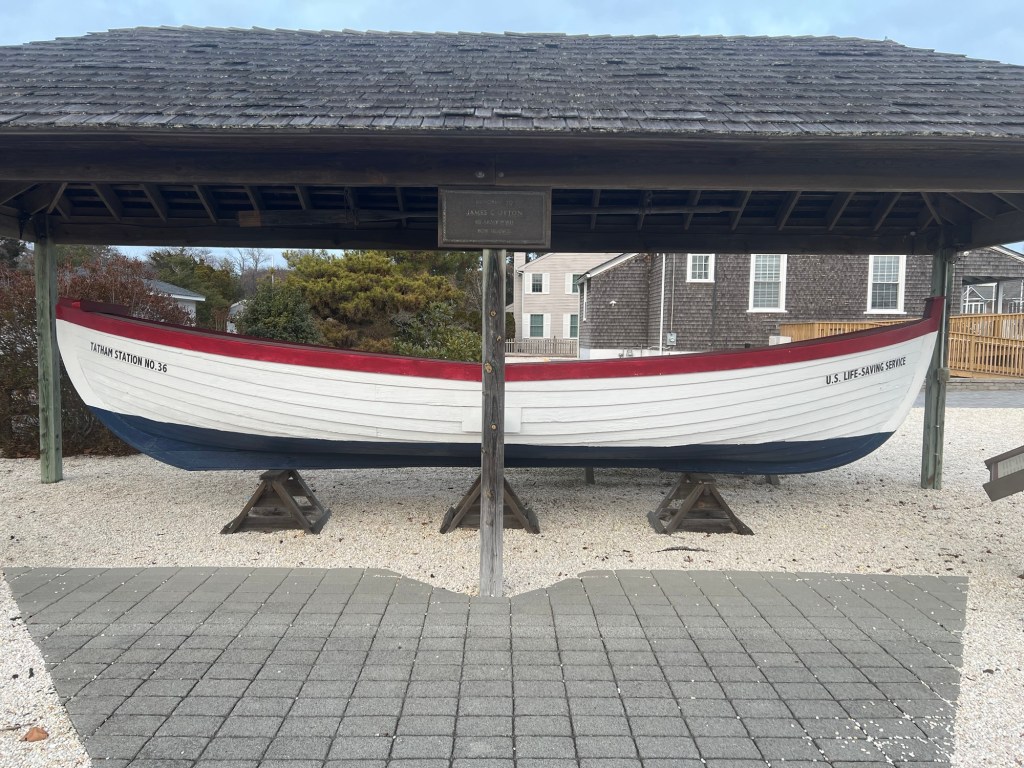
The historic Life Saving Boat
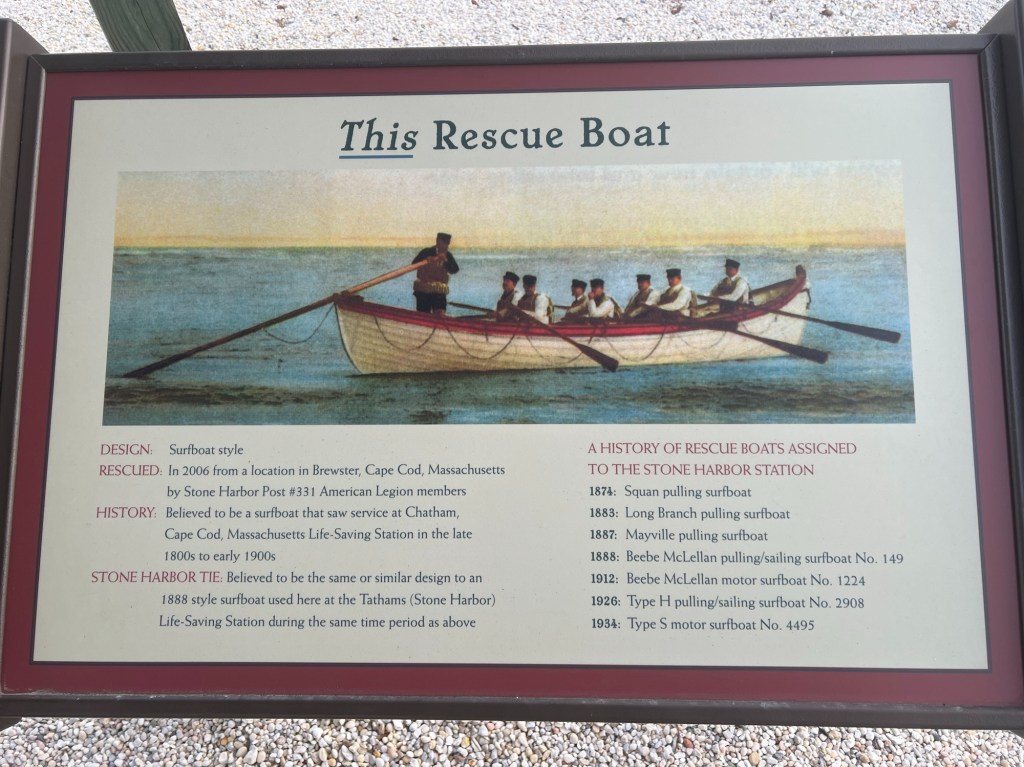
The historic signs
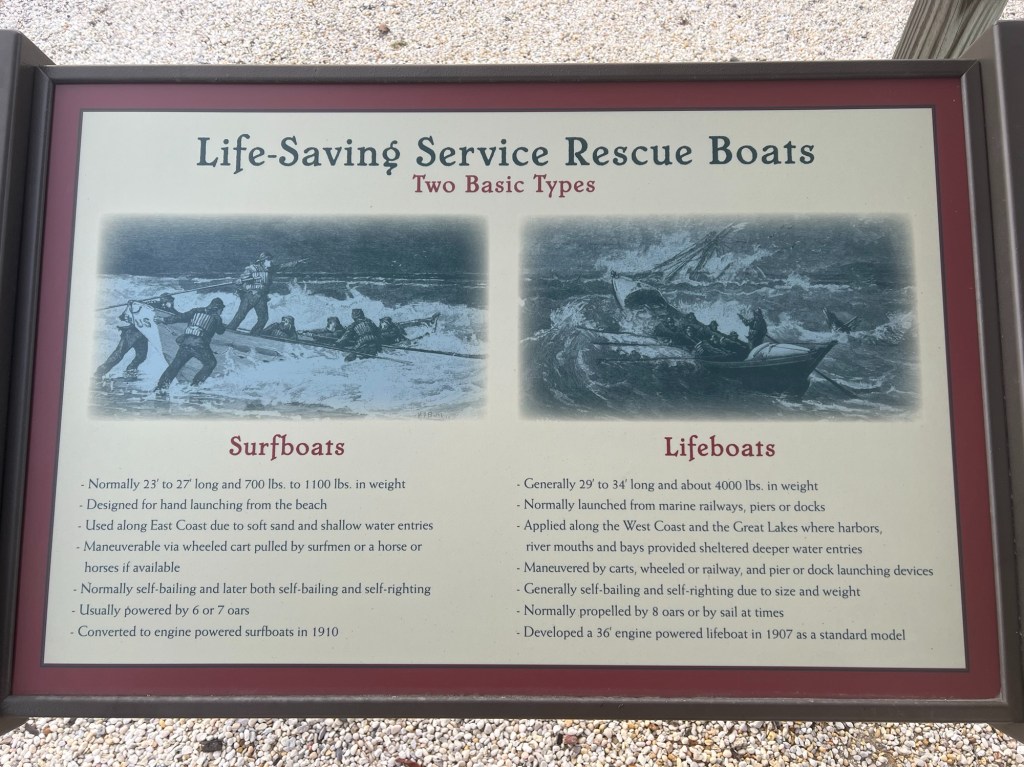
The historic signs
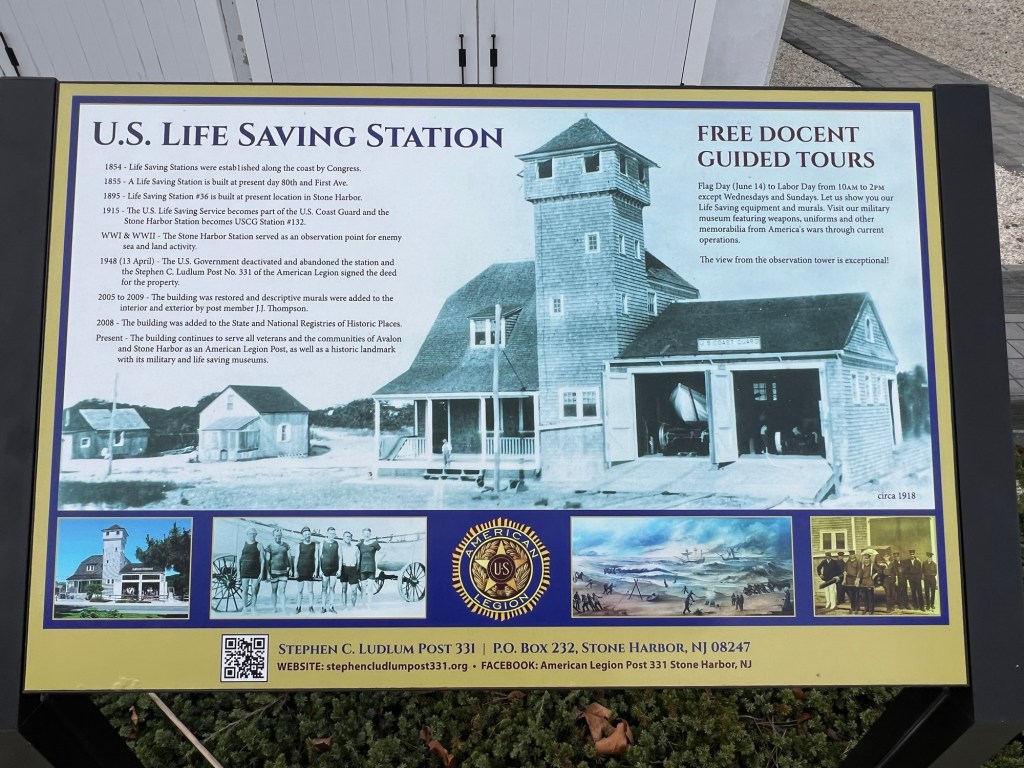
The historic signs

The museum is open for limited hours Monday-Wednesday and on Fridays from 10:00am-2:00pm during the summer months and then by appointment only during the rest of the year. The building is used for the local Veterans VFW meeting place so the building is used all year round.

The outside painting of the rescue team on the outside of the old bay

(From the Stone Harbor Museum website)

Murals in the building depict the history of the building, use of life saving equipment during the 1900s and honor to our fallen soldiers. All murals were created by artist and member Mr. James J. Thompson. Memorabilia available includes the life saving surf boat, steering oars, historic photos of the Life Saving Service and wall panels describing in detail the various aspects of life saving operations. The murals, wall panels and surfboat restoration were funded by the Cape May County Board of Chosen Freeholders. Also of interest is the view from the tower which presents an excellent panorama of Stone Harbor, the ocean, Hereford Inlet and the bay (Stone Harbor Museum website).

The second painting

I took a guided tour on a recent Friday and one of the veterans gave me a very though tour of the museum and all the displays. If you like this depth of the history of both the Coast Guard, the Jersey Shore Rescues and this history of all the wars especially WWI and WWII, this museum shows that history in depth with artifacts from both local residents and members of the military from New Jersey.

The Rescue painting from the old rescue bays

We started the tour on the first floor with the history of the building, how the Jersey Shore Rescue units worked and the early formation of the Coast Guard from the earlier Rescue Units.

The painting in the lobby is rescued

The beginnings of the US Coast Guard

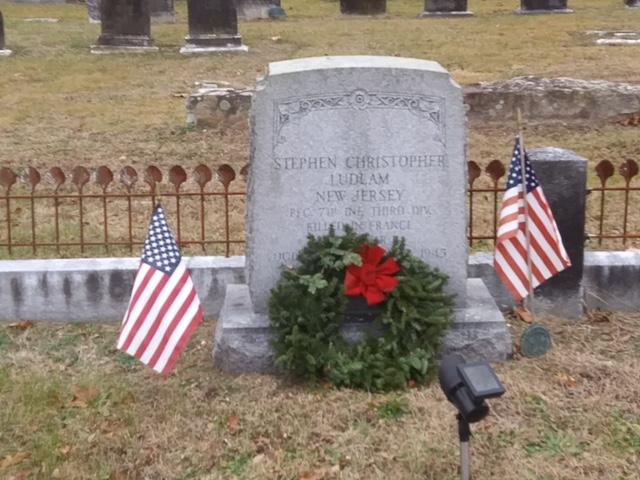
The building is named after local resident , Stephen Ludham. The memorial to Private First Class Stephen Ludham is located in the first room.

The memorial Stephen Ludlam

The picture of Stephen C. Ludlam

(From the American Legion Post 331 website)

The American Legion Post 331 was chartered on March 30, 1946. At the time of our organization, we received permission from Mr. and Mrs. Jesse D. Ludlam of Stone Harbor to name the new post in honor of their son, Private First Class (PFC) Steven C. Ludlam. PFC Ludlam was killed in action at the age of 19 near Ostheim, France on January 23, 1945. For his heroic action on that date, he was posthumously awarded the Distinguished Service Cross, an award second only to the Medal of Honor. His brother, John Ludlam an Army Air Corps member, was a charter member of the new post (American Legion Post 331 website).

Post 331 is unique primarily because it is fortunate enough to have been able to purchase and restore a deactivated U. S. Coast Guard (USCG) station that was formerly an 1895 U. S. Life-Saving Service (USLSS) station as its Post building. The building not only serves as a meeting place for legionnaires, but it also houses a life-saving museum on its first floor and a military museum on its second floor. The building’s tower offers a panoramic view of the southern part of Seven Mile Island (formerly Seven Mile Beach). American Legion Post 331 and Sons of The American Legion (S. A. L.) Squadron 331 members provide free tours of the historic building five days a week during the summer (American Legion Post 331 website).
Post 331 is also unique among many Posts because it services the summer resort communities of Avalon and Stone Harbor whose populations, to include active legion members, drastically fall during the off-season months. As a result, the Post is closed during the months of February and March. The Post has a membership of over 200 members. Our membership is comprised of past and present members of our nation’s military services: Army, Navy, Marine Corps, Coast Guard, Air Force and in the future US Space Force. As members of The American Legion, they carry out our goal of veterans helping veterans and our local communities (American Legion Post 331 website).

The main room on the first room where the VFW meets, there is all sorts of artifacts and pictures along the walls.

The main meeting room of the building

The beach live Guarding stations in this part of the shore district

The Rescue Stations used to line the coastline along a certain amount of miles that could be covered by Teams with the technology of the time. As modern rescue practices were developed after WWI, we saw the formation of the current US Coast Guard.

The uniform and the award to Charles M. Wright, along with his memos.

What the site looked like in the early part of the last century before Stone Harbor grew up around it.

The next memorial was to Seaman Stephen Tieser along with his uniform.

The memorial to Stephen Tieser

Stephen Teiser’s Sailor’s uniform

The uniforms and the group shot of the ‘Manning Station’, the men of the life guarding station

As we left the first floor of the station and arrived on the second floor, the first display was on the ‘Code Talkers’, the native Americans who spoke the ‘Navajo’ language, and established a code that no one could break during WWII.

The Code Talkers display. This was the basis for the movie “Windtalkers”

The second floor landing has an interesting display of artifacts, including uniforms and art from WWII.

The second floor display

The second floor WWII display

The WWI display of the ‘Doughboy’ uniform and pictures

The full uniform

The WWII display of veterans memorabilia

The museum has an interesting display of items that were taken as spoils of the war from veterans based in Germany. The collection as a lot of Nazi war items.

The Nazi memorabilia

The second floor gallery of the station

The electronic equipment used in the war

The WWII Women’s display of factory and war support

A local couple who both members of the armed forces during WWII family donated their entire collection of their parent’s memorabilia from the war years.

The collection of family memorabilia

Jay and Rosie Hart and all awards and accolades

A Japanese bomber uniform in the WWII

The Vietnam veteran display in the second floor gallery

The war display on the second floor landing

The third floor of the building had the look out and a spectacular view of the ocean.

The third floor lookout

The view from the lookout tower

The tour takes about an hour but can go longer depending on your tour guide and the amount of time you want to spend on each exhibition. It is a fascinating look not just at the history of the Legion and of the Rescue facility but of all our foreign wars. The museum is open from 10:00am-2:00pm on selected days of the week depending on the season.

The History of the American Legion Post 331:

(From the American Legion Post 331 website)

Since being chartered in 1946, Stephen C. Ludlam Post 331 of The American Legion has been welcoming veterans from all branches of our Armed Forces. The American Legion was chartered and incorporated by Congress in 1919 as a patriotic veterans organization devoted to mutual helpfulness. It is the nation’s largest wartime veterans service organization, committed to mentoring youth and sponsorship of wholesome programs in our communities, advocating patriotism and honor, promoting strong national security, and continued devotion to our fellow service members and veterans (American Legion Post 331 website).

The American Legion is a nonpartisan, not-for-profit organization with great political influence perpetuated by its grass-roots involvement in the legislation process from local districts to Capitol Hill. Legionnaires’ sense of obligation to community, state and nation drives an honest advocacy for veterans in Washington. The Legion stands behind the issues most important to the nation’s veterans community, backed by resolutions passed by volunteer leadership (American Legion Post 331 website).
Stone Harbor Bird Sanctuary                                                            11400 3rd Avenue                                                                             Stone Harbor, NJ 08247

Stone Harbor Bird Sanctuary 11400 3rd Avenue Stone Harbor, NJ 08247

Stone Harbor Bird Sanctuary

11400 3rd Avenue

Stone Harbor, NJ 08247

(609) 368-5102

https://www.facebook.com/p/Stone-Harbor-Bird-Sanctuary-100064916130839/

Open:Sunday-Saturday 24 Hours

Admission: Free

My review on TripAdvisor:

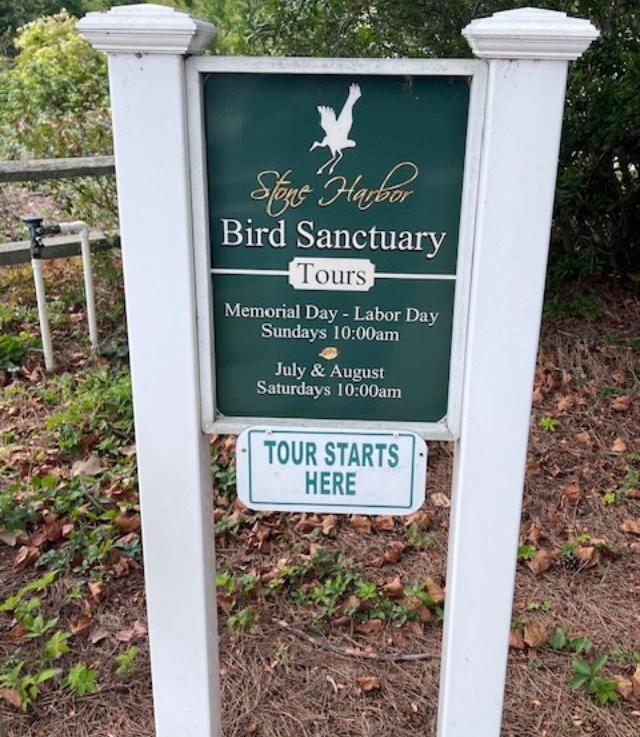
The sign welcoming you

The History of the Stone Harbor Bird Sanctuary:

(from the park’s website)

The Stone Harbor Bird Sanctuary is a wonderfully preserved microcosm of what the barrier islands of New Jersey looked like hundreds of years ago.  As you walk along Sanctuary paths, it is easy to imagine the Lenni-Lenape Indians wandering through the maritime forest, crossing wind swept sand dunes, past groves of white cedar, birch, pine, holly and sassafras trees, taking time to drink water from a spring fed freshwater pond and then, fishing in the salt water meadows surrounded by herons and songbirds.

As early as the 1870’s and 1880’s, the Sanctuary area was recognized as a “veritable paradise of birds” for ornithologists.  The primary attractions were Little Blue Herons, Black-crowned Night Herons, Green Herons and egrets.  Once the 96th Street Bridge opened in 1911, those who wanted to study, hunt or collect the eggs of birds no longer had to walk across four miles of marsh.  Easy access to the heronry was a boon to birders but also a threat to birds whose plumes and eggs were valued.

In 1941, the Stone Harbor Bird Club was organized in the home of Lillian R. Leuallen.  The Bird Club was renamed in 1946 as the Witmer Stone Club to honor Witmer Stone, one of the first ornithologists to document birds in the Sanctuary area.  With considerable foresight, the Witmer Stone Club proposed early in 1947 that the Borough of Stone Harbor establish a “sanctuary”.  In October of 1947, the Borough Council passed Ordinance #208 which preserved 31 acres of land as a wildlife sanctuary.  Subsequent to expert study in 1961 which demonstrated that no birds were nesting on the beach side sanctuary acreage, the Stone Harbor Borough Council sold ten acres to the east of Second Avenue.  The remaining 21 acres bounded by Second Avenue to the East, Third Avenue to the West, 111th Street to the North and area between 116th and 117th on the South represents the Sanctuary as we know it today.  The Sanctuary remains one of the few bird sanctuaries in the world that are completely within municipal boundaries.

One can’t overstate the foresight and commitment of the residents and Borough officials to conservation as well as the preservation of open space and wildlife in 1947, 1961 and every year since.  This commitment was reinforced by the United States Park Service in 1965 when it designated the Sanctuary as a National Natural Landmark.

Over the years, the Sanctuary has been home to thousands of birds and visited by more than a million people representing all fifty states and most countries in the world.  It has been estimated that Sanctuary visitors spend more than $5 million each year, locally. Although some like the New York Times in 1960 glorify the Sanctuary, referring to it as “The Everglades of New Jersey”, Stone Harbor residents think of the Sanctuary as a symbol of the character of this quiet, single family town which respects the nature and wildlife that surrounds them while placing a premium on livability, aesthetics and serenity.

The front of the sanctuary from 3rd Avenue

I took a walk when I was in Stone Harbor through the town’s Bird Sanctuary to hopefully view some rare birds. While I did not see much, I heard a lot of singing and scrawling as I walked the path through the trees.

The front gardens in the sanctuary

The gardens were still in bloom in the late Summer and many colorful wildflowers attracted all sorts of butterflies and other insects.

The sign greeting you about the experience

The front path of the sanctuary

You head over the bridge to the paths that take you into the woods

Walking down the pathways through the woods

The path takes you into a deep wooded area in the middle of the town and by the time you get to the middle of the path, you can hear the mating calls of many birds. It’s funny to note that we are a couple of blocks from the shore.

Walking through the pathways

Reaching the middle of the beach woods

The middle of the bird sanctuary noisy with bird calls

Walking back through the pathways through the roads

Touring through the Bird Sanctuary does not take a long time, but offers relief from a busy shore town.

Video on the park:

Wetlands Institute                                                                                 1075 Stone Harbor Boulevard                                                                       Stone Harbor, NJ 08247

Wetlands Institute 1075 Stone Harbor Boulevard Stone Harbor, NJ 08247

Wetlands Institute

1075 Stone Harbor Boulevard

Stone Harbor, NJ 08247

(609) 368-1211

Open: Sunday-Saturday 9:30am-4:30pm

Admission: Adults $12:00/Children $10.00/Military $10.00/Members and Children under 3 Free

My review on TripAdvisor:

Entering from the highway, I was surprised at this interesting place of nature and how the Institute is not just part of the community but how it integrates itself into the fabric of helping understand how Mother Nature plays a part in benefiting everyone in this shore community from cleaning the water, sustaining wildlife and preventing flooding.

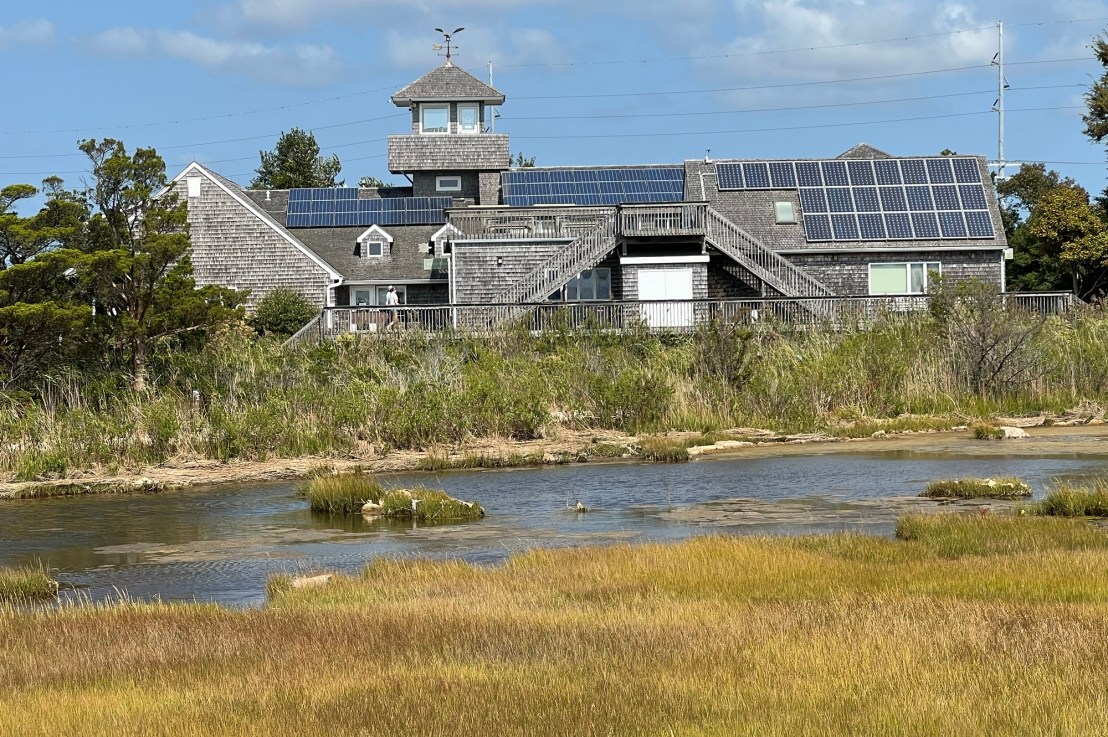
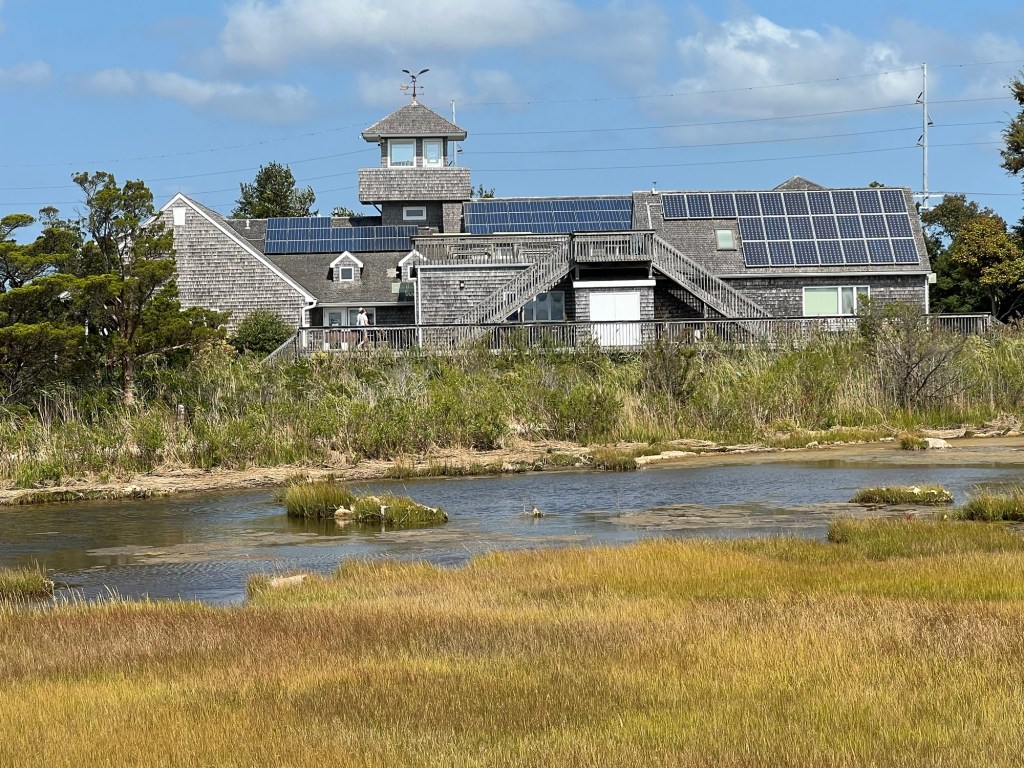
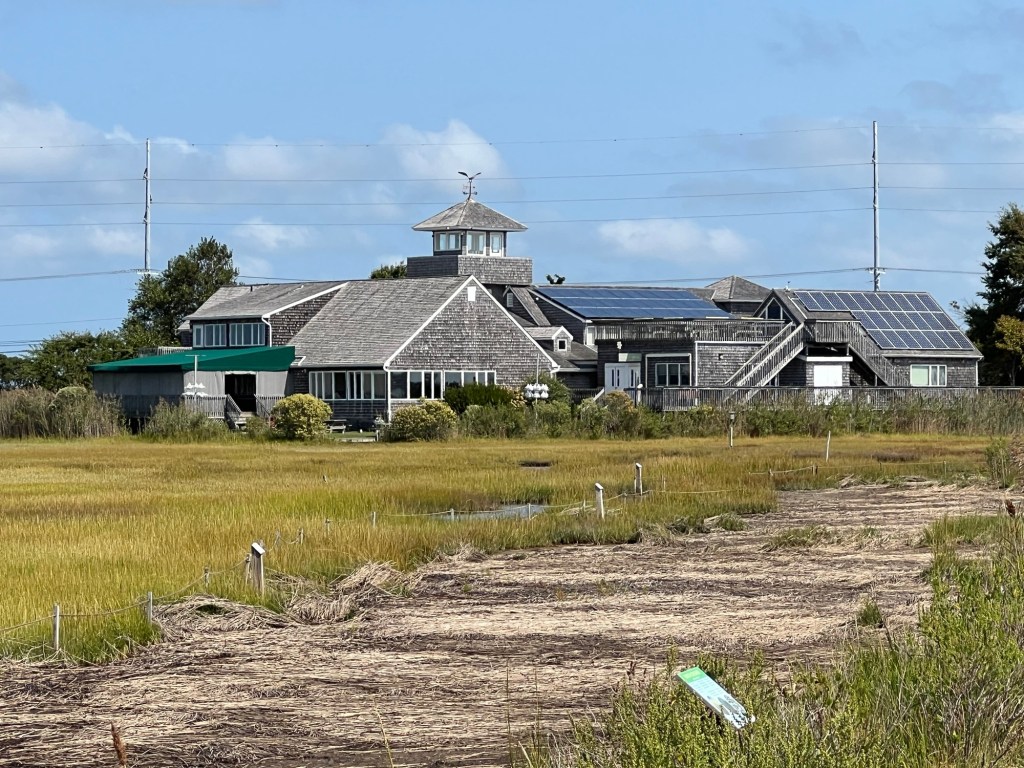
The front of the Wetlands Institute in Stone Harbor, NJ

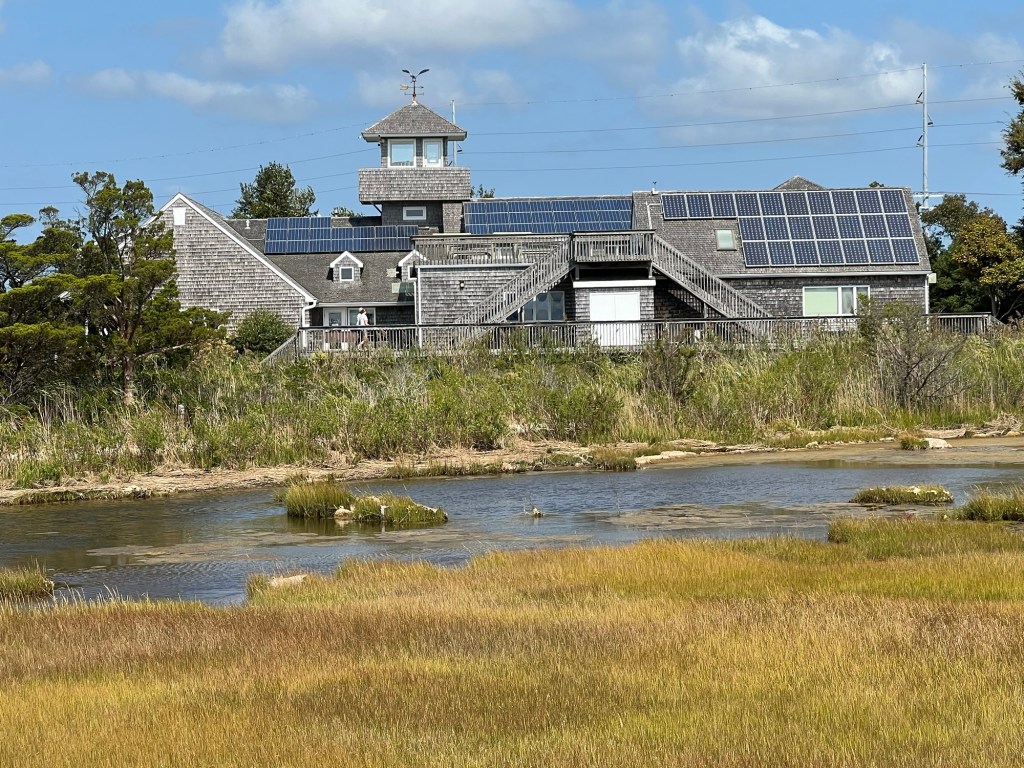
The back of the Institute from the salt marshes

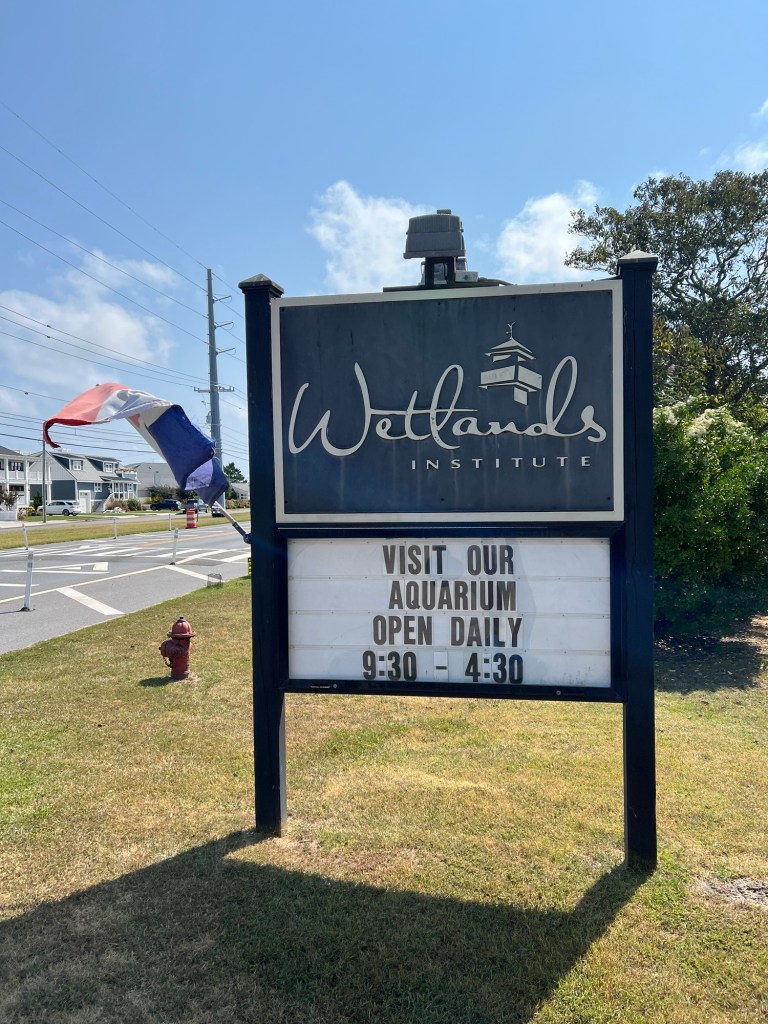
The sign that welcomes you inside

You would almost miss the Institute without the sign

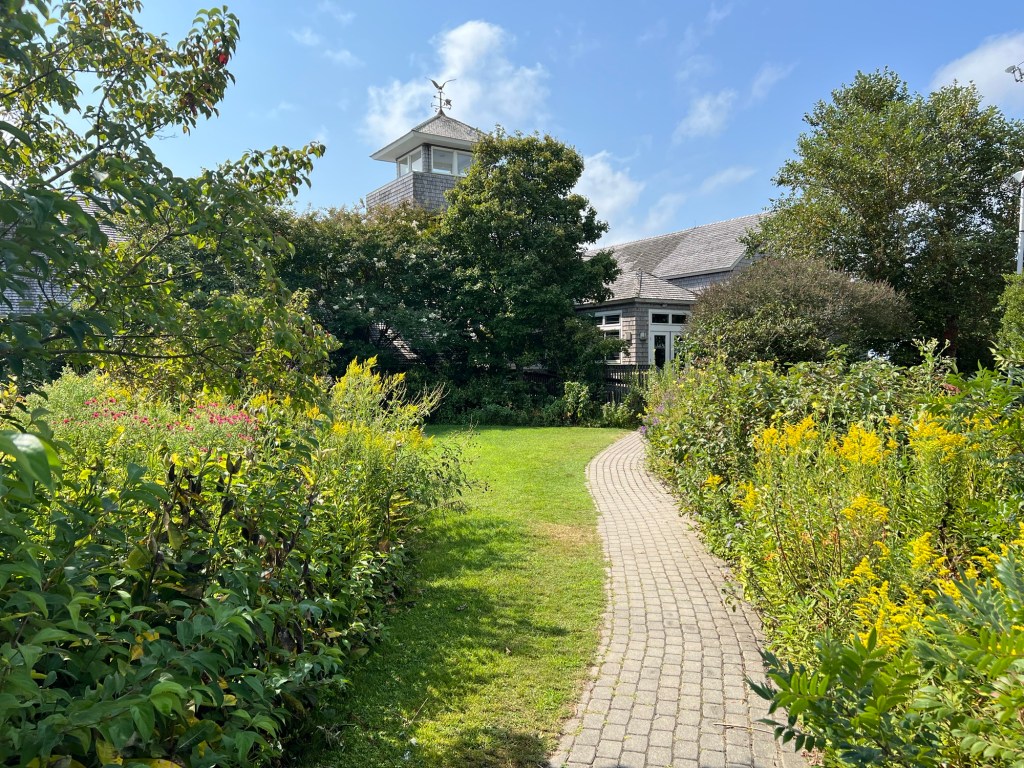
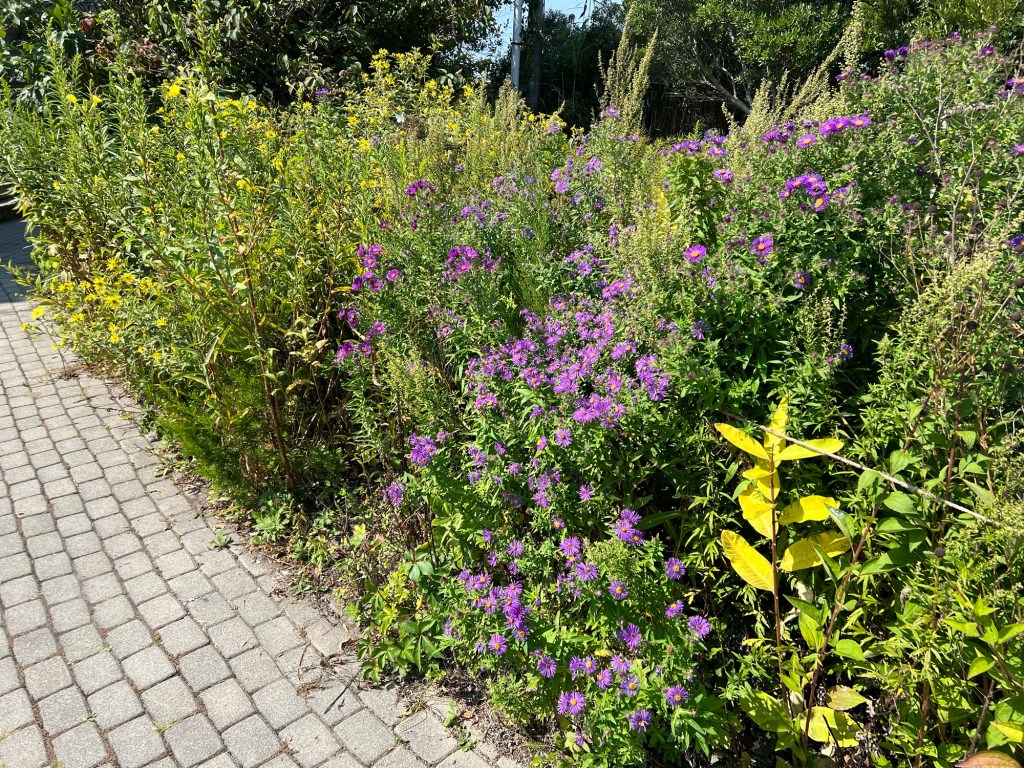
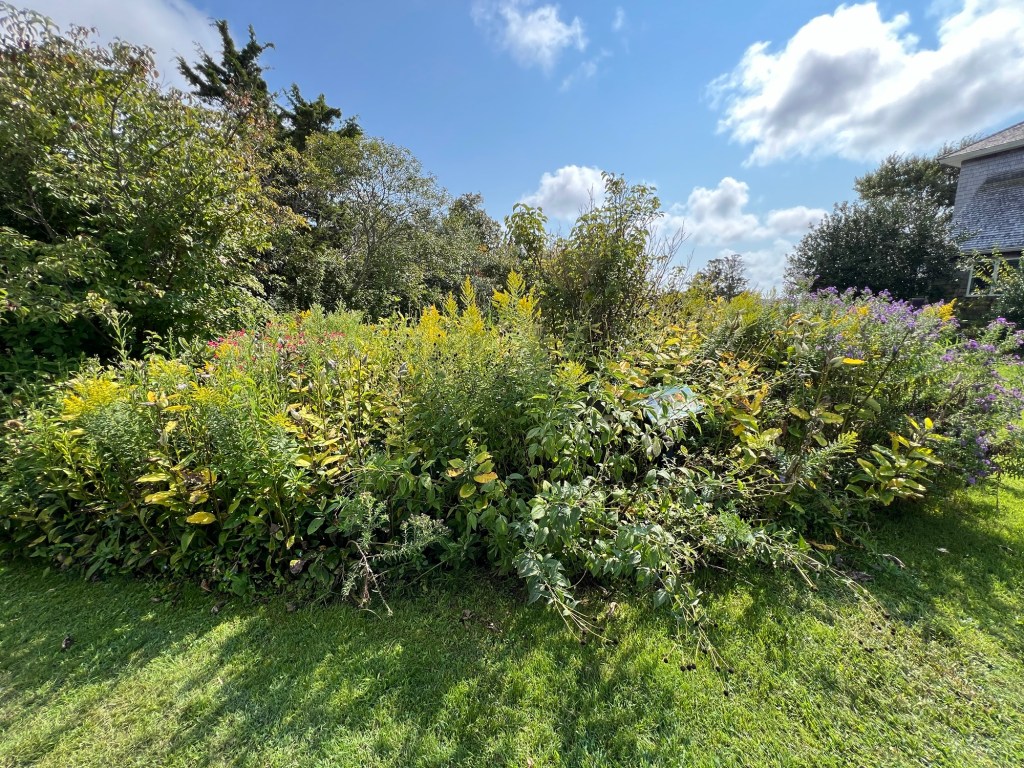
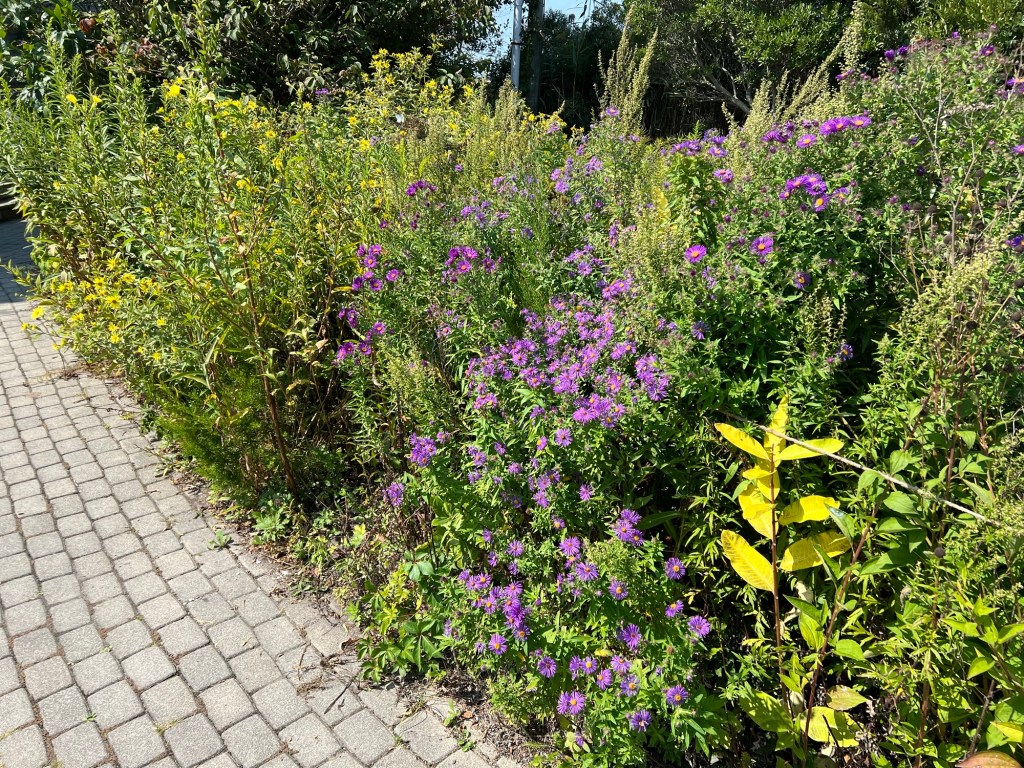
The beautiful gardens in the front during the summer months

The Institute’s gardens in the front of the building during the summer months

The History of the Wetlands Institute:

(From the Institute’s website)

The Wetlands Institute was founded by Herbert Mills in the late 1960s, thereby fulfilling his life-long vision of creating a world-class research, education and conservation center at the Jersey Shore that would educate people of all ages about the beauty and wonders of  the coastal environment, and the importance of that environment to their daily lives.  His dream was to inspire everyone to want to conserve and sustain that environment forever.

Herb loved birds and nature all his life. In fact, he joined the National Audubon Society at the age of seven.  Many of his maturing years were spent as an executive in the glass and canning industries of South Jersey.  During those years he further developed his abiding interest in conservation issues, so much so that he left the business world in 1967 to became the Executive Director of the World Wildlife Fund.  In 1969, under his leadership, the World Wildlife Fund purchased 6,000 acres of salt marsh in Middle Township.  34 of those acres  became the site of the Wetlands Institute’s facility.  The rest were held by the World Wildlife Fund until being transferred to New Jersey’s Green Acres Program. Herb also raised the funds for the design and construction of  our main building which was designed by Malcolm Wells, a world-renowned and environmentally-oriented architect.

Our building was officially dedicated on September 16, 1972.  Herb Mills’ friend and the international president of  the World Wildlife Fund, Prince Bernhard of The Netherlands was the keynote speaker (the Institute website).
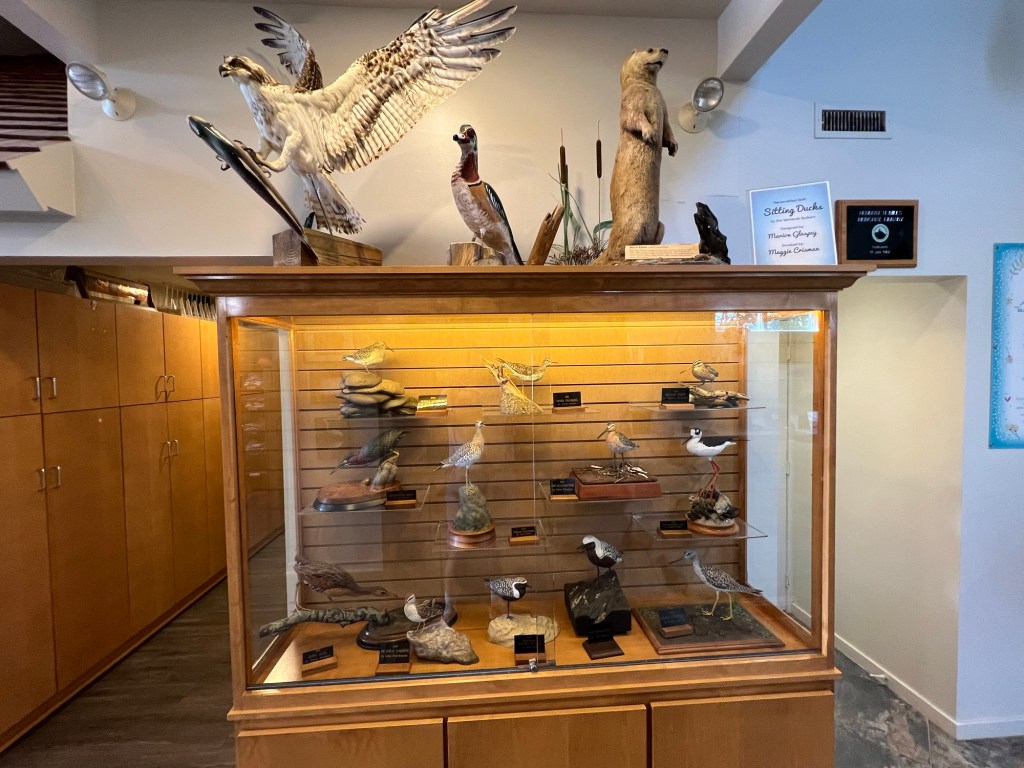
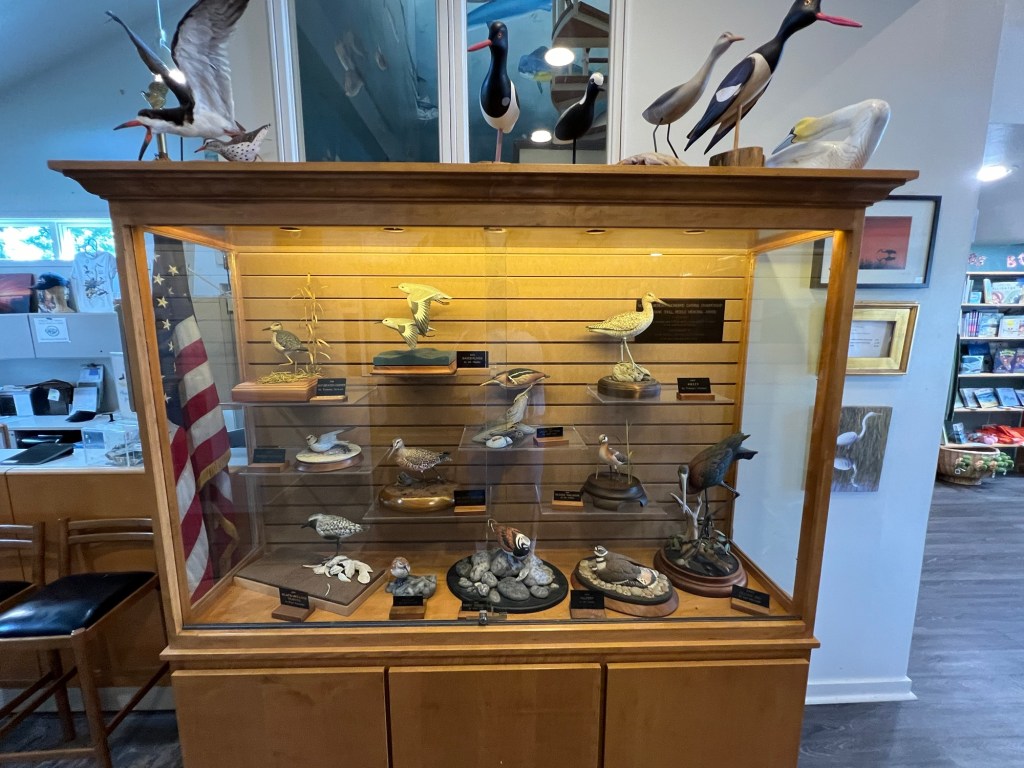
The bird exhibition at the entrance of the Institute

The other bird exhibition in the hallway

Later History:

(from the Institute Website)

In its earliest years the Institute was run by Lehigh University under a dollar-a-year lease.  That relationship continued beyond Herb Mills’ untimely death at the age of 62 on October 21, 1972 while addressing an ornithology meeting at Cornell University, barely a month after the Institute’s dedication ceremony.

After a few years, however, the Institute and Lehigh parted company amicably. The late Marion Glaspey, a shy but very determined woman, succeeded Herb Mills as Chairman of the Board and guided the Institute for several difficult years as the Institute struggled to become a self-sustaining, independent entity, and garner and maintain the kind of financial support that is vital to any nonprofit organization.  In addition to being totally dedicated to the Institute, Marion was a talented artist and photographer, teaching classes in both subjects, and–most significantly–she was a passionate gardener (she’s the  “Marion” for whom our Marion’s Garden is named). She remained on our Board of Trustees until her death in 2000.

Through Marion’s leadership and that of her successors, the Institute has evolved to become a leader in coastal environmental education, research, and conservation. At present the Institute is supported almost entirely by funds from private sources, receiving only an occasional government grant for a special project.

My visit to the Institute in the Summer of 2024:

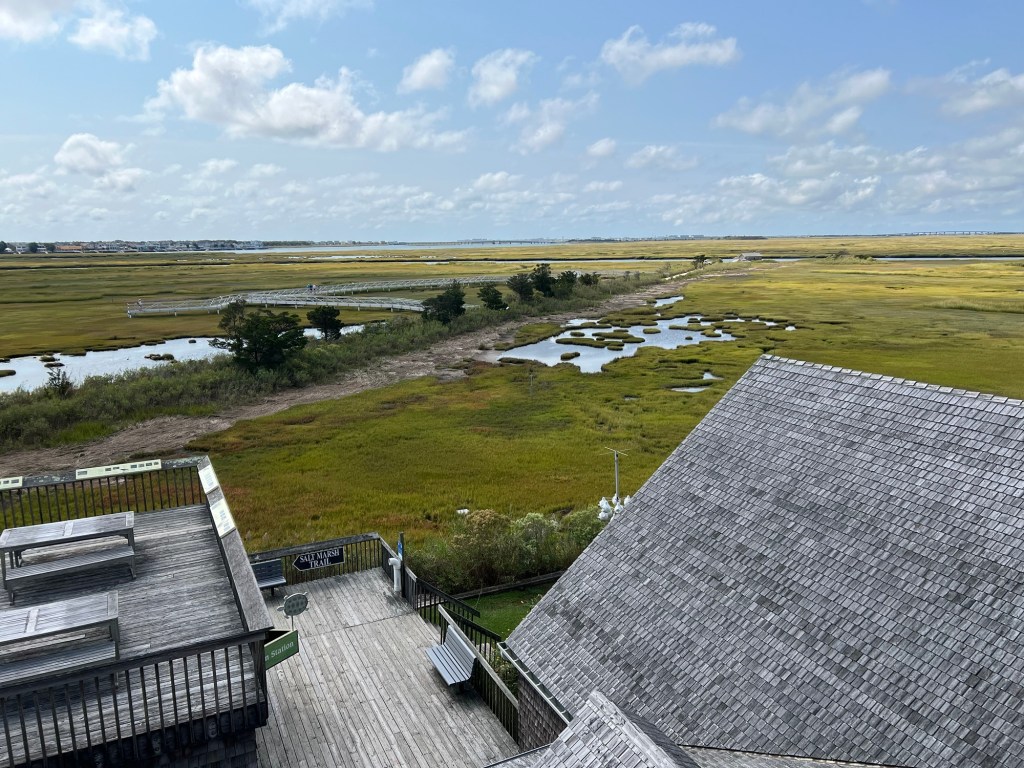
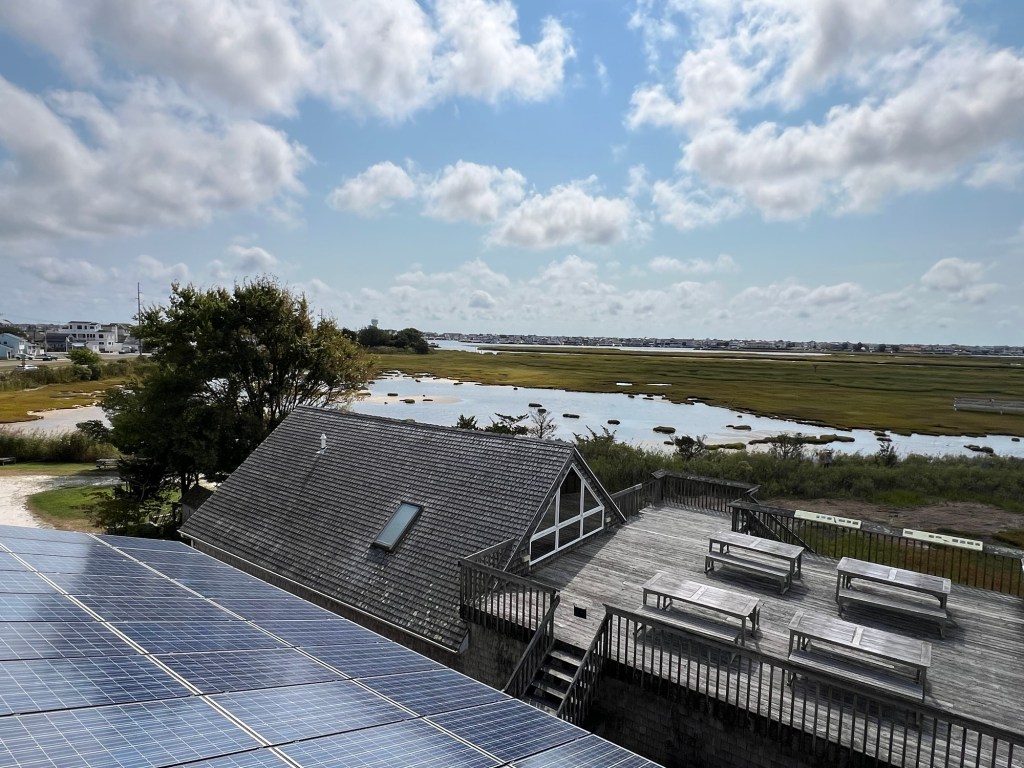
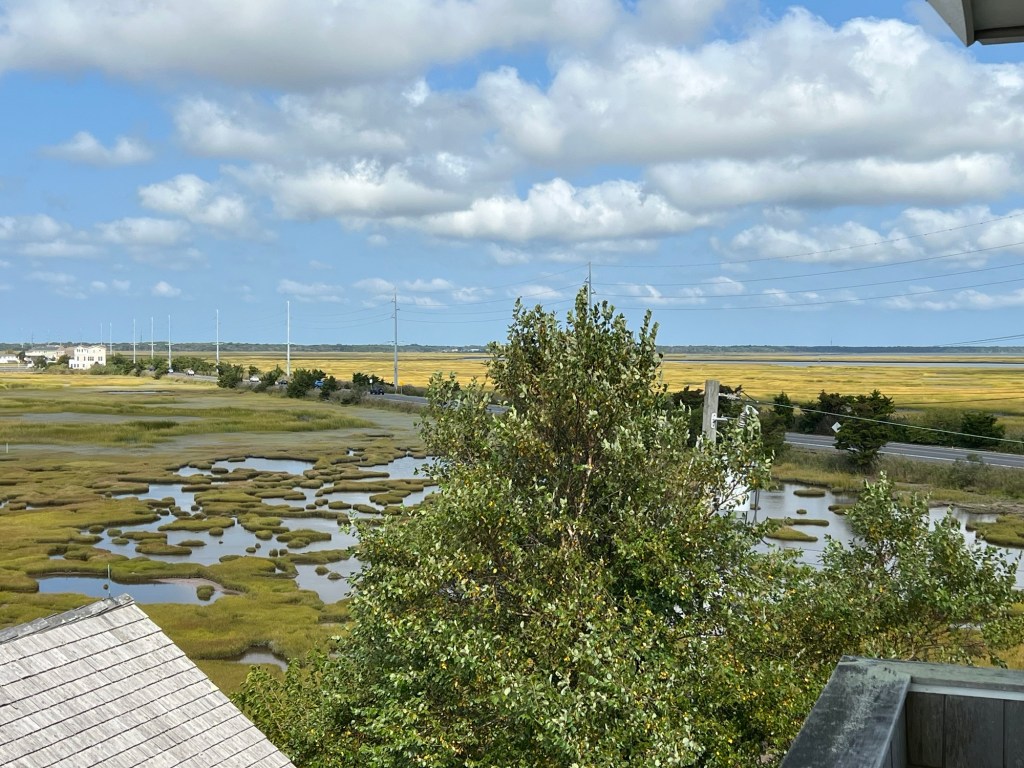
The first stop on the tour of the facility was walking up to the observation deck at the top of the building to view the salt marshes below. It gave an overview of the area that the Institute is trying to protect. The top floor observation gives a clear view of the marshes that surround the town of Stone Harbor and how these acres of area help both the natural population as well as the human population both residing in this beach community.

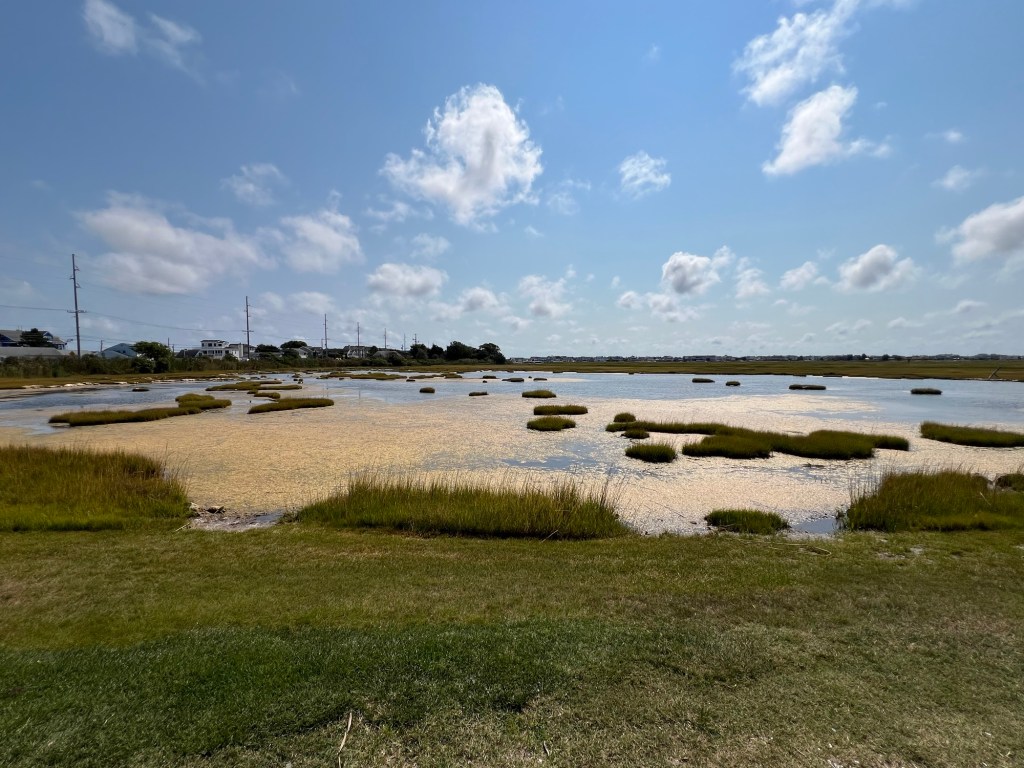
The view of the Wetlands between the barrier islands and the mainland

The Wetlands closer to the main road

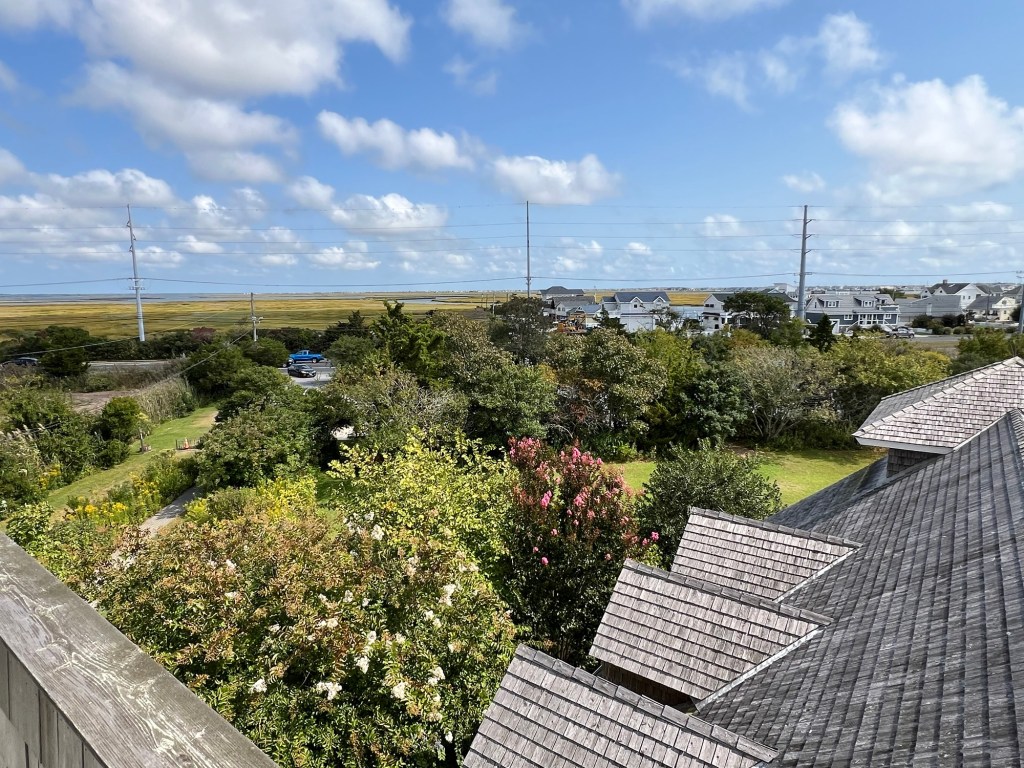
The view of the front of the building and its colorful gardens

The Wetlands that line the highway out of Stone Harbor

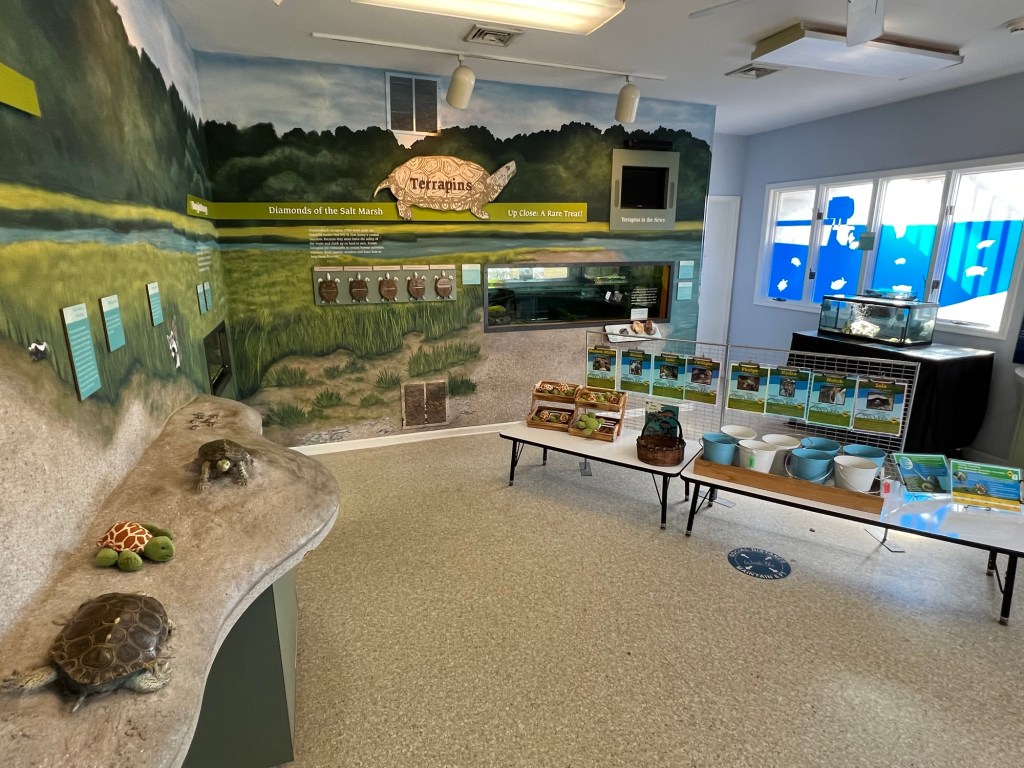
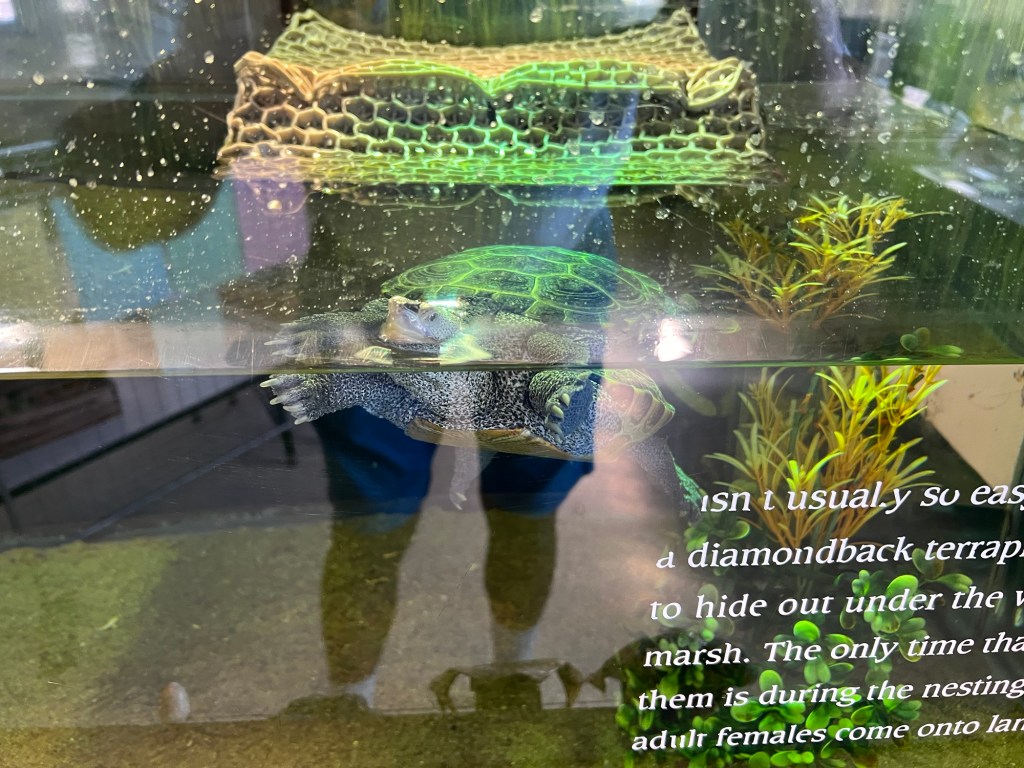
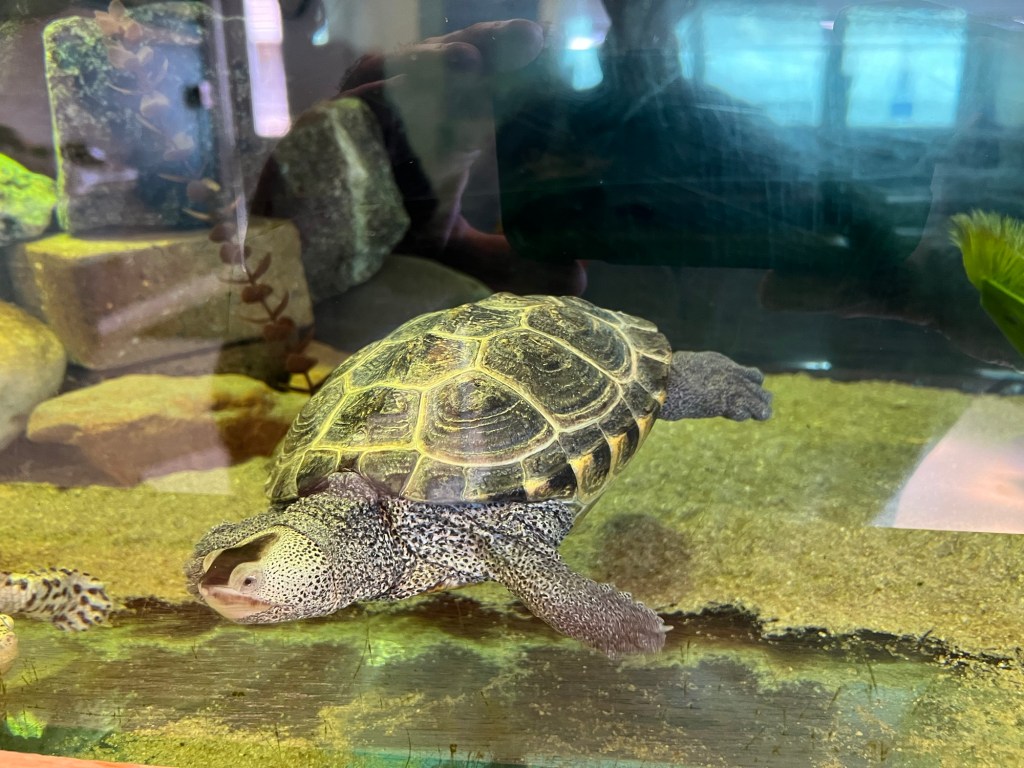
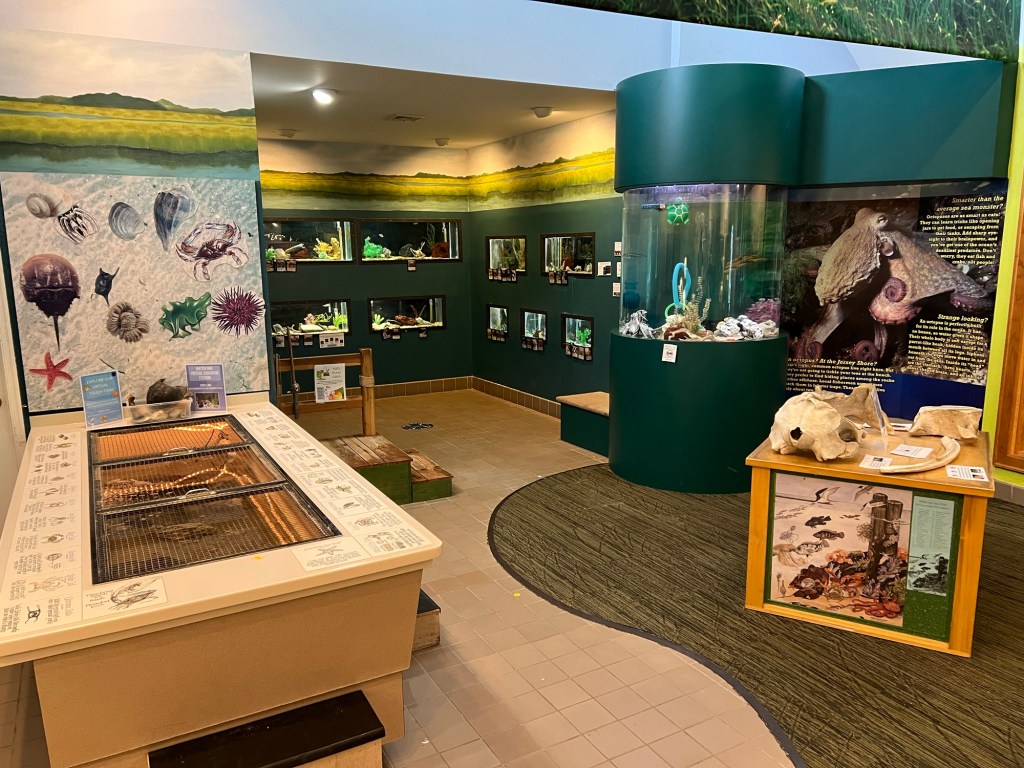
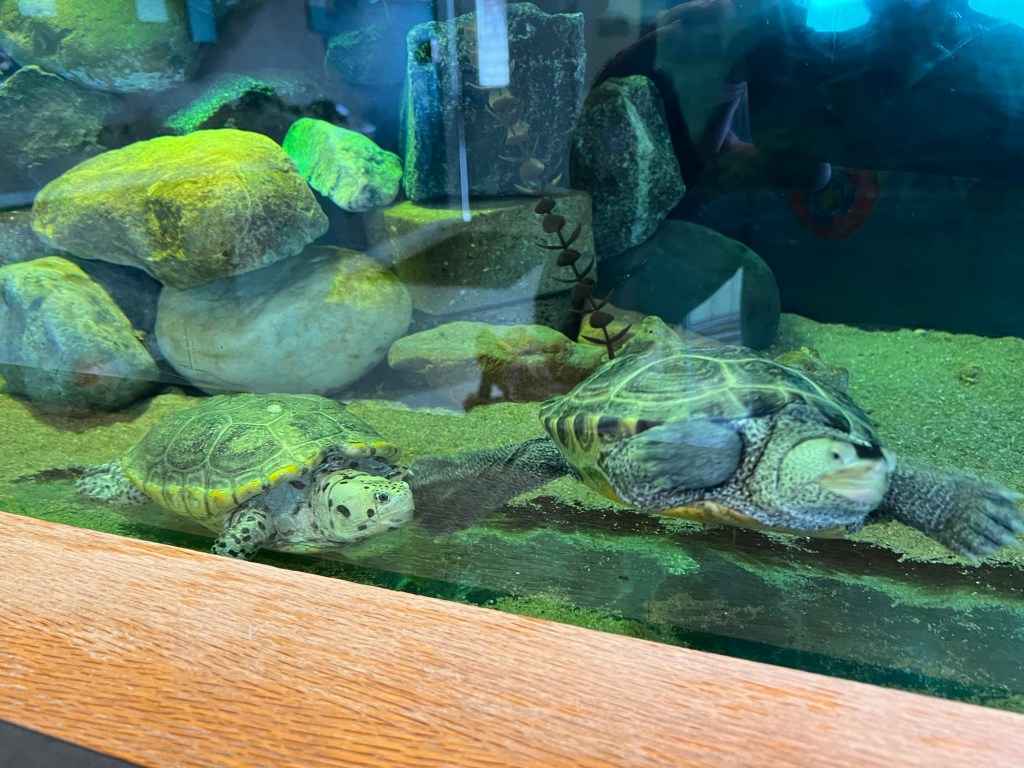
When you leave the deck area and head back downstairs, there is wonderful little aquarium that houses the background of the local fish, crabs and wildlife that are part of the ecosystem that make the salt marshes such an important part of this shore community. One side of the aquarium is dedicated to the local Terrapin turtle whose habitat has long been affected by human encroachment. This conservation effort is ongoing.

The first room in the complex of rooms is the Terrapin Turtle exhibit showing the habitat of this local creature and its importance in the ecosystem.

Conservation Programs at The Wetlands Institute

(from the Institute website)

Concerns about the local terrapin population led Dr. Roger Wood, former Director of Research at The Wetlands Institute, to establish the Terrapin Conservation Project in 1989. The project has grown and broadened in scope to become the Coastal Conservation Research Program (CCRP), where undergraduate interns work closely with research scientists at The Wetlands Institute on a wide variety of research and conservation projects, including terrapin conservation. Since 1989, over 200 college and university students from more than 100 academic institutions have participated in the program.

The turtles will just stare at you as walk their display

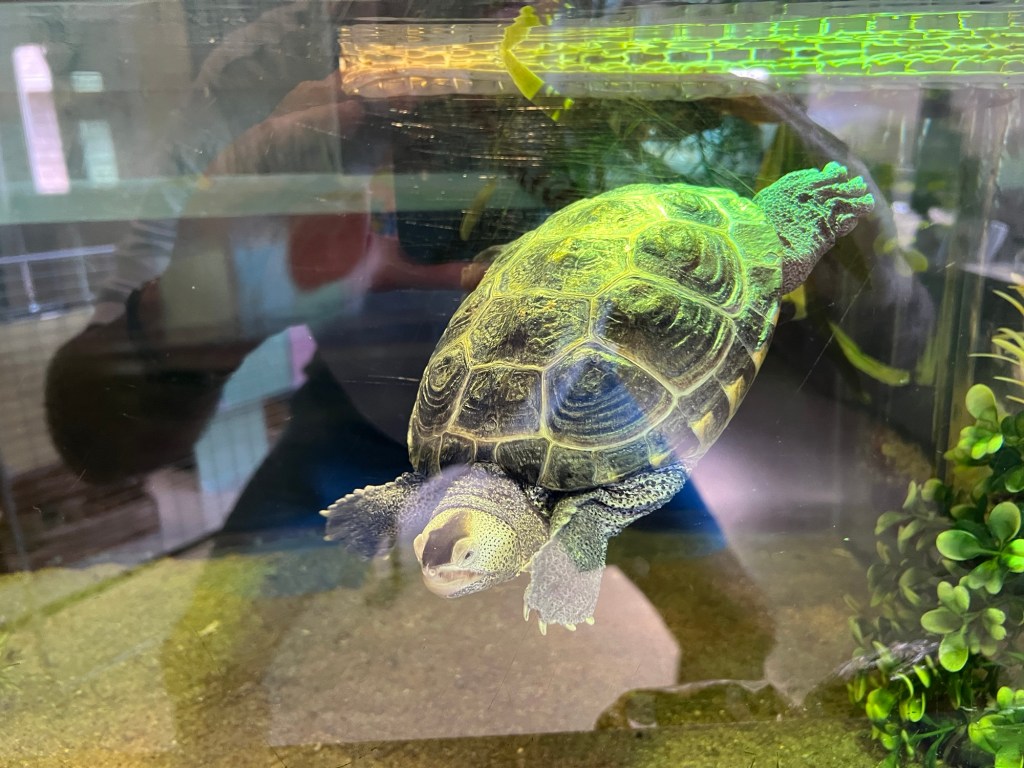
The turtles swimming around

The turtles in a recreation of their habitat

The turtles in captivity interacting with one another in the tanks

These playful turtles are just part of the chain of ocean animals under study and conservation at the Institute and it is interesting to see to their interaction with each other and then watch us from the other side of the tank to see the human observation.

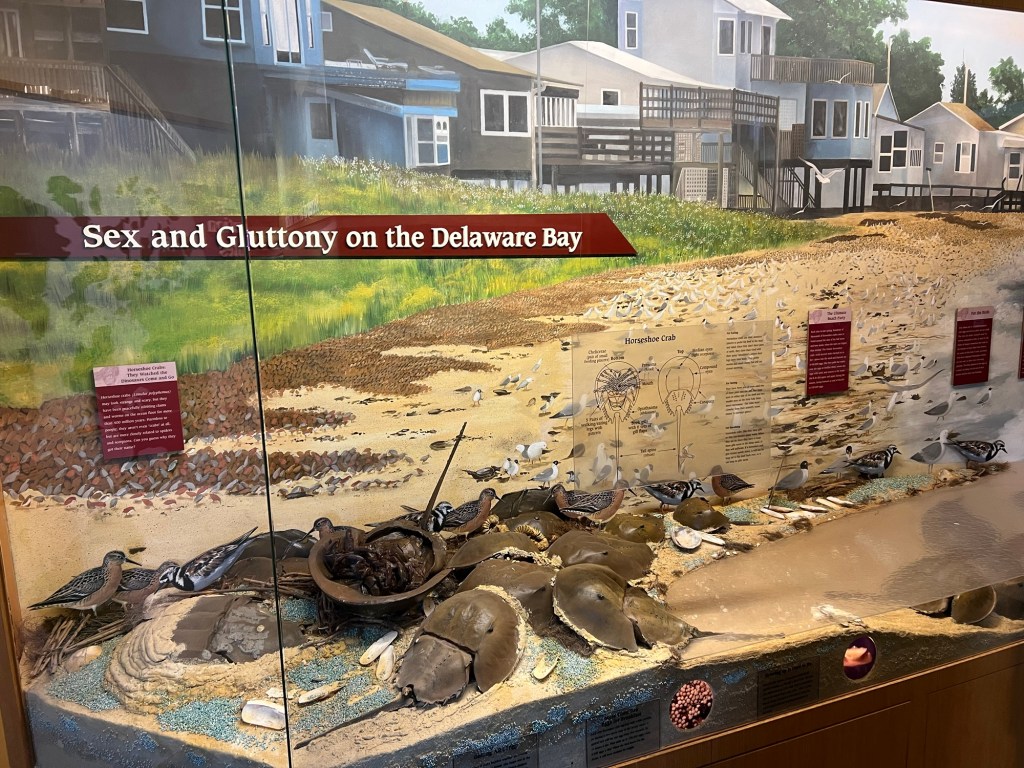
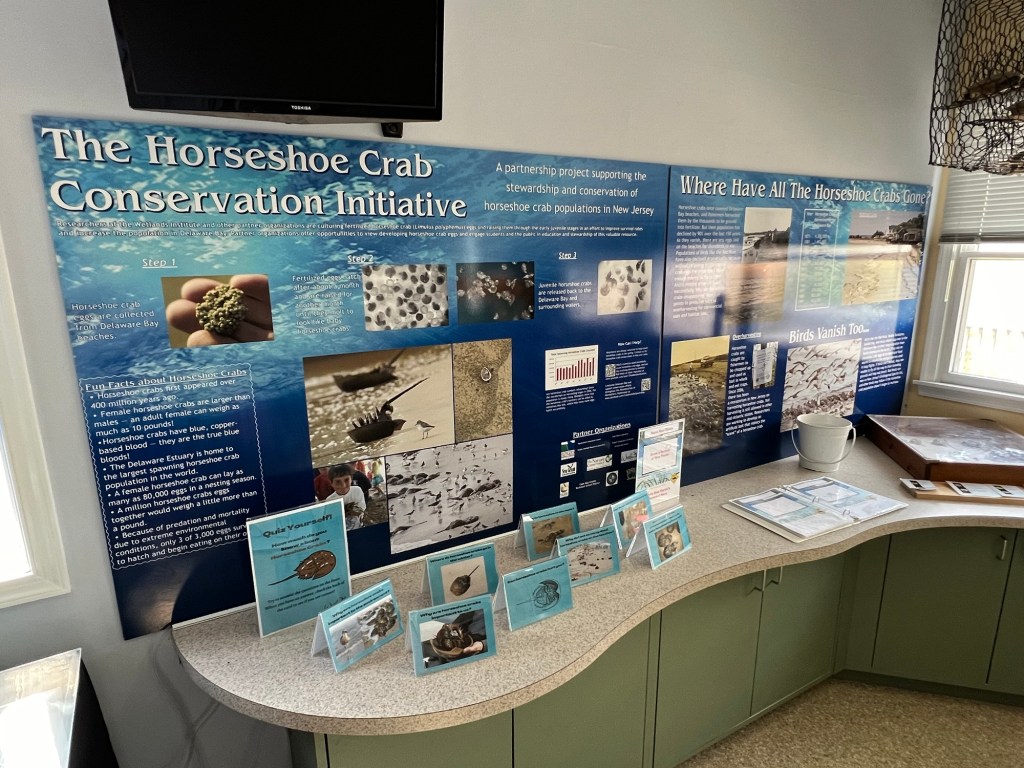
The next exhibition was the Horseshoe Crab conservation tank. The Horseshoe Crab holds a very important role in the ecology of the shore.

The Efforts with Horseshoe Crab Conservation:

(from the Institute website)

In an effort to address the Delaware Bay Horseshoe Crab situation, The Wetlands Institute has embarked on a statewide partnership project to support the stewardship and conservation of Horseshoe Crab populations in New Jersey. As part of this partnership, The Wetlands Institute collects fertilized Horseshoe Crab eggs with the proper permits from spawning beaches along the Delaware Bay and rears the eggs under controlled conditions in our aquarium. After about a month, eggs hatch and newly born Horseshoe Crabs are maintained in their culture tanks. Enclosed in this cultured environment and free of predation, aquaculture dramatically increases Horseshoe Crab survival both before and after the first molts. These small crabs are kept in culture tanks until they are ready to begin feeding, and then are released at their respective egg collection locations.

The Horseshoe Crab exhibit

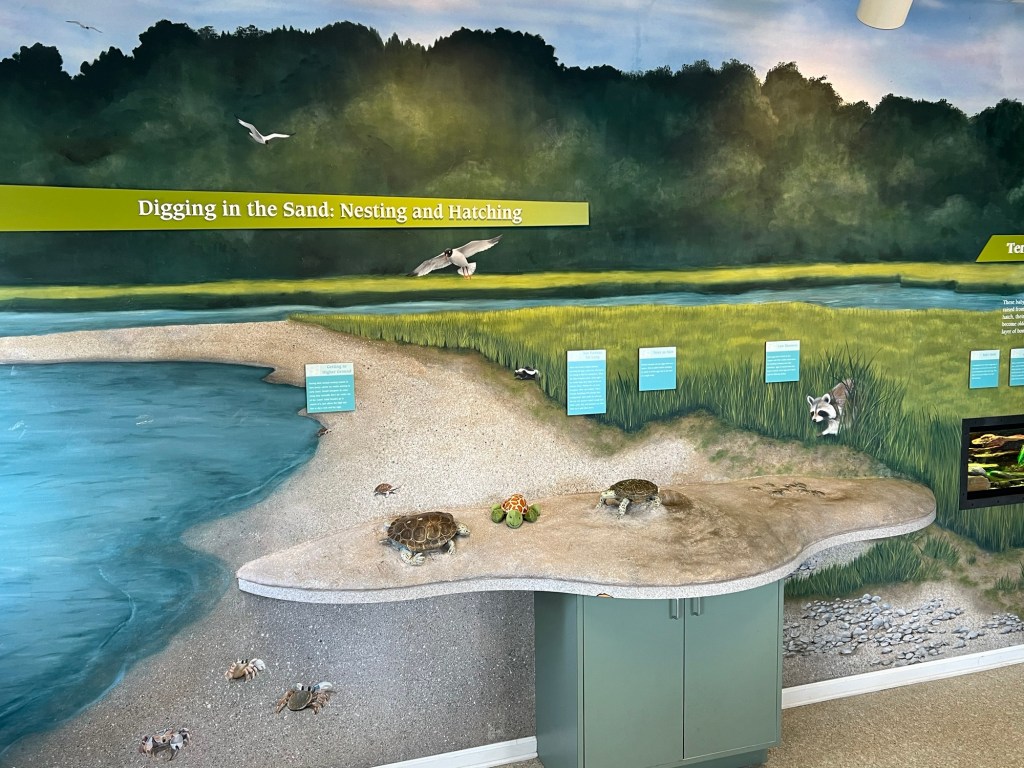
The Nesting exhibition

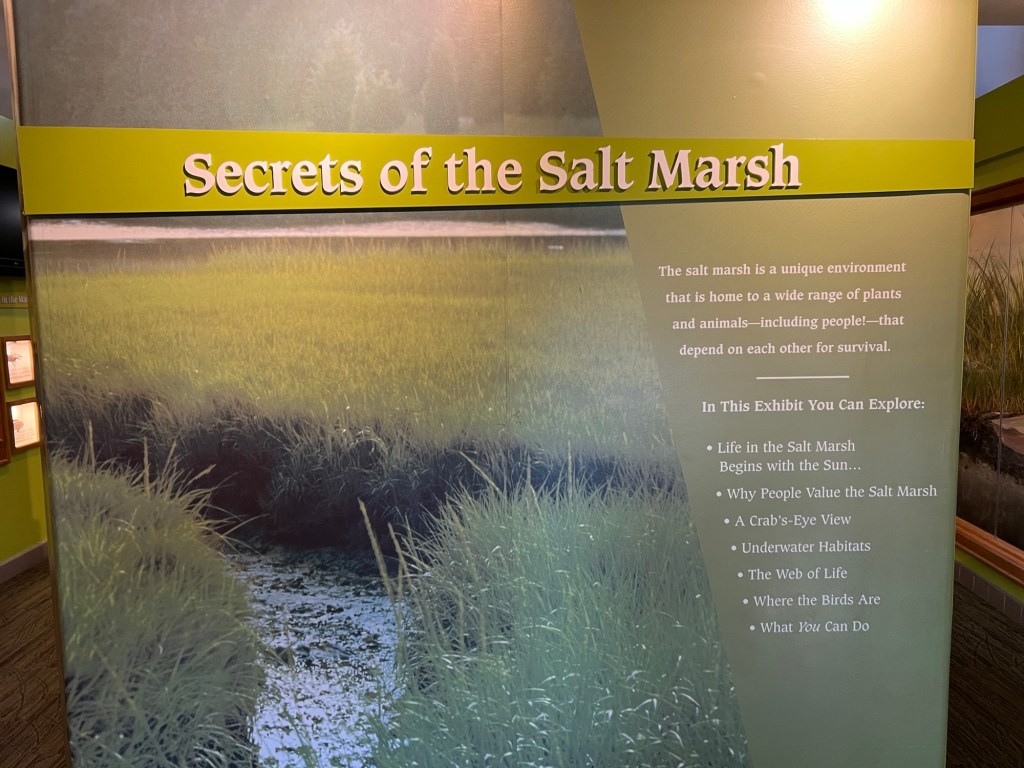
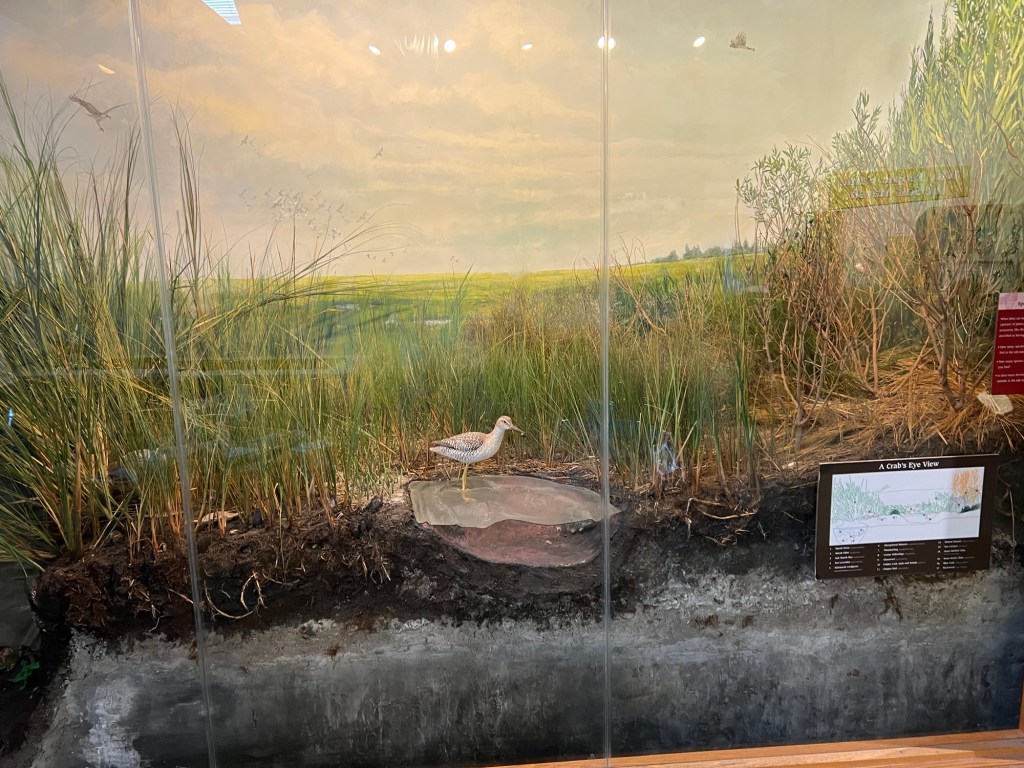
The Salt Marsh exhibition

The exhibit on how shore development is affecting wildlife and the ecosystem

The aquarium was very interesting as the exhibits were not there for amusement but to show the wildlife that lives in our oceans and how they interact with one another.

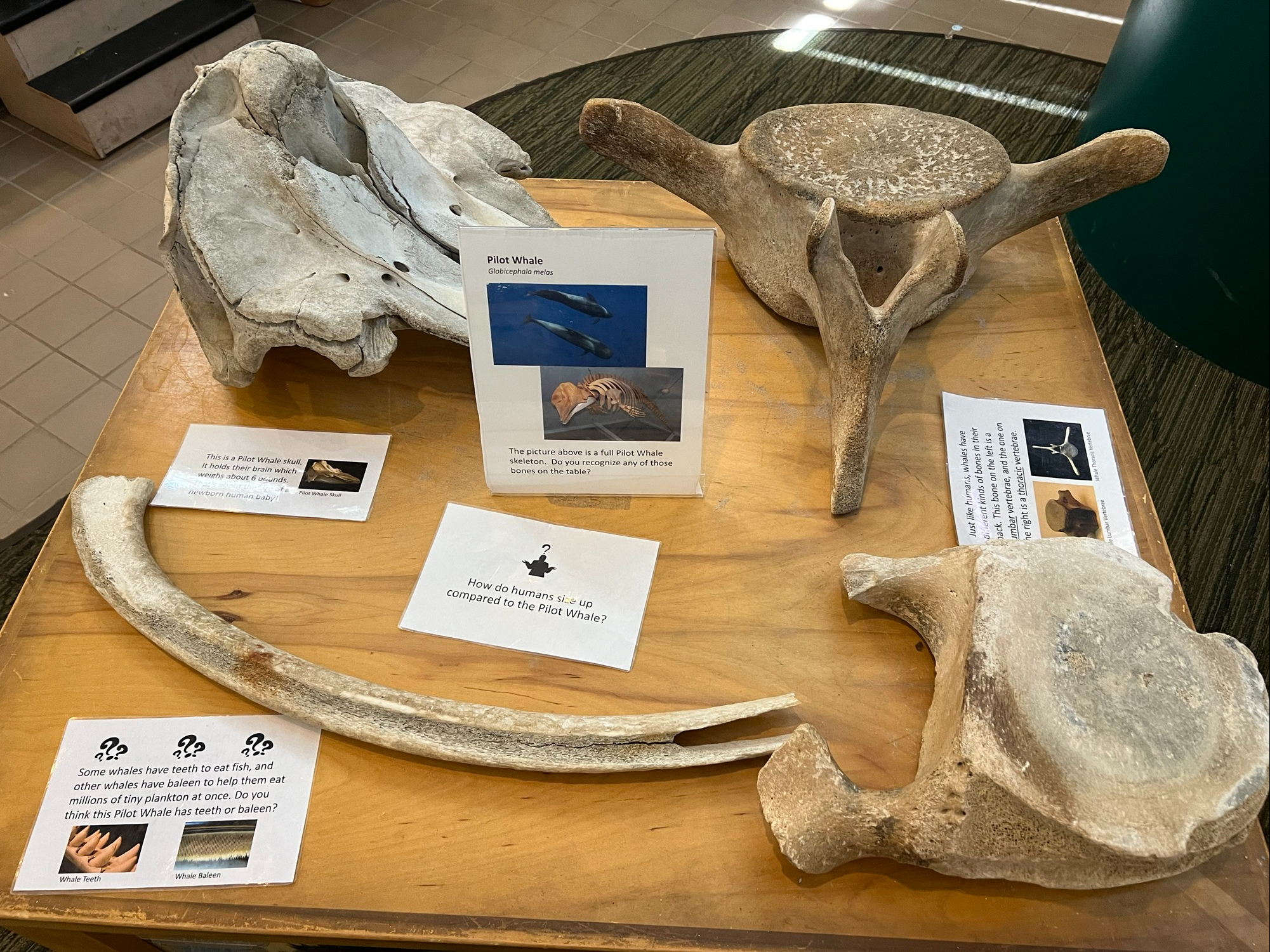
The Whale bone exhibition

The exhibit on Shore birds and their home at the shore

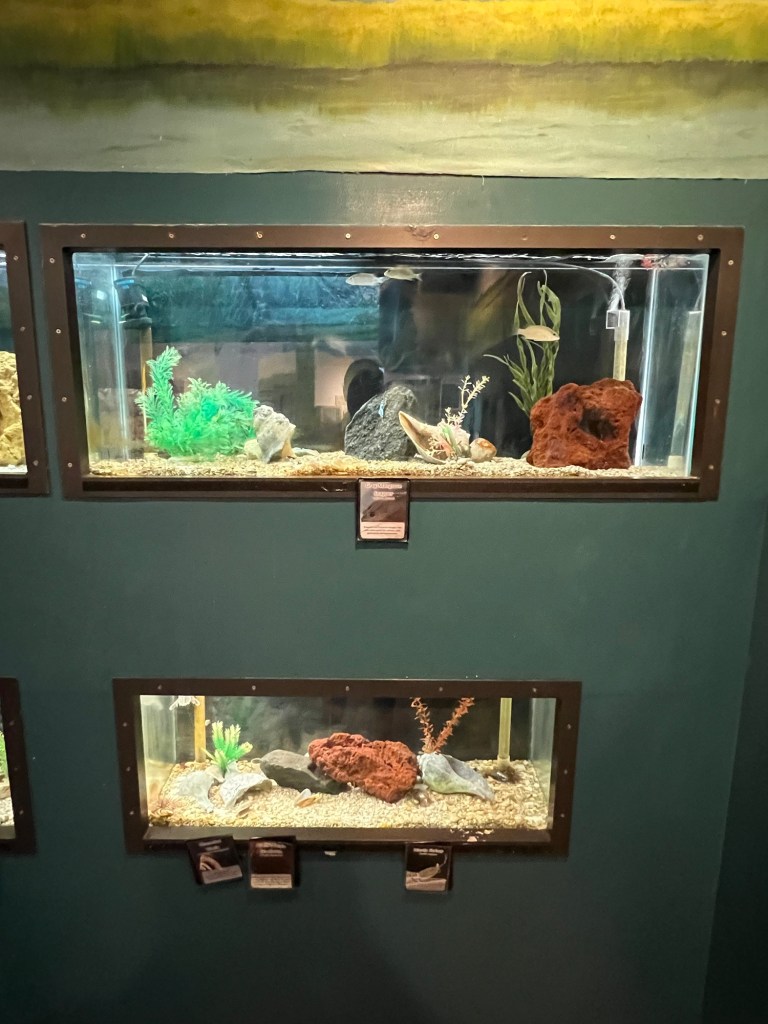
The Aquatic tanks are the interaction we have to the aquatic population. I am sure many of the fish in the exhibition are not native to New Jersey or the Atlantic still it was fun observing them.

The tanks showed the importance of marine life in our beaches and oceans

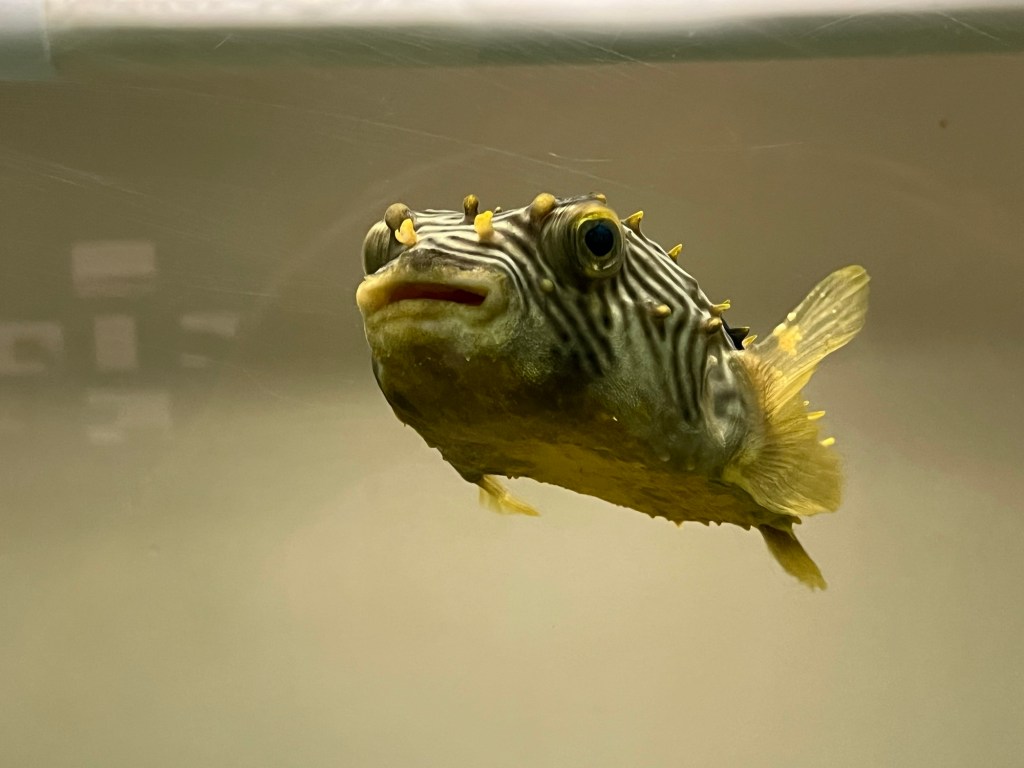
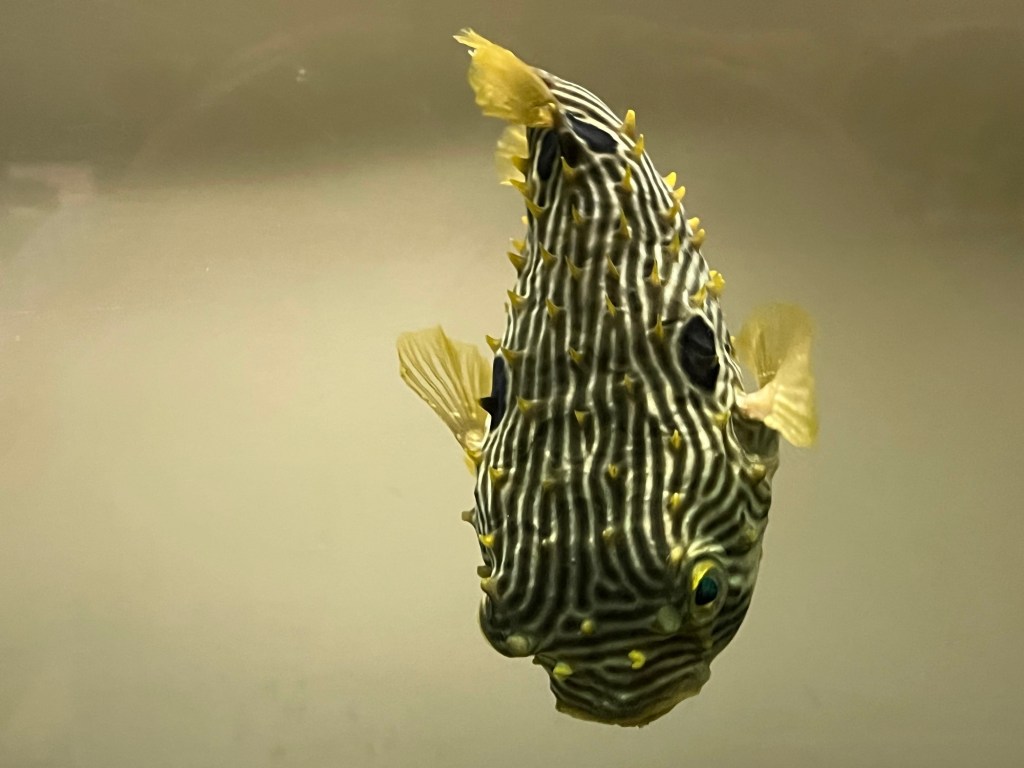
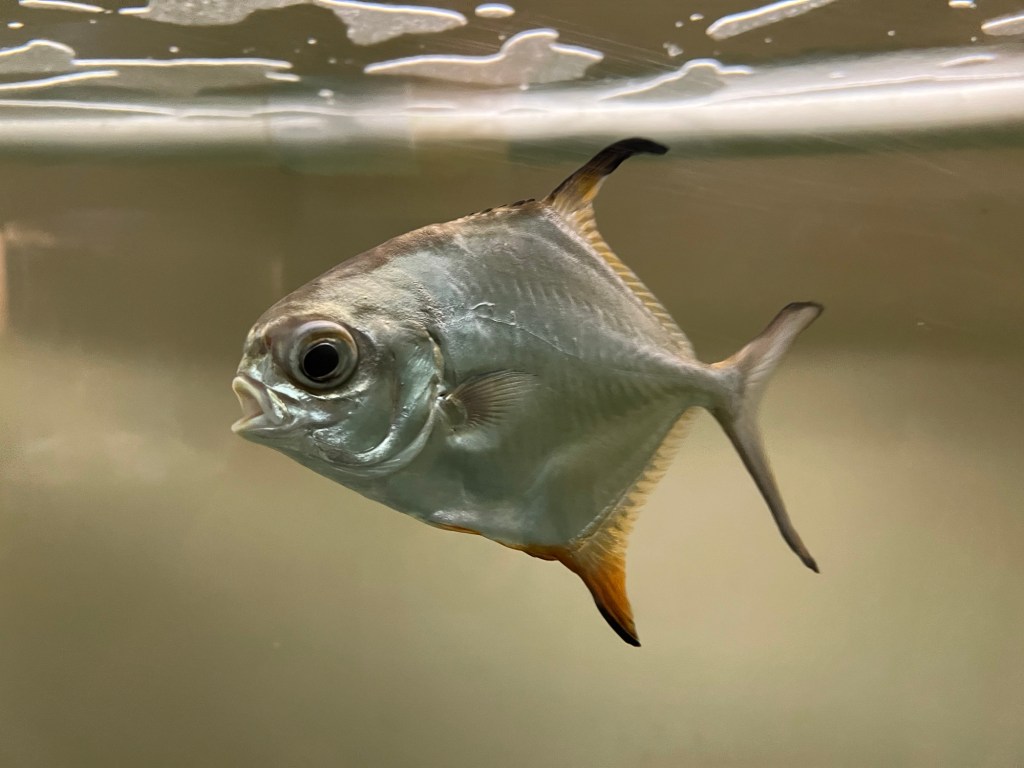
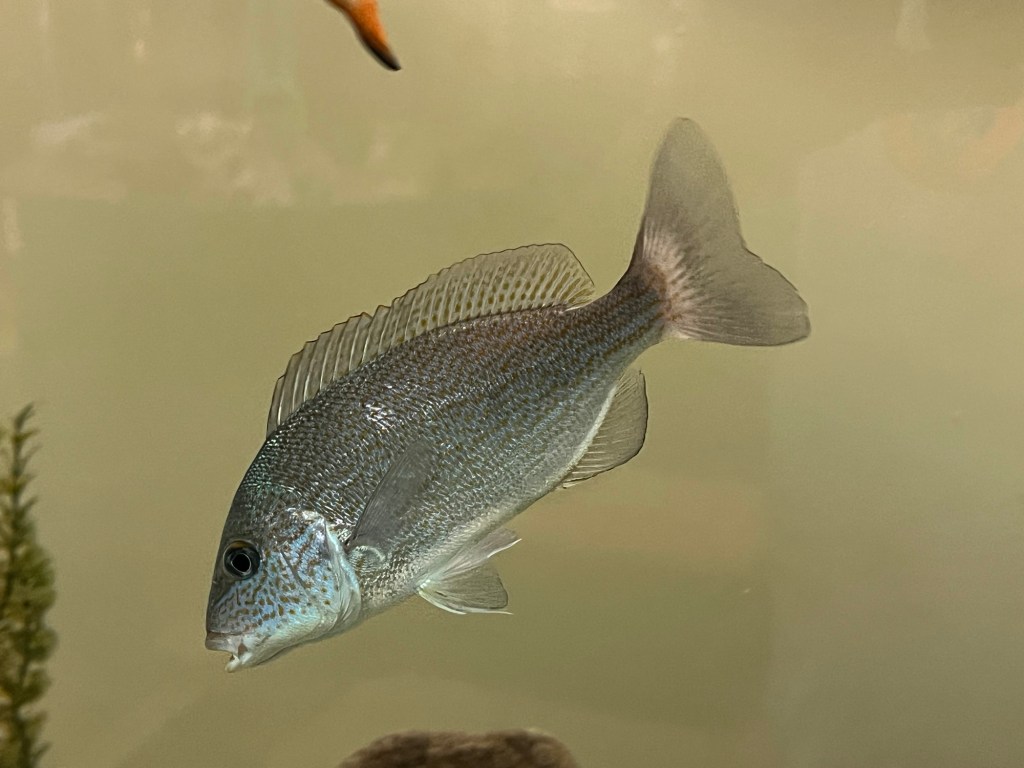
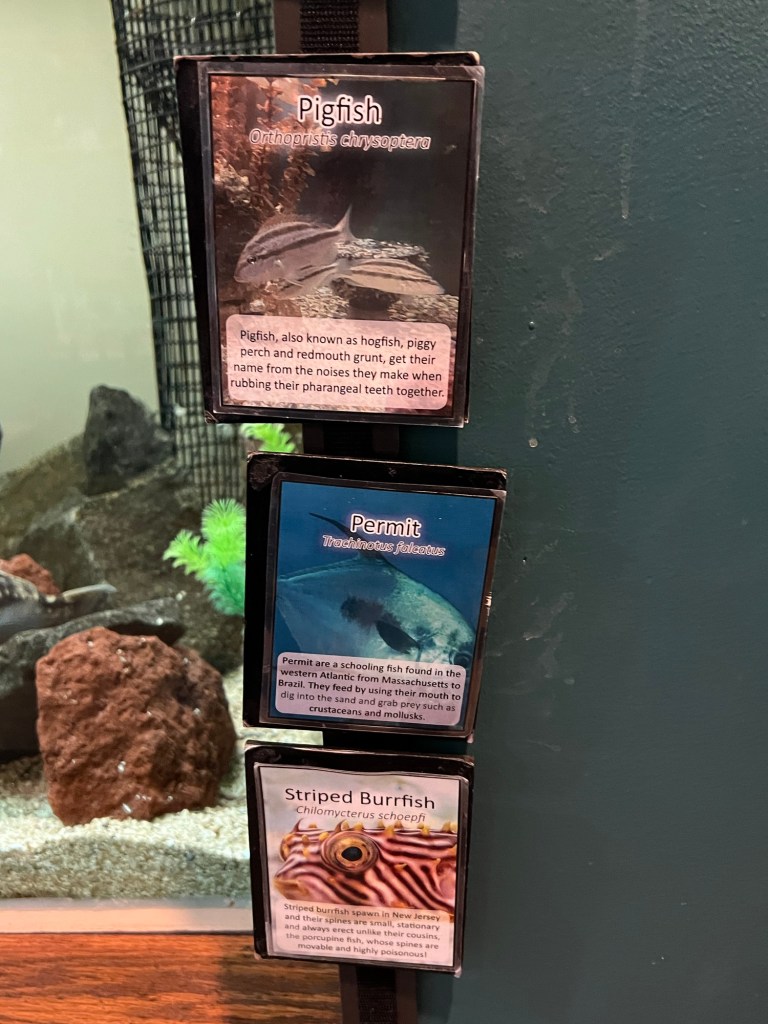
Some of the types of fish in our oceans: the Striped Burrfish, Permit, and Pigfish

The Striped Burrfish

The Stripped Burrfish

The Permit fish

The Pigfish

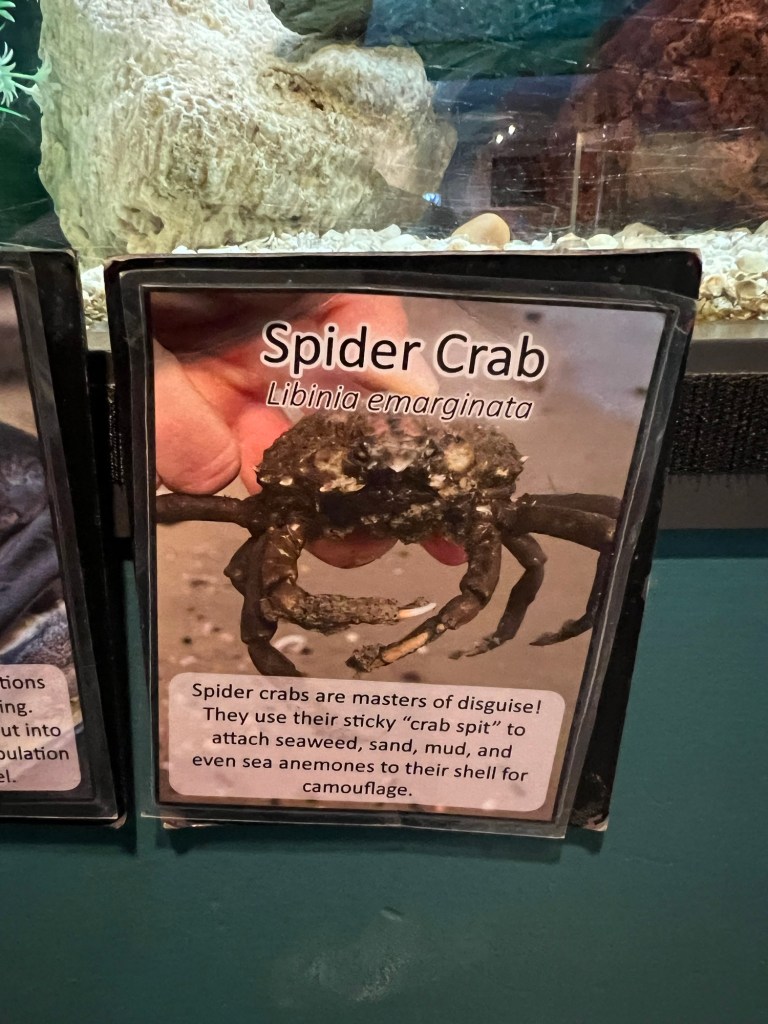
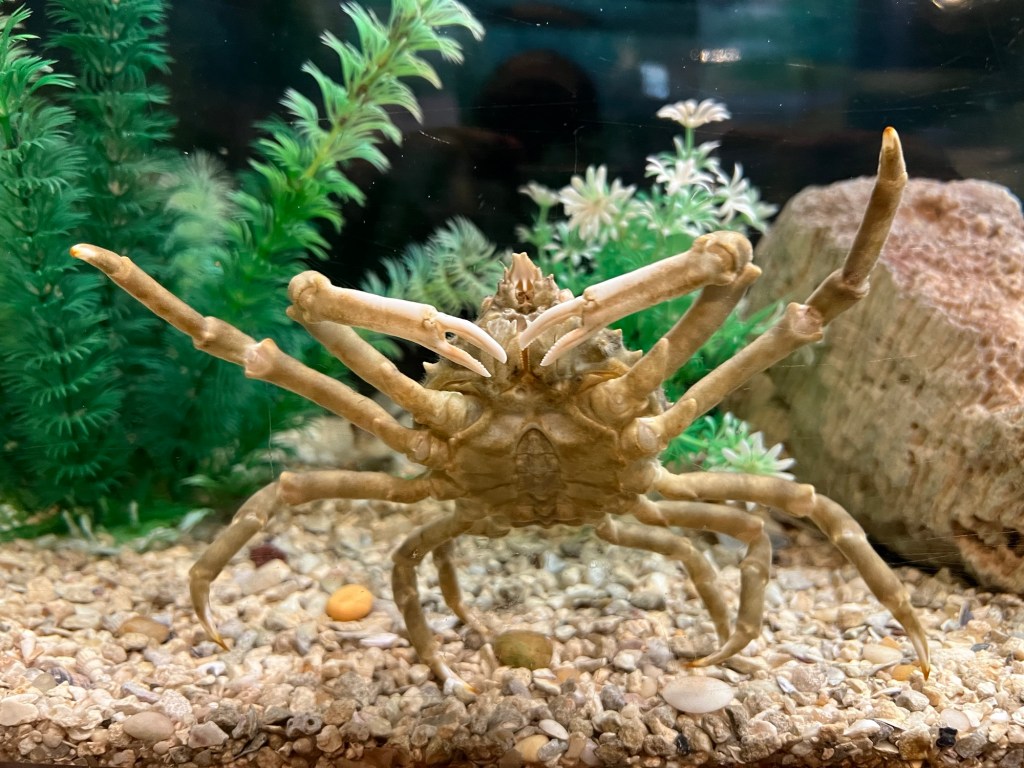
The next tank over held the very active Spider Crab, who seemed to follow my every move.

The sign at the tank of this very playful crab

This guy was following me around the tank

The aquarium was interesting because the fish seemed to be very jaded of being around humans. They seemed so used to seeing us it does not faze them.

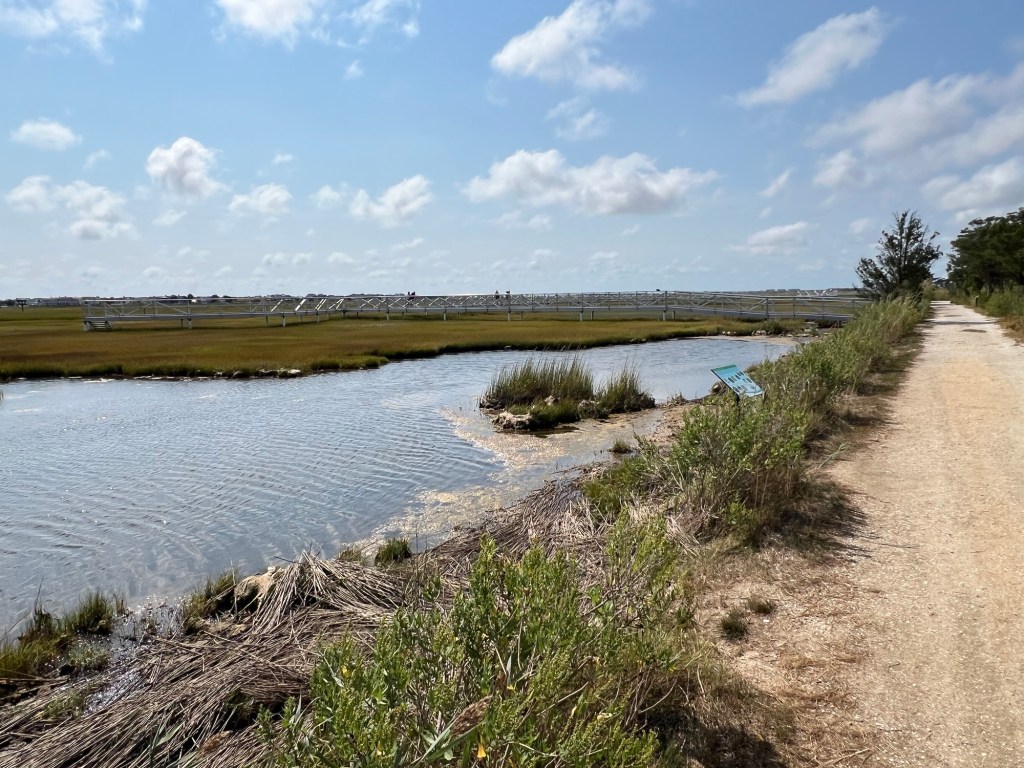
I then toured the salt marshes outside. The Institute has a series of paths and walkways where you can view the marshes and see the cause and effects these natural areas. It was a beautiful warm sunny day when I visited and it was relaxing to just walk along the paths and just take it all in.

The view of the salt marshes from the back of the Institute

A closer view of the marshes from the paths

Coastal Sustainability and Wetland Health

(from the Institute Website)

The Coastal Sustainability and Wetland Health program began with efforts to document the impact of sea level rise on marshes and marsh-dependent species. The health of coastal bird and diamondback terrapin populations is intricately linked to the condition of coastal marsh systems; as a result, monitoring changes in the local population size, behavior, and breeding success of these animals can help us perceive changes within the salt marsh itself. Our work is also increasingly focused on the monitoring of marsh restoration and habitat creation projects. Through beneficial reuse of dredged sediments, we aim to protect the marsh platform from conversion or drowning, and to create elevated coastal bird and terrapin nesting habitat. In order to understand the response of wildlife to these projects, and to document how sea-level rise and coastal flooding are impacting local populations, we are carrying out surveys of marsh-dependent species on The Wetlands Institute property and other restoration sites (Institute website).
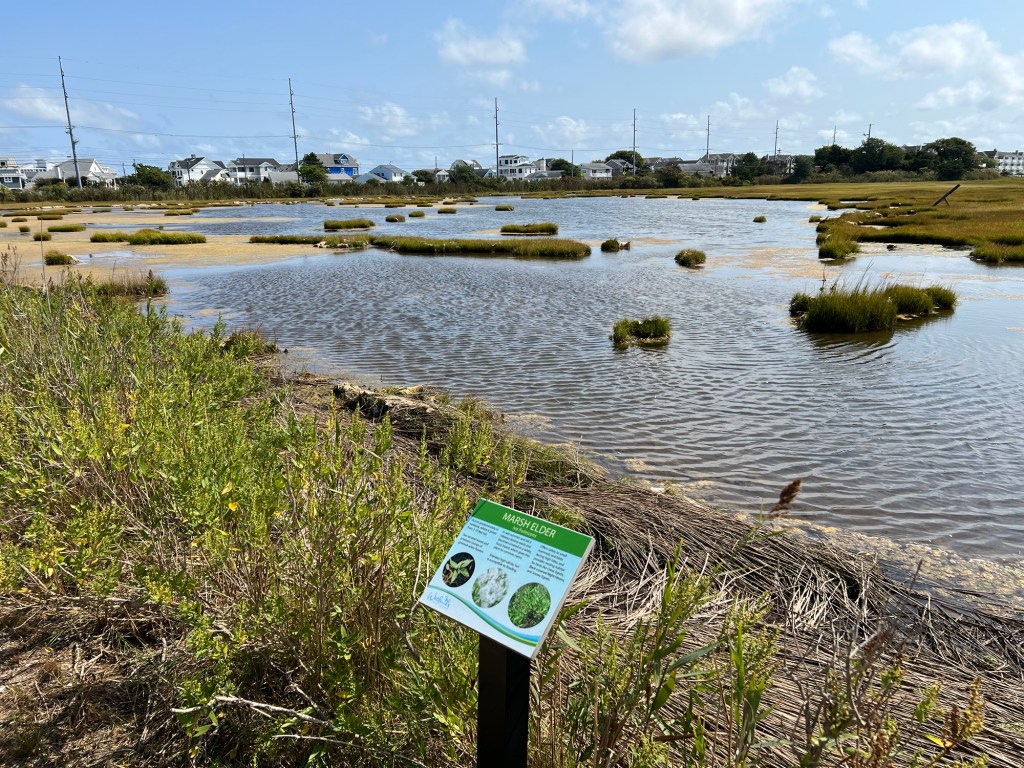
The Marsh Field sign

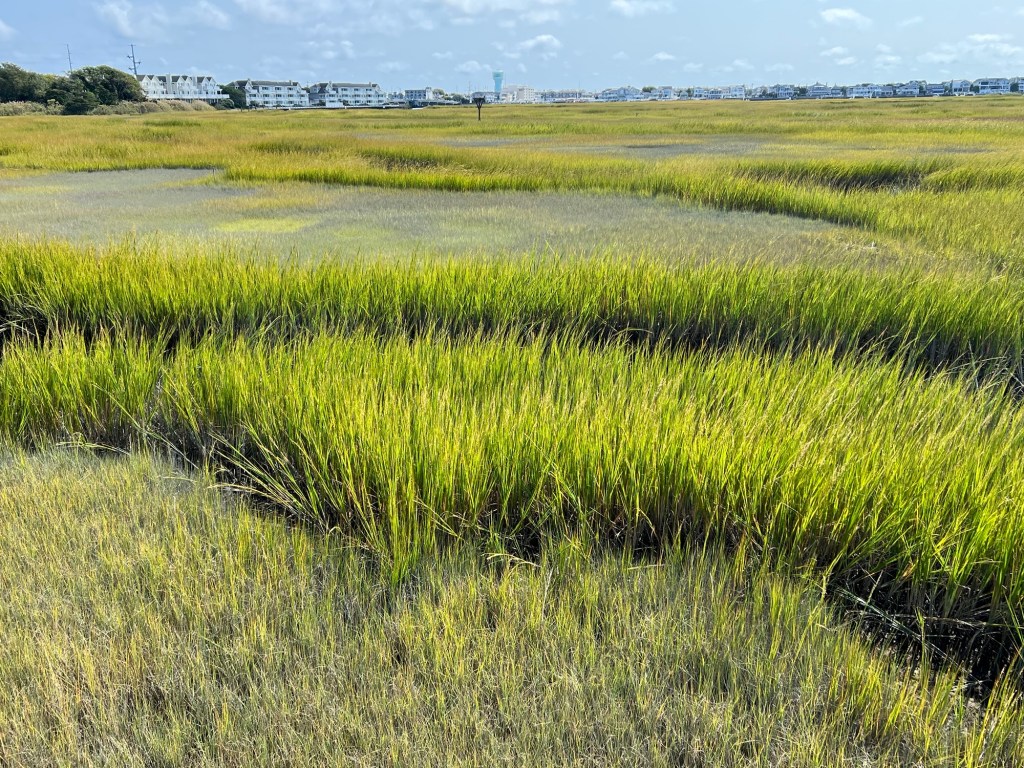
The Salt Marshes

The back of the Institute from the Salt Marshes

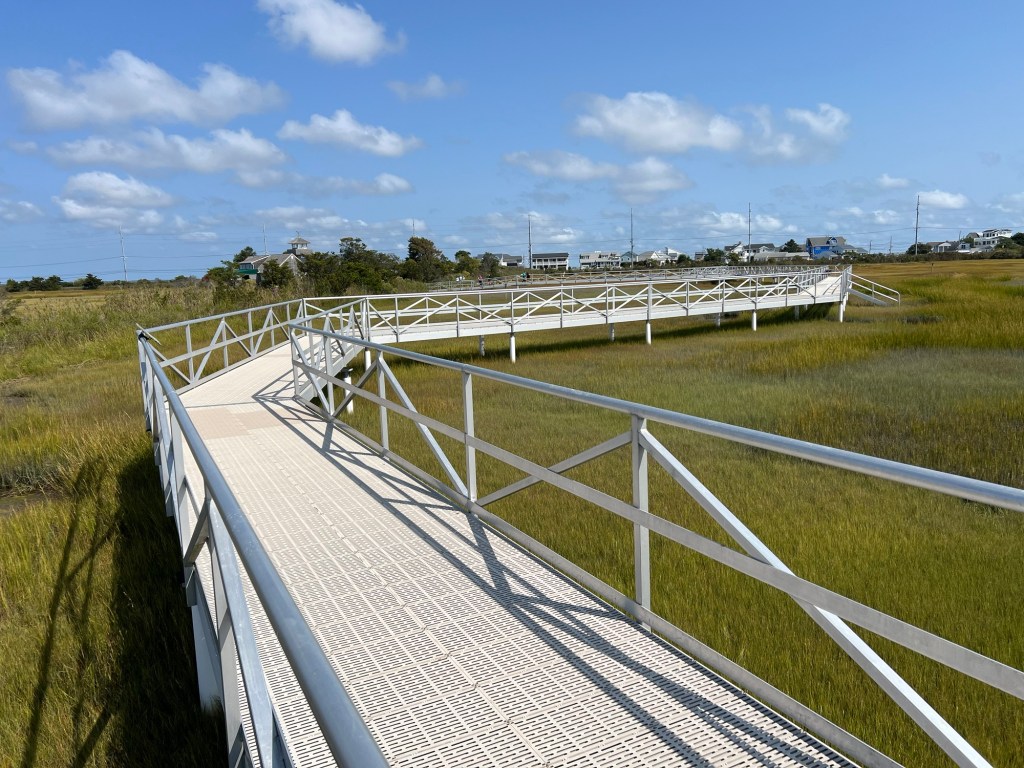
The Institute has a complete elevated walkway where you can walk through the marshes and observe the area.
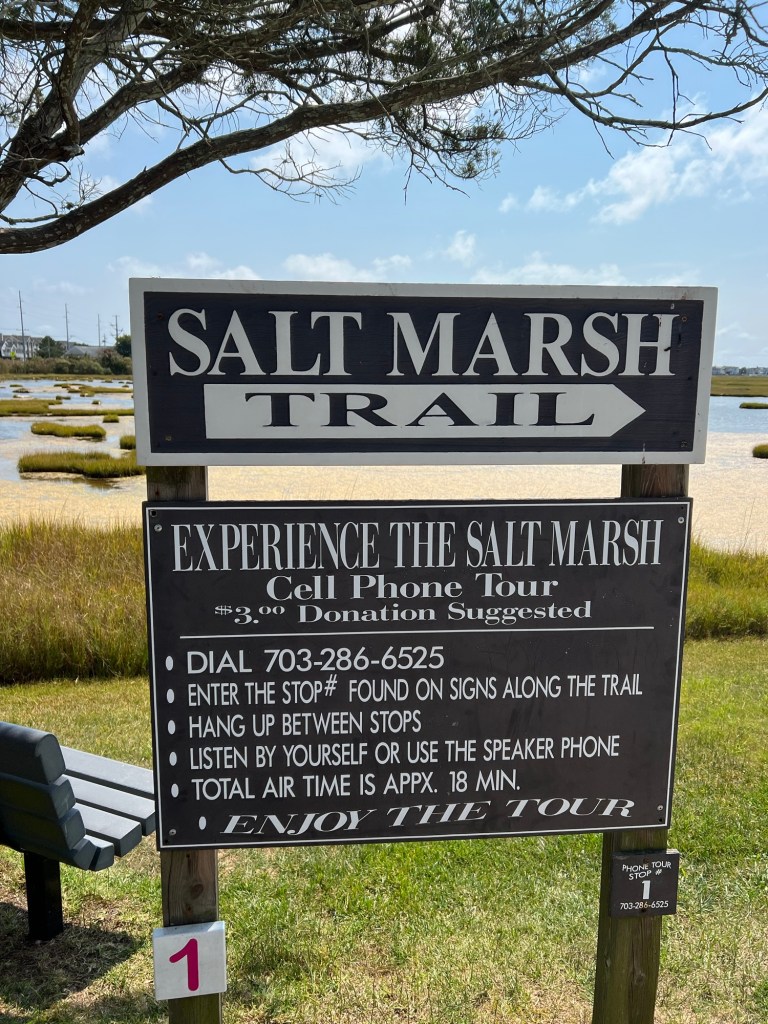
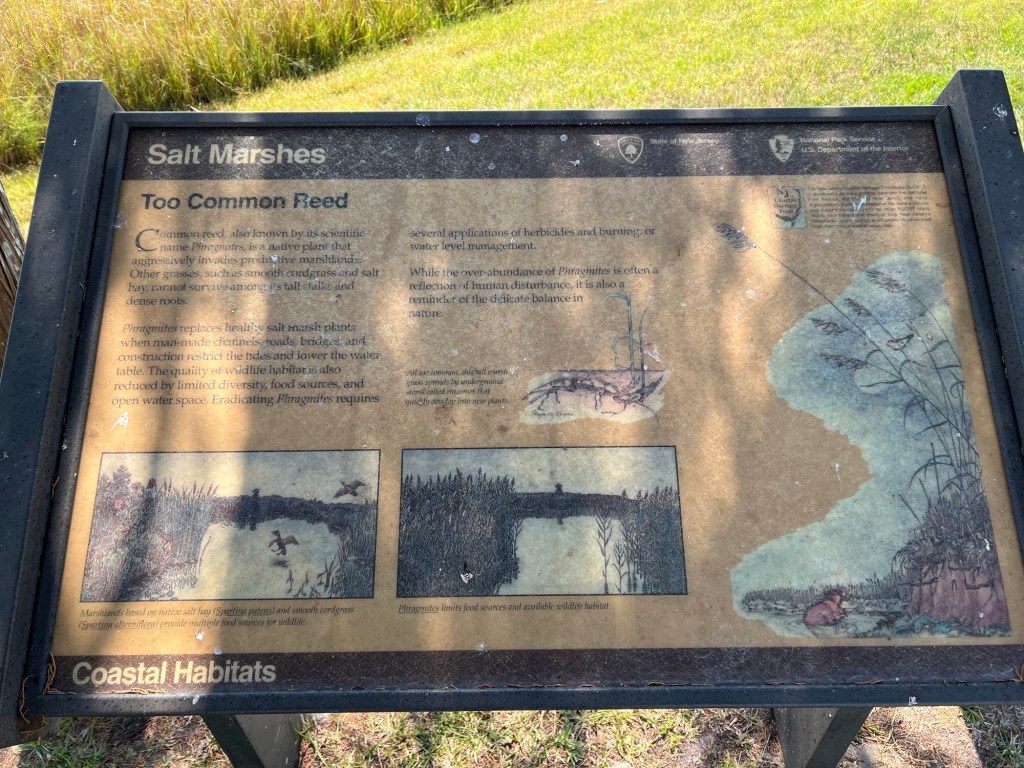
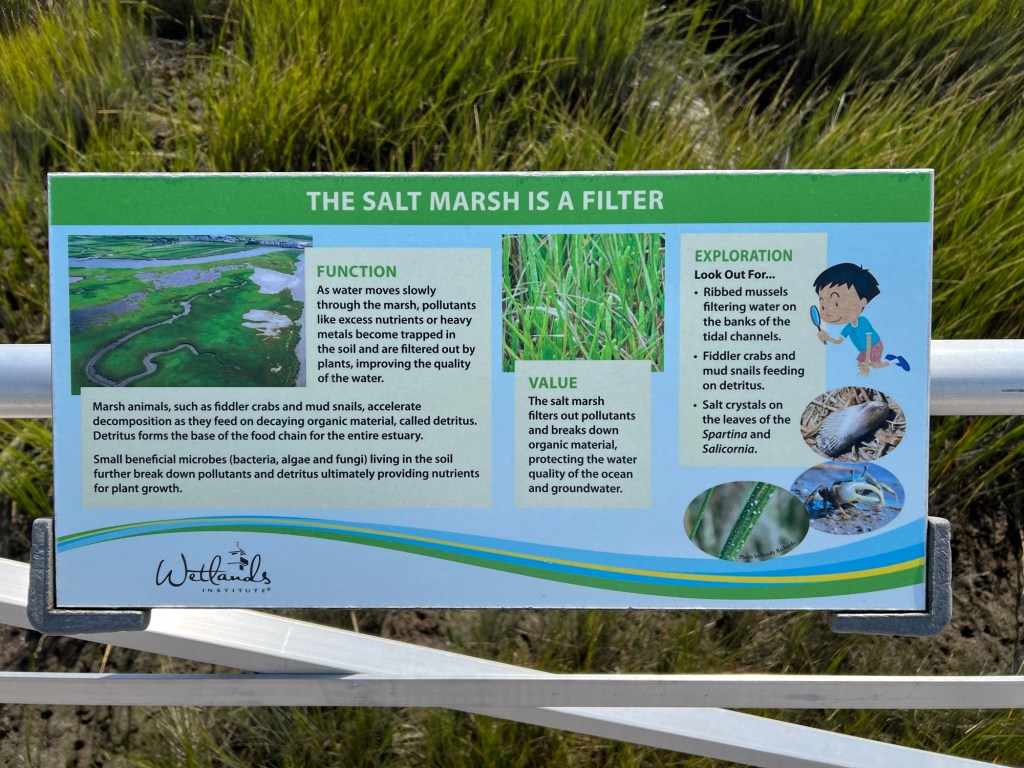
The sign explaining your walk through the marshes

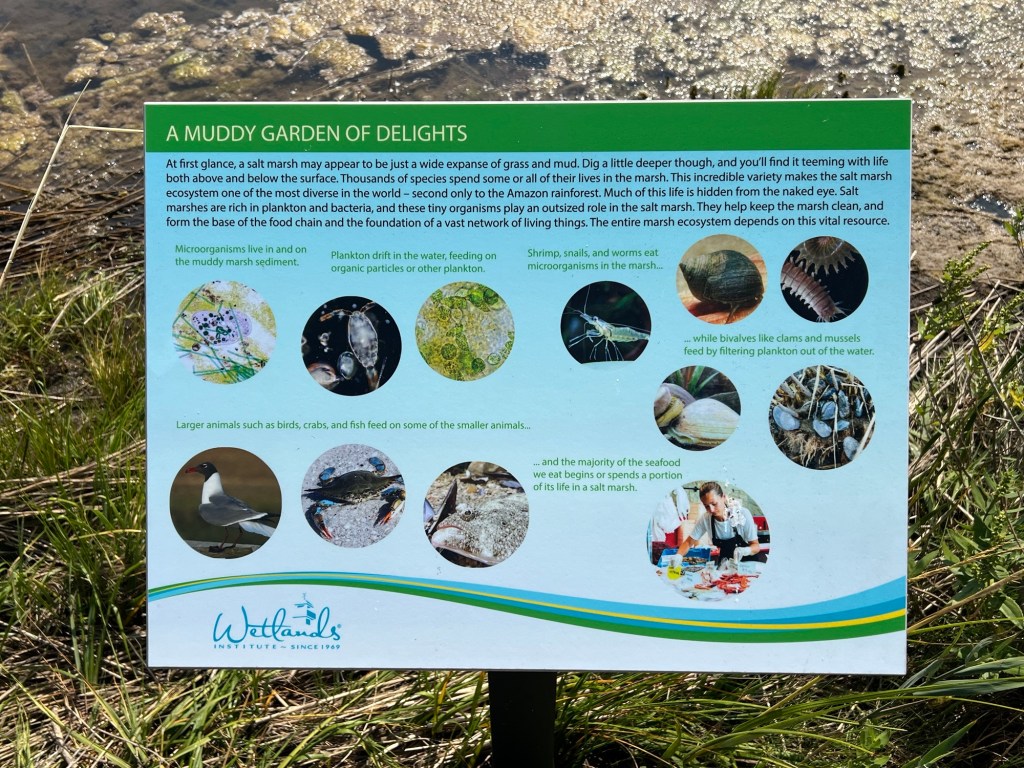
The possible animals and fish you will see on the walk

Plan to take the time to walk through the pathways on a nice day and observe the salt marshes. You will not see many animals or fish but you know they are there. It is interesting to see the town of Stone Harbor in the distance and realize how much these marshes help the human population without them knowing it. Not just are they beautiful to look at but how what an important role in the environment they play.

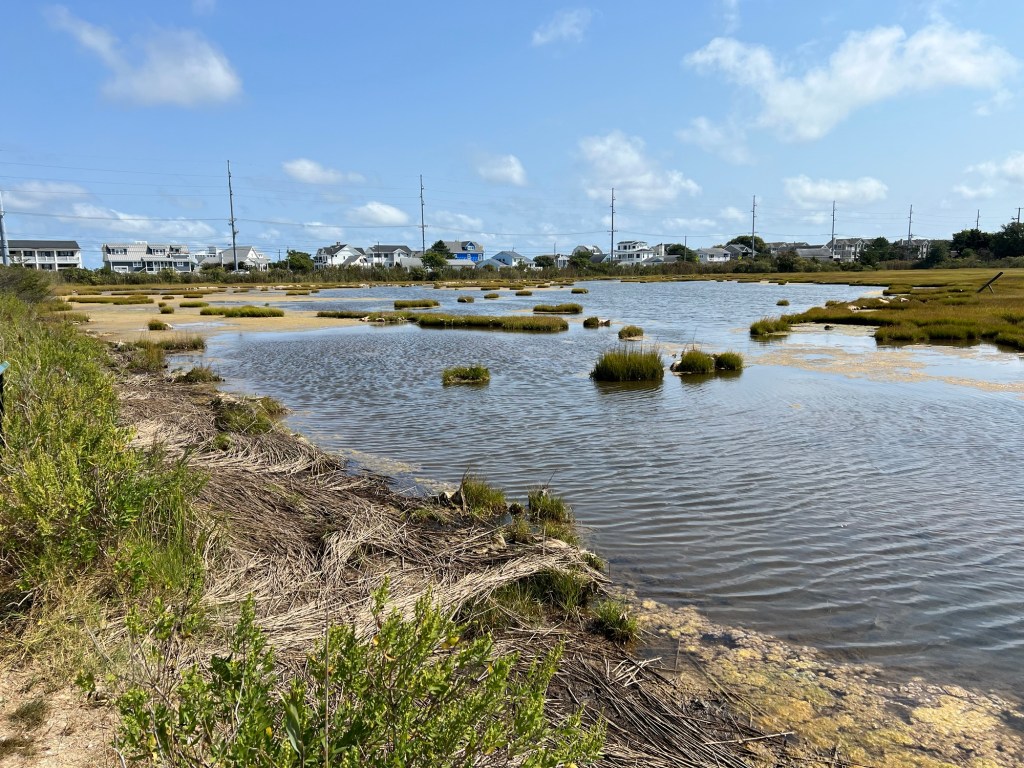
The beautiful view of the marshes

The elevated walkway goes through the marshes and offers excellent views

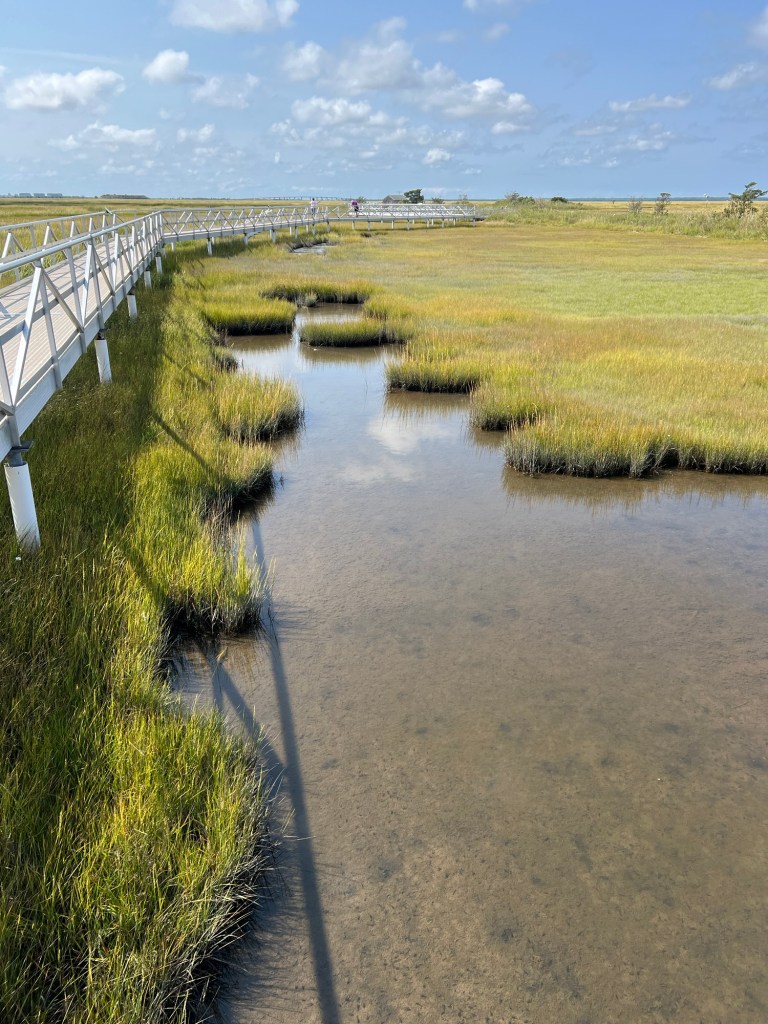
The marshes from the walkway

The effects of a healthy marsh

The breathtaking views of the marshes

When you finish the walk of the pathways and the elevated walkway, this leads you back to the Institute.

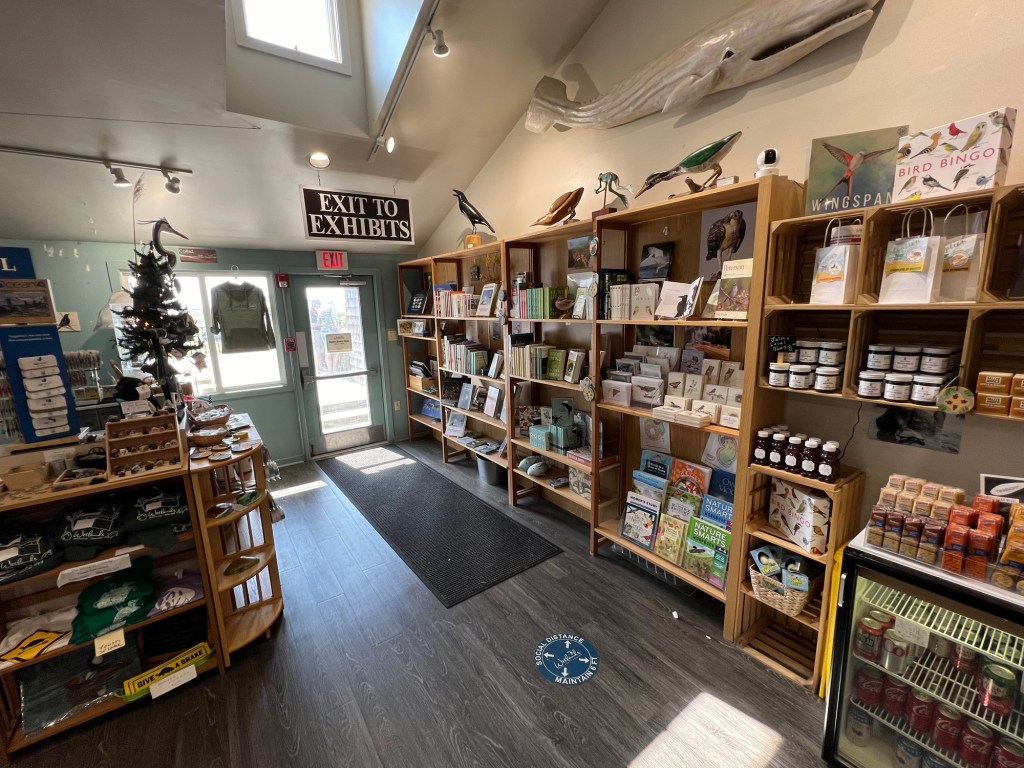
Don’t miss a trip to their terrific gift shop with all sorts of fun items and nautical gifts. I bought a delicious jar of the local beach plum jelly. That was a treat. There are all sorts of interesting gift items in the store from gifts from local farms to items dealing with conservation and nature to children’s items. This benefits the Institute and its mission.

Don’t miss one last stroll through their gardens on the way out the door.

What I liked about the Wetlands Institute was that it was engaging, entertaining and educational all at the same time. You walk out with a lesson learned of the positive efforts being made to save the environment in a way that does preach but first shows the cause and the effect and with simple efforts made can benefit everyone.

Avalon History Center                                                              215 39th Street                                                                     Avalon, NJ 08202

Avalon History Center 215 39th Street Avalon, NJ 08202

Avalon History Center

215 39th Street

Avalon, NJ 08202

(609) 967-0090

https://www.avalonhistorycenter.org/

https://www.facebook.com/avalonhistorycenter/

Open: Sunday Closed/ Monday-Friday 10:00am-4:00pm/Saturday 10:00am-3:00pm

Admission: Free but donations are appreciated

My review on TripAdvisor:

https://www.tripadvisor.com/Attraction_Review-g29754-d8096123-Reviews-Avalon_History_Center-Avalon_Cape_May_County_New_Jersey.html

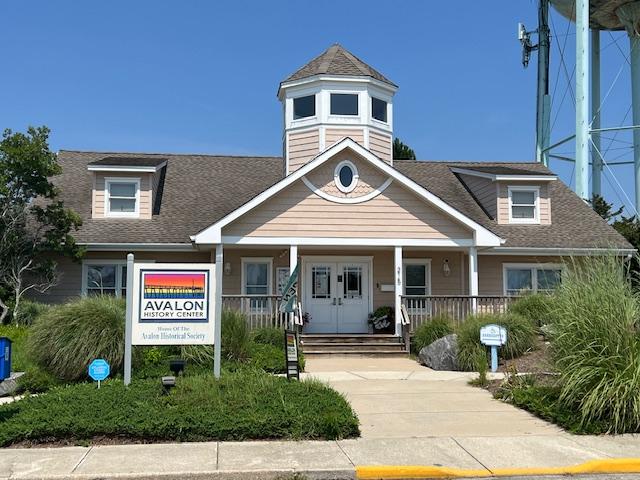
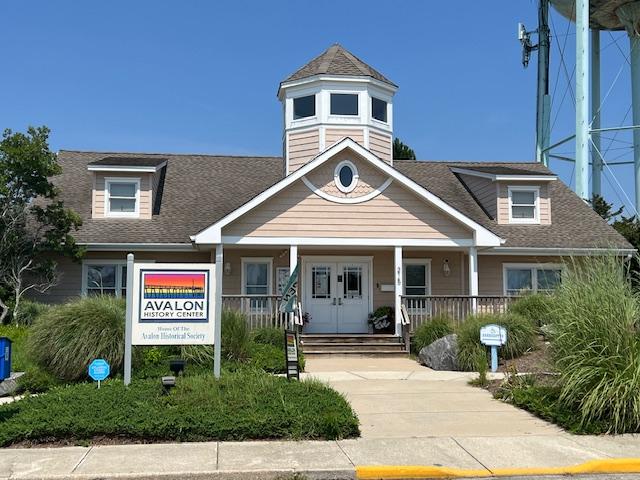
The Avalon History Center is at 215 39th Street in Downtown Avalon, NJ

Recently I took a tour of small Jersey shore towns and their historical societies. These interesting little museums are packed with information on the history and development of these towns. The progress of these towns from fishing and hunting villages for the Native Americans to the modern day resorts and permanent residence’s have a fascinating history.

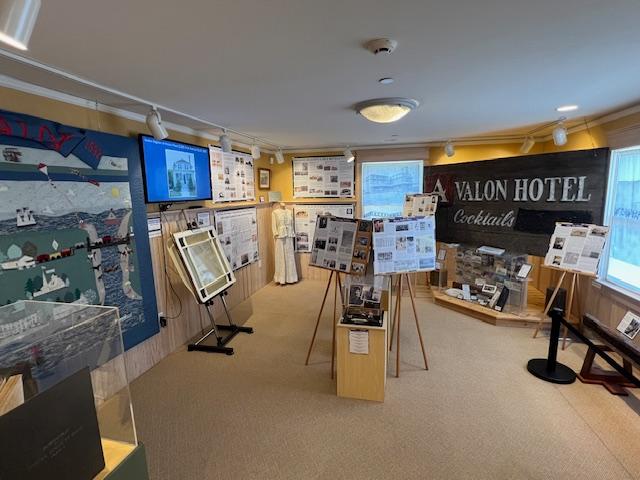
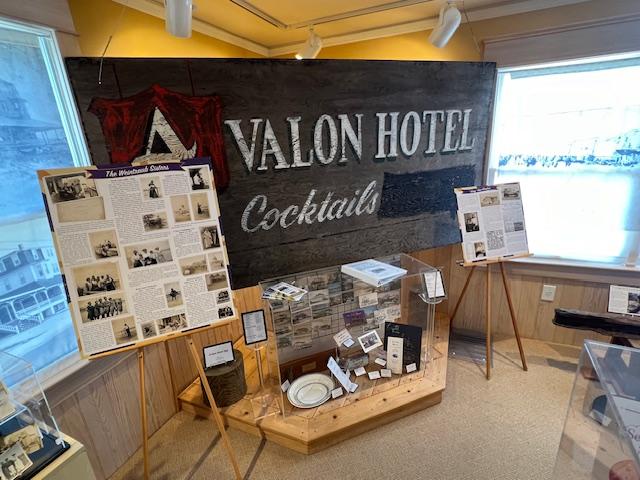
The early history of Avalon display with the development of the hospitality industry in the town

The Avalon History Center was the last museum on my visit to the shore that day and it had become very gloomy outside. The town was relatively quiet when I got there on a late Thursday night. I ended up having the whole museum to myself to tour. The curator came out and greeted me nicely and said that they were working in the back and if I had any questions to come get them. Outside that, I was the only one touring the exhibitions.

When you enter the building, the rooms are broken down in section by display. The Avalon Police Department has a wonderful exhibition of the history of the department. There are all sorts of police gear, mannequins with old uniforms and all sorts of police gear and pictures of the department through the ages. Near that is the Brendan Borek High Tide Memorial Fund.

The Early Avalon Room contains the history of the many hotels that used to dot the town during the Victorian era that have either burned down or succumbed to the ocean currents. Of all the hotels that existed only the Sea Lark B &B (See my review on TripAdvisor) still greeting guests. There are all sorts of dishware from the old hotels, menus and silverware that show the opulence of the time when pleasure travel lasted longer than present day.

The history of the Hotel Industry in Avalon with artifacts like menus, china and wonderful pictures of the old hotels. One of the hotels, the Sealark Hotel, still operates as a bed and breakfast. I had stayed there in 2017 for the Firemen’s Convention and had a excellent stay.

The Sealark B &B at 3018 First Avenue in Avalon, NJ

http://www.sealark.com/

My review on TripAdvisor:

https://www.tripadvisor.com/Hotel_Review-g29754-d79340-Reviews-Sealark_Bed_and_Breakfast-Avalon_Cape_May_County_New_Jersey.html?m=19905

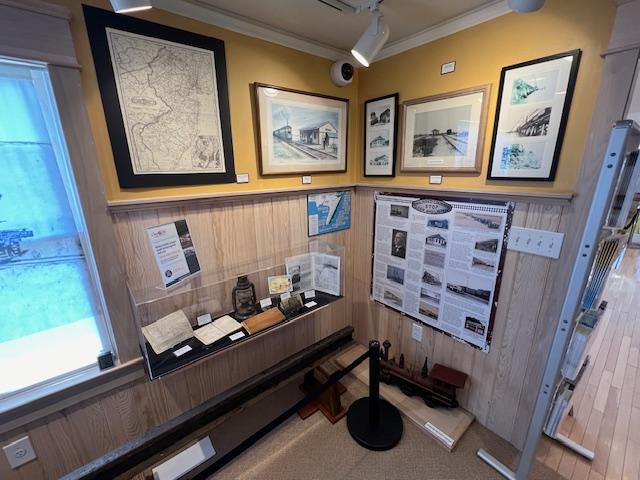
There was a section on the Founding of the town and its development over time. The town used to be Native American place to fish and hunt to the Victorian resort it became with the railroads. There was extensive history of the Railroad system that was so important to the growth of these shore towns. This was until 1937 when the rail system became obsolete with the advent of the automobile. There was a nice display of the old Avalon Pier.

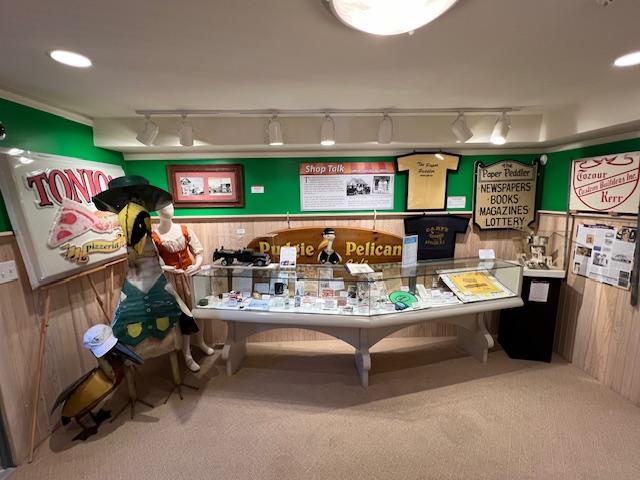
The detailed display of businesses that made Avalon the place to go and party

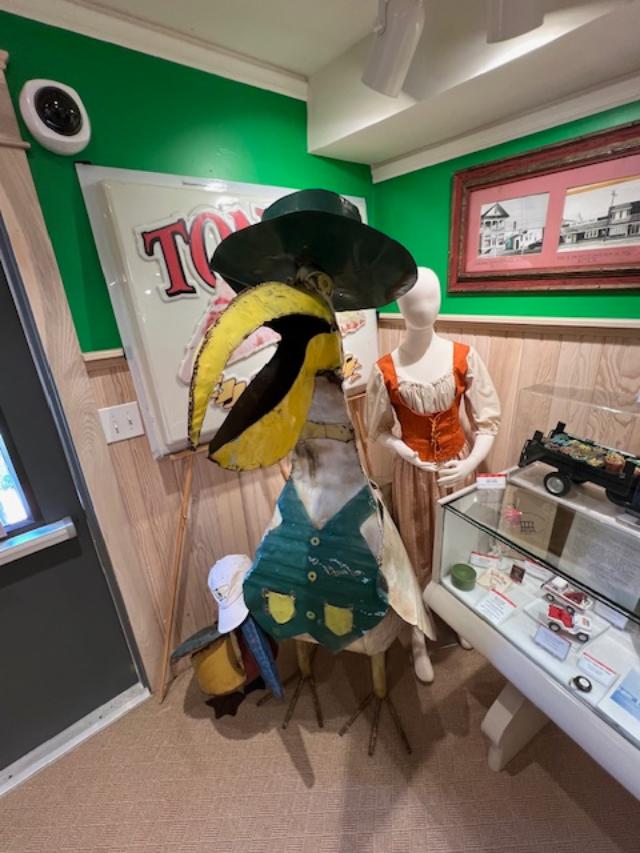
The Mascot for Pudgie Pelican

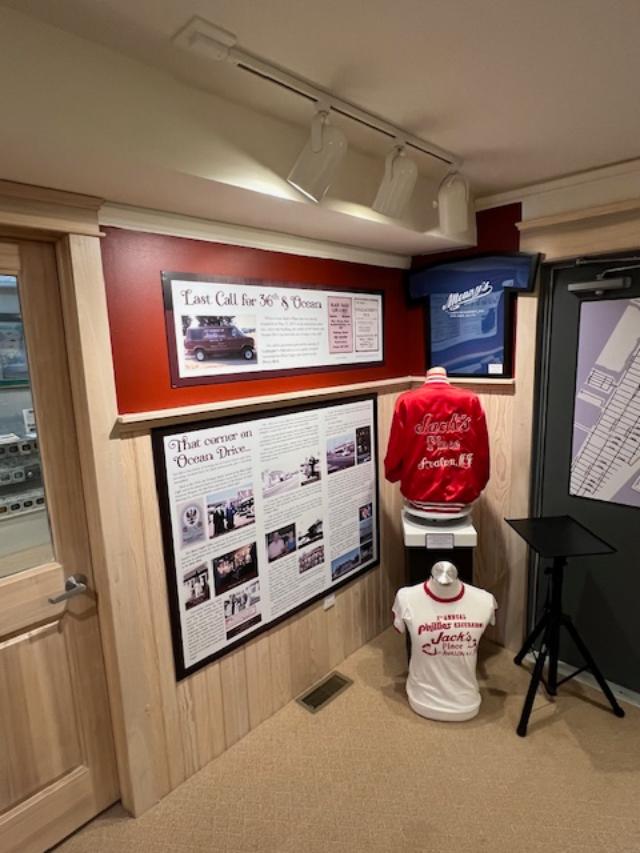
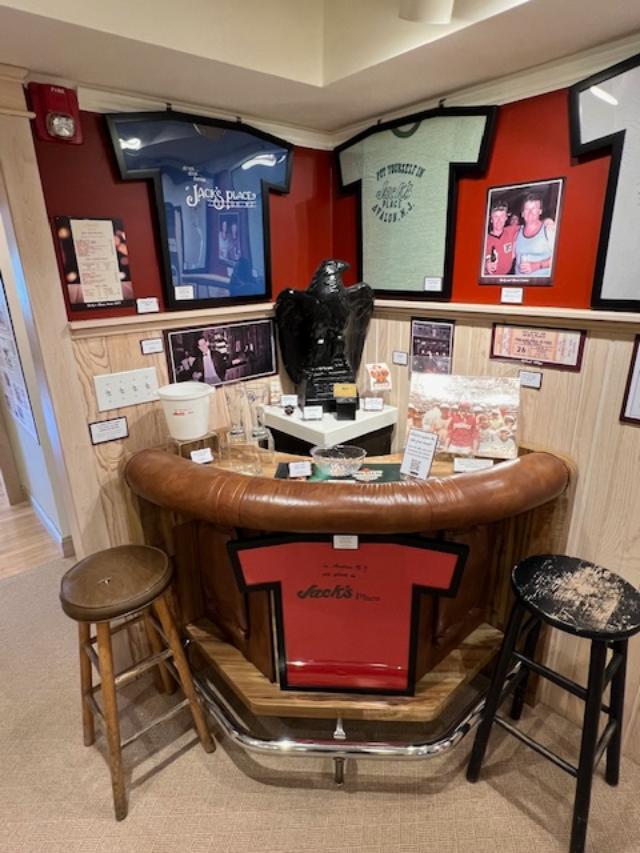
The back of the building was dedicated to local businesses that have since closed, This shows old signs, pictures and menus of watering holes that were popular for generations. There was an interesting display from the Avalon Hotel’s ‘Phil’s Bongo Room’, a popular place for bands.

The artifacts from Jack’s

Memories from a forgotten bar scene

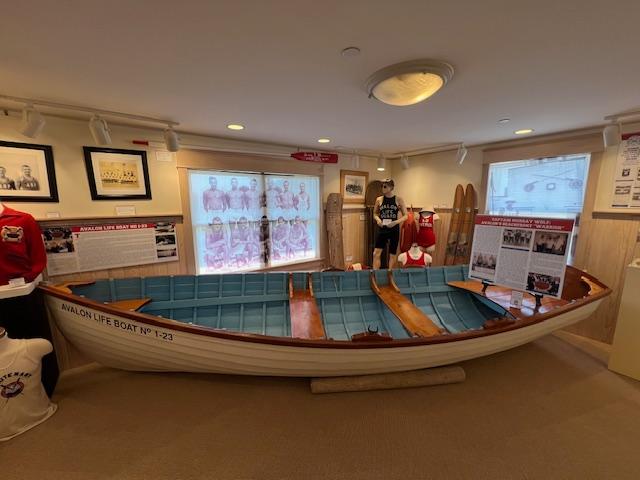
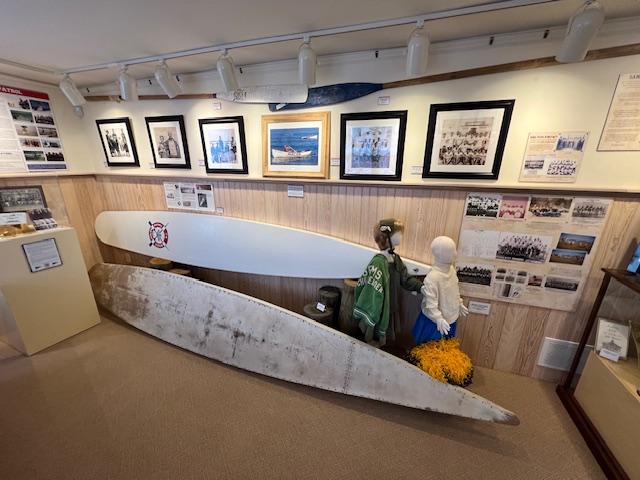
On the other side of the front of the museum is an interesting display on the Avalon Shore Patrol, a much dedicated group of men and women that play such an important role in a shore community. The museum displayed an restored patrol boat surrounded by other artifacts. Pictures of generations of Beach Patrol members proudly line the walls.

The Beach Patrol display

The Beach Patrol display

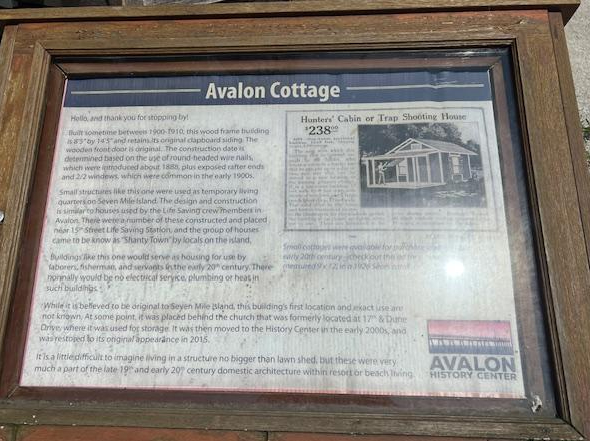
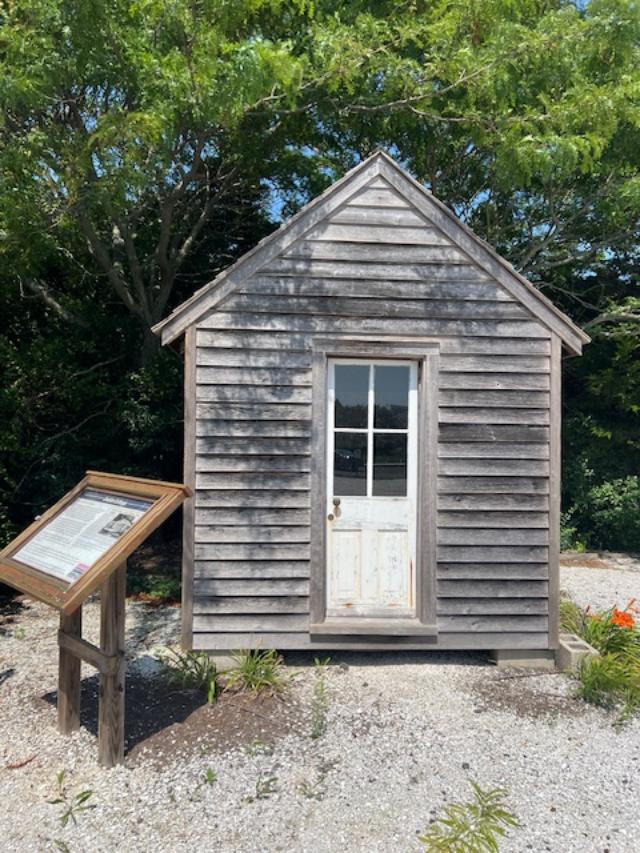
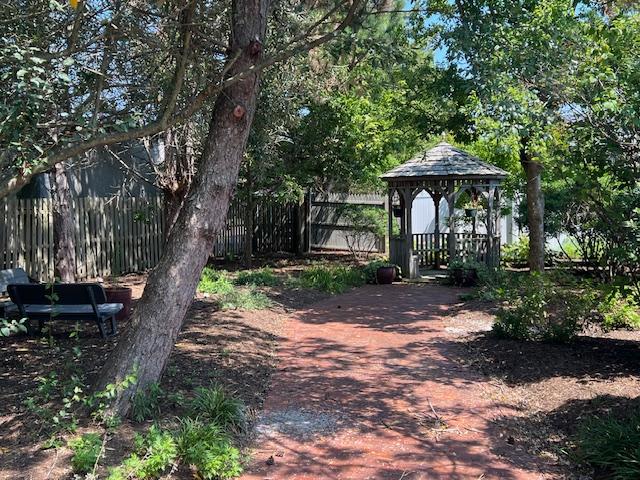
The museum also has landscaped grounds to walk outside either to some of the smaller historical buildings or to the gazebo to relax on a nice day and just enjoy the breezes. It is nice to walk along the flowering beds and just enjoy the sunshine.

The Avalon Cottage sign outside the museum

The Avalon Cottage located outside the museum

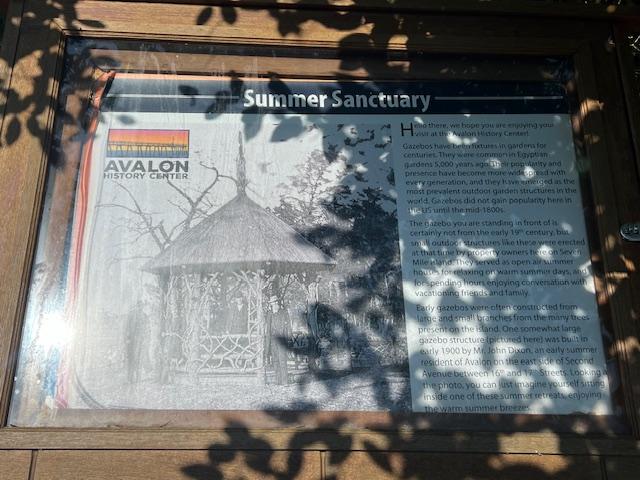
The Summer Sanctuary sign outside the museum

The Summer Sanctuary outside the museum

It was a great visit both times I went to the museum.

History of the Avalon History Center:

(from a recent AHMS Newsletter)

The current facility opened its doors in September of 2001 to the public and began to share Avalon’s past, historical photographs, artifacts, memories and recollections lovingly collected and recorded by members of the Avalon Museum and Historical Society.

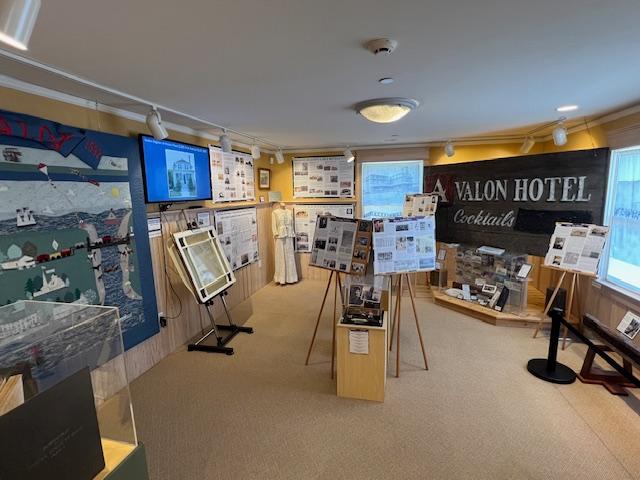
The museum main gallery

After several years of discussion, 1997 saw a historical society being formed at last in Avalon, supported by the enthusiastic endorsement of Mayor Marty Pagliughi and Borough Council President Nancy Hudanich, Doris Hanna and Jean Losch even secured a $10,000 donation from the Avalon Women’s Civic Club, as seed money for a building. Borough Council agreed to provide a location at 39th Street as well as a modular building-the old Public Works Headquarters, which did not prove suitable. The Avalon Museum and Historical Society got to work.

In June 1997, the first election of the Avalon Museum and Historical Society officers occured, along with the adoption of a constitution and bylaws. Among those first officers were Robert Jaggard, President, Lucille (Sue) Jacobson, Vice-President, Jan Jaggard, Secretary and Gordon Smith, Treasurer. Among thefirst Trustees were Jean Losch, Doris Hanna, Betty Shoemaker, Marvin Wells Jr., Joseph Koen and Robert Penrose Jr.

In early 1998, as the AMHS held its first fund drive, Doctors John and Elizabeth Ruskey agreed to honor the previous owner’s wish to donate their recently purchased house (location on 111st Street in Stone Harbor) to the effort. The Avalon Museum and Historical Society had support, money, a location and a building. Now all they had to do was move the house from Stone Harbor to Avalon, which is exactly what happened on November 6th, 1998. The groundbreaking took place on January 22nd, 1999.

The main history display at the museum

Once in place, work on putting the building back together and creating a museum space continued, inside and out. Items had been donated, collected and stored in the homes of the officers and trustees. It was the work of the AMHS to organize fundraising events to finance the project.

In mid-September 2001, the officers opening day arrived at last and AMHS President Pary Woehlcke, together with Mayor Marty Pagliughi cut the ribbon on Avalon’s very own local history museum.

Since then, there have been many changes at 215 39th Street, including the merger and incorporation of the Avalon Museum and Historical Society into the Avalon Free Public Library. We are now the Avalon History Center.

One thing that remains constant is the commitment, enthusiasm and passion from History Center staff and the Historical Society Board and members. Our mission remains to bring Avalon’s past alive and make it accessible for all. This year has been a challenge but one we hope we have met as we continue to keep the doors open, broaden our outreach online, entertain, educate and amuse our patrons.

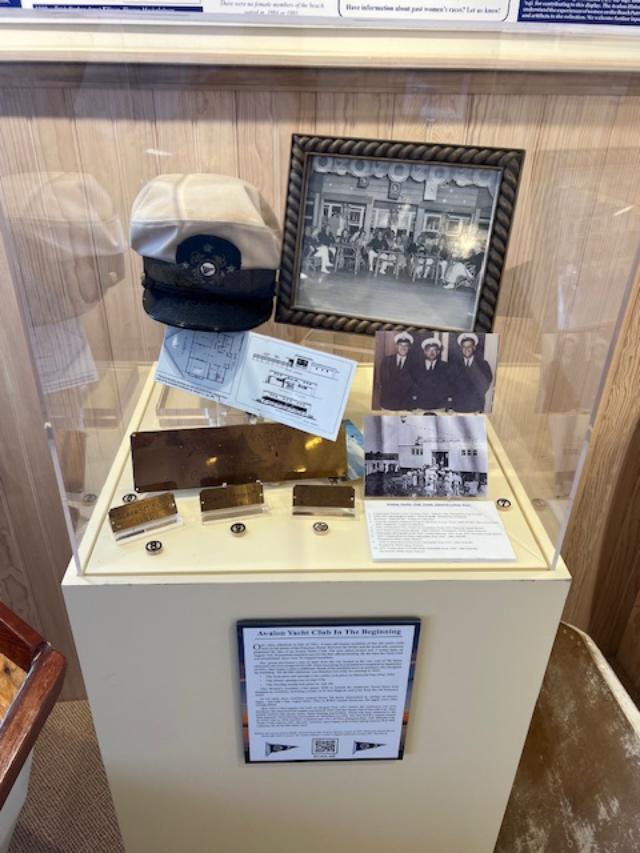
The Avalon Yacht Club display

Mission of the Avalon History Center:

The Mission of the Avalon History Center is to collect, chronical and preserve the history of the Borough of Avalon in the County of Cape May, New Jersey.

Peermont Self-Guided Walking Tour:

This self-guided tour of a section of Peermont (25th to 42nd Streets) will lead you from the Avalon Post Office at 33rd and Dune Drive through to 30th Street and ending at the Boardwalk and Beach Patrol on 32nd Street. It should take about one hour of gentle walking.

History of the Area:

(from the Avalon History Center pamphlet)

In October of 1888, Philadelphia entrepreneur George Rummel and the Avalon Beach Improvement Co. (ABICO) purchased from Joseph Wells at 17 block area of Seven Mile Island from 25th to 42nd Streets. The tract excluded the vast beachfront but included large areas of boggy meadowlands west of Third Avenue. This section of Seven Mile Island became known as the ABICO tract.

Rummel’s first priority was to build a hotel, which he named “The Peermont”. The railroad station which went up at the same time also became known as Peermont and so the ABICO tract followed suit. Peermont was on the map.

The Hotel Peermont in Avalon, NJ

Building lots were very quickly offered for sale so many that those in the Avalon section began to feel somewhat behind. Lots were also sold and bought in the meadowlands between Third and Forth Avenues on the assumption that they would be drained, filled, graded and curbed. Unfortunately 25th Street to Gravens Thoroughfare was the only roadway made passable. Rummel did however tear down the dunes, fill in and grade the ponds and marsh areas along the beachfront section of the ABICO tract, in order to build a seawall and then a boardwalk.