Fee: Adults $10.00/Seniors and Students (with valid ID) $6.00/Children under 5 and Members Free
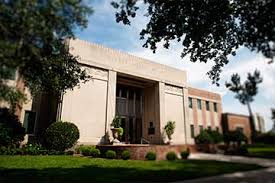
I recently went Jacksonville, Florida while visiting relatives and spent time at the Cummer Museum which is in the Five Points section of the City. This small museum by the water offers galleries full of interesting art as well as beautiful gardens to stroll through when you are finished.
There were some interesting exhibitions to visit when we were there. The ‘Lewis Comfort Tiffany: Treasures from the Driehaus Collection’ showcased the artist’s works from glasses and tableware to a series of his famous lamps. These colorful works were sometimes lit so that you could see the intensity of the colors in the glass design.
The Louis Comfort Tiffany display
Another interesting exhibition in the museum was the ‘Innovation and Imagination: The Global Dialogue in Mid to Late 20th Century Art’ showing the shift of the art world innovations from Paris to New York following World War II. Pop Art, Cubism and Modern art were displayed and it showed a range of styles of the artists some borrowing from more famous counterparts.
We also enjoyed visiting the Permanent Collection of the museum. The Cummer Family Parlor showed the family’s taste in furnishings and decoration to their home. A lot of late Victorian furniture is shown here.
The small showing of works in the Ancient Art Gallery displayed art from the Greek and Roman worlds and a few small items from Egypt.
The Gardens were the one thing that stood out. On a beautiful day there is nothing like strolling through the pathways along the tree lined stone ways. Most of the gardens had been damaged during Hurricane Irene so there is a lot of rebuilding going on.
The pathway leading from the museum to the gardens
Along the river though are the gardens designed by Fredrick Law Olmstead for the museum grounds. These gardens are currently being renovated but you can still see the traces being redone in their updated form.
It is best to visit the museum on a nice day to enjoy both the inside and outside of the museum.
History of the Cummer Museum & Gardens:
The Cummer Museum of Art & Gardens is the culmination of the civic, social and business involvement of a remarkable family. The Cummer’s came from a long line of lumber barons, whose business interests began in Canada before branching out to Michigan, Virginia and Florida. As early as 1890, Wellington Willson Cummer (1846-1909) recognized the value of Florida cypress and prolific stands of pine timberlands in the state. After relocating his family from Morley, Michigan to Jacksonville, Florida, he went on to found the Cummer Lumber Company in 1896. Among his many feats, Wellington built a railroad for transporting lumber from the low country of Florida to Jacksonville, where the mills and distribution centers were located.
His sons, Arthur and Waldo Cummer, along with his son-in-law, John L. Roe, all of whom came up through the ranks in the family business, assumed control of the company after Wellington’s death in 1909.
In 1902, Mr. and Mrs. Cummer began constructing a large English Tudor Revival house, replete with exterior half- timbering and richly carved interior paneling. Situated on Riverside Avenue, the home was part of the close-knit family compound of three houses with adjacent gardens and the construction of the Cummer house led to Mrs. Cummer’s masterminding of her gardens. The development of the gardens would remain her passion until the time of Mr. Cummer’s death, with her focus expanding to the establishment of city parks for public access to the open environments. Today, the Cummer Gardens are one of the most popular locations in the city and visitors enjoy their beauty.
(Taken from the Cummer Museum History website)
Disclaimer: This information was taken directly from the Cummer Museum History website and I give them full credit for the information.
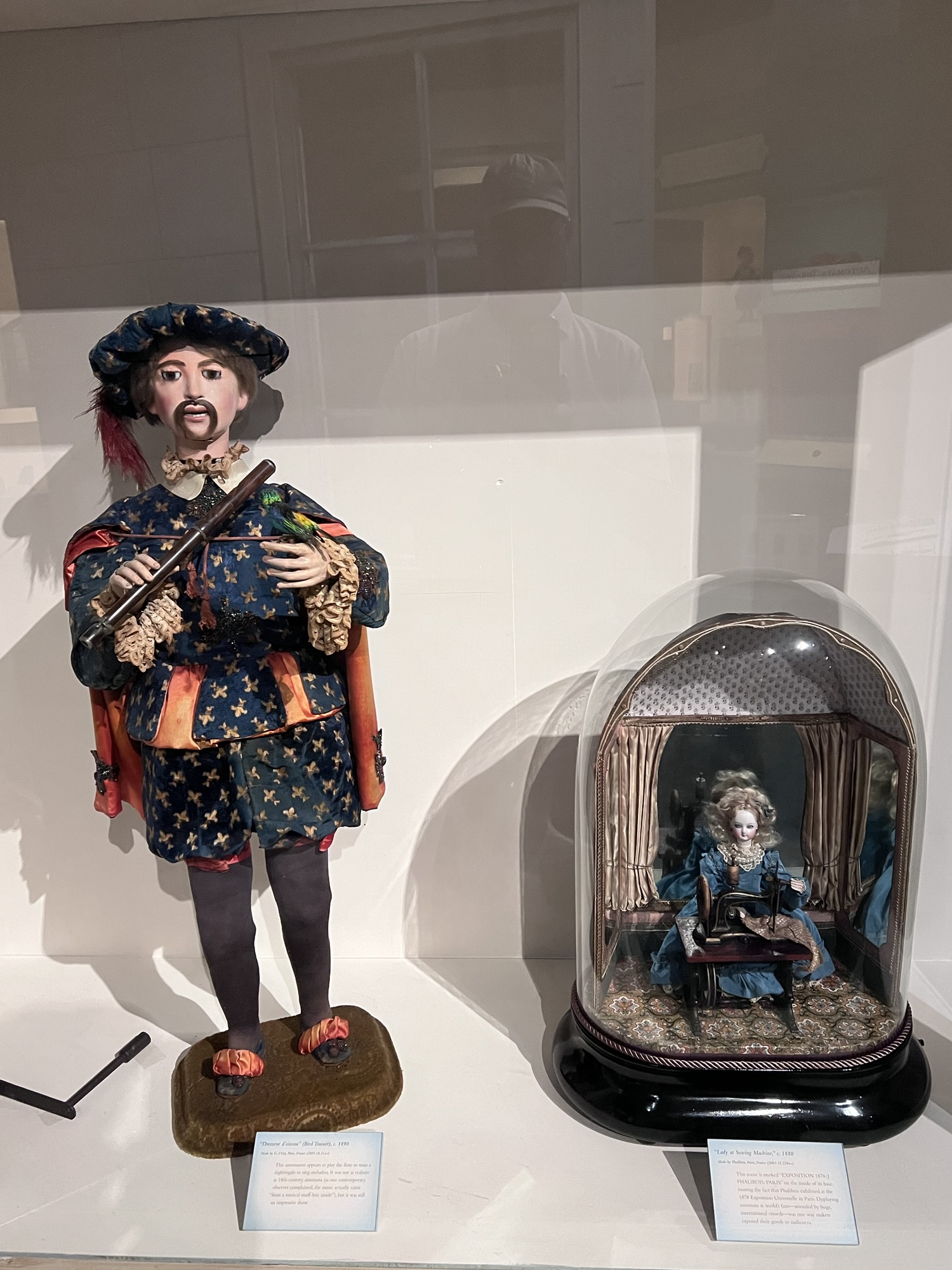
This was the second time I visited the Morris Museum and on every trip I learn something new. The first time I had visited the museum it was right after the movie ‘Hugo’ had opened which was a story that involved the automata (moveable animals and people mechanical objects) so my dad and I toured the permanent exhibit and then toured the rest of the museum.
The Guinness Galleries of Automata
The gallery of Automata
When I arrived at the museum at 2:00pm recently, the museum was having a talk and a demonstration on the automata and musical boxes and that was very interesting. These mechanical wonders have been around since the 1300’s being perfected in the Arabic countries by clockmakers and craftsmen at the time.
The exhibition galleries
The movie “Hugo”
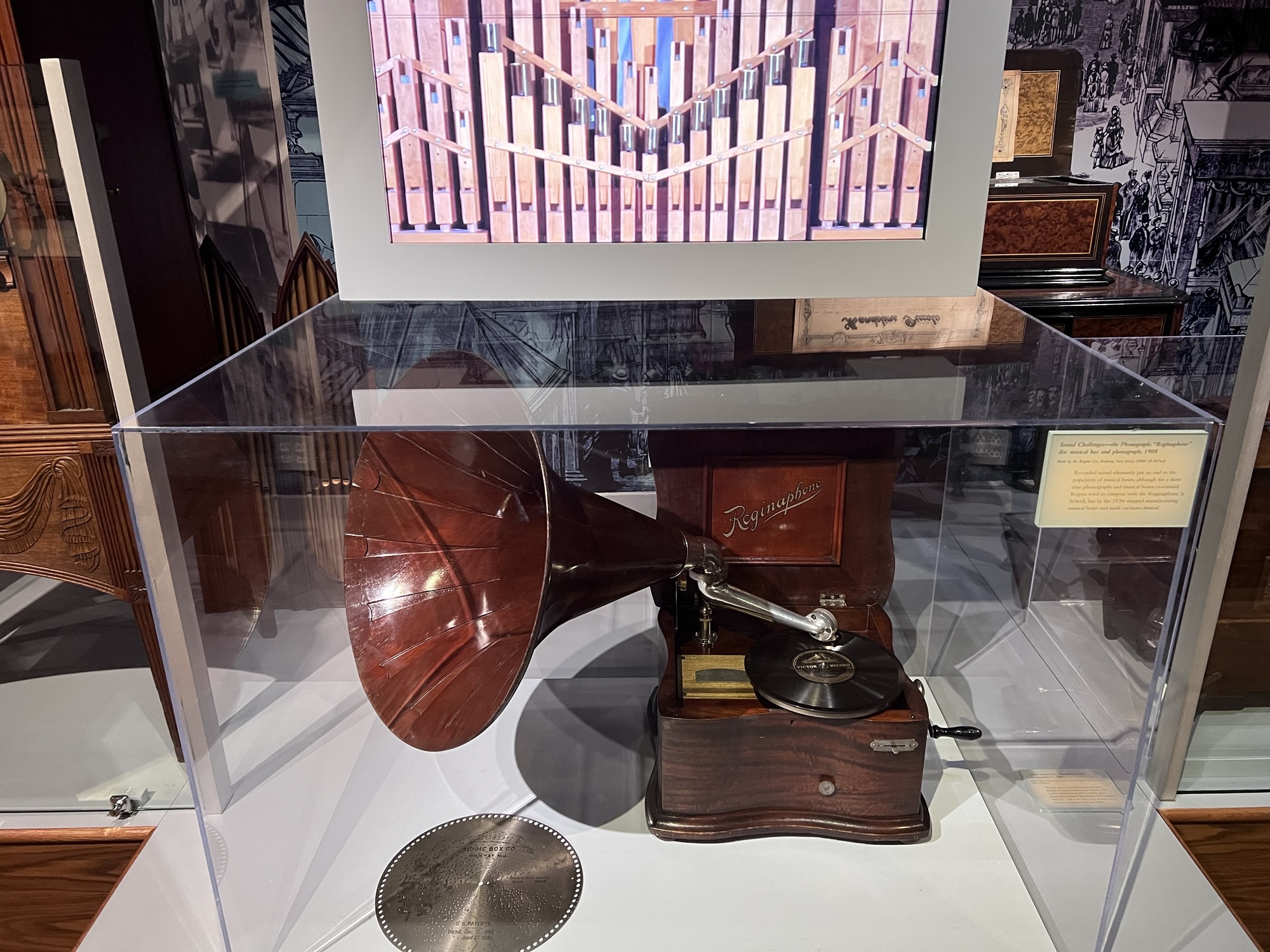
The lecture was on how they were constructed and perfected over time to make them more reasonable to a growing market and how they were replaced when phonographs, radios, record players and tapes gradually progressed to change the market and make them obsolete.
A old Victrola record player
We got to hear an example of each of the objects and it was fascinating that during the Industrial Revolution how paper rolls changed the cost of these objects making them available to all classes. Today’s talking dolls and music boxes are descended from these innovative items.
The Automata at the Morris Museum
The fancy music boxes
Amusing children’s toys
The beautiful French workmanship
The beautiful pieces from the 1800’s
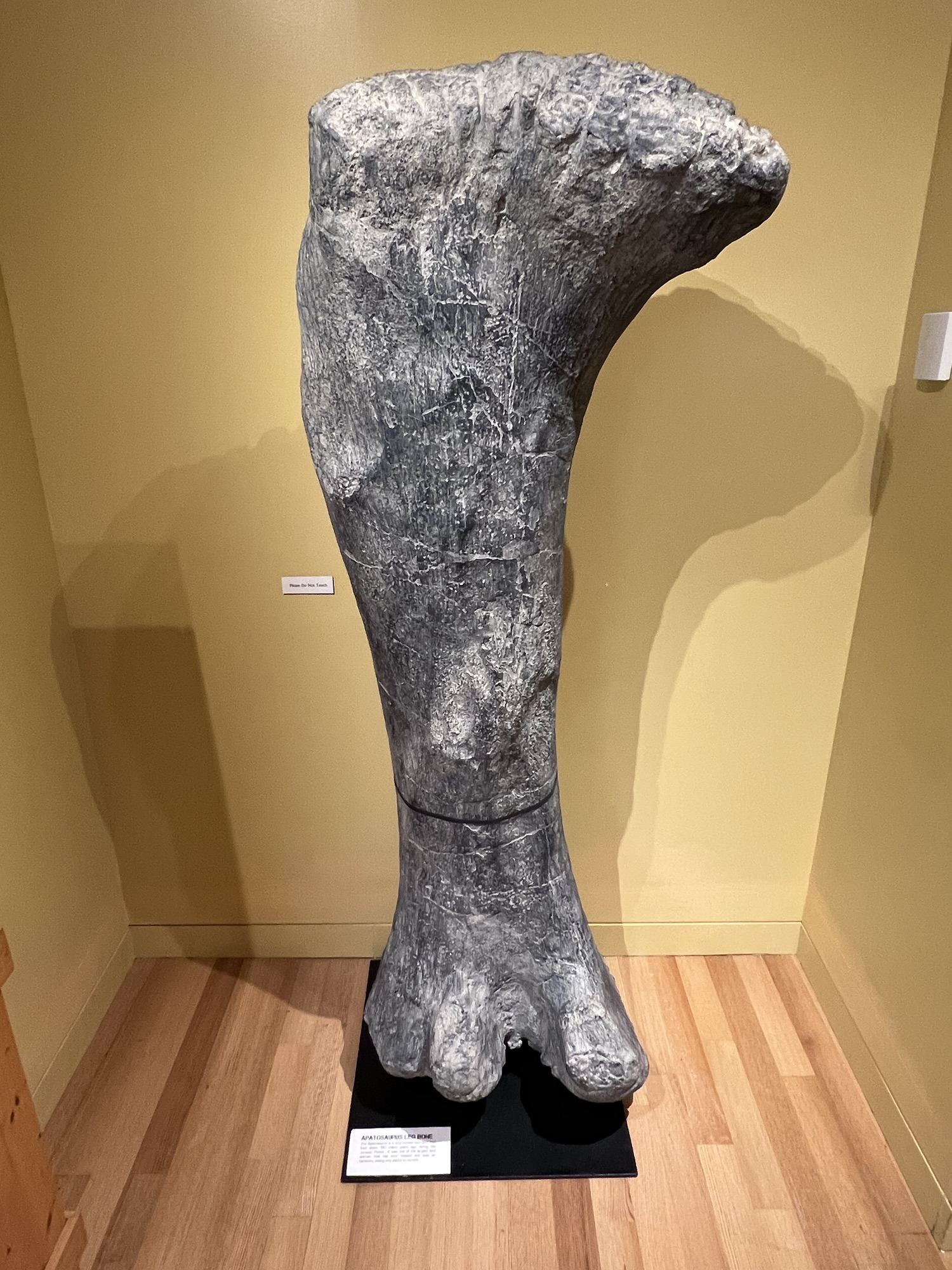
After the talk, I walked around the Museum to see parts of it that I had not visited on my last trip. For a small suburban museum, the museum is packed with all sorts of artifacts from Native American art to dinosaur relics and fossils found in the State of New Jersey.
The Dinosaur Room
Dinosaur femur
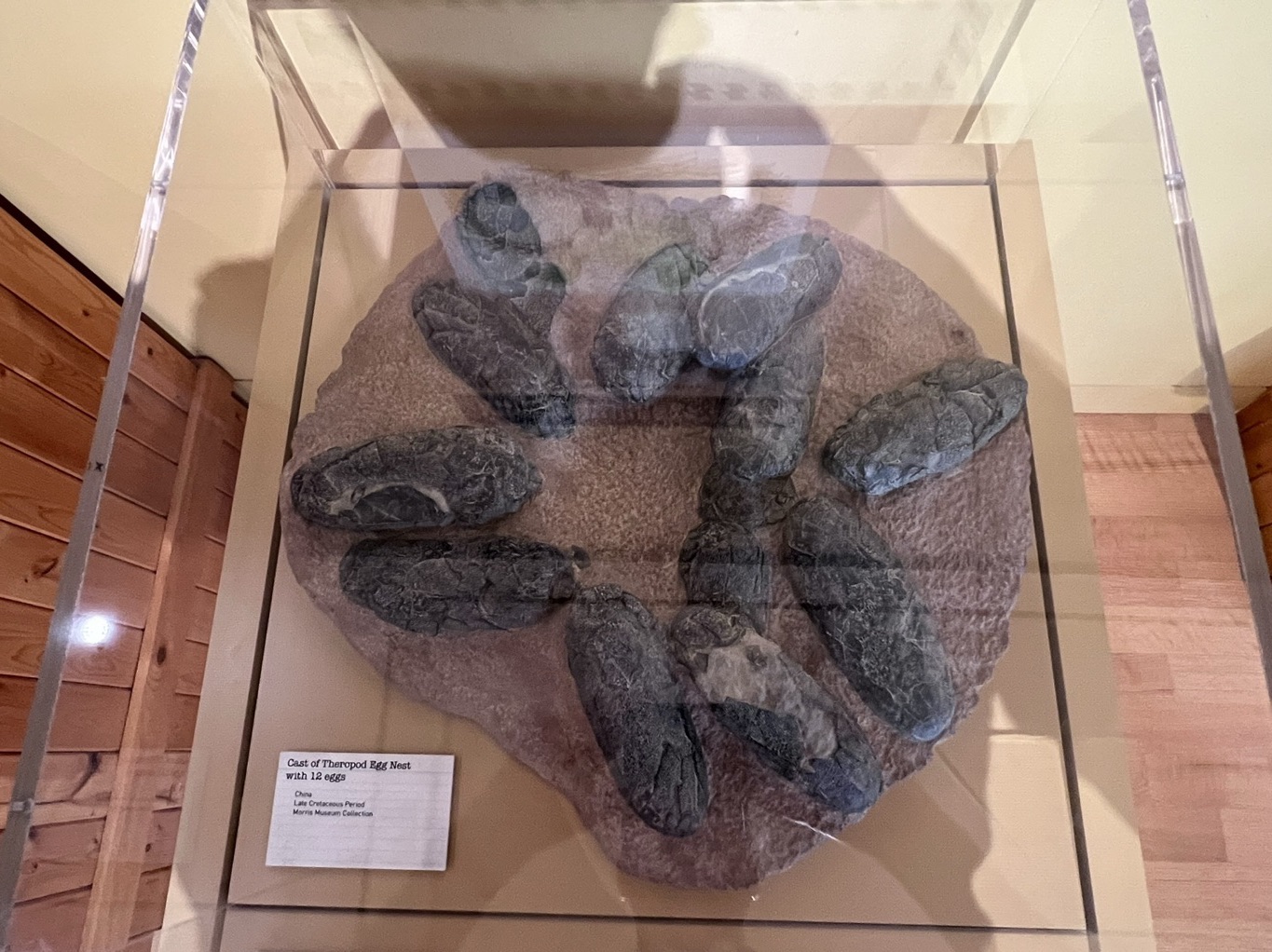
Dinosaur eggs
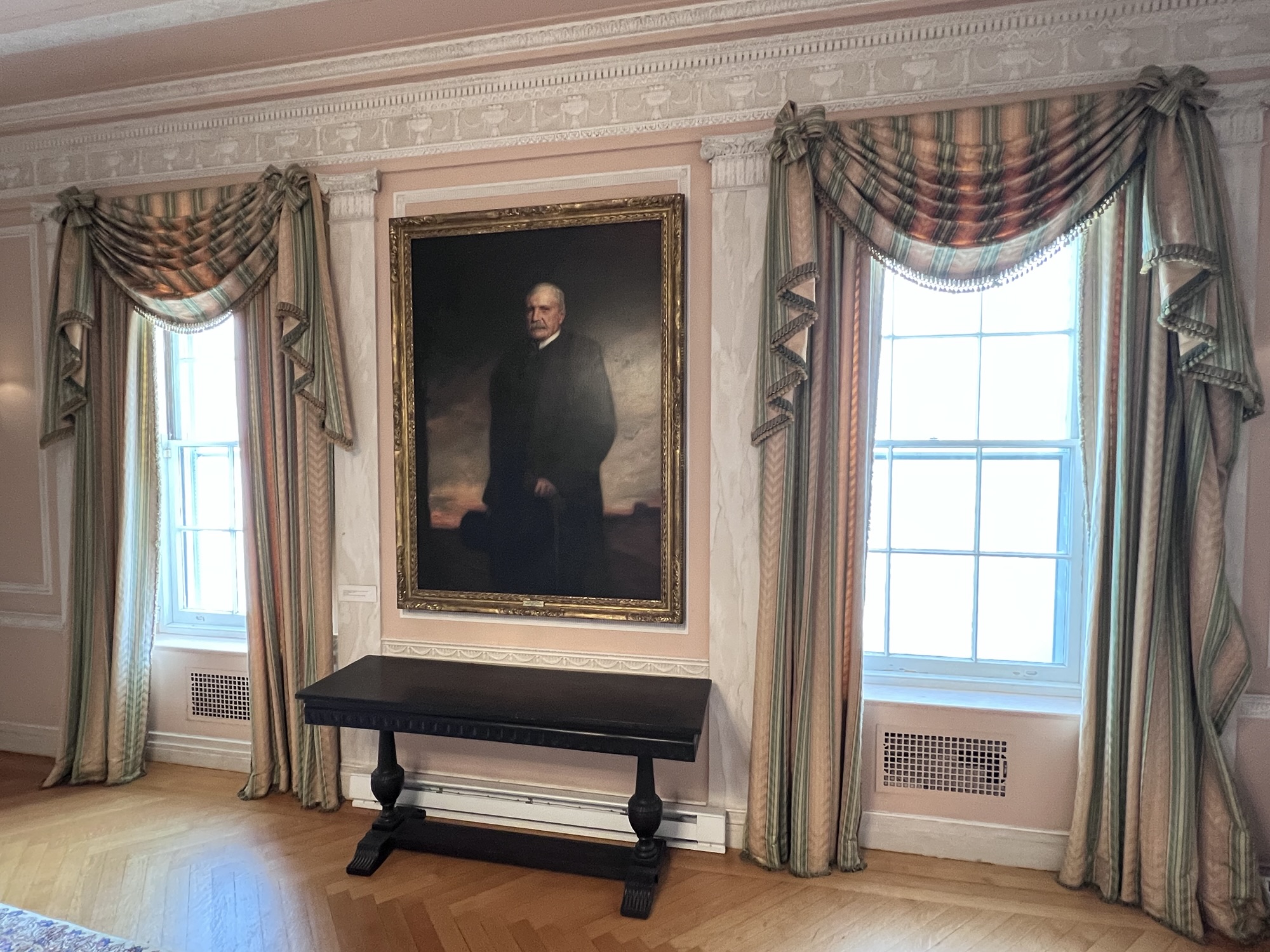
In the original Frelinghuysen Mansion section of the museum, you can visit the Dodge Room which was dedicated to Geraldine Rockefeller Dodge, a great patron of the Arts. The room contains vintage furniture and paintings and shows what the room may have looked like when the Frelinghuysen’s lived here.
The Dodge Room at the Morris Museum
The portrait of William Rockefeller
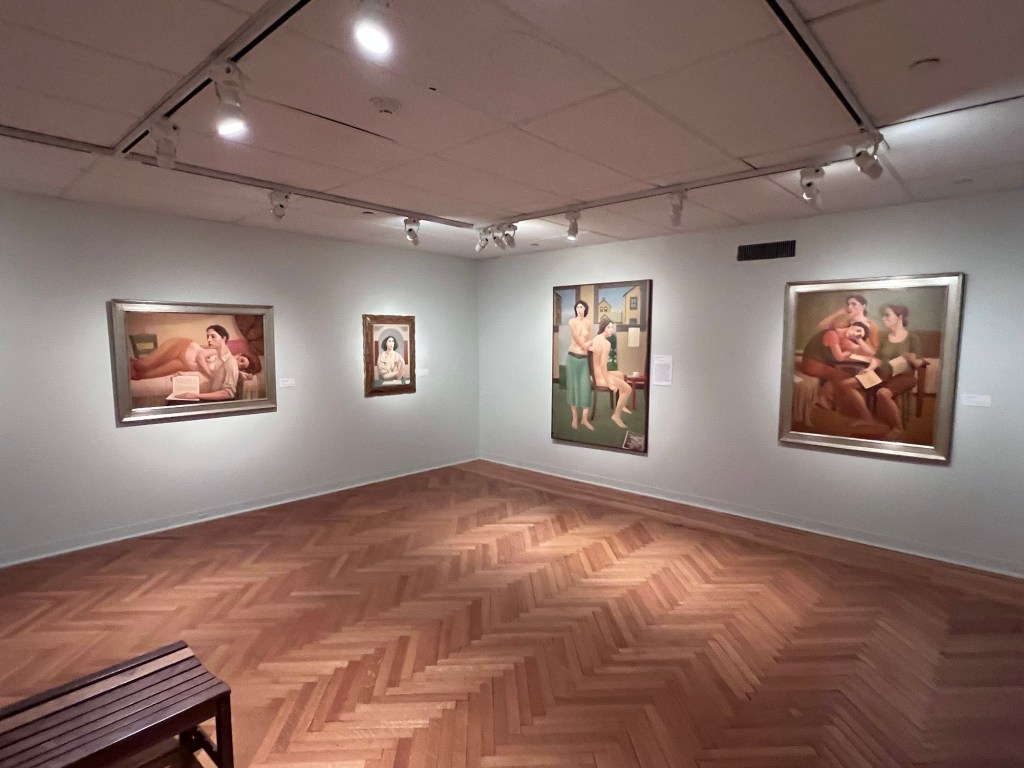
The museum also had really interesting exhibits from travelling shows including the Artist Alan Feltus exhibition of paintings
Artist Alan Feltus is an American figurative painter whose paintings present a series of contrived interior vignettes that simultaneously use a casual familiarity of contemporary life while arranging the figures and their surroundings with a precision and order from a bygone artistic tradition (Morris Museum website).
The Feltus exhibition in May 2025
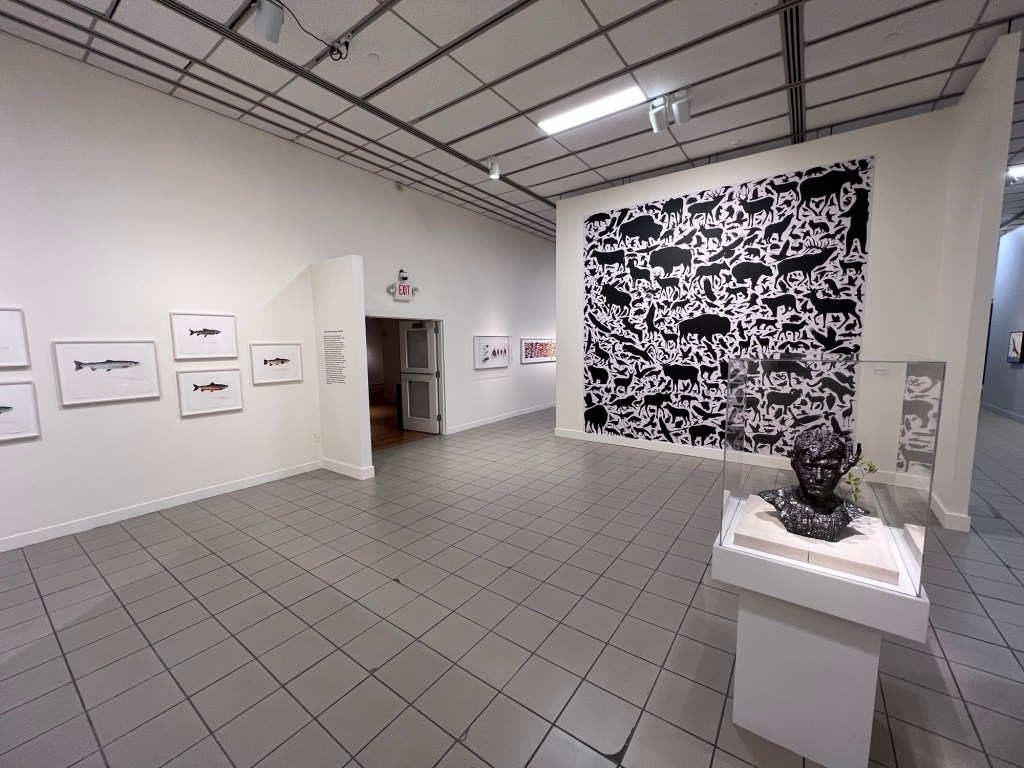
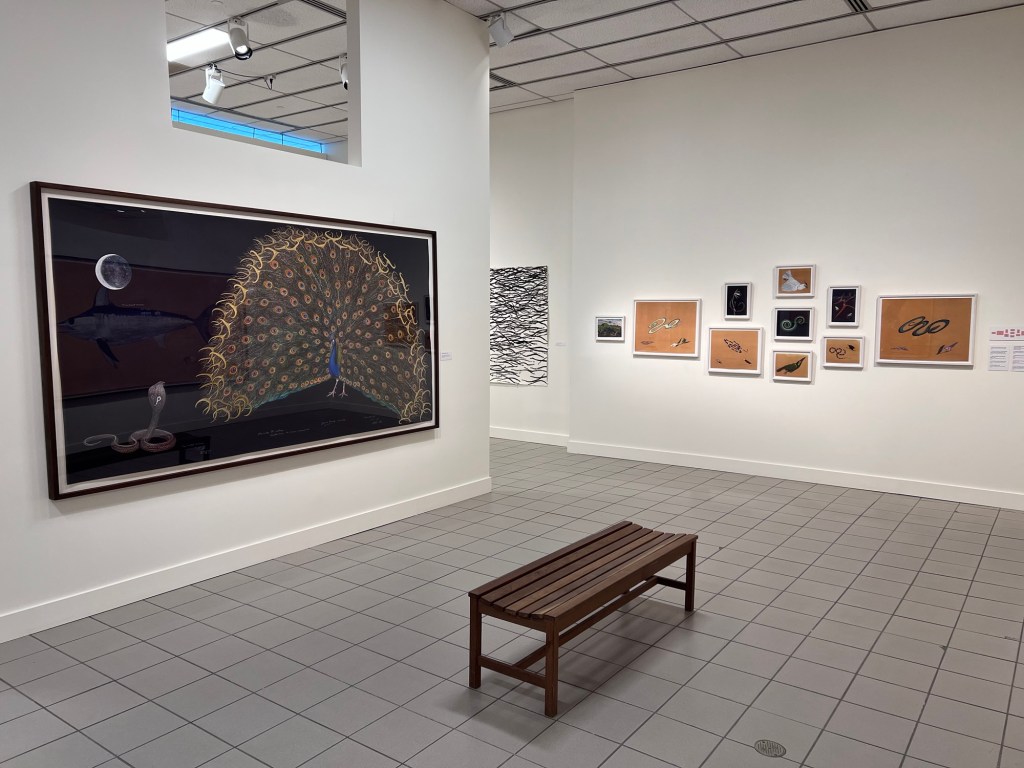
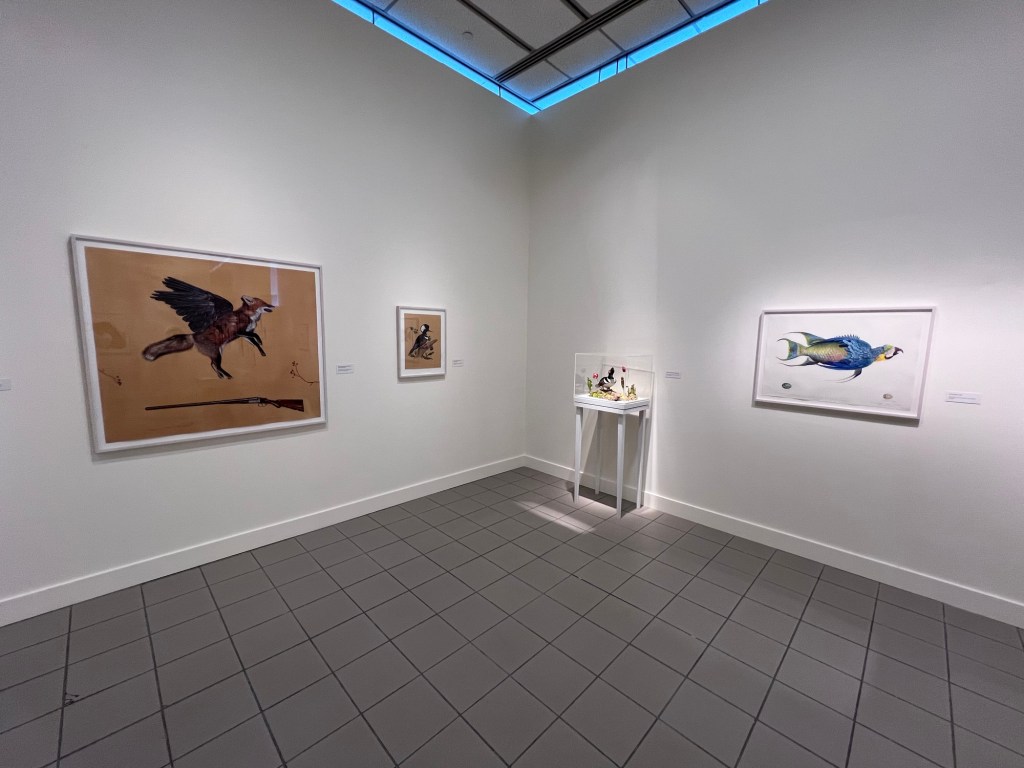
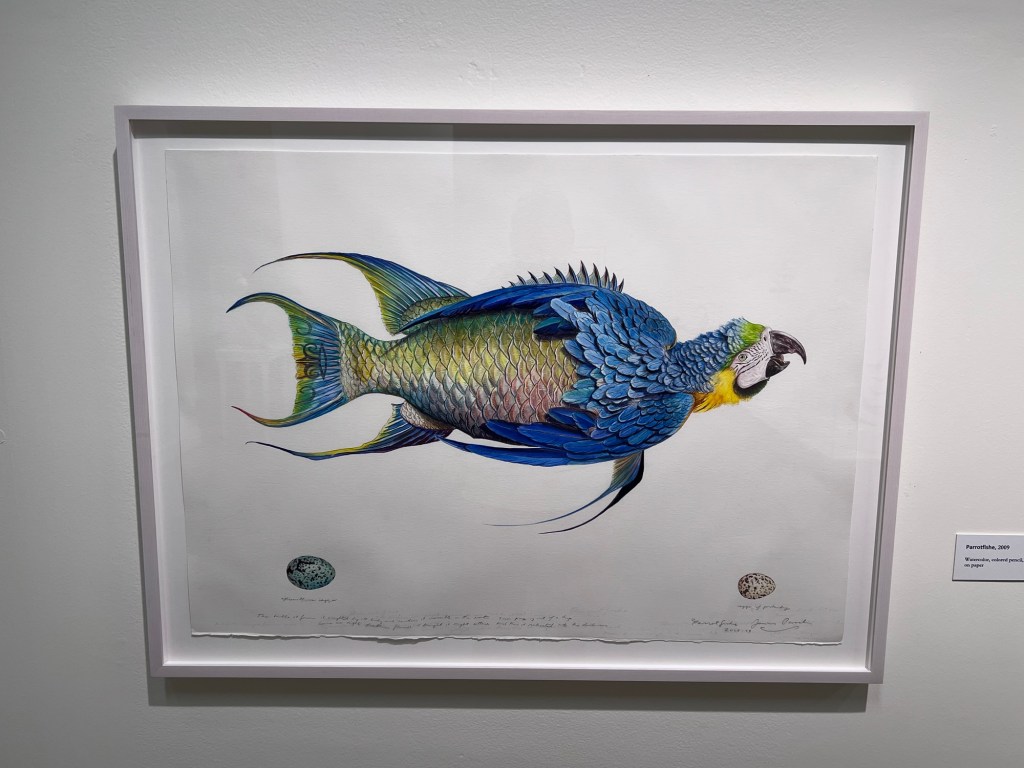
There was another exhibition that I visited that afternoon by the Artist James Prosek “At Work”.
Some of the sculpture pieces from the Prosek exhibition
There is a lot to see and do at the museum for all ages and if none of these appeal to you there is also the theater. The Morris Museum has a lot to offer everyone.
The Museum Mission:
The Morris Museum celebrates art, science, history and the performing arts by providing engaging exhibitions and programs, all of which are designed to excite the mind and promote cultural interests. The Museum strives to educate, entertain and inspire diverse audiences of all ages, abilities and backgrounds (Museum site)
History of the Museum:
(from the Museum website)
In 1913, objects collected for display in a curio cabinet at the Morristown Neighborhood House formed the beginning of the Morris Museum Collection. Originally known as the Morristown Children’s Museum, education has been an intrinsic part of the Museum’s mission from the start. Mrs. Aldus Pierson, the Museum’s first head worker, introduced children to world cultures through the exploration of cultural artifacts. Generous donors began giving Mrs. Pierson interesting objects that they had acquired in their travels around the world. By 1927, the collection had expanded to seven rooms encompassing the first floor of the Neighborhood House’s annex. Displays included the world and children’s toys.
In 1938, the Museum moved to the Maple Avenue School building and shared space with the Morristown Board of Education and the Morris Junior Colleges until 1956. This enabled the Museum to enhance its programs for children and establish a link between its offerings and the curricula of area schools. This strong educational focus developed and continues to the present. The museum was incorporated in 1946, and its collections and services continued to expand. During this time, the Museum was at the forefront of presenting new trends in museum education through the modern use of dioramas, panels and niches. The outreach education program began in 1950 with in-school presentations to eight Morris County school including talks about American Indian culture.
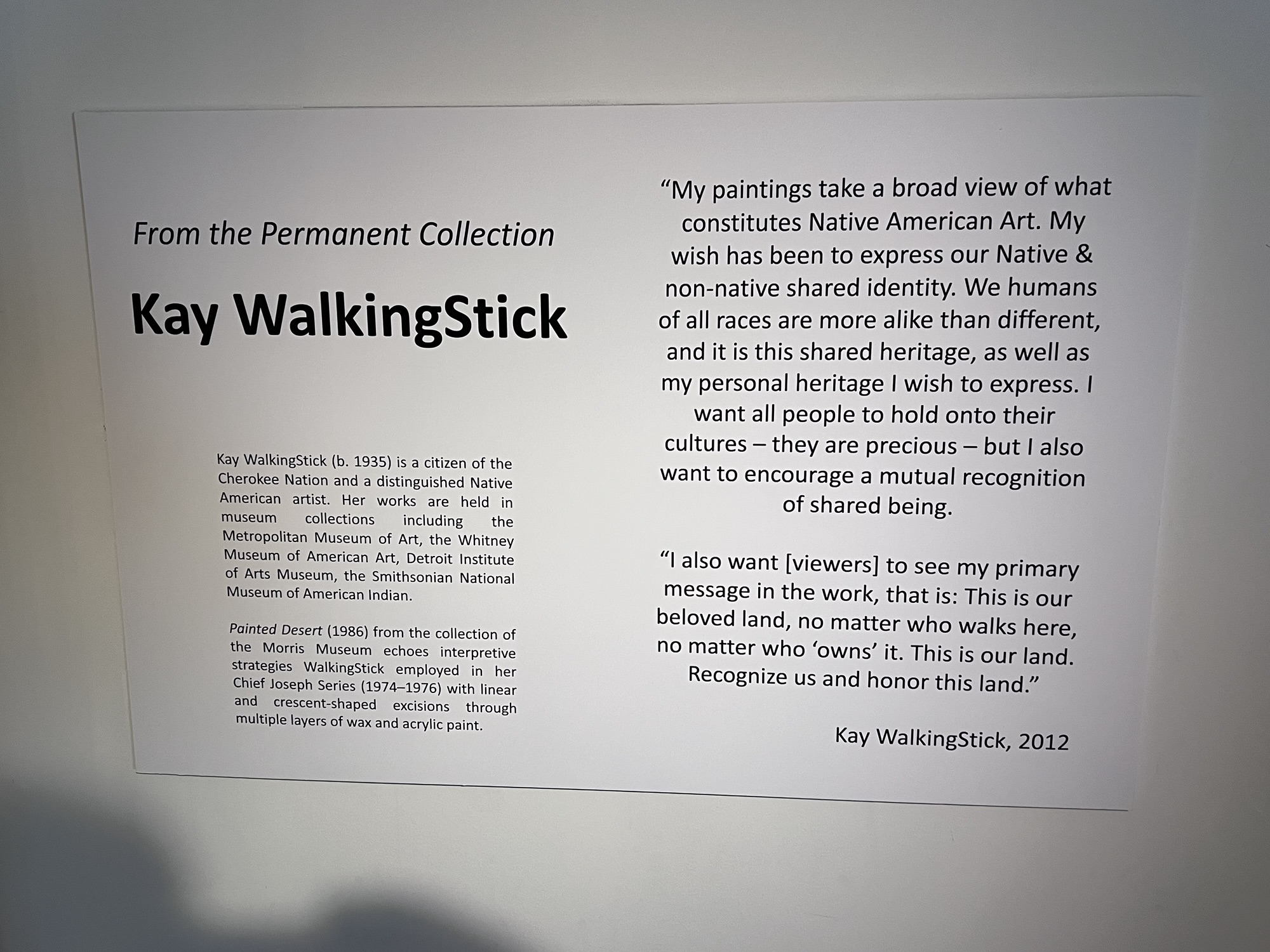
The Kay WalkingStick Collection
The Museum’s first Director, Mr. Chester H. Newkirk made a significant impact on the development of the Museum’s programs, collections and services. During his 25 years of leadership (1956-1981), the collections of fine and decorative arts, toys and American Indian artifacts were greatly enhanced. In 1964, having outgrown its fourth location, the Museum purchased Twin Oaks, the former Frelinghuysen estate.
The Kay WalkingStick Collection
The Kay WalkingStick Collection
The Kay WalkingStick Collection
The Kay WalkingStick Collection
Today, the Georgian-style mansion functions as the heart of the Morris Museum’s operations. In 1969, the institution was renamed the Morris Museum of Arts and Sciences, reflecting it growing emphasis on visual art and the expansion of its offerings for all ages. In response to the Museum’s increasing activities, successful capital campaigns enabled additions to the facility to be built.
Art of the Sublime in the lower level of the mansion
In 1970, gallery space was expanded and a 312 seat theater was added, which was later named the Bickford Theater. In 1973, the Morris Museum became the first museum in New Jersey to be accredited by the American Association of Museums. In 1985, its name was changed to the Morris Museum. In 1990, the Museum complex was further expanded to 75,524 sq. ft.
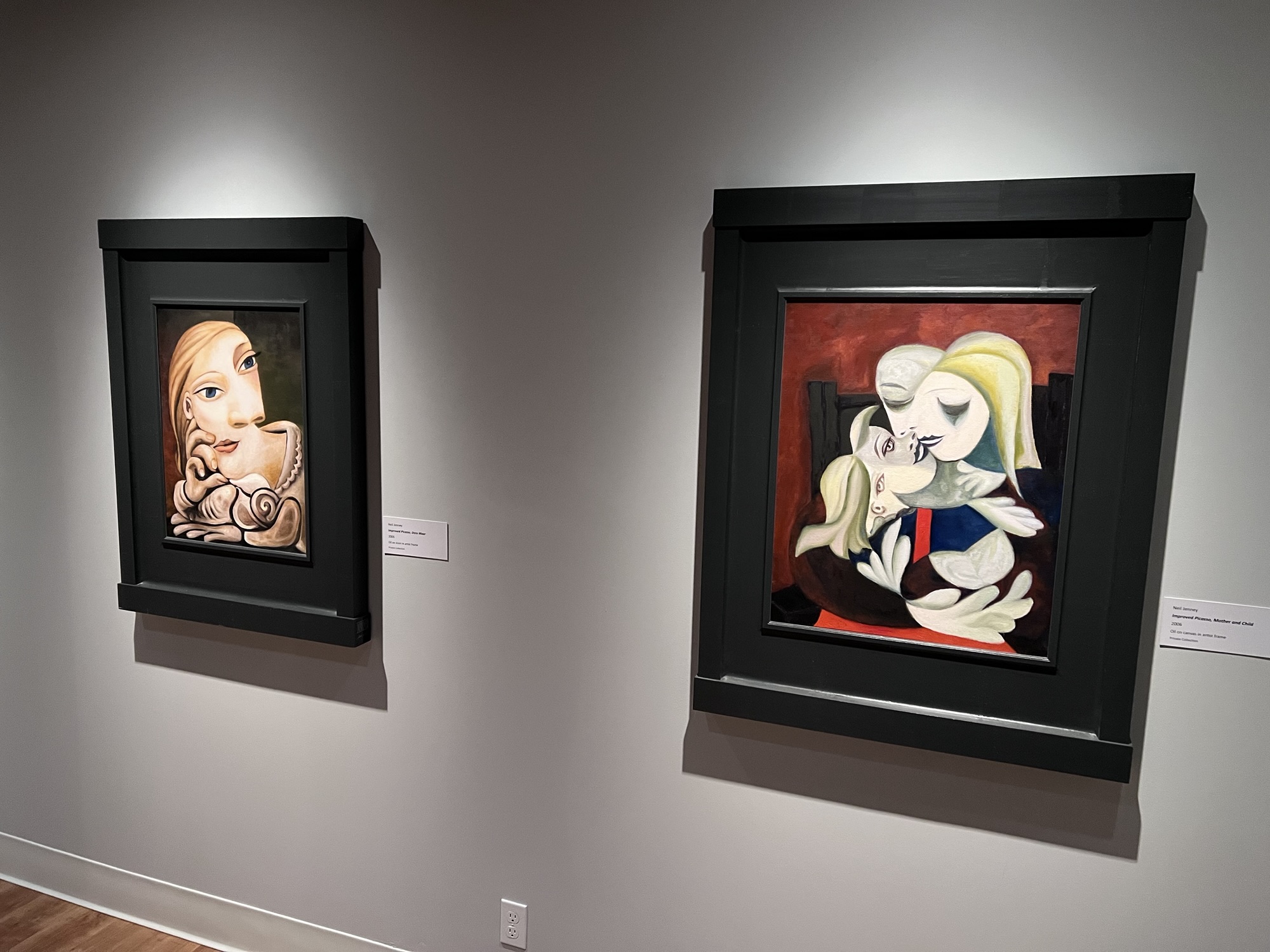
Artist Neil Jenney pursues realism as a style and a philosophy. Mostly self-taught, he attended the Massachusetts College of Art in 1964 and moved to New York in 1966, where he has lived and worked since (Morris Museum website).
The Morris Museum’s Bickford Theater is a cultural hub for the very best of the performing arts in Morristown and beyond. Approaching its 50th anniversary, it will shine with even more dynamic, multifaceted and relevant programming, including a partnership with London-based National Theater Live; two film series and unique film festivals; traveling professional productions, a new lecture series, story-telling workshops, jazz, classical and community concerts children’s theater and more.
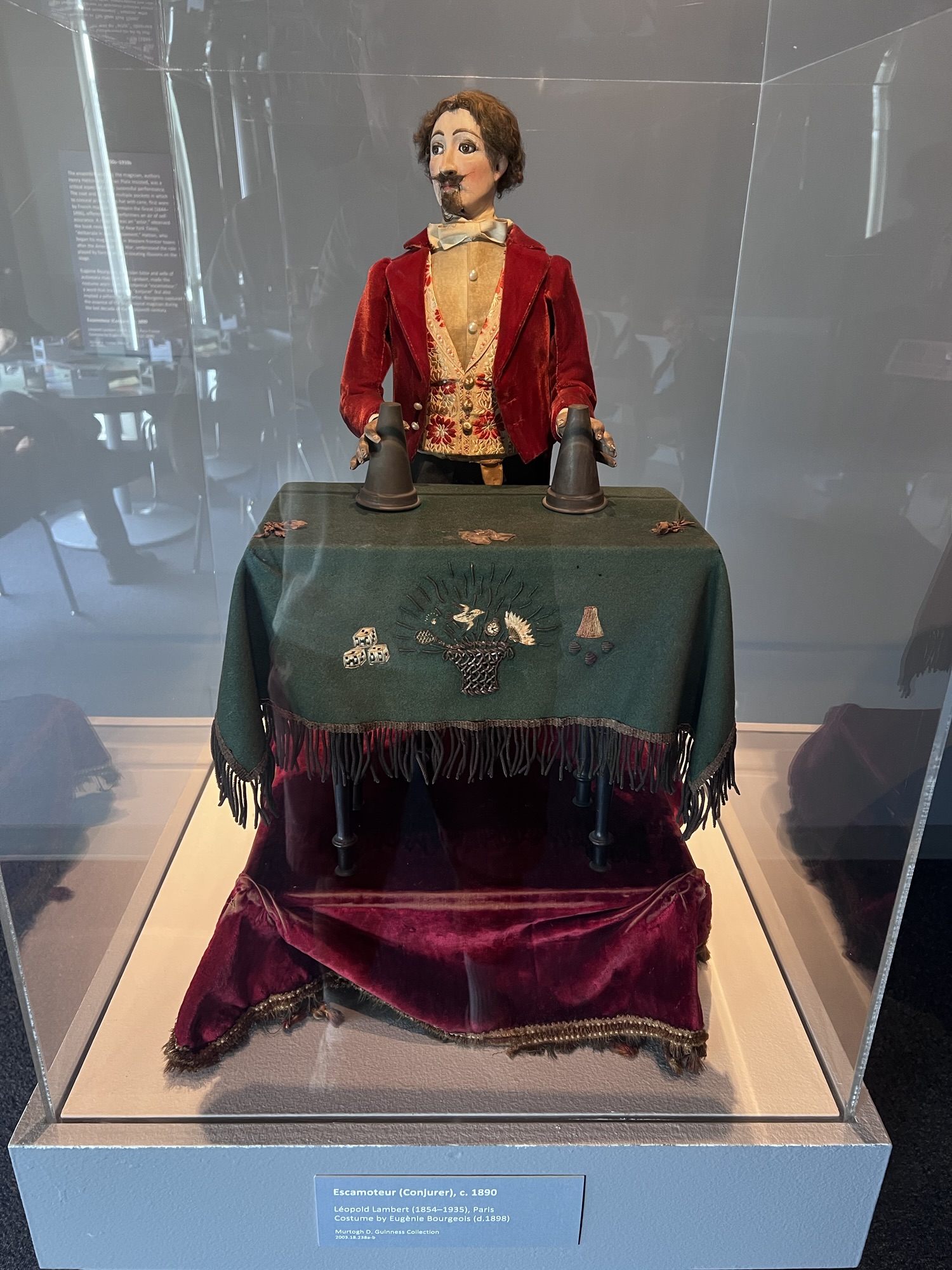
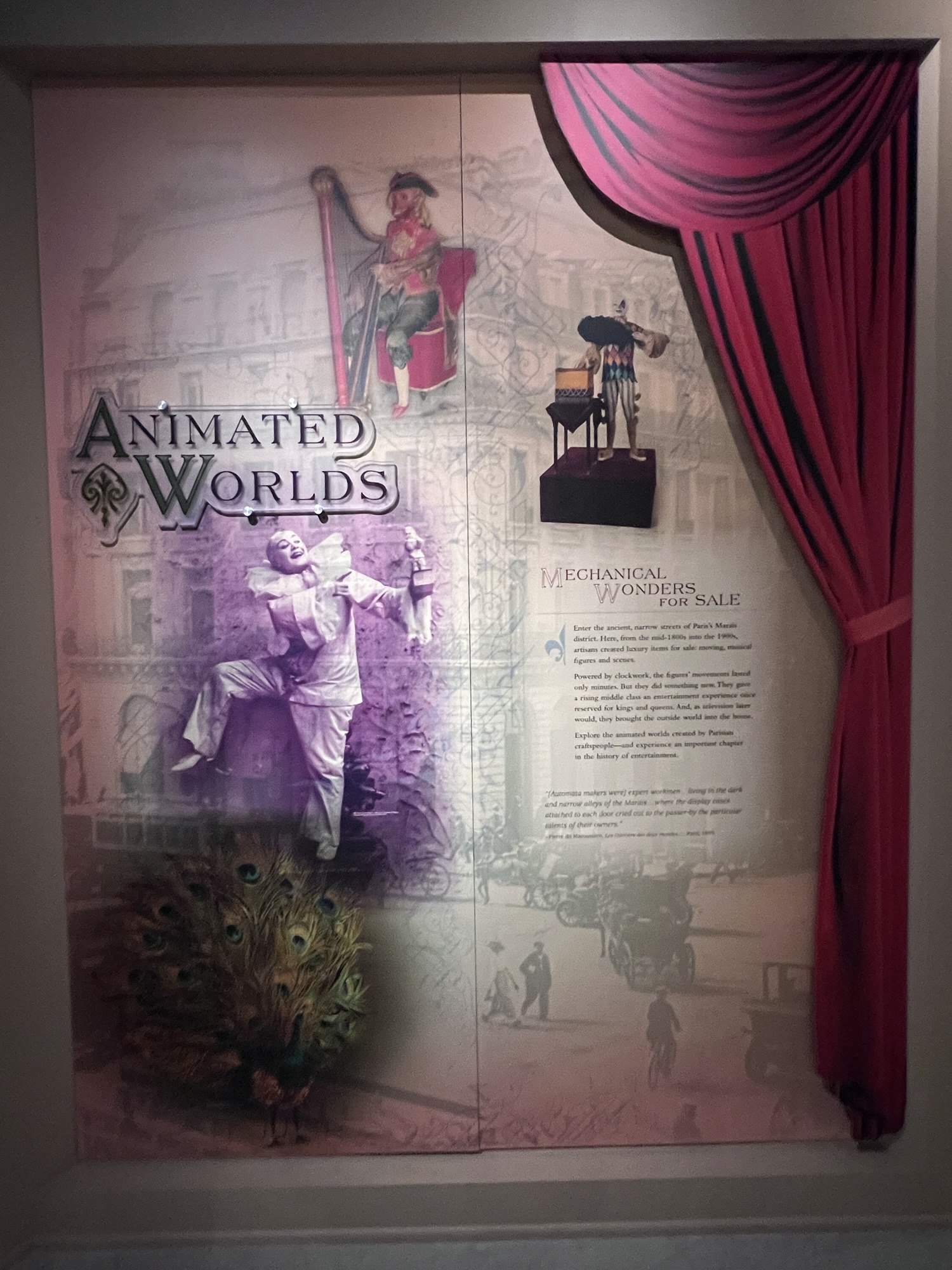
In 2003, the Museum was awarded the Murtough D. Guinness Collection, one of the world’s most important collections of mechanical musical instruments and automata (robotic figures of animals and people).
The beautiful pieces in the automata collection
This collection further enhances the Morris Museum’s role as a major cultural center and travel destination for the arts, sciences and humanities. This 750 object collection reflects innovative technology, exquisite craftsmanship, compelling sound and important cultural heritage.
This is one of the extensive collections in the country
In recognition of what is the Museum’s most renowned collection, the Museum launched a major capital expansion project that resulted in a 5000 square foot gallery devoted to showcasing the history of mechanical music and automata, a grand Entrance Pavilion and a sky-lighted Court and expanded upper galleries.
Today, the Morris Museum is the only accredited museum in the United States with a theater and one of New Jersey’s most dynamic cultural institutions, serving more than 300,000 persons each year, two thirds of whom are children. Audiences are drawn from all twenty-one counties throughout the state and reflect the social-economic and ethnic spectrum that define northern and central New Jersey.
In 2008, the Museum was named Outstanding Arts Organization by the Arts Council of Morris area, in recognition of its exceptional accomplishments and commitment to improving the quality of life in the community through the arts. The Morris Museum has been recognized as a Major Arts institution by the New Jersey Council on the Arts/Department of State (2006-2017 eleven consecutive years) in recognition of the Museum’s solid history of artistic excellence, substantial programming and board public service. The New Jersey State Council on the Arts further distinguished the Morris Museum by bestowing the Council’s Citation of Excellence (2007-2013 seven consecutive years). The Morris Museum is a leading cultural institution in the state, upholding the highest standards of artistic excellence, educational innovation, fiscal responsibility, community engagement, audience impact and leadership in the arts community (Museum website).
(This information comes from the Morris Museum website on their history and I give them full credit for the information)
Automata Gallery
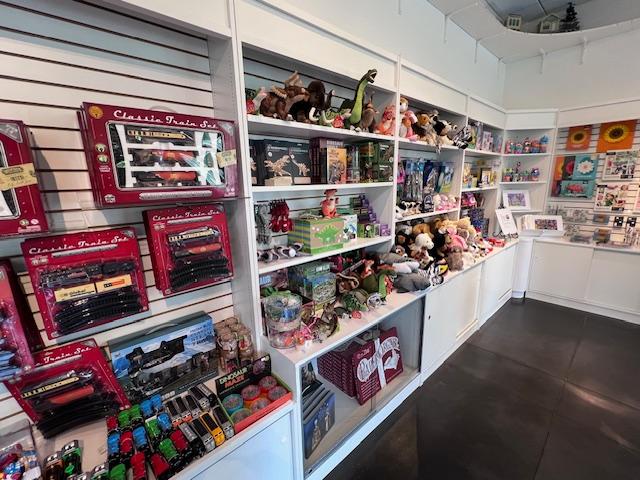
Don’t forget to visit the Gift Shop on the way out. There are all sorts of interesting items to choose from including stuffed animals and books.
Open Wednesday-Sunday 12:00pm-5:00pm/Monday & Tuesday Closed
Fee: Non-Member Adults $12.00/Seniors (65+) and Students with ID $10.00/Members and Children under 12 Free
I have made many trips to the Montclair Art Museum over the years and have always found it to be a very interesting and engaging museum. The curators mount fascinating exhibitions sometimes from the permanent collection and sometimes from traveling shows.
The galleries are smaller and more compact so the exhibitions are not over-whelming like in the bigger museums. You can see each exhibition in about forty-five minutes to an hour and you will still see a lot. There are also smaller exhibition spaces which specialize in one artist and you might see about a dozen pieces.
There are two exhibitions going on currently in the museum. One is “Constructing Identity in American”, which is a permanent collection show of more than 80 paintings, sculptures and works on paper that will address a variety of characteristics that contribute to one’s sense of self, including civic, cultural, artistic, religious, professional and sociopolitical identities, sense of place and personal space and non-conformity. This exhibition goes far beyond portraits to explore other aspects of sense of self (Museum pamphlet).
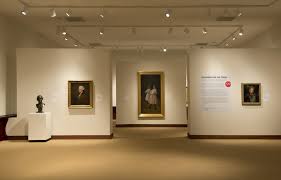
“Constructing Identity in America” exhibit
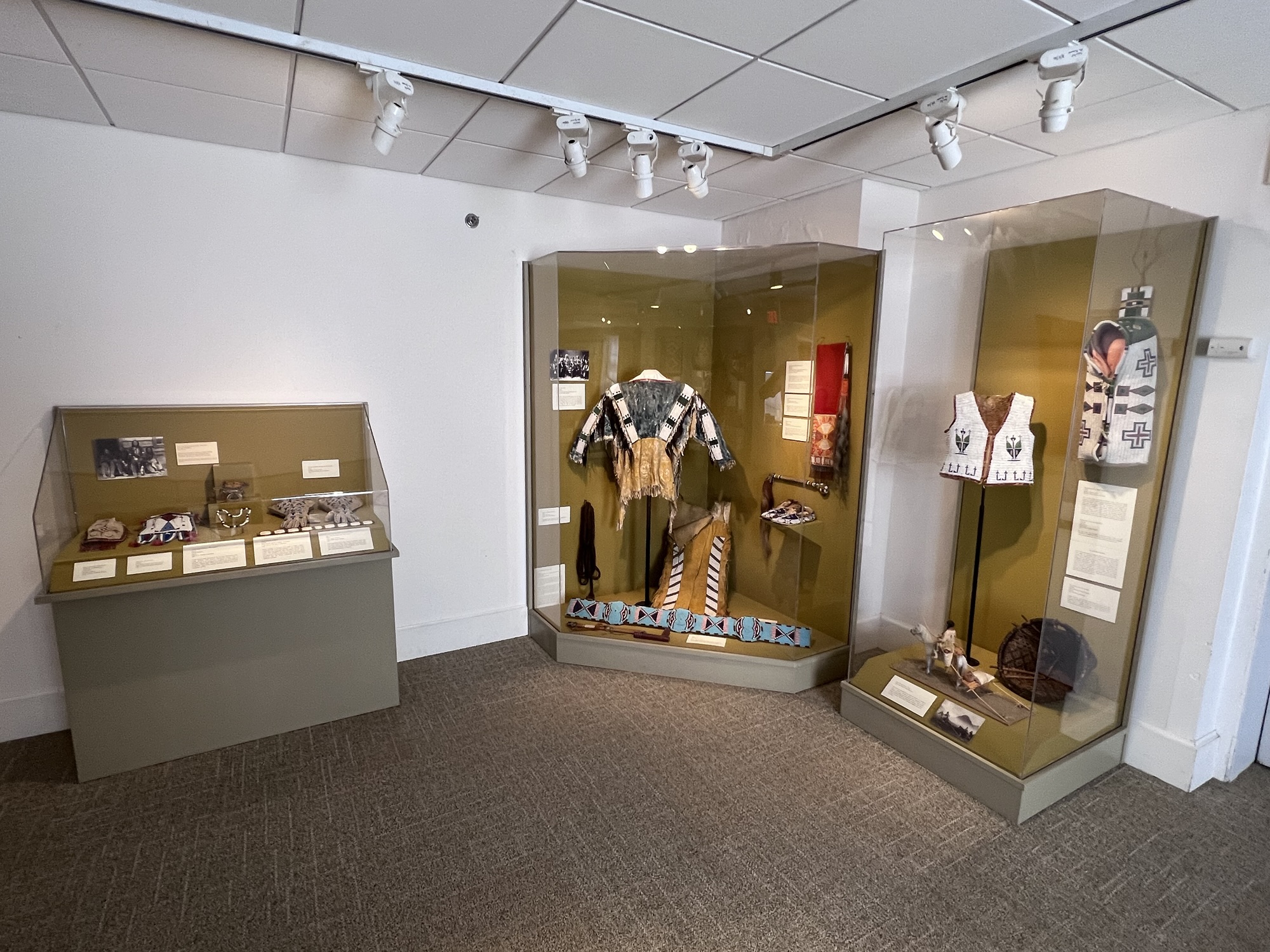
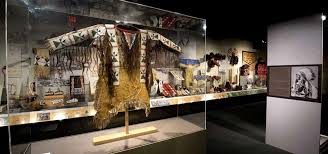
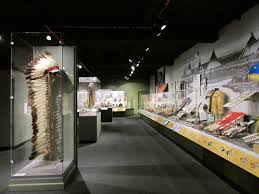
The other exhibition is called “Undaunted Spirit: Art of Native North America” which focuses on the Native American culture from Prehistoric times to the modern era. It , seems that by the end of the Civil War the Victorians were collecting art and objects of the Native Americans fearing that their cultural was disappearing. There is a lot of focus on pottery, both modern and pre-colonial, clothing construction, jewelry making with turquoise and silver and basket-making which was all the rage at the turn of last century. I like the modern aspects of the art as they are ushering a new era of artists of the southwest and giving them a voice. Take time to look at the detail work of the show.
“Undaunted Spirit: Art of Native North America” exhibit
History of the Montclair Art Museum:
(This information was provided by the Montclair Art Museum)
Mission Statement: The Montclair Art Museum, together with its Vance Wall Art Education Center, engages our diverse community through distinctive exhibitions, educational programs and collection of American and Native American Art. Our mission is to inspire and engage people of all ages in their experience with art, including the rich inter-cultural and global connections throughout American history and the continuing relevance of art to contemporary life.
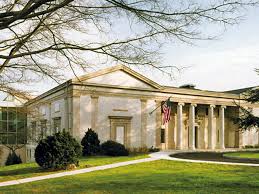
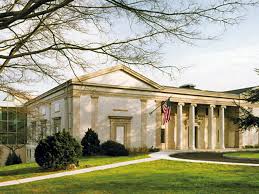
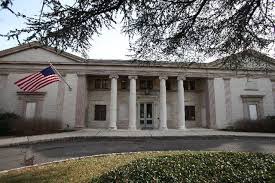
The Montclair Art Museum
Vision, Values and Diversity Statement:
After 100 years of service, MAM is recognized as the leading American art museum and community art school in Northern New Jersey. As a organization, we value: artistic inspiration, diversity of voices, individual and group creativity and the importance of all arts to a civil, inclusive and forward-thinking society.
We respect and welcome individual differences and strive to maintain an environment that fosters productivity, creativity and individual satisfaction by celebrating the diversity of race, gender, nationality, age, religion, sexual orientation and physical abilities.
Native American Galleries
During our second century, we will invigorate our collections and curatorial presentations; expand our educational services audience; support artists, their work and connections; pursue productive institutional partnerships and embrace new media and technology. We will also secure MAM’s financial stability and preserve its facilities and other assets in a prudent and sustainable way.
A notable community institution with an international reputation, the Montclair Art Museum (MAM) is still located in the same-though now thrice expanded-building in which it opened in 1914. Situated amid a beautiful tree-lined residential area of Montclair New Jersey, just 12 miles west of New York City, the Museum is esteemed for its holdings of American and Native American Art, its exhibitions, its family and public programs and its art school. It welcomes more than 65,000 visitors annually.
The entrance of the Montclair Museum
The Museum was a pioneer: one of the country’s first museums primarily engaged in collecting American Art (including the work of contemporary non academic artists) and among the first dedicated to the study and creation of a significant Native American art collection. This pioneering spirit still reverberates in the Museum’s pursuit and presentation of high-quality art that characterize and celebrates American’s diversity, including the recent launch of its Contemporary Art Program, in 2010, providing MAM an opportunity to showcase dynamic contemporary work and expand the Museum’s contemporary art holdings. A main showcase dynamic contemporary work and expand the Museum’s Contemporary holdings.
A main feature of the MAM program is to explore the interplay between historical and contemporary art to our understanding of the larger historical context in which art is created, presenting work that is being challenging and accessible. A key component of the Contemporary Art Program is it New Direction exhibition series of solo artists, established in 2011. Artists featured in the series include Marina Zurch, Saya Woolfalk, Spencer Finch and Sanford Biggers. Most recently in Spring 2015, MAM presented its largest and most ambitious exhibition of contemporary art to date, “Come as You Are: Art of the 1990’s”.
From its founding, the Montclair Art Museum has maintained a vital presence in its surrounding community. The Museum’s collection began with gifts from prominent Montclair residents that included both American and Native American art, laying the foundation for the Museum’s holdings. MAM’s Inness Gallery is one of the only galleries in the world dedicated to the work of America’s greatest landscape painter, who spent the last nine years of his life in Montclair, from 1885 onward and who drew inspiration from the local landscape. Other well-known artists followed in his footsteps, cementing Montclair’s reputation as an intellectual center and artist’s colony, a reputation its retains to this day.
Mam’s collection has grown to over 12,000 works. The American collection, which started with a gift of 36 paintings from William T. Evan’s, comprises paintings, prints, drawings, photographs and sculpture dating from the 18th century to the present and features excellent works by Benjamin West, Asher B. Durand, John Singer Sargent, Edward Hooper, Georgia O’Keeffe, Andy Warhol and Roy Lichtenstein as well as younger and emerging artists such as Louise Lawler, Chakaia Booker, Whitfield Lovell and Willie Cole.
The museum’s superb holdings of traditional and contemporary American Indian art and artifacts, New Jersey’s largest, represent the cultural achievements in weaving, pottery, wood carving, jewelry and textiles of indigenous Americans. The collection was begun by Annie Valentine Rand and carried on by her philanthropic daughter Florence Rand Lang, one of the Museum’s founders and continues to grow with philanthropic daughter Florence Rand Lang, one of the Museum’s founders and continues to grow with commissioned works, gifts and purchases that celebrate the vitality and modernity of traditional forms and beliefs. Among the contemporary American Indian artists represented are Tony Abeyta, Dan Namingha, Jaune Quick-to-see Smith, Allan Houser , Bently Spang and Marie Watt.
Equally important for its community presence and its reputation are the Museum’s public and family programs and art school, serving everyone from toddlers to senior citizens. Collaborations with numerous cultural and community partners bring artists, performers and scholars to the Museum on a regular basis.Guests have included Holland Cotter, John Elderfield, Bill T. Jones, Jeff Koons, Faith Ringgold, Winfred Rembert, Kiki Smith, Philip Pearlstein, Shirin Neshat and Lorna Simpson. More than 10,000 K-12 students from 190 school districts visit the Museum every year. Free Family Days, a Family Lab, MAM Park Bench, Home School Days and Birthday Art Parties allow families to experience art in variety of different ways. As the New Jersey affiliate of the Scholastic Art & Writing Awards, MAM opens opportunities to creative teenagers to gain national recognition for their work. The Museum also provides programs for seniors and special needs individuals-such as the hearing impaired and people with Alzheimer’s as well as training for teachers in the arts.
MAM’s art school, now the Yard School of Art, has been an integral part of the Museum’s life nearly from the beginning. It was founded in 1924 just 10 years after the Museum itself and has operated continuously since then offering courses year-round to kids, teens, adults and seniors. Courses cross a broad range of the artistic spectrum, including drawing, painting, collage, pastel, printing making and illustration. In 2011, the school launched two new areas: a Ceramics Studio and a Digital Media Lab.
In 2014, MAM celebrated its Centennial with a yearlong program of activities, which included a Birthday Party on January 15, exactly 100 years from the day of its founding that attracted thousands of visitors. In honor of the Centennial the Museum also commissioned internationally renowned artist Spencer Finch to create a site-specific installation that has transformed the Museum’s facade, making it a more inviting point of entry.
The first institution in New Jersey designed as a museum and one of the first in the nation to be accredited by the American Association of Museums, the Montclair Art Museum as it marks its Centennial, continues to seek novel ways, through its exhibitions, educational programs and outreach efforts to inspire and inform its growing and ever more diverse audiences.
(This information on the history of the Montclair Art Museum was taken from their website and I give the Museum full credit for the history of the Montclair Art Museum).
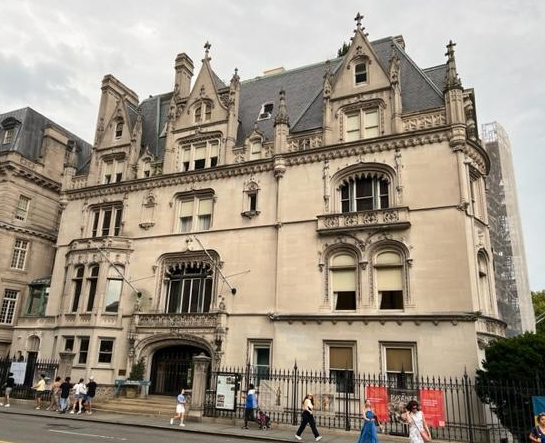
The Ukrainian Institute of America at 2 East 79th Street
I was really impressed by the Ukrainian Institute of America on a recent visit. I must have passed this building a hundred times on my way to the Metropolitan Museum of Art and never thought twice of it. I was sorry I did as you will miss a lot by not walking in. The galleries are really impressive and the main gallery on the bottom gives you an interesting look at the history of the Ukrainian.
The first floor gallery discusses the formation of the country, a bit about its history and its ties to Europe and to Russia, its religious past and the current state of affairs of the country including its recent split of the eastern sections of the country and Crimea to Russia. Its a country in turmoil considering they want to join the European Union. It is a country in flux and on the cusp of entering the 21st Century with some of its past still tugging at it. Like all countries, it will prevail on the will of it’s people. There is a lot of solid history here and a country ready to enter its future.
The artwork of artist Vasyl Diadyniuk
The second and third floor galleries are full of art work from Ukrainian artists that is on sale and each of the galleries is dedicated to certain artists selling their works at somewhat hefty prices. Still you get to see the developments of the artists both here and abroad.
The forth floor is dedicated to special exhibitions. There are two shows going on now. One is by artist Vasyl Diadyniuk and another show is by artist Alexander Archipenko.
The artwork of artist Alexander Archipenko
The Museum has an interesting history.
Ukrainian Institute of America History:
The Ukrainian Institute of America Inc. is a non-profit organization whose primary mission is to showcase and support Ukrainian culture. To that end, the Institute affords the general public an opportunity to learn about Ukraine and how the Ukrainian spirit expresses itself, with special emphasis on the creative arts.
Founded more than fifty years ago by William Dzus, a prominent Ukrainian industrialist and philanthropist, the Institute sponsors:
*Art exhibitions
*Music concerts
*film screenings
*theater presentations
*Poetry readings
*Lectures and symposia
*Educational programs
*Children’s events
*Documentation center
The history of the building:
The building that is home to the Institute, the National Historic Landmark Harry F. Sinclair House is one of the few remaining examples of the splendid mansions that prominent citizens of New York City built in the 19th Century. The mansion was built in 1897 for Isaac D. Fletcher, a wealthy banker and broker, by the architect C.P.H. Gilbert. Executed in Gothic Revival style, the building is richly decorated with intricate crockets, carvings, moldings, pinnacles and other exquisite details. Six stories high, partly surrounded by a dry moat, the Institute features stately rooms that are magnificently proportioned and lavishly finished (Institute History).
The C.P.H. Gilbert house
In 1887, manufacturer, Isaac D. Fletcher, commissioned famed Gilded Age architect, C.P.H. Gilbert to design the mansion. When Mr. Fletcher died, left this mansion and his art collection to the Metropolitan Museum of Art, which sold it to Harry F. Sinclair, founder of Sinclair Oil Company and also famous for his involvement in the Teapot Dome affair. The last private owner was Augustus Van Horne Stuyvesant Jr., the last descendant of Peter Stuyvesant, who was the first governor of New Amsterdam, today’s New York City bought the house in 1930 and lived here with his sister, Anne. The house was sold as part of the estate when Mr. Stuyvesant died in 1953. The Ukrainian Institute of America acquired the mansion in 1955 (Institute History).
A key goal of the Institute is to continue to preserve this extraordinary fragment of the city’s history for the benefit of all citizens of New York. The house still retains its wooden moldings and the house looks as if its residents just moved out.


















 Visiting a Museum: The Unique, Unusual, Obscure and Historical