Tag: NYC Historical Sites

The Soldiers’ and Sailors’ Monument Riverside Drive and West 86th Street                                New York, NY 10024

The Soldiers’ and Sailors’ Monument Riverside Drive and West 86th Street New York, NY 10024

The Soldiers and Sailors Monument

Riverside Drive and West 86th Street

New York, NY  10024

https://www.nycgovparks.org/park-features/riverside-park/virtual-tour/soldiers-sailors-monument

https://riversideparknyc.org/places/soldiers-and-sailors-monument/

Open: When the Riverside Park is open. The Monument is fenced off right now because of restoration.

My review on TripAdvisor:
https://www.tripadvisor.com/Attraction_Review-g60763-d7269561-Reviews-Soldiers_and_Sailors_Monument_New_York-New_York_City_New_York.html?m=19905

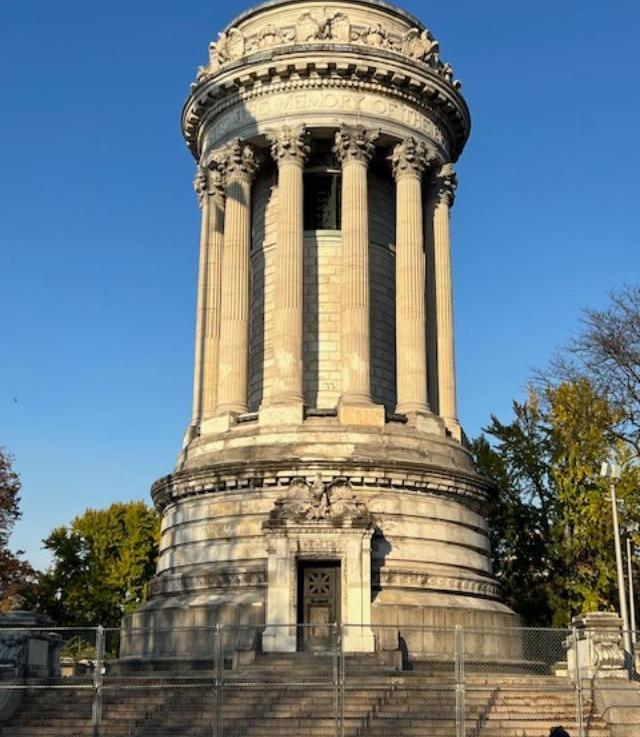
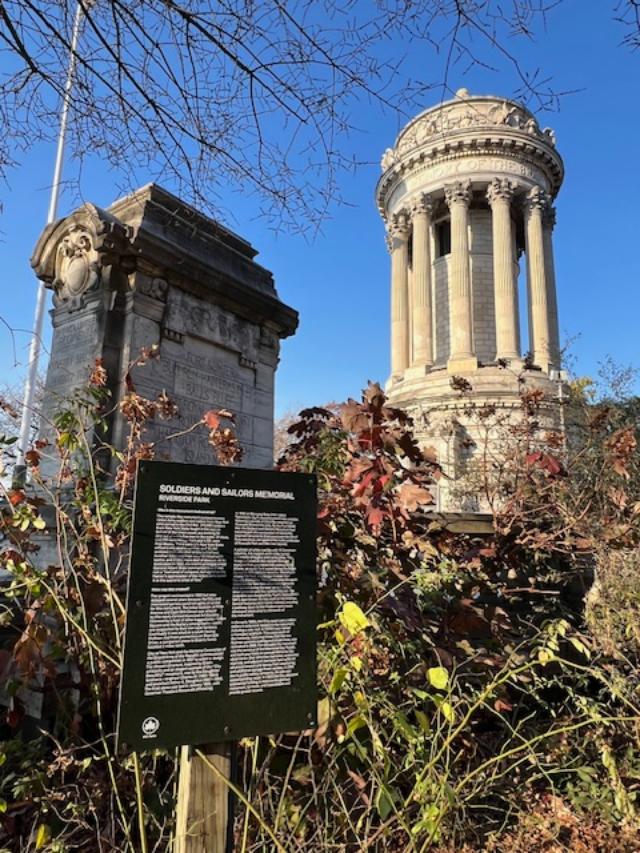
The Soldiers & Sailors Monument in the Fall of 2024

I had passed the Soldier’s and Sailors’ Monument when I was walking the Upper West Side of Manhattan for my blog ‘MywalkinManhattan.com’. It sits in an almost graceful state of disrepair behind fencing protecting it from people. It seems that it had been in a state of decay since the start of construction in 1900.
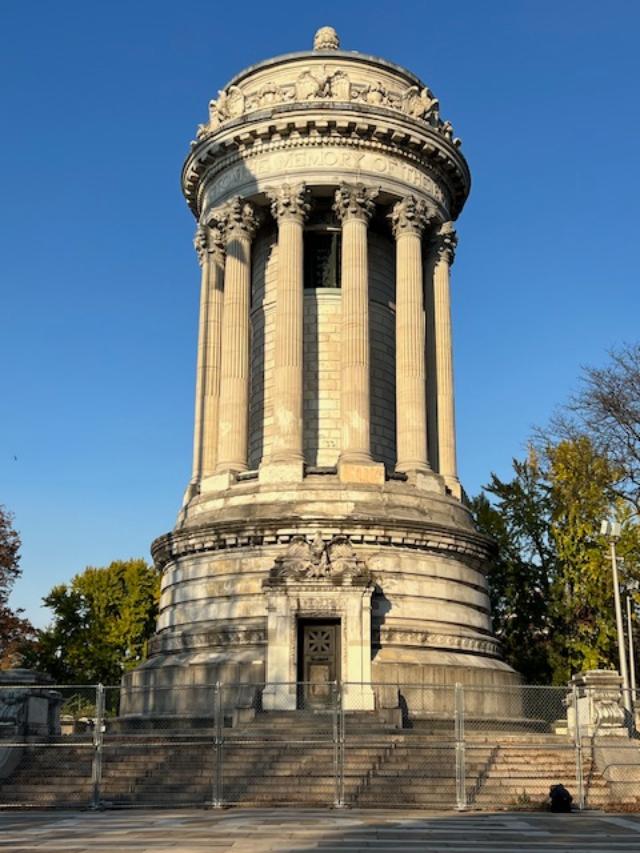
The monument is still under renovation and you can only walk around it

I walked all around the monument while walking Riverside Park thinking it was a small copy of a Greek Temple or another smaller burial site like Grant’s Tomb. You could see where the gaps in the structure were and the need for repair from the stairs to the platform. Still there is a beauty in its details.
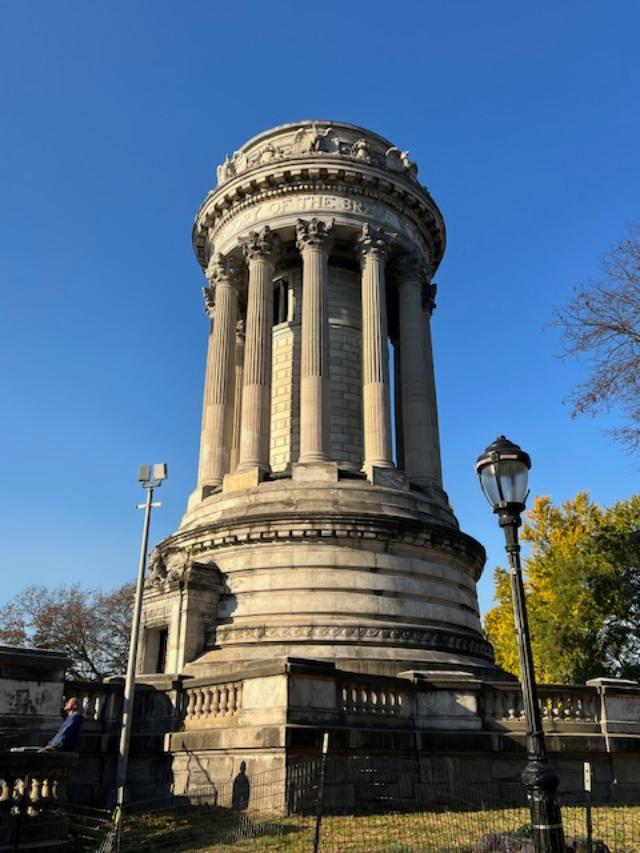
The monument in the late afternoon

Reading in a recent issue of The Spirit, it seems that the New York Landmarks Conservatory and the local government officials want to put money into its repair. This beautiful landmark is going to need a lot of time and care in the future. Let’s hope they agreed to it.
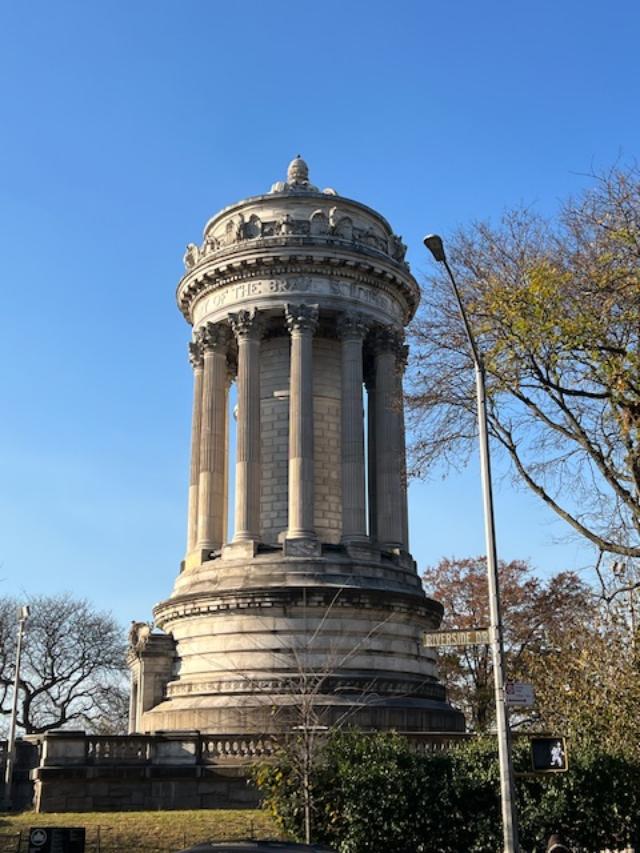
The monument still under renovation

History of the Soldiers’ and Sailors’ Monument:

(from the parks website)

The monument was first suggested in 1869 after the Civil War and was put on the back burner until 1893 when a nostalgia for the Civil War sweep across the country. The State of New York established a Board of Commission to create a monument to the soldiers’ and sailor’s who had served in the Union Army during the American Civil War (Wiki).

The ground was broke for the monument in 1900 and was completed in 1902 and it was dedicated on Memorial Day in 1902 with President Theodore Roosevelt officiating and a parade of Civil War veterans parading up Riverside Drive (Wiki).
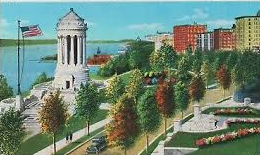
Sailors and Soldiers Monument

The Monument when it opened

The monument was designed by architects Charles and Arthur Stoughton and the ornamental features were carved by architect Paul E. M. Duboy. The monument takes the form of a peripteral Corinthian temple raised on a high base with a tall cylindrical rusticated cella, that carries a low conical roof like a lid ringed by twelve Corinthian columns. The entrance has the names of the New York volunteer regiments and the battles in which they served as well as the Union Generals . The monument was designed a New York City landmark in 1976 and a State landmark in 2001 (Wiki).

The monument has been plagued with repairs since it was built and according to reports it is in need of desperate repairs. I could tell by the cracks and missing marble that their were flaws in its construction since it had been built.

Still it graces the entrance of Riverside Park with it’s beauty. Look at its details in the carvings and it look of a Greek temple. It is really impressive especially in the summer months with the park behind it in full display. You can’t get too close to the monument in its current state.
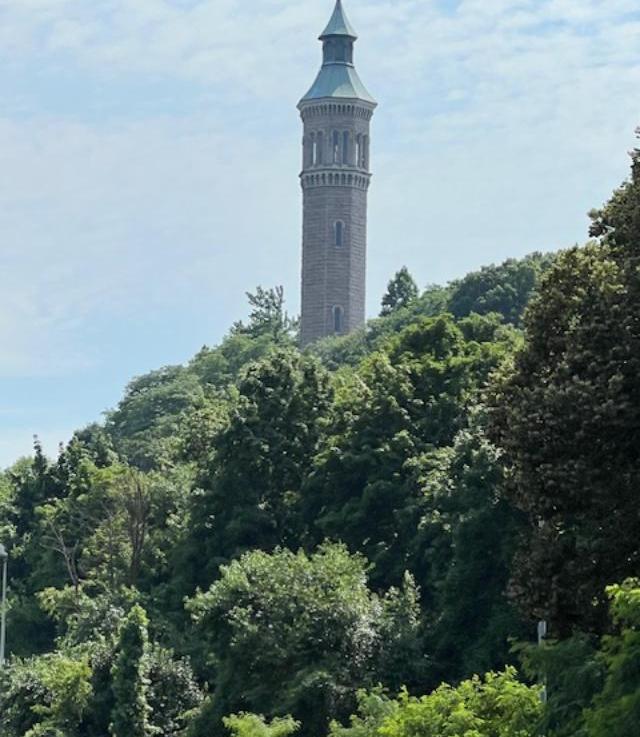
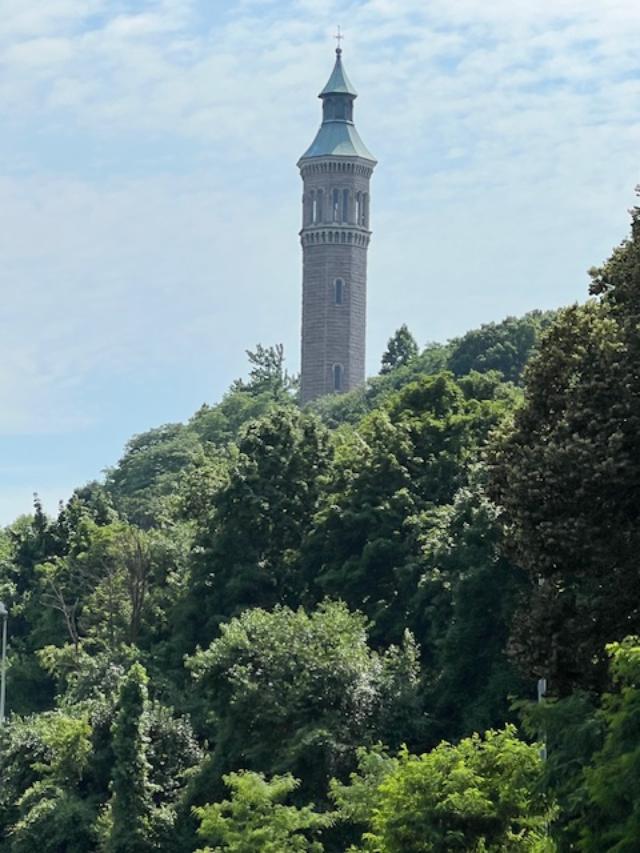
The Highbridge Water Tower                                            Highbridge Park                                                                   Washington Heights, NYC 10022

The Highbridge Water Tower Highbridge Park Washington Heights, NYC 10022

The Highbridge Water Tower in Highbridge Park

Washington Heights around 174 Street

New York, NY  10022

https://www.nycgovparks.org/planning-and-building/capital-project-tracker/project/5937

https://www.nycgovparks.org/park-features/highbridge-park/planyc

My review on TripAdvisor:

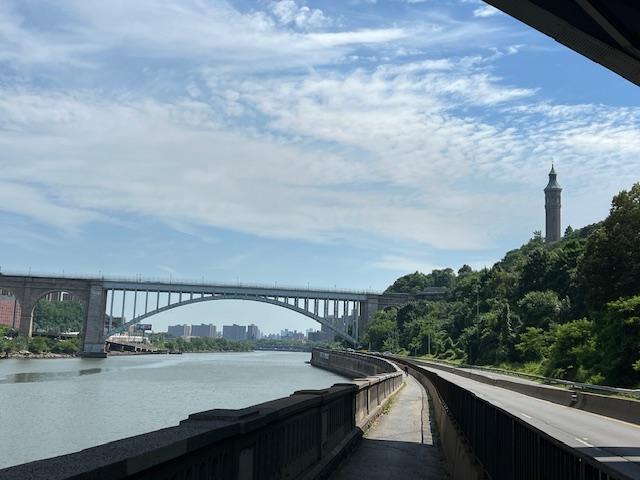
The tower from the FDR Drive walkway from below

When I was walking through High Bridge Park while exploring Washington Heights for my blog, ‘MywalkinManhattan.com’, I came across the Water Tower inside the park right next to the pool that was closed for the season and the Highbridge Walkway, which used to be the old aqueduct that used to bring fresh water into New York City.

The Highbridge Water Tower when I walked “The Great Saunter” through the neighborhood in 2023.

The Highbridge Water Tower is nearly 200 feet tall and stands around 174th Street in Washington Heights. The tower used to hold a 47,000-gallon water tank that was fed by the Croton Aqueduct. The Highbridge next to it was the last leg of the aqueduct’s forty-mile journey from upstate New York to Manhattan and is the oldest surviving bridge in New York City (T.M.Rives 2012).

The former aqueduct from FDR Drive when on The Great Saunter

I revisited the park in the Summer of 2026 and walked around Highbridge Park. I walked around the water tower and never realized how beautiful the tower really is when you see it up close. The detail work is of another era and then you realize how the fresh drinking water got to New York City and how important this was and innovative at the time. The respect it was given in design is shown in the detail work of the building.

The tower in the Summer of 2026

The tower in the summer of 2026

The doorway entrance to the tower that is bolted shut

The windows of the tower

The aqueduct over the East River from the tower location

The tower itself was built between 1866-1872 by architect John B. Jervis in the Romanesque Revival and  neo-Greco styles and had a seven acre reservoir next to it. It opened in 1872 and was fully working in 1875. In 1949, the Water tower was disconnected from the system. The tower like the rest of the park had sat in disrepair for years and was restored between 1989-1990 (Wiki). The tower is now going through another restoration that should be finished by April of 2021 (NYCParks.com).

The water tower is part of a much larger park that lines the northern corner of Manhattan. The views are really amazing from all sides of the park. This is when you are walking down the pathways by FDR Drive.

When I visited in the park that summer and then again in the Fall, it was behind fencing because it was still unsafe.

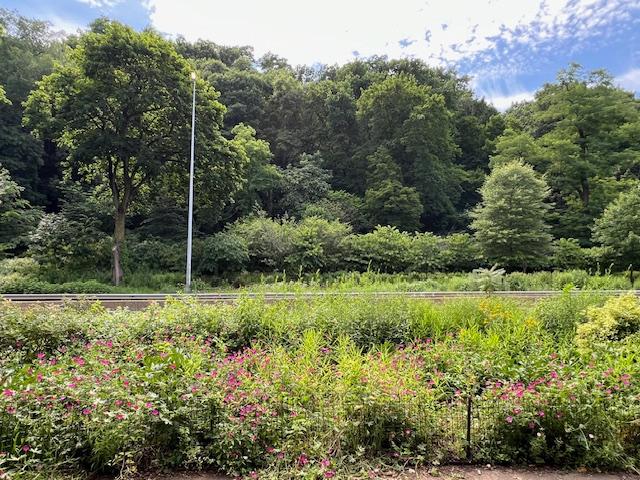
Highbridge Park is beautiful in the Spring and Fall but not the safest park in NYC.

Walking the paths of Highbridge Park

Highbridge Park is a wonderful park to walk around in in the middle of the day during the warmer months. I would not venture around it later at night or in the winter months. It can be a bit desolate and when you walk around the paths by the river with all the abandoned cars and graffiti can be a bit dangerous. I got some looks when walking around.

High Bridge Park V

This was at the bottom of the bridge just off the path.

Bronx Museum of the Arts                                   1040 Grand Concourse                                        The Bronx, NY 10456

Bronx Museum of the Arts 1040 Grand Concourse The Bronx, NY 10456

The Bronx Museum of the Arts

1040 Grand Concourse

The Bronx, NY  10456

(718) 681-600

http://www.bronxmuseum.org/

Open: Sunday 11:00am-6:00pm/Monday & Tuesday Closed/Wednesday-Saturday 11:00am-6:00pm

Fee: Free

My review on Tripadvisor:

https://www.tripadvisor.com/Attraction_Review-g47369-d312012-Reviews-Bronx_Museum_of_the_Arts-Bronx_New_York.html?m=19905


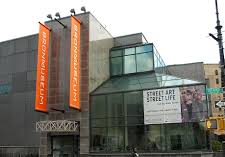
I recently had some time to visit the Bronx Museum of the Arts when I was visiting Yankee Stadium recently for a football game. The museum is right down the road on the Grand Concourse. It is an impressive little museum.

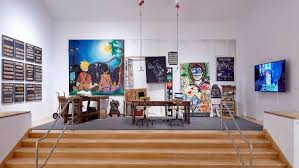
I had wanted to see the exhibit “Art Versus Transit: 1977-1987” by artist Henry Chalfant who had recorded the graffiti art on the subway cars during the late 70’s into the early 1980’s. This is before the subway investing in the new subway cars that could be cleaned by hosing them off.

Bronx Museum II.jpg

“Art versus Transit: 1977-1987”

The art was interesting as it was an expression of the times just when Hip-Hop was becoming popular and the City was going through the financial crisis. The artist did a good job capturing the times. Not only do we see the art but the music and dance as well of the time.

Bronx Museum III.jpg

Subway Art

The other exhibition that I saw was “The Life and Times of Alvin Baltrop” which displayed the artist’s interpreted that Gay Community and the beginnings of the AIDS crisis. It was an another interesting perspective of the times of New York City.

Mission and Background:

The Bronx Museum of the Arts is a contemporary art museum that connects diverse audience to the urban experience through its permanent collection, special exhibitions and education programs. Reflecting the borough’s dynamic communities. The Museum is the crossroad where artists, local residents, national and international visitors meet.

Today an internationally recognized cultural destination. The Bronx Museum of the Arts is committed to presenting new ideas and voices in a global context and making contemporary art a vital, relevant experience. For the past four decades, the Bronx Museum has presented hundreds of changing exhibitions featuring works by culturally diverse and under-represented artists from a spectrum of levels. Exhibition have investigated themes of special interest to the Bronx community while exploring the interplay between contemporary art and popular culture.

A permanent collection of over 2000 artworks in all visual media preserves and documents artists who are not typically represented within traditional museum collections by showcasing work by artists of African, Asian and Latin American ancestry, as well as artists for who the Bronx has been critical to their development. The Museum provides direct support to artists through Artist in the Marketplace, which nurtures the work of 35  emerging artists each year and providers professional development seminars culminating in a multi-site biennial exhibition and catalog.

The Museum’s education department empowers students from grades K-12 by offering a variety of programs that inspire academic proficiency visual literacy and critical thinking. Through the Group Visits Program, students are exposed to the Museum’s works during single-session tours lead by teaching artists. Through In-School Partnerships. Museum educators work with school teachers to encourage scholastic excellence through the application of arts education techniques in addition, the Museum’s Teen Council Program helps Bronx high-school students build applied arts and media skills as they create a variety of visual and text-based materials.

(Bronx Museum of the Arts Mission-Website)

History:

The Museum opened on May 11, 1971, in a partnership between the Bronx Council on the Arts, which was founded in 1961 and the Metropolitan Museum of Art. The opening coincided with a borough-wide “Bronx Day” event. The first exhibit consisted of 28 paintings from the Met’s collection. The Museum was first housed in the first floor rotunda of the Bronx County Courthouse. Additional galleries were located in the Bronx’s Co-op City, Bedford Park and Allerton neighborhoods. In its first 12 years of operation, the museum held over 350 exhibitions.

In 1982, the city purchased a vacant synagogue at 165th Street and the Grand Concourse as a new location for the museum. The new location opened to the public in May 1983 in conjunction with “Bronx Week”, which succeeded “Bronx Day”. The new space was inaugurated with an exhibition of twentieth artwork. It consisted of paintings, photographs and prints borrowed from the Met.

In February 2004, construction began on a $19 million expansion project that doubled the museum’s size 33.000 square feet. The expansion opened in October 2006. In 2008, a arts center was added to accommodate educational programs for local schoolchildren and their families. The Museum no longer charges fees since 2012.

Bronx Museum

The Bronx Museum of Art and its additions

The original design was by Simon B. Zelnick in 1961 and the extensions were designed by Castro-Blanco, Piscioneri & Feder in 1988 and a second addition in 2006 by Arquitectonica.

(The Bronx Museum WIKI)


Lefferts Historic House                                         452 Flatbush Avenue                                  Brooklyn, NY 11225

Lefferts Historic House 452 Flatbush Avenue Brooklyn, NY 11225

Lefferts Historic House

452 Flatbush Avenue

Brooklyn, NY  11225

https://en.wikipedia.org/wiki/Lefferts_Historic_House

Open: Sunday 12:00pm-5:00pm/Monday-Wednesday Closed/Thursday-Saturday 12:00pm-5:00pm

Admission: Suggested $3.00 fee towards the renovation of the house

My review on TripAdvisor:

https://www.tripadvisor.com/Attraction_Review-g60827-d103505-Reviews-Lefferts_Homestead-Brooklyn_New_York.html?m=19905

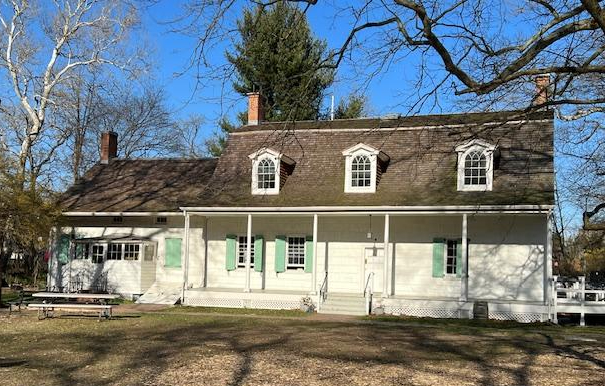
Leffert’s Homestead in Prospect Park, Brooklyn

I have visited the Lefferts Historic House a few times when visiting the Brooklyn Botanical Gardens, The Brooklyn Museum and the Prospect Park Zoo, all of which are in the same cultural district of the neighborhood. The house is located near the entrance of Prospect Park just behind the Brooklyn Botanical Garden and right next to the zoo and the carousel.

The Lefferts Homestead in 2023

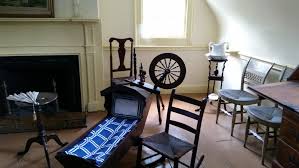
The house sits on a plot of the park to give it the look of the house when it sat in a rural setting in Brooklyn about twelve blocks away. When walking into the house, there are a few rooms that are furnished and have period pieces in them to show what the house must have looked like in the late 1700’s and early 1800’s. Most of the house is used for touring and for groups doing projects and games. You can’t go upstairs anymore. The house will be going through a renovation soon so watch the website for more information on that.

Lefferts Historic House II.jpg

The historic objects of the house

The outside of the house has wooded grounds with a working garden, an outside oven and historic objects that bring the period back to tourists and residents alike of what life must have been like when it was a working farm. When in season, you can walk amongst the vegetable and flower gardens and talk to the docents about the history of the house.

The grounds of the Lefferts Homestead with the stables and smokehouse

The house is part of the Historic House Trust and part of the Prospect Park Alliance.

History of the Lefferts Historic House:

The Lefferts family was one of the original settlers in Brooklyn with Lefferts Pieterson buying 58 acres of land here in 1687 and built the original homestead on that property. In 1776, the house was destroyed by American troops before the Battle of Brooklyn so that the British could not use it. The house was rebuilt in 1783 by one of his descendants (Prospect Park Alliance).

Lefferts Historic House III

The Lefferts Family

The current house was the home of Continental Army Lieutenant Pieter Lefferts and was built in 1783. It was originally located on Flatbush Avenue near Maple Street. When Pieter died the house was passed onto his son, John and then when John passed, the house was inherited by his daughter, Gertrude Lefferts Vanderbilt. The house was lived in by four generations of the Lefferts family.

The Lefferts Homestead

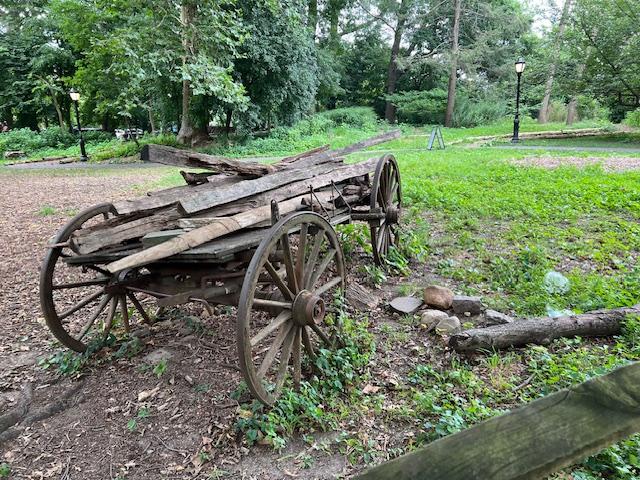
The cart on the front of the property

With impending development of the area around the house at the end of the 19th century, John Lefferts estate offered to donate it to the City on the condition that house be moved to City owned property for historic preservation and protection. It was opened as a museum in 1920 by the Fort Green Chapter of the Daughters of the American Revolution (Wiki).

The history of the house

The house is currently used as a Children’s Museum and Cultural site and open year-round.

The Lefferts House in the winter 2024.