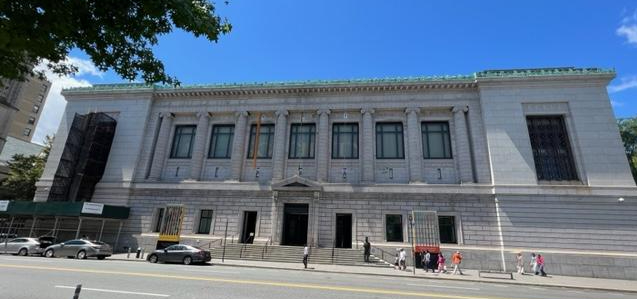
The New York Historical Society at 170 Central Park West
I have visited the New York Historical Society several times over the years and I have to say that make quite a statement on the history of New York City and the State of New York City. It has a interesting permanent collection of paintings and statuary. There are a lot of things that First Families of New York City have donated to the museum that tell the story of families born and raised here.
I was honored here years ago when a picture I took for the 9/11 Photo Album Book came out in 2002. All the photographers that contributed to it were in attendance. Another time I was here for a private event on John Adams back in the early 2000’s that was injunction with the American Museum of Natural History. Over the years, the Historical Society has brought in more interesting exhibitions. The current exhibition “Hudson Rising” on the history and ecological changes due to humans along the Hudson River. It was an interesting look of the natural changes to the river from manufacturing times today as the river is being reclaimed for recreational uses.
‘Hudson Rising’ Exhibition
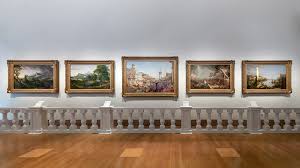
The whole museum is a retrospect on the timeline of the New York City with an array of art out any one time. There are Masters from the Hudson River School, statues from all eras and special exhibitions that tell an interesting story of some part of the City’s past.
Hudson River School Paintings for ‘Hudson Rising’
History of the NY Historical Society:
The Historical Society was founded on November 20, 1804 largely through the efforts of John Pintard. He was for some years secretary of the American Academy of Fine Arts as well as the founder of New York’s First Savings Bank. With a group of prominent group of New Yorkers on the founding board including then Mayor DeWitt Clinton, the organization was established on December 10, 1804 (Wiki).
The Collections of the NY Historical Society
The NY Historical Society had its share of growing pains over the years in that it had been in heavy debt during its first couple of decades. It also moved several times over the years as well. It moved from the Government House, which it had been housed in since 1809 to the New York Institution, the formerly the city almshouse on City Hall Park in 1816. In 1857, it moved into the first building constructed specifically for its collection at Second Avenue and 11th Street. The collection moved to its final home to Central Park West in 1908 (Wiki).
The current Society building was designed by architects York & Sawyer, who were known for bank designs. The second part of the building was designed by architects Walker and Gillette. The building has just finished a $65 million dollar renovation in 2011 and all the galleries have been refreshed. The new director of the Society, Louise Mirrer is leading the establishment into the 21st Century.
On Friday night’s from 6:00pm-8:00pm it is ‘pay as you wish’ to enter the museum.
For current information on guided tours, group tour reservations, school groups, special events or accessibility, call (845) 255-1660 or visit http://www.huguenotstreet.org.
The history of Slavery in the area
App:
Our free Walking Tour mobile app features histories of the houses on the street with archival photos as well as photos of the house interiors and the collection pieces within. Mobile users can download the app on both the App Store and Google Play.
The entrance to the site
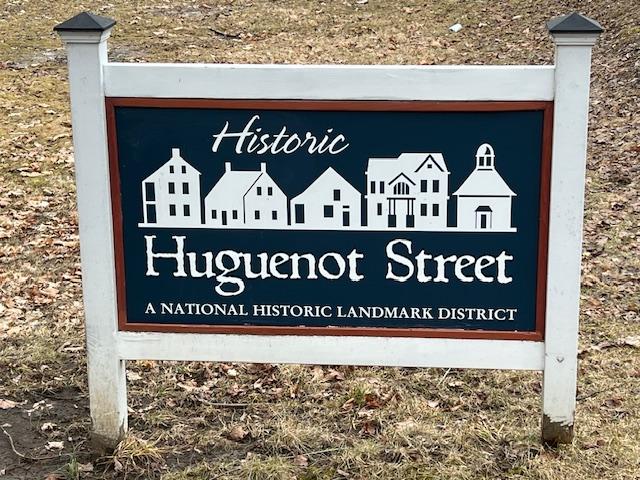
The historic sign at the entrance
History of the site:
At our 10 acre National Historic Landmark District, visitors experience more than 300 years of history through the lens of a French Huguenot community as it evolved over time. Guided tours begin with an introduction to the pre-colonial Munsee Esopus landscape dating back 7000 years and the religion, culture and architecture of New Paltz’s earliest European settlers and enslaved Africans. The experience continues as guests visit fully furnished houses reflecting unique human narratives and changing tastes across the Colonial and Federal periods, through the Gilded Age and into the early 20th century.
(Promotional Materials)
I visited Historic Huguenot Street one afternoon after visiting here about five years earlier during the holidays. The houses are easy to tour and the street is blocked so that you can walk amongst the houses. There are tours every half hour when the site is open. Here you can tour inside the houses instead of just the grounds. On a nice day, it is interesting to look over the architecture of the homes.
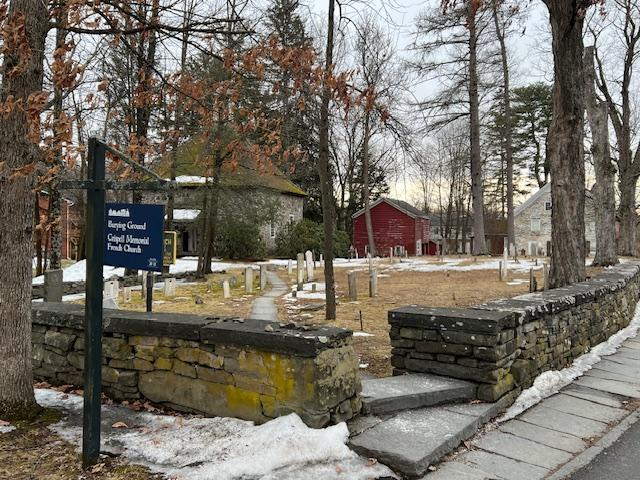
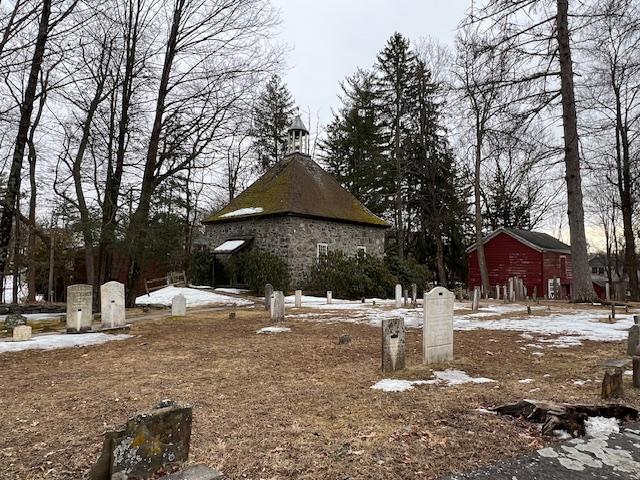
Make sure that you take time to look at the historical cemetery by the church at the end of the block. Some of the original settlers are buried here. It is also nice to tour around the Waykill River.
Take the extra time to visit the gift shop and see the information video on the site and look over the literature of the site.
The area has a pretty interesting history.
The map of the site
History of the Huguenot Street Historic District:
The site is owned and operated by Historic Huguenot Street (HHS), which was founded in 1894. In 1899, Historic Huguenot Street purchased the Jean Hasbrouck House as the first house museum on the street. In the 1950’s and 60’s, the organization and related family associations purchased most of the remaining stone houses in the district and subsequently opened them as museums. These acquisitions were funded in large part by descendants of the original Huguenot founders. Their family associations play a key role in supporting the institution today.
The Individual Houses:
Bevier-Elting House:
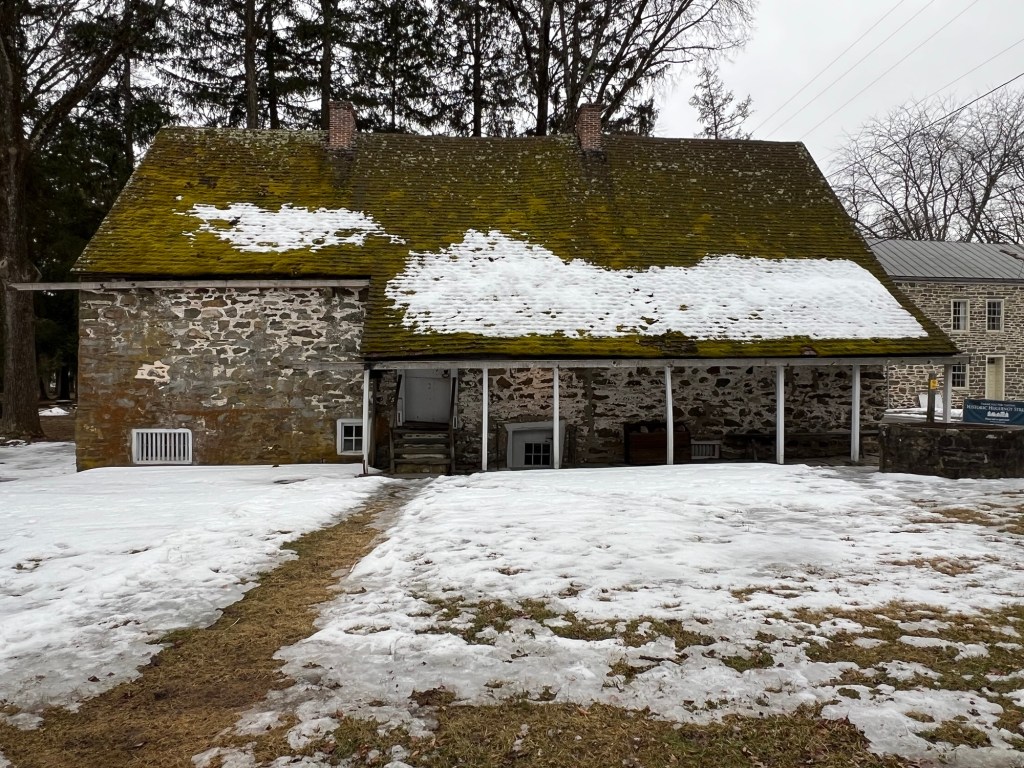
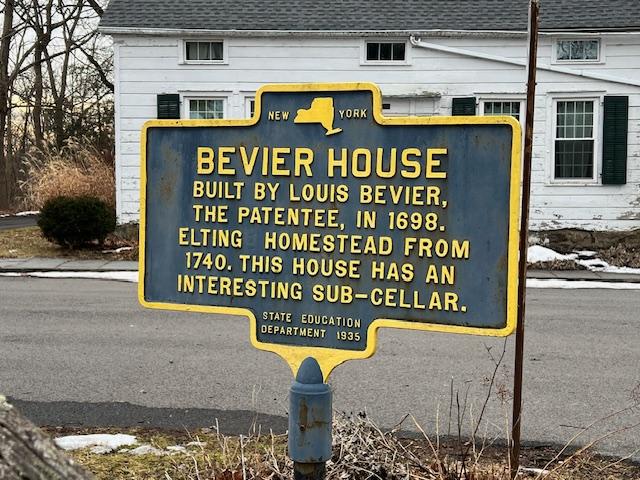
Dating to the early 18th century, the house was originally a one room building built with the narrow or gable end facing the street-then the prevailing style of the low countries of Northern Europe. Two expansions were built later as was a small cellar that was used to house African slaves. The house was built by the Beiver family, one of the founding families and subsequently sold to the Dutch Elting family.
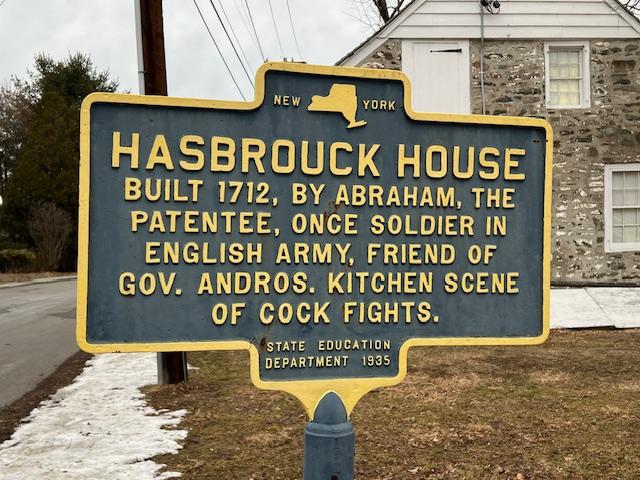
The structure as the Abraham Hasbrouck House was built in three phases in the 1720’s and 30’s. The first of the house-the center room-was constructed in 1721 by Daniel Hasbrouck, the son of Abraham Hasbrouck the patentee. The date 1721 is based on recent dendrochronology, which is a process by which wooden structural members are dated. This house represents a New World innovation in Dutch-style architecture. The initial houses in the Dutch region of New York, such as New Amsterdam, Albany and Kingston were built in the tradition of Dutch cities with the gable-ends to the street, which conserves street frontage. The basic structure of the house consists of a series of H-bents which spread the weight of the house across the entire expanse. The original one room house exhibited several defining elements of Dutch architecture, the jambless fireplace being the principal and most recognized feature in the house. Recently re-opened to the public in July 2012 following a restoration and reinterpretation focusing on the life of Widow Wyntje.
Also built in 1721 by Jean’s son Jacob (and perhaps incorporating elements of an early home built by New Paltz founder Jean Hasbrouck), this home is an excellent example of Hudson Valley Dutch architecture and the showpiece of Historic Huguenot Street. A National Historic Landmark in its own right, it boasts the only remaining original jambless fireplace of any of the Huguenot Street houses and is one of the few surviving examples in what was formerly the New Netherland.
In 2006, the north wall of the house was carefully dismantled, repaired and reconstructed. Reproduction Dutch-style casement windows were installed. Interior restoration followed, resulting in a house that is an excellent example of how a comfortable family in the region lived in the mid-18th century.
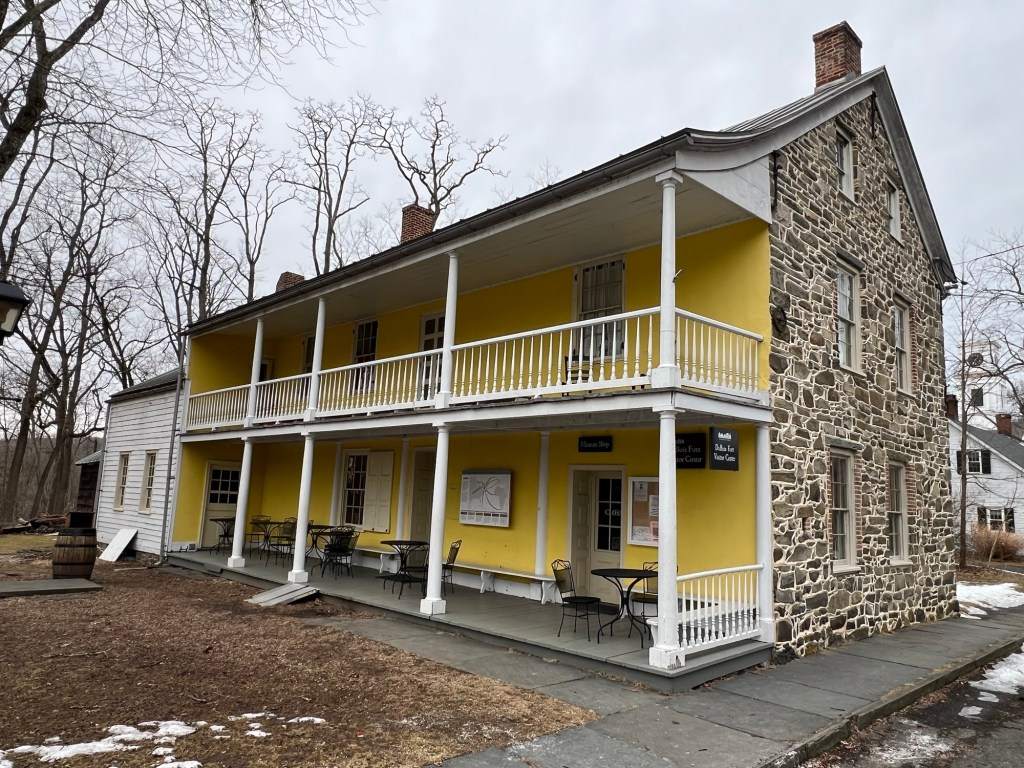
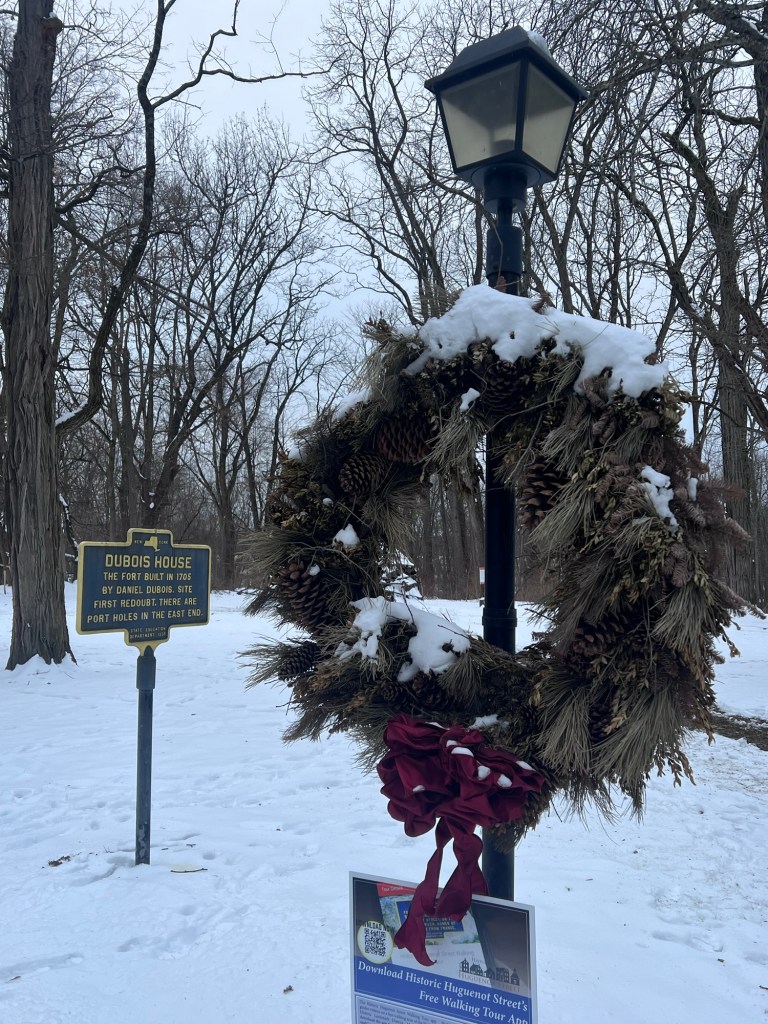
Built circa 1705 for the DuBois family, it might have served as a fortified place for the small community if needed. Originally a smaller 1 1/2 story structure, this building was expanded to its current size in the late 1830’s. Some historians and antiquarians believe that the presence of “gun ports” made it a fort but there is no evidence of the presence of any such portholes before the 19th century. The DuBois Fort currently serves as the orientation center and gift shop as well as a location for special events. Guest can purchase their admission tickets and memberships at this building. Over the last 300 years, it has also been used as a residence and a restaurant.
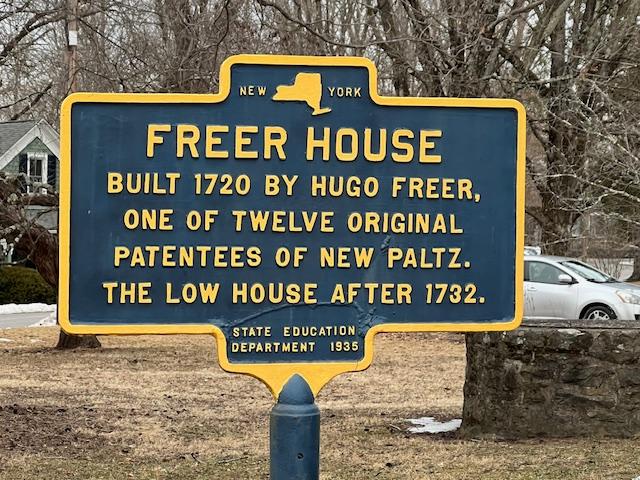
The Freer House is one of the six 18th century stone houses owned by Historic Huguenot Street. It was altered in various points in its approximately 250 years of occupancy with its most recent major alterations occurring in 1943 when it was purchased by Rev. John Wright Follette, a direct descendant of it s original builder, Hugo Freer. Over the years, the interior was modernized into a 20th century idea of a colonial home. This structure is not currently open to the public.
The original portion of the house was built around 1720 by Patentee Pierre Deyo. It began as a one room house was subsequently expanded to two rooms and ultimately to three when a stone addition was added off the rear by Pierre’s grandson Abraham. Circumstances for this house changed dramatically when at the height of the Colonial Revival movement, two descendants of Pierre Deyo, Abraham and Gertrude Brodhead, inherited the house.
The Deyo House at Christmas
Wanting to live on the street of their ancestors but also wanted a modern, gracious home that reflected their affluence, the Brodheads partially dismantled the original stone house and build a grand Queen Anne home around it in 1894. They also significantly changed their surrounding property in essence changing a small village farm into a handsomely appointed and landscaped mini estate.
The house passed out of Deyo family ownership in 1915. It was a private home until 1971, when it was purchased by the Deyo-Family Association and donated in order to be opened to be opened to the public as a house museum. The home was most recently restored in 2003 and features circa 1915 interiors.
The patentee Pierre Deyo died in 1700, so couldn’t have built the house in 1720 as stated. Per the plaque mounted outside the house it was built in 1692.
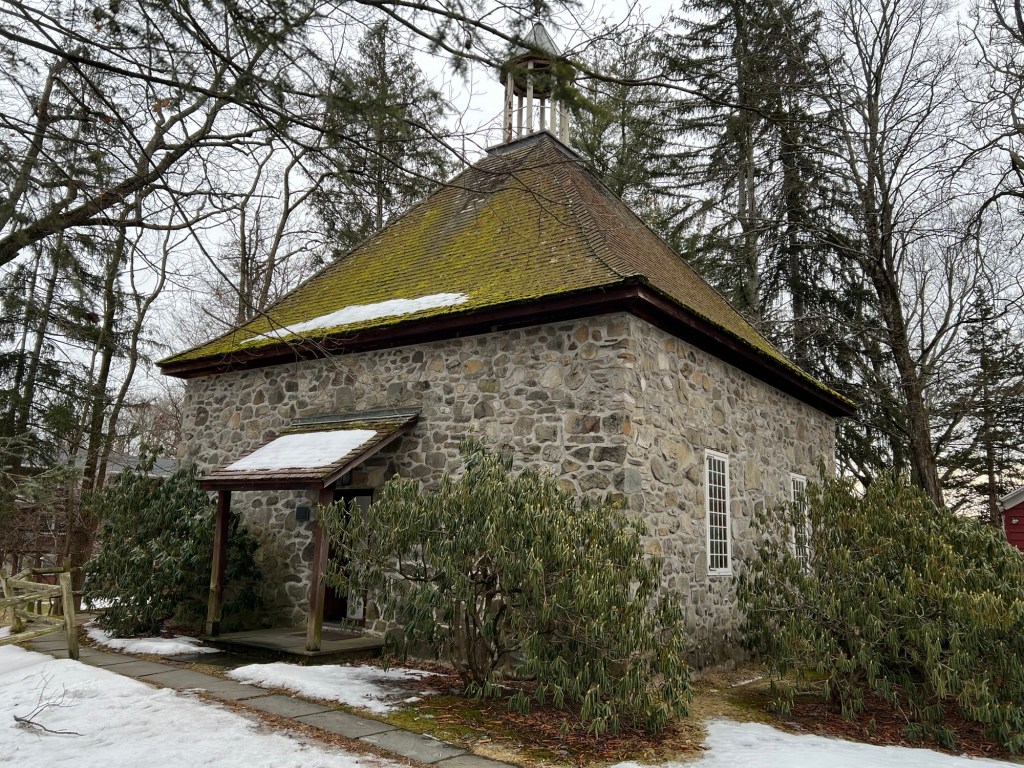
Since the community’s founding, there have been four sanctuaries built on what is today called Huguenot Street. The French-speaking Protestants who settled in New Paltz built their first church in 1683-a simple log building. This was replaced in 1717 with a straightforward, square stone building that reflected the permanence of the settlement. This existing building in the burying ground is a highly conjectural reconstructed of the 1717 building near its original location.
The Historic Walloon Church
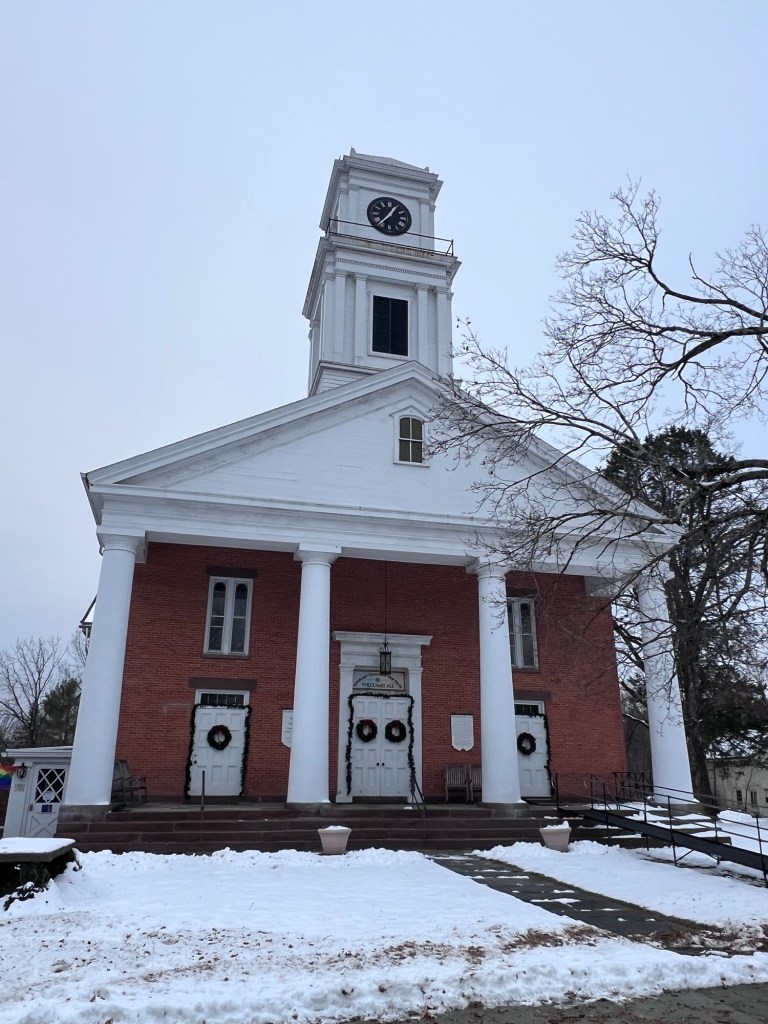
As the New Paltz community increased in size throughout the 18th century, a larger church became necessary. A second stone church was built down the street in 1772. When it became too small, it was demolished and replaced by a third church built in 1839. This church survives today and is home to an active Reformed congregation.
The Church and the graveyard
The reconstructed church is named in honor of Antoine Crispell, one of the twelve founders or patentees of New Paltz and a direct ancestor of Franklin Delano Roosevelt. It was built as the result of a fundraising campaign led by the Crispell Family Association. The Crispell Family Foundation opted to create this reconstruction church in their ancestor’s honor. It was completed in 1972.
The 1717 church was designed to reflect Reform thinking; the pulpit was placed in a central location and the pews were placed so that everyone could see and hear more equally. This expressed the concept that each person had a direct relationship with God, rather than one mediated through a church hierarchy.
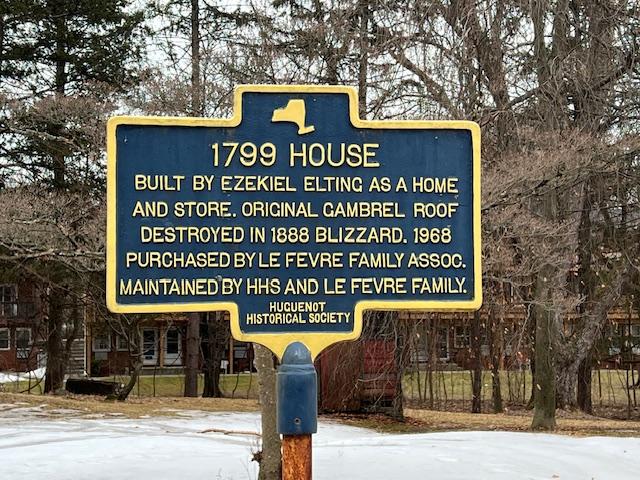
Built int 1799 by Ezekiel Elting, a prosperous merchant who was born in the Bevier-Elting House, this stone and brick building is quite different from the earlier stone houses on Huguenot Street. Its Georgian-style architecture reflects the transition of New Paltz from a French and Dutch settlement to an Anglo-American community and increasing refinement in architecture in this period as settlements matured. The house shows the changes in architectural style from the early 18th century. This house reflects the several changes in the society and home life of New Paltz in the early 19th century.
Located in the Roosa House, the Library and Archives at Historic Huguenot Street is a research facility devoted primarily to the history and genealogy of the Huguenot and Dutch settlers of the Hudson Valley. It also functions as a general repository for local history, regardless of ethnicity or religious persuasion. The collections consist of family genealogies, church, cemetery and bible records, wills and deeds, census records, genealogical periodicals, county histories and publications relating to Huguenot ancestry. Genealogists, local historians and other interested parties can access the collections by appointment. The colorful paint replicates the original colors of the house in 1891.
Native American presence on Huguenot Street:
Historians and archaeologist have learned more about the continuing relations between the Esopus, the original inhabitants of the area and the Huguenots. Some results of research can be found at the HHS site at “Relations between the Huguenots of New Paltz, NY and the Esopus Indians (http://www.huguenotstreet.org/library_archives/exhibits_research/Indian_affairs.html). The “Before Hudson” exhibit, currently on view at the DuBois Fort Visitor Center, shows some of the highlights of archaeological excavation in our area with artifacts dating back 6,000-8,000 years ago.
The Arts Center at SUNY New Paltz in New Paltz, NY
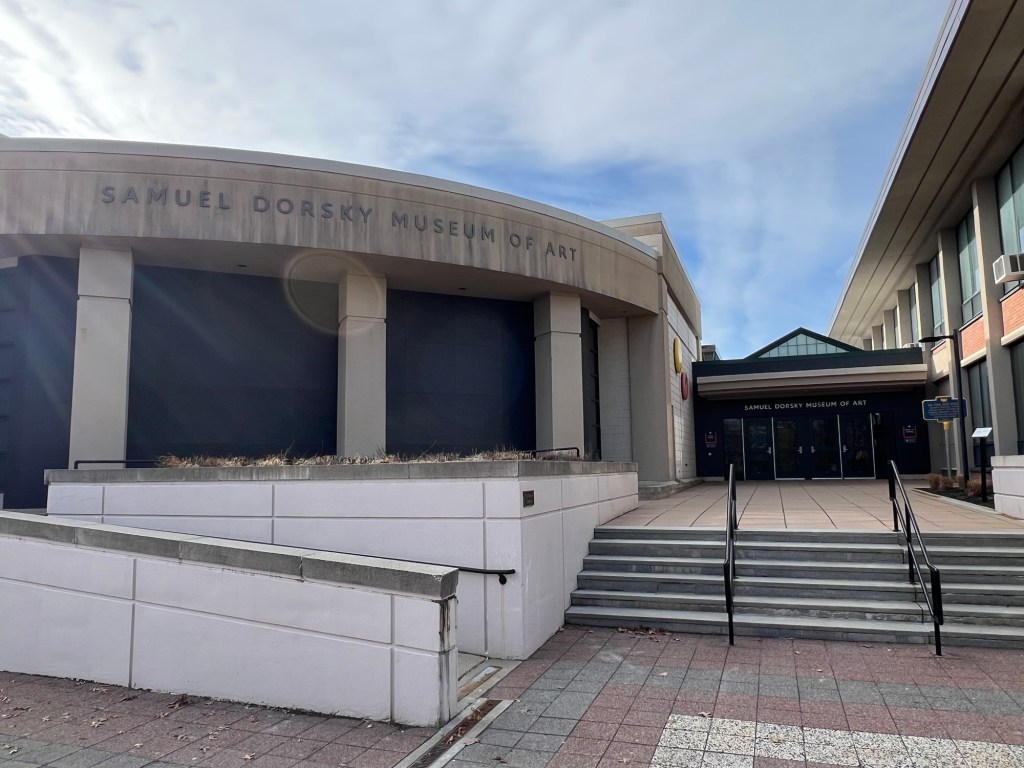
The Samuel Dorsky Museum on the SUNY Campus
The entrance to the museum
The entrance to the Dorsky Museum
I visited the Samuel Dorsky Museum of Art in New Paltz, NY in 2019 and found it to be an interesting little museum that covers a lot of fields of art from ancient art to paintings and photography. The current exhibitions include “Just my Type: Angela Dufresne” and “In Celebration: A Recent Gift from the Photography Collections of Marcuse Pfeifer”. There is also a exhibition of a local institution “Mohonk Mountain House at 150”, which is on the history and progression of the development of the Mohonk Mountain House Hotel.
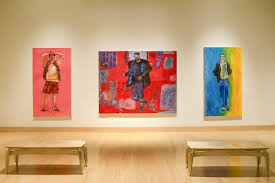
The Angela Dufresne exhibition was created by the artist of people who are the artist’s friends, family and of her community which are colorful and somewhat exaggerated views of people and their expressions. These giant colorful paintings had different expressions on their faces where you can only guess what the sitters were thinking.
The Angela Dufresne Exhibition
The photo collection of former gallery owner Marcuse Pfeifer, who has now relocated to the Hudson River Valley addresses the 19th and 20th Century that explore celebrity, location and life in the City. It has some interesting looks of life at a different time as well the expression of the subjects.
I went to the museum recently to see both the “Collecting Local: Twelve years of the Hudson Valley Artists Annual Purchase Awards” and “Jan Sawka: The Place of Memory” which were both interesting exhibitions both extended because of the campus being closed for the COVID-19 pandemic.
The “Collecting Local: Twelve Year’s of the Hudson Valley Artists” exhibition
The nice thing about the Dorsky Museum is its dedication to the Hudson River artist. “Collecting Local” is an exhibition that highlights the accomplishments and collections of the current artists from the Hudson Valley region and showcases their interpretations of art. It is nice to see not just local artists shine but what is being shown at the local galleries around the area.
Jan Sawka is a Polish born artist who was exiled from the county and settled into the Hudson River Valley with his family. His works were taken from the context of being a stranger in a new country.
Jan Sawka’s painting dedicated to his mother in law
Jan Sawka’s painting from his time living in Asbury Park, NJ
The museum offers also objects from the permanent collection and showing the areas in which the museum has collected in the past and currently. There is anything from a Warhol photo to ancient Chinese and Japanese statuary.
The Museum’s permanent collection
The collections rotate every season. The museum was closed when the college was closed during COVID from 2020-2021. It reopened when the campus fully opened in 2022. I finally got back to the museum in 2025 and saw the show “Movement” featuring New York City and State artists.
The exhibit ‘Movement’
The galley for the exhibition for ‘Movement’
This year’s theme, “Movement,” prompts viewers to consider the profound impact of physical journeys, both personal and collective. Reflecting on what compels people to leave their homes, the exhibition examines migration as a transformative force that shapes communities, melds cultures, and redefines societal landscapes. Through various mediums, including painting, sculpture, video and mixed media, selected artists explore themes of resilience, change and the legacies of movement that resonate across generations (from the Dorsky website).
I picked out the three pieces that really stood out in the show to share with everyone.
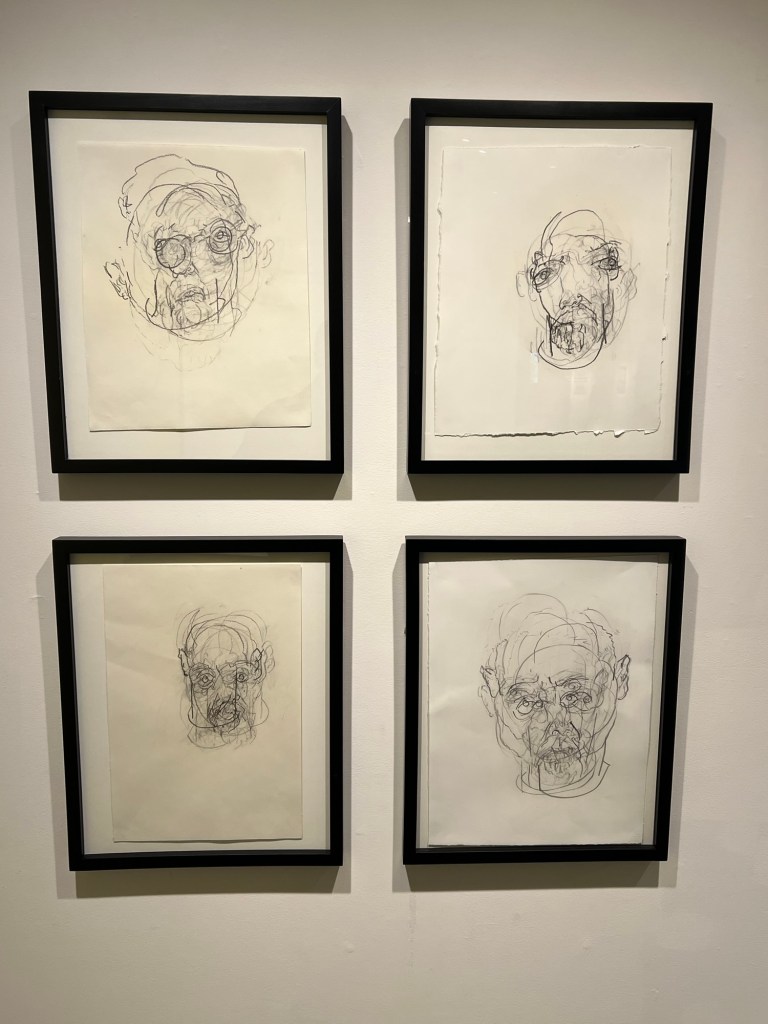
The Self Portrait
The artists of the Self Portraits
“The Dinner Guests” by Aaron Hauck
I loved the colorful look of guests at a dinner party.
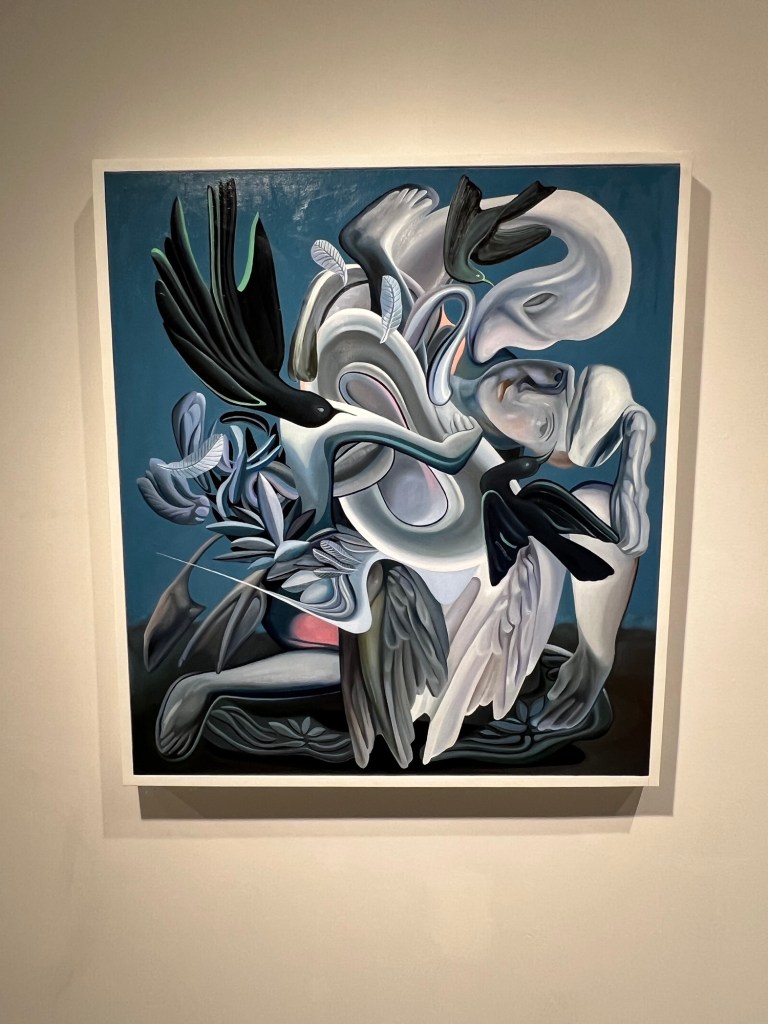
The ‘Witnesses’
“Witnesses” was the one piece that stood out to me in the show. I loved the playfulness of the painting and that it looked whimsical and fun. It looked like something you would see in “Alice in Wonderland”.
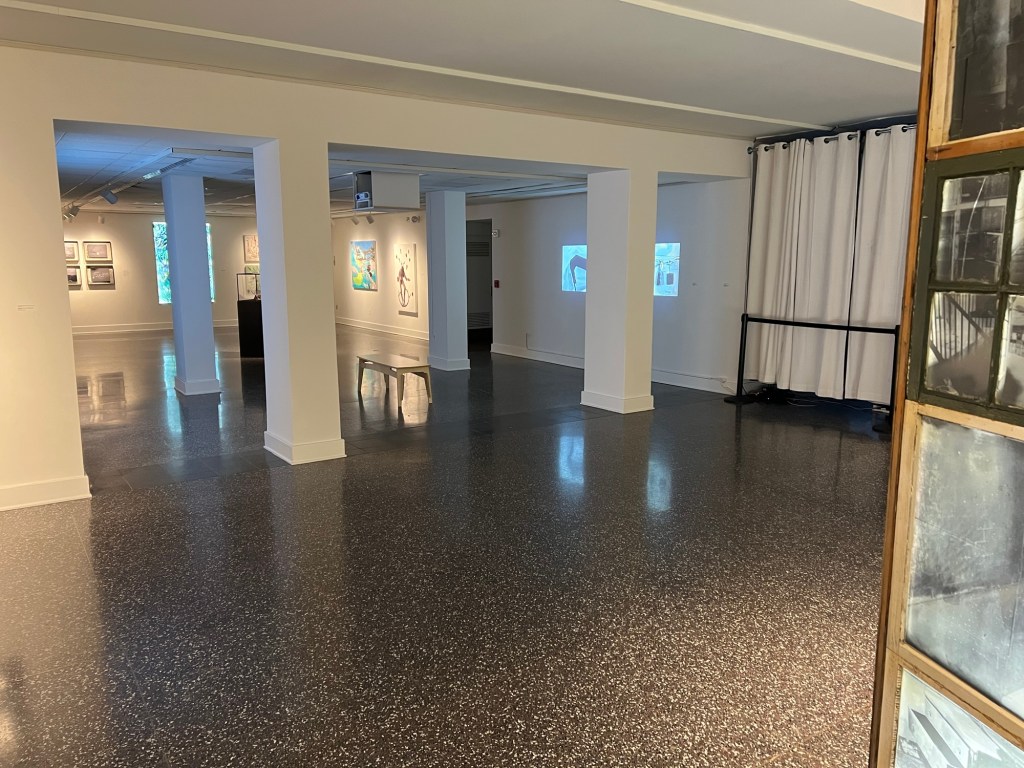
The gallery for ‘Movement’
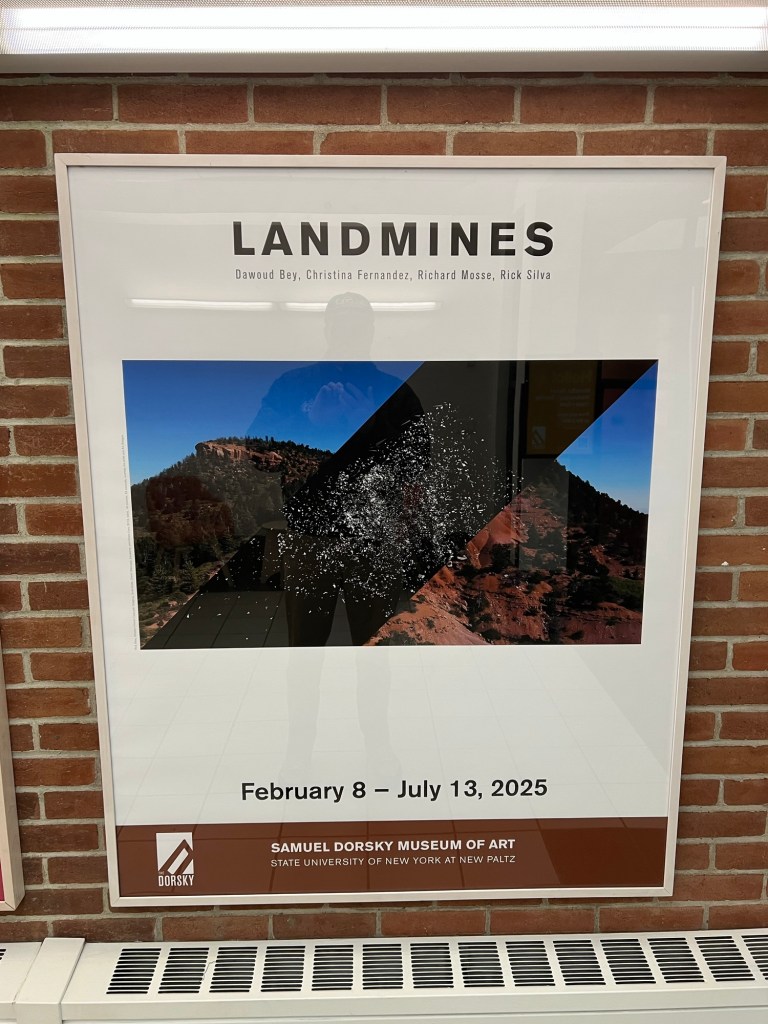
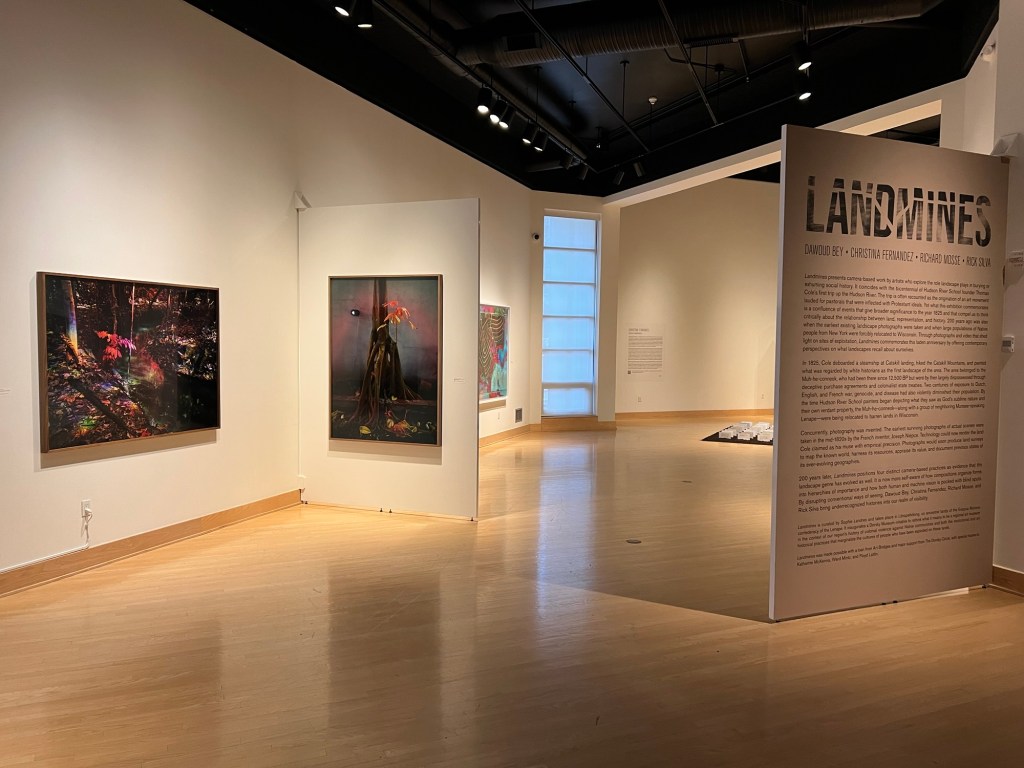
The exhibition ‘Landmines’
Coinciding with the bicentennial of the earliest existing landscape photographs, the founding of the Hudson River School, and a concentrated period in which Native people from New York were forcibly relocated to Wisconsin, Landmines presents camera-based work by artists who explore the role landscape plays in burying or exhuming social history (from the Dorsky Museum website).
The exhibition ‘Landmines’
The permanent collection
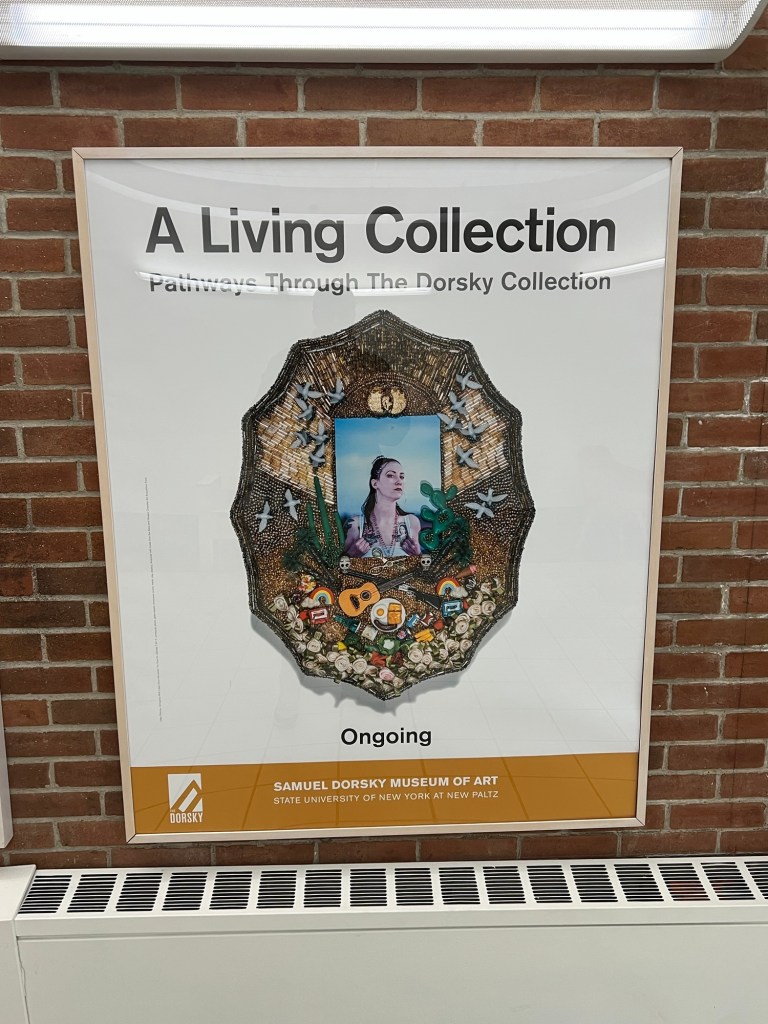
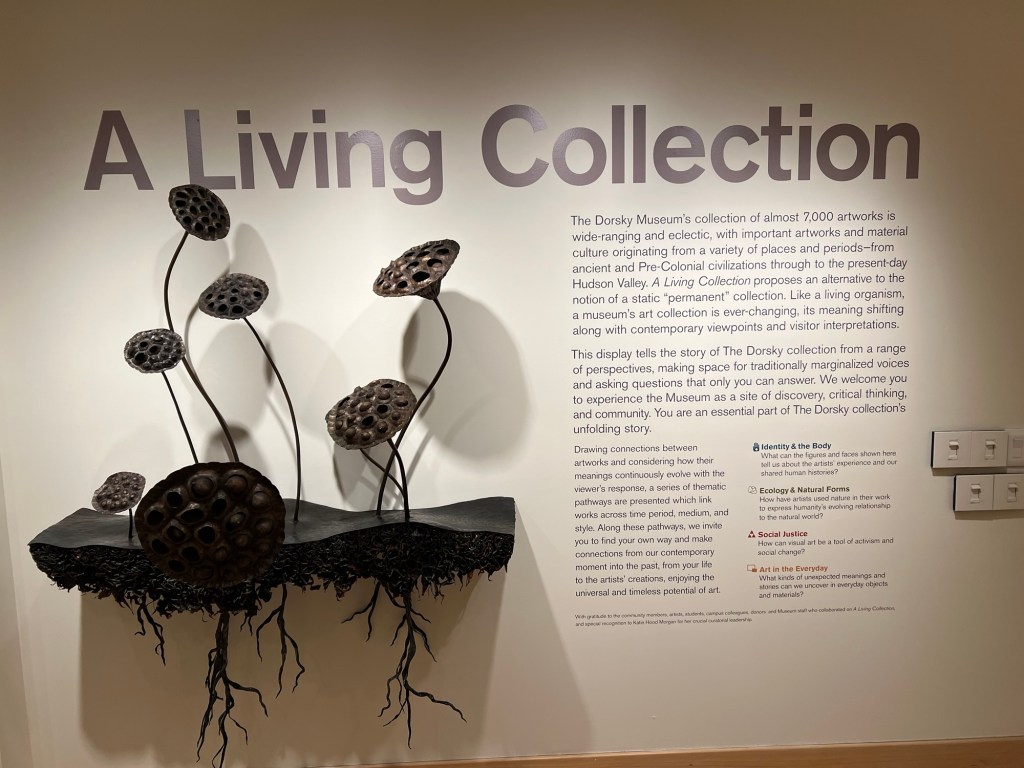
‘The Living Collection’ in the permanent collection
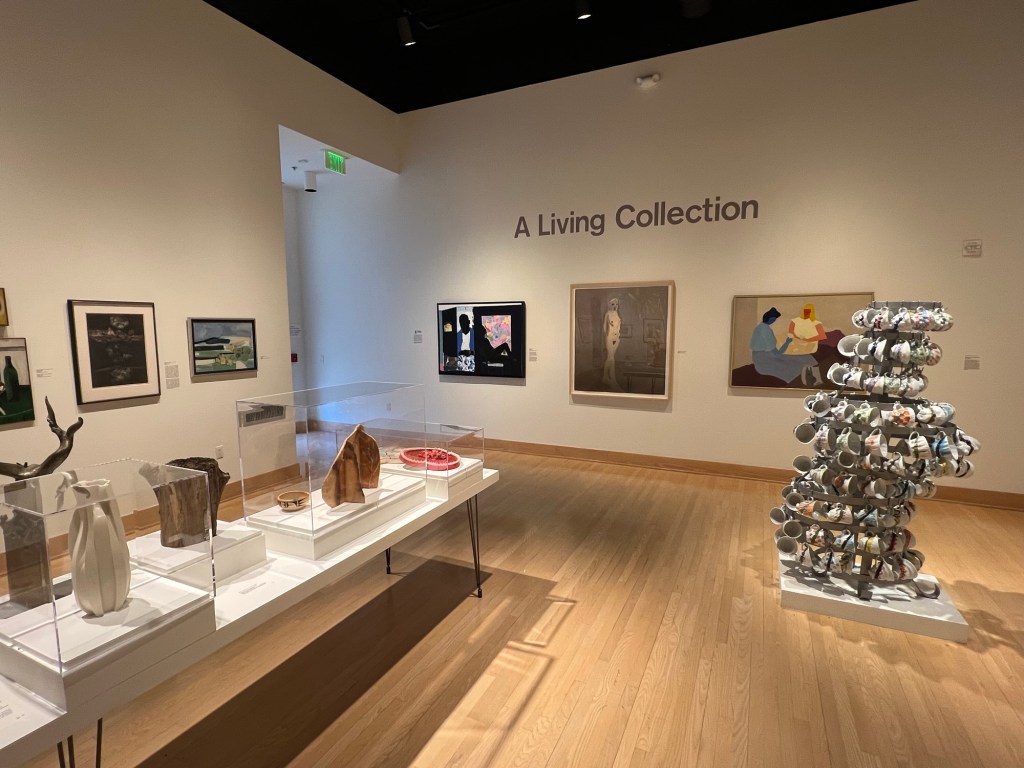
This new display of the Museum’s collection tells the story of The Dorsky from a variety of perspectives, making space for traditionally marginalized voices. Exhibiting collection highlights and audience favorites alongside new acquisitions and commissions, A Living Collection presents the collection as a living entity, continuously evolving and shaped by the viewer’s interpretation (from the Dorsky Museum website).
The entrance to ‘A Living Collection’
The gallery for ‘A-Living Collection’
A Living Collection:
The ‘A Living Collection’ Gallery
The ‘A Living Collection’ gallery
‘Shaky’s Meadow’ by Beverly Paterson
A video on the art:
A clip of the art display
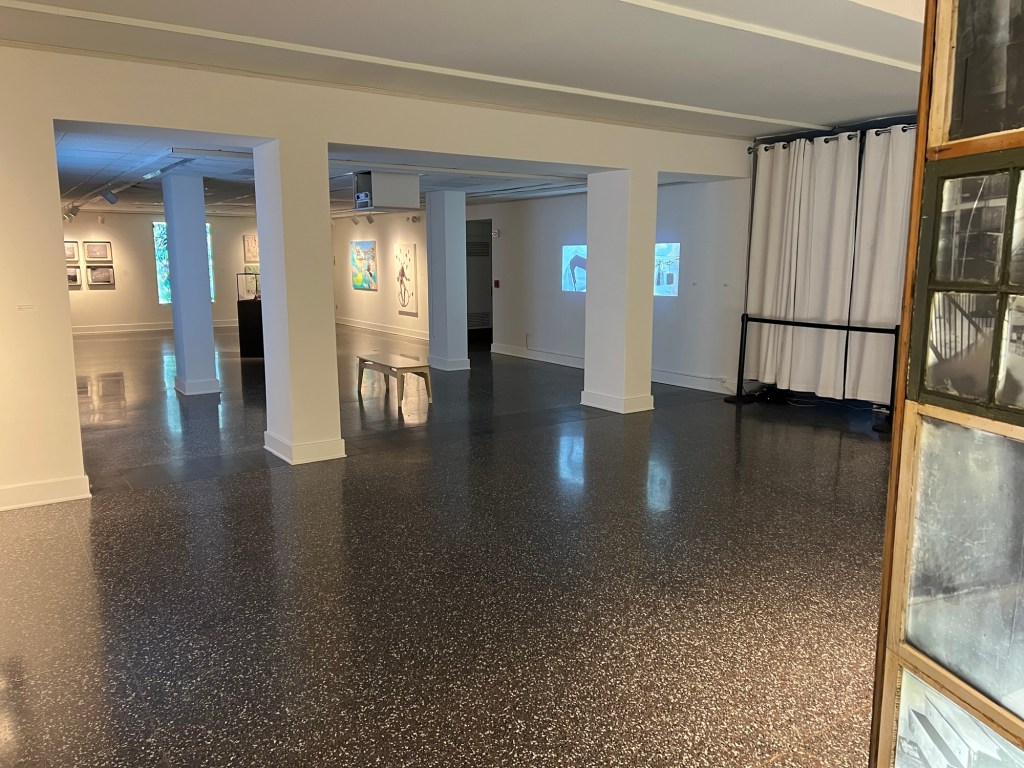
The full gallery on display at the Dorsky Museum
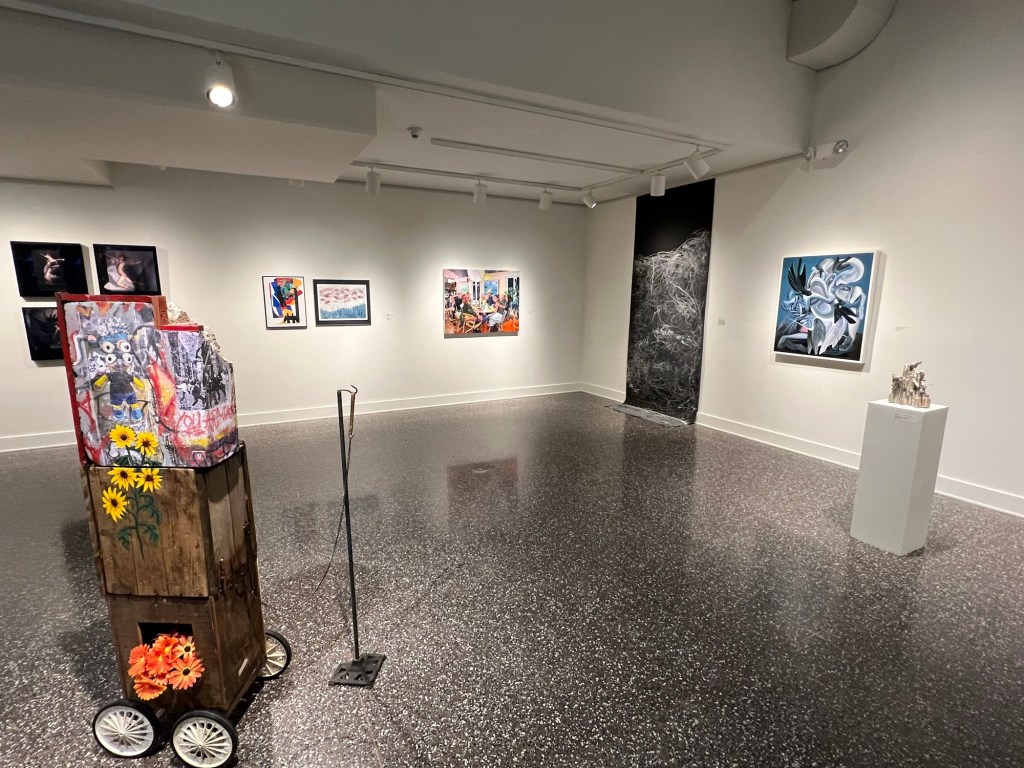
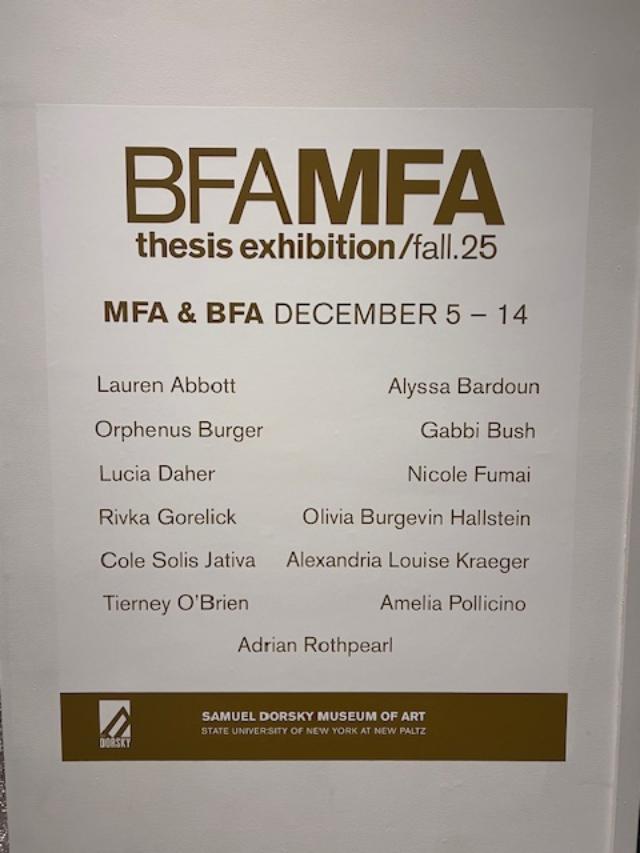
The museum does a lot in a small area and does a nice job promoting up and coming artists. It also does a lot for its in-house artists especially when I attended the opening of the Student Show for the BFA/MFA art students in December 2025.
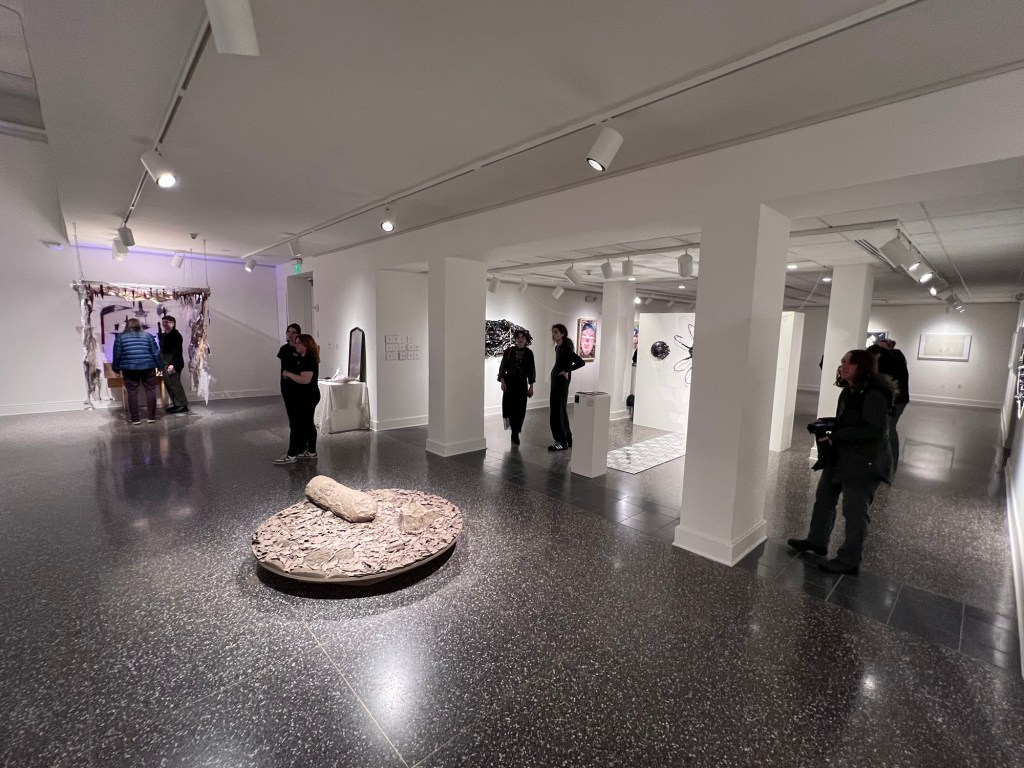
As it got darker, I made my way to the SUNY campus and to the art museum. It really was a good show with a nice reception and interesting art. While the students were devouring the food at reception, I had the whole gallery to myself to look at the art. I have to admit that some of the art was quite unusual. The students did have a streak of creativity to them.
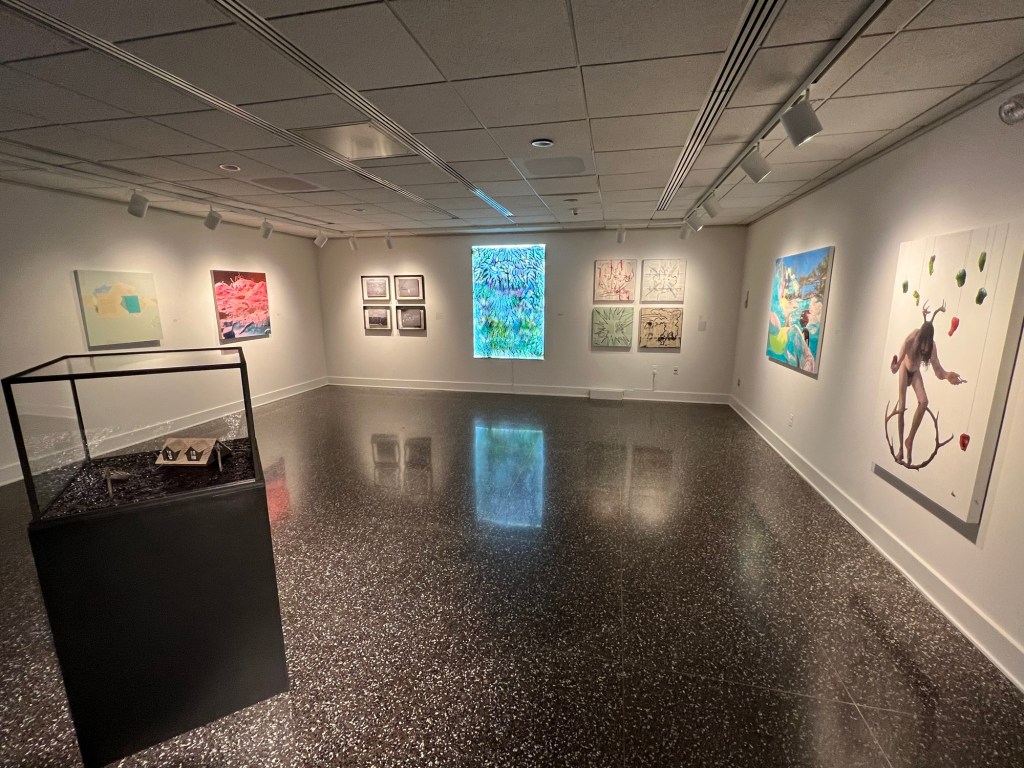
The Dorsky Museum Gallery
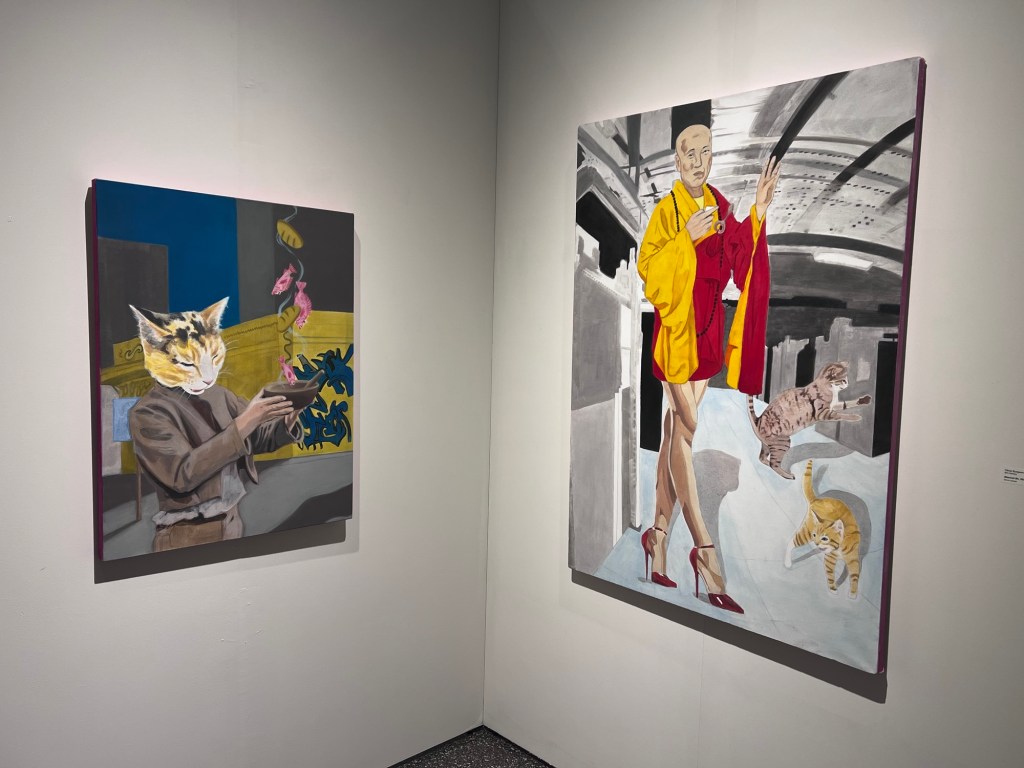
Some of the unique pieces
Once the students devoured the Reception buffet, everyone came in to see the exhibition
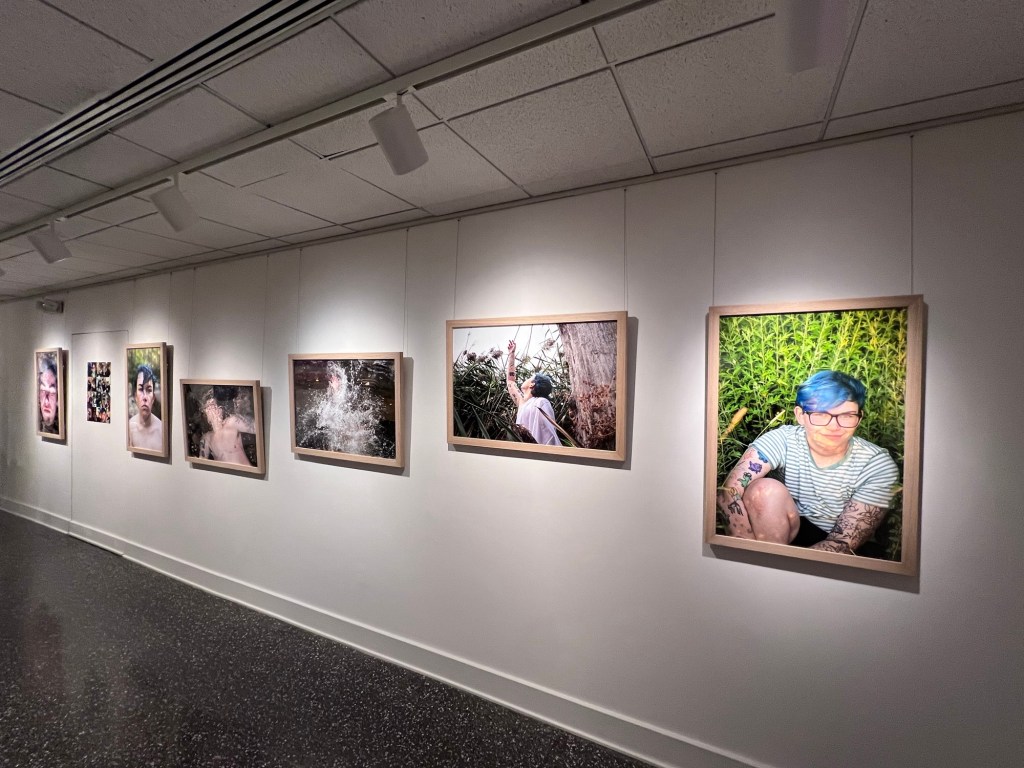
This is the one piece that really stuck with me at the show
Some of the pieces were rather unusual
The unique student works
The students got very creative on the material
The back room of the gallery
The patrons admiring one of the student works
Some of the works of the undergraduate students
Some of the unusual works in the show
More works by the student artists
The gallery at the museum is rather small do I got through the whole show in less than an hour. I had a quick snack with what was left on the buffet table, which was not much. The food was really good and a snared the final meatball.
Just enough of a snack to get through the next two hours
It was a nice opening for the show and my first on the campus. It just happened to fall at the same time I was attending the Snowflake Festival in Kingston on the same night so I was able to do both. I was glad I could support their students.
History of the Samuel Dorsky Museum of Art:
Mission of the Museum:
(from the museum website)
Through its collections, exhibitions and public programs. The Samuel Dorsky Museum of Art supports and enriches the academic programs at the university presents a broad range of national and international art for study and enjoyment and serves as a center for the arts and culture of the Hudson Valley.
About the Museum:
(from the museum website)
Located at the State University of New York at New Paltz. The Dorsky Museum comprises more than 9,000 square feet of exhibition space distributed over six galleries. The museum was launched more than 65 years ago by a dedicated committee of faculty members to enhance the teaching mission of the university. Originally known as the College Art Gallery, The Dorsky Museum was dedicated in 2001. The opening of The Dorsky Museum transformed the original College Art Gallery into one of the leading art museums in the region.
The Dorsky Museum’s permanent collection comprises more than 5,500 works of art from around the world and spans over a 4,000 year time period. While encyclopedic in nature, areas of focus include American art, with an emphasis on the Hudson Valley and Catskill Mountain region, 19th century American prints, photography and contemporary metals. The museum also has a strong World Collection that includes outstanding examples of both two and three-dimensional objects from diverse cultures, dating from classical to modern times.
The museum’s temporary exhibition program has been hailed as one of the best in the region and features exhibitions, installations and projects by internationally recognized artists as well as annual thematic exhibitions of work by regional artists. “The Hudson Valley Masters Series” is one of the unique exhibitions that the museum periodically hosts which focuses specifically on a body of work by an internationally acclaimed artist who resides in the area.
A painting by Angela Dufresne
Samuel Dorsky:
(from the museum website):
Samuel Dorsky was a self made and self realized individual who came to the art world relatively late after achieving success in the garment business. Emerging from the Great Depression, World War II and the post war boom years with the desire and the where withal to pursue both art and philanthropic, he opened a art gallery in 1963. Until his death in 1994, his gallery presented hundreds of exhibitions featuring such well-known artists as Henry Moor, about whom Dorsky was a recognized authority, Richard Hunt, Willem De Kooing, Larry Rivers and Robert Rauschenberg. Sam also generously championed the work of numerous lesser-known artists who he often befriended. The Dorsky gallery closed its doors to the public in 2001 after which Sam’s children, David, Noah, Karen and Sara established the Dorsky Gallery Curatorial Programs (DGCP) in Long Island City, a not for profit organization dedicated to promoting contemporary visual arts.
The dedication of the Dorsky Museum brought to fruition a project that had dominated the last decade of Sam Dorsky’s life. Sam’s lead gift to the SUNY New Paltz Foundation provided the impetus for the construction of the new museum building as well as the complete renovation of the former College Art Gallery to become part of the museum. The Dorsky Museum now comprises six galleries, offices and a small teaching space.
The Dorsky family continues to be a major supporter of The Dorsky Museum and SUNY New Paltz. David, Karen and Noah Dorsky serve on the Advisory Board of The Dorsky Museum. Karen and Noah also serve as trustees of the SUNY New Paltz Foundation.
The Coney Island Museum is an interesting place specializing in the history of Coney Island from the time of the Native American settlement to modern history. The history covers from the Dutch visiting the island for pleasure to the mid-1800’s and after the Civil War when time off and weekend pleasures became the rage.
The stretch of Surf Avenue where the museum is located.
The museum covers the history of the three great amusement parks, Steeplechase, Luna and Dreamland when they were all in their heyday until they all burned down or closed. This history includes the rise of Astroland and the current Luna Park.
The History of the Luxury Hotels of Coney Island
The History of the Amusement Parks:
Three great amusement parks dominated Coney Island in the early part of the last century with roots in the old Sea Lion Park and with the innovations and hope of Astroland and the rise of Luna Park again.
Sea Lion Park
Steeplechase Park
Luna Park
Dreamland Park
The rise of Astroland and the new Luna Park are showing signs of the rebirth of Coney Island.
The Astroland Exhibit at the museum
There is loads of memorabilia from all ages and all sorts of novelties from the rides such as the hall of mirrors, bumper cars and old cars and carts. Postcards from different eras also give an interesting look of the past so take time to look at each one.
The back galleries on the old amusement parks.
The history of some of the famous restaurants such as Child’s, Nathan’s and Feldman’s are discussed and their impact on the cuisine of Coney Island from the days of the clams to the revolution of the current hot dog.
The Child’s Restaurant artwork from the building.
The Feldman doors from the original restaurant
Some of the exhibitions cover the development of the area as a pleasure seeking attraction and as a luxury resort for wearied New Yorkers. What started as hotel resort and racing capital developed into an amusement area for the thrill seeking and for those who were looking for an escape for fun. It shows the growth and enhancement of the City reflected into the development of Coney Island itself mirroring what is happening in the City currently.
The amusements and bumper cars in the main gallery
The Bumper Car exhibit
Coney Island amusements
If you are interested in the history of Coney Island, then the Coney Island Museum is a nice was to spend the afternoon. There are tours daily and don’t forget to visit the Sideshow downstairs, which shows on the hour. The fee is $5.00.
The Mission of Coney Island USA:
Coney Island USA exists to defend the honor of America popular culture through innovative exhibitions and performances. Presenting and producing exciting new works, our approach is rooted in mass culture and the traditions of P.T. Barnum, dime museums, burlesque, circus sideshows, vaudeville and Coney Island itself. Preserving and championing a set of uniquely American visual and performing art forms, we seek to create an international forum for cultural preservation and discourse and where Coney Island represents these impulses, we strive to make it once again a center for live art and entrepreneurial spirit (CIUSA).
The ‘Reinventing Coney Island’ exhibit
Coney Island USA operates a multi-arts center in a landmark building in the heart of Coney Island. We produce and present programming in three unique venues: the Coney Island Museum, Sideshows by the Seashore and the Shooting Gallery/Arts Annex. Serving both New York City and an international community that includes visitors to Coney Island and enthusiasts of various cultural forms, our signature activities include the Mermaid Parade, the Coney Island Circus Sideshow, the Coney Island Museum, Coney Island Film Festival and new theatrical work (CIUSA).
The Coney Island Wax Museum exhibit
The Wax Museum exhibit
In existence since 1980, Coney Island USA has developed and produces a number of different programs including some of New York City’s best loved summer programming, such as the Mermaid Parade and the Coney Island Circus Sideshow. Coney Island USA also operates the Coney Island Museum and produces Ask the Experts, Burlesque at the Beach, the Coney Island Hot Rod Festival, Congress of Curious Peoples, Funhouse Philosophers, Magic at Coney, The Mermaid Ball and the Coney Island Sideshow School. Coney Island USA also produces the Coney Island Film Festival in association with indiefilmpage.com (CIUSA).
The Mangel’s family history in the amusement industry.
The display of amusement offerings from the Mangel’s family company.
The Museum’s video:
Video on the Coney Island Museum
Disclaimer: This information on Coney Island USA was taken directly from their website. Don’t miss this wonderful piece of Coney Island history in one building and plan this as part of your trip to Coney Island along with the Cyclone, Nathan’s, the Wonder Wheel and the beach.
Also part of the museum is the Coney island Pinball Museum with classic pinball games to play and the Coney Island Museum bar, a great place to relax and have a drink. There is also the Coney Island Freak Show that is part of the museum and has several shows a day.
The Coney Island Pinball Museum
The Coney Island Pinball Museum is part of the Coney Island Museum
Some of the pinball machines in the museum.
The Coney Island Museum bar-the perfect place for a drink.


































 Visiting a Museum: The Unique, Unusual, Obscure and Historical