Tag: mywalkinmahattan.com

Bowling Green Park                                    Broadway & Whitehall Street                            New York, NY 10004

Bowling Green Park Broadway & Whitehall Street New York, NY 10004

Bowling Green Park

Broadway & Whitehall Street

New York, NY  10004

https://www.nycgovparks.org/parks/bowling-green

https://www.nycgovparks.org/parks/bowling-green/history

TripAdvisor Review:
https://www.tripadvisor.com/Attraction_Review-g60763-d136413-Reviews-Bowling_Green-New_York_City_New_York.html?m=19905

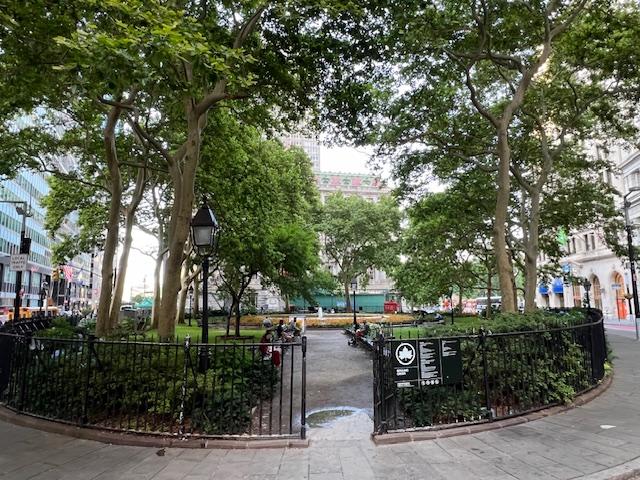
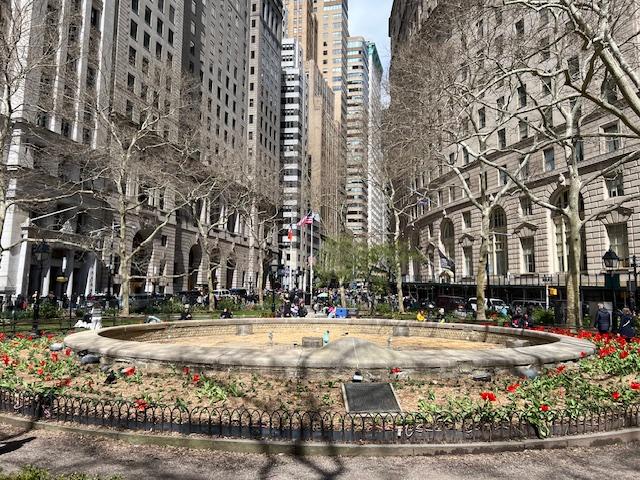
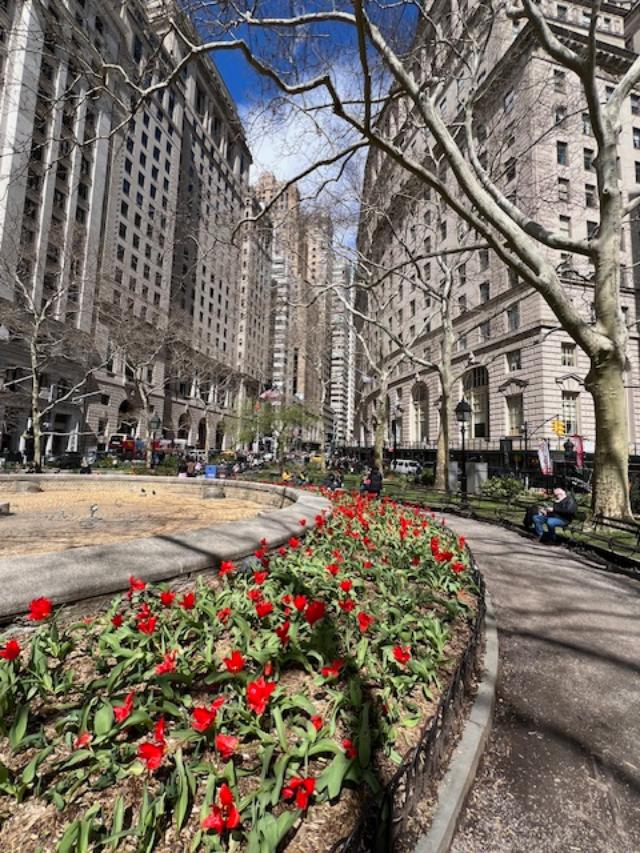
Bowling Green Park in Spring 2024

Bowling Green Park on the first day of summer 2024

I visited this wonderful park for my walking project, ‘MywalkinManhattan.com-Day 113-Walking the Historical Bars & Pubs of New York City’.
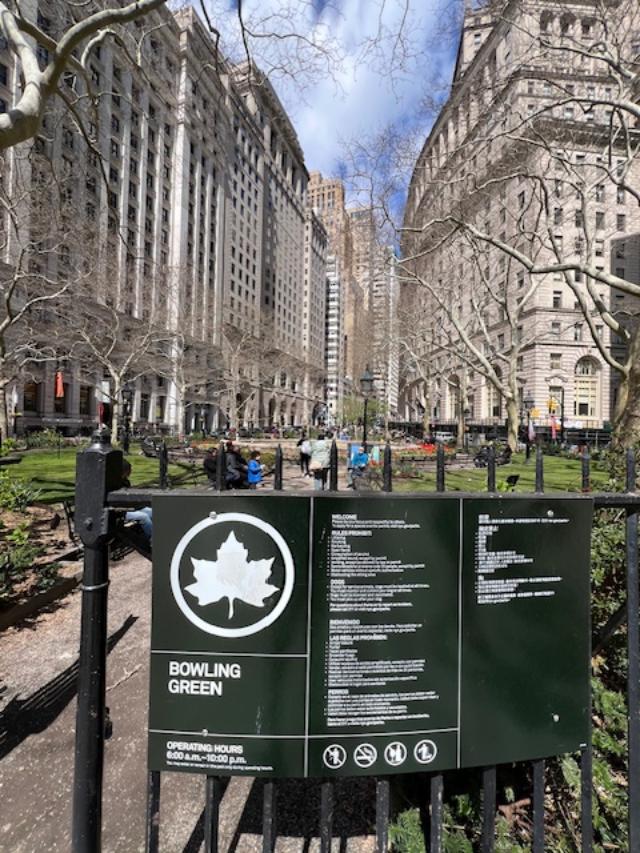
The entrance to the park.

This is one of the most fascinating parks in New York City and probably one the most historical in the shaping of the United States. Located on the grounds of the original Dutch settlement, this tiny park placed an important role in the confrontation of the Loyalist versus the Patriots when deciding who to support during the Revolutionary War.

The toppling of the King George Statue was the beginning of a new Republic. Along the historic fence which has been standing in the park since the late 1700’s are the markings where the tiny crowns were sawed off by the Patriots in defiance to the Crown.

Bowling Green Park III

The toppling of the statute of King George (parts of the statue are at the Museum of the American Revolution in Philadelphia, PA-read my blog on this.)
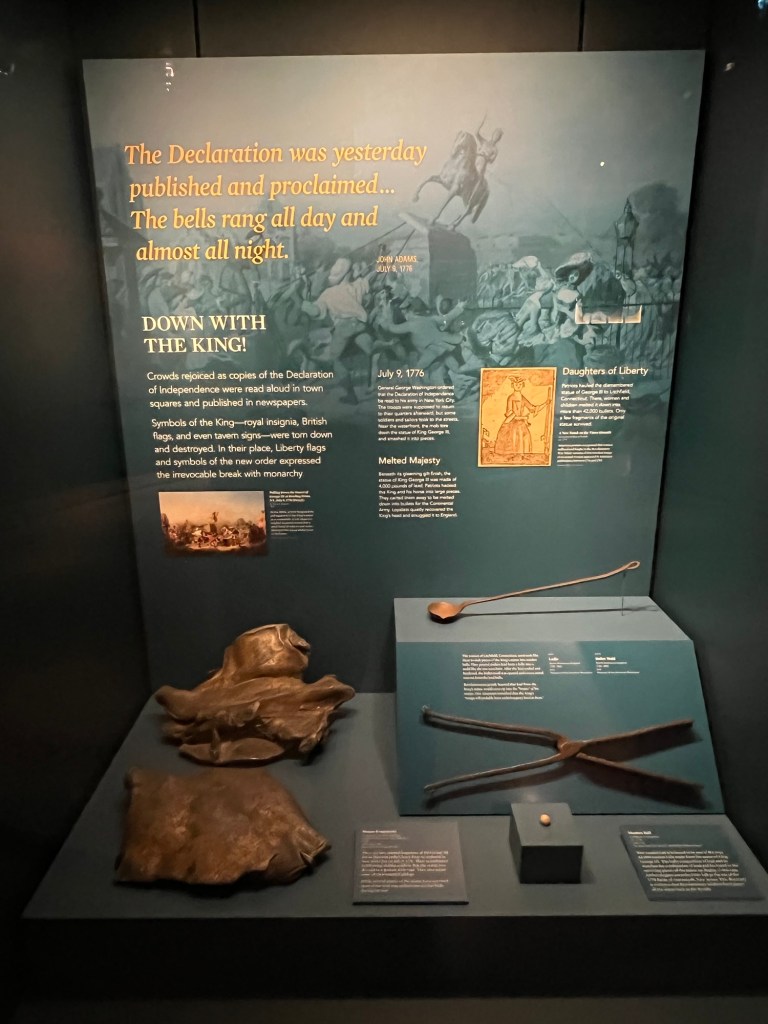
The exhibit at the Museum of the American Revolution in Philadelphia on the King George Statue

Now it is a resting spot for tired tourists off the boats from Ellis and Liberty Islands and for Wall Street workers who need a nice place to eat their lunch. It is still a relaxing little park with tree lined paths and a beautifully landscaped fountain area. In the later summer, the flowers are still in bloom and the colorful highlights of the trees accent all sides of the park and keep it private. Even in this secrete setting it is mind boggling of the fact that people put their lives on the line to establish this country right from this tiny park.

Bowling Green Park IV

Map of Lower Manhattan

Take time to walk through the cool paths of trees to the edges of the park, which are lines with historic buildings with decorative stone work and look at the beautiful statuary work on the old U.S. Custom House that now serves as the Museum of the American Indian. Take a quick tour of Stone Street just a few blocks away and see the development of the New York City after the Great Fire of 1823, which destroyed most of lower Manhattan.
Just at the tip of the norther part of the park is the famous statue of ‘Charging Bull’ a gift to the City by artist Arturo Di Modica to show the ‘strength of the American people’ and the now becoming famous statue of “Fearless Girl” by artist Kristen Visbal which was erected for International Women’s Day. Both statues have created quite the debate since they were both placed here in 1989 and 2017 and their fate is up to the City.

Take time to really see what all these symbols mean to the Bowling Green.

History of the Park:

The beauty of Bowling Green Park in the early morning hours.

The Bowling Green is New York City’s oldest park. According to tradition, this spot served as the council ground for Native American tribes and was the site of the legendary sale of Manhattan to Peter Minuit in 1626. The  Dutch called the area “the Plain” and used it for several purposes including a parade ground, meeting place and cattle market. It marked the beginning of Heere Staat (High Street, now Broadway), a trade route which extended north through Manhattan and the Bronx. In 1686, the site was designated as public property, when the City Charter put all ‘waste, vacant, unpatented and unappropriated lands’ under municipal domain (NYC Parks.org).
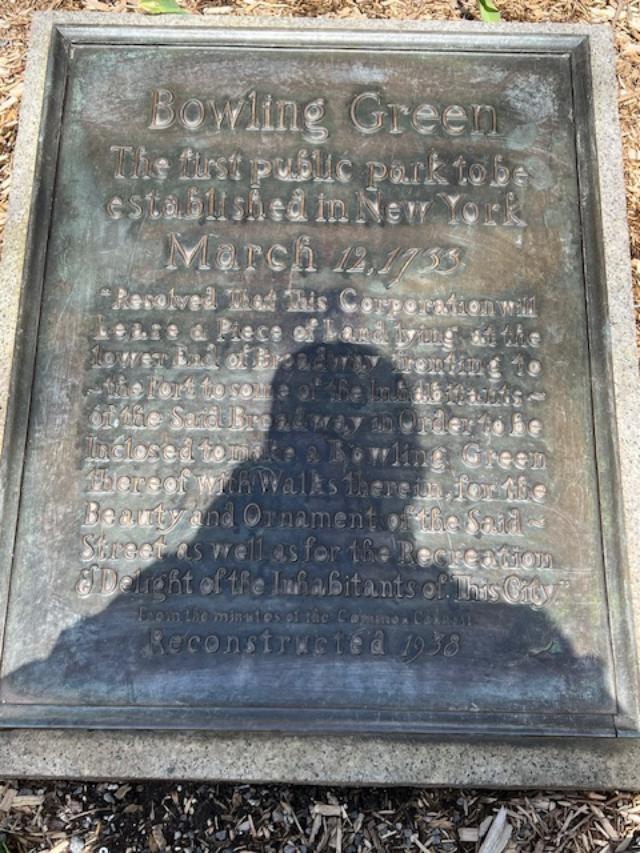
The historic marker for the park.

Bowling Green was first designated as a park in 1733, when it was offered for rent at the cost of one peppercorn per year. Lessees John Chambers, Peter Bayard and Peter Jay were responsible for improving the site with grass, trees and a wood fence “for the Beauty & Ornament of the Said Street as well as for the Recreation & delight of the Inhabitants of this City.”

A gilded lead statue of King George III was erected here in 1770 and the iron fence (now a New York City landmark) was installed in 1771. On July 9, 1776, after the first public reading in New York State of the Declaration of Independence, this monument was toppled by angry citizens who dragged it up Broadway, sent it Connecticut, melted it down and recast it as ammunition.

The exhibit at the Museum of the American Revolution in Philadelphia:

My review on TripAdvisor:

https://www.tripadvisor.com/Attraction_Review-g60795-d12163505-Reviews-Museum_of_the_American_Revolution-Philadelphia_Pennsylvania.html

My review on VisitingaMuseum.com:

The pieces of the statue are on display at the Museum of the American Revolution in Philadelphia

The pieces of the statue

Portions of the statue are held by the Museum of the City of New York and the New York Historical Society (which also possesses musket balls made from the statue’s head) (NYC Parks.org).

The park with the buildings in the background.

By the late 18th Century, Bowling Green was the center of New York’s most fashionable residential district, surrounded by rows of Federal-style townhouses. In 1819, the Common Council that neighbors could plant and tend the area in return for the exclusive use of the park by their families. By mid-century, shipping offices inhabited the old townhouses and the park was returned to more public use. Monuments installed in the park in the 19th century include two fountains (now gone) and a statue of New York’s early Mayor and later colonial Supreme Court Judge Abraham DePeyster (1896, by artist George Bissell). DePeyster was moved to nearby Hanover Square in 1976 and finally to Thomas Paine Park in 2014 (NYC Parks.org).

Bowling Green Park Spring 2024

Bowling Green Park Spring 2024.

In the first decade of the 20th Century, Bowling Green was disrupted by the construction of the IRT subway. The park was rebuilt as  part of citywide improvements made in preparation for visitors to the 1939 World’s Fair. Renovations to Bowling Green included removing the fountain basin, relocating the interior walkways, installing new benches and providing new plantings. Mayor Fiorello LaGuardia, Parks Commissioner Robert Moses, members of the Board of Estimate and local businessmen participated in the rededication ceremony held on April 6, 1939. Despite unseasonable late snow, the ceremony included a demonstration of colonial era lawn bowling (NYC Parks.org).

The tulips at Bowling Green Park in Spring 2024.

A 1976-77 capital investment restored Bowling Green to its 18th century appearance. Improvements included the redistribution of subway entrances, the installation of new lampposts and benches and landscaping. Publisher and philanthropist George Delacourte (best known for the Alice in Wonderland statue in Central Park) donated the park’s central fountain (NYC Parks.org).
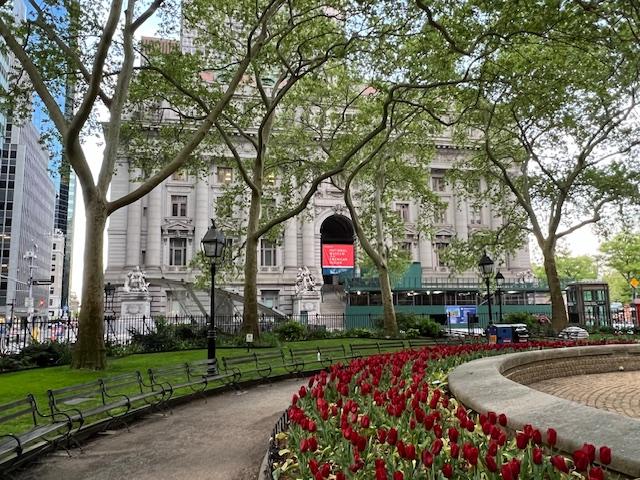
The Spring time flowers at the Bowling Green Park.

Since December of 1989, the statue of Charging Bull (1987-89) has been on display at the north end of the park. Its sculptor, Arturo Di Modica, says the three ton and a half bronze statue represents “the strength, power and hope of the American people for the future.” It has been linked to the property enjoyed by Wall Street in the past decade.

The park in the Summer of 2025

In 2004, the reconstruction of the park included new perimeter bluestones sidewalks and interior paths, landscaping, plantings and the re-sodding of the lawn. Antique-style gas lamps and hoof benches were also placed in the park with the addition of a new irrigation system for the parks fountain (New York Parks.org).
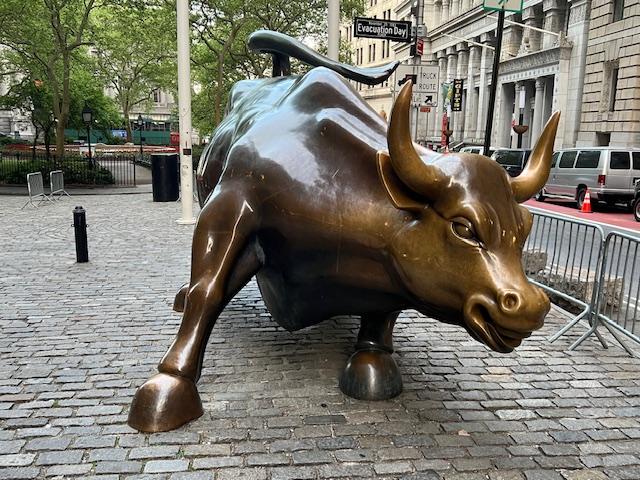
The “Charging Bull” sculpture.

Disclaimer: This information was taken directly from the New York City Parks.org site and I given them full credit for it. This is one of the special parks of the City so take some time to visit it while on your way to one of the other tourist sites or to Liberty Island or Ellis Island.

Nicholas Roerich Museum                                    319 West 107th Street                                        New York, NY 10025

Nicholas Roerich Museum 319 West 107th Street New York, NY 10025

Nicholas Roerich Museum

319 West 107th Street

New York, NY  10025

(212) 864-7752

Open: Monday: Closed/Tuesday-Friday: 12:00pm-4:00pm/Saturday-Sunday: 2:00pm-5:00pm

Closed: Major holidays

Admission: Admission is free, though donations are welcome.

http://www.roerich.org

http://www.roerich.org/

TripAdvisor Review:

https://www.tripadvisor.com/Attraction_Review-g60763-d136141-Reviews-Nicholas_Roerich_Museum-New_York_City_New_York.html?m=19905

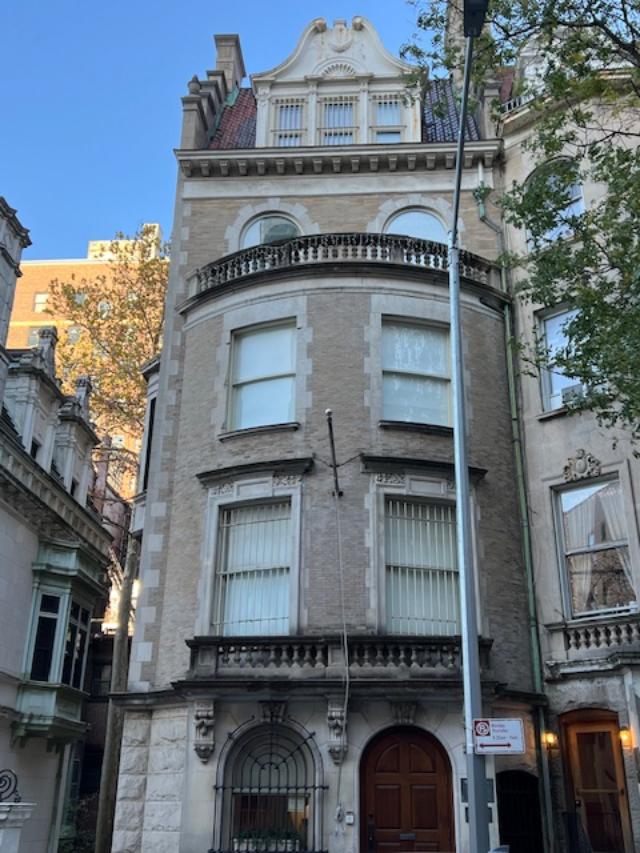
The front of the museum

This small museum in the Upper West Side neighborhood of Manhattanville is easy to miss. It is in a small brownstone on West 107th Street right near Riverside Drive. You can see the plaque for the museum to the right of the building and there is a side door to get in. The admission is free but they do ask for a donation if you can do it.

The museum is a specialty collection of the works of the former owner of the house and artist Nicholas Roerich. They are mostly landscapes and religious themed that cover three floors of the museum. It takes about an hour to an hour and a half  to see all the floors. A nice touch they had in the afternoon that I was there was a piano player whom you could hear play throughout the brownstone. When you go, it will be a pleasant afternoon where you are not fighting the crowds of the larger museums.

Nicholas Roerich

Artist Nicholas Roerich

The Nicholas Roerich Museum was founded in 1949 to house a permanent collection of over two hundred paintings by the Russian-born artist, poet, philosopher and humanitarian, Nicholas Roerich. The museum also houses a library of books and maintains an archive and a collection of artifacts relating to the areas of Roerich’s interests (Museum guide).

The Mission of the Museum:

The mission of the Nicholas Roerich Museum is essentially a narrow one: to make available to the public the full range of Roerich’s accomplishments. These, however, are not narrow; they cover the realms of art, science, spirituality, peacemaking and more. Because Roerich’s  activities ranged widely, so do the museum’s.

Nicholas Roerich Museum I

The Museum Collection:

Nicholas Roerich is known first and foremost as a Russian-born artist. His paintings, of which there are thousands around the world, explore the mythic origins, the natural beauty and the spiritual strivings of humanity and of the world. The museum houses approximately two hundred of these works and keeps most of them permanently on display for visitors who come from around the world. Indeed, for many of these visitors, the museum is a destination of great importance; the paintings speak to them of their own inner yearnings and possible fulfillment. For them, Roerich’s paintings are a kind of teaching-about spiritual development about culture and its role in human life and about opportunities for the achievement of peace in a fractious world.

Nicholas Roerich Museum II

Publications & Booklist:

The museum also keeps in print a number of books by and about Roerich and his life and work and a substantial stock of postcards and reproductions of his paintings. These too are seen by many as more than just prints; they are hung in homes with a degree of appreciation that is not often given to such things.

Cultural Events:

In addition to these functions, the museum also maintains an active schedule of cultural activities.  It was Roerich’s fervent belief that the role of cultural development in the peace and evolution of the world is fundamental and that it is therefore the responsibility of those who work in creative and cultural fields to strive always for that peace and evolution and for those goals to be the chief impulses guiding their creative work. Information about these ideas is always available.

The Roerich Pact & the Banner of Peace:

The museum sustains an ongoing effort to spread public awareness of the intermingled roles of peace and culture and the ways in which each sustains the other. Information and materials about The Roerich Pact and the Banner of Peace are always available. Throughout this century of wars and national struggles, the yearning of the public for ways of achieving peace has been great; the ideas of the Pact and the Banner provide a welcome answer to those yearnings.

As Roerich’s ideas become better known around the world, attendance at the Museum grows and requests for information and materials about him and his art and social achievements increase.

*This information is from the Museum’s website.

Disclaimer: This information was taken from a combination of the museum’s website and from the biography of the artist.


Cleopatra’s Needle                                         Central Park @ East 81st Street                         New York, NY 10028

Cleopatra’s Needle Central Park @ East 81st Street New York, NY 10028

Cleopatra’s Needle

Central Park at East 81st Street (behind the Metropolitan Museum of Art)

New York, NY  10028

https://www.centralparknyc.org/attractions/obelisk

https://en.wikipedia.org/wiki/Cleopatra%27s_Needle_(New_York_City)

Open: When Central Park is open from dawn to dusk depending on the season

TripAdvisor Review:

https://www.tripadvisor.com/Attraction_Review-g60763-d1959031-Reviews-Cleopatra_s_Needle-New_York_City_New_York.html?m=1990

Cleopatra's Needle III

Cleopatra’s Needle

https://www.centralparknyc.org/locations/obelisk

https://en.wikipedia.org/wiki/Cleopatra%27s_Needle_(New_York_City)

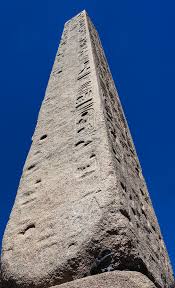
I always admire Cleopatra’s Needle whenever I am touring Central Park West after an afternoon at the Metropolitan Museum of Art. The obelisk sits in back of the Metropolitan Museum of Art on Fifth Avenue and the pathways behind the museum lead to the site.

It is one of the few place where you can see hieroglyphics up close unless you are in Egypt and the sad part is that the natural surroundings are wearing them out. Still it is one of the most interesting outside artifacts that Manhattan and New York City has on display. Take time to observe all four sides of the obelisk and observe the writings.

Sometimes I think the tourists miss this interesting artifact and how it got here from Egypt.

The History of Cleopatra’s Needle:

(From Wiki)

Cleopatra’s Needle (obelisk) was erected in Central Park, just west of the Metropolitan Museum of Art on February 22, 1881. It was secured in May 1877 by Judge Elbert E. Farnam, the then United State Consul General of Cairo as a gift from the Khedive for the United States remaining friendly neutral as the European powers, France and Britain, maneuvered to secure political control of the Egyptian government.

The obelisk is a twin of the obelisk given to London at the same time and come from the ancient city of Alexandria. The name is a misnomer as they have no relationship with the Ptolemaic Queen Cleopatra VII of Egypt and were already over a thousand years old in her lifetime (please see the Wiki link attached to the blog for more information on the obelisk).

Cleopatra's Needle II

The obelisk is free to the public and can be seen by taking the path behind the Metropolitan Museum of Art. It is open all day.

MOCA: The Museum of Chinese in America                                                           215 Centre Street                                                New York, NY 10013

MOCA: The Museum of Chinese in America 215 Centre Street New York, NY 10013

MOCA: The Museum of Chinese in America

215 Centre Street

New York City, NY  10013

Telephone: (855) 955-4720

Fax: (212) 619-4720

Email: infor@mocany.org

Home

https://www.mocanyc.org/visit/

Hours: Tuesday-Wednesday-11:00am-6:00pm/Thursday-11:00am-9:00pm/Saturday & Sunday-11:00am-6:00pm

Fee: General Admission $10.00/Students/Seniors/Children/Military-$7.00/Free to members and people with disabilities

TripAdvisor Review:

https://www.tripadvisor.com/Attraction_Review-g60763-d136145-Reviews-Museum_of_Chinese_in_America-New_York_City_New_York.html?m=19905

The Museum of Chinese in America engages audiences in an ongoing dialogue, in which people of all backgrounds are able to see American history and society through a critical lens, to reflect on their own experiences and to make meaningful connections between the past and the present, the global and the local, themselves and others.

MOCA began in 1980 as the New York Chinatown History Project, a community-based organization founded by scholar John Kuo Wei Tchen and community activist Charles Lai to promote knowledge and understanding of the history and contributions of Chinese Americans. Today, the MOCA is a national cultural anchor and a global destination. It is located on the border of Chinatown and SoHo in New York City in its Maya Lin-designed home that was highlighted by Architectural Digest as one of Lin’s most memorable designs.

Museum of Chinese in America II

The entrance to the museum

Permanent Exhibition:

Our core exhibition, ‘With a Single Step: Stories in the Making of America’, traces more than 160 years of milestones in Chinese American History from the earliest Chinese Immigration to the struggle for citizenship to the development of our contemporary identity.

The core exhibit revolves around the Museum’s historic sky-lit courtyard, which renowned artist and designer Maya Lin has left deliberately raw and untouched as a reminder of the past and to evoke a classic Chinese courtyard house.

The permanent collection shows immigration from the earliest days during the early 1800’s with immigrants working in the mines and on the railroads doing the back-breaking work all while dealing with the problems with racism in the country at that time.

The timeline shows the development of the early Chinatowns in major cities and the growth of industries like restaurants and laundries where they could make a living. This is where the term ‘eight-pound package’ came from with a pile of clean laundry. Even in these industries, the exhibit shows the systematic racism in these fields as well.

It was not until WWII when you saw Chinese Americans fighting for their country did you see a change of attitude, but it never seemed to last long. This ongoing theme is seen throughout the exhibition up until today.

Special Exhibitions:

Our rotating galleries showcase a revolving series of MOCA-curated and visiting exhibitions featuring contemporary art, design and historical subjects.

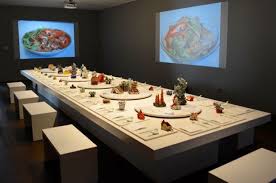
The first time I visited the museum, I saw an exhibition of the modern twist to the ‘Chinese Restaurant’ where the foods we eat are really Chinese American cuisine that was created when immigrants came here and had to adapt to their new homeland. Items like Chop Suey and Chow Mein were inventions of new immigrants with the items they had in their pantries.

The exhibit showed how chefs of the third generation of Americans of Chinese Descent are changing these dishes by adding modern spins to the food. The exhibit featured the chefs, their restaurants and the dishes that they were creating. They were changing the cuisine again.

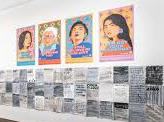
The current exhibition “Responses: Asian American Voices Resisting the Tides of Racism”, deals with the Xenophobia that came with COVID and the affects that the disease and its thought that it came from Wuhan, China has trickled down to a new hate for Americans of Asian descent. This has led to a series of assaults all over the country. The exhibition shows this type of racism throughout the history of this country and the response from the community itself.

MOCA III

“Responses: Asian American voices Resisting the Tides of Racism” exhibition

MOCA Shop:

The MOCA Shop features select items, including books, ceramics, designs by local artists and children’s gifts.

Education:

Using inquire-driven approaches, MOCA provides museum and in-school programs on Chinese American history and culture for K-12 and college students at all levels, as well as professional development workshops for teachers. These programs complement classroom learning and foster expansive opportunities for primary source-based learning and development of 21st Century skills such as critical thinking, visual media literacy and civic engagement. They present diverse layers of the Chinese American experience, using individual stories to highlight what it has meant to be Chinese in America at different moments in time, while also exanimating America’s journey as a nation of immigrants.

Family Programs:

MOCA’s family programs bring together parents, grandparents, children and grandchildren alike to participate in fun, hands on activities celebrating Chinese American heritage and history. From our annual holiday Family Festivals to our bi-monthly MOCACREATE workshops, enjoy storytelling, drop-in arts and crafts, teaching artist demonstrations, performances and more!

Public Programs:

Through its thought-provoking and multi-disciplinary programming, MOCA’s signature public programs series offers diverse perspectives on the living history of Chinese Americans and gives visitors opportunities to actively engage in shaping and influence the Chinese American cultural landscape.

Tours:

MOCA offer dynamic educator-led tours of our exhibitions and guided walking tours of New York Chinatown for all ages, designed to encourage meaningful ties between visitors’ lives and the history, culture and diverse experiences of people of Chinese descent in the United States.

Preserve your family Legacy:

As visitors enter the Museum, they are greeted with the Journey Wall, a custom art installation created fro the main lobby of MOCA’s space by Maya Lin.

The wall is composed of bronze tiles through which Chinese Americans can honor and remember their family roots. Each tile is inscribed with an individual’s or family’s name and place of origin with their home in America. The complete wall will highlight the expansiveness of the Chinese American diaspora.

To become a permanent part of the Museum epic narrative, your family can place a tile on the Journey Wall.

Museum of Chinese in America IV

For more information or to make a reservation for a tile, please contact the Development department at (855) 955-MOCA or email development@mocanyc.org. All gifts are tax-deductible to the full extent of the law.

Collections:

MOCA’s ever-expanding archives and permanent collections are comprised of more than 65,00 artifacts, letters, written records, oral histories, textiles, photographs and videos. The collections highlight the varied threads of the Chinese American diaspora, exploring how they intersect and diverge, illuminating the ways in which they are intimately interwoven within the broader multicultural fabric of the United States.

Museum of Chinese in America III

Galleries at the museum

Research services are available by appointment on weekdays at MOCA’s Collections & Research Center, located at MOCA’s original site at 70 Mulberry Street, which is housed in a historic public school building dating back to the 19th century. MOCA continues to make the museum’s resources available to researchers around the world through its Collections Online. Currently, researchers are able to search more than 10,000 item records and archival finding aids online via PastPerfect and Archives. Space.

Museum of Chinese in America

Galleries at the museum

MOCA’s Commitment:

*Presenting relevant historical and contemporary exhibitions.

*Collecting and preserving Chinese American history.

*Transforming how our audience learn, engage and use technology to explore history, identity, culture and community.

*Creating curricula and educational programs for students and teachers and offering resources for researchers.

*Cultivating community-based projects and collecting oral histories.

*Hosting films, festivals, performances, readings, workshops and conferences on topics relevant to MOCA’s mission.

Book your group visit today! (855) 955-6622.

Visit MOCA:

Our beautiful 16,000 square foot space at 215 Centre Street is designed by artist and designer Maya Lin. It is a national home for the precious narratives of diverse Chinese American communities and strives to be a model among interactive museums. MOCA brings to life the journeys, memories and contributions of the enduring Chinese American legacy.

Support MOCA:

MOCA relies on the generosity of private individuals, corporations and foundations to fulfill its mission to preserve and present Chinese American history and culture. Funding from donations and memberships provides critical support for our collections, exhibitions, educational initiatives, public programs and operations. To learn more about supporting MOCA or to make a specific gift, please visit https://secure.mocanyc.org/donation/or contact the Development department at development@mocanyc.org.

Membership Benefits:

MOCA members see it first! Enjoy exclusive benefits, including free gallery admission, invitations to exhibition openings, opportunities to meet curators, artists and performers and discounts at the MOCA Shop, as well as at select community partners. To join or renew your membership, please visit mocanyc.org/membership or call (855) 955-6622.

Interns & Volunteers:

MOCA is always seeking dedicated individuals to assist us in our work. Please visit our website for more information.

Transportation:

N,Q,R,J,Z and 6 trains to Canal Street, M9, M15, M103 buses. The nearest parking lot is located at Centre and Hester Streets. Citi Bike station on Howard and Hester Streets.

MOCA Free First Thursdays: Free gallery admission first Thursday of each month except on major holidays. Made possible through the generosity of the New York City Department of Cultural Affairs and J.T. Tai & Co. Foundation.

Access & Accessibility:

MOCA is committed to making its collection, buildings, programs and services accessible to visitors of all abilities. For more information, please visit mocanyc.org/visit/accessibility.

http://www.mocanyc.org

*Disclaimer: This information is taken directly from the MOCA pamphlet. Things are subject to change by the organization so please call-in advance for any special services.