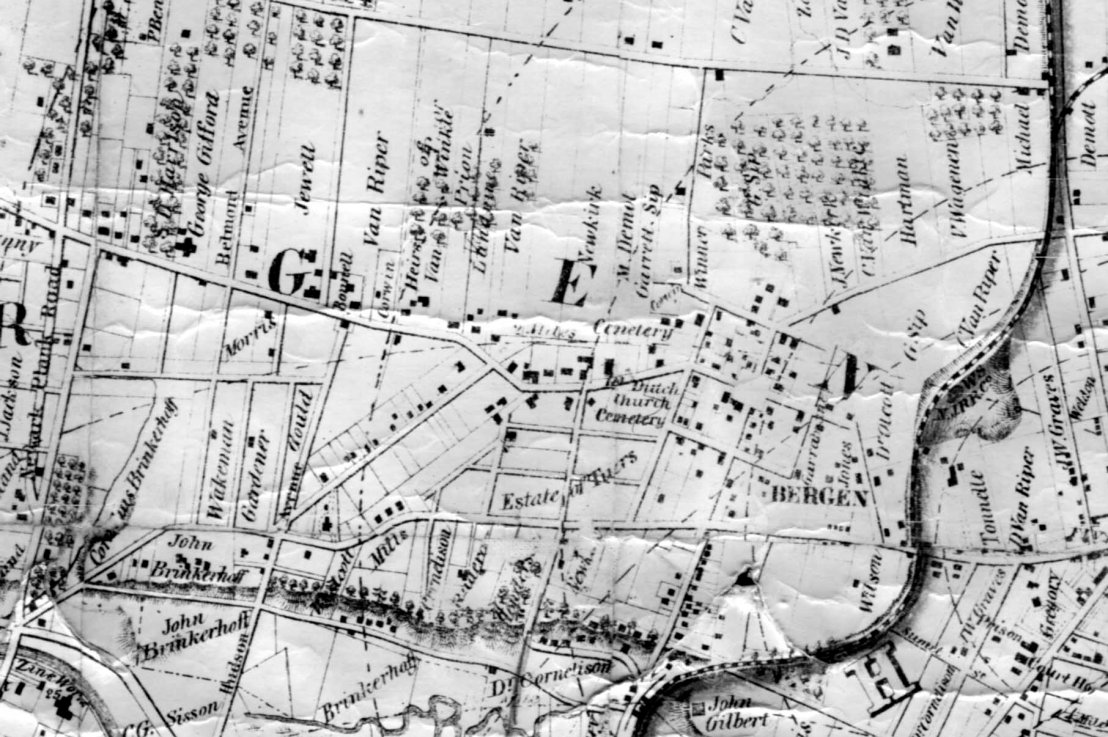
The name was originally applied to the village of Bergen, settled in 1660, which is not the area known as Jersey City Heights. Some earlier writers believed the name was derived from the City of Bergen, Norway. Others said it was named after the small town of Bergen in Northern Holland. Since Colonial New Jersey’s Bergen was a Dutch town founded and governed by a Dutch colony, the name was most likely derived from a town in Holland or a geographical description in the Dutch Language.
The name “Bergen”, originally derived from the word for “hill” in Norway, Belgium and the Netherlands, was applied to towns located in the hills. New Jersey’s Bergen, was originally a settlement on a hill. Therefore, the currently accepted theory is, that the geographical location of the original town is the most likely reason it was called Bergen The name “Bergen” was applied to the County, which was established in 1683.
Disclaimer: this information is taken directly to the pamphlet from the Bergen County Division of Cultural and Historic Affairs. It tells the story of the county we live in here in New Jersey
Open: Please check the website for the seasonality of the park
*Located in Van Saun Park at the entrance.
My review on TripAdvisor:
The historic marker of the Washington Spring
The Washington Spring, a 1/2 area within Van Saun County Park, is associated with General George Washington and the movement of his Continental Army through this area of Bergen County during the Revolutionary War.
The small section of Van Saun County Park is one of the more quieter places to visit and one of its most historical. The pathways work their way around the springs and the plantings and flowers are especially nice in the early to late Spring months. It really is a beautiful walk.
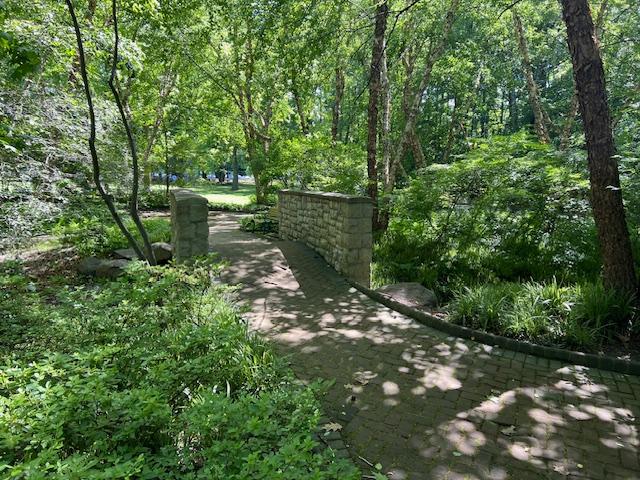
The entrance to the Washington Spring
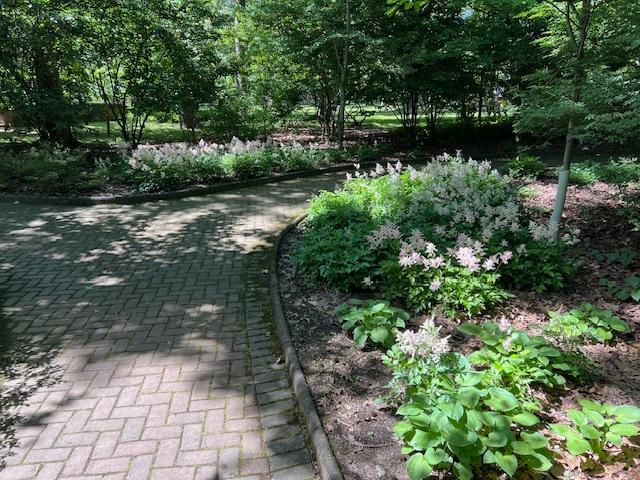
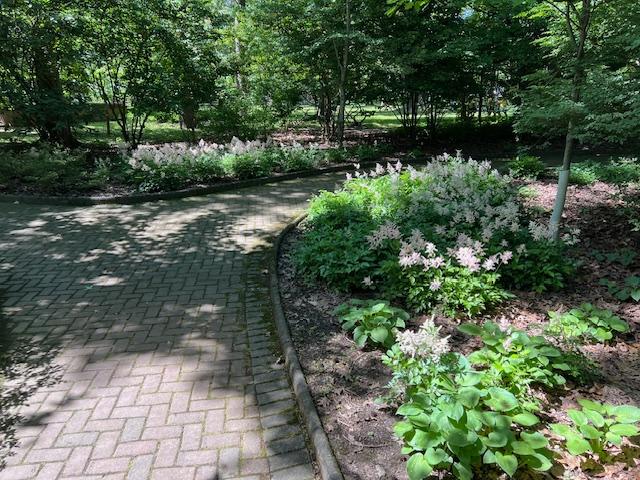
The pathways in bloom
History of the Washington Spring:
The hollow between hills known as “Slukup” until it was changed to the more pleasant-sounding “Spring Valley” in 1832. In the Dutch Frisan language “slukup” described a boggy area. The local Banta family was from Friesland in northern Holland and one of the area’s earliest settlers. Natural springs feed the streams in this area that flow through Van Saun Pond and eventually into the Hackensack River. The park’s land was part of 300 acres owned by Albert Zabriskie in 1686. In 1695, he sold 224 acres to Jacob Van Saun of New York City.
The spring running through the garden area.
The road to Slukup, now Howland Avenue, served as the border between Jacob Van Saun’s farm to the south and son-in-law Christian Dederer’s farm to the north. Hendrick C. Banta, who owned a cider mill in the Steenrapie area (River Edge), lived west of the Mill Creek that flows through the park.
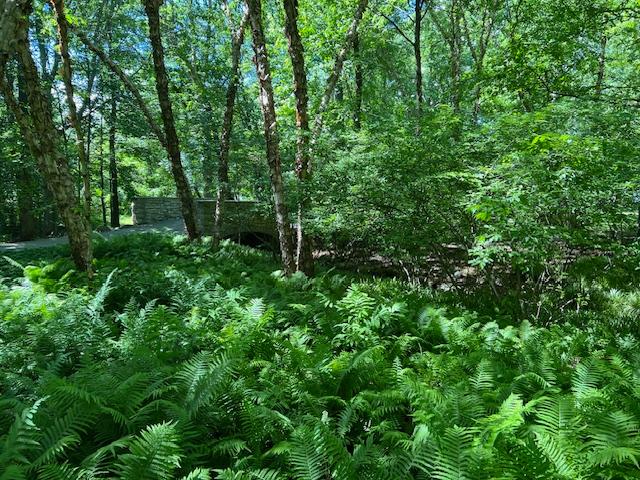
Ferns along the pathways
On September 4, 1780, General Washington moved the troops of the Continental army, numbering approximately 14,000 into a strategic encampment west of the Hackensack River between New Bridge in the south and Kinderkamack to the north in Steenrapie. They were part of the defense to challenge the British military stronghold on Manhattan and prevent any intervention with the landing of allied French troops in Rhode Island. Hendrick Banta reportedly sold a barrel of cider to these troops “every other day”. His 10 year old son, Cornelius, reportedly saw General Washington on his horse three times. During one of these sightings the General was watering his horse at the spring, giving rise to the name “Washington Spring”.
The Washington Spring pathways
On September 17th, General Washington, General Knox and the Marquis de Lafayette, who was headquartered at the northern end of the encampment in the area known as “Soldier Hill” in Oradell, left for Hartford, Connecticut to meet the recently arrived French commanding officers. The rest of the Continental Army decamped on September 20th.
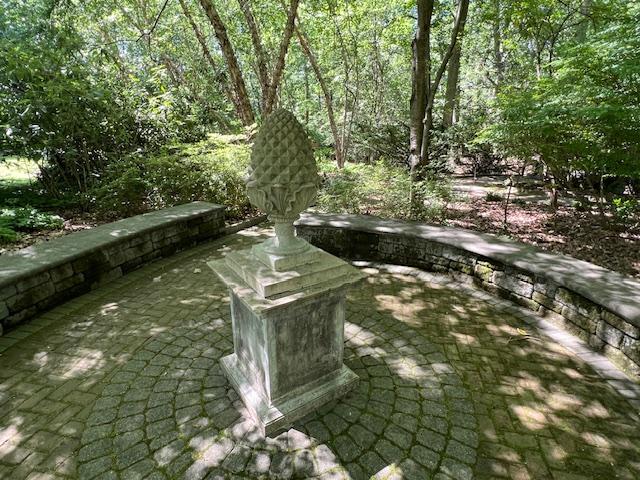
Sitting area and monument in the Washington Springs
The Bergen County Park Commission was created in November 1946 and in 1987 because the Division of Parks. Recreation and Cultural Affairs. Van Saun Park, whose 140 acres include Washington Spring, was created in 1957. Also, within the park is the Bergen Zoological Park, that opened in 1960. Open year round during park hours and is surrounded by accessible pathways.
The Spring area, which is right off the parking lot leading to the zoo, is beautifully landscaped with benches, pathways and flowering plants like azaleas, rhododendrons and flowering trees. In the early spring, the look around the Spring is quite colorful and picturesque. It is a nice way to spend the afternoon, walking quietly around the paths and see where the General once watered his horse. The entrance of the Spring is under plants but becomes a stream further down. Another part of the great history of Revolutionary War and the part New Jersey played in winning the war.
The spring running through the woods
*Disclaimer: this information is taken directly from the Bergen County Division of Cultural & Historic Affairs pamphlet. The Spring is part of Van Saun Park as you drive in and watch for the signs. It really is a beautifully landscaped part of the park and its historical influence in the war should not be missed. (2015 Bergen County division of Cultural and Historic Affairs. The Bergen County Division of Cultural & Historic Affairs received an operating grant from the New Jersey Historical Commission, a division of the Department of State.
There is a real beauty and quietness to the Washington Spring.
I visited the Fort Lee Museum at the Judge Moor House today to see the exhibition on Palisades Park Amusement Park and to see the history of the early film industry. Silent films started in Fort Lee long before they moved Los Angeles.
It was interesting to see how many silent screen stars started in Fort Lee including Mae Marsh, Lillian and Dorothy Gish and Mabel Normad and where the movies were shot. The museum shows how the industry grew and the studios that were created in town.
Exhibitions at the museum
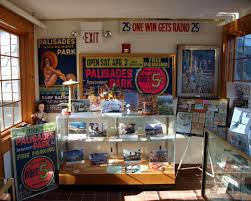
The Palisade Park exhibition was on the progression of the growth of the amusement industry in North Jersey and exhibited many artifacts from the old park. There were many pictures of the park in many different eras.
The Palisade Park exhibition
From the museum:
The Fort Lee Museum is a historic museum in Fort Lee, New Jersey on Palisade Avenue within Monument Park. The museum opened in April 1999 and is operated by the Fort Lee Historical Society.
The museum building is also known as the Judge Moore House. It was built in 1922 with an exterior of bluestone quarried from the Hudson Palisades atop which Fort Lee is situated. The building was slated for demolition in 1989 but community intervention prevented its destruction and the borough purchased it.
The Judge Moore house
The museum has a collections which speak the long history of Fort Lee and surrounding communities such as the Battle of Fort Lee. America’s first motion picture, the George Washington Bridge and Palisades Amusement Park.
Monument Park was built by the Daughters of the American Revolution and dedicated in 1908 at a ceremony attended by General “Black Jack” Pershing. The park was part of the original Fort Constitution of the Continental Army under the leadership of General George Washington. Over 2,600 troops were stationed in and around the Monument Park area. In 2004, the park was reconstructed for the Fort Lee Centennial. A time capsule was placed at the foot of the monument to be opened at the Bicentennial Celebration in the year 2104. Monument Park and Continental Army Park in Williamsburg, Brooklyn are the only parks in the US to be dedicated to soldiers of the American Revolution.
*Note from the editor: The Fort Lee Museum is in a very unusual location right off the Main Street of Fort Lee and tucked off to the side. It only takes about an hour to see the whole museum.
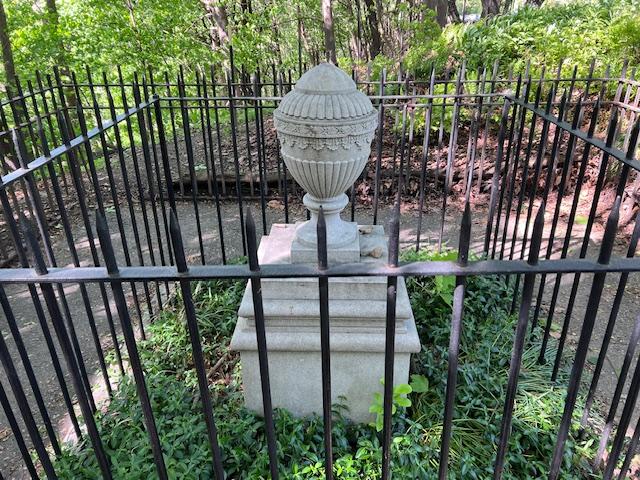
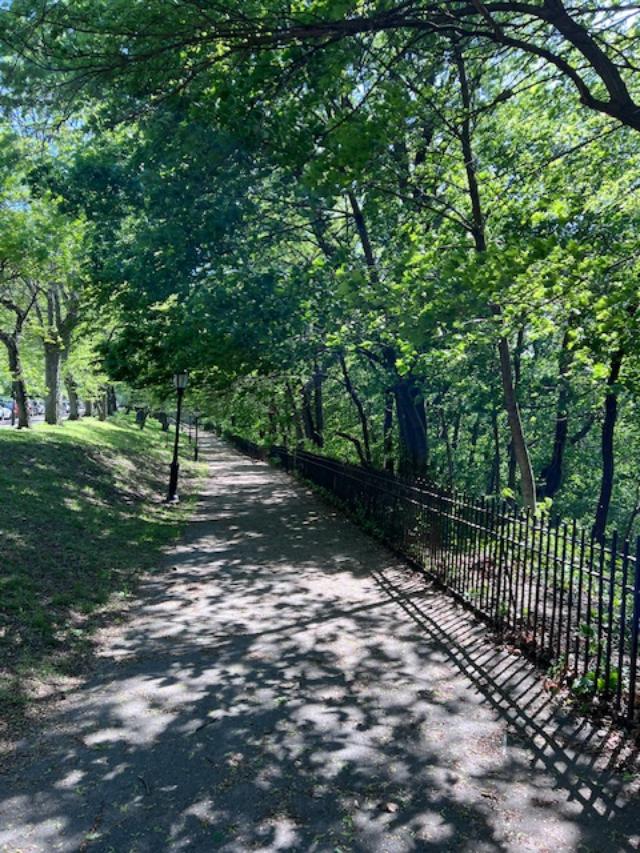
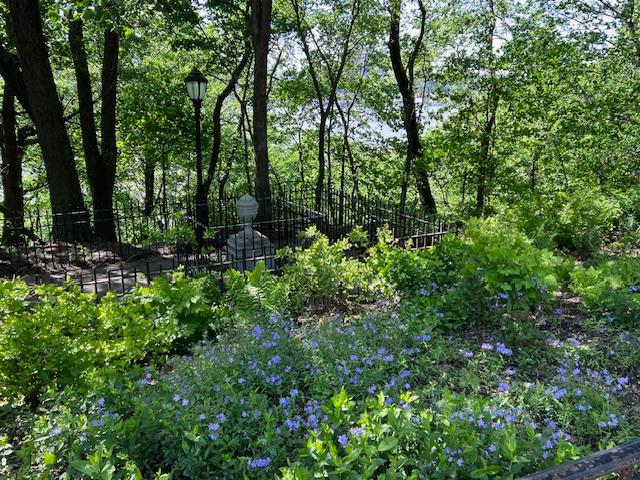
I stumbled across the Amiable Child Memorial over the summer when I was walking Riverside Drive for “MywalkinManhattan” project (see walking 155th Street) and came across this small memorial when I was passing Grant’s Tomb. It is off to the side on the path by the woods. It is a small monument and very humbling in its look. It is a small urn on a pedestal marking a grave of a small child surrounded by a fence. I got the following information from the NYC Parks Department website when I wanted to know more about the site:
The historic sign for the Tomb
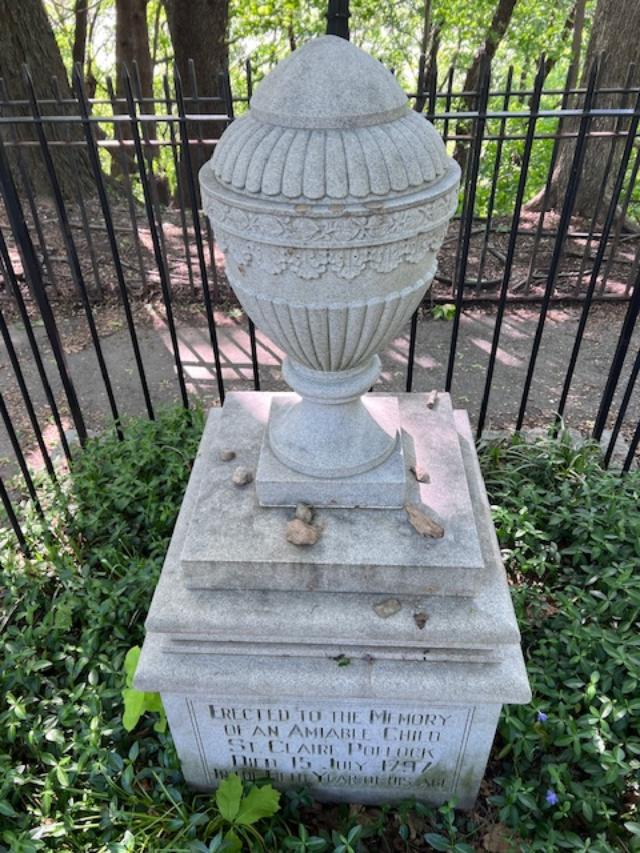
This unique New York City monument marks the site of one of the few private graves on public land within the five boroughs. It belongs to St. Claire Pollock (the namesake of nearby St. Claire Place), a child who died on July 15, 1797 in the fifth year of his life, probably from a fall from the cliffs of the parkland onto the rocks near the Hudson River.
The tomb up close
In the two centuries that have passed since the tragedy of the “Amiable Child” as he was described on his headstone-different accounts of St. Claire origins and family have persisted. George Pollock, the owner of the property on which the boy was buried, was either his father or his uncle. He was a linen merchant of Scots-Irish or possibly English descent, who lived in a mansion on Strawberry Hill (later called Claremont) in the 1790’s. He had sold his property to Mrs. Cornelia Verplanck, his former neighbor, by January 18, 1800 when he wrote as follows:
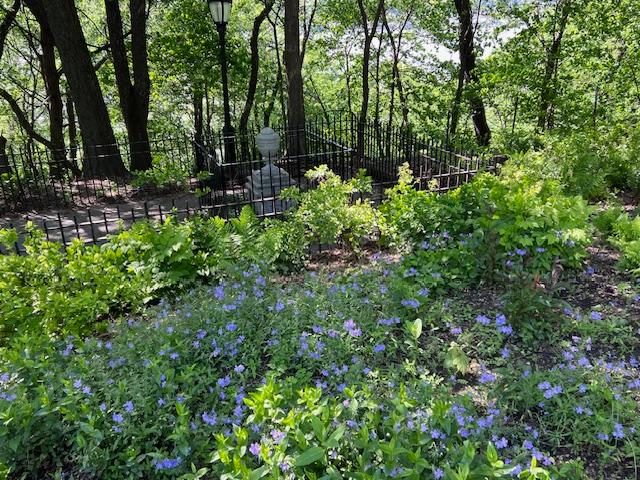
The Tomb of the Amiable Child park and flowers
“There is a small enclosure near your boundary fence within which lie the remains of a favorite child, covered by a marble monument. You will confer a peculiar and interesting favor upon me by allowing me to convey the enclosure to you so that you will consider its part of your own estate, keeping it however always enclosed and sacred.”
The park in the Spring of 2025
Claremont Hill was the site of the Battle of Harlem Heights, fought during the Revolutionary War on September 16, 1776. By 1806, it had been acquired by Michael Hogan, a former British Consul in Havana, who built Claremont Mansion (for which Claremont Avenue was named). Possible sources for the name are Hogan’s birthplace of County Clare, Ireland and his friend Prince William, Duke of Clarence, who would ascend the English throne as King William IV in 1830. Known as the site of a popular roadside inn by 1860, Claremont was acquired by the City from the heirs of Joel Post in 1873 for the development of Riverside Park.
The Park and the Tomb in the Spring 2025
In the 1890’s, Claremont Inn was host to numerous politicians, socialites and entertainers including the Morgan’s, Vanderbilt’s and Whitney’s, Lillian Russell and Admiral George Dewey. By 1907, the Inn had been transformed into a restaurant, serving the likes of Cole Porter and James J. Walker. It was destroyed by fire in 1950. The playground which now stands on the site was built shortly afterwards.
A century after the Tomb of the Amiable Child was laid, New York’s most famous monumental grave-Grant’s Tomb-was completed. The domed structure across Riverside Drive, designed by architect John Duncan and sculptor John Massey Rhind, was dedicated on April 27, 1897. The later structure is as grand a testimony to the accomplishments of national leader as the monument to the amiable child is a modest and touching tribute to a young boy who never had the opportunity to grow into adulthood. This monument was dedicated on May 3, 1967 (www.nycgovparks.org/parks/riverside-park/mounments/1206).
*You really have to look off the beaten path to see this unique little memorial but it is very touching and soulful. Take the time when visiting the neighborhood to visit this very touching site. You will find it by the path behind Grant’s Tomb.













 Visiting a Museum: The Unique, Unusual, Obscure and Historical