Tag: history

French Burying Ground                                                             Patrolman Ray Woods Drive                                                           New Milford, NJ 07646

French Burying Ground Patrolman Ray Woods Drive New Milford, NJ 07646

French Burying Ground

Patrolman Ray Woods Drive

New Milford, NJ 07646

https://www.findagrave.com/cemetery/1652365/french-burying-ground

https://www.nj.gov/dca/njht/funded/sitedetails/FrenchHuguenotCemeteryandHuguenotChurch.shtml

https://patch.com/new-jersey/newmilford-nj/the-french-burying-ground

Open: Dawn to Dusk

Admission: Free, the gates are open across from the baseball field.

My review on TripAdvisor:

The sign for the French Burying Ground

The historic marker in the front of the cemetery

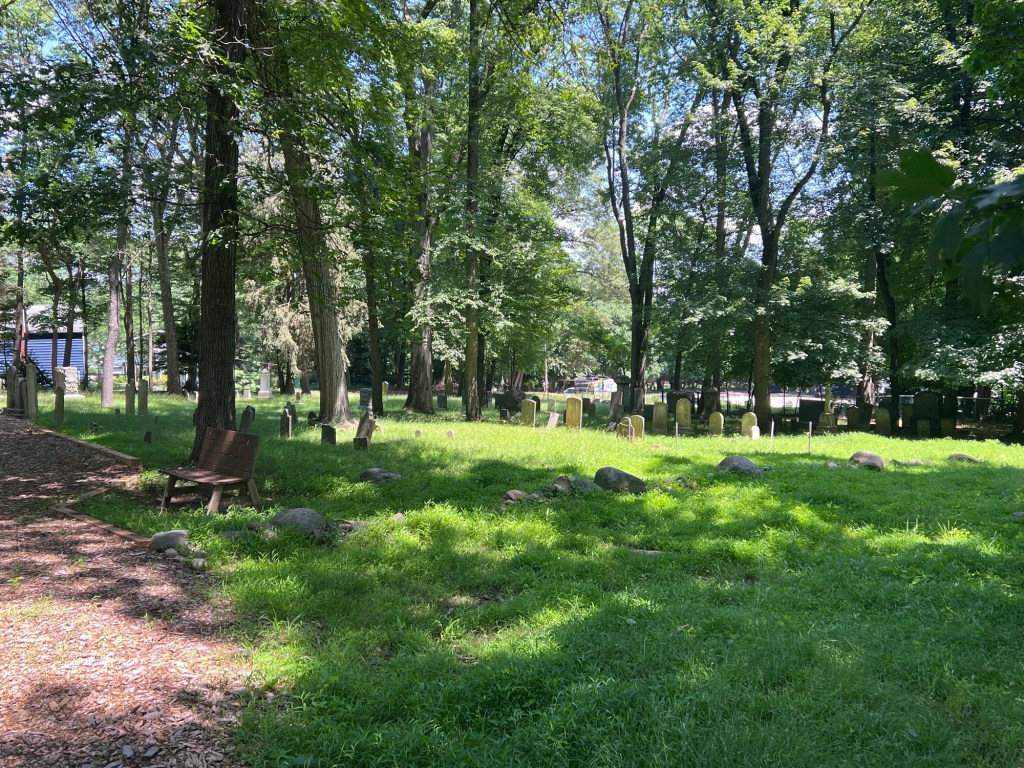
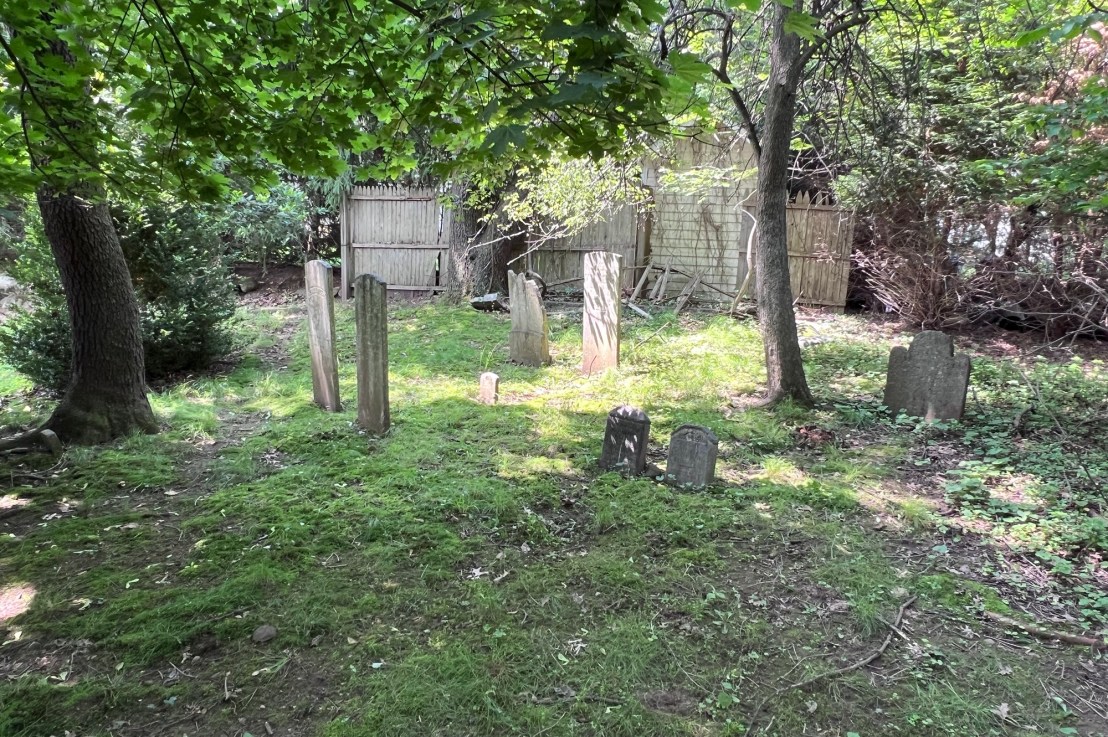
The French Burying Ground

The French Ground is a small historic cemetery once sat next to the French Church and the David Demarest House, that has since been moved to the Bergen County Historical Society site.

The Demarest House at the Bergen County Historical Society

The graves of members of the Bogert, Demarest and Christi families

The History of the French Burying Ground:

(from the New Jersey Historic Trust)

Thought to be oldest cemetery in Bergen County, the French Huguenot-Demarest Cemetery was established in 1677 as the final resting place for prominent French Huguenot and Dutch settlers in the eighteenth and nineteenth centuries. David Demarest purchased approximately 2,000 acres of land along the east bank of the Hackensack River from Native Americans in 1677 to establish a colony of French-Huguenots.

The cemetery is all that remains of the original French-Huguenot colony and has more than four dozen descendants of Demarest family buried on site. The Borough of New Milford acquired the property in 2018 and has been working closely with the New Milford Historic Preservation Commission to plan for its restoration and future interpretation.  

The French Burying site sign

The cemetery (technically a graveyard since there was a church once here) is the final resting place of many of Bergen Counties Revolutionary War veterans as well as many prominent families including the Demarest, the Bogert and the Christie families. These were some of the founding families of Bergen County.

The graves of the prominent Bogert and Van Saun families

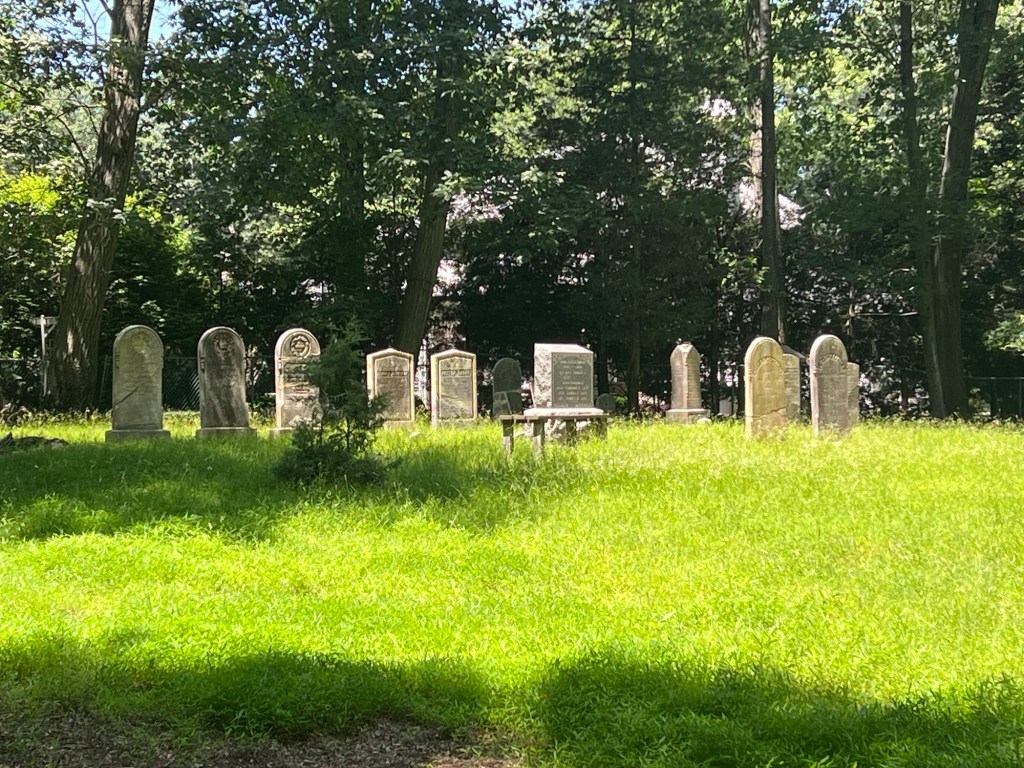
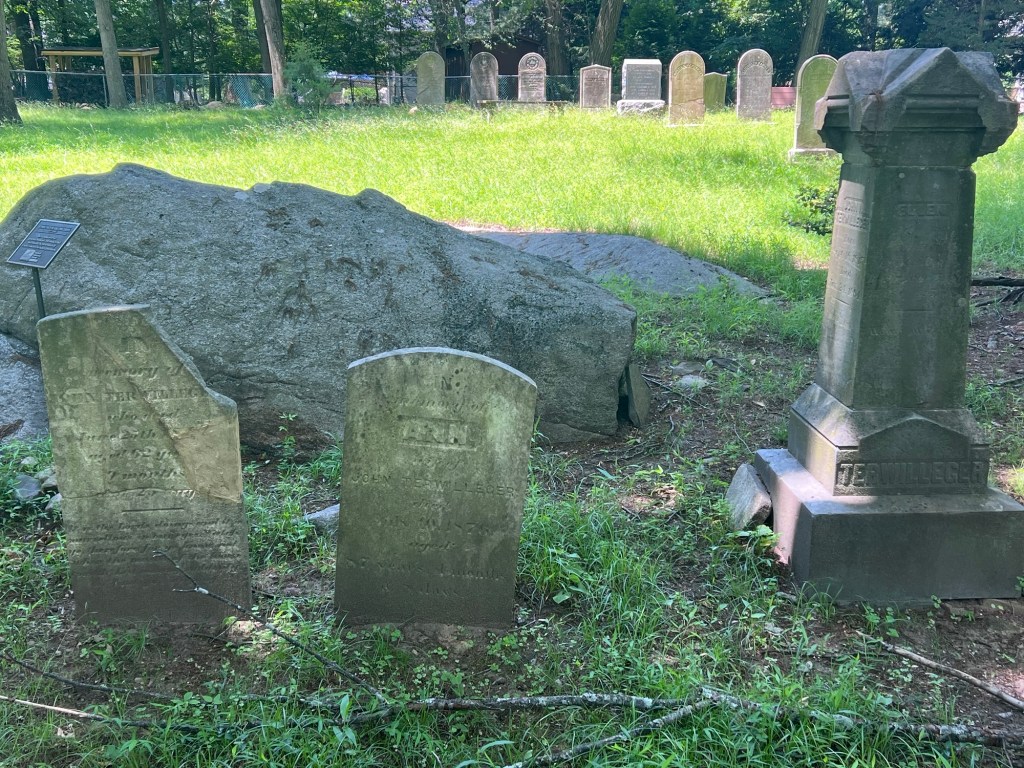
The cemetery has a quiet elegance about it with the many different styles of tombstones and the sheer history of these families and their contributions to the creation of our country.

The historical marker notes the cemetery was first used in 1677 after an agreement with the Native Americans

The back part of the cemetery

Members of the Bogert family

Members of the prominent Bogert family

Members of the prominent Demarest family with Revolutionary War veteran Reverend John Demarest

Members of the prominent Demarest family

The historic marker of the original church site

There are many of the veterans of the Revolutionary War buried at the site some of which survived the battles and went on to have productive lives in their communities.

Veteran John Van Norden

Veteran Uzal Meeker

Veteran John Demarest

Veteran Cornelius Bogert

Veteran Willimpie Bogart Demarest

The grave of Patriot Abraham Demarest

This cemetery, like the rest of the small cemeteries and graveyards that dot Bergen County show the history and significance of these families contributions of the residents of early Bergen County and how they shaped the founding of this country.

Video tour of the Cemetery:

Indian River Life Saving Station Museum                  25039 Coastal Highway                                             Rehoboth Beach, DE 19971

Indian River Life Saving Station Museum 25039 Coastal Highway Rehoboth Beach, DE 19971

Indian River Life Saving Museum

25039 Coastal Highway

Rehoboth Beach, DE 19971

(302) 227-6991

https://www.destateparks.com/park/indian-river-life-saving-station/

https://visitsoutherndelaware.com/listing/indian-river-life-saving-station-museum

Open: Sunday 9:00am-3:00pm/ Monday-Saturday 9:00am-4:00pm (Schedule is flexible with the seasons)

Admission: $4.00

My review on TripAdvisor:

https://www.tripadvisor.com/Attraction_Review-g34048-d208535-Reviews-Indian_River_Life_Saving_Station_Museum_at_Delaware_Seashore_State_Park-Rehoboth_Be.html

The front of the Indian River Life Saving Museum at 25039 Coastal Highway

History of the Indian River Life Saving Station:

(From the Delaware State Park website)

The original Indian River Life-Saving Station was built in 1876 for use by the United States Lifesaving Service, a government organization created to respond to the alarming number of shipwrecks along the coastlines of the United States and the precursor to today’s U. S. Coast Guard. The Life Saving Station today is a maritime museum that honors these courageous sailors and the rich history of their deeds. Listed on the National Registry of Historic Places, it is a must visit piece of Delaware history.

The front of the historical sign describing the park

The recent History of the Museum:

(From the Delaware State Park website)

The building was first located 400 feet closer to the shore, but a sand dune began to form around it almost as soon as it was finished. It was moved to its present location in 1877, and today has been meticulously restored to its 1905 appearance, complete with diamond-shaped trim. The museum is listed in the National Register of Historic Places.

The entrance of the museum

The Screening Room in the Visitors Center where you learn about the Life Saving Center

I started my tour of the Indian River Life Saving Museum at the Visitors Center with a quick video of the history of the building and the men who lived and worked here. The organization was the precursor to the modern Coast Guard. What I thought was interesting is that the way of rescuing people has not changed that much since the 1800’s. It has modernized with equipment and knowledge but the process is still similar to what it was then.

The Screening Room lined with historical pictures

The Screening Room lined with pictures of the history of the area

You can take two audio tours as you start to tour the station building just by calling into your phone, one of the exterior and one of the interior, room by room. Each room and many objects have a number assigned to them and you can listen to a description of the subject matter.

The Rescue Saving Station from the exterior. The building has a Queen Ann design.

The first room you enter is the kitchen area where all meals were prepared and the men ate their meals. These men could not leave the facility because of the hours and type of work required, supplies were brought in and stored in this area.

The old ice box where foods were stored

The pantry area where all the dry goods were stored

For recreation, the men read, entertained themselves with music and conversation. This room was used for recreation purposes and some down time for the staff.

The first floor downstairs room was used for entertainment and recreation during the downtimes

Old equipment and relics on display in the main room

Old equipment used at the station house

Methods of tying ropes and nautical rescues illustrated

Portrait of one of the old station masters

The main room held all the rescue equipment used to save both people and property. This included all the boats, ropes, pulleys and buckets for rescue.

The main rescue boat and paddles

The rescue boat used by the station to save people and cargo

Ropes and wenches to save and pull in damaged vessels

The bucket rescue method

The second floor contained the living quarters. Since the Team worked in shifts, pretty much no one left the building except for small breaks. The men slept in shifts with one man working night duty in four hour intervals to watch the shore for wrecks.

The living quarters for the station master

The small office in the room

The men slept on one room with the window facing the sea in a dorm like setting. The room was equipped with natural light and a view of the sea to watch over the coastline.

The bedroom of the men on duty

The bedroom

Separate room for private time

The locker storage area where each man’s personal items

The stairs leading to the portico for lookout duties

The grounds of the Rescue Saving complex and its location near the beach.

The tour was a lot of fun and gives you a glance of the heroism and isolated life of these men must have been back then. Today there are things like rotations and vacations, opinions that some of the men back then did not seem to have. Still these brave, well trained men kept the beaches and the oceans safe for many seafarers.

Perry Cemetery-Harrington Park Historical Society                                                                            Old Hook Road                                                                      Harrington Park, NJ 07640

Perry Cemetery-Harrington Park Historical Society Old Hook Road Harrington Park, NJ 07640

Perry Cemetery-Harrington Park Historical Society

Old Hook Road

Harrington Park, NJ 07640

(201)768-2615

http://www.harringtonparkhistoricalsociety.com/

https://www.hmdb.org/m.asp?m=241777

Open: Dusk to Dawn

Admission: Free

My review on TripAdvisor:

https://www.tripadvisor.com/Attraction_Review-g46493-d33215615-Reviews-Perry_Cemetery-Harrington_Park_New_Jersey.html

The historical significance of for the cemetery

The Perry family cemetery is a small family plot in Harrington Park, NJ and example of a time when families still buried their loved ones on property that family’s thought would be there for generations. Many generations of the family are buried here showing the family’s love of this land but like too many tiny cemeteries throughout Bergen County have been lost in time by the family buried there.

Today it sits quiet and respectful and somewhat over grown. Nature now surrounds it.

The Perry Cemetery History:

(From the Harrington Park Historical Society)

The Perry Cemetery is a small family burial ground located on what was the farm of David Perry (1809-1871). The Old Burying Ground cemetery is part of the land apportioned to Garret Huybertsen Blauvelt, son of one of the original sixteen grantees of the Tappan Patent approved by the Governor of New York in 1686. Although there are believed to be earlier ones, the first known burial was in 1722 and the last in 1905.

The Perry Family Cemetery sits quietly on a stretch of Old Hook Road

(From the Harrington Park Historical Society)

The Perry Cemetery is situated in the Borough of Harrington Park on Old Hook Road, east of Bogert’s Mill Road opposite the United Water Company building. David Perry had devised by his will, signed on July 18,1868 that: “the burying ground where the same now is, westerly of my dwelling house, of the use of 40’ square, I give unto all my children to be kept by them and their posterity as a place of burial forever.”

The Perry family tree of loved ones buried at the cemetery

(From the Historical Marker Database)

When David wrote his will, his great-grandson Perry Cole (1866-1867) already had been buried in the small plot. By the end of 1871, six members of the Perry Family had been laid to rest within yards of the family house. The last burial at the cemetery was that of David’s great-grandson, Claude Yeomans (1887-1940). There are a total of twelve people interred at the Perry Cemetery.

The untimely death of many members of David’s family is a reminder of the struggles and uncertainties that people of that period routinely endured. The property remained in the Perry Family until the 1920s when it was purchased by the Hackensack Water Company to become part of the Oradell Reservoir. The graves are laid out in four even rows facing East and the markers are either marble or granite.

The Perry Family tree starting with the marriage of David Perry to Catherine Blauvelt

Son Henry and Daughter Rachel’s tombstones

Patriarchs David Perry and his wife, Catherine Blauvelt Perry

The last David Perry to be buried in the family plot

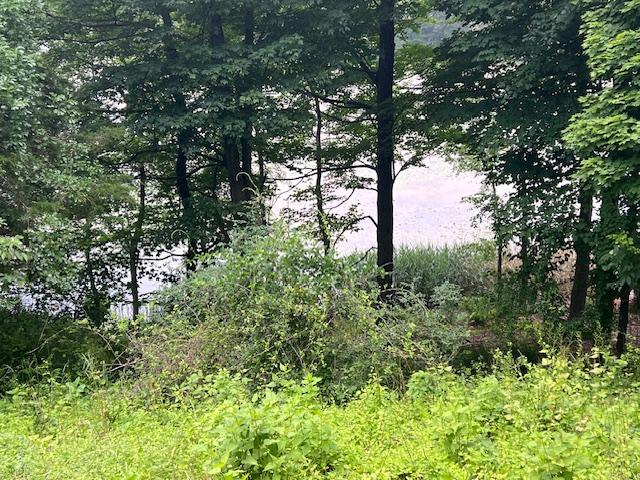
The family plot facing the stream

The Patriarchs of the family stand in the middle

The newest graves in the cemetery

The latest burials in the family plot

Video on the Perry Cemetery from the Harrington Park Historical Society

Old Burying Ground-Blauvelt Cemetery-Harrington Park Historical Society                                                                              Tappan Road                                                                              Harrington Park, NJ 07640

Old Burying Ground-Blauvelt Cemetery-Harrington Park Historical Society Tappan Road Harrington Park, NJ 07640

Old Burying Ground/Blauvelt Cemetery-Harrington Park Historical Society

Tappan Road

Harrington Park, NJ 07640

(201). 768-2615

https://www.findagrave.com/cemetery/1653309/harrington-park-old-burial-ground

http://www.harringtonparkhistoricalsociety.com/

Open: Dawn to Dusk

Admission: Free

My review on TripAdvisor:

https://www.tripadvisor.com/Attraction_Review-g46493-d33215617-Reviews-Old_Burying_Ground-Harrington_Park_New_Jersey.html

The historical marker for the Old Burying Ground

The wall outside the cemetery

The Old Burying Ground known also as the Blauvelt Cemetery, is an interesting look at the burial rights of prominent farming families of early Bergen County and their forgotten legacy of their contributions to building not just the County to our Country as well.

Many of these families intermarried over time combining properties and farms that over time since the turn of that last century, have become lost corners of our county’s history due to growth after WWII of suburban communities.

It is interesting to see who the movers and shakers of these communities of the past whose descendants were still live in Bergen County. The sad part is that these distant family members may not know their own family history enough to visit these tiny pieces of history that hold members who fought in the Revolutionary War and contributions to the growth of businesses with names that have been reduced to well known street addresses. A lot of history lies in these tiny plots that dot Bergen County. Here you can see the ‘ghosts’ of the past and walk past their graves to hear their stories.

The entrance to the cemetery

The History of Burying Ground:

(from the Harrington Park Historical Society)

In use for nearly two hundred years, largely by the Blauvelt family, the earliest known burial was in 1722. The cemetery contains the graves of members of other early Bergen County families, veterans of the American Revolution and slaves. Some of the tombstones are inscribed in Dutch.

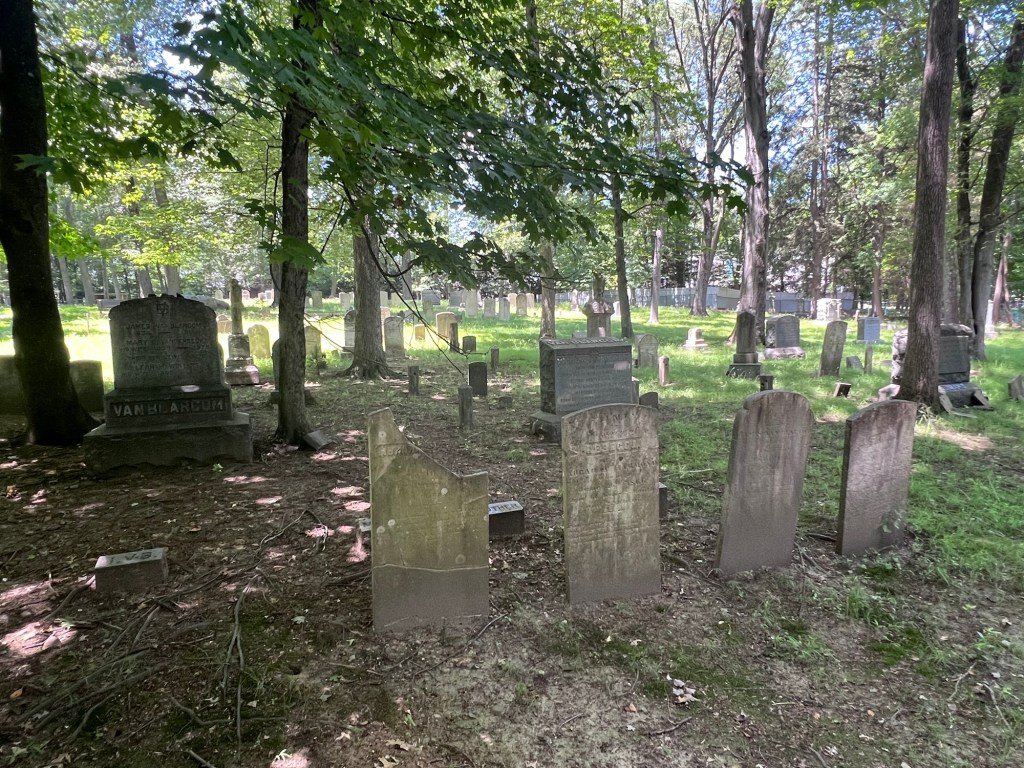
The description of the family plots

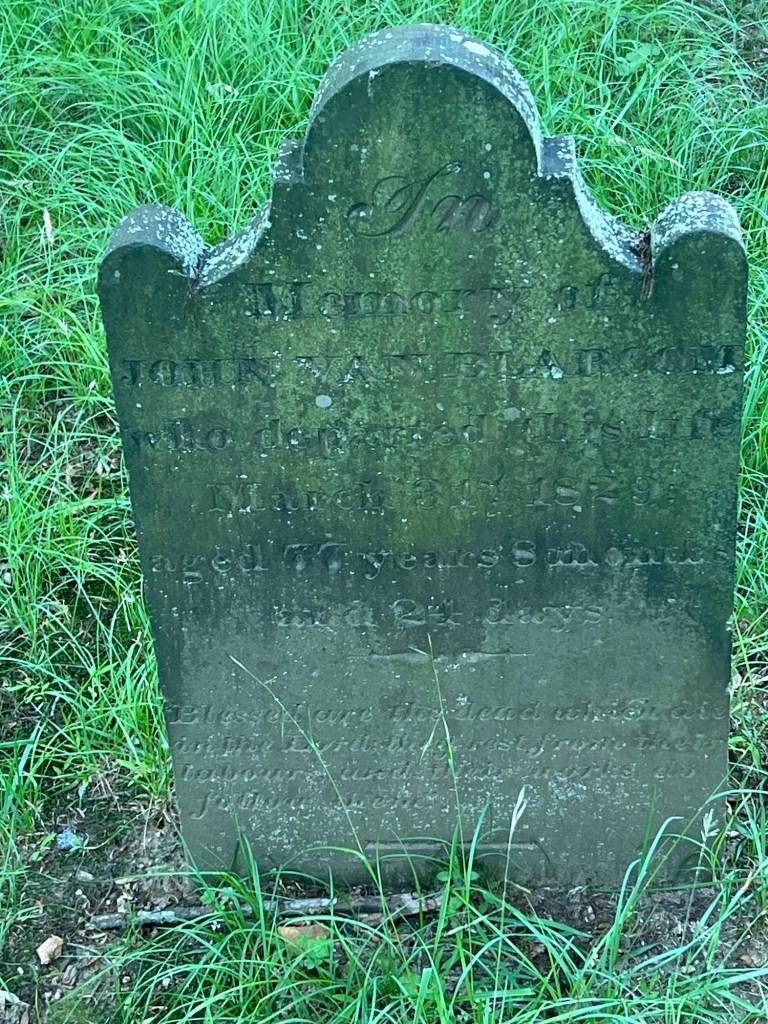
The grave of Patriarch Justin Demarest

The Blauvelt family plot of Patriarch Daniel Blauvelt

The graves of members of the Blauvelt and DeGraw families

The graves of David and Helen Blauvelt

The middle of the Blauvelt family plot

The cemetery from the other side of the Blauvelt family plot

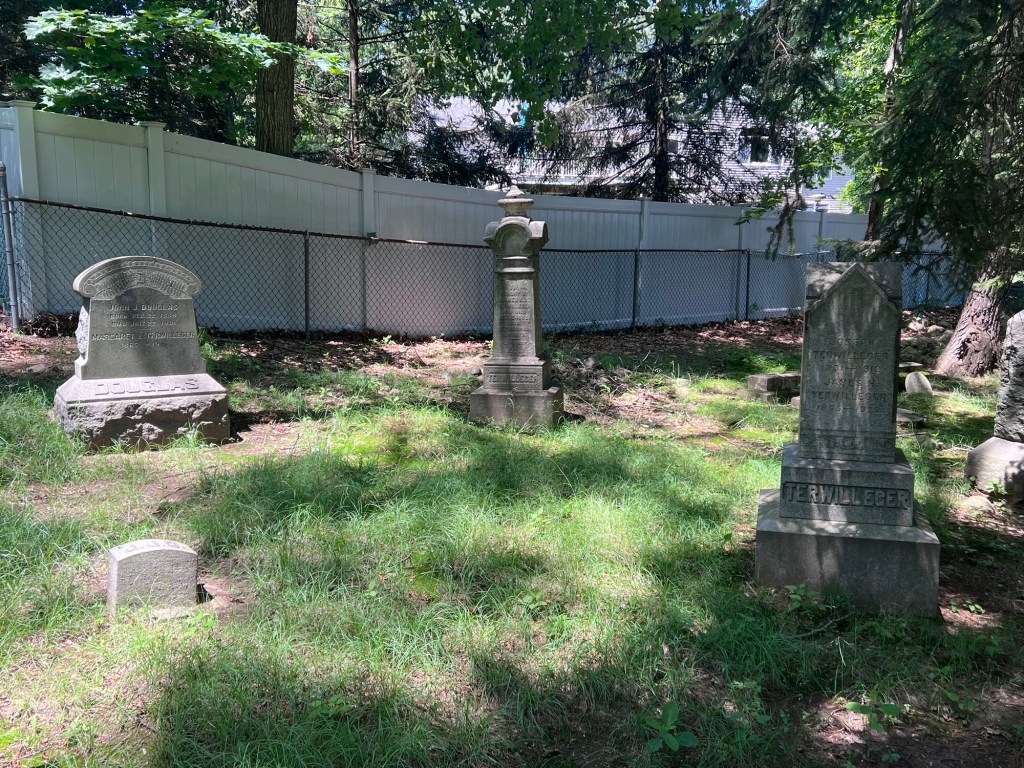
The Blauvelt and Demarest family plots (damaged tombstones)

(From the Harrington Park Historical Society)

Abraham Quackenbush (1768-1854) and his wife, Elizabeth Myers (1770-1807)) are part of the Abraham Myers family burial plot at the Old Burying Ground. In the middle of the 18th century, Abraham Myers received a royal charter from King George III to build a grist mill on the Hackensack River which his grandson John Bogert later operated, and it thereby became known as “Bogert’s Mill.”

The Myers family members interred in the plot are Abraham Myers, his wife Cathrena Nederman, daughter Cathrena, daughter Elizabeth and Abraham Quackenbush, son John Myers and wife Rebecca Durie. 

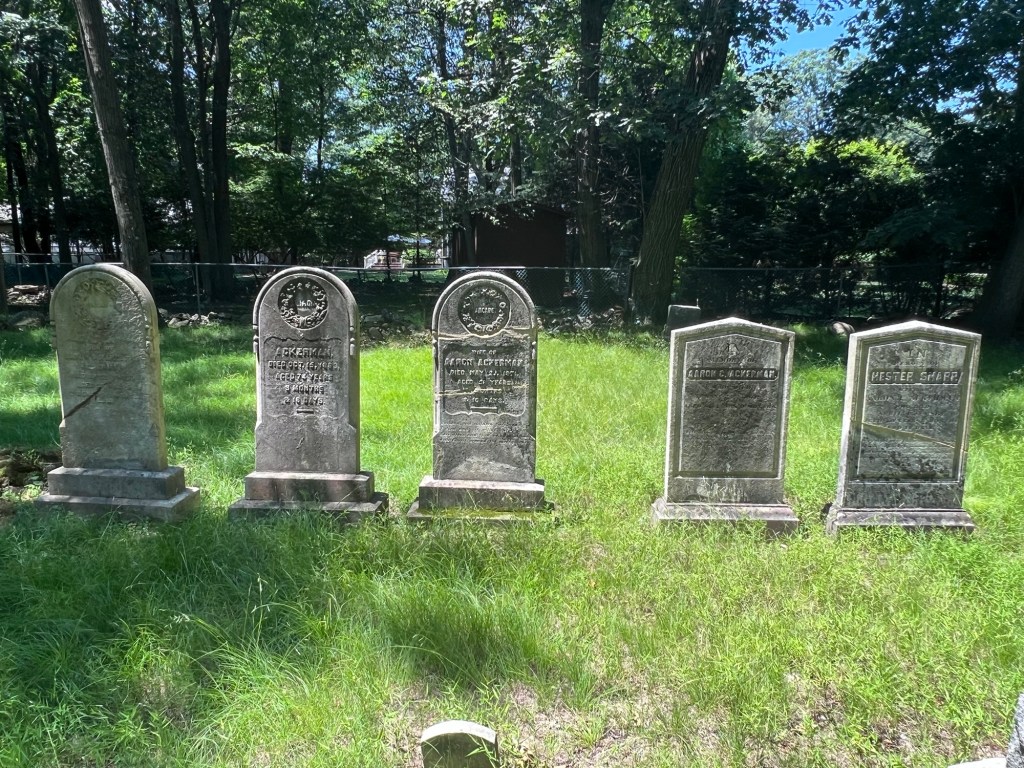
The Blauvelt-Eckerson-DeGraw family graves

Patriarchs David and Helen Blauvelt family plot

Video on the Cemetery from the Harrington Park Historical Society