The entrance to the Art & Design Gallery at FIT at 227 West 27th Street
The exhibition space showcases the work of students, faculty, and distinguished alumni, as well as invited guest artists. This new gallery space is located at the entrance of the Pomerantz main building and the back room exhibition space. This features smallers theme shows and showcases the talents of the FIT professors, professionals and Alumni. The shows are constantly rotating offering a fresh approach to contemporary art.
The Current Exhibition:
Creative Industry: The Alumni Journey Lobby and Gallery
Diverse in medium, this exhibition spotlights the career trajectories of several illustrious FIT alumni, highlighting their innovations and interesting journeys through the creative industries. Co-curated by Troy Richards, dean for the School of Art and Design, and Alumni Relations’ Kseniya Baranova, the work on display features photography, fashion, video, weaving, wallpaper, graphic design, and painting.
“Unconventional Minds at Work: 15 Years of HUE, The FIT Alumni Magazine
The showcased art designs
Artwork “Matter 2008” by artist Susanne Tick
The sign of artist Susanne Tick’s work
Artwork from “Unconventional Minds at Work”
Artwork from “Unconventional Minds at Work”
Artwork from “Unconventional Minds at Work”
Resurgence: The Ingenuity of Artisan Work and Hand-crafted Objects Lobby and Gallery
‘Resurgence’ showcases the ingenuity of artisan work and hand-crafted objects from textiles, jewelry, and decorative accessories. Contributors to this show include FIT alumni, faculty, and students, as well as finalists from the 2022 Global Eco Artisan Awards, a recognition given by the AGAATI Foundation.
Artwork of “Resurgence”
The Gallery at FIT during one of the current exhibitions
The latest exhibition is on the A. Beller & Company clothing line. The designs on display are from 1900-1930 and many of the designs are from the ‘flapper’ era.
The A. Beller & Company exhibition
The A. Beller & Company designs.
The Bio on the manufacturer
The A. Beller & Company designs from 1910-1930.
The A. Beller & Company designs from 1910-1930.
The A. Beller & Company designs from 1910-1930.
The A. Beller & Company designs from 1910-1930.
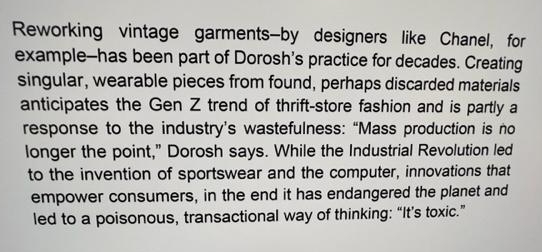
The museum also did a piece on how Generation Z is reworking vintage clothing designs and reworking them into modern clothing.
The Generation Z gallery of designs.
The write up on reworking of vintage clothing.
Some of the clothing designs.
The new exhibition in September 2023 was “The Unwearable Art” exhibition:
With the tag line “A fashion line no one would dare wear.”
The fashions were very unusual to say the least but unique in every way.
The entrance to the gallery.
“Today-I’m Wearing Uncertainty”
the “Today-I’m Wearing Uncertainty” design sign.
“Today-I’m Wearing Flare Intensity”
The “Today-I’m Wearing Flare Intensity” sign.
“Today-I’m Wearing Something Life Threatening.”
The sign “Today-I’m Wearing Something Life Threatening”
“Today-I’m Wearing Physical Pain”
The sign for “Today-I’m Wearing Physical Pain”
The “Wearing Uncertainty” exhibition offers a different look at fashion, and it’s influences on costumes.
The new “Squishables” exhibition at the Gallery at FIT focuses on therapeutic stuffed animals with themes that the students created as teams. Each one has several colorful soft animals and figures with it. It is a colorful and whimsical display. The exhibition shows how plush toys become an essential tool in coping with anxiety, stress, grief and isolation a person might feel at a time of their lives. This exhibition opened in May of 2024.
The sign on the new exhibition “Squishable”.
The “Unicorn Cafe” display.
The “Under the Sea” display.
The “Graveyard” Halloween display.
The “Alchemy Lab” display.
The “Farm” display.
The “Squishables” Gallery exhibition.
The new exhibition “Squishables” is based on a therapeutic stuffed animal that is created by the students.
The “Denim Devine” exhibition is the Senior Project of the graduates.
The “Denim Devine” exhibition in 2024. This exhibition was created by graduating students to design a wardrobe that was made of entirely of denim. These are their original designs and creations.
The “Denim Devine” entrance.
The winners of the “Denim Devine” exhibition.
The “Denim Devine” display.
The back gallery of “Denim Devine”.
I loved this Disney inspired dress in the exhibition.
One of my favorite dresses from the exhibition.
Another very original design in the exhibition.
Another original design that I liked in the exhibition.
The picture boards for the exhibition and other exhibitions.
I made my first visit to the Museum of Sex in New York City and highly recommend it. I have to admit it is different but what I like about the museum is that it doesn’t try to hide the subject and it also just doesn’t jump out at you. It is an interesting progression in art and I saw this in the exhibition “The History of Pornography”, where the films were set up in order since the Victorian times. Sometimes it had to go underground due the times but pornography has been around since the days of the media.
The exhibition shows early pictures and viascopes of sexual acts and the early films date back to the Silent era. The exhibition covers from the Silent era to present times and the advancement of sex in films once the Hayes Code was broken in the 1960’s. With the relaxed rules and the mainstream films of “Tie Me Up Tie Me Down” and “Deep Throat”, you can see the progression of this as an art form and progression of the way the films were made.
Another great exhibition that I saw was “Punk Lust: Raw Provocation 1971-1985”. This show matches nicely with the current show on the “Punk Movement” at the Museum of Arts & Design. It was interesting to see the posters, flyers, clothes and hear the music of the era. Just at the height of the ‘Sexual Revolution’ and into the fragments of the Disco era came a new sound and way to dress that started in the early 80’s before the progression of the Reagan years in Washington DC, this movement came with a new sound with Punk, New Wave and Technographic and a new way to dress provocative without being too revealing.
“Punk Lust” exhibition
As the museum was quoted saying: “The survey looking at the way Punk Culture used the language of sexuality, both visually and lyrically, to transgress and defy, whether in the service of political provocation, raw desire or just to break through the stifling gender norms and social expectations that punks refused to let define them.”
“Punk Lust” exhibition
On a more recent trip to the museum, three exhibitions were open and all very interesting, highlighting different types of eroticisms. These countered different parts of the artworld. Also, in the post-COVID era, all the interactive displays opened up and I was able to visit and experience each of these as well. These are the most fun!
The Andy Warhol exhibition:
“Looking at Andy Looking” exhibition:
(from the museum website)
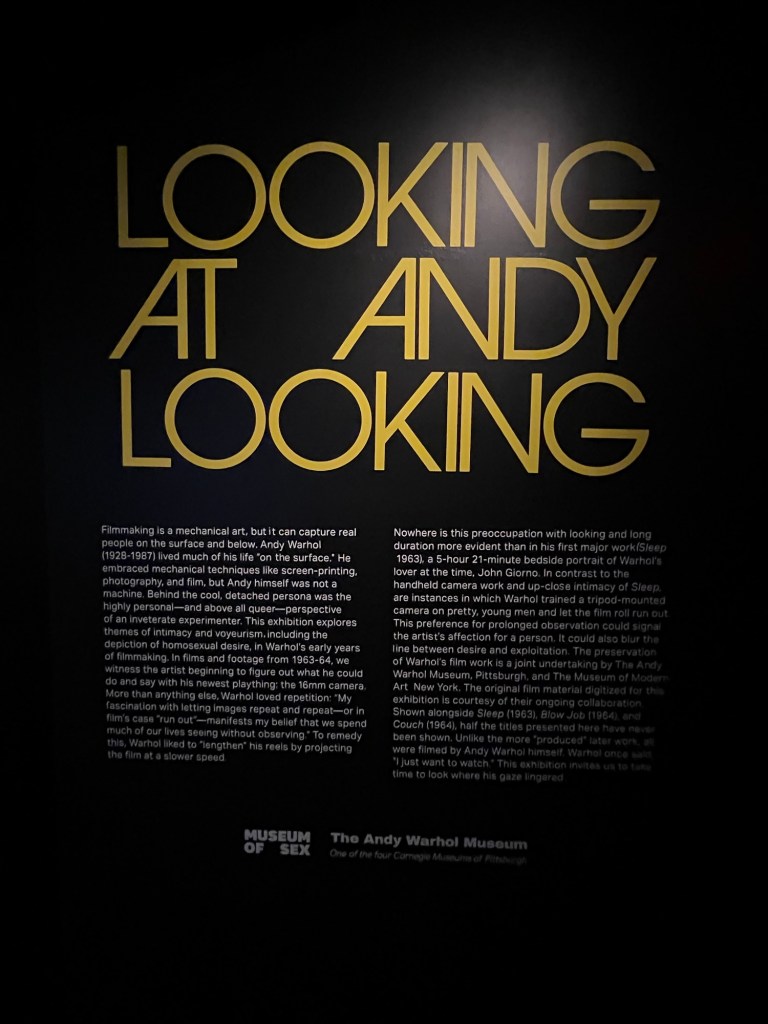
This exhibition will explore themes of intimacy and voyeurism, including the depiction of homosexual desire, in Warhol’s early years of filmmaking. In films and footage from 1963-64, we witness the artist beginning to figure out what he could do and say with his newest plaything: the 16mm camera.
“Looking at Andy Looking”
(from the museum website)
Filmmaking is a mechanical art, but it can capture real people on the surface and below. Andy Warhol (1928-1987) lived much of his life “on the surface.” He embraced mechanical techniques like screen-printing, photography, and film, but Andy himself was not a machine. Behind the cool, detached persona was the highly personal—and above all queer—perspective of an inveterate experimenter.
The exhibition I saw was the “Artifact” exhibition from the Museum of Sex’s collection of items exploring how we look at sexual encounters. What is sex and how does a play a role in our lives?
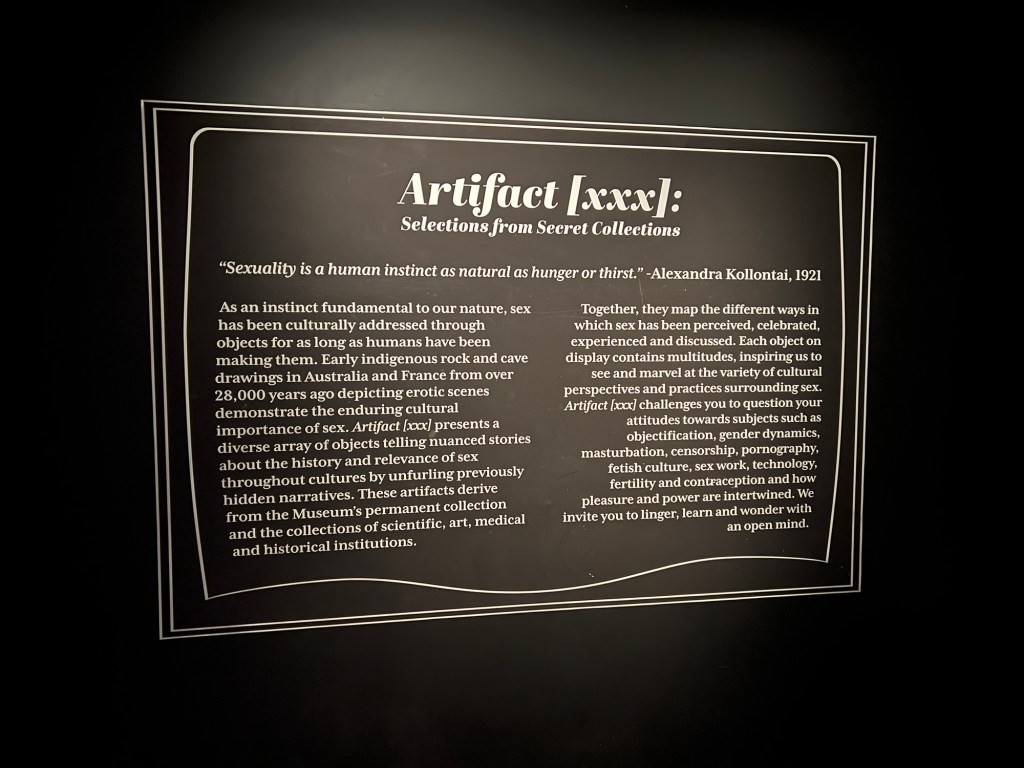
“Artifact: Selection from a Secret Collection”
(from the museum website)
Gathered from the Museum of Sex’s permanent collection of more than 15,000 objects as well as from other notable collections and institutes of antiques, medical history and sexology, Artifact (xxx): Selections from Secret Collections presents an intimate exploration of how sex manifests across culture through art, science, and design. An early vibrator made in Great Britain, a lotus shoe worn by a woman in China, and a Braille issue of Playboy magazine provide insight into prevailing belief systems and societal taboos across geography and time.
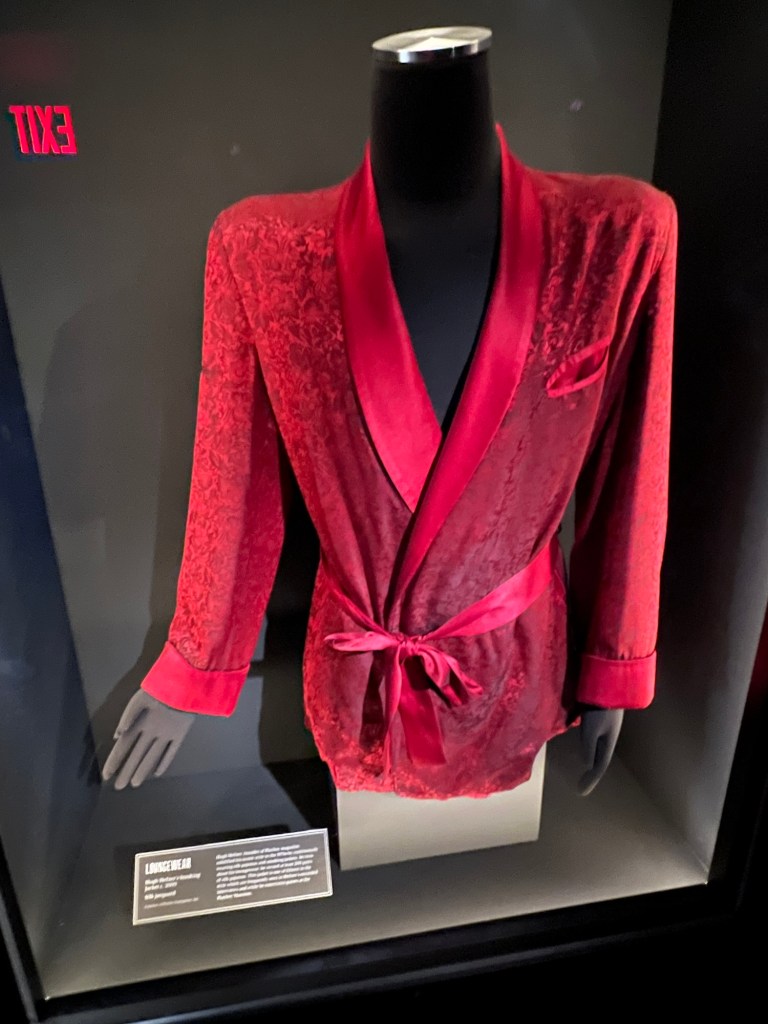
Hugh’s Hefner’s smoking jacket
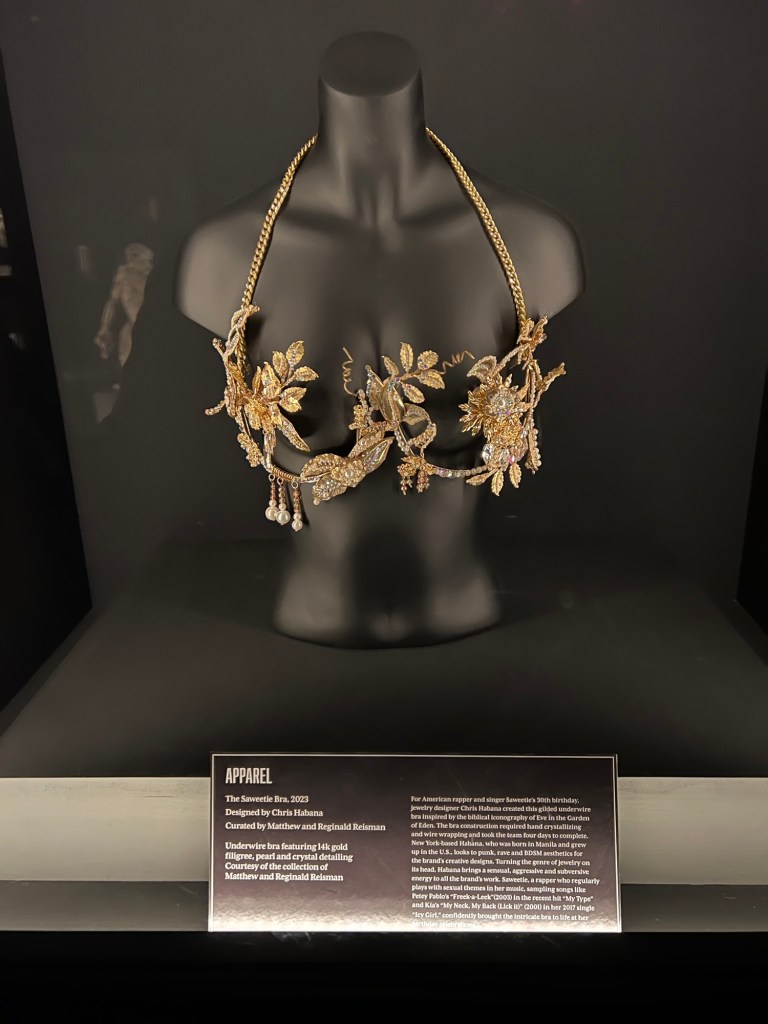
Jeweled Bra
(from the museum website)
Fulfilling a wide range of functions from artwork, medical devices and pop-culture mementos to guidebooks and accessories used for enhancing pleasure or pain, these objects tell the stories of the expansive yet nuanced influence of sexuality throughout history.
Candy pants from the 1970’s
Deep Throat Memorabilia
The memory of the movie a movie ‘Deep Throat’’
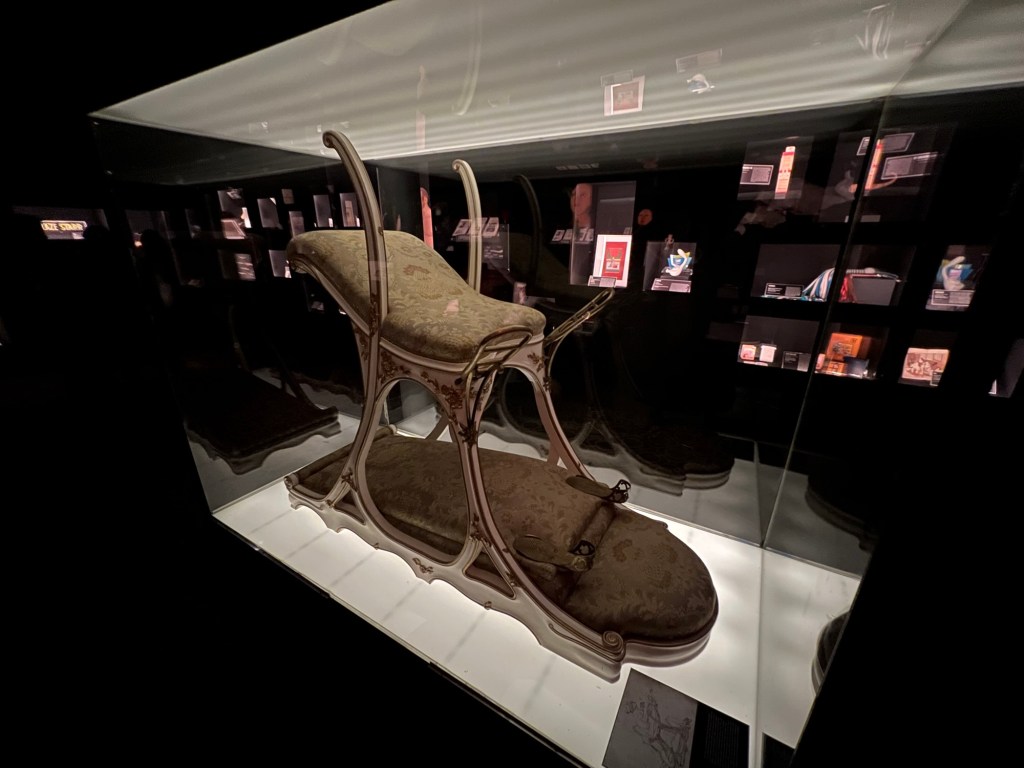
Intercourse Chair
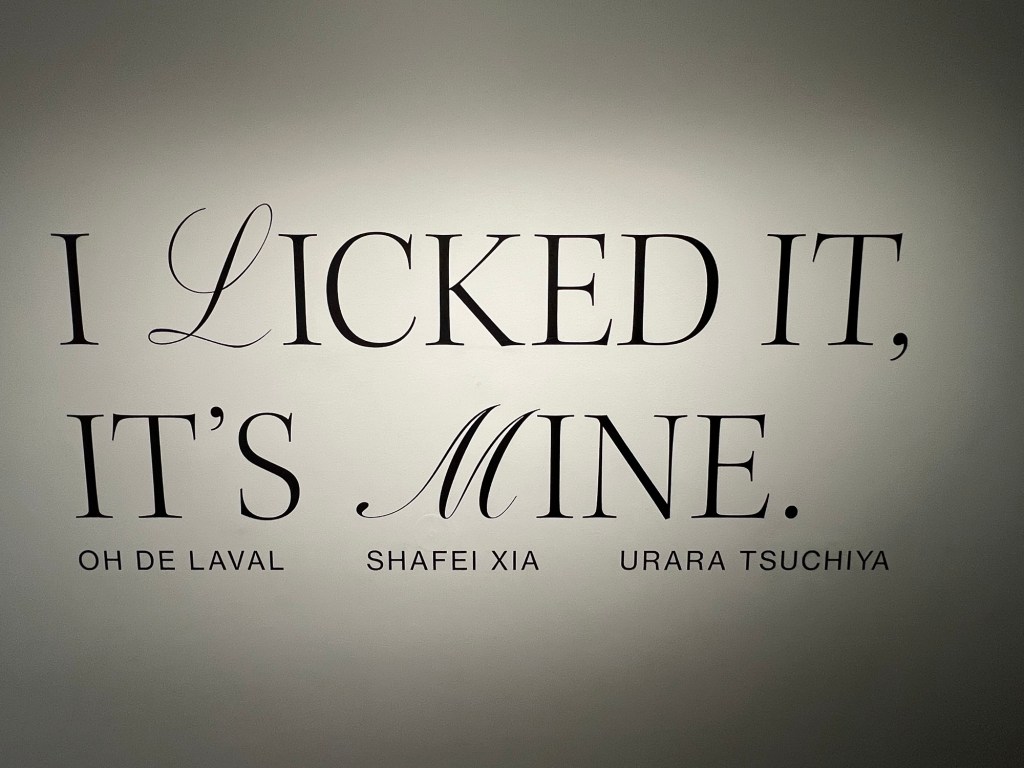
Another exhibition that I enjoyed on my last trip to the Museum of Sex was the “I Licked it, It’s Mine” exhibition on exotic paintings and sculpture.
The ‘Licked it, it’s Mine’ exhibition sign
(from the museum website)
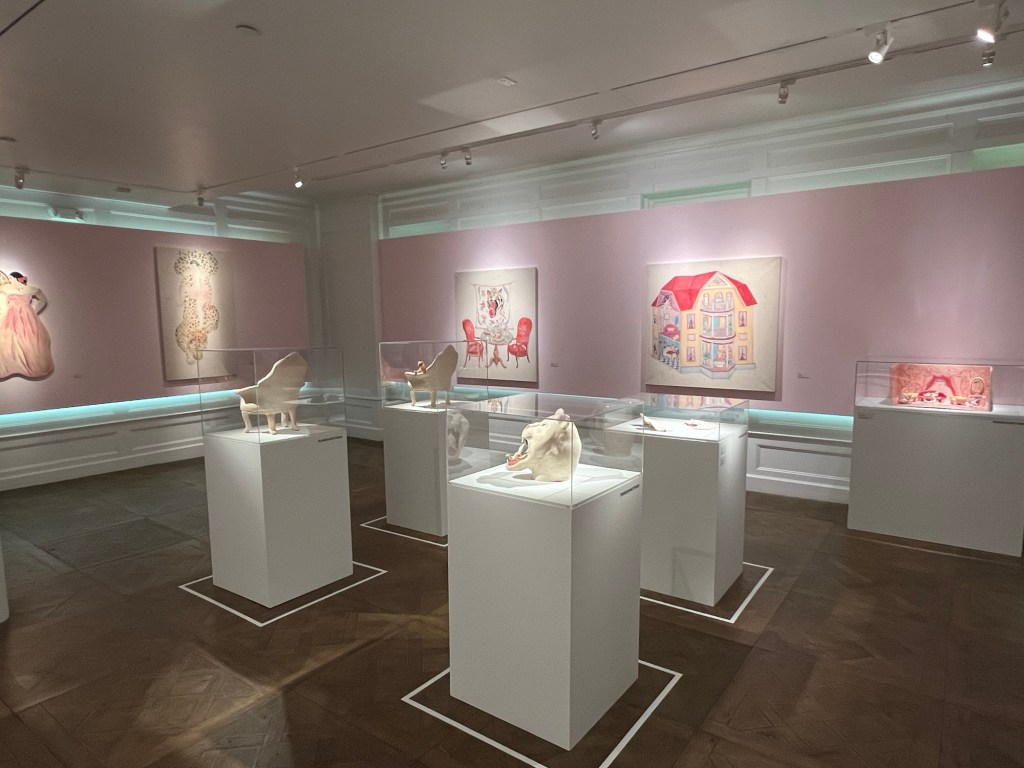
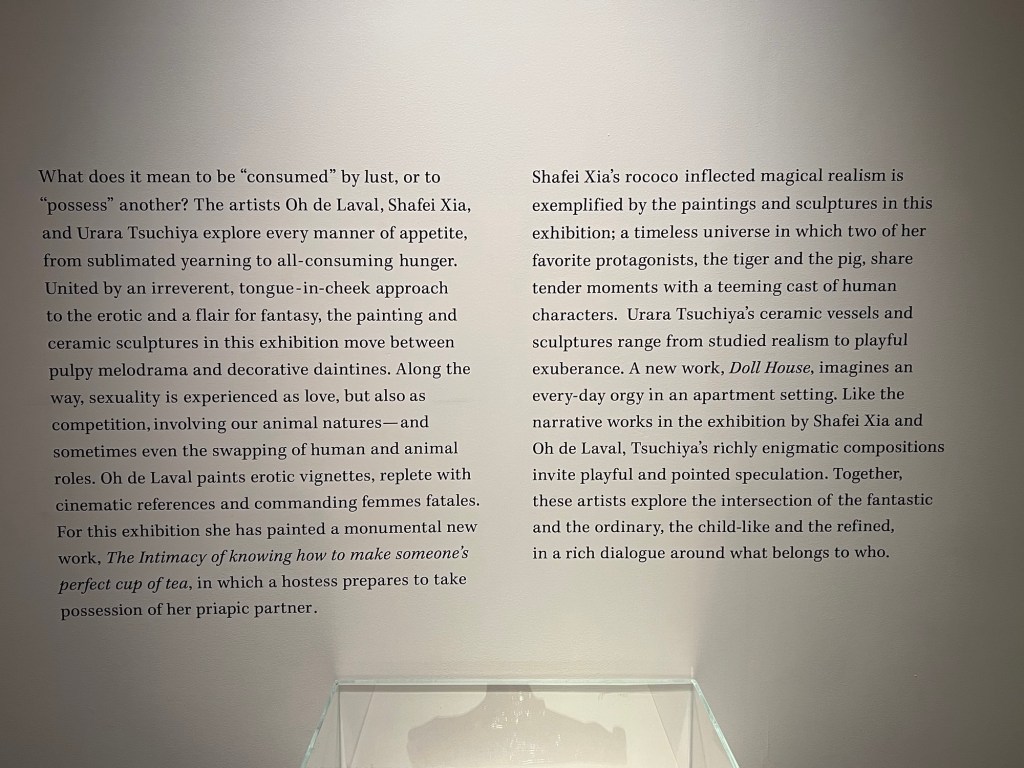
What does it mean to be “consumed” by lust, or to “possess” another? The artists Oh de Laval, Shafei Xia, and Urara Tsuchiya explore every manner of appetite, from sublimated yearning to all-consuming hunger. United by an irreverent, tongue-in-cheek approach to the erotic and a flair for fantasy, the paintings and ceramic sculptures in this exhibition move between pulpy melodrama and decorative daintiness.
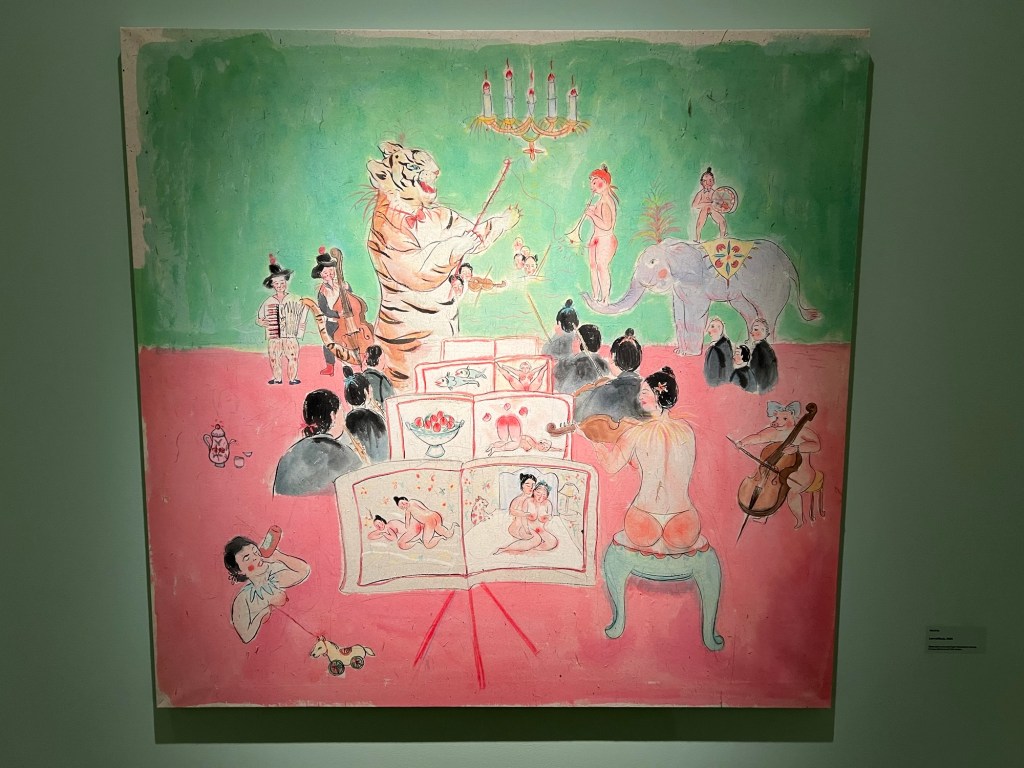
Along the way, sexuality is experienced as love, but also as competition, involving our animal natures—and sometimes even the swapping of human and animal roles.
The gallery for ‘I licked it, it’s mine’ exhibition
The literature from the exhibition explaining the works
These were some of my favorite works from the exhibition:
The exotic works
The unusual works
The unique paintings and ceramics
One of my favorite pieces from the exhibition. I thought this was quite exotic.
I walked next through Carn-O-Rama and experienced the workings behind the scenes of a traveling carnival reaching the suburbs. I always thought it was just lights, rides and cotton candy. There is more to it than that.
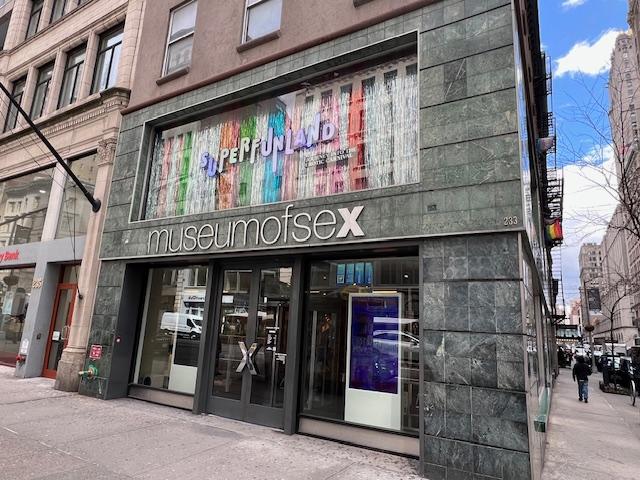
After my visits to the three galleries, I took a took to the interactive section of the museum and experienced Funland, where I walked though Stardust Lane and all the lights and sounds of the mirrored rooms.
A Video walk through Funland is a lot of fun. It really pleases the senses.
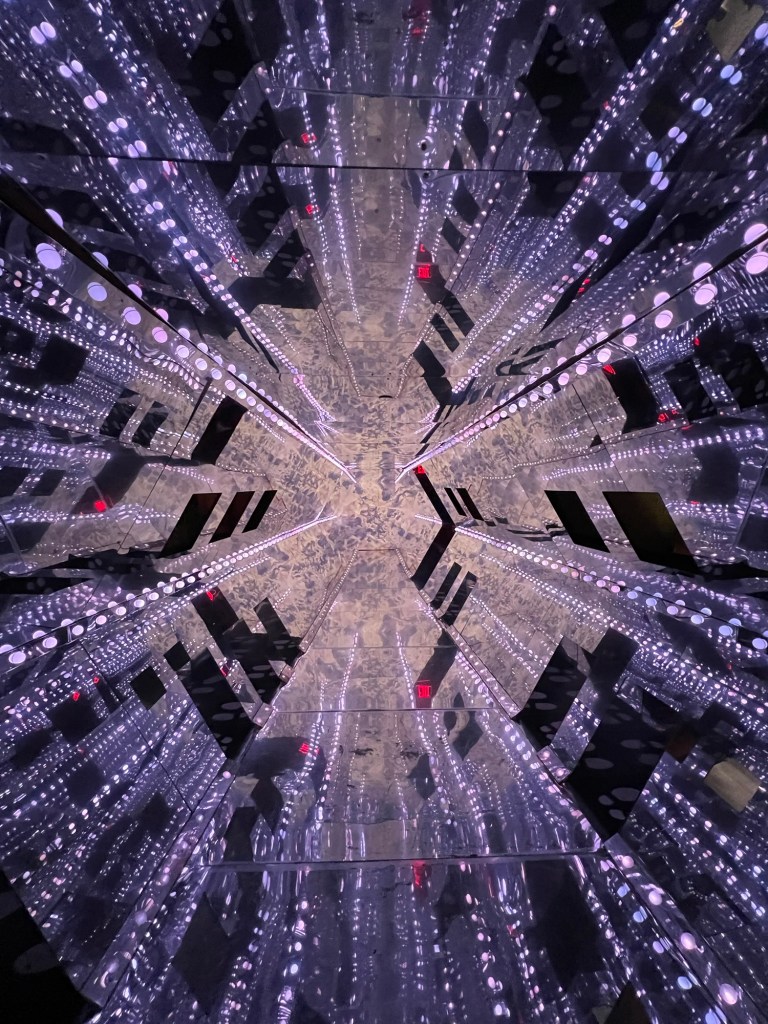
I next took a trip to Super Funland and this was my trip through Stardust Lane. This is all lights and mirrors and it was an unusual walk through the museum that challenges the senses. Walking through Super Funland is a voyage in the wild with mirrors and music.
It get pretty interesting walking through here.
In another video walk through of Funland, I met a lot of interesting people on my walk through the museum. It really puts you into a interesting mood.
The pathway around the museum took me to other interactive exhibitions. Jump for joy was a very interesting interactive world of different sexual parts and mood lighting.
The ‘Jump for Joy’ exhibition
Then I walked through ‘Lucky Land’
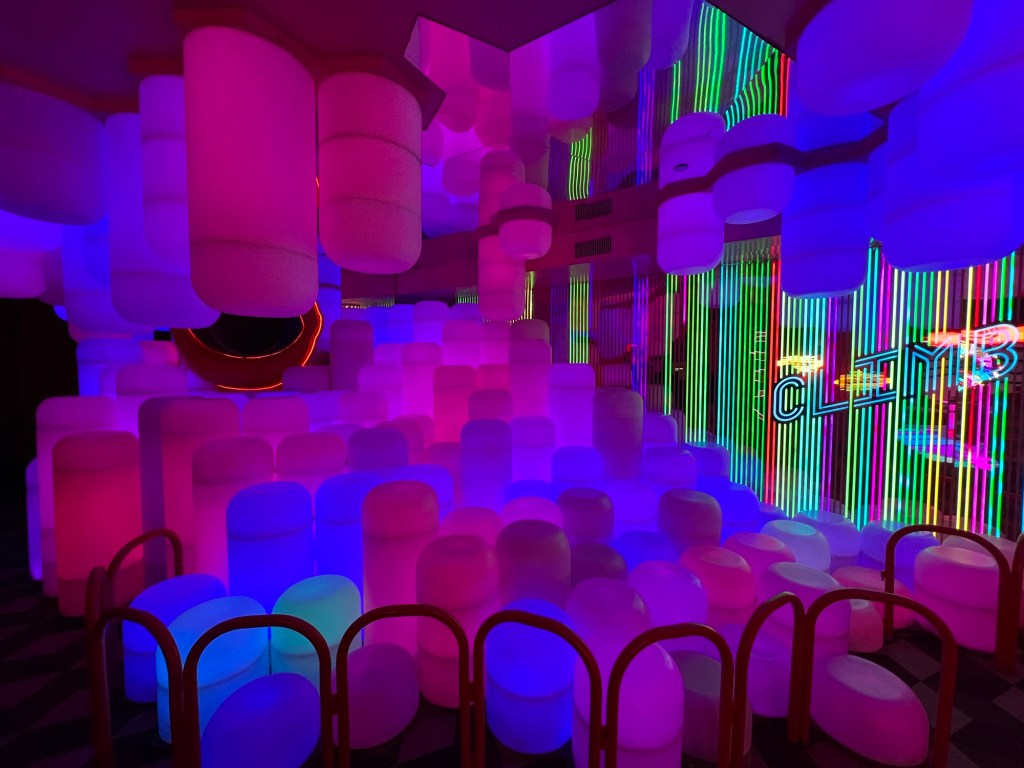
Then I walked through and climbed ‘The Pink Palace’, a series of colored features that led through what looked like another sexual parts. This is called the ‘ClimbX”.
The colored building blocks of the exhibition of “ClimbX”
The colored blocks of the exhibition “ClimbX”
Another object to climb through on your way out of the exhibition.
It really is an interesting museum to visit. You really have to stop and enjoy the pleasures of each floor. You have to take the time experience all the sights and sounds. The funny part of leaving the museum is that there is an exotic food vendor on Fifth Avenue with the most unusual items he sells.
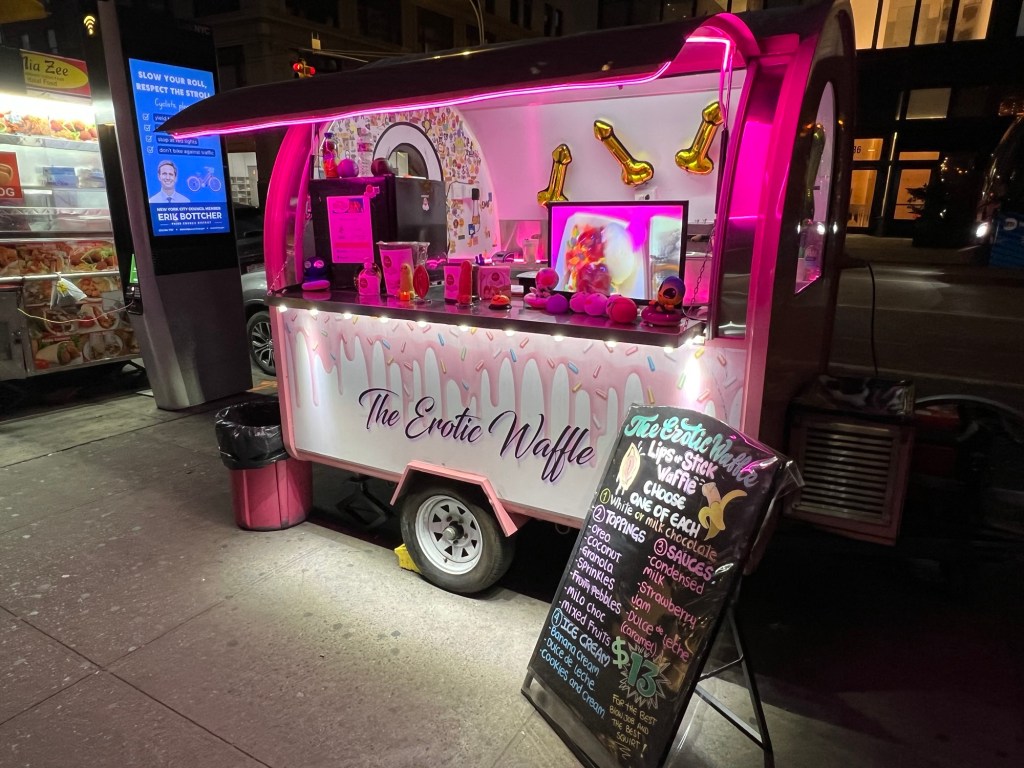
The Erotic Waffle food truck just outside the museum. Not your kids food truck. The truck sold sexual organ pastries, waffles and other exotic items. You have to stop by when you are in the neighborhood!
History of the Museum of Sex:
(This comes from the Museum of Sex History Website)
The Mission of the Museum of Sex is to preserve and present the history, evolution and culture significance of human sexuality. The museum produces exhibitions, publications and programs that bring the best of current scholarship to the wildest possible audiences and is committed to encouraging public enlightenment, discourse and engagement.
The Museum of Sex
The Beginning:
When the Museum of Sex first emerged on New York City’s Fifth Avenue on October 5th, 2002, it was without precedent in the museum world. In the development of its inaugural award winning exhibition NYCSEX: How New York Transformed Sex in America, the Museum created a board of comprised of leading scholars and historians. The Museum’s advisory board has guided curators and guest curators towards research resources, pertinent collections and exhibition relevant artists. Advisors such as Steven Heller, Timothy J. Gilfoyle, PhD, Mike Wallace PhD and June Reinisch, Director Emeritus for The Kinsey Institute for Research on Sex, Gender and Reproduction as well as institutional collaborations with New York University’s Center for the Study of Gender and Sexuality, Planned Parenthood Federation of America, New York Historical Society and the Lower East Side Tenement Museum have contributed to making the Museum of Sex one of the most dynamic and innovative institutions in the world.
Design has played a pivotal role in both exhibition development and execution with world-renowned design firms such as Pentagram Design Inc, Casson Mannand 2×4, helping to transform the galleries and historic building over the last six years. The museum’s building, built in the area of New York formerly known as the “Tenderloin,” a district of NYC made notorious by the 19th century for its bordellos, dance halls, theaters and saloons, serves as a New York City landmarked site.
Our Work:
Since its inception, the Museum of Sex has generated over 30 exhibitions and 6 virtual installments, each in keeping with the Museum’s mission of advocating open discourse surrounding sex and sexuality as well as striving to present to the public the best in current scholarship, unhindered by self-censorship. With each new exhibition, lecture series, event and publication, the Museum of Sex is committed to addressing a wide range of topics, while simultaneously highlighting material and artifacts from different continents, cultures, time periods and media.
Our Collection:
The Museum’s permanent collection of over 20,000 artifacts is comprised of works of art, photography, clothing and costumes, technological inventions and historical ephemera. Additionally, the museum houses both a research library as well as an extensive multimedia library, which includes 8mm, Super 8mm, 16mm, BETA, VHS and DVD’s. From fine art to historical ephemera to film, the Museum of Sex preserves an ever-growing collection of sexually related objects that would otherwise be destroyed and discarded due to their sexual content.
Our Public:
In a short time, the Museum has received attention from academic institutions, major publications, media outlets and celebrities, positioning the Museum of Sex within the realm of academia and pop culture alike. The Museum has been featured in numerous publications including The New York Times, The New Yorker, Esquire and Time and on television broadcasts ranging from CNN to IFC to NBC’s Law & Order Criminal Intent. Award-winning advertising campaigns in print and television media have sealed the Museum’s arrival as a cultural touchstone.
Accolades continue to pour in from visitors and the press in every corner of the world, inspiring the Museum of Sex to continually surpass its own high expectations. Future planned exhibitions and events-the likes of which have never been offered by any other institution-are guaranteed to captivate and resonate, securing the Museum of Sex a well-deserved, distinguished place in history (Museum of Sex History)
This quirky little museum is located in the ‘A’ Building on the Fashion Institute of Technology campus and is a little ‘gem’ if there was ever one and I am not just saying that because I am a proud Alumnus of the college (Class of ’93). This museum is dedicated to the world of fashion and has had several revolving shows themed of fashion from the colleges extensive collection. The school really does know how to mount a show.
Please watch this video on the Museum at FIT.
About the Museum at FIT:
The Museum at FIT (MFIT) is the only museum in New York City dedicated solely to the art of fashion. Best known for its innovative and award-winning exhibitions, the museum has a permanent collection of more than 50,000 garments and accessories dating from the eighteenth century to the present, MFIT is a member of the American Alliance of Museums. Its mission is to educate and inspire diverse audiences with innovative exhibitions and programs that advance knowledge of fashion.
For more information about The Museum at FIT, please visit fitnyc.edu/museum.
The museum is part of the Fashion Institute of Technology (FIT), a college of art and design, business and technology. FIT is part of the State University of New York (SUNY) and offers nearly 50 programs leading to AAS, BFA, BS, MA, MFA, and MPS degrees.
I have been to many shows at the museum over the years and the curators do a nice job mounting show from the College’s collection and from items that they borrow from other museums.
“Paris Refashioned, 1957-1968” examined the combined influence haute couture, ready-to-wear and popular culture, highlighting how changes that took place during this time period helped to shape the fashion industry as we know it today. Exhibitions and books about this era tend to focus on London as the center of innovative, youth-oriented design but this perspective overlooks the significant role that Paris continued to play in the fashion industry.
Like England, France had a large population of young people-more than eleven million of its citizens in 1958 were under 15 years old. This generation came of age during the 1960’s, listening to their own music, watching films featuring their own movie stars and frequenting their own boutiques. Paris’s creative output was singularly dynamic, far-reaching and innovative.
“Paris Refashioned” exhibition
Although the French ready-to-wear revolution did not truly begin until the 1960’s, the concept of lively, youth-oriented design had been set in motion during the previous decade. By the late 1950’s, a few young, talented couturiers-including Pierre Cardin, Hubert de Givenchy and Yves Saint Laurent-had made names for themselves. In 1957, the House of Christian Dior promoted 21 year old Saint Laurent to creative director.
While fashion insiders questioned the decision to place an unknown, seemingly naïve designer at the helm of such a prestigious institution, Saint Laurent’s first solo collection for Dior quickly silenced his detractors. His line of short, swinging A-line dresses-known as “Trapeze” dresses-was a critical and commercial success, ushering in an unmistakable shift toward more relaxed and ultimately, more youthful designers.
Another exhibition that I had seen in the past was “Pink: The History of Punk, Pretty and Powerful Color” running until January 5, 2019 and “Fashion Unraveled”, a guideline to ‘Behind the Seams’, ‘Repurposed Clothes’ and ‘Distressed and Deconstructed’ that ran through November 17, 2018.
The History of Pink video
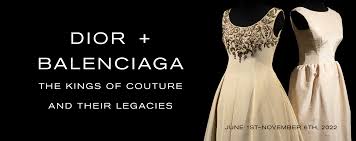
I recently visited the museum for the “Dior + Balenciaga: The Kings of Couture and their Legacies” exhibition and it was an interesting approach to fashion after WWII. Both designers brought back a very feminine and wearable look to women that accented their bodies. What I thought was interesting is that the undergarment was stitched right into the garment and was a way to fit the garment to the woman.
“Dior + Balenciaga: The kings of Couture and their Legacies”
The exhibit showed a comparison of both designers and how they approached items such as dresses, coats and evening wear. Each had a way to form fit a woman. What I thought was interesting is that Dior just designed his garments and never worked on the construction whereas Balenciaga do all the draping of garments himself.
The exhibition continued with the new designers that took up the mantles of the houses when the founders died. It was a different take on the founders ideas but with a more modern twist. I think the classics still were the best and looked more professional on a woman.
Video on “Dior + Balenciaga” exhibition
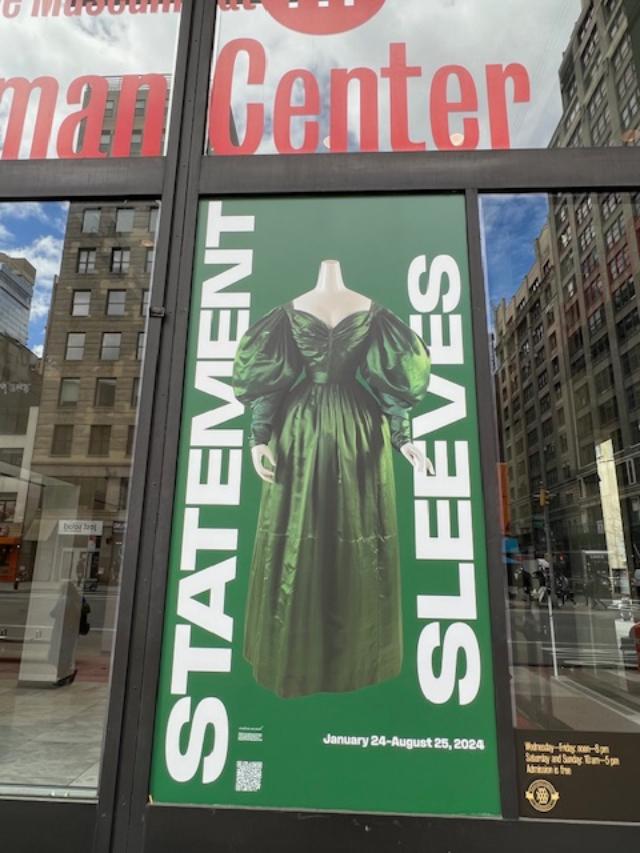
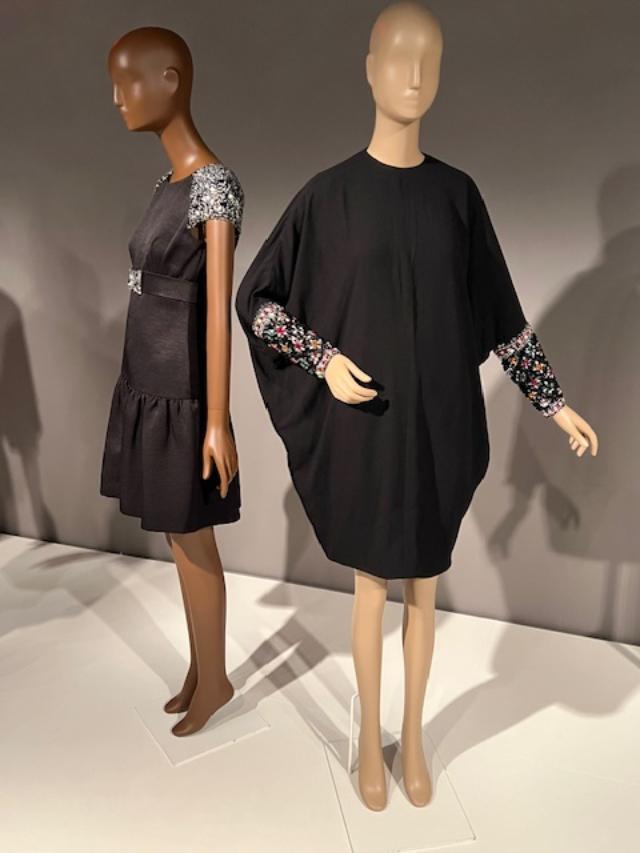
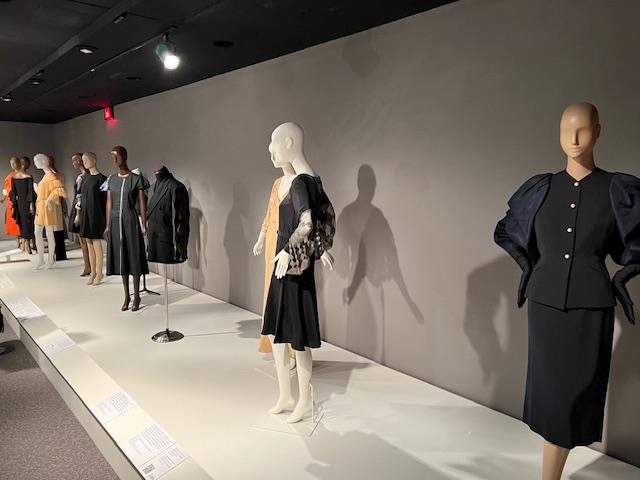
The recent exhibition “Statement Sleeves” is a retrospect on the evolution on the pattern of sleeves in a woman’s dress. These statements of fashion on the sleeve is “a sleeve, style that is exaggerated, embellished, elaborately constructed or otherwise eye-catching to the extent that it defines a garment.” (show description).
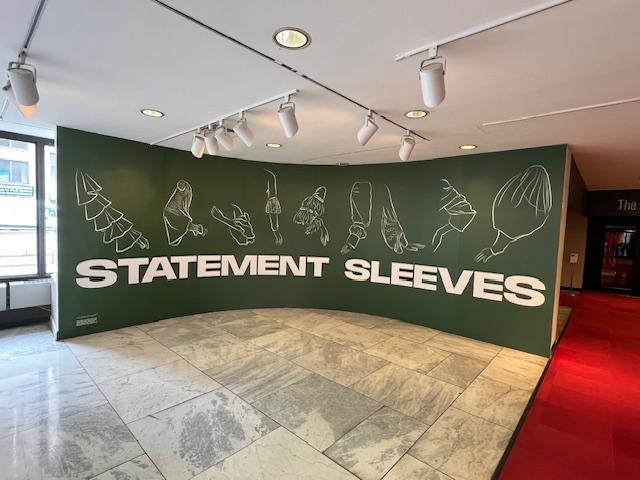
“Statement Sleeves” sign
The start of the exhibition.
The front of the gallery.
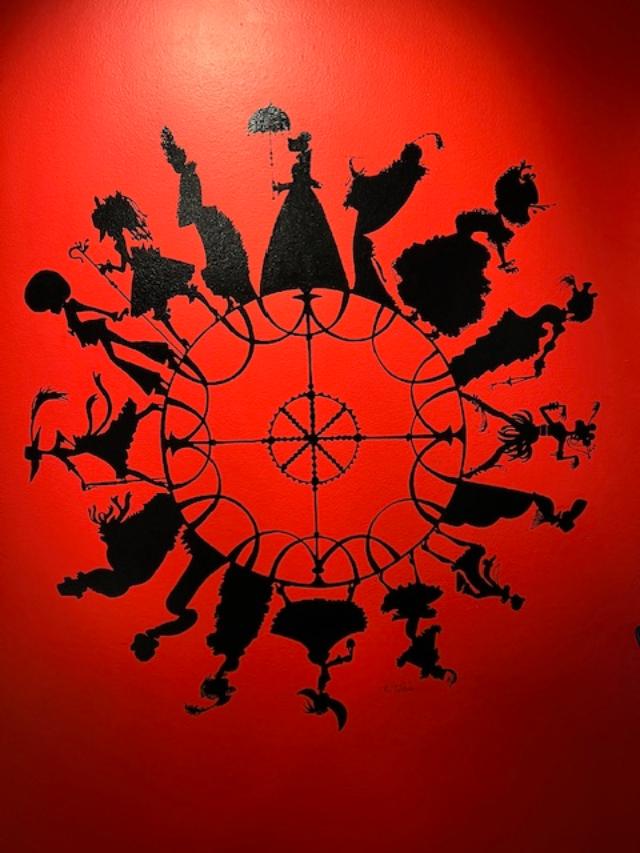
The diagram on the evolution of sleeves.
The changes in Sleeves design.
The changes in Sleeves design.
The different ways at looking at formal design.
The unique designs from the 1980’s and 1960’s.
The changes of Sleeve designs over the years.
The “Power Suit” of the 1980’s.
The colorful trends in women’s wear over the years with the changes in design of the sleeves.
The exhibition of “Statement Sleeves” runs through August of 2024.
Information and History of the Museum at FIT:
(From the Museum’s website):
For further information about the Fashion Institute of Technology, please visit fitnyc.edu.
Couture Council:
An elite membership group, the Couture Council helps to support the exhibitions and programs of The Museum at FIT. Members receive invitation to exclusive events and private viewings. Annual membership is $1,000 for an individual or couple and $350 for a young associate( under the age of 35).
For more information, write to couturecouncil@fitnyc.edu or call (212) 217-4532.
Tours and donations
Every six months, a changing selection of garments, accessories and textiles from the museum’s permanent collection is put on display in the Fashion and Textile History Gallery, on the museum’s ground floor. Tours of the Fashion and Textile History Gallery and of the Special Exhibition Gallery may be arranged for a sliding fee of approximately $350. Donations of museum quality fashions, accessories and textiles are welcome.
For more information about tours, call (212) 217-4550. For information about donations, call (212) 217-4570.
All MFIT exhibitions and public programs are supported bin part by the couture council of The Museum at FIT.
The shows are continuously changing so please check the website for more detail on the current show. Below is a sampling of one of the shows earlier last year when I visited the museum.




















 Visiting a Museum: The Unique, Unusual, Obscure and Historical