Tag: Exploring Manhattan Block by Block

Franklin Heritage Museum                                                                   95 Main Street                                                                               Franklin, NJ 07416

Franklin Heritage Museum 95 Main Street Franklin, NJ 07416

Franklin Heritage Museum

95 Main Street

Franklin, NJ 07416

(973) 827-3481

https://www.westmilfordmessenger.com/entertainment/new-exhibits-on-display-at-franklin-heritage-museum-YTWM20060518305189997

Open: Seasonal please check the website

Admission: Free but donations are appreciated

My review on TripAdvisor:

https://www.tripadvisor.com/ShowUserReviews-g46449-d34737427-r1081595818-Franklin_Heritage_Museum_Franklin_Historical_Society-Franklin_New_Jersey.html?m=19905

The Franklin Heritage Museum at 95 Main Street

During the Annual Sussex County Heritage Weekend, one of the first stops I made was to the Franklin Heritage Museum in Downtown Franklin, NJ. The museum was the house in one of the offices of the mining company. The museum was a glimpse into community’s mining past and how it shaped this area of the State of New Jersey.

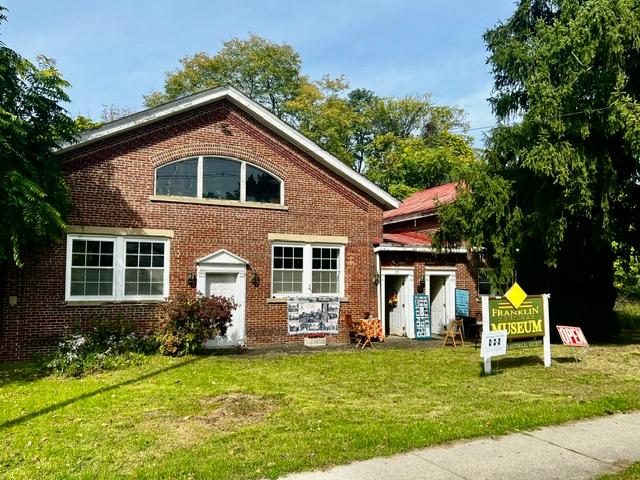
The museum sign out front

The museum building was the old New Jersey Zinc Company ‘Time Office’. This meant that the miners had to punch into their shift at the mine through this building. The old turnstile is to the right of the building.

History of the Franklin Historical Society:

(From the museum pamphlet)

The Franklin Historical Society was organized and incorporated in September 1996 as a non-profit all volunteer education association. It was founded to preserve the heritage of the Franklin Borough to create awareness of both the County and Borough of Franklin and its rich history of culture and ethnic heritage.

The Historical Society’s Museum is located at 95 Main Street in the historic Franklin Mill complex of the former New Jersey Zinc Company.

The Heritage Museum was opened to the public in April 1997 and its displays include:

Iron and Zinc Mining

Railroads

Franklin’s Churches and Schools

Franklin’s Local History

The sign for the old New Jersey Zinc Company ‘Time Office’ historical sign

https://en.wikipedia.org/wiki/Horsehead_Corporation

https://digital.sciencehistory.org/works/joj5gje

The history of the Franklin Mine and its place in New Jersey history

The smaller gallery off to the side of the building concentrates on the history of the NJ Mining industry and the many mining areas in Sussex County.

The room contains all sorts of artifacts related to the industry including both pictures and everyday equipment.

The pictures of all the miners at the company

The Mining Gallery

The Mining Gallery with equipment and artifacts for a day of working in the mines

Artifacts from home and work

This gallery was in transition with the volunteers working on the displays. This side of the museum with be on the local NJ Zinc Mine Company and its history.

The main gallery in the old Main Office space

The main gallery of the museum has a mixture of more mining artifacts and town objects that cover the history of the town.

The ‘250th Anniversary exhibition of the town and its mining past

For the ‘250th Celebration’ of our country, the museum created an interesting display of the formation of the community around the mining industry to its growth today.

The Mining and Equipment display

Community artifacts

Pictures of the police and fire department’s in this small mining community

https://www.franklintwpnj.org/departments/police-department

https://www.facebook.com/FranklinBoroughPolice

https://www.franklinfd.org

https://www.franklinborough.org/index.php/public-safety/fire-department

The main gallery display

Mining equipment in the display

The museum’s main emphasis is on the development of the mining industry both its early development up until when the mines closed in the 1980’s. The display above is on the early mining tools used by the workers.

The Mineral display

What I found interesting was all the minerals that are on display and the glow in the dark components that make these rocks special. When the lights go out, the true magic begins.

The old turnstile to enter the mining compound before the start of the shift

The back of the museum behind the fencing and the weeds, is the entrance to the old mines. Both the entrance building and entrance to the mine has been closed off for years but you can still see behind the fencing. This is the old turnstile off to the side of the building where the miners entered the complex.

Across the street from the museum is the old Hungarian Reformed Church, which is planned to be renovated.

The sign for the church

The old Hungarian church

Down the road from the downtown area where the museum is located is the Franklin Furnace Park, which is a beautiful picturesque park situated around a lake.

The historic sign for the Franklin Furnace Park

https://www.franklintwpnj.org/Home/Components/FacilityDirectory/FacilityDirectory/60/2554

All along the highway facing the park and in the park itself was the most beautiful and colorful foliage. Plan to visit the park after the museum for a colorful and relaxing break.

The foliage around the park in early October

The lake view of the park from the highway

The views from every angle of the park are breathtaking.

The view from inside the park and the footbridge to the island

The view of the park from south of the park

A view of the islands in the park

A view of the islands and the foliage

The islands and the foliage in the beginning part of October

The small center pine island

Traveling back down the road back to Route 23 South to continue my tour of museums

The view of the islands to the north in the lake

The view of the lakes from the south

The view of the foliage from the south

For a small town, Franklin offered such an interesting look at this part of New Jersey’s mining past and its transition from a mining industry to tourism based around the mines. The series of museums and cultural sites offers so much for visitors to see and experience.

A start at the Franklin Heritage Museum offers a glimpse into that past and as the museum keeps developing their exhibits will tell that story to visitors.
Empire State Railway Museum                                                          70 Lower 70 High Street                                                            Phoenicia, NY 12464

Empire State Railway Museum 70 Lower 70 High Street Phoenicia, NY 12464

Empire State Railway Museum

70 Lower 70 High Street

Phoenicia, NY 12464

(845) 688-7501

https://www.esrm.com/

https://en.wikipedia.org/wiki/Empire_State_Railway_Museum

Open: Sunday 10:00am-4:00pm/Monday-Friday Closed/Saturday 10:00am-4:00pm (the museum is seasonal and closes Columbus Day weekend until the next April)

Admission: Free but donations are accepted

My review on TripAdvisor:

https://www.tripadvisor.com/Attraction_Review-g48391-d587665-Reviews-Empire_State_Railway_Museum-Phoenicia_Catskill_Region_New_York.html

The front of the Empire State Railway Museum

The History of the Rail Station:

(From the museum pamphlet)

The Empire State Railway Museum is housed in the historic, restored Phoenicia Railway Station, which was built in 1899 and example of the stations built by the Ulster & Delaware Railroad.

From the 1800’s through the 1940’s, the steam locomotives of the Ulster & Delaware climbed the mountain grades bound for the grand hotels and boarding houses of the Catskills. The trains carried thousands of passengers over the years. This transportation system was instrumental in the region becoming famous. All the trains stopped at the Phoenicia Station. Beside the passenger trains, there were many freight trains carrying lumber, blue stone, dairy and agricultural products bound for New York City and beyond.

The History of the Museum:

(From the museum website)

Founded in 1960 and then moved to Phoenicia in 1983. The historic Phoenicia Station, built in 1899, allow visitors to view the three interior rooms of the building. Enjoy the unique architecture of the Waiting Room with its framed artwork, photographs and artifacts on display. Step into the Agent’s Office and view the diorama with the HO-scaled layout of the Ulster & Delaware Railroad as it was in the early 1900s, plus several other dioramas and antique telegraph equipment (The Empire State Railway Museum website).

The front of the museum station

The welcoming sign to the Museum in the Summer of 2026

The Mission of the Museum:

The Empire State Railway Museum’s mission is to preserve the history of the Catskill Mountain and surrounding railroads and their impact on our culture, society, economy and communities through education, interpretation, restoration and preservation of not only railroad records, photographs, equipment, cars and locomotives, but also that of the personal histories and recollections of those involved with and affected by the railroads (Empire State Railway Museum website).

The Rail Explorers Building

When I visited the museum for the first time, I started with a tour of the grounds where the tracks are still being used for recreation purposes by the bike business that runs on the tracks next to the museum.

The railway on the museum’s grounds

I then toured the caboose that has been restored and displayed outside where the trains used arrive from the City. The museum did a nice job with the restoration showing was life was like on the train lines back at the turn of the last century.

The caboose car at the museum

The caboose car was acquired recently is from the Leigh Valley, PA line and is from the 1940’s (Museum pamphlet).

The inside of the caboose

The view from the back of the caboose

The cooking area of the caboose

The views from the caboose of the railways

I then toured the barn where train cars were being restored. This was fascinating. The volunteers are restoring all these train pieces back to their original glory with a small staff of volunteers.

The barn where the train cars are being restored and renovated

The cars being renovated

The front of the locomotive

Fixing the locomotive equipment

The sides of the cars being restored

It was fascinating to see how these train cars were being cared for by a small army of people and for the many hours it takes to care for these train pieces.

The inside of the museum and the building once served as the train station bringing people from the City to the Hudson River Valley for recreation and tourism to the Grand Hotels. The original waiting room has a rustic opened ended look about it and still looks like it is ready to welcome people from the early 1900’s.

The inside of the old train station that serves as the gallery

I love how elaborate the main Waiting Room was with the dark woods and rustic appearance, which must have fascinated visitors to the hotels when they arrived.

The history of the train station

The hallway that leads to waiting rooms and the old offices

The artifacts from railways

The sides of the museum displayed all sorts of artifacts that would have been used on the lines for maintenance and construction. There is all sorts of lanterns and lights on the tables and shelves.

The train artifacts

Lanterns, spikes and oil cans used on the rail lines

The lanterns used on the rail lines by workers at the station

The signal lights used on the train lines

All around the museum, the history of the area is told in pictures from the turn of the last century. People arriving to the area, the construction of the rail lines, the development of the Grand Resorts and the functions of the trains. It was an interesting history of the affects of the railroads on rural areas.

The development on three rail industry in the area

The construction of the Ashoken Reservoir

The Grand Hotels that brought tourism to the area

The area once boast the Grand Hotels of the Catskills long before air travel. Once upon a time, this was only accessible to the wealthy by carriage but with the coming of the railroads, opened these resorts up to a larger clientele. The famous Mountain House Hotel and others are featured in this display.

A video discussions on the tools to repair the rails

Rail and tourism artifacts from the era

In the center of the museum, there was a display case of many artifacts used in the rail service. All sorts of tools of the trade, functions of the rails and memoribilia are displayed in these cases.

The museum artifacts in the displays cases

The display of the rail cars and movements

Servicing the railroad

The deeds and business of the railroad

The workings of the railroads

The old Brake Stand of the rail yard on display

Off to the side of the old Waiting Room was the Conductor’s old office, which was now another gallery of model trains. The displays showcased the old railroads and have all sorts of artifacts on the Conductor’s old office and life at the station.

The Conductor’s old office now the Model Train Room

The model of the old railways

The Conductor’s old desk

A picture of the old station

The pot belly stove that kept him warm in the colder months

At the end of the tour is a small gift shop and information area of other cultural sites to visit. There is all sorts of information about the area and other cultural sites in the area.

The Gift Shop

The information area

The museum is an interesting look at travel after the Civil War until after WWII when the area opened up to automobiles. Jet travel in the 1960’s changed the area again as families left these grand hotels and traveled to places like Florida and the Caribbean.

It is an interesting peek at the past and the volunteers really showcase all their restoration work.

Woodside Cemetery                                                                         West Madison and Prospect Avenue                                             Dumont, NJ 07628

Woodside Cemetery West Madison and Prospect Avenue Dumont, NJ 07628

Woodside Cemetery

West Madison and Prospect Avenue

Dumont, NJ 07628

(201) 551-9760

https://www.findagrave.com/cemetery/100305/woodside-cemetery

https://www.charitynavigator.org/ein/221402383

https://newjerseycivilwargravestones.org/cemetery.php?cemID=590

Open: Sunday-Saturday Dawn to Dusk

My review on TripAdvisor:

https://www.tripadvisor.com/Profile/R4960NKjustinw/mediabatch/14461975?m=19905

The Woodside Cemetery in Dumont, NJ

The historic Woodside Cemetery in Dumont, NJ. It is the home of many ‘founding families’ of Bergen County, NJ., such as the Demarest’s, Hopper’s, Van Buskirk’s, Haring’s (Hering’s), Van Saun’s, DeBaun’s, Westervelt’s and Zabriskie’s. These are the families that dominated the farming industry in Bergen County before and after the Revolutionary War. It is one of the many historical cemeteries and graveyards in Bergen County, NJ.

My mapping of historical cemeteries and graveyards in Bergen County, NJ:

https://visitingamuseum.com/tag/historic-cemeteries-of-bergen-county

https://mywalkinmanhattan.com/tag/historic-cemeteries-of-bergen-county-nj

My class’s Team Project on the Historical Revolutionary War Cemeteries and Graveyards of Bergen County, NJ:
https://visitingamuseum.com/2026/05/23/day-three-hundred-and-eighty-three-bergecco-parc-consulting-presents-bergen-250-exploring-bergen-countys-revolutionary-war-era-cemeteries-a/

The sign that welcomes you

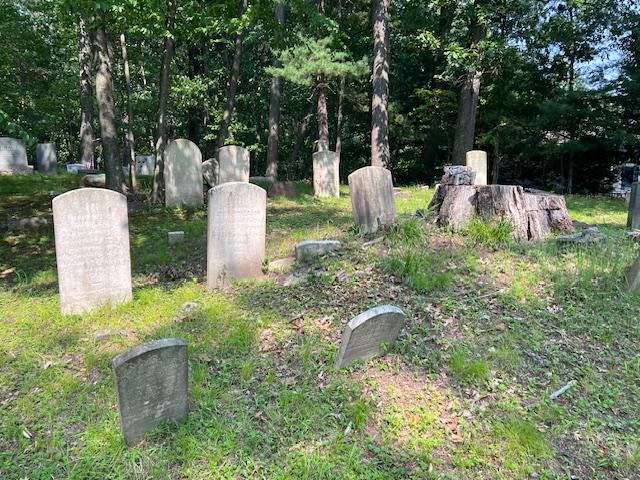
The inside of the cemetery in the historical section of the cemetery

The historical Woodside cemetery is the resting place of many of the founding families of Bergen County and the surrounding communities of New York State.

Lining the historical Main Street of Downtown Dumont, the older part of the cemetery holds the family plots of some of the original settlers who shaped this country from its beginning.

The Voorhis family plot

The Zabriskie family plot

The Brinkerhoff family plot

The Waite Van Bushkirk family plot

The Van Bushkirk family family plot

The large Demarest family plot

The Hasbrouck family plot (the family who Hasbrouck Heights is named for)

The Blauvelt family plot

The DeBaum-Westervelt family plot

The Van Saun-Demarest family plot

The Demarest-Haring-Van Vliet-Vorhees family plot

The Demarest-Van Bushkirk family plot

The Brinkerhoff-Doremus-Demarest family plot

The Van Bushkirk-Hopper family plot

The grave of James Blauvelt DeMott

The cemetery is the resting place of many War of 1812, Civil War, the World Wars, Korean and Vietnam and the modern wars.

The cemetery is a place of respect and quiet contemplation. To see the contributions of these members of the community is to reflect on the history of Bergen County. These families and many people buried here have helped shape Bergen County and the State of New Jersey to what it is today.

The Hill-Hold House Museum                                                             128 NY 416                                                                                       Campbell Hall, NY 10916

The Hill-Hold House Museum 128 NY 416 Campbell Hall, NY 10916

The Hill-Hold House Museum

128 NY 416

Campbell Hall, NY 10916

(845) 291-2404

https://www.orangecountyny.gov/1477/Hill-Hold-Museum

https://en.wikipedia.org/wiki/Bull-Jackson_House

Open: Sunday 12:00pm-4:00pm/Monday-Friday Closed/Saturday 12:00pm-4:00pm Seasonal Tours from May to August.

Admission: Adults $5.00/Children $3.00/Group Tours $4.00-Group Tours for over 20 people have to arranged in advance.

My review on TripAdvisor:

https://www.tripadvisor.com/ShowUserReviews-g47402-d27087686-r1070368379-Hill_Hold_Museum-Campbell_Hall_New_York.html?m=19905

I had never heard of the Hill-Hold Museum and I happened to come across it when I saw a sign on the local highway that the museum was open that day. I thought it was a very interesting home and grounds with historical homes and buildings. Some came from other parts of Orange County, NY.

There are group tours on the hour with the last tour at 3:00pm. I took the last tour by myself with the tour guide and got a one on one tour of the house and grounds. The tour takes you into a step back in time to an agricultural society that no longer exists and times were slower and more structured.

The Hill-Hold Museum

The estate in the background

The Hill-Hold Museum:

A Farm for Two Centuries. This stone farmhouse was built in 1769. This museum reflects the life of the Bull-Jackson family spanning over 200 years. Hill-Hold Museum has circa 1830 Furnishings,  a one room School House, a historic 1870 barn, Goosetown Gift Shop, picnic benches, and parking (Museum website).

The house on the estate grounds

The Mission Statement:

(From the museum website)

The Friends of Hill-Hold and Brick House Museums serve to preserve and enhance the preservation of history in Orange County, by maintaining, furnishing and operating programs at both these exemplary 18th century houses. These museums include portraits, memorabilia, photographs, and furnishings pertinent to them, the county and the past ages that touched each house (Museum website).

The front of the Hill-Hold Museum at the start of the tour

History of the Hill-Hold house museum:

(From the museum website)

Visit Hill-Hold museum and see what life was like on a Hudson Valley farm in the 1830s. This was still the era of candlelight, fireplace heat, homegrown food, and homespun clothing. The stone farmhouse was built in 1769 with wide plank floors, handsome paneling, and huge fireplaces (Museum website).

It was the home of a prosperous farmer, Thomas Bull, and his family. Original furnishings range from a prized old mahogany sideboard to made-on-the-farm pieces. Most of the rural family’s needs – food, clothing, fuel came directly from the farm. The property was gifted to the County in 1968 by Eleanor Jackson and the house went through an extensive restoration in the 1970’s to return it to how it appeared when it was originally built in the 18th century. (Museum website).

The Hill-Hold farm served the Bull-Jackson family for more than two hundred years. Now visitors are welcome to tour the farm. As we wander through Orange County, reveling in its rolling farmland scenery, we can go back to when the early Americans brought the gracious living and energetic husbandry to this unique part of the Hudson Valley (Museum website).

The Parlor-sitting room on the first floor was once a bedroom

We started the tour in the formal parlor, which the tour guide told me was once a bedroom along with the Living Room before the house was expanded. The house is filled with Bull family heirlooms that were donated back to the house by distance family members.

The family portrait’s in the Parlor-sitting room with the family piano that was used in the evening for entertainment

The portrait below is of the last member of the Bull family to live in the house before it was donated to the State of New York.

A portrait of the last family member to live in the house

The room was used by the family for entertainment, relaxation and for every evening activities. The room was used for pursuits such a sewing, needlepoint, conversation and with a piano in the room, evening activities with the family. With so much going on the farm, people retired in the evening early as the morning brought a lot of work on this working farm.

The spinning wheel by the fireplace

The Dining Room again was a former bedroom that was expanded for a formal eating as the both the house was expanded as well as the family. Breakfast and a late lunch/supper were served in this room. The Dining Room table, chairs, sideboards and china were pieces that part of the house donated back by the family.

The family dining room

The family China in the sideboard cub-bard in the Dining Room

The complete formal china set was displayed in the china closet as if ready to be used for a formal dinner party.

The sitting area in the Dining Room

The upstairs bedroom

We toured the master bedroom on the second floor of the home. Each of the rooms had fireplaces to keep them warm in the long winter nights with a canopy bed to keep the warmth inside. I could not believe how small people were at this time. This would have barely held one person today.

The canopy bed in the upstairs bedroom

The other bedroom would have been used by the children of the family. Now it contains sewing and weaving machines as well as spinning wheel to create the family clothing.

The second bedroom

The Sewing Room on the second floor with the oven/heater and family spinning wheels

Fabric and clothing was created in the home. Whether flax and wool, material was spun on the farm and the family wardrobe was created here.

The family spinning wheels

The sitting area on the second floor

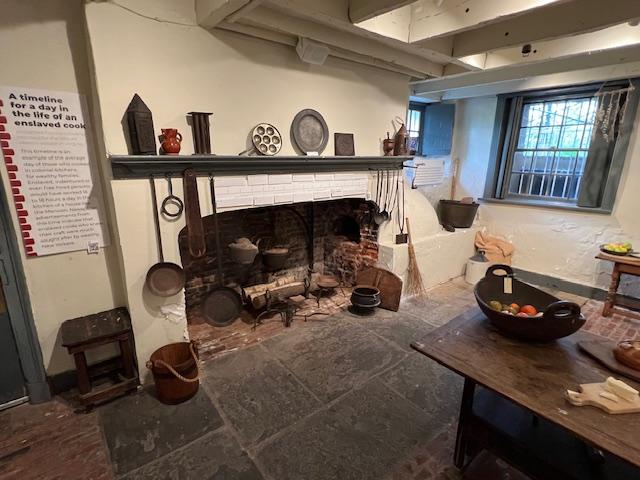
The last part of the house tour was of the family kitchen in the main house. The Summer kitchen was on the other side of the garden outside. The main kitchen inside the house had the fireplace, cooking materials, the family pewter and everything you would need to cook a complete meal.

The family kitchen

The family table set for cooking

Items for bread and dessert baking, butter making, roasting and stewing and all the items needed to cook three meals a day. The bounty of the Spring, Summer and Fall had to supply the long winters when there was no grocery shopping available.

The equipment for washing clothes and other household chores

Wash Day was a whole day reserved for sorting, boiling, scrubbing and hanging clothing to dry. Until the more modern machines were invented in the 1920’s after WWII, this was the weekly ritual for the farm housewife or the staff.

The open hearth and cooking equipment

The cooking equipment

The family pewter set

After we finished the house tour, we explored the outer buildings which included a Summer Kitchen, a smoke house, the vegetable and flower gardens. These buildings were spread around the main house.

The Summer Kitchen

The inside of the Summer kitchen

This Summer Kitchen came from a different property but the use is still the same. As the warmer months of the Summer were upon them, cooking was done in a separate building to keep the house cooler.

Some of the cooking and baking equipment

The flower beds on the side of the house

The flower and vegetable beds on the side of the property and the smoke house

Outside the main house were the vegetable, fruit and flower gardens. Items used in the household for meals, decorations and entertaining.

The barn, the outhouse and the smoke house in the distance

The inside of the smoke house where meats once hung used for family meals

All the family meats were placed in here for cooking and smoking for the family meals. The process took much longer than it does today.

The well in the middle of the property

They also moved an old school house to the property and it was furnished as a complete turn of the last century school house. It was used until 1936.

The schoolhouse on the property

The inside of the school room

The classrooms of the 1700’s and 1800’s to today have not changed much. With the exception of modern heating and air conditioning, the class room set up has not changed much. There is still a board in the front of the room, chairs facing the teacher, who is in charge and books lining the walls.

The teachers desk and the furnace that kept the room warm in the cold months

Games and amusements that were used in recess

Wheels and bikes were part of the games children played at the turn of the last century

Before modern electronics took over starting in the 1970’s, bicycles, hoops and games such as tag and hopscotch were part of playground activities. Playing outside has not changed much throughout the centuries.

Looking over the grounds at the end of the tour

Before I left for the afternoon, I was able to tour the gift shop before the museum closed for the day.

The Goosetown gift shop at the museum entrance at the end of the tour

The Goosetown Gift Shop at Hill-Hold features books, gifts, toys, craft items, and souvenirs. The shop is operated by the Friends of Hill-Hold, Inc., a not-for-profit organization, which aids in the operation of Hill-Hold and Brick House museums (The Museum website).

It really is an interesting tour and a step back in time for a glimpse into the life of a Upper Middle Class farming family.