Tag: addthistoyourgrocerycart@Wordpress.com

Ukrainian Institute of America                                2 East 79th Street                                                New York, NY 10021

Ukrainian Institute of America 2 East 79th Street New York, NY 10021

Ukrainian Institute of America

2 East 79th Street

New York, NY  10021

(212) 288-8660

Open: Sunday 12:00pm-6:00pm/Monday Closed/ Tuesday-Saturday 12:00pm-6:00pm

Fee: Adults $8.00/ Seniors $6.00/ Students with current ID $4.00/Children under 12 Free/ Members Free

My review on TripAdvisor:

https://www.tripadvisor.com/Attraction_Review-g60763-d5953575-Reviews-Ukrainian_Institute_of_America-New_York_City_New_York.html?m=19905

The Ukrainian Institute of America at 2 East 79th Street

I was really impressed by the Ukrainian Institute of America on a recent visit. I must have passed this building a hundred times on my way to the Metropolitan Museum of Art and never thought twice of it. I was sorry  I did as you will miss a lot by not walking in. The galleries are really impressive and the main gallery on the bottom gives you an interesting look at the history of the Ukrainian.

The first floor gallery discusses the formation of the country, a bit about its history and its ties to Europe and to Russia, its religious past and the current state of affairs of the country including its recent split of the eastern sections of the country and Crimea to Russia. Its a country in turmoil considering they want to join the European Union. It is a country in flux and on the cusp of entering the 21st Century with some of its past still tugging at it. Like all countries, it will prevail on the will of it’s people. There is a lot of solid history here and a country ready to enter its future.

Ukrainian Institute II

The artwork of artist Vasyl Diadyniuk

The second and third floor galleries are full of art work from Ukrainian artists that is on sale and each of the galleries is dedicated to certain artists selling their works at somewhat hefty prices. Still you get to see the developments of the artists both here and abroad.

The forth floor is dedicated to special exhibitions. There are two shows going on now. One is by artist Vasyl Diadyniuk and another show is by artist Alexander Archipenko.

Ukrainian Institute III

The artwork of artist Alexander Archipenko

The Museum has an interesting history.

Ukrainian Institute of America History:

The Ukrainian Institute of America Inc. is a non-profit organization whose primary mission is to showcase and support Ukrainian culture. To that end, the Institute affords the general public an opportunity to learn about Ukraine and how the Ukrainian spirit expresses itself, with special emphasis on the creative arts.

Founded more than fifty years ago by William Dzus, a prominent Ukrainian industrialist and philanthropist, the Institute sponsors:

*Art exhibitions

*Music concerts

*film screenings

*theater presentations

*Poetry readings

*Lectures and symposia

*Educational programs

*Children’s events

*Documentation center

The history of the building:

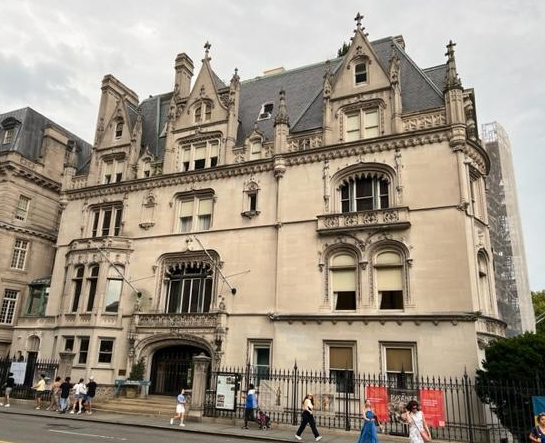
The building that is home to the Institute, the National Historic Landmark Harry F. Sinclair House is one of the few remaining examples of the splendid mansions that prominent citizens of New York City built in the 19th Century. The mansion was built in 1897 for Isaac D. Fletcher, a wealthy banker and broker, by the architect C.P.H. Gilbert. Executed in Gothic Revival style, the building is richly decorated with intricate crockets, carvings, moldings, pinnacles and other exquisite details. Six stories high, partly surrounded by a dry moat, the Institute features stately rooms that are magnificently proportioned and lavishly finished (Institute History).

Ukranian Institute of America

The C.P.H. Gilbert house

In 1887, manufacturer, Isaac D. Fletcher, commissioned famed Gilded Age architect, C.P.H. Gilbert to design the mansion. When Mr. Fletcher died,  left this mansion and his art collection to the Metropolitan Museum of Art, which sold it to Harry F. Sinclair, founder of Sinclair Oil Company and also famous for his involvement in the Teapot Dome affair. The last private owner was Augustus Van Horne Stuyvesant Jr., the last descendant of Peter Stuyvesant, who was the first governor of New Amsterdam, today’s New York City bought the house in 1930 and lived here with his sister, Anne. The house was sold as part of the estate when Mr. Stuyvesant died in 1953. The Ukrainian Institute of America acquired the mansion in 1955 (Institute History).

A key goal of the Institute is to continue to preserve this extraordinary fragment of the city’s history for the benefit of all citizens of New York. The house still retains its wooden moldings and the house looks as if its residents just moved out.

Museum of Arts & Design (MAD)                Jerome and Simona Chazen Building                                                                2 Columbus Circle New York, NY 10019

Museum of Arts & Design (MAD) Jerome and Simona Chazen Building 2 Columbus Circle New York, NY 10019

Museum of Arts & Design (MAD)

Jerome and Simona Chazen Building

2  Columbus Circle

New York City, NY  10019

(212) 299-7777

Open: Sunday 10:00am-6:00pm/Monday Closed/Tuesday-Saturday 10:00am-6:00pm

Fee: General $16.00/Seniors $14.00/Students $12.00/ Members Free

My review on TripAdvisor:

https://www.tripadvisor.com/Attraction_Review-g60763-d524927-Reviews-Museum_of_Arts_and_Design-New_York_City_New_York.html?m=19905


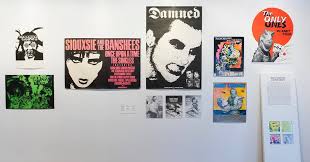
I recently visited the Museum of Arts & Design for the “Too Fast to Live, Too Young to Die: Punk Graphics 1976-1986” exhibition on the rise of Punk and New Wave music that came onto to the radar during the end of the Vietnam War to the Second Reagan  Administration. I remember how the music was changing from folk and funk to the beginnings of ‘Underground’ music and then the rise of the Disco era.

Museum of Arts & Design II

The posters of ‘Punk Graphics’

The exhibition displayed all the posters and flyers from the clubs like the Mudd Club, CBGB’s, Max’s Kansas City and Danceteria when they were in their heyday. Groups that were included in the exhibition were such known names as DEVO, The Talking Heads, Blondie, Richard Hell and The B52’s. This was at a time of collages and photocopying so the posters and flyers could be rudimentary but made their point. It got people into the door.

It was also a time that graffiti artists could show their work off and integrated themselves into the music scene. So it is a nice combination of music, video and pictures. Take time out to listen to the songs and really look at the pictures at the music leaders at the time. It really does capture a moment in history.

Museum of Arts & Design III.jpg

‘Punk Graphics’

I also got to see the Roger Brown exhibition of paintings and ceramic work which bought to light the artists paintings along with items that he found over the years to match with his work. It was different.

The latest exhibition running through the holidays and into the new year of 2020 is the Anna Sui, the American designer, exhibition with a retrospect of her work over the last twenty years.

Museum of Art & Design Anna Sui.jpg

Designer Anna Sui at the opening of the exhibition of her work

Musueum of Art & Design Anna Sui.jpg

Ms. Sui’s works can be labelled as Grunge, Surfer, Street Wise and Classic. The exhibition covers her clothing line, jewelry and accessories and extensive cosmetic line. When I was taking the walking tour of the exhibition, the docent said that she was involved in every aspects of her business as well as the runway shows. It was a unique display of her work over her career.

History of the Museum of Arts & Design:

The museum first opened its doors in 1956 as the Museum of Contemporary Crafts whose original mission of recognizing the craftsmanship of contemporary artists. Nurtured by the vision of philanthropist and craft patron, Aileen Osborn Webb, the museum mounted exhibitions that focused on the materials and techniques associated with craft disciplines. From the earliest years, the Museum celebrated the changing roles of craftsmanship in society, served as an important advocate for emerging artists and linked art to industry (Wiki).

From 1963 to 1987, under the directorship of Paul J. Smith, the Museum presented dynamic and often participatory exhibitions that reflected the social currents of the era and broke down hierarchies in the arts with the celebration of popular culture and mundane materials. In 1979, the Museum reopened as the American Craft Museum in an expanded location at 44 West 53rd Street. To accommodate its ever-growing programming, the Museum relocated again in 1986 to its 18,000 square foot home at 40 West 53rd Street, where it remained until 2008 (Wiki).

The next ten years were a period of rapid growth and change as the American Craft Council was restructured and the Museum and the Council were established as independent organizations. Holly Hotchner was appointed as director of the Museum in 1996 and served as director for 16 years until 2013. Hotchner initiated a comprehensive strategic planning process that expanded the Board of Trustees, curatorial staff and exhibition and educational program. This process led to the Museum’s name change in 2002 to the Museum of Arts & Design to reflect the institution’s  increasingly interdisciplinary collections and programming. The continued growth of MAD’s collections, public programs and attendance resulted in its successful 2002 bid to the New York Economic Development Corporation to acquire the building at 2 Columbus Circle (Wiki).

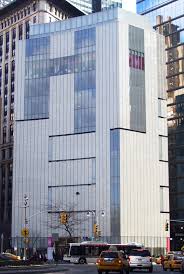
The Museum opened in its new home at 2 Columbus Circle to great controversy. The purposed changes to the building originally designed by Edward Durrell Stone sparked a preservation debate by many artists. The new building was designed by Brad Cloepfil of Allied Works Architecture in September 2008. With its facade of glazed terra-cotta tile and fritted glass, the Jerome and Simona Chazen Building reflects MAD’s craft heritage and permanent collection and animates Columbus Circle (Wiki).

Museum of Arts & Design

The new Brad Cloepfil Building


Grover Cleveland Birthplace                                 207 Bloomfield Avenue                              Caldwell, NJ 07006

Grover Cleveland Birthplace 207 Bloomfield Avenue Caldwell, NJ 07006

Grover Cleveland Birthplace

207 Bloomfield Avenue

Caldwell, NJ   07006

(973) 226-0001

https://www.nps.gov/nr/travel/presidents/grover_cleveland_birthplace.html

Open:  Sunday 1:00pm-4:00pm/Monday & Tuesday Closed/Wednesday-Saturday 10:00am-12:00pm-1:00pm-4:00pm. Closed on all major holidays.

Fee: Free New Jersey State Park System/Free Parking on premise

My review on TripAdvisor:

https://www.tripadvisor.com/Attraction_Review-g46338-d2661291-Reviews-The_Grover_Cleveland_Birthplace-Caldwell_New_Jersey.html?m=19905

I recently visited the birthplace of of our 22nd and 24th President of the United States of America and it is an interesting look into one man’s past. The Grover Cleveland Birthplace Museum was originally the pastor’s residence for the First Presbyterian Church in Caldwell, NJ.

Grover Cleveland

President Grover Cleveland

https://www.whitehouse.gov/about-the-white-house/presidents/grover-cleveland/

https://en.wikipedia.org/wiki/Grover_Cleveland

What I found interesting about this historical home is that the President’s sister, Susan, saved everything of the family’s past. Things like furniture, home furnishings, cooking utensils, paintings and photos of the family plus personal items of the President such as his clothes, pipes, shaving kits and traveling cases so there is a lot of interesting items to see and well thought up display cases.

The house is broken up into the kitchen area, the living chambers, the former living room area which has most of the displays and then the front hallway where more family displays are located.

Grover Cleveland Birthplace IV

President  Cleveland and Mrs. Cleveland’s personal clothes

Try to take a tour with the tour guide, Paula, who knows the house backwards and forwards and gives you an interesting take on the family. She will be able to point out all the family objects and personal items that have been donated by family members. Things from formal clothes to a piece of the President’s wedding cake.

Grover Cleveland Birthplace III

A piece of the President’s wedding cake

The whole tour takes about an hour and you will find yourself memorized  by the displays and the family history of the children and grandchildren. It is interesting to see how the family grew when they were living in Caldwell, NJ.

History of the Cleveland Birthplace Museum:

Grover Cleveland’s birthplace was built in 1832 as the Manse or pastor’s residence for the First Presbyterian Church of Caldwell. Cleveland’s father, the Reverend Richard Fally Cleveland was the minister here from 1834-1841.

Originally this frame home had a two-story main section with a one-story kitchen to the east and a one-story lean-to at the rear. It was enlarged several times between 1848-1870 to meet the growing needs of the Presbyterian clergy. The house is a good example of local vernacular architecture.

Grover Cleveland Birthplace

The Birthplace house

The historical significance of the Manse was first noted in 1881 when Cleveland was running for Governor of New York. As his political star  ascended, so did the interest in preserving his birthplace as a museum. A group of Cleveland’s friends and admirers began negotiations to purchase the Manse in 1907. Their efforts culminated in the opening of the house to the public on March 18, 1913.

Most of the first floor rooms portray the Manse as it was in 1837, the year Grover Cleveland was born. The decidedly middle-class character of the rooms reflect the day to day life of the Reverend Richard Cleveland and his family. Among the artifacts on display from Cleveland’s early years are his cradle and original family portraits.

Grover Cleveland Birthplace II

Grover Cleveland’s crib where he was born

Contrasting sharply with the humble beginnings portrayed in these rooms, the exhibit gallery features a striking display of artifacts that reflect the financial and political success Cleveland achieved during the last quarter of the 19th Century. Here, the mud-slinging campaign of 1884, the public’s intense interest in his wife and children and America’s political climate throughout his split terms of office are explored.

The Grover Cleveland Birthplace State Historic Site is the only house museum in the country dedicated to the interpretation of President Cleveland’s life. It is the nation’s leading repository of Cleveland artifacts and political memorabilia. The Grover Cleveland Birthplace is listed on the New Jersey and National Registers of Historic Places.

The President’s time in New Jersey:

Stephen Grover Cleveland was born on March 18, 1837 to the Reverend Richard Cleveland and his wife, Ann. Named for the first ordained pastor of the First Presbyterian Church at Caldwell, he would in time become known by his middle name, Grover.

Cleveland was raised in a strict, modest home. As the son of a minister and the fifth of nine children, he had a religious and principled upbringing with few luxuries. When Grover was four, Reverend Cleveland moved his family to Fayetteville, NY.

(The Grover Cleveland Birthplace Museum pamphlet)

The Cadmus House: Fair Lawn Museum                               14-01 Politt Drive                                                                     Fair Lawn, NJ 07410

The Cadmus House: Fair Lawn Museum 14-01 Politt Drive Fair Lawn, NJ 07410

The Cadmus House: The Fair Lawn Museum

14-01 Politt Drive

Fair Lawn, NJ  07410

(201) 796-7692

http://www.cadmushouse.org

https://www.facebook.com/profile.php?id=133299403367223

http://www.fairlawn.org/content/203/267/521.aspx

https://www.co.bergen.nj.us/discovering-history/cultural-historic-sites

Open: Check the Fair Lawn Town Website

Fee: Free to the public

My review on TripAdvisor:

https://www.tripadvisor.com/Attraction_Review-g46430-d17707566-Reviews-Cadmus_House-Fair_Lawn_New_Jersey.html?m=19905

I visited the Cadmus House today and it is a very interesting look back on the history of Dutch Bergen County and the town of Fair Lawn, NJ.

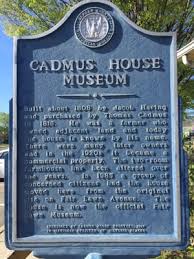
The Marker

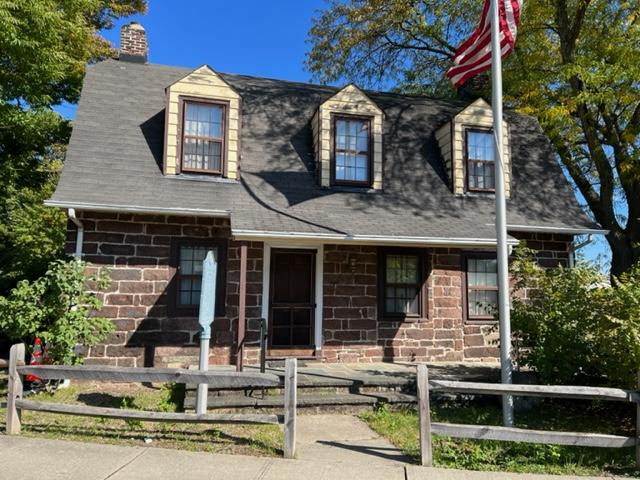
The Cadmus House Museum

Jacob Haring: Bergen County resident

https://www.wikitree.com/wiki/Haring-684

http://trees.wmgs.org/getperson.php?personID=I108461&tree=Schirado

The Cadmus House was built in 1808 by landowner Jacob Haring and his wife, Margarat. It was originally a two room farmhouse when it was built on their extensive farm land. The Harings’ sold the house to Abraham and Harmones Van Derbeek in 1815 and they turned around and sold the house to Thomas Cadmus and his  wife, Margaret in 1816 and the name stuck from there.

Cadmus House

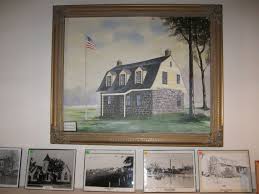
The Haring house originally and then it had a gable and second floor built in the late 19th century

More information on the Haring Family from the novel “A Dutch Family for the Middle Colonies” by author Firth Haring:

https://books.google.com/books/about/A_Dutch_Family_in_the_Middle_Colonies_16.html?id=hAZ5AAAAMAAJ

Over the years, the house had had many owners and many uses. Before the house was moved in 1985 to its current location, it served as a real estate office at that time. When they were building new construction on the spot, the house was saved by a group of concerned Fair Lawn residents to preserved the town’s past and it was turned into the Cadmus House-Fair Lawn Museum.

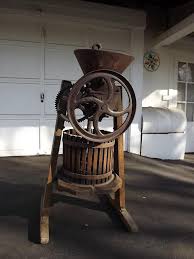
The house is broken down into different themed rooms. The downstairs rooms are devoted to the Fair Lawn’s past with pictures of old homes that used to line the streets of the neighborhood. There are pictures of old farms and farm houses, relics from town such as arrowheads, farming equipment and old farm house decor such as ice boxes and apple presses for cider.

Cadmus House II

Pictures of Fair Lawn’s past

In the room that once served as a dining room, there are period Dutch items that would be needed to run a household or a business.

Cadmus House Cider Press.jpg

The apple press which was a big part of the farming community in Bergen County

The upstairs rooms have different displays. One room is devoted to Victorian living with furniture and bedroom decors along with dolls and cribs. The other room is dedicated to the history of the Fair Lawn Fire and Police Departments as well as memorabilia from Fair Lawn High School such as trophies, yearbooks and old films of football games.

There is plenty of parking in the front of the house and the parking lot is shared with the railroad station next door. The house is only open the third Sunday of each month and it is closed for the months of July and August.

If you want to take a glimpse of Bergen County’s past Colonial, Victorian, Motor Age or current, the Cadmus House will give you a perspective on living in Bergen County in the past into current times.

The house now sits by the train station in Fairlawn, NJ