Tag: addthistoyourgrocerycart@Wordpress.com

Montgomery Place-Bard College                                                26 Gardener Way & River Road                                            Red Hook, NY 12571

Montgomery Place-Bard College 26 Gardener Way & River Road Red Hook, NY 12571

Montgomery Place-Bard College

26 Gardener Way & River Road

Red Hook, NY 12571

https://www.bard.edu/montgomeryplace/

Open: Sunday-Saturday From Dawn to Dusk/Mansion is closed

My review on TripAdvisor:
https://www.tripadvisor.com/Attraction_Review-g29820-d209648-Reviews-Montgomery_Place-Annandale_on_Hudson_New_York.html

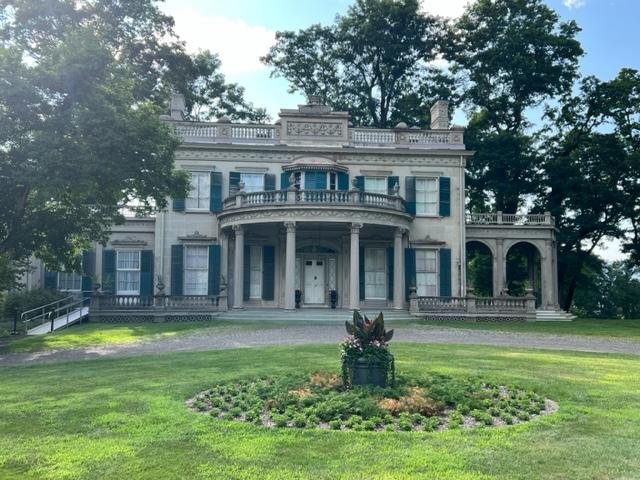
The front of Montgomery Place in the summer of 2023

On a recent trip to the Hudson River Valley for Fall events I took a tour of Bard Campus to visit their campus and tour Montgomery Place which the college bought from the Hudson River Historical Society in 2016. It is now part of the campus and you can tour the grounds but not the inside of the house.

The back of Montgomery Place

Montgomery Place on the Bard College Campus

Before 2016 when the house was owned by the Historic Hudson Valley Society, who used to have tours of the mansion. When the family sold the mansion and all its contents to the Society, they left the house untouched when they moved out you got to see how the Livingston family lived not just in current times but with all the historical furniture that came with the house.
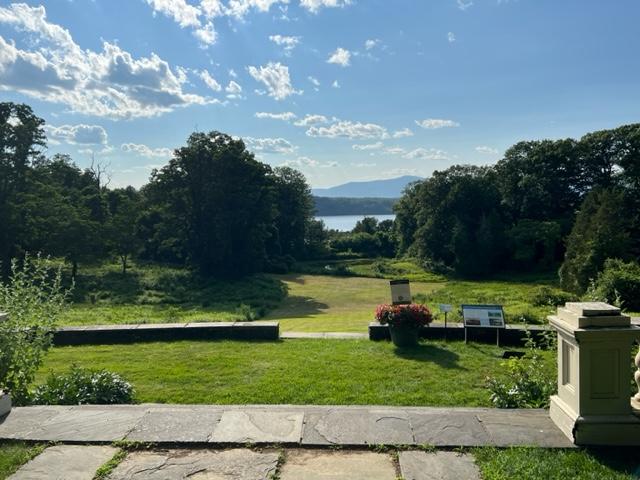
The view from the house to the Hudson River
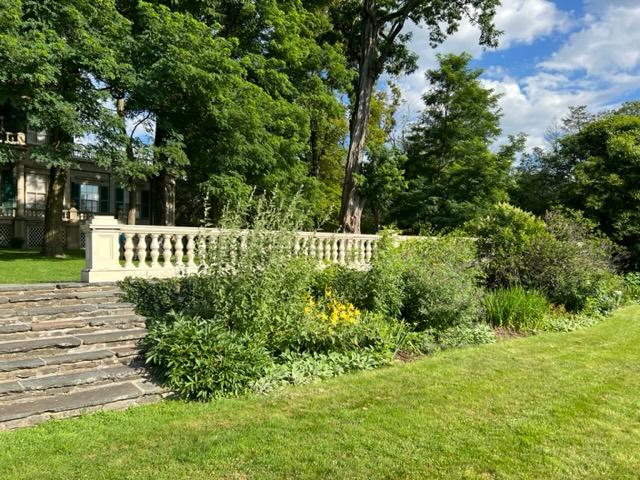
The gardens from the back of the house

The former tour used to take you through each room that had antique furniture and decorations but much of the house had been modernized over the years. Older furnishings had either been conserved or slipcovered because of age. Since the house has been sold to Bard College, you can only tour the house by appointment only through the college.

The mansion’s portico overlooking the Hudson River

The grounds are still impressive. During the Spring, the formal gardens next to the house are in full bloom and the last time I had taken a tour there, the gardens were being maintained by a local garden club.

The entrance to the Montgomery Place gardens

There were flower beds, herb gardens and cutting gardens on top of the flowing lawns from the house to the river. The gardens are broken into three different sections: the Eclipse Gardens, the Wilderness Gardens and the Walled Gardens. Each of them connects to the other and some have returned to their natural state over time and care of them.
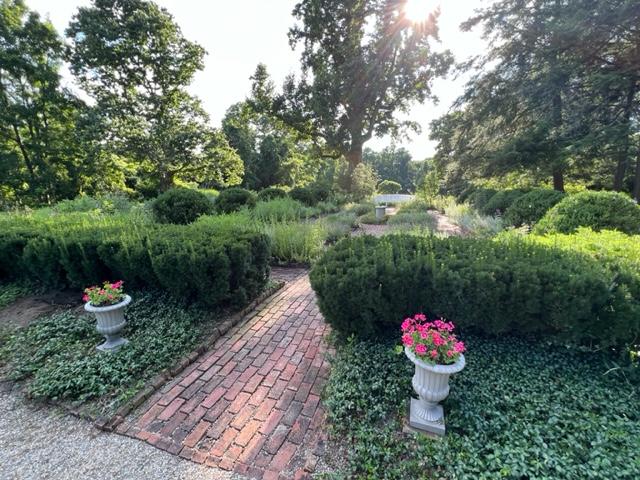
The Montgomery Place Gardens are changing from Summer to Fall
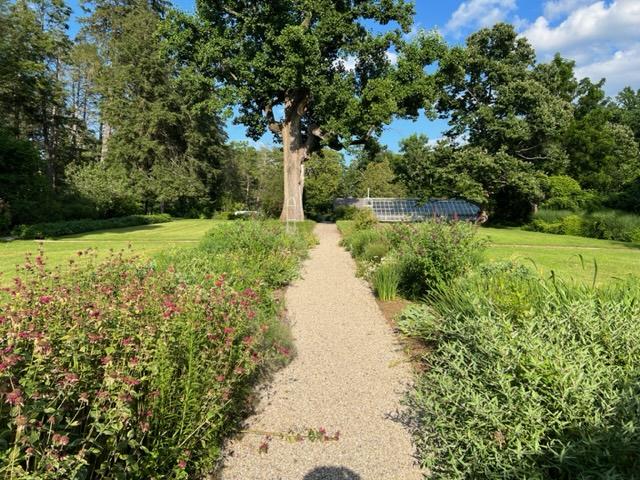
Pathways through the gardens

The gardens were developed over time from Louise Livingston’s day to her daughter, Clara Livingston Barton and her husband building on them the to Delafield family, who were the last owners of the house maintaining and adding to them.
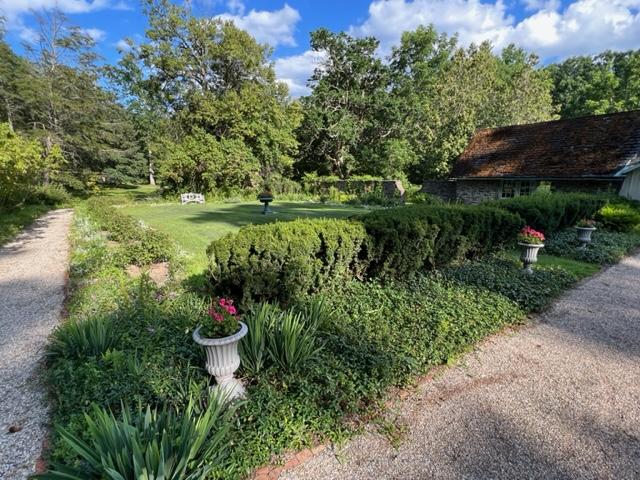
The formal gardens

The Garden Sign of the Ellipse and Rough Gardens
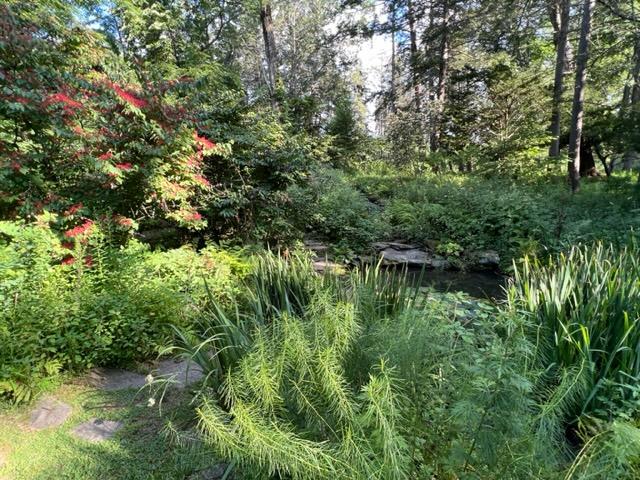
The Rough Garden
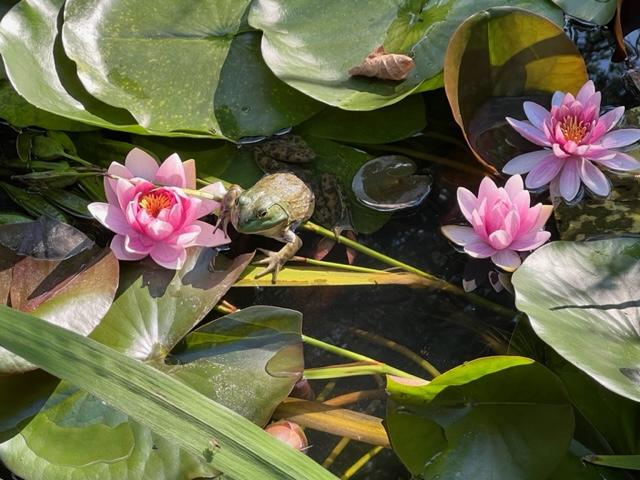
The Rough Garden was in full bloom with lotus and frogs all over the pond

The Ecllipse Garden has gone back to nature in comparison to the garden’s original plans

In the Fall on a recent visit, most of the gardens had been cut back with a few seasonal flowering bushes still showing color. The trees surrounding the house were turning a gold hue while the lawn that had been freshly cut was still emerald green. The house while a little worn from the outside still looked like it was ready to receive guests for the Fall season in the Hudson River Valley. The views from the back of the house are breathtaking from the window views of the Hudson River and the paths leading to it.
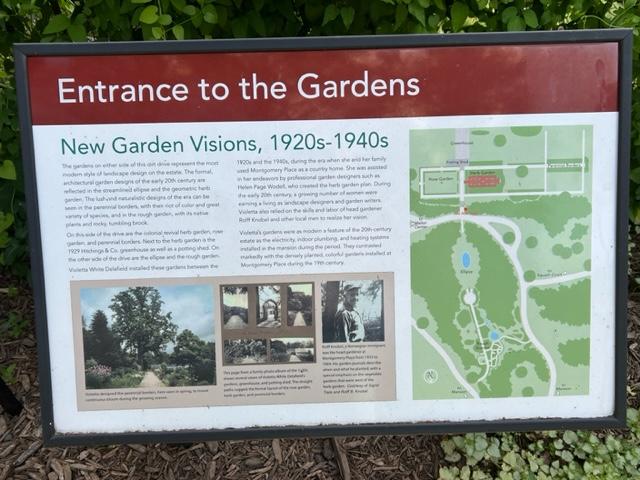
The Garden sign

In the Summer of 2023, the mansion grounds are open until dusk for people to walk around the estate and visit the gardens. The gardens were in bloom with summer flowers and plantings. The Rough Garden with it ponds were full of frogs who were making all sorts of noise. I had not seen a frog in the wild in many years and you just don’t see those and turtles anymore in the woods. The mansion is still not open except by appointment through the college.

The formal gardens in the summer of 2023

The grounds are well maintained but there is more detail in the maintenance of the gardens that are needed. They could use some weeding with all the crabgrass coming into the beds. Still the gardens are breathtaking on a warm sunny day and make quite an impression. They must have been something when the family maintained them with their gardeners.

the beauty of the formal gardens

There are all sorts of hiking trails to the Sawkill River and through the forests, a trail down to the Hudson River and tours of the property. The grounds are open from dawn to dusk and there is plenty of parking by the Visitor’s Center along with a history of the estate.

The History of the Estate:

(Taken from Wiki)

https://en.wikipedia.org/wiki/Montgomery_Place

The property had been home Native Americans for at least 5,000 years as a seasonal hunting ground. The Dutch settled in the area in the late 18th century using the Saw Kill River for various mills.

In the late 1770’s, Janet Livingston Montgomery purchased from Abraham Van Benthuysen 242 acres of land on the Hudson River after the death of her husband General Richard Montgomery at the Battle of Quebec. She moved into the home they built after the Revolutionary War. She later had plans made for a Federal style mansion on the riverfront property she bought and moved into her new home, Chateau de Montgomery, in 1805. She established a working farm with the help of friends who gave her tree samples (Wiki).
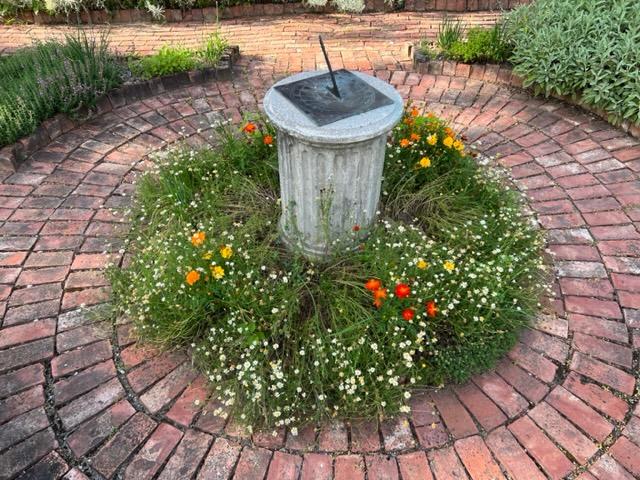
The Sun Dial in the Walled Garden during the summer of 2023.

Upon her death in 1828, the mansion was inherited by her brother, Edward Livingston. He had spent his summers vacationing here with his wife, Louise. They renamed the estate ‘Montgomery Place’. He died the next year and his wife, Louise hired Alexander Jackson Davis to convert the mansion into a more ornate villa. Two wings and exterior decoration were added at this time of the renovation. With the help of Andrew Jackson Downing, a friend of Louise’s and mentor to Davis, she developing the landscapes. Her daughter, Cora Barton worked with the architect on designing garden and conservatory (Wiki).

The front of the mansion
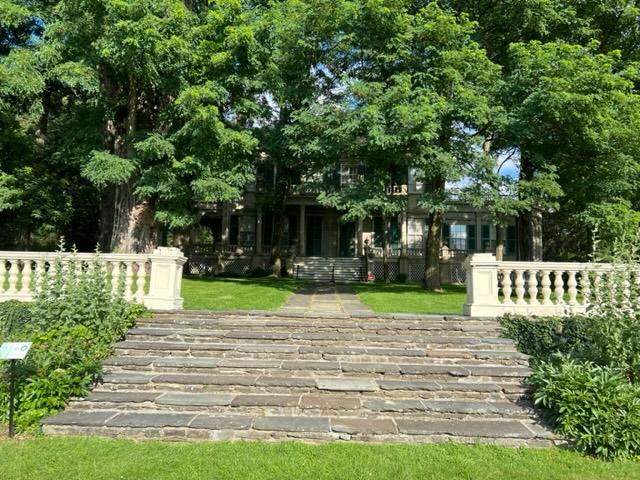
The back of the mansion from the grassy gardens facing the Hudson River

Upon Louise’s death in 1860, Cora and her husband hired Davis again to build some the earlier outbuildings including Coach House, Swiss Cottage and farmhouse and then extended the landscaping to turn the estate into more ‘pleasure grounds’ and have a separation from the farming operations.
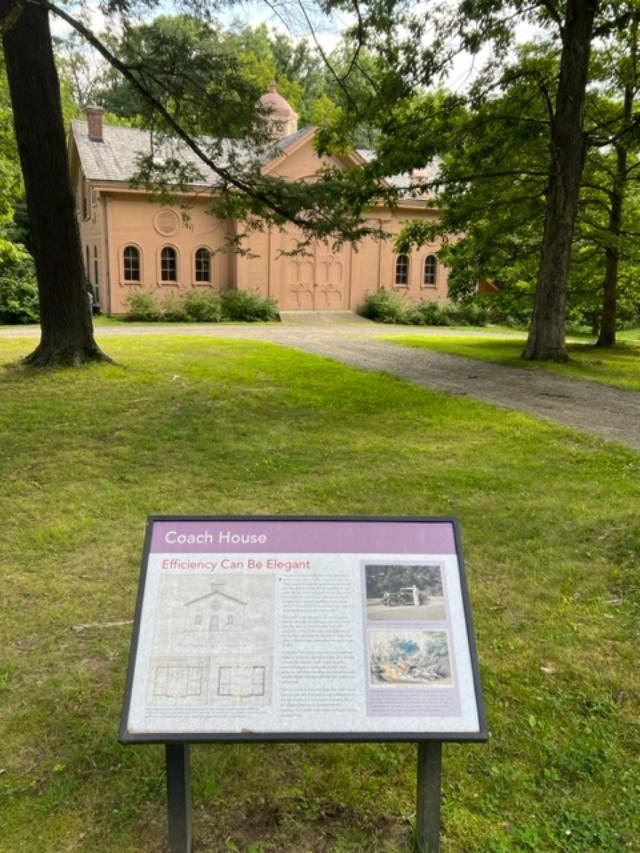
The Coach House for Carriages and then cars

The house then passed on to another relative in 1921, John Ross Delafield who added heating and modern plumbing to the house. He and his wife also extended the gardens on the estate as well (Wiki). The gardens had more ornate features to them.
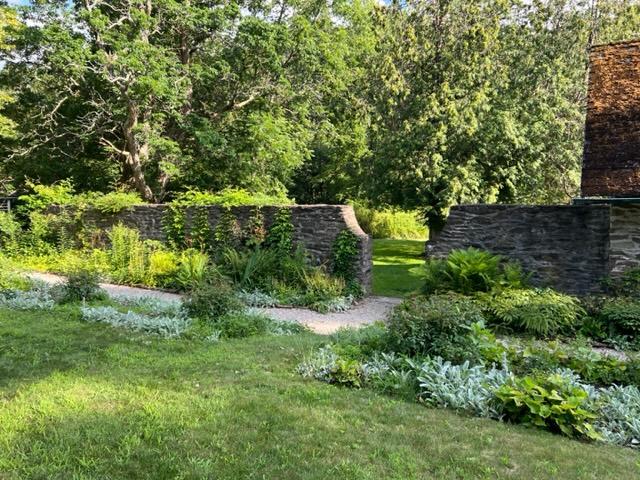
The “Walled Gardens” to the right of the mansion

Upon his death, his son John White Delafield inherited the house and they opened two corporations to own and operate the property.

The expansion of the gardens

In 1981, the estate was sold to the Historic Hudson Valley, the historical society. After an extensive renovation, the house was designated a National Historic Landmark in 1992 and it was bought by Bard College in 2016 who is its current owner (Wiki).
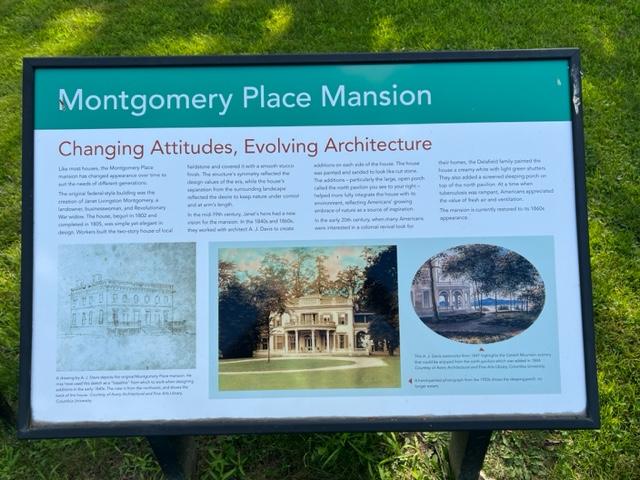
The Montgomery Place Mansion sign and the evolution of the home.
First Shearith Israel Graveyard/Chatham Square Cemetery                                            55-57 St. James Place                                                             New York, 10038

First Shearith Israel Graveyard/Chatham Square Cemetery 55-57 St. James Place New York, 10038

First Shearith Israel Graveyard/Chatham Square Cemetery

55-57 St. James Place

New York, NY 10038

(212) 873-0300

https://shearithisrael.org/content/chatham-square-cemetery

Open: 24 Hours

Fee: Free

My review on TripAdvisor:

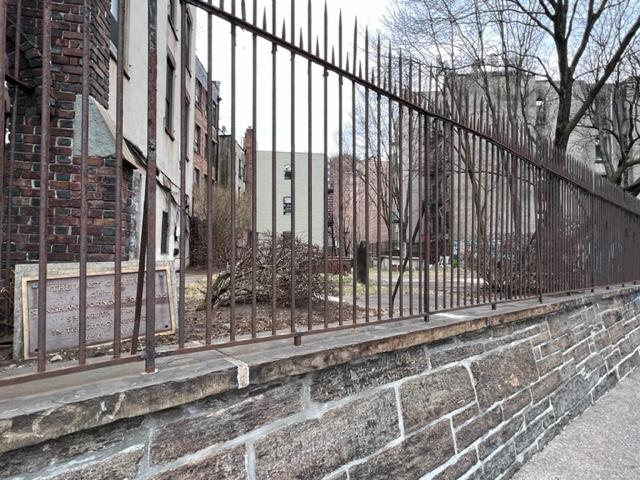
The entrance to the Cemetery

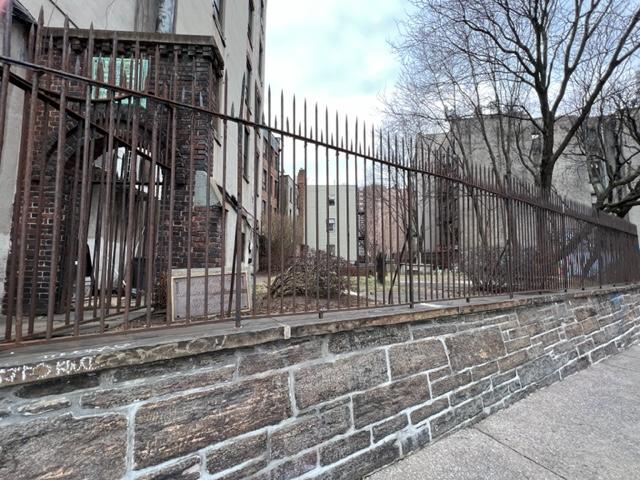
There are times that I walk around Manhattan and things just pop out at you. Tucked inside small pockets of the City are small community gardens, detailed statues, street art and sometimes a small cemetery. I had passed the First Shearith Israel Graveyard or also known as the Chatham Square Cemetery many times when visiting Chinatown since I was a kid. This tiny elevated pocket square of land is located next to a building and locked behind a gate just off St. James Place right at the end of Mott Street strip of Chinatown.

You really have to look for this at the side of 55-57 St. James Place

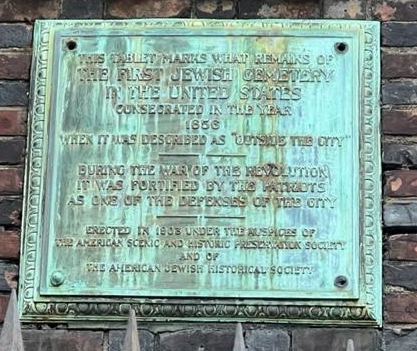
This is the oldest Jewish Cemetery in Manhattan that was in use from 1683 to 1833. The site of the cemetery was originally on a hill overlooking the East River in an open area at the northern periphery of the British-Dutch colonial settlement. The plot was purchased in 1682 by Joseph Bueno de Mesquita and the cemetery’s first interment was for his relative, Benjamin Bueno de Mesquita. The cemetery expanded in the 1700’s from Chatham Square to the upper part of Oliver Street to Madison Avenue (Wiki).

The original map of the Dutch Colony (New York Historical Society)

In 1823, a City ordinance prohibited burials south of Canal Street and the congregation opened a second burial spot at West 11th Street. A third cemetery was opened at 21st Street west of Sixth Avenue. The size of the cemetery has been reduced over the years because of development and most of the bodies were removed and moved to the other cemeteries. In 1851, the City again prohibited burials below 86th Street and the congregations again opened a fourth cemetery in Ridgewood, Queens. In 1855, with more development changing the area again and over two hundred graves were removed from the site. Only about hundred remain (Wiki).

The inside of the cemetery

Two of the most notable people buried here are Reverend Gershom Mendes Seixas (1745-1816), the first American born Jewish spiritual leader and Dr. Walter Jonas Judah, the second person of the Jewish faith to attend an American Medical School (now Columbia University) and the first native born one. (Wiki). There are also 18 Jewish Revolutionary War era veterans and patriots buried here.

History of the Jewish Settlement in Dutch New York:

In September of 1654, just after the Jewish New Year, twenty-three Jews, mostly of Spanish and Portuguese origin arrived in Manhattan. These people had been living in Recife, the former capital of the 17th Century Dutch Brazil. When the Portuguese defeated the Dutch for control of Recife and brought with them the Inquisition, the Jews of that area left. Some returned to Amsterdam, where they had originated and others moved around the Caribbean to other islands. These twenty-three arrived in New York due a series of unseen events (Big Apple Secrets).

Governor Peter Stuyvesant did not want to permit them to stay but these settlers fought for their rights and won permission to remain. In 1655, the Jewish settlers applied to the Dutch authorities for permission to purchase a parcel of land as an exclusive place to bury their dead. In February of 1656, appealed “that consent may be given” for the purchase. In 1644, the British took New Amsterdam and renamed it New York and the Jews were granted more civil rights. In 1706, they had organized their own congregation, Shearith Israel (Big Apple Secrets).

The cemetery for the most part is pad locked but you can view the outside from the street level. The cemetery is open on Memorial Day for services to the members of the armed services but for the most part you have to view the cemetery from the street level.

Chatham Square Cemetery

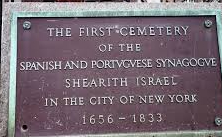
The plaque that you can see at eye level just inside the cemetery.

This unique plot of land is easy to miss so look for the plaque at eye level as you pass it.

The American Kennel Club Museum of the Dog              101 Park Avenue                                                 New York, NY 10178

The American Kennel Club Museum of the Dog 101 Park Avenue New York, NY 10178

The American Kennel Club Museum of the Dog

101 Park Avenue

New York, NY 10178

(212) 696-8360

Home

https://www.facebook.com/akcmuseumofthedog/

Open: Sunday 10:00am-5:00pm/Monday-Thursday Closed/Friday-Saturday 10:00am-5:00pm

Fee: Adults $15.00/Seniors (65+), Students (13-24) & Active Military/Veterans $10.00/Children under 12 $5.00/Members Free

My review on TripAdvisor:

https://www.tripadvisor.com/Attraction_Review-g60763-d15941897-Reviews-The_American_Kennel_Club_Museum_of_the_Dog-New_York_City_New_York.html?m=19905

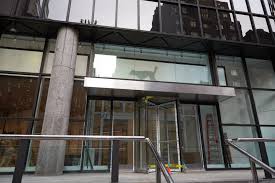
The American Kennel Club Museum of the Dog at 101 Park Avenue

When I was walking the neighborhood of Murray Hill for my blog, “MywalkinManhattan.com, I came across on one of the side streets tucked into a new office building on Park Avenue, The American Kennel Club Museum of the Dog at 101 Park Avenue. This unique little museum is two floors of art dedicated to the story of the dog.

The first floor features small fossils that show the early domestication of dogs during prehistoric times with humans. They may have used them for hunting and companionship. You could see this in the burials and in the wall paintings found all over the world that they partnered with early man and helped shape their world.

The American Kennel Club Museum of the Dog collection

Most of the paintings were from the Victorian Age (post Civil War to WWI) where the romanticized view of nature and of pet companions was emphasized. One both the first and second floor there were all sorts of paintings of various breeds of dog in all sorts of playful and working environments. There were dogs for hunting and sport, dogs as pets and dogs in playful position reacting with their masters and each other.

The Victorian approach to pets

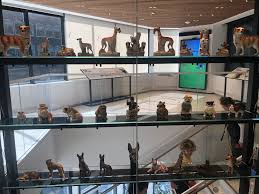
The was also porcelain figurines of dogs, statuary and trophies from various Canine Clubs all over the country. It shows the history of the dog as show with breeding and disposition counting of the way the animal was raised and trained.

The second floor had another series of paintings, a lot from the same time period and some contemporary artist’s take on modern dog owners and their relationship with their pets.

Canine Porcelains line the staircase

Also on the second floor was exhibition on ‘Presidential Dogs”, with the first families relationship with their dogs (and cats too) and the role that they played in White House politics. Truthfully outside of “Socks”, the Clinton’s cat, I never knew of any of the White House pets. I knew the both the Roosevelts and Kennedy’s had lots of pets in the White House, I never heard of their names or seen their pictures. So that was an eye opener.

White House pets tell their own story

Also in a special case was small fancy dog houses and dog holders for travel which was interesting to see how small dogs could travel with their masters and the expense to create a way for them to travel. These were very elaborate. I thought of some of the items I used to see at Bergdorf-Goodman when I worked there with the Ralph Lauren tote bags and fur lined sweaters and thinking this was a little much.

The museum also has a small gift shop on the first floor near the entrance that you should check out. There is all sorts of books and art work to look through and knick-knacks to buy with a dog them. The staff is also very nice and very welcoming.

The entrance to the museum and gift shop has a nice contemporary feel to it

History of the American Kennel Club Museum of the Dog:

The American Kennel Club Museum of the Dog preserves, interprets and celebrates the role of the dogs in society and educates the public about the human-canine bond through its collection of art and exhibits that inspire engagement with dogs.

The Museum logo

Founded in 1982, the AKC Museum of the Dog was originally located in the New York Life Building at 51 Madison Avenue as a part of the AKC headquarters. In 1987, the Museum of the Dog was moved to a new location in Queeny Park, West St. Louis County, Missouri. After over 30 great years at Queeny Park, the decision was made to bring the Museum back to its original home and reunite it with the AKC headquarters and collection.

Combining fine art with high-tech interpretive displays, the Museum of the Dog’s new home at 101 Park Avenue hopes to capture the hearts and minds of visitors. Located in the iconic Kalikow Building, the Museum will offer rotating exhibits featuring objects from its 1,700 piece collection and 4,000 volume library.

We hope to see you soon.

(From the AKC Museum of Dog website)

Fenimore Art Museum                                         5798 NY-80                                          Cooperstown, NY 13326

Fenimore Art Museum 5798 NY-80 Cooperstown, NY 13326

Fenimore Museum

5798 NY-80

Cooperstown, NY 13326

(607) 547-1400

Open: Sunday-Saturday 10:00am-5:00pm (check hours during the seasons)

Admission: Adults (13+) $17.50/Children (12 and under) Free

My review on TripAdvisor:

https://www.tripadvisor.com/Attraction_Review-g47529-d103482-Reviews-Fenimore_Art_Museum-Cooperstown_Otsego_New_York.html?m=19905

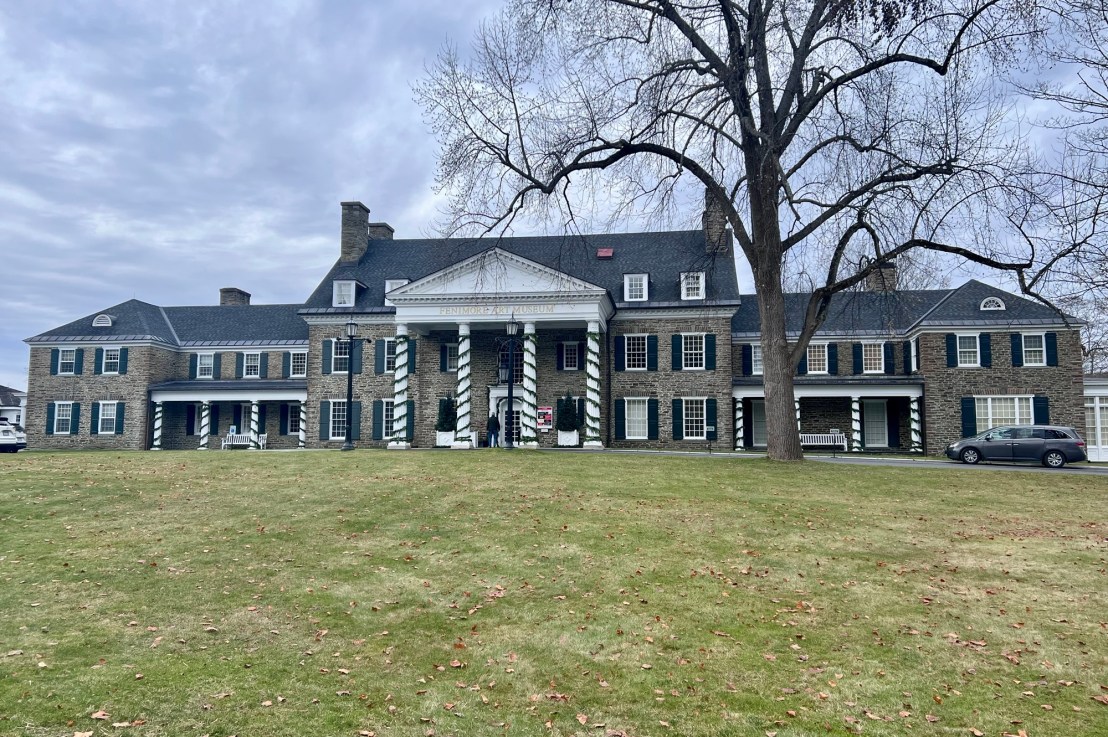
The Fenimore Museum at 5798 NY-80

The museum at the start of the holiday season

I was in Upstate New York visiting Cooperstown to see the Baseball Hall of Fame and when I finished, I travelled up the road to see the Fenimore Art Museum. What a unique museum packed with interesting art from all aspects of the medium.

The Portrait Collection

The Lady in White

The middle level of the museum specialized in early American works and paintings from the Hudson River School. Across the hall was the history of the Cooper family who once owned all the land in the area, developed it to the town known as Cooperstown as a planned community.

The collection of Folk Art Paintings

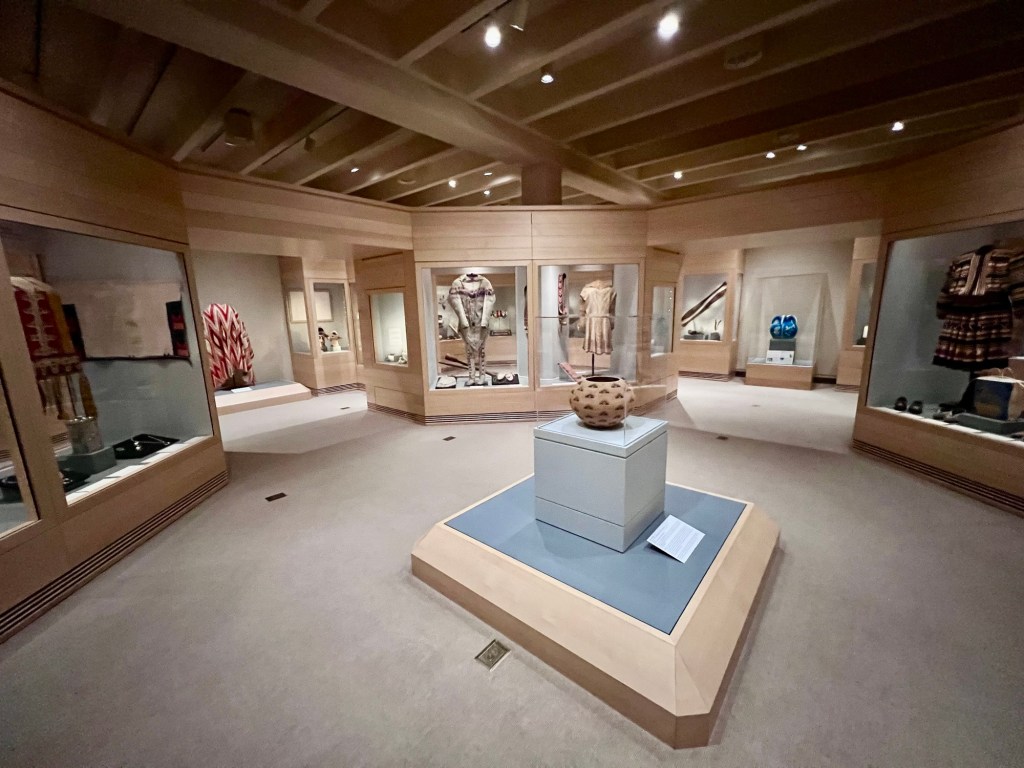
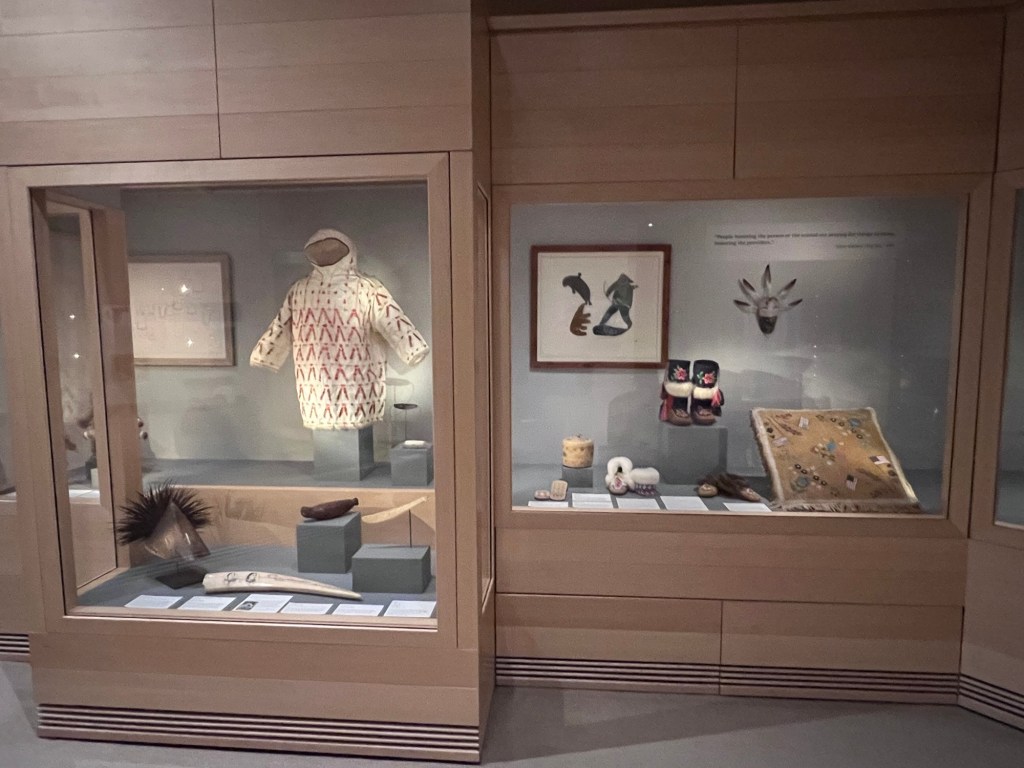
The lower level was dedicated to the Thaw Collection of American Indian Art which was pretty extensive.

The clothing from the Native American display from the Thaw Collection

The Thaw Collection gallery

I liked the collection of spiritual masks that could scare away any evil spirit. The collection of small dolls and icons makes you wonder how they if ever captured any spirits. Their collection of clothing was interesting too.

The Thaw Collection

The Thaw Native American Collection

The ‘Looking Back’ exhibition

The paintings in the exhibit

One of my favorite paintings from this exhibit (note-some of the buildings in this painting from 1860 still exist).

The upper floor in 2025 was the exhibition of the ‘’Calvin and Hobbes’ cartoon. I loved this comic strip when it was out and found myself laughing the whole time.

The opening of the Calvin and Hobbes exhibition in 2025

(From the Fenimore Art Museum website)

Exploring Calvin and Hobbes revisits the beloved comic strip created by Bill Watterson from 1985 to 1995. This exhibit explores his mastery of the comic strip art form through engaging characters, thoughtful writing, and creative layouts.

The exhibition features original Calvin and Hobbes daily and Sunday strips as well as specialty pieces by Watterson from his collection of more than 3,000 originals housed at the Billy Ireland Cartoon Library & Museum at The Ohio State University. Calvin and Hobbes appeared in 2,400 newspapers worldwide at the height of its popularity. Watterson won the National Cartoonists Society’s prestigious Reuben Award for “Outstanding Cartoonist of the Year” in both 1986 and 1988.

The History of the Fenimore Art Museum:

The Fenimore Art Museum originated as the New York State Historical Association, founded in 1899 by New Yorkers who were interested in promoting greater knowledge of the early of the state. They hoped to encourage original research, to educate general audiences by means of lectures and publications to mark places of historic interest with tablets or signs and to start a library and museum to hold manuscripts, paintings and objects associated with the history of the state.

The Fenimore Art Museum in the Fall of 2025

In 1939, Stephen Carlton Clark, offered the organization a new home in the village of Cooperstown, NY. Clark, an avid collector, took an active interest in expanding the holdings of the Association and in 1944 donated Fenimore House, one of his family’s properties, to be used as a new headquarters and museum. The impressive neo-Georgian structure was built in the 1930’s on the site of James Fenimore Cooper’s early 19th century farmhouse on the shore of Otsego Lake, Coopers Glimmerglass.

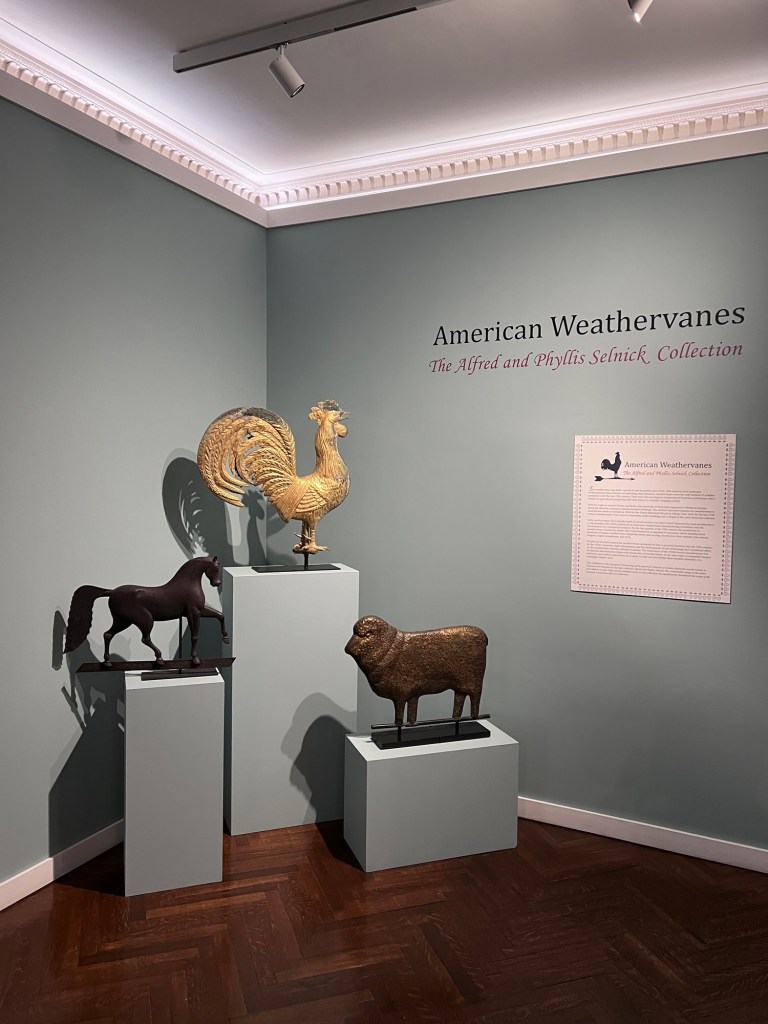
The Weathervane Collection

Fenimore House was large enough to have both extensive galleries as well as an office and library space. The collections and programs continued to expand and a separate library building was constructed in 1968.

The Cigar Store Indian

In 1995, a new 18,000 square foot wing was added to the Fenimore House to accommodate the Eugene and Clare Thaw Collection, which is one of the nation’s premier collections of American Indian Art. In 1999 in recognition of our world class collections, we renamed the Fenimore House to the Fenimore Art Museum.

The Collection includes The Thaw Collection of American Indian Art, Fine Art & Folk Art, Photography and the Research Library.

Early American Portrature

Mission:

Preserving-Engaging-Educating

Fenimore Art Museum is dedicated to welcoming and connecting people to our shared cultural heritage through exhibitions and programs that engage that engage, delight and inspire.

(This information comes from the Fenimore Art Museum’s website and I give them full credit for it)

The ‘Humming Bee’ portrait

This was one of my favorite paintings in the collection when I visited in 2025.

The Thaw Collection gallery