Bergen County Department of Parks, Division of Cultural and Historic Affairs
Court Plaza South
21 Main Street, Room 203 W
Hackensack, N.J. 07601-7000
Survey of the Early Stone Houses of Bergen County:
One of the most important early American building types is that of the pre-1840 stone house built in areas with Dutch Cultural affiliation. Bergen County is unique in the abundance, variety and architectural quality of these early stone houses, although adjacent areas of New Jersey and New York have some of the type.
Materials and methods remained constant but the house which were built from the time of Dutch colonization in the 17th century vary in size, plan and stylistic detail. Bergen County’s surviving early stone houses many located along major thoroughfares, provide county residents with tangible links to the formation years of the County, State and Nation.
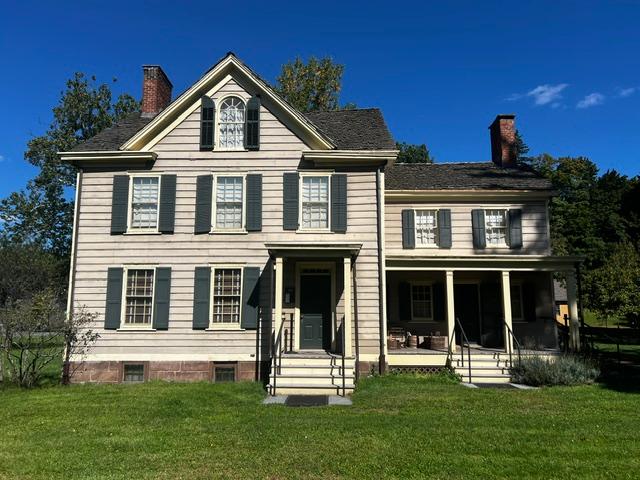
The Campbell-Christi House at New Bridge Landing/Bergen County Historical Society
The Survey of Early Stone Houses of Bergen County conducted in 1978-79 identified and recorded 230 of these early houses. Of these, 208 retained sufficient architectural integrity to be placed as a thematic group on the New Jersey Register of Historic Places in 1983, 1984 and 1985. A clear recognition of the houses importance is given by inclusion on these Registers, which are the State’s and Nation’s official lists of cultural resources worthy of preservation.
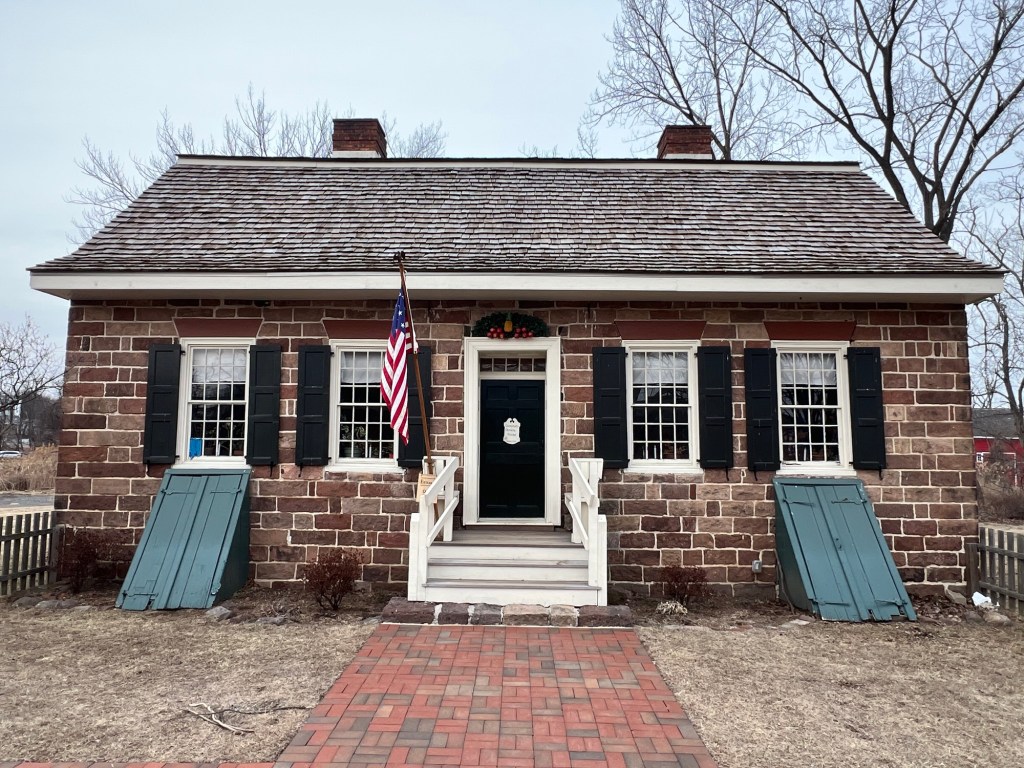
For inclusion in the Stone House Survey a building has to have at least two first story walls of pre-1840 stonework. The stone used in constructing the houses varies according to what as locally available. Many of the houses have reddish-brown sandstone walls but in the north-western section of the county rougher local fieldstone was utilized. Some houses have exterior walls of various types of stone and in some brick or frame exterior walls appear with stone ones. Frequently front facades display finer masonry work than do sides and rear. Usually the houses are 1 1/2 stories in height and have gable or gambrel roofs, sometimes with sweeping overhangs. Often there are side wings.
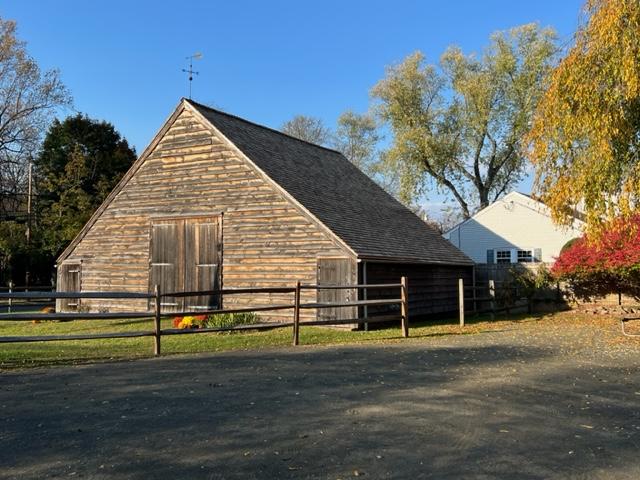
Wortendyke Barn in Oakland, NJ
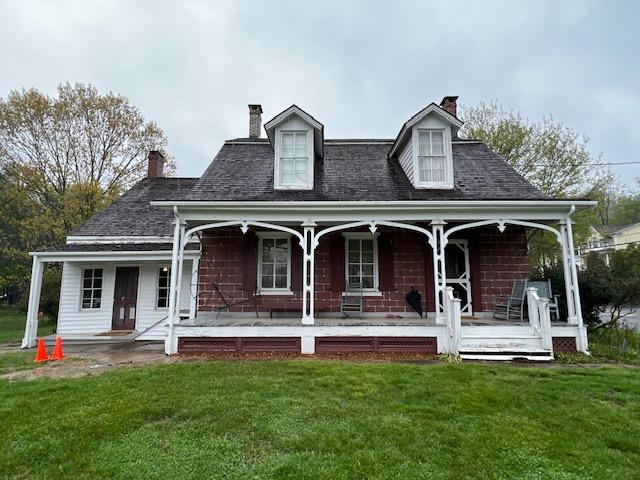
The Wortendyke Homestead across the street from the barn.
Examples of the house-type are commonly called “Dutch Colonial.” This name most frequently applied to gambrel-roofed houses is a misnomer. Most of the houses were erected in the early 19th century, long after New Jersey passed from Dutch control in 1664. They date to a time when Anglo-American culture was being assimilated into Bergen’s Dutch cultural base. The typical stone house of the Colonial Period in Bergen County is a simple gable-roofed building.
Because they have been continuous use since they were constructed, many early stone houses have been modified and embellished. Often these changes in themselves have architectural distinction and are important to Bergen’s 19th and 20th century architectural history. Even when altered, the basic form and fabric of the original stone dwellings are usually recognizable and the houses are part of the county’s earliest architectural heritage.
Cadmus House in Fairlawn, NJ
The Stone House survey was sponsored by the Bergen County Board of Chosen Freeholders, the Bergen County Historic Sites Advisory Board and the Division of Cultural and Historic Affairs. It was prepared by the Office of Albin H. Rothe, A.I.A. Claire K. Tholl did the field survey. The survey was made possible by a grant-in-aid from the Office of New Jersey Heritage, Division of Parks and Forestry, N.J. Department of Environmental Protection and matched by funds from the Bergen County Board of Chosen Freeholders.
The report for the Survey of the Early Stone Houses, with background text and inventory forms for houses, may be consulted at the Division of Cultural and Historic Affairs between 9:00am and 4:30pm weekdays.
Hopper House in Upper Saddle River, NJ
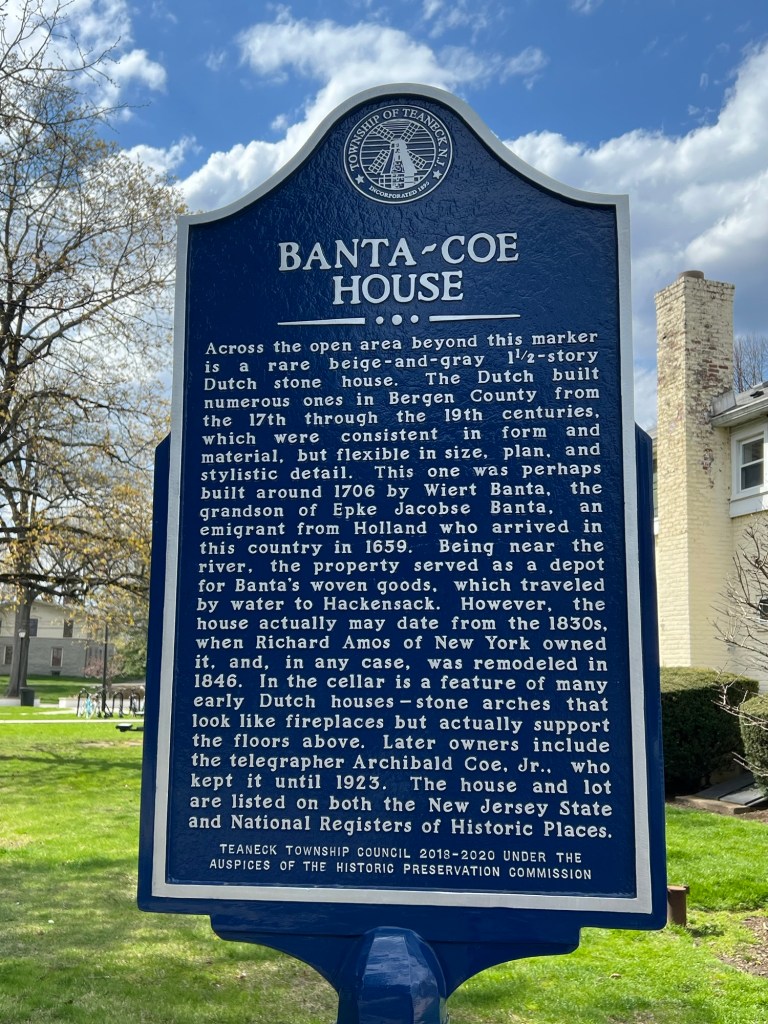
The Banta-Coe House on the Fairleigh Dickinson University campus
The Banta-Coe House prominently faces the Hackensack River
Disclaimer: This information was taken directly from the Bergen County Department of Parks, Division of Cultural and Historic Affairs pamphlet and I give them full credit for this information. Please contact the Department for more information on the subject.
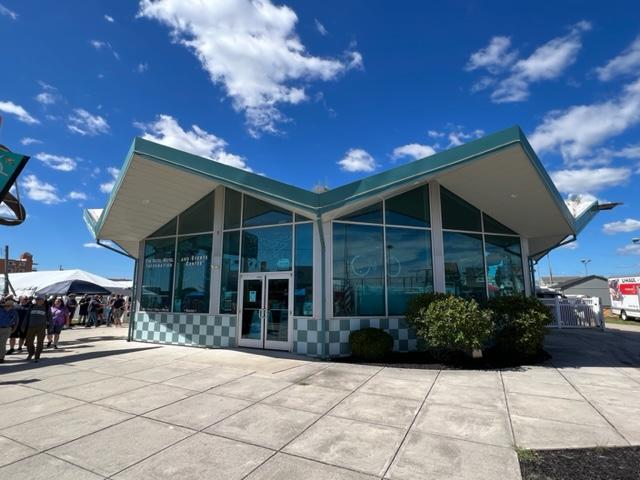
The Doo Wop Preservation League Museum at 4500 Ocean Avenue.
I visited the Doo Wop Preservation League Museum when I was visiting Wildwood, NJ for the Firemen’s Convention. They were sponsoring the DJ on the stage behind the museum. It was easy to miss the museum with all the fire equipment around it and hundreds of firemen milling around.
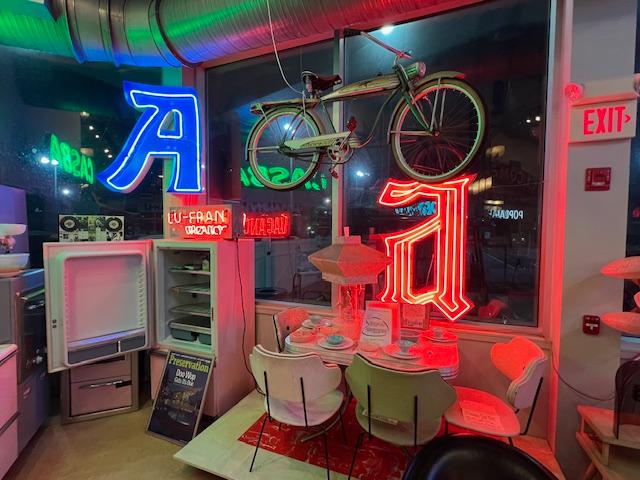
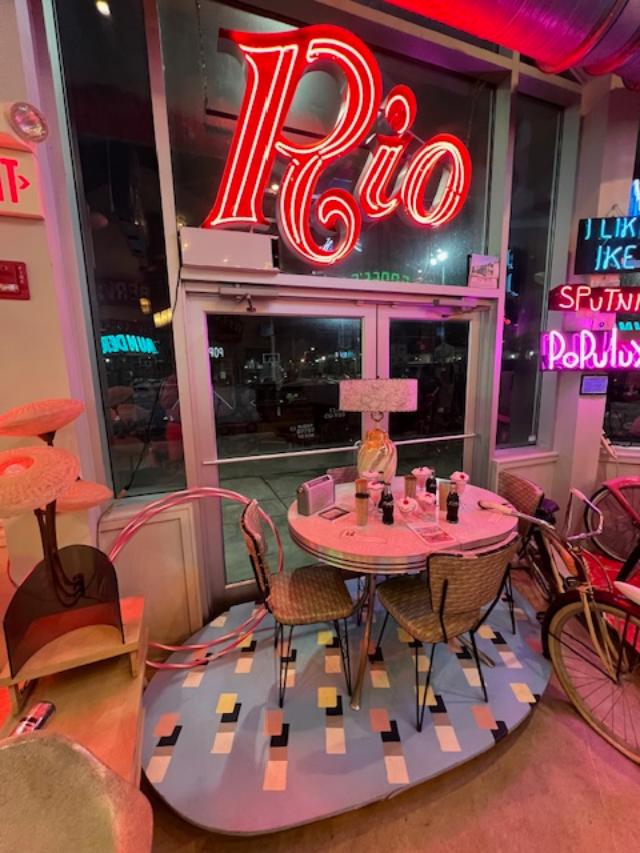
The neon signs in front of the Doo Wop Museum.
The old neon hotel signs outside the museum
Once inside, this small museum is a treasure trove of history of the resort motels that once lined the beaches of Wildwood, Wildwood Crest and North Wildwood. As time rolls on, many of these old motels, hotels and restaurants are giving way to condos, newer homes and new chain hotels changing the landscape of Wildwood.
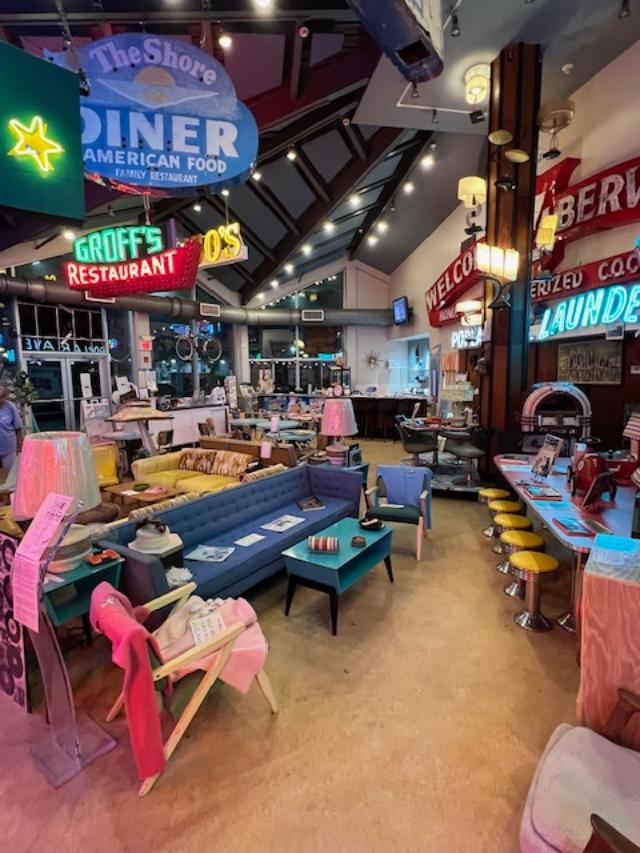
The inside of the gallery of the museum
It is bringing it into modern times with newer looks with shiny advertisements and lots of neon lights which was the trend at the time when these motels were created after WWII.
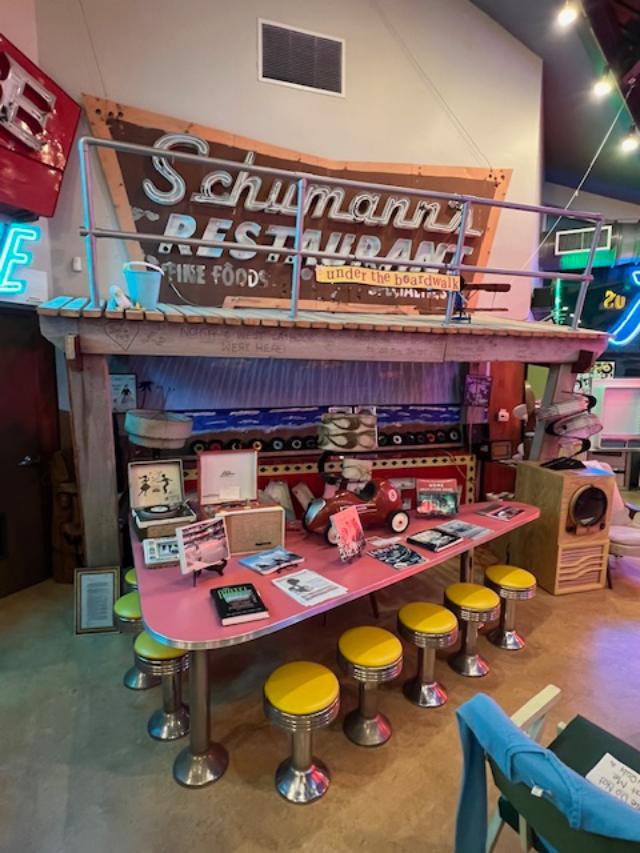
The restaurant section of the Doo Wop Museum
When many of these motels are torn down, the establishments donate old furnishes, decorative objects and signs from the outside to the museum. The outside of the museum is decorated with signs of businesses that are now closed, there neon lights still shining but for a different purpose. These somewhat gaudy and over-grandised signs and looks were of a time of great optimism and travel. Since the middle and working class families did not have the money to travel to these exotic places, something similar was created for them in the Wildwoods bringing that look to the Jersey shore.
The restaurant section of the Doo Wop Museum
The neon room of the 1950’s
When talking to the curators , a couple that ran the museum said that the museum represents the change in décor used after WWII when they used the neon lights and steel from the war into the signs and lighting of the new resorts. It was a unique style of the late 1950’s and 60’s, when these materials were plentiful and motel owners were getting creative to bring in the rising middle class tourists that could not afford the trips to Hawaii and Miami Beach. These owners brought these themes to Wildwood with a creative twist. Check out the signing and furniture that lines the walls and dining set ups of the museum.
The old neon signs of the hotels in Wildwood, NJ.
The museum is small and takes only about an hour to walk through. Each of the vignettes are designed as its own room with furnishings from old hotels and motels like tables, chairs, lamps and ashtrays in one corner, in another are stools, a jukebox and menus from a 50’s or 60’s style restaurant or items used at the time like bicycles or scooters.
The interesting preservation by the museum shows all over
The History of the Doo Wop Museum:
The Doo Wop Preservation League was founded in 1997 as a 501C3 to preserve the 1950’s and 60’s architectural styles of the Wildwood’s. Doo Wop style is a combination of Space Age dreams of the late 60’s and the exotic seaside tropics of recently opened South Seas Islands like Hawaii which became out 50th State in 1959. The Polynesian look was very ‘in’ at this time as most people could not afford to go but wanted to replicated for them.
The signs of the museum beacon visitors.
The museum is housed in the 1960’s ‘Space Age’ restaurant “The Surfside” that was saved from the wrecking ball and moved to this spot right across the Convention Center and the Boardwalk. On Tuesdays and Thursdays when in season (i.e. Warmer Months), there are bus tours offered by the museum. The museum’s goal is catalogue the remaining businesses in town that still keep their look of the era (Museum website and The Wildwooder Newspaper).
Don’t miss the museum tours:
The best part is that the museum is free (donation suggested) and you can take your time for a self-guided tour of the museum.
Open Wednesday-Sunday 12:00pm-5:00pm/Monday & Tuesday Closed
Admission: Non-Member Adults $12.00/Seniors (65+) and Students with ID $10.00/Members and Children under 12 Free
My review on TripAdvisor:
The front of the Montclair Art Museum at 3 South Mountain Avenue in the early Fall
I have made many trips to the Montclair Art Museum over the years and have always found it to be a very interesting and engaging museum. The curators mount fascinating exhibitions sometimes from the permanent collection and sometimes from traveling shows.
The statue in front of the entrance of the museum
The galleries are smaller and more compact so the exhibitions are not over-whelming like in the bigger museums. You can see each exhibition in about forty-five minutes to an hour and you will still see a lot. There are also smaller exhibition spaces which specialize in one artist and you might see about a dozen pieces.
There are two exhibitions going on currently in the museum. One is “Constructing Identity in American”, which is a permanent collection show of more than 80 paintings, sculptures and works on paper that will address a variety of characteristics that contribute to one’s sense of self, including civic, cultural, artistic, religious, professional and sociopolitical identities, sense of place and personal space and non-conformity. This exhibition goes far beyond portraits to explore other aspects of sense of self (Museum pamphlet).
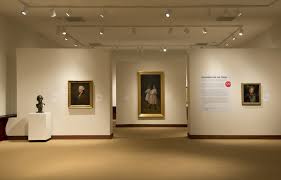
“Constructing Identity in America” exhibit
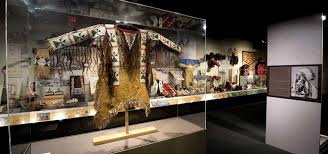
Native American Galleries
The other exhibition is called “Undaunted Spirit: Art of Native North America” which focuses on the Native American culture from Prehistoric times to the modern era. It , seems that by the end of the Civil War the Victorians were collecting art and objects of the Native Americans fearing that their cultural was disappearing. There is a lot of focus on pottery, both modern and pre-colonial, clothing construction, jewelry making with turquoise and silver and basket-making which was all the rage at the turn of last century. I like the modern aspects of the art as they are ushering a new era of artists of the southwest and giving them a voice. Take time to look at the detail work of the show.
“Undaunted Spirit: Art of Native North America” exhibit
Montclair Art Museum Mission Statement:
(This is from the Montclair Art Museum website)
Mission Statement: The Montclair Art Museum, together with its Vance Wall Art Education Center, engages our diverse community through distinctive exhibitions, educational programs and collection of American and Native American Art. Our mission is to inspire and engage people of all ages in their experience with art, including the rich inter-cultural and global connections throughout American history and the continuing relevance of art to contemporary life.
Vision, Values and Diversity Statement:
After 100 years of service, MAM is recognized as the leading American art museum and community art school in Northern New Jersey. As a organization, we value: artistic inspiration, diversity of voices, individual and group creativity and the importance of all arts to a civil, inclusive and forward-thinking society.
We respect and welcome individual differences and strive to maintain an environment that fosters productivity, creativity and individual satisfaction by celebrating the diversity of race, gender, nationality, age, religion, sexual orientation and physical abilities.
During our second century, we will invigorate our collections and curatorial presentations; expand our educational services audience; support artists, their work and connections; pursue productive institutional partnerships and embrace new media and technology. We will also secure MAM’s financial stability and preserve its facilities and other assets in a prudent and sustainable way.
A notable community institution with an international reputation, the Montclair Art Museum (MAM) is still located in the same-though now thrice expanded-building in which it opened in 1914. Situated amid a beautiful tree-lined residential area of Montclair New Jersey, just 12 miles west of New York City, the Museum is esteemed for its holdings of American and Native American Art, its exhibitions, its family and public programs and its art school. It welcomes more than 65,000 visitors annually.
The entrance of the Montclair Museum
The History of the Museum:
(from the museum website)
The Museum was a pioneer: one of the country’s first museums primarily engaged in collecting American Art (including the work of contemporary non academic artists) and among the first dedicated to the study and creation of a significant Native American art collection. This pioneering spirit still reverberates in the Museum’s pursuit and presentation of high-quality art that characterize and celebrates American’s diversity, including the recent launch of its Contemporary Art Program, in 2010, providing MAM an opportunity to showcase dynamic contemporary work and expand the Museum’s contemporary art holdings. A main showcase dynamic contemporary work and expand the Museum’s Contemporary holdings.
A main feature of the MAM program is to explore the interplay between historical and contemporary art to our understanding of the larger historical context in which art is created, presenting work that is being challenging and accessible. A key component of the Contemporary Art Program is it New Direction exhibition series of solo artists, established in 2011. Artists featured in the series include Marina Zurch, Saya Woolfalk, Spencer Finch and Sanford Biggers. Most recently in Spring 2015, MAM presented its largest and most ambitious exhibition of contemporary art to date, “Come as You Are: Art of the 1990’s”.
From its founding, the Montclair Art Museum has maintained a vital presence in its surrounding community. The Museum’s collection began with gifts from prominent Montclair residents that included both American and Native American art, laying the foundation for the Museum’s holdings. MAM’s Inness Gallery is one of the only galleries in the world dedicated to the work of America’s greatest landscape painter, who spent the last nine years of his life in Montclair, from 1885 onward and who drew inspiration from the local landscape. Other well-known artists followed in his footsteps, cementing Montclair’s reputation as an intellectual center and artist’s colony, a reputation its retains to this day.
Mam’s collection has grown to over 12,000 works. The American collection, which started with a gift of 36 paintings from William T. Evan’s, comprises paintings, prints, drawings, photographs and sculpture dating from the 18th century to the present and features excellent works by Benjamin West, Asher B. Durand, John Singer Sargent, Edward Hooper, Georgia O’Keeffe, Andy Warhol and Roy Lichtenstein as well as younger and emerging artists such as Louise Lawler, Chakaia Booker, Whitfield Lovell and Willie Cole.
The museum’s superb holdings of traditional and contemporary American Indian art and artifacts, New Jersey’s largest, represent the cultural achievements in weaving, pottery, wood carving, jewelry and textiles of indigenous Americans. The collection was begun by Annie Valentine Rand and carried on by her philanthropic daughter Florence Rand Lang, one of the Museum’s founders and continues to grow with philanthropic daughter Florence Rand Lang, one of the Museum’s founders and continues to grow with commissioned works, gifts and purchases that celebrate the vitality and modernity of traditional forms and beliefs. Among the contemporary American Indian artists represented are Tony Abeyta, Dan Namingha, Jaune Quick-to-see Smith, Allan Houser , Bently Spang and Marie Watt.
Equally important for its community presence and its reputation are the Museum’s public and family programs and art school, serving everyone from toddlers to senior citizens. Collaborations with numerous cultural and community partners bring artists, performers and scholars to the Museum on a regular basis. Guests have included Holland Cotter, John Elderfield, Bill T. Jones, Jeff Koons, Faith Ringgold, Winfred Rembert, Kiki Smith, Philip Pearlstein, Shirin Neshat and Lorna Simpson. More than 10,000 K-12 students from 190 school districts visit the Museum every year. Free Family Days, a Family Lab, MAM Park Bench, Home School Days and Birthday Art Parties allow families to experience art in variety of different ways. As the New Jersey affiliate of the Scholastic Art & Writing Awards, MAM opens opportunities to creative teenagers to gain national recognition for their work. The Museum also provides programs for seniors and special needs individuals-such as the hearing impaired and people with Alzheimer’s as well as training for teachers in the arts.
MAM’s art school, now the Yard School of Art, has been an integral part of the Museum’s life nearly from the beginning. It was founded in 1924 just 10 years after the Museum itself and has operated continuously since then offering courses year-round to kids, teens, adults and seniors. Courses cross a broad range of the artistic spectrum, including drawing, painting, collage, pastel, printing making and illustration. In 2011, the school launched two new areas: a Ceramics Studio and a Digital Media Lab.
In 2014, MAM celebrated its Centennial with a yearlong program of activities, which included a Birthday Party on January 15, exactly 100 years from the day of its founding that attracted thousands of visitors. In honor of the Centennial the Museum also commissioned internationally renowned artist Spencer Finch to create a site-specific installation that has transformed the Museum’s facade, making it a more inviting point of entry.
The first institution in New Jersey designed as a museum and one of the first in the nation to be accredited by the American Association of Museums, the Montclair Art Museum as it marks its Centennial, continues to seek novel ways, through its exhibitions, educational programs and outreach efforts to inspire and inform its growing and ever more diverse audiences.
(This information on the history of the Montclair Art Museum was taken from their website and I give the Museum full credit for the history of the Montclair Art Museum).
Open: Sunday 1:00pm-3:00pm/Monday & Tuesday Closed/Wednesday 1:00pm-3:00pm/Thursday-Saturday Closed. Closed on all major holidays. Please call in advance or check the website for times as they can vary by season.
Fee: Free New Jersey State Park System/Free Parking on premise
I recently visited the birthplace of of our 22nd and 24th President of the United States of America and it is an interesting look into one man’s past. The Grover Cleveland Birthplace Museum was originally the pastor’s residence for the First Presbyterian Church in Caldwell, NJ. The house sits next to the current church.
What I found interesting about this historical home is that the President’s sister, Susan, saved everything of the family’s past.
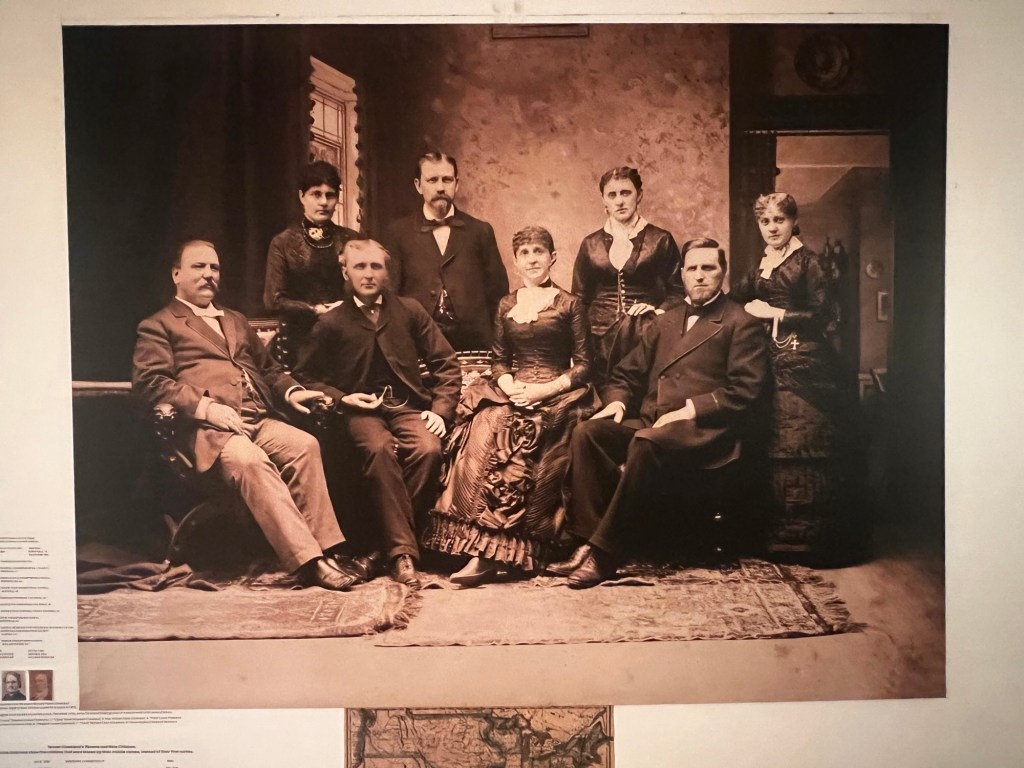
Grover Cleveland with his siblings who all survived into adulthood
Things like furniture, home furnishings, cooking utensils, paintings and photos of the family plus personal items of the President such as his clothes, pipes, shaving kits and traveling cases so there is a lot of interesting items to see and well thought up display cases.
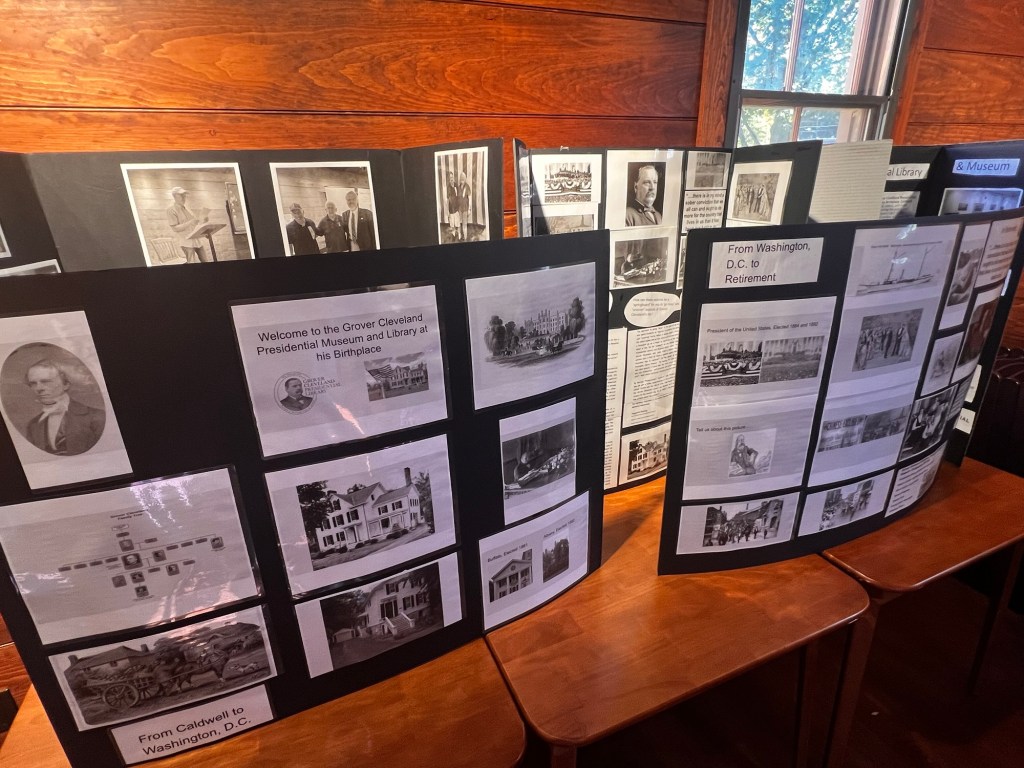
The display in the new Visitors Center
The house is broken up into the kitchen area, the living chambers, the former living room area which has most of the displays and then the front hallway where more family displays are located. In 2026, the house is currently going through a renovation and reorganization of the home so things are currently changing.
When I visited the house for a second time 2026, the main floor was being reorganized as most of the personal items had been moved to the new Visitors Center in the back of complex. The second floor was closed and new displays were being created for the President’s personal items both in the home and in the Visitors Center.
The homes kitchen for the Fall
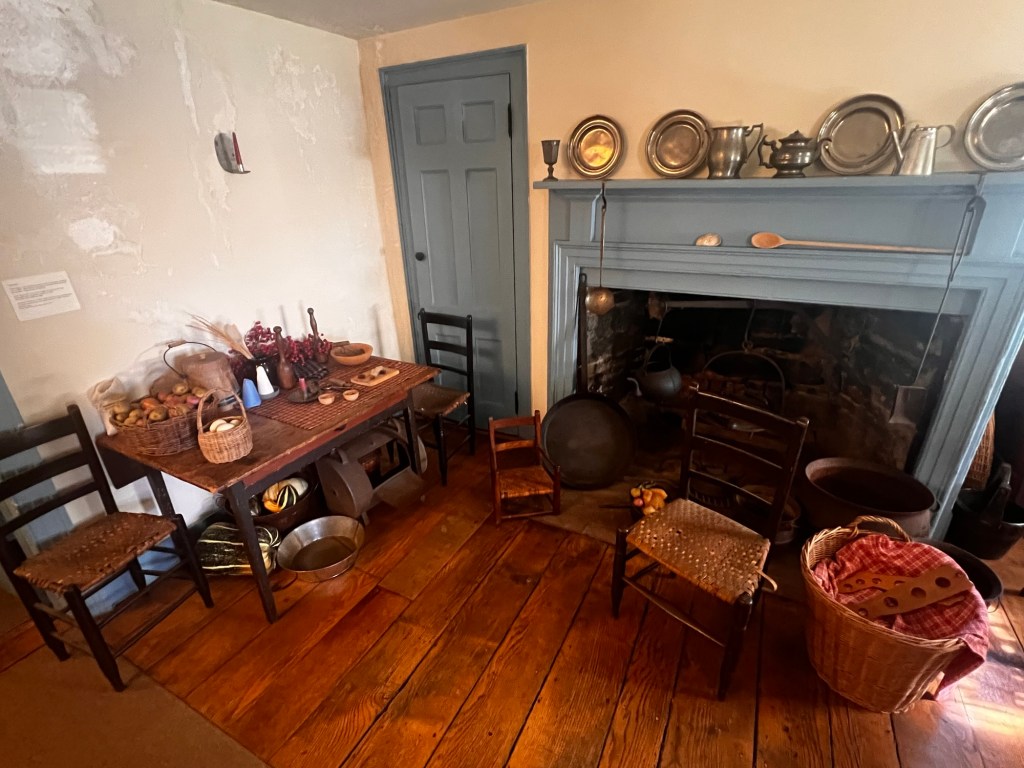
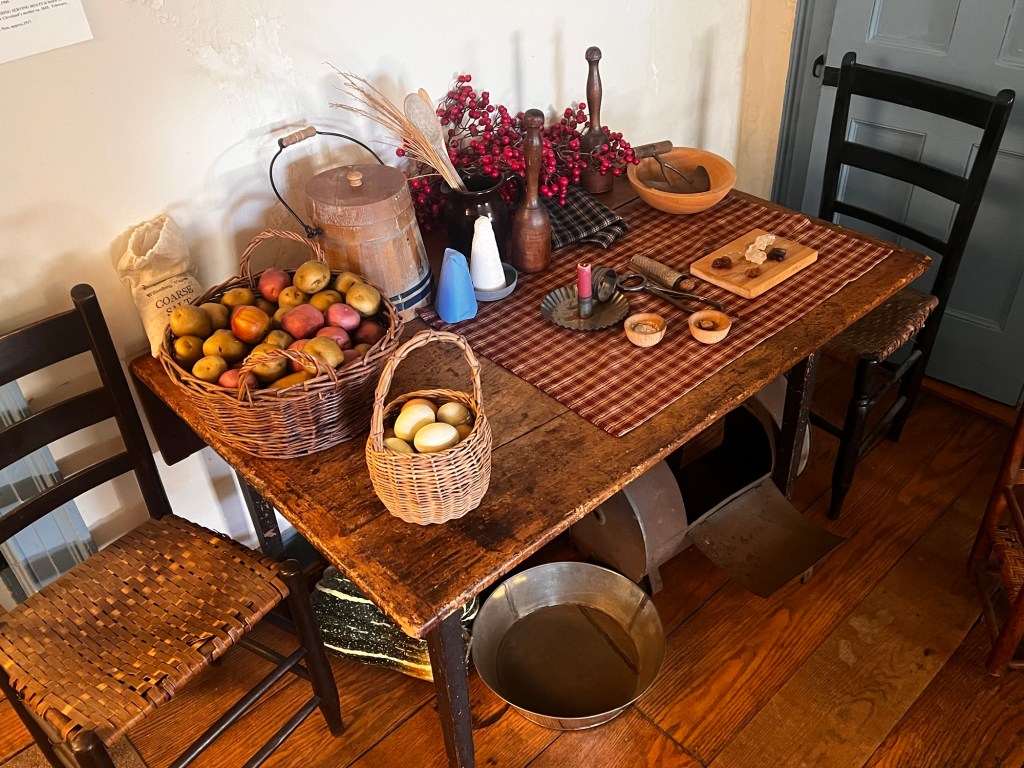
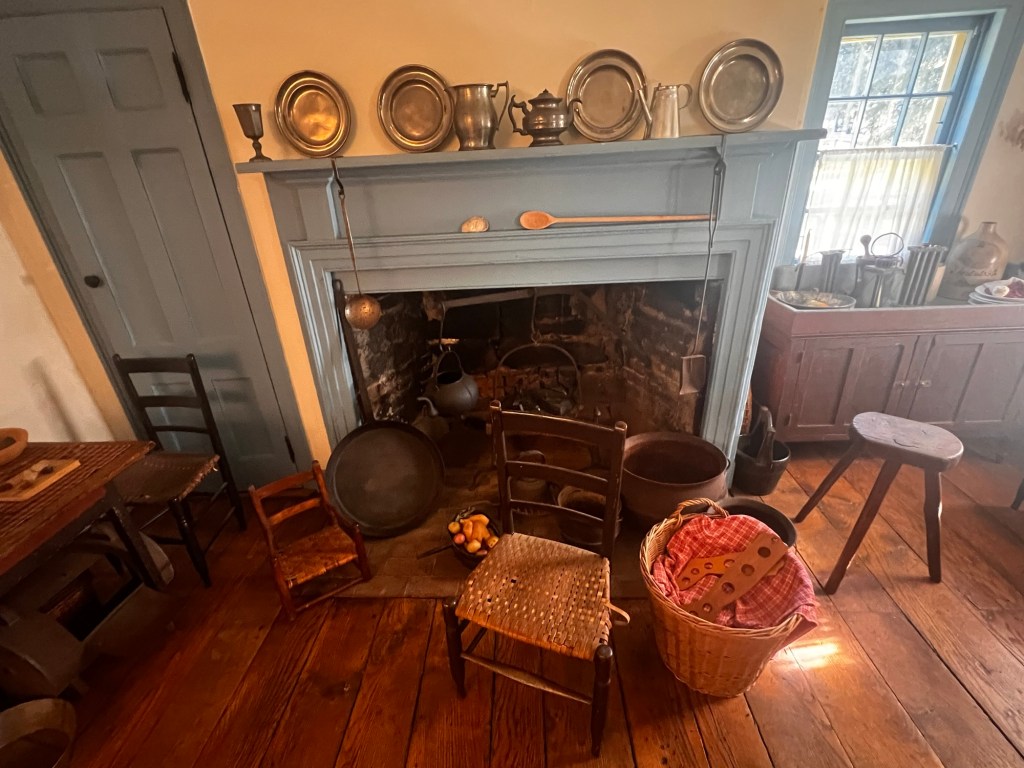
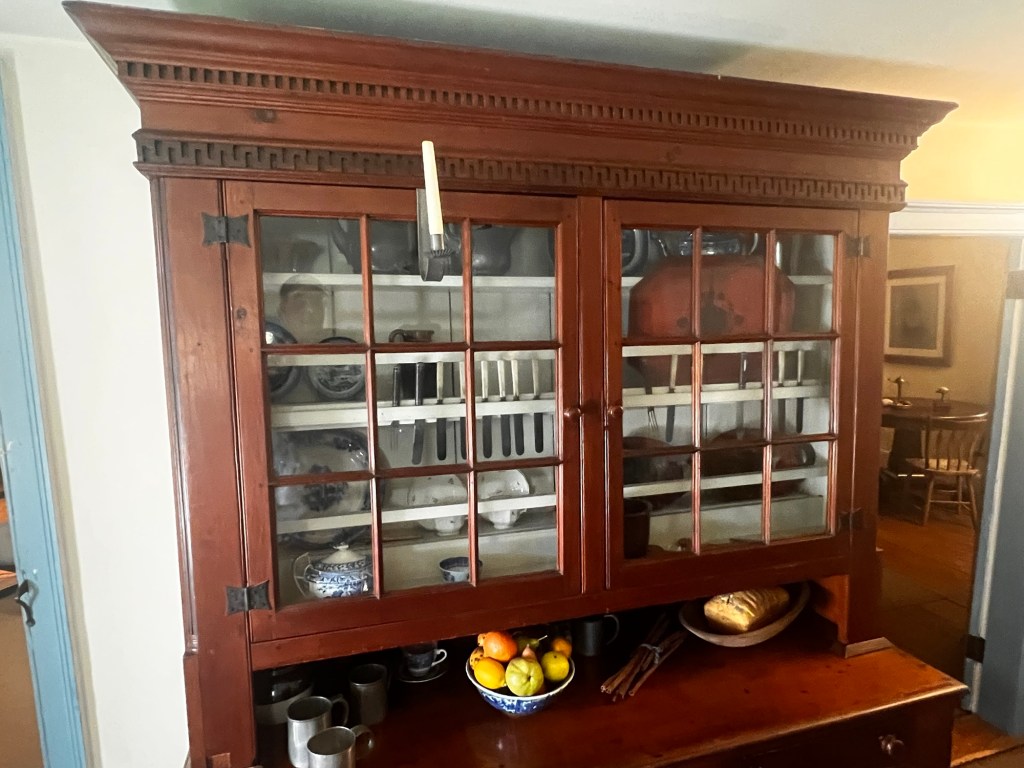
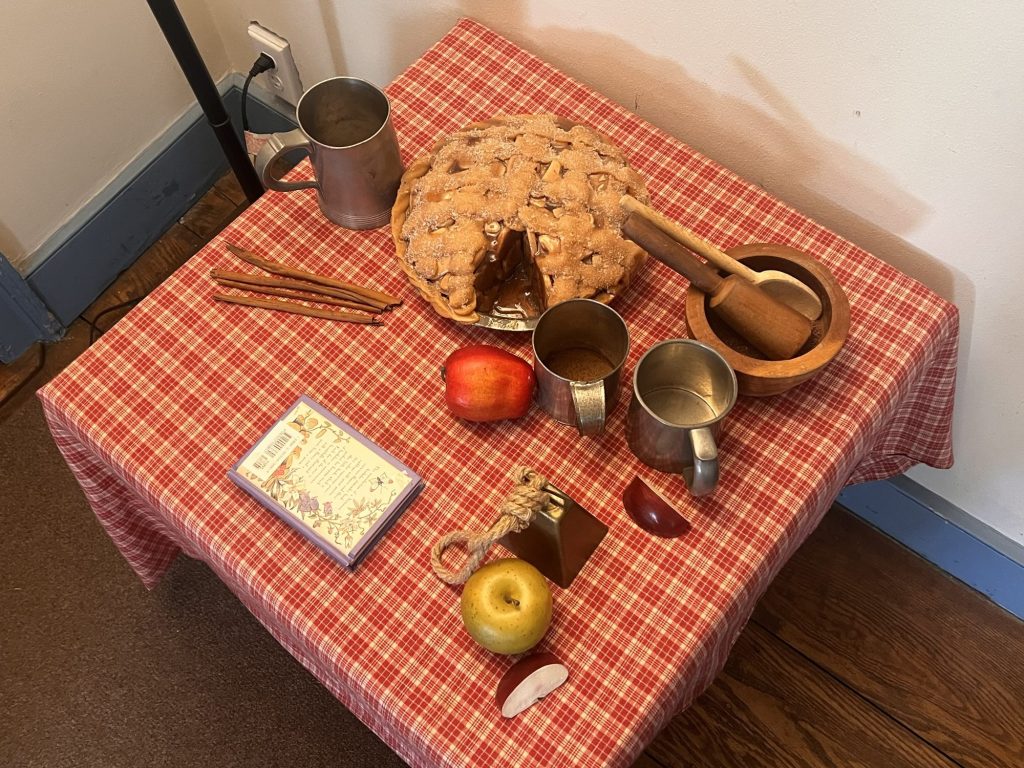
When we toured the home’s kitchen, it was set for the Fall Harvest and a hearty dinner was being cooked. Both the kitchen and fireplace hearth displayed a Fall theme.
The kitchen set from the Fall harvest
The center of the kitchen, the kitchen hearth
The tray and dishes to the right of the cabinet were owned by Grover Cleveland’s mother and were donated back to the museum
The kitchen prepared for a Harvest dinner
Try to take a tour with the tour guide, Paula, who knows the house backwards and forwards and gives you an interesting take on the family. She will be able to point out all the family objects and personal items that have been donated by family members. Things from formal clothes to the President’s personal shaving kit on display in the front of the house.
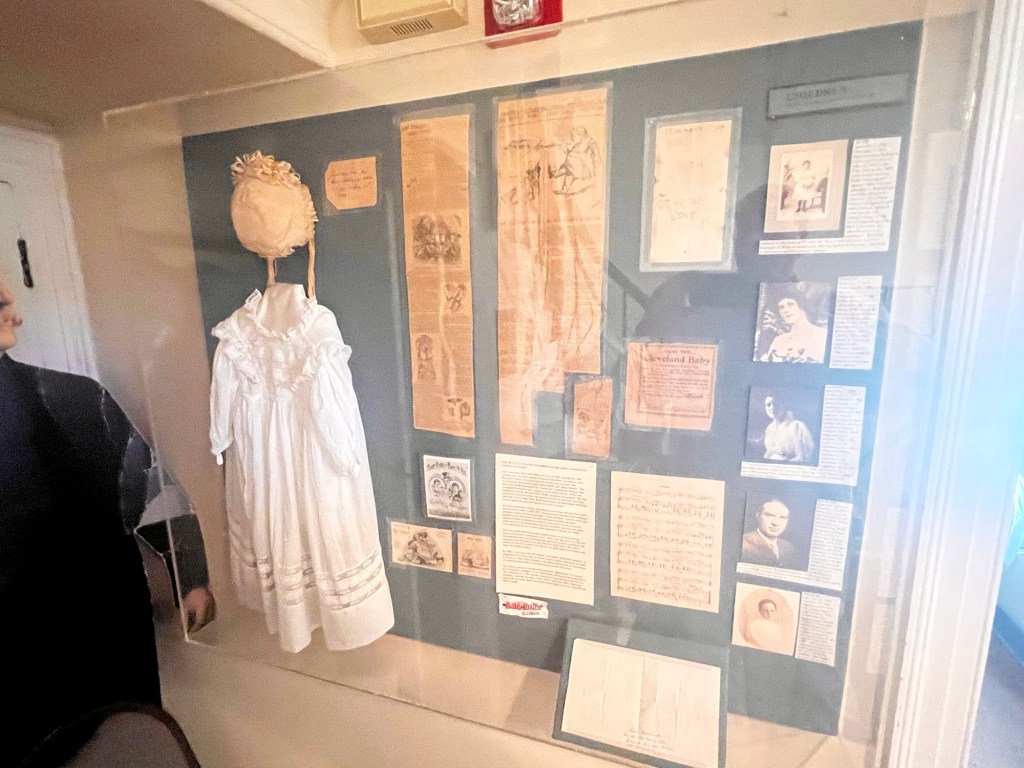
The display to Ruth Cleveland, who the Baby Ruth candy bar was named for
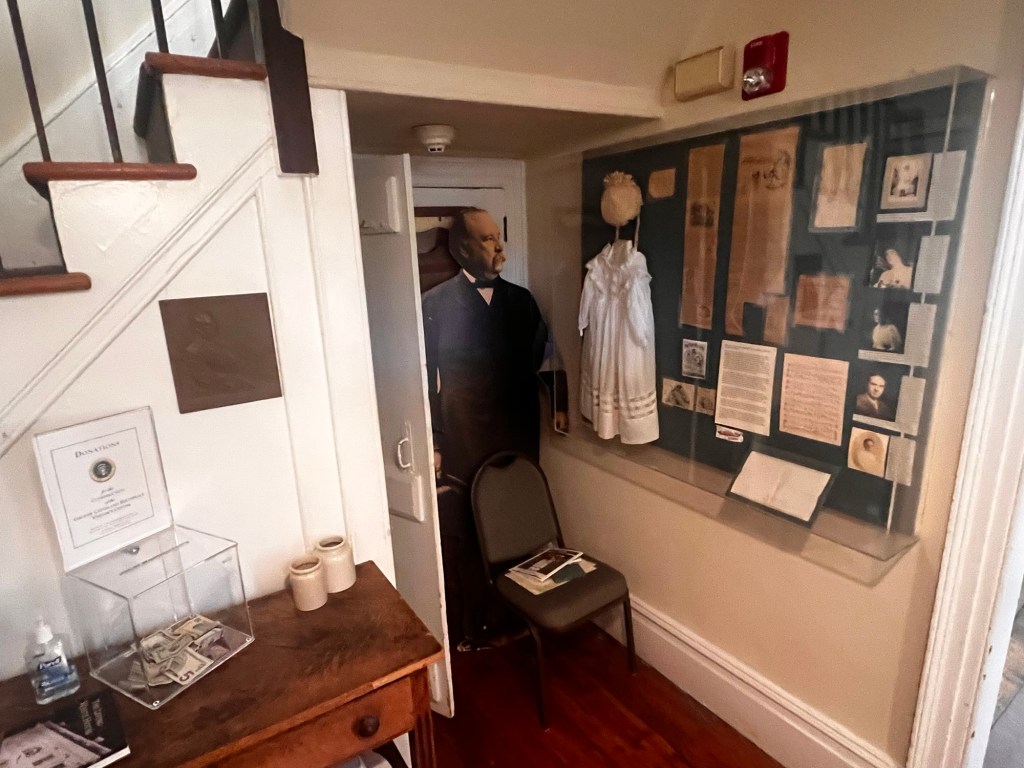
The display on the first floor dedicated to his children
The display by the first floor landing was dedicated to his daughter, Ruth, who died as a child. There is a display of her clothes and personal things along with a Baby Ruth wrapper as her name inspired the candy bar.
The whole tour takes about an hour and you will find yourself memorized by the displays and the family history of the children and grandchildren. It is interesting to see how the family grew when they were living in Caldwell, NJ. Take some time to walk the beautiful grounds and under the shade trees on the side of the lawn. The house was especially beautiful as the foliage arrived in the early Fall.
History of the Cleveland Birthplace Museum:
(from the museum website)
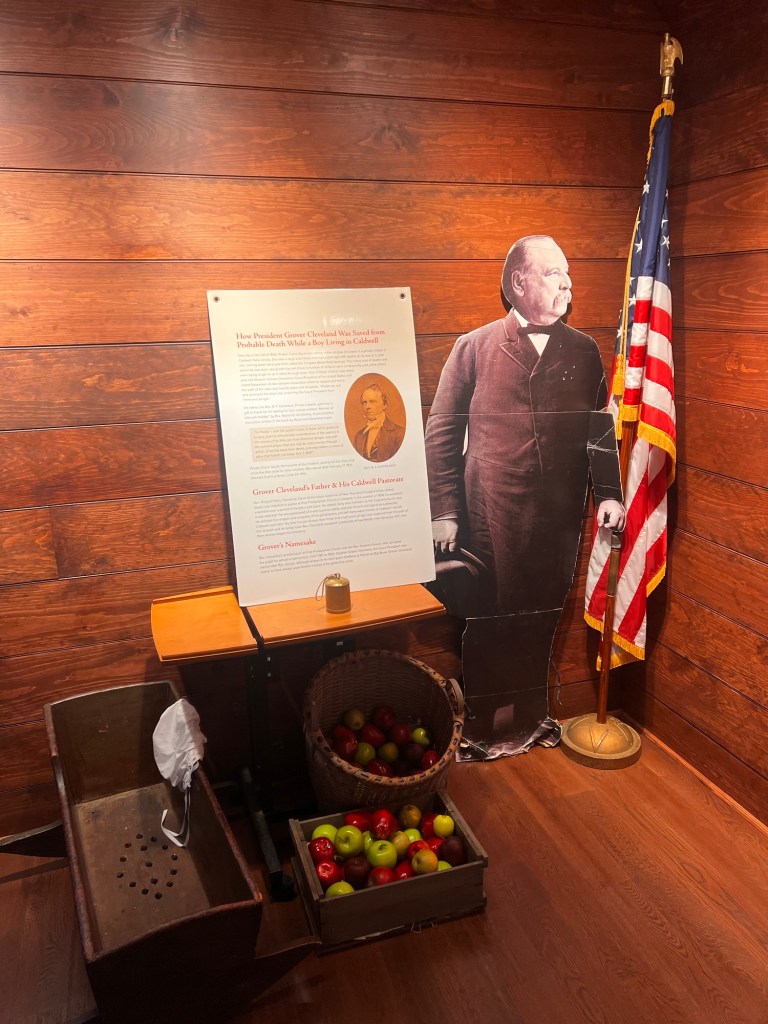
Grover Cleveland’s birthplace was built in 1832 as the Manse or pastor’s residence for the First Presbyterian Church of Caldwell. Cleveland’s father, the Reverend Richard Fally Cleveland was the minister here from 1834-1841.
Grover Cleveland’s early childhood
Originally this frame home had a two-story main section with a one-story kitchen to the east and a one-story lean-to at the rear. It was enlarged several times between 1848-1870 to meet the growing needs of the Presbyterian clergy. The house is a good example of local vernacular architecture (museum website).
The front Birthplace house and the church off to the side
The historical significance of the Manse was first noted in 1881 when Cleveland was running for Governor of New York. As his political star ascended, so did the interest in preserving his birthplace as a museum. A group of Cleveland’s friends and admirers began negotiations to purchase the Manse in 1907. Their efforts culminated in the opening of the house to the public on March 18, 1913 (museum website).
Most of the first floor rooms portray the Manse as it was in 1837, the year Grover Cleveland was born. The decidedly middle-class character of the rooms reflect the day to day life of the Reverend Richard Cleveland and his family. Among the artifacts on display from Cleveland’s early years are his cradle and original family portraits (museum website).
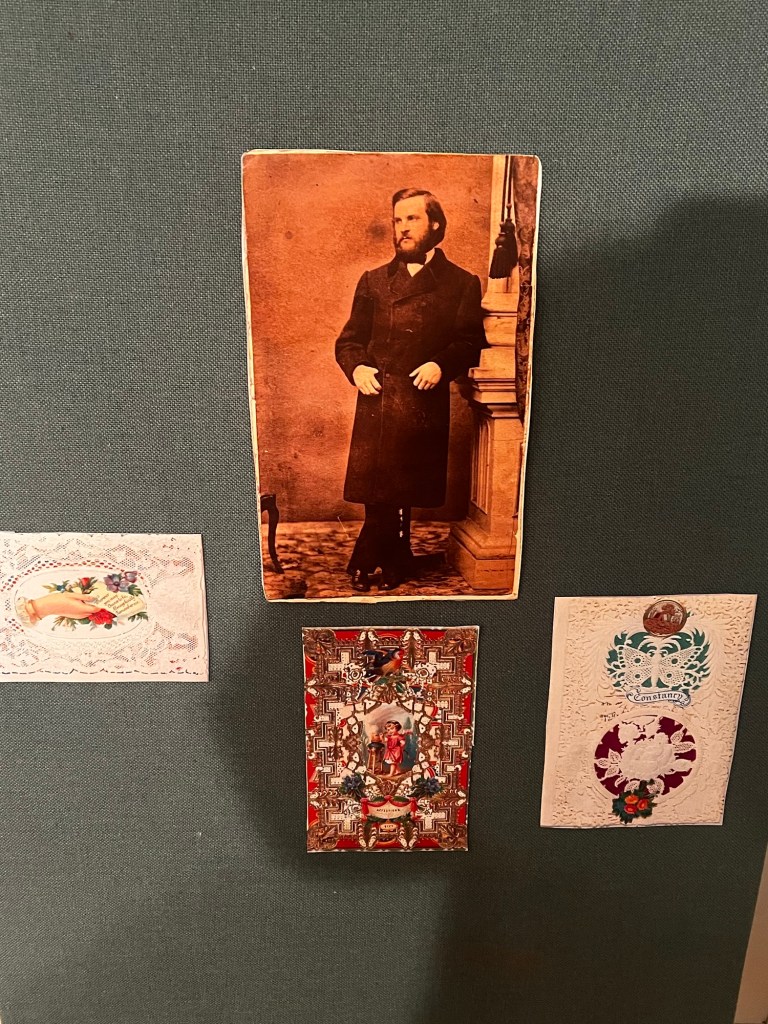
Grover Cleveland as a young lawyer
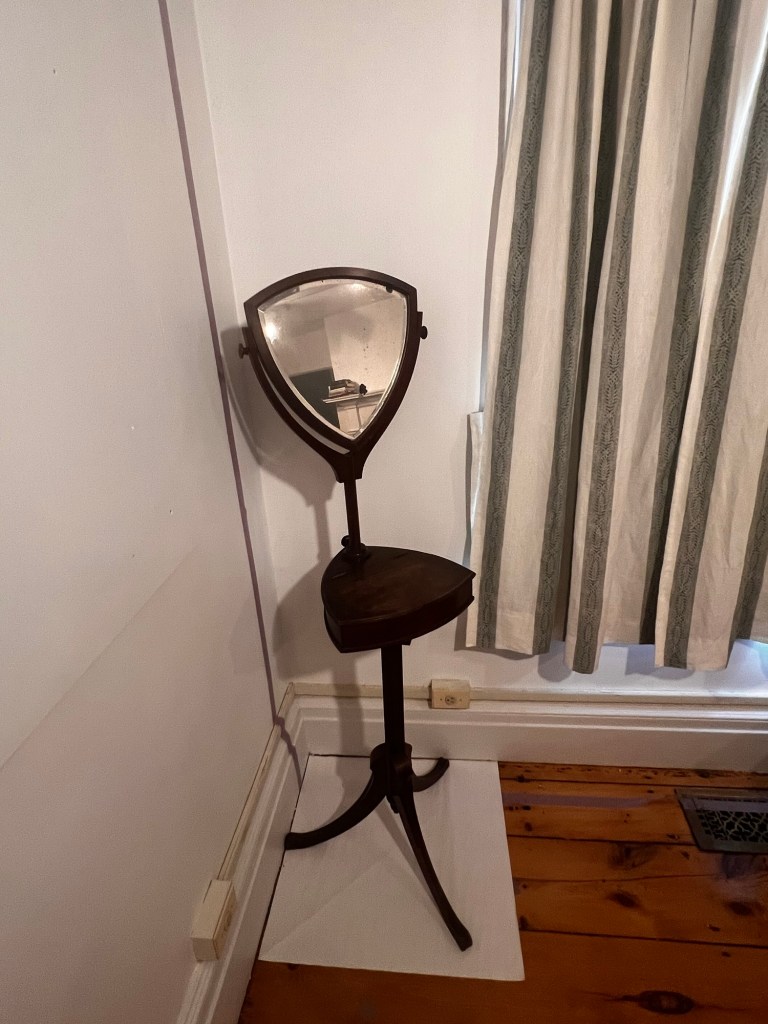
The President’s shaving table back in the museum
Contrasting sharply with the humble beginnings portrayed in these rooms, the exhibit gallery features a striking display of artifacts that reflect the financial and political success Cleveland achieved during the last quarter of the 19th Century. Here, the mud-slinging campaign of 1884, the public’s intense interest in his wife and children and America’s political climate throughout his split terms of office are explored (museum website).
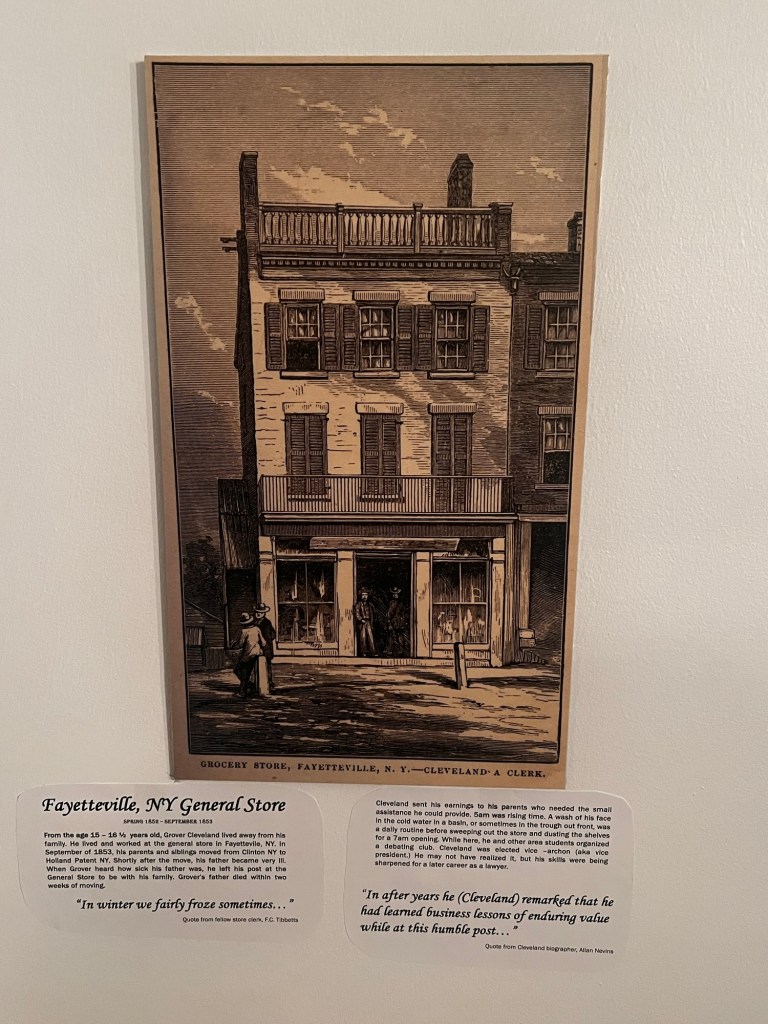
The family home in Fayetteville, NY
The Grover Cleveland Birthplace State Historic Site is the only house museum in the country dedicated to the interpretation of President Cleveland’s life. It is the nation’s leading repository of Cleveland artifacts and political memorabilia. The Grover Cleveland Birthplace is listed on the New Jersey and National Registers of Historic Places (museum website).
The President’s time in New Jersey:
(from the museum website)
Stephen Grover Cleveland was born on March 18, 1837 to the Reverend Richard Cleveland and his wife, Ann. Named for the first ordained pastor of the First Presbyterian Church at Caldwell, he would in time become known by his middle name, Grover.
The display on the President’s life in the new Visitors Center
Cleveland was raised in a strict, modest home. As the son of a minister and the fifth of nine children, he had a religious and principled upbringing with few luxuries. When Grover was four, Reverend Cleveland moved his family to Fayetteville, NY.