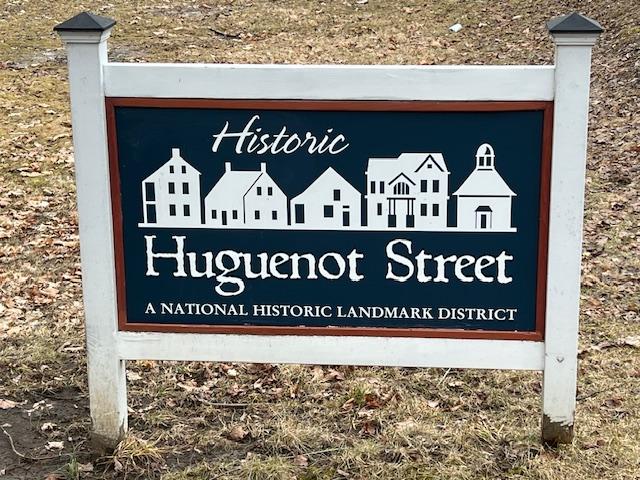
Category: Historic Homes in New York

Historic Huguenot Street                                       81 Huguenot Street                                            New Paltz, NY 12561

Historic Huguenot Street 81 Huguenot Street New Paltz, NY 12561

Historic Huguenot Street

81 Huguenot Street

New Paltz, NY  12561

(845) 255-1889

http://www.huguenotstreet.org

info@huguenotstreet.org

My review on TripAdvisor:

https://www.tripadvisor.com/Attraction_Review-g48245-d288641-Reviews-Historic_Huguenot_Street-New_Paltz_New_York.html?m=19905

Plan your visit:

For current information on guided tours, group tour reservations, school groups, special events or accessibility, call (845) 255-1660 or visit http://www.huguenotstreet.org.

The history of Slavery in the area

App:

Our free Walking Tour mobile app features histories of the houses on the street with archival photos as well as photos of the house interiors and the collection pieces within. Mobile users can download the app on both the App Store and Google Play.

The entrance to the site

The historic sign at the entrance

History of the site:

At our 10 acre National Historic Landmark District, visitors experience more than 300 years of history through the lens of a French Huguenot community as it evolved over time. Guided tours begin with an introduction to the pre-colonial Munsee Esopus landscape dating back 7000 years and the religion, culture and architecture of New Paltz’s earliest European settlers and enslaved Africans. The experience continues as guests visit fully furnished houses reflecting unique human narratives and changing tastes across the Colonial and Federal periods, through the Gilded Age and into the early 20th century.

(Promotional Materials)

I visited Historic Huguenot Street one afternoon after visiting here about five years earlier during the holidays. The houses are easy to tour and the street is blocked so that you can walk amongst the houses.  There are tours every half hour when the site is open. Here you can tour inside the houses instead of just the grounds. On a nice day, it is interesting to look over the architecture of the homes.

Make sure that you take time to look at the historical cemetery by the church at the end of the block. Some of the original settlers are buried here. It is also nice to tour around the Waykill River.

Take the extra time to visit the gift shop and see the information video on the site and look over the literature of the site.

The area has a pretty interesting history.

The map of the site

History of the Huguenot Street Historic District:

The site is owned and operated by Historic Huguenot Street (HHS), which was founded in 1894. In 1899, Historic Huguenot Street purchased the Jean Hasbrouck House as the first house museum on the street. In the 1950’s and 60’s, the organization and related family associations purchased most of the remaining stone houses in the district and subsequently opened them as museums. These acquisitions were funded in large part by descendants of the original Huguenot founders. Their family associations play a key role in supporting the institution today.

The Individual Houses:

Bevier-Elting House:
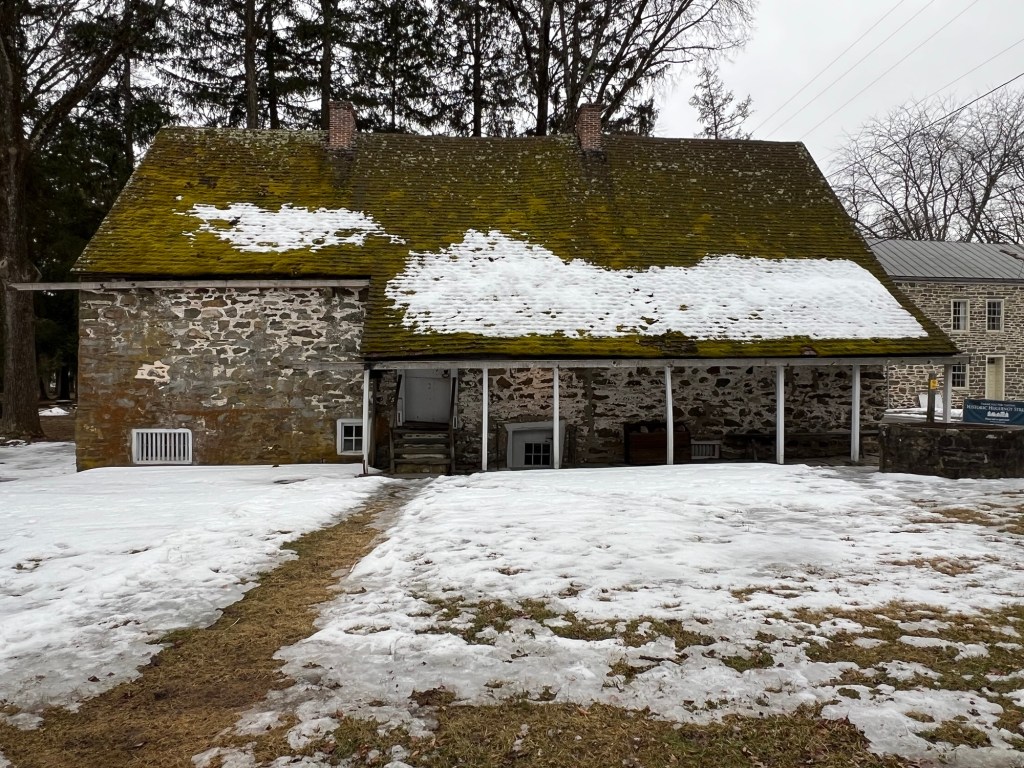
Dating to the early 18th century, the house was originally a one room building built with the narrow or gable end facing the street-then the prevailing style of the low countries of Northern Europe. Two expansions were built later as was a small cellar that was used to house African slaves. The house was built by the Beiver family, one of the founding families and subsequently sold to the Dutch Elting family.
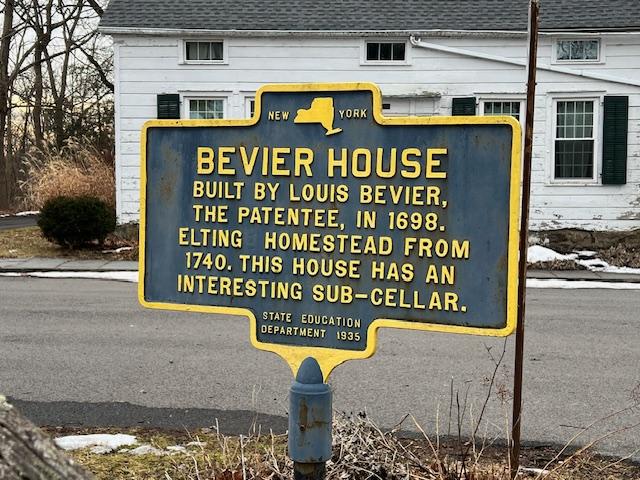
The Historic Marker

Abraham Hasbrouck House:

https://www.huguenotstreet.org/hasbrouck

The Abraham Hasbrouck House

The Hasbrouck House at Christmas

The structure as the Abraham Hasbrouck House was built in three phases in the 1720’s and 30’s. The first of the house-the center room-was constructed in 1721 by Daniel Hasbrouck, the son of Abraham Hasbrouck the patentee. The date 1721 is based on recent dendrochronology, which is a process by which wooden structural members are dated. This house represents a New World innovation in Dutch-style architecture. The initial houses in the Dutch region of New York, such as New Amsterdam, Albany and Kingston were built in the tradition of Dutch cities with the gable-ends to the street, which conserves street frontage. The basic structure of the house consists of a series of H-bents which spread the weight of the house across the entire expanse. The original one room house exhibited several defining elements of Dutch architecture, the jambless fireplace being the principal and most recognized feature in the house. Recently re-opened to the public in July 2012 following a restoration and reinterpretation focusing on the life of Widow Wyntje.
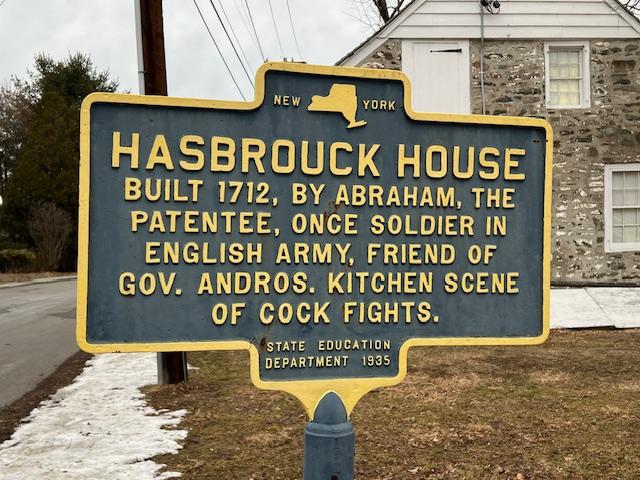
The Abraham Hasbrouck House Historic Marker

Jean Hasbrouck House:

https://en.wikipedia.org/wiki/Jean_Hasbrouck_House

The Jean Hasbrouck House

The Jean Hasbrouck House at Christmas time

Also built in 1721 by Jean’s son Jacob (and perhaps incorporating elements of an early home built by New Paltz founder Jean Hasbrouck), this home is an excellent example of Hudson Valley Dutch architecture and the showpiece of Historic Huguenot Street. A National Historic Landmark in its own right, it boasts the only remaining original jambless fireplace of any of the Huguenot Street houses and is one of the few surviving examples in what was formerly the New Netherland.

In 2006, the north wall of the house was carefully dismantled, repaired and reconstructed. Reproduction Dutch-style casement windows were installed. Interior restoration followed, resulting in a house that is an excellent example of how a comfortable family in the region lived in the mid-18th century.

Jean Hasbrouck House Historic Marker

DuBois Fort:

https://www.huguenotstreet.org/visitor-information
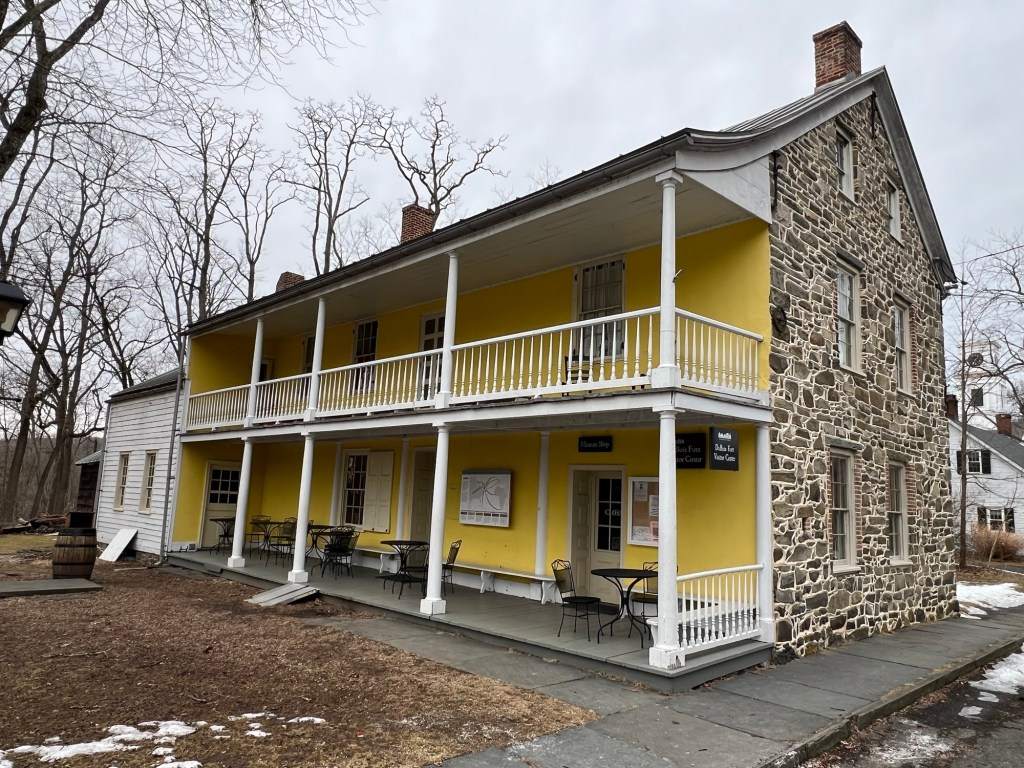
The DuBois House/Fort
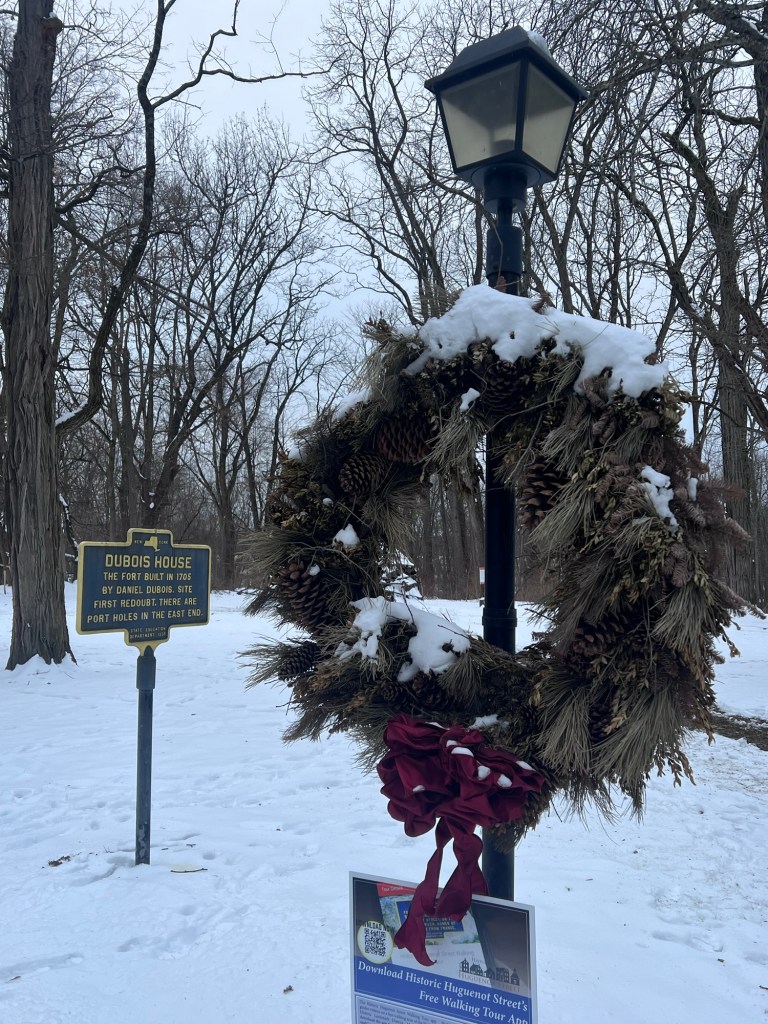
The DuBois House at Christmas time

Built circa 1705 for the DuBois family, it might have served as a fortified place for the small community if needed. Originally a smaller 1 1/2 story structure, this building was expanded to its current size in the late 1830’s. Some historians and antiquarians believe that the presence of “gun ports” made it a fort but there is no evidence of the presence of any such portholes before the 19th century. The DuBois Fort currently serves as the orientation center and gift shop as well as a location for special events. Guest can purchase their admission tickets and memberships at this building. Over the last 300 years, it has also been used as a residence and a restaurant.

The DuBois House historic marker

Freer House:

https://www.huguenotstreet.org/freer

https://home.cc.umanitoba.ca/~sfreer/huguenot.html

The Freer House

The Freer House at Christmas time

The Freer House is one of the six 18th century stone houses owned by Historic Huguenot Street. It was altered in various points in its approximately 250 years of occupancy with its most recent major alterations occurring in 1943 when it was purchased by Rev. John Wright Follette, a direct descendant of it s original builder, Hugo Freer. Over the years, the interior was modernized into a 20th century idea of a colonial home. This structure is not currently open to the public.
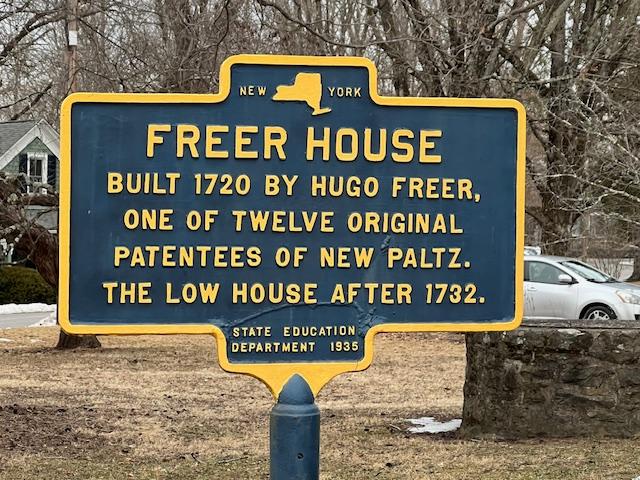
The Freer House Historic Marker

Deyo House:

https://www.huguenotstreet.org/deyo

https://cdm16694.contentdm.oclc.org/digital/collection/elting/id/375

The Deyo House

The original portion of the house was built around 1720 by Patentee Pierre Deyo. It began as a one room house was subsequently expanded to two rooms and ultimately to three when a stone addition was added off the rear by Pierre’s grandson Abraham. Circumstances for this house changed dramatically when at the height of the Colonial Revival movement, two descendants of Pierre Deyo, Abraham and Gertrude Brodhead, inherited the house.

The Deyo House at Christmas

Wanting to live on the street of their ancestors but also wanted a modern, gracious home that reflected their affluence, the Brodheads partially dismantled the original stone house and build a grand Queen Anne home around it in 1894. They also significantly changed their surrounding property in essence changing a small village farm into a handsomely appointed and landscaped mini estate.

The house passed out of Deyo family ownership in 1915. It was a private home until 1971, when it was purchased by the Deyo-Family Association and donated in order to be opened to be opened to the public as a house museum. The home was most recently restored in 2003 and features circa 1915 interiors.

The patentee Pierre Deyo died in 1700, so couldn’t have built the house in 1720 as stated. Per the plaque mounted outside the house it was built in 1692.

The Deyo House Historic marker

Crispell Memorial French Church:

https://www.huguenotstreet.org/crispell
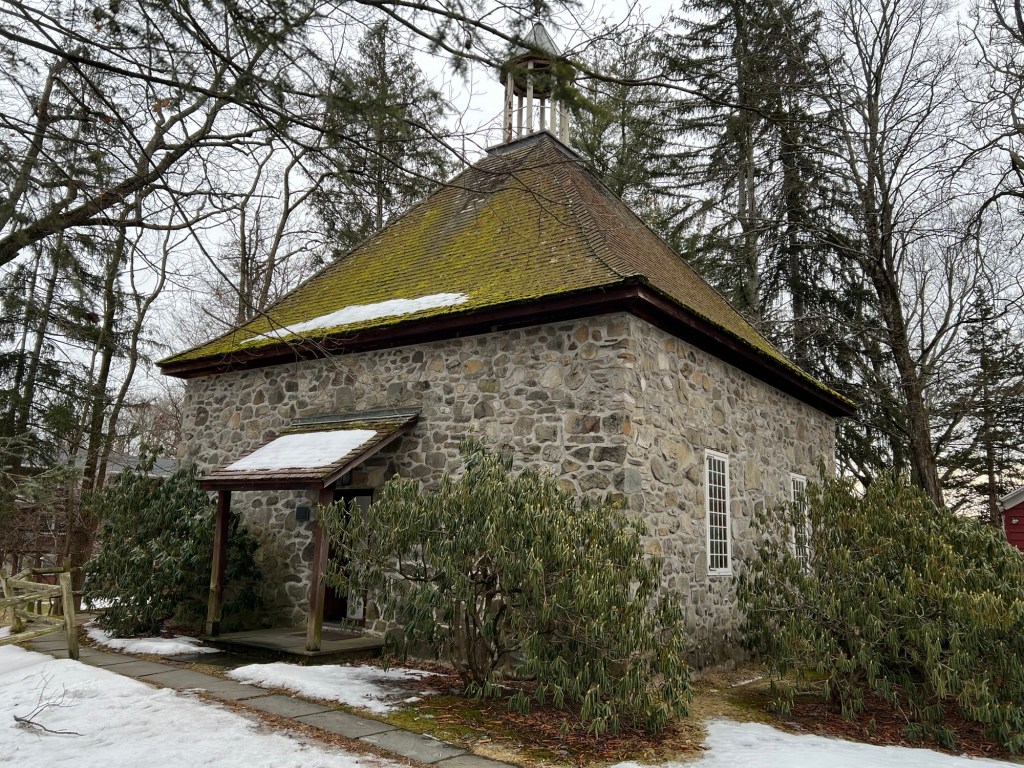
Since the community’s founding, there have been four sanctuaries built on what is today called Huguenot Street. The French-speaking Protestants who settled in New Paltz built their first church in 1683-a simple log building. This was replaced in 1717 with a straightforward, square stone building that reflected the permanence of the settlement. This existing building in the burying ground is a highly conjectural reconstructed of the 1717 building near its original location.
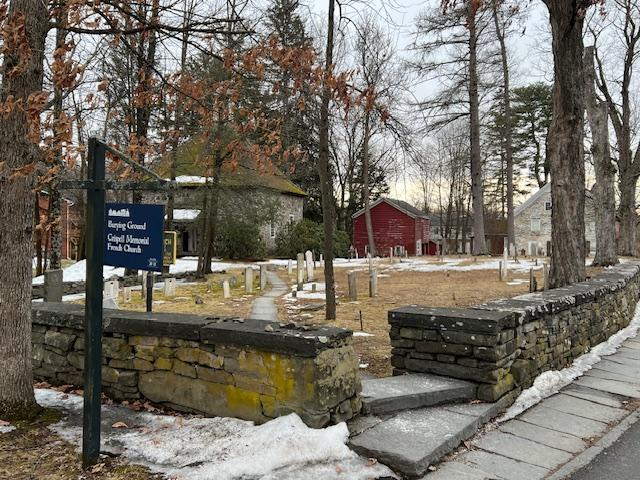
The Historic Walloon Church

As the New Paltz community increased in size throughout the 18th century, a larger church became necessary. A second stone church was built down the street in 1772. When it became too small, it was demolished and replaced by a third church built in 1839. This church survives today and is home to an active Reformed congregation.
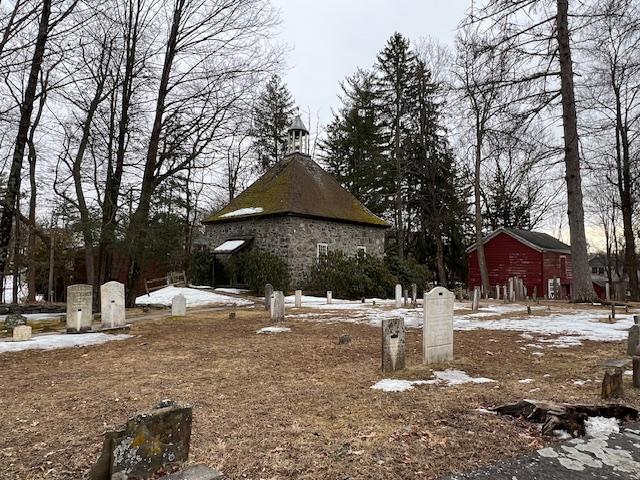
The Church and the graveyard

The reconstructed church is named in honor of Antoine Crispell, one of the twelve founders or patentees of New Paltz and a direct ancestor of Franklin Delano Roosevelt. It was built as the result of a fundraising campaign led by the Crispell Family Association. The Crispell Family Foundation opted to create this reconstruction church in their ancestor’s honor. It was completed in 1972.

The 1717 church was designed to reflect Reform thinking; the pulpit was placed in a central location and the pews were placed so that everyone could see and hear more equally. This expressed the concept that each person had a direct relationship with God, rather than one mediated through a church hierarchy.

LeFevre House:

https://www.huguenotstreet.org/lefevre

https://www.townofnewpaltz.org/historic-preservation-commission/news/the-josiah-p-lefevre-house-generations-of-history

Built int 1799 by Ezekiel Elting, a prosperous merchant who was born in the Bevier-Elting House, this stone and brick building is quite different from the earlier stone houses on Huguenot Street. Its Georgian-style architecture reflects the transition of New Paltz from a French and Dutch settlement to an Anglo-American community and increasing refinement in architecture in this period as settlements matured. The house shows the changes in architectural style from the early 18th century. This house reflects the several changes in the society and home life of New Paltz in the early 19th century.
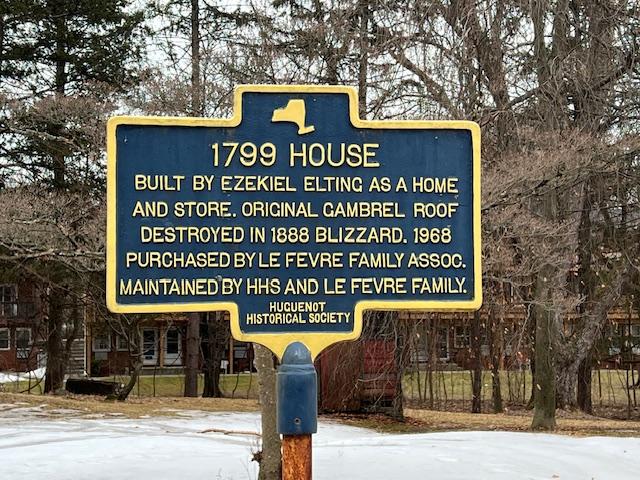
The Elting-LeFevre Historic Marker

Deyo Hall:

https://www.poughkeepsiejournal.com/story/news/local/2014/12/09/dateline-deyo-hall-history/20146611/

https://www.facebook.com/deyohall/
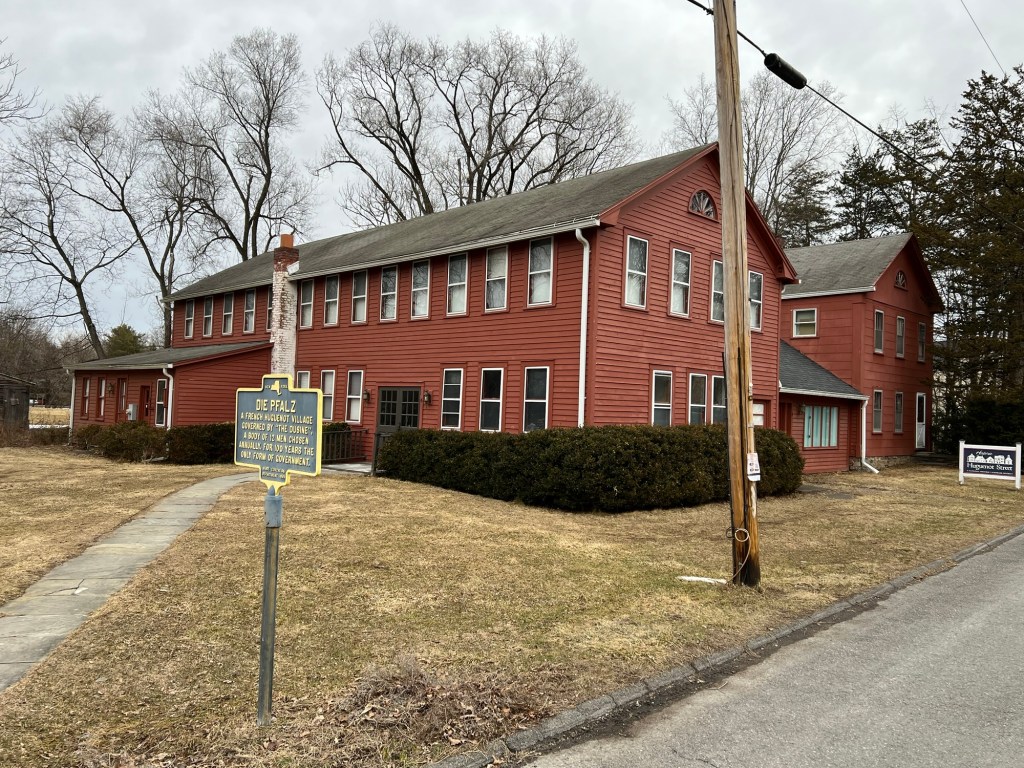
Deyo Hall

Formerly a glass factory, Deyo Hall is the site of event and meeting facilities and public restrooms. Collections storage is housed in this building.

The New Paltz Historic Market

Roosa House Library and Archives:

https://mapcarta.com/W304906815

Located in the Roosa House, the Library and Archives at Historic Huguenot Street is a research facility devoted primarily to the history and genealogy of the Huguenot and Dutch settlers of the Hudson Valley. It also functions as a general repository for local history, regardless of ethnicity or religious persuasion. The collections consist of family genealogies, church, cemetery and bible records, wills and deeds, census records, genealogical periodicals, county histories and publications relating to Huguenot ancestry. Genealogists, local historians and other interested parties can access the collections by appointment. The colorful paint replicates the original colors of the house in 1891.

Native American presence on Huguenot Street:

Historians and archaeologist have learned more about the continuing relations between the Esopus, the original inhabitants of the area and the Huguenots. Some results of research can be found at the HHS site at “Relations between the Huguenots of New Paltz, NY and the Esopus Indians (http://www.huguenotstreet.org/library_archives/exhibits_research/Indian_affairs.html). The “Before Hudson” exhibit, currently on view at the DuBois Fort Visitor Center, shows some of the highlights of archaeological excavation in our area with artifacts dating back 6,000-8,000 years ago.

Historic Huguenot Street III.jpg

Indian Wigwam

Christmas at Historic Huguenot Street:

https://www.huguenotstreet.org/holiday

Historic Huguenot Street Christmas

(This information from the homes is from Wiki
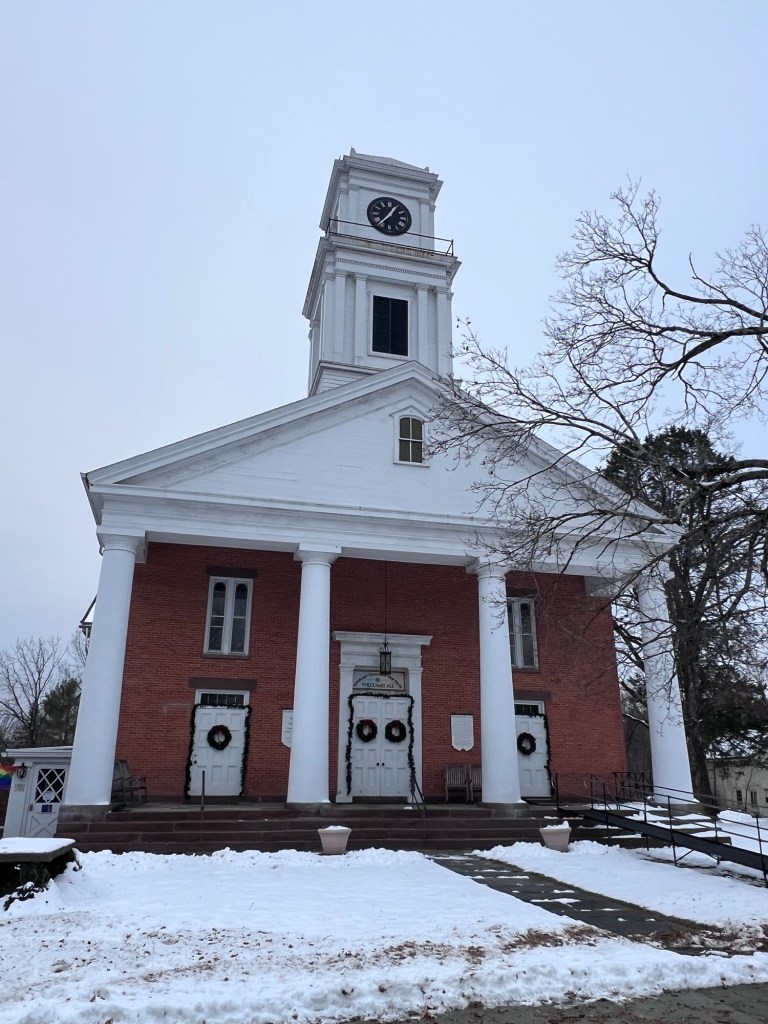
The Presbyterian Church during the Christmas season

Lefferts Historic House                                         452 Flatbush Avenue                                  Brooklyn, NY 11225

Lefferts Historic House 452 Flatbush Avenue Brooklyn, NY 11225

Lefferts Historic House

452 Flatbush Avenue

Brooklyn, NY  11225

https://en.wikipedia.org/wiki/Lefferts_Historic_House

Open: Sunday 12:00pm-5:00pm/Monday-Wednesday Closed/Thursday-Saturday 12:00pm-5:00pm

Admission: Suggested $3.00 fee towards the renovation of the house

My review on TripAdvisor:

https://www.tripadvisor.com/Attraction_Review-g60827-d103505-Reviews-Lefferts_Homestead-Brooklyn_New_York.html?m=19905

Leffert’s Homestead in Prospect Park, Brooklyn

I have visited the Lefferts Historic House a few times when visiting the Brooklyn Botanical Gardens, The Brooklyn Museum and the Prospect Park Zoo, all of which are in the same cultural district of the neighborhood. The house is located near the entrance of Prospect Park just behind the Brooklyn Botanical Garden and right next to the zoo and the carousel.

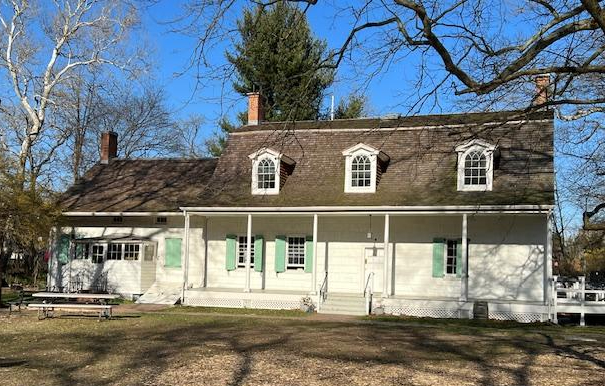
The Lefferts Homestead in 2023

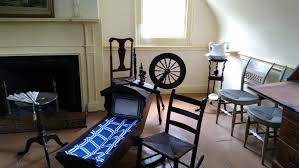
The house sits on a plot of the park to give it the look of the house when it sat in a rural setting in Brooklyn about twelve blocks away. When walking into the house, there are a few rooms that are furnished and have period pieces in them to show what the house must have looked like in the late 1700’s and early 1800’s. Most of the house is used for touring and for groups doing projects and games. You can’t go upstairs anymore. The house will be going through a renovation soon so watch the website for more information on that.

Lefferts Historic House II.jpg

The historic objects of the house

The outside of the house has wooded grounds with a working garden, an outside oven and historic objects that bring the period back to tourists and residents alike of what life must have been like when it was a working farm. When in season, you can walk amongst the vegetable and flower gardens and talk to the docents about the history of the house.

The grounds of the Lefferts Homestead with the stables and smokehouse

The house is part of the Historic House Trust and part of the Prospect Park Alliance.

History of the Lefferts Historic House:

The Lefferts family was one of the original settlers in Brooklyn with Lefferts Pieterson buying 58 acres of land here in 1687 and built the original homestead on that property. In 1776, the house was destroyed by American troops before the Battle of Brooklyn so that the British could not use it. The house was rebuilt in 1783 by one of his descendants (Prospect Park Alliance).

Lefferts Historic House III

The Lefferts Family

The current house was the home of Continental Army Lieutenant Pieter Lefferts and was built in 1783. It was originally located on Flatbush Avenue near Maple Street. When Pieter died the house was passed onto his son, John and then when John passed, the house was inherited by his daughter, Gertrude Lefferts Vanderbilt. The house was lived in by four generations of the Lefferts family.

The Lefferts Homestead

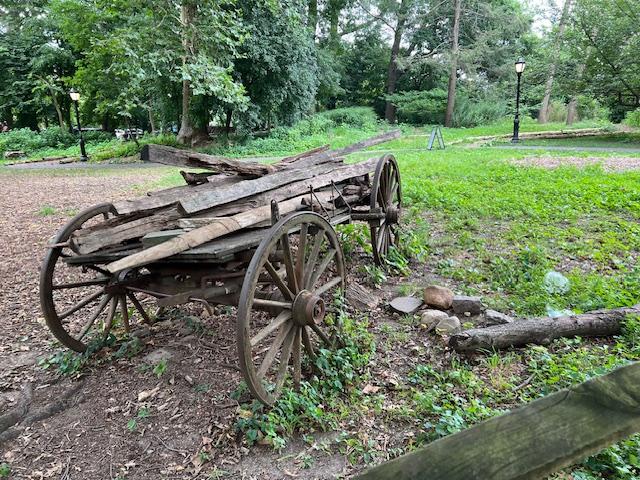
The cart on the front of the property

With impending development of the area around the house at the end of the 19th century, John Lefferts estate offered to donate it to the City on the condition that house be moved to City owned property for historic preservation and protection. It was opened as a museum in 1920 by the Fort Green Chapter of the Daughters of the American Revolution (Wiki).

The history of the house

The house is currently used as a Children’s Museum and Cultural site and open year-round.

The Lefferts House in the winter 2024.

Carl Schurz Park                                                   East 86th Street and East End Avenue                                    New York, NY 10028

Carl Schurz Park East 86th Street and East End Avenue New York, NY 10028

Carl Schurz Park

East 86th Street and East End Avenue

New York, NY  10028

(212) 459-4455

https://www.nycgovparks.org/parks/M081

https://www.nycgovparks.org/parks/carl-schurz-park/history

Open: Sunday-Saturday 6:00am-12:00am

Admission: Free

My review on TripAdvisor:

https://www.tripadvisor.com/Attraction_Review-g60763-d312015-Reviews-Carl_Schurz_Park-New_York_City_New_York.html

I have been visiting Carl Schurz Park many times while walking the neighborhood for my project, “MywalkinManhattan.com”. You can see the entries from Days One Hundred and Ten, Six, Four and Two. I also visited again when touring Gracie Mansion for this blog, “VisitingaMuseum” (see write up under Gracie Mansion).

Gracie Mansion at East 88th and East End Avenue

The Gracie Mansion tour should not be missed:

https://wordpress.com/post/mywalkinmanhattan.com/7156

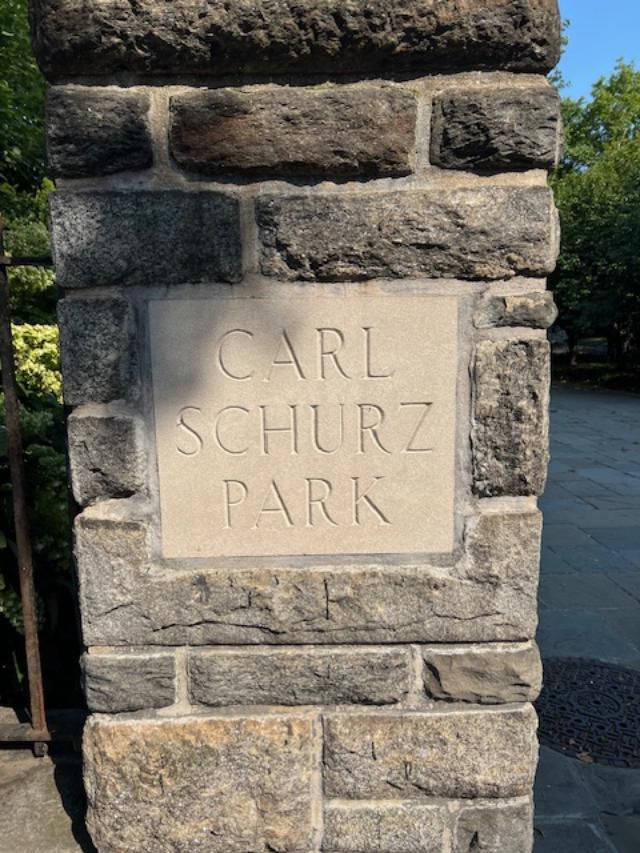
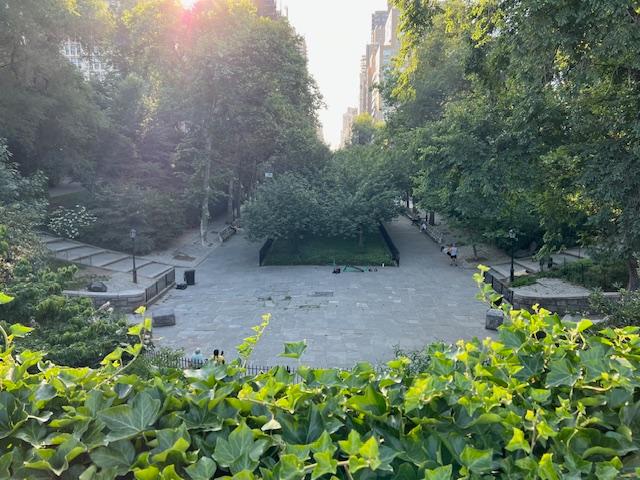
The entrance to Carl Schurz Park in the Summer of 2024

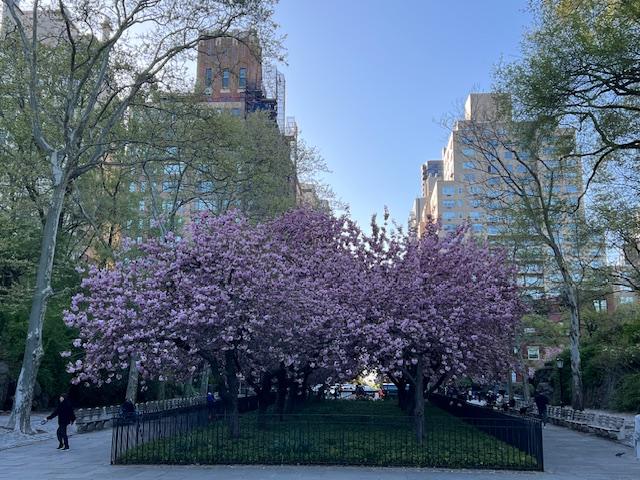
The park is such a nice place to relax in the warmer months. Being so close to the river in the winter months when the wind kicks in from the river can be brutal. In the Spring and Summer, it is one of the nicest parks to just sit and relax in. During the day, it is fun to watch the kids play in the large playground in the middle of the park. On the weekends the place is packed with kids, parents, and nannies all vying for space.

The Cherry Blossoms at the entrance of the park.

The same spot on the first day of Summer 2024

The gardens are beautiful and are very nicely maintained between the City and the Carl Schurz Park Association, who I have seen members weeding, landscaping and planting in the park during the times of my visits. It is relaxing to just sit by the river and watch the river go by and the boats sail by in the warmer months.

The entrance to the park.

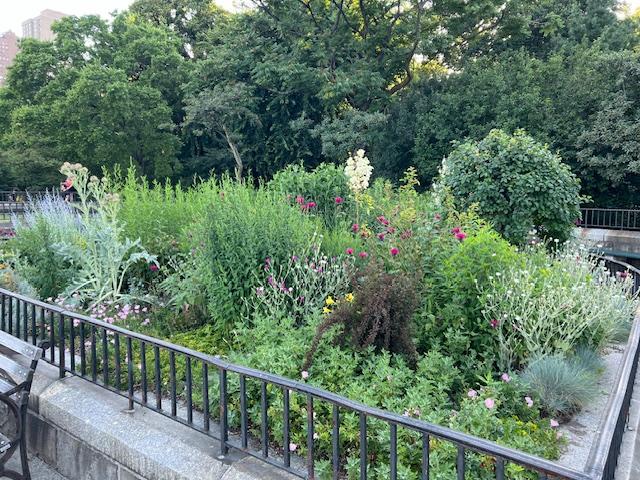
The flowers return during each part of the season almost on cue and the park is awash with colors of daffodils, tulips, irises and tiger lilies. There are many flowering plants in the summer that add to the rainbow of colors that accent all the trees. It is a nice place to sit and read a book while watching people walk their dogs.

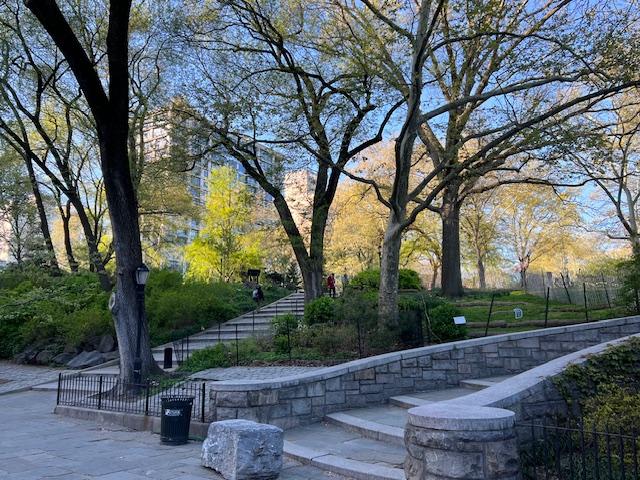
The back of the park in Spring 2024.

At twilight, it is fun to watch the lights go on in Queens across the river and the whole city come to life again in the evening. In the warm summer months, the kids are playing in the park, residents have their dogs running around the Dog Run and you can hear the activity at Gracie Mansion. Trust me, security is tight in that section of the park.

The Tulip Garden at the back of the park.

The same garden in the Summer of 2024

The pathways by the playground in the Summer of 2024

The paths that line East 84th Street to York Avenue

The Polly Gordon Walk sign in the front gardens

The Polly Gordon Walkway in the Summer of 2024

This is a nice residential park to relax in when you visiting the Upper East Side.

The walkways in Carl Schurz Park in the Summer of 2024

The History of Carl Schurz Park:

Carl Schurz Park, named by the Board of Alderman in 1910 for the soldier, statesman and journalist Carl Schurz (1829-1906), overlooks the turbulent waters of Hell Gate. The first known Dutch owner of the land was Sybout Claessen, who was granted the property in 1646 by the Dutch West India Company. Jacob Walton, a subsequent owner, built the first house on the site in 1770. During the Revolutionary War, the Continental Army built a fort surrounding the Walton residence to guard the strategic shipping passage of Hell Gate. After the British attack on September 8th, 1776, the house was destroyed and the Americans were forced to retreat from the fort, which the British retained until the end of the war in 1783.

Looking at the park from the East River walkway.

The land was purchased from Walton’s heirs in 1798 by Archibald Gracie, a Scottish shipping magnate. He built a mansion there in 1799, where his illustrious guests included future United States President, John Quincy Adams and future French King Louis Phillippe. The estate, sold by Gracie in 1819 was acquired by the City from the Wheaton family in 1891. The first home of the Museum of the City of New York from 1924-32, the mansion served as the official residence of New York’s mayor’s since Fiorello LaGuardia moved there in 1942.

Gracie Mansion during my tour of the mansion in 2025

The southern portion of the park was set aside by the City as East River Park in 1876. The former Gracie estate was added in 1891 and a new landscape design by Calvert Vaux and Samuel Parsons was completed in 1902. Maud Sargent re-landscaped the park in 1939 when the East River Drive underpass was under construction. Charles Haffen’s sculpture of Peter Pan, created in 1928 for a fountain in the lobby of the old Paramount Theater was installed in the park in 1975.

Carl Schurz Park in the Summer

The park name honors Schurz, a native of Cologne, Germany. It was strongly supported by the large German community of adjacent Yorkville. After emigrating to the United States in 1852, Schurz quickly made his reputation as a skilled orator and proved to be instrumental to Abraham Lincoln’s 1860 election campaign. His most significant political offices were that of United States Senator from Missouri (1869-1875) and Secretary of the Interior (1877-81) during the Hayes administration. In later years, Schurz was editor of the New York Tribune and an editorial writer for Harper’s Weekly. Schurz is also honored by Karl Bitter’s statue of 1913, located in Morningside Drive and 116th Street.

Carl Schurz

Carl Schurz

https://en.wikipedia.org/wiki/Carl_Schurz

Recent improvements include rebuilding of the stairs, the complete restoration of the playground and the opening of Carl’s Dog Run. These and other projects, including the planting of flowers, have been accomplished through a partnership between the Parks and the Carl Schurz Park Association, which has demonstrated the community’s commitment to restoring, maintaining and preserving this park since it formed in 1974.

(NYC Parks Official Website)

My write up on VisitingaMuseum.com:

https://wordpress.com/post/visitingamuseum.com/2182

Carl Schurz Park in the Spring.

The Gardens that face the East River and Hell Gate were in full bloom on the first day of Summer 2024

The gardens that line the esplanade on the East River

The gardens that line the esplanade on the East River

The Friends group that maintains the gardens does an excellent job with the planting and maintenance of the gardens.

Franklin D. Roosevelt Presidential Library and Museum                                 4079 Albany Post Road                              Hyde Park, NY 12538

Franklin D. Roosevelt Presidential Library and Museum 4079 Albany Post Road Hyde Park, NY 12538

Franklin D. Roosevelt Presidential Library and Museum

4079 Albany Post Road

Hyde Park, NY  12538

(800) FDR-VISIT

Open: Sunday-Saturday 9:00am-5:00pm/Open to 6:00pm April-October

Closed Thanksgiving, Christmas and New Year’s Day

https://fdrlibrary.org/

My review on TripAdvisor:

https://www.tripadvisor.com/Attraction_Review-g60801-d105844-Reviews-Franklin_D_Roosevelt_Presidential_Library_and_Museum-Hyde_Park_New_York.html?m=19905

Admission: $20.00 for both the museum and house.

I have visited the FDR Library over the summer  for two separate days along with visiting the Vanderbilt Mansion after the tour. It takes about two days to really look through the museum as there is so much to see and read that it can be over-whelming. If you don’t know much about Franklin Roosevelt you will definitely learn it here.

You will learn more about the family at the house tour but here you will learn of the policies of the Presidency, the acts and laws that he put in place and their effect on the county. It outlines why the policy was put in place and the effects on the American people. It was interesting to see how the policies like Social Secretary, Welfare and the Banking regulations are still in affect today.

Each room is another discussion in policy with things leading to the war and it effects on bring us out of the Great Depression. Also the attributes leading to the treaties after the war was finished.

FDR Library

The FDR Library

My recommendation it to take two days and at least an hour and a half each day to visit the museum and break it down into rooms as it can be a lot to take in on one visit. Couple the trip up with a visit to his house, Springwood and learn how the house played a big part in his politics.

About the Museum:

For information about the Museum, Archives, Education and Public Programs and the Henry A. Wallace Center call (800) FDR-VISIT or go to http://www.fdrlibrary.org.

Membership:  Membership forms a vital base of support for many of the Library’s key initiatives. To learn about the benefits of a membership and to become a FDR Presidential Library and Museum member today, please visit http://www.fdrlibrary.org or call (845) 486-1970.

The Roosevelt Institute:

The Franklin and Eleanor Roosevelt Institute is dedicated to informing new generations of the ideas and achievements of Franklin and Eleanor Roosevelt through programs, events and publications. With offices in Hyde Park, New York and New York City, the Institute enjoys a special relationship with the Franklin D. Roosevelt Presidential Library and Museum. It also works  across the country to nurture leaders in public service inspired by the models of Franklin and Eleanor Roosevelt, through a network of 100 progressive college campus-based think thank organizations that include more than 10,000 student members. In the years ahead, the Institute plans to play an even stronger role in nurturing and advancing progressive people and ideas. It will also continue its unique and important relationship with the Franklin D. Roosevelt Presidential Library and Museum.

The Museum:

As he planned his presidential library, FDR took care to include space for a museum to display his many personal treasures. An avid collector, the President has spent a lifetime gathering extensive collections ranging from stamps and coins to rare books and ship models.

When the FDR Museum opened June 30, 1941, it featured elaborate displays of these collections and the many gifts the Roosevelt’s had received from governments and individuals.

FDR Library III

Displays in the Library

Today, the Museum continues to display items from the President’s personal collections. But there are also extensive state of the art exhibits where visitors can experience the lives and times of Franklin and Eleanor Roosevelt.

After a privileged childhood on the banks of the Hudson River, FDR entered politics only to endure illness and a lifetime of paralysis after a heroic battle with polio. As President, he led America out of the greatest economic depression in its history and guided the Allied Powers to victory in World War II.

Eleanor Roosevelt improved the lives of millions as a reformer, teacher, journalist, political activist, First Lady, advocate for the underprivileged and as delegate to the United Nations, champion for the Universal Declaration of Human Rights. Today the woman known as the “First Lady of the World” continues to inspire new generations.

Experience the powerful story of these two extraordinary individuals in the Museum’s permanent exhibits. Rare documents and fascinating artifacts bring you face to face with history. Immersive audiovisual programs and interactive displays take visitors vividly into the past. A special “Behind the Scenes” area gives a look inside museum and archives storage rooms to see even more of the Library’s collection. And the Museum’s special exhibitions gallery offers changing exhibits on a regular basis. Repeat visitors will always find something new to see.

FDR Library II

Displays in the Library

Archives and Research:

FDR was the first president to give his papers to the American people and they form the core of the Library’s research archives. Since that original gift, the Library has acquired additional important collections related to the Roosevelt era, including the three million page archive of Eleanor Roosevelt. Today the Roosevelt Library houses 17 million pages of manuscript materials in some  400 distinct collections; 51,000 books including FDR’s own personal collection of over 22,000 volumes and 150,000 photographs, negatives and audiovisual items. The Library conducts one of the busiest research operations in the entire Presidential Library system and is used by several thousand on-site and remote researchers each year.

Education and Public Programs:

The Franklin D. Roosevelt Presidential Library and Museum conducts educational programs designed for K-12, college and university students, teachers and adult learners based on the Library’s documentary, audiovisual and museum collections. Programs include on and off site classroom workshops, museum programs and teacher development seminars.

Public programs include the annual reenactment of a World War II “USO Show and Bivouac” over Memorial Day Weekend, the Roosevelt Reading Festival in June and a Children’s Book Festival in December. The Library’s website http://www.fdrlibrary.org has over one million visitors each year including researchers using the digital archive, teachers and students exploring educational resources and those visiting FDR’s interactive daily calendar through our affiliated Pare Lorentz Center http://www.parelorentzcenter.org.

FDR Presidential Library

The FDR Library

Disclaimer: This information was taken directly from the Franklin D. Roosevelt Library and Museum pamphlet and I give their writers full credit on the information. Please check out their website on Admissions as they do change.