The new home of the Dutchess Firefighting Museum at the Dutchess County Fairgrounds
I recently visited the Dutchess County Fair in August of 2024 and discovered that they finally built the new Firefighting Museum of Dutchess County in the Century Village complex of the fairgrounds. This will only be open when the fairgrounds are open. It replaced the tent display that had been part of the fair since 2022.
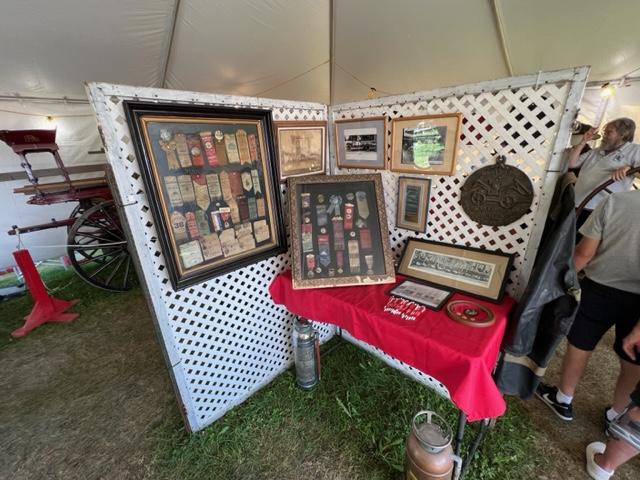
The old tent museum that was a temporary display
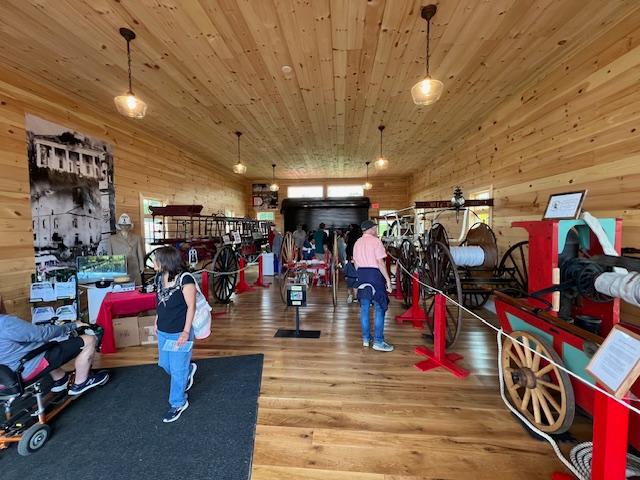
The Firefighting Museum of Dutchess County (Dutchess County Firefighting Museum) is finally open and houses all the memorabilia and artifacts for fire companies all over Dutchess County. I met fire fighters from companies all over Dutchess County who are dedicated in showing the history of their departments and of fire fighting over the years. The museum had just opened in August 2024 so all the displays have not been mounted yet. They should be ready for future events at the fairgrounds.
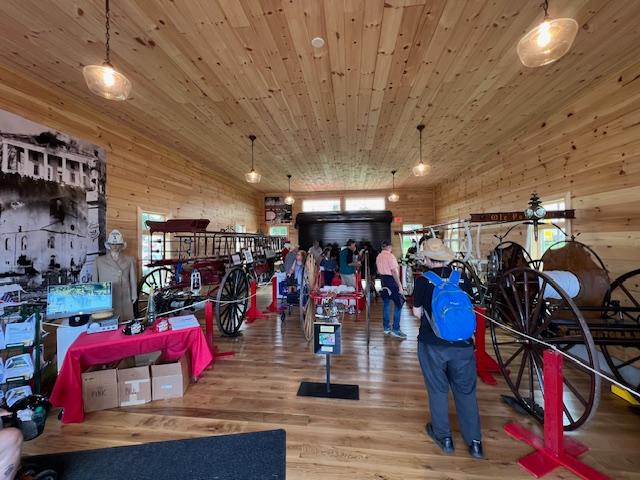
The firefighting equipment of the museum visited by many firefighters from the area and their families
The Dutchess County Fairgrounds Management had proposed to build them a new building on the Fair Grounds with the stipulation that it remain open when the fair grounds are being used and closed when they are not being used. It will be part of the Century Museum Village & Collectors Association to include a reproduction of a late 19th Century firehouse and museum of firefighting memorabilia.
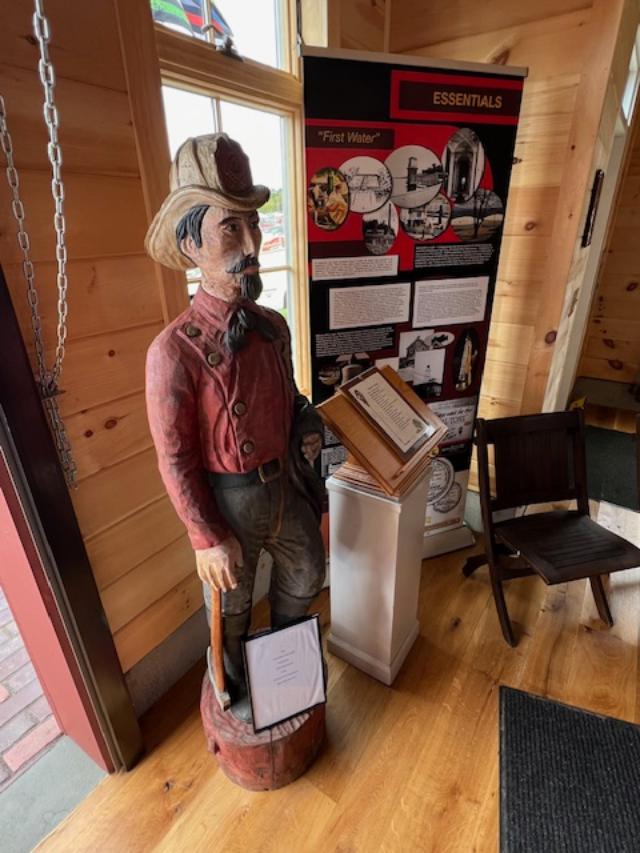
Firefighting artifacts at the front of the museum
The Parade Celebration cart with uniform for parades.
Firefighting artifacts at the new museum
The antique firehouse will join the Pleasant Valley Railroad Station, the Mount Ross Schoolhouse, the Washington Hollow Fair Judging Gazebo and the Century Museum.
Dutchess County Firefighters Museum logo
The new museum has an interesting combination of equipment, medals, horns and firefighting objects from the 1800 and 1900’s. It really is an interesting way to see how firefighting from the past relates to today and how much really has not changed. There were three different pieces of equipment on display: an old Ladder Truck from the 1890’s, a pumper from 1902 and an old hose bed that must have been around 1896.
The Pine Plains FD Ladder Truck
The old pumper on display
The handheld hose bed
There were old fire horns used long before traditional fire whistles and modern pagers, firefighting ribbons and awards, old buckets and hoses for moving water and lots of pictures of old fires. The members were explaining to me that they take the objects out at all sorts of town and county functions to promote the museum.
Old Fire Medallions from the old fire insurance days when these were placed on the houses
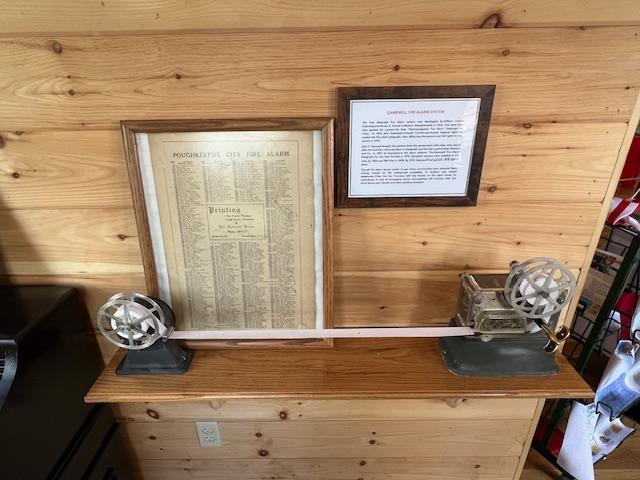
The roll call of fire fighting in Poughkeepsie, NY
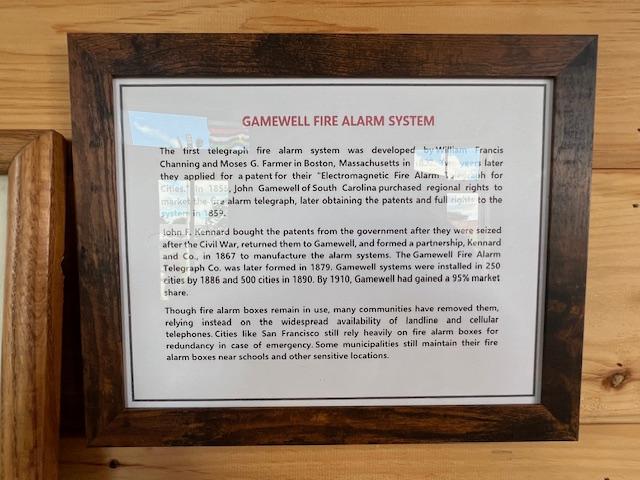
The Gamewell Fire Alarm System
History of the Dutchess County Firefighting Museum:
(from the museum pamphlet)
The Dutchess County Agricultural Society Inc. (DCAS) and the Century Museum Village & Collectors Association will be growing The Antique Village, located on the Dutchess County Fairgrounds which will include a reproduction of a late 19th Century Firehouse and museum of Firefighting memorabilia.
Firehouse artifacts in the museum
The Antique Firehouse will join the Pleasant Valley Railroad Station, the Mt. Ross Schoolhouse, Washington Hollow Fair Judging Gazebo and the Century Museum.
This grouping of special buildings on the Fairgrounds has been dedicated to preserving life in the late 1800’s in Dutchess County and sharing it with the over 500,000 visitors to the Dutchess County Fairgrounds over the course of the year.
The awards of the fire service from the old museum that will be displayed at the new museum soon
The Firehouse Project Research and artifact collection is underway, and the Fairgrounds is committed to adding to Dutchess County’s Fire Service history.
The project cost is $300,000 and was raised from funds all over Dutchess County, NY. This year’s fair the association was proud to open this museum as part of the Century Village on the fairgrounds.
The history of the Dutchess County Fire Service on video.
Special Firefighting “Coins” have been minted commemorating different fire stations, historic Dutchess County firefighting events and the dream of the Antique Fire Station and Museum. You can be a part of this exciting project by purchasing coins or making a tax-deductible donation.
The fire truck in front of the museum at the Dutchess County Fairgrounds
Disclaimer: This information is taken directly from the Antique Firehouse & Firefighting Museum of the Dutchess County Fair Grounds, and I give them full credit for it. The above picture is of the original proposed design for the museum and will be changed once the new building is built.
The new museum will house many more exhibitions in the future
The front of the Japan Society on 333 West 47th Street.
I recently visited the Japan Society for the ‘Japan Cuts’ film festival 2019 to see four films as part of the festival. I had visited the Society years ago for a ‘Monsters’ exhibition which coincided with the dropping of the Atom Bomb. It was told to me during the tour of the exhibition that the Godzilla movies were the Japanese reaction to the dropping of the bombs and the effects of nuclear was on nature.
The inside lobby of the Japan Society
This time around it was a little more upbeat. I went to see new films by Japanese directors who are looking at contemporary culture a little more differently that film makers of the past. I was most impressed with “Dance with Me”, a light weight musical that reminded me of 1960’s musicals that came out in the United States and “Whole” about Japanese who come from mixed backgrounds and their role in society. It was nice to sit back and watch the films and participate in the Q & A’s.
My favorite scene from “Dance with Me” “Happy Valley”
It was also nice to walk around the building to see the indoor gardens and pools that are located in the lobby area of the building. The building does have a feeling of Ying and Yang. There will be more exhibitions in the Fall.
The inside of the lobby of the Japan Society
The opening film “Dance with Me”
The Q & A at Japan Cuts for “Dance with Me”:
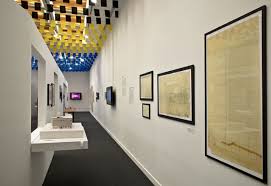
I recently visited the Japan Society for the “Made in Tokyo” exhibition on the development of architecture in the City of Tokyo between the 1962 and the 2020 Olympic Games. The exhibition showed the development and progress of the City since the bombings in WWII and how the City has rethought the building and rebuilding of the City since.
“Made in Tokyo”
Just like in the United States old department stores and office buildings are finding new use and older buildings in fringe and outside rural areas are becoming tech hubs. It was interesting so see how they were reworking old turn of the last century buildings and homes as incubators for the ‘computer age’.
The “Made in Japan” exhibition is closing at the Japan Society on January 26th, 2020. If you like the history of architecture this is an exhibition not to be missed.
The “Made in Tokyo” exhibition at the Japan Society
I recently went to the Japan Society for the screening of the famous movie, “Ringu” which is the original version of the American film, “The Ring”. It is rarely shown, and you can’t find it on YouTube or in the local libraries, so it was a treat to see this film. It was also the first time I had been in the museum since COVID closed everything down and it was nice to visit again.
Guess what I found on YouTube the next morning: “Ringu” the comparison:
Still, it was nice to go to the museum again and just relax for the evening.
The Trailer of “Ringu”
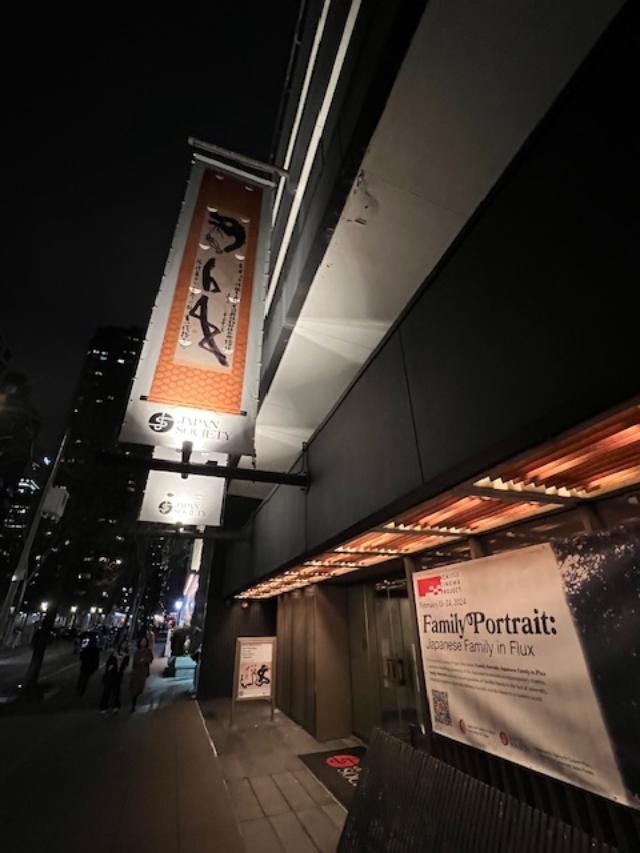
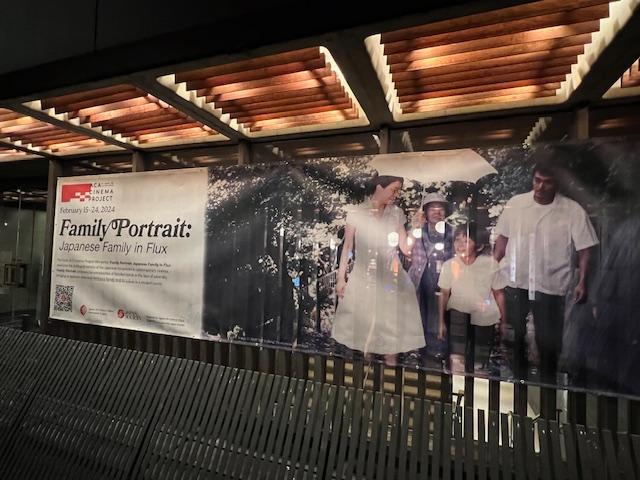
I recently went to see the “Family Portrait: Japanese family in Flux Series” in 2024 on some of the more contemporary films of Japan from the 1980’s and 90’s that are outside the studio system. These films dealt with real issues that most studio films don’t want to touch. I saw a film about a woman with terminal cancer and all the secrets of her past came out and the problems she had to face when the end was coming. Many twists and turns. The films dealt with these issues in a mature way and the series was very successful.
The sign for this amazing series of films.
The Japan Society mission:
The Japan Society is a non-profit organization formed in 1907 to promote friendly relations between the United States and Japan. Its headquarters, the youngest landmark building in New York was designed by Junzo Yoshimura and opened in 1971 at 333 East 47th Street near the United Nations. With a focus on promoting “arts and culture, public policy, business, language and education,” the organization has regularly held events in its many facilities including a library, art gallery and theater since its opening. After suspending all activities during World War II, Japan Society expanded under the leadership of John D. Rockefeller III (Wiki).
History:
In 1907, Tamemoto Kuroki and Goro Ijuin were chosen to represent Japan at the Jamestown Exposition. They attended a welcome dinner in New York with Japanese ambassador to the United States, Shuzo Aoki, where there was talk of forming an organization to promote US-Japan relations in the city. Two days later at a luncheon held by Kuroki, Japan Society was born. The organization would be run by Aoki, then Honorary President of the Japan Society of the UK and John Huston Findley.
Japan Society spent the next forty years hosting events in honor of Japanese royalty, giving annual lectures on a wide range of topics and presenting art exhibits that drew in thousands of New Yorkers. In 1911, Lindsay Russell, another founding member of the society and later president, met with Emperor Meiji and spent his visit to Japan encouraging more societies to form there and throughout the United States.
Japan Society was soon incorporated under New York law and finally found a home near one of Russell’s work offices, though it continued to relocate throughout its history before its current headquarters was opened in 1971. At this time, Japan Society and its members began to express interest in improving teaching about Japan in the United States. The organization began sponsoring trips to the country, publishing books and sent a report to the Department of Education about the portrayal of Japan in American textbooks.
It remained active during World War I, operating as it had for the last seven years but the organization became more political when it began associating with the Anti-Alien Legislative Committee, an advocacy group that spoke out against yellow peril. Russell and Hamilton Holt, another founding member used the organization’s publication to defend all of Japan’s actions at the time. Unbeknownst to anyone at the time, even one of Japan Society’s writers secretly worked for the Japanese government with the task of improving Japan’s imagine in the United States. The organization eventually realized the dangers of taking sides and by 1924 stopped publishing any political commentary.
By the 1930’s, membership had dropped significantly due to financial difficulties and the Second Sino-Japanese War. Following the attack on Pearl Harbor in 1941, Henry Waters Taft immediately resigned as president after serving from 1922 to 1929 and again from 1934. Russell also stepped down as one of Japan Society’s directors. All activities were suspended and would not resume until the Treaty of San Francisco was signed in 1951.
John D. Rockefeller III served as president from 1952 to 1969 and then as Chairman of the Board until his death in 1978. He accompanied John Foster Dulles on his trip to Japan that eventually led to the signing of the 1951 treaty. Rockefeller, a supporter of the Institute of Pacific Relations, who visited Japan in 1929 during one of its conferences, wanted to contribute to bettering US-Japan relations after the war and believed there needed to be non-governmental organizations like Japan Society in each country in order for such friendly relations to exist.
Under Rockefeller’s leadership, Japan Society expanded and talk began to find a permanent headquarters for it. It shared offices with another Rockefeller-led organization, Asia Society but as the two organizations continued to grow during the 1960’s, it became increasingly clear that Japan Society needed its own building. After receiving donations from Rockefeller and other members, construction began on “Japan House” in 1967. Designed by Junzo Yoshimura, whose work also includes Asia Society’s headquarter, it became the first building in New York of contemporary Japanese architecture. On September 13, 1971, it was finally opened to the public after a ceremony attended by Prince Hitachi. He echoed Russell’s first words about Japan Society, calling for “closer people-to-people” contact between countries.
Japan Society building
(This information was taken from Wiki and I give them full credit for the information. I also included information of Japan Society).
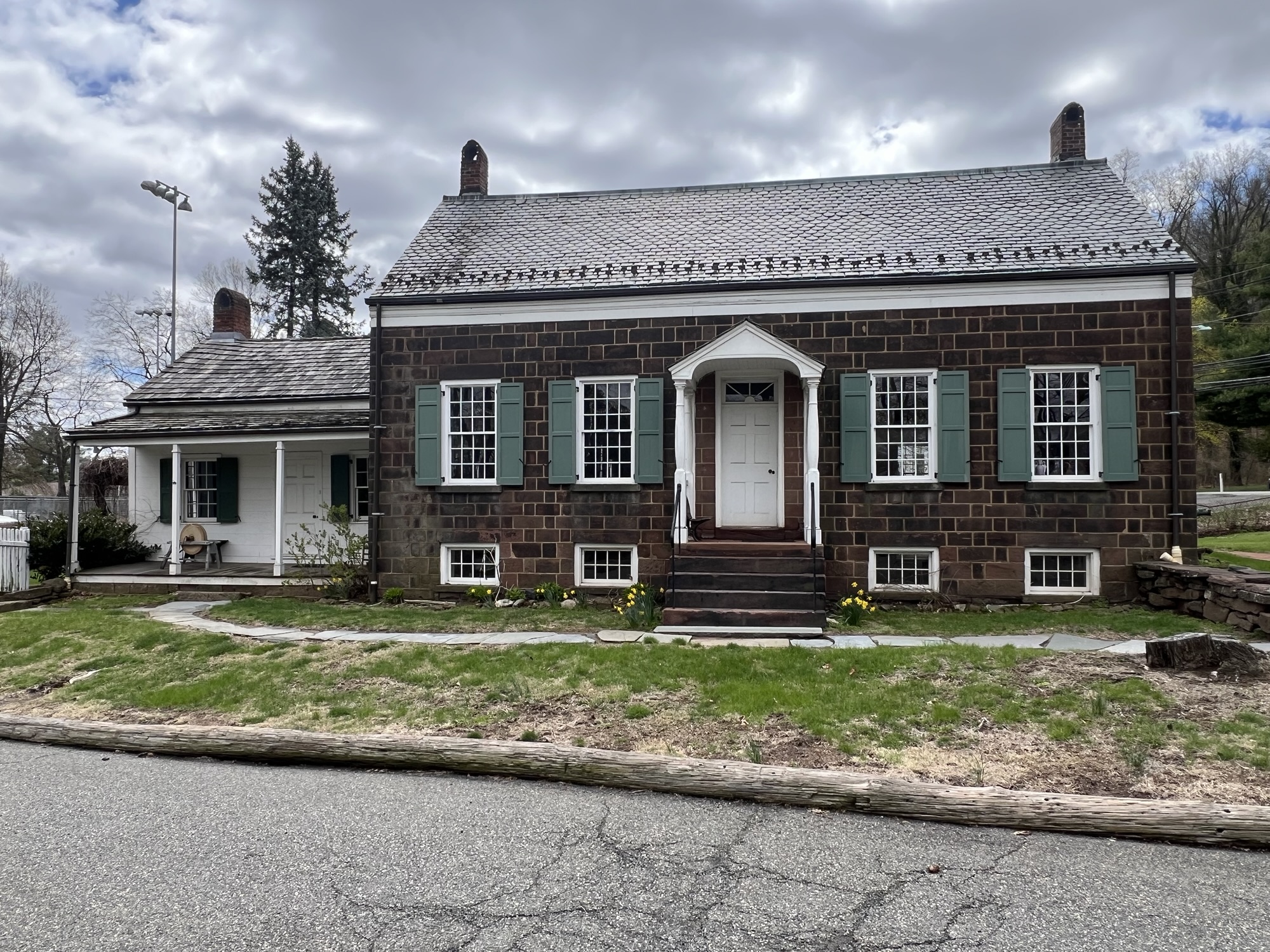
The front of the Hamilton House in the early Spring
I visited the Hamilton House Museum this afternoon which is right down the road from Montclair State College and sits at the border of the Clifton-Montclair border. The interesting part of the house location is that it still sits the farm land of the Van Wagoner Family but the house was moved from its location to the current one because of the building of Route 46 in 1973.
The front of the house in the Spring
When talking with curator, the house is going through a transition from the City of Clifton ownership to the County of Passaic Historical Society’s site. They are currently cataloging every piece in the house and putting it online. They want to view the collection to see what they can work with within the home.
Each room represents a different time in the history of the house. There is a living room from the Victorian age, the kitchen is from the late 1700’s to the early 1800’s and the dining room is from the mid-1800’s. These rooms are furnished to represent a certain time in the house.
There will be many revisions in the future for the house so there are some changes on the way. The upstairs is currently being used for storage and there will be revision there as well. I got a quick tour of the rooms with the curator and he said there will be more changes in the future as they catalog each piece. The grounds are currently being replanted.
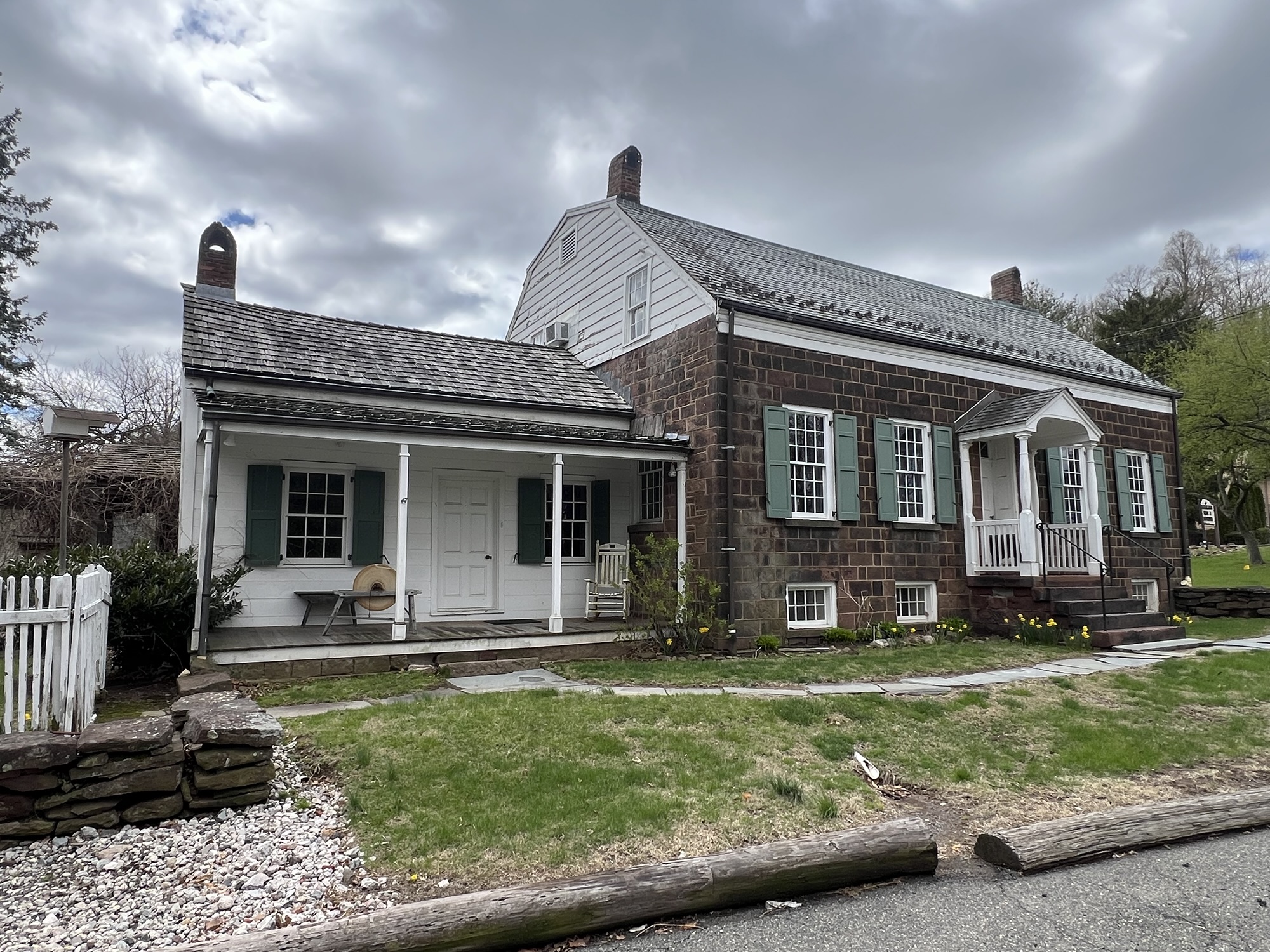
The Hamilton House Museum sits at the Clifton and Montclair border
The house is one of the last examples of early 19th century stone houses in Passaic County. The house was built in 1817 by John and Ann Vreeland and then passed to the Van Wagoner family. It changed hands a few times until 1856 when the Hamilton Family bought the house (no relationship to Alexander Hamilton). The house remained in the Hamilton Family until 1972 when the last living relative died and no one in the family wanted possession of the house (Tour Guide & Wiki).
The oldest section of the house
That’s when the City of Clifton bought the house from the family of its historic value. The house was added to the National Register of Historic Places on May 13th, 1982 (Wiki).
The outside grounds of The Hamilton House Museum
The Grape Arbor on the grounds of the Hamilton House
History of the Hamilton House:
(taken from the City of Clifton website)
This 18th Century Dutch gambrel-roofed homestead was once the home of the Van Wagoner and Hamilton families. This basic of the house does not greatly differ from its Dutch antecedents.
The sturdy one and one half story cut sandstone structure, flanked by a grainery, spring-house and gardens reflects almost two hundred years of American history. It brings back memories of an uncluttered horizon with farms, orchards, fresh brooks, forest full of game and filled with scent of wildflowers.
Hamilton House & the Clifton Community:
Although the City of Clifton was incorporated in 1917, a community had existed since 1679. Prior to 1917, the area was known as Acquackanonk Township and included parts of : Little Falls, Passaic, Paterson and West Paterson.
The Indian Chief Captahem deeded 11,000 acres to the early Dutch settlers on the shores of the Passaic River. Predominately rural, this sparsely populated village thrived and grew.
The farmhouse was presented to the City of Clifton by the developers of the late Henry Hamilton. The Hamilton family had bought the 96 acre property in 1856 and for over 100 years until the death of Mr. Hamilton in 1970, it had been the family home.
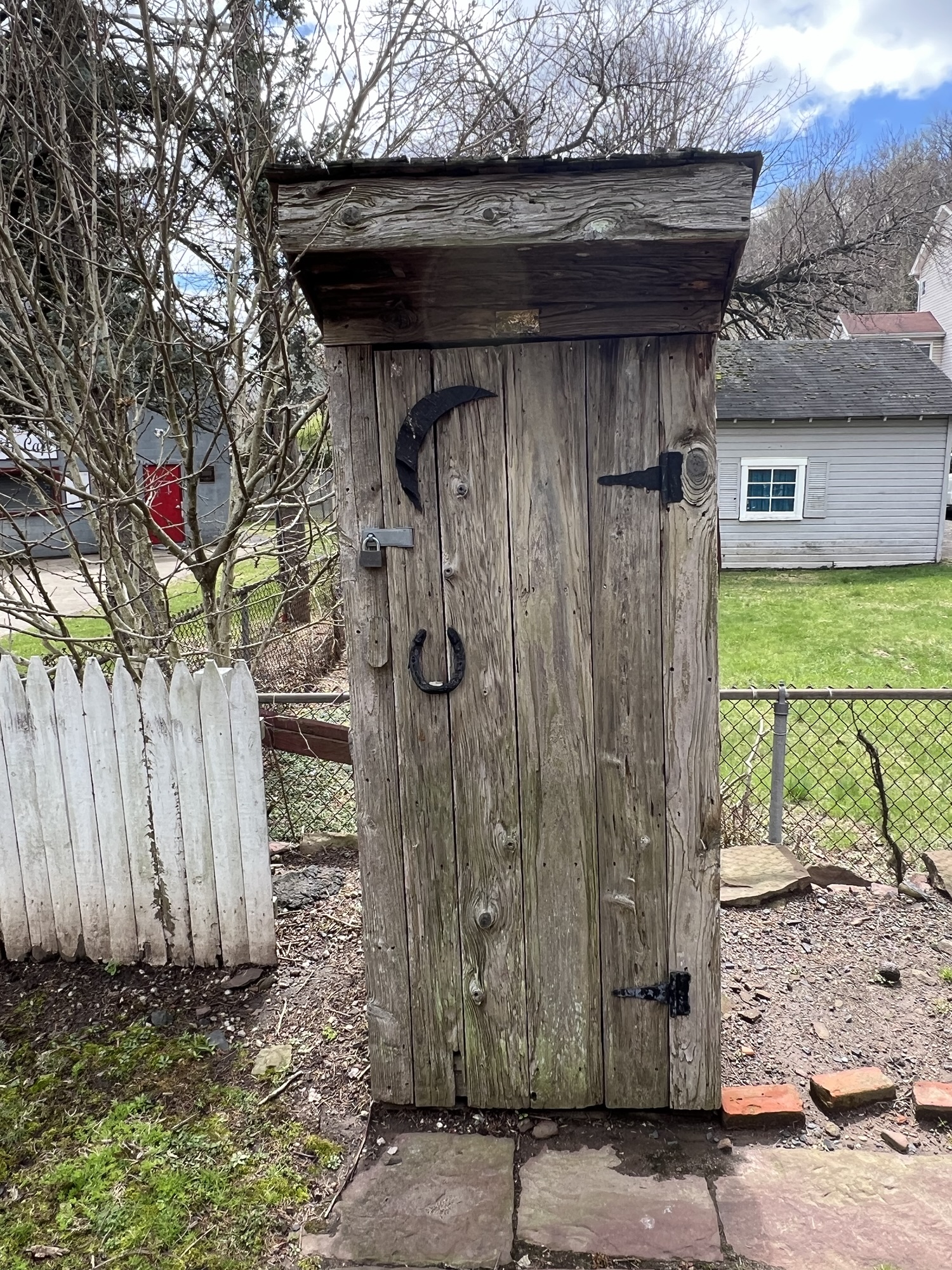
The old outhouse in the back of the property
Current Location and Future Plans:
The house was moved to its present location in Surgent Park in 1973. Infinite plans have been taken with examination and documentation of the building’s structural elements. Extensive research has been conducted including the records and treasured memories of Miss Caroline Hamilton as well as: Artifacts, Deeds, Manuscripts, Maps, Photographs and Wills.
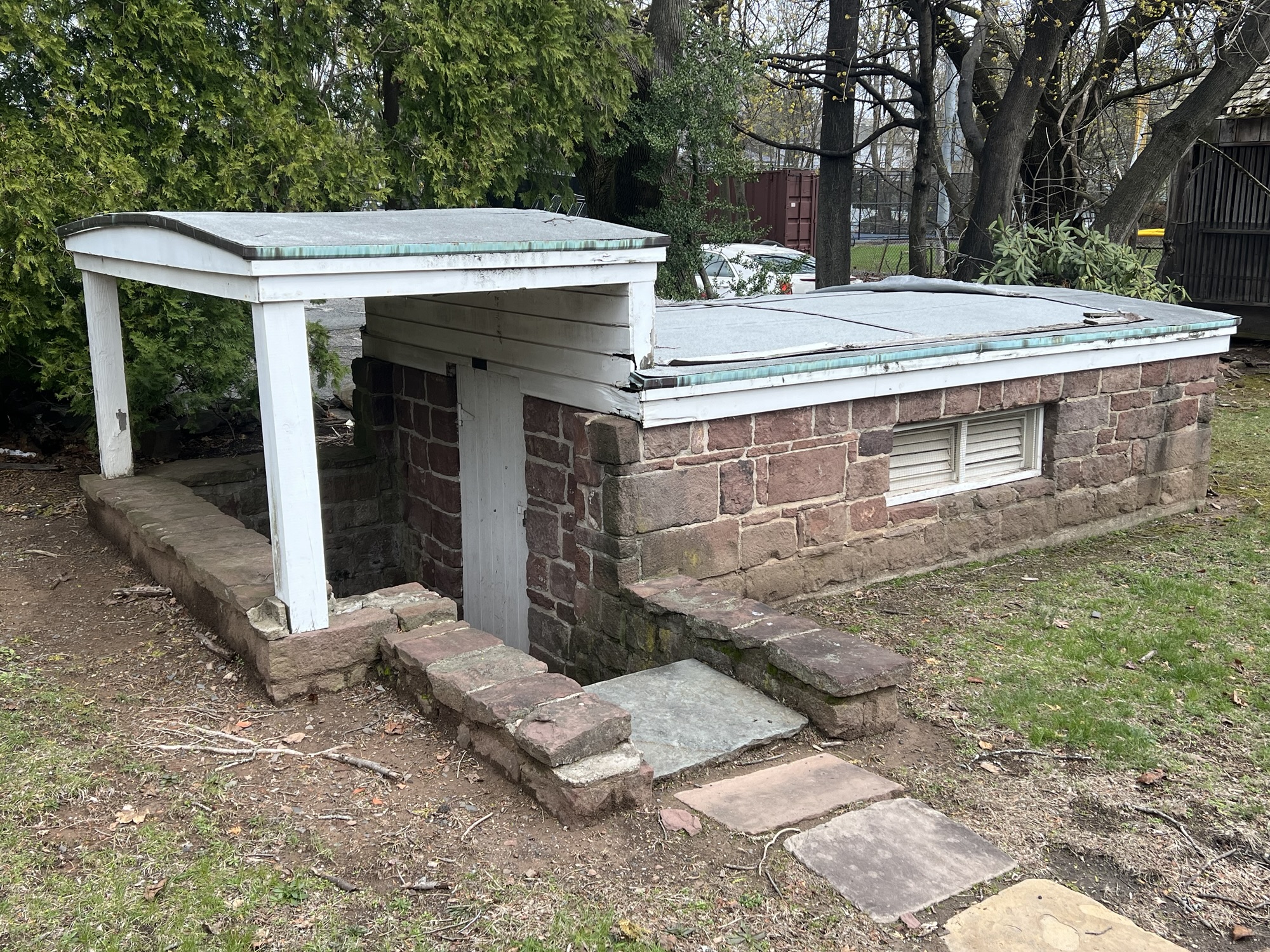
The old Ice House on the property
Scheduling Tours:
The museum is opened for tours on Sunday from 2:00pm-4:00pm (except on holidays). The house is going through a transition right now with the change over.
I made my first visit to the Museum of Sex in New York City and highly recommend it. I have to admit it is different but what I like about the museum is that it doesn’t try to hide the subject and it also just doesn’t jump out at you. It is an interesting progression in art and I saw this in the exhibition “The History of Pornography”, where the films were set up in order since the Victorian times. Sometimes it had to go underground due the times but pornography has been around since the days of the media.
The exhibition shows early pictures and viascopes of sexual acts and the early films date back to the Silent era. The exhibition covers from the Silent era to present times and the advancement of sex in films once the Hayes Code was broken in the 1960’s. With the relaxed rules and the mainstream films of “Tie Me Up Tie Me Down” and “Deep Throat”, you can see the progression of this as an art form and progression of the way the films were made.
Another great exhibition that I saw was “Punk Lust: Raw Provocation 1971-1985”. This show matches nicely with the current show on the “Punk Movement” at the Museum of Arts & Design. It was interesting to see the posters, flyers, clothes and hear the music of the era. Just at the height of the ‘Sexual Revolution’ and into the fragments of the Disco era came a new sound and way to dress that started in the early 80’s before the progression of the Reagan years in Washington DC, this movement came with a new sound with Punk, New Wave and Technographic and a new way to dress provocative without being too revealing.
“Punk Lust” exhibition
As the museum was quoted saying: “The survey looking at the way Punk Culture used the language of sexuality, both visually and lyrically, to transgress and defy, whether in the service of political provocation, raw desire or just to break through the stifling gender norms and social expectations that punks refused to let define them.”
“Punk Lust” exhibition
On a more recent trip to the museum, three exhibitions were open and all very interesting, highlighting different types of eroticisms. These countered different parts of the artworld. Also, in the post-COVID era, all the interactive displays opened up and I was able to visit and experience each of these as well. These are the most fun!
The Andy Warhol exhibition:
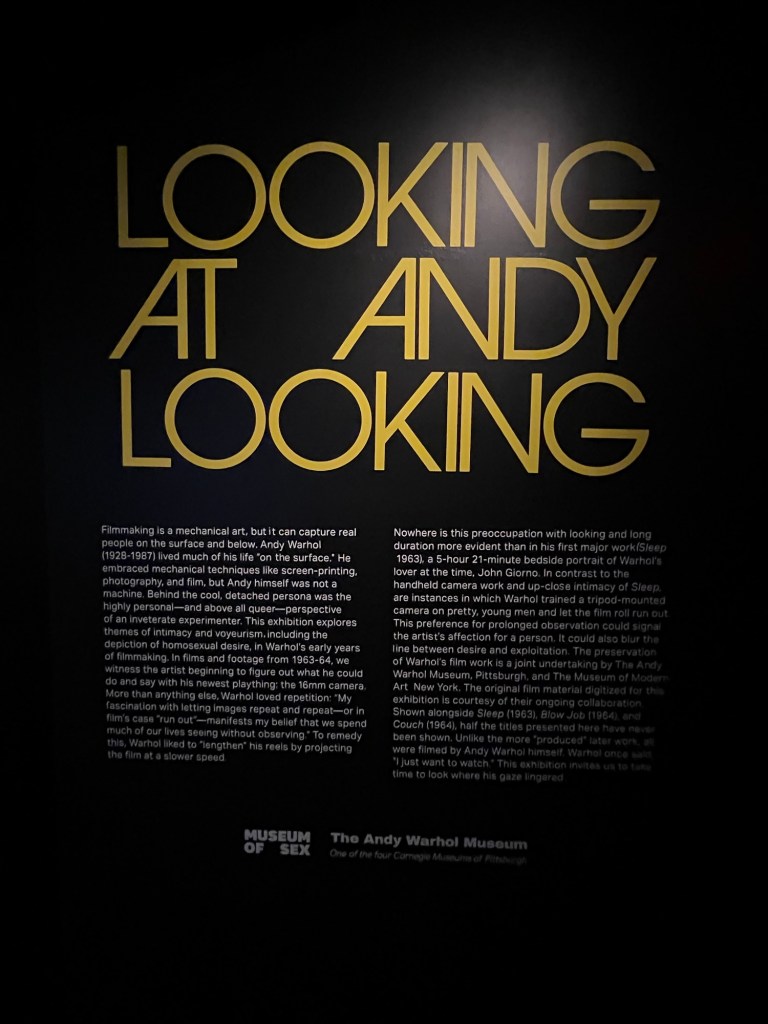
“Looking at Andy Looking” exhibition:
(from the museum website)
This exhibition will explore themes of intimacy and voyeurism, including the depiction of homosexual desire, in Warhol’s early years of filmmaking. In films and footage from 1963-64, we witness the artist beginning to figure out what he could do and say with his newest plaything: the 16mm camera.
“Looking at Andy Looking”
(from the museum website)
Filmmaking is a mechanical art, but it can capture real people on the surface and below. Andy Warhol (1928-1987) lived much of his life “on the surface.” He embraced mechanical techniques like screen-printing, photography, and film, but Andy himself was not a machine. Behind the cool, detached persona was the highly personal—and above all queer—perspective of an inveterate experimenter.
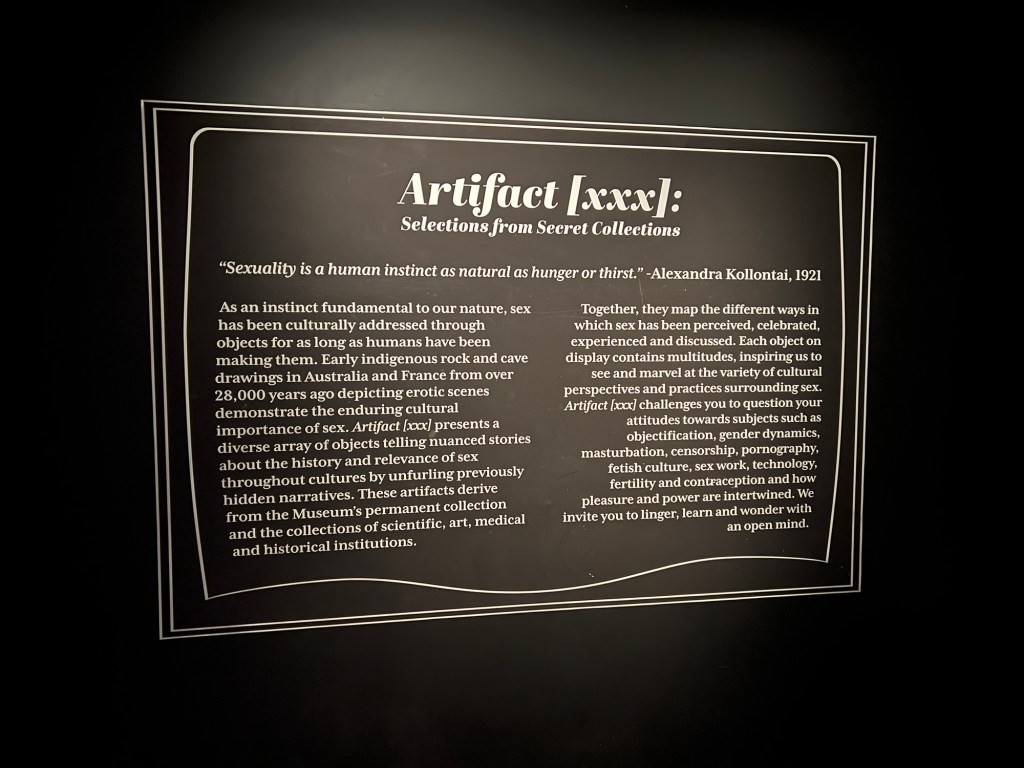
The exhibition I saw was the “Artifact” exhibition from the Museum of Sex’s collection of items exploring how we look at sexual encounters. What is sex and how does a play a role in our lives?
“Artifact: Selection from a Secret Collection”
(from the museum website)
Gathered from the Museum of Sex’s permanent collection of more than 15,000 objects as well as from other notable collections and institutes of antiques, medical history and sexology, Artifact (xxx): Selections from Secret Collections presents an intimate exploration of how sex manifests across culture through art, science, and design. An early vibrator made in Great Britain, a lotus shoe worn by a woman in China, and a Braille issue of Playboy magazine provide insight into prevailing belief systems and societal taboos across geography and time.
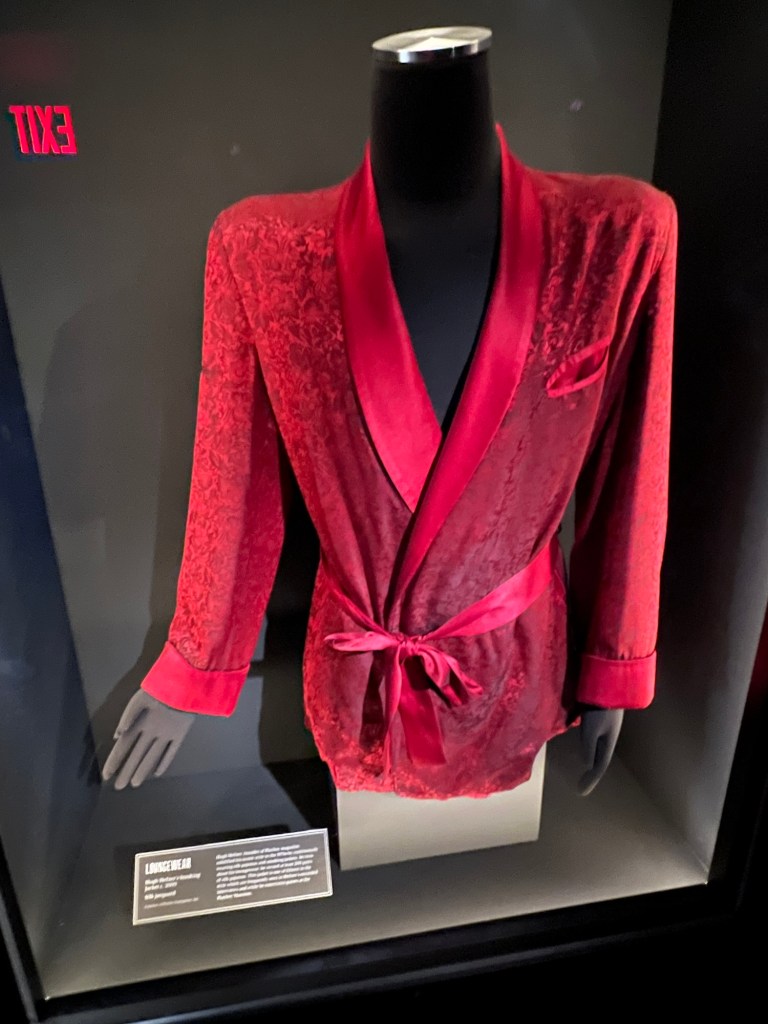
Hugh’s Hefner’s smoking jacket
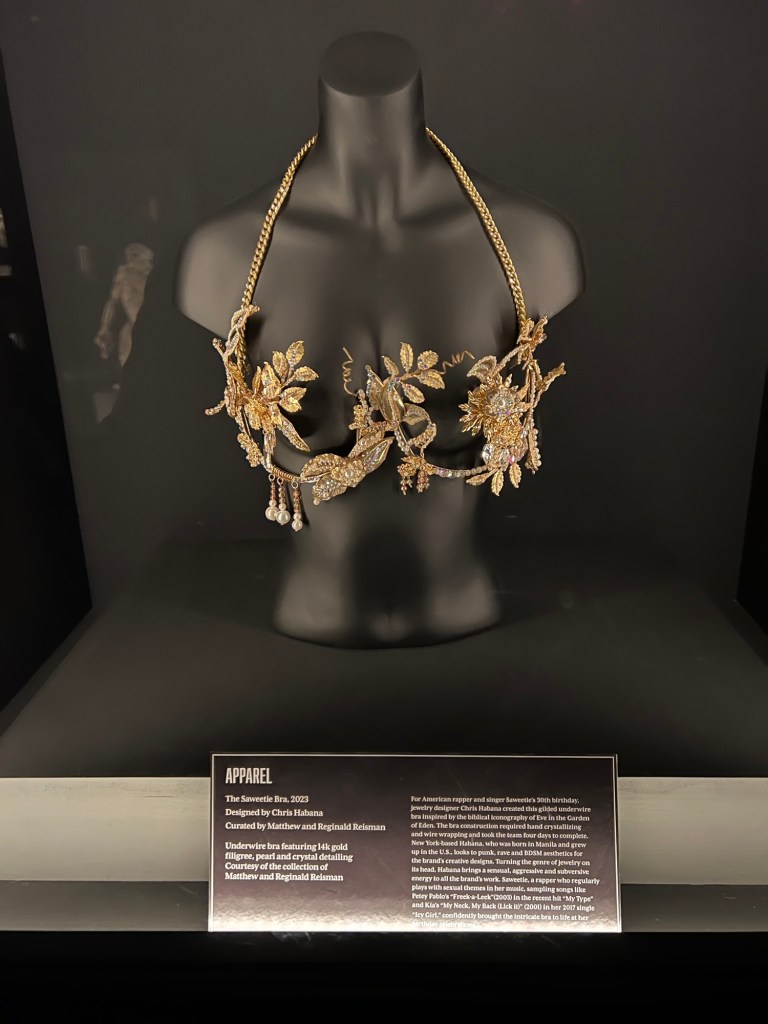
Jeweled Bra
(from the museum website)
Fulfilling a wide range of functions from artwork, medical devices and pop-culture mementos to guidebooks and accessories used for enhancing pleasure or pain, these objects tell the stories of the expansive yet nuanced influence of sexuality throughout history.
Candy pants from the 1970’s
Deep Throat Memorabilia
The memory of the movie a movie ‘Deep Throat’’
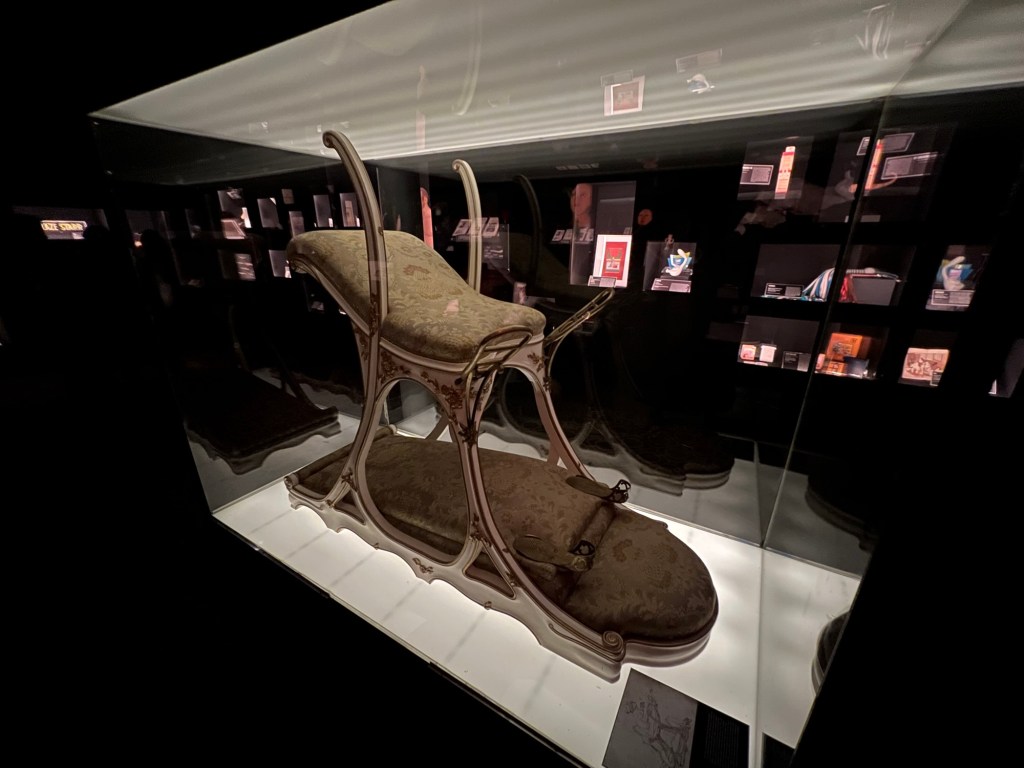
Intercourse Chair
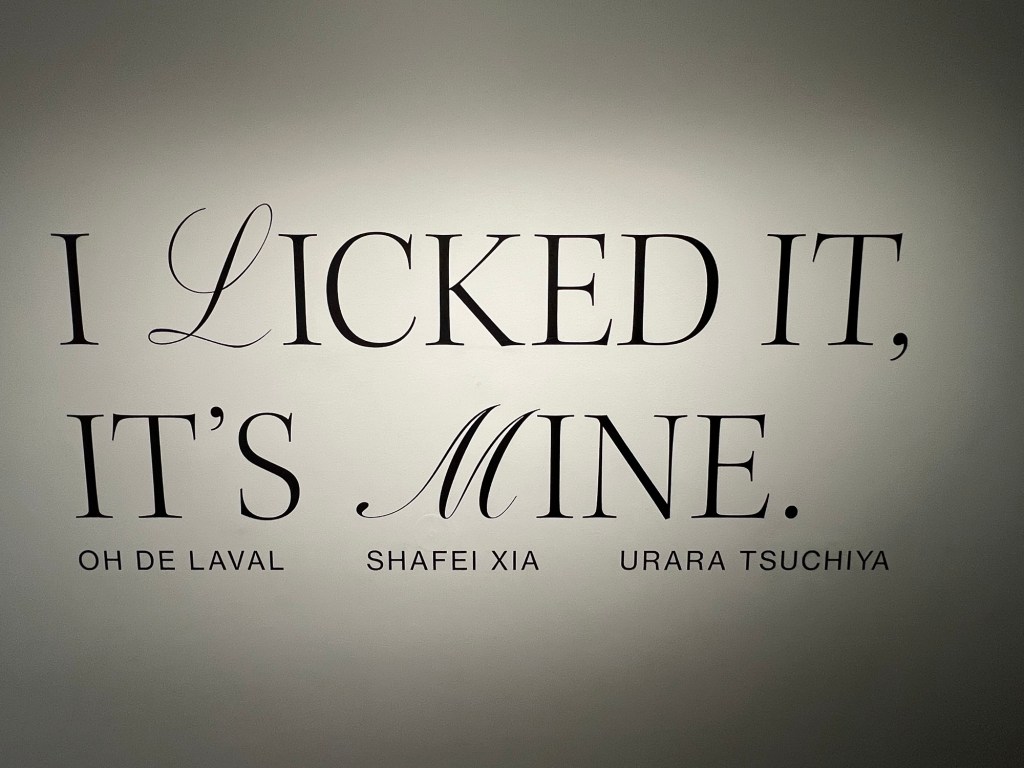
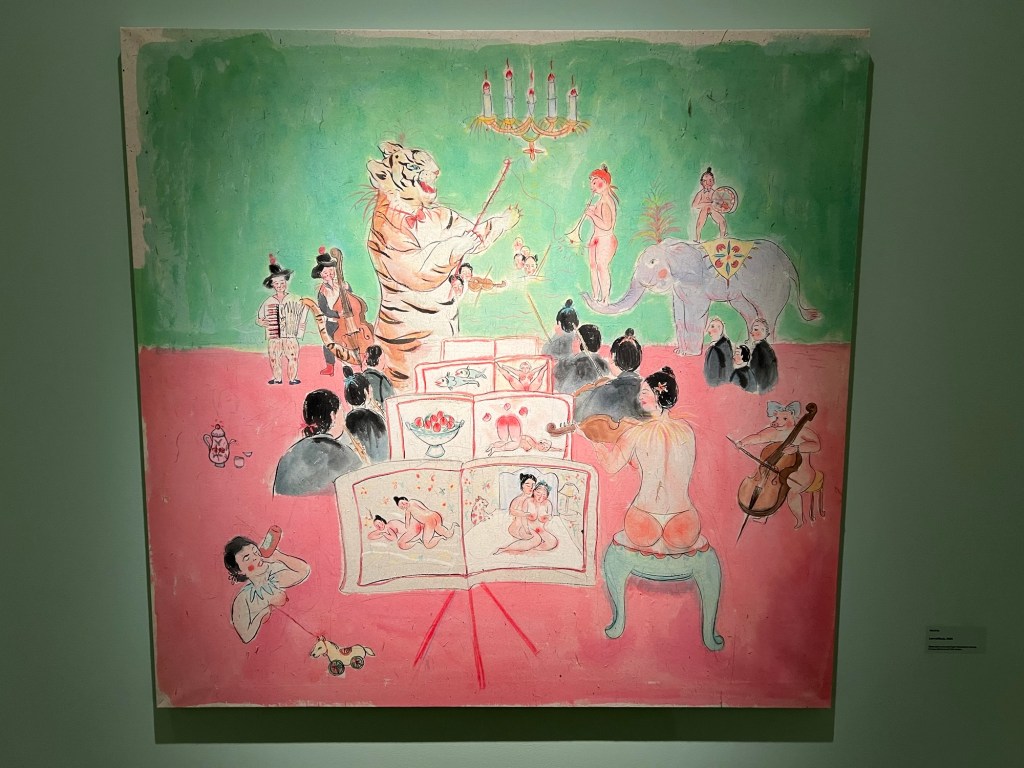
Another exhibition that I enjoyed on my last trip to the Museum of Sex was the “I Licked it, It’s Mine” exhibition on exotic paintings and sculpture.
The ‘Licked it, it’s Mine’ exhibition sign
(from the museum website)
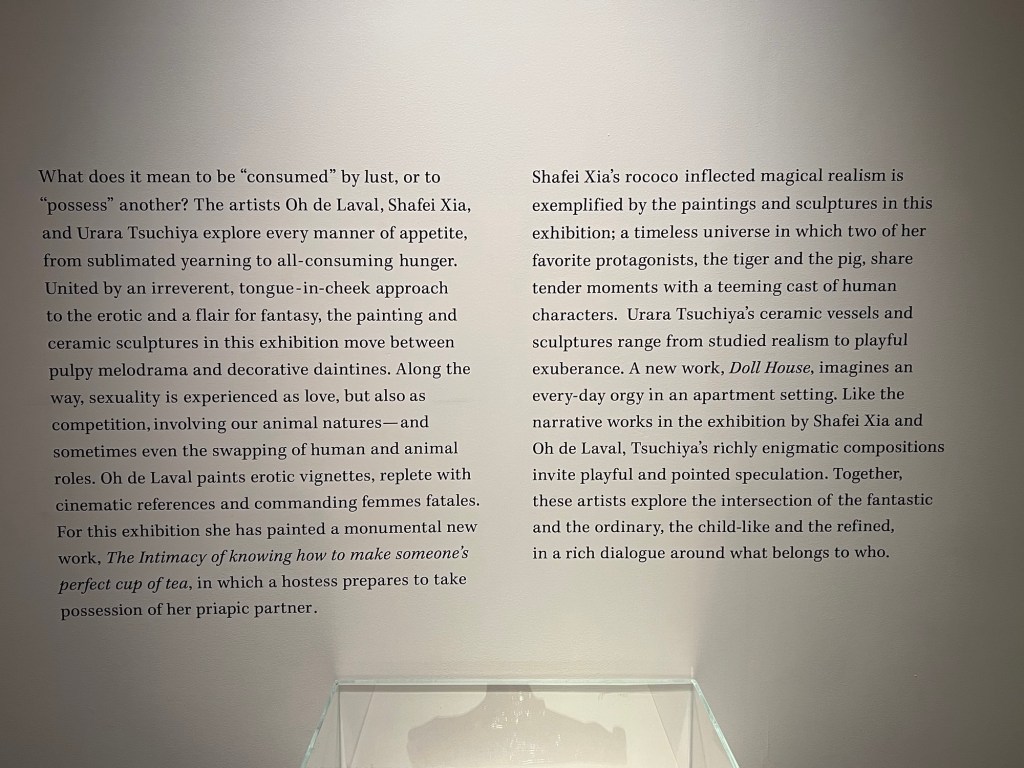
What does it mean to be “consumed” by lust, or to “possess” another? The artists Oh de Laval, Shafei Xia, and Urara Tsuchiya explore every manner of appetite, from sublimated yearning to all-consuming hunger. United by an irreverent, tongue-in-cheek approach to the erotic and a flair for fantasy, the paintings and ceramic sculptures in this exhibition move between pulpy melodrama and decorative daintiness.
Along the way, sexuality is experienced as love, but also as competition, involving our animal natures—and sometimes even the swapping of human and animal roles.
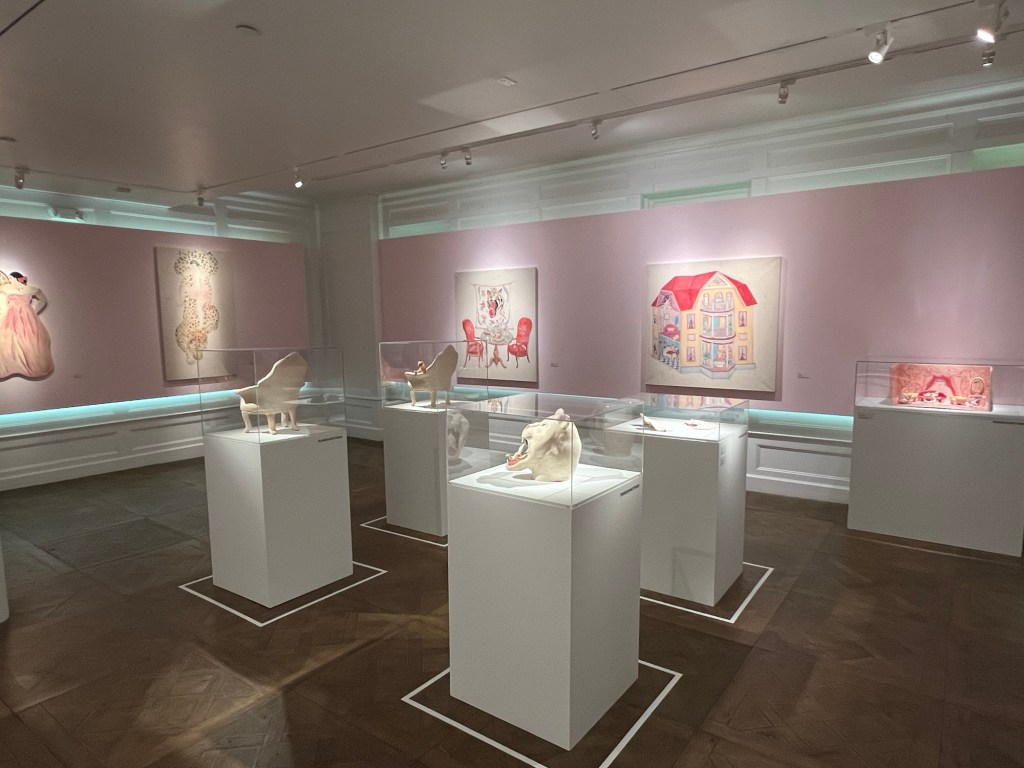
The gallery for ‘I licked it, it’s mine’ exhibition
The literature from the exhibition explaining the works
These were some of my favorite works from the exhibition:
The exotic works
The unusual works
The unique paintings and ceramics
One of my favorite pieces from the exhibition. I thought this was quite exotic.
I walked next through Carn-O-Rama and experienced the workings behind the scenes of a traveling carnival reaching the suburbs. I always thought it was just lights, rides and cotton candy. There is more to it than that.
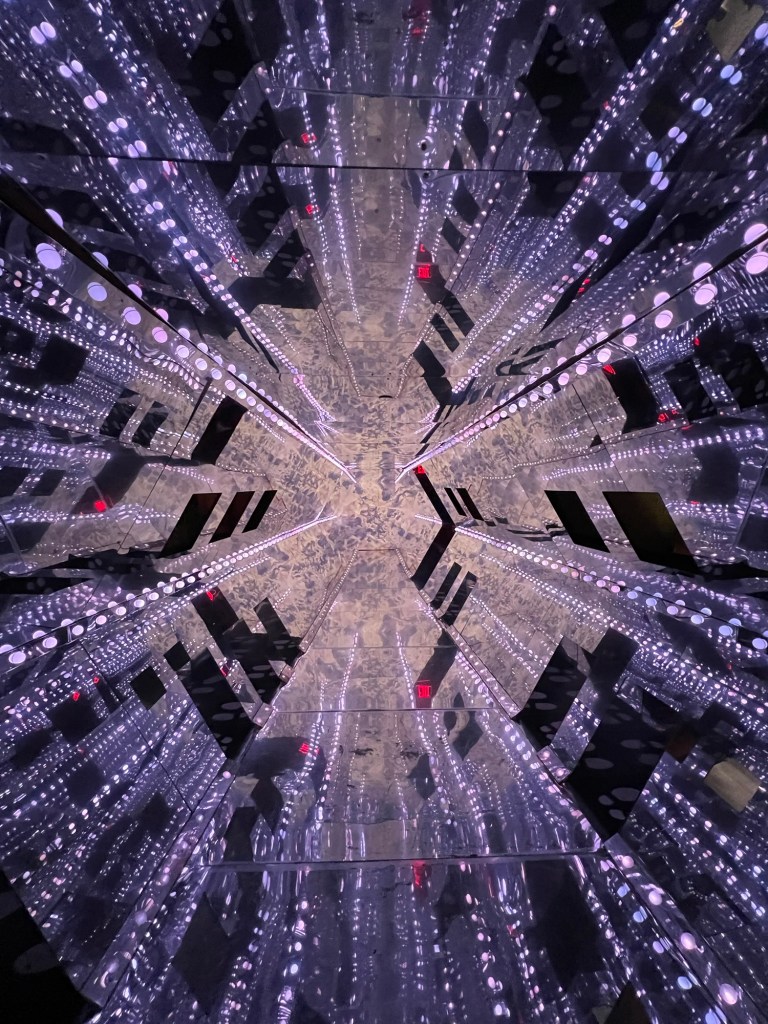
After my visits to the three galleries, I took a took to the interactive section of the museum and experienced Funland, where I walked though Stardust Lane and all the lights and sounds of the mirrored rooms.
A Video walk through Funland is a lot of fun. It really pleases the senses.
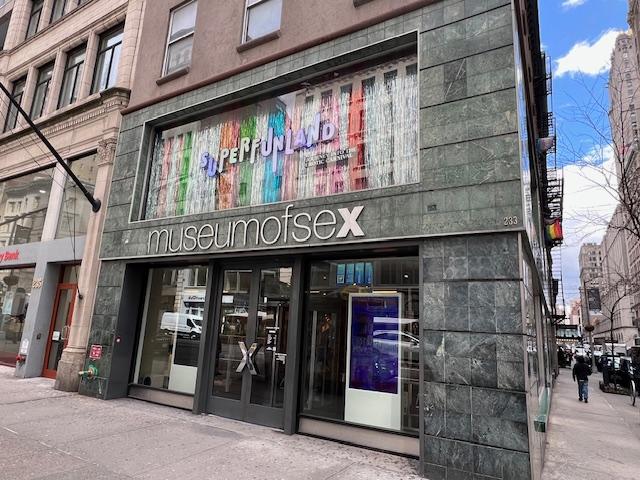
I next took a trip to Super Funland and this was my trip through Stardust Lane. This is all lights and mirrors and it was an unusual walk through the museum that challenges the senses. Walking through Super Funland is a voyage in the wild with mirrors and music.
It get pretty interesting walking through here.
In another video walk through of Funland, I met a lot of interesting people on my walk through the museum. It really puts you into a interesting mood.
The pathway around the museum took me to other interactive exhibitions. Jump for joy was a very interesting interactive world of different sexual parts and mood lighting.
The ‘Jump for Joy’ exhibition
Then I walked through ‘Lucky Land’
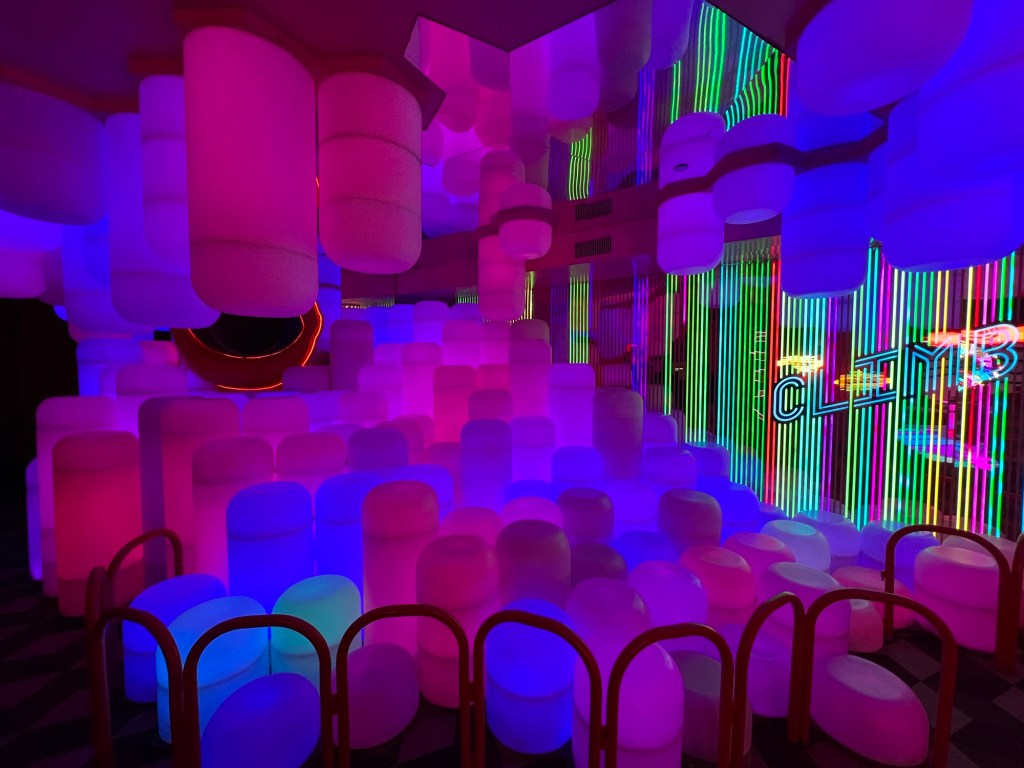
Then I walked through and climbed ‘The Pink Palace’, a series of colored features that led through what looked like another sexual parts. This is called the ‘ClimbX”.
The colored building blocks of the exhibition of “ClimbX”
The colored blocks of the exhibition “ClimbX”
Another object to climb through on your way out of the exhibition.
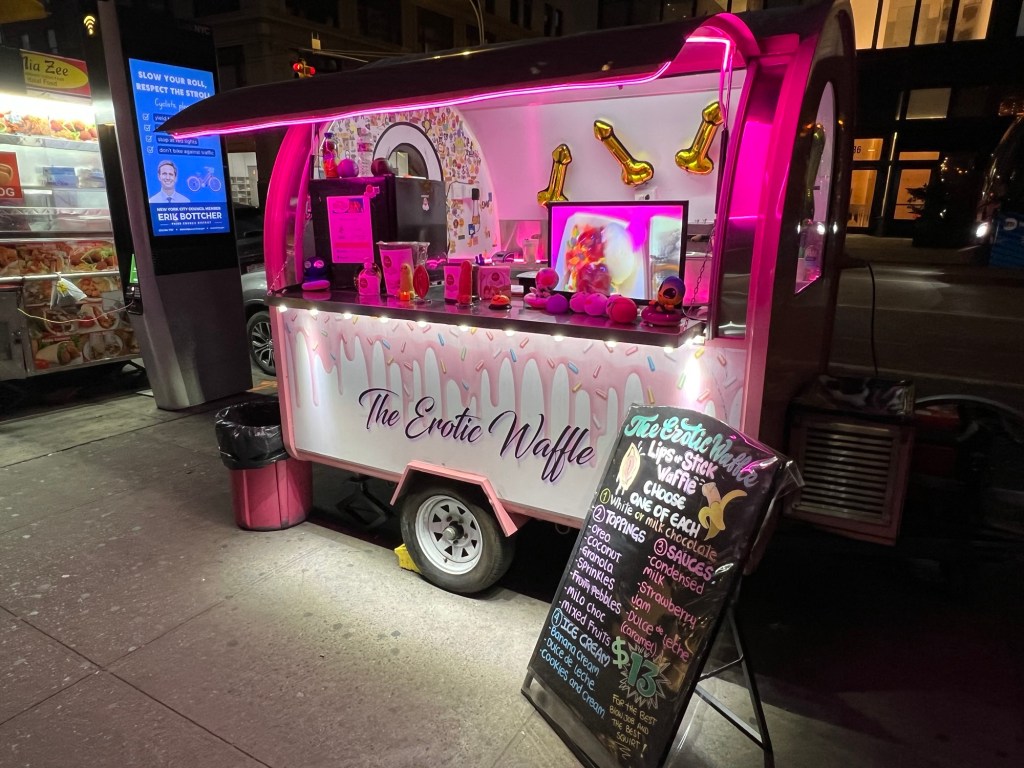
It really is an interesting museum to visit. You really have to stop and enjoy the pleasures of each floor. You have to take the time experience all the sights and sounds. The funny part of leaving the museum is that there is an exotic food vendor on Fifth Avenue with the most unusual items he sells.
The Erotic Waffle food truck just outside the museum. Not your kids food truck. The truck sold sexual organ pastries, waffles and other exotic items. You have to stop by when you are in the neighborhood!
History of the Museum of Sex:
(This comes from the Museum of Sex History Website)
The Mission of the Museum of Sex is to preserve and present the history, evolution and culture significance of human sexuality. The museum produces exhibitions, publications and programs that bring the best of current scholarship to the wildest possible audiences and is committed to encouraging public enlightenment, discourse and engagement.
The Museum of Sex
The Beginning:
When the Museum of Sex first emerged on New York City’s Fifth Avenue on October 5th, 2002, it was without precedent in the museum world. In the development of its inaugural award winning exhibition NYCSEX: How New York Transformed Sex in America, the Museum created a board of comprised of leading scholars and historians. The Museum’s advisory board has guided curators and guest curators towards research resources, pertinent collections and exhibition relevant artists. Advisors such as Steven Heller, Timothy J. Gilfoyle, PhD, Mike Wallace PhD and June Reinisch, Director Emeritus for The Kinsey Institute for Research on Sex, Gender and Reproduction as well as institutional collaborations with New York University’s Center for the Study of Gender and Sexuality, Planned Parenthood Federation of America, New York Historical Society and the Lower East Side Tenement Museum have contributed to making the Museum of Sex one of the most dynamic and innovative institutions in the world.
Design has played a pivotal role in both exhibition development and execution with world-renowned design firms such as Pentagram Design Inc, Casson Mannand 2×4, helping to transform the galleries and historic building over the last six years. The museum’s building, built in the area of New York formerly known as the “Tenderloin,” a district of NYC made notorious by the 19th century for its bordellos, dance halls, theaters and saloons, serves as a New York City landmarked site.
Our Work:
Since its inception, the Museum of Sex has generated over 30 exhibitions and 6 virtual installments, each in keeping with the Museum’s mission of advocating open discourse surrounding sex and sexuality as well as striving to present to the public the best in current scholarship, unhindered by self-censorship. With each new exhibition, lecture series, event and publication, the Museum of Sex is committed to addressing a wide range of topics, while simultaneously highlighting material and artifacts from different continents, cultures, time periods and media.
Our Collection:
The Museum’s permanent collection of over 20,000 artifacts is comprised of works of art, photography, clothing and costumes, technological inventions and historical ephemera. Additionally, the museum houses both a research library as well as an extensive multimedia library, which includes 8mm, Super 8mm, 16mm, BETA, VHS and DVD’s. From fine art to historical ephemera to film, the Museum of Sex preserves an ever-growing collection of sexually related objects that would otherwise be destroyed and discarded due to their sexual content.
Our Public:
In a short time, the Museum has received attention from academic institutions, major publications, media outlets and celebrities, positioning the Museum of Sex within the realm of academia and pop culture alike. The Museum has been featured in numerous publications including The New York Times, The New Yorker, Esquire and Time and on television broadcasts ranging from CNN to IFC to NBC’s Law & Order Criminal Intent. Award-winning advertising campaigns in print and television media have sealed the Museum’s arrival as a cultural touchstone.
Accolades continue to pour in from visitors and the press in every corner of the world, inspiring the Museum of Sex to continually surpass its own high expectations. Future planned exhibitions and events-the likes of which have never been offered by any other institution-are guaranteed to captivate and resonate, securing the Museum of Sex a well-deserved, distinguished place in history (Museum of Sex History)

























 Visiting a Museum: The Unique, Unusual, Obscure and Historical