Admission: Adults $7.00/Seniors-Students with ID-Children 9-17 $4.00/Children 0-8 Free
My review on TripAdvisor:
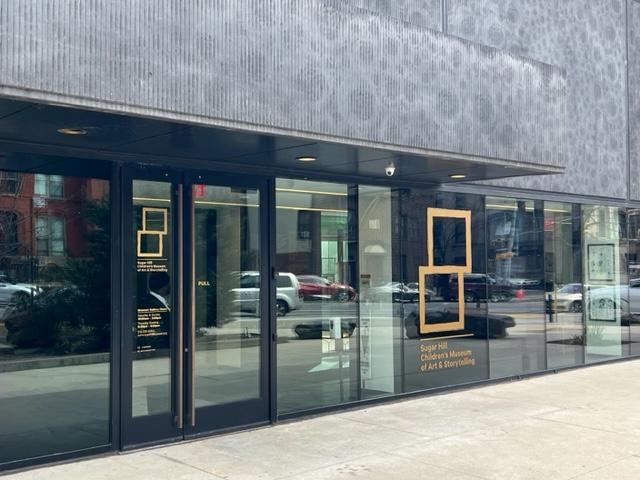
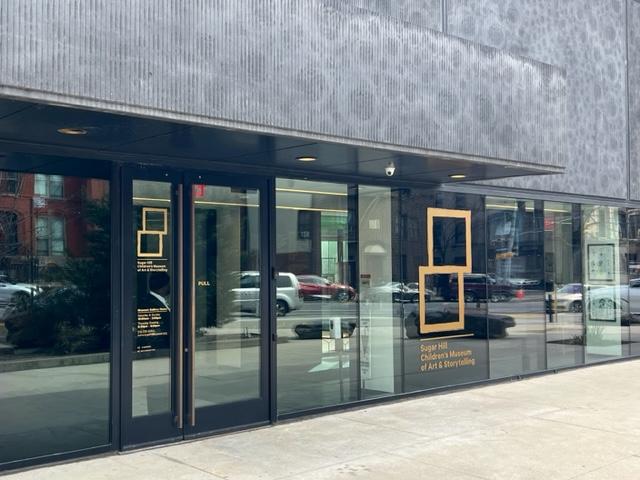
The entrance of the Sugar Hill Children’s Museum
Sugar Hill Children’s Museum of Art & Storytelling building
The Sugar Hill Children’s Museum of Art and Storytelling is located on the first floor and basement level of 880 St. Nichols Avenue. This unique little museum caters to small children and their families with lots of interactive programs for the children.
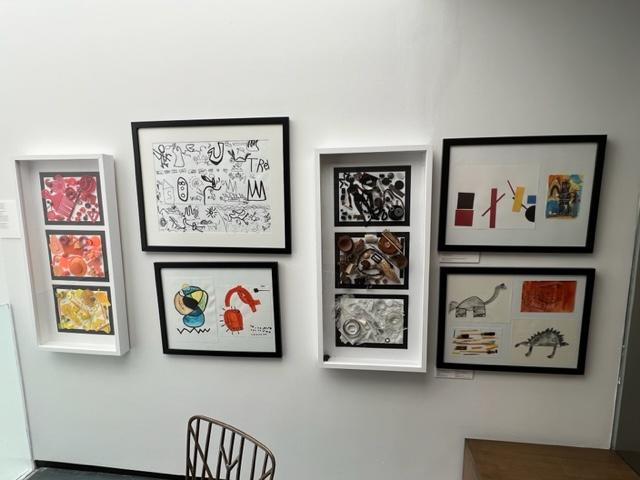
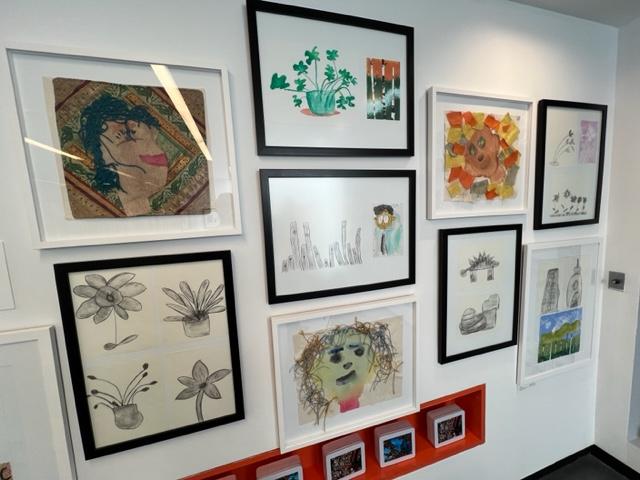
The Children’s Gallery in the First Floor of the Museum with the gift shop.
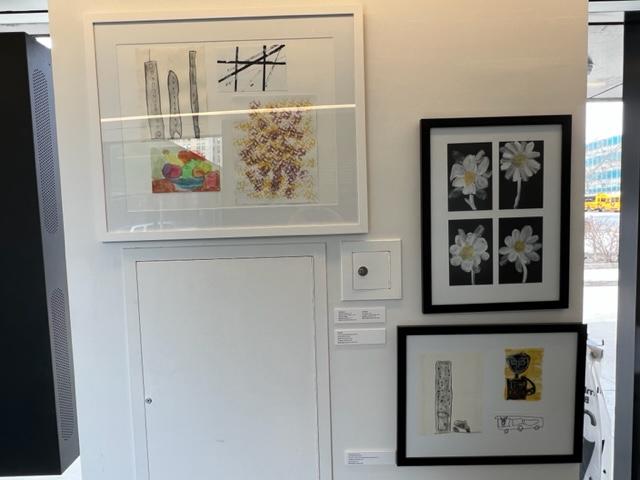
Children’s Room Exhibition on the first floor
Children’s Room Exhibition on the first floor
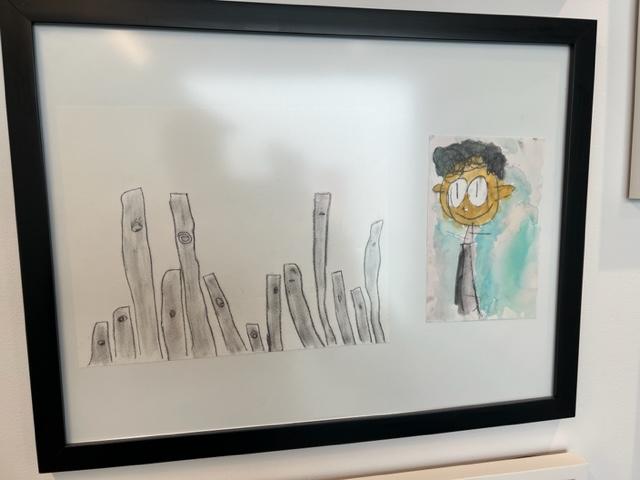
My favorite piece in the Children’s Room exhibition
Children’s Room Exhibition
The Galleries:
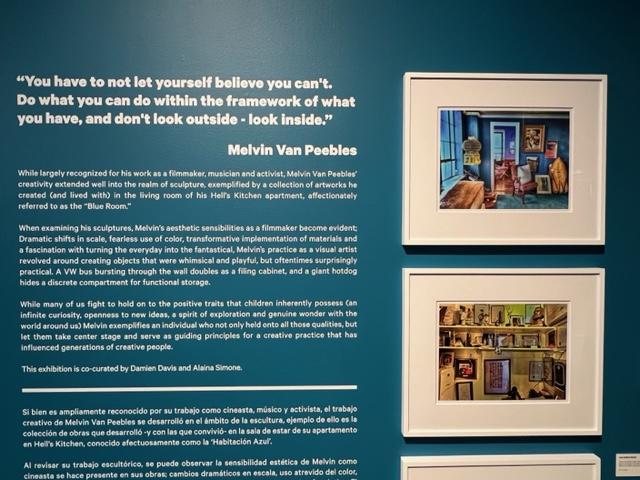
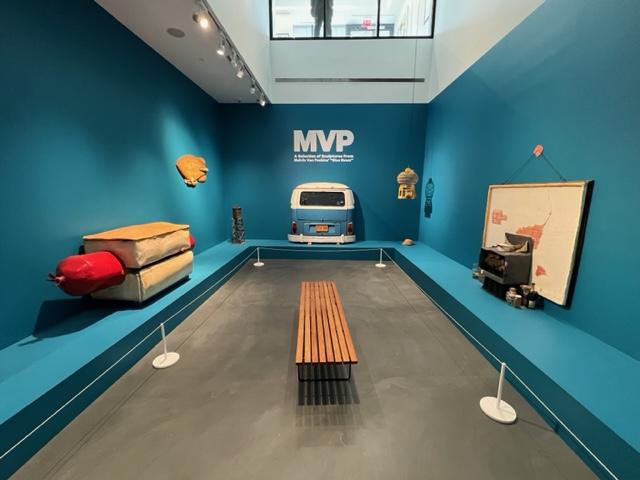
There were two exhibitions going on at the museum was I visited in March of 2023, Melvin Van Peebles “Blue Room” exhibition which was narrated by his son, Mario. This featured a lot of his artwork in his East Village apartment. I never realized that he was an artist on top of a filmmaker.
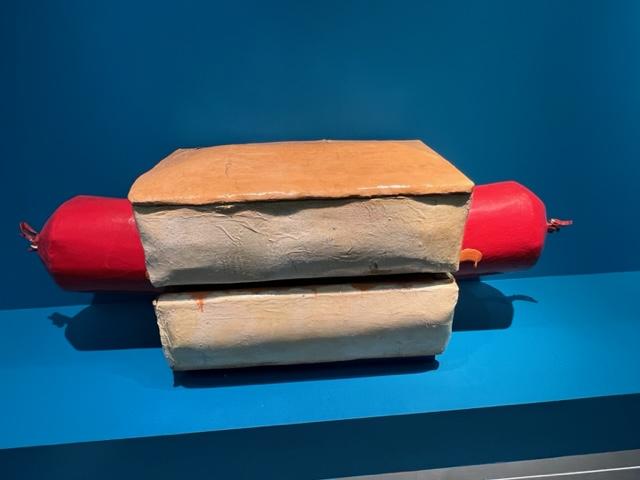
The works were quirky and unique I have to say that and they did stand out.
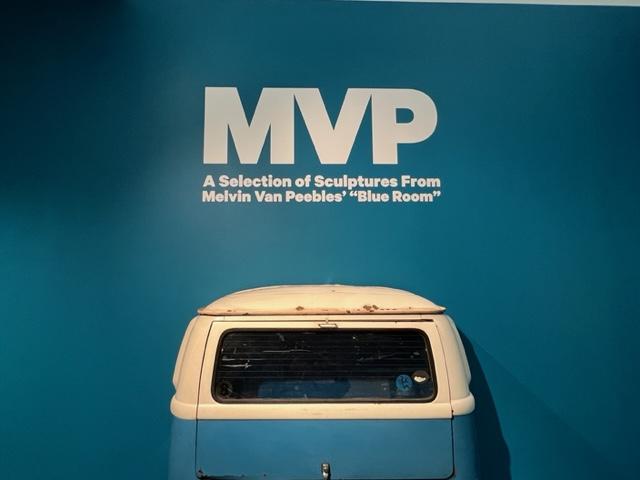
Melvin Van Peebles “Blue Room” exhibition
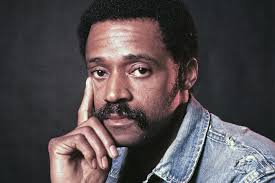
The artist/filmmaker Melvin Van Peebles “Blue Room” exhibition
The Melvin Van Peebles “Blue Room” exhibition
The “Hot Dog” sculpture in the “Blue Room” exhibition
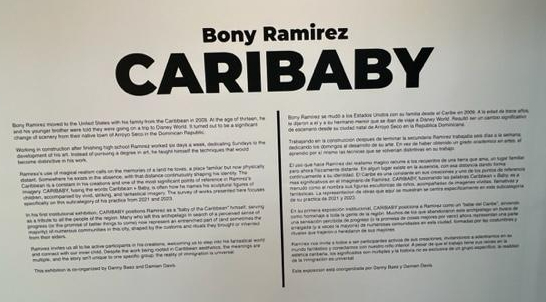
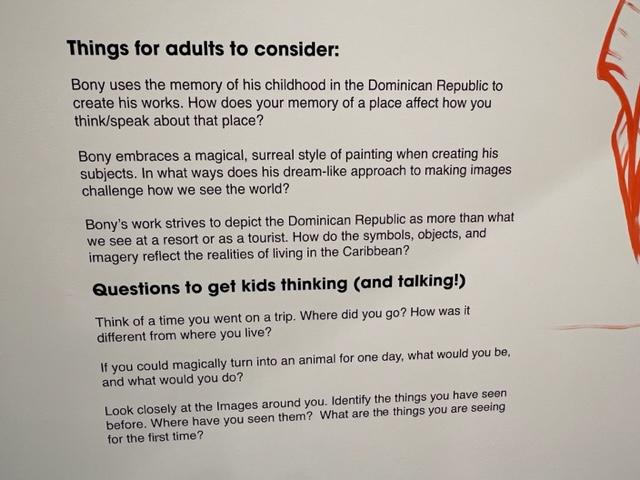
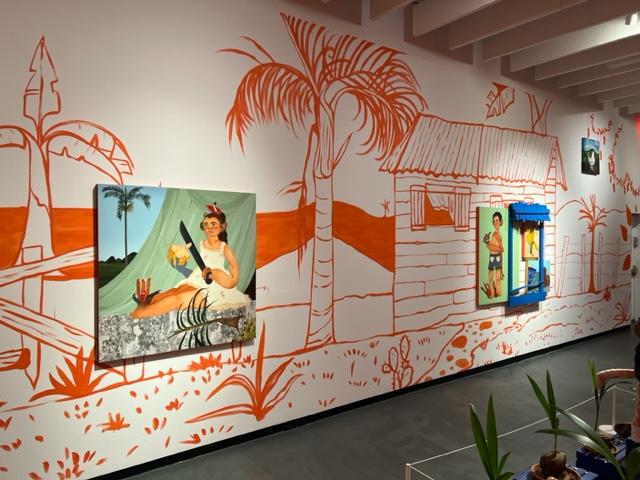
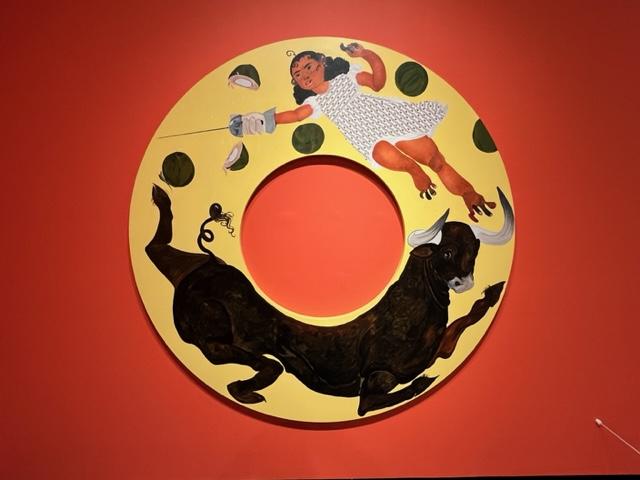
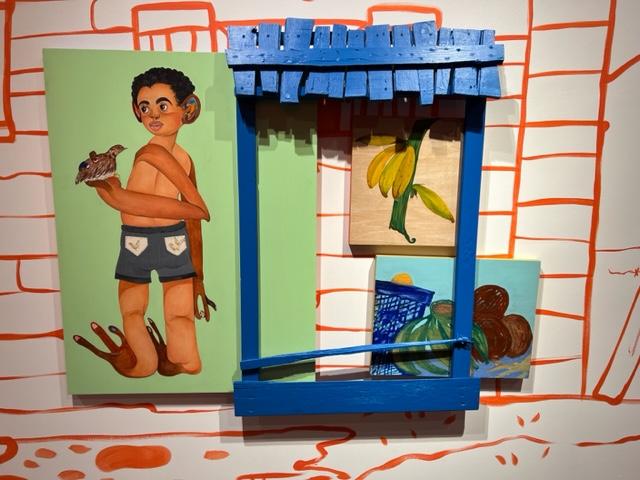
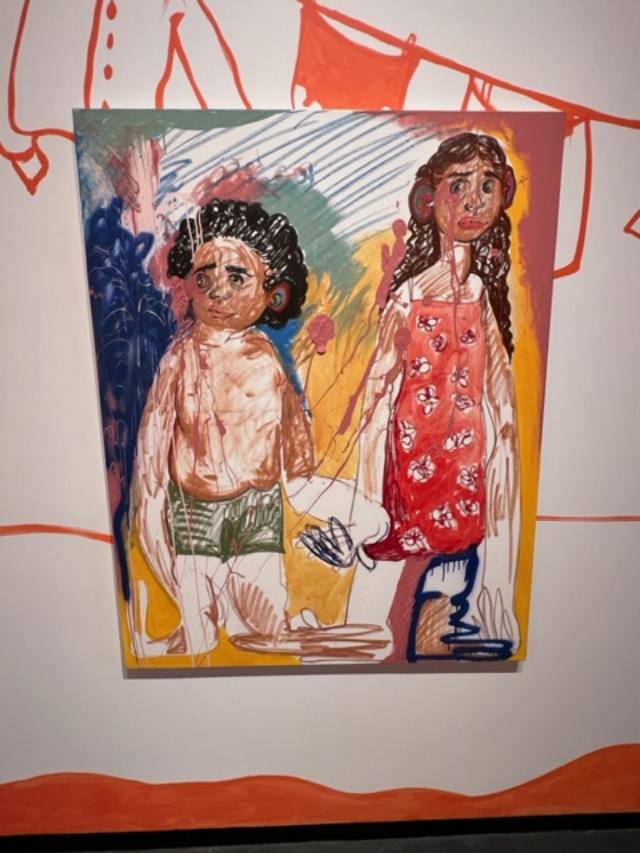
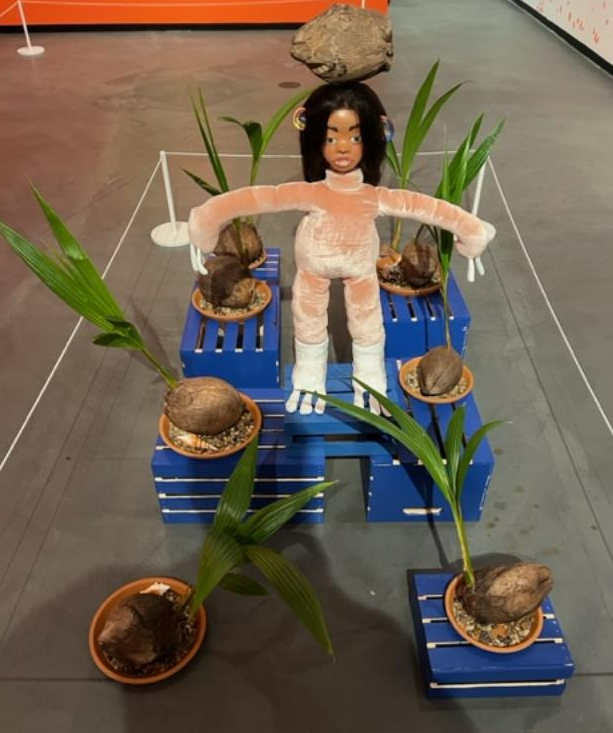
The other exhibition that was on display was the “Caribaby” exhibition by artist Bony Ramírez. The artist is a Dominican born American artist who is self taught. His works are large, childlike and offer a look at life in the Caribbean with a twist of the influence of European Colonialism in his work. The works had unusual contours and had a distinct island feel to them.
I could see by the artworks featured by both artists that the museum show pieces that were colorful and somewhat interactive which would be perfect for a child to relate to. The two galleries were small so that the works did not overwhelm children whose attention spans were not long but make it interesting for adults as well to have such unique works by contemporary artists.
At the top of the stairs near the entrance, they had the Children’s Gallery where art students from the museum showcased their works. In some cases, the works looked pretty sophisticated. The museum is perfect for small children and their families to get involved with the interactive art and projects that the kids were doing together in the ‘Living Room’ area of the museum.
The museum galleries were broken up into the Legacy Gallery where the Melvin Van Peebles exhibition was located and the Salon where the Bony Ramirez exhibition was shown.
Mission of the Sugar Hill Children’s Museum of Art & Storytelling:
(From the museum’s website)
The Sugar Hill Children’s Museum of Art & Storytelling provides our culturally rich neighborhood with a space where children and their families grow and learn about Sugar Hill and about the world at large, through intergenerational dialogue with artists, art and storytelling.
A spider sculpture at the Sugar Hill Children’s Museum
Designed to nurture the curiosity and creative spirit of three- to eight-year-old children, Sugar Hill Children’s Museum of Art & Storytelling provides opportunities to grow as both author and audience as children engage with the work of accomplished artists and storytellers and create and share their own.
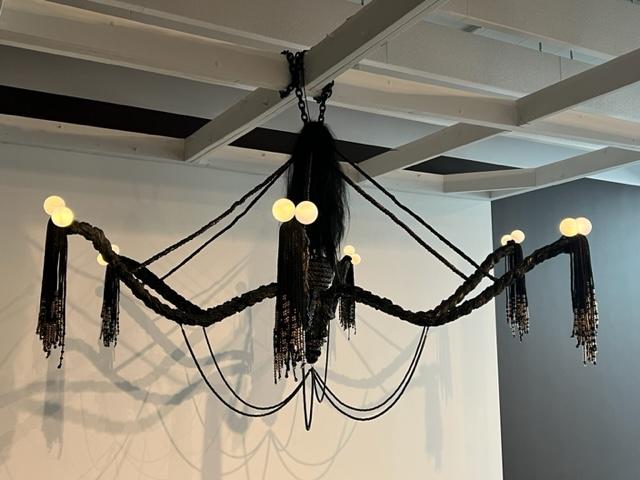
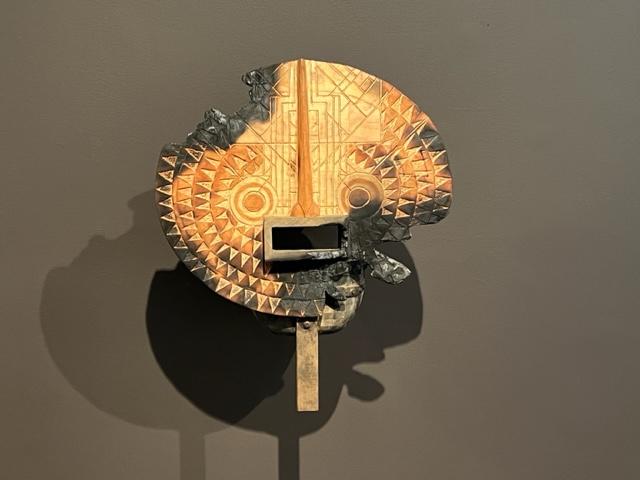
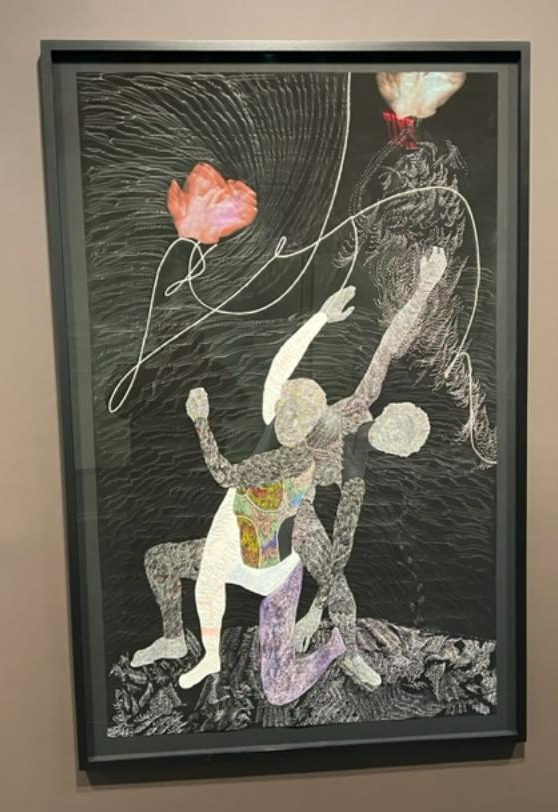
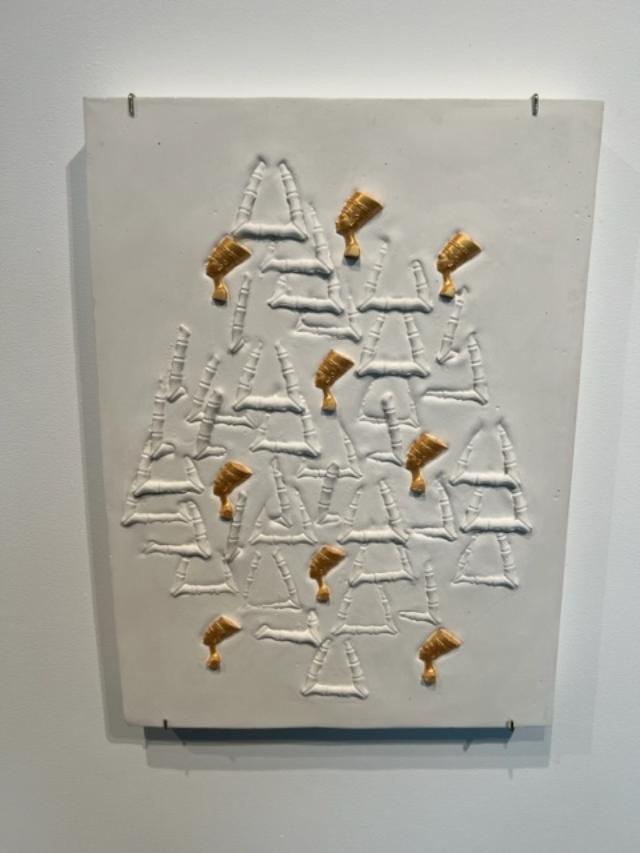
Another interesting work at the museum
Another work in the main hall
The History of the Sugar Hill Children’s Museum of Art & Storytelling:
(From the museum’s website)
Developed by the Broadway Housing Community, The Sugar Hill Children’s Museum of Art & Storytelling is the cultural heart of the Sugar Hill project.
Led by founder and executive director Ellen Baxter for over 30 years, BHC has pioneered high impact solutions to the challenges of deep generational poverty and homelessness in the underserved communities of Upper Manhattan with an innovative model leveraging the synergies of housing, education and the arts to creating lasting change for underserved children, families and communities.
Together with a devoted group of community members and advisers led by Steve Seidel, Director of Harvard University’s Arts in Education Program, BHC conceived of Sugar Hill Children’s Museum of Art & Storytelling not only as a stimulating space for neighborhood families to gather and share in cultural programs but as a setting to actively address the educational needs of the community’s youngest children, many from families challenged by poverty, little formal education and a lack of proficiency in the English language.
This painting looked like girl’s earrings
Recognizing that young children are natural artists and embracing their love of stories, the Museum planning team envisioned a place that tapped into children’s intrepid curiosity and wide-ranging imaginations; where they would not only see art and talk current research on the impact of early childhood education in the arts, 3 to 8 year old’s were identified as Sugar Hill Children’s Museum of Art & Storytelling primary audience the age cohort identified as most open to learning through the arts. Through transformational experiences in art and storytelling. Sugar Hill Children’s Museum of Art & Storytelling would foster the creative intelligence and cognitive skills that prepare children for social and academic success, positively impacting the outlook for their future and the future of their community.
The Sugar Hill Project marks the geographic center of the legendary Sugar Hill historic district, home to the Harlem Renaissance. Celebrating the important history of this landmark neighborhood and signaling BHC’s commitment to the community, internationally acclaimed architect David Adjay was selected to design Sugar Hill as a beacon of opportunity. David’s architectural practice-grounded in the philosophy that social purpose and design are intertwined and mutually reinforcing was a great fit for the vision for the Museum as a vibrant arts space that reverberates with the social and cultural milieu in which it is located.
A place that celebrates learning, creativity and culture, the story of Sugar Hill Children’s Museum of Art & Storytelling is now part of the Sugar Hill neighborhood too.
The Museum of the City of New York at 1220 Fifth Avenue
I have been a member of the Museum of the City of New York for almost twenty years and what I love about the museum is that its concentration is to be everything about New York City and what makes the City so great. Its development from a Dutch Colony to the Modern Metropolis that it is today. It covers the history so well that they created a permanent display entitled “New York at its Core”, an extensive history of the City from its start as being colonized by the Lenape Indians as a fishing and hunting set of villages on the island.
The “New York at its Core” exhibition (MCNY)
Each display takes you through a different point in the history of the development of the City and how each era brought dramatic changes to the fabric of the City from immigration over the years to the fires that leveled the original City and the raise of Wall Street and the Arts to make New York City the Capital of the World. The almost bankruptcy of the City in 1975 to the attacks on 9/11 have really shaped the direction and change in the City to the COVID-19 pandemic reshaping it again. We see how New York City continues to survive. The exhibition is now updated to add the COVID pandemic to the fabric of what is happening in New York City now. This exhibition will continue to evolve over the coming years.
The entrance to “Timescapes”
The film “Timescapes” in the basement theater again tackles the issues of a changing City since its development and the City continues to morph over time. The movie narrated by Stanley Tucci tells the story of New York from the time of the Dutch settlement to the attacks of 9/11 and like “New York at its Core” the issues that come about after every event. The film is shown five times a day and do take the time to see it when visiting the museum.
A tiny clip of “Timescapes” from the Museum of the City of New York
Just recently I attended a special event at the Museum to honor the Founding Members of the “Talking Heads” Chris Frantz and Tina Weymouth and their groundbreaking film “Stop Making Sense”. I was lucky to get tickets because the second I saw this on the museum listing I bought the tickets immediately. The event sold out quickly.
‘Talking Heads’ founders Chris Frantz and Tina Weymouth
The event was discussion with the creators of the group and how the Talking Heads emerged as a popular group through the 1980’s and 90’s. I have to admit that the two of them have not changed much but looking a bit older. They enchanted the audience with their time with the group and some new things they have in the works. After a quick Q & A, we watched their popular concert film “Stop Making Sense”.
We had such a good time at the event, the I wrote about it for my blog, “MywalkinManhattan.com”:
Day Two Hundred and Eight: Private Members nights at the New York Museums:
On another recent trip, I visited the exhibition “New York New Music 1980-1986” which was an exhibition on the development of the music scene after the Disco era was over and the rise of MTV. You had a combination of Club Music, Hip Hop, New Wave and the English Wave from Australia and New Zealand coming into the United States plus a resurgence of Rock and Roll after years of the “Disco Duck”. The exhibition highlighted the music of Debbie Harry and Blondie, Run DMC, Cyndi Lauper and Madonna and the rise of music videos. The exhibition brought me back to my last years of high school and my college years as I remembered all these groups.
The “New York-New Music 1980-1986” exhibition
Over the years I have seen exhibitions on everything from the Bankruptcy exhibition of New York City and the rise of crime, the Gilded Era with Alice Claypoole Vanderbilt’s “Electric Light” dress that she wore to Alva Vanderbilt’s famous ball and the wonderful toy exhibitions of early playthings. I have also been to many lectures at the museum with guests such as former Brooklyn President Marky Markowitz.
In 2023, I visited the museum for the first time in months and was able to see the “Gingerbread House Bakeoff” exhibition of well-known and amateur bakers in New York City. The exhibition was a hold over from Christmas and it was interesting to see the detailed gingerbread houses that were on display.
There two that I really liked. One was of Madison Square Park at Christmas time and looked like the pictures I had just taken of the park.
Bryant Park at Christmas time in gingerbread
Christmas scene in New York City
The next exhibition I wanted to see before it closed was the “Food in New York” exhibition. It could have been a little more detailed than what I saw. I thought it was going to have more of the development and history of food in New York and how it pertains to today. It was more artwork related to modern food industry trends. It was interesting but not what I thought it was going to be.
‘Food in New York’ exhibition
Some of the artwork really stood out on the display. I like the Hispanic Ice Carts which you see all over Washington Heights and East Harlem during the warmer months.
Ice Cart “Pimp My Piragua” byt artist Miguel Luciano
Artist Miguel Luciano
“Twilight” by artist Suzanne Anker
The effects of pollination of crops and the loss of bees shown here.
Artist Suzanne Anker
The latest exhibition that I visited on a Members walking tour was the “New York Now: Home” exhibition that opened in the Spring of 2023. The exhibition is based on what the photographers perspective of what a ‘home’ is and how you live through it. There were photos of family events, life outside the home, what a family is, is it your birth family or friends that have become family? There were also some great shots of people taken during the COVID lockdown and how the home became the center point of their lives and sanity. Each photographer gave a different way of looking at these points.
‘New York Now: Home: A Photography Triennial’
The exhibition write up
There were many terrific artists displayed in the exhibition but these are the five that I thought stood out the most:
Photographer and Artist Anders Jones work on the loss of bodegas in his neighborhood due to gentrification.
Artist Anders Jones work at the Museum of the City of New York
I think the museum was looking for a more political and environmental view of food in New York City as opposed to the history and development. It still was an important issue. It also showed all the urban, community and roof gardens that are becoming part of the urban landscape. It is interesting how people are using space to grow food for the benefit of everyone. It was an interesting perspective.
The museum is really all things New York.
The museum also has a series of talks in movies shot around or about New York City. On a recent trip to the museum I attended the retrospect of director Walt Stillman and his 1998 film “The Last Days of Disco”, which had been a huge hit when it came out. The director talked about the change in times from the 1970’s to the 1980’s and the shift in behavior of the population. There was a moment of time when “Disco was King” and going out was all the rage after years of Vietnam era. Studio 54 led this charge and when it closed in 1980, the party was over.
In conversation with director Walt Stillman the night of the retrospect.
The original trailer for the film.
The Q & A at Lincoln Center for the 20th anniversary of the film.
The series of films deal with the subject matter of New York City and what makes it a special place.
I recently went to see the new Art Deco City-New York exhibition on a private tour. The curator for the show toured us through the era after WWI and during the Depression. Things got more simplistic and cleaner.
You had a youth revolution that wanted to get away from Victorian values and with the lack of resources and money during the Depression, everything became more clean lines, less embellishment and more modern looking.
The exhibit ‘Art Deco City New York’
The bulk of the exhibition came from the collection of Cosmetic owner, Ronald Lauder, who contributed his Art Deco post card collection. Years of collecting showed all of us the changes not just in architecture but attitudes in travel and living. Gone were the bulky and elaborate in was simplistic and clean designs with a fresh approach.
The main gallery with Art Deco post cards
This perspective was shown in the 1939 World’s Fair, where a look to the future showed optimism and a look at new possibilities.
The 1939 World’s Fair
The outfits of that era also represented women and their freedoms from the Victorian era and the excesses. Gone were the days of corsets and bustles and in was the freedom of movement to the modern working woman who have to work to support her family. This reflected in the social life too.
Dresses from the 1930’s
Rockefeller Center and the Empire State Building were the big projects of that era. It showed the optimism and show of the possibilities of the modern era during the Depression and kept people working.
Models of Rockefeller Center
The exhibition was very interesting and informative and shows up in the modern era today.
The latest exhibition I attended was “Songs of New York”, a tribute to the rich music scene of the five boroughs through the ages.
The Exhibition sign for “Songs of New York”
The exhibition delves into the rich history of everything from New Wave to Hip Hop to Rock and Jazz. The interactive exhibition has you stepping on a Borough symbol and you hear its rich history of music.
The interactive display on the third floor
The opening remarks from the curator at the opening night
The reception with drinks and snacks for members
Pictures from ‘Look Magazine’ from the collection
Photographs from Allan Tannenbaum
The career of Allan Tannenbaum
The photos of Janette Beckmann of the ‘Hip Hop’ scene with the start of the careers of LL Cool J and Run DMC
The exhibition packs a lot of information into a small space where the members were able to enjoy the music of New York City.
I went to an Educator’s Night for the new ‘Above Ground’ exhibition on the street art collection of Artist Matin Wong. The artist collected the street art of the 1980’s after the Crash of 1987 slowed the demand for this art.
The ‘Above Ground’ exhibition
The sign from the exhibition
The works in the exhibition
The work ‘Futura’
The sign for ‘Futura’
The works by artist Keith Haring
The works in the galleries were creative and colorful. These artists sending a message with their works.
The art of the exhibition
The art of the exhibition
The gallery displaying the works
The work by artist Quik
The artist’s write up
The exhibition works were from the period of the mid to late 1980’s and these works Martin Wong bought after the Crash of 1987 to help sustain his artist friends whose sales dried for street art. The collection was donated to the museum after the artist’s passing in 1994 (Museum pamphlet).
I recently returned to the museum for a special evening event for photographer Ebet Roberts
The special event for music photographer Ebet Roberts
The evening was a discussion of the artist’s works from the 1970’s and 80’s. What I thought was interesting is how she seemed to fall into it as an artist with newspapers interested in seeing her photographs.
The photographer, Ebet Roberts with the museum curator
The photographer discussing her work
One of her well known works of a musician couple from the 1970’s
The talk was very interesting as she fell into the profession of just taking pictures of bands while attending the events as reporting. Then the papers wanted to see what pictures she had taken. Liking how she captured the groups in a more human fashion, she continued to take more pictures. This led to private sessions and behind the scenes works, capturing the events before and after a concert. It was a very interesting talk.
These are the types of events that make the museum unique and special.
The History of the Museum of the City of New York:
(From the Museum of the City of New York website/Wiki):
The Museum of the City of New York is a history and art museum that was founded in 1923 by Henry Collins Brown. The red brick building with marble trim was built between 1929-30 and was designed by architect Joseph H. Freedlander in the neo-Georgian style with statues of Alexander Hamilton and DeWitt Clinton by sculptor Adolph Alexander Weinman, which face Central Park from niches in the facade (Wiki).
The museum was originally located in Gracie Mansion, where available space was limited. One of the first exhibitions was “Old New York” in 1926. This took place in the Fine Arts Building on West 57th Street. The success of the project led to a search for a new, permanent headquarters for the museum (Wiki).
A design competition was held between five invited architects and the Colonial Revival design by Joseph H. Freelander was chosen. The City donated the site on Fifth Avenue and the funds for the construction of the museum was raised by public subscription. The original plans for the museum’s building were scaled back as a result of the Wall Street Crash of 1929. The building was finished and dedicated in 1932.
In 2000, there was talk by then Mayor Rudy Giuliani to move the museum to the historic Tweed Courthouse near City Hall but that was over-turned by the incoming Mayor, Michael Bloomberg. In protect the museum director, Robert R. McDonald resigned.
In coming new museum director, Susan Henshaw Jones, planned an extension to the museum and it was completed in 2008. The extension including renovating the existing gallery spaces and adding a new pavilion. New displays and a remounting of valuable artifacts were done to give the museum a refreshed look. In 2011, the Museum of the City of New York temporarily took over operation of the South Street Seaport Museum which itself reopened in 2012 (Wiki).
The museum has a collection of over 1.5 million objects including many items from the 19th and early 20th centuries including paintings, prints, costumes, decorative objects, furniture and an extensive collection of toys. There are also extensive collections of police and fire items as well as shop models, rare books and manuscripts (Wiki).
The Museum of the City of New York in the early Spring
The front of the American Museum of Arts & Letters at 633 West 155th Street
I was finally able to visit the American Academy of Arts and Letters on the last day it was open for the year to the public. It was for the ‘Ceremonial Exhibition: Work by New Members and Recipients of Awards’, an exhibition on members art that was chosen specifically for the show. Most of the work was very contemporary and some a little political. It was interesting work by new artists that filled the small gallery rooms.
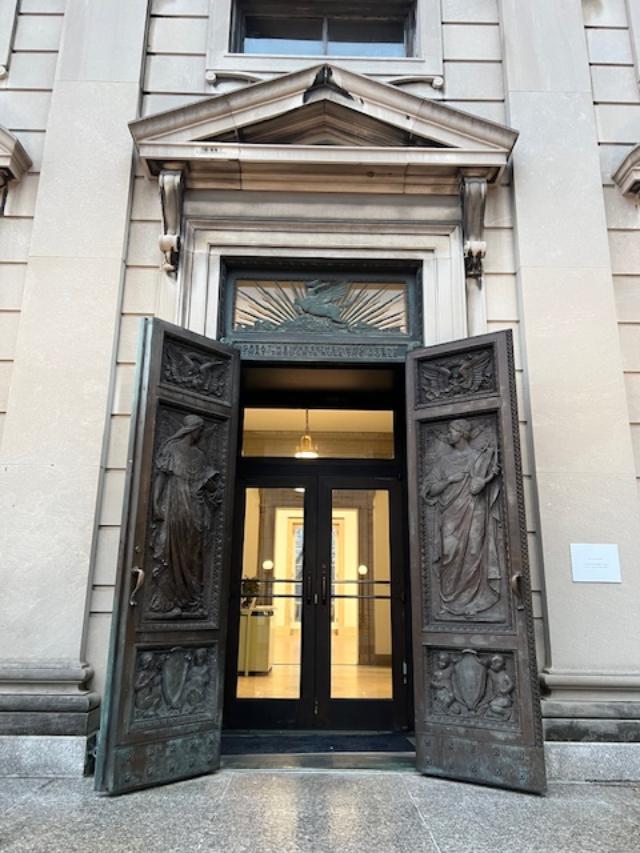
The front of the American Museum of Arts & Letters
One of the buildings was used for the contemporary art while the one across the courtyard was used for the more architectural pieces. The galleries are small but the art was impressive. What I liked when I talked with one of the women who worked there said to me that after the show, the pieces would be donated to galleries and museums all over the country. The galleries are only open four months out of the year and this was the last day of the exhibition so the work being shown will be gone.
I visited the museum in January 2025 and it had just reopened after a three year renovation after it had been closed since Pre-COVID and it is now fully open with a new exhibitions. All the galleries are brightly lit and displaying new exhibitions.
The entrance to the museum from the courtyard
Some of the pieces that really stood out when I visited in 2019 were by Judith Bernstein, a contemporary painter who seems to not like the current administration too much. The themes were on power and money and corruption in the administration. Her work really shows what she personally thinks of our President. Her ‘Trump Genie” was very clever and I can see this in a major museum in the future.
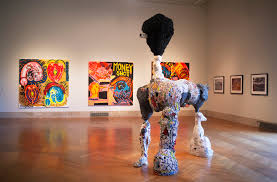
Judith Bernstein’s work
Other work in the main gallery in 2019 were by artists Stephen Westfall with ‘Solid Gone’, Hermine Ford with ‘Paris, France’ and Paul Mogensen with several ‘Untitled’ pieces. The contemporary works I was not sure what the meaning of them were but they were colorful.
The works of the artists of the front gallery
One of the pieces in the front gallery that really stood out was by artist Francesca Dimattio, ‘She-wolf’ which was a classic Greek character made of porcelain, enamel, paint and steel.
‘She-wolf’ by Francesca Dimattio
There were light installations in 2019 that were very interesting by artist James O. Clark. He had one piece, ‘Wunnerful, Wunnerful’, which is a work that just keeps being creating itself by bubbles and ink markers moving along a turntable that stops and starts.
There was a permanent exhibition of Charles Ives home in Connecticut that was transported and recreated here. His studio and works are featured here as well as his family life. There are copies of his works in the display cases and his career.
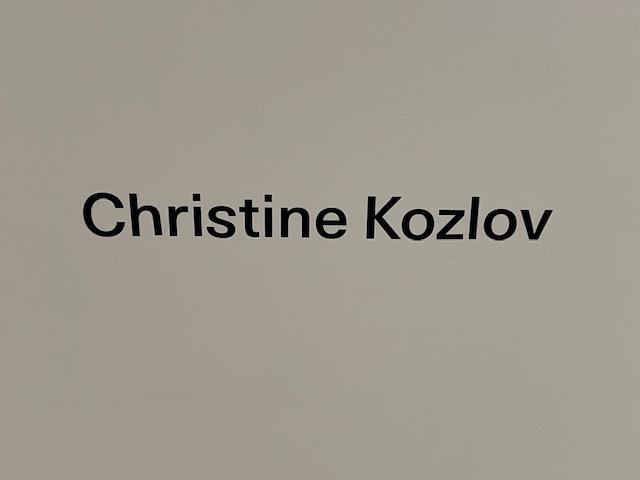
The museum in 2025 was fully open with the exhibition by artist Christine Kozlov, a contemporary Video artist whose works were being featured in the main gallery.
The main gallery of the Kristine Kozlov exhibition
In more than fifty artworks arrayed across four galleries at Arts and Letters, Christine Kozlov shows the breadth of Conceptual artist Christine Kozlov’s practice with a focus on works from the mid-1960s through the late 1970s. Nearly all of the works Kozlov contributed to public exhibitions during this period will be on view, many of which were created for landmark exhibitions of Conceptual art such as: One Month (1969), organized by Seth Siegelaub; Information (1970), curated by Kynaston McShine at the Museum of Modern Art, New York; Arte de Sistemas organized by Jorge Glusberg / CAYC—Centro de Arte y Comunicación at the Museo De Arte Moderno (1971); and the Number Shows, a series of exhibitions curated by Lucy Lippard between 1969 and 1974 (American Museum of Arts & Letters website).
Part of the Kristine Kostov exhibition
Works by artist Christine Kozlov
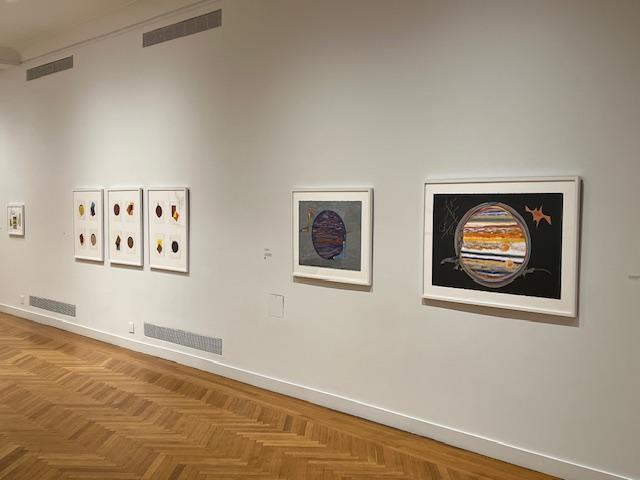
The next exhibition that I viewed was by artist Wadada Leo Smith, which consisted of an exhibition based on colors and sounds. You could take the headsets around the gallery and tour and admire the work with the sounds of the musical groups.
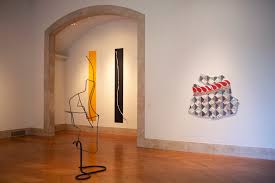
The gallery with works by artist Wadada Leo Smith
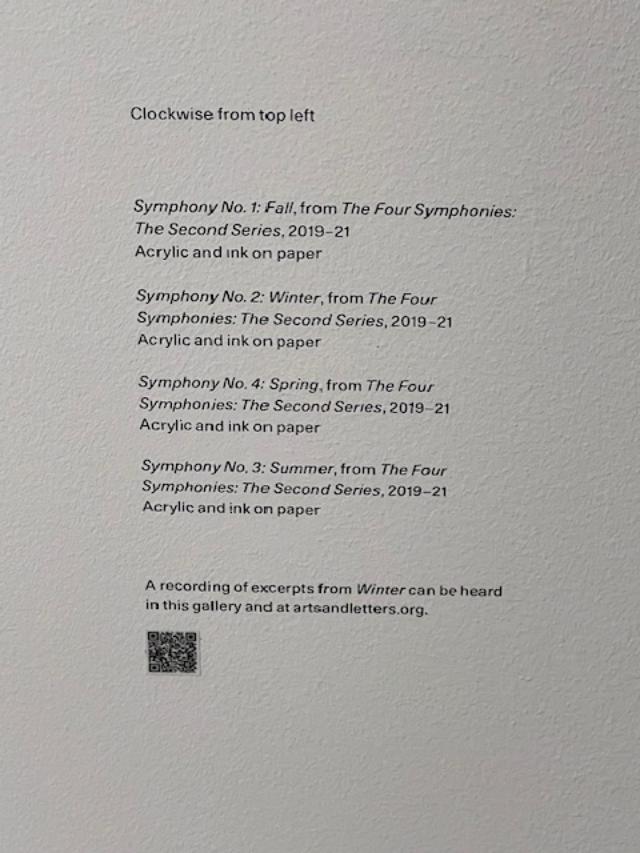
Wadada Leo Smith (b. 1941, Leland, MS) is a composer-performer and Arts and Letters member. Formerly an educator at CalArts, he has influenced decades of musicians and artists, including Raven Chacon. In Kosmic Music, Smith’s first solo exhibition in New York, he shares over fifty years of Ankhrasmation (Museum website).
The “Sphere” works by artist Wadada Leo Smith
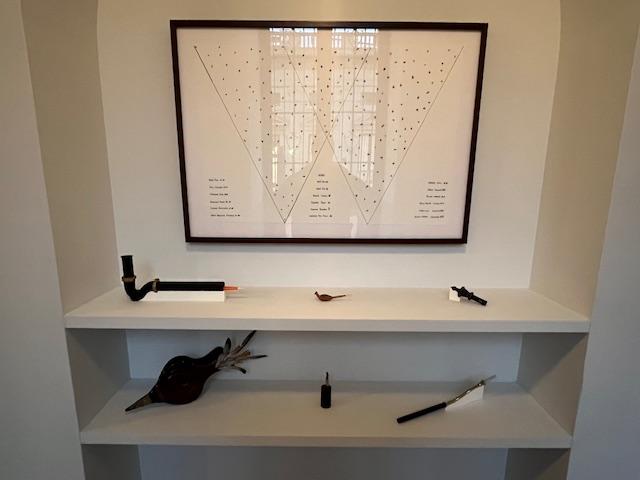
Ankhrasmation is a musical language Smith began exploring in 1965. Smith does not consider Ankhrasmation to be his creation but rather something he discovered. The name derives from Ankh,anancient Egyptian symbol of life; Ras,an Ethiopian word for leader or father; and Ma, for mother. The distinctive language uses line, color, and shape to designate musical components such as tonal range and intensity of activity. For Smith, performing Ankhrasmation requires focused practice and “having that space in your heart and mind so that you can play from inspiration.” (Museum website).
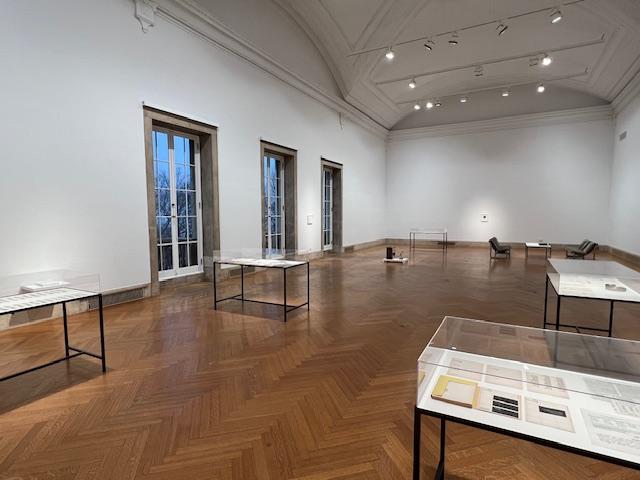
The last exhibition I saw was in the gallery across the courtyard from the main museum was by artist Raven Chacon. You would walk in the main gallery to the sounds of birds both living and extinct. Just five minutes in the main gallery by myself and I felt like Tippi Hedren in the movie “The Birds”. There were all sorts of bird sounds with no birds around.
The instruments that the artist uses to achieve the sounds of the birds
When Raven Chacon (b. 1977, Fort Defiance, Navajo Nation) visited Arts and Letters for the first time, he paused in our North Gallery to clap his hands, then counted how long it took for the room to go silent. It took around six seconds—a long rate of decay. Standing in that echoing chamber, Chacon noted the building’s Beaux Arts design by Cass Gilbert, with its imported Spanish tile and cage-like glass ceiling that filters the sky. He became curious to learn the history of the land it sits on, once owned by John James Audubon, who purchased it in 1841 with funds from the sale of his illustrated Birds of America (Museum website).
Chacon is a composer and artist who frequently works with the materials and histories of a given site and who considers, as he puts it, “what has been silenced and what happens when it is not.” For the past year, he has worked on Aviary, his site-specific commission for the North Gallery, creating a soundscape that makes space and time for careful listening (Museum website).
Museum Mission:
(from the museum website)
The American Academy of Arts & Letters was founded in 1898 as an honor society of the country’s leading architects, artists, composers and writers. Charter members include William Merritt Chase, Kenyon Cox, Daniel Chester French, Childe Hassam, Henry James, Theodore Roosevelt, Elihu Vedder and Woodrow Wilson. The Academy’;’s 250 members are elected for life and pay no dues.
The main gallery of the museum
In addition to electing new members as vacancies occur, the Academy seeks to foster and sustain an interest in Literature, Music and the Fine Arts by administering over 70 awards and prizes, exhibiting art and manuscripts, funding performances of new works of musical theater and purchasing artwork for donation to museums across the country.
Collections:
(from the museum website)
The Academy’s collection, which are open to scholars by appointment, contain portraits and photographs of members, as well as paintings, sculptures, drawings, prints and decorative art objects. The library has more than 25,000 books by or about members. The archives house correspondence with past members, press clippings, institutional records and original manuscripts of musical and literary works.
History:
(from the museum website)
The National Institute of Arts & Letters, the parent body of the Academy, was founded in 1898 for “the advancement of art and literature”. The Institute met for the first time in New York City in February 1899 and began electing members that fall. Architects, artists, writers and composers of notable achievement were eligible and membership was soon capped at 250. In 1913, President Taft signed an act of Congress incorporating the organization in the District of Columbia.
American Academy of Arts & Letters at twilight
In 1904, The Institution created the American Academy of Arts & Letters, a prestigious inner body of its own members that modeled itself on the Academie francaise. The first seven members of the Academy were William Dean Howells, Augustus Saint-Gaudens, Edmund Clarence Stedman, John La Farge, Mark Twain, John Hay and Edward MacDowell. Those seven then chose eight more and so on, until the full complement of 30 and later 50 was reached. Only after being elected to the Institute, was a member eligible for elevation to the Academy. This bicameral system of membership continued until 1993, when the Institute dissolved itself and all 250 members were enrolled in the American Academy of Arts and Letters.
The Academy inaugurated its annual awards program in 1909 with the Gold Medal for Sculpture. Since then, over 70 awards and prizes have been endowed through gifts and bequests or established by the Academy’s board of directors in the fields of architecture, art, literature and music. There are conferred each year at the Ceremonial in May when new members are inducted and a distinguished speaker is invited to deliver the Blashfield Address.
In 2005, the Academy purchased the former headquarters of the American Numismatic Society, the neighboring building on Audubon Terrace. A Glass Link now connects the Academy’s existing galleries to newly renovated ones in the former Numismatic building. These new galleries house the permanently installed Charles Ives Studio.
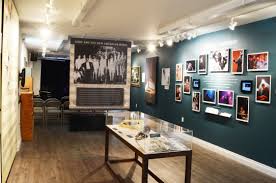
I came across this little museum when I was touring Central Harlem. This museum is more like a small gallery and it is dedicated to the history of jazz in Harlem. The front section is set up like someone in Harlem’s salon with furniture from the era and sheet music from the artists. The look is based on ‘Rent Parties’ that people used to have to bring their friends over to help pay the monthly rent. The back section of the museum is dedicated to jazz and related music with a sitting area and pictures all over the wall of different era’s including the new artists of today. Jazz music plays throughout.
The Mission of the Museum:
The National Jazz Museum in Harlem, a Smithsonian Affiliate, preserves, promotes and presents jazz by inspiring knowledge, appreciation and celebration of jazz locally, nationally and internationally.
It is the thriving center for jazz that stimulates hearts and minds and reaches out to diverse audiences to enjoy this quintessential American music. The museum was founded in 1997 by Leonard Garment, Counsel to two U.S. Presidents and an accomplished jazz saxophonist, Abraham D. Sofaer, a former U.S. District Judge, who gave the initial gift in honor of his brother in law, Richard J. Scheuer and matching funds from the Upper Manhattan Empowerment Zone.
Displays inside the museum
The Museum is committed to keeping jazz present and exciting in the lives of a broad range of audiences: young and old, novice and scholar, artist and patron, enthusiast and curious listener. From its new location in the center of Harlem, the Museum serves the local community and welcomes visitors from across the U.S. and internationally.
The National Jazz Museum in Harlem’s vision is to establish a permanent home in Harlem for collections, programs and performances that stimulate creativity and excitement about the past, present and future of jazz and its artists (The Jazz Museum in Harlem vision statement-pamphlet).
In 2013, an exciting new era began for the Museum. We created and implemented a new strategic plan that made education central to our mission. The Museum now offers year-round educational programs for students of all ages. We also developed a new membership program with exclusive content and benefits to reach out to the worldwide jazz community.
The inside of the National Jazz Museum of Harlem
In 2015, after 15 years at the East Harlem location, we moved to 58 West 129th Street in Central Harlem. Our new space is designed to give our visitors an immersive jazz experience, in the heart of what has become Harlem’s new cultural and entertainment district. The ultimate, long-term goal is to secure a permanent home in Harlem with space enough to showcase Harlem’s vast contributions to jazz, American music and world history.
Each year, the Museum produces and presents more than 80 free programs in New York City, engaging hundreds of professional jazz artists and reaching nearly 20,000 people from around the world. The Museum is a hub for live performances, exhibitions and educational programs. It is also home to our widely acclaimed Savory Collection, which includes more than 100 hours of live recordings of jazz legends made from New York City radio broadcasts aired between 1935 and 1941 (Wiki site and Museum website).
The current exhibition is Vi*bra*tion: The history of Jazz from Louis Armstrong to Miles Davis: Their Work and Harlem Air Shaft (large musical manuscripts on the wall).
The Leadership of the Museum is under musicians Jonathan Batiste, Co-Artistic Director and Christian McBride, Co-Artistic Director.











 Visiting a Museum: The Unique, Unusual, Obscure and Historical