Category: Educational Museums

The Greater Cape May Historical Society                         6531/2 Washington Street                                                      Cape May, NJ 08204

The Greater Cape May Historical Society 6531/2 Washington Street Cape May, NJ 08204

The Greater Cape May Historical Society

6531/2 Washington Street

Cape May, NJ  08204

(609) 884-9100

http://www.capemayhistory.org/

http://www.capemayhistory.org/about-us.html

Open: Colonial House Museum hours:

Wednesday-Saturday, 1:00pm-4:00pm June 15th-September 15th

Open during Victorian Weekend in October. Special exhibits at Halloween and Christmas.

My review on TripAdvisor:

https://www.tripadvisor.com/Attraction_Review-g46341-d286395-Reviews-The_Colonial_House-Cape_May_Cape_May_County_New_Jersey.html?m=19905

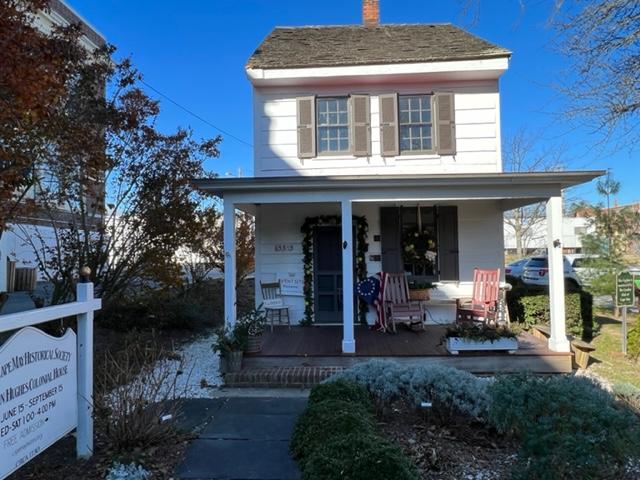
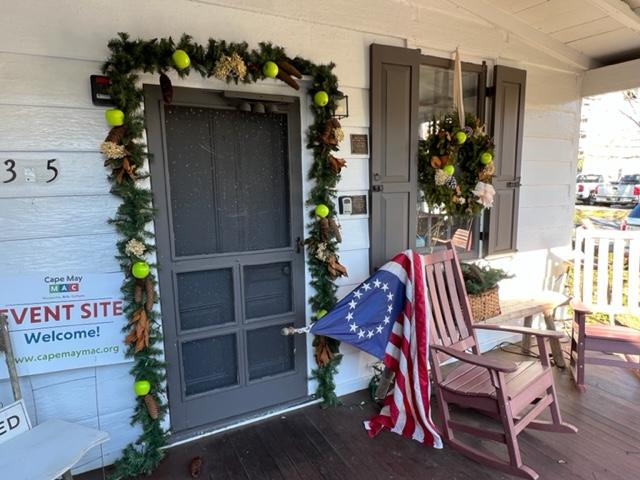
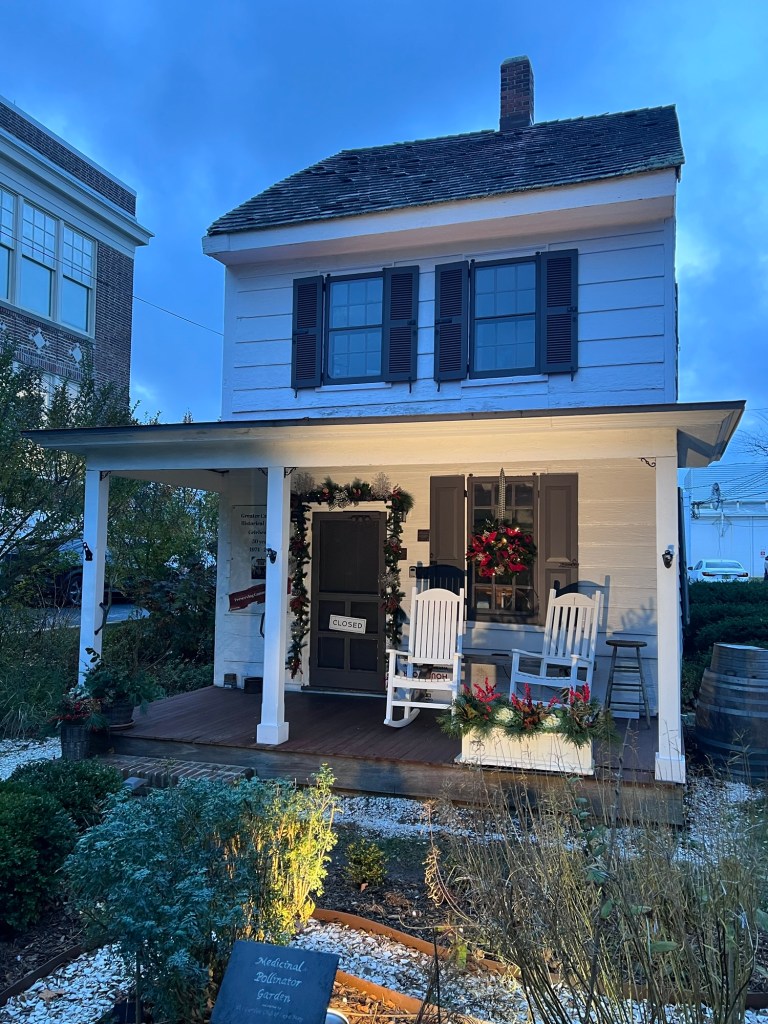
The Historical Society at Christmas time.

The Cape May Historical Society in the summer of 2023.

What an interesting visit I had to the Cape May Historical Society’s Memucan Hughes Colonial House. This tiny museum is only open between June 15th-September 15th and after that only for special events.

It is an fascinating little home that was built somewhere between 1730 to 1760. The original house no one is too sure if it had been built for the original owner or had been there and added on to as the records for the age of the house are unclear.

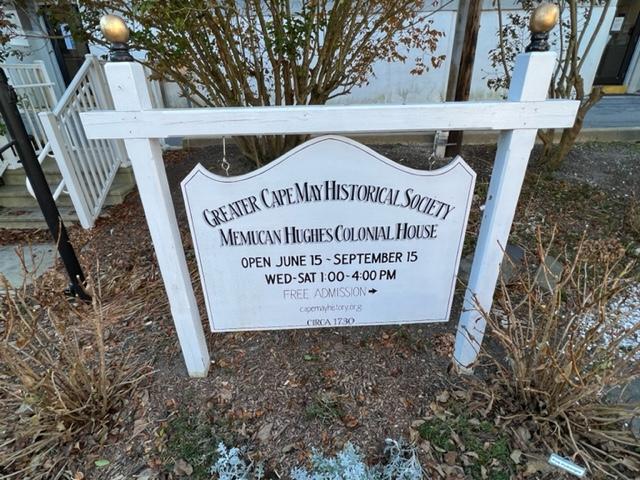
The welcoming sign at Christmas

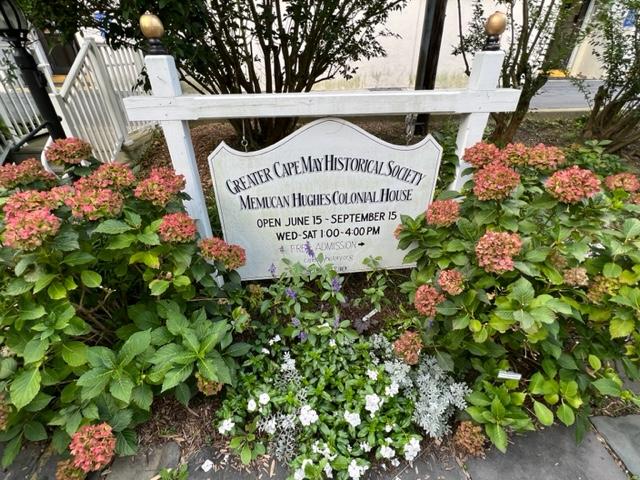
The sign in the summer of 2023.

The home consists of two small downstairs room filled with period furniture and decorations and there is an upstairs with three small rooms that have just opened up to the public. The front room Mr. Hughes used as a tavern that he kept open until almost the 1800’s. He had catered to a growing whaling industry that needed some form of entertainment in this quiet town that was isolated from the rest of the state.

The Pub in the front room of the house for meals and conversation.

The Front Room of the house served as a pub for visiting travelers.

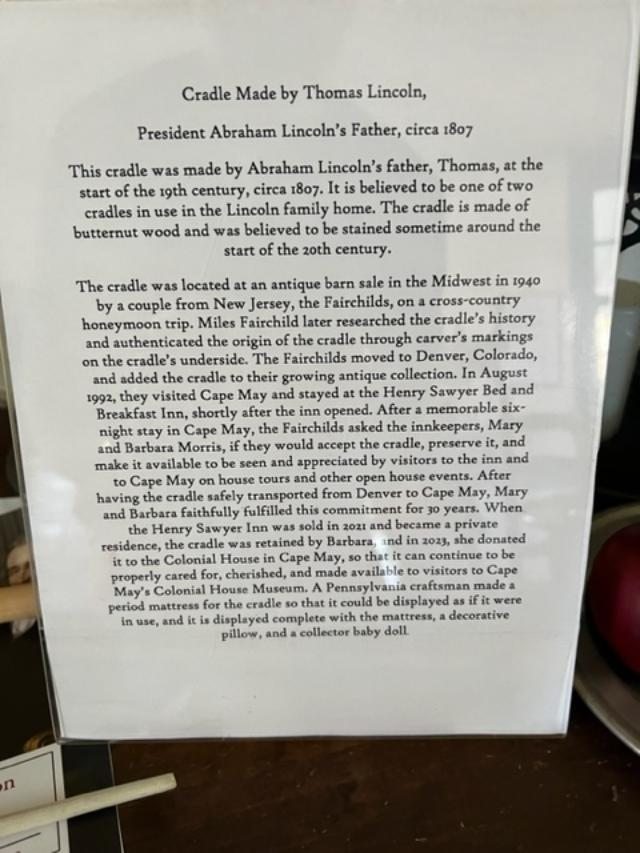
The room was set up for dining and amusements. The Lincoln Crib is in the background.

The Lincoln crib was built by Abraham Lincoln’s father.

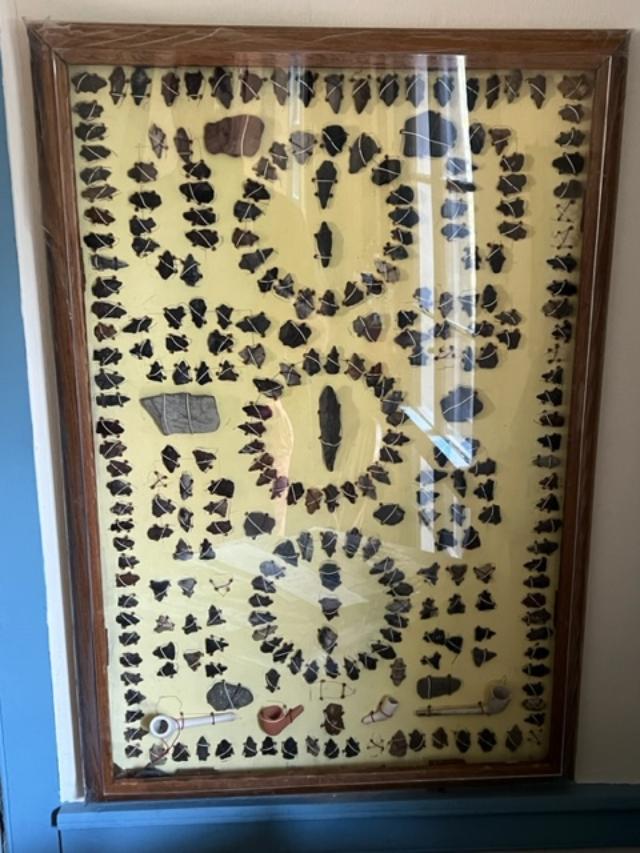
The Arrowhead and Pipe collection in the Pub Room.

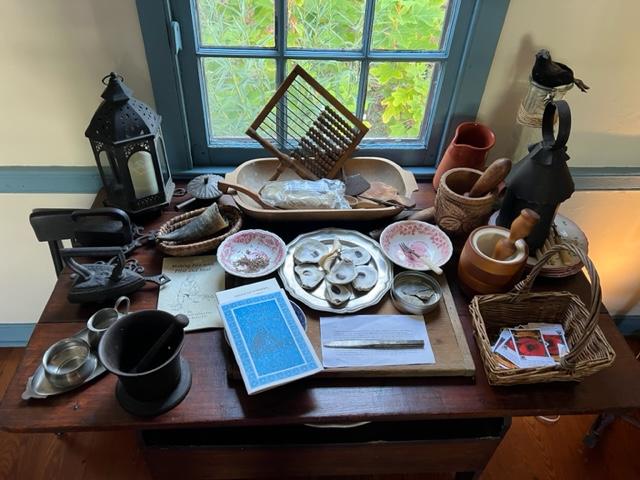
The front of the house is decorated as tavern to greet guests. There were tables filled with games and items that would have catered to the trade but still you knew you were in someone’s home. There are vintage card tables, board games and some household items.

The Living room at the Cape May Historical Society

The back room is a closed off kitchen with a fireplace and spinning wheels and wash tubs, all the things to run a household. There were also children’s toys, kitchen and garden gadgets and family items to personalize the house.

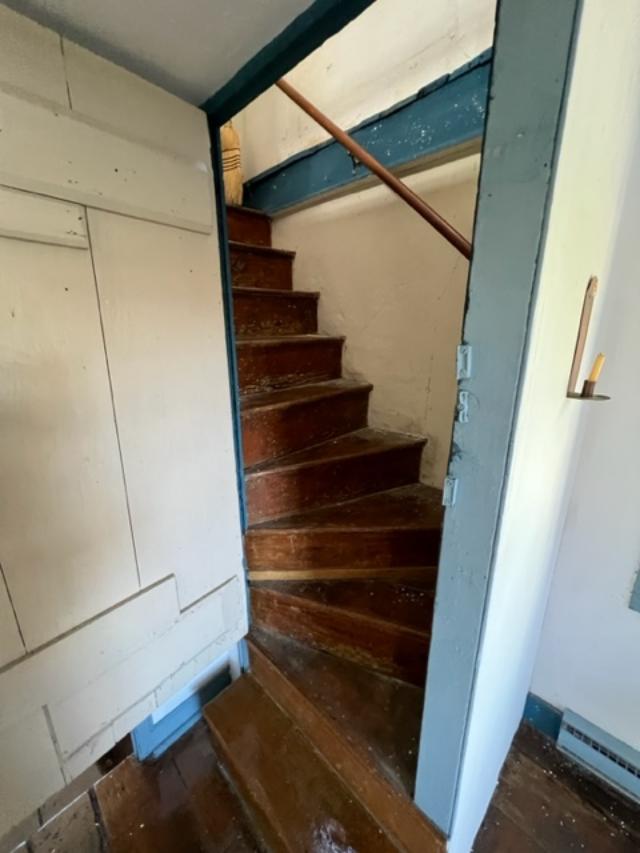
The narrow stairs lead to the upper bedrooms and the attic loft.

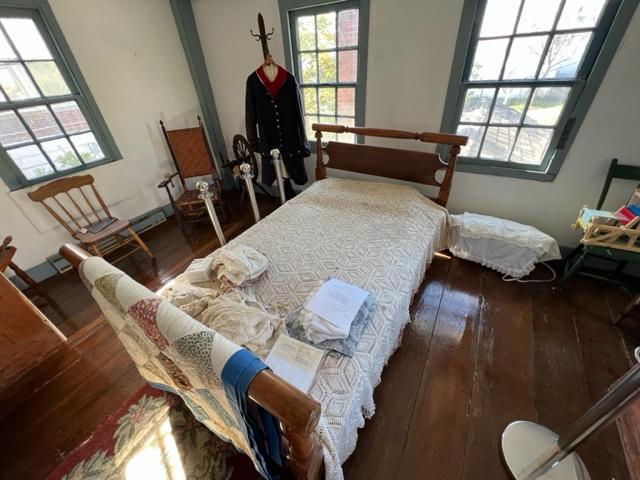
The upstairs bedrooms and the attic room were open in the summer of 2023, and I got to see the whole house. The upstairs is supposedly haunted, but I did not see anything. What I did see was how large the house really was and why the family of eight were able to live in this small house.

The upstairs bedroom

The upstairs bedroom

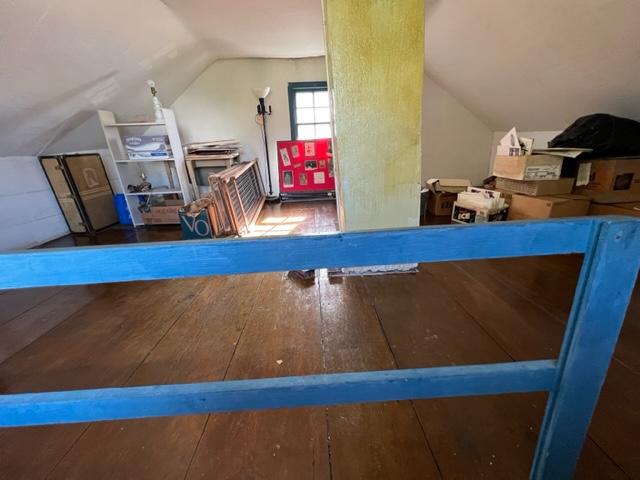
The attic loft room was supposed to be haunted but I saw nothing.

During the Victorian Age, the family came into a more prosperous life and built the big house in the front of the home.

The Hughes mansion in the Victorian times sits right in front of the old house and is now a B & B

The Hughes family lived in the house until the Victorian age and then they built the house on the front of the property and moved the smaller house to the back of the grounds. The house had been moved three times since its original location on the main road a few blocks away.

The tour itself is only about a half hour long and the guides do a nice job explaining the history of the house. On the gloomy day I visited, the museum was very busy with people visiting the house and with its connection to colonial history and the popularity of the musical, “Hamilton”, it is making it a popular destination when visiting Cape May.

History of the Museum:

The sign outside the house

The mission of the Greater Cape May Historical Society is to collect, preserve, document, interpret and share the history of Greater Cape May and to enhance the appreciation of that history through the Society’s historic site, The Colonial House Museum, collections, research, exhibitions, educational programs and publications.

The Hughes family home during the Christmas Holiday season 2022

All are invited to visit the Colonial House Museum, a 1700’s era house. The house was moved to its present site next to City Hall when the Hughes Family built the grand Victorian that is now a Bed & Breakfast.

The Hughes family home of the 1700’s at Christmas time.

The house decorated for the holidays in 2025

Th Ed front of the house decorated for the holidays

Come visit us and see the House as it was with a Tavern Room and a Common Room when it was owned by Memucan Hughes. On display are period furnishings and other period household items.

The Hughes family home of the late 1800’s

The Society presents an annual exhibit dedicated to an unique chapter of Greater Cape May History along with special events for Halloween and Christmas.

Disclaimer: This information was taken directly from the Greater Cape May Historical Society’s pamphlet, and I give them full credit for it. Please call the above number for more information and selected openings.

The Cape May Historical Society in the summer of 2023.

Jewish Museum                                                  1109 Fifth Avenue                                              New York, NY 10128

Jewish Museum 1109 Fifth Avenue New York, NY 10128

Jewish Museum

1109 Fifth Avenue

New York, NY   10128

(212) 423-3200

https://thejewishmuseum.org/

Open: Monday-Tuesday 11:00am-5:45pm/Wednesday Closed/Thursday 11:00am-8:00pm/Saturday & Sunday 10:00am-5:45pm

Fee: Adults $18.00/Seniors (over 65) $12.00/Students $8.00/Children under 18 Free

My review on TripAdvisor:

https://www.tripadvisor.com/Attraction_Review-g60763-d106187-Reviews-The_Jewish_Museum-New_York_City_New_York.html?m=19905


I visited the Jewish Museum for the first time this week to see the Leonard Cohen exhibition which had gotten good review online ( I had never heard of him before). It was a combination of video and pictures. The videos were on concerts, interviews, poetry readings and documentaries on his life.

Jewish Museum III.jpg

The Leonard Cohen exhibition

After seeing his videos on each floor, which was nice because there were bean bags all over the galleries, I visited the other galleries. There was an gallery dedicated to Jewish religious symbols, Contemporary Jewish Artists and items by Jewish craftsman.

The one gallery that I thought was quite amusing was the depictions of Jews on TV and how stereotypes play a role in comedy. It had everyone in the gallery laughing their heads off. It is good when you can laugh at yourself.

There is some interesting silver works from the Eighteen century on exhibition and the contemporary works were very lively. The museum is not that big so you can visit all the galleries in one afternoon. There is also a branch of Russ & Daughters in the basement level that is very popular with visitors.

Jewish Museum IV.jpg

The music gallery of the Leonard Cohen exhibition


History of the Jewish Museum:

The Collection that seeded the museum began with a gift of Jewish ceremonial art objects from Judge Mayer Sulzberger to the Jewish Theological Seminary of America on January 20, 1904, where it was housed in the seminary’s library. The collection was moved in 1931, with the Seminary to 122nd Street and Broadway. The Jewish Theological received over 400 Jewish ceremonial items and created. The Museum of Jewish Ceremonial Objects’, previously the Jacob Schiff Library. The collection was subsequently expanded by major donation from Hadji Ephrain Benquiat and Harry G. Friedman. In 1939, in light of WWII, Poland sent about 350 objects to New York City from homes and synagogues in order to preserve them.

Following Felix Warburg’s death in 1937, in January 1944 his widow Frieda donated the family mansion to the seminary as a permanent home for the museum and the site opened to the public as “The Jewish Museum” in May 1947. Frieda Warburg said at the opening that the museum would not be a somber memorial but rather a celebration of the Jewish faith and traditions. The first expansive of the museum was the addition of a sculpture garden in 1959 by Adam List. The building was expanded in 1963 and further by architect Kevin Roche in 1993.

In the 1960’s, the museum took a more active role in the general world of contemporary art with exhibitions such as Primary Structures, which helped to launch the Minimalist art movement. In the decades since, the museum has had a renewed focus on Jewish culture and Jewish artists. From 1990 through 1993, director Joan Rosenbaum led the project to renovate and expand the building and carry out the museum’s first major capital campaign of sixty million. The project designed by architect Kevin Roche, doubled the side of the museum, providing it with a seven story addition. In 1992, the Jewish Museum and the Film Society of Lincoln Center teamed up to create the New York Jewish Film Festival, which presents narrative features, short films and documentaries.

Jewish Museum II.jpg

Contemporary art galleries

Today, the museum also provides educational programs for adults and families organizing concerts, films, symposiums and lectures related to its exhibitions. In 2011, the museum named Claudia Gould as its new director.

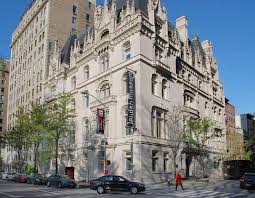
Jewish Museum

The Warburg Mansion

Architecture:

Felix M. Warburg House  was constructed in Francois I style in 1906-1908 for Felix and Frieda Warburg, designed by C.P.H. Gilbert. Francois I style was originally found in New York City in the late 19th century through the works of Richard Morris Hunt. Hunt was a renowned architect throughout the Northeast, particularly in New England and was one of the first American architects to study at the elite Ecole des Beaux-Arts in Paris.

The original house is built in limestone with mansard roofs, dripping moldings and gables. This architectural style was based on French revivalism and exuded wealth, a point which Felix Warburg wanted to make to his neighbors. It featured a green yard in front of the house, which was later converted into the museum’s entrance.

Disclaimer: This information was taken from the Wiki story on The Jewish Museum and I give the site full credit for it.)


Montclair Art Museum                                            3 South Mountain Avenue                       Montclair, NJ 07042

Montclair Art Museum 3 South Mountain Avenue Montclair, NJ 07042

Montclair Art Museum

3 South Mountain Avenue

Montclair, NJ   07042

Phone: (973) 746-5555/Membership: (973) 259-5147

http://www.montclairartmuseum.org

https://www.montclairartmuseum.org/

Open Wednesday-Sunday 12:00pm-5:00pm/Monday & Tuesday Closed

Fee:  Non-Member Adults $12.00/Seniors (65+) and Students with ID $10.00/Members and Children under 12 Free


I have made many trips to the Montclair Art Museum over the years and have always found it to be a very interesting and engaging museum. The curators mount fascinating exhibitions sometimes from the permanent collection and sometimes from traveling shows.

The galleries are smaller and more compact so the exhibitions are not over-whelming like in the bigger museums. You can see each exhibition in about forty-five minutes to an hour and you will still see a lot. There are also smaller exhibition spaces which specialize in one artist and you might see about a dozen pieces.

There are two exhibitions going on currently in the museum. One is “Constructing Identity in American”, which is a permanent collection show of more than 80 paintings, sculptures and works on paper that will address a variety of characteristics that contribute to one’s sense of self, including civic, cultural, artistic, religious, professional and sociopolitical identities, sense of place and personal space and non-conformity. This exhibition goes far beyond portraits to explore other aspects of sense of self (Museum pamphlet).
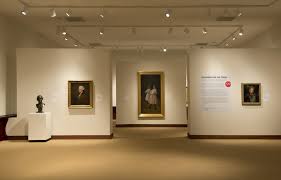
Montclair Art Museum II

“Constructing Identity in America” exhibit

The other exhibition is called “Undaunted Spirit: Art of Native North America” which focuses on the Native American culture from Prehistoric times to the modern era. It , seems that by the end of the Civil War the Victorians were collecting art and objects of the Native Americans fearing that their cultural was disappearing. There is a lot of focus on pottery, both modern and pre-colonial, clothing construction, jewelry making with turquoise and silver and basket-making which was all the rage at the turn of last century. I like the modern aspects of the art as they are ushering a new era of artists of the southwest and giving them a voice. Take time to look at the detail work of the show.
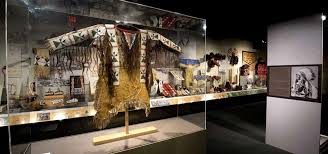
Montclair Art Museum III.jpg

“Undaunted Spirit: Art of Native North America” exhibit


History of the Montclair Art Museum:

(This information was provided by the Montclair Art Museum)

Mission Statement: The Montclair Art Museum, together with its Vance Wall Art Education Center, engages our diverse community through distinctive exhibitions, educational programs and collection of American and Native American Art. Our mission is to inspire and engage people of all ages in their experience with art, including the rich inter-cultural and global connections throughout American history and the  continuing relevance of art to contemporary life.
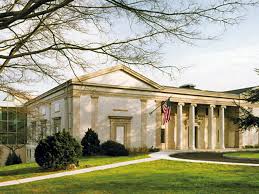
Montclair Art Museum.jpg

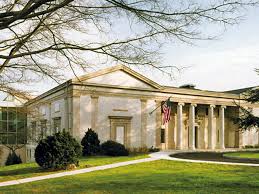
The Montclair Art Museum

Vision, Values and Diversity Statement:

After 100 years of service, MAM is recognized as the leading American art museum and community art school in Northern New Jersey. As a organization, we value: artistic inspiration, diversity of voices, individual and group creativity and the importance of all arts to a civil, inclusive and forward-thinking society.

We respect and welcome individual differences and strive to maintain an environment that fosters productivity, creativity and individual satisfaction by celebrating the diversity of race, gender, nationality, age, religion, sexual orientation and physical abilities.
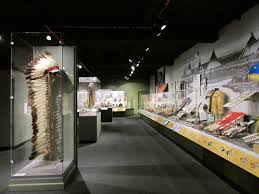
Montclair Art Museum VI

Native American Galleries

During our second century, we will invigorate our collections and curatorial presentations; expand our educational services audience; support artists, their work and connections; pursue productive institutional partnerships and embrace new media and technology. We will also secure MAM’s financial stability and preserve its facilities and other assets in a prudent and sustainable way.

A notable community institution with an international reputation, the Montclair Art Museum (MAM) is still located in the same-though now thrice expanded-building in which it opened in 1914. Situated amid a beautiful tree-lined residential area of Montclair New Jersey, just 12 miles west of New York City, the Museum is esteemed for its holdings of American and Native American Art, its exhibitions, its family and public programs and its art school. It welcomes more than 65,000 visitors annually.
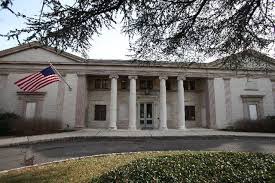
Montclair Museum II

The entrance of the Montclair Museum

The Museum was a pioneer: one of the country’s first museums primarily engaged in collecting American Art (including the work of contemporary non academic artists) and among the first dedicated to the study and creation of a significant Native American art collection. This pioneering spirit still reverberates in the  Museum’s pursuit and presentation of high-quality art that characterize and celebrates American’s diversity, including the recent launch of its Contemporary Art Program, in 2010, providing MAM an opportunity to showcase dynamic contemporary work and expand the Museum’s contemporary art holdings. A main showcase dynamic contemporary work and expand the Museum’s Contemporary holdings.

A main feature of the MAM program is to explore the interplay between historical and contemporary art to our understanding of the larger historical context in which art is created, presenting work that is being challenging and accessible. A key component of the Contemporary Art Program is it New Direction exhibition series of solo artists, established in 2011. Artists featured in the series include Marina Zurch, Saya Woolfalk, Spencer Finch and Sanford Biggers. Most recently in Spring 2015, MAM presented its largest and most ambitious exhibition of contemporary art to date, “Come as You Are: Art of the 1990’s”.

From its founding, the Montclair Art Museum has maintained a vital presence in its surrounding community. The Museum’s collection began with gifts from prominent Montclair residents that included both American and Native American art, laying the foundation for the Museum’s holdings. MAM’s Inness Gallery is one of the only galleries in the world dedicated to the work of America’s greatest landscape painter, who spent the last nine years of his life in Montclair, from 1885 onward and who drew inspiration from the local landscape. Other well-known artists followed in his footsteps, cementing Montclair’s reputation as an intellectual center and artist’s colony, a reputation its retains to this day.

Mam’s collection has grown to over 12,000 works. The American collection, which started with a gift of 36 paintings from William T. Evan’s, comprises paintings, prints, drawings, photographs and sculpture dating from the 18th century to the present and features excellent works by Benjamin West, Asher B. Durand, John Singer Sargent, Edward Hooper, Georgia O’Keeffe, Andy Warhol and Roy Lichtenstein as well as younger and emerging artists such as Louise Lawler, Chakaia Booker, Whitfield Lovell and Willie Cole.

The museum’s superb holdings of traditional and contemporary American Indian art and artifacts, New Jersey’s largest, represent the cultural achievements in weaving, pottery, wood carving, jewelry and textiles of indigenous Americans. The collection was begun by Annie Valentine Rand and carried on by her philanthropic daughter Florence Rand Lang, one of the Museum’s founders and continues to grow with philanthropic daughter Florence Rand Lang, one of the Museum’s founders and continues to grow with commissioned works, gifts and purchases that celebrate the vitality and modernity of traditional forms and beliefs. Among the contemporary American Indian artists represented are Tony Abeyta, Dan Namingha, Jaune Quick-to-see Smith, Allan Houser , Bently Spang and Marie Watt.

Equally important for its community presence and its reputation are the Museum’s public and family programs and art school, serving everyone from toddlers to senior citizens. Collaborations with numerous cultural and community partners bring artists, performers and scholars to the Museum on a regular basis.Guests have included Holland Cotter, John Elderfield, Bill T. Jones, Jeff Koons, Faith Ringgold, Winfred Rembert, Kiki Smith, Philip Pearlstein, Shirin Neshat and Lorna Simpson. More than 10,000 K-12 students from 190 school districts visit the Museum every year. Free Family Days, a Family Lab, MAM Park Bench, Home School Days and Birthday Art Parties allow families to experience art in variety of different ways. As the New Jersey affiliate of the Scholastic Art & Writing Awards, MAM opens opportunities to creative teenagers to gain national recognition for their work. The Museum also provides programs for seniors and special needs individuals-such as the hearing impaired and people with Alzheimer’s as well as training for teachers in the arts.

MAM’s art school, now the Yard School of Art, has been an integral part of the Museum’s life nearly from the beginning. It was founded in 1924 just 10 years after the Museum itself and has operated continuously since then offering courses year-round to kids, teens, adults and seniors. Courses cross a broad range of the artistic spectrum, including drawing, painting, collage, pastel, printing making and illustration. In 2011, the school launched two new areas: a Ceramics Studio and a Digital Media Lab.

In 2014, MAM celebrated its Centennial with a yearlong program of activities, which included a Birthday Party on January 15, exactly 100 years from the day of its founding that attracted thousands of visitors. In honor of the Centennial the Museum also commissioned internationally renowned artist Spencer Finch to create a site-specific installation that has transformed the Museum’s facade, making it a more inviting point of entry.

The first institution in New Jersey designed as a museum and one of the first in the nation to be accredited by the American Association of Museums, the Montclair Art Museum as it marks its Centennial, continues to seek novel ways, through its exhibitions, educational programs and outreach efforts to inspire and inform its growing and ever more diverse audiences.

(This information on the history of the Montclair Art Museum was taken from their website and I give the Museum full credit for the history of the Montclair Art Museum).


Firefighting Museum of Dutchess County                             P.O. Box 2435                                                                      Poughkeepsie, NY 12601

Firefighting Museum of Dutchess County P.O. Box 2435 Poughkeepsie, NY 12601

Firefighting Museum of Dutchess County

(Antique Firehouse & Firefighting Museum)

P.O. Box 2435

Poughkeepsie, NY  12601

https://dchsny.org/firemuseum/

https://www.facebook.com/DutchessCountyFirefightingMuseum/

My review on TripAdvisor:

The new home of the Dutchess Firefighting Museum at the Dutchess County Fairgrounds

I recently visited the Dutchess County Fair in August of 2024 and discovered that they finally built the new Firefighting Museum of Dutchess County in the Century Village complex of the fairgrounds. This will only be open when the fairgrounds are open. It replaced the tent display that had been part of the fair since 2022.

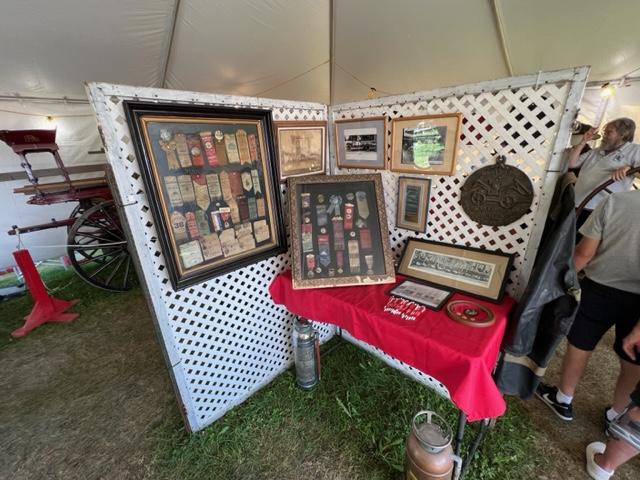
The old tent museum that was a temporary display

The Firefighting Museum of Dutchess County (Dutchess County Firefighting Museum) is finally open and houses all the memorabilia and artifacts for fire companies all over Dutchess County. I met fire fighters from companies all over Dutchess County who are dedicated in showing the history of their departments and of fire fighting over the years. The museum had just opened in August 2024 so all the displays have not been mounted yet. They should be ready for future events at the fairgrounds.

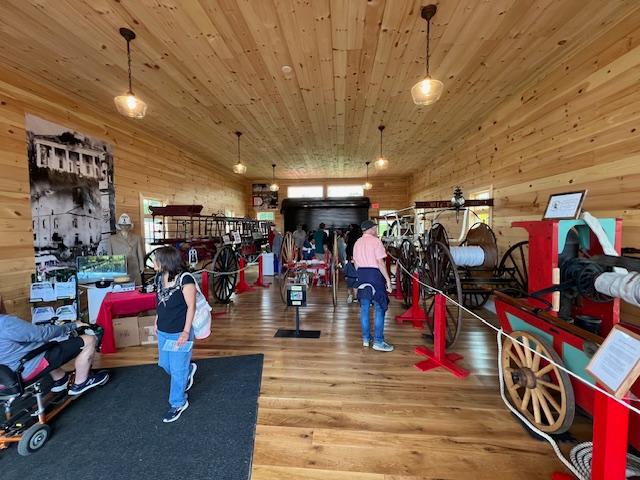
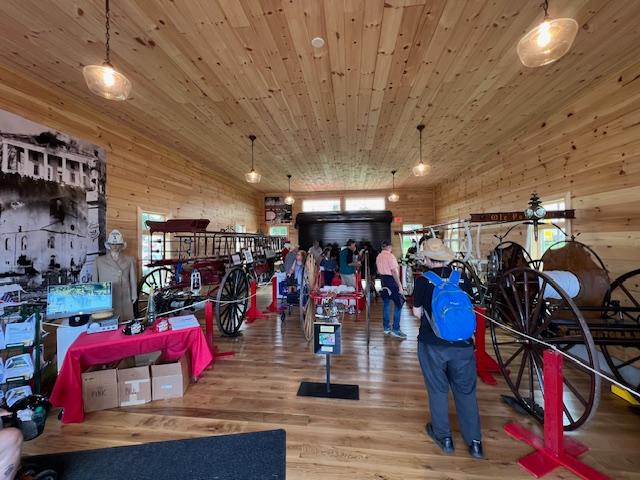
The firefighting equipment of the museum visited by many firefighters from the area and their families

The Dutchess County Fairgrounds Management had proposed to build them a new building on the Fair Grounds with the stipulation that it remain open when the fair grounds are being used and closed when they are not being used. It will be part of the Century Museum Village & Collectors Association to include a reproduction of a late 19th Century firehouse and museum of firefighting memorabilia.

Firefighting artifacts at the front of the museum

The Parade Celebration cart with uniform for parades.

Firefighting artifacts at the new museum

The antique firehouse will join the Pleasant Valley Railroad Station, the Mount Ross Schoolhouse, the Washington Hollow Fair Judging Gazebo and the Century Museum.

Dutchess County Firefighter Museum II

Dutchess County Firefighters Museum logo

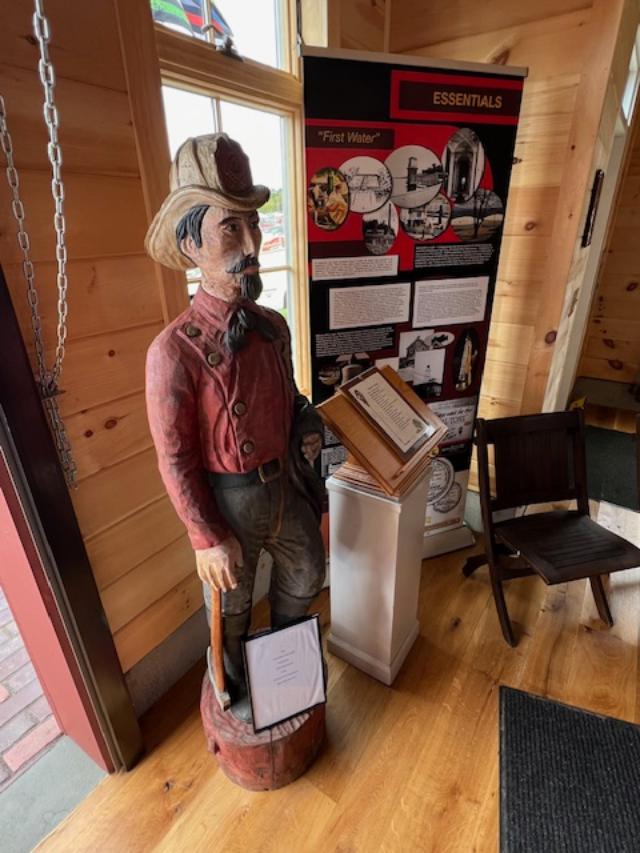
The new museum has an interesting combination of equipment, medals, horns and firefighting objects from the 1800 and 1900’s. It really is an interesting way to see how firefighting from the past relates to today and how much really has not changed. There were three different pieces of equipment on display: an old Ladder Truck from the 1890’s, a pumper from 1902 and an old hose bed that must have been around 1896.

The Pine Plains FD Ladder Truck

The old pumper on display

The handheld hose bed

There were old fire horns used long before traditional fire whistles and modern pagers, firefighting ribbons and awards, old buckets and hoses for moving water and lots of pictures of old fires. The members were explaining to me that they take the objects out at all sorts of town and county functions to promote the museum.

Old Fire Medallions from the old fire insurance days when these were placed on the houses

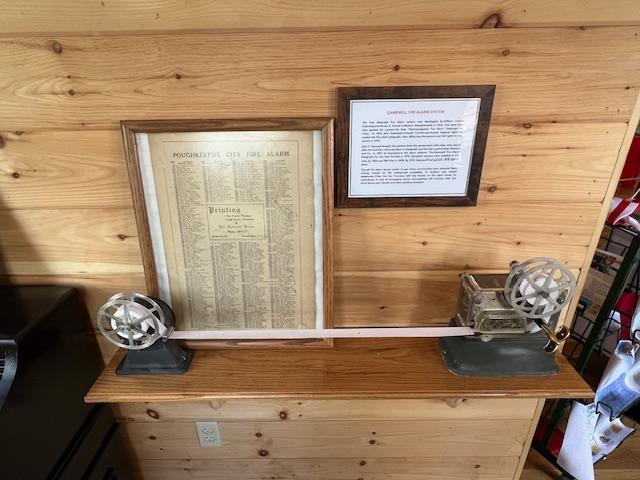
The roll call of fire fighting in Poughkeepsie, NY

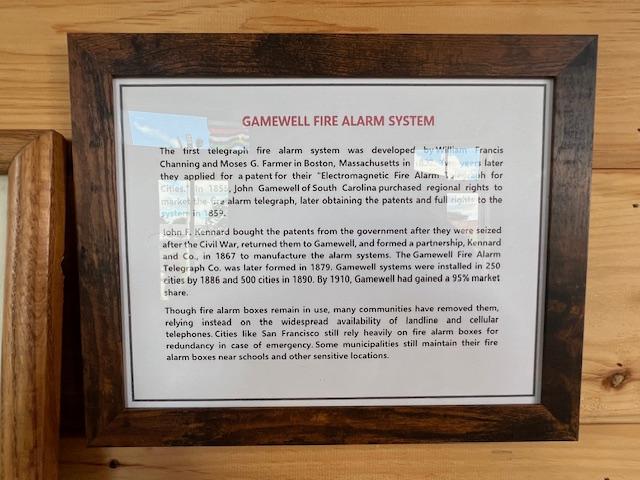
The Gamewell Fire Alarm System

History of the Dutchess County Firefighting Museum:

(from the museum pamphlet)

The Dutchess County Agricultural Society Inc. (DCAS) and the Century Museum Village & Collectors Association will be growing The Antique Village, located on the Dutchess County Fairgrounds which will include a reproduction of a late 19th Century Firehouse and museum of Firefighting memorabilia.

Firehouse artifacts in the museum

The Antique Firehouse will join the Pleasant Valley Railroad Station, the Mt. Ross Schoolhouse, Washington Hollow Fair Judging Gazebo and the Century Museum.

This grouping of special buildings on the Fairgrounds has been dedicated to preserving life in the late 1800’s in Dutchess County and sharing it with the over 500,000 visitors to the Dutchess County Fairgrounds over the course of the year.

The awards of the fire service from the old museum that will be displayed at the new museum soon

The Firehouse Project Research and artifact collection is underway, and the Fairgrounds is committed to adding to Dutchess County’s Fire Service history.

The project cost is $300,000 and was raised from funds all over Dutchess County, NY. This year’s fair the association was proud to open this museum as part of the Century Village on the fairgrounds.

The history of the Dutchess County Fire Service on video.

Special Firefighting “Coins” have been minted commemorating different fire stations, historic Dutchess County firefighting events and the dream of the Antique Fire Station and Museum. You can be a part of this exciting project by purchasing coins or making a tax-deductible donation.

The fire truck in front of the museum at the Dutchess County Fairgrounds

Disclaimer: This information is taken directly from the Antique Firehouse & Firefighting Museum of the Dutchess County Fair Grounds, and I give them full credit for it. The above picture is of the original proposed design for the museum and will be changed once the new building is built.

The new museum will house many more exhibitions in the future