Category: College Art Gallery and Museum

Bertha & Karl Leubsdorf Gallery Hunter College Campus                                                                  132 East 68th Street                                            New York, NY 10065

Bertha & Karl Leubsdorf Gallery Hunter College Campus 132 East 68th Street New York, NY 10065

Bertha and Karl Leubsdorf Gallery

Hunter College Campus

132 East 68th Street

New York, NY 10065

(212) 772-4991

http://www.leubsdorf.org

http://huntercollegeartgalleries.org/

https://huntercollegeart.org/galleries

https://hunter.cuny.edu/organizer/hunter-college-art-galleries/

Open: Sunday-Monday Closed/Tuesday-Saturday: 11:00am-5:00pm-See website when open.

Admission: Free

My review on TripAdvisor:
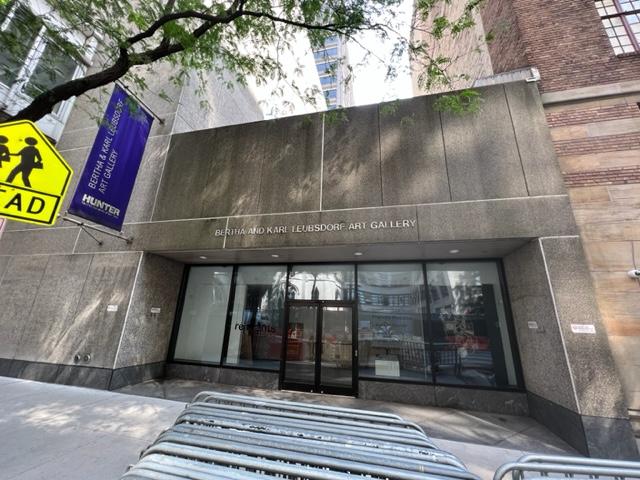
The Hunter College Museum-The Bertha and Karl Leubsdorf Gallery at 132 East 68th Street

I visited this wonderful little gallery on the main campus of Hunter College on the Upper East Side of Manhattan on my project, “MywalkinManhattan.com”. It is an interesting, small gallery that exhibits more fringe artists and collections. The best part of the gallery is that it is not overwhelming like the bigger museums in the City and you can see the whole gallery in about an hour or a little more (See my review on TripAdvisor).

Hunter Art Gallery II

A former exhibition was: Axis Mundo: Queer Networks in Chicano L.A. is an interesting look at the Los Angeles based queer Chicanx artists between the late 1960’s and early 1990’s and is the first of its kind to excavate histories of experimental art practice, collaboration and exchange by a group of artists in Los Angeles (Hunter College Gallery).

Hunter Art Gallery III

The Axis Mundo Exhibition

Currently the museum is hosting the BFA Final Projects and there is a combination of video, paintings and photography to choose from. There is some interesting sculpture work by some of the graduating seniors so take some time in the afternoon to visit the gallery.
Hunter Art Gallery IV

The Axis Mundo Exhibition

I visited the Gallery again in March of 2021, when the campus open after COVID rules lifted. The exhibition being shown was entitled “The Black Index”, a series of Black artists were being featured.

“The Black Index” features the works of artists Dennis Delgado, Alicia Henry, Kenyatta A.C. Hinkle, Titus Kaphar, Whitfield Lovell and Lava Thomas. The artists included in The Black Index build upon the tradition of Black self-representation as an antidote to colonialist images. Using drawing, perform, performance, printmaking, sculpture and digital technology to transform the recorded image, these artists question our reliance on photography as a privileged source for documentary objectivity and understanding. Their works offer an alternative practice-a Black Index-that still serves as a finding aid for information about Black subjects, but also challenges viewers desire for classification (Hunter Gallery website).

The Black Index | 4Columns

Artist Alicia Henry’s work “Analogan III”

The works in The Black Index make viewers aware of their own expectations of Black figuration by interrupting traditional epismologies of portraiture through unexpected and unconventional depictions. These works image the Black body through a conceptual lens that acknowledges the legacy of Black containment that is always present in viewing strategies. The approaches used by Delgado, Henry, Hinkle, Kaphar, Lovell, and Thomas suggest understandings of Blackness and the racial terms of our neo-liberal condition that counter legal and popular interpretations and in turn offer a paradigmatic shift within Black visual culture (Hunter Gallery website).

The Black Index — Leubsdorf Gallery

“The Black Index” works (Hunter Gallery)

The nice part of these galleries are that it takes about 45 minutes to view the whole exhibition.

The BFA Art Show at the Hunter College Galleries

In the Spring 2025, I stopped into the galleries to visit the Undergraduate show, CODA.
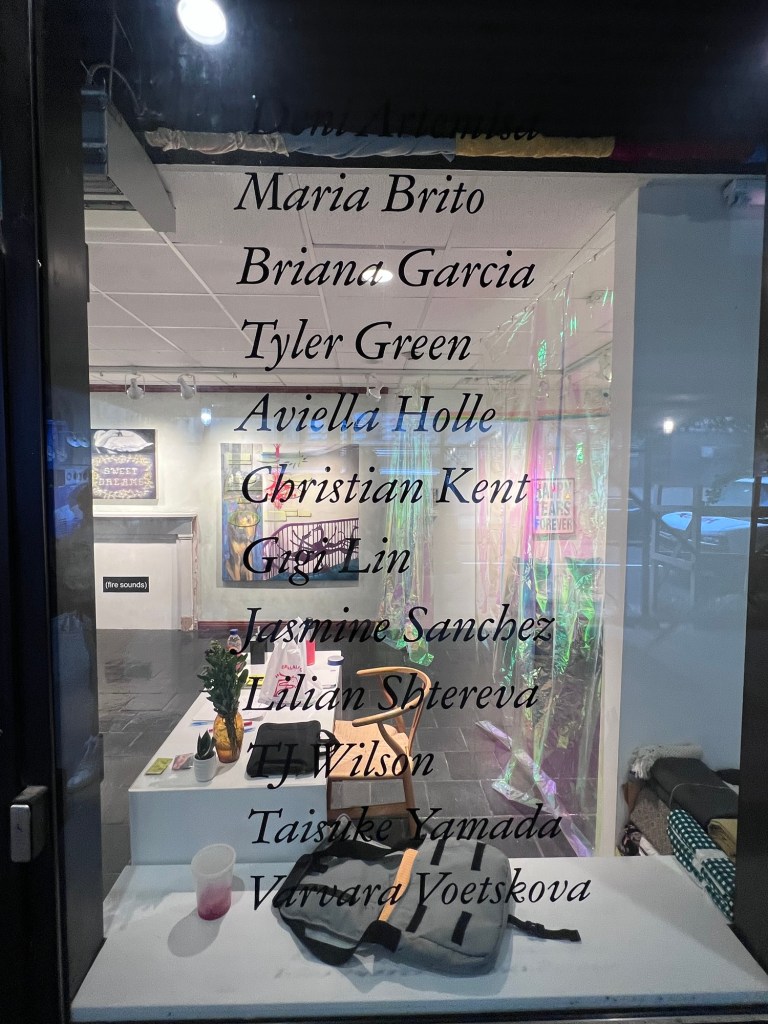
The students featured in the show
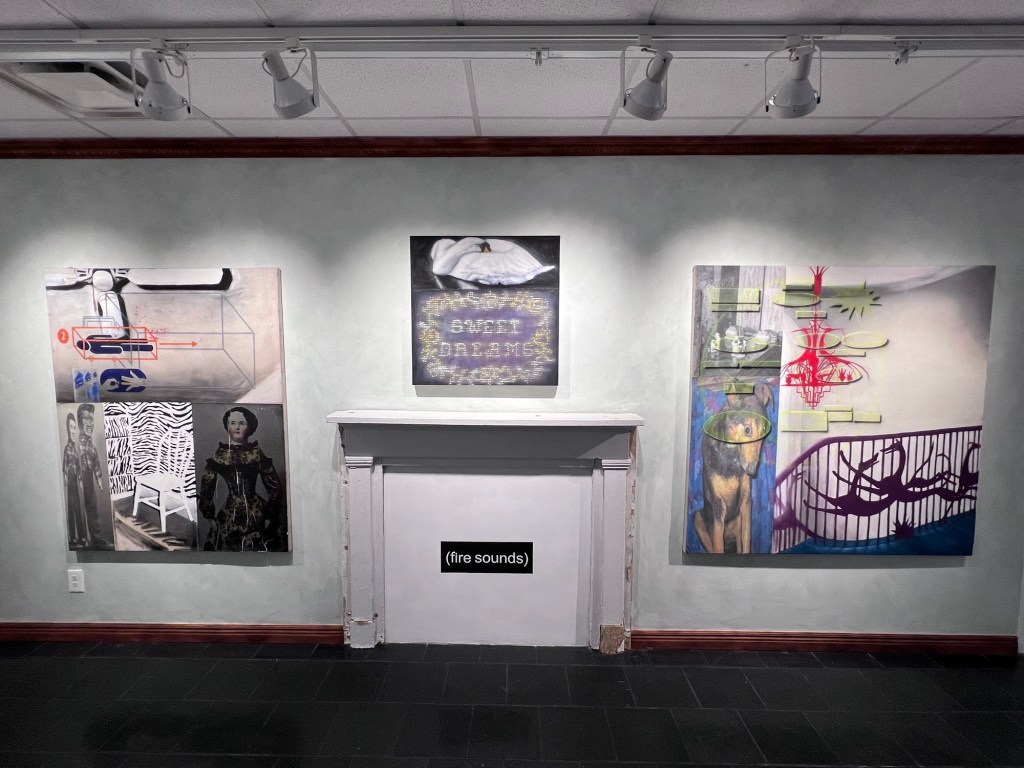
The front galleries
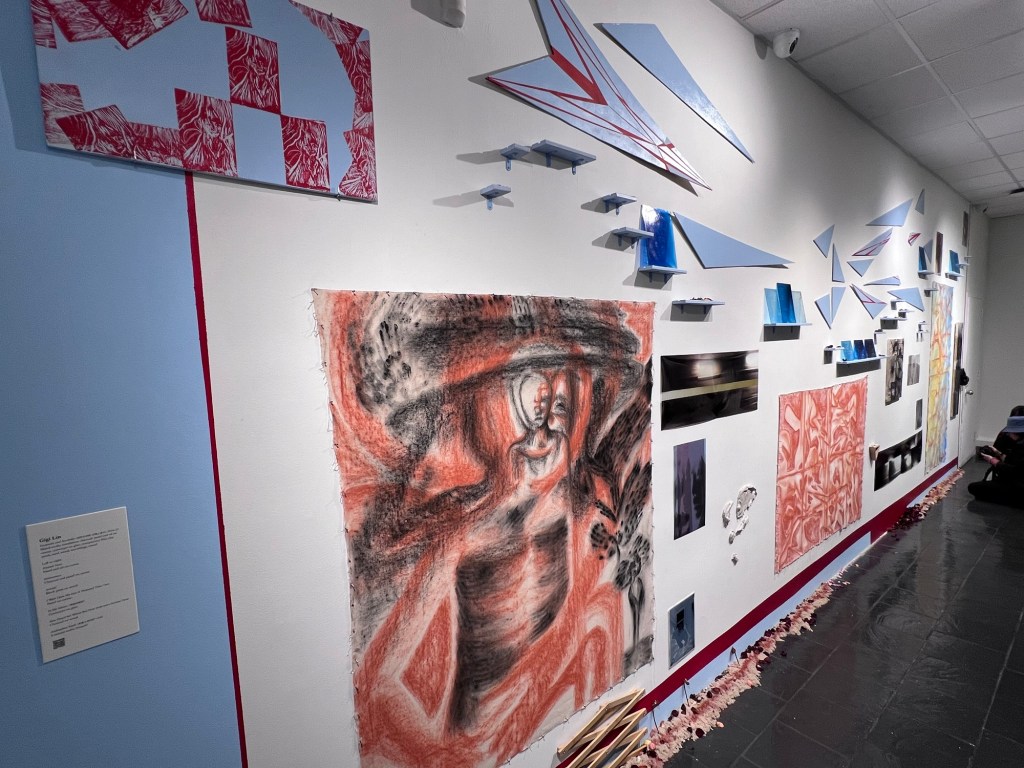
The entrance to the main gallery

This piece is called “Flushed Toast”

Then in the main part of the gallery, there were a few pieces of yarn work that I thought were very interesting.
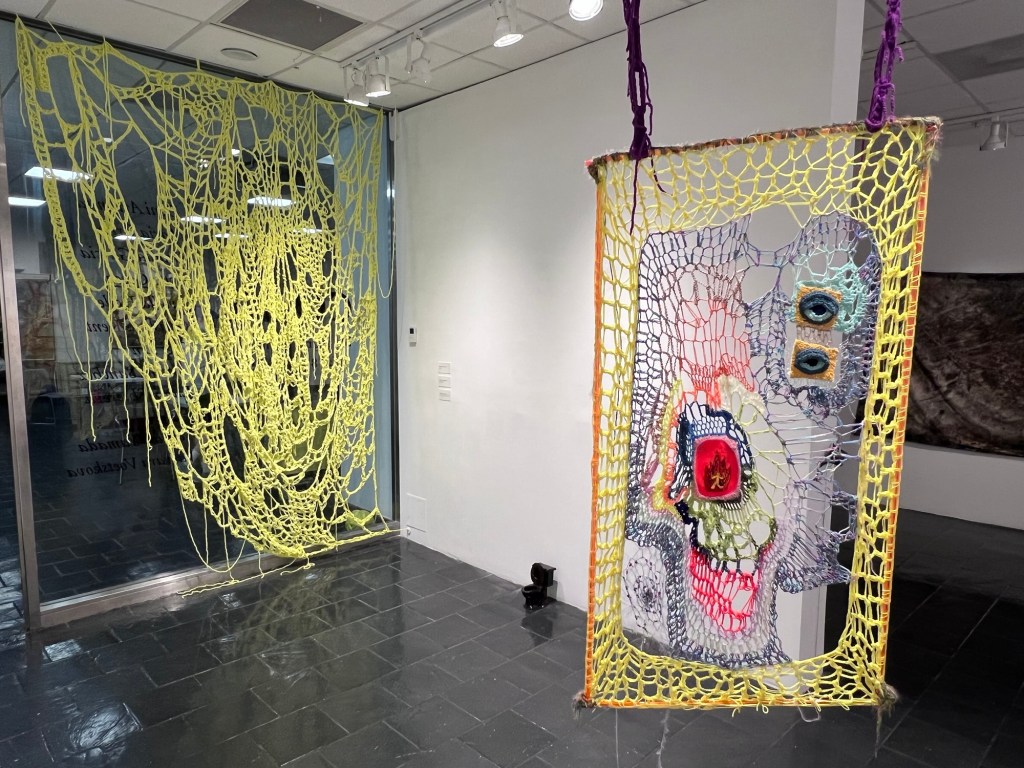
The works made of acrylic yarn by artist Demi Artemisa Espinoza

Artist Demi Artemisa Espinoza works
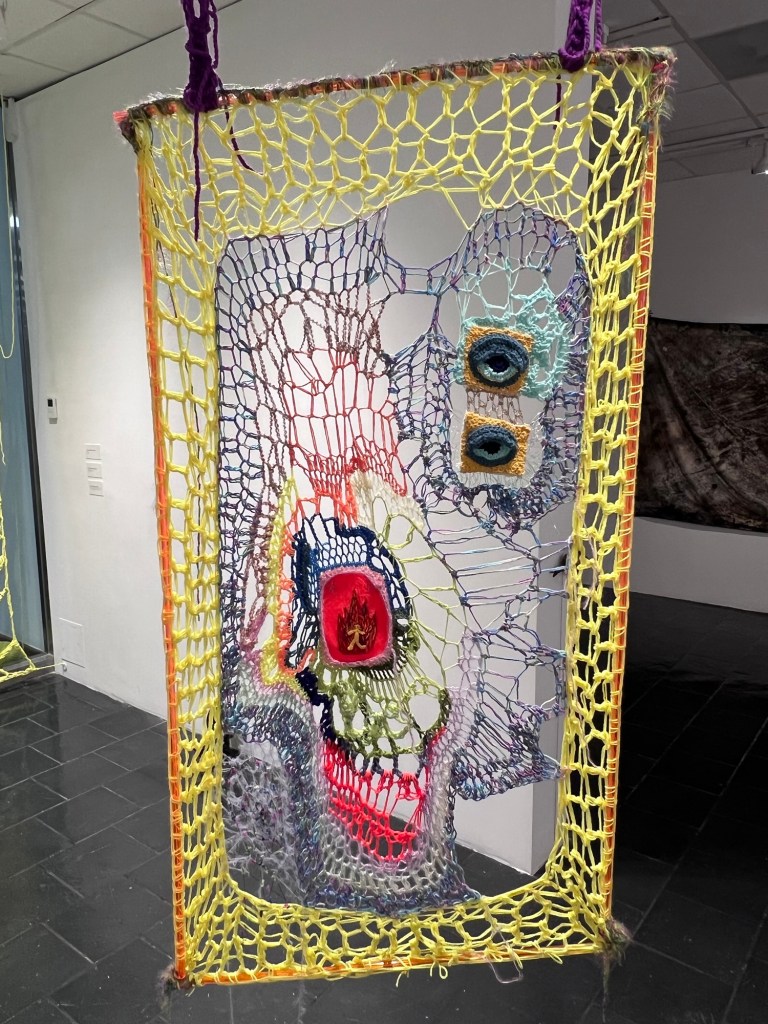
My favorite work in the show ‘Smiling Cheek to Cheek’

In the middle of the gallery, there were interesting modern sculptures.

The middle gallery

This was quite unique

Paintings in the show

Video works from student artist Aviella Holle

Video Artist Aviella Holle

The undergraduates in this Art program did an excellent job and I thought the works were very original.

The History of the Berth and Karl Leubsdorf Gallery:

(From the Hunter College Art Galleries website)

The Bertha and Karl Leubsdorf Gallery focuses on presenting historical and scholarly exhibitions and programming that provide new scholarship on important and often under-represented artists and art movements. Located on the Hunter College’s main campus, the gallery also hosts the BFA degree exhibitions each semester.

The Hunter College Art Galleries, under the auspices of the Department of Art and Art History, have been a vital aspect of the New York cultural landscape since their inception over a quarter of a century ago. The galleries provide a space for critical engagement with art and pedagogy, bringing together historical scholarship, contemporary artistic practice and experimental methodology. The galleries are committed to producing exhibitions, events and scholarship in dialogue with the intellectual discourse generated by the faculty and students at Hunter and serve as an integral extension to the department’s academic programs.
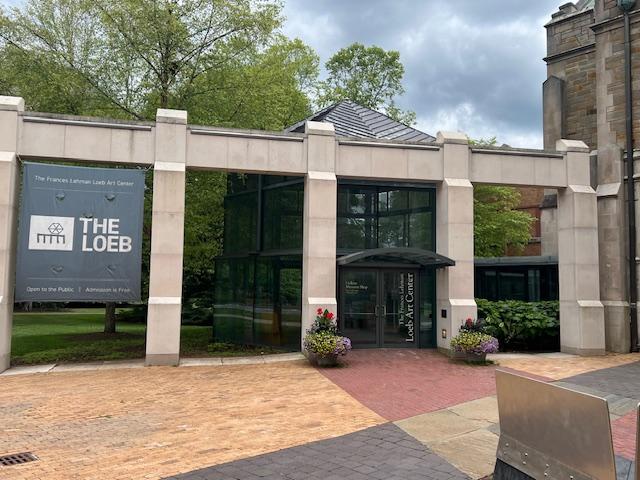
The Frances Lehman Loeb Art Center/Vassar College                                                                  124 Raymond Avenue                                             Poughkeepsie, NY 12604

The Frances Lehman Loeb Art Center/Vassar College 124 Raymond Avenue Poughkeepsie, NY 12604

The Frances Lehman Loeb Art Center/Vassar College

124 Raymond Avenue

Poughkeepsie, NY  12604

(845) 437-5632

fllac.vassar.edu

https://fllac.vassar.edu/

blogs.vassar.edu/fllaceducation

Open: Sunday 1:00pm-5:00pm/Monday Closed/Tuesday-Saturday 10:00am-5:00pm

TripAdvisor Review:

https://www.tripadvisor.com/Attraction_Review-g48443-d2419076-Reviews-Frances_Lehman_Loeb_Art_Center_at_Vassar_College-Poughkeepsie_New_York.html?m=19905

The Loeb Museum at Vassar College

Visiting The Frances Lehman Loeb Art Center is a wonderful afternoon out. Its best to park in the North Campus parking lot. You can walk the campus on a nice day down to the museum and enjoy the campus architecture. The campus is straight out of an Ivy League handbook. The museum is located by the front gate of the campus, and you can tour the whole museum in about two hours comfortably.

Take time to walk the Art Garden next to it and they have a really nice little downtown off North Campus to wonder around the restaurants and shops. See my review of Pizzeria Bacio Ristorante at 7 Collegeview Avenue near North Campus. The food is excellent!

The Art Sculpture Garden at the Loeb Museum

The Frances Lehman Loeb Art Center opened in 1864 as the Vassar College Art Gallery. The founding members of the college’s Board of Trustees understand art to be an integral part of the academic experience. Vassar therefor became the first college or university in the United States to include an art museum as part of its original plan. Since its inception, the museum has remained a significant part of the Vassar experience.

The Contemporary Galleries at the Loeb Museum

The Frances Lehman Loeb Art Center is a cultural destination both for the Vassar College community and for visitors from the region and around the world who are attracted by the breadth and quality of the art on view. It is unique to the region in its combination of stellar temporary exhibitions and an ongoing installation of the permanent collection that features art through the ages, from ancient Egypt to the present.

Ancient Art gallery with items from Egypt, Greece and Rome.

The collection began with an initial gift from Matthew Vassar of 3,800 works of art, including an important group of Hudson River School paintings and British watercolors. Today, the Art Center’s collection has grown to over 18,000 works of art that span antiquity to the present. Notable holdings include the Warburg Collection of Old Master prints and a wide range of works by major European and American twentieth-century painters, including Georgia O’Keeffe, Pablo Picasso, Jackson Pollock, Joan Miro, Mark Rothko and Andy Warhol.

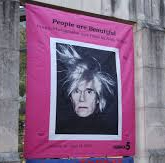
The Andy Warhol exhibition was being shown on my first trip to the museum

https://www.vassar.edu/theloeb/publications/people-are-beautiful-prints-photographs-and-films-andy-warhol

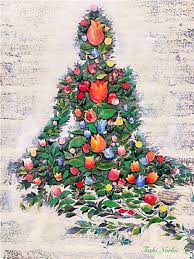
I went to the museum recently before the closing of the “Beyond the Threshold: Tibetan Contemporary Art” and “Mastery and Merit: Art from the Jack Shear Collection” and got to view the galleries before they closed for the evening. Admittingly I am no expert of Buddhist art, but the Jack Shear collection gave you a perspective on the religion.  The art portrayed Buddha in many forms as Divine. The contemporary works were very interesting as it delved into what modern Tibetans all over the world see in the form of current happenings, playing off other famous works of art (such as the modern version of the Mona Lisa) and a contemporary take on the Buddha. 

The modern take on Buddha from a contemporary perspective

https://www.vassar.edu/theloeb/exhibitions/beyond-threshold-tibetan-contemporary-art

The shows revolve on a continual basis and there are shows being mounted at various times of the year.

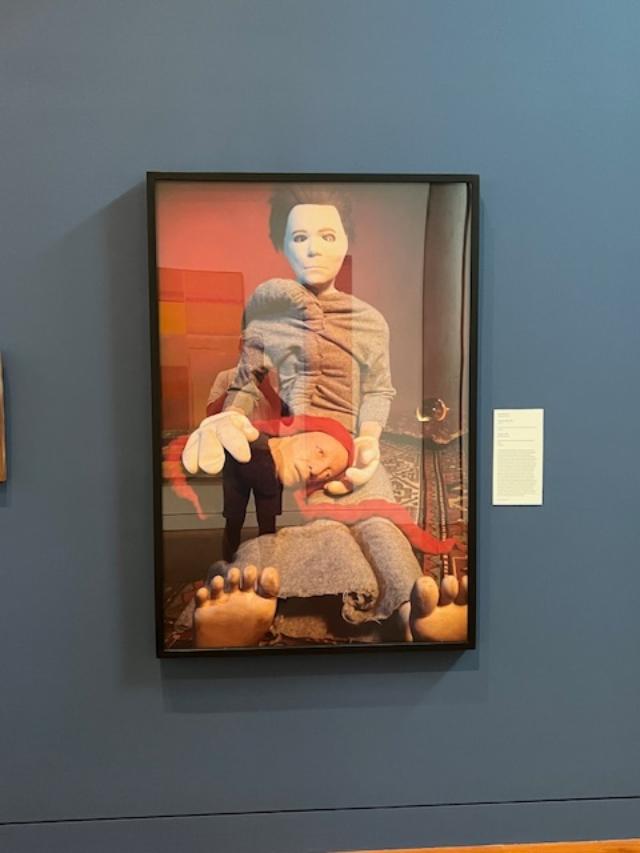
Cindy Sherman Art in the collection

The Art Center is housed in a building designed by Cesar Pelli and completed in 1993. The Hildegarde Krause Baker, class of 1911, Sculpture Garden includes works by Frank Stella, Gaston Lachaise and Anthony Caro, among others.

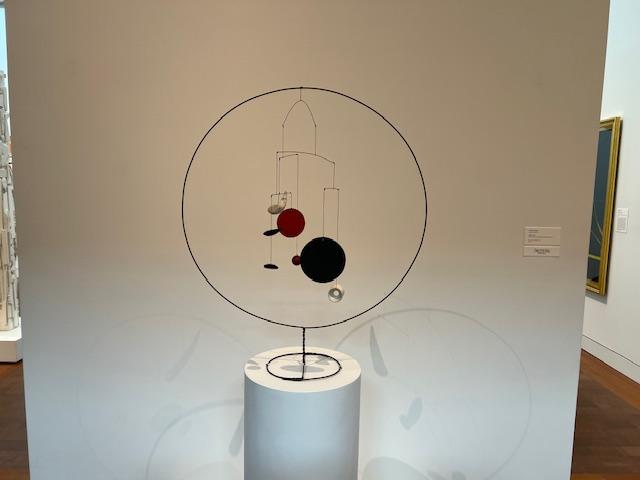
The Alexander Calder work “Mobile” in the collection

Tourism information on the museum:

There are tours for School Groups, Adult Groups, Individuals and Self-Guided for individuals. Please call the museum for more information on this. A centerpiece of the Loeb’s programming is Late Night at the Loeb, held weekly on Thursday evenings. Programming for Late Night is spearheaded by the Loeb Student Committee who organize activities and offerings for students and the general public.

There are creative happens every week. You can also join as a member and there are opportunities to volunteer at the museum.  To learn more about both of these, please call (845) 437-5237.

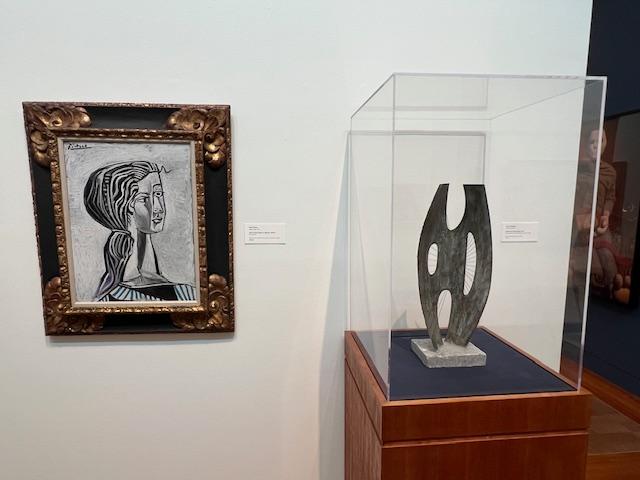
The famous Picasso is to the left

Disclaimer: This information about the museum came from the museum pamphlets. Please call the above numbers for more information or email them. It is a great afternoon out to just tour the museum and then walk around the campus on a nice day.

The “Stokers of the Earth” painting by Roberto Matta

“Stokers of the Earth” sign

Bard Graduate Center Gallery                               18 West 86th Street                                             New York, NY 10024

Bard Graduate Center Gallery 18 West 86th Street New York, NY 10024

Bard Graduate Center Gallery

18 West 86th Street

New York, NY  10024

(212) 501-3023

gallery@bgc.bard.edu

https://www.bgc.bard.edu/gallery/27/exhibitions

https://www.bgc.bard.edu/gallery/

Open: Tuesday, Friday-Sunday: 11:00am-5:00pm/Wednesday-Thursday: 11:00am-8:00pm/Closed on major holidays

Fee: Free Admission Hours on all Wednesdays and Thursday evenings from 5:00pm-8:00pm.

December 26th (Boxing Day) : Free

General Admission: $7.00 and Students & Seniors (65+): $5.00

Subway: B, C, and 1 to West 86th Street

TripAdvisor Review:

https://www.tripadvisor.com/Attraction_Review-g60763-d309306-Reviews-The_Bard_Graduate_Center-New_York_City_New_York.html?m=19905

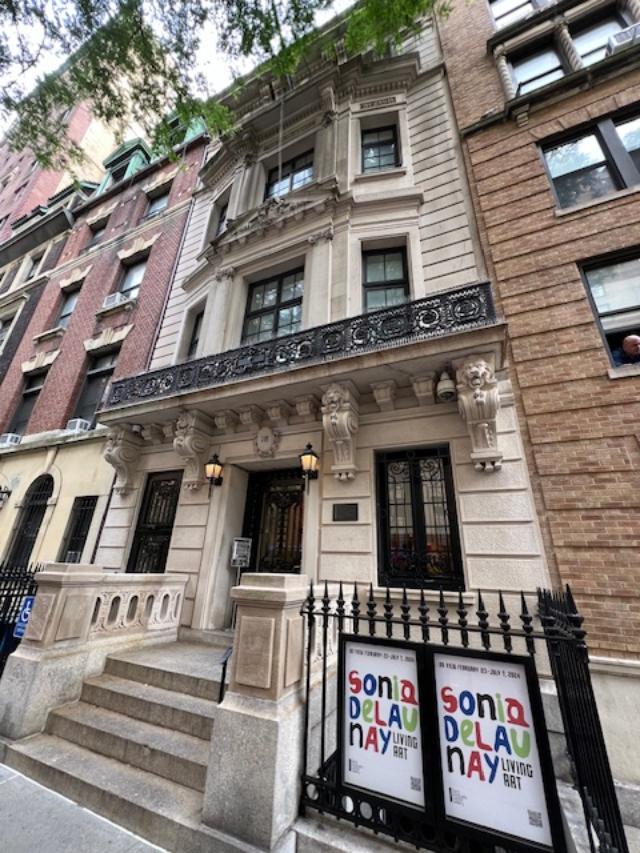
The Bard Gallery at 18 West 86th Street

I took some time out from “MywalkinManhattan” project to visit the Bard Gallery for the afternoon and was pleasantly surprised by this little ‘gem’ located on the Upper West Side of Manhattan. This Graduate Center focuses on small exhibitions with interesting themes and not so over-whelming shows that tax your brain like some of the bigger museums in New York City.

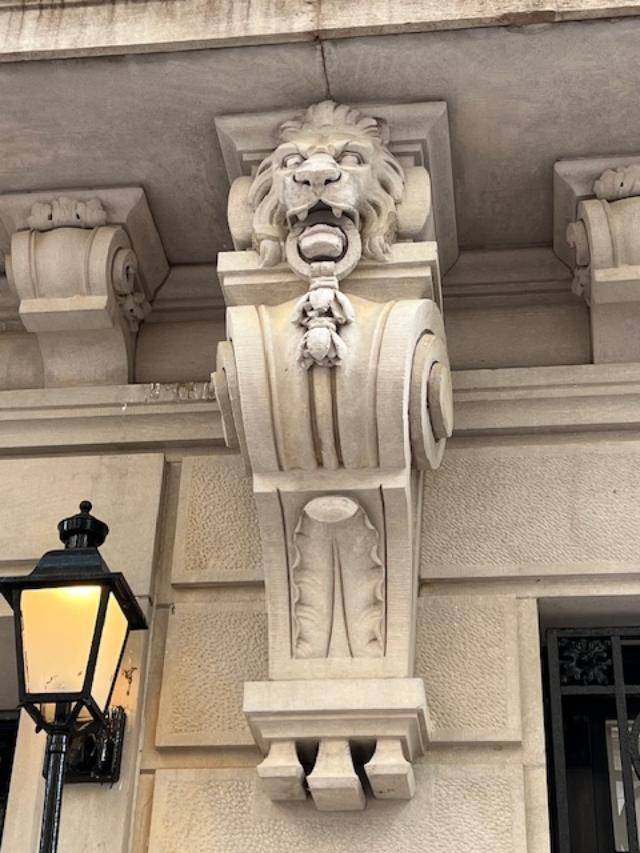
The embellishments at the entrance to the Bard Art Galley

Their exhibitions are compact and detailed on the subject matter and the objects they have on display are interesting. They also have lectures and gallery talks for more detail on their displays. The Bard Graduate Center Gallery, founded in 1993, occupies a six story townhouse near Central Park West and houses not just the gallery but the academic programs, lecture hall and library.

The center has pioneering exhibitions on decorative arts, design history and material culture. The research driven exhibitions are organized with leading scholars, curators and institutions worldwide and showcase a rich array of objects comprised of loans from public and private collections, many never before on view in New York City.

Bard Art Gallery

Walking the permanent collection

With a commitment to investigating under-recognized topics in the history of design, the exhibitions provide a critical framework for understanding the context in which historical and contemporary objects were made, used, collected and displayed. These lead to a fuller understanding of the present through the lens of the past (Bard College website).

Bard Art Gallery III

Displays in the permanent galleries

A full slate of public and research programs, public tours and opportunities for school groups and educators compliment each exhibition. Video and new media interactives enrich the visitor experience in educators compliment each exhibition (Museum website).

Bard Art Gallery II

Items in the permanent collections

The Bard Graduate Center: Decorative Arts, Design History, Material Culture is a graduate research institute and gallery located on the Upper West Side of Manhattan. It is affiliated with Bard College, located in Annadale-on-Hudson, NY. The gallery occupies a six story townhouse  at the 18 West 86th Street location while the academic building and library are located at 38 West 86th Street.

Students at Bard Graduate Center focus on the study of the cultural history of the material world. The institution is committed to the encyclopedic study of things, drawing on methodologies and approaches from art and design history, economic and cultural history and history of technology, philosophy, anthropology and archaeology.

Students enrolled in the M.A. and PhD. programs work closely with a distinguished faculty of active scholars in exploring the interrelationships between works of art and craft, design, places, ideas and social and cultural practice in courses ranging from antiquity to the 21st century (Wiki Bard College site).


The Penn Museum, The University of Pennsylvania Museum of Archaeology & Anthropology                                                      3260 South Street                                  Philadelphia, PA 19104

The Penn Museum, The University of Pennsylvania Museum of Archaeology & Anthropology 3260 South Street Philadelphia, PA 19104

The Penn Museum, The University of Pennsylvania of Archaeology & Anthropology

3260 South Street

Philadelphia, PA  19104

(215) 898-4000

https://www.penn.museum/

Phone: General Information: (215) 898-4000/Membership & Membership Events: (215) 898-5093/Public Programs: (215) 898-2680/Group Sales (adult, senior and college admission): (215) 746-6774/Education/K-12 Tours: (215) 746-6774/Museum Shop: (215) 898-4046.Facility Rentals: (215) 898-3024

Open: Sunday 10:00am-5:00pm/Monday Closed/Tuesday 10:00am-5:00pm/Wednesday 10:00am-8:00pm (first Wednesday of the month otherwise 5:00pm)/Thursday-Saturday 10:00am-5:00pm

Museum Library Hours:

Tuesday, Wednesday, Thursday: 9:00am-9:00pm/Monday, Friday, Saturday: 9:00am-5:00pm/Sunday: 1:00pm-5:00pm/Closed holidays

Pepper Mill Café Hours:

Monday: 10:00am-1:00pm/Tuesday through Friday: 8:30am-4:30pm/Saturday and Sunday: 10:00am-4:30p

Fee: Adults $18.00/Seniors $16.00 (over 65)/Children 17-5 $13.00/Military and Children under 5 and Members Free/Penn Museum Members/Penn Card Holders/HUP/CHOP Employees: Free

TripAdvisor Review:

https://www.tripadvisor.com/Attraction_Review-g60795-d138271-Reviews-Penn_Museum-Philadelphia_Pennsylvania.html?m=19905

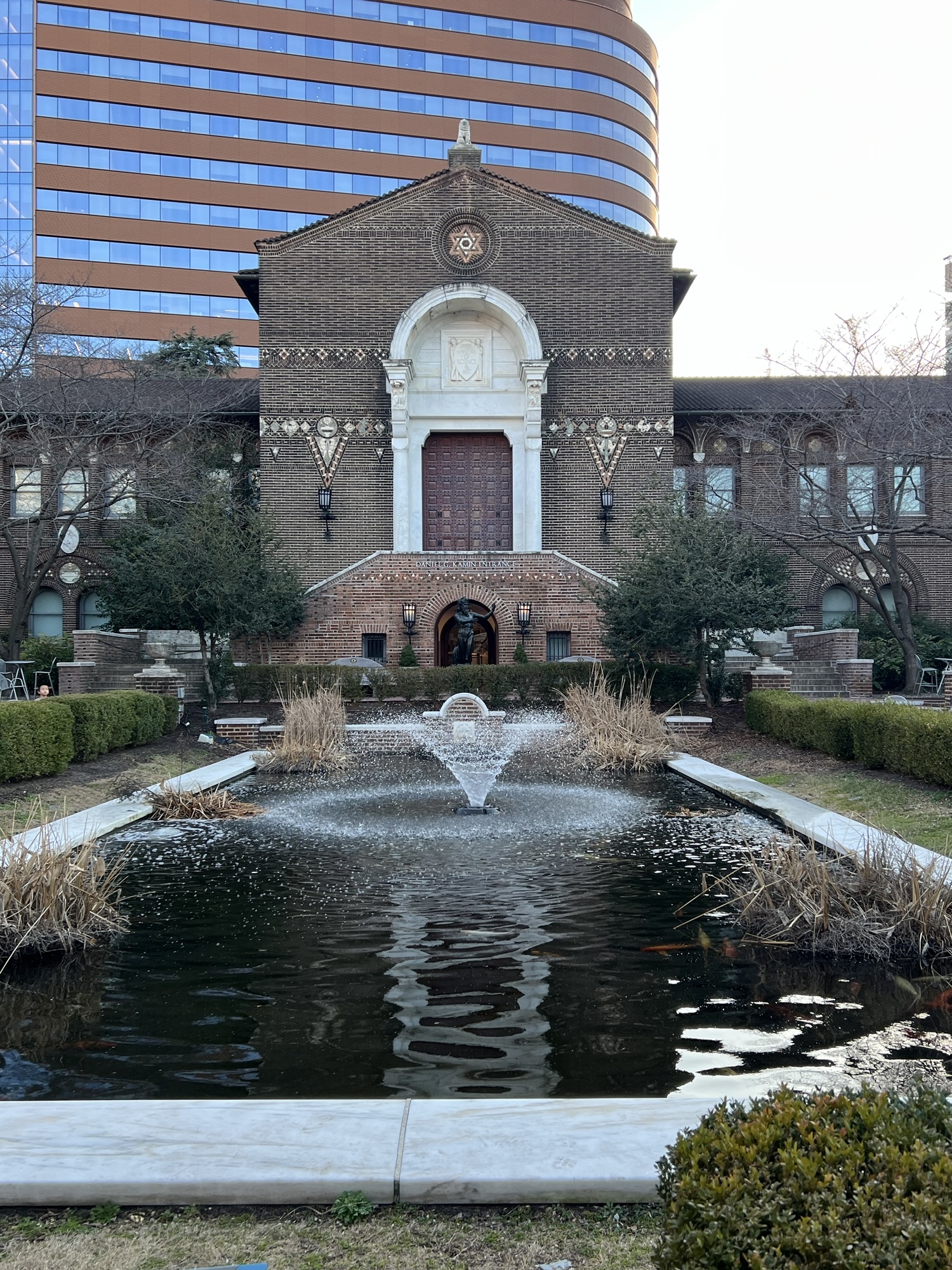
The entrance to the Penn Museum at 2360 South Street

Looking for a tranquil place to study or relax? Try the Museum’s garden’s and galleries or the Museum Library. For a bite to eat, stop by the Pepper Mill Café. Come by during Reading Days and Exams for free coffee and tea and extra study space on campus (from the Penn website).

The University of Pennsylvania Museum and Gardens

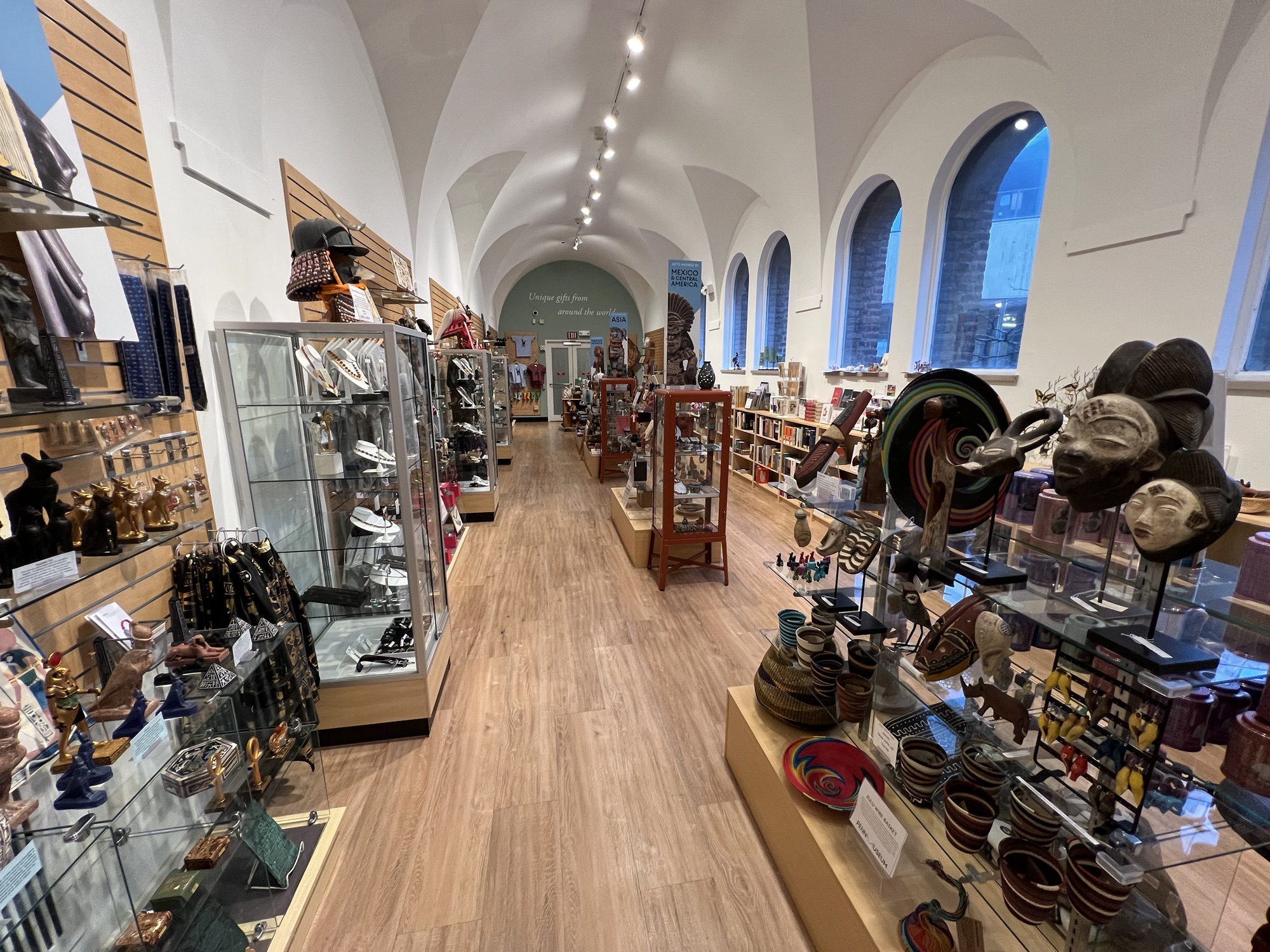
Museum Shop: A wide selection of books, games, fine jewelry and crafts from around the world can be purchased at the Museum Shop. Open during Museum hours.

The museum gift shop

I visited the Penn Museum on days I have come to Philly for the Penn versus Cornell games and for the Christmas holidays (the museum is across the street from the football stadium.

When I visited Philadelphia recently, I was able to visit the museum at more length rather before and after a football game. I really got a chance to see all the displays and look at all the artwork. It is a fascinating museum with many artifacts found on digs conducted by the university. It takes a lot of time to explore each culture.

The museum has three floors of exhibition space which is broken into different centuries. The museum has a lot of artifacts from their digs over the last two hundred years. Many of the artifacts are on display have the background of where the artifacts were found and how they researched. Each room has a different area of the world they are coming from.

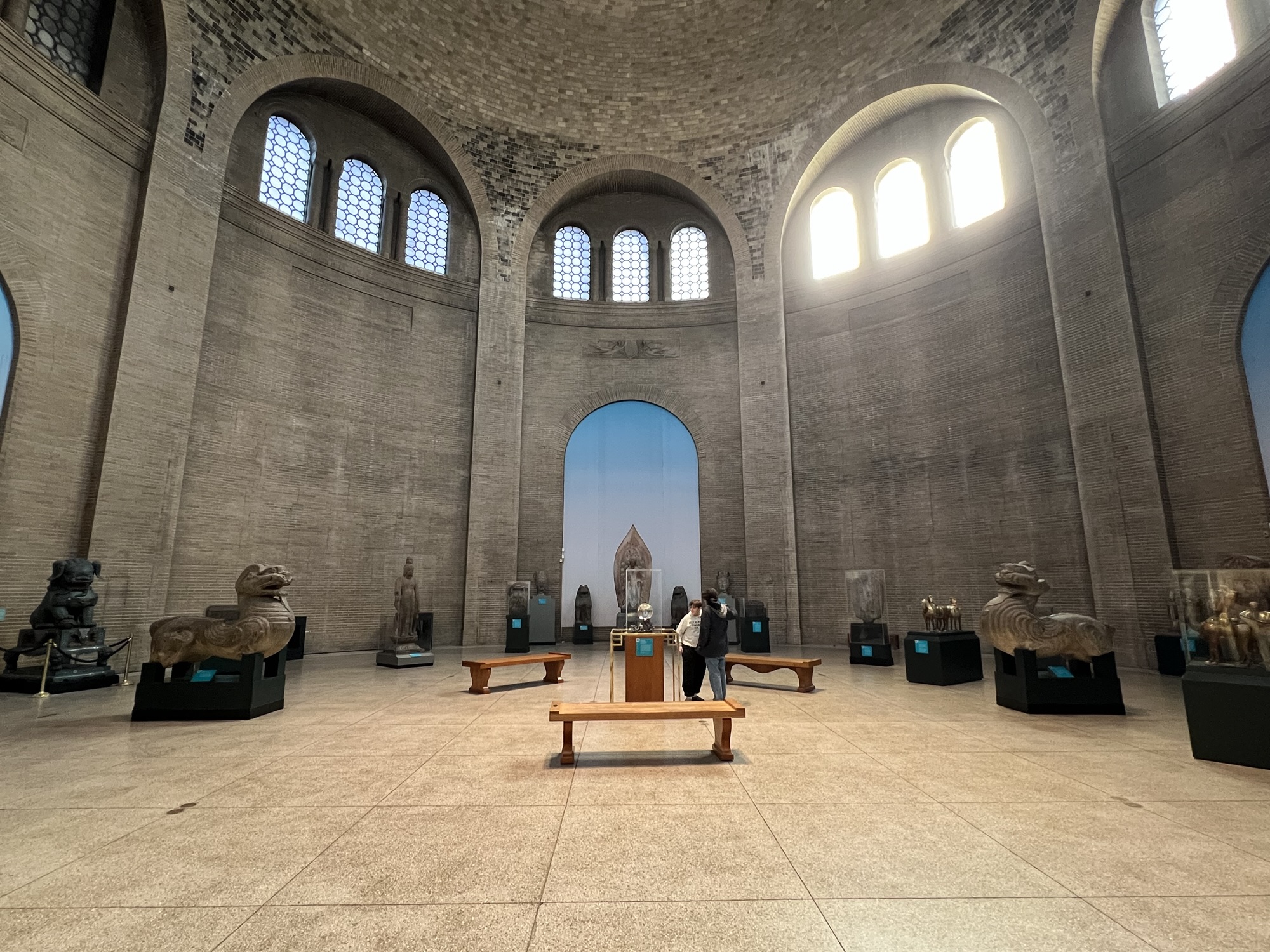
On the Upper floors is the Asian, Egyptian and Roman exhibitions on artifacts, the Mid-level is the Middle Eastern, African, Egyptian, Mexican and North American/Native American Galleries.

The History of the University of Pennsylvania Museum:

(from the College website)

The Penn Museum is one of the premier international museums of archaeology and anthropology right here on the University of Pennsylvania campus. An active research and teaching center, the Penn Museum has teams engaged in more than 50 expeditions and research projects worldwide. Three floors of public galleries feature art, artifacts and remarkable stories from every inhabited continent on earth.Here is a selection of the interesting artifacts and art that I saw at the museum:

The Eastern Mediterranean Gallery:

The Eastern Mediterranean Galleries of Roman and Greek art

Transforming understanding of the human experience. Home to over a million extraordinary artifacts and archaeological finds from Africa, Asia, the Americas and the Mediterranean, the Penn Museum has been uncovering our shared humanity across continents and millennia since 1887.

The Greek Galleries

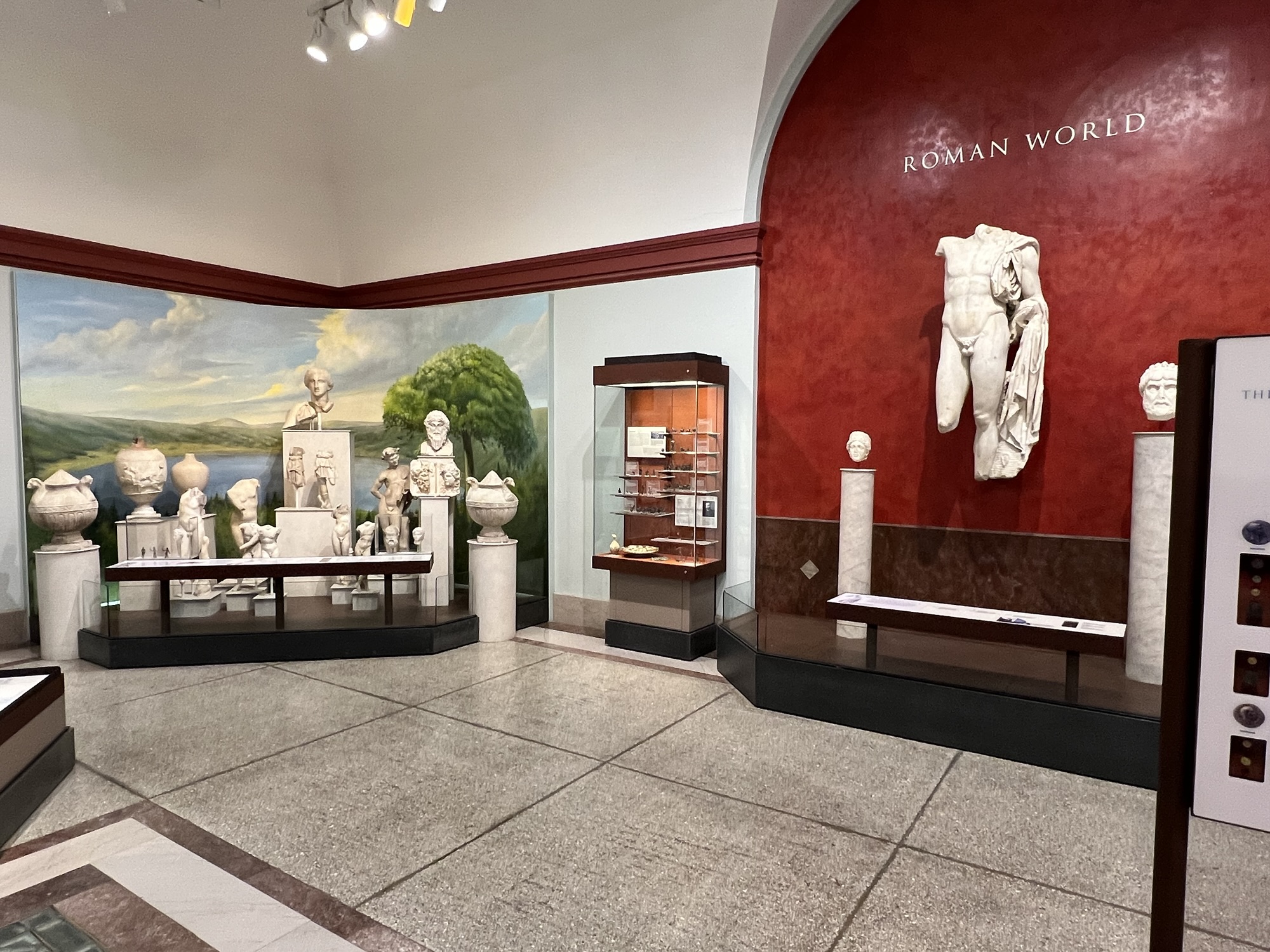
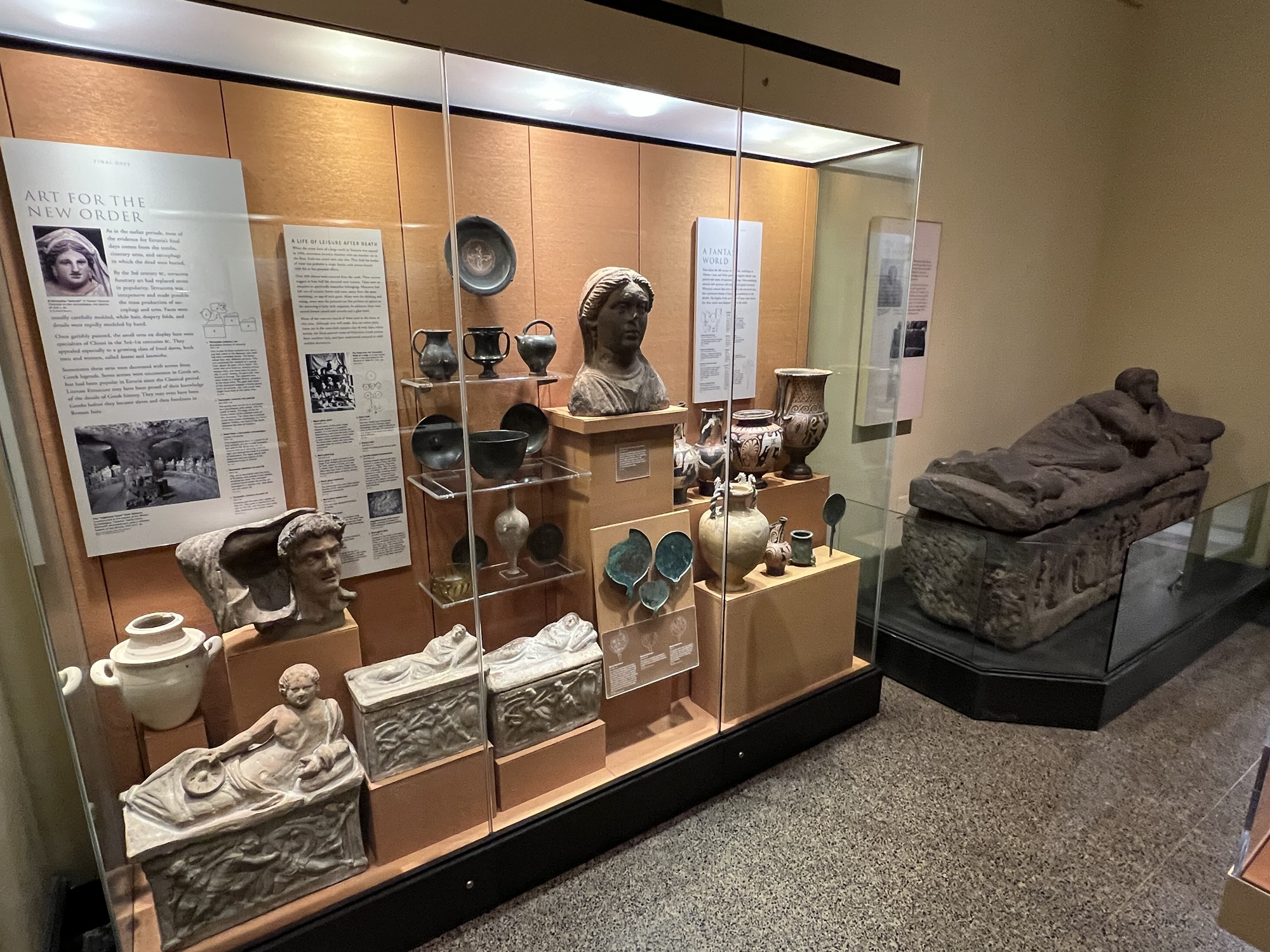
The Roman/Italian Galleries:

The entrance to The Roman Galleries

The Roman Galleries

The Roman Galleries

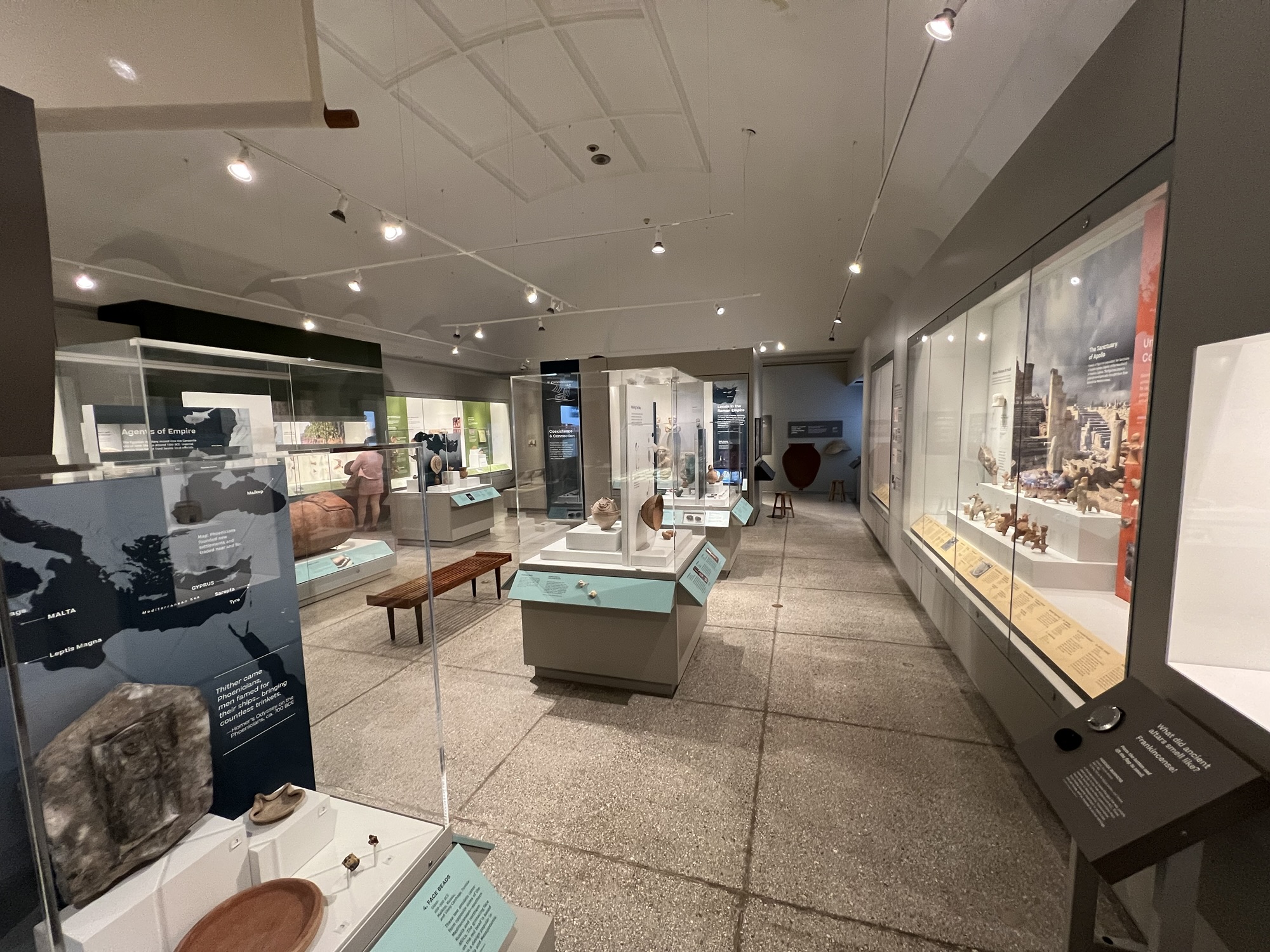
The Roman Galleries tell the story of the influence of Ancient Roman on the Mediterranean Sea. trade routes to the the Middle East and Asia and the influence of the Roman Empire on the world at the time.

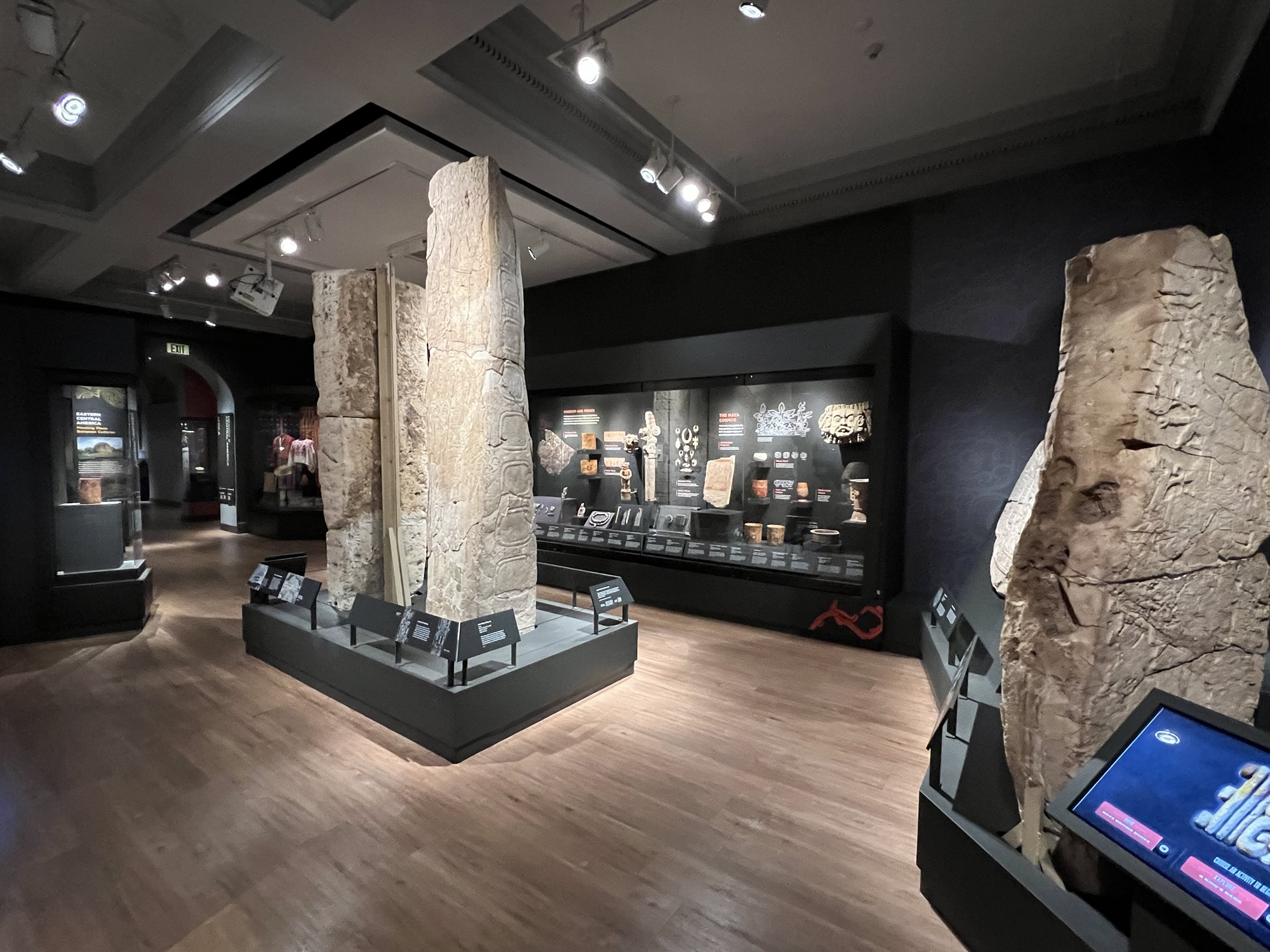
The Pre-Columbian Gallery:

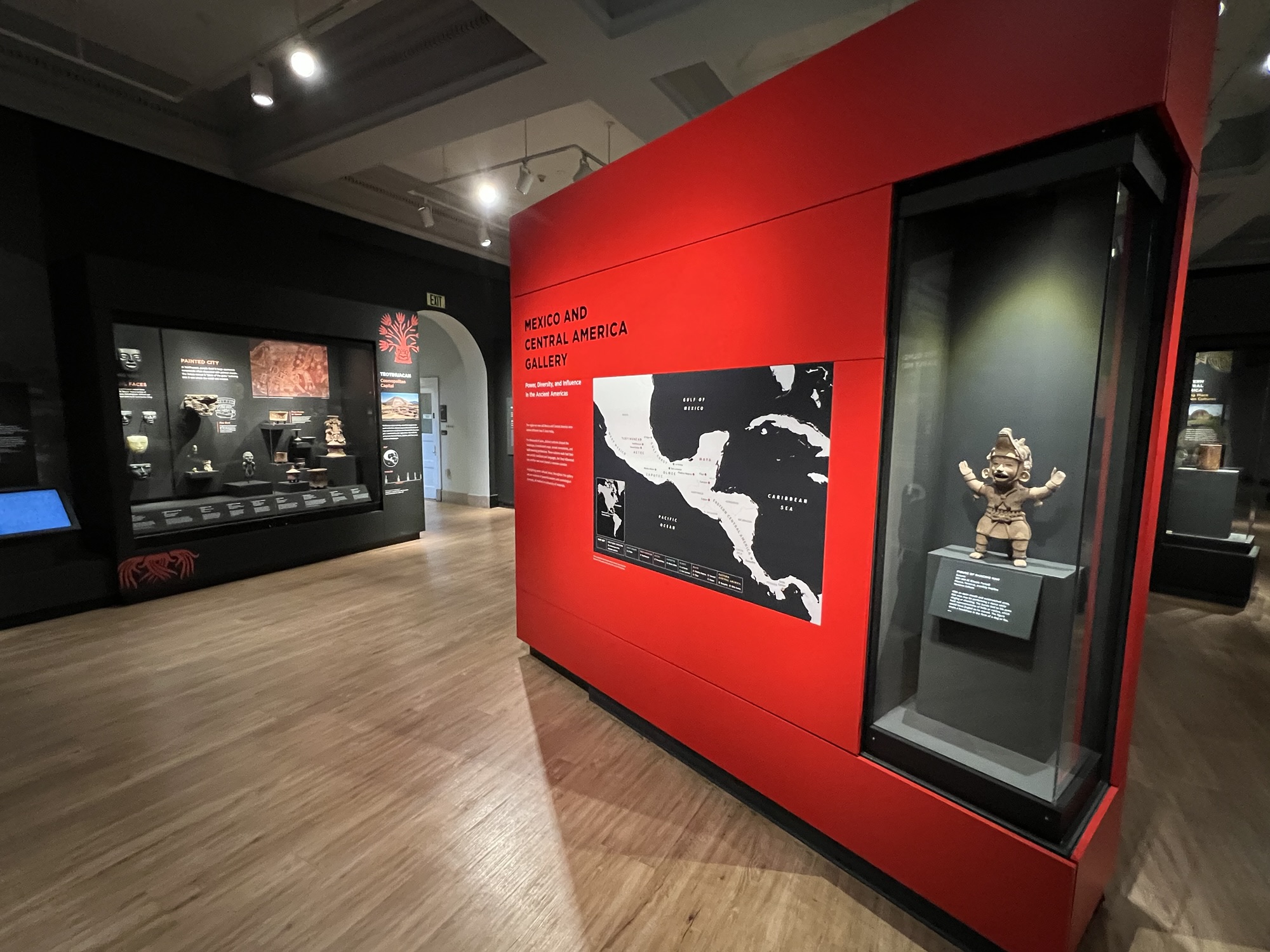
The Pre-Columbian exhibition is based on artifacts from the Mayan, Aztec and Incan civilizations. The artifacts show very advanced societies in both education, science and art.

The entrance to the Pre-Columbian galleries

The Pre-Columbia room

The Pre-Columbian galleries

The ‘Margarita’ panel

The ‘Margarita’ panel

I also got a quick tour of the  Sphinx Gallery on my way out. On my most recent trip to the museum, I only had about an hour so I concentrated on the Egyptian Galleries and the special exhibition “The Stories We Wear”.

The Egyptian Galleries:

For a small museum, the Egyptian Galleries were pretty extensive. Much of the artifacts had come from Penn digs in Egypt back in the last century when museums used to sponsor and then fill their museums with artifacts. 

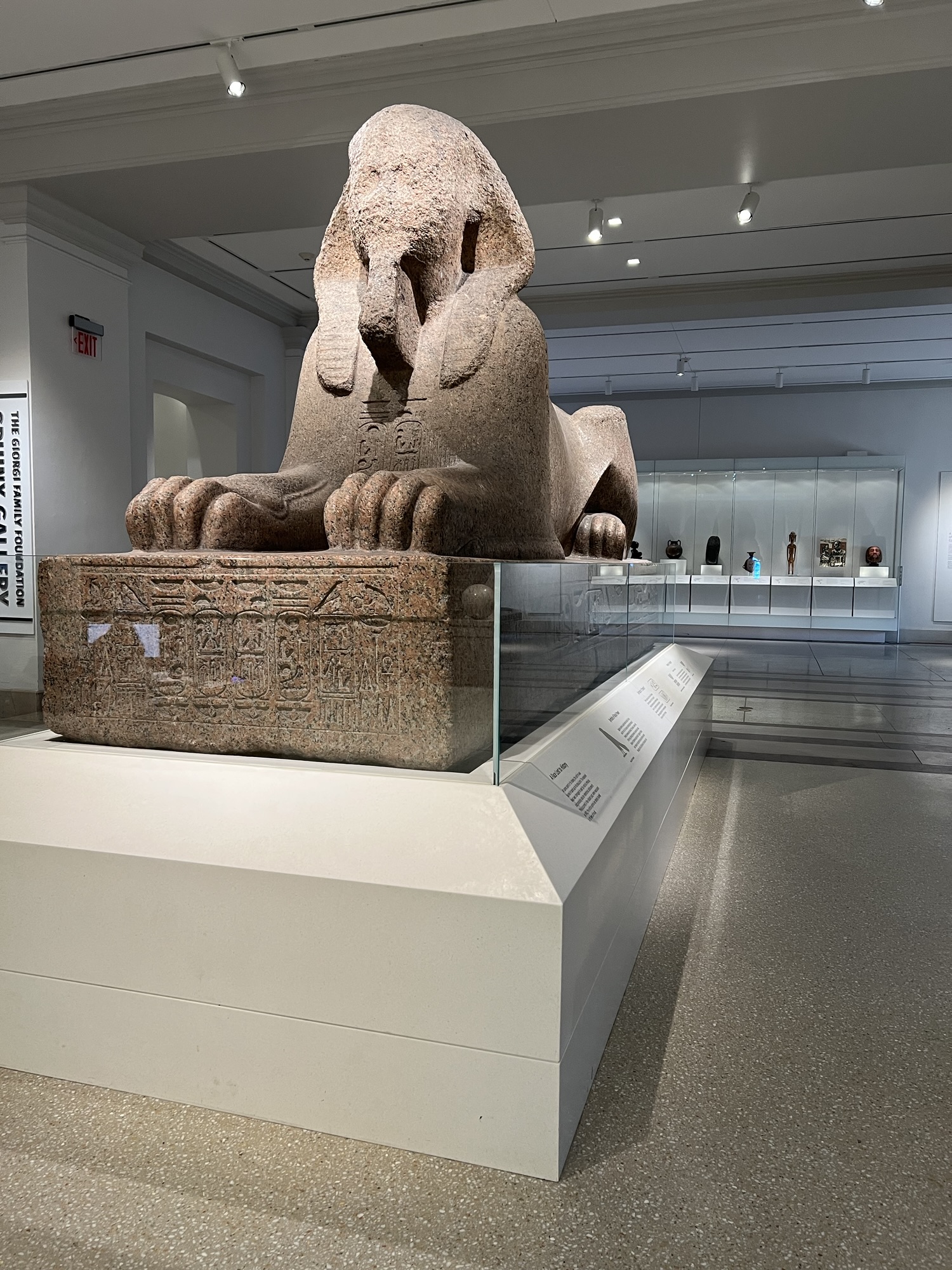
There is a selection of small statuary, jewelry and decorative objects. Some of the collection highlights are the Sphinx of Ramesses the Great from Memphis, Egypt 1293-1185 BC located in the Egypt (Sphinx) Gallery.

The Sphinx Gallery is very interesting

The Sphinx guards the Gallery

Egyptian Gallery artifacts

The main Egyptian Gallery

On my first trip to the museum as well as my most recent, I was able to quickly tour the Mexican Galleries with the statues of the Sun and Water gods and the stone calendars. The Standing Figure located in the Mexico and Central America Gallery from Veracruz, Mexico from 500-700 CE. The Gallery has one of the largest collections of Mayan Stone statues in the world.

In the Special Exhibition Gallery, “The Stories We Wear”:

The exhibition was based on how what we wear and change into transforms us into someone new. The exhibition featured sports uniforms, Chinese Opera gowns, Princess Grace Kelly’s formal dress, drag performers costume as well as an array of accessories that adorn people.

“The Stories We Wear” exhibition

https://www.penn.museum/on-view/galleries-exhibitions/the-stories-we-wear

More of the interesting galleries that I visited:

The galleries at the Penn Museum

The Middle Eastern Galleries

From Groundbreaking excavations to ongoing innovation. Our journey as an institution began with an excavation of the ancient Mesopotamian city of Nippur, the first American excavation in the Middle East and a groundbreaking undertaking in the history of archaeological research.

Ancient works of art

Since that time, over 300 field excavations and anthropological research projects around the world have set us apart as an active research and educational institution. Today, our mission is fulfilled by 22 curators, 5 teaching specialists and over 150 affiliated consulting scholars.

The Mesopotamians Galleries

We are stewards of our remarkable history and humanity. Out vast and varied collection of archaeological finds and ethnographic objects is organized in eleven curatorial sections documenting the peoples of Africa, Asia, Oceania and the Americas.

The art from Ur

Harp from the City of Ur

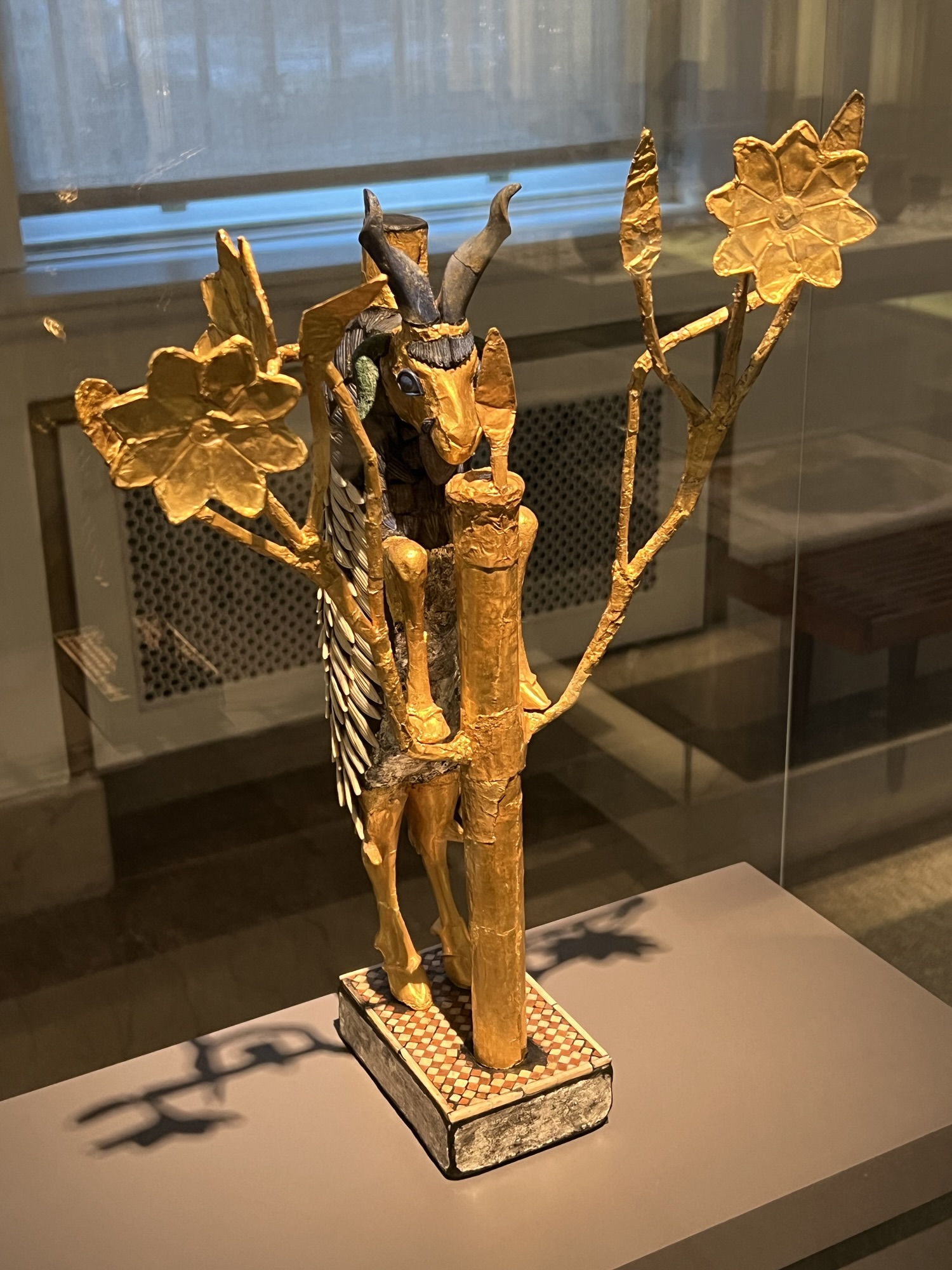
Ram hiding in the thicket from the City of Ur

The Queen Puabi display

These holdings as well as the Museum Archives of excavation and research projects, are used by researchers and borrowing institutions worldwide. And our curators and interpretive planners draw on these rich resources to provide compelling context to our galleries, where visitors can travel the globe in a day.

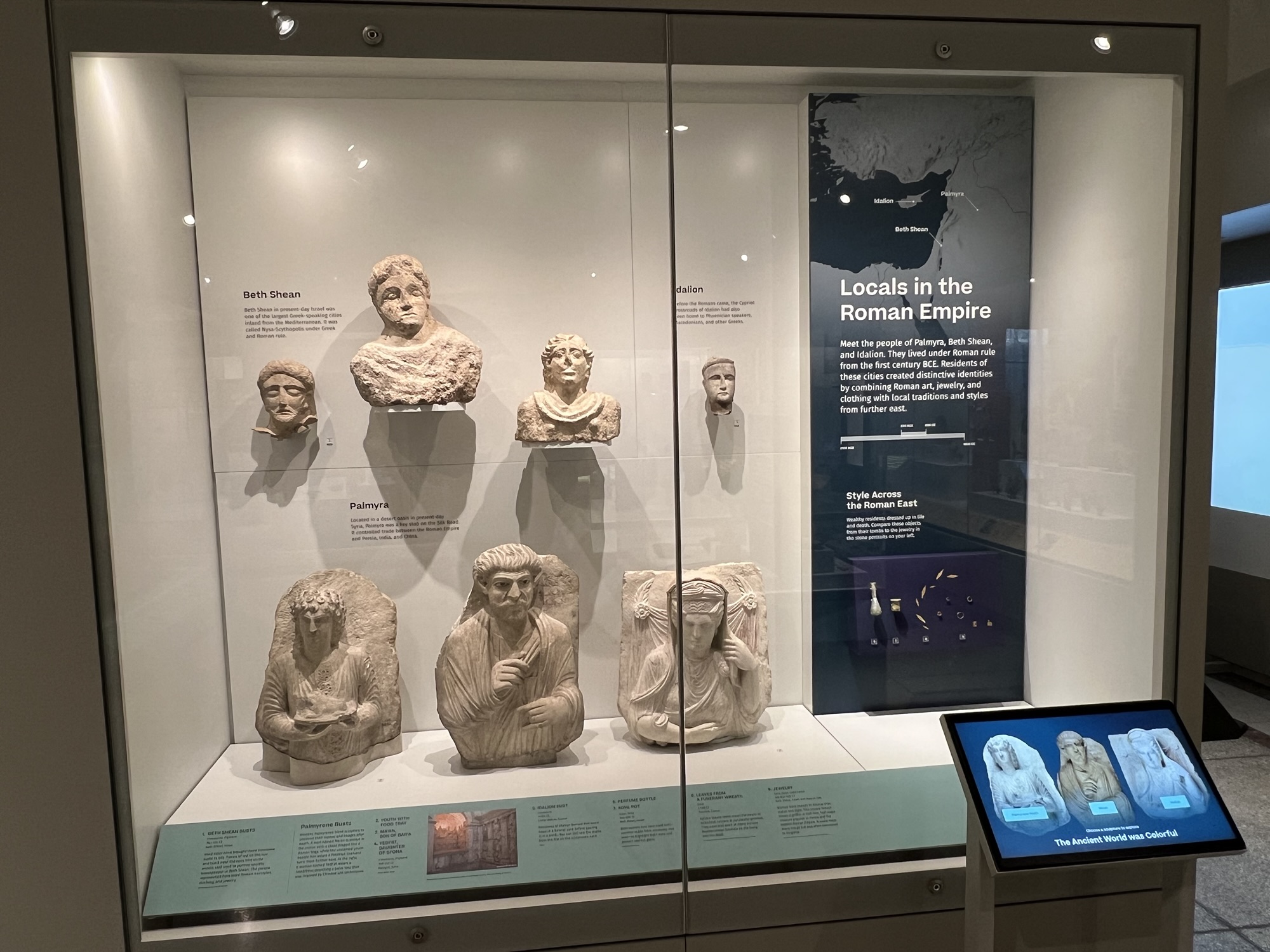
Middle Eastern works with a Roman influences

The Penn Museum Mission:

In bridging archaeology, the study of objects made by humans, with anthropology, the science of humanity, we chart a course for finding one’s own place in the arc of human history.

We are dedicated to telling powerful stories that emerge from excavations and research across the world. And nowhere else in the Western hemisphere will you be greeted by a 3000 year old, 15 ton Egyptian sphinx!

If there is one thing that 10,000 years of human history have taught us, it is that we have more in common than we think. In the canon of human existence, our past, present and future paths are inextricably intertwined.

What does the Code of Hammurabi have to do with the U.S. constitution? How can archaeology help to predict climate change? And what radical social changes accelerated by ancient plagues could be replicated in a post-COVID world?

Information about the museum:

Group Tours: Discounts are available for groups of 10 or more. Private tours and lectures are offered. Call (215) 746-8183 or email grouptickets@pennmuseum.org for information and reservations.

Public Gallery Tours: Penn Museum docents offer tours most Saturdays and Sundays at 1:30pm and Wednesdays at 6:30pm. Please check our website, http://www.penn.museum, for topics (Tour topics are subject to change; cancellation of tours may occur).

Accessibility: The Museum is wheelchair accessible and provides other accommodations. http://www.penn.museum/visit/accessibility.

Parking & Transit: Visit http://www.penn.museum/directions-and-parking for parking information. Parking meters and lots are nearby. The Museum is near SEPTA bus routes 21, 30, 40 and 42 and the SEPTA University City Station (Regional Rail trains).

Rent the Penn Museum: Hold your next special event in our beautiful historic building. http://www.penn.museum/rentals.

The Penn Museum sparks curiosity, wonder and endless exploration. We invite everyone to join our incredible journey of discovery and dig deeper. The museum is also a nice place to relax at after the games were over and walking all over the Penn Campus. The front of the museum has nice gardens and seating area right near the museum’s fountains and pool. There is a lot more I want to explore at the museum but that is for my next trip to Philadelphia.

The front of the Penn Museum on the Penn Campus