Tag: Walking Manhattan

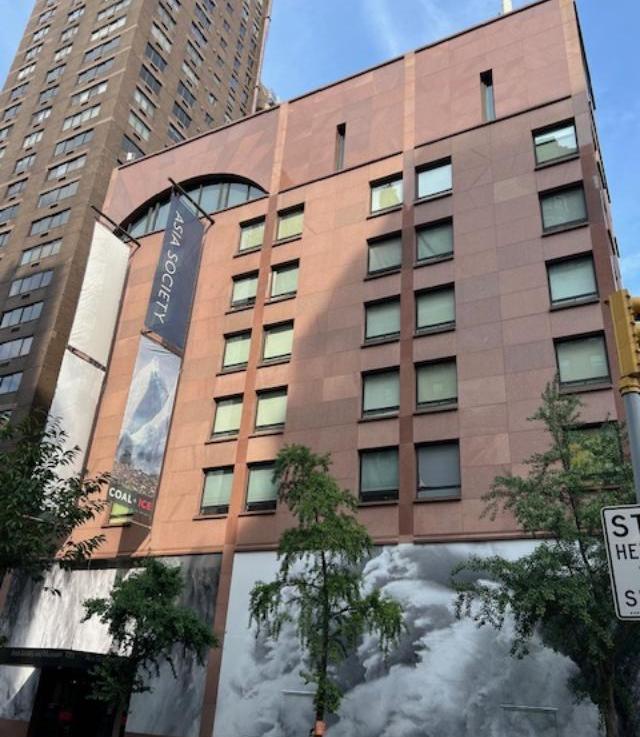
Asia Society and Museum                                    725 Park Avenue at 70th Street                         New York, NY 10021

Asia Society and Museum 725 Park Avenue at 70th Street New York, NY 10021

Asia Society & Museum

725 Park Avenue At 70th Street

New York, NY 10021

(212) 288-6400

AsiaSociety.org/NY

https://asiasociety.org/new-york

Open:

Museum: Tuesday-Sunday-11:00am-6:00pm, Friday-11:00am-9:00pm

Asia Store: Monday-Sunday-11:00am-6:00pm, Friday-11:00am-9:00pm

Garden Court Cafe: Tuesday-Sunday, 11:30am-3:00pm; Reservations: (212) 570-5202

Asia Society is closed on major holidays. Please check AsiaSociety.org/NY for updates on museum, store and cafe hours.

Fee: $12.00 Adults/$10.00 Seniors/$7.00 Students with ID/Free to members and children under 16/Free Admission Fridays, 6:00pm-9:00pm

Adult, Student and Teacher tours:

For information or to schedule a tour, call (212) 327-9237

*Wheelchair accessible/available for use during visits/Complimentary cell phone audio tour available/Assistive listening devices and headsets available for many programs. 

TripAdvisor Review:

https://www.tripadvisor.com/Restaurant_Review-g60763-d531995-Reviews-Asia_Society_and_Museum_Garden_Court_Cafe-New_York_City_New_York.html?m=19905


History of the Museum:

Asia Society II

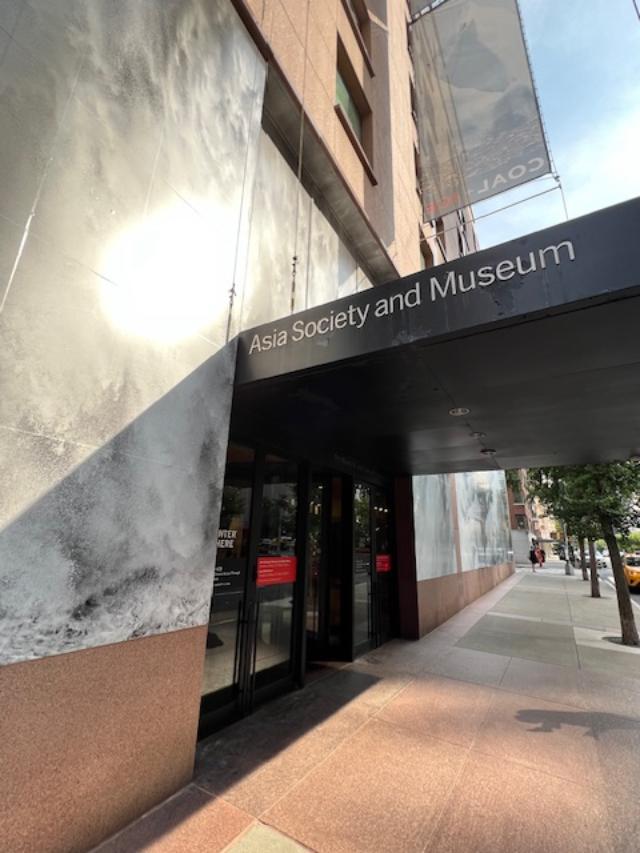
The entrance to the Asian Society Museum
John D. Rockefeller 3rd (1906-1978) , who established Asia Society in 1956, firmly believed that art was an indispensable tool for understanding societies. From 1963 to 1978, he and his wife, Blanchette Hooker Rockefeller (1909-1992), worked with art historian Sherman E. Lee (1918-2008) as an advisor to build the Mr. and Mrs. John D. Rockefeller 3rd Collection, which was later bequeathed to Asia Society.

Asian Society Museum

The Rockefeller Collection

The group of spectacular historical objects they assembled-including sculpture, painting and decorative arts-became the core of the Asia Society Museum Collection and is world renowned. The Collection, now consisting of approximately 300 pieces, is distinguished by the high proportion of acclaimed masterpieces, to which additional high-quality gifts and acquisitions have been added since the original bequest to Asia Society. The Collection has particular strengths in Chinese ceramics of the Song and Ming periods, Chola-period Indian bronzes and Southeast Asian sculptures.

Extraordinary examples of decorative art in the acclaimed Asia Society Museum collection include a number of superior East Asian ceramics, which make up more than one-third of the Collection. A luminous pair of twelfth-century Korean bowl and saucer sets, covered with the celebrated celadon glaze of the Goryeo period and an extraordinary tea leaf jar, decorated with mynah birds and accented with silver by Japanese ceramic artist Nonomura Ninsei (active ca. 1646-1677) are among the ceramic highlights.

Asia Society III

Walking around the museum

An exquisite solid silver Chinese stem up that dates to the late seventh or early eighth century also stands out as an exceptional masterpiece of decorative art within the Collection. The skill of the craftsman is evident in the fine embossing, chasing and engraving of the birds, flowers and scrolling vines on the exterior of the cup.

Two other great strengths of the Collection are Hindu and Buddhist sculpture from South and Southeast Asia. An eleventh-century processional sculpture of the elephant-headed Hindu deity Ganesha is an endearing example produced by the South Indian master bronze casters at that time and one of the fifteen important Chola-period bronzes in the Collection.

Another great treasure is a rare eighth-century inscribed and dated inlaid-brass crowned Buddha seated on a lotus rising from water inhabited by serpent deities (nagas) from Kashmir or northern Pakistan. A sculpture of the serene and slender Buddhist Bodhisattva Maitrya stands just over an impressive three-feet tall and represents the pinnacle of Thai metal casting during the eighth-century.

These objects and the Asia Society Museum Collection as a whole continue to be an important means for sharing the talent, imagination, and deep history of the peoples of Asia with audiences all over the world.

(From: Masterpieces from the Asia Society Museum Collection)

We are …Policy

With top-level experts and advisors-including former heads of state and cabinet officials, CEOs, civil society leaders and scholars-the Asia Society Policy Institute creates solutions that advance Asia’s prosperity, security and sustainability. Its projects include working to strengthen regional security institutions and mechanisms in Asia, assessing the impact of China’s rise and tracking its economic reform program, recommending pathways to an inclusive and high-standard Asian trade architecture, charting a path for India’s admission to APEC and designing strategies for Northeast Asian economics to link carbon markets and reduce greenhouse gas emissions.

The Asia Society Center on U.S. China Relations seeks to build mutual understanding between the two countries through projects and events on policy, culture, business, media, economics, energy and the environment.

We are…Arts

Transforming Americans understanding of Asia through exhibitions and performing arts was at the heart of our founder’s vision. The bequest of the Mr. & Mrs. John D. Rockefeller 3rd Collection of traditional Asian art in 1979 spurred the building of our New York headquarters. Today, our ground-breaking exhibitions of traditional, modern and contemporary art-as well as performing arts, film and author programs-are presented to the highest acclaim at our centers in New York, Hong Kong and Houston and at venues all over the world. Global initiatives such as the Arts & Museum Summit bring together museum and cultural leaders from across Asia, the United States and Europe further appreciation of Asian arts.

Asia Society I

The gift shop at the Asia Society

We are …Education

A rising Asia requires a rising generation of students to understand its cultures and complexities. The Center for Global Education at Asia Society has developed an internationally recognized approach to foster the global competence of students, aiming to improve the capacity of 100,000 educators to instill global competence in 4 million youth by 2030. We partner with leaders and institutions from around the world to transform teaching and develop global-ready students. We also lead a major effort to bring Mandarin language instruction and the study of China and Chinese culture to children in the United States and to bring global learning to American after school programs, in pursuit of best practices in global education.

(From Asia Society pamphlet)

Asia Society is a non-profit, nonpartisan organization offering dynamic public programming at our cultural centers in New York, Hong Kong and Houston and at our other global locations in the United States, Asia and Europe.

Asia Society appreciates the support of its members, who aid our vital mission of preparing Asians and Americans for a shared future. For more information, AsiaSociety.org.

Disclaimer: This information was taken directly from the pamphlets from the Asia Society in New York City. I give them full credit for all the information. Please see the above hours and programs and call the above numbers for more information.

The National Jazz Museum in Harlem                    58 West 129th Street, Ground Floor                  New York, NY 10027

The National Jazz Museum in Harlem 58 West 129th Street, Ground Floor New York, NY 10027

The National Jazz Museum in Harlem

58 West 129th Street, Ground Floor

New York, NY  10027

http://www.jazzmuseuminharlem.org

http://jazzmuseuminharlem.org/

https://www.facebook.com/nationaljazzmuseum/

(212) 348-8300

Suggested donation of $10.00 but whatever you can give.

Open: Sunday-Monday: 11:00am-5:00pm/Tuesday-Wednesday Closed/Thursday-Saturday: 11:00am-5:00pm

Fee: Free with Donation

Founded in 1997

Transportation: Subway 2 or 3 to 125th Street and then walk up to 129th Street

TripAdvisor Review:

https://www.tripadvisor.com/Attraction_Review-g60763-d6953125-Reviews-The_National_Jazz_Museum_in_Harlem-New_York_City_New_York.html?m=19905

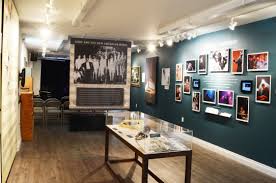
I came across this little museum when I was touring Central Harlem. This museum is more like a small gallery and it is dedicated to the history of jazz in Harlem. The front section is set up like someone in Harlem’s salon with furniture from the era and sheet music from the artists. The look is based on ‘Rent Parties’ that people used to have to bring their friends over to help pay the monthly rent. The back section of the museum is dedicated to jazz and related music with a sitting area and pictures all over the wall of different era’s including the new artists of today. Jazz music plays throughout.

National Jazz Museum in Harlem

The Mission of the Museum:

The National Jazz Museum in Harlem, a Smithsonian Affiliate,  preserves, promotes and presents jazz by inspiring knowledge, appreciation and celebration of jazz locally, nationally and internationally.

It is the thriving center for jazz that stimulates hearts and minds and reaches out to diverse audiences to enjoy this quintessential American music. The museum was founded in 1997 by Leonard Garment, Counsel to two U.S. Presidents and an accomplished jazz saxophonist, Abraham D. Sofaer, a former U.S. District Judge, who gave the initial gift in honor of his brother in law, Richard J. Scheuer and matching funds from the Upper Manhattan Empowerment Zone.

National Jazz Museum in Harlem II

Displays inside the museum

The Museum is committed to keeping jazz present and exciting in the lives of a broad range of audiences: young and old, novice and scholar, artist and patron, enthusiast and curious listener. From its new location in the center of Harlem, the Museum serves the local community and welcomes visitors from across the U.S. and internationally.

The National Jazz Museum in Harlem’s vision is to establish a permanent home in Harlem for collections, programs and performances that stimulate creativity and excitement about the past, present and future of jazz and its artists (The Jazz Museum in Harlem vision statement-pamphlet).

In 2013, an exciting new era began for the Museum. We created and implemented a new strategic plan that made education central to our mission. The Museum now offers year-round educational programs for students of all ages. We also developed a new membership program with exclusive content and benefits to reach out to the worldwide jazz community.

National Jazz Museum of Harlem

The inside of the National Jazz Museum of Harlem

In 2015, after 15 years at the East Harlem location, we moved to 58 West 129th Street in Central Harlem. Our new space is designed to give our visitors an immersive jazz experience, in the heart of what has become Harlem’s new cultural and entertainment district. The ultimate, long-term goal is to secure a permanent home in Harlem with space enough to showcase Harlem’s vast contributions to jazz, American music and world history.

Each year, the Museum produces and presents more than 80 free programs in New York City, engaging hundreds of professional jazz artists and reaching nearly 20,000 people from around the world. The Museum is a hub for live performances, exhibitions and educational programs. It is also home to our widely acclaimed Savory Collection, which includes more than 100 hours of live recordings of jazz legends made from New York City radio broadcasts aired between 1935 and 1941 (Wiki site and Museum website).

National Jazz Museum of Harlem III

The current exhibition is Vi*bra*tion: The history of Jazz from Louis Armstrong to Miles Davis: Their Work and Harlem Air Shaft (large musical manuscripts on the wall).

The Leadership of the Museum is under musicians Jonathan Batiste, Co-Artistic Director and Christian McBride, Co-Artistic Director.


Bard Graduate Center Gallery                               18 West 86th Street                                             New York, NY 10024

Bard Graduate Center Gallery 18 West 86th Street New York, NY 10024

Bard Graduate Center Gallery

18 West 86th Street

New York, NY  10024

(212) 501-3023

gallery@bgc.bard.edu

https://www.bgc.bard.edu/gallery/27/exhibitions

https://www.bgc.bard.edu/gallery/

Open: Tuesday, Friday-Sunday: 11:00am-5:00pm/Wednesday-Thursday: 11:00am-8:00pm/Closed on major holidays

Fee: Free Admission Hours on all Wednesdays and Thursday evenings from 5:00pm-8:00pm.

December 26th (Boxing Day) : Free

General Admission: $7.00 and Students & Seniors (65+): $5.00

Subway: B, C, and 1 to West 86th Street

TripAdvisor Review:

https://www.tripadvisor.com/Attraction_Review-g60763-d309306-Reviews-The_Bard_Graduate_Center-New_York_City_New_York.html?m=19905

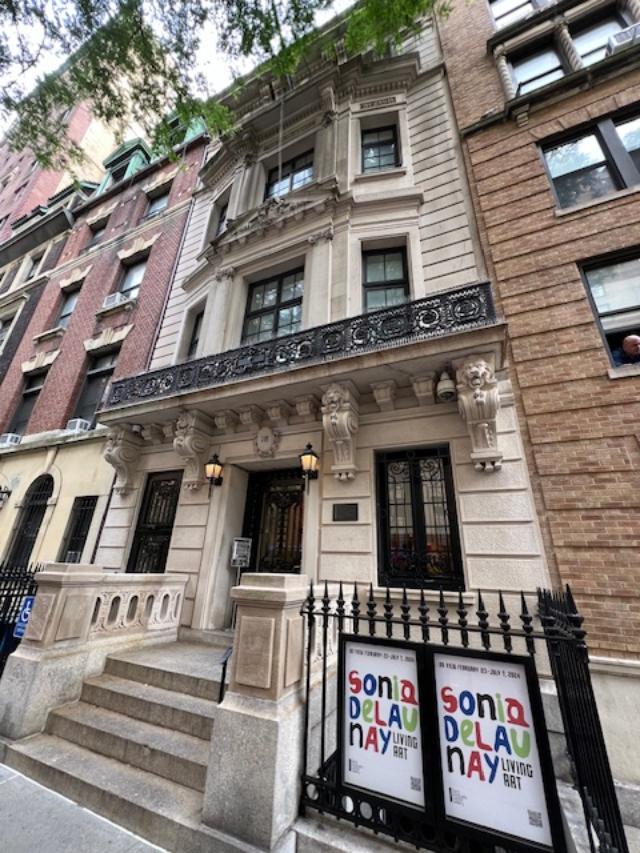
The Bard Gallery at 18 West 86th Street

I took some time out from “MywalkinManhattan” project to visit the Bard Gallery for the afternoon and was pleasantly surprised by this little ‘gem’ located on the Upper West Side of Manhattan. This Graduate Center focuses on small exhibitions with interesting themes and not so over-whelming shows that tax your brain like some of the bigger museums in New York City.

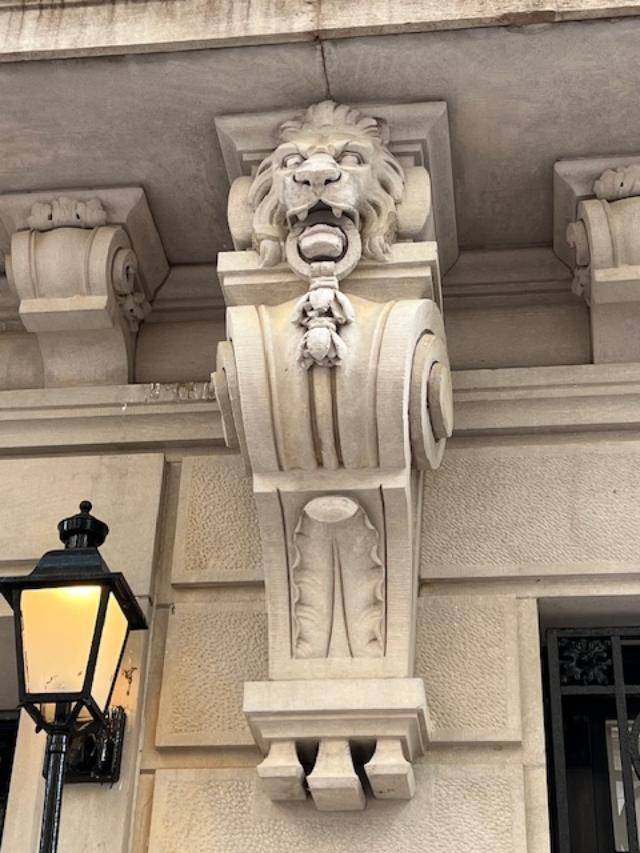
The embellishments at the entrance to the Bard Art Galley

Their exhibitions are compact and detailed on the subject matter and the objects they have on display are interesting. They also have lectures and gallery talks for more detail on their displays. The Bard Graduate Center Gallery, founded in 1993, occupies a six story townhouse near Central Park West and houses not just the gallery but the academic programs, lecture hall and library.

The center has pioneering exhibitions on decorative arts, design history and material culture. The research driven exhibitions are organized with leading scholars, curators and institutions worldwide and showcase a rich array of objects comprised of loans from public and private collections, many never before on view in New York City.

Bard Art Gallery

Walking the permanent collection

With a commitment to investigating under-recognized topics in the history of design, the exhibitions provide a critical framework for understanding the context in which historical and contemporary objects were made, used, collected and displayed. These lead to a fuller understanding of the present through the lens of the past (Bard College website).

Bard Art Gallery III

Displays in the permanent galleries

A full slate of public and research programs, public tours and opportunities for school groups and educators compliment each exhibition. Video and new media interactives enrich the visitor experience in educators compliment each exhibition (Museum website).

Bard Art Gallery II

Items in the permanent collections

The Bard Graduate Center: Decorative Arts, Design History, Material Culture is a graduate research institute and gallery located on the Upper West Side of Manhattan. It is affiliated with Bard College, located in Annadale-on-Hudson, NY. The gallery occupies a six story townhouse  at the 18 West 86th Street location while the academic building and library are located at 38 West 86th Street.

Students at Bard Graduate Center focus on the study of the cultural history of the material world. The institution is committed to the encyclopedic study of things, drawing on methodologies and approaches from art and design history, economic and cultural history and history of technology, philosophy, anthropology and archaeology.

Students enrolled in the M.A. and PhD. programs work closely with a distinguished faculty of active scholars in exploring the interrelationships between works of art and craft, design, places, ideas and social and cultural practice in courses ranging from antiquity to the 21st century (Wiki Bard College site).


Lighthouse Park Roosevelt Island                        900 Main Street                                                   New York, NY 10044

Lighthouse Park Roosevelt Island 900 Main Street New York, NY 10044

Lighthouse Park

Roosevelt Island

900 Main Street

New York, NY  10044

(212) 832-4540

https://rioc.ny.gov/179/The-Lighthouse

https://www.nycgo.com/venues/roosevelt-island-lighthouse-park

Open: Sunday-Saturday 7:00am-9:00pm

My review on TripAdvisor:

https://www.tripadvisor.com/Attraction_Review-g60763-d565031-Reviews-Roosevelt_Island-New_York_City_New_York.html

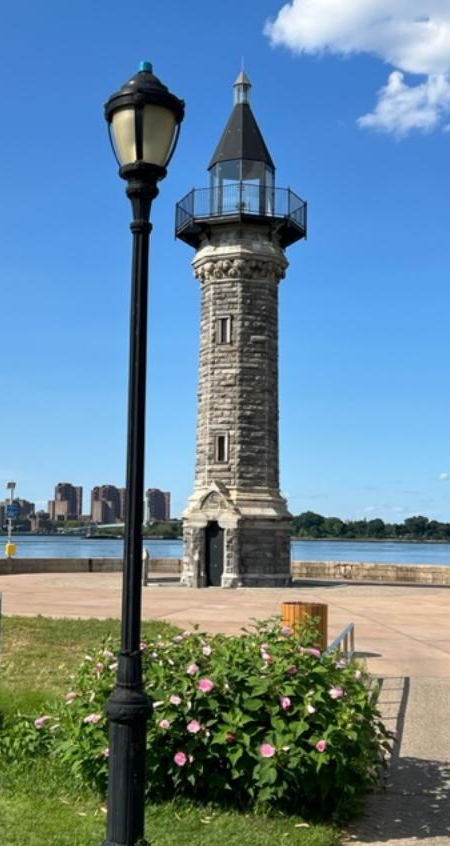
Lighthouse Park on Roosevelt Island

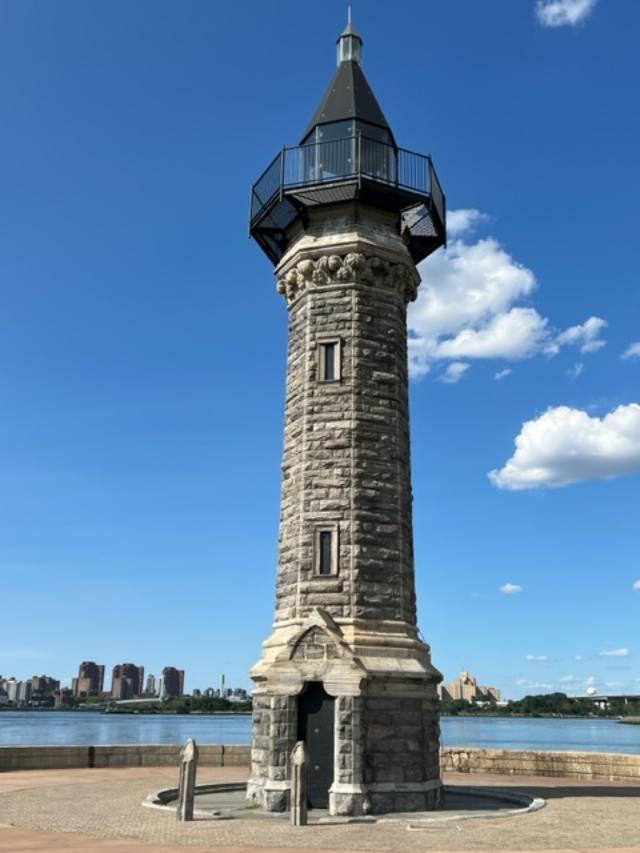
The Roosevelt Island Lighthouse is a stone lighthouse built by New York City in 1872. It is at the northeast tip of Roosevelt Island in the East River in Lighthouse Park. It was named to the National Register of Historic Places on March 16th, 1972, and was designated a New York City Landmark on March 23rd, 1976 (Wiki).

Blackwell Island, which was called Welfare Island from 1921 to 1973 and is now known as Roosevelt Island was purchased by New York City in 1828. Various facilities on the island were built including a penitentiary, almshouse, city hospital, the New York Lunatic Asylum and the Smallpox Hospital (some of these buildings still exist).

In 1872, the City of New York built a lighthouse. The supervising architect was James Renwick Jr., who also designed several other buildings on the island for the Charities and Correction Board as well as more famous works such has St. Patrick’s Cathedral. (Wiki)

Legends abound about the construction of the lighthouse. Two names, John McCarthy and Thomas Maxey, are associated with the various legends. The 1870 report of the warden of the lunatic asylum that an industrious patient had built a seawall near the asylum that had reclaimed the land. The legends indicate that he had incorporated Civil War cannons.

The park in the distance on Roosevelt Island

The legend indicates that the builder was bribed with bogus money to demolish the fort for the construction of the lighthouse. For many years, a saying was inscribed on a stone near the lighthouse:

This is the work

Was done by

John McCarthy

Who built the Light

House from the bottom to the

Top All ye who do pass by may

Pray for his soul when he dies.

Lighthouse Park from Carl Schulz Park on Manhattan Island

The lighthouse was operated by the City instead of the U.S. Lighthouse Board. In its 1893 annual report, the Lighthouse Board generally praised the operations of Blackwell Island Lighthouse but indicated that the Board has unfairly criticized because of the City’s occasional failure to keep the light in operation. The Board advocated banning private lights. The 1917 U.S. Coast Pilot indicated that there was a private light at the north end of the island. (Wiki)

The light was operated until about 1940. In the 1970’s, the lighthouse was partially restored. The restoration was completed in 1998. (Wiki)

The lighthouse is approximately 50 feet (15m) tall. It is constructed of gray gneiss, rough ashlar that was quarried on the island by inmates from the penitentiary. It has an octagonal base and an octagonal shaft. There is an entrance on the south side under a projecting gable and a pointed Gothic arch. Two south-facing slit windows in the shaft light the interior. At the top of the shaft there is a band of ornamented corbels below the gallery, which is surrounded by an iron railing. The lantern is octagonal with a shallow conical roof. An 1893 photograph and a 1903 movie show that it probably had a much taller, steeper conical cap when it was built. The optics were provided by the U.S. Lighthouse Board (Wiki).

Lighthouse Park in the winter months

Lighthouse Park is located on the northernmost section of Roosevelt Island and can be seen from Carl Schurz Park. On a beautiful sunny day, it is a very picturesque view from the park.

Lighthouse Park from Carl Schulz Park

The sculpture “The Girl Puzzle”:

Next to the lighthouse is a monument of faces dedicated to Nellie Bly and to women who have faced hardship entitled “The Girl Puzzle”. The sculpture was dedicated to journalist Elizabeth Cochrane Seaman, pen name Nellie Bly, who wrote about the abuses in the mental asylum on what was known as Mental Island at the time. She wrote the full report “Ten Days in the Mad House” on the abuses of patients.

“Girl Puzzle” by artist Amanda Matthews (Artist Bio)

https://en.wikipedia.org/wiki/The_Girl_Puzzle

https://www.thegirlpuzzle.com/

Artist Amanda Matthews (Artist Bio)

https://en.wikipedia.org/wiki/Amanda_Matthews

https://www.prometheusart.com/

The piece was created by American born artist Amanda Matthews. Ms. Matthews graduated with a BA in Studio Art from the University of Louisville and had studied abroad in Europe. She is known for her work that honors women and celebrates diversity and inclusion (Wiki).

The history sign on Nellie Bly

Each sculpture is a interpretation on Nellie Bly. It really is an interesting sculpture.

The Girl Puzzle One:

The Girl Puzzle Two:

The Girl Puzzle Three:

The Girl Puzzle Four:

The Girl Puzzle Five:

Disclaimer: this information was taken from Wikipedia site and the Roosevelt Island Historical Society. This little ‘gem’ of a park can be seen by walking to the most northern part of Roosevelt Island by way of the Main Street which runs through the island.