Tag: Upper East Side

Gracie Mansion Carl Schurz Park                                                   East 88th Street and East End Avenue                                          New York, NY 10128

Gracie Mansion Carl Schurz Park East 88th Street and East End Avenue New York, NY 10128

Gracie Mansion

Carl Schurz Park

East 88th and East End Avenue

New York, NY  10128

(212) 570-4773

Hours: Mondays only-10:30am. 12:00pm and 1:30pm. See their website at www1.nyc.gov/site/Gracie/visit/visit page or gracieinfo@cityhall.nyc.gov

http://www.historichousetrust.org

https://www.nycgo.com/events/gracie-mansion-tours

https://www.graciemansion.org/

Admission: $10.00

TripAdvisor Review:

https://www.tripadvisor.com/Attraction_Review-g60763-d136688-Reviews-Gracie_Mansion-New_York_City_New_York.html?m=19905

Hours: There are free house tours at 10:30am, 12:00pm and 1:30pm on Mondays only. Check their website for availability. This is one of the few rare treats of New York if you can snare one of the tours of Gracie Mansion. It is a really interesting tour of the first floor rooms and entrance to the gardens of this historic home and the Mayor of New York City’s residence.

This was really a wonderful tour of the mansion given by a woman who has been a docent for twenty years and has seen the changes of the administrations. We went room by room and discussed how the Gracie’s then the Wheaton’s and the other families who lived here use the house until Robert Moses, the great City Planner, decided this should become the Mayor’s residence.

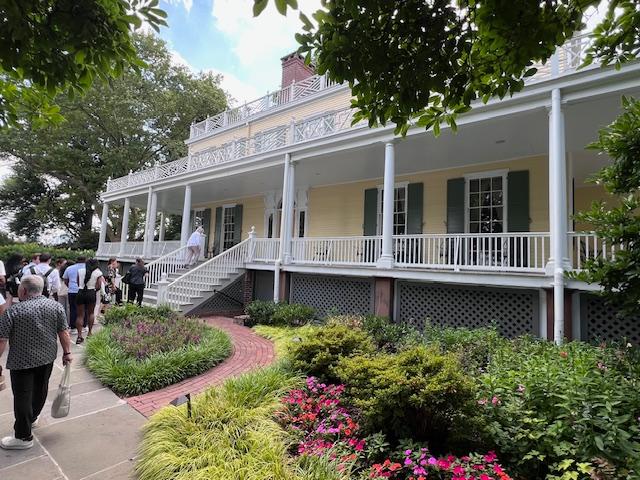
The front of the mansion at the start of the tour in the Summer of 2025

The formal gardens in front of the house in full bloom

The formal gardens to the side of the house near the parking lot

We started the tour on the front porch of the old Gracie Mansion

The tour consists of the first floor only and you can not take pictures inside with the exception of the Wagner Ballroom. We saw the formal entrance, the Living Room, Library, Dining Room and then the hallway leading to the front of the house to the Susan Wagner Ballroom, the newest extension of the house (the front section is the original section of the home built during the Gracie period).

The front rooms you are not allowed to take pictures so as you tour the Living Room, the Dining Room and Parlor rooms, you can not take pictures. When we left the older section of the home and entered the hallway to the Susan Wagner Ballroom added in the Wagner Administration, then you could take pictures in this room only (outside the gardens).

The inside of the Susan Wagner Ballroom

The Chandelier in the ballroom was from an old mansion downtown

The Bayard Fireplace from the Bayard Mansion once located in lower Manhattan

The Wagner Ballroom details

History of the Mansion and Gracie Family:

Gracie Mansion, built in 1799 by shipping merchant Archibald Gracie, is the last of the elegant county estates that once lined Manhattan’s East River shore. Gracie hosted elegant dinner parties at his country estate for visitors including Alexander Hamilton, Rufus King, Joseph Bonaparte and Washington Irving.

Archiebald Gracie

Archibald Gracie

https://en.wikipedia.org/wiki/Archibald_Gracie

Major losses during the years after the War of 1812 forced Gracie to sell his estate in 1823 to Joseph Foulke. In 1857, the Mansion was bought by Noah Wheaton. After Wheaton’s death in 1896, the City of New York appropriated the estate, incorporating ts 11 acres of grounds into the surrounding park that was renamed Carl Schurz Park in 1910.

After years as a comfort station and ice cream stand, Gracie Mansion became the first home of the Museum of the City of New York. When the museum moved to a larger building, Parks Commissioner Robert Moses convinced  City Authorities to designate the Mansion as the official residence of the Mayor. In 1942, Fiorello H. La Guardia moved into Gracie Mansion.

In 1966, the Mansion was enlarged with the construction of the Susan E. Wagner Wing, which includes a ballroom and two additional rooms. Under the guidance of the Gracie Mansion Conservatory, major restorations to the Mansion were undertaken between 1981 and 1984 and in 2002.

The 2002 restoration transformed Gracie Mansion into the “People’s House” and increased accessibility to the public and City agencies. First Lady Rosalyn Carter and South African President Nelson Mandela are among the many notable visitors.

Gracie Mansion II.jpg

Gracie Mansion at the turn of the last century

Gracie Mansion is owned by the New York City Department of Parks & Recreation, operated by the Gracie Mansion Conservatory and is a member of the Historic House Trust.

(Gracie Mansion Pamphlet)

Gracie Mansion Conservatory:

After years of neglect and continual erosion of any trace of history, Mayor Edward I. Koch and founding Chair Joan K. Davison, established the Gracie Mansion Conservatory in 1981. as a public./private partnership.. Under its guidance, the first major restoration of the house was undertaken between 1981 and 1984. Besides creating a connection between  the original house  and the Wagner Wing, this effort included the display of art, furniture and decorative objects either  purchased or more often, lent by the City’s many cultural institutions. The Charter mandate of the Conservatory was not to seal the residence in the past (especially as there is no record of how it originally appeared inside) but to protect its history while accommodating change and progress by successive generations of New Yorkers.

The Gracie Mansion Conservatory continues to operate as a charitable organization dedicated to enhancing and enlivening its namesake. Its mission is to preserve and honor Gracie Mansion’s Federal Period origins while also making sure it remains as forward-looking and welcoming as the city it serves. An increasing  share of this work focuses on exploring the many different people and cultures whose contributions to Gracie Mansion and the New York at large gone unrecognized for far too long. The Conservatory also works to improve the surrounding landscape and gardens and provide public programming and educational services, including publications and tours for local school students, especially those studying in New York State’s 7th grade social studies curriculum.

(Gracie Mansion Conservatory pamphlet)

Disclaimer: This information was taken from the Gracie Mansion Conservatory pamphlet press kit given on my tour and I give the Conservatory full credit for it. Please check the website for tour information or call them to find out about group tours.

It really is a great tour!

Gallery of New York School of Interior Design:   NYSID Gallery                                                        170 East 70th Street                                                             New York, NY 10021

Gallery of New York School of Interior Design: NYSID Gallery 170 East 70th Street New York, NY 10021

Gallery of the New York School of Design; NYSID Gallery

170 East 70th Street

New York, NY 10021

(212) 472-1500

https://www.nysid.edu/exhibitions

https://www.nysid.edu/

Hours: Tuesday-Saturday: 11:00am-6:00pm/Closed on Sunday and Monday

Admission: Free

My review on TripAdvisor:

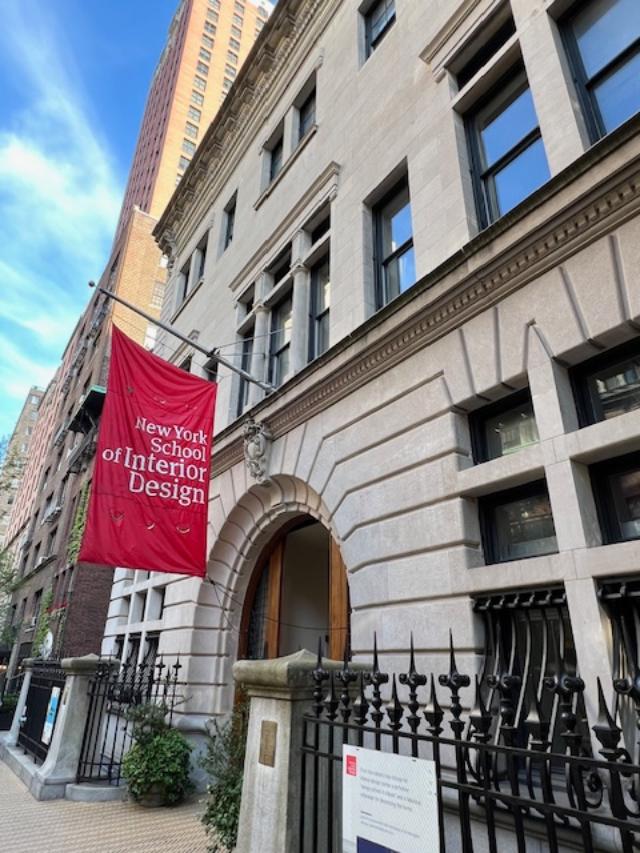
 New York School of Interior Design at 170 East 70th Street

I came across the Gallery of the New York School of design when walking the Upper East Side for my project, ‘MywalkinManhattan.com’ when covering the lower part of the Upper East Side.

The entrance to the Gallery

The New York School of Interior Design was displaying their Senior projects as most the college galleries I visited were doing at this time (this takes place between May and June around graduation time). It was interesting to see how the seniors at the college reused space in old buildings for new purposes. The seniors use their creativity to recreate these spaces. It is the student’s project to take a space and redesign it for a new purpose.

The entrance sign to the gallery

We had done similar projects in college but did not have the computer technology that students do today and they really went above and beyond the things we did back then. You can take this project into 3-D if you want and how real it looks. These kids are so talented that their creativity reminds me of us when we were in school. If only we had what they have today.

The Student Projects line the walls

Take time to look at the detail work and space design of each project. Some of the students even include samples of fabrics and stone/wood work that will be used for the surfaces.

The Gallery is located on the Upper East Side in the back of the school’s building on the first floor. The admission is free and the Gallery is open when the school is open. There are only two shows a year. You just have to show your ID to get into the galleries.

The student project along the walls

The student project along the walls

What I like about the museum is that you get to see the student creativity and how they imagine the space will be designed. The use of color and shape play a roll in all the designs. It looks like the students get to choose their own space to design.

The best part is the you get to go in for free with you ID and just enjoy the show and see the students creativity.

History of the Gallery/Museum at the College:

The New York School of Design’s gallery presents two public exhibits yearly on design and architecture. Exhibitions have included ‘Paris in the Belle Epoque’, rare photographs from the years 1880-1914; Perspective on Perspective, an exploration of artistic technique; ‘The Great Age of Fairs; London, Chicago, Paris, St. Louis’, selective coverage from the first World’s Fair in 1851 to the last in 1904; ‘Venice’s Great Canal’, architectural drawings of the buildings along the famous thoroughfare; ‘Stanford White’s New York’, a survey of that classicist’s many metropolitan buildings and ‘Vanishing Irish Country Houses’, a look into the preservation crisis facing these not infrequently grand structures.

The gallery’s Thursday-evening lectures have included ‘Palladio’s Villas’; ‘Beaux-Arts New York’ and a survey of the Grands Projects undertaken in Paris during the tenure of French President Francois Mitterrand.

(New York School of Interior Design Website)

Bertha & Karl Leubsdorf Gallery Hunter College Campus                                                                  132 East 68th Street                                            New York, NY 10065

Bertha & Karl Leubsdorf Gallery Hunter College Campus 132 East 68th Street New York, NY 10065

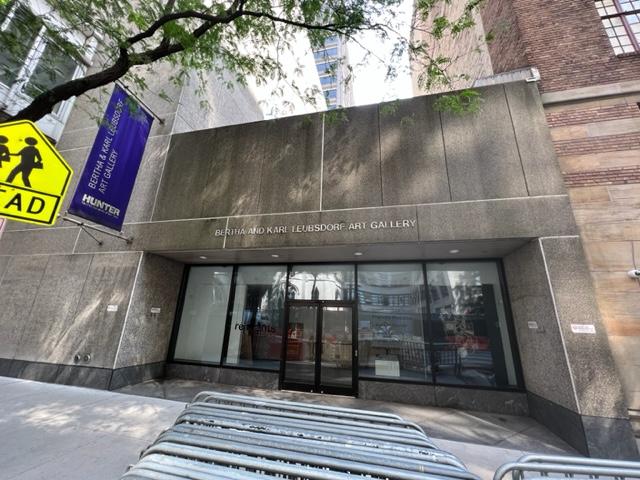
Bertha and Karl Leubsdorf Gallery

Hunter College Campus

132 East 68th Street

New York, NY 10065

(212) 772-4991

http://www.leubsdorf.org

http://huntercollegeartgalleries.org/

https://huntercollegeart.org/galleries

https://hunter.cuny.edu/organizer/hunter-college-art-galleries/

Open: Sunday-Monday Closed/Tuesday-Saturday: 11:00am-5:00pm-See website when open.

Admission: Free

My review on TripAdvisor:

The Hunter College Museum-The Bertha and Karl Leubsdorf Gallery at 132 East 68th Street

I visited this wonderful little gallery on the main campus of Hunter College on the Upper East Side of Manhattan on my project, “MywalkinManhattan.com”. It is an interesting, small gallery that exhibits more fringe artists and collections. The best part of the gallery is that it is not overwhelming like the bigger museums in the City and you can see the whole gallery in about an hour or a little more (See my review on TripAdvisor).

Hunter Art Gallery II

A former exhibition was: Axis Mundo: Queer Networks in Chicano L.A. is an interesting look at the Los Angeles based queer Chicanx artists between the late 1960’s and early 1990’s and is the first of its kind to excavate histories of experimental art practice, collaboration and exchange by a group of artists in Los Angeles (Hunter College Gallery).

Hunter Art Gallery III

The Axis Mundo Exhibition

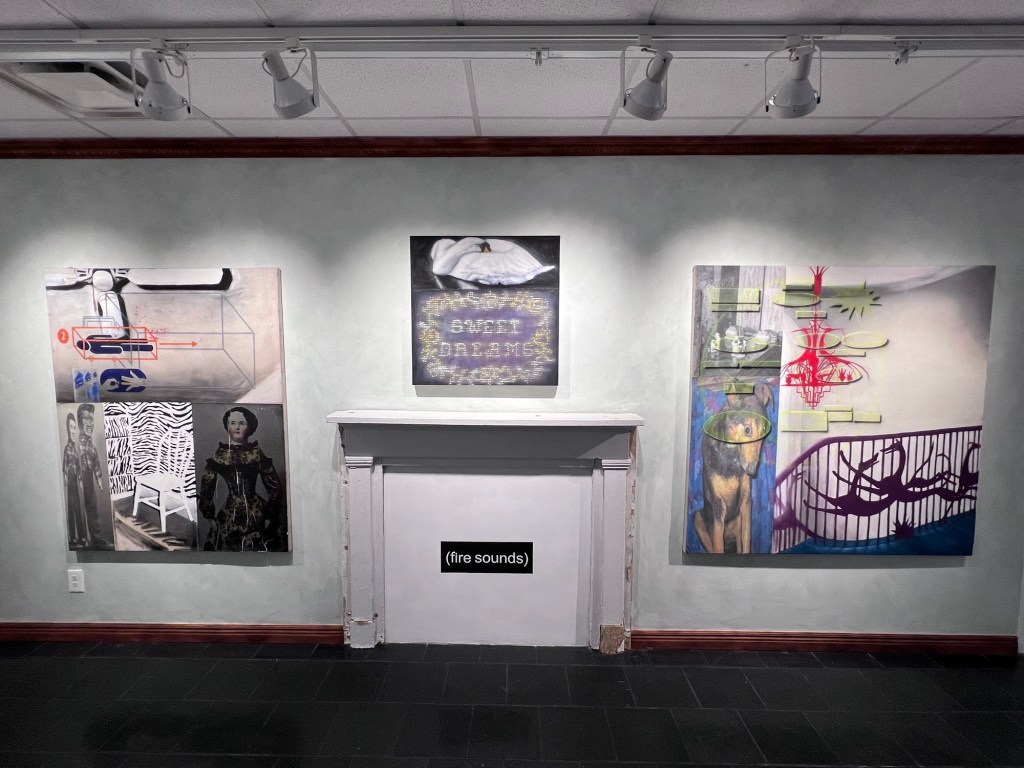
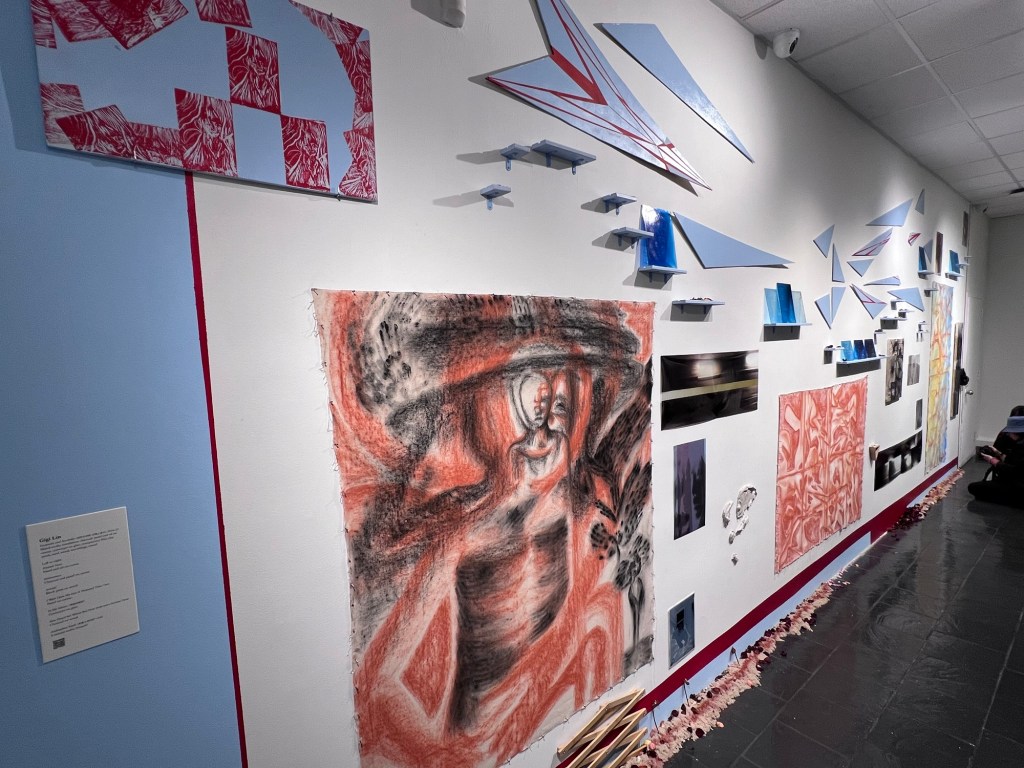
Currently the museum is hosting the BFA Final Projects and there is a combination of video, paintings and photography to choose from. There is some interesting sculpture work by some of the graduating seniors so take some time in the afternoon to visit the gallery.

Hunter Art Gallery IV

The Axis Mundo Exhibition

I visited the Gallery again in March of 2021, when the campus open after COVID rules lifted. The exhibition being shown was entitled “The Black Index”, a series of Black artists were being featured.

“The Black Index” features the works of artists Dennis Delgado, Alicia Henry, Kenyatta A.C. Hinkle, Titus Kaphar, Whitfield Lovell and Lava Thomas. The artists included in The Black Index build upon the tradition of Black self-representation as an antidote to colonialist images. Using drawing, perform, performance, printmaking, sculpture and digital technology to transform the recorded image, these artists question our reliance on photography as a privileged source for documentary objectivity and understanding. Their works offer an alternative practice-a Black Index-that still serves as a finding aid for information about Black subjects, but also challenges viewers desire for classification (Hunter Gallery website).

The Black Index | 4Columns

Artist Alicia Henry’s work “Analogan III”

The works in The Black Index make viewers aware of their own expectations of Black figuration by interrupting traditional epismologies of portraiture through unexpected and unconventional depictions. These works image the Black body through a conceptual lens that acknowledges the legacy of Black containment that is always present in viewing strategies. The approaches used by Delgado, Henry, Hinkle, Kaphar, Lovell, and Thomas suggest understandings of Blackness and the racial terms of our neo-liberal condition that counter legal and popular interpretations and in turn offer a paradigmatic shift within Black visual culture (Hunter Gallery website).

The Black Index — Leubsdorf Gallery

“The Black Index” works (Hunter Gallery)

The nice part of these galleries are that it takes about 45 minutes to view the whole exhibition.

The BFA Art Show at the Hunter College Galleries

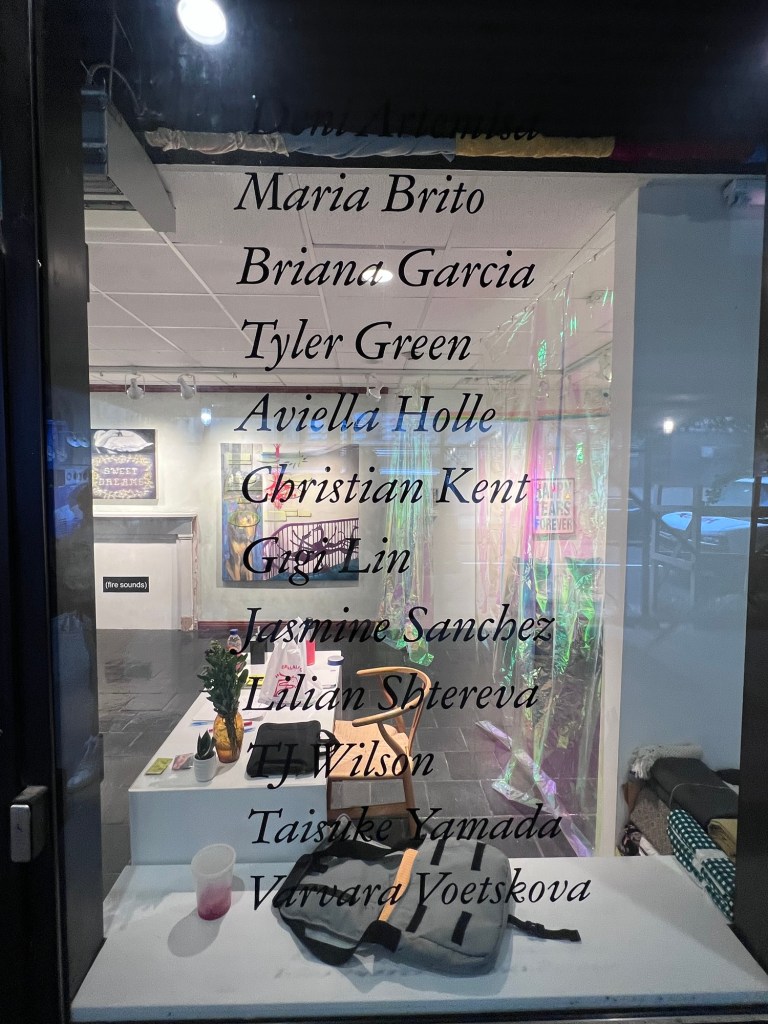
In the Spring 2025, I stopped into the galleries to visit the Undergraduate show, CODA.

The students featured in the show

The front galleries

The entrance to the main gallery

This piece is called “Flushed Toast”

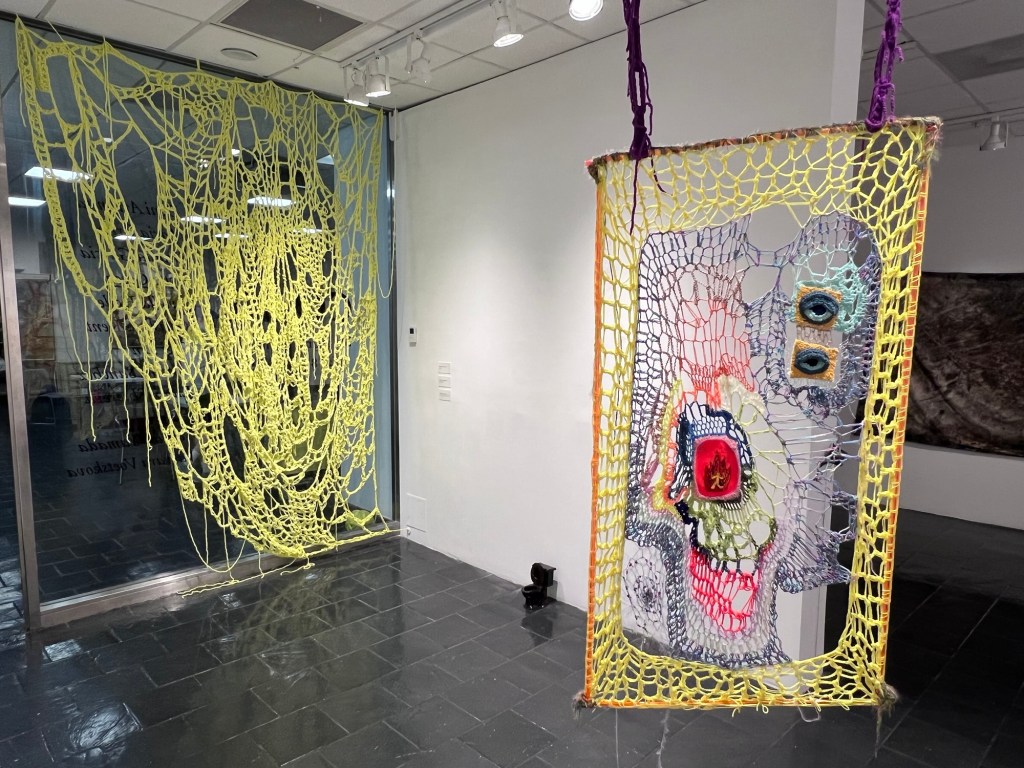
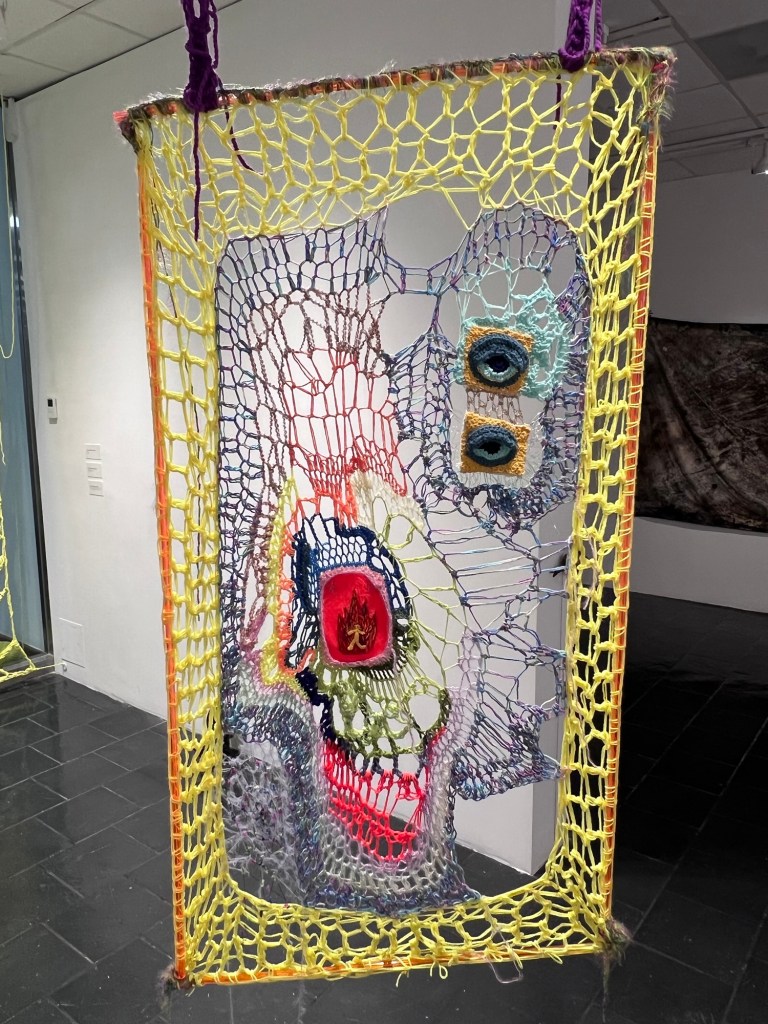
Then in the main part of the gallery, there were a few pieces of yarn work that I thought were very interesting.

The works made of acrylic yarn by artist Demi Artemisa Espinoza

Artist Demi Artemisa Espinoza works

My favorite work in the show ‘Smiling Cheek to Cheek’

In the middle of the gallery, there were interesting modern sculptures.

The middle gallery

This was quite unique

Paintings in the show

Video works from student artist Aviella Holle

Video Artist Aviella Holle

The undergraduates in this Art program did an excellent job and I thought the works were very original.

The History of the Berth and Karl Leubsdorf Gallery:

(From the Hunter College Art Galleries website)

The Bertha and Karl Leubsdorf Gallery focuses on presenting historical and scholarly exhibitions and programming that provide new scholarship on important and often under-represented artists and art movements. Located on the Hunter College’s main campus, the gallery also hosts the BFA degree exhibitions each semester.

The Hunter College Art Galleries, under the auspices of the Department of Art and Art History, have been a vital aspect of the New York cultural landscape since their inception over a quarter of a century ago. The galleries provide a space for critical engagement with art and pedagogy, bringing together historical scholarship, contemporary artistic practice and experimental methodology. The galleries are committed to producing exhibitions, events and scholarship in dialogue with the intellectual discourse generated by the faculty and students at Hunter and serve as an integral extension to the department’s academic programs.