Tag: Smile! Your Visiting New Jersey!

The Nagel/Auryansen Cemetery                                                    42-50 Susan Drive                                                                       Closter, NJ 07624

The Nagel/Auryansen Cemetery 42-50 Susan Drive Closter, NJ 07624

The Nagel/Auryansen Cemetery

42-50 Susan Drive

Closter, NJ 07624

https://closterhistory.com/properties/cemetary/index.html

https://www.findagrave.com/cemetery/2445456/nagel-auryansen-cemetery

https://www.hmdb.org/m.asp?m=63546

Open: Sunday-Saturday Open 24 hours during twilight hours

My review on TripAdvisor:

The Metropolitan Farm at 119 Hickory Lane in Closter, NJ:

https://www.metropolitanfarm.com/

https://www.facebook.com/MetropolitanFarm/

My review on TripAdvisor:

https://www.tripadvisor.com/Attraction_Review-g46367-d33075565-Reviews-Nagel_auryansen-Closter_New_Jersey.html

The entrance to the Nagel/Auryansen Cemetery in Closter, NJ

The historic marker sign

The History of the Cemetery:

(From the Boro of Closter, NJ website)

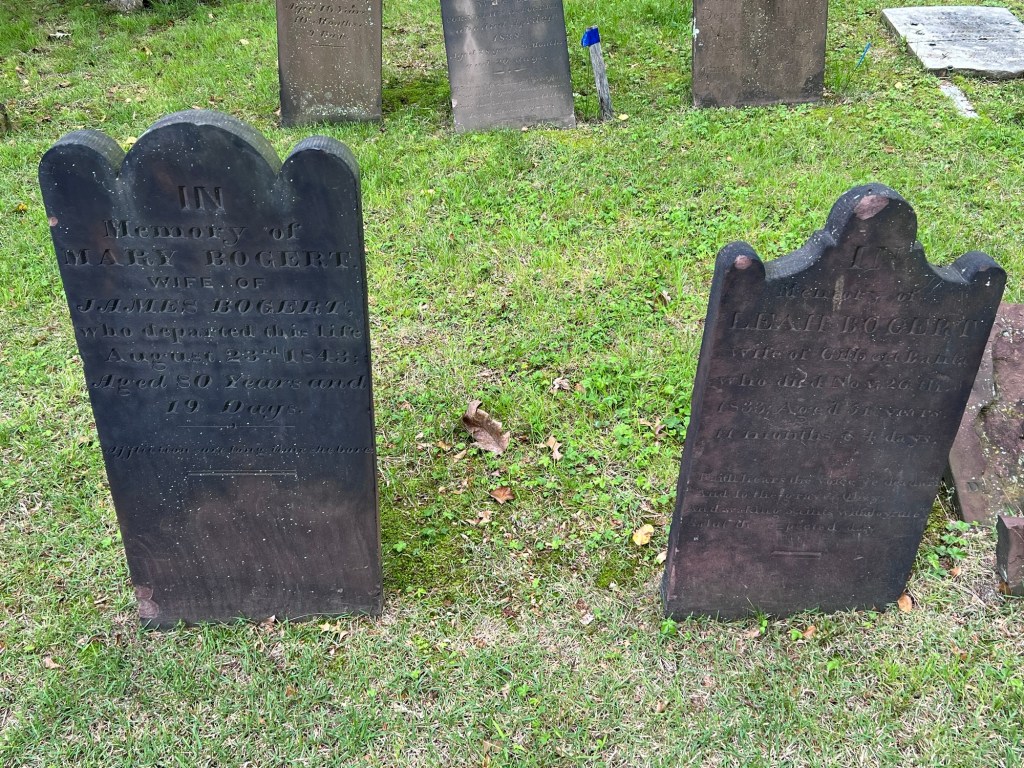
The Naugle/Auryansen Cemetery is significant in the early settlement period of Closter’s history. Documented burials date to circa 1722 and include Dutch pioneer families with names like Vervalen, Naugle (Nagle), DeClark, Ferdon, Parsells, Auryansen, Demarest, Haring, Cole, Kearney, Montague and Bogert. Seven Soldiers, Closter farmers, who served in the Bergen County Militia during the Revolutionary war and one veteran from the War of 1812 are known to be among the interred.

The cemetery once known only as the “Burying Place,” was part of the original lands purchased in 1710 by the Naugle brothers, Barent and Resolvent. They divided their lands in 1748 and the division stones carved with their initials (“BN” and “RN”) are still visible in the middle of the cemetery.

Later, the place became known as the Auryansen Grave Yard because this family took title to the land upon which it sits. Many of the sandstone and frame houses built by these families and their descendants are still standing in the Borough today.

The description sign of the cemeteries plot locations

The plot location sign

The Historical Maintenance and care of the cemetery in the modern era:

(from the Boro of Closter, NJ website)

In 1996, the Closter Historical Society undertook a three year project to restore the 19th century sandstone gravemarkers. At that time a complete survey was done of the tombstones in the Cemetery and Tim Adriance is in the process of preparing this information for publication.

In 1961 Ralph Heaton of the American Legion obtained official granite plaques from the Veterans Administration and placed them at the foot of five Revolutionary soldiers’ graves.

Various caretakers have helped maintain and clean the cemetery through the years. Presently, Tim Adriance, the Auryansen family historian is the caretaker. This is still an active cemetery. From: 1999 “Revisions and Update” of the Historic Sites Survey, by Pat Morillo for the Closter Historic Preservation Commission – attached to the Bergen County Historic Sites Survey: Borough of Closter dated 1981-1982.

Recent work on the cemetery grounds has been overseen by the Closter Historic Preservation Commission and undertaken by the Closter DPW, as well as local Eagle Scouts. The cemetery now has an attractive rustic wooden fence and gate at the Susan Drive entrance, a newly refurbished flagpole with an historic American flag, new fencing along the perimeter, and other improvements to the Susan Drive entrance.

In 2010, the Bergen County Historical Society erected an historic blue marker describing the site. This marker is located at the Susan Drive entrance.

The Cemetery is open to the public through the new gate at the entrance on Susan Drive, between house numbers 42 and 50 Susan Drive, off Ruckman Road. This gate is unlocked, though the gate off the Hickory Lane entrance remains padlocked to prevent damage from off-road vehicles passing through the cemetery.

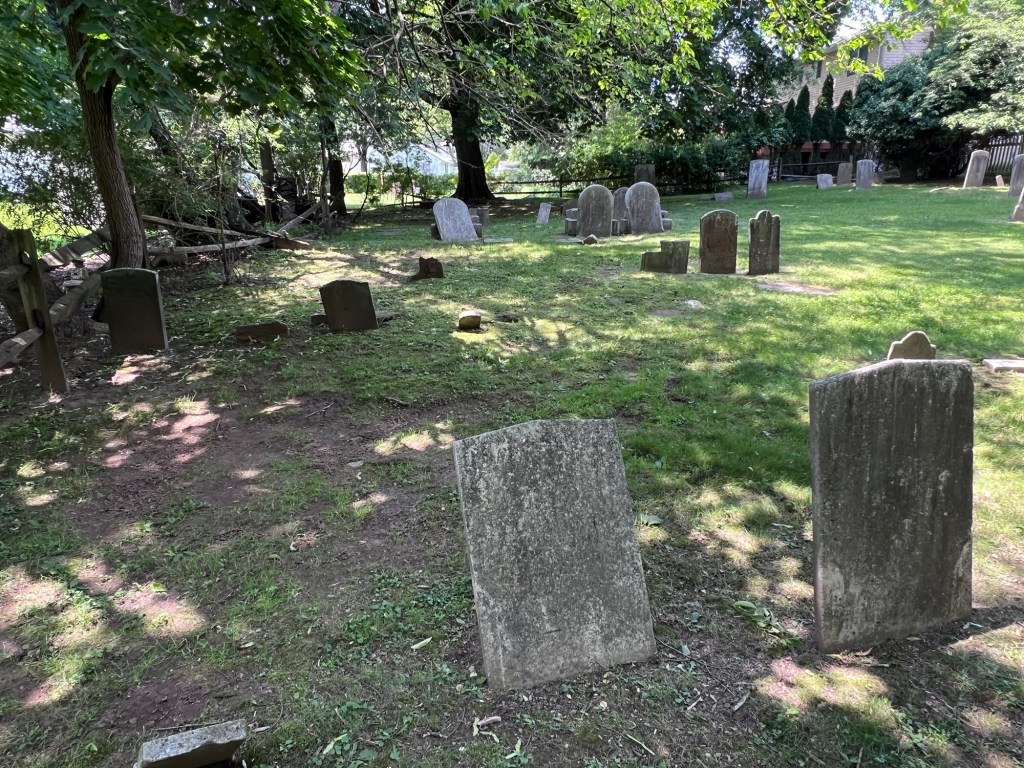
The inside of the cemetery on s gloomy afternoon

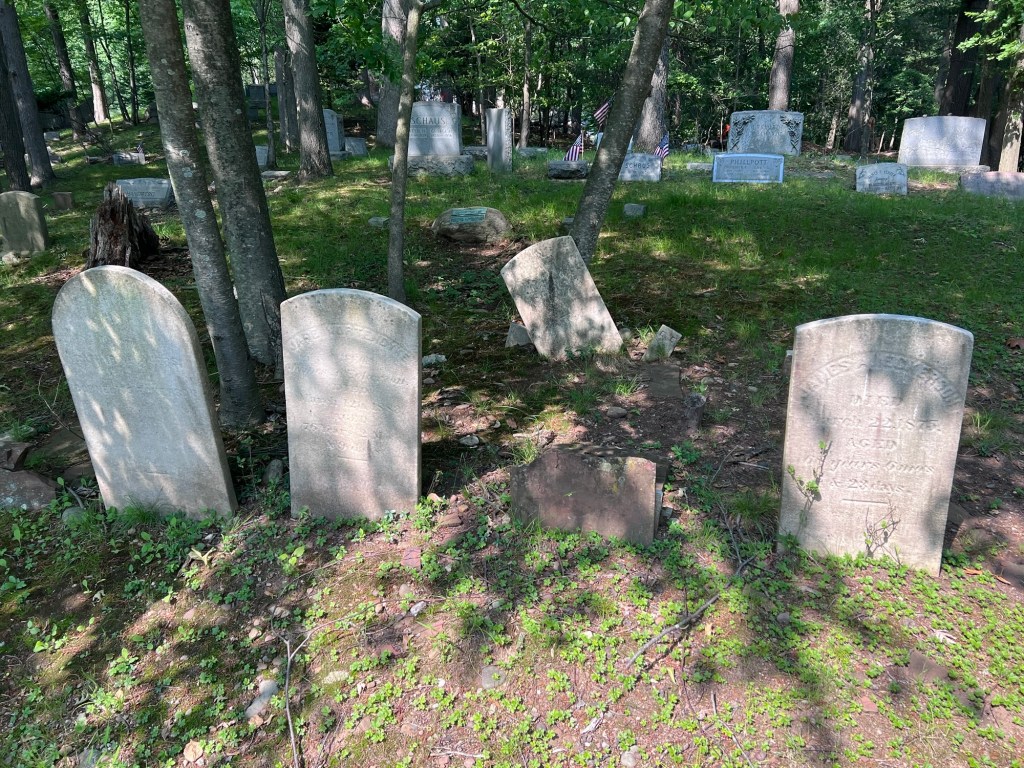
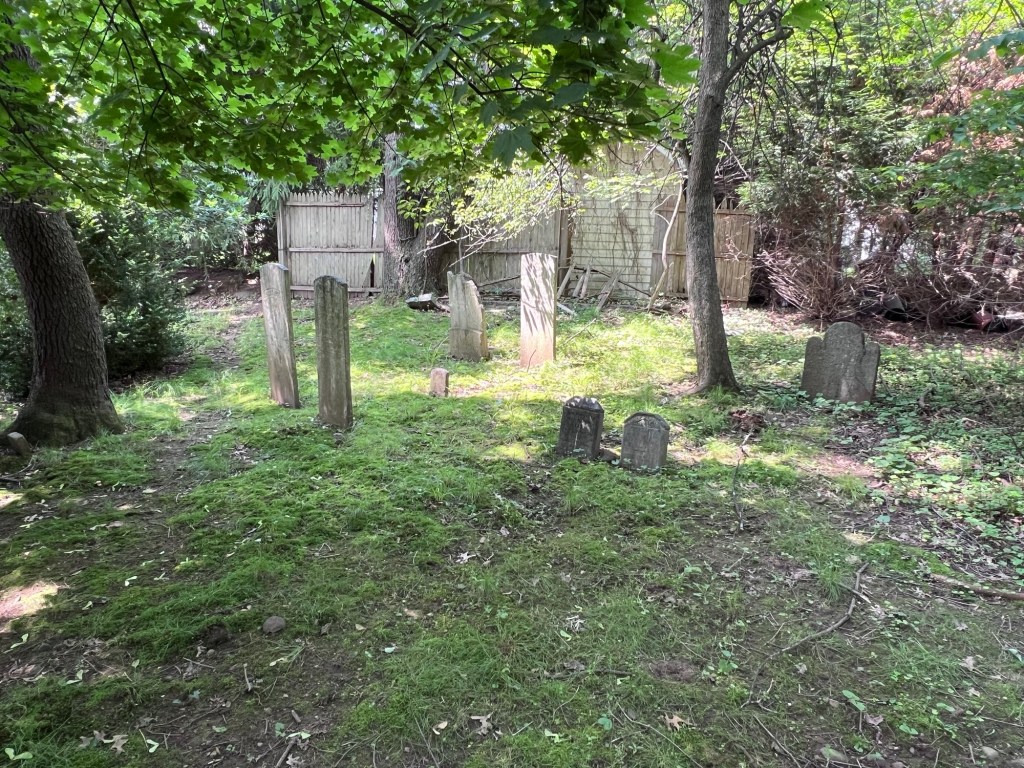
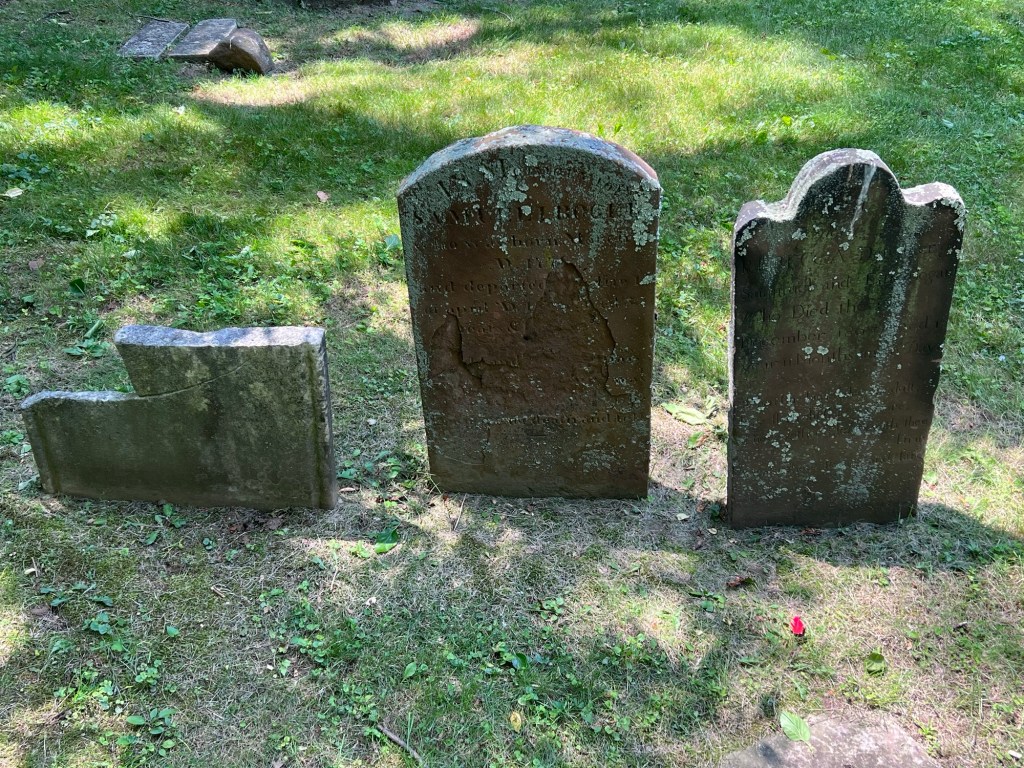
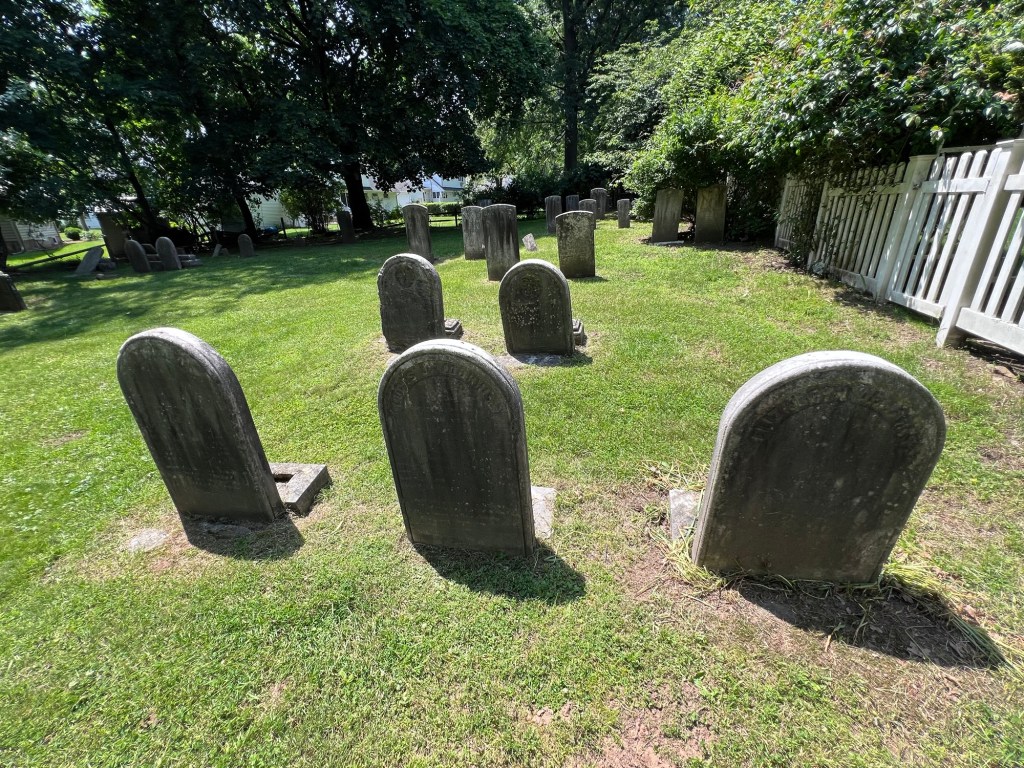
The Nagel family plot inside the cemetery

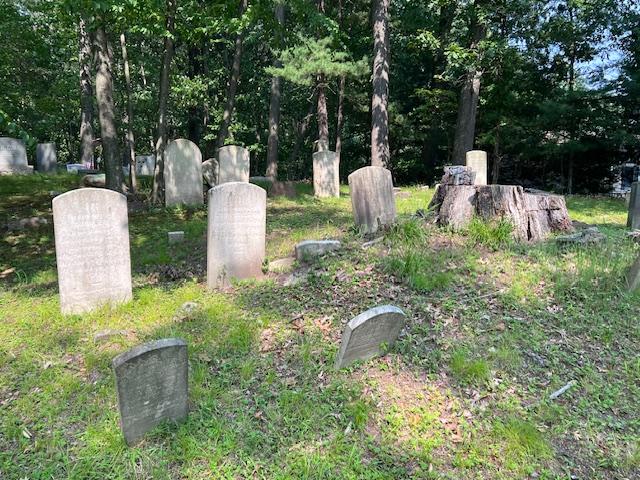
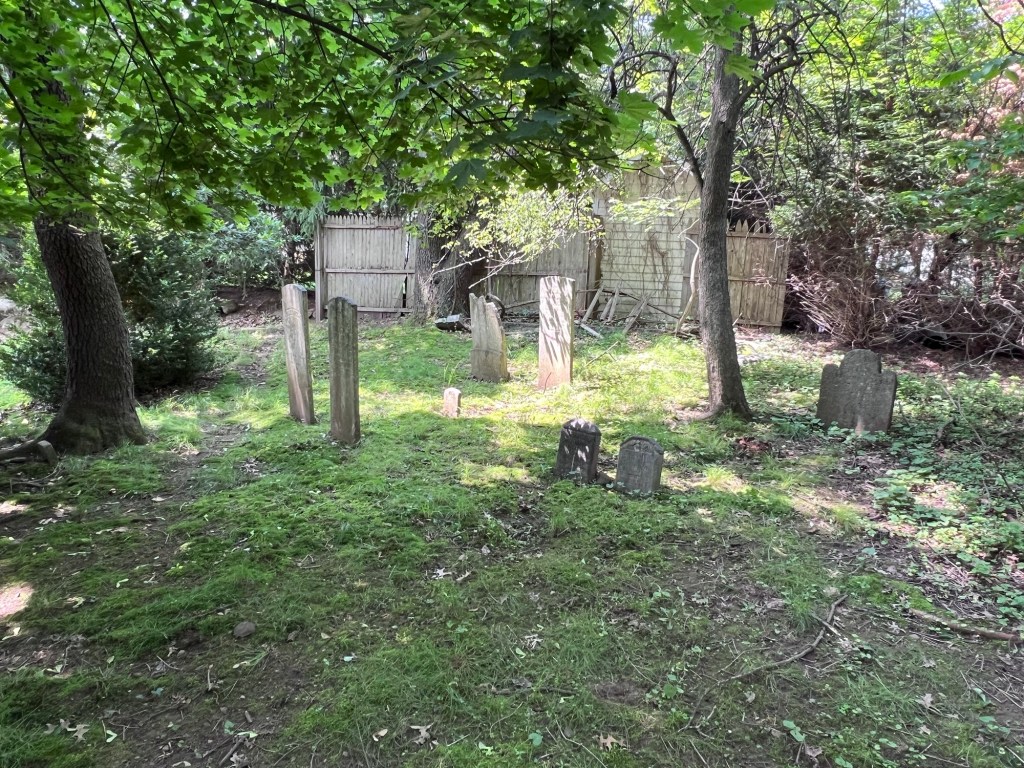
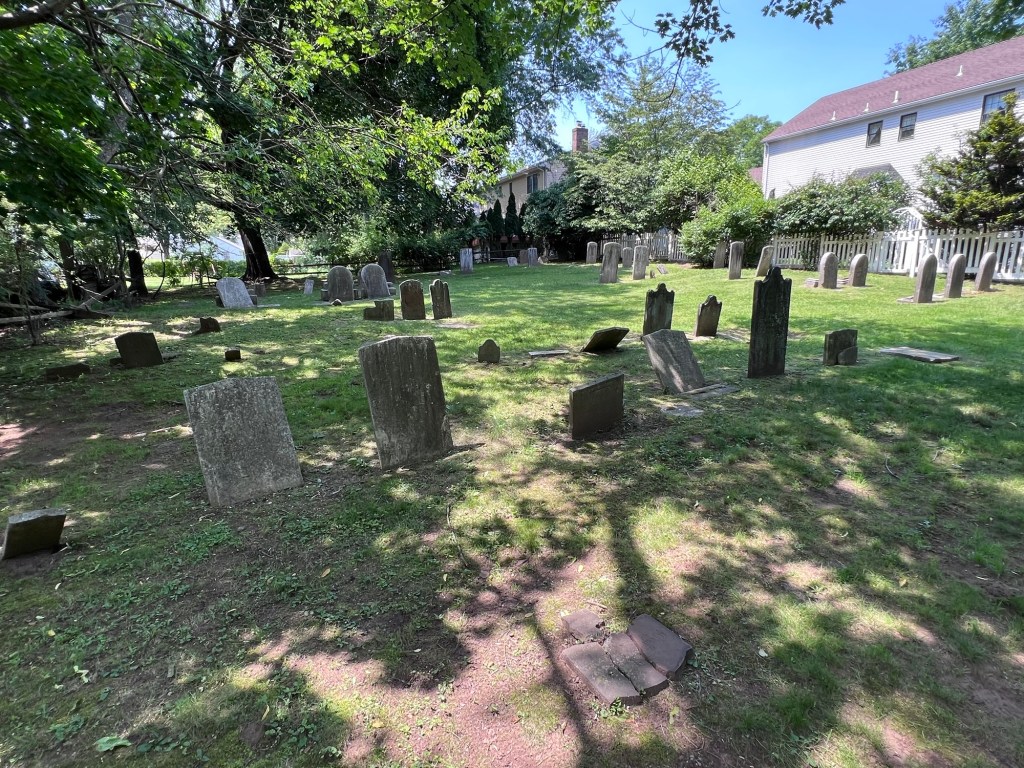
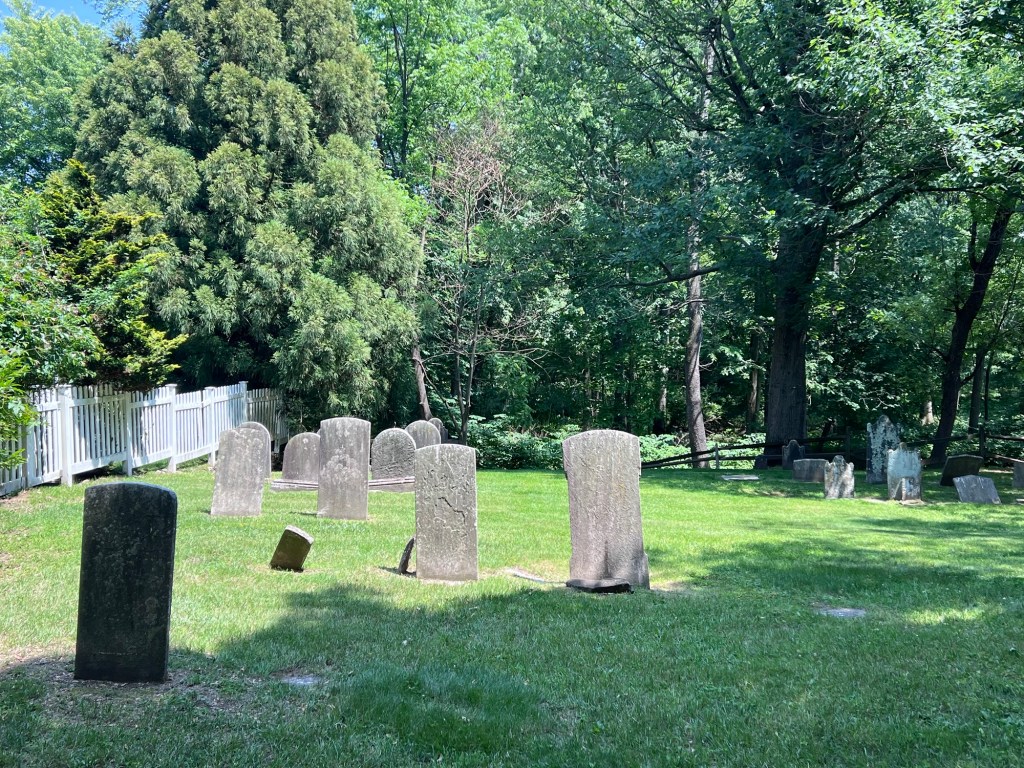
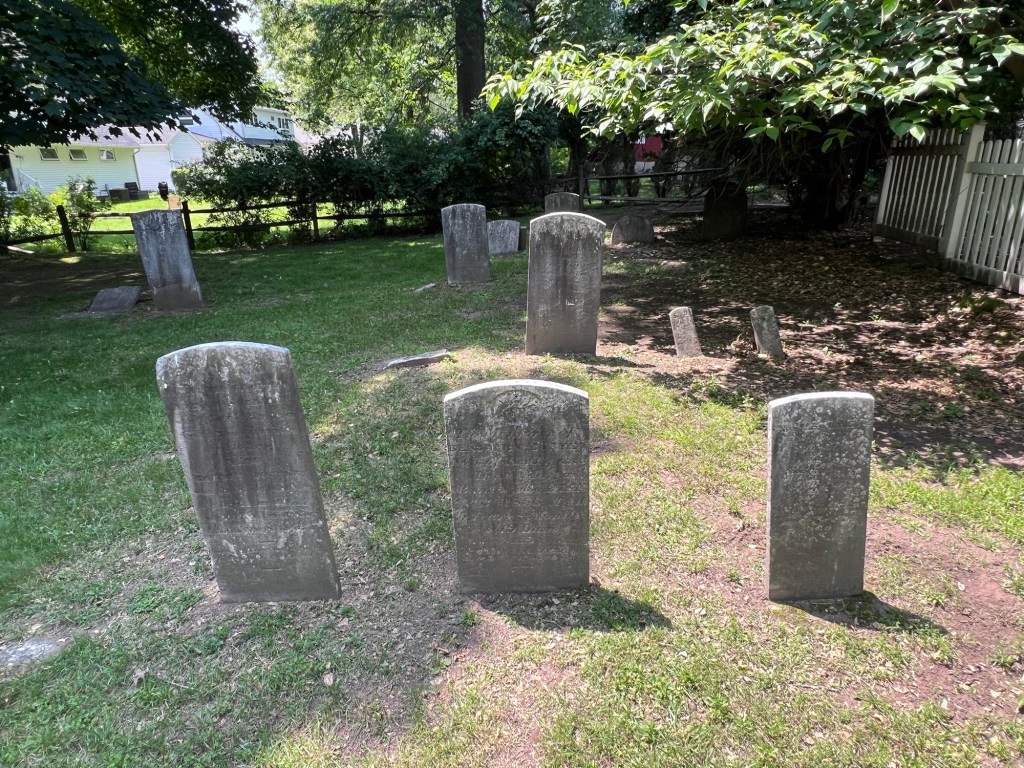
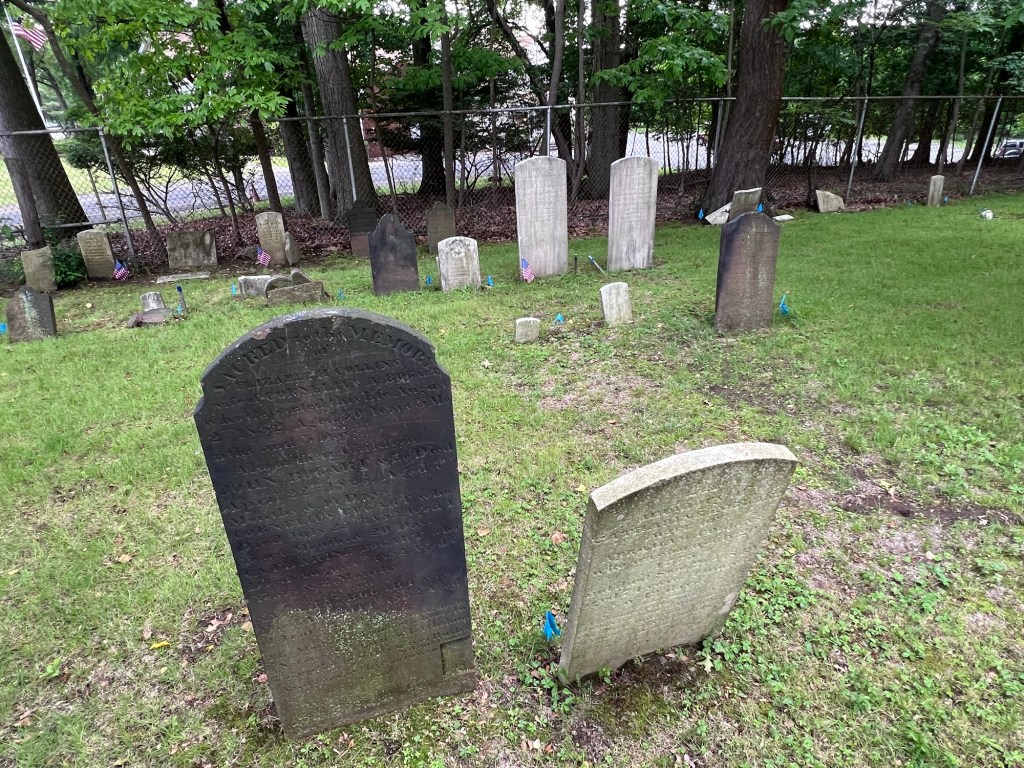
I visited the Nagel-Auryansen Cemetery one gloomy afternoon. This small cemetery is one of about a half dozen in Bergen County, NJ that were once part of family homesteads that are long gone.

These once important family farms started to disappear after the Civil War and with the coming of income tax, smaller families and automation of farming, these farms disappeared. These small cemeteries are what remains of these families legacies.

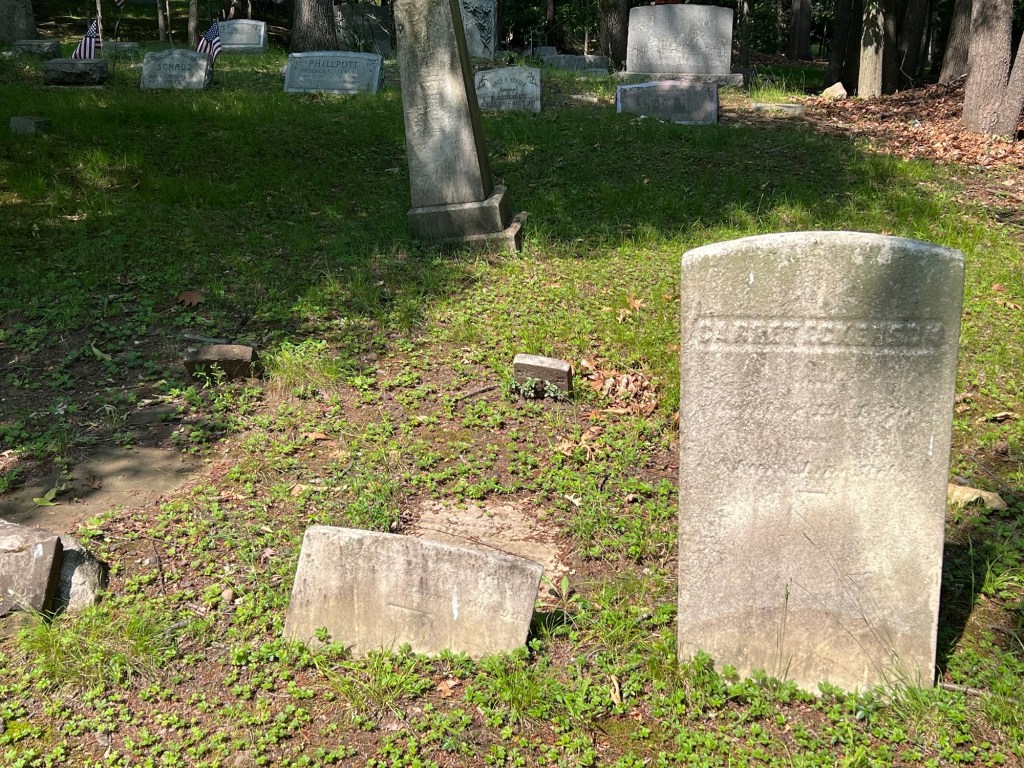
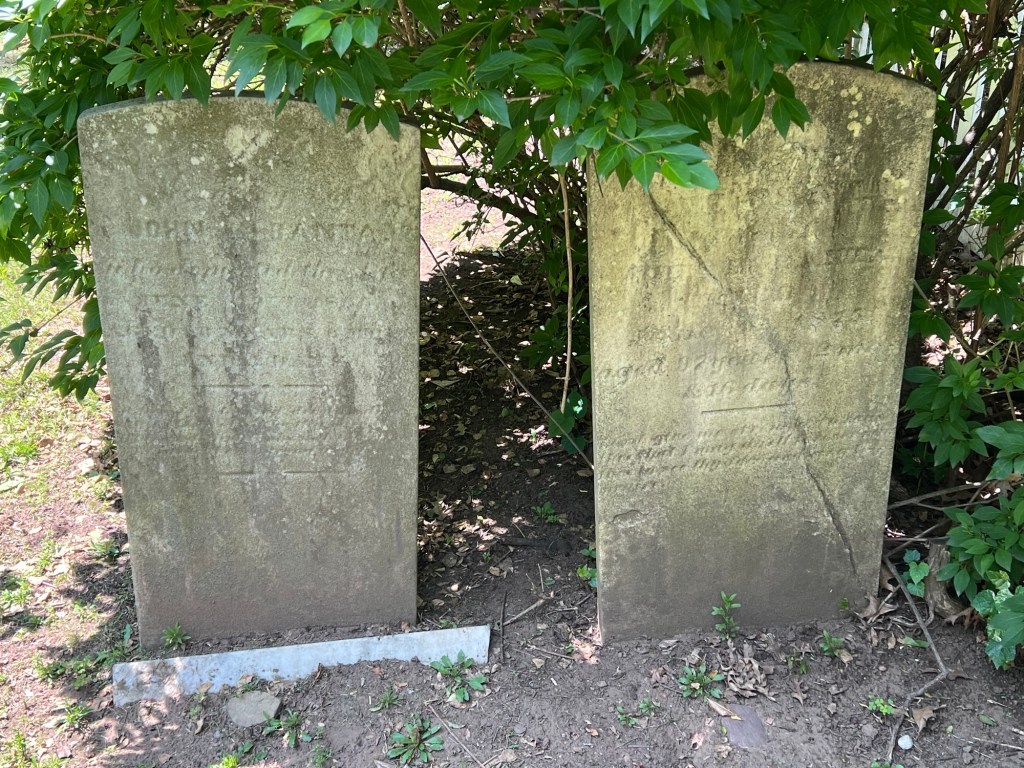
The grave of resident Abraham Auryansen

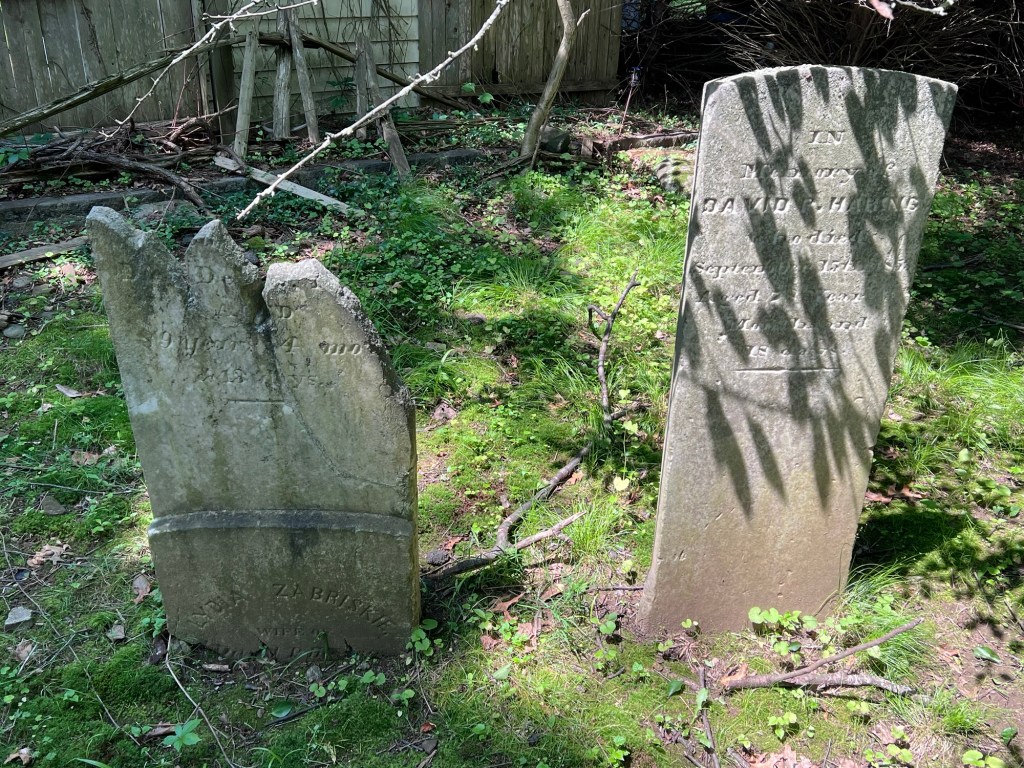
The Auryansen family plot inside the cemetery

The Nagel family plot inside the cemetery

The Auryansen family plot inside the cemetery towards the back

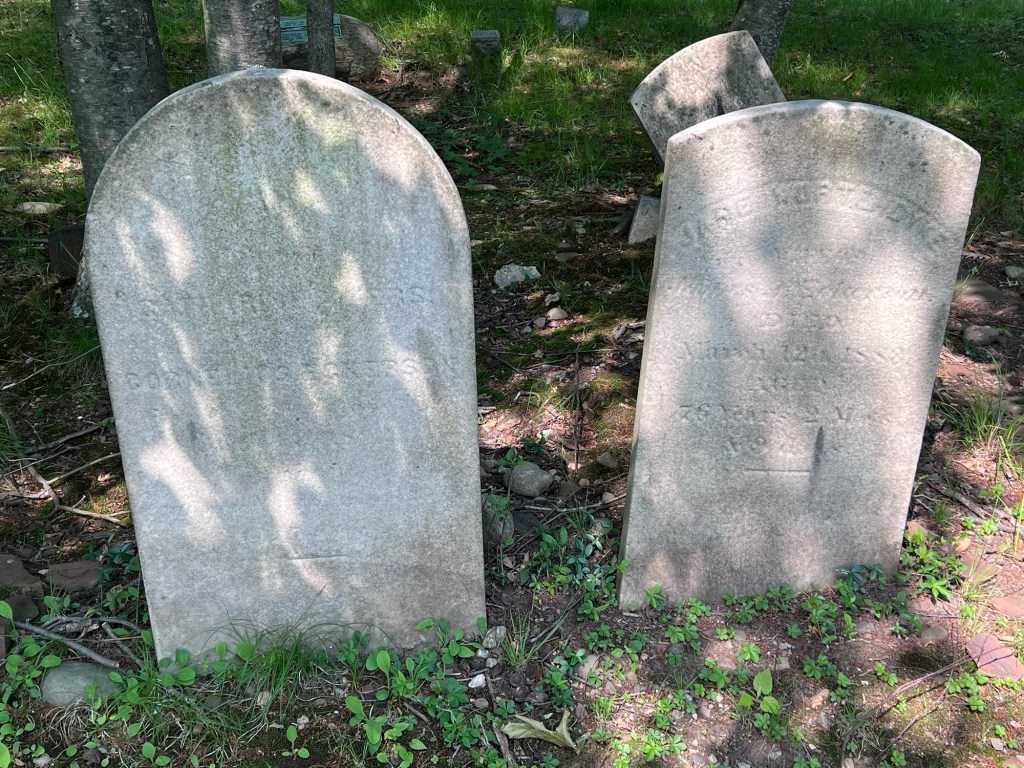
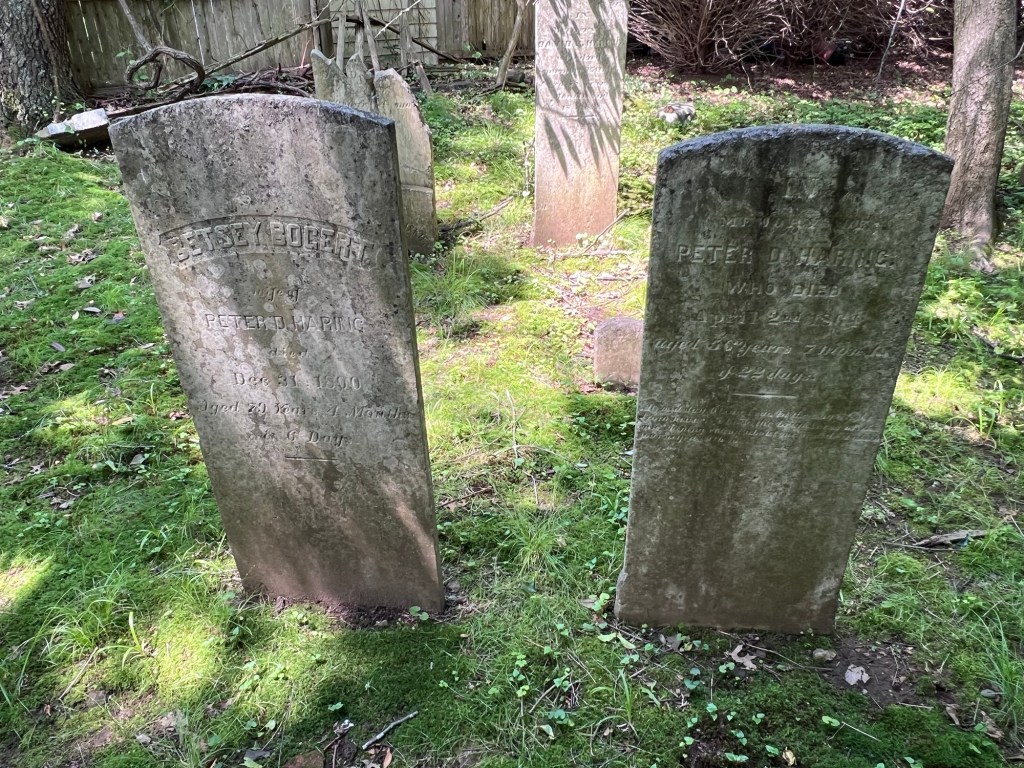
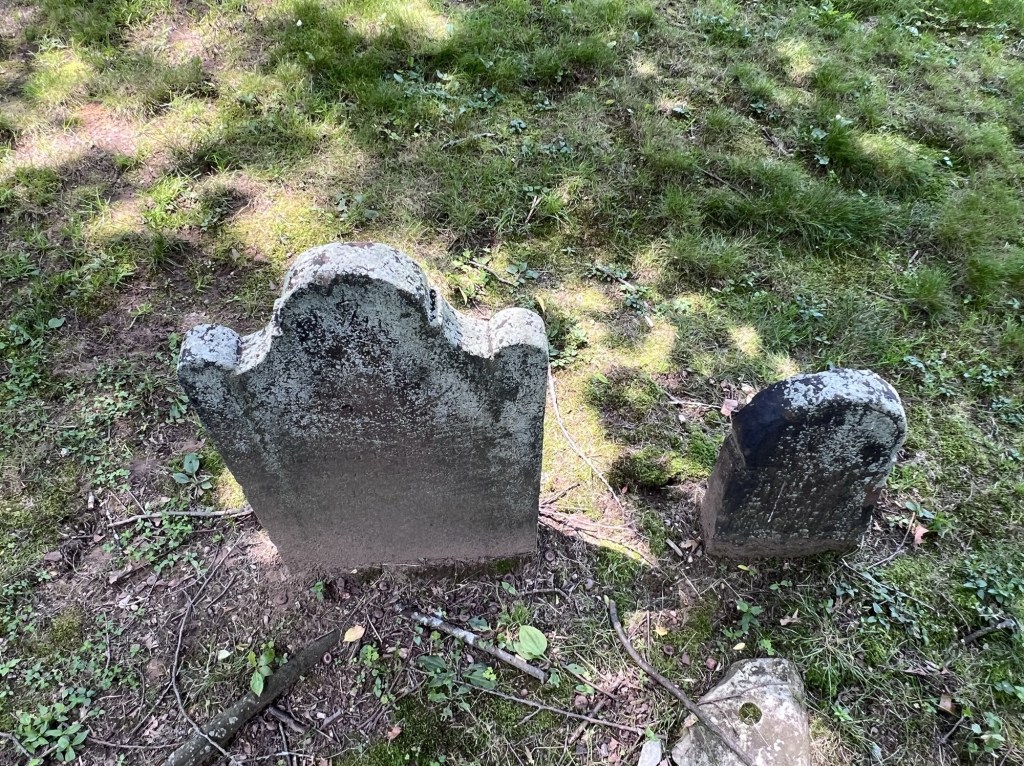
The Nagel and Haring family gravestones

The gravestones closer to the entrance of the cemetery

On the next block over, the original family farmhouse along with the Metropolitan farm still exists. The family farmhouse and nursery are still part of the community. It is the oldest continuous farms in the State of New Jersey.

The Metropolitan Farm is home to the Resolvert Nagel Farmhouse and farm

The historic marker to the home

The entrance to the Metropolitan Farm at 119 Hickory Lane in Closter, NJ

https://www.metropolitanfarm.com/

My review on TripAdvisor:

History of the Farm:

(from the Metropolitan Farm website)

Started in 2012, our farm is located on the property which is the oldest working farm in the State of New Jersey. Every year, we are improving our ability to help you and make it more convenient to access our 70.000 perennials.

​Our perennial growers have been working with perennials in Northern New Jersey for over 30 years. In that time, they have discovered what works the best and what thrives in our hot summers and survives our bitter cold winters. We overwinter all our perennials that we carry and our products are ready to be planted and enjoyed wherever you may place them.

The original section of the Nagel family farmhouse

The History of the farmhouse:

(from the Metropolitan Farm website)

The Stone Farmhouse dates back to the early 1700’s. The Auryansen/Naugle family lived here for generations and owned over 1000 acres from the hudson river to the farm. (Currently parts of Alpine and Closter). It was sold to several other families and was put into the Historic Commission in 1980. The house was sold to the current owners in 2012 along with the rest of the property and was renovated to restore some of its original beauty and architecture. Part of the current family lives there now.

The modern farmhouse today with modern addition

The Metropolitan Farm and Nursery

The outside plants at the farm

The outside plant and shrubs

The perennials for sale on the farm

The greenhouse flowers

The greenhouse flowers and plants

The inside of the farm store

Inside the farm store

The beautiful flowers on sale at the store

The outside grounds and the property left of this historical farm in Closter, NJ

It is interesting to see how the legacy of this family still lives on in the Twentieth century as a nursery farm but it shows how it has matured and adapted to today’s population.

Some of the descendants of these families still call Bergen County home and are also names we see on streets, towns and schools in the area.

Haring Farm Cemetery                                                                       Old Haring Farm Court                                                                  River Vale, NJ 07675

Haring Farm Cemetery Old Haring Farm Court River Vale, NJ 07675

Haring Farm Cemetery

Old Haring Farm Court

River Vale, NJ 07675

https://www.northjersey.com/story/news/bergen/river-vale/2020/10/08/river-vale-nj-cemetery-refurbished-teen/5898284002/

https://www.findagrave.com/cemetery/1974293/haring-family-cemetery

http://files.usgwarchives.net/nj/bergen/cemeteries/haring.txt

My review on TripAdvisor:

https://www.tripadvisor.com/Attraction_Review-g46777-d33055554-Reviews-Haring_Farm_Cemetery-River_Vale_New_Jersey.html

The entrance to the Haring Farm Cemetery

One afternoon I took a trip into my very distant past. I visited the tiny Haring family Farm Cemetery, which is the resting place of Cornelius Haring and his family. The cemetery is what is left of what was once a several hundred acre farm owned by the extensive Haring family of Bergen County, NJ.

The burial site had been hidden for years and the site neglected until restored by Eagle Scout, Anakin Rybacki in 2020

https://www.northjersey.com/story/news/bergen/river-vale/2020/10/08/river-vale-nj-cemetery-refurbished-teen/5898284002/

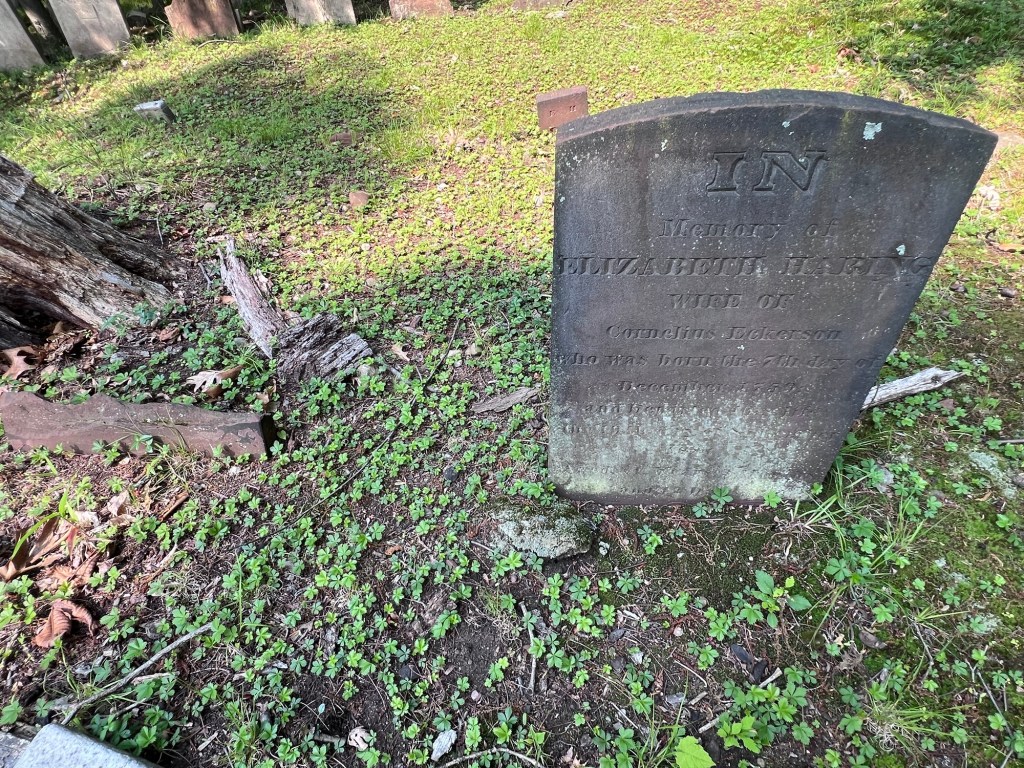
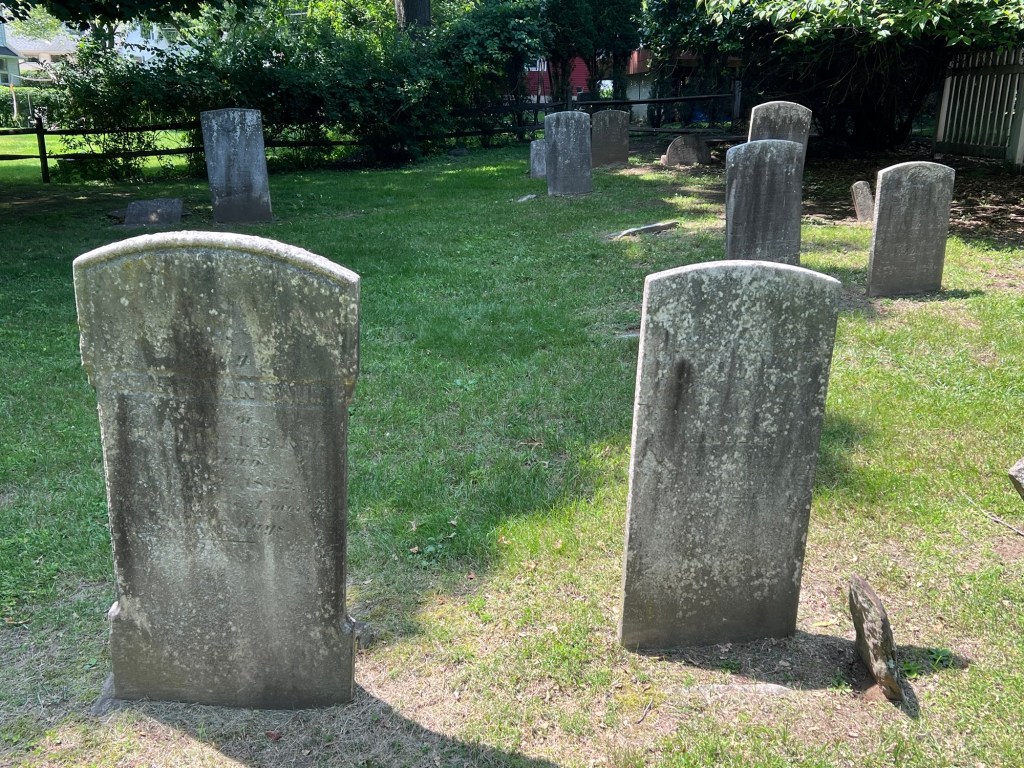
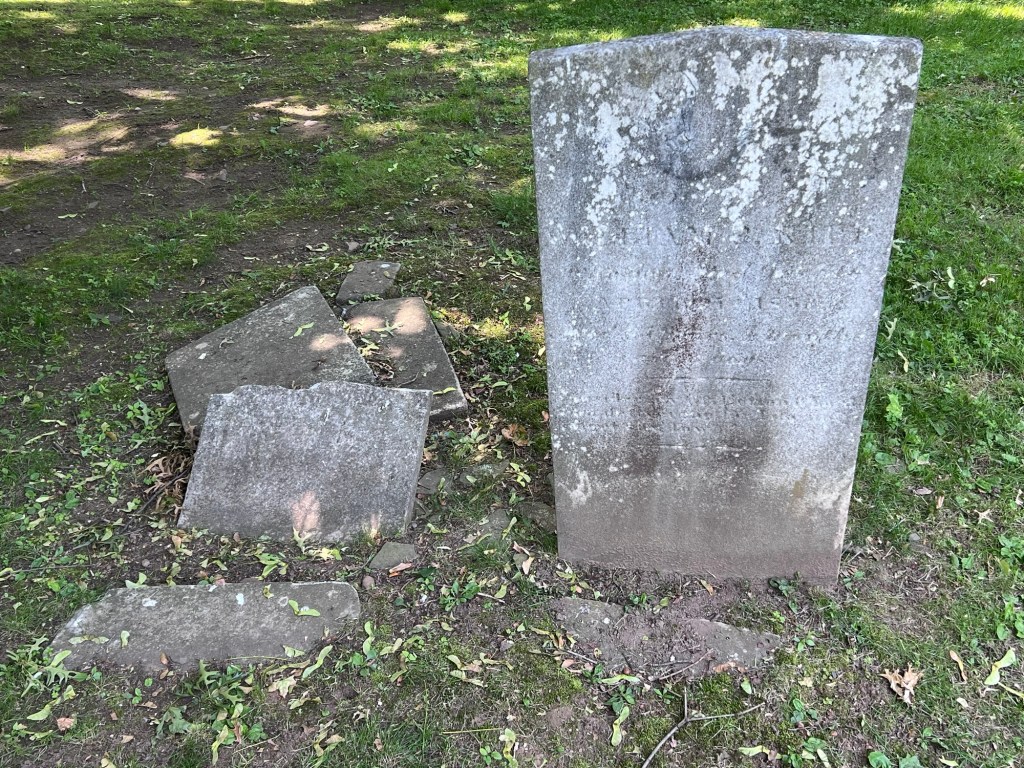
The broken and delicate tombstones

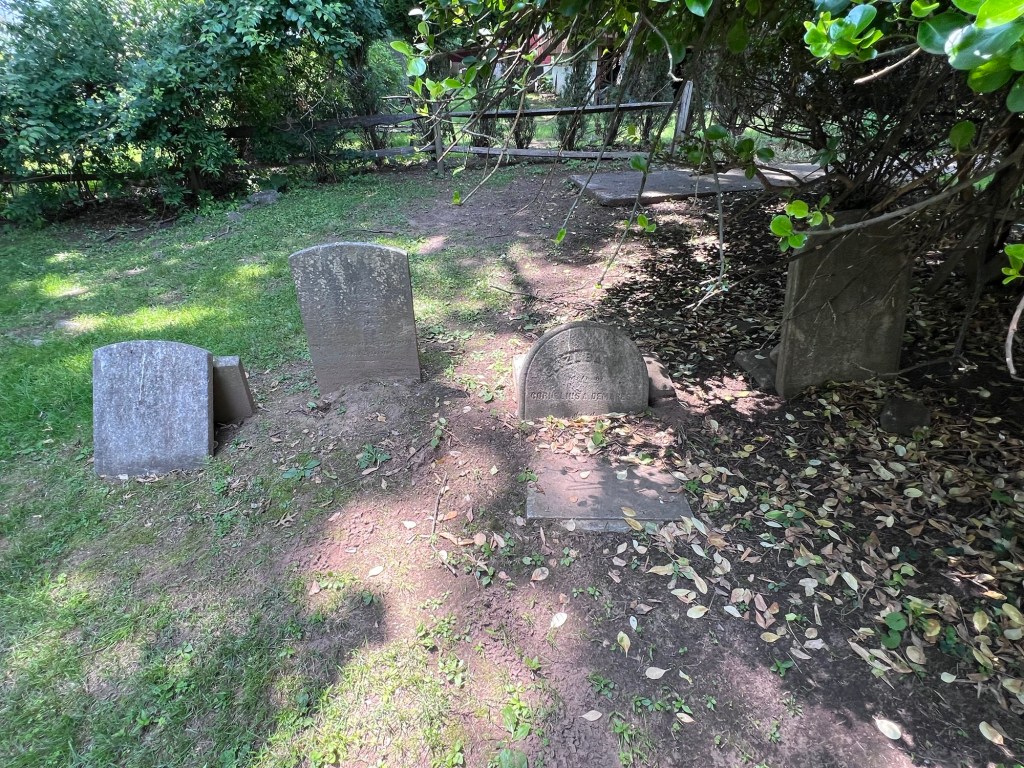
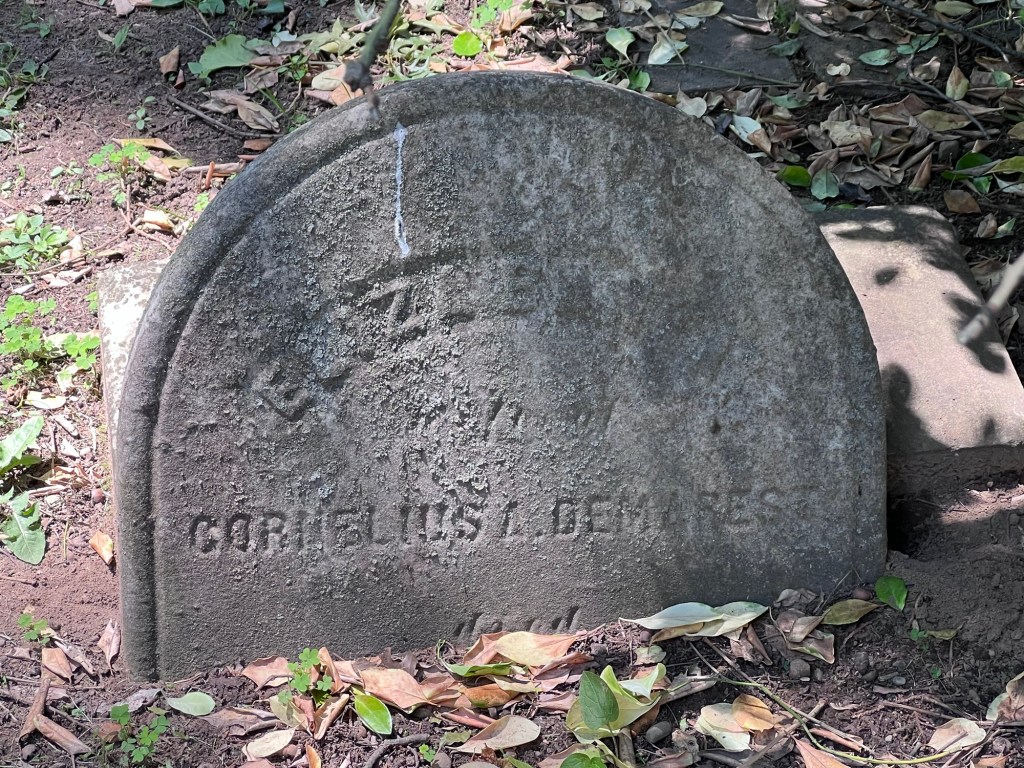
The members of the family who are buried here

The History of the Cemetery:

(Shayla Brown article)

The history of the site extends back to the 17th century. “The immigrant ancestor was Jan Pieter Haring, who came from the Netherlands in the early 1660s. He was the leader of a group that purchased 16,000 acres in the Bergen/Rockland area, after living first in New Netherlands, now Manhattan,” said family descendant Regina Haring (Brown, NorthJersey.com).

Each of the historic tombstones are encased in a plastic box

The teen who renovated this cemetery encased each of the tombstones to preserve the place and history of each person buried on the site. Most of the tombstones were left in pieces by the time the renovation had started. This small cemetery is dedicated to the people who once lived here and passed away at the farm.

The grave site of Margaret Alyea

The grave of William Holdrum

The grave of Abraham Haring

Another simple tombstone of Elizabeth Haring

Some of the tombstones needed a serious cleaning

The grave of Elizabeth Blauvelt Haring

The cemetery from the entrance of the site

The sign on the site marking the fencing for the Haring Farm Cemetery

The cemetery is an interesting example of rural life in Bergen County when these early Dutch families would bury their loved ones on the family property rather than in the local churches.

My Class visit:

I stopped in at the Haring Farm Cemetery for a tour for their class project on Historical Cemeteries for the ‘Bergen 250’. This is for another Bergecco-Parc Consulting Inc. project.

So I got there early, raked the cemetery and tidied up the tombstones and cleaned and organized the signs. It looked so much better.

The Haring Farm Cemetery the morning of the tour. Much more respectable looking.

The class tour

The class group picture at the site

My Team Project “The Graveyards and Cemeteries of the Veterans of the Revolutionary War” Team Project in Spring 2026:

We toured the Haring Family Cemetery down the road on Old Haring Farm Road. This was one of the many examples of small family cemeteries that used to be placed at the edge of family farms, who wanted loved ones buried close by or the distance to the family church was too far away at that time.

Touring the Haring Family Cemetery

The Haring family is one of the most important and prominent Colonial families in New Jersey (and are very distantly related to me by marriage), so I felt this site was very important to visit to show the family dynamic of that era.

Our Team at the Haring Farm Cemetery at Old Haring Farm Court

The cemetery is tucked in between two large McMansions whose residents are probably wondering who all these people are walking around their neighborhood.

South Presbyterian Church                                                                   150 West Church Street                                                                      Bergenfield, NJ 07621

South Presbyterian Church 150 West Church Street Bergenfield, NJ 07621

South Presbyterian Church

150 West Church Street

Bergenfield, NJ 07621

(201) 384-8932

https://www.southpresbyterian.net/history

Open: Sundays during service time

My review on TripAdvisor:

https://www.tripadvisor.com/Profile/R4960NKjustinw/mediabatch/13264450?m=19905

The South Presbyterian Church at 150 West Church Street in Bergenfield, NJ

The historic marker in front of the church

I was in Bergenfield, NJ recently to visit the Bergenfield Museum and I walked around this beautiful church and the graveyard next to it. What a beautiful, graceful building and the cemetery had an old New England charm about it. The graveyard held the graves of many of the original family members who founded the County and lived in Bergen County since the late 1600’s.

The inside of the church

The church sat in this beautiful area right next to Cooper Park off Downtown Bergenfield. I can’t wait to take a look inside one day.

The inside of the church during Sunday services

The Mission Statement from the Church:

(from the church website)

“As followers of the risen Lord, we, the South Presbyterian Church family, commit ourselves to proclaim the gospel, witness to the promise of God’s Kingdom, and nurture all children of God. In our community and throughout the world, we will serve in Christ’s name through worship and mission. We will serve through open worship, willing service and compassion to all for the glory of God wherever our lives shall take us.”

The historic marker of the church

History of the Church:

(from the church website)

SOUTH CHURCH is descended from the first Schraalenburgh congregation established in 1723. The first church building was constructed beginning in 1724, and fully completed by 1728. This was approximately 36 feet square with a Dutch hip roof ascending to a central belfry and steeple.

 The front of the church cemetery

This church stood atop a small hill just west of Long Swamp Brook, facing south and fronting on the new county road laid down in 1717. Using today’s landmarks, we can describe the site as the southeast corner of the present cemetery, directly across Church Street from the South Church House. For more than seventy years, this small church building served the farmers of Schraalenburgh. The site of the new church was apparently chosen because of the presence of a large spring across the road near Long Swamp Brook. 

 The historic graveyard with some of the original families of Bergen County

The philosophy of the Dutch Reformed Church shaped the growth and development in the early years of the church’s existence. In the more than two and a half centuries of its history, the members of the congregation had to choose many times between the strictly puritanical concepts and the more convenient religious beliefs, and invariably chose the puritanical. Some members were the patriots of the Revolution while others were Tories. In 1799, the new South Schraalenburgh Church was built a short distance to the west of the original building.

 The historic cemetery during the Fall of 2024

Because of differences within the congregation in the late 1700s, two groups were formed and when a decision was made to build a new church, the opposing group withdrew, purchased land and built the North Schraalenburgh (now Dumont) Reformed Church in 1801. In May 1866 the congregation voted to enlarge and remodel the building, adding 15 feet to the north end and replacing part of two windows in the front with doors on each side of the original single door, as you see it now.  This was completed in 1867.

 The Church graveyard

In the past century, the building has had its share of modernizations— candlelight gave way to oil lamps, and in turn to electrification. Heat was installed,  first coal fired, then oil, now gas, although the old drafts persist to this day. However, the charm and grace of the old Dutch Church at Schraalenburgh have remained. The South Church House completed and dedicated in September 1952, on the corner of West Church and Franklin Avenue, is used by the church for various classes and events and many community organizations meet there.  In 2002 South Presbyterian Church celebrated the 50th Anniversary of the Church House.

 The historic graveyard at the side of the church in the oldest part

The South Presbyterian Church was placed on the National Registry December 6, 1975 and the Manse on August 24, 1979, both through the efforts of Mrs. Adrian Leiby. In 1913, after much discussion, the congregation chose to unite with the Presbyterian Church. Today, after almost 3 centuries of building and remodeling, separating and uniting, South Presbyterian Church in Bergenfield remains committed to the values of those Christian farmers who first gathered at this site to worship in 1723. . . steadfast in purpose and faith.

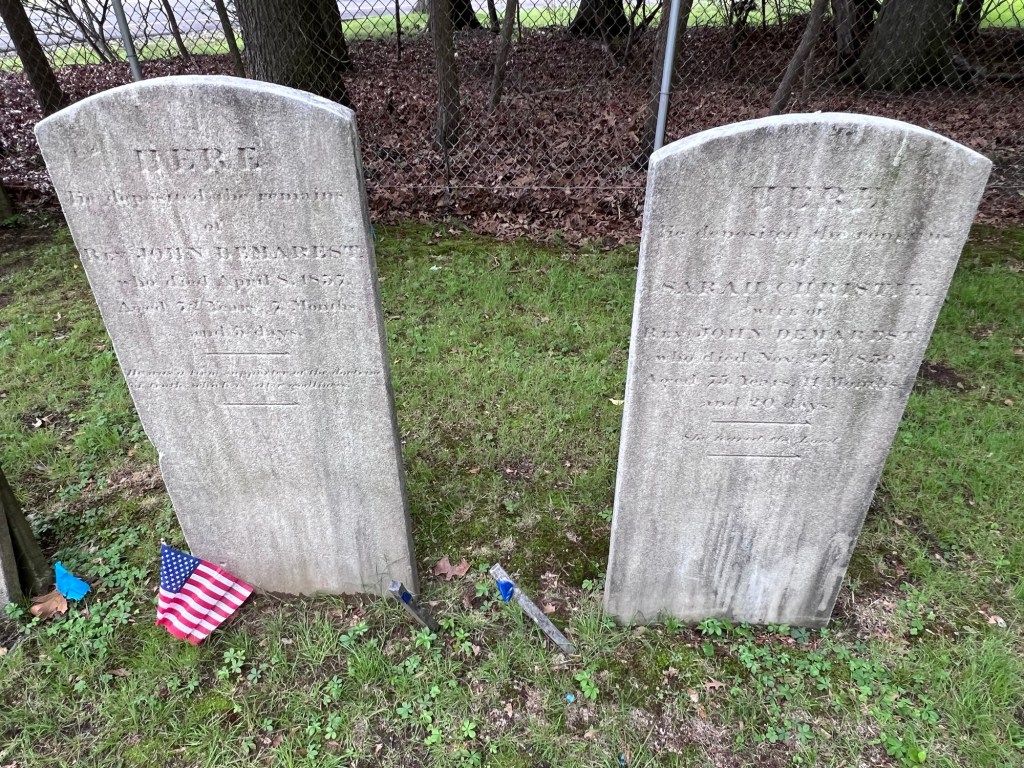
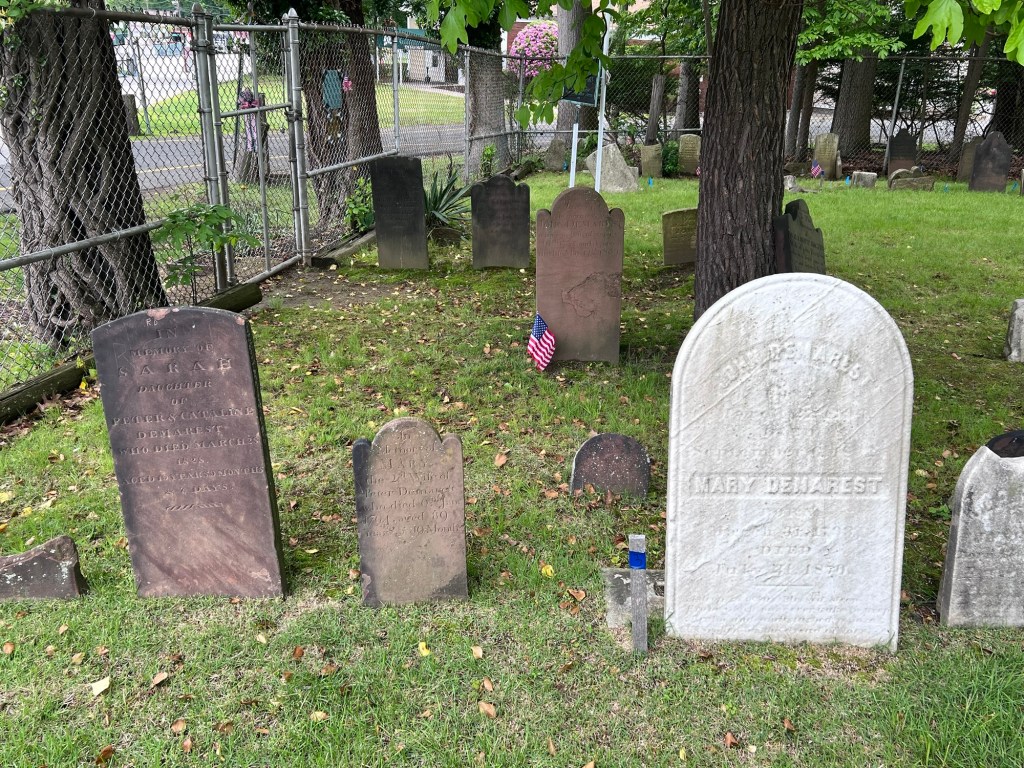
The Demarest family plot

The Church is especially beautiful at the holidays all decorated with wreathes and garland.

The South Church decorated for Christmas

The fences are so nicely decorated for the holidays

The outside of the church decorated for the holidays

The front of the church at dusk

The front doors are so welcoming at the holidays

The Bergecco-Parc Consulting Inc. Project promoting the church for “Dark Tourism”:

In a recent project I created for my Marketing Students at Bergen Community College in Paramus, NJ, under the fictional company “Bergecco-Parc Consulting Inc.”, the Teams were tasked in creating a project that promoted the South Presbyterian Church for “Dark Tourism”, meaning that we promoted their historic cemetery for a historic walking tour concentrating on the Demarest family plot.

Here is a link to that blog on the project:

Here are the videos on the Bergenfield, NJ Historic sites project:

We walked through the park again to my take note of its Depression era past and beautiful views and colors and made our way to the historic South Presbyterian Church and its historic graveyard where the second half of the project would take place.

South Presbyterian Church at 150 West Church Avenue

https://www.southpresbyterian.net/

https://www.facebook.com/southpres/

The historic marker for the church

My review on TripAdvisor:

https://www.tripadvisor.com/Profile/R4960NKjustinw/mediabatch/13264450?m=19905

My review on VisitingaMuseum.com:

https://visitingamuseum.com/author/jwatrel/page/2/

The Demarest Family plot in the church graveyard

Touring the South Church graveyard for the historical walking tour with members of the Church volunteer staff

The tour was lead by Bob Carpenter, a historian who is helping renovate this historical graveyard

The tour of the historical Demarest family plot, which ties into the museum building’s historical past, was lead by historian Bob Carpenter, who is helping the church renovate and restore the graveyard. Mr. Carpenter explained to us how he was fixing all the plots and historic tombstones and how the maintenance of the stones needs to be carefully done.

Mr. Carpenter explains how to maintain the tombstones in these historic graveyards

Video of the walking tour of the historic graveyard:

Both the church volunteers and Mr. Carpenter explaining to the students how families were buried in the 1700and 1800’s

We finished the tour that afternoon inside the South Church to learn its history in the community. Though it will not be part of the project, the church offered the students a glimpse into Bergen County’s past as the original church was built before the Revolutionary War.

The Student Consultants touring the pews of the South Church

Once the tour was complete, the Student Consultants had a better understanding of the locations where the project will take place.

The new project will include walking tours, historical aspects of all three locations, and ways of creating a Destination Marketing Plan for domestic and foreign tourism. This will take place when the Student Consultants present their ideas to myself and the museum and church staffs.

The student consultants had four weeks to this project and put together their game plans. The had to put together commercials to promote the Bergenfield Museum, Coopers Pond Park and the historical cemetery of the South Church. As an extra credit assignment, I had the students develop a Halloween walking tour with food and create a separate commercial for this of which three of the for groups completed.

Here is their Presentation of the Project Promoting the Historic sites of Bergenfield, NJ. This section of videos was on promoting the South Presbyterian Church:

The South Church Cemetery is one of the oldest and historic cemeteries in Bergen County and home to the Demarest family plot, one of the most prominent families in Bergen County. The students were tasked with creating a short Walking Tour video promotion for the project to promote the South Church for tourism.

Team One:

Commercial Two:

Team Two:

Team Three:

Team Four:

*Special Note: I credit my Marketing 201 students at Bergen Community College with all of this work and the dedication that they gave the class. Excellent job everyone!

For my International Marketing class in Spring 2026, I created a new Team Project based on Daughters of the Revolutionary War’s listing of Bergen County Veteran’s.

Bergecco-Parc Consulting Inc. Project Proposal:

This semester I attempted one of the toughest Team projects in all the historical projects I have created, taking the listing of the Daughters of the American Revolution created for Bergen County Historical Division for the “Bergen 250”and we took it to another level.

I challenged the students to visit all the cemeteries and graveyards on the listing (using my blog if needed), find the tombstones of the veterans of the Revolutionary War and photograph them. Then they needed to create a biography of each of the veterans.

From there, they needed to create a short video of that site and put it all into a QR code so visitors can find them. It was a big challenge but I knew this class could do it. There was something about the personality of this class that would make it work.

I then planned a series of field trips so that the students could visit particular sites in a more formal tour. I asked a lot of the contacts who I have met over the years to help me out so the students could see why this project was so important to the 250th Anniversary to both our County and our Country. It took a lot to plan and execute. I gave them six weeks to do the research and create other sections of the project.
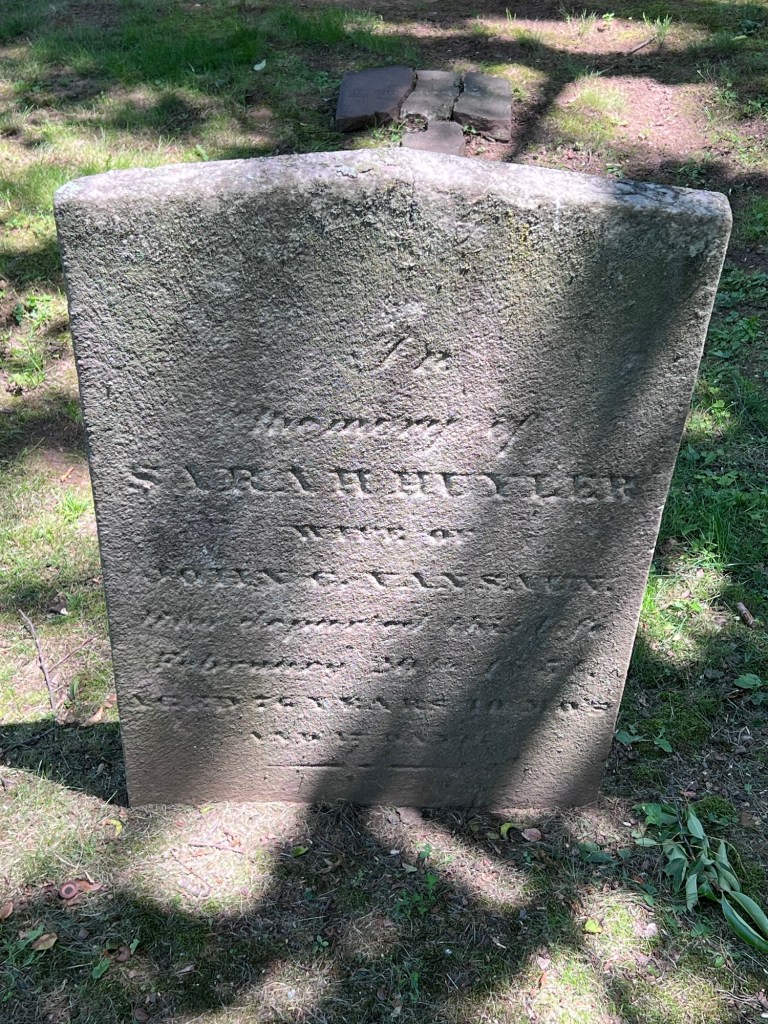
Our last field trip was to the church for another visit with Bob Carpenter and Melissa Naylis, who led a new group of students on a tour through the graveyard to learn about history, restoration, and how marble is chiseled.

We worked with Melissa Naylis, who is leading the renovation of the church and master carver, Bob Carpenter, who showed us how he is restoring the graveyard. He had led one of my previous classes when we visited the graveyard for my ‘Bergen 250’ project.

Master Carver Bob Carpenter leading our tour

The South Presbyterian Church and the Demarest family plot

The Demarest family plot

Melissa Naylis starting the tour with us

The students got to learn of the important history of the grave sites and why they are an important piece of the United States founding. The were the men who fought for our freedom and the wives and families that supported the effort.

Melissa leading the tour and introducing Bob Carpenter to us

Melissa Naylis explaining the work that is being done in the graveyard

Bob Carpenter explains his work

Some of the earliest tombstones in the graveyard

Bob Carpenter explaining the renovation

Bob Carpenter talking about the Demarest plot renovation

Pastor Glen from the Old South Presbyterian Church introducing himself to the students and joining us on this part of the tour.

Talking about the care of the tombstones

Talking about care of the tombstones

We then moved to tombstone of the founder of Rutgers University for a marble carving demonstration. Bob Carpenter wanted the students to know the effort into carving into stone and brought the tools of that era and a piece of marble for the students to use. The students got a kick out of this and some really enjoyed it.

Bob explaining the work of a marble carver

Describing the process

My students giving it a try

My student Amy, carving marble

My student, Walid, carving on marble

Demonstrating the process

After the demonstration, we talked about the work of the Demarest family and their contributions within Bergen County.

The founder of Rutgers University, John Henry Goetscheus and a member of the extended Demarest family.

Our Team picture after the tour

Taking a quick tour of the graveyard after the formal tour, the Blauvelt-Kipp family burial ground

Orchard Street Cemetery                                                                       44 Chestnut Street                                                                           Dover, NJ 07801

Orchard Street Cemetery 44 Chestnut Street Dover, NJ 07801

Orchard Street Cemetery

44 Chestnut Street

Dover, NJ 07801

https://www.orchardstreetgatehouse.org/history

https://www.facebook.com/p/Orchard-Street-Cemetery-100057217459315/

Open: Sunday-Saturday Seasonal Check the website for the hours

My review on TripAdvisor:

https://www.tripadvisor.com/ShowUserReviews-g46397-d28113226-r964248261-Orchard_Street_Cemetery-Dover_Morris_County_New_Jersey.html?m=19905

The entrance of the Orchard Street Cemetery and Gatehouse

The Orchard Street Cemetery in Dover, Morris County,  NJ was originally founded in 1851 when a group of men determined that a cemetery was needed in the Village of Dover, then part of Randolph Township.  One member of the group, William Young, the first baker in Dover who had his store on Dickerson Street traded his “garden plot” at the end of Orchard Street to this new endeavor in return for several building lots on Orchard Street.  The plot transferred from William Young to the Association was approximately one acre in size (Orchard Street Gatehouse Historical Society website).

The Gatehouse

The first thing you notice when you enter the cemetery is the Gatehouse. It needs a lot of work. Also it was not manned. Funny, the building looks like it belongs in a cemetery.
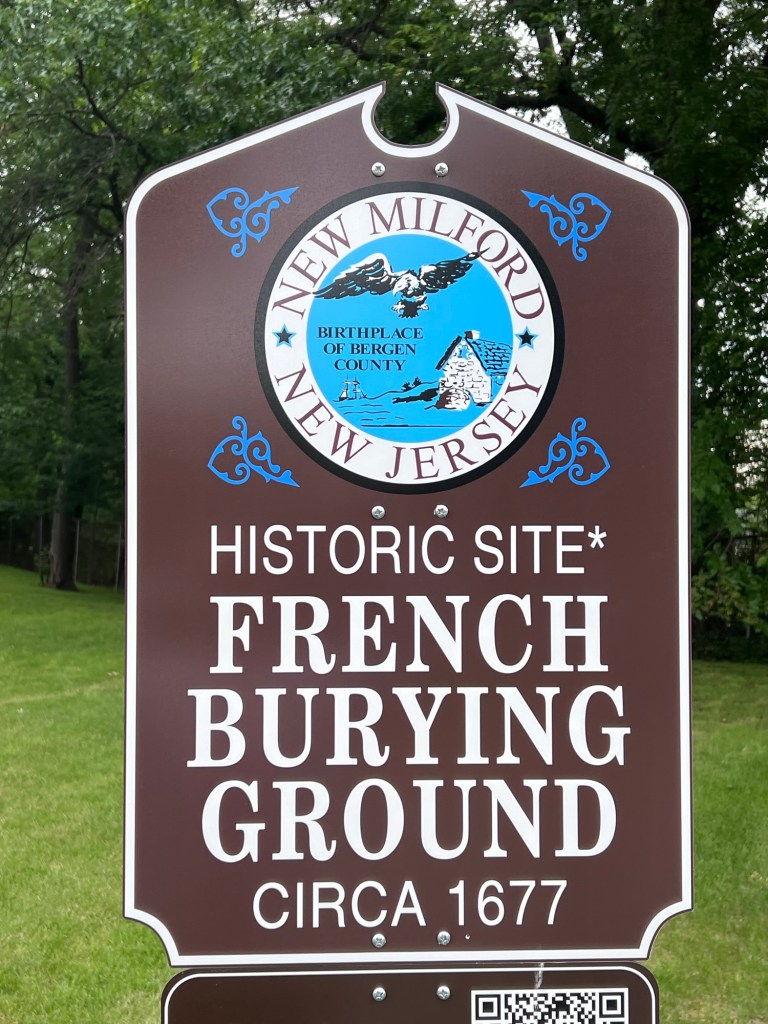
The historic plaque for the cemetery

The historic sign for the cemetery

The Cemetery is the final resting place of more than 3500 men, women, and children from the greater Dover area, primarily Dover, Randolph, Wharton, and Rockaway.  There are over 125 veterans from the War of 1812, the Civil War, The Indian Wars, the Spanish-American War, World War I, World War II, and Vietnam as well as well as peacetime veterans.  There are many of the founders of Dover, Wharton, and Rockaway, civic and industrial leaders, and ordinary citizens of the area.  Unfortunately, many burial records have been lost through the passage of time, fire, etc. so a full accounting of the burials will most likely never be realized as many people were buried without a stone memorial through choice or economic reasons (Orchard Street Gatehouse Historical Society website).
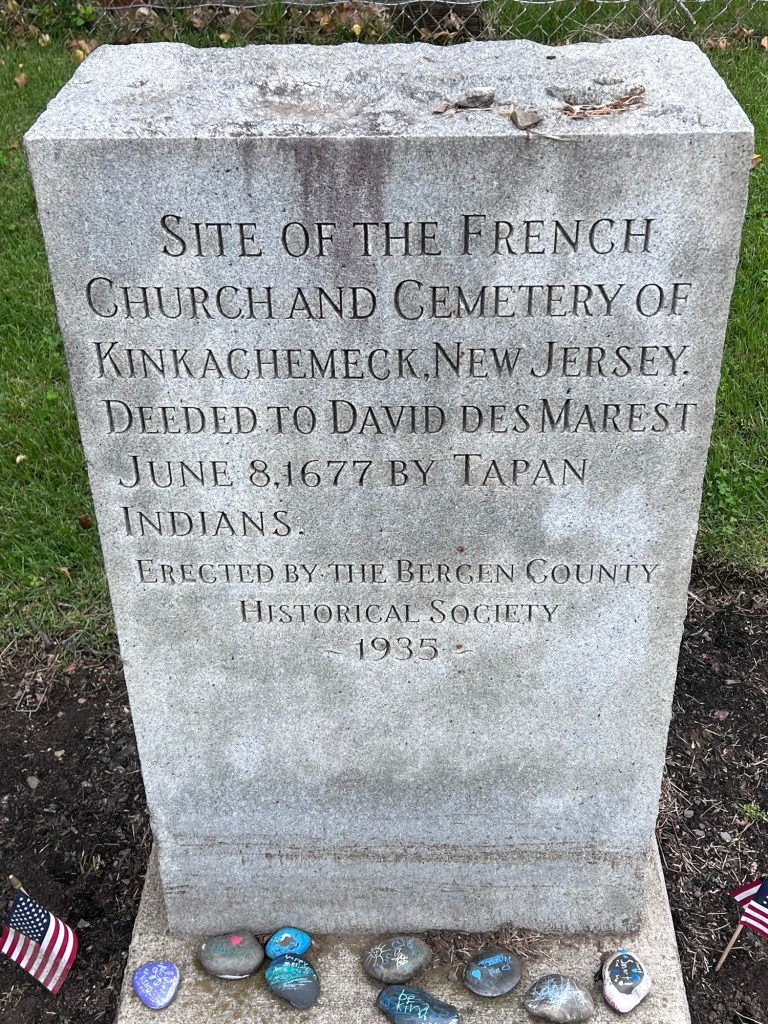
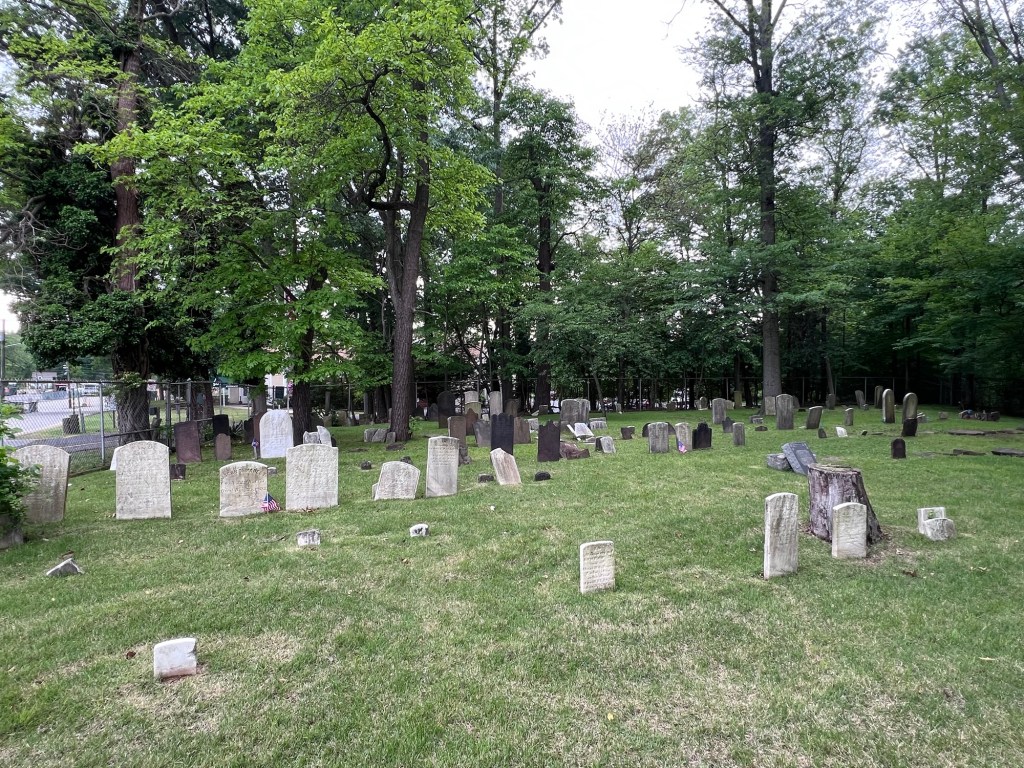
The entrance to the cemetery by the gate

When I visited the Orchard Street Cemetery, I noticed that most of the cemetery was designed into family plots, most gated or sectioned off. In each plot, you can see the generations of family members. There is a distinct change on the tombstones of family member marking the graves. Either is was prosperity of the family or just a sign of the times when people died where you see the changes in the tombstones and what they look like.

At least the families are housed together. Each of the family plots are marked by a gate or just a series of tombstones. Each of these family plots deserve respect and please remember this as you walk around the cemetery to pay your respects. There is a very positive feel to this cemetery.

I noticed the cemetery was broken into family plots separated by fencing

The Munson family plot

The Munson family plot

The Moller family plot

The Moller family plot

The Ford family plot

Deer watching me at the cemetery

The Hoagman Family plot

The Dickerson family plot

I had just come from the Bridget Smith House in Mine Hill and discovered that the Dickerson’s were once a prominent mining family who owned a large mansion just outside of Mine Hill.

The grave of Mahlon Dickerson

I found out from a member of the Cemetery Society that this is not the grave of the former Governor of New Jersey but a distant relative.

The Orchard Street Cemetery from the back of the cemetery

The Gatehouse at the front of the cemetery

The cemetery is an interesting look of how burying our dead has changed over the last 100 years.

The History of the Cemetery:

(this comes from the OrchardStreetCemeteryGatehouse.org website)

The Orchard Street Cemetery

The Orchard Street Cemetery in Dover, Morris County,  NJ was originally founded in 1851 when a group of men determined that a cemetery was needed in the Village of Dover, then part of Randolph Township.  One member of the group, William Young, the first baker in Dover who had his store on Dickerson Street traded his “garden plot” at the end of Orchard Street to this new endeavor in return for several building lots on Orchard Street.  The plot transferred from William Young to the Association was approximately one acre in size.

The inside of the cemetery

On September 11, 1854 following the passage of the “Rural Cemetery Act of 1854 by the New Jersey Legislature, the Dover Cemetery Association was founded during a meeting in the Village of Dover held at School House District No. 1.  The location of this school was to the east of Morris Street and to the south of the railroad tracks.  This puts it on the opposite side of the railroad tracks from the old Stone Academy.  The papers of incorporation were dated September 14, 1859 and duly registered with the County of Morris.

The inside of the cemetery

A deed dated February 22, 1855 was signed by Jabez Mills and his wife Hannah selling approximately 4.5 acres of their property to the Trustees of the Dover Cemetery Association.  This deed was received and recorded on February 27, 1855 by the County of Morris.  The acquisition of this property brought the cemetery to its final boundaries and size of 5.4 acres.  It is believed based on gravestones in the cemetery that the entire property was being used as a cemetery prior to the date of the recording of the deed.  Further, some sections of the cemetery property may have been used prior to 1851 due to gravestones that predate the founding of the cemetery.  It is also known that there was an earlier Dover cemetery, the Morris Street Burying Yard located south of the train tracks along Morris Street. 

The Munson family plot

It is believed that a number of the remains that were interred there were disinterred and moved to the Orchard Street Cemetery.  Many stones in Orchard Street predate the cemetery founding and it can be inferred that either there were burials in the cemetery confines before it was founded or these are reinterments from the Morris Street Burial Yard, or both.  In addition, there was later a small cemetery on Grant Street next to what was the Swedish Methodist Church.  Around the turn of the 1900’s, this cemetery was closed and again, the remains within were disinterred and many were removed to Orchard Street.

The entrance to the historic Orchard Street Cemetery

The old Gate House at the entrance of the cemetery