Tag: New York

Van Cortlandt House Museum in Van Cortlandt Park at Broadway & West 246 Street                                              Bronx, NY 10471

Van Cortlandt House Museum in Van Cortlandt Park at Broadway & West 246 Street Bronx, NY 10471

Van Cortlandt House Museum

Van Cortlandt Park at Broadway & West 246 Street

Bronx, NY  10471

(718) 543-3344

infor@vchm.org

Open: Tuesday-Friday 10:00am-4:00pm/Saturday & Sunday 11:00am-4:00pm

Admission: $5.00 for Adults/$3.00 for Seniors & Students/Children under 12 are free/General Admission is free on Wednesdays. Guided and group tours are available.

Review on TripAdvisor:

https://www.tripadvisor.com/Attraction_Review-g47369-d103501-Reviews-Van_Cortlandt_House-Bronx_New_York.html?m=19905

The Van Cortlandt House:

Welcome:

Van Cortlandt House during Christmas time

The entrance of the Van Cortlandt House decorated for the Revolutionary era Christmas

I visited the Van Cortlandt House Museum for the their Annual Christmas Decorated House event. The mansion was decorated for Christmas in the 1700’s so it was not overdone as it would during the Victorian times. The front of the house entrance was done with sprays of holly, mistletoe above the door and garlands of pine around the banister and fireplaces. The windows had candles in them and the dining room was set for Christmas luncheon in post-Revolutionary War era.

Van Cortlandt House VI.jpg

Van Cortlandt House for Christmas is Post-Revolutionary War in 2019

The entrance hall welcomes you to a Revolutionary era holiday season

While most of the house is represented during the Dutch era with floors with no rugs, vintage furniture and decorations and the second and third floors are set for family entertainment. The first floor is set for entertaining for the holidays with the formal dining room, family parlor and the formal living room for games and dancing. The formal dining room was the only room decorated post-Revolutionary War era.
van cortlandt mansion xmas ii

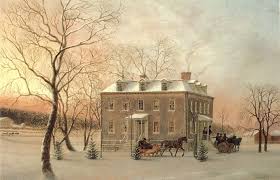
Van Cortlandt Mansion at Christmas 1800’s

The current entrance to the house from the back of the building

Until the Victorian era, Christmas was a more religious affair with church service in the morning and luncheon in the afternoon. Things were formal and less elaborate. The acts of gift giving, sleigh rides, tree decorating and card giving came during the affluence of Queen Victoria’s reign in the post Civil-War era. This is the reason why the house is decorated so simply and elegantly.

Dining Room set for Christmas lunch circa 1780’s

In 2019, the site celebrated the holidays with a Sinterklaas, a Dutch Christmas celebration, a candlelight tour and a reading from Santa Claus. Please check their website for more information on future events. The house was closed for most of the COVID years and nothing had been planned. The house was open in December of 2022 for touring again for the holidays but was not decorated as much as in the past.

In 2022, when the house reopened after a long period of COVID, the self-guided tours were back and you could tour the house at your own pace ($5.00 donation) and tour the three floors of furnished rooms. You can see how the family lived from the three generations that lived in the residence.

The tour starts at the front hallway where guests would be received for formal affairs and for business meetings with the head of the household.

You would be greeted by servants at the entrance of the home

On either side of the front hallway is the East and West Parlors where you would be directed where the family would receive you. The West Parlor would have been used for business calls and more informal meetings when meeting with the Van Cortlandt family. The family’s wealth would be on display with fine furniture, china and bric-a-brac that would show off the family’s merchant roots and business.

The West Parlor
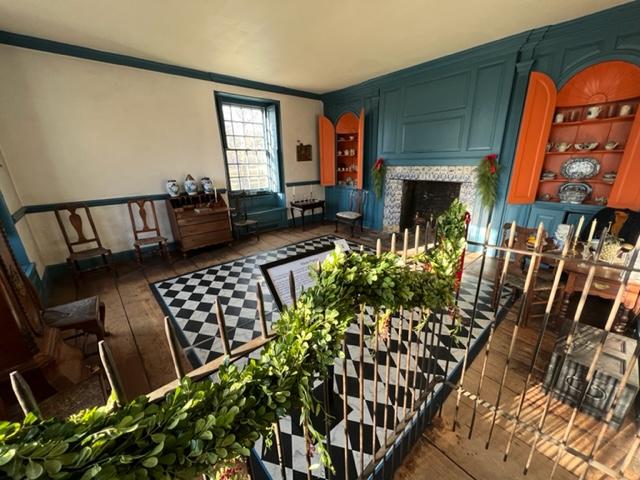
The West Parlor decorated for Christmas

The East Parlor on the other side of the entranceway would have been used for more formal affairs. The East Parlor is where the family would formally entertain guests with dancing, music and card playing. This is where long evenings of entertaining would take place and the family would enjoy their holiday celebrations.

The East Parlor
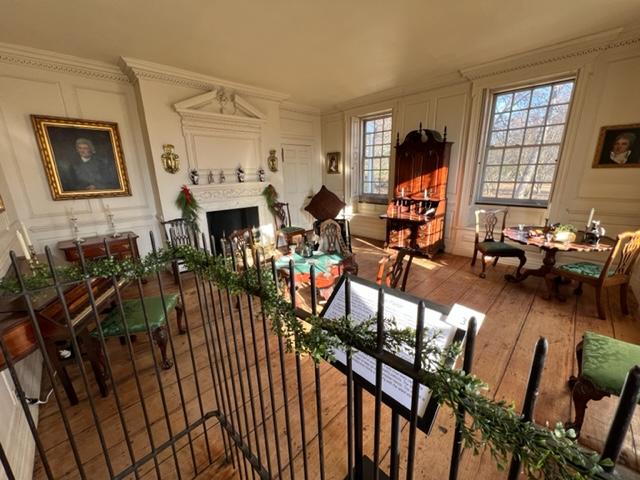
The East Parlor decorated for the Christmas holidays

The Dining Room was toward the back of the hallway and was decorated in the Empire Design of the late 1700’s to early 1800’s. The look is very similar to styles used today and the wallpaper is a copy from one of the styles used by the family that was imported in from France. The table was set for Christmas luncheon circa the late 1780’s.

The Dining Room

The Dining Room at the Van Cortlandt House

There are two sets of stairs to the second level of the house where the family bedrooms were located. There was the formal stairs and then there was the stairs that the servants used to go from floor to floor so that they would not be seen.
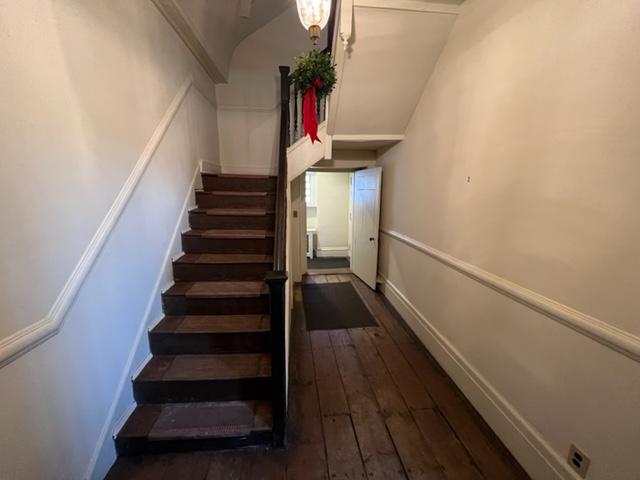
The steps upstairs to the second floor

On the second floor of the home are the bed chambers of the family. The main bedrooms for the family were located here and then the nursery and servants quarters were located on the Third floor of the home.

The West Chamber:
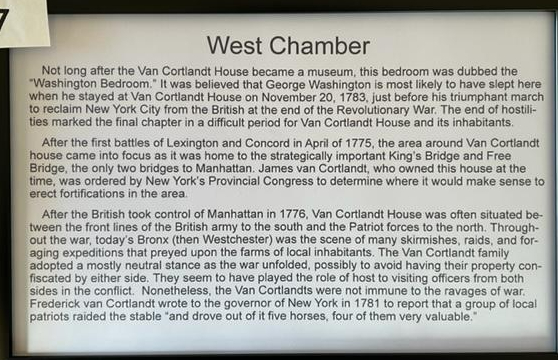
The bedroom

The ‘Washington Bedroom’ in the Van Cortlandt House

The East Chamber Bedroom:

The Bedroom:

The Landing of the stairs to the third floor lead to the Nursery, an additional guest room and the enslaved servants quarters. These were kept out of site from the other members of the household. It is a reminder of the pecking order of the household and the conditions that people lived under at this time.
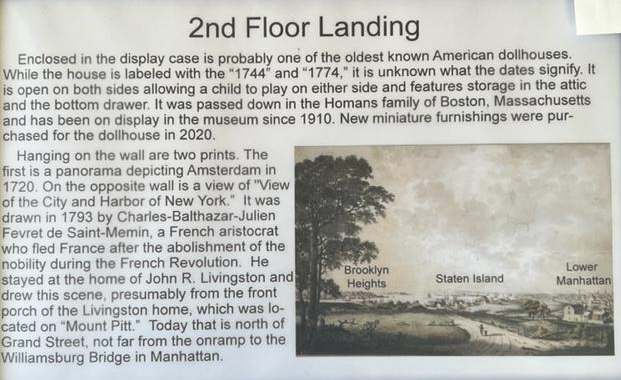
The Second Floor Landing leads to the nursery and servants quarters

The Dutch Chamber was formerly a guest room that is used to show life in early Colonial New York City:

The Dutch Chamber:

The Dutch Chamber shows early life in Colonial America

The Second Floor Setup:

The Nursery:
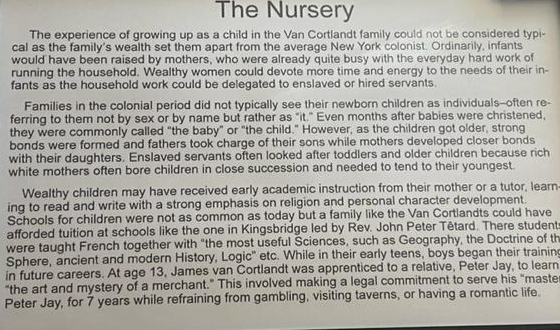
The nursery set up room:

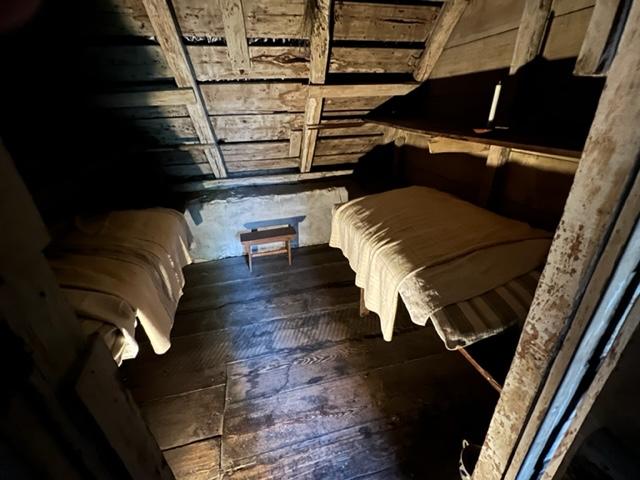
The servants quarters were to the back of the house and were not the most glamorous place to live in the house. There were drafty and not insulated. The amount of time a servant would be here would have been minimal.
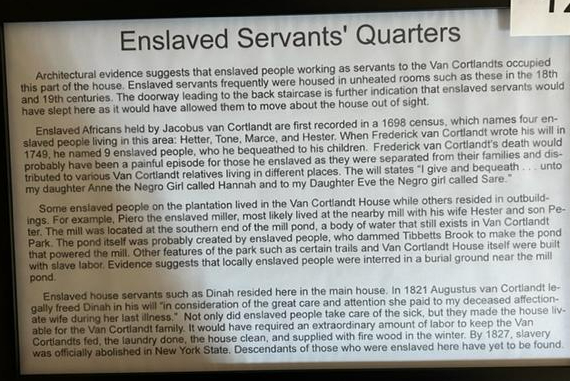
The servants quarters:

The servants quarters:
History of the Van Cortlandt’s:

The Van Cortlandt House Museum, also known as Fredrick Van Cortlandt House or Van Cortlandt House, is the oldest surviving building in New York City’s borough of The Bronx. The Georgian style house, begun in 1748, was build of fieldstone by Fredrick Van Cortlandt (1699-1749) on the plantation that had been owned and farmed by his family since 1691. Fredrick intended the house to be a home for him and his wife, Francis Jay and daughters, Anna Maria, 14 and Eve, 13. His sons, Augustus, 21 and Fredrick, 19, were not intended to be permanent residents of the house.

Sadly, Fredrick died before the new house was completed. In his will written in 1759, Fredrick left the house to his son, James Van Cortlandt (1726-1781) and a lifetime tenancy to his widow, Francis Jay Van Cortlandt (1701-1780).

Van Cortlandt House IV.jpg

The Van Cortlandt House gardens in the Summer

The Van Cortlandt’s were a mercantile family prominent in New York affairs. Fredrick’s father, Jacobus, established a thriving wheat growing and processing business on the plantation including a grist mill for processing the wheat into flour and a fleet of shallow draft boats to carry the flour from the south end his lake down Tibbet’s Brook and out to the Harlem and Hudson Rivers to market. During the Revolutionary War, the house was used by Rochambeau, Lafayette and Washington.

(From History of Van Cortlandt House and Museum)

In 1887, after 140 years of occupancy by the Van Cortlandt family and the community of plantation workers, the property was sold to the City of New York and made a public parkland. Before the house became a museum, it saw a variety of uses including as a temporary police precinct house and as a dormitory for ranch hands responsible for taking care of a herd of buffalo.

Van Cortlandt House historic marker

By 1895, The National Society of Colonial Dames in the State of New York expressed their interest in restoring the house as a museum open to the public. There was only one obstacle keeping the Colonial Dames from this important project, there was no provision in the New York State Law allowing the stewardship of a publicly owned building by a private organization. Undaunted, the first Society President, Mrs. Townsend, took the Society’s cause to Albany where on May 22, 1896 in the 199th session of the New York Legislature, Chapter 837 was approved by the governor and passed by a 3/5 majority to become law.

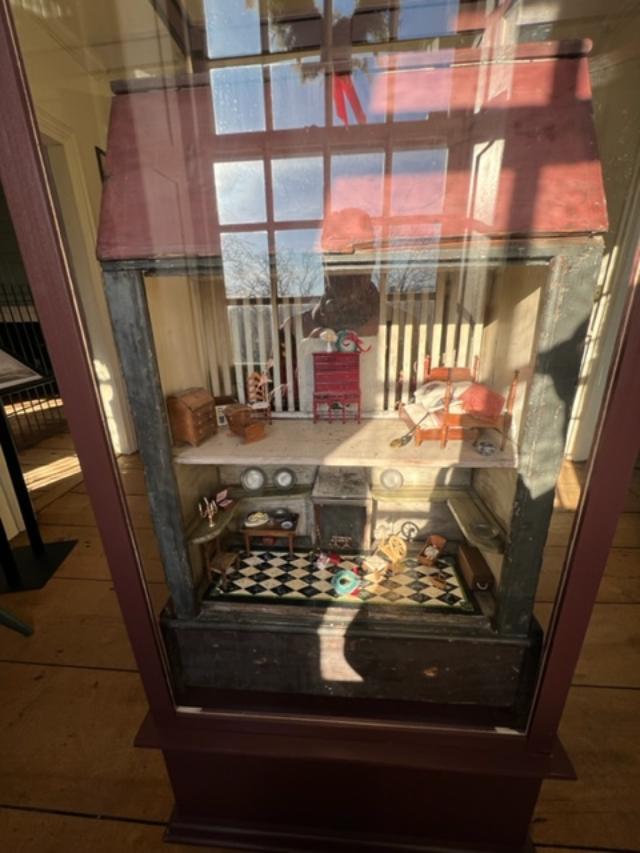
The Van Cortlandt House dollhouse
After nearly a year if repairs and restoration, Van Cortlandt House Museum was opened to great fanfare on May 25th of 1897. The original license agreement grained custody of the house to the National Society of Colonial Dames in the State of New York for a period of 25 years at a ‘peppercorn’ rent of $1.00 per year. Although the Society no longer pays the city rent, they remain, to this day as dedicated to Van Cortlandt House as they were in 1896.

Van Cortland Park.jpg

Van Cortlandt Park in the Summer Months

In 1967, Van Cortlandt House was added to the National Register of Historic Places and was designated a National Historic Landmark in 1967. The house was declared a New York City Landmark on March 15, 1966, recognizing the historic and architectural importance of both the exterior and interior.

(From the Van Cortlandt House Museum NSCDNY)

The Van Cortlandt House gardens during the winter of 2022
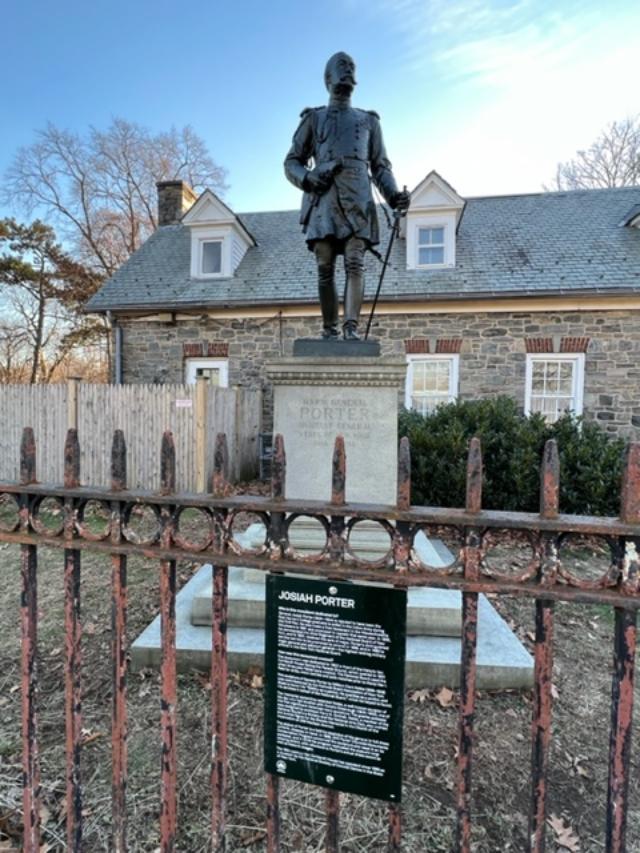
The General Porter Statute in front of the house

Gallery of New York School of Interior Design:   NYSID Gallery                                                        170 East 70th Street                                                             New York, NY 10021

Gallery of New York School of Interior Design: NYSID Gallery 170 East 70th Street New York, NY 10021

Gallery of the New York School of Design; NYSID Gallery

170 East 70th Street

New York, NY 10021

(212) 472-1500

https://www.nysid.edu/exhibitions

https://www.nysid.edu/

Hours: Tuesday-Saturday: 11:00am-6:00pm/Closed on Sunday and Monday

Admission: Free

My review on TripAdvisor:

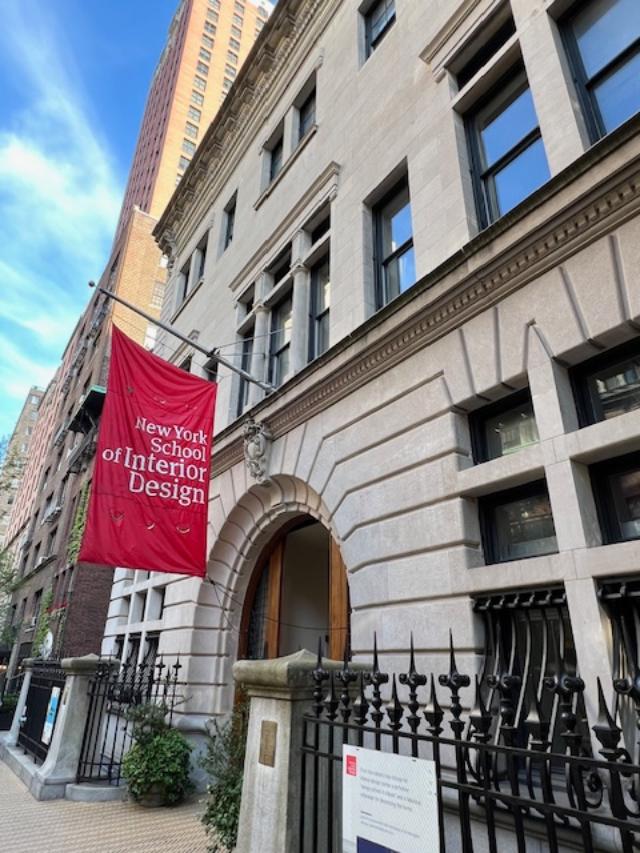
 New York School of Interior Design at 170 East 70th Street

I came across the Gallery of the New York School of design when walking the Upper East Side for my project, ‘MywalkinManhattan.com’ when covering the lower part of the Upper East Side.

The entrance to the Gallery

The New York School of Interior Design was displaying their Senior projects as most the college galleries I visited were doing at this time (this takes place between May and June around graduation time). It was interesting to see how the seniors at the college reused space in old buildings for new purposes. The seniors use their creativity to recreate these spaces. It is the student’s project to take a space and redesign it for a new purpose.

The entrance sign to the gallery

We had done similar projects in college but did not have the computer technology that students do today and they really went above and beyond the things we did back then. You can take this project into 3-D if you want and how real it looks. These kids are so talented that their creativity reminds me of us when we were in school. If only we had what they have today.

The Student Projects line the walls

Take time to look at the detail work and space design of each project. Some of the students even include samples of fabrics and stone/wood work that will be used for the surfaces.

The Gallery is located on the Upper East Side in the back of the school’s building on the first floor. The admission is free and the Gallery is open when the school is open. There are only two shows a year. You just have to show your ID to get into the galleries.

The student project along the walls

The student project along the walls

What I like about the museum is that you get to see the student creativity and how they imagine the space will be designed. The use of color and shape play a roll in all the designs. It looks like the students get to choose their own space to design.

The best part is the you get to go in for free with you ID and just enjoy the show and see the students creativity.

History of the Gallery/Museum at the College:

The New York School of Design’s gallery presents two public exhibits yearly on design and architecture. Exhibitions have included ‘Paris in the Belle Epoque’, rare photographs from the years 1880-1914; Perspective on Perspective, an exploration of artistic technique; ‘The Great Age of Fairs; London, Chicago, Paris, St. Louis’, selective coverage from the first World’s Fair in 1851 to the last in 1904; ‘Venice’s Great Canal’, architectural drawings of the buildings along the famous thoroughfare; ‘Stanford White’s New York’, a survey of that classicist’s many metropolitan buildings and ‘Vanishing Irish Country Houses’, a look into the preservation crisis facing these not infrequently grand structures.

The gallery’s Thursday-evening lectures have included ‘Palladio’s Villas’; ‘Beaux-Arts New York’ and a survey of the Grands Projects undertaken in Paris during the tenure of French President Francois Mitterrand.

(New York School of Interior Design Website)

The Hewitt Gallery of Art                       Department of Art & Art History/                        Marymount College Manhattan                                221 East 71st Street                                            New York, NY 10021

The Hewitt Gallery of Art Department of Art & Art History/ Marymount College Manhattan 221 East 71st Street New York, NY 10021

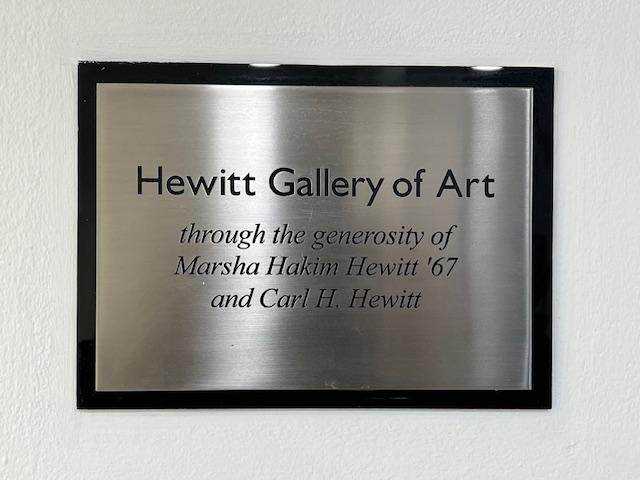
The Hewitt Galley of Art

Department of Art & Art History

Marymount College Manhattan

221 East 71st Street

New York, NY 10021

(212) 517-0400

http://www.mmm.edu/departments/art/the-hewitt-gallery-of-art.php

Admission: Free

Hours: Open when the building is open

My review on TripAdvisor:

https://www.tripadvisor.com/ShowUserReviews-g60763-d32972661-r994090482-The_Hewitt_Gallery_of_Art-New_York_City_New_York.html?m=19905

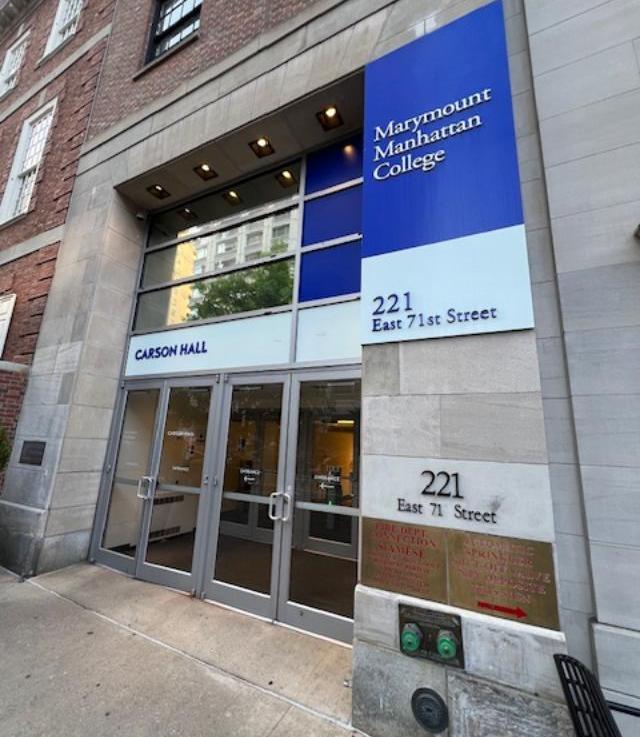
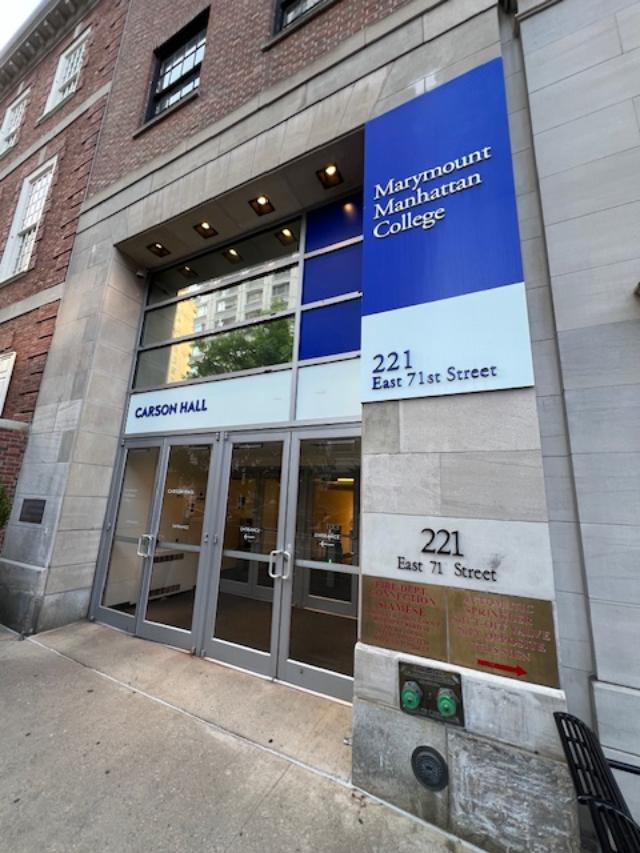
The entrance to Marymount College’s Carson Hall where the gallery is located.

I came across The Hewitt Gallery of Art when I was exploring the Upper East Side for my project, ‘MywalkinManhattan.com’ and found myself walking into the Department of Art & Art History on the Marymount Manhattan College campus.

The Hewitt Gallery on the Marymount Campus

The Hewitt Art Gallery:

The Hewitt Gallery of Art

In conjunction with the exhibitions, gallery receptions give students the opportunity to engage with professional artists, critics, collectors and curators. Many of the exhibiting artists are also guest presenters in our Art and Art History classes.

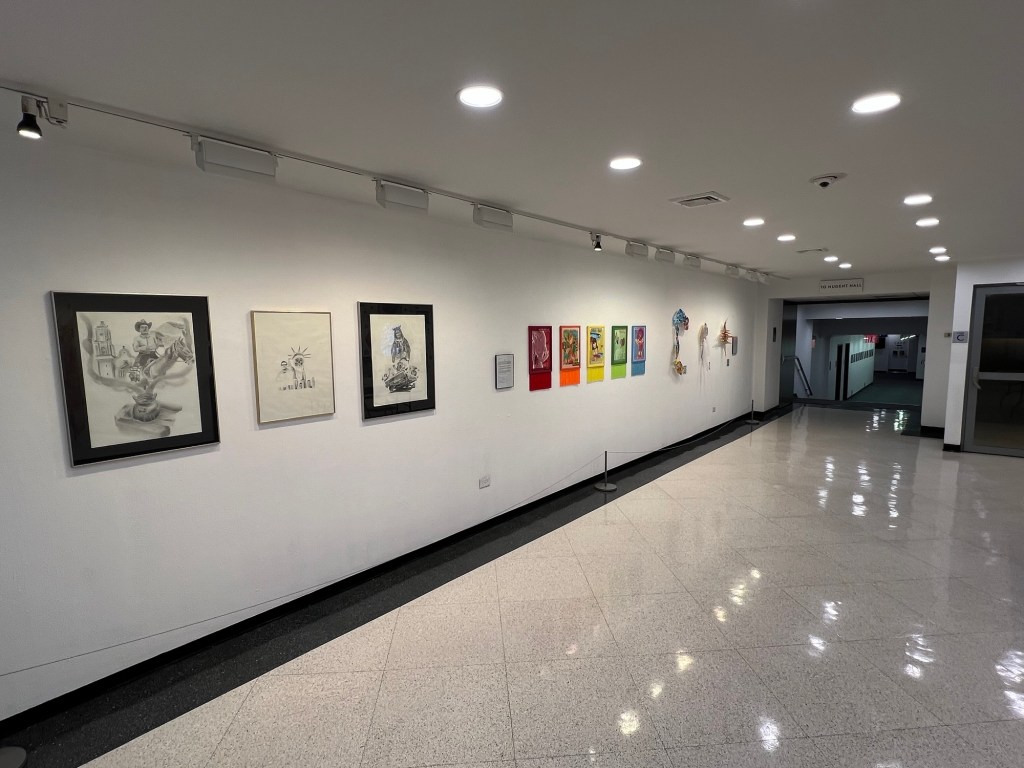
This small but unique gallery was showing the Senior Class’s Thesis Show where several members of the Senior Class were showing their final projects in the three hallways of the gallery. The students did a good job mounting their works and each was different in their own way, some pictures, some video, some painting. You got to walk through the first floor to admire the work and the best part was that the gallery was free.

The main gallery on the first floor

The student artwork in the back gallery

The Hewitt Gallery of Art, comprised of the Esplanade and the adjacent Black and White Galleries in Nugent Hall and Carson Hall, offers the Marymount Manhattan community exposure to professional artists and to the larger art world.

The Gallery is known in the New York art community as an alternative exhibition space showcasing contemporary art of emerging and mid-career artists. Innovative and challenging works of art reflecting a wide range of concerns and styles are presented in changing thematic exhibitions. Recent professional exhibitions have been ‘Altered States’, ‘Art & Politics: See it Now!’, ‘The Selfie & Others’, ‘Self-similarity in Math’, Nature and Art’ and ‘The Mind’s Eye: Sight & Insight’. The current exhibition that I visited in 2025 was “Echoing Identities” Light & Form”.

The Black and White Galleries

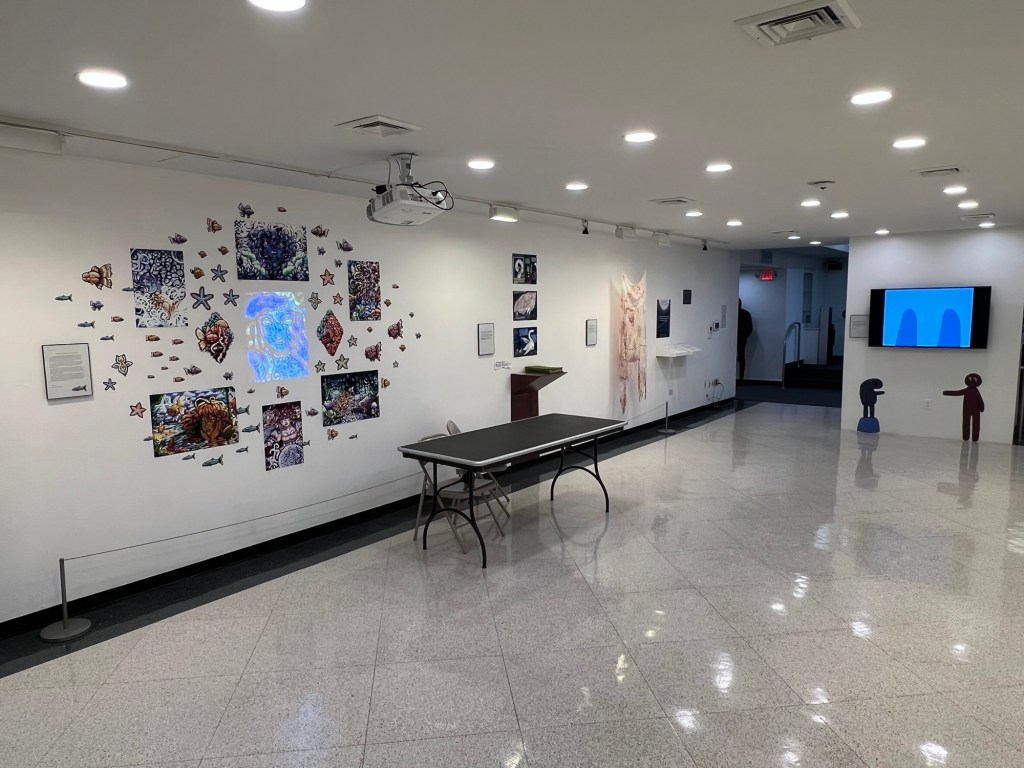
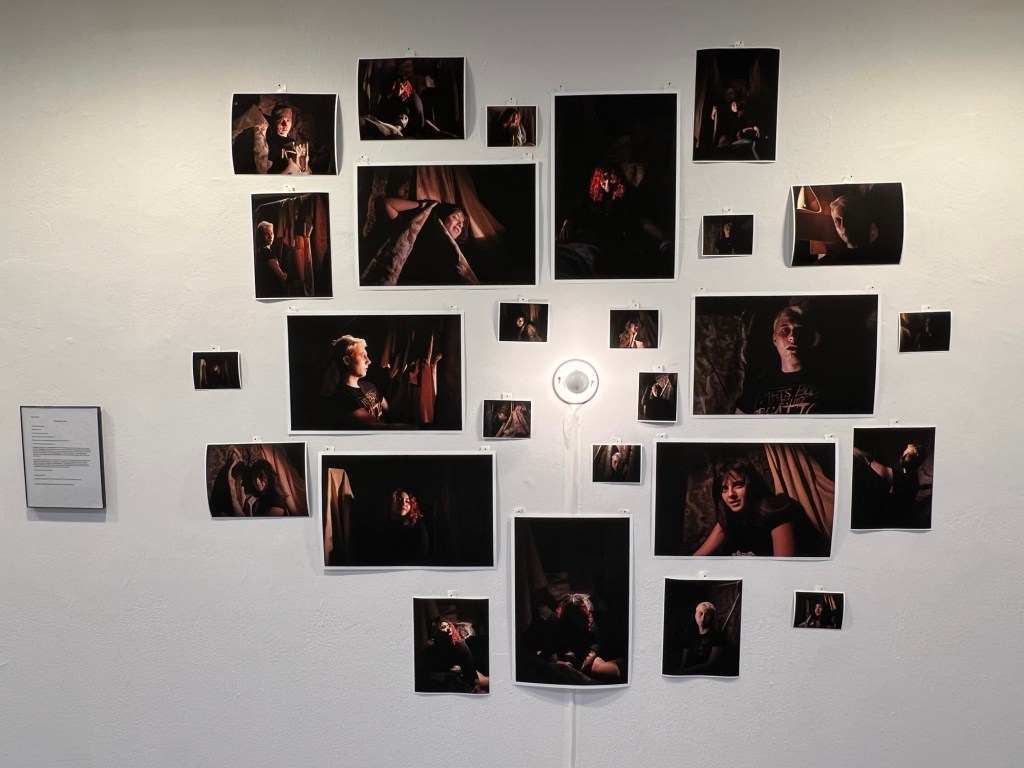
The Echoing Identities: Light & Sound exhibition

When I visited the Gallery in 2025, the Graduate students were exhibiting their Senior project and the show was entitled ‘Echoing Identities: Light & Form’. Each student explored their work with their own original pieces.

The entrance of the Gallery to the ‘Echoing Identities

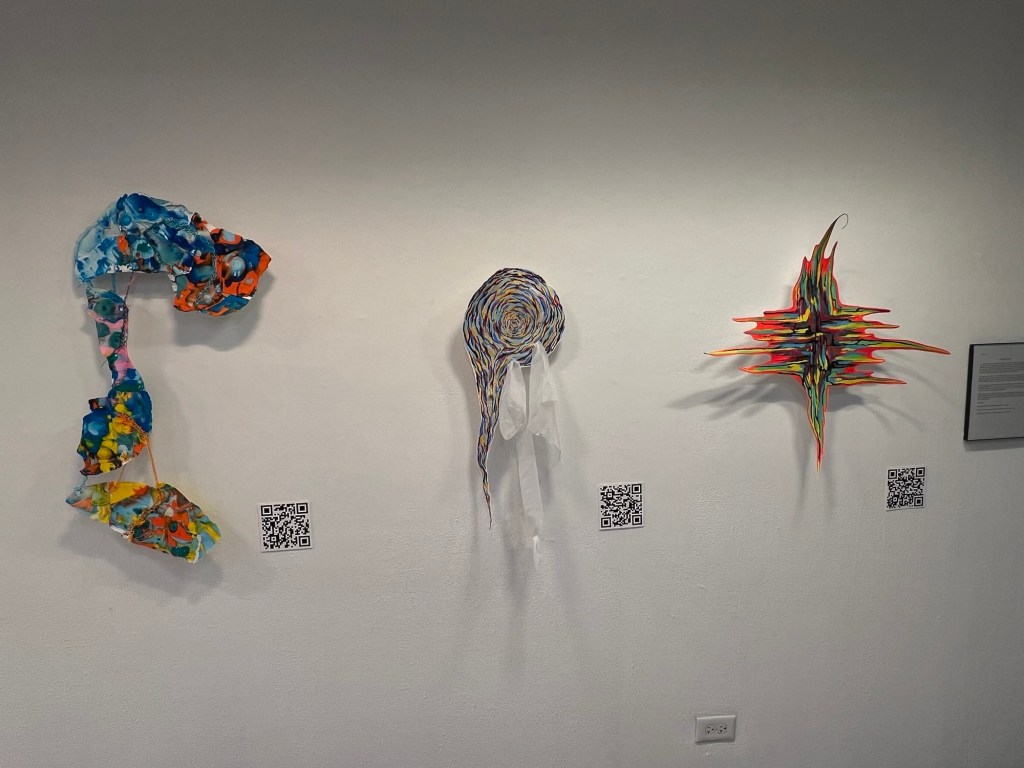
The exhibition had many different mediums from cloth and textiles to sculpture and print. There was also a mixture of video and printed media.

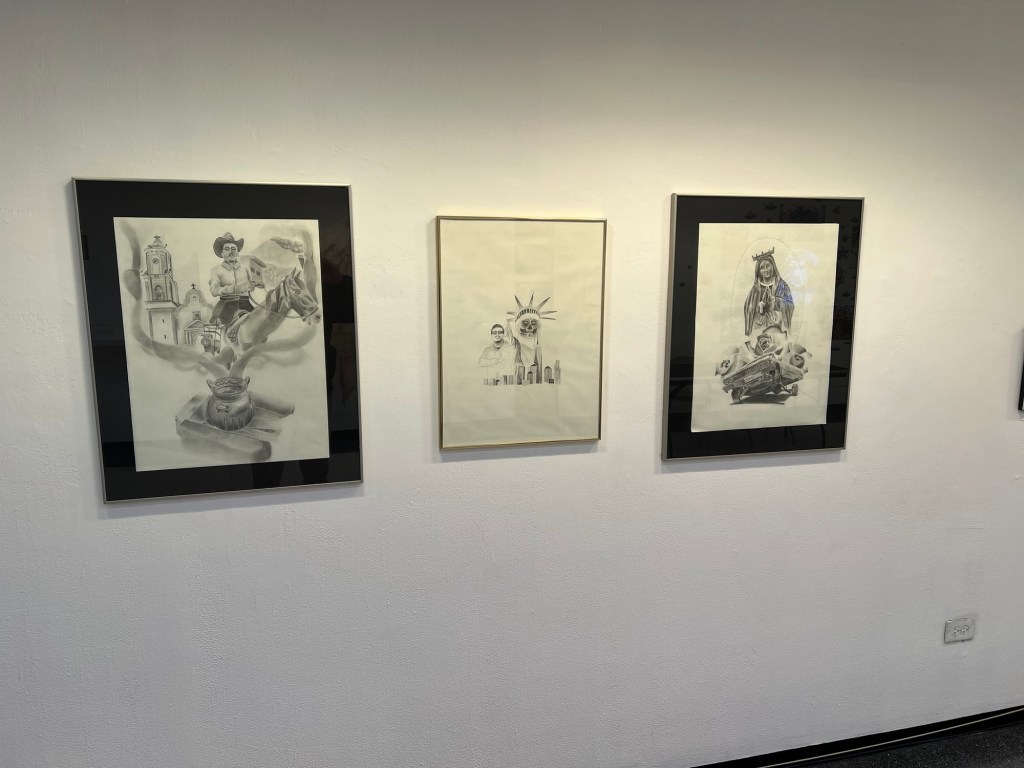
The Mexican inspired works

The sign for Gray Laxton’s work

The works by artist Gray Laxton

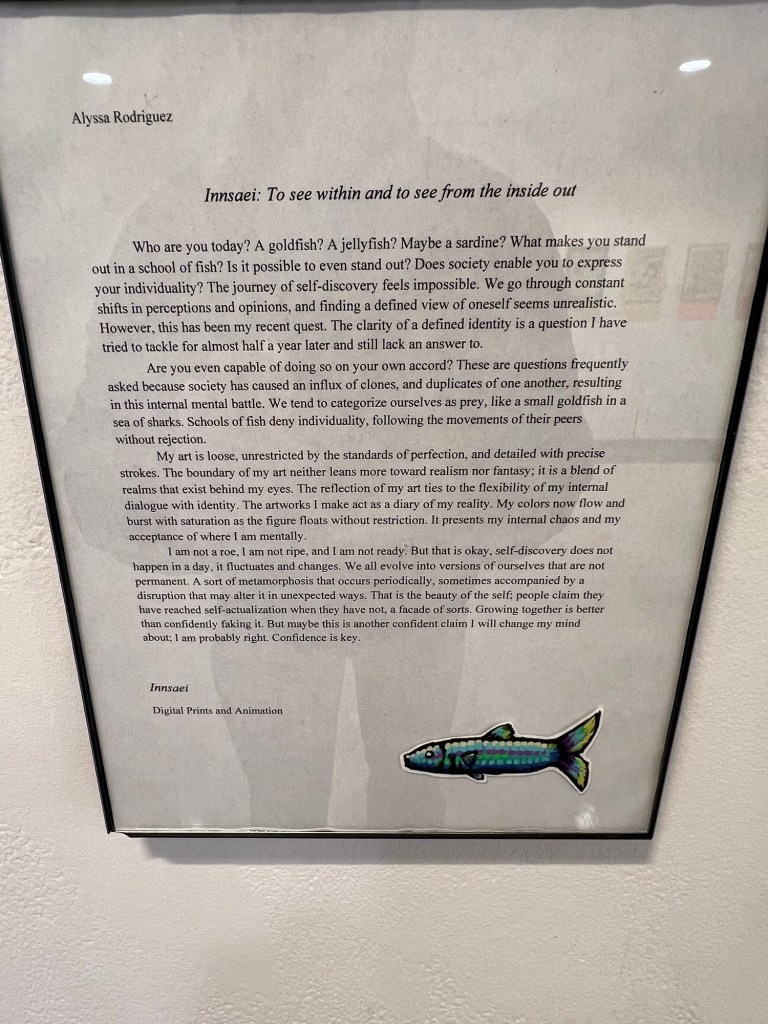
The sign for artist Alyssa Rodriguez

The piece by artist Alyssa Rodriguez

The sign for Alice Linkh’s work and my favorite in the show ‘Alice and Compony’ based on a story that she created and a book her grandmother created for her based on the story she told her after a dream she had. I loved both the book and the art that was related to it.

The original artwork for ‘Alice and Company’:

The book Alice Linkh’s grandmother created

The book and artwork for ‘Alice and Company

I thought it was a cute story of a little girl who worked with animals to repair the moon when it was damaged. I thought it was a clever children’s dream that made an interesting story.

The room off to the side of the Gallery, the Black and White Gallery offers more contemporary works of the students.

The Black and White Gallery

The works of some of the graduating students

The sign for ‘Finding the Sun’ by artist Ethan Foley

The work ‘Finding the Sun’

One of the clothing art sculpture

The students did a great job on their final projects. Each student gave their perspective in a very original way.

History of the Museum:

The Hewitt Gallery of Art is a laboratory for and an extension of the pedagogy of the Art Department programs.

The Hewitt Gallery provides opportunities for art majors to gain first-hand experience in exhibiting their Senior Thesis projects, as well as having solo exhibitions in their spring semester. Juniors also exhibit in an annual group exhibition and students are able to curate and organize shows in conjunction with their mentors and the Gallery Director.

Americas Society Museum                                   680 Park Avenue                                                 New York, NY 10021

Americas Society Museum 680 Park Avenue New York, NY 10021

Americas Society Museum

680 Park Avenue

New York, NY 10021

(212)628-3200

https://www.as-coa.org/visual-arts/arts_americas_circle

https://www.as-coa.org/arts-culture-americas-society

Open: Wednesday-Saturday: 12:00pm-6:00pm/Closed Sunday-Tuesday
Varies with exhibitions

Admission: Free

http://www.as-coa.org/visual arts

My review on TripAdvisor:

https://www.tripadvisor.com/Attraction_Review-g60763-d548518-Reviews-Americas_Society-New_York_City_New_York.html

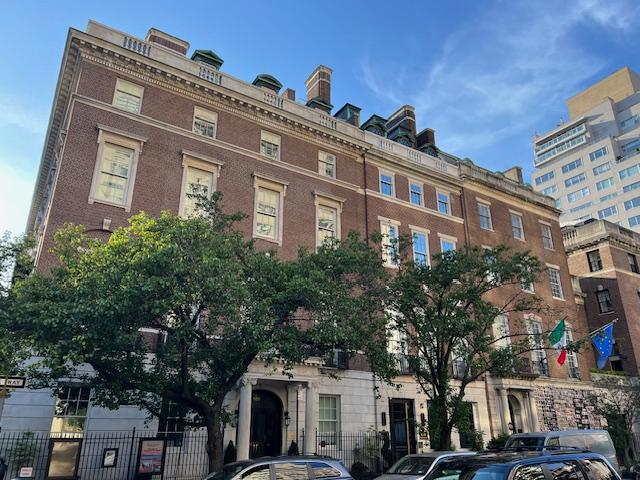
 The Americas Society Museum at 680 Park Avenue

I came across the Americas Society Museum when walking on Park Avenue on the Upper East Side for my walking project, “MywalkinManhattan.com”. I noticed the sign for the exhibition, “The Metropolis in Latin America 1830-1930”. The exhibition was on the transformation of cities in Latin America from their traditional path starting with Spanish colonization to a more European layout that was developed between the Revolutionary and Civil Wars with the ‘Gilded Age’ thrown in as the third generation of settlers became long time citizens and became more wealthy.

They wanted to live like they were still in Europe. It showed how the cities developed over time with planning and then with extended, unintended growth that lead to the outlaying slums. Very interesting exhibition (now closed).

Americas Society Museum II

A exhibition at the Americas Society Museum

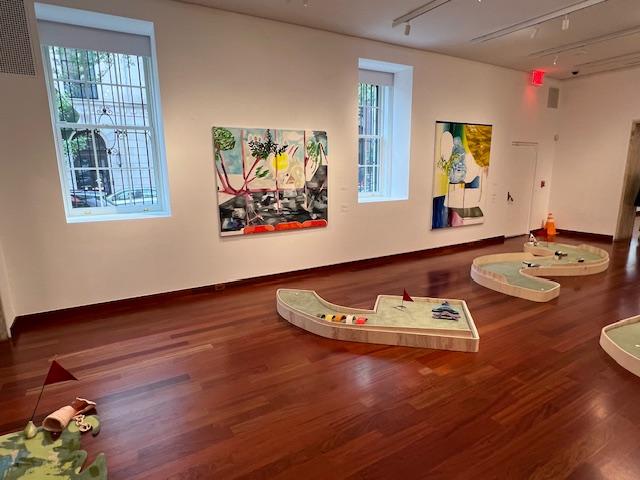
In the summer of 2024, the museum had an interesting exhibition on artist Alejandra Seeber. Her colorful interactive works had some of the patrons playing golf inside of the galleries. I thought her work was vibrant and exciting. She draws you in with the bright invigorating colors and on the floor pieces of carpet whose colors lead your golf balls from hole to hole as you travel the exhibition.

The museum press release on the Alejandra Seeber exhibition:

The description of the show:

(from the museum’s website):

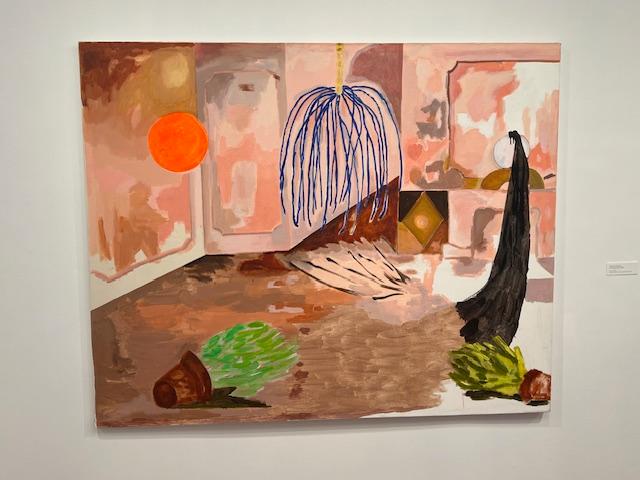
Americas Society presents the first solo exhibition and career survey of the Argentine artist Alejandra Seeber in New York, starting June 5. Seeber (b. 1969, Buenos Aires, Argentina) is a painter who centers representations of various spaces to explore the tension between representation and abstraction in painting. Seeber utilizes bold color and gesture to examine liminal spaces within built and domestic environments. Later work veers further into abstraction, implementing visual devices like Rorschach drawings or knit grids to structure the composition. 

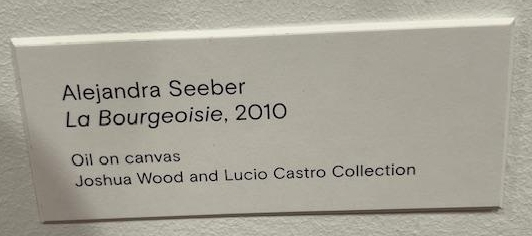
My favorite painting in the show by Alejandra Seeber “La Bourgeoisie”

The sign of the painting

The exhibition  pairs these paintings with Seeber’s contemporary explorations of the built landscape with an installation. This survey of her work is organized around a playable golf course installed inside the gallery space in which visitors will be invited to play golf as they walk through the show. The golf obstacles become active sculptures in the exhibition, creating porous boundaries between artwork and audience. This playful environment manifests the explorations of edges, doorways, windows, and borders in the artist’s painting. As they play, visitors will be able to trace Seeber’s artistic trajectory and see how her interventions in the form and practice of painting continue to this day. 

The vibrance of the art with its colorful details

The interactive art in the gallery

The art golf course

History:

The Americas Society is an organization dedicated to education, debate and dialogue on the Americas and is located at 680 Park Avenue on the Upper East Side of Manhattan. The Americas Society was established by David Rockefeller in 1965. The Americas Society promotes the understanding of the economic, political and social issues confronting Latin America, the Caribbean and Canada; its mission is “to increase public awareness and appreciation of the diverse cultural heritage of the Americas and the importance of the inter-American relationship.

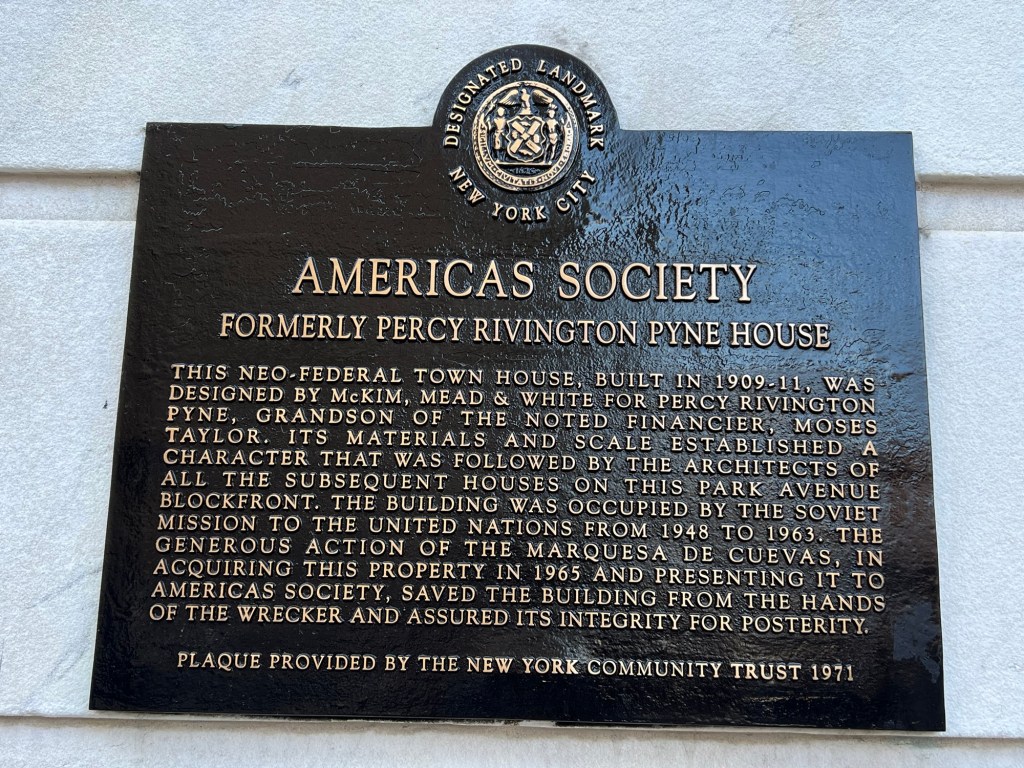
The buildings historical past as the Percy Rivington Pyne House

https://en.wikipedia.org/wiki/Percy_Rivington_Pyne_I

The Americas Society Building is listed in the National Register of Historic Places. The building was previously the Percy Rivington Pyne House before serving as the Soviet Mission to the United Nations until its current usage. along with the neighboring buildings of the Queen Sofia Spanish Institute and the Italian Consulate General, the house constitutes one of the few remaining unified architectural ensembles on Park Avenue. The Center for Inter-American Relations was later to be absorbed into Americas Society 1985.

Activities:

The Americas Society organizes interviews, speeches, podcasts, exhibitions, readings and musical performances at its headquarters and reports on Congressional updates and local events. Many events are held at the Salon Simon Bolivar, an expansive room in the building’s Neo-Federal style with wide windows, a 15 foot ceiling and wood-paneled and silk fabric walls.

Americas Society Museum III

An Exhibition at the museum:

The Americas Society produces the MetLife Music of the Americas (concert series) to showcase the diversity of styles and genres of music in the Americas. The concert series is held at the Society’s headquarters.
The Americas Society, together with Council of the Americas, produces the publication ‘Americas Quarterly’, a policy journal for the Western Hemisphere. The Americas Society also publishes ‘Review Magazine’, which was first founded in 1968. ‘Review Magazine’ is an English language journal for literature from Latin America, the Caribbean and Canada. ‘Review Magazine’ also helped support the first English translation of “One Hundred Years of Solitude” by Gabriel Garcia Marquez as well as other translations.

The Americas Society has also organized working groups on the topics of women’s empowerment and leadership. Cuba, energy policy, immigration, trade facilitation and Venezuela.

Americas Society Museum

Council of the Americas (COA)

Is the premier international business organization whose members share a common commitment to economic and social development, open markets, the rule of law and democracy throughout the Western Hemisphere. The Council’s membership consists of leading international companies representing a broad spectrum of sectors, including banking and finance, consulting services, consumer products, energy and mining, manufacturing, media, technology and transportation.

(This information was taken directly from Wiki and Americas Society publications)