I always admire Cleopatra’s Needle whenever I am touring Central Park West after an afternoon at the Metropolitan Museum of Art. The obelisk sits in back of the Metropolitan Museum of Art on Fifth Avenue and the pathways behind the museum lead to the site.
It is one of the few place where you can see hieroglyphics up close unless you are in Egypt and the sad part is that the natural surroundings are wearing them out. Still it is one of the most interesting outside artifacts that Manhattan and New York City has on display. Take time to observe all four sides of the obelisk and observe the writings.
Sometimes I think the tourists miss this interesting artifact and how it got here from Egypt.
The History of Cleopatra’s Needle:
(From Wiki)
Cleopatra’s Needle (obelisk) was erected in Central Park, just west of the Metropolitan Museum of Art on February 22, 1881. It was secured in May 1877 by Judge Elbert E. Farnam, the then United State Consul General of Cairo as a gift from the Khedive for the United States remaining friendly neutral as the European powers, France and Britain, maneuvered to secure political control of the Egyptian government.
The obelisk is a twin of the obelisk given to London at the same time and come from the ancient city of Alexandria. The name is a misnomer as they have no relationship with the Ptolemaic Queen Cleopatra VII of Egypt and were already over a thousand years old in her lifetime (please see the Wiki link attached to the blog for more information on the obelisk).
The obelisk is free to the public and can be seen by taking the path behind the Metropolitan Museum of Art. It is open all day.
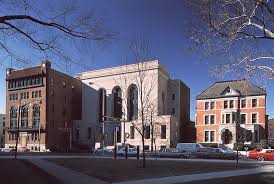
The Newark Museum at 49 Washington Place in Newark, NJ.
I have been a member of the Newark Museum for 29 years and have enjoyed the experience. There is a lot of things to do at all times of the year.
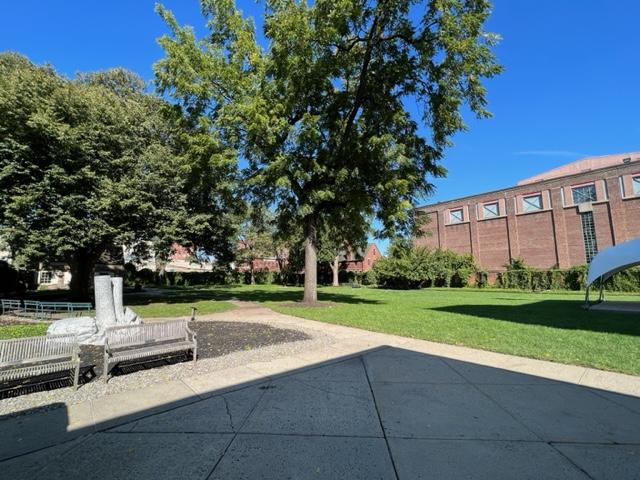
During the Summer months, I enjoy “Jazz in the Garden” where local and international jazz musicians perform in the beauty of the back garden of the museum under the trees. These almost hour and a half performance can be enjoyed on sunny, clear days in the gardens and in the auditorium on a rainy afternoon. It is something I look forward to every summer.
Jazz in the Garden at the Newark Museum. The gardens are amazing in the summer months.
The Newark Garden in the back of the museum.
Jazz in the Garden was a big event before the pandemic. It is on hiatus for now. It had resumed after COVID with a fee and did not happen in the Summer of 2023. Still, I had enjoyed these concerts for years.
I heard Vanessa Rubin perform at the last ‘Jazz in the Garden’. She is amazing.
The New entrance opened where the original once was:
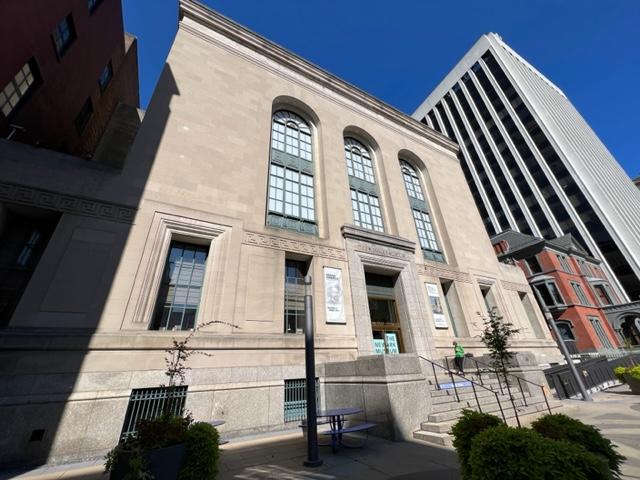
The new entrance to the Newark Museum
The video celebration of the new entrance reopening
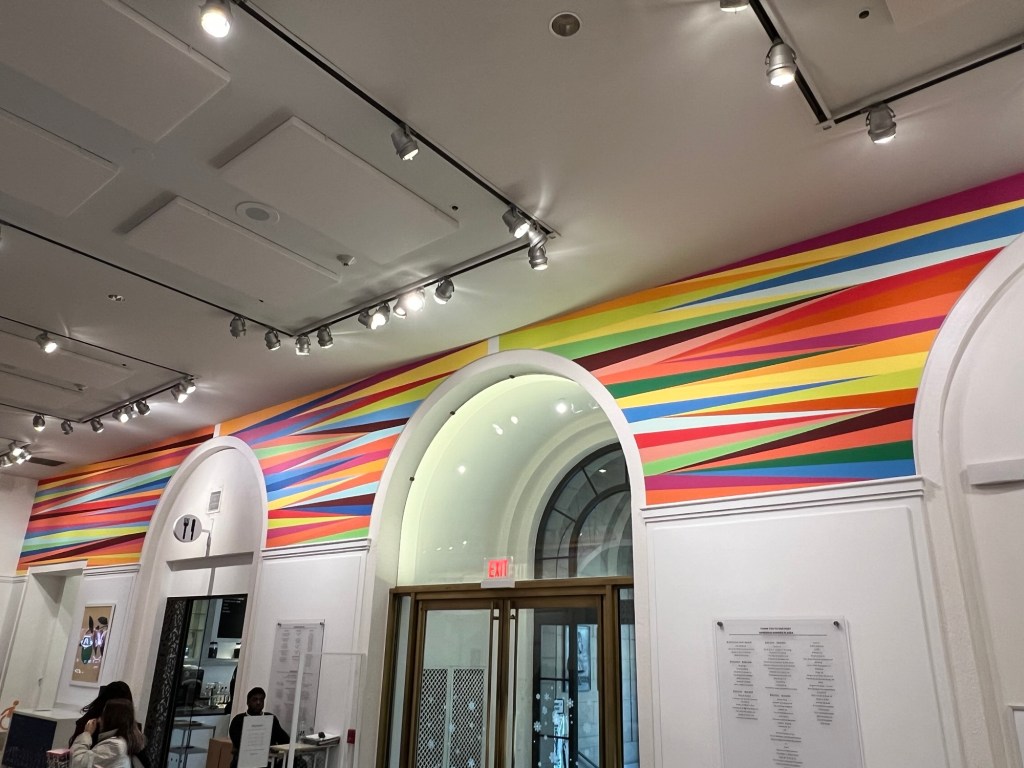
Entering the foyer of the museum
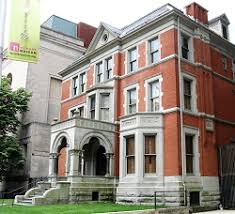
During December of 2019 I attended a holiday afternoon tea at the Ballantine House, the historic home attached to the museum. The Ballantine’s were one of the oldest families in Newark, NJ and were once major brewers in the city. They were considered High Society in Newark and the home, and its renovation reflect that.
The outside of the Ballantine House in 2019.
A new tradition was started this year with a Holiday Afternoon Tea and tour of the mansion. The caterer did a nice job with the food and their was plenty of it. We had finger sandwiches, various scones and pastries and different varieties of teas.
After the tea, we had a tour of the house and a talk about how the Ballantine’s and their crowd celebrated the holidays. They would be an open house for the neighbors during the holidays and then on Christmas day were church services in the morning and then a lunch afterwards with the family.
Ballantine House set for the neighborhood open house
Entering the newly renovated Ballantine House.
Another nice event is the Members Mornings of specialty tours of the galleries on a Sunday morning and a light breakfast afterwards. These are really nice, and you get a more in-depth view of the galleries with the docents. This is where I highly recommend membership.
The Ballantine House model
The Ballantine House reopened after a two year renovation of the property and I toured it in January of 2024 to see the redesign of the home. The home had been cleaned and new signage and carpeting had been added to the site. They were new signs with interpretations of the house with some major design changes.
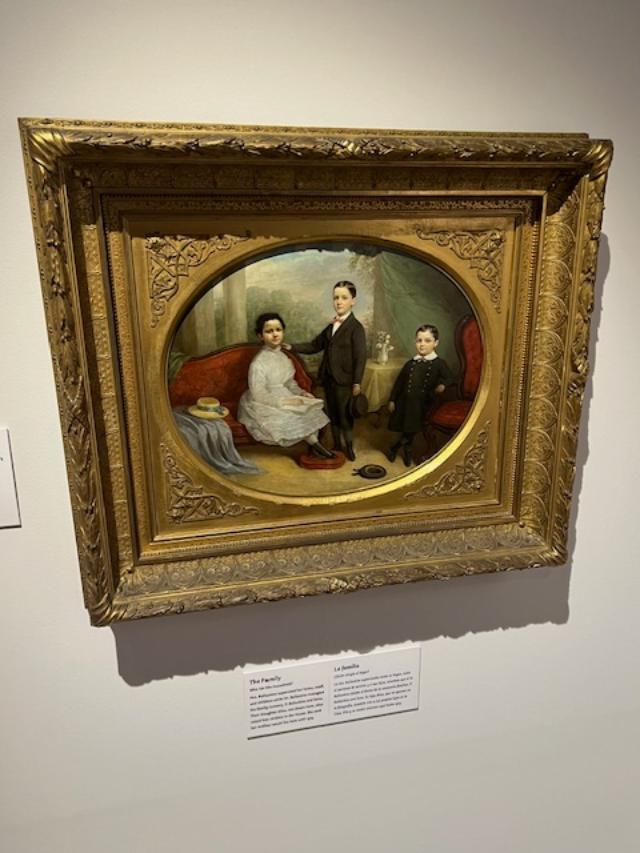
The Ballantine children in portrait.
The house had gotten some much needed renovation work and cleaning and the house looked sparkling and looked like someone had just moved in. In 2024, the house continued its tradition of being decorated for the Christmas holidays but with a twist to it
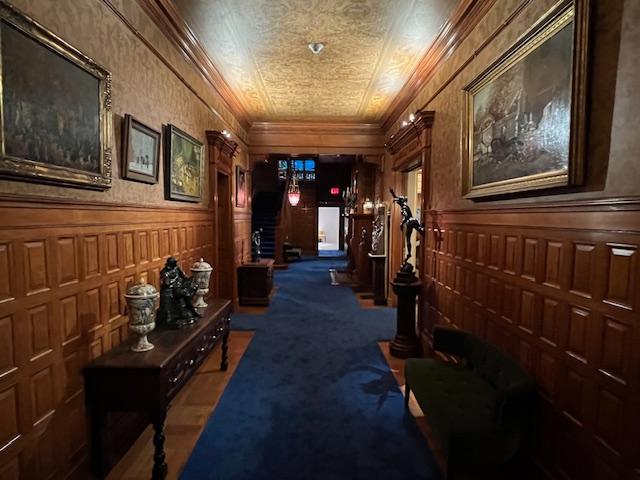
The Foyer of the Ballantine House
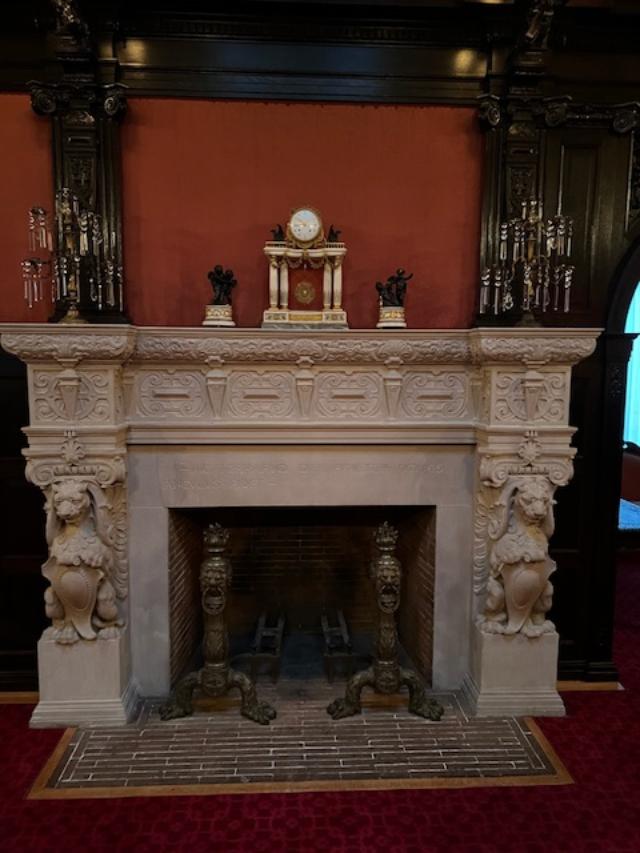
The fireplace in the Foyer of the home at the holidays
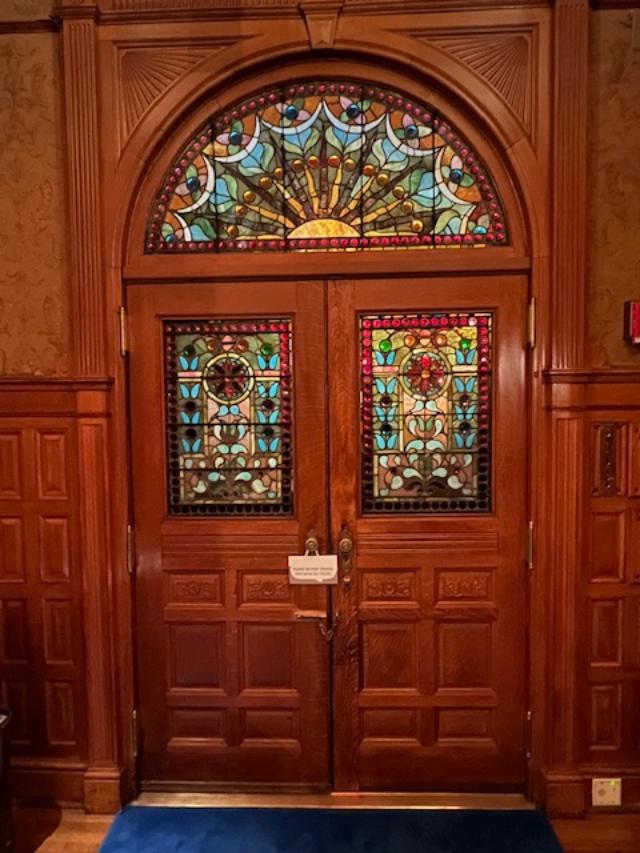
The front door ablaze with colors
The Reception/Receiving Room for guests.
The Receiving Room at the Ballantine House.
The Reception Room decorated for the holidays
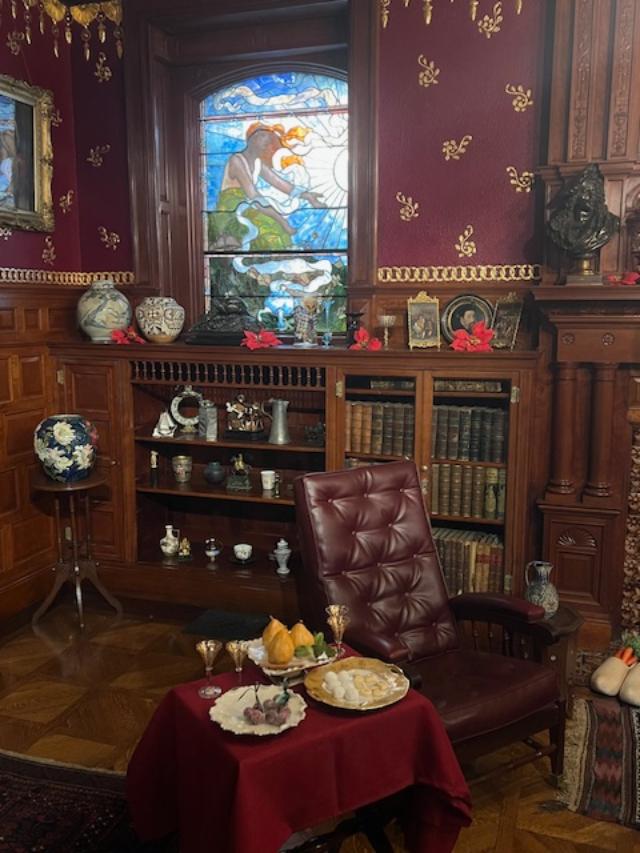
We started the tour clock wise through all the rooms on the first floor starting with the Reception Room where guests would be received for a visit and would wait until the Ballantine’s were ready to greet you. We then moved onto the Library where the whole family would gather in the evenings to read and converse with one another in a more casual setting.
The Library
The Library at the Ballantine House
Mr. Ballantine’s chair and desk in the Library of the Ballantine House.
The Library decorated for the Christmas holidays:
The Library decorated for the Christmas holidays:
The Library decorated for the Christmas holidays:
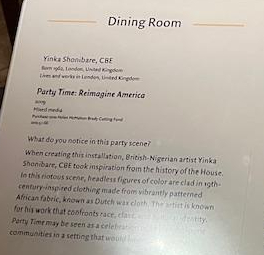
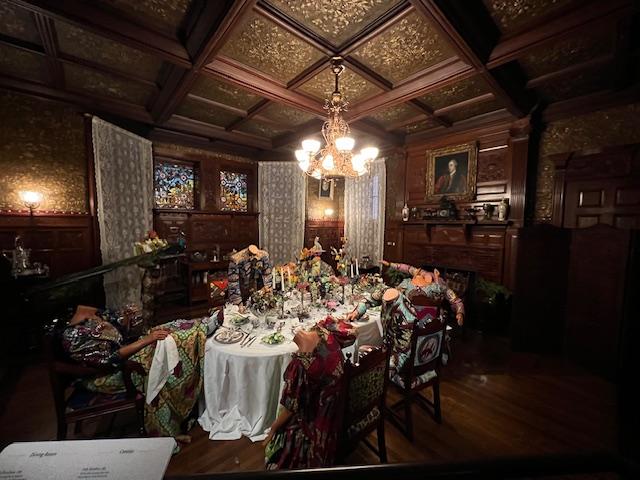
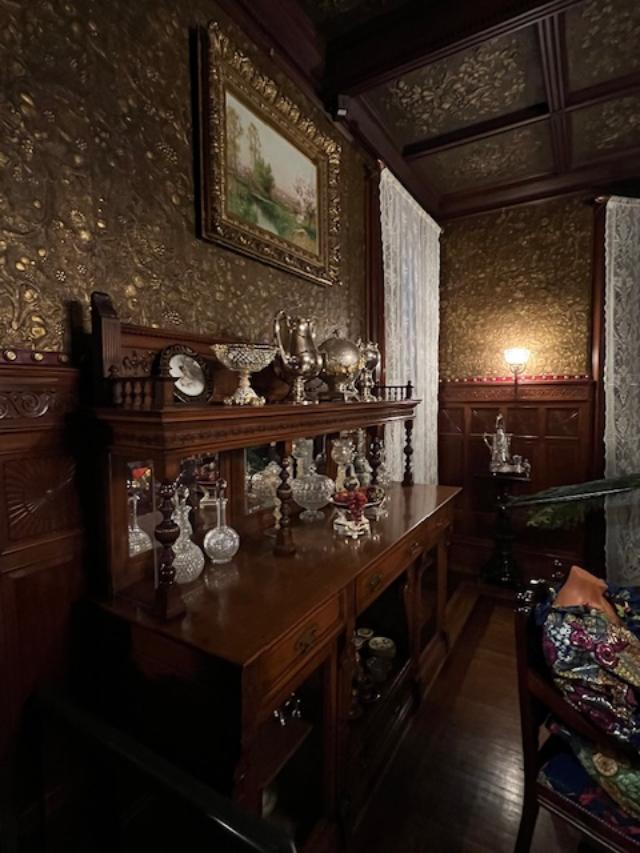
The Dining Room
The Dining Room set for dinner.
The Dining Room sideboard.
The Dining Room decorated for the Christmas holidays:
The Dining Room decorated for the Christmas holidays:
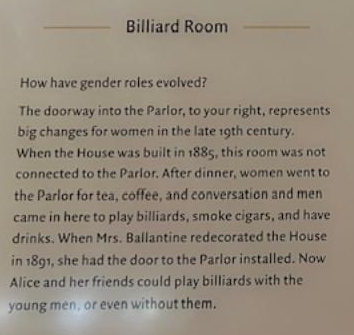
The Billiard Room across the hall from the Dining Room.
The Billiard Room at the Ballantine House.
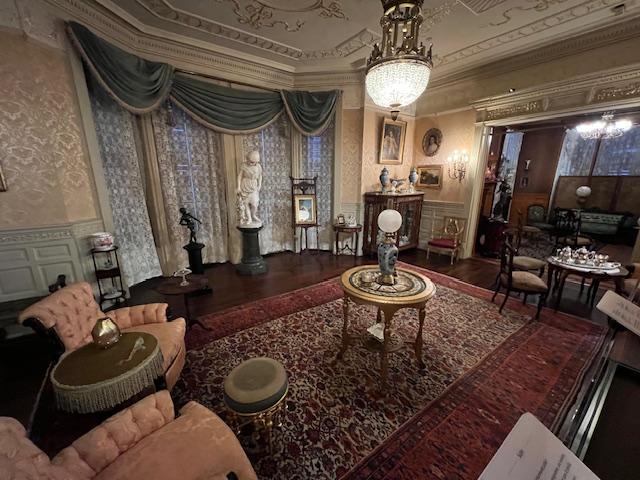
The Parlor at the Ballantine House.
The Parlor for receiving guests for afternoon tea
The other side of the parlor.
The Parlor set for tea.
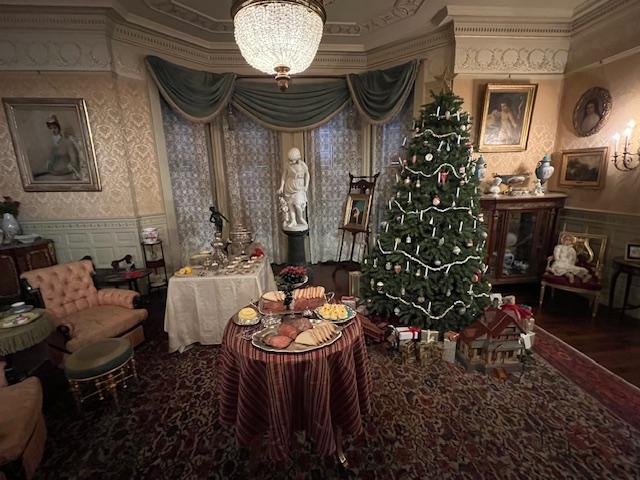
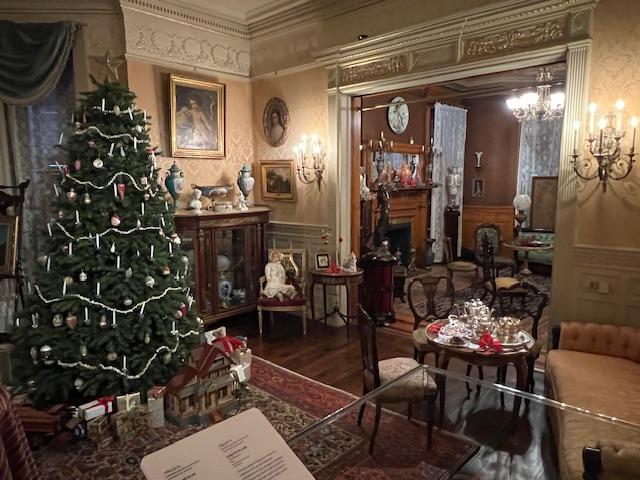
The Parlor set up for the Christmas Eve Tea:
The Parlor set for the Christmas Eve Tea service of the neighbors:
The Parlor would have been set for a light reception on Christmas Eve for the neighbors in the immediate neighborhood to stop in and join the family for a casual conversation and have a light snack. No one would stay more than an hour and it was in bad manners to stay longer than that.
The reception foods would be replenished as they ran out and this would take place for about two to three hours on Christmas Eve night as people would be leaving for church services or on their way to other celebrations.
The tour took us next upstairs to see the renovated bedrooms on the second floor and the galleries where some of the jewelry and art objects were on display.
The Staircase decorated for the Christmas holidays
The beautiful stained glass window on the landing to the second floor.
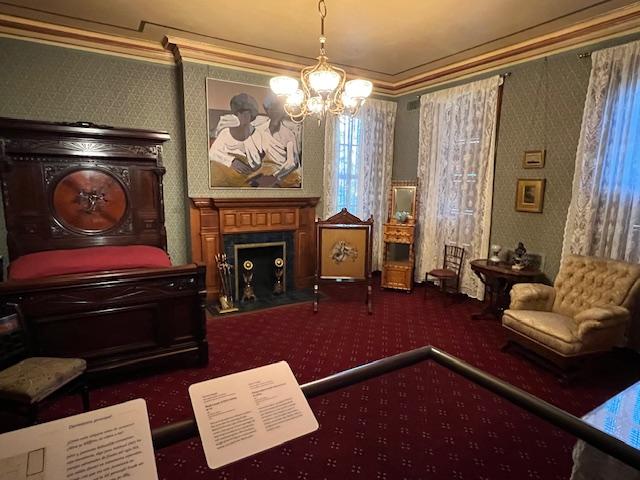
Mr. & Mrs. Ballantine’s Bedroom
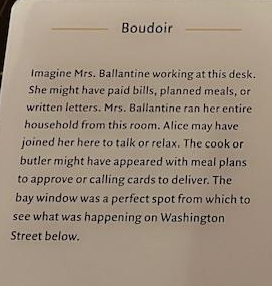
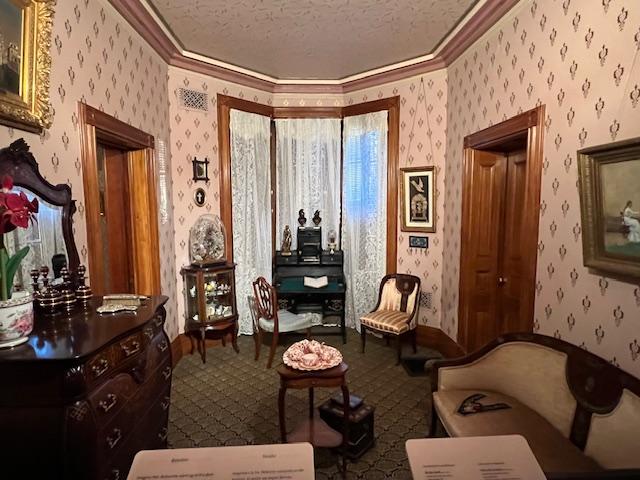
The Boudoir where Mrs. Ballantine did her work.
The Boudoir where Mrs. Ballantine worked.
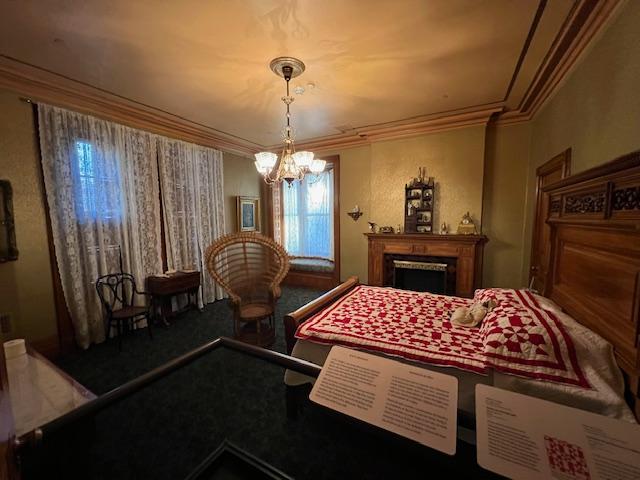
Alice’s bedroom on the second floor that was adjoined to her parents room by the way of the Boudoir.
Alice’s bedroom on the second floor looking over Washington Park.
The staircase to the Third Floor to Alice’s family apartment.
This was the main room of the apartment that was used by the family for entertaining friends and family. Alice, her husband and their four children lived in this apartment until 1919 at the time of Mrs. Ballantine’s death. Then her daughter moved to another part of Newark and then onto Morris County.
The Third floor apartment for Alice and her family that Mrs. Ballantine build for Alice and her family.
The beautiful skylight in Alice’s apartment on the Third floor of the Ballantine house.
The decorative fireplace that worked in Alice’s family apartment on the third floor of the house
On my most recent trip to the museum, I attended the opening of the new ‘Norman Bluhm Metamorphosis’ exhibition on February 11th, 2020.
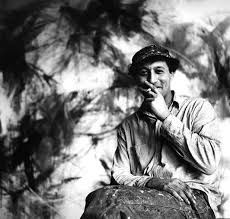
Artist Norman Bluhm
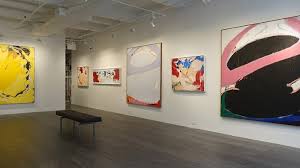
Norman Bluhm: Metamorphosis celebrates six decades of painting by post-war American artist Norman Bluhm (1920-1999), who combined action painting with a lavish sense of color and formal experimentation on a grand scale.
Paintings and works on paper dating from 1947 to 1998 are on view in the Museum’s Special Exhibition Gallery and the Traphagen promenade galleries surrounding the Charles W. Engelhard Court (Newark Museum publication press release).
These large works showcase the artist’s work over a fifty year period.
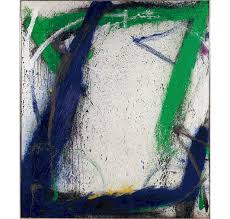
Norman Bluhm’s work is quite dramatic
In 2022, I went on the first Members Morning that we had in almost two years. We toured the “Carlos Villa: Worlds in Collusion” exhibition featuring the works by American San Franciso born artist of Philippine decent Carlos Villa.
Artist Carlos Villa in the exhibition “Worlds in Collison”
Video on the Exhibition “Carlos Villa: Worlds in Collison”
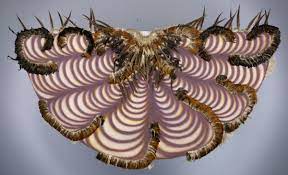
What made this exhibition interesting was the feather work that he used in his art. He was trying to capture the ethnic history of identity not just of the Asian but the Pan-Pacific cultures of Hawaii. He used robes and other costumes to show the dynamic of the background of these cultures. Not just that but what describes Americans who are not of white decadency and where their role plays in society. The impression I got from his work and from the tour was feeling like an outsider in the country he was born in.
One of the feathered cloches that are in the exhibition
I also visited the interactive exhibition “Endangered”, showing video screenings of nature on the walls of the Natural Science Galleries. The exhibition highlights how human behavior is affection the natural environment and what we can do to stop it.
In the Summer of 2022, we had a member’s tour of one of the ongoing exhibitions at the museum and the docent described the works of local Brooklyn based artist Saya Woolfalk.
I joined the membership one morning to tour the exhibition on artist Saya Woolfalk who is based out of Brooklyn. Her current exhibition “Tumbling into Landscape” is being featured on a long-term exhibition. The works are a communication with nature and our relationship with nature and with one another. When you walk through it you are so relaxed between the music and the lighting. The artist ‘uses science fiction and fantasy to reimagine the world in multiple dimensions’ (Newark Museum).
The videos in the Saya Woolfalk exhibition
Her look at nature is very interesting. She looks at our relationship with the natural world and to each other and where we belong. Here works have a calming effect on the visitor and our interaction with the art.
‘The Four Virtues’ (Justice, Prudence, Temperance and Fortitude)
She even did a study of the Hudson River School and how her art worked into that perspective of nature. She included between six paintings from the School of Art with a self-portrait of herself.
It was interesting how she used her own self to compare to the stylized view of nature taken on by these past artists.
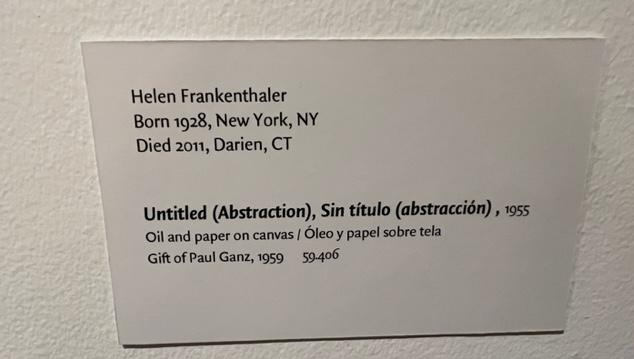
Recently, I joined other members for a special “Members Morning” that happen every third Thursday entitled “The Art of Collecting Abstracts”. It was a look at the contemporary works that have been collected by the Newark Museum over the years. We got a look at works from the early part of the last century to today. Each of the pieces chose were a way for us to think about the artist and what they were trying to convey. Some used bold strokes and colors to tell their story. I thought they were quite colorful.
The group of us on the tour walked through various galleries, admiring and learning about the contemporary collections of abstract work from artists from various periods. Each docent took their take on pieces they admired in the collection.
Abstract by Ilya Bolotwosky “Study for Mural for Hall of Medicine, Public Health Building, New York World’s Fair.
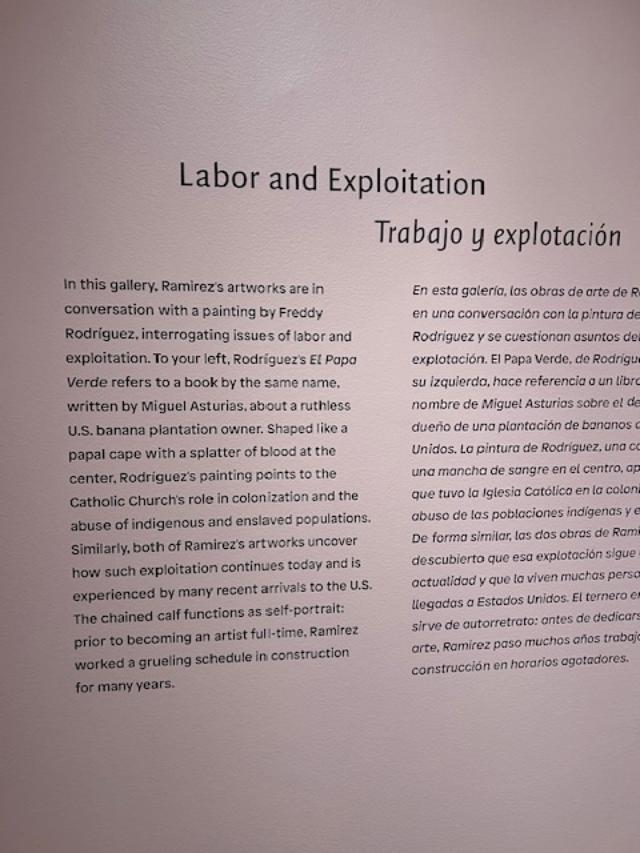
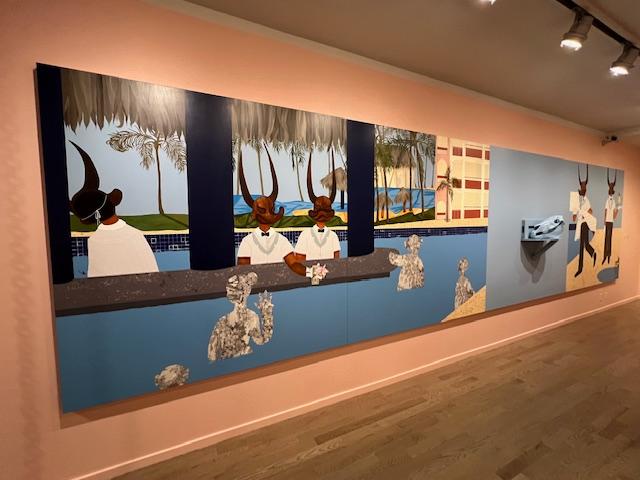
Artist Bony Ramirez is a Dominican artist born in the Dominican Republic and works in New Jersey. He is known for his island influences in his works and reflects life in the Caribbean nation. He uses all sorts of materials to achieve his works of art (Artist’s bio).
The gallery opening of the artist’s work on the second floor of the museum.
The write up on his work.
Cow sculpture
Painting and sculpture
One of the artist’s paintings on Colonialization.
One of the artist’s recent sculptures.
The exhibition was small and it was one of the first shows that the artist mounted at a major museum. I thought the work was okay but nothing dramatic. Still it was a nice opening and a reception. The artist seemed thrilled by it all.
Newark Museum History and Highlights tour:
Welcome to the Newark Museum. Our unique approach to exhibiting our extraordinary art and science collections provides unforgettable experiences for people of all ages. It is a place where people of different generations, cultures and communications encounter a robust science collection and world-class act including the arts of Africa, Ancient arts, Arts of Asia, Decorative arts and American art.
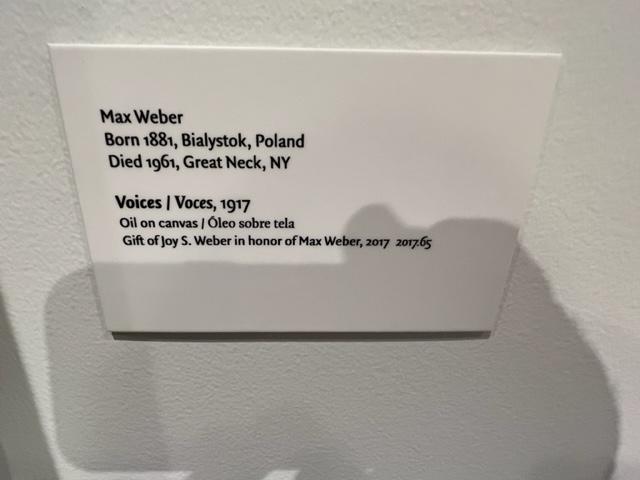
The American Wing galleries at the Newark Museum. The Max Webber piece is to the right.
Take an inspirational journey through our many galleries. Marvel at shooting stars in our popular planetarium. Travel to another era in the Victorian Ballantine House, a National Historic Landmark. Pause at a Tibetan Buddhist altar consecrated by His Holiness, the 14th Dalai Lama. Stroll through our beautiful sculpture garden, visit our Museum Shops and enjoy delicious light fare or snacks at our Cafe (will be reopening soon).
For the Lunar New Year in 2025, the Newark Museum had a wonderful family celebration for Chinese New Year. The museum had all sorts of games and crafts for the kids and tours for the families.
A Chinese musical group started the festivities for Chinese New Year at the Newark Museum. This was the folk band from JTL Band. They sang traditional songs in Chinese.
The group entertained the crowd with a wide applause
After the performance, we were treated to a Ribbon Dance. Dancer Lina Liu
The traditional Ribbon Dance by the Lina Liu Artist Group
The beauty of the dance
The end of the performance
The museum did a wonderful job with all the entertainment. The Planetarium also had a interesting show in the Moon and the phases that show in the evening sky. It was a very interesting show. Even though it was geared towards children, they made it so easy to understand in fun and engaging way.
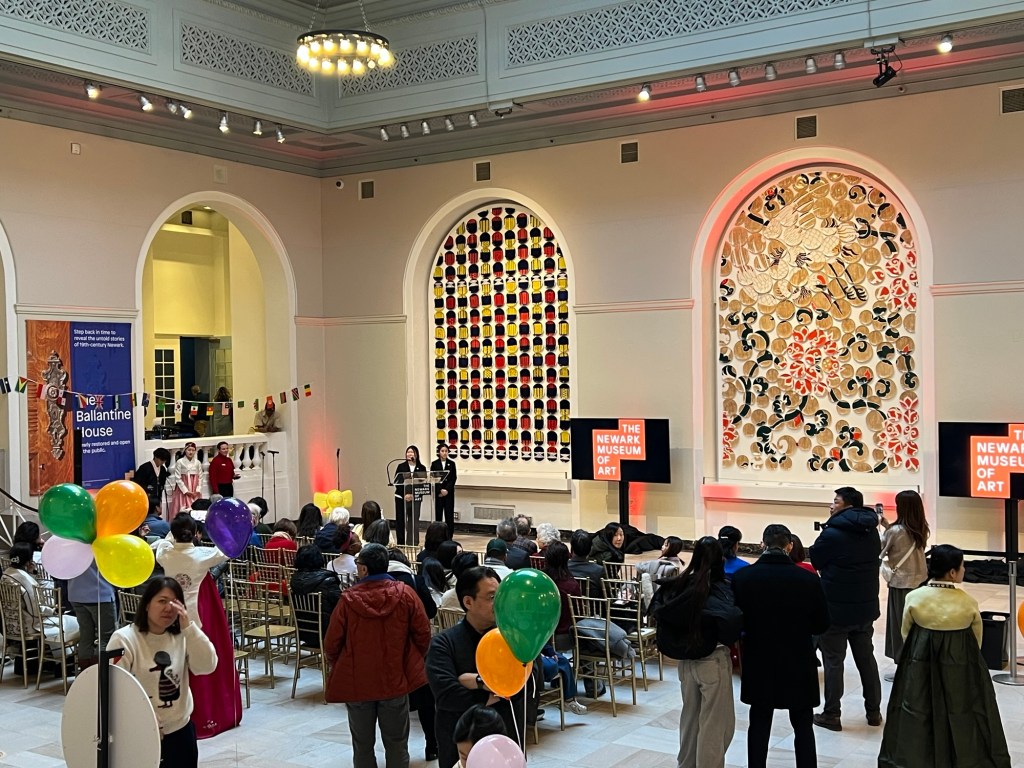
The museum did a nice job for the Lunar holidays. In 2026, they had another interesting festival of Korean music and dance.
Entertainment from the Korean Cultural Society
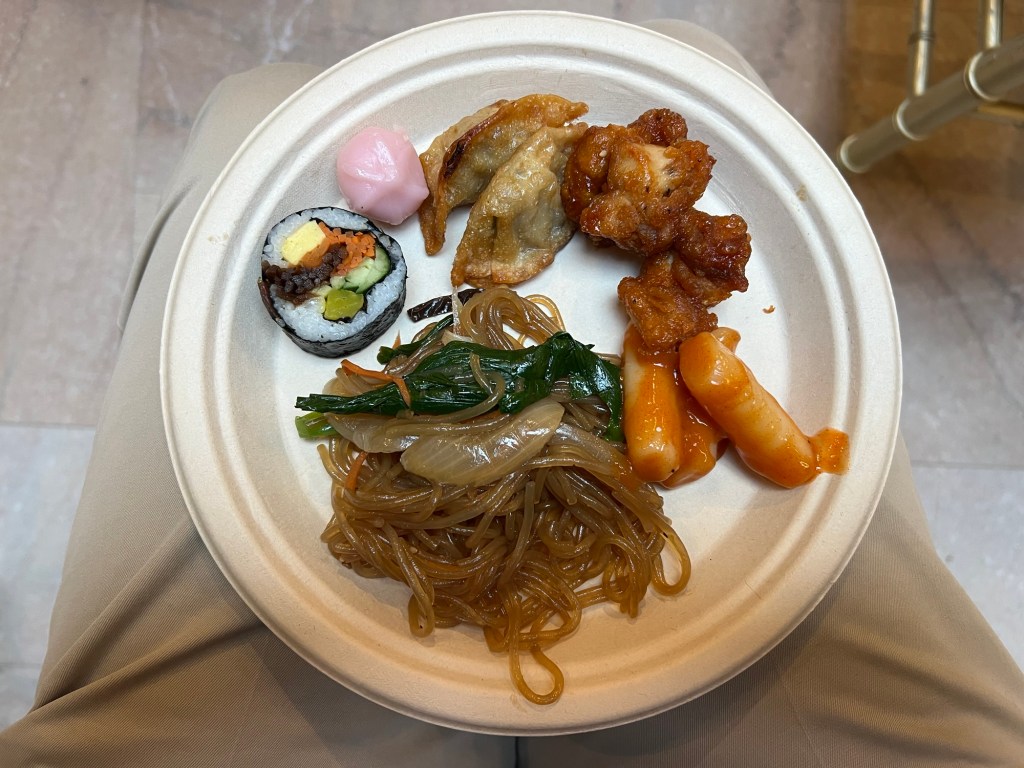
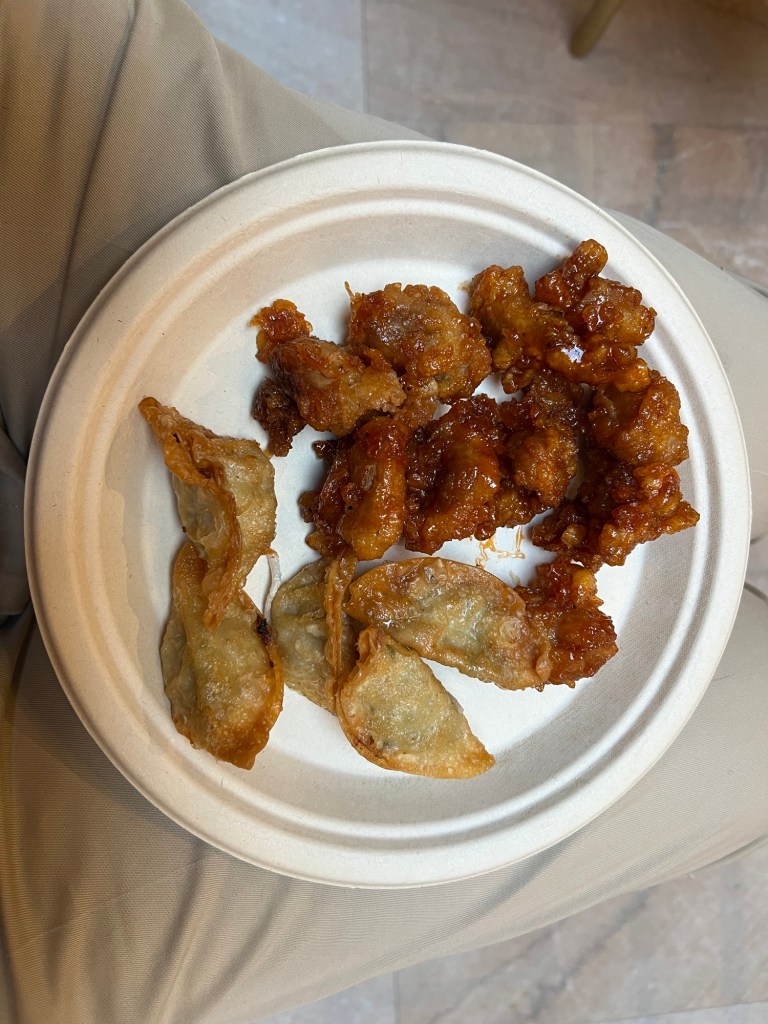
The best was the resfreshments at the end of the program. They had the most delicious Korean Chicken and Dumplings along with other dishes.
The Korean dishes I enjoyed that afternoon. I had to go back for seconds of the chicken and dumplings.
Coming back for seconds
I then walked around the main hall to enjoy the works of local Korean-American artists. I have to admit it was a quick afternoon
The works of local artists
Come visit us. You’ll wonder why you waited:
(from the website and from the museum pamphlet)
The Newark Museum exhibits world-class art and science in a unique way. Visitors feel enriched by what they had planned to see and excited about the unexpected discoveries that they made along the way.
The new entrance of the museum
American Art:
With more than 12,000 paintings, sculptures, works on paper and multimedia art, the American art collection at the Newark Museum, many on view in the Picturing America galleries, is one of the finest in the country. Surveying four centuries, the Museum’s American holdings range from the Colonial to the Contemporary and are particularly strong in works from the 19th and early 20th centuries.
Ancient Art:
The Museum’s art of the ancient Mediterranean cultures, Egypt, the Near East, Greece and Rome, includes a remarkable array of classical antiques, as well as an Egyptian collection featuring the coffin lid of Henet-Mer. The Eugene Schaefer Collection of ancient glass offers a visual history of the evolution of glass technology in Egypt, Greece, Rome and the Islamic worlds and dates from 1500 B.C. to 1400 A.D.
Arts of Africa:
With works ranging from Moroccan textiles in South African beadwork to contemporary fine art, the Museum’s African art collection is as diverse as the continent itself. The collection is among the most comprehensive in the United States with more than 4,000 art works dating from the 17th century to the present day. Its holdings are also distinguished for their breadth of artistic representation, including masks and figural statuary, dress and adornment, photography and paintings.
Arts of Native North America:
The Native North American art collection spans the continental United States, as well as Alaska and Canada. Most of the works date from the 19th to the late 20th centuries. The collection represents the diversity and richness of indigenous arts with a range of object types including tools, household items, personal effects, clothing, ritual and ceremonial objects, paintings and drawings.
Arts of Asia:
The most extraordinary historical collection of Tibetan art in the Western Hemisphere is on permanent view. Additional galleries dedicated to the arts of Japan, Korea, China as well as South and Southeast Asia feature superior examples of sculptures, paintings, ceramics and decorative arts from the past 2,000 years.
Decorative Arts:
Furniture, silver, ceramics, glass, jewelry, costumes and textiles comprise the vast Decorative Arts holdings, which range from the 16th century to the present. A wide variety of American and European household furnishings create an international context for New Jersey-made and owned objects displayed in rotating gallery installations.
Ballantine House:
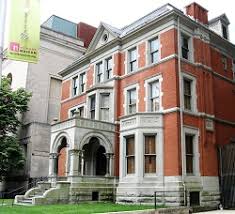
Built in 1885 for Jeanette and John Holme Ballantine of the celebrated Newark beer-brewing family, this brick and limestone mansion was designated a National Historic Landmark in 1985. Wander through history in House & Home, a suite of eight Victorian period rooms and accompanying thematic galleries depicting how people have decorated their homes in America, from the 1650’s to the present day.
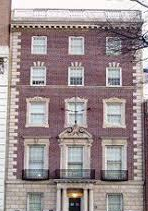
The Ballantine House
Science:
You will also find New Jersey’s first planetarium here and an 83,000-specimen natural Science Collection, which is the basis of the exhibit Dynamic Earth: Revealing Nature’s Secrets, located in the Victoria Hall of Science. This engaging exhibit features interactive and multimedia displays that make the natural sciences come alive and help adults and children better understand the natural world.
Newark Fire Museum:
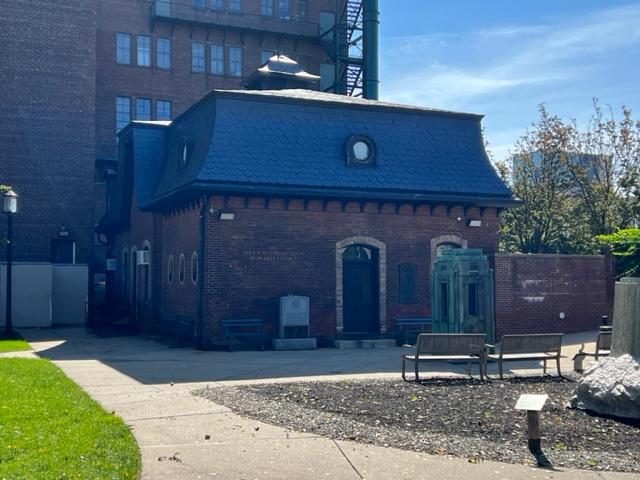
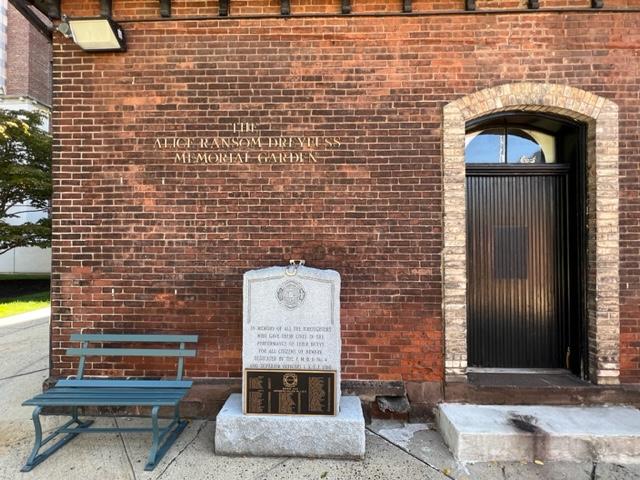
Housed in the circa 1860 Ward Carriage House in the Alice Ransom Dreyfuss Memorial Garden, the newly refurbished Newark Fire Museum tells the story of the challenges faced by firefighters in the 19th century and includes historic fire apparatus and equipment. An exciting new exhibit adds a potentially life-saving element to our mission with a high-tech interactive Fire Safety Center designed to teach fire safety and prevention to children and families.
The Newark Fire Museum in the gardens.
1784 Old Stone School House:
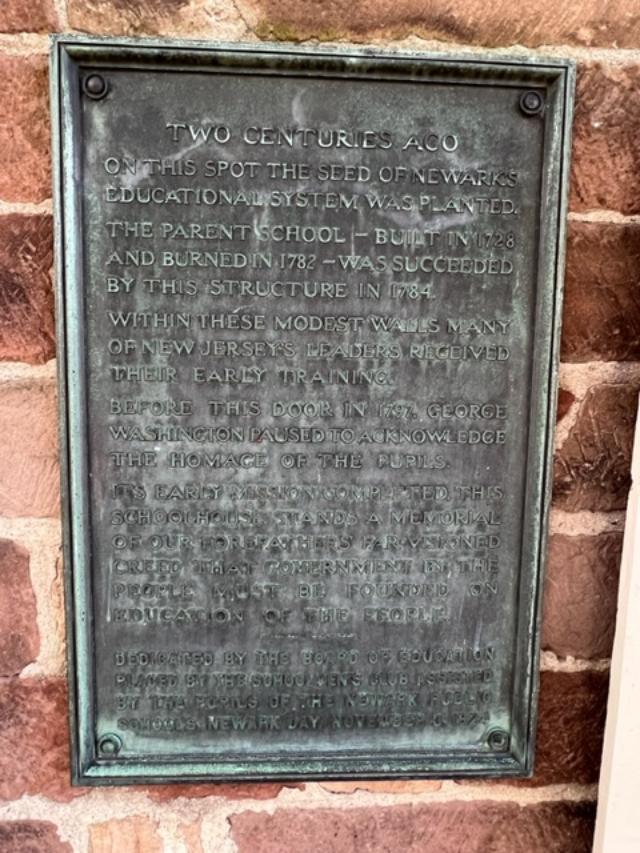
The oldest standing school building in Newark, this one-room school hosted generations of students between 1784 and the early 20th century. Recently restored, its detailed bring the past to life: the foundation built with sandstone from a local Newark quarry, the floorboards sawed by hand from trees cut from a local forest and the old cast iron stove used to heat the school with wood provided by the students.
The Old Stone Schoolhouse in the gardens.
The historic plaque at the Old Stone Schoolhouse
Planetarium:
The Alice and Leonard Dreyfuss Planetarium provides an immersive, out-of-this-world experience through which adults and children can learn about astronomy, planetary science and space travel. Featured is a state-of-the-art, full dome digital video system, a 5.1 surround-sound system and a Zeiss ZKP3B star projector.
Disclaimer: This information was taken directly from the Newark Museum pamphlet. The museum is the pride and joy of the State of New Jersey. It has great programming and wonderful events. Please call or email the museum for more details.
I was able to visit the New Jersey Historical Society (See TripAdvisor review) after a morning at the Newark Museum. It has some interesting exhibitions right now on the Newark riots of the 60’s , the New Jersey Watershed and Louis Bamberger, the founder of Bamberger’s. It was an interesting history of a former grand department store.
The New Jersey Historical Society has changing exhibitions and lectures, talks and walking tours. It is an interesting museum dealing with the history of New Jersey.
The New Jersey Historical Society
Founded 1845
The New Jersey Historical Society is the oldest private, non-profit cultural institution in the state. It was founded in 1845 as an archive, which later evolved into a research library and museum. Award-winning exhibits, education programs, publications, lectures and events for all communities in New Jersey have been our legacy over the past century.
Mission:
The New Jersey Historical Society collects, preserves, teaches and interprets New Jersey history through our archives, research library and educational programs. We do so in the belief that an understanding and appreciation of historical issues, decisions and actions can inform and inspire the people of New Jersey.
Vision:
To be a state of the art center for the study of New Jersey history with convenient access to all archival collections and educational programs for all ages.
New Jersey Historical Society
Current Museum Exhibitions: (January 2018)
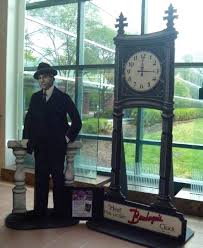
*”Meet Me under the Bamberger’s Clock”: a celebration of the life and contribution of Louis Bamberger.
The Bamberger Exhibition
*Ebb and Flow: New Jersey and its Rivers
*Send the Word: NJ during the Great War
*Newark: Revolution to Revival
Newark Industry
*Military Park Tours: available every Friday and Saturday at 12:00pm, May-November
Education Programs:
Our affordable educator-led programs include hands-on activities tailored to the age and development level of your students, challenging and inspiring them to grow as learners and thinkers.
Discover:
Students will discover the state’s unique past through handling objects, exploring exhibits and engaging in fun, stimulating activities. Teaches will discover all the interdisciplinary connections to the Common Core State Standards for English Language Arts & Literary in History/Social Studies.
Learn:
Educators and students will learn together how to analyze photographs, paintings and historical objects and interact with history in a variety of ways, including role play, observation and group participation.
Research:
Students will learn to research history and present their ideas and findings through oral presentations, writing and art.
Building and Exhibition Tours are available upon request. Call (973) 596-8500 to schedule!
Research Library:
The New Jersey Historical Society contains manuscripts, rare books, photographs, maps, broadsides, pamphlets and other materials that document the cultural and historical heritage of New Jersey from the colonial era through the 21st century. The collections form the most comprehensive privately-funded library on New Jersey’s past. The research library is open to the public by appointment and serves a diverse clientele including scholars, students, historians and genealogists.
Membership:
Why become a member? In addition to individual benefits such as free admission to the research library and museum exhibits, you are helping to sustain 350 years of New Jersey history, a history we’ve been collecting and preserving since 1845. NJHS has a commitment to the people of our state to treasure our shared history; your membership helps us keep that commitment.
Contact:
For research library appointment, email: library@jerseyhistory.org
For all other questions, email: contactnjhs@jerseyhistory.org
Disclaimer: This information was taken directly from the New Jersey Historical Society (NJHS) pamphlet. Please call the society for any information of hours and admissions in case they change. It really is a very interesting museum.
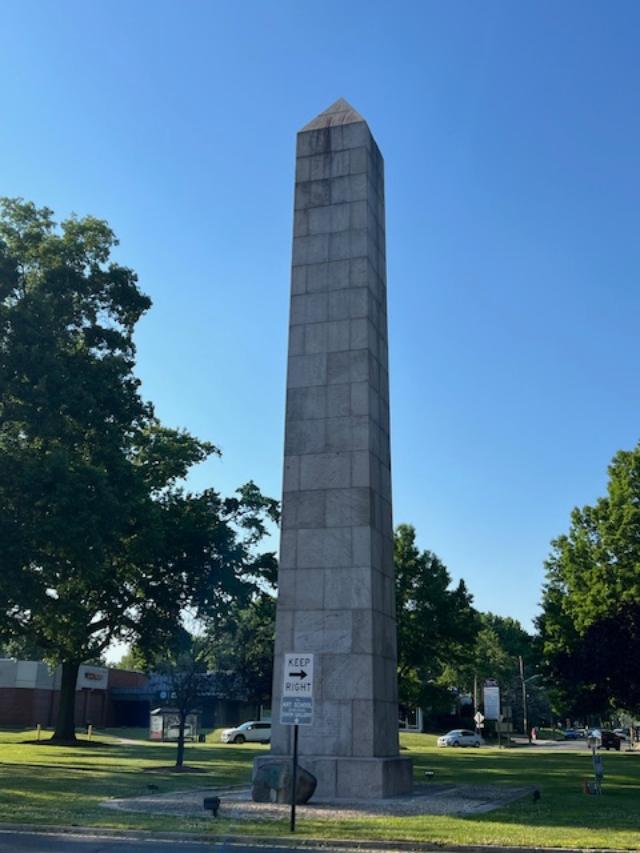
Camp Merritt Memorial Monument marks the center of an important World War I embarkation camp, where more than one million U.S. soldiers passed through on their way to and from the battlefields of Europe.
The Front of the Camp Merritt Memorial Site
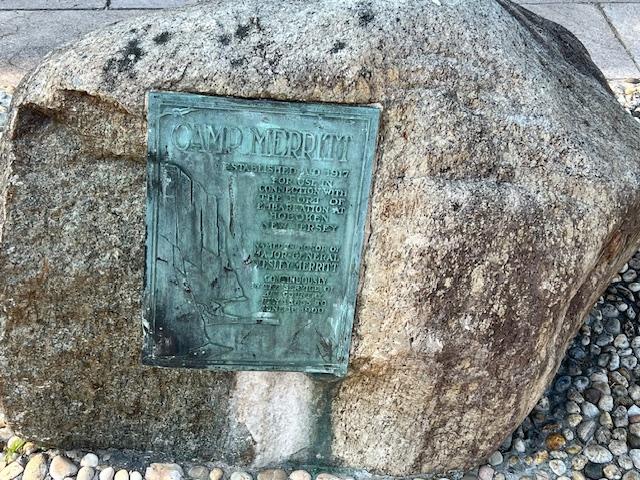
The inscription on the memorial
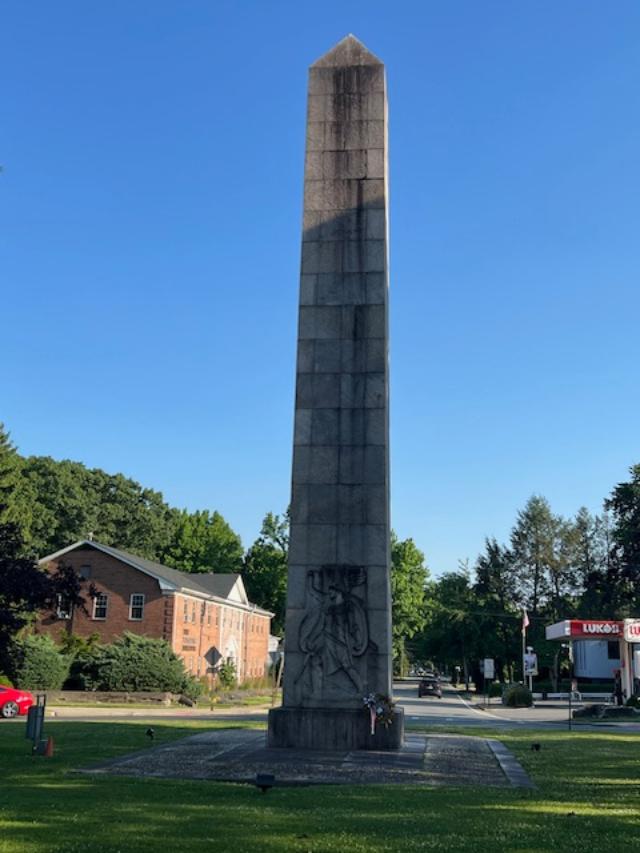
In August 1919, the Bergen County Freeholders purchased land for the monument from what was the approximate center of the camp at the intersection of Madison Avenue and Knickerbocker Road in Cresskill. In 1922, work on the shaft commenced. Modeled on the Washington Monument, the memorial is a 65′ high granite obelisk. On the base are the names of the 578 people who died in the camp, mostly as a result of the 1918 worldwide influenza epidemic.
The historic memorial facing the circle lawn
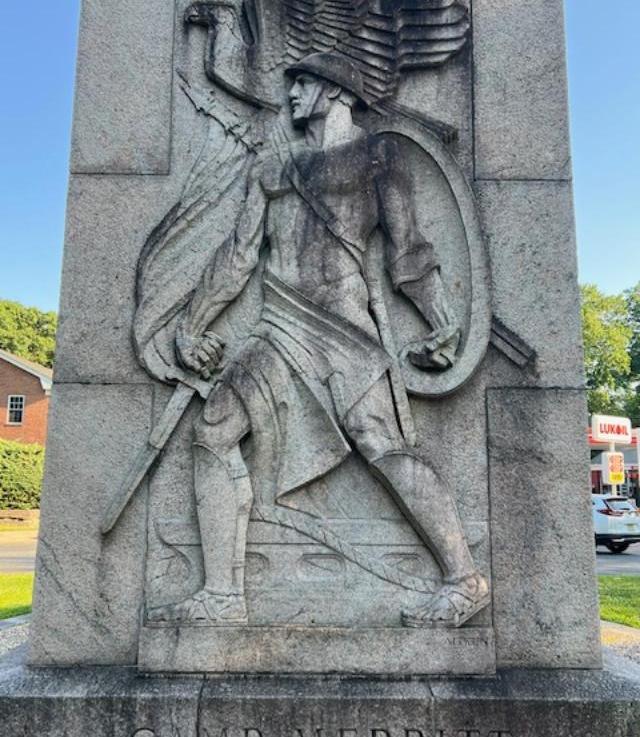
A large Art Deco style carved relief by the sculptor Robert Ingeroll Aitkin (1878-1949) shows a striding “doughboy” with an eagle flying overhead. Set into a large boulder is a copper plaque with a relief of the Palisades, illustrating that Camp Merritt was used as an area for embarkation, designed and made by the local artist Katherine Lamb Tait. In the ground is a three dimensional stone carving of the map of Camp Merritt.
Artist Robert Ingeroll Aitkin was an American born artist who studied at the California School of Design. He was known for his historical sculptures (Wiki).
The “Doughboy” on the back of the memorial
The troops training at the site during WWI
The Camp Merritt Monument was dedicated on May 30, 1924 by a number of state and federal dignitaries. General John J. “Black Jack” Pershing gave the dedicatory address to a crowd of 20,000 people. Camp Merritt, located midway between Cresskill and Dumont and 12 miles from Hoboken, received its first soldiers in October 1917. Originally called Camp Tenafly”, and covering an area that included Cresskill, Demarest, Dumont, Haworth and Tenafly, it was eventually named for General Wesley Merritt, a gallant Civil War officer who was in the service of his country from 1855 to 1900.
The historic marker sits before the memorial
Little publicity surrounded the camp as it was deemed vitally important to keep troop movements a secret. The soldiers would march with their heavy packs and supplies to the trains or over the Palisades to the Hudson River to board boats that would take them to their European-bound ships docked in Hoboken. The last soldier passed through in the beginning of 1920.
The map of the camp behind the memorial
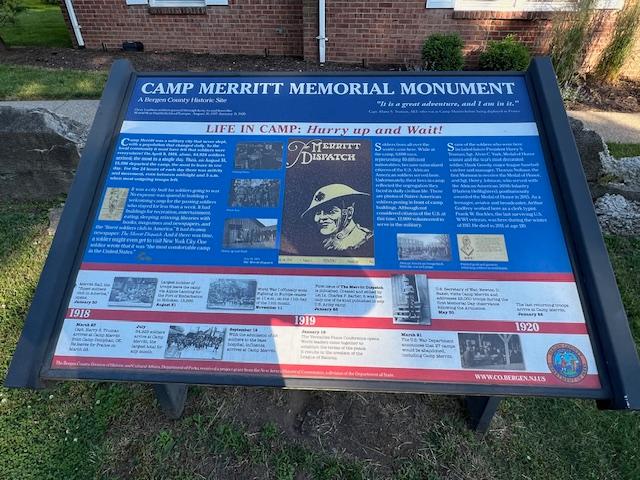
The camp was 770 acres in size and had a capacity of 42,000 men (two thousand of them officers). It was strategically built near major rail lines, facilitating the transport of soldiers to the camp. It contained 1300 buildings of all varieties. The base hospital alone was composed of 93 buildings. A staff of 300 nurses treated 55,000 sick men. 8000 men representing 40 different nationalities were nationalized in the Camp and made citizens of the US. Camp Merritt had its own newspaper, the Merritt Dispatch established and edited by Charles Philip Barber, which was the only printed record of the camp’s activities. The editor and staff of the Merritt Dispatch were the first to promote the idea of the monument.
Another view of the back of the memorial
After the camp was sold, it suffered three suspicious fires while the buildings were idle, each one worse than the last. The second fire in March of 1921 destroyed a hundred buildings. The third fire was the most spectacular, destroying almost all of what was left of the camp and detonating two stores of dynamite that had been stored for demolition purposes. Eighteen fire companies (including three from New York City, which came by way of the Dyckman Street Ferry) struggled to prevent the fires from spreading to adjacent homes. Other fire companies came from Tenafly, Closter, Bergenfield, Cresskill, Demarest, Teaneck, Hackensack and Palisades.
The Monument is located on the traffic circle and can be reached by foot and is illuminated at night.
The signs from around the circle describing the site:
Sign One:
Sign Two:
Sign Three:
Sign Four:
The closing of the site and purchase from Bergen County, NJ for development.
2015 Bergen County Division of Cultural and Historic Affairs
Disclaimer: This information was taken directly from a pamphlet from The Bergen County Division of Cultural Affairs & Historic Affairs in Bergen County, New Jersey. You must stop off on one of the side streets to see the monument and the information boards on the site are off to the west side of the circle. Try to walk around the monument on the circle itself to see the most detail.
















































 Visiting a Museum: The Unique, Unusual, Obscure and Historical