I have been to the South Street Seaport dozens of times over the years and can’t believe that I never noticed this memorial dedicated to those lost in the Titanic disaster. I was visiting the Seaport recently after finishing another walk down the length of Broadway for my blog, “MywalkinManhattan.com” and was walking past the Seaport on my way to Chinatown. Something about it this time caught my attention and I stopped to look at the dedication of this small lighthouse.
It was really touching to see that the people from the 1912 disaster were not forgotten in New York City, its ultimate destination. This was the work of Molly Brown, the ‘Unsinkable Molly Brown’ from the movie. She wanted to be sure that the people who survived were never forgotten. The small lighthouse structure sits at the entrance to the main part of the seaport on an island just off the cobblestone walkway into the complex.
The Memorial plaque on the lighthouse
The tower that it was originally placed a top of the Seamen’s Church Institute Building and it was put up for sale and demolished in 1965 and the small lighthouse memorial was donated to the South Street Seaport Museum. It was placed in its current location in 1976 (Friends of the Lighthouse).
The little lighthouse is a touching reminder of Manhattan’s connection to the event over 100 years ago. Try not to miss it when you are visiting the Seaport.
The history of the Titanic Memorial Lighthouse:
(This is from the Friends of the Titanic Memorial Lighthouse website)
On April 15th, 1913, one year after the sinking of the Titanic, the Titanic Memorial Lighthouse and Time Ball, mounted atop the Seamen’s Church Institute, were dedicated to honor the passengers, officers and crew who perished in the tragedy. The dedicatory service opened with a hymn and prayer and then Rt. Rev. David h Greer, Bishop of New York, read the following lines of dedication:
“To the glory of Almighty God and in loving memory of those passengers, officers and crew who lost their lives in the foundering of the steamship, Titanic, on April 15, 1912, I, David Hummell Greer, Bishop of New York and president of the Seamen’s Church Institute of New York, do solemnly dedicate the Titanic Memorial Lighthouse Tower. As its light by night shall guide pilgrims and seafaring men from every clime into this port, so may they follow Him who is the Light of Life across the waves of this troublesome world to everlasting life and looking at noon toward this place to note the time of day, may they remember that our days pass as the swift ships and in view of the shortness and uncertainty of human life, strive to fulfill their duty well as the beat preparation for Eternity. Amen.”
The Titanic Memorial Lighthouse exhibited a fixed green light that could be seen throughout New York harbor and down as far as Sandy Hook. Five minutes before noon each day, a time ball would be hoisted to the top of a steel rod mounted atop the lighthouse and dropped at the stroke of twelve as indicated over the wires from Washington DC. According to The Lookout, the magazine of the Seamen’s Church Institute, the Titanic Memorial Lighthouse would be a much needed daily reminder for ‘in a busy, carless city the average person so soon forgets’.
The Seamen’s Church Institute was established in 1834 and had announced plans for its new twelve story headquarters at South Street and Coenties Slip in Lower Manhattan several years before the loss of the Titanic. The Flemish style building was meant to reflect new York’s Dutch origins and was to be crowned by a tower whose beacon would welcome incoming seamen. The cornerstone for the building was laid one day after the sinking of the Titanic and a week later the institute announced the lighthouse atop their building would be a memorial to the victims of the tragedy.
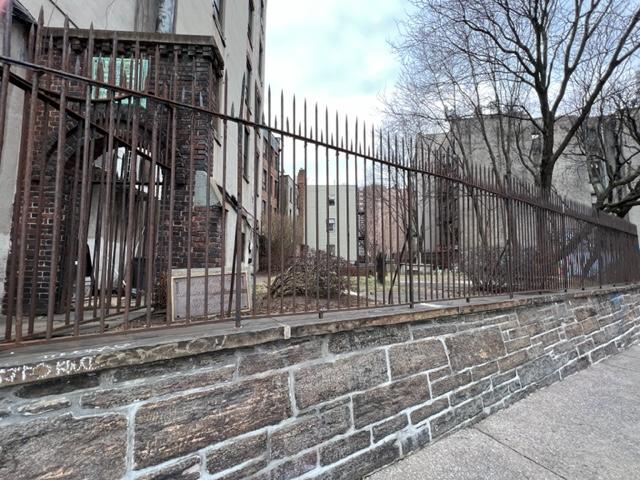
There are times that I walk around Manhattan and things just pop out at you. Tucked inside small pockets of the City are small community gardens, detailed statues, street art and sometimes a small cemetery. I had passed the First Shearith Israel Graveyard or also known as the Chatham Square Cemetery many times when visiting Chinatown since I was a kid. This tiny elevated pocket square of land is located next to a building and locked behind a gate just off St. James Place right at the end of Mott Street strip of Chinatown.
You really have to look for this at the side of 55-57 St. James Place
This is the oldest Jewish Cemetery in Manhattan that was in use from 1683 to 1833. The site of the cemetery was originally on a hill overlooking the East River in an open area at the northern periphery of the British-Dutch colonial settlement. The plot was purchased in 1682 by Joseph Bueno de Mesquita and the cemetery’s first interment was for his relative, Benjamin Bueno de Mesquita. The cemetery expanded in the 1700’s from Chatham Square to the upper part of Oliver Street to Madison Avenue (Wiki).
The original map of the Dutch Colony (New York Historical Society)
In 1823, a City ordinance prohibited burials south of Canal Street and the congregation opened a second burial spot at West 11th Street. A third cemetery was opened at 21st Street west of Sixth Avenue. The size of the cemetery has been reduced over the years because of development and most of the bodies were removed and moved to the other cemeteries. In 1851, the City again prohibited burials below 86th Street and the congregations again opened a fourth cemetery in Ridgewood, Queens. In 1855, with more development changing the area again and over two hundred graves were removed from the site. Only about hundred remain (Wiki).
The inside of the cemetery
Two of the most notable people buried here are Reverend Gershom Mendes Seixas (1745-1816), the first American born Jewish spiritual leader and Dr. Walter Jonas Judah, the second person of the Jewish faith to attend an American Medical School (now Columbia University) and the first native born one. (Wiki). There are also 18 Jewish Revolutionary War era veterans and patriots buried here.
History of the Jewish Settlement in Dutch New York:
In September of 1654, just after the Jewish New Year, twenty-three Jews, mostly of Spanish and Portuguese origin arrived in Manhattan. These people had been living in Recife, the former capital of the 17th Century Dutch Brazil. When the Portuguese defeated the Dutch for control of Recife and brought with them the Inquisition, the Jews of that area left. Some returned to Amsterdam, where they had originated and others moved around the Caribbean to other islands. These twenty-three arrived in New York due a series of unseen events (Big Apple Secrets).
Governor Peter Stuyvesant did not want to permit them to stay but these settlers fought for their rights and won permission to remain. In 1655, the Jewish settlers applied to the Dutch authorities for permission to purchase a parcel of land as an exclusive place to bury their dead. In February of 1656, appealed “that consent may be given” for the purchase. In 1644, the British took New Amsterdam and renamed it New York and the Jews were granted more civil rights. In 1706, they had organized their own congregation, Shearith Israel (Big Apple Secrets).
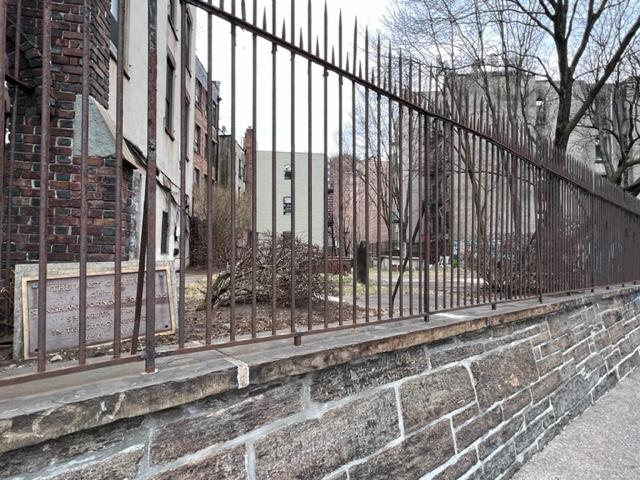
The cemetery for the most part is pad locked but you can view the outside from the street level. The cemetery is open on Memorial Day for services to the members of the armed services but for the most part you have to view the cemetery from the street level.
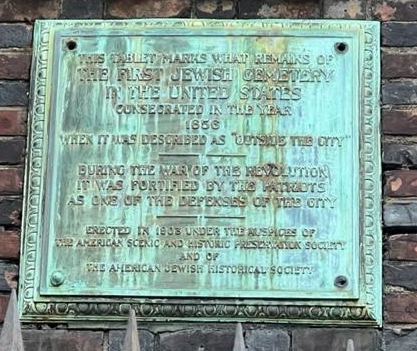
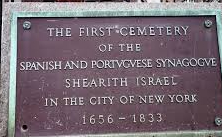
The plaque that you can see at eye level just inside the cemetery.
This unique plot of land is easy to miss so look for the plaque at eye level as you pass it.
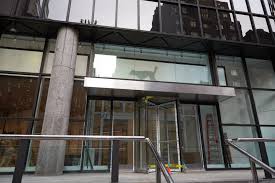
The American Kennel Club Museum of the Dog at 101 Park Avenue
When I was walking the neighborhood of Murray Hill for my blog, “MywalkinManhattan.com, I came across on one of the side streets tucked into a new office building on Park Avenue, The American Kennel Club Museum of the Dog at 101 Park Avenue. This unique little museum is two floors of art dedicated to the story of the dog.
The first floor features small fossils that show the early domestication of dogs during prehistoric times with humans. They may have used them for hunting and companionship. You could see this in the burials and in the wall paintings found all over the world that they partnered with early man and helped shape their world.
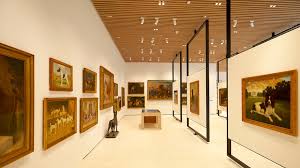
The American Kennel Club Museum of the Dog collection
Most of the paintings were from the Victorian Age (post Civil War to WWI) where the romanticized view of nature and of pet companions was emphasized. One both the first and second floor there were all sorts of paintings of various breeds of dog in all sorts of playful and working environments. There were dogs for hunting and sport, dogs as pets and dogs in playful position reacting with their masters and each other.
The Victorian approach to pets
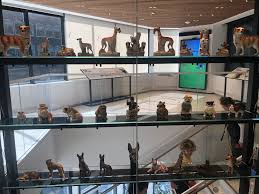
The was also porcelain figurines of dogs, statuary and trophies from various Canine Clubs all over the country. It shows the history of the dog as show with breeding and disposition counting of the way the animal was raised and trained.
The second floor had another series of paintings, a lot from the same time period and some contemporary artist’s take on modern dog owners and their relationship with their pets.
Canine Porcelains line the staircase
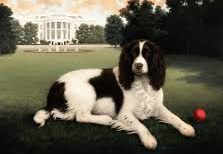
Also on the second floor was exhibition on ‘Presidential Dogs”, with the first families relationship with their dogs (and cats too) and the role that they played in White House politics. Truthfully outside of “Socks”, the Clinton’s cat, I never knew of any of the White House pets. I knew the both the Roosevelts and Kennedy’s had lots of pets in the White House, I never heard of their names or seen their pictures. So that was an eye opener.
White House pets tell their own story
Also in a special case was small fancy dog houses and dog holders for travel which was interesting to see how small dogs could travel with their masters and the expense to create a way for them to travel. These were very elaborate. I thought of some of the items I used to see at Bergdorf-Goodman when I worked there with the Ralph Lauren tote bags and fur lined sweaters and thinking this was a little much.
The museum also has a small gift shop on the first floor near the entrance that you should check out. There is all sorts of books and art work to look through and knick-knacks to buy with a dog them. The staff is also very nice and very welcoming.
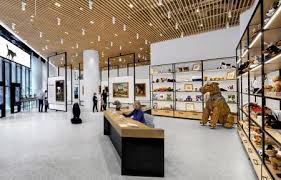
The entrance to the museum and gift shop has a nice contemporary feel to it
History of the American Kennel Club Museum of the Dog:
The American Kennel Club Museum of the Dog preserves, interprets and celebrates the role of the dogs in society and educates the public about the human-canine bond through its collection of art and exhibits that inspire engagement with dogs.
The Museum logo
Founded in 1982, the AKC Museum of the Dog was originally located in the New York Life Building at 51 Madison Avenue as a part of the AKC headquarters. In 1987, the Museum of the Dog was moved to a new location in Queeny Park, West St. Louis County, Missouri. After over 30 great years at Queeny Park, the decision was made to bring the Museum back to its original home and reunite it with the AKC headquarters and collection.
Combining fine art with high-tech interpretive displays, the Museum of the Dog’s new home at 101 Park Avenue hopes to capture the hearts and minds of visitors. Located in the iconic Kalikow Building, the Museum will offer rotating exhibits featuring objects from its 1,700 piece collection and 4,000 volume library.
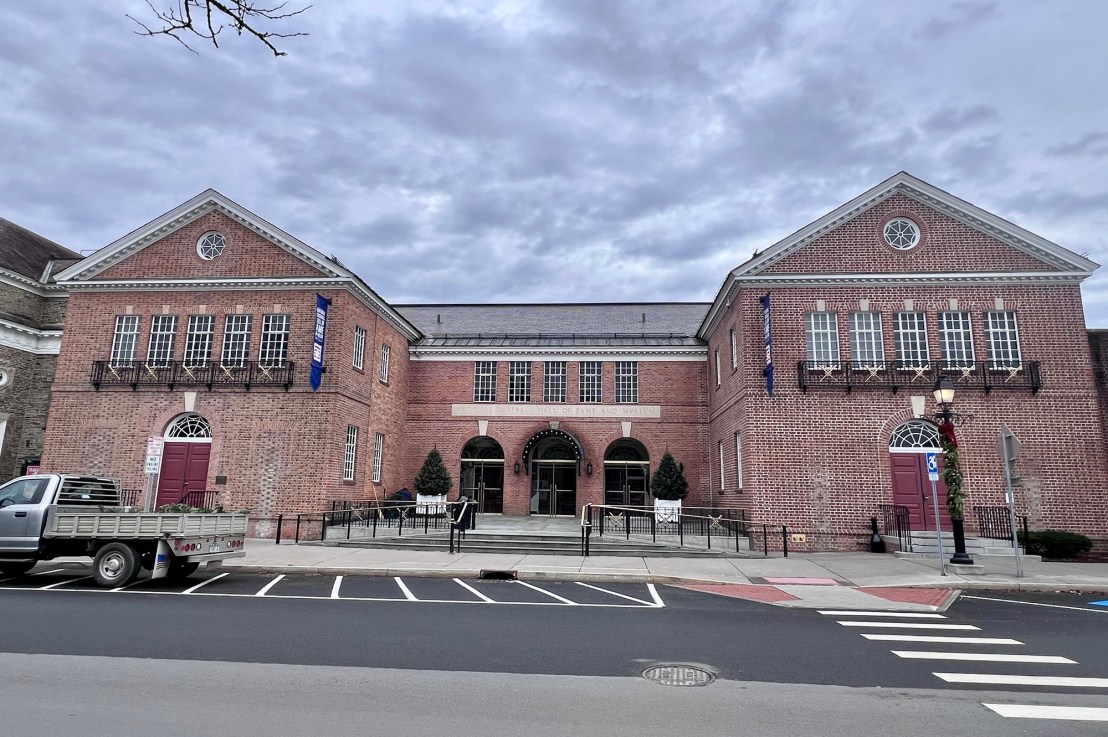
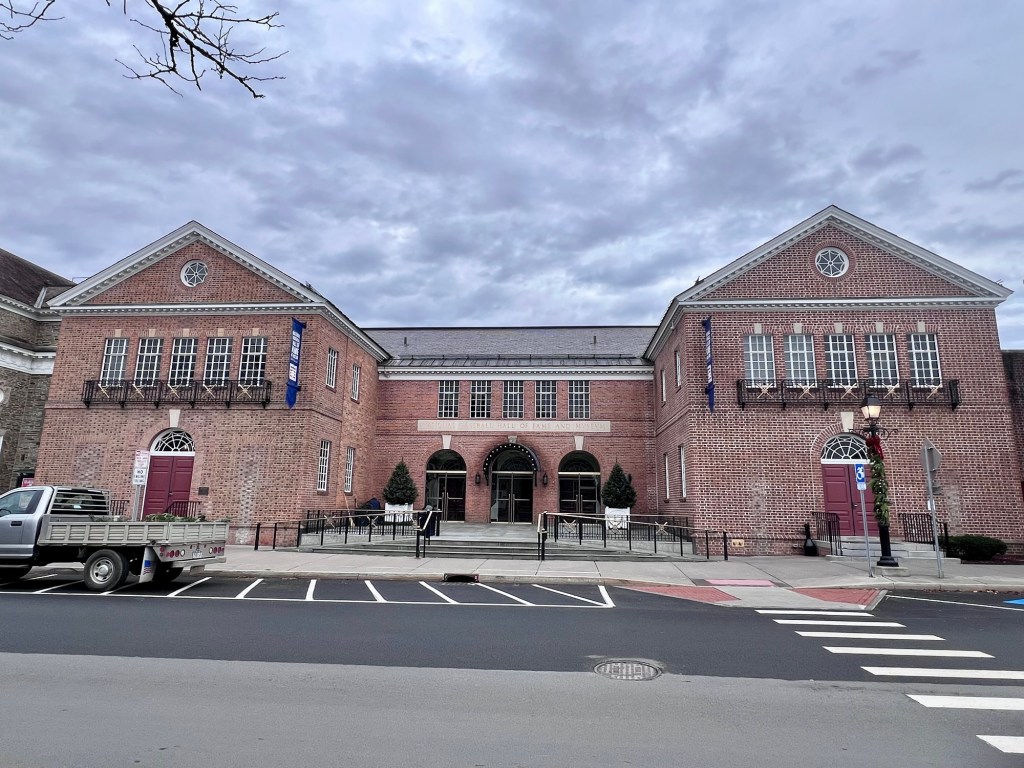
The National Baseball Hall of Fame at 25 Main Street
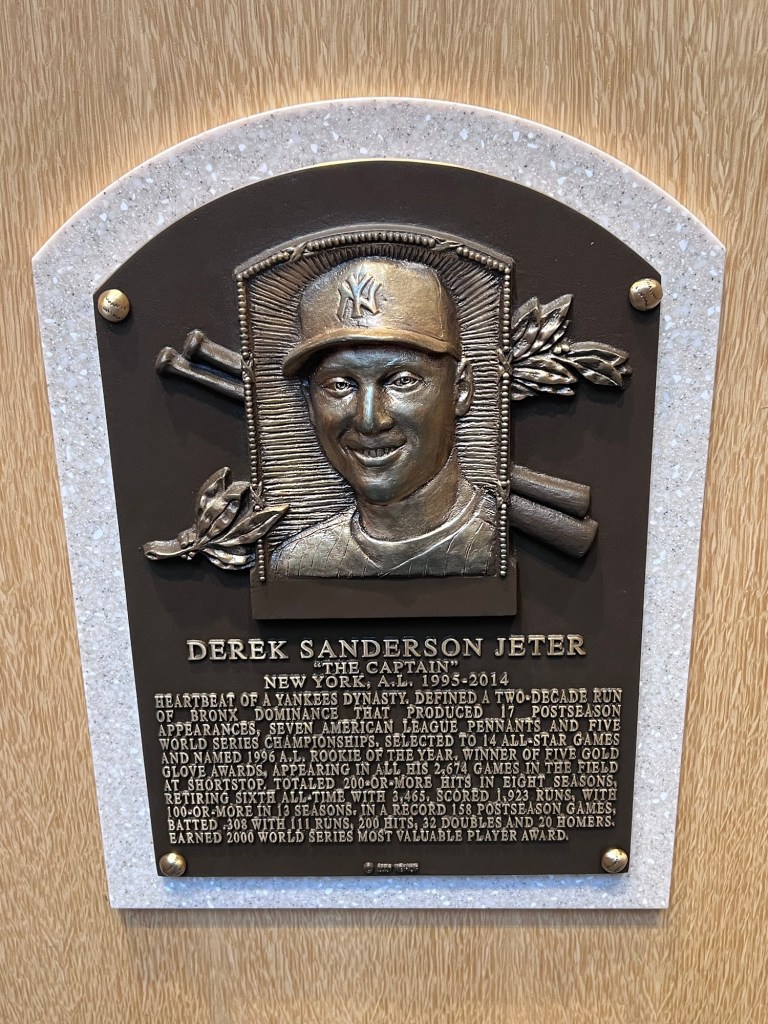
When visiting the National Baseball Hall of Fame be prepared to spend over two hours in the museum because there is so much to see. When I visited the museum recently they had just inducted Derek Jeter as one of its newer members so a lot of Yankee fans were swarming around the picture and the display.
Derek “The Captain” Jeter being inducted into the Baseball Hall of Fame
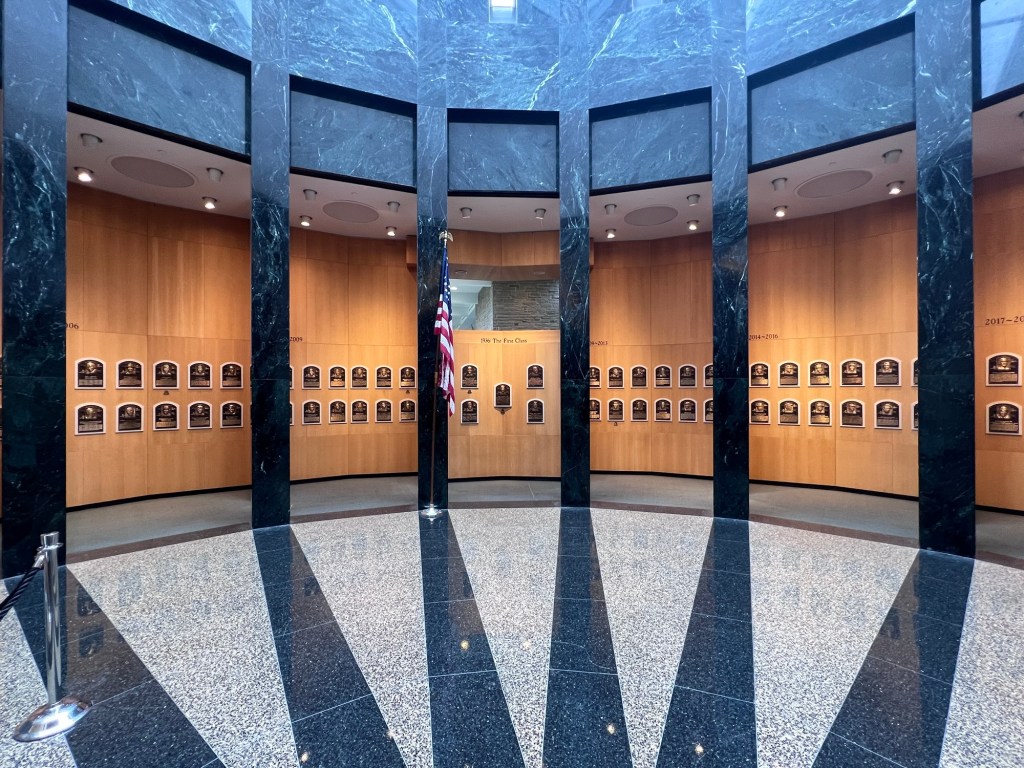
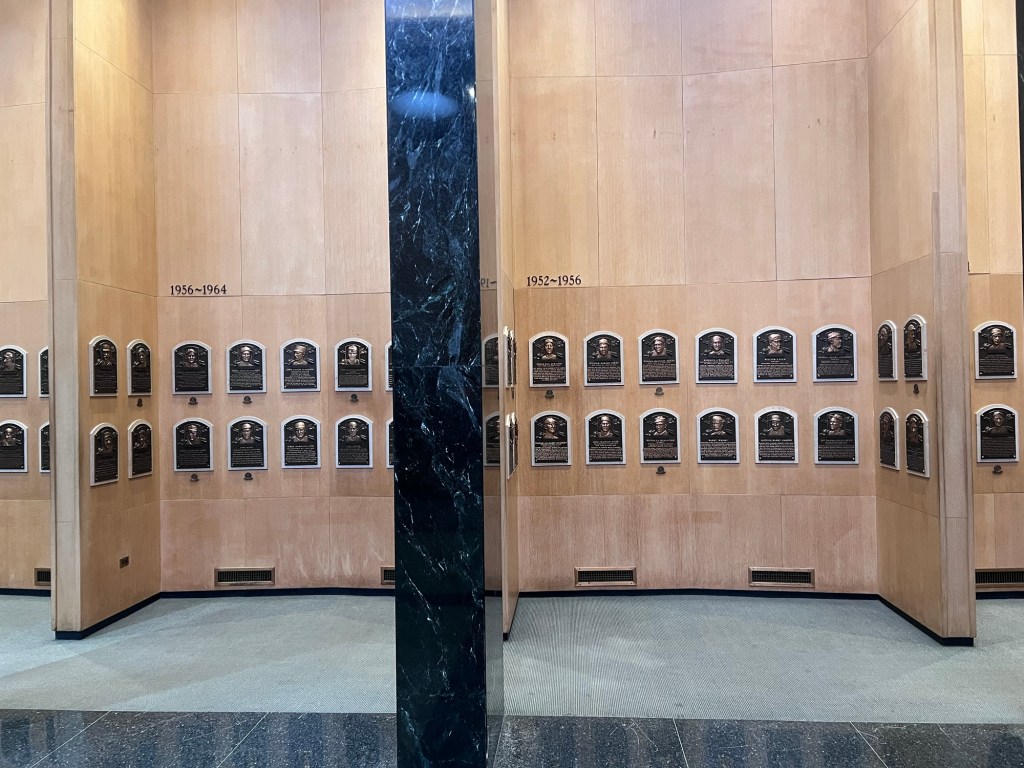
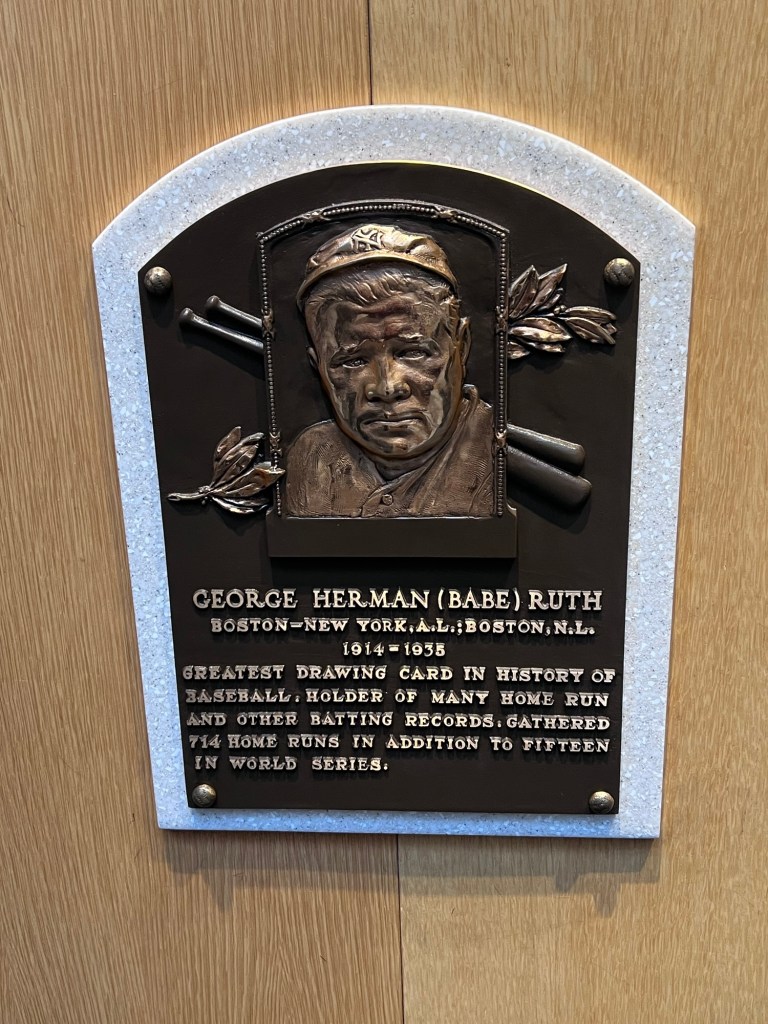
The museum can be overwhelming if you don’t break it down to the part of the visit. I wanted to see the Hall of Fame plaques so I started there. All the players of the past were memorialized by the pictures on plaques with a small blurb about their careers and what team they wanted to be remembered by when they were inducted in.
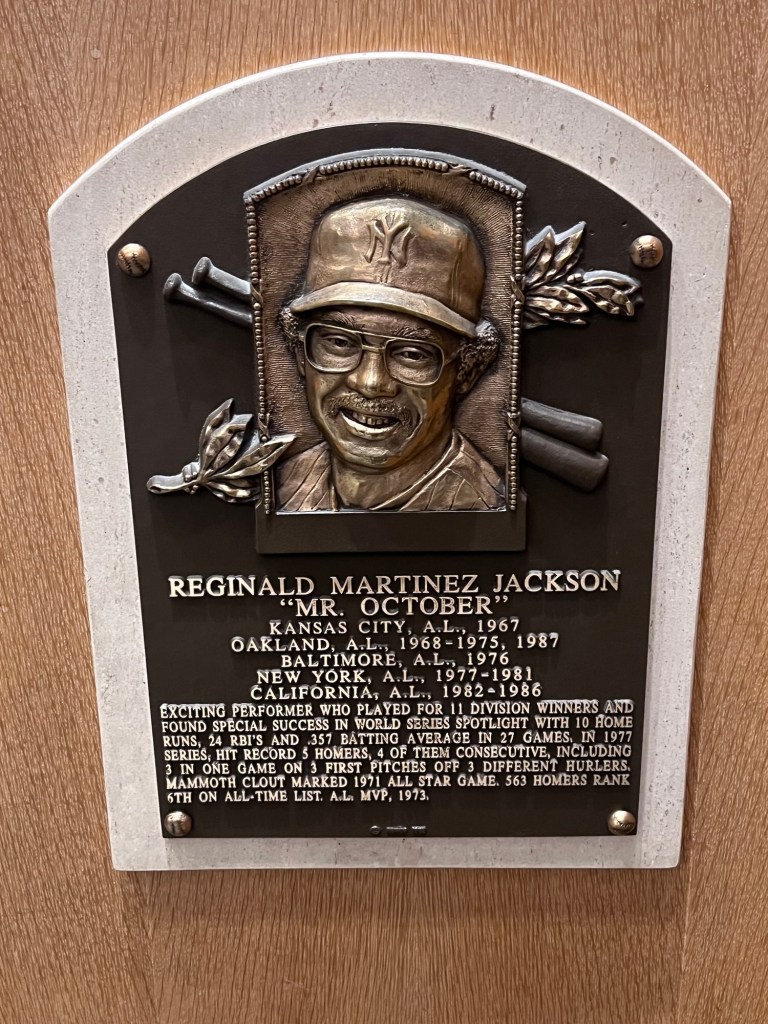
My hero, Reggie Jackson ‘Mr. October’
I was looking for Reggie Jackson, because I remember when “Mr. October” entered he said with pride that he was coming in as a Yankee. He was one of my hero’s of the 1970’s.
The Hall of Fame Plaque Wall
The Hall of Fame Gallery
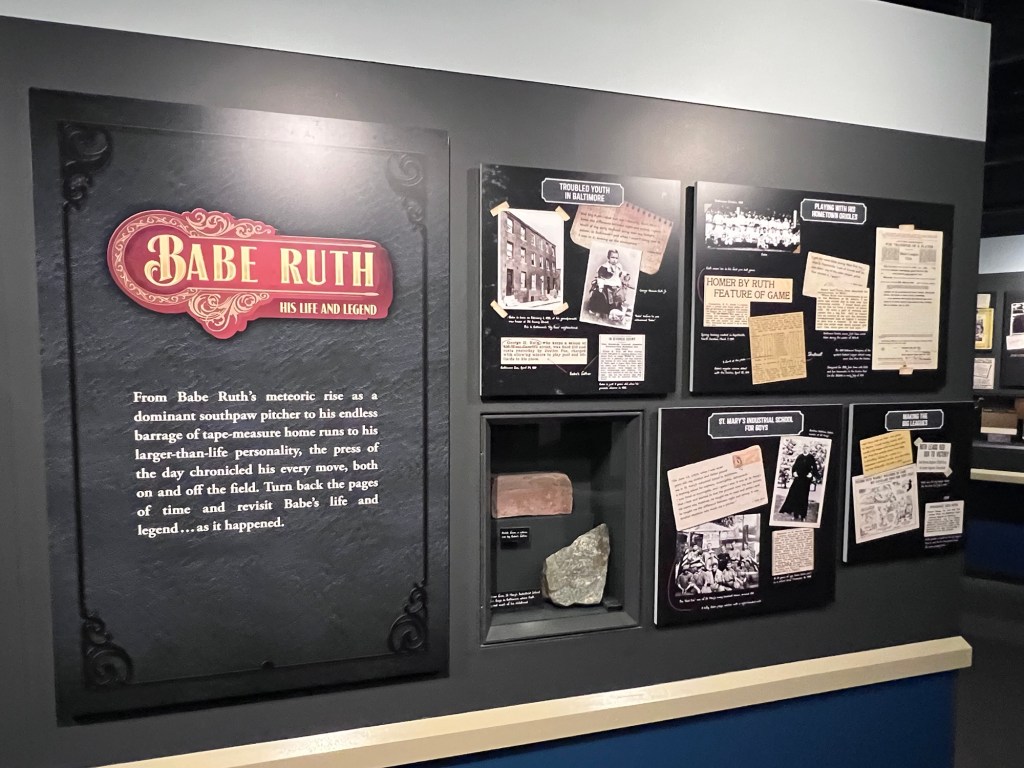
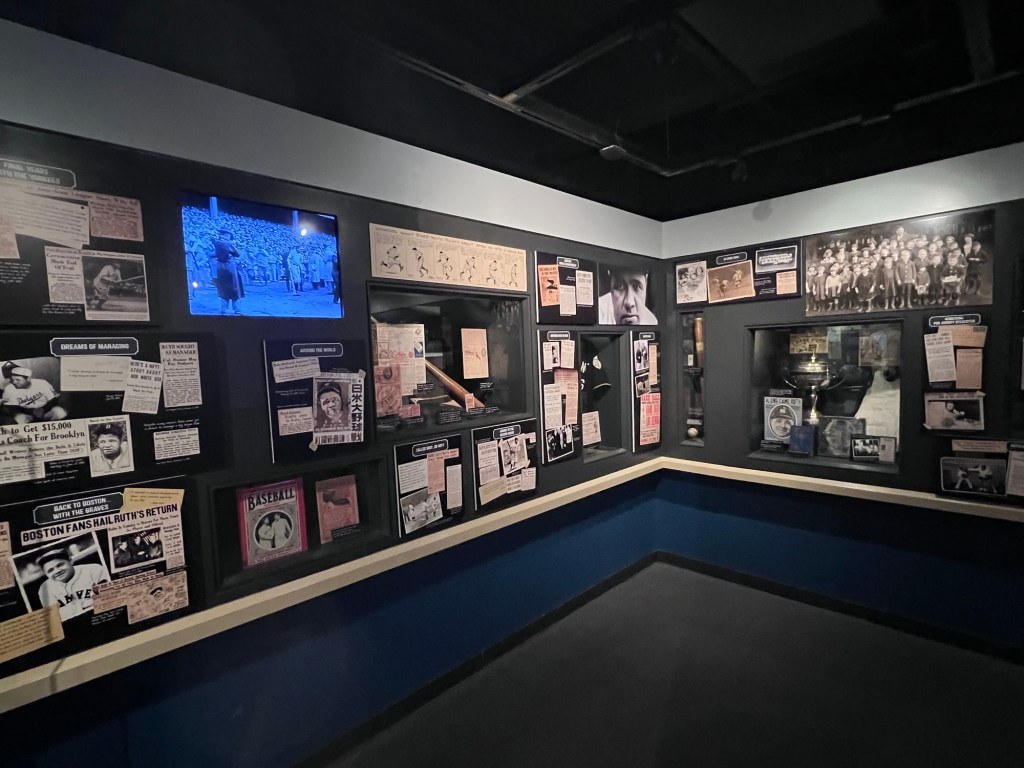
The second floor is loaded with all sorts of baseball memorabilia from Hank Aaron’s uniforms, pictures and stats to a complete display of all of Babe Ruth’s career history from uniforms, stats, recordings, pictures and even his locker.
Babe Ruth display
The Babe Ruth exhibit
The Babe Ruth panel
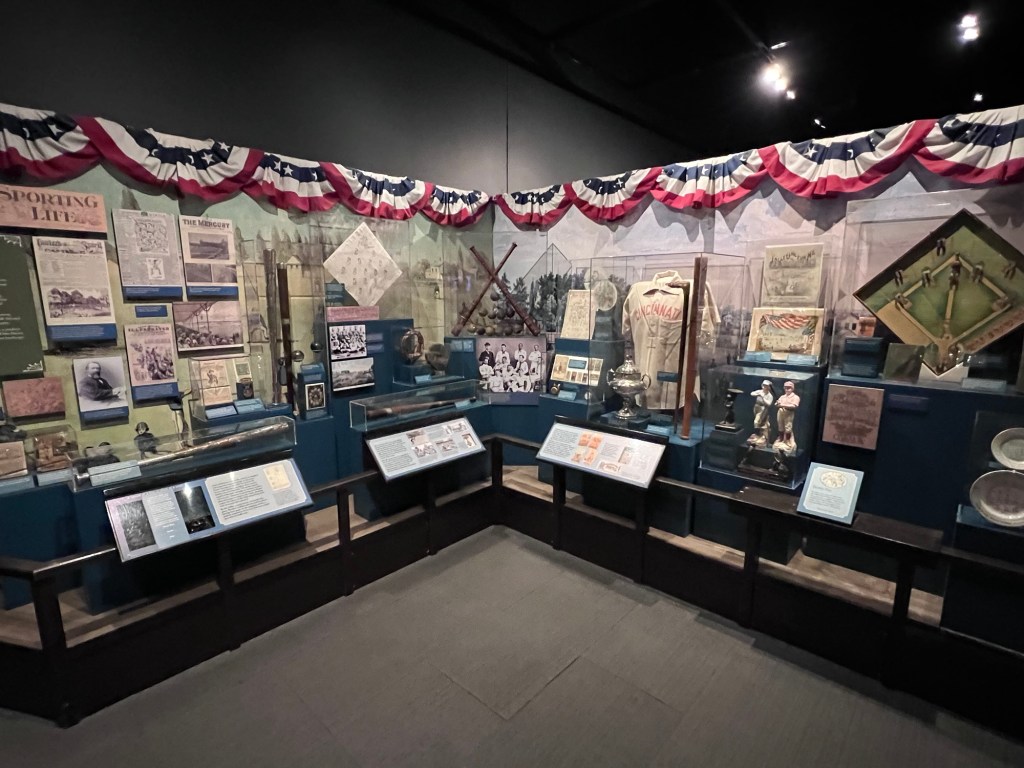
Each display case represented the history of baseball and how it has progressed over the years. From the early Egyptians playing a similar sport with a bat and ball to the progression of cricket in the British Territories to modern day stickball in the cities, baseball keeps morphing and changing to modern times.
The history of Baseball
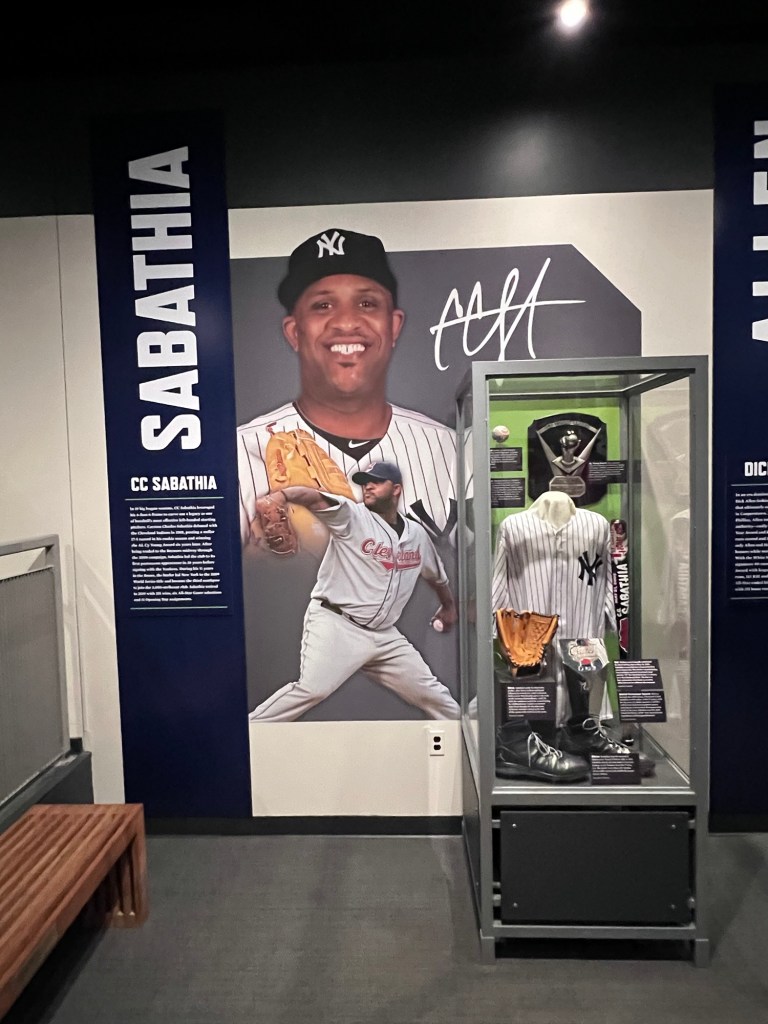
The CC Sabathia exhibit on his coming into the Hall of Fame
Many famous players have donated their entire collections to the museum so it was interesting to see their progression from the time they were young to the time of their retirement.
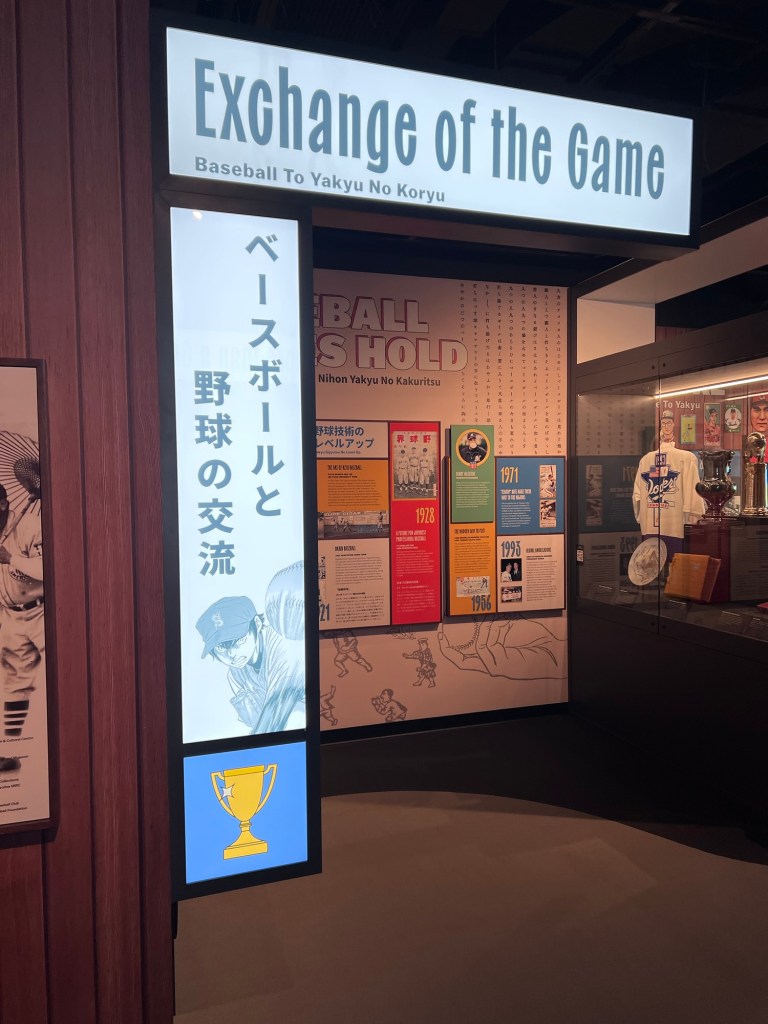
The Japanese baseball history
There are also collections of baseball cards, recordings and films, modern day artworks and even Hollywood’s take on baseball with posters like the “Field of Dreams” and “The Bad News Bears”. I was surprised how the lines between reality and the truth begin to blur in a museum like this.
What I was grateful to was the amount of items donated by the fans, wanting to part with something so valuable to them to share it with other fans.
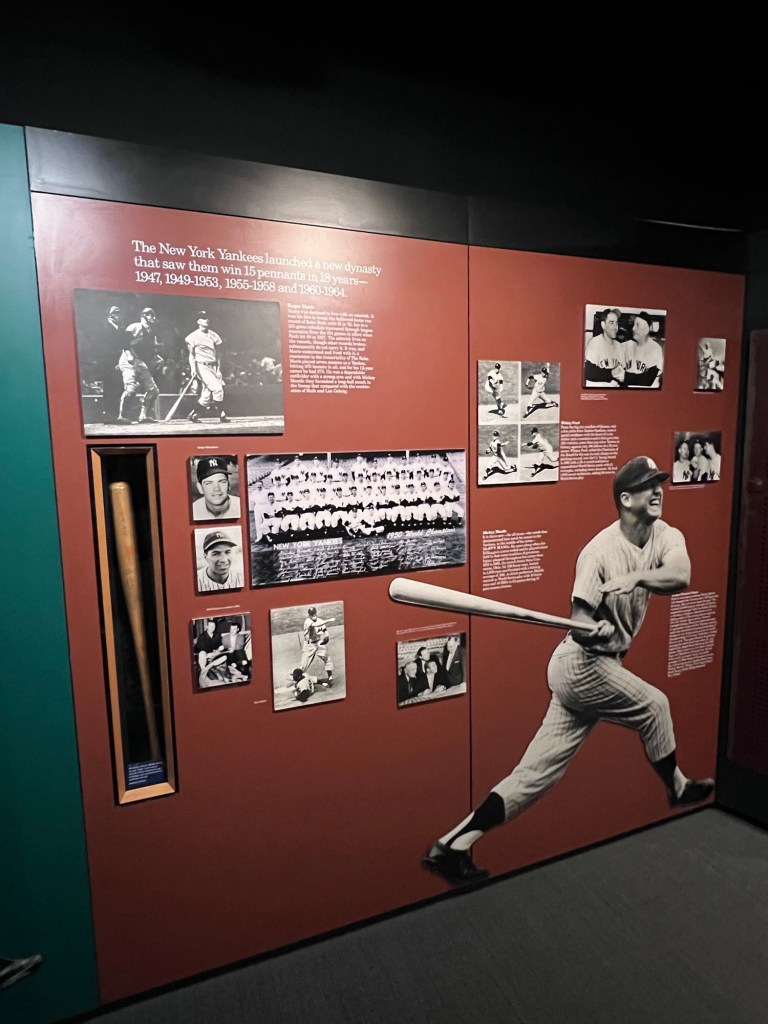
The NY Yankee dynasty
I have to say that the museum can be a little overwhelming at time since there is so much to see so plan on spending at least over two hours and break the visit into two days to really experience the museum especially if you are a true baseball fan at heart.
It is an amazing experience.
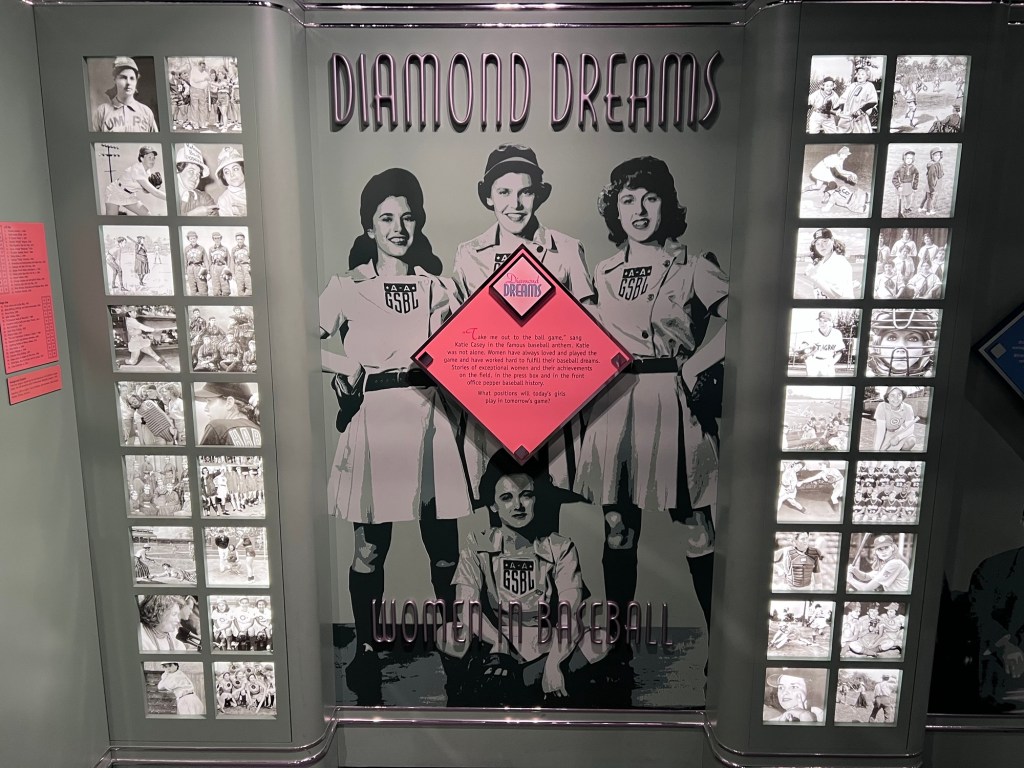
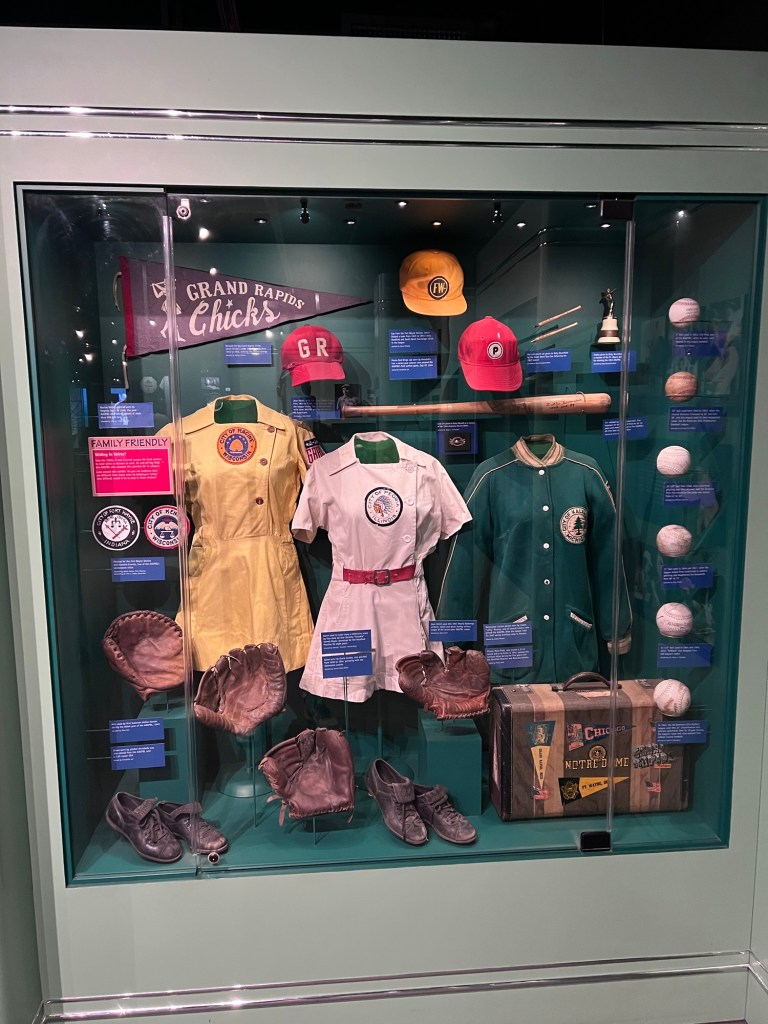
The Women’s League history
The outfits for Women’s Baseball League
History of the National Baseball Hall of Fame:
(From the museum website)
The Village is pure Americana, a one-stoplight town nestled between the Adirondacks and the Catskills in Central New York. It drew from the family of James Fenimore Cooper, whose father, William, founded the village, whose works of literature have become American standards.
And yet Cooperstown has become a synonym for “baseball”, thanks to a story about a Civil War general and the country’s love for a timeless game. By the last half of the 19th Century, baseball had become the National Pastime. The United States was a little more than 100 years old and baseball had evolved with the country. But there was no definitive answer as to the birth of the game.
Enter the Spalding Commission, a board created by sporting goods magnate and former player A. G. Spalding to establish the genesis of baseball. And after a few years of searching, they found their answer.
A plaque commemorating Major General Abner Doubleday was installed prior to the Hall of Fame’s opening on June 12th, 1939.(Homer Osterhoudt/National Baseball Hall of Fame and Museum).
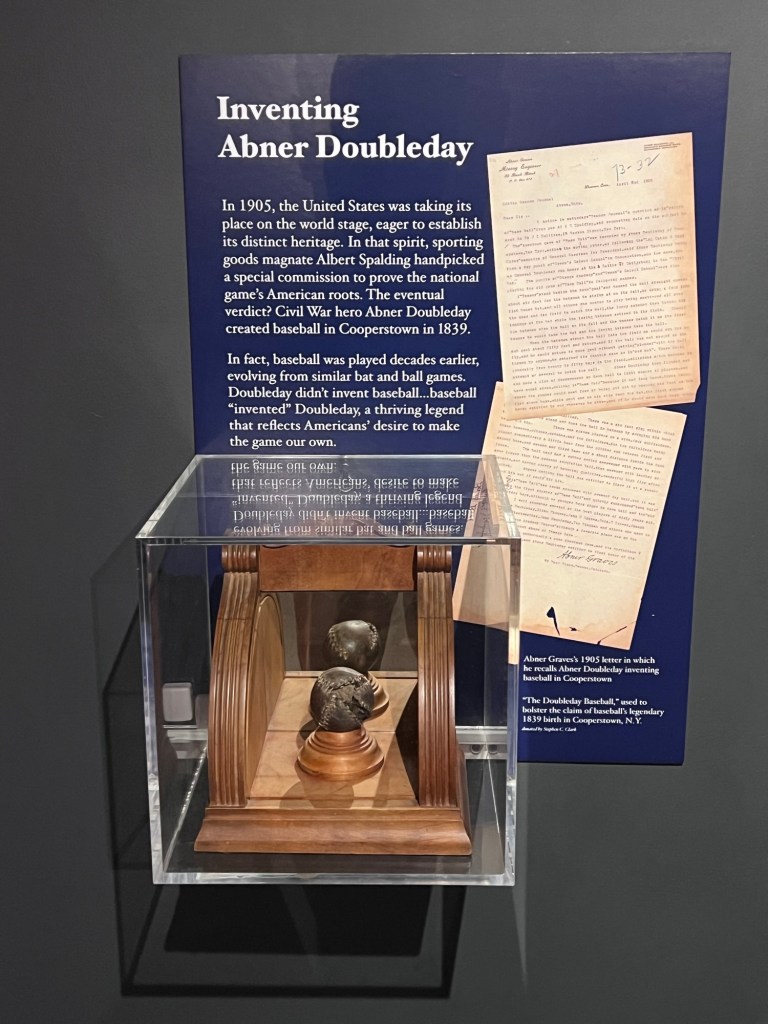
The Abner Doubleday display
Abner Graves, a mining engineer, proclaimed that Abner Doubleday, a decorated Union Army officer who fired the first shot of defense of Fort Sumter at the start of the Civil War and later served at the Battle of Gettysburg, invented baseball in 1839 in Cooperstown. That was good enough for the Spalding Commission, which came to its conclusion in 1907.
Three decades later, Cooperstown philanthropist Stephen C. Clark, seeking a way to celebrate and protect the National Pastime as well as an economic engine for Cooperstown, asked National League president Ford C. Frick if he would support the establishment of a Baseball Hall of Fame in Cooperstown. The idea was welcomed and in 1936 the inaugural Hall of Fame class of Ty Cobb, Walter Johnson, Christy Mathewson, Babe Ruth and Honus Wagner was elected.
Three years later, the Hall of Fame building officially opened in Cooperstown as all of baseball paused to honor what was called “Baseball’s Centennial” and as the first four Hall of Fame classes were inducted.
To mark the occasion, Time Magazine wrote: “The world will little note nor long remember what (Doubleday) did at Gettysburg but it can never forget what he did at Cooperstown.”
In the years since, The Doubleday Myth has been refuted. Doubleday himself was at West Point in 1839. Yet the Myth has become strong enough that the facts alone do not deter the spirit of Cooperstown.
The National Baseball Hall of Fame and Museum surely the most well-known sports shrine in the world, continues to thrive in the town where baseball’s pulse beats the strongest.
But in the following the opening of the Hall of Fame on June 12th, 1939, the Museum has become much more than just home to baseball’s biggest stars. The Hall of Fame is the keeper of the game.
The Hall of Fame’s collections contain more than 40,000 three demensional artifacts, such as bats, balls, gloves and uniforms donated by players and fans who want to see history preserved. The museum’s curators use the artifacts, whose number grows by about 400 a year, to tell the story of the National Pastime through exhibits.
The Museum itself is a melding of five buildings sewn together via several renovation and expansion programs. Today, the Museum easily accommodates more than 3000 visitors per day during the peak season.
The artifact collection is housed in climate-controlled rooms to protect the delicate, fabric and wood materials used in baseball. The Museum promises, in exchange for the donation of an artifact, to care for an item in perpetuity, which means the effects of temperature and humidity must be constantly regulated. The Museum’s first accessioned item was the “Doubleday Baseball”, which was discovered in a farmhouse in nearby Fly Creek, NY in 1935 and dates to the 19th Century.
Then in 1937, Cy Young, elected to the Hall of Fame that year in the second year of voting, generously donated several artifacts, including the 1908 ball from his 500th win and the 1911 uniform he wore with the Boston Braves. Young’s donations generated new offers from other players as well as fans.
Thousands of fans attended the opening of the Hall of Fame on June 12th, 1939 and that same year another Cooperstown tradition was started with the launch of the annual Hall of Fame game. For 70 years, the Hall of Fame game became an annual celebration of the game as two Major League Baseball teams played an annual exhibition contest at Doubleday Field in Cooperstown.
Though the game was discontinued in 2008, the legends live on with the advent of the Hall of Fame Classic, an annual event over Memorial Day Weekend featuring Hall of Famers and former major leaguers at historic Doubleday Field.
The field itself dates back to 1920 and the first grandstand was built in 1924. Thanks to Works Progress Administration money during the Great Depression, Doubleday Field was expanded again in 1934. Today, the field is occupied non-stop during the spring, summer and fall as high school athletes, collegiate summer league stars and recreational players savor the chance to play on hallowed ground.
The A. Bartlett Giamatti research Center is also part of the Museum experience and the Center’s Library contains more than three million documents on the history of baseball, ranging from reference books to the “Green Light Letter” sent by President Franklin D. Roosevelt to baseball commissioner Kenesaw Mountain Landis in January of 1942, urging Landis to keep baseball going during World War II. The National Baseball Hall of Fame Library also contains more than 250,00 baseball photographs and images.
As an educational institution, the Museum offers outreach programs for audiences of all ages. Through virtual classroom technology, Cooperstown is transported to school across the country with video-conference lessons featuring any one of 16 learning modules.
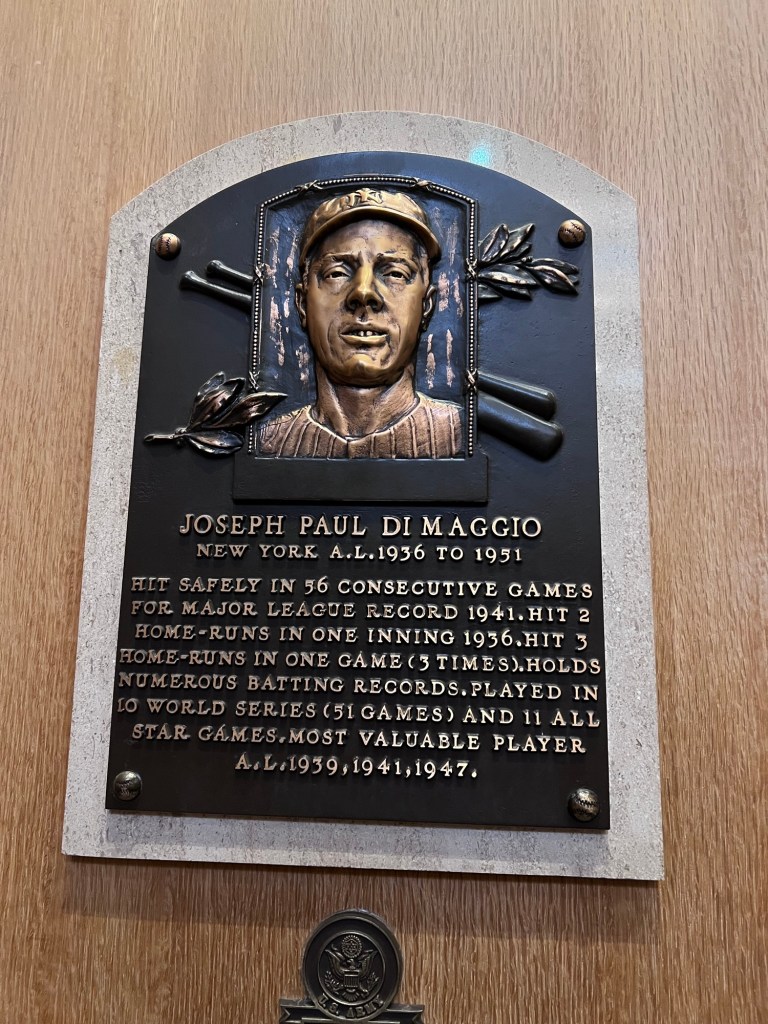
The Joe Di Maggie award
Mission of the Museum:
Preserving History, Honoring Excellence and Connecting Generations.
The National Baseball Hall of Fame and Museum is an independent, non-profit educational institution dedicated to fostering an appreciation of the historical development of baseball and its impact on our culture by collecting, preserving, exhibiting and interpreting its collection for a global audience as well as honoring those who have made outstanding contributions to our national pastime.
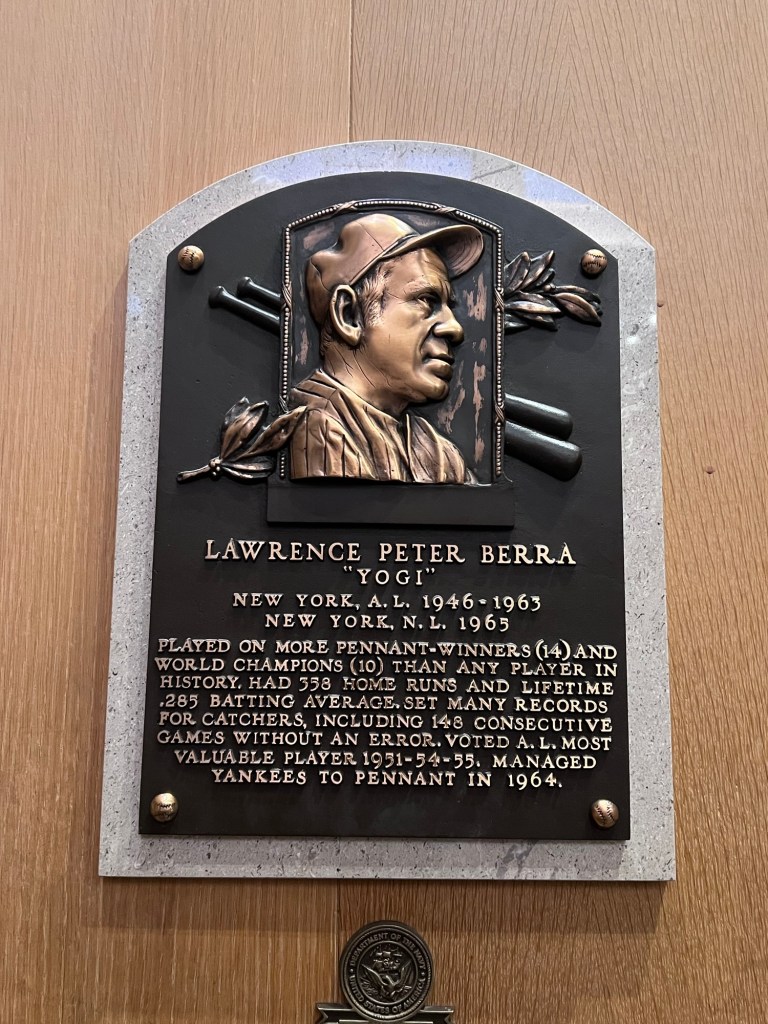
The Yogi Berra panel
The Hall of Fame’s mission is to preserve the sport’s history, honor excellence within the game and make a connection between the generations of people who enjoy baseball. Likewise the institution functions as three entities under one roof with a museum, the actual Hall of Fame and a research library. With these parts working together, the Museum is committed to fulfilling its mission by:
Collecting, through donations, baseball artifacts, works of art, literature, photgraphs, memorabilia and related materials which focus on the history of the game over time, its players and those elected to the Hall of Fame.
Preserving the collections by adhering to professional museum standards with respect to conservation and maintaining a permanent record of holdings through documentation, study, research, cataloging and publication.
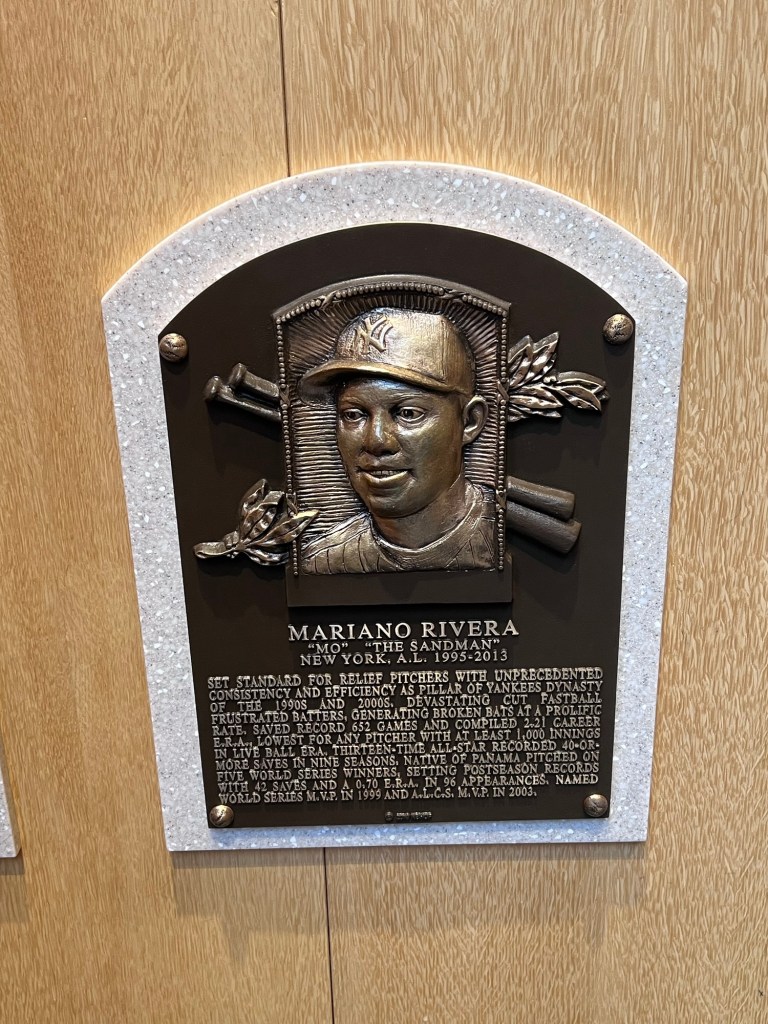
The Mariano Rivera plaque
Exhibiting material in permanent gallery space, organizing on-site changing exhibitions on various themes, with works from the Hall of Fame collectins or other sources, working with other individuals or organizations to exhibit loaned material of significance to baseball and providing related research facilities.
Interpreting artifacts its exhibition and education programs to enhance awareness, understanding and appreciation of the game fora diverse audience.
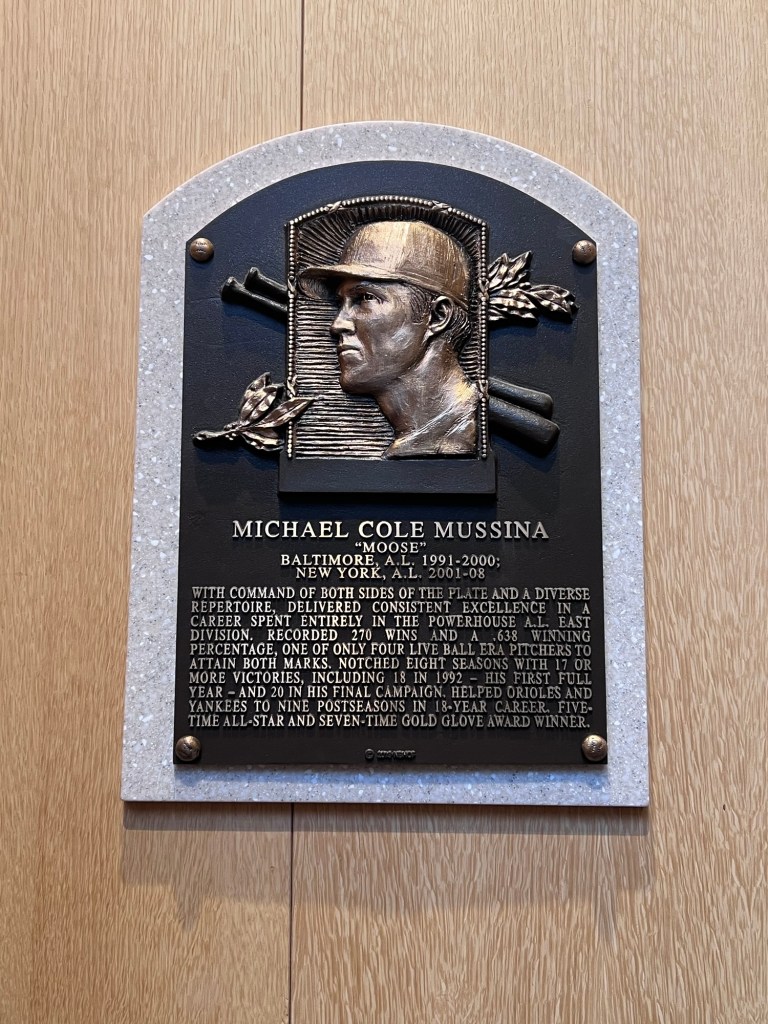
The Mike Mussina plaque
Honoring, by enshrinement, those individuals who had exceptional careers and recognizing others for their significant achievements.






 Visiting a Museum: The Unique, Unusual, Obscure and Historical