Hours: Tuesday-Saturday: 11:00am-6:00pm/Closed on Sunday and Monday
Admission: Free
My review on TripAdvisor:
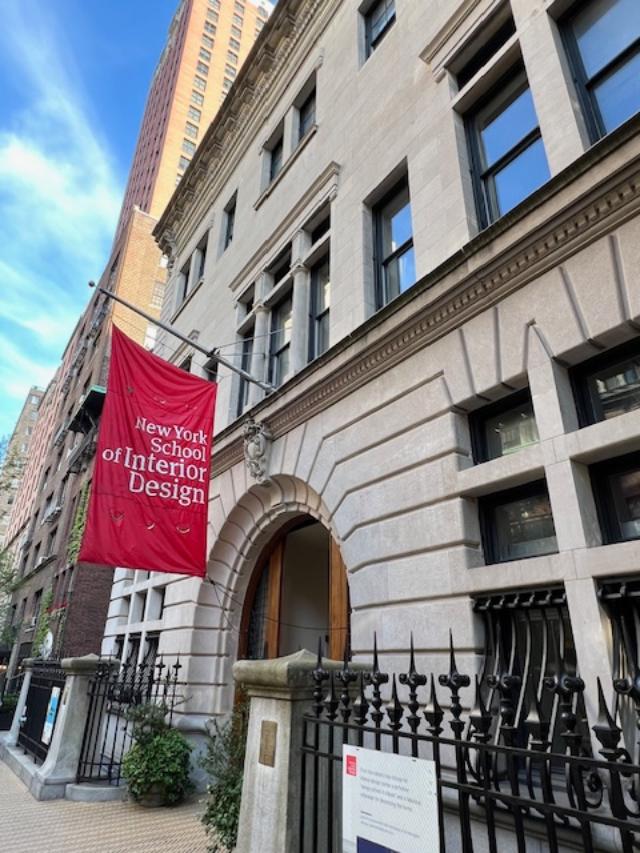
New York School of Interior Design at 170 East 70th Street
I came across the Gallery of the New York School of design when walking the Upper East Side for my project, ‘MywalkinManhattan.com’ when covering the lower part of the Upper East Side.
The entrance to the Gallery
The New York School of Interior Design was displaying their Senior projects as most the college galleries I visited were doing at this time (this takes place between May and June around graduation time). It was interesting to see how the seniors at the college reused space in old buildings for new purposes. The seniors use their creativity to recreate these spaces. It is the student’s project to take a space and redesign it for a new purpose.
The entrance sign to the gallery
We had done similar projects in college but did not have the computer technology that students do today and they really went above and beyond the things we did back then. You can take this project into 3-D if you want and how real it looks. These kids are so talented that their creativity reminds me of us when we were in school. If only we had what they have today.
The Student Projects line the walls
Take time to look at the detail work and space design of each project. Some of the students even include samples of fabrics and stone/wood work that will be used for the surfaces.
The Gallery is located on the Upper East Side in the back of the school’s building on the first floor. The admission is free and the Gallery is open when the school is open. There are only two shows a year. You just have to show your ID to get into the galleries.
The student project along the walls
What I like about the museum is that you get to see the student creativity and how they imagine the space will be designed. The use of color and shape play a roll in all the designs. It looks like the students get to choose their own space to design.
The best part is the you get to go in for free with you ID and just enjoy the show and see the students creativity.
History of the Gallery/Museum at the College:
The New York School of Design’s gallery presents two public exhibits yearly on design and architecture. Exhibitions have included ‘Paris in the Belle Epoque’, rare photographs from the years 1880-1914; Perspective on Perspective, an exploration of artistic technique; ‘The Great Age of Fairs; London, Chicago, Paris, St. Louis’, selective coverage from the first World’s Fair in 1851 to the last in 1904; ‘Venice’s Great Canal’, architectural drawings of the buildings along the famous thoroughfare; ‘Stanford White’s New York’, a survey of that classicist’s many metropolitan buildings and ‘Vanishing Irish Country Houses’, a look into the preservation crisis facing these not infrequently grand structures.
The gallery’s Thursday-evening lectures have included ‘Palladio’s Villas’; ‘Beaux-Arts New York’ and a survey of the Grands Projects undertaken in Paris during the tenure of French President Francois Mitterrand.
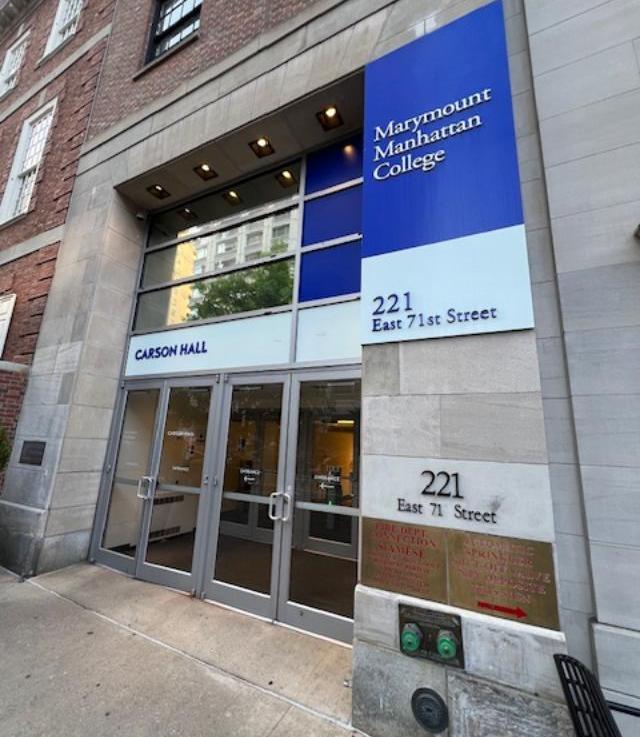
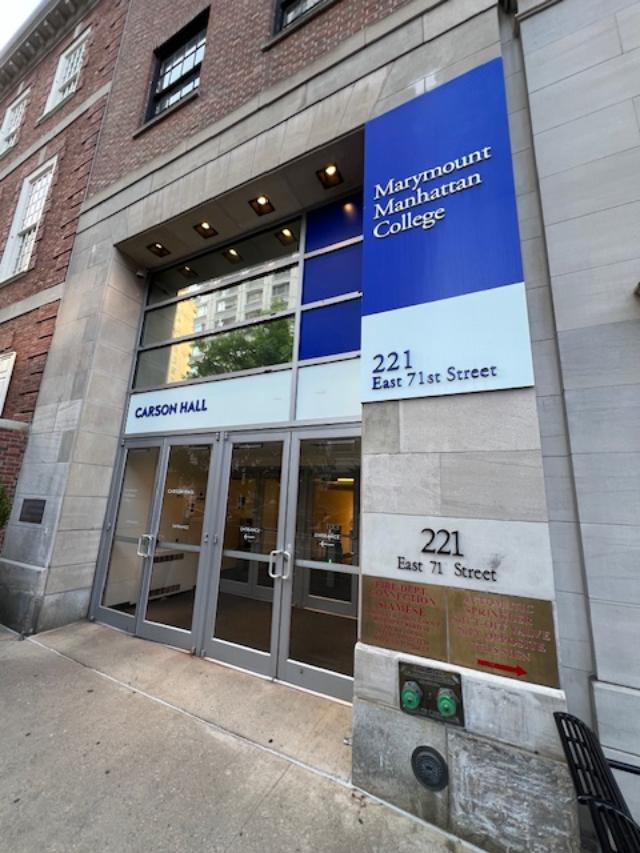
The entrance to Marymount College’s Carson Hall where the gallery is located.
I came across The Hewitt Gallery of Art when I was exploring the Upper East Side for my project, ‘MywalkinManhattan.com’ and found myself walking into the Department of Art & Art History on the Marymount Manhattan College campus.
The Hewitt Gallery on the Marymount Campus
The Hewitt Art Gallery:
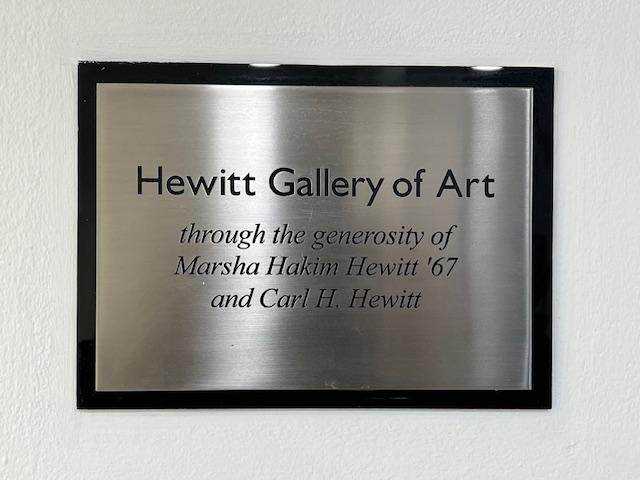
The Hewitt Gallery of Art
In conjunction with the exhibitions, gallery receptions give students the opportunity to engage with professional artists, critics, collectors and curators. Many of the exhibiting artists are also guest presenters in our Art and Art History classes.
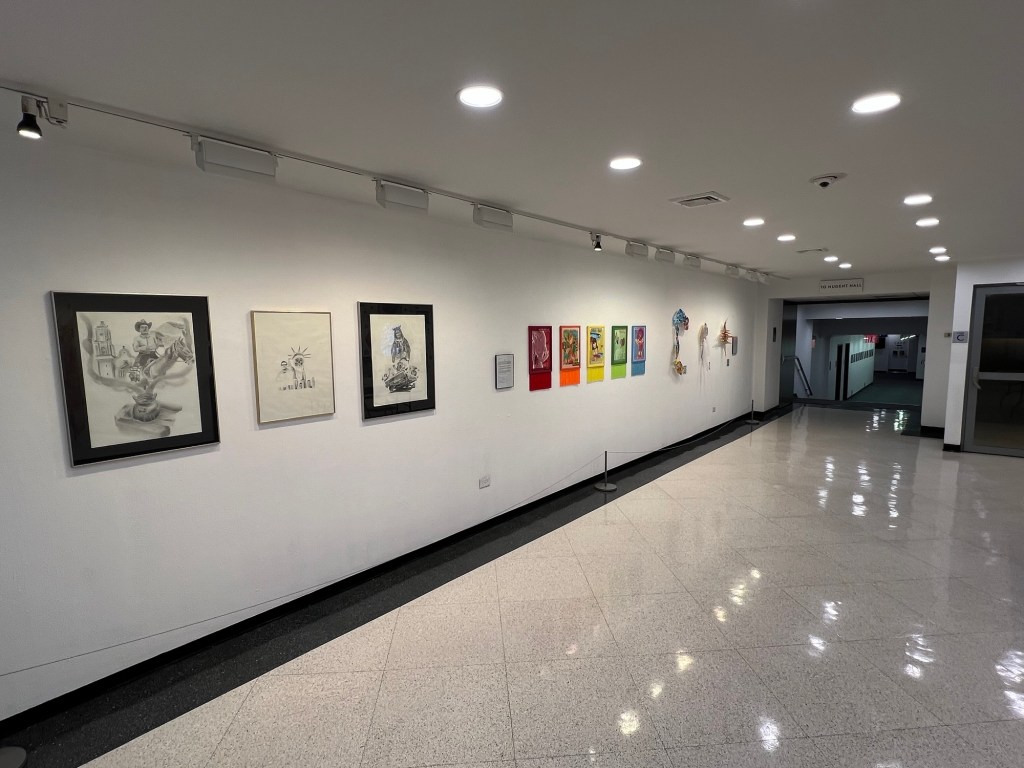
This small but unique gallery was showing the Senior Class’s Thesis Show where several members of the Senior Class were showing their final projects in the three hallways of the gallery. The students did a good job mounting their works and each was different in their own way, some pictures, some video, some painting. You got to walk through the first floor to admire the work and the best part was that the gallery was free.
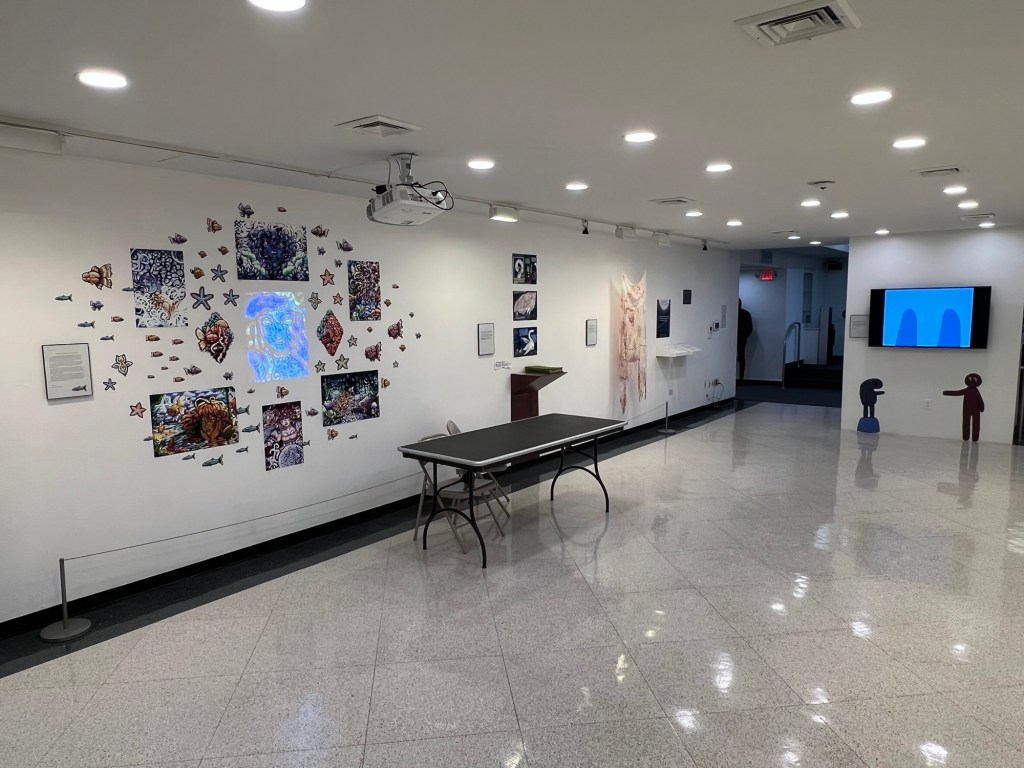
The main gallery on the first floor
The student artwork in the back gallery
The Hewitt Gallery of Art, comprised of the Esplanade and the adjacent Black and White Galleries in Nugent Hall and Carson Hall, offers the Marymount Manhattan community exposure to professional artists and to the larger art world.
The Gallery is known in the New York art community as an alternative exhibition space showcasing contemporary art of emerging and mid-career artists. Innovative and challenging works of art reflecting a wide range of concerns and styles are presented in changing thematic exhibitions. Recent professional exhibitions have been ‘Altered States’, ‘Art & Politics: See it Now!’, ‘The Selfie & Others’, ‘Self-similarity in Math’, Nature and Art’ and ‘The Mind’s Eye: Sight & Insight’. The current exhibition that I visited in 2025 was “Echoing Identities” Light & Form”.
The Black and White Galleries
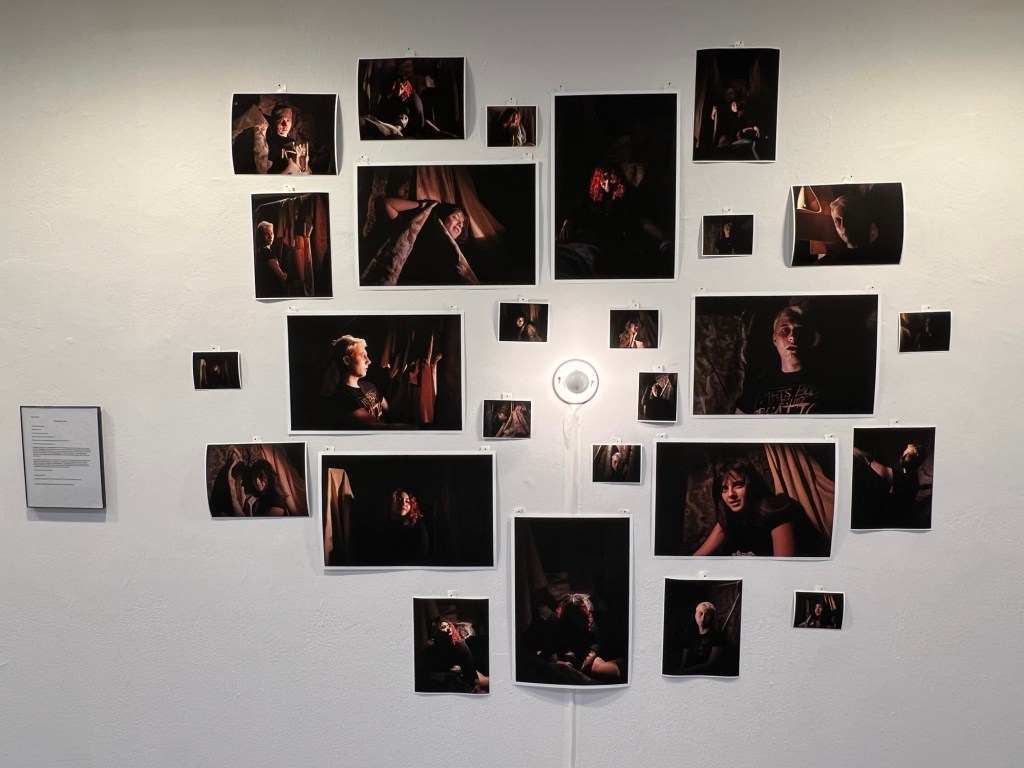
The Echoing Identities: Light & Sound exhibition
When I visited the Gallery in 2025, the Graduate students were exhibiting their Senior project and the show was entitled ‘Echoing Identities: Light & Form’. Each student explored their work with their own original pieces.
The entrance of the Gallery to the ‘Echoing Identities
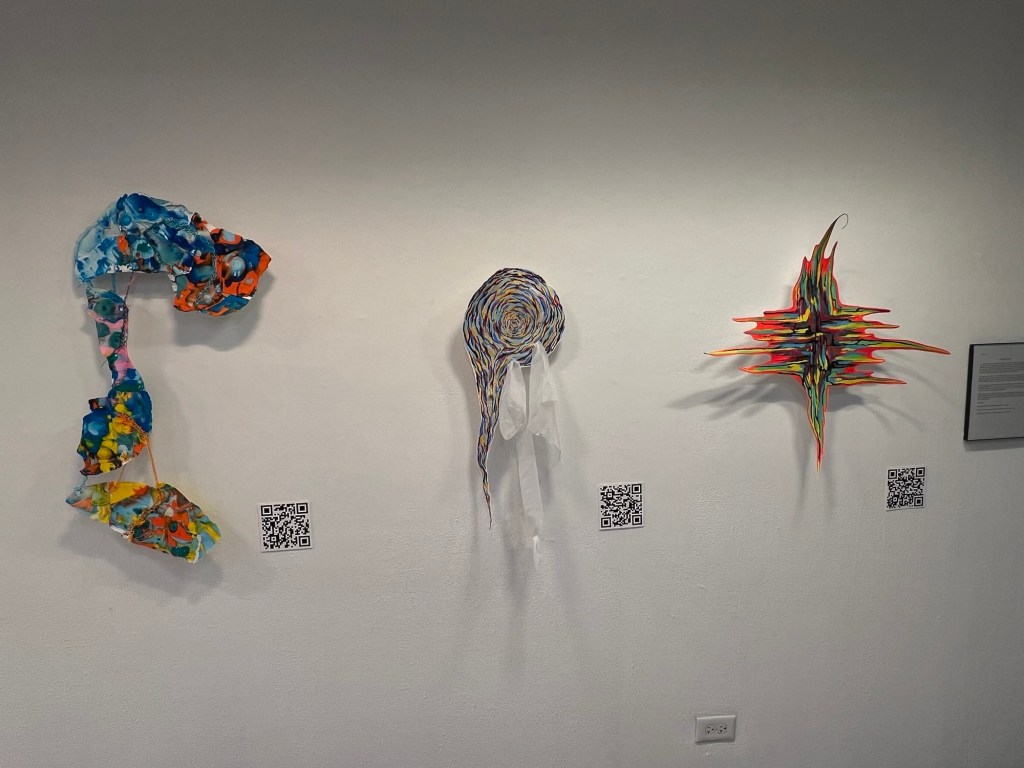
The exhibition had many different mediums from cloth and textiles to sculpture and print. There was also a mixture of video and printed media.
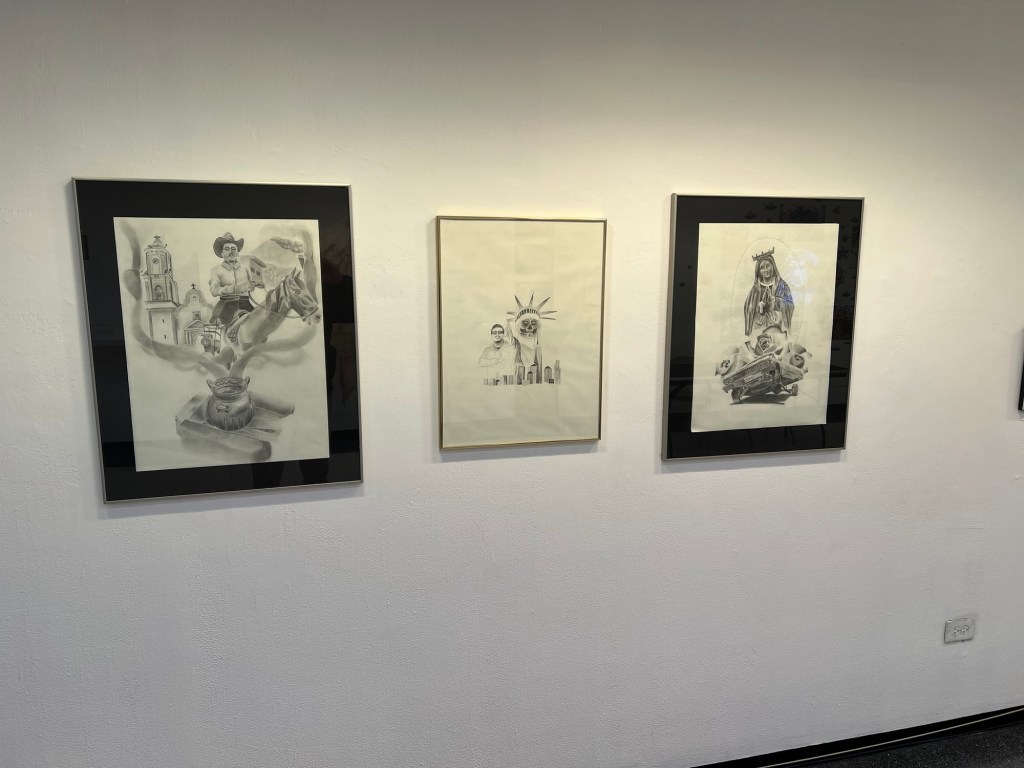
The Mexican inspired works
The sign for Gray Laxton’s work
The works by artist Gray Laxton
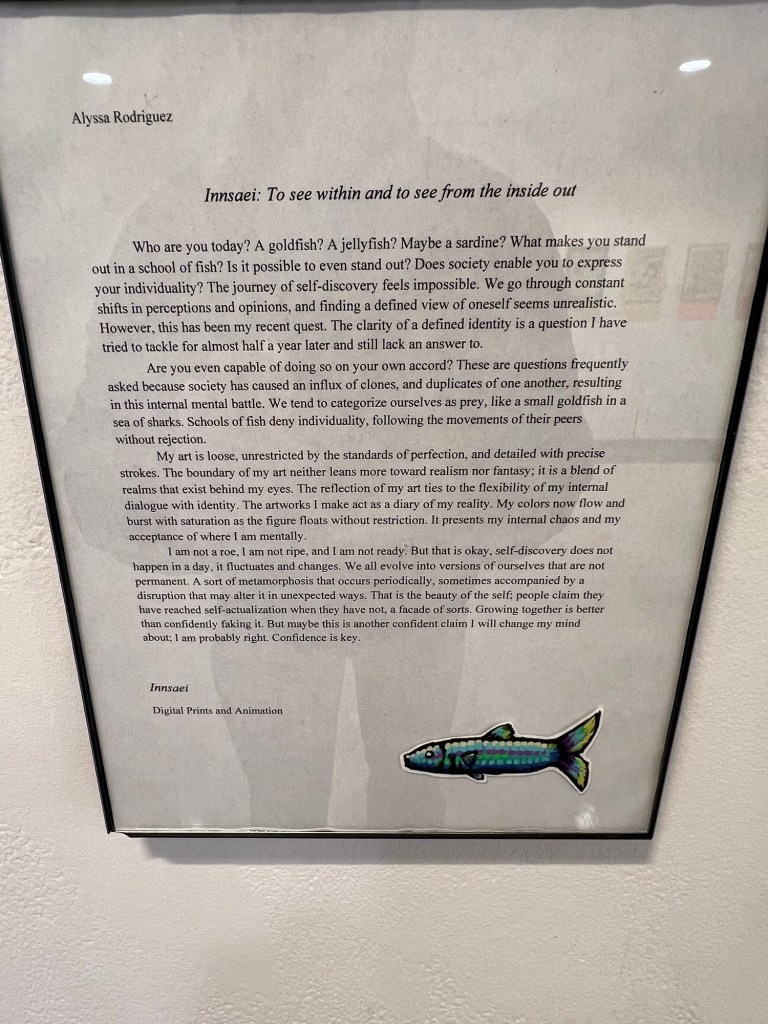
The sign for artist Alyssa Rodriguez
The piece by artist Alyssa Rodriguez
The sign for Alice Linkh’s work and my favorite in the show ‘Alice and Compony’ based on a story that she created and a book her grandmother created for her based on the story she told her after a dream she had. I loved both the book and the art that was related to it.
The original artwork for ‘Alice and Company’:
The book Alice Linkh’s grandmother created
The book and artwork for ‘Alice and Company
I thought it was a cute story of a little girl who worked with animals to repair the moon when it was damaged. I thought it was a clever children’s dream that made an interesting story.
The room off to the side of the Gallery, the Black and White Gallery offers more contemporary works of the students.
The Black and White Gallery
The works of some of the graduating students
The sign for ‘Finding the Sun’ by artist Ethan Foley
The work ‘Finding the Sun’
One of the clothing art sculpture
The students did a great job on their final projects. Each student gave their perspective in a very original way.
History of the Museum:
The Hewitt Gallery of Art is a laboratory for and an extension of the pedagogy of the Art Department programs.
The Hewitt Gallery provides opportunities for art majors to gain first-hand experience in exhibiting their Senior Thesis projects, as well as having solo exhibitions in their spring semester. Juniors also exhibit in an annual group exhibition and students are able to curate and organize shows in conjunction with their mentors and the Gallery Director.
Open: Sunday-Monday Closed/Tuesday-Saturday: 11:00am-5:00pm-See website when open.
Admission: Free
My review on TripAdvisor:
The Hunter College Museum-The Bertha and Karl Leubsdorf Gallery at 132 East 68th Street
I visited this wonderful little gallery on the main campus of Hunter College on the Upper East Side of Manhattan on my project, “MywalkinManhattan.com”. It is an interesting, small gallery that exhibits more fringe artists and collections. The best part of the gallery is that it is not overwhelming like the bigger museums in the City and you can see the whole gallery in about an hour or a little more (See my review on TripAdvisor).
A former exhibition was: Axis Mundo: Queer Networks in Chicano L.A. is an interesting look at the Los Angeles based queer Chicanx artists between the late 1960’s and early 1990’s and is the first of its kind to excavate histories of experimental art practice, collaboration and exchange by a group of artists in Los Angeles (Hunter College Gallery).
The Axis Mundo Exhibition
Currently the museum is hosting the BFA Final Projects and there is a combination of video, paintings and photography to choose from. There is some interesting sculpture work by some of the graduating seniors so take some time in the afternoon to visit the gallery.
The Axis Mundo Exhibition
I visited the Gallery again in March of 2021, when the campus open after COVID rules lifted. The exhibition being shown was entitled “The Black Index”, a series of Black artists were being featured.
“The Black Index” features the works of artists Dennis Delgado, Alicia Henry, Kenyatta A.C. Hinkle, Titus Kaphar, Whitfield Lovell and Lava Thomas. The artists included in The Black Index build upon the tradition of Black self-representation as an antidote to colonialist images. Using drawing, perform, performance, printmaking, sculpture and digital technology to transform the recorded image, these artists question our reliance on photography as a privileged source for documentary objectivity and understanding. Their works offer an alternative practice-a Black Index-that still serves as a finding aid for information about Black subjects, but also challenges viewers desire for classification (Hunter Gallery website).
Artist Alicia Henry’s work “Analogan III”
The works in The Black Index make viewers aware of their own expectations of Black figuration by interrupting traditional epismologies of portraiture through unexpected and unconventional depictions. These works image the Black body through a conceptual lens that acknowledges the legacy of Black containment that is always present in viewing strategies. The approaches used by Delgado, Henry, Hinkle, Kaphar, Lovell, and Thomas suggest understandings of Blackness and the racial terms of our neo-liberal condition that counter legal and popular interpretations and in turn offer a paradigmatic shift within Black visual culture (Hunter Gallery website).
“The Black Index” works (Hunter Gallery)
The nice part of these galleries are that it takes about 45 minutes to view the whole exhibition.
The BFA Art Show at the Hunter College Galleries
In the Spring 2025, I stopped into the galleries to visit the Undergraduate show, CODA.
The students featured in the show
The front galleries
The entrance to the main gallery
This piece is called “Flushed Toast”
Then in the main part of the gallery, there were a few pieces of yarn work that I thought were very interesting.
The works made of acrylic yarn by artist Demi Artemisa Espinoza
Artist Demi Artemisa Espinoza works
My favorite work in the show ‘Smiling Cheek to Cheek’
In the middle of the gallery, there were interesting modern sculptures.
The middle gallery
This was quite unique
Paintings in the show
Video works from student artist Aviella Holle
Video Artist Aviella Holle
The undergraduates in this Art program did an excellent job and I thought the works were very original.
The History of the Berth and Karl Leubsdorf Gallery:
(From the Hunter College Art Galleries website)
The Bertha and Karl Leubsdorf Gallery focuses on presenting historical and scholarly exhibitions and programming that provide new scholarship on important and often under-represented artists and art movements. Located on the Hunter College’s main campus, the gallery also hosts the BFA degree exhibitions each semester.
The Hunter College Art Galleries, under the auspices of the Department of Art and Art History, have been a vital aspect of the New York cultural landscape since their inception over a quarter of a century ago. The galleries provide a space for critical engagement with art and pedagogy, bringing together historical scholarship, contemporary artistic practice and experimental methodology. The galleries are committed to producing exhibitions, events and scholarship in dialogue with the intellectual discourse generated by the faculty and students at Hunter and serve as an integral extension to the department’s academic programs.
Asia Society is closed on major holidays. Please check AsiaSociety.org/NY for updates on museum, store and cafe hours.
Fee: $12.00 Adults/$10.00 Seniors/$7.00 Students with ID/Free to members and children under 16/Free Admission Fridays, 6:00pm-9:00pm
Adult, Student and Teacher tours:
For information or to schedule a tour, call (212) 327-9237
*Wheelchair accessible/available for use during visits/Complimentary cell phone audio tour available/Assistive listening devices and headsets available for many programs.
John D. Rockefeller 3rd (1906-1978) , who established Asia Society in 1956, firmly believed that art was an indispensable tool for understanding societies. From 1963 to 1978, he and his wife, Blanchette Hooker Rockefeller (1909-1992), worked with art historian Sherman E. Lee (1918-2008) as an advisor to build the Mr. and Mrs. John D. Rockefeller 3rd Collection, which was later bequeathed to Asia Society.
The Rockefeller Collection
The group of spectacular historical objects they assembled-including sculpture, painting and decorative arts-became the core of the Asia Society Museum Collection and is world renowned. The Collection, now consisting of approximately 300 pieces, is distinguished by the high proportion of acclaimed masterpieces, to which additional high-quality gifts and acquisitions have been added since the original bequest to Asia Society. The Collection has particular strengths in Chinese ceramics of the Song and Ming periods, Chola-period Indian bronzes and Southeast Asian sculptures.
Extraordinary examples of decorative art in the acclaimed Asia Society Museum collection include a number of superior East Asian ceramics, which make up more than one-third of the Collection. A luminous pair of twelfth-century Korean bowl and saucer sets, covered with the celebrated celadon glaze of the Goryeo period and an extraordinary tea leaf jar, decorated with mynah birds and accented with silver by Japanese ceramic artist Nonomura Ninsei (active ca. 1646-1677) are among the ceramic highlights.
Walking around the museum
An exquisite solid silver Chinese stem up that dates to the late seventh or early eighth century also stands out as an exceptional masterpiece of decorative art within the Collection. The skill of the craftsman is evident in the fine embossing, chasing and engraving of the birds, flowers and scrolling vines on the exterior of the cup.
Two other great strengths of the Collection are Hindu and Buddhist sculpture from South and Southeast Asia. An eleventh-century processional sculpture of the elephant-headed Hindu deity Ganesha is an endearing example produced by the South Indian master bronze casters at that time and one of the fifteen important Chola-period bronzes in the Collection.
Another great treasure is a rare eighth-century inscribed and dated inlaid-brass crowned Buddha seated on a lotus rising from water inhabited by serpent deities (nagas) from Kashmir or northern Pakistan. A sculpture of the serene and slender Buddhist Bodhisattva Maitrya stands just over an impressive three-feet tall and represents the pinnacle of Thai metal casting during the eighth-century.
These objects and the Asia Society Museum Collection as a whole continue to be an important means for sharing the talent, imagination, and deep history of the peoples of Asia with audiences all over the world.
(From: Masterpieces from the Asia Society Museum Collection)
We are …Policy
With top-level experts and advisors-including former heads of state and cabinet officials, CEOs, civil society leaders and scholars-the Asia Society Policy Institute creates solutions that advance Asia’s prosperity, security and sustainability. Its projects include working to strengthen regional security institutions and mechanisms in Asia, assessing the impact of China’s rise and tracking its economic reform program, recommending pathways to an inclusive and high-standard Asian trade architecture, charting a path for India’s admission to APEC and designing strategies for Northeast Asian economics to link carbon markets and reduce greenhouse gas emissions.
The Asia Society Center on U.S. China Relations seeks to build mutual understanding between the two countries through projects and events on policy, culture, business, media, economics, energy and the environment.
We are…Arts
Transforming Americans understanding of Asia through exhibitions and performing arts was at the heart of our founder’s vision. The bequest of the Mr. & Mrs. John D. Rockefeller 3rd Collection of traditional Asian art in 1979 spurred the building of our New York headquarters. Today, our ground-breaking exhibitions of traditional, modern and contemporary art-as well as performing arts, film and author programs-are presented to the highest acclaim at our centers in New York, Hong Kong and Houston and at venues all over the world. Global initiatives such as the Arts & Museum Summit bring together museum and cultural leaders from across Asia, the United States and Europe further appreciation of Asian arts.
The gift shop at the Asia Society
We are …Education
A rising Asia requires a rising generation of students to understand its cultures and complexities. The Center for Global Education at Asia Society has developed an internationally recognized approach to foster the global competence of students, aiming to improve the capacity of 100,000 educators to instill global competence in 4 million youth by 2030. We partner with leaders and institutions from around the world to transform teaching and develop global-ready students. We also lead a major effort to bring Mandarin language instruction and the study of China and Chinese culture to children in the United States and to bring global learning to American after school programs, in pursuit of best practices in global education.
(From Asia Society pamphlet)
Asia Society is a non-profit, nonpartisan organization offering dynamic public programming at our cultural centers in New York, Hong Kong and Houston and at our other global locations in the United States, Asia and Europe.
Asia Society appreciates the support of its members, who aid our vital mission of preparing Asians and Americans for a shared future. For more information, AsiaSociety.org.
Disclaimer: This information was taken directly from the pamphlets from the Asia Society in New York City. I give them full credit for all the information. Please see the above hours and programs and call the above numbers for more information.