Tag: Exploring Ho Ho Kus, NJ

Hopper-Zabriskie Family Cemetery                                First Street                                                                       Ho Ho Kus, NJ 07423

Hopper-Zabriskie Family Cemetery First Street Ho Ho Kus, NJ 07423

Hopper-Zabriskie Family Cemetery

First Street

Ho Ho Kus, NJ. 07423

(201) 652-4400

https://www.hhkborough.com/home/hopper-zabriskie-family-cemetery

https://www.atlasobscura.com/places/hopperzabriskie-cemetery

https://www.findagrave.com/cemetery/2303434/zabriskie-cemetery

Open: Sunday through Saturday Dawn to Dusk

My review on TripAdvisor:

https://www.tripadvisor.com/Profile/R4960NKjustinw/mediabatch/13643018?m=19905

The entrance to the Zabriskie-Hopper Cemetery

The History of the Cemetery:

(from the Borough of Ho Ho Kus, NJ website)

It is a family cemetery started before 1792 on land originally owned by Abraham Hopper. The Hopper family was the first to settle Ho-Ho-Kus, then known as Hoppertown. Many Dutch families also settled the area including the Zabriskie, Ackerman, Blauvelt, Bamper, Banta, and Terhune families. Most were members of the Old Paramus Reformed Church nearby.

While family members were commonly interred in the church graveyard, some chose to bury family members in small local plots closer to their residences. Such was the case with the Ackermans who had a plot on the northeast side of town near the Saddle River, and the Hopper and Zabskie families who were buried in the small plot in Hoppertown near the Ho-Ho-Kus brook.

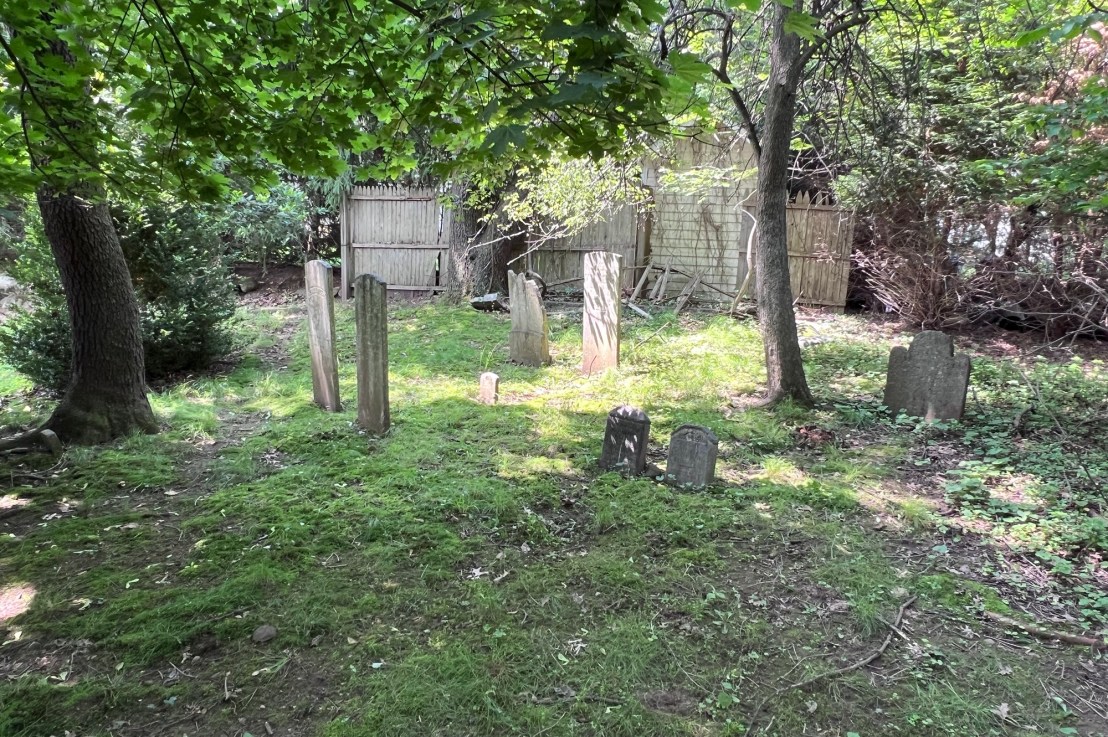
The small cemetery

The historic sign

The original family cemetery of the Hopper family when the original name of the area was ‘Hoppertown’ for the family whose land dominated the area. While some would bury their loved ones at the family church’s graveyards, some preferred their loved ones closer and would be buried on the family farm. Some families picked the highest point, usually a small hill that would over look the land. This particular cemetery is located in a small cove at the bend of the road.

This small historical cemetery is another example of history lost in time. The generations of distant family members no longer care for this historical spots and they were left for the elements. This cemetery was cared for by Veterans of the Wars and the Boy Scouts who put a lot of care in it. Now it is under the Borough of Ho Ho Kus, NJ.

The history of the cemetery

The history of the Zabriskie family

The family plot map of the tombstones.

The small family burial plot common to farms in Bergen County at that time.

Who is buried here:

(From the Borough of Ho Ho Kus, NJ website)

There were a number of descendants from the Hopper and Zabriskie families who were interred in the small cemetery between 1792 and 1867. In 1910, an archivist named John Neafie from New York City cataloged the names on the headstones and provided a copy to the Bergen County Historical Society. Some of those appearing in this catalog included:

  • Garret Hopper, died Feb.17, 1792, age 69 years
  • Elsey Hopper, wife of Garret Hopper, died March 8, 1816, age 89 years
  • Mary Zabriskie, wife of Henry Zabriskie, died June 3, 1821, age 69 years
  • Francis W. Perry, wife of James H. Perry Esq. and daughter of H. and Sally Zabriskie, born June 25, 1814, died Nov. 27, 1834
  • Henry Zabriskie, died Feb.23, 1839, 22 years
  • Henry H. Zabriskie, died Feb. 27,1832, age 46 years
  • Sally Zabriskie, wife of H.H. Zabriskie, died May 11, 1829, age 41 years
  • Garret H. Zabriskie, died Aug. 6, 1867, age 79 years
  • Caty Van Voorhase, wife of Garret H. Zabriskie, died Nov. 6, 1833, age 41 years
  • Garret Zabriskie, son of Henry and Lavinia Banta, died Oct. 16, 1832, age 4 years
  • Ann Bamper, wife of Jacob Bamper, died Feb. 26, 1844, age 90 years
  • C.I.Z. (probably refers to Casparis, son of Mary Zabriskie)

The grave of Henry Zabriskie

The graves Henry and Garrett Zabriske

The graves Garrett Zabriske and Francis Perry

The grave of Caty Van Voorhase

The grave of Sally Zabriskie

The grave of Francis Perry

The cemetery is a testament to the family and their love of the land they owned.

The History of the Hopper and Zabriskie families in the area:

(From the Borough of Ho Ho Kus, NJ website)

The Hopper’s owned homesteads in the center of town on both sides of the brook and operated a grist mill. During the American Revolution, they were committed to the patriot cause and served with the Bergen County Militia. The British made several raids into Hoppertown during the war while foraging for military stores, farm animals, and other goods. One notable siege took place at Hoppertown on April 16, 1780. John J. Hopper was seriously wounded. His home and those of his brothers were burned down. The grist mill on the brook was also destroyed. The Zabriskie family would later acquire and occupy the original Hopper residence which was placed under siege. The building is now known as the Ho-Ho-Kus Inn & Tavern. Materials from John Hopper’s original house razed during the raid are believed to be incorporated into the foundation of the inn.

Around 1830, John J. Zabriskie took up residence in the former Hopper home, which became known as the Mansion House. The Zabriskie’s owned several farms and buildings nearby and built a dam and mill on the brook. The Zabriskie family also acquired the Hopper family cemetery on the hillside adjacent to the mill. When the first Zabriskie mill dam breached in 1862, John Jacob would build a much grander dam out of brownstone blocks to create Sylvan Lake while at the same time expanding cotton mill operations.
The Hermitage Museum                                       335 North Franklin Avenue Turnpike                 Ho-Ho-Kus, NJ 07423

The Hermitage Museum 335 North Franklin Avenue Turnpike Ho-Ho-Kus, NJ 07423

The Hermitage Museum

335 North Franklin Turnpike

Ho-Ho-Kus, NJ  07423

(201) 445-8311

http://www.thehermitage.org

http://www.thehermitage.org/

https://www.facebook.com/hermitagehhk/

Hours: Wednesday-Friday-10:00am-3:00pm/Saturday & Sunday-1:00pm-4:00pm

Fee: Adults: $7.00/AAA $6.00/Students & Seniors $4.00/Children $4.00/Children under 6 Free

Tours: 1:15pm/2:15pm/3:15pm

TripAdvisor Review:

https://www.tripadvisor.com/Attraction_Review-g46514-d10356697-Reviews-The_Hermitage-Ho_Ho_Kus_New_Jersey.html?m=19905

I have been to the Hermitage Museum many times for events and they do a nice job portraying the house in different periods at different times of the year. Both Christmas and Halloween at the homestead are always a treat.

The Hermitage at Christmas is very special.

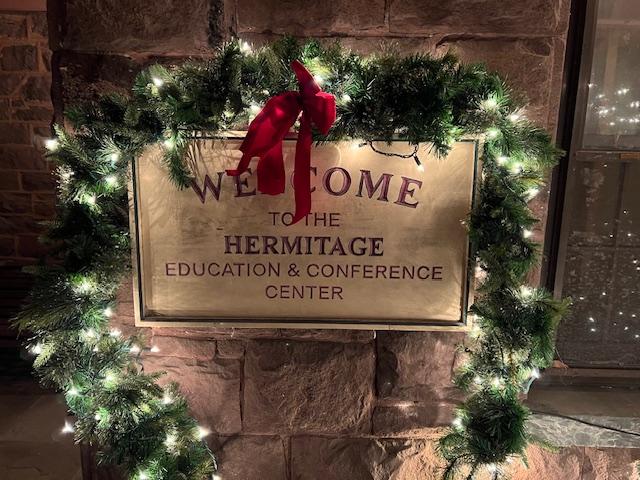
The front of the Visitors Center and Gift Shop at Christmas time.

I have taken the Haunted House tours during Halloween when The Hermitage hosts seances. Their medium was not that convincing and I did not believe a word he said. We took a tour around the house at midnight and that was interesting. The house can be quite spooky at midnight but then every house is spooky at midnight. I noticed the boards creaking and the wind blowing around the house but that’s what old houses do. The house does creak a lot and when the wind acts up you can jump. Still there was noting to convey to me that the place was haunted.

Hermitage at Halloween.jpg

The Hermitage is spooky at Midnight at Halloween.

The tour guides will go through how the family fortunes changed the way people lived in the house up to the 1970’s when the last family member died. Please don’t miss visiting the home during Halloween for their ‘Ghost tours’ . It can get quite spooky in the house at midnight with the wind hallowing and things creaking.

Things are much more cheerful at Christmas time when the house is decorated for the holidays. During the Revolutionary War, things were kept simple. There was church service in the morning and then a Christmas lunch and visits to family. It was not until the Victorian Age and the Industrial Revolution that things got more elaborate. Queen Victoria’s husband, King George came from Germany and brought with him Pagan traditions of evergreens, garland and greens all over the house to show life in the colder months of the year.

The tours of the house are $25.00 and very reasonable for a hourlong tour.

The house was decorated in 2018 for Christmas in the 1930’s during the Depression and it showed that people still decorated and gave presents in a more subdued way during this tough time.

The Hermitage keeps this tradition alive by decorating the house for the holidays. The entrance to the kitchen was kept simple but welcoming for visitors.

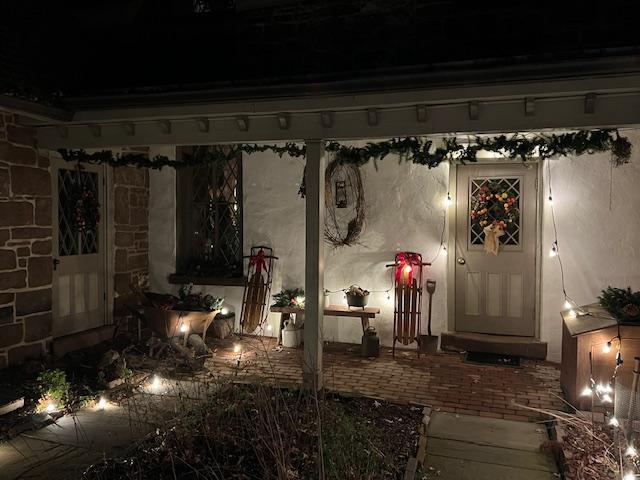
The decorations outside were kept simple with greens.

The outside of the house for the tour in 2023 was done in simple lights and greens but when it gets dark the magic of the holidays shows it beauty in the house. Each room is decorated for the holidays and there are all sorts of displays about Christmas, life at the Hermitage and elaborate displays of toys and gifts and meals that would have been served to the family at that time. There did not seem to be a nook or cranny that was missed and the house was just beautiful.

Getting ready for the holidays at the Hermitage.

The docent took us room by room and we got to see how the families lived at different times of the house’s history. We were allowed a glimpse into their daily lives at the holidays.

The Hermitage decorated for Christmas

In 2019, the house was decorated for the Victorian era and was done up quite elaborately. The Dining Room was set in the best china and silver with decorative poppers for Christmas lunch. The meal that day was one of the biggest and finest of the year with roasted oysters, roast turkey, sweet and mashed potatoes and many root vegetables.

The Hermitage is beautiful at Christmas time

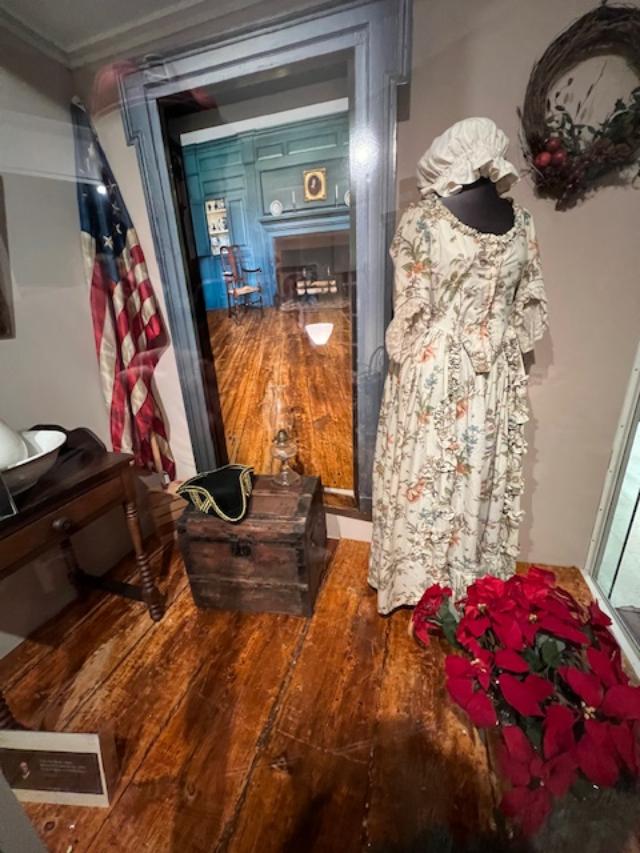
The Living Room was decorated with an elaborate tree with lights and beautiful Christmas ornaments and there was garland all over the room leading into the hallway with more garland on the banister. The upstairs rooms were set with seasonal plants and clothing depicting the era. It looked like the family was going on an outing.

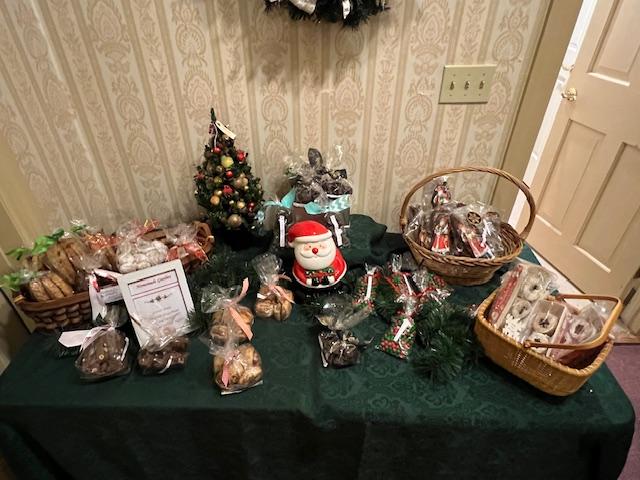
Sweets and Treats on sale and after the tours at Christmas time.

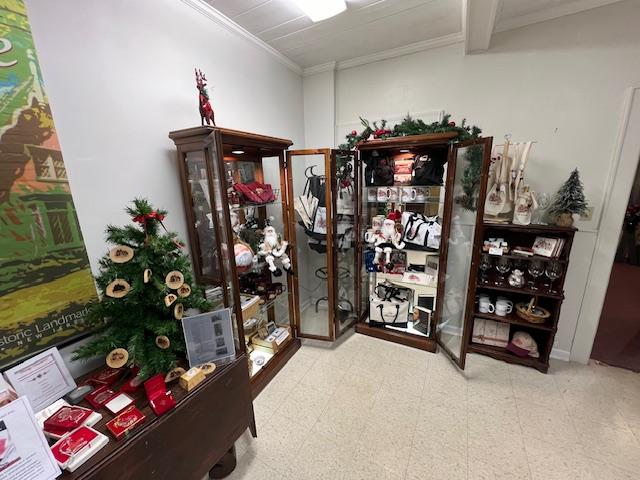
The Hermitage gift shop has amazing things at Christmas.

Touring the house at Christmas is always a treat as it was set up for a Victorian Christmas and the whole house was decorated inside and out. The pathways were set with luminaries and white lights and the porches were elaborately decorated.

The side of the house was decorated with white lights and luminaries.

The porch was decorated with an old fashioned sleigh

The front entrance to the house at Christmas.

The Hermitage Museum History:

The Hermitage Museum in Ho-Ho-Kus, New Jersey is a charming and romantic mid-19th century Gothic Revival cottage. Surrounded by more than four acres of park land, the Hermitage is restored and furnished  to reflect the lifestyle and interests of the Rosencrantz family during the second half of the 19th century.

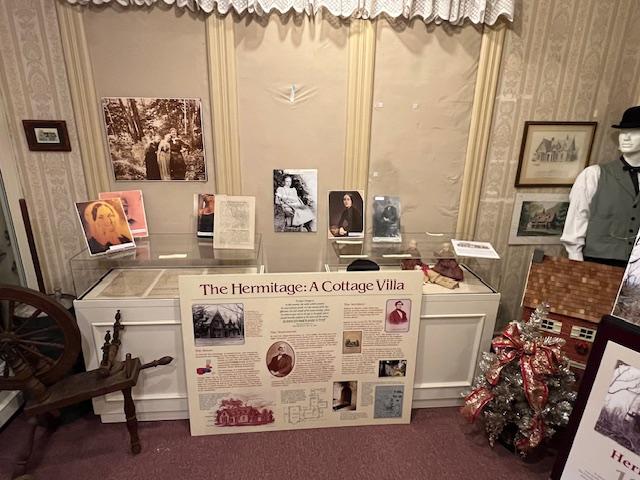
The Revolutionary War display.

The fourteen room home is built in the Gothic Revival architecture that surrounds the original Dutch American home built in the 1700’s. The original colonial estate was bought by Ann Barlow DeVisne, who  was from Manhattan, for herself and her five children.

The Rosencrantz Doll collection at the Hermitage.

One of the children, Theodosia Bartow Prevost, lived in the house with her husband, James Marcus Prevost. Major James Marcus Prevost fought on the side of the British during the Revolutionary War in battles in Georgia and North Carolina. Her husband would be later killed in the War.

The front of the house decorated for Christmas 2023.

During battle time with the British, Theodosia invited General Washington to stay at the house which he and his troops did in 1778. Theodosia welcomed all troops, both British and American to stay at the house during the war. In 1782, she married Aaron Burr, a soldier she had met during the war.  On top of her five children by her first marriage, she had another child with Aaron Burr named Theodosia. Theodosia Prevost-Burr died in 1794.

The original Ice House/Smoke House at night.

The house was then sold to the Rosencrantz family in 1807 and then the house was expanded from the Dutch tradition into the Gothic Revival addition between 1847-48 by noted architect, William H. Ranlett. The addition was at the request of Elijah Rosencrantz Jr.

The Revolutionary War display at the Hermitage.

The house was lived in by four generation of Rosencrantz’s. Elijah’s daughter, Mary Elizabeth, was born in the house in 1885 and lived there her entire life until 1970 when she fell ill. She left the house to the State of New Jersey as a National Historical site.

The history of the Hermitage display at the museum.

The Hermitage is special at the holidays

During Christmas time,  the house is decorated for the holidays. This year’s theme in 2018 is “Home for the Holidays: A 1930’s Christmas at the Hermitage”. The house is decorated at the time of the Great Depression and how people dealt with those times while still providing holiday cheer to their families. The decorations do not reflect Victorian times but more when times were tough and people had to watch their budgets.

The house was beautifully decorated for the holidays.

Even the gift shop offered cheerful items such as ornaments, collectables, small trees and elaborate gifts.

This cheerful Santa was on sale at the gift shop at the Hermitage. By the time I came back from the tour, he was sold.

Disclaimer: this information was taken directly from The Hermitage pamphlet and Wikipedia and Google. Please call the facility for information on special events.

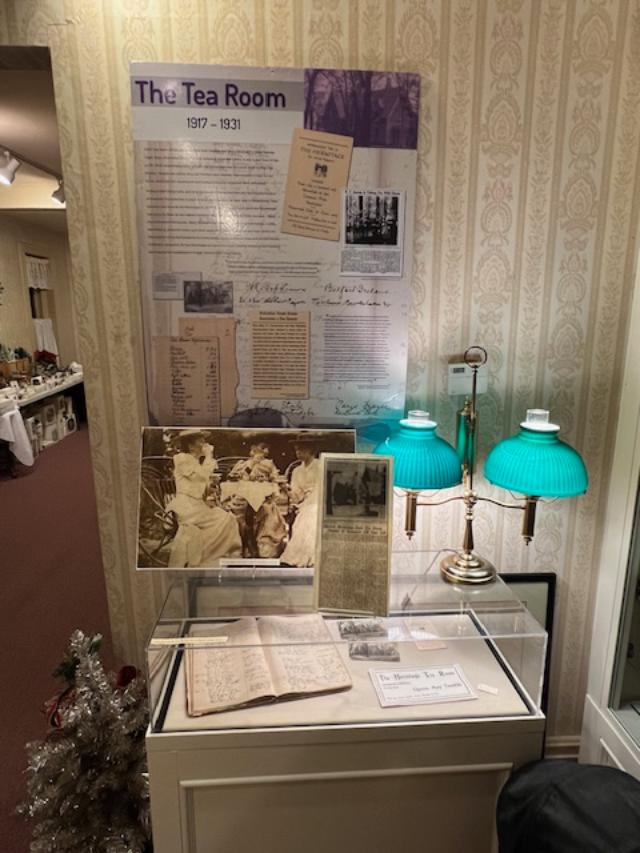
The Hermitage “Tea Room” exhibition where the family made money during the 1900’s -1930s.