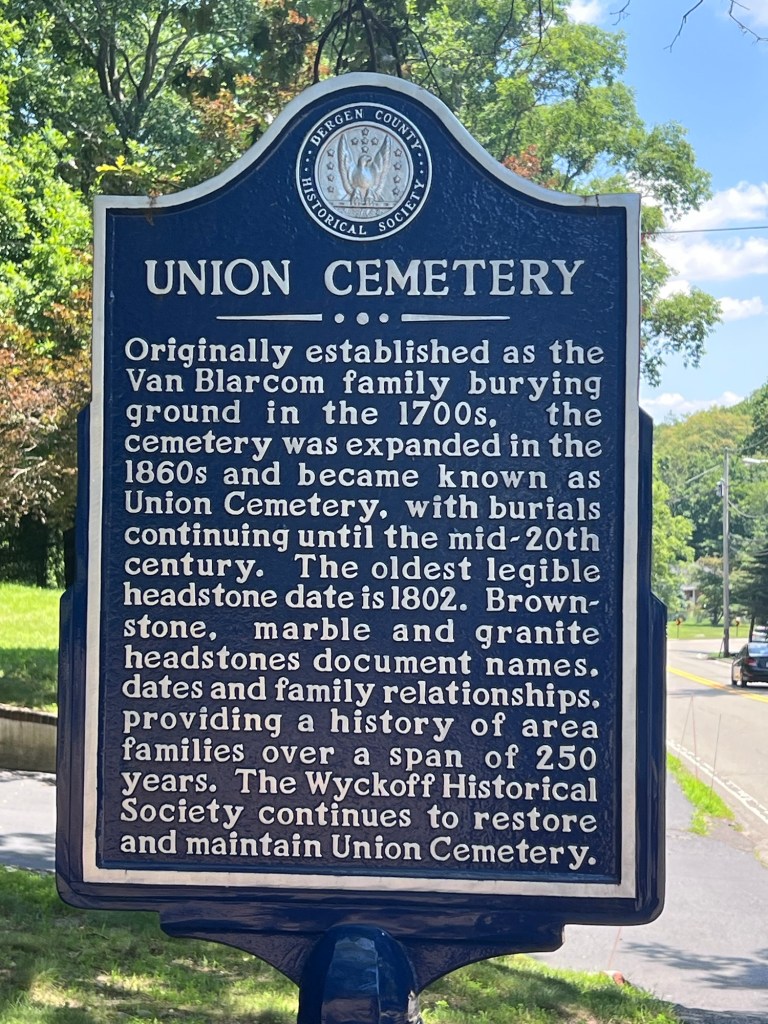
The historical sign for the Union Cemetery at 151 Franklin Avenue in Wyckoff, NJ
The marker sign put up by the Wyckoff Historical Society
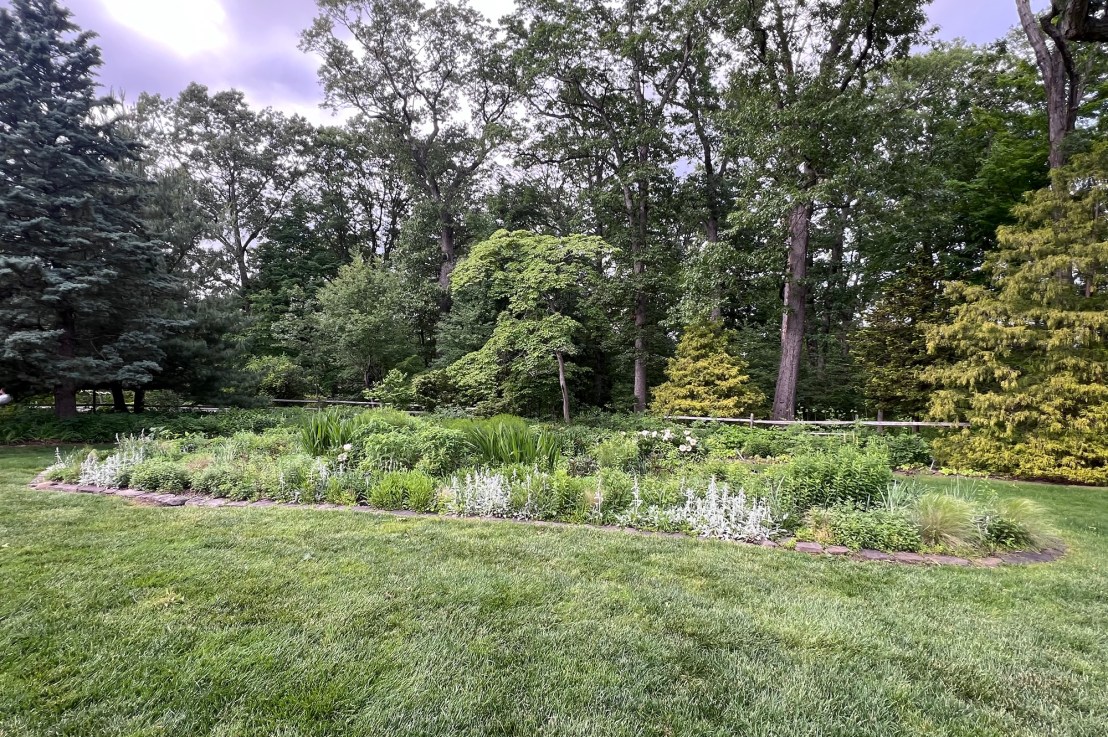
The walled garden just outside the cemetery in bloom
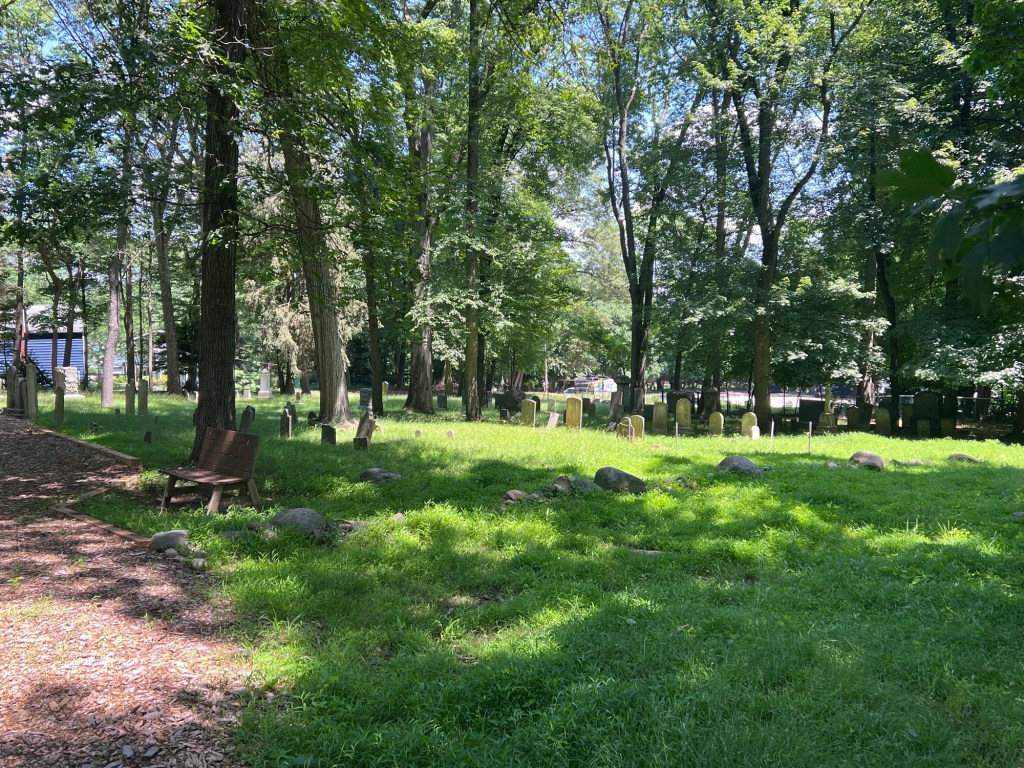
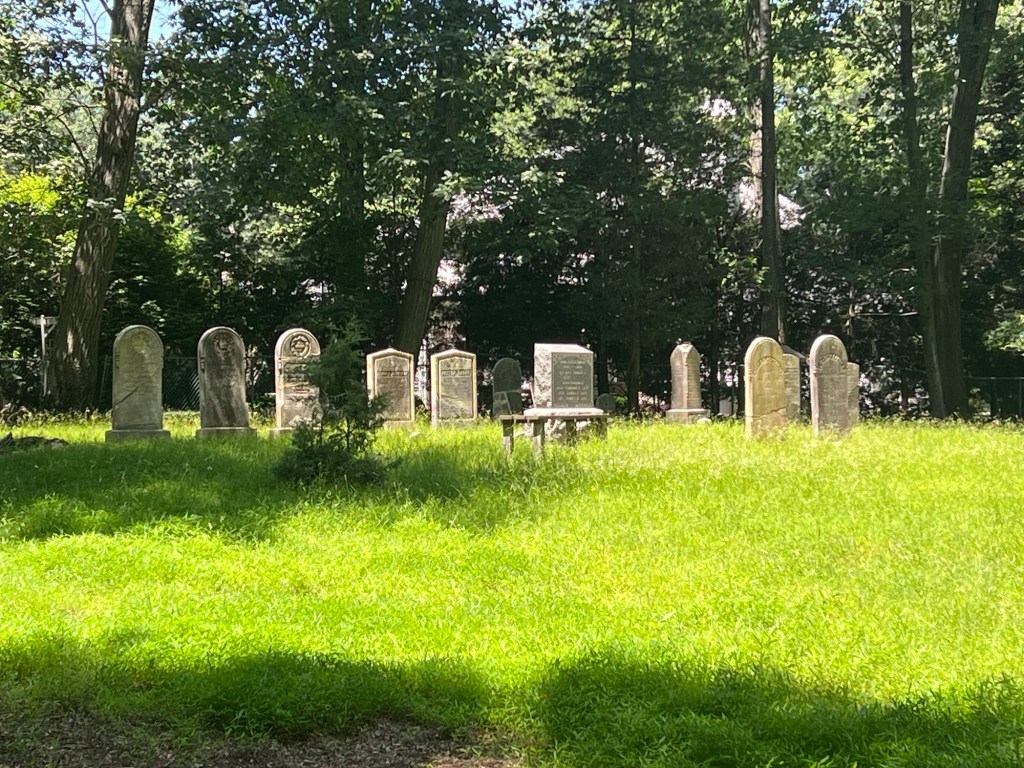
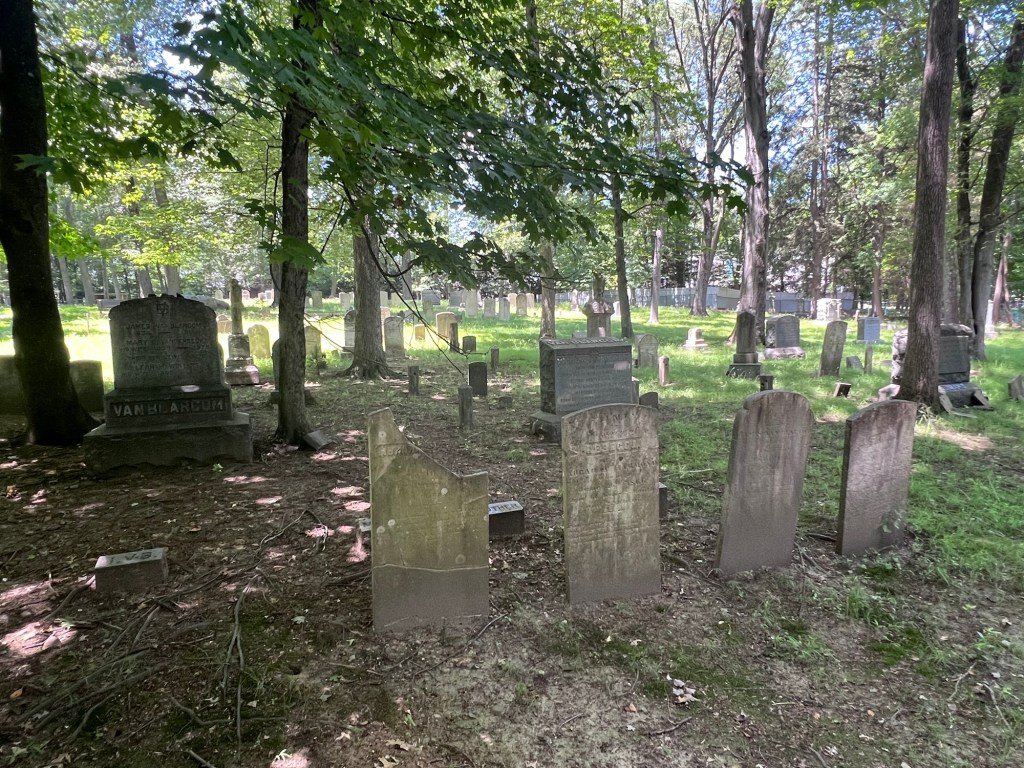
The Union Cemetery was originally the resting place of the Van Blarcom family and the right hand side of the cemetery has the Van Blarcom family plot
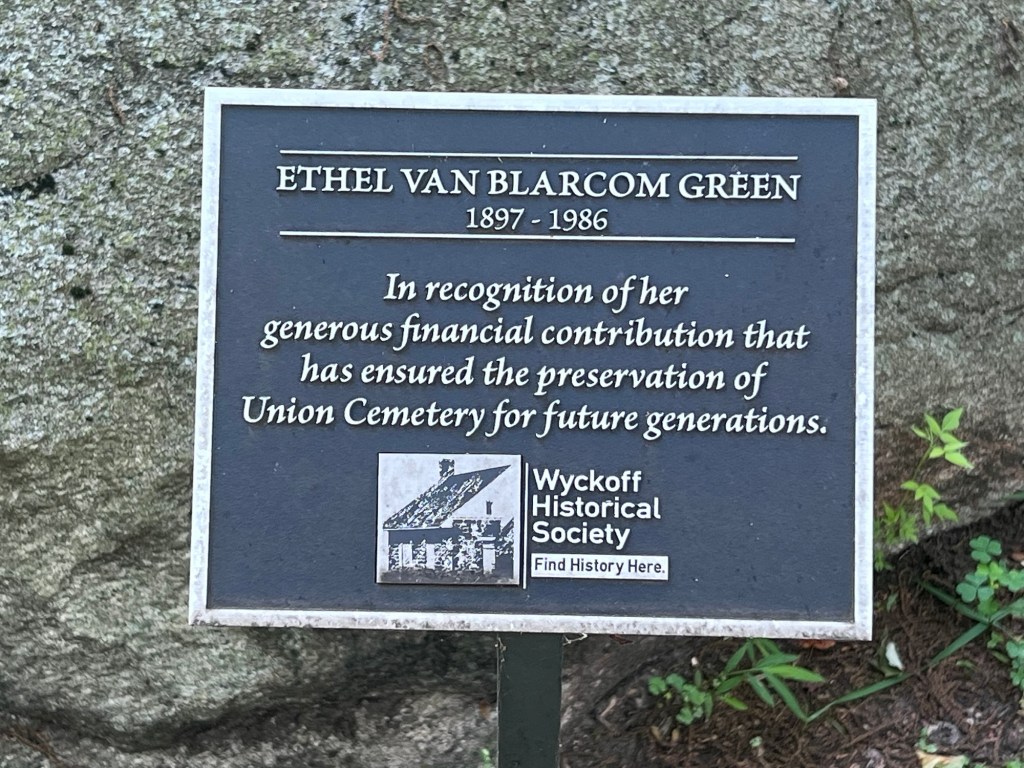
One of the descendants of the family, Ethel Van Blarcom Green donated money for the preservation of this family plot.
The Biography of Ethel Van Blarcom Green:
(From the Wyckoff Historical Site)
If you at all familiar with the Wyckoff Historical Society’s recent activities at Union Cemetery, you may know that the 250 year-old site was the original Van Blarcom burial site. The name can be traced to the early 1700s when the first Van Blarcom family settled in New Jersey. The oldest legible headstone dates to 1764.
What you may not know, is that Ethel Van Blarcom, a direct descendant, bestowed a significant financial contribution to the Society beginning in 1978, with her wish that her beloved family cemetery be maintained. Although she lived in California for most of her adult life, Union Cemetery obviously held a special place in her heart, and she wanted to see it survive. The Society has Ethel’s hand-written letters that confirm her generous donation. She also continued to renew her Society membership until 1984.
However, it wasn’t until 2019 that the current trustees decided it was time to use the funds for its intended use, and honor Ethel’s wishes. Several headstones were repaired, new fencing is being installed, and yearly grounds maintenance is conducted, thanks, in part, to Ethel’s generosity.
It was at this time that Society trustees, Doris Noerr, Melanie Long, and Linda Vreeland, dove into genealogy websites and Society archives to learn more about Ethel’s life and to particularly find a photograph of her.
“After several week of research, we obtained Ethel’s death certificate which led to contacting her niece Naomi who is now 92,” said Society president, Lynn Groel-Lynch. “To our delight, she had a photo of Ethel and her husband, Roy Green that we believe is her 1916 wedding photo.”
Ethel was born in Paterson in 1897 and lived to the age of 89. She and Roy moved to the Los Angeles, California area most likely around the time of her mother’s death in 1933. The couple had no children.
“We are still in the process of contacting a few descendants, and those we’ve spoken to have been happy to share what they know about Ethel,” said Melanie Long. “We also will install a plaque in her memory near where her father, Edward is buried in Union Cemetery. There are thousands of Van Blarcom names as they were the one of the prominent families in our area’s farming community, and after all these years, the Society is thrilled to finally honor the legacy of one very important Van Blarcom, Ethel Van Blarcom Green. As they say, ‘It’s never too late’”.
The current history of the Union Cemetery:
(Wyckoff Historical Society website)
The original Grange sign from the 1960s at the Franklin Avenue entrance of Union Cemetery was weathered and fragile. The Wyckoff Historical Society recently replaced the old sign with one that is also hand-lettered, and includes the Grange logo which was barely visible on the old sign. Two new posts display the new sign.
My International Marketing class at Bergen Community College recently did a complete study and marketing plan for the “Bergen250” on the Revolutionary War veterans buried at graveyards and cemeteries all over Bergen County, NJ:
For a Mapping of all the historic graveyards and cemeteries, I had the students visit all the sites that the Daughters of the American Revolution had researched and I had the students find all the locations, photo the tombstones and create a bio on each of the veterans. I enclosed a copy of their work above.
My blog on the historic graveyards and cemeteries of Bergen County:
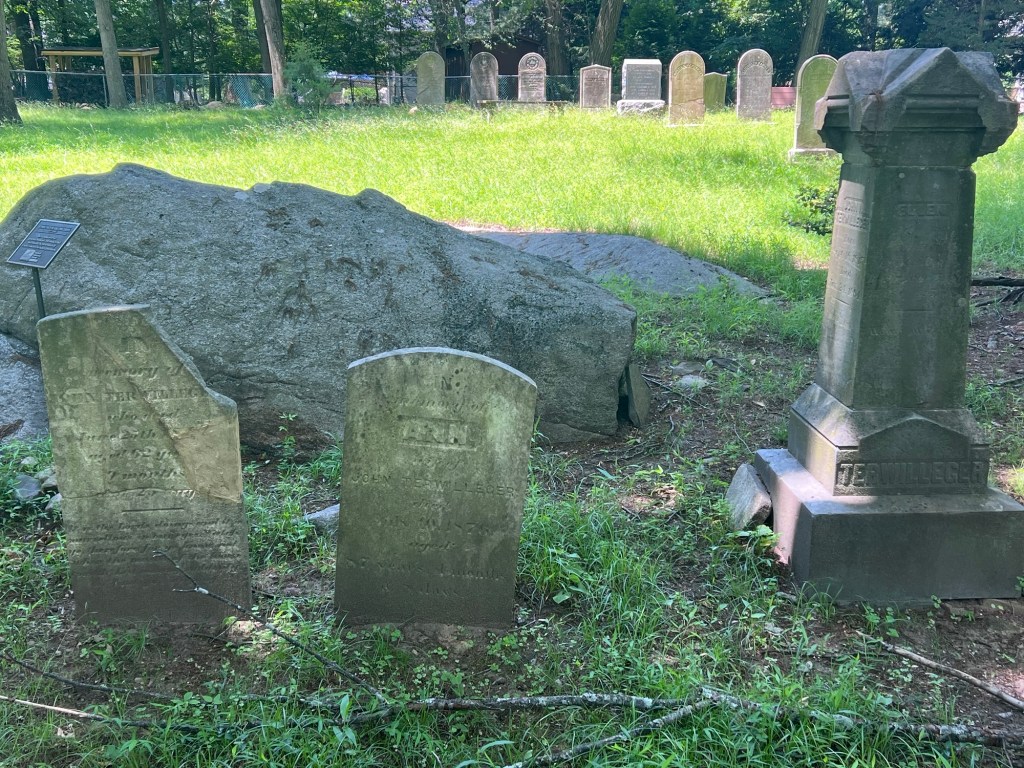
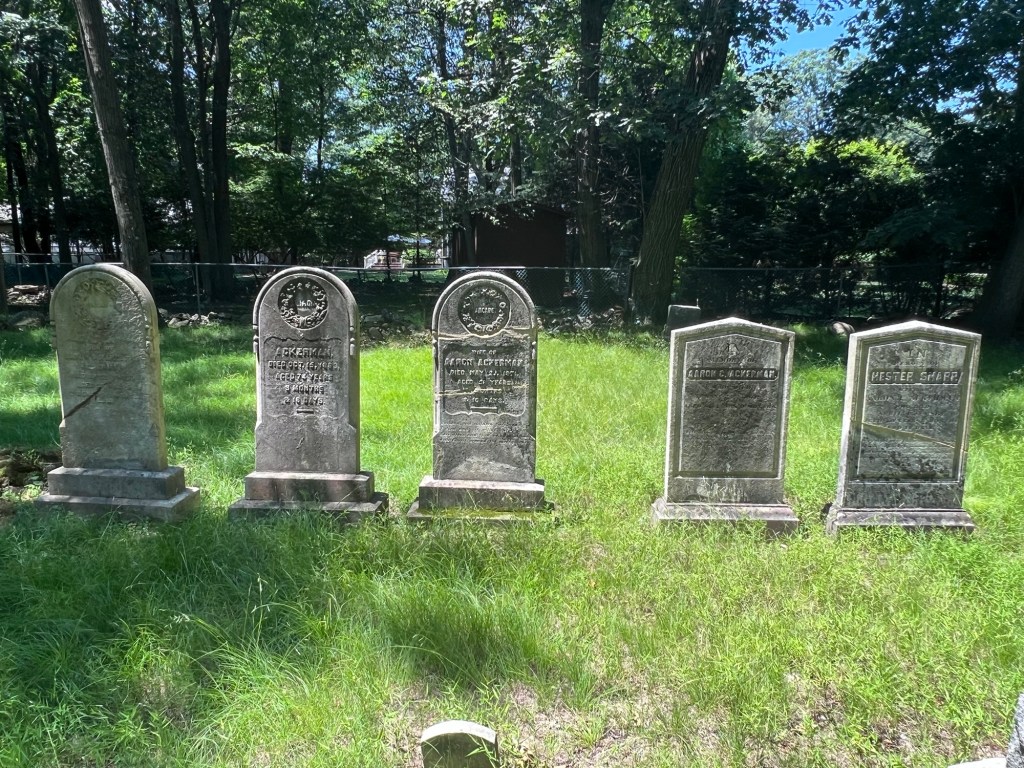
The Ackerman and Terwilliger families are buried to the left/northern side of the cemetery
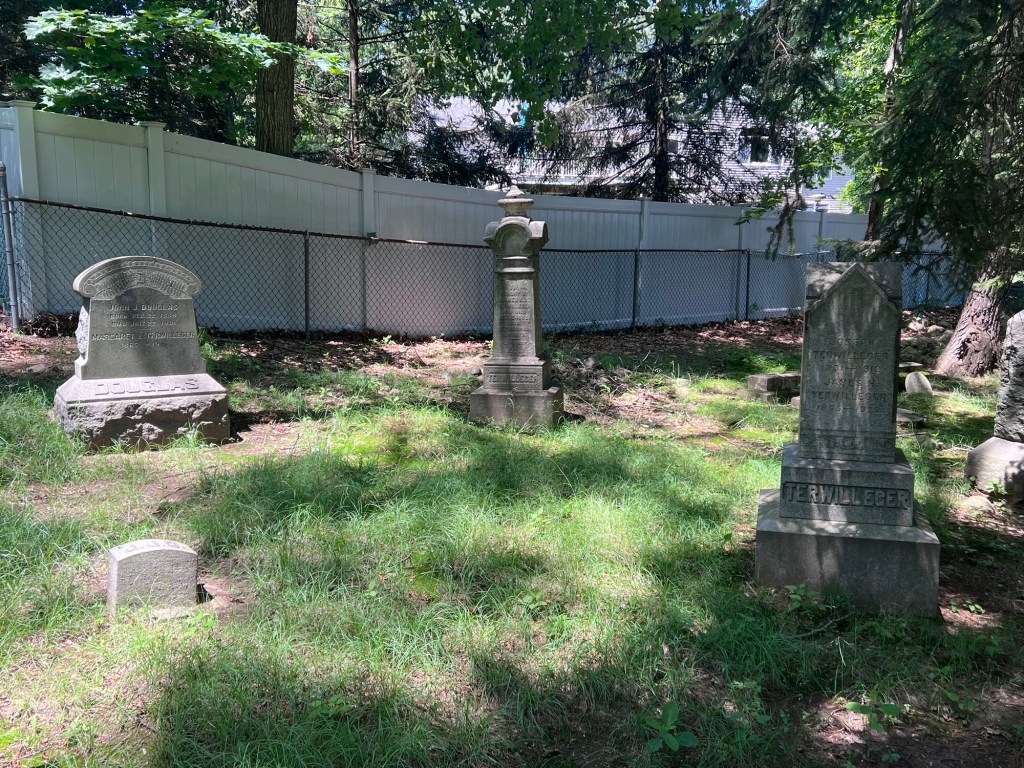
The Terwilliger family plot
The resting place of James Terwilliger’s tombstone
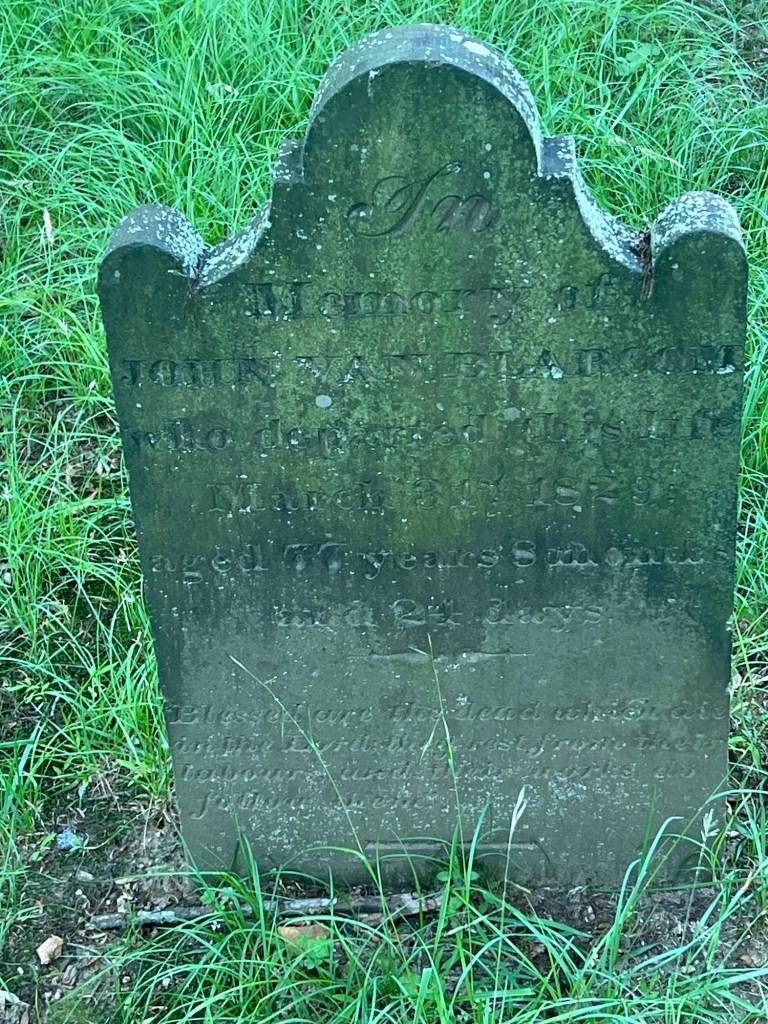
To the right of the pathway around the cemetery to the south is the Van Blarcom family plot where on the oldest graves is that of John Van Blarcom, a veteran of the Revolutionary War.
The resting place of Revolutionary War veteran, John Van Blarcom
The original section of the Van Blarcom family plot dating back to the Revolutionary War
The later burial section of the Van Blarcom family
The resting place of Daniel and Rebecca Van Blarcom
The Terwilliger family has two sections of the family plot in the northern section of the cemetery
The Ackerman family’s plot is to the middle most northern end of the cemetery
The Mallinson/Westervelt family has the further most family plot of the cemetery
The cemetery is so peaceful and relaxing to walk around. The Wyckoff Historical Society has done a wonderful job maintaining the property. Even though it is the resting place of many family plots, it’s still a very welcoming place and you can feel it as you walk the paths. There is a respect of remembering the people of the past that can be felt here
As you walk the pathways, you visit the people who have contributed to the growth and history of Bergen County and the surrounding area. They shaped their communities from before the Revolution War to today.
My video of visiting the cemetery and the families that rest here.
The History of the Cemetery:
(From the Wyckoff Historical Society website)
The Union Cemetery on Franklin Avenue dates back to the first half of the 1700s, when Johannes Van Blarcom set aside an area of his property to become a burial place. The earliest readable stone is from 1764 and thought to mark the grave of a slave girl because there is no surname given. Johannes Van Blarcom’s daughter, who died in 1725, is alleged to be buried there also. Various community groups have volunteered to maintain the cemetery, including the Wyckoff Historical Society. In 2018, dead trees, underbrush, and poison ivy were removed.
Most are early Van Blarcom family members as the cemetery was one of the original family cemeteries.
The stone marker sign at the entrance to the family cemetery. This cemetery is the final resting place of Captain John Outwater from the local militia who fought in the Revolutionary War and his family.
The memorial to Captain Outwater in the center of the cemetery dedicated to his contributions to Revolutionary War
Captain John Outwater during the Revolutionary War
When John J. Outwater was born on 9 February 1780, in Hackensack, Bergen, New Jersey, United States, his father, Captain John Outwater, was 33 and his mother, Hendrickje Dirck Lozier, was 34. He married Cathalina Van Bussum on 1 February 1813, in Old First Reformed Church, Passaic, Passaic, New Jersey, United States.
They were the parents of at least 4 sons. He died on 25 September 1842, in Wilson, Wilson, Niagara, New York, United States, at the age of 62, and was buried in Glenwood, Lewiston, Lewiston, Niagara, New York, United States.
The original entrance to the cemetery must have been on Moonachie Avenue in the distant past.
The original graves of Captain John Outwater and his wife, Louise Lozier
Across from their graves is the memorial to the family
Various members of the Outwater family including parents, brothers and sisters and children are buried here.
The grave of Jacob Outwater and his family
The tombstone of Jacob Outwater
The grave of Jacob’s son who died as an infant
The graves of George Outwater and his wife, Ann Van Note
I think this is the grave of George Outwater’s first wife, Mary
Buried outside the family plot is the grave of Henry Cordes
The Outwater family cemetery sits on a small hill overlooking a Quick Check store and gasoline station. Talk about modern progress.
I took a quick tour of the cemetery:
My video of the Outwater Family Cemetery and the grave of Captain John Outwater of Revolutionary War fame.
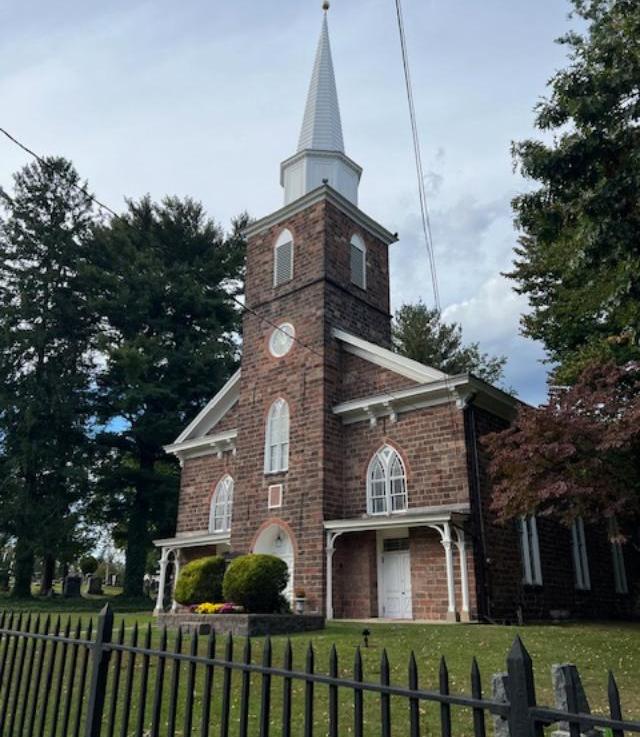
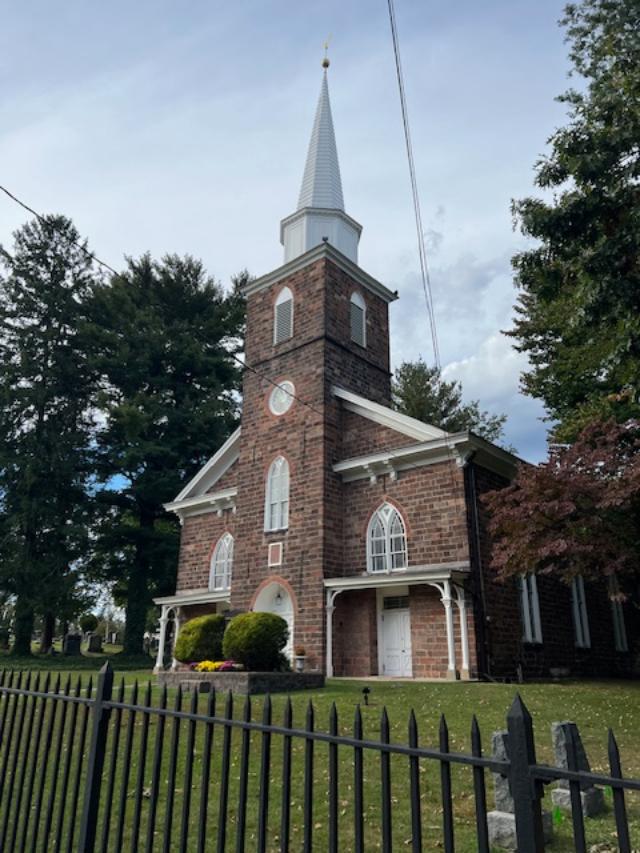
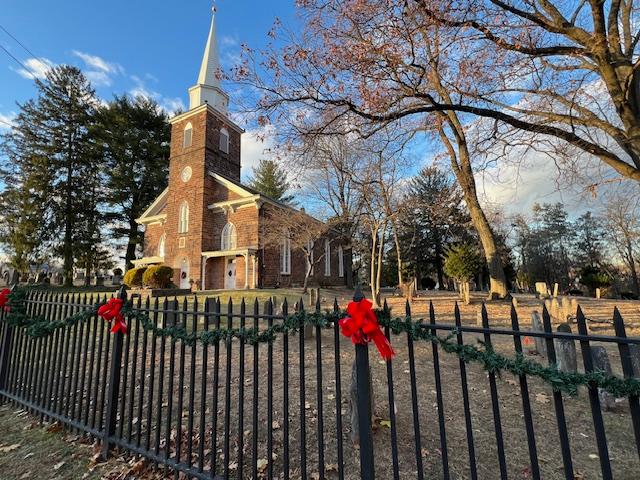
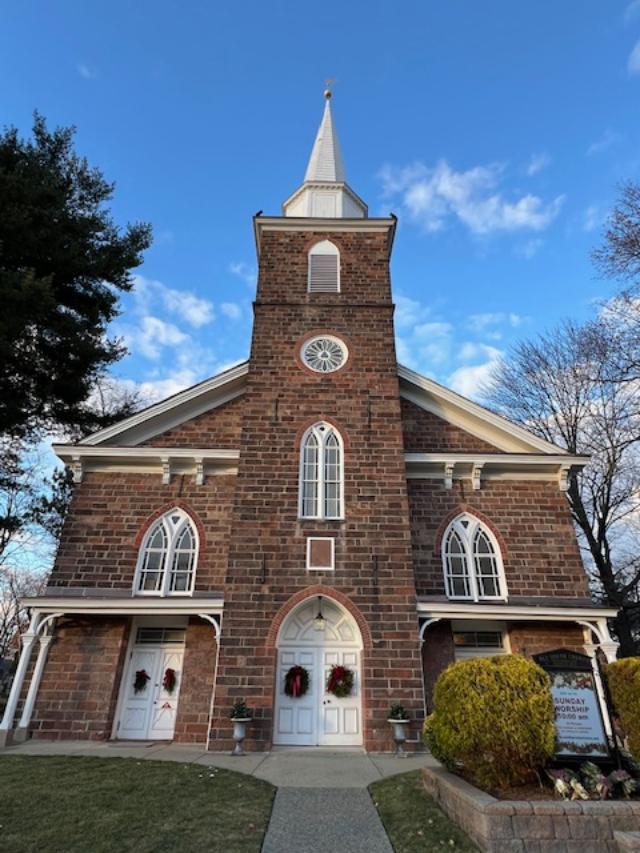
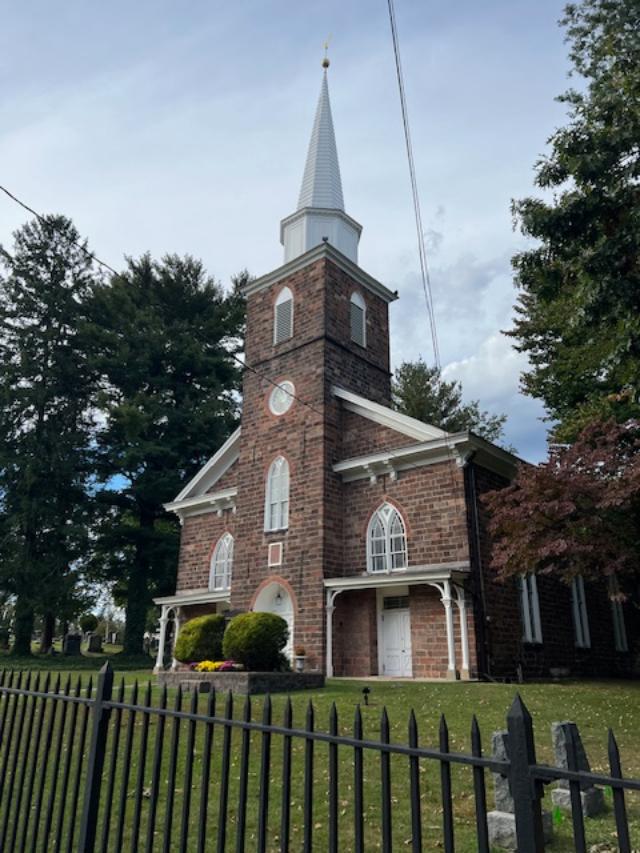
The South Presbyterian Church at 150 West Church Street in Bergenfield, NJ
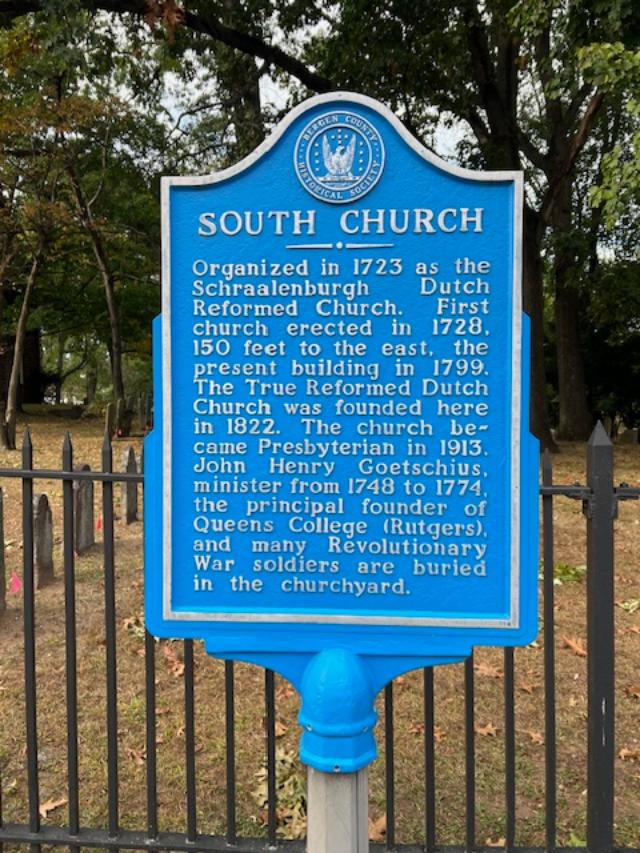
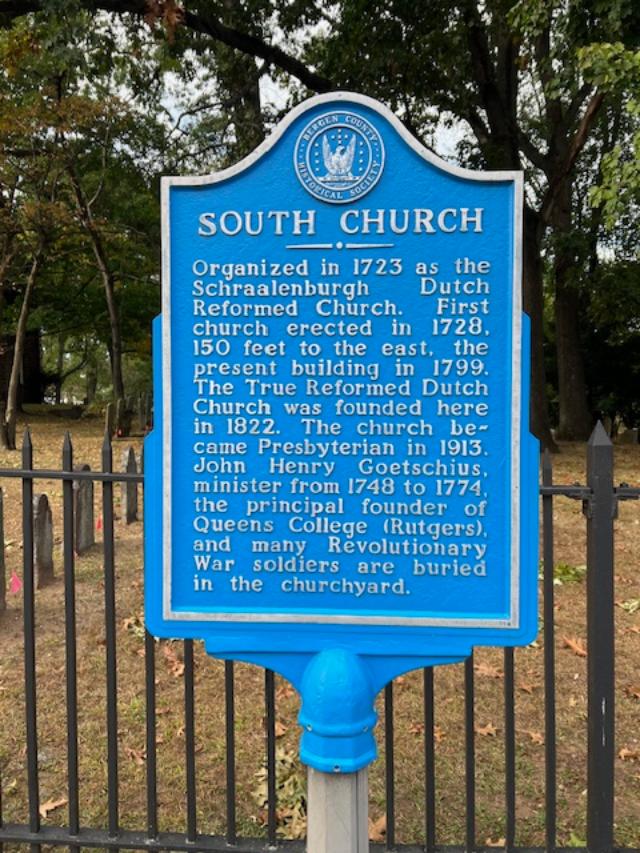
The historic marker in front of the church
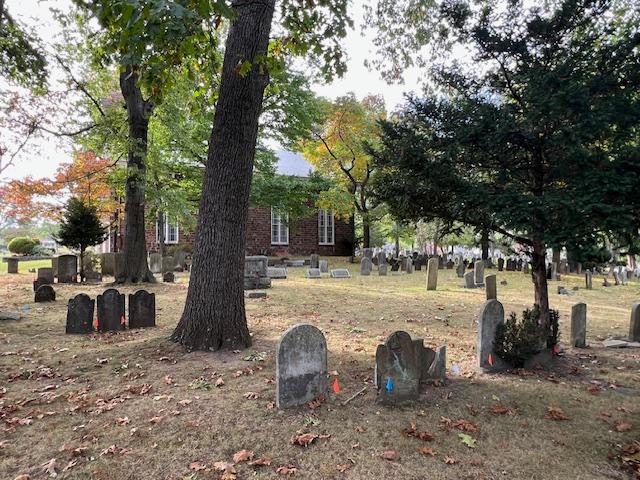
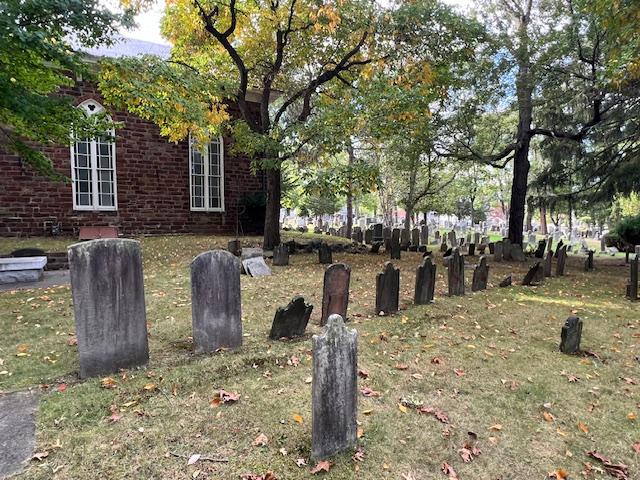
I was in Bergenfield, NJ recently to visit the Bergenfield Museum and I walked around this beautiful church and the graveyard next to it. What a beautiful, graceful building and the cemetery had an old New England charm about it. The graveyard held the graves of many of the original family members who founded the County and lived in Bergen County since the late 1600’s.
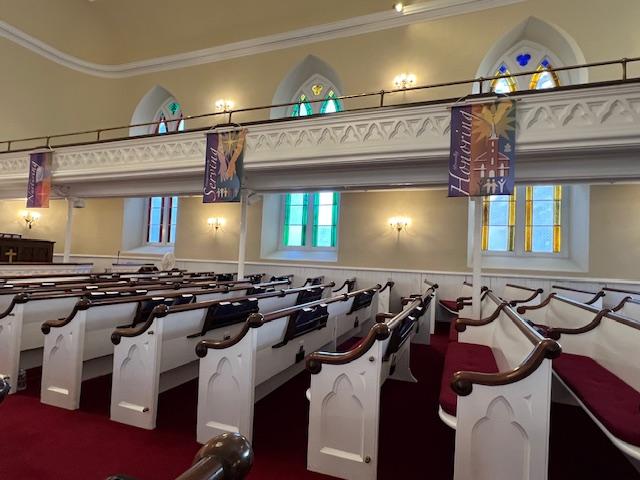
The inside of the church
The church sat in this beautiful area right next to Cooper Park off Downtown Bergenfield. I can’t wait to take a look inside one day.
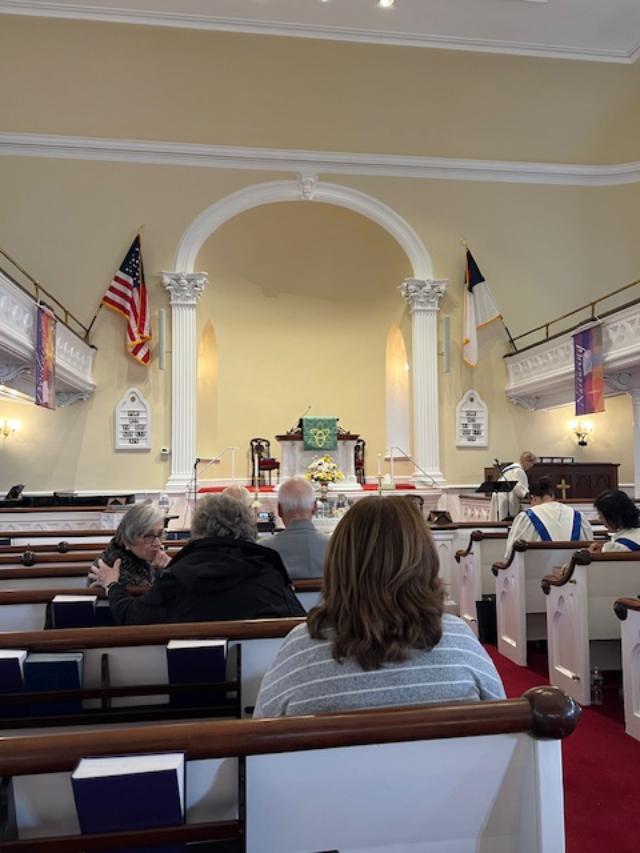
The inside of the church during Sunday services
The Mission Statement from the Church:
(from the church website)
“As followers of the risen Lord, we, the South Presbyterian Church family, commit ourselves to proclaim the gospel, witness to the promise of God’s Kingdom, and nurture all children of God. In our community and throughout the world, we will serve in Christ’s name through worship and mission. We will serve through open worship, willing service and compassion to all for the glory of God wherever our lives shall take us.”
The historic marker of the church
History of the Church:
(from the church website)
SOUTH CHURCH is descended from the first Schraalenburgh congregation established in 1723. The first church building was constructed beginning in 1724, and fully completed by 1728. This was approximately 36 feet square with a Dutch hip roof ascending to a central belfry and steeple.
The front of the church cemetery
This church stood atop a small hill just west of Long Swamp Brook, facing south and fronting on the new county road laid down in 1717. Using today’s landmarks, we can describe the site as the southeast corner of the present cemetery, directly across Church Street from the South Church House. For more than seventy years, this small church building served the farmers of Schraalenburgh. The site of the new church was apparently chosen because of the presence of a large spring across the road near Long Swamp Brook.
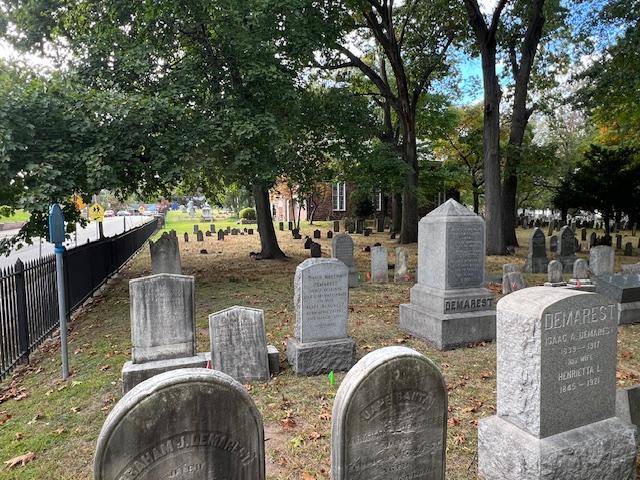
The historic graveyard with some of the original families of Bergen County
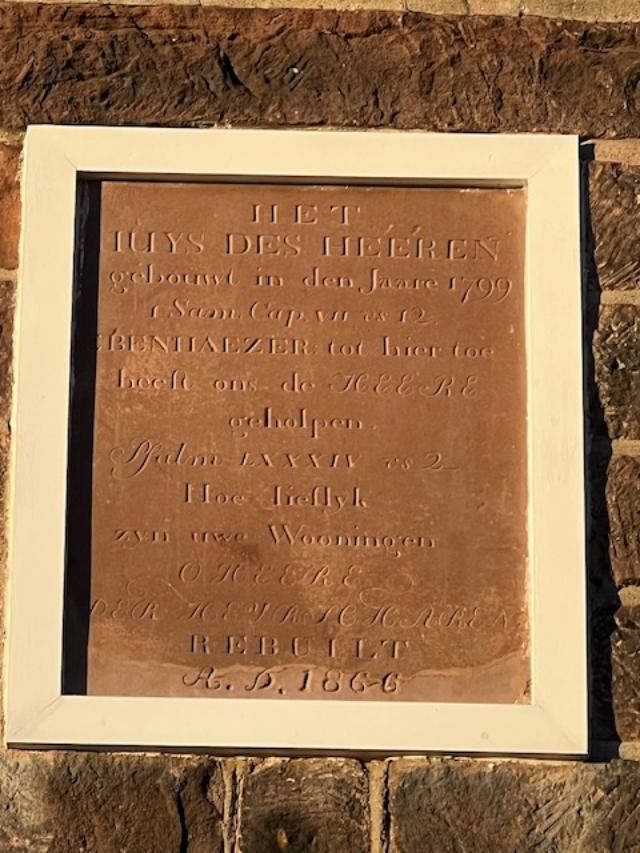
The philosophy of the Dutch Reformed Church shaped the growth and development in the early years of the church’s existence. In the more than two and a half centuries of its history, the members of the congregation had to choose many times between the strictly puritanical concepts and the more convenient religious beliefs, and invariably chose the puritanical. Some members were the patriots of the Revolution while others were Tories. In 1799, the new South Schraalenburgh Church was built a short distance to the west of the original building.
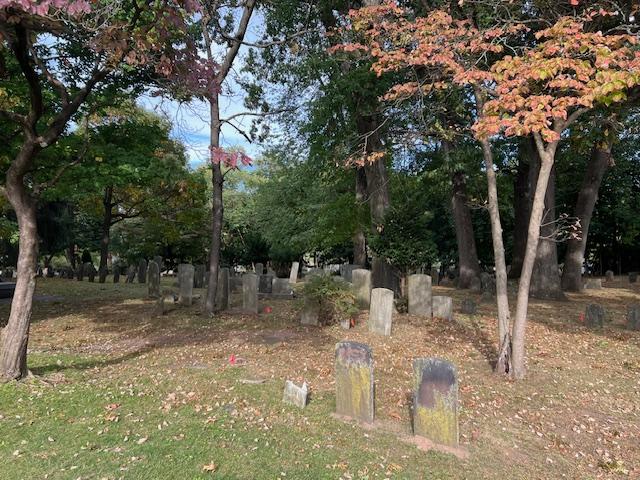
The historic cemetery during the Fall of 2024
Because of differences within the congregation in the late 1700s, two groups were formed and when a decision was made to build a new church, the opposing group withdrew, purchased land and built the North Schraalenburgh (now Dumont) Reformed Church in 1801. In May 1866 the congregation voted to enlarge and remodel the building, adding 15 feet to the north end and replacing part of two windows in the front with doors on each side of the original single door, as you see it now. This was completed in 1867.
The Church graveyard
In the past century, the building has had its share of modernizations— candlelight gave way to oil lamps, and in turn to electrification. Heat was installed, first coal fired, then oil, now gas, although the old drafts persist to this day. However, the charm and grace of the old Dutch Church at Schraalenburgh have remained. The South Church House completed and dedicated in September 1952, on the corner of West Church and Franklin Avenue, is used by the church for various classes and events and many community organizations meet there. In 2002 South Presbyterian Church celebrated the 50th Anniversary of the Church House.
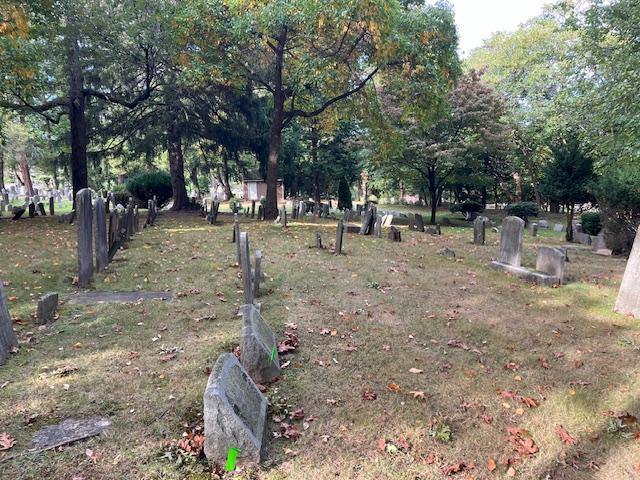
The historic graveyard at the side of the church in the oldest part
The South Presbyterian Church was placed on the National Registry December 6, 1975 and the Manse on August 24, 1979, both through the efforts of Mrs. Adrian Leiby. In 1913, after much discussion, the congregation chose to unite with the Presbyterian Church. Today, after almost 3 centuries of building and remodeling, separating and uniting, South Presbyterian Church in Bergenfield remains committed to the values of those Christian farmers who first gathered at this site to worship in 1723. . . steadfast in purpose and faith.
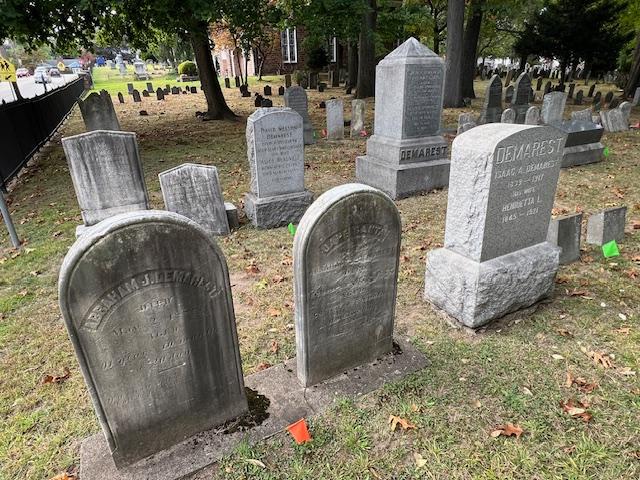
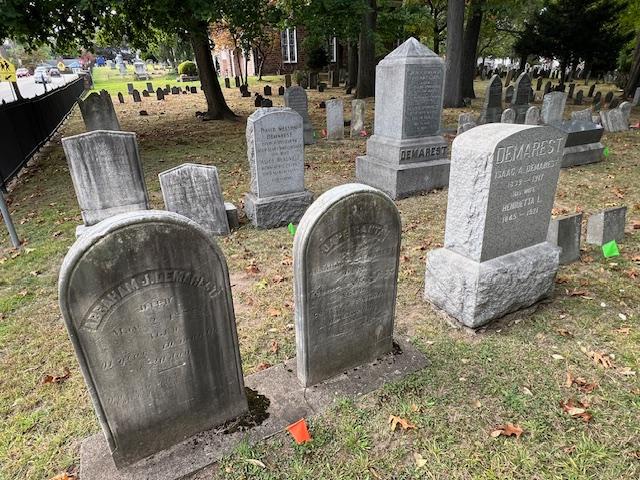
The Demarest family plot
The Church is especially beautiful at the holidays all decorated with wreathes and garland.
The South Church decorated for Christmas
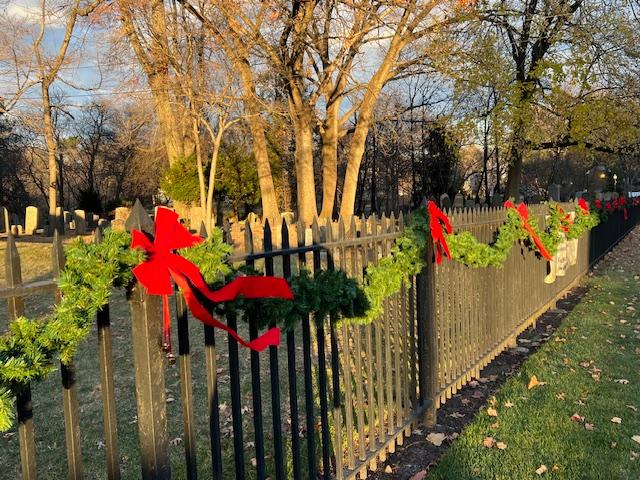
The fences are so nicely decorated for the holidays
The outside of the church decorated for the holidays
The front of the church at dusk
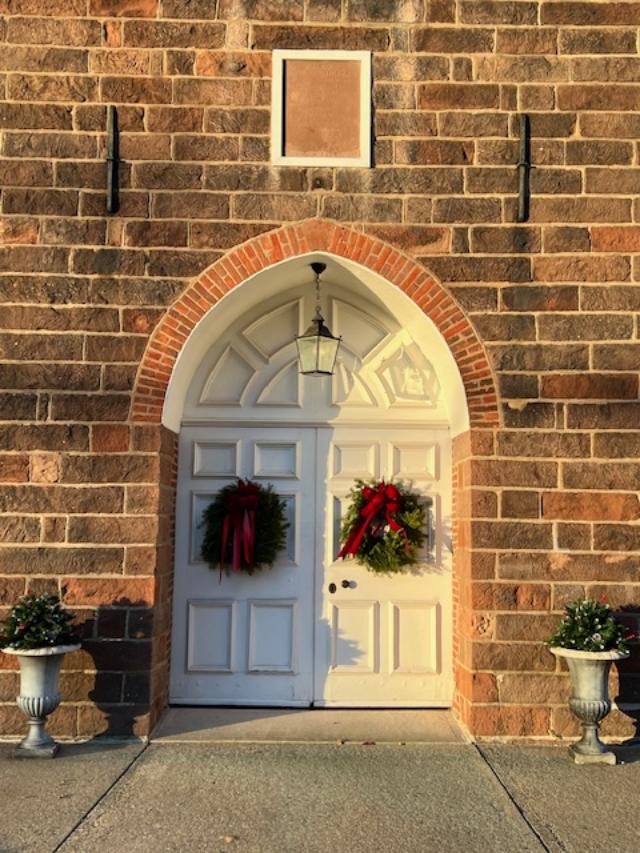
The front doors are so welcoming at the holidays
The Bergecco-Parc Consulting Inc. Project promoting the church for “Dark Tourism”:
In a recent project I created for my Marketing Students at Bergen Community College in Paramus, NJ, under the fictional company “Bergecco-Parc Consulting Inc.”, the Teams were tasked in creating a project that promoted the South Presbyterian Church for “Dark Tourism”, meaning that we promoted their historic cemetery for a historic walking tour concentrating on the Demarest family plot.
Here are the videos on the Bergenfield, NJ Historic sites project:
We walked through the park again to my take note of its Depression era past and beautiful views and colors and made our way to the historic South Presbyterian Church and its historic graveyard where the second half of the project would take place.
South Presbyterian Church at 150 West Church Avenue
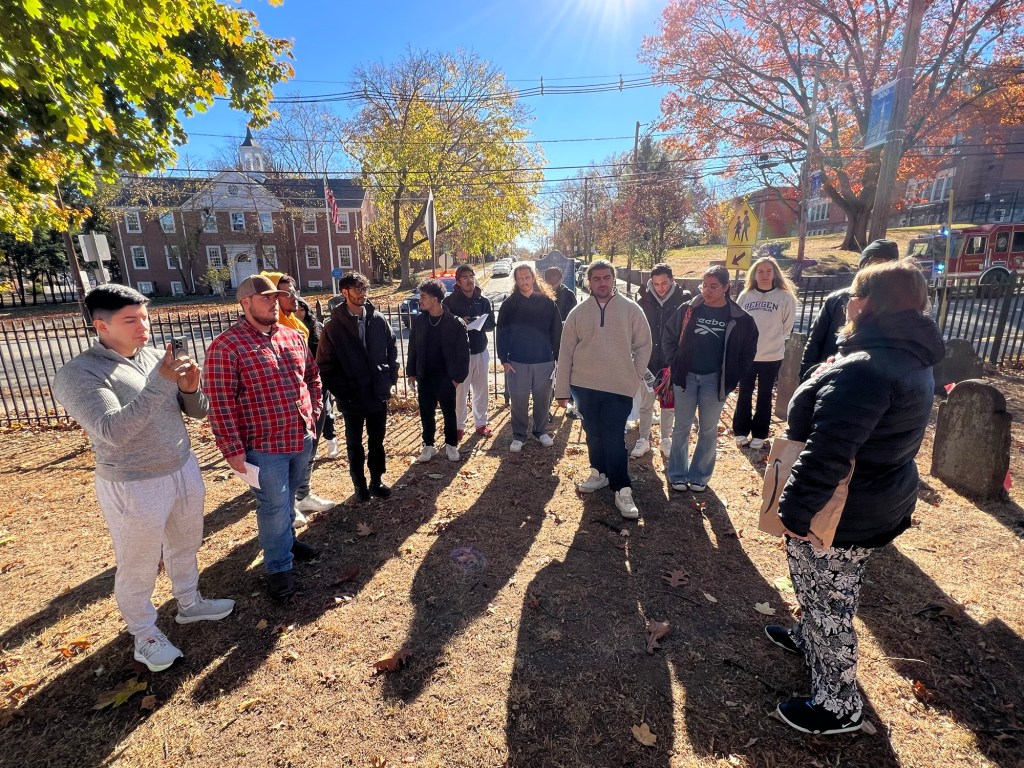
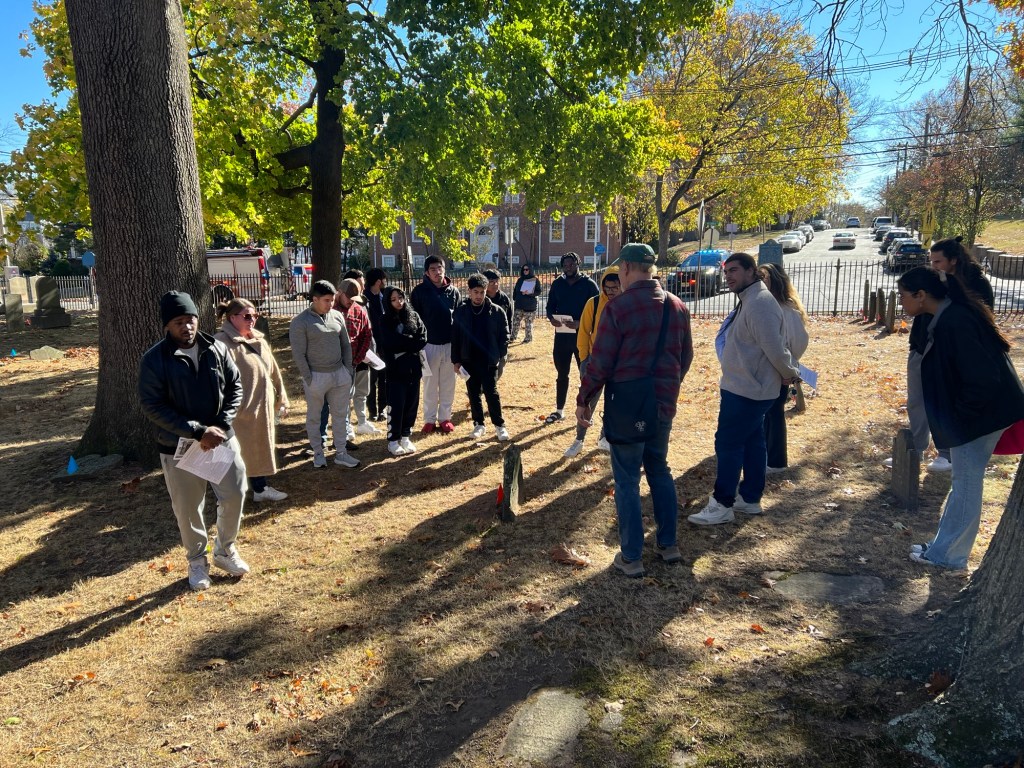
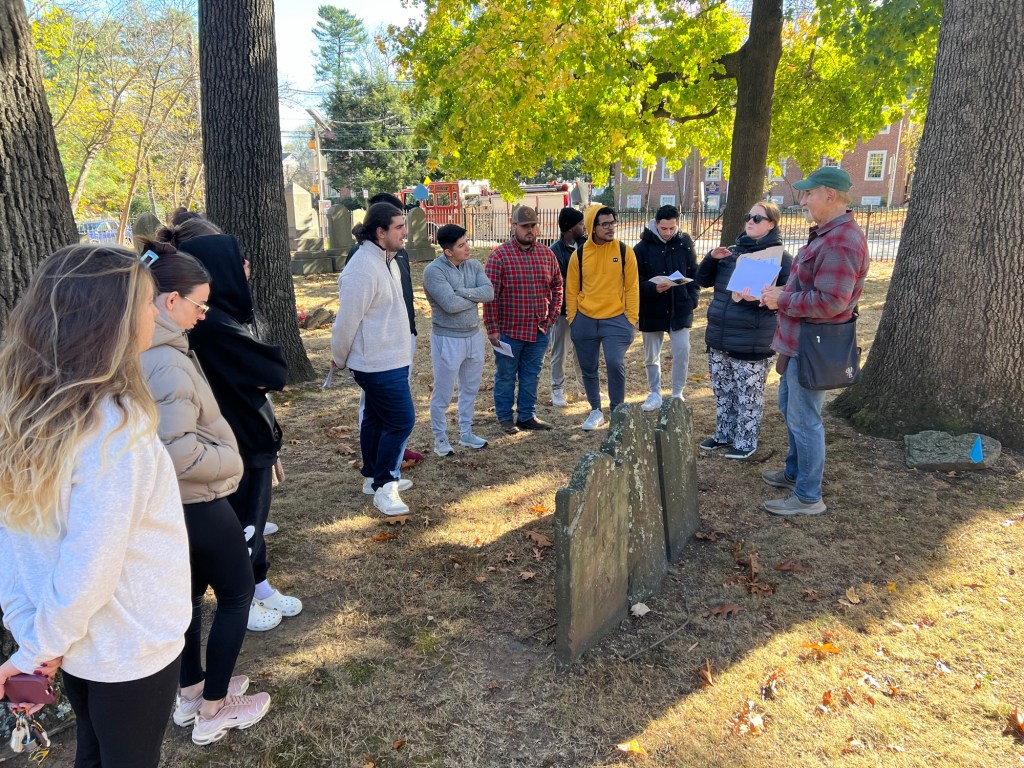
Touring the South Church graveyard for the historical walking tour with members of the Church volunteer staff
The tour was lead by Bob Carpenter, a historian who is helping renovate this historical graveyard
The tour of the historical Demarest family plot, which ties into the museum building’s historical past, was lead by historian Bob Carpenter, who is helping the church renovate and restore the graveyard. Mr. Carpenter explained to us how he was fixing all the plots and historic tombstones and how the maintenance of the stones needs to be carefully done.
Mr. Carpenter explains how to maintain the tombstones in these historic graveyards
Video of the walking tour of the historic graveyard:
Both the church volunteers and Mr. Carpenter explaining to the students how families were buried in the 1700and 1800’s
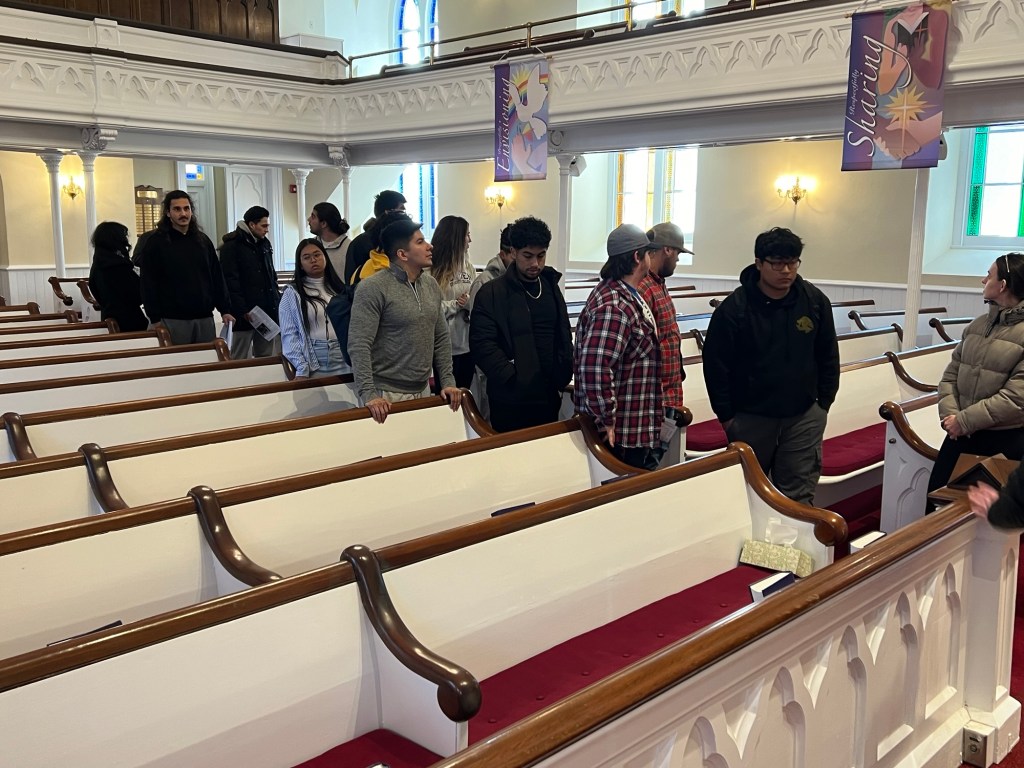
We finished the tour that afternoon inside the South Church to learn its history in the community. Though it will not be part of the project, the church offered the students a glimpse into Bergen County’s past as the original church was built before the Revolutionary War.
The Student Consultants touring the pews of the South Church
Once the tour was complete, the Student Consultants had a better understanding of the locations where the project will take place.
The new project will include walking tours, historical aspects of all three locations, and ways of creating a Destination Marketing Plan for domestic and foreign tourism. This will take place when the Student Consultants present their ideas to myself and the museum and church staffs.
The student consultants had four weeks to this project and put together their game plans. The had to put together commercials to promote the Bergenfield Museum, Coopers Pond Park and the historical cemetery of the South Church. As an extra credit assignment, I had the students develop a Halloween walking tour with food and create a separate commercial for this of which three of the for groups completed.
Here is their Presentation of the Project Promoting the Historic sites of Bergenfield, NJ. This section of videos was on promoting the South Presbyterian Church:
The South Church Cemetery is one of the oldest and historic cemeteries in Bergen County and home to the Demarest family plot, one of the most prominent families in Bergen County. The students were tasked with creating a short Walking Tour video promotion for the project to promote the South Church for tourism.
Team One:
Commercial Two:
Team Two:
Team Three:
Team Four:
*Special Note: I credit my Marketing 201 students at Bergen Community College with all of this work and the dedication that they gave the class. Excellent job everyone!
For my International Marketing class in Spring 2026, I created a new Team Project based on Daughters of the Revolutionary War’s listing of Bergen County Veteran’s.
This semester I attempted one of the toughest Team projects in all the historical projects I have created, taking the listing of the Daughters of the American Revolution created for Bergen County Historical Division for the “Bergen 250”and we took it to another level.
My International Marketing class at Bergen Community College recently did a complete study and marketing plan for the “Bergen250” on the Revolutionary War veterans buried at graveyards and cemeteries all over Bergen County, NJ:
For a Mapping of all the historic graveyards and cemeteries, I had the students visit all the sites that the Daughters of the American Revolution had researched and I had the students find all the locations, photo the tombstones and create a bio on each of the veterans. I enclosed a copy of their work above.
My blog on the historic graveyards and cemeteries of Bergen County:
I challenged the students to visit all the cemeteries and graveyards on the listing (using my blog if needed), find the tombstones of the veterans of the Revolutionary War and photograph them. Then they needed to create a biography of each of the veterans.
From there, they needed to create a short video of that site and put it all into a QR code so visitors can find them. It was a big challenge but I knew this class could do it. There was something about the personality of this class that would make it work.
I then planned a series of field trips so that the students could visit particular sites in a more formal tour. I asked a lot of the contacts who I have met over the years to help me out so the students could see why this project was so important to the 250th Anniversary to both our County and our Country. It took a lot to plan and execute. I gave them six weeks to do the research and create other sections of the project.
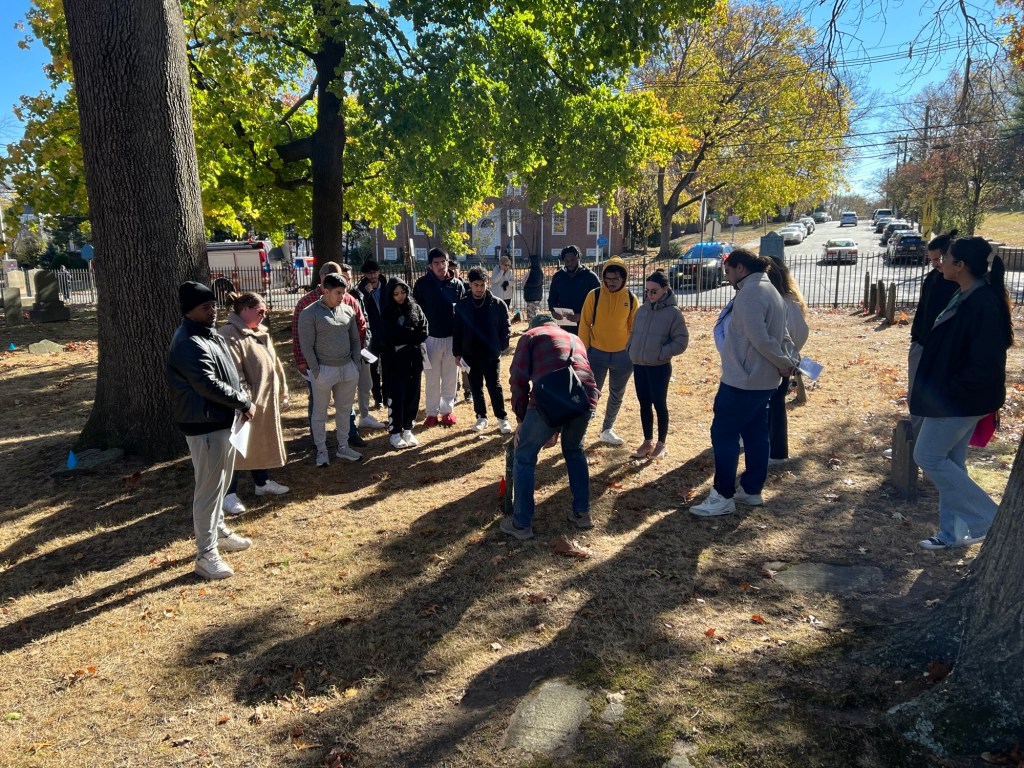
Our last field trip was to the church for another visit with Bob Carpenter and Melissa Naylis, who led a new group of students on a tour through the graveyard to learn about history, restoration, and how marble is chiseled.
We worked with Melissa Naylis, who is leading the renovation of the church and master carver, Bob Carpenter, who showed us how he is restoring the graveyard. He had led one of my previous classes when we visited the graveyard for my ‘Bergen 250’ project.
Master Carver Bob Carpenter leading our tour
The South Presbyterian Church and the Demarest family plot
The Demarest family plot
Melissa Naylis starting the tour with us
The students got to learn of the important history of the grave sites and why they are an important piece of the United States founding. The were the men who fought for our freedom and the wives and families that supported the effort.
Melissa leading the tour and introducing Bob Carpenter to us
Melissa Naylis explaining the work that is being done in the graveyard
Bob Carpenter explains his work
Some of the earliest tombstones in the graveyard
Bob Carpenter explaining the renovation
Bob Carpenter talking about the Demarest plot renovation
Pastor Glen from the Old South Presbyterian Church introducing himself to the students and joining us on this part of the tour.
Talking about the care of the tombstones
Talking about care of the tombstones
We then moved to tombstone of the founder of Rutgers University for a marble carving demonstration. Bob Carpenter wanted the students to know the effort into carving into stone and brought the tools of that era and a piece of marble for the students to use. The students got a kick out of this and some really enjoyed it.
Bob explaining the work of a marble carver
Describing the process
My students giving it a try
My student Amy, carving marble
My student, Walid, carving on marble
Demonstrating the process
After the demonstration, we talked about the work of the Demarest family and their contributions within Bergen County.
The founder of Rutgers University, John Henry Goetscheus and a member of the extended Demarest family.
Our Team picture after the tour
Taking a quick tour of the graveyard after the formal tour, the Blauvelt-Kipp family burial ground
Northwest Bergen History Coalition History Day/Summer Open House 2026:
I visited the Hopper-Goetschius House Museum during the 8th Annual Northwest Bergen History Coalition History Day. I had never been here before and it is a real treat. There are many buildings on the property to visit on top of the house and the fact that this was someone’s house into the 1980’s is pretty interesting.
The historic marker in front of the house
The Hopper property in July 2026 for the Weekend Open House
The Gris Mill wheel
The historical tree stump
The historical plaque
The property in the Summer of 2026
Christmas Open House December 2019:
The house still holds many secrets. The best part of the tour of the house is the secret stairs in the kitchen that lead to the old second floor. This can only accessed behind a panel that leads to a narrow set of steps. You can see it from the new second floor from the top floor.
I attended Holiday Celebration on December 8th, 2019 and it was a beautiful sunny day for an outside event. It was a really nice afternoon. They had a visit with Santa at the Dutch barn which was decorated with trees surrounding him and presents and a decorated Dutch sleigh. In the schoolhouse, there were all sorts of games and talks to enjoy.
Santa in the Dutch Barn at the Hopper museum
In the outside kitchen, there were chestnuts and fresh popcorn being made that you could munch on while walking around enjoying the festivities and the smells of the cooking food were mouthwatering. The gentleman doing the cooking was doing a demonstration on how the food was cooked and the amount of time it took to make things.
The outside buildings still had a bit of snow left
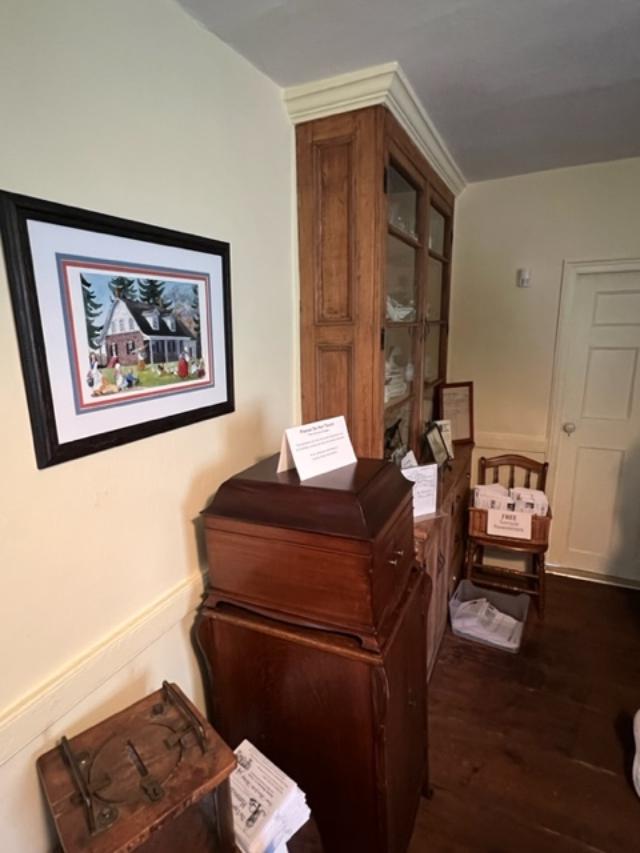
The inside of the house was decorated for the Victorian holidays with a nicely decorated tree in the Living Room and garland all over the place. There was a Victorian music box playing songs and a reading of “The Night Before Christmas” being read on the hour.
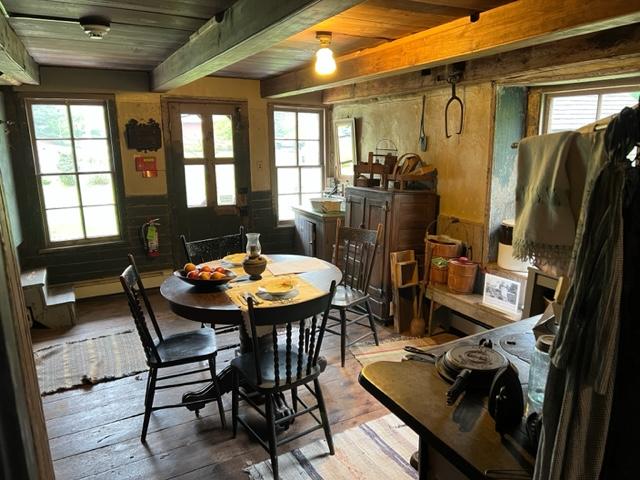
In the kitchen of the oldest part of the house, they served hot cider and homemade Christmas cookies of all kinds. They were also selling fresh homemade jam that one of the members made. The kitchen was decorated for the holidays as well. There was an open tour of the house and it was fun to see the upstairs decorated with all sorts of Victorian toys and dolls. The fee was a $5.00 donation and it happens every first week of December at the site.
The Hopper House kitchen
The house is a treasure trove of period furniture and family items and on the property there is a schoolhouse, a barn, a blacksmith shop and an outhouse. During the Summer months, the house is open for special tours on the weekends and in the Fall, they have a Harvest Festival and Christmas holiday events. The house is run and operated by the Upper Saddle River Historical Society.
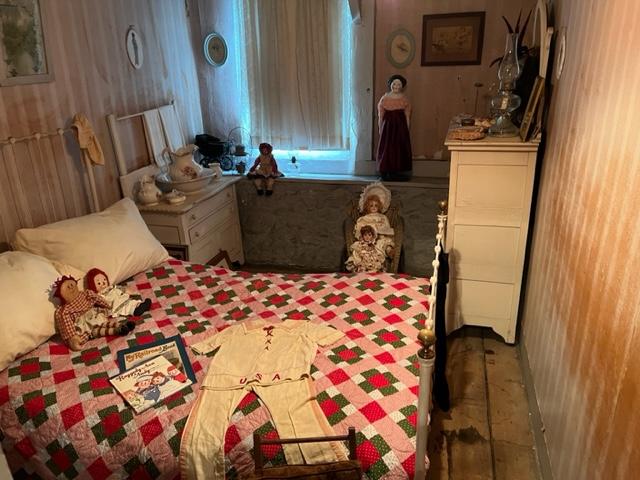
The antique toys in the upstairs bedroom
In April of 2023, I returned to the Hopper-Goetschius House for the Northwest Bergen History Coalition Day for the event. It was a gloomy day with mist and rain but that did not put a damper on the event. There were lots of activities going on in each of the buildings.
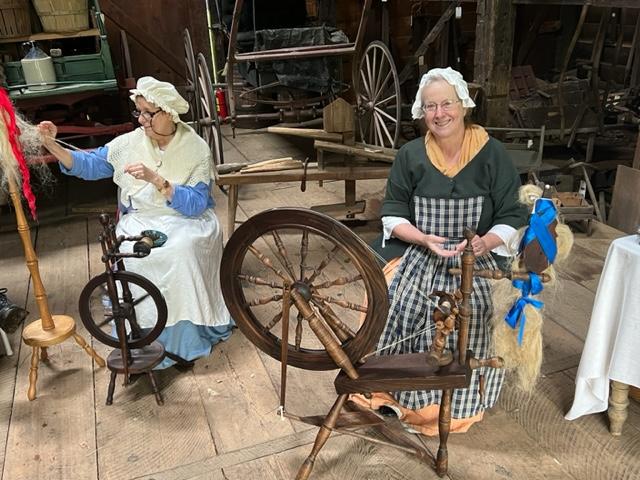
My first stop was at the barn where the ladies were doing a demonstration on spinning thread and we had a conversation of where the expression “Pop goes the weasel” came from (from the spun threat reaching its max and then the machine made a ‘pop’ sound). The ladies were demonstrating the way women spun yarn and made clothes and the work that it entailed.
The yarn spinning demonstration at the Hopper Barn
The ladies explaining how the spinning works
‘Pop goes the weasel’, the weasel at the Van Riper-Tice Barn
When I left the barn, I went over to the school house building to see what was going on. A very bored volunteer took up all my time and would not leave me alone. She had to read from a script and take me all over the house. I just wanted to get out of there. Thank God another person walked in so that I could escape and see the rest of the property.
The Ramsey House was moved to the property to save it from destruction and the society has done a good job transform it to a turn of the century classroom. This is a surprising display in many historical societies as I am sure that people have donated so much of their childhood mementos.
The Ramsey House schoolroom
The schoolroom
The teacher’s seat at the school room. Nothing has really changed.
The farm artifacts at the Ramsey House schoolhouse
After the tour of the Ramsey House, I took the tour of the main house again and its secrets. The Hopper House is a very interesting home as the owner did not want plumbing in the house. Up until 1963, she still used the well. She was forced by her nephew to get a modern bathroom. I thought this was strange that the woman did not want a bathroom. She still used the outhouse into the 1960’s.
The Hopper House kitchen
The home is decorated with all sorts of beautiful antique furnishes and decorations. The house is so well organized and the volunteers do such a nice job telling its story especially at the holidays. I visited all the rooms where the volunteers explained its purpose.
The bedroom upstairs
Bedroom Two
Bedroom Three in the upstairs loft of the house
My last part of the tour was visiting the Smokehouse right behind the house.
The Smokehouse during the Summer Open House
Inside the kitchen during the Open Kitchen
The inside of the Smokehouse
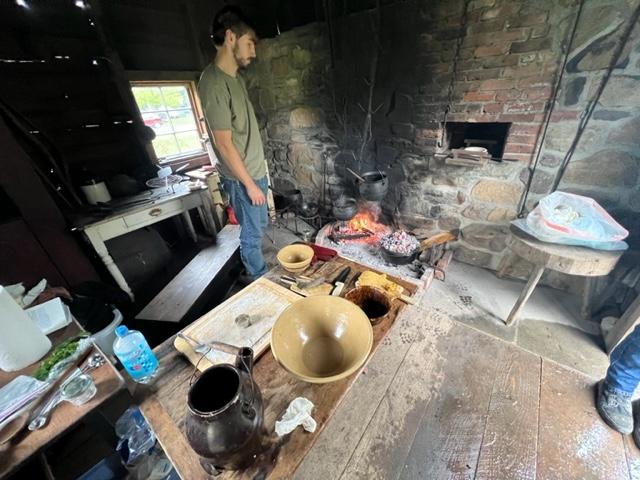
The volunteers were cooking corn bread, homemade potato soup and biscuits in the fireplace. It was interesting to see how food was cooked on the farm in the days before modern kitchens.
The two volunteers working there were so happy to see someone. They told me that no one wanted any soup. On a cold rainy and misty day, I was taking them up on it and it was really good! Talk about warming you up.
The Smoke House on the Hopper estate was cooking away that afternoon
The volunteers were making breads, biscuits and soup that afternoon that warmed me up
The delicious Potato Kale Soup warmed me up on this rainy day
The delicious Corn Bread was cooked with bacon fat and tasted so good! I munched on most of this.
I finished eating and talking with the volunteers about all cooking they were doing. They told me that they were following the recipes that were from the late 1700’s that would have been cooked at the farmhouse at that time. It was a really interesting conversation we had on cooking. It was nice to eat something as well. I was starved at this point.
After the meal, I left to go to the next site. I felt for these volunteers. The Hopper House is off the beaten tract and they must have not gotten the visitors that the other homes had seen. Still it was a wonderful visit with members who care so much about the house and its grounds.
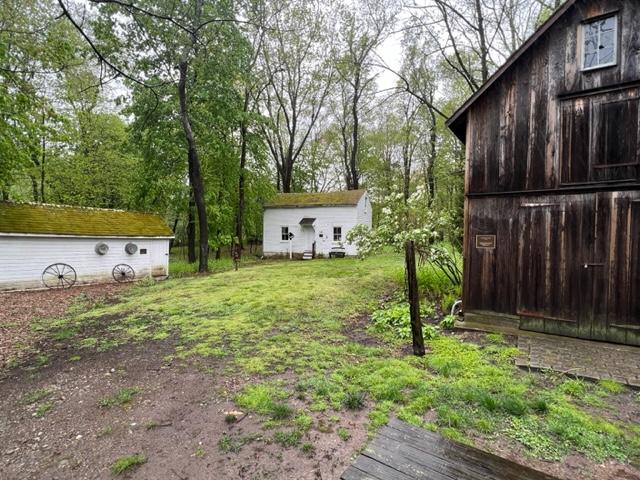
The Hopper estate with the barn, school house and ice house in the distance during the Northwest Bergen Historical Coalition Day
The Hopper House entrance hall
The Hopper-Goetschius house on the corner of Lake Street and East Saddle River Road dates back to 1739. Built by the Hopper family, it is the oldest remaining house in Upper Saddle River. We know it existed in 1739 because it was recorded in surveyor Charles Clinton’s journal and possible it is older.
The picture of Steven Goetschius and his wife,
The other family pictures on the table in the parlor
Rosalie Fellows Bailey in her book on pre-Revolutionary Dutch houses, says it was marked as the home of Gerrit Hoppa on a rough sheepskin map made about 1713.
The Goetschius family, the second owners of the house
The house underwent several changes in the mid 1800’s. The large central chimney with back to back fireplaces was removed. Probably, with more modern forms of heating available such as wood stoves, the fireplace seemed a bit old-fashioned and the owners took it out. Besides, they wanted to use the entrance hall as a room, so the stairway along the east wall was removed and a central staircase added where the fireplaces had once been. The dormers were added in the Victorian era.
The Hopper house in 2023
The Hoppers farmed the land and had a lot of it by today’s standards. The property extended from the Saddle River (Lion’s Park) up the hill almost to Montvale and up the East Road to where Creative Gardens was located.
The antique dolls at the Hopper House bedrooms
(From the Society website)
In 1814, the house became the home of the Reverend Stephen Goetschius of the Old Stone Church. It remained in the Goetschius family for a century and a half, always a place of central importance in town as Stephen Goetschius, the great-great grandson of the Reverend Stephen, served as the borough clerk for over 40 years and conducted his town business from the east room of the house (SRHS.com).
The Hopper House Living Room
The house was without running water until Stephen’s death in 1962. Until improvements were made at that time, Steve’s wife, Lizzie, as those before her, carried water from the well for washing, cooking and shoveled coal for heat (SRHS.com).
The Hopper House Kitchen
The kitchen in the new section of the house
In 1985, the Hopper-Goetschius house was presented to the Borough of Upper Saddle River by Clinton and Grace Carlough. Lizzie Goetschius, the last resident of the house was Clint Carlough’s aunt. The house today serves as a museum, run by the Upper Saddle River Historical Society and offers the public historically related events throughout the year (SRHS.com).
The Hopper House Living Room
The back bedroom Dutch wardrobe
The Patriotic Display for the ‘Bergen 250’
(Upper Saddle River Historical Society)
The Hopper House property also contains:
*The Privy or Outhouse that was in use at the Hopper-Goetschius House until 1962 when plumbing was installed in the house.
The Outhouse
Hopper House estate with all the important buildings in the Summer of 2026
*The Ramsey Sayer House was moved to the grounds in 1999 to become part of the museum complex. This is the oldest existing from house in Upper Saddle River, a good example of a tenant house common on farms in this area. The Ramsey Sayer house belonged to William Ramsey, the grandfather of Kate Fisher Goetschius, mother of Steve Goetschius, who lived in the Hopper Goetschius house for many years.
The Ramsey-Sayre House now serves as the makeshift schoolhouse
The schoolhouse at the turn of the last century
The Native American artifact collection at the Schoolhouse
*The Van Riper-Tice Barn was erected about 1800 by the Van Riper Family on their farm on West Saddle River Road (near the Cultural Center). It was later owned for many years by Harmon Tice.
The Dutch American barn in the Summer of 2026
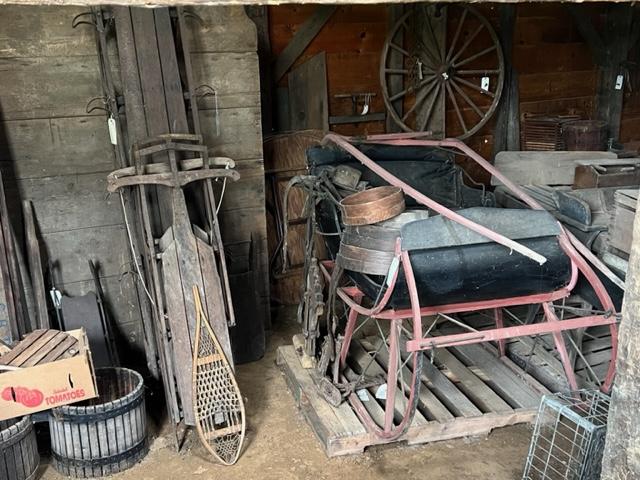
Sleighs and buggies and outdoor equipment
In 1989, it was scheduled to be demolished to make way for a development, the Historical Society dismantled it, moved it to the Museum ground and had it restored and rebuilt on its present location.
The inside of the Van Riper-Tice Barn at the Hopper House estate
Winter transportation at the barn
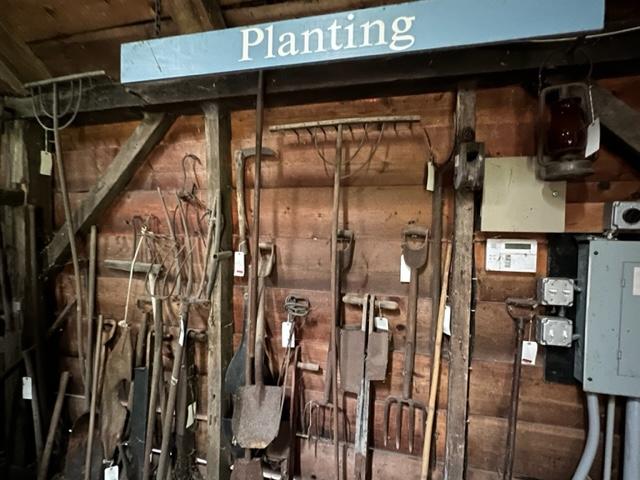
Transportation and farming equipment
The farming equipment display
More farming equipment
The displays of wool at the Van Riper-Tice Barn
The display of waffle irons
The Apple Cider Press that the Tice and Van Ripper families were so well known for making especially at Thanksgiving
*Snake Fence: a zig-zag fence of split rails once common in this area was added in the property north of the Van Riper Tice barn. The project was completed in 2001 with the help of Will Mazzuto and the vision of John Kroner and Joanne Lombardo.
The Hopper House estate
The Blacksmith Shop
The blacksmith doing a demonstration
The Upper Saddle River Historical Society:
The Upper Saddle River Historical Society was organized in 1977 to collect, preserve and distribute the history of the Upper Saddle River area. The Society is also responsible for the management and restoration of the Hopper-Goetschius House Museum located at 245 Lake Street, Upper Saddle River, NJ.
The Historical Society has over 500 members and is host to nearly 2000 museum visitors each year. The Society holds program meetings throughout the year along with special events such as a Spring Concert, a wonderful Harvest Fair in the fall and an Old Time Holiday Open House in December, featuring mulled cider with chestnuts roasting on an open fire.
The Museum is open for tours every Sunday during July & August from 2:00pm-4:00pm or by appointment. For group or individual tours contact: Althea Gardner @ (201) 327-7807 or Kay Yeoman @(201) 327-2236.
Hopper-Goetschius House Museum Restoration Fund Drive
Disclaimer: This information was taken directly from the Upper Saddle River Historical Society website. Please check the site for the hours and days it is open.