The Sturr Family Cemetery sits on a bend of the driveway of the Chabad Jewish Center of Northwest Bergen County and is a small cemetery that once sat on the edge of the J.H, Sturr farm.
The Sturr Family Cemetery
The farmhouse of the Sturr Family sits on the lot across the street from the cemetery property. This is located on a small buff on what was the edge of the farm.
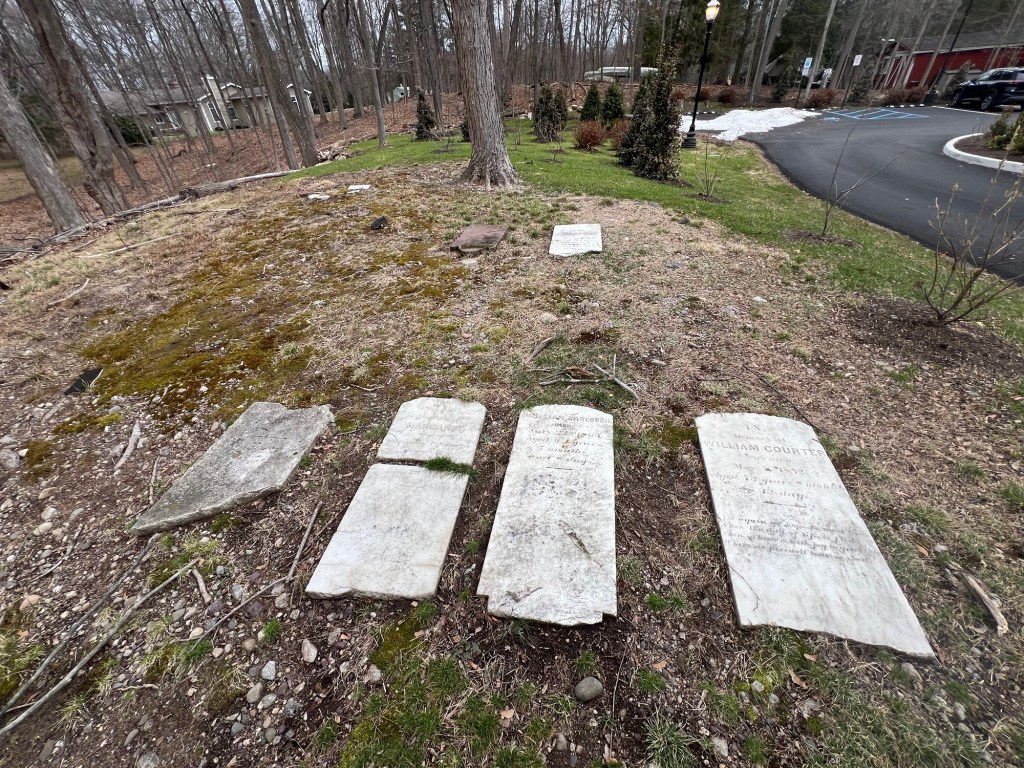
The Sturr Family cemetery tombstones
The tombstones of the Courter and Carlouch family members
The grave of William Courter
The only visible tombstones that are left in the cemetery are an Ackerman family member, Anny Ackerman and members of the Courter and the Carlouch family’s (who must have married into the family).
The Ackerman family tombstones (the one to the right was unreadable)
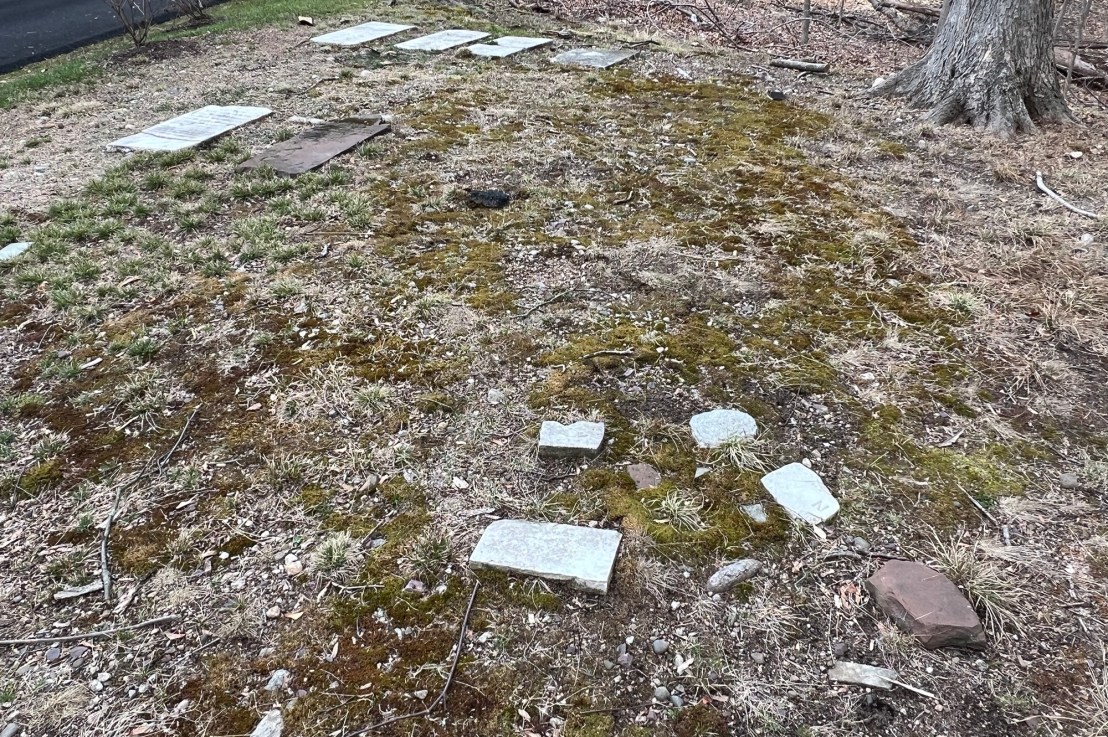
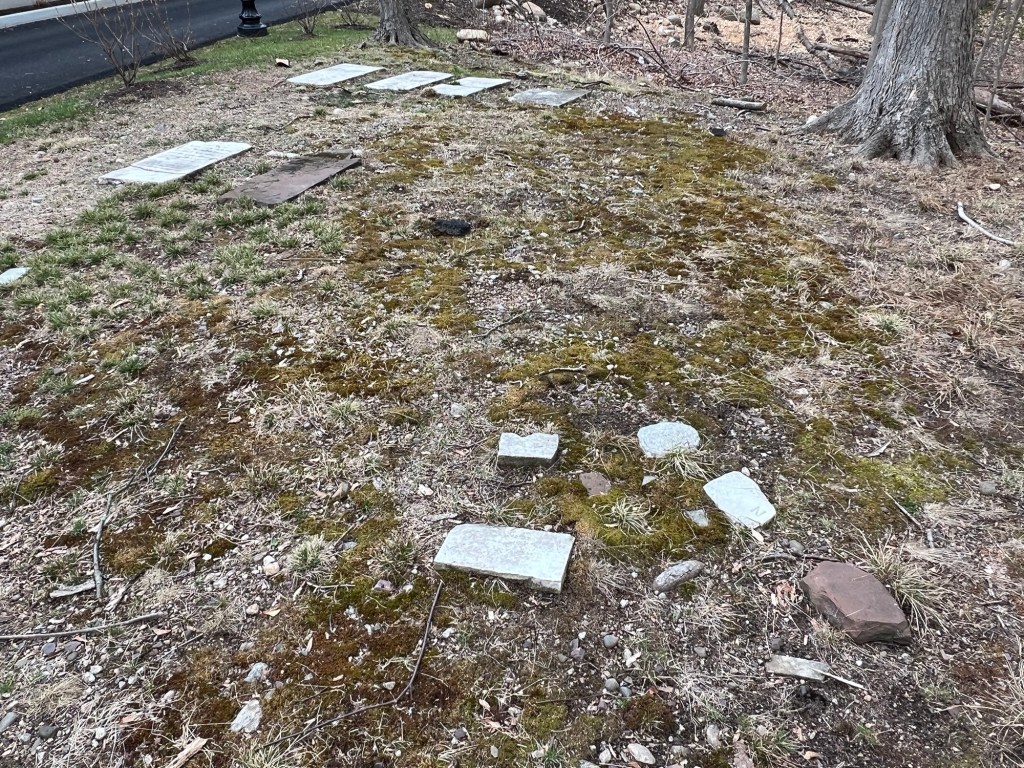
The other tombstones are broken and no one is sure who is buried where in the cemetery.
The History of the Cemetery:
(From Find a Grave website)
The cemetery is located in Franklin Township, Bergen County, New Jersey, on what was once the family farm of J.H. Sturr. As of October 1991 only 6 markers were still remaining.
The Sturr Family Cemetery in full view
History of the House:
(From the Franklin Lakes Municipal Website)
H. Sturr House or Blue Meadow Farm Built 1860 378 Pulis Avenue, Block 1510, Lot 8 Franklin Lakes, New Jersey 07417
The Sturr House – also known as Blue Meadow Farm -is a handsome and little altered example of mid 19th century vernacular architecture which incorporates several stylistic elements such as gable returns and frieze area of the early 19th century Greek Revival style. The Borough of Franklin Lakes lists the erection year of the house as 1860.
The façade of this 2 ½ story house consists of clapboard. The front porch has five bays with square posts and a rectangular entrance door with rectangular sidelights. Two tall 1st story windows are on one side of the porch. A single hitching post with iron rings sits in front of the porch stairs. The building has a frieze area with linear design. Semi-circular headed louvered vents are in all gable ends. The rear of the house has a one story wing. There is a detached garage to the west side of the house as well as a round frame well. Further west of the house is a stable which has been extensively remodeled and converted into a residence in recent times. The house combined with associated structures is a significant remnant of the large farmsteads which ones dotted the Borough’s landscape prior to the recent suburban housing boom.
History of the Family:
(From the Franklin Lakes Municipal website)
This Sturr house and the nearby more altered house at 402 Pulis Avenue were duplicate structures and were probably built around the same time by members of the Sturr family. The 19th century Sturr family was descended from Conraedt Sturr who purchased 190 acres of land in this area with John Coeter from Robert Livingston in 1793.
The non-extant homestead and mill was located at present-day 930 Old Mill Road. It is known that Henry Sturr, the son of Conraedt, had a fanning mill at this location in 1850. In a will dated 1852 he bequeathed his property and mill to his grandsons John, Henry, and Daniel (Maria Braun – 1976 page 26 & 27).
The property along Pulis Avenue upon which these houses are situated was probably included in this will since the homes were built around the mid-19th century. Future deed research is recommended to identify the original builder and the construction date of the house (1861: H. Sturr, 1876 Estate of H.M. Sturr). Presently the house is privately owned and occupied.
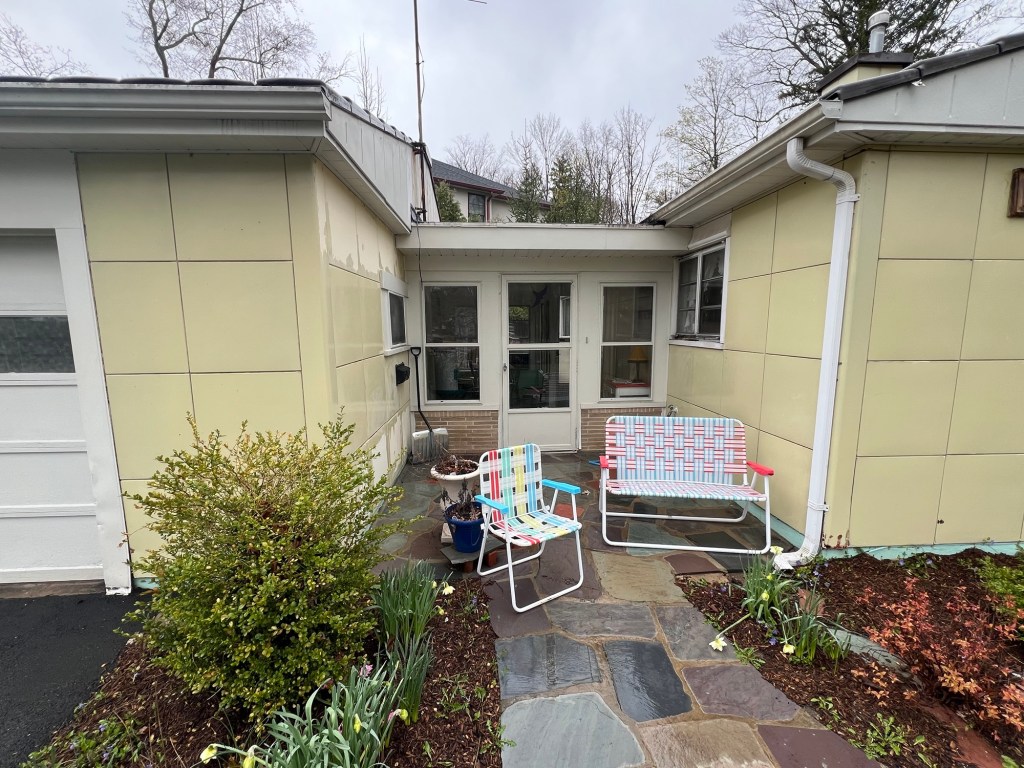
The breezeway of the home. This was for entrance of the home
Location of the house:
(from the Borough of Closter, NJ website)
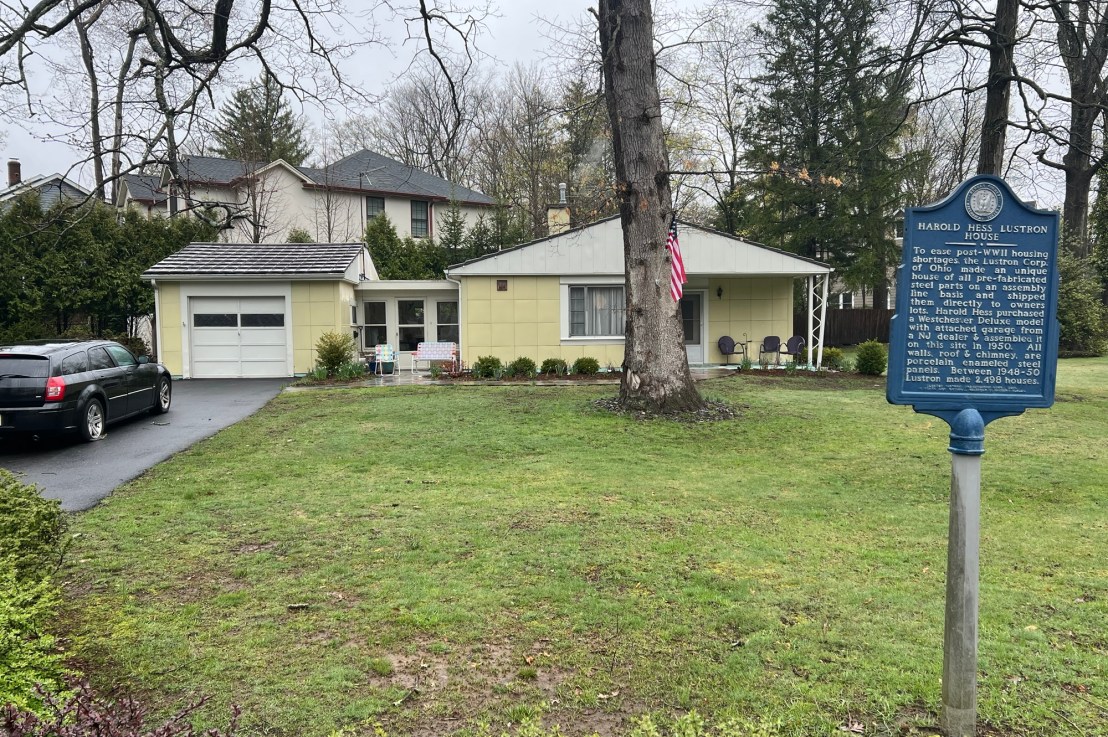
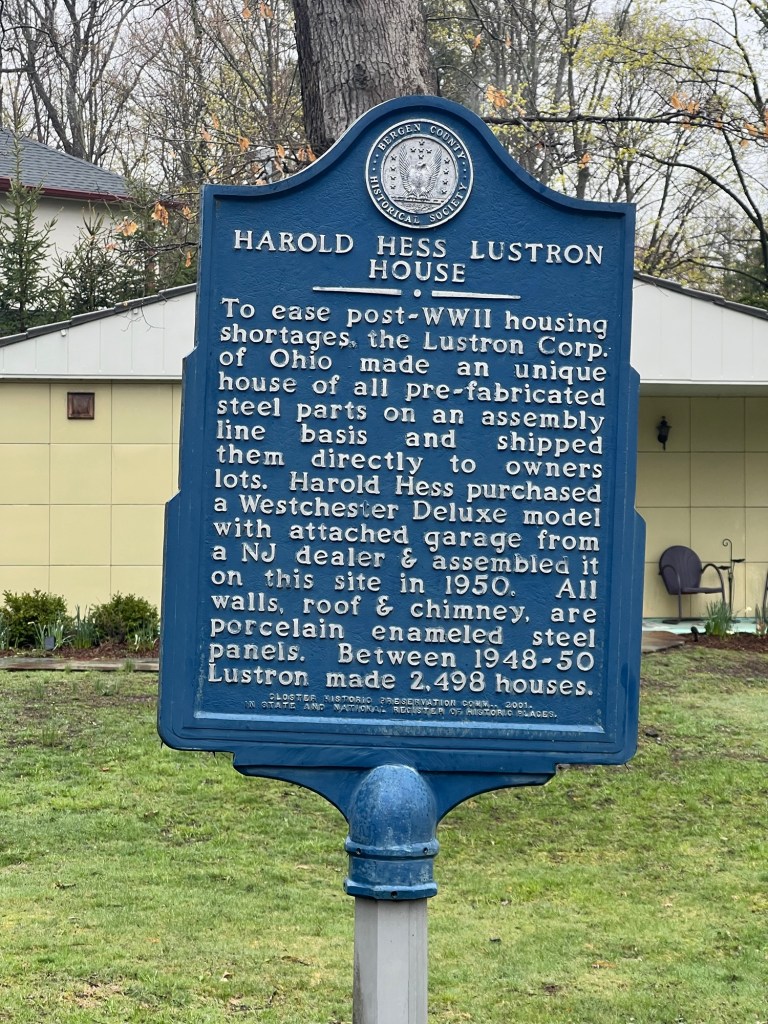
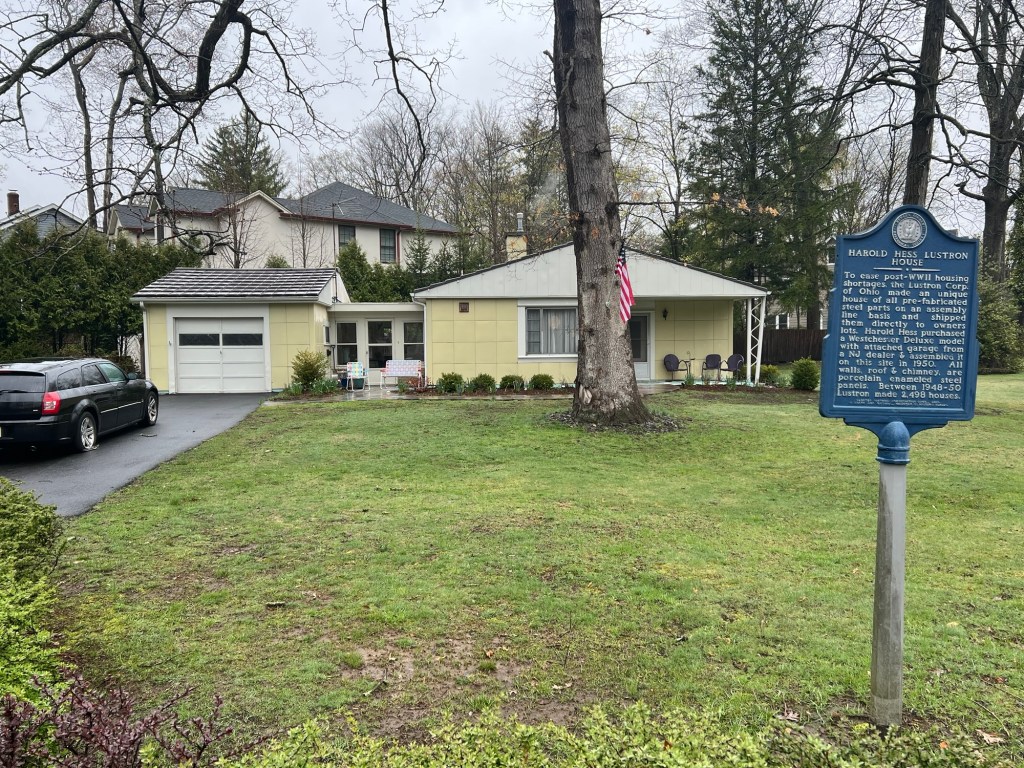
The Harold Hess Lustron House, located at 421 Durie Avenue, Closter NJ 07624, is currently owned by the Borough of Closter and is operated as a house museum by the Friends of the Lustron Committee of the Closter Historic Society. It is open to the public on the second Saturday of each month from noon to 2 p.m. (Boro of Closter, NJ website).
History of the Harold Hess Lustron House:
(from the Borough of Closter, NJ website)
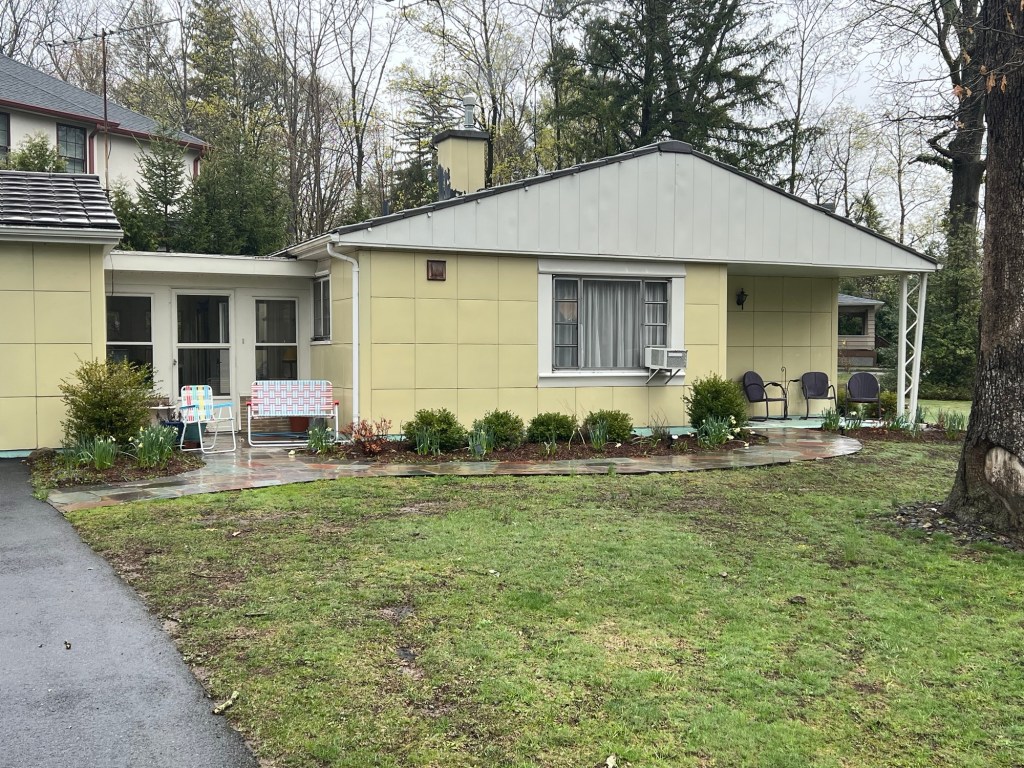
In 1949, Harold Hess, a recently married returning WWII veteran saw a sample Lustron House displayed at Palisades Amusement Park. In 1950, he purchased the Westchester Deluxe model with attached breezeway and one car garage. Originally he wanted the 3 bedroom, two car garage model but felt fortunate to receive what he got as the company was already heading into bankruptcy. Mr. Hess faced six months of planning and zoning board meetings in Fort Lee. He failed to get a permit to erect the modern metal house and turned to the Closter area where more relaxed building codes provided an opportunity to build the novel construction of the all-steel prefabricated house.
World War II vet Hess never lost faith in his house of tomorrow and was the proud owner till his death in 2004. He raised his family here and remained pleased with the house until the end, noting that there were some adjustments such as finding repairmen with enough problem solving creativity to make repairs to a steel house with a combination dishwasher/clothes washing machine next to and filled by the kitchen sink faucet. Other minor matters were hanging pictures with large industrial magnets and interior spring cleaning with automobile wax. The attractive steel walls never need painting or wallpapering so the color scheme never changed.
Closter’s Harold Hess Lustron House, listed on both the state and national registers of historic places, was scheduled for demolition in 2014. Thanks to advocacy by then-mayor Sophie Heymann and positive action by the Zoning Board, an unusual compromise was reached with the developer-owner of the property to donate the historic house to the Borough of Closter. The Borough of Closter applied for a $25,000 grant in 2016 to have a Preservation Plan written for the Lustron House. The grant was awarded by the New Jersey State Historic Preservation Office with monies provided by the National Park Service and did not require any local matching funds. The plan was completed in 2017, work has begun and will be implemented fully over time.
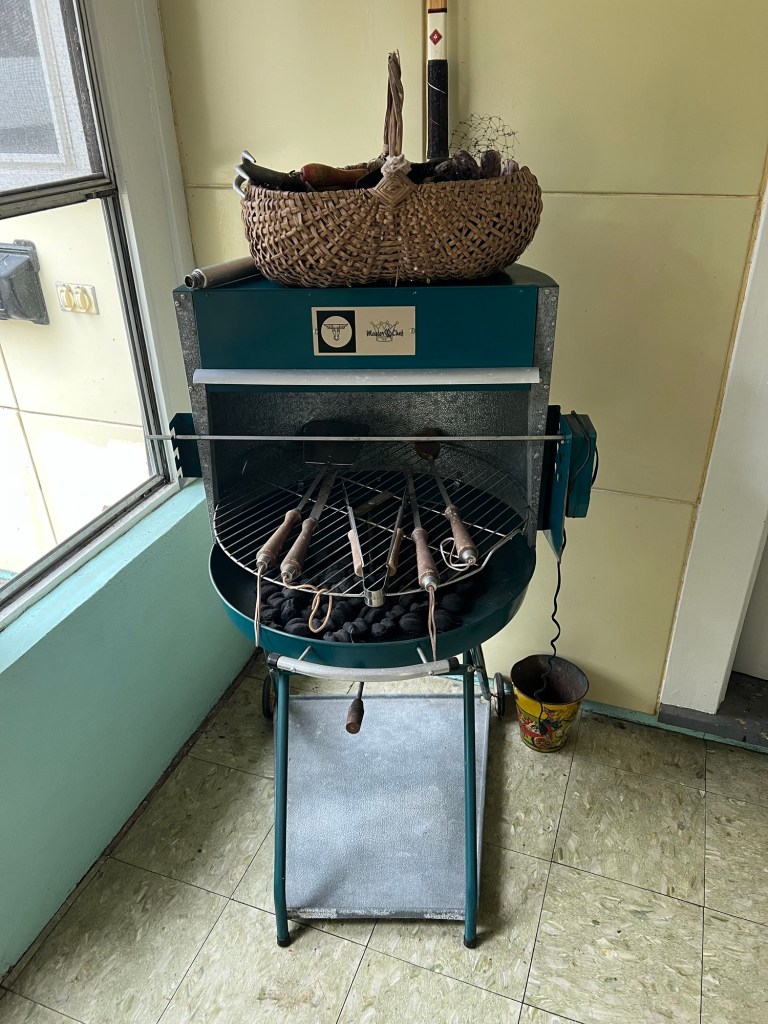
The barbecue grill in the breezeway
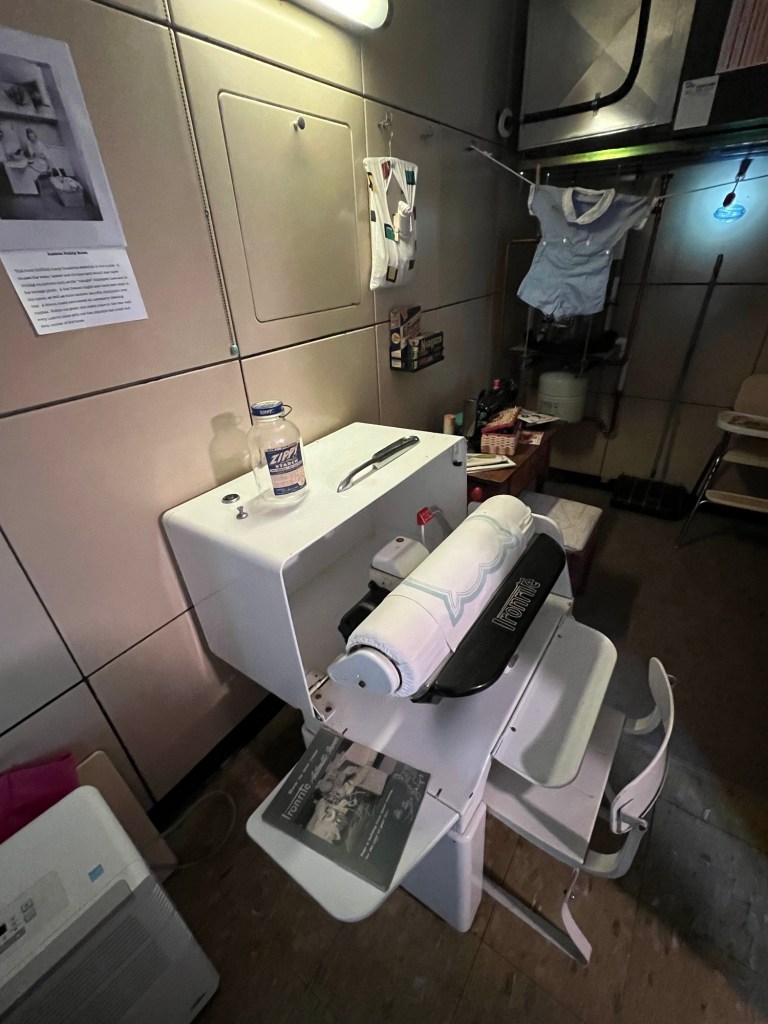
The Laundry Room as you walk into the house
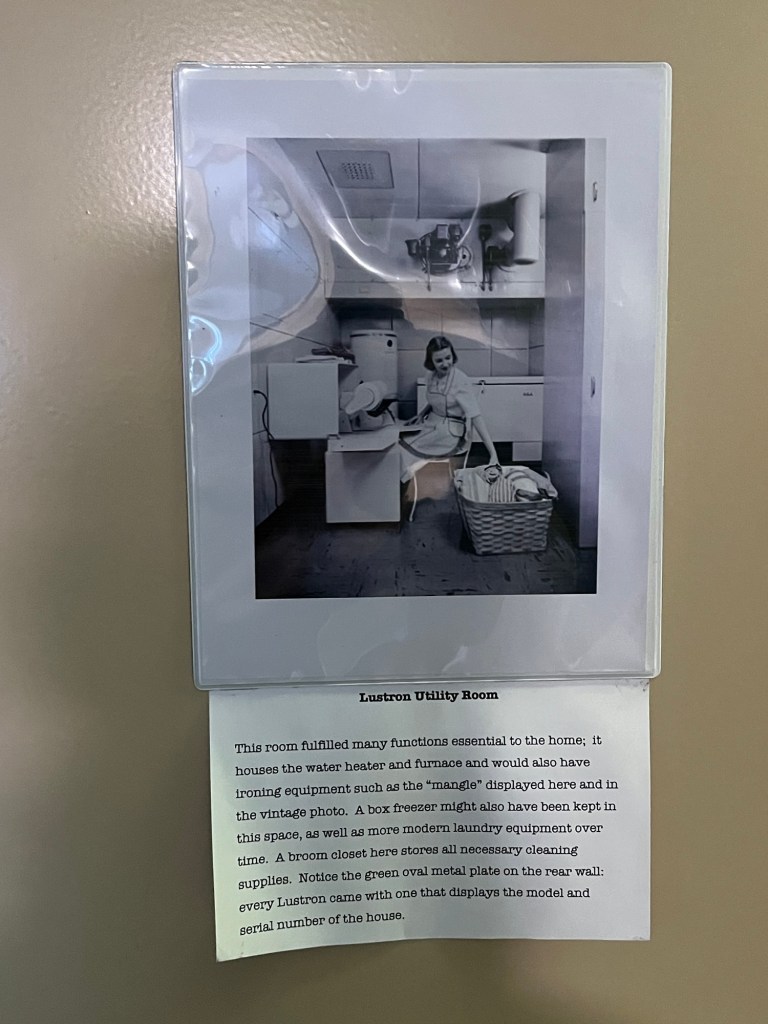
The display on Laundry room
History of the Lustron House: Current day
(from the Borough of Closter, NJ website)
There are only two Lustron houses remaining in Bergen County. The other is located in Alpine and has no local historic preservation protection. Approximately nine have survived statewide and an estimated 1500 remain nationwide.
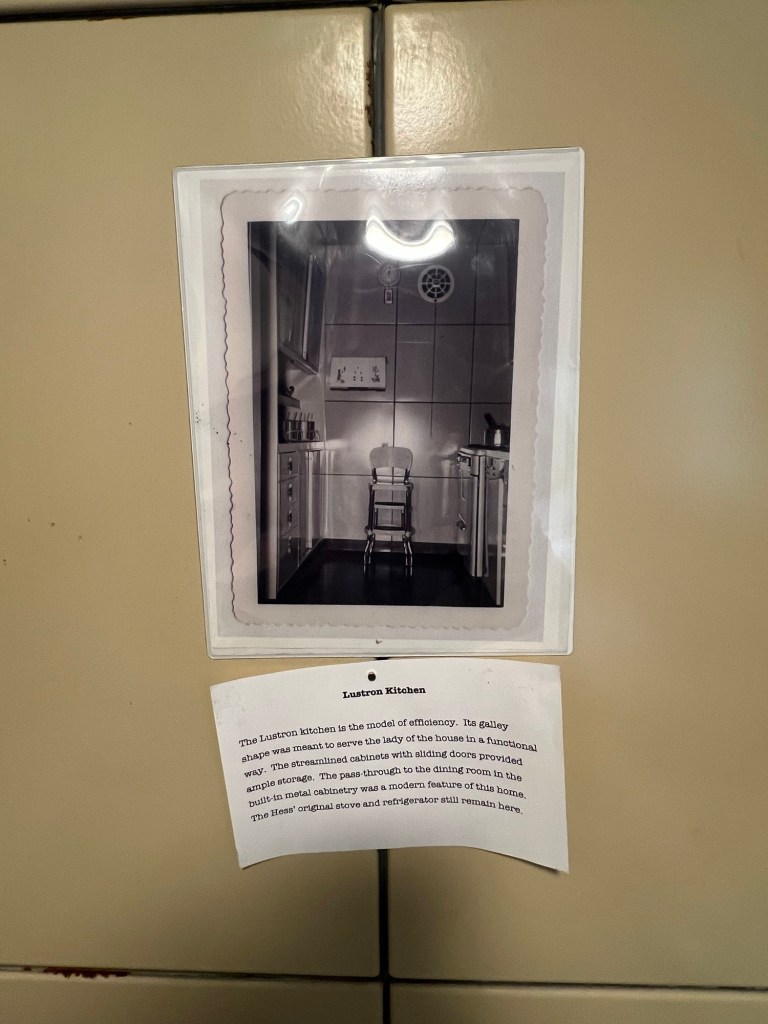
“Lustron” is a trademarked name that stands for “Luster on Steel.” The shiny efficiency of these homes mirrors the optimism that was felt by this country as its GI’s re- turned home triumphant from the Great War. Lustron homes are one-story ranch-style houses built on concrete slabs. They are very modest in size, averaging 1000 square feet of living space. Most of the Lustrons built were two- bedroom models, although a three-bedroom model did be- come available towards the end of production.
The Lustron house was the brainchild of Carl G. Strandlund, who saw the possibilities of utilizing steel left behind from the war effort to create needed housing. Strandlund had previously worked for the Chicago Vitreous Enamel Products Company that manufactured steel enamelware for refrigerators, stoves, and other household appliances. Connecting this technology to the housing industry was the ticket to success in securing federal funding necessary to start production. The Lustron Corporation opened a one-million-square-foot plant in Columbus, Ohio in 1947. But just as quickly as the company’s star rose, it plummeted, and the Lustron Corporation closed in 1950 due to overwhelming debt.
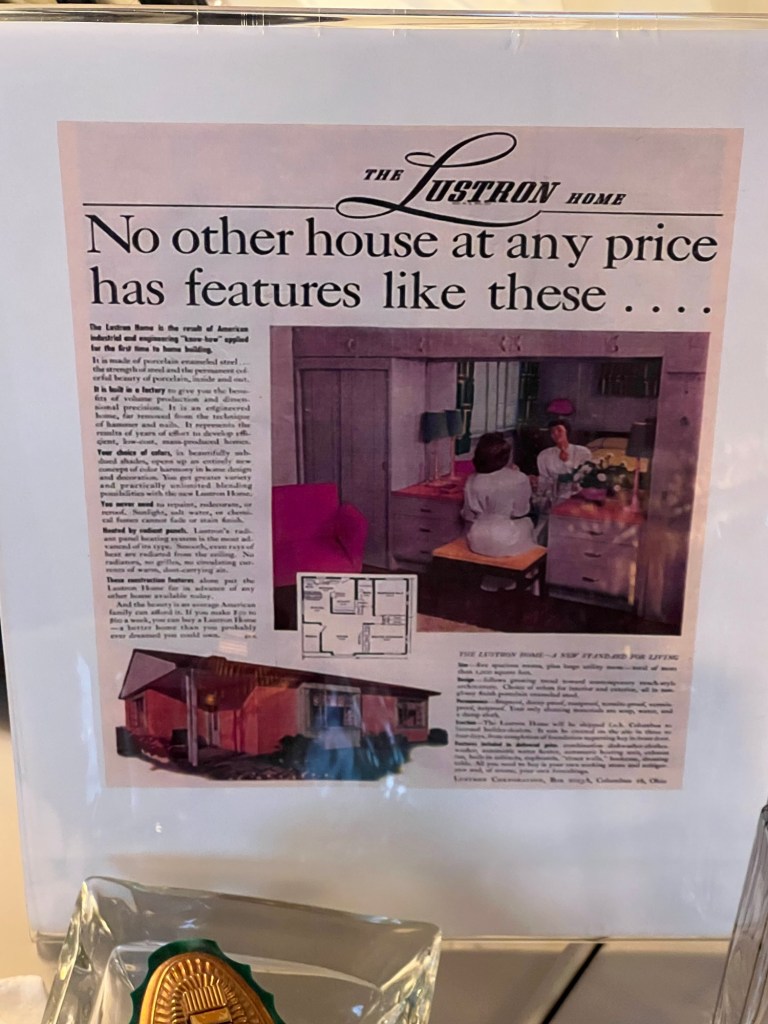
Elements of streamline design abound in Lustron homes, which feature built-in vanities, bookshelves and dining room/kitchen cabinetry, as well as pocket doors and sliding closet doors – all made of porcelain-enameled steel. Lustron homes were marketed as having “cheerful convenience” and “easy-to-keep-clean brightness.” They cost approximately $10,000 each and came in four colors: maize yellow, surf blue, desert tan and dove gray. All of the pieces of a Lustron home could be carried to the building site in one specially designed truck, and construction could be completed in as little as one week.
Interesting features of the Lustron house included the “Thor” dishwasher-clothes washing machine that was located in the cabinetry next to the kitchen sink. Another unique aspect of these homes was the heating system, which supplied radiant heat through a plenum chamber in the space above the metal ceiling panels. Each Lustron house came fitted with a metal identification tag stamped with the model and serial numbers and located on the back wall of the utility room.
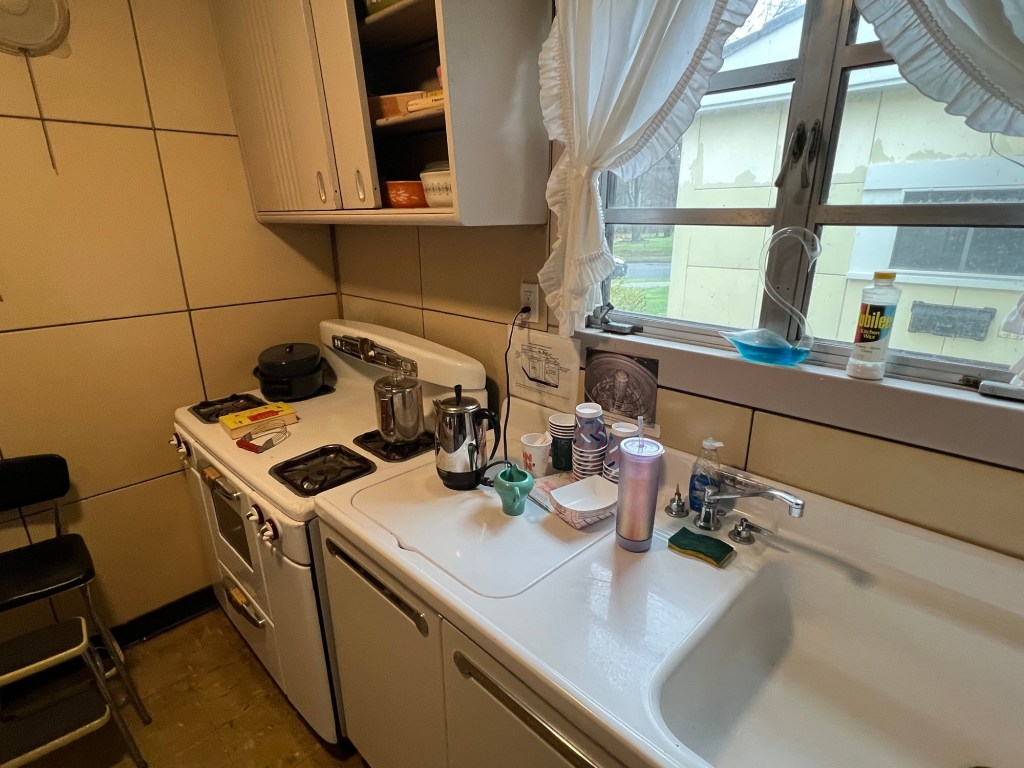
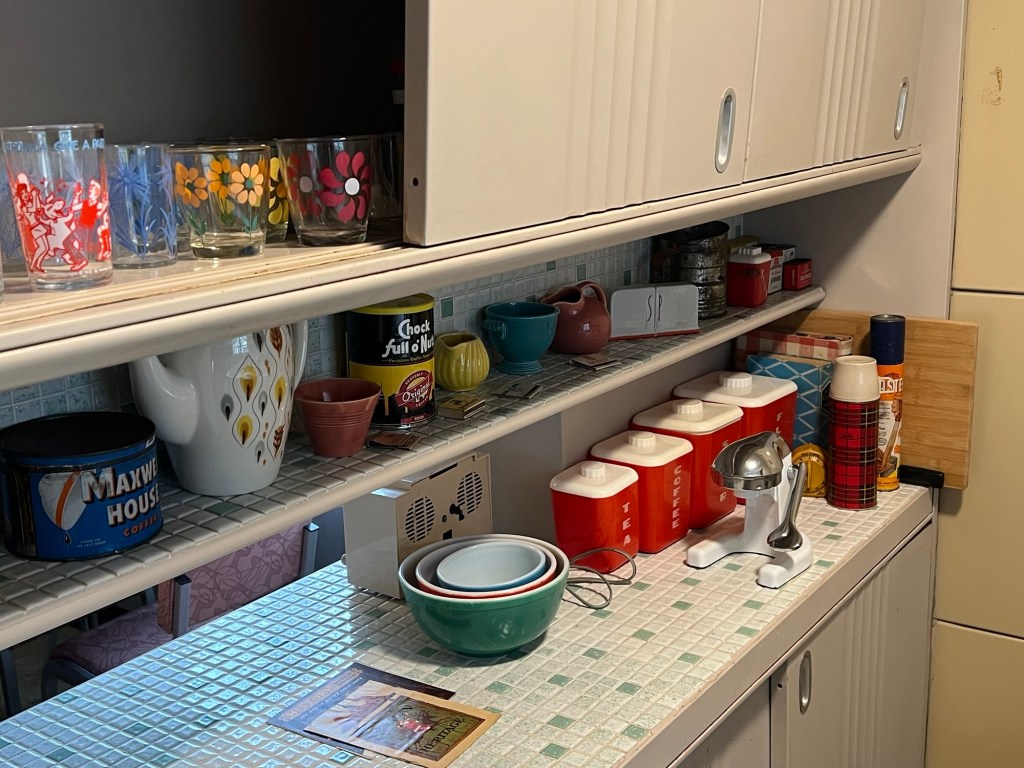
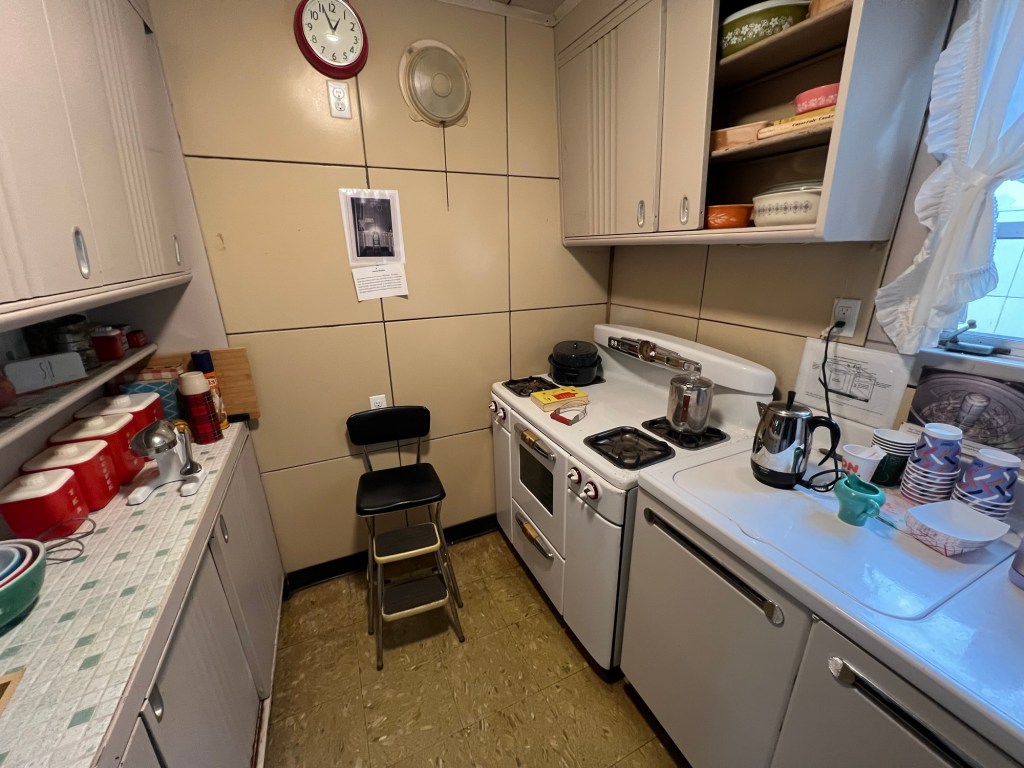
The kitchen looked like a complete replica of my grandmother’s and my aunt and mother’s houses in the late 1960’s and early 70’s.
The late 1950’s kitchen
The kitchen of the past
A closer look to the kitchen of the past
The kitchen’s of the past were designed for efficiency but not for socialization. This is why kitchens have grown over the last seventy years to accommodate socialization of everyone ending up in the kitchen.
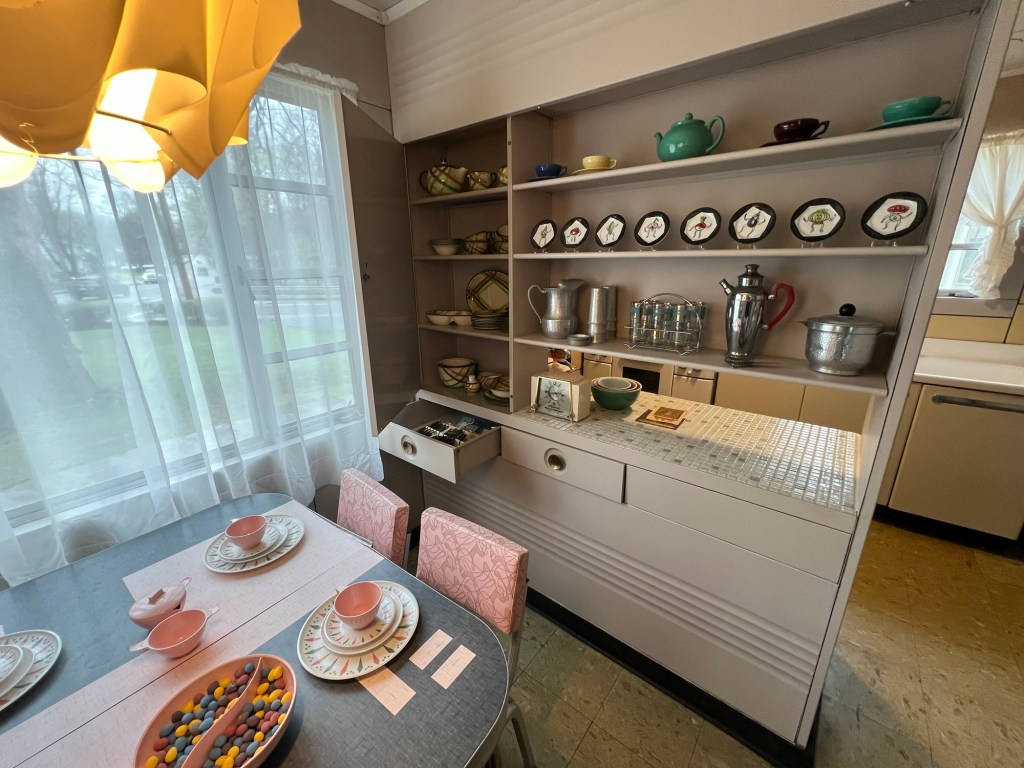
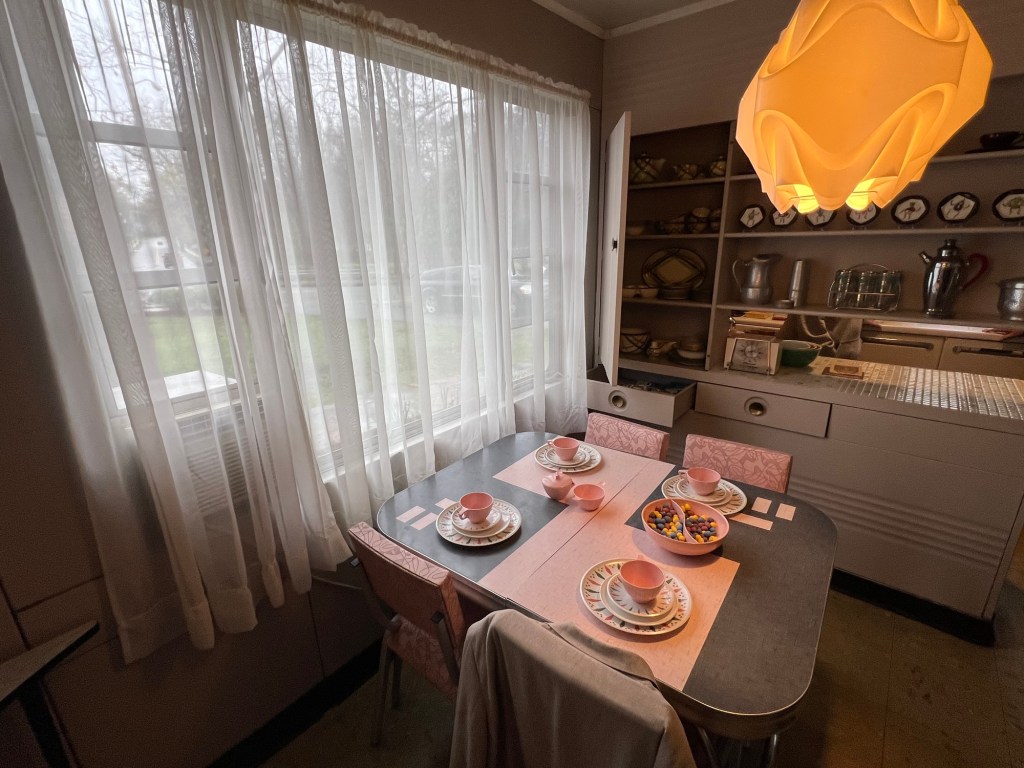
The Dining Room area off the kitchen
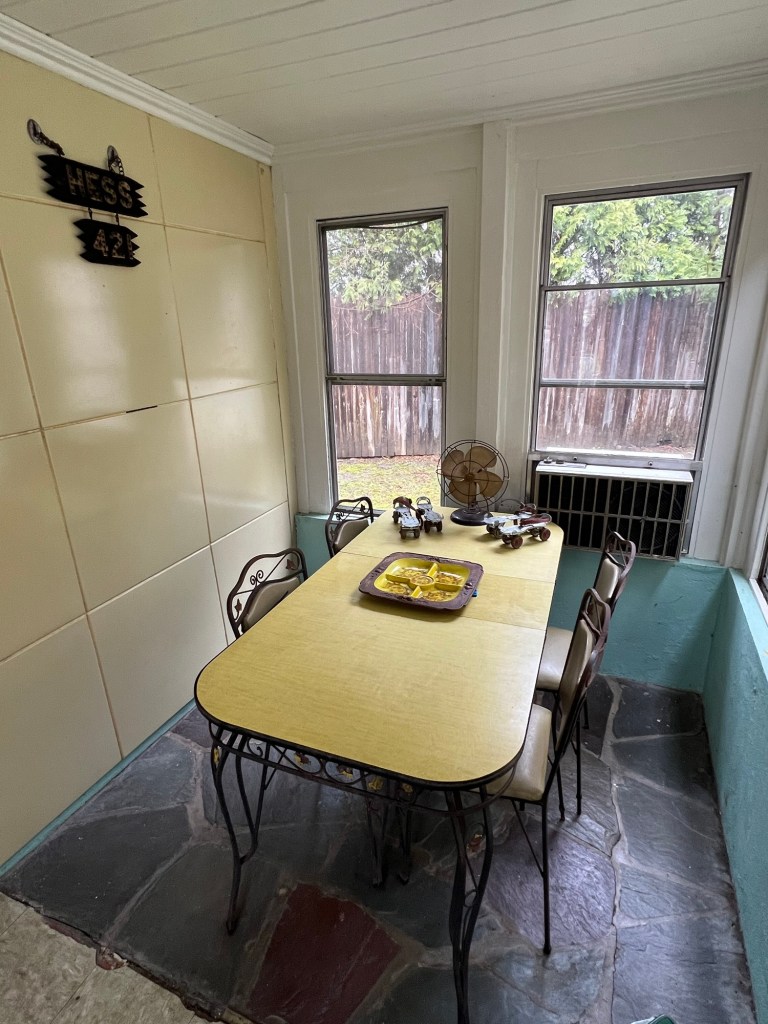
The seating area for the family had lots of light but could be quite tight
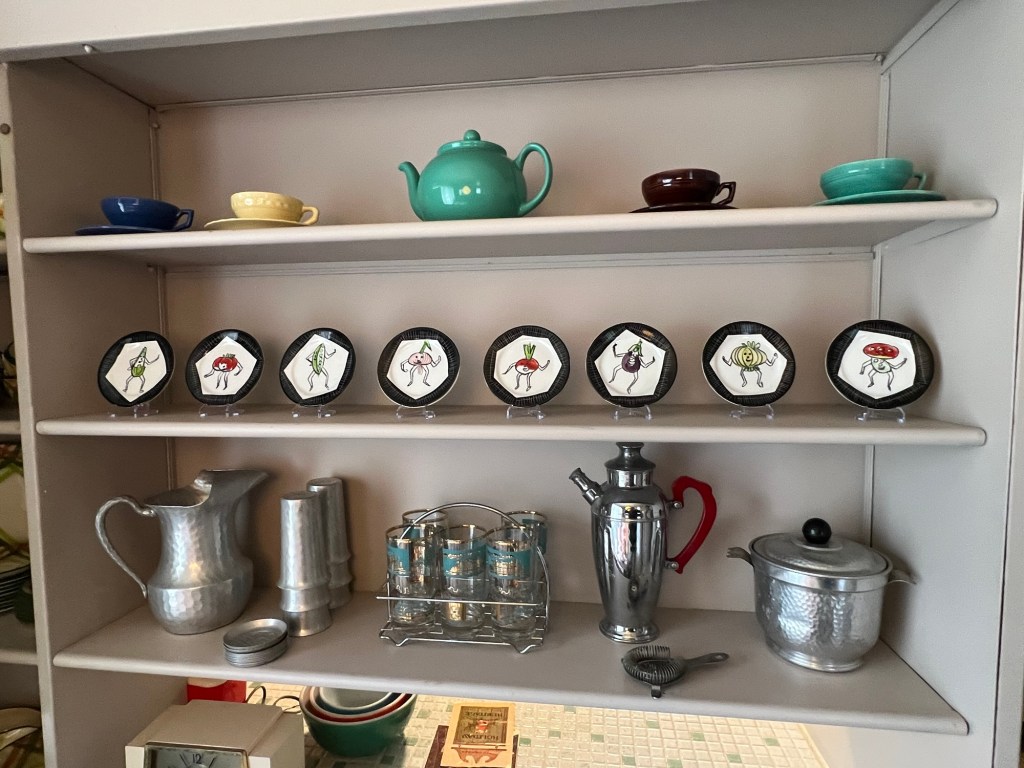
Everything was in its place on the shelves
The next part of the tour was the bedrooms which were off to the back of the house. Each was decorated with period clothing, furniture and other Knick knacks.
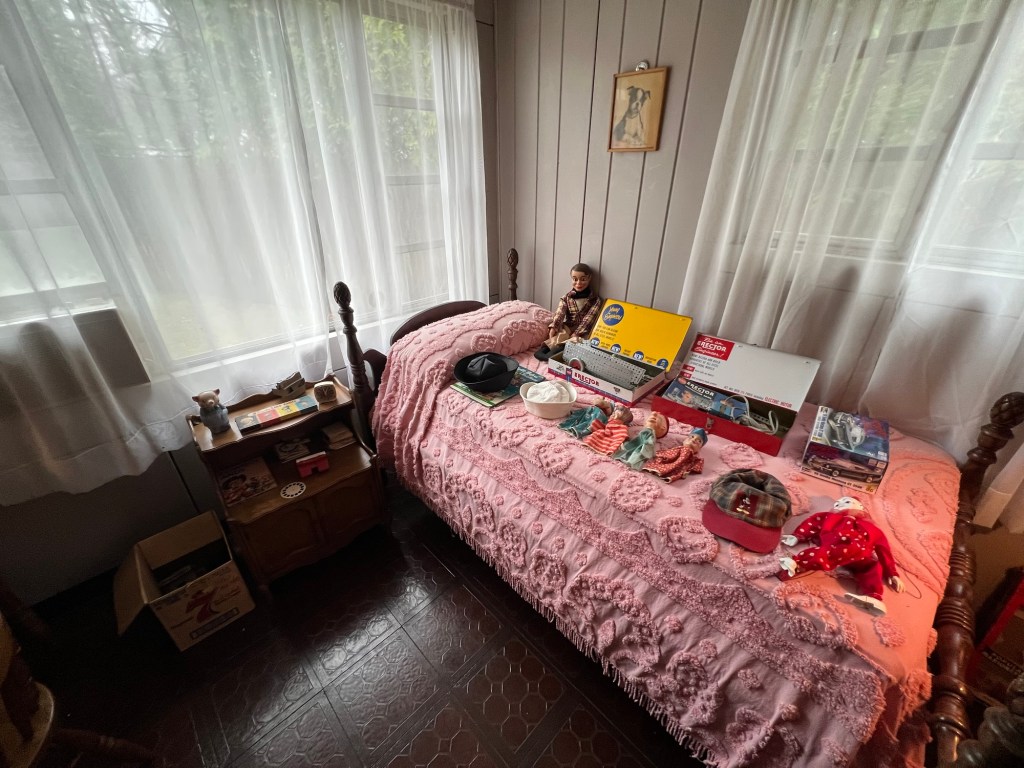
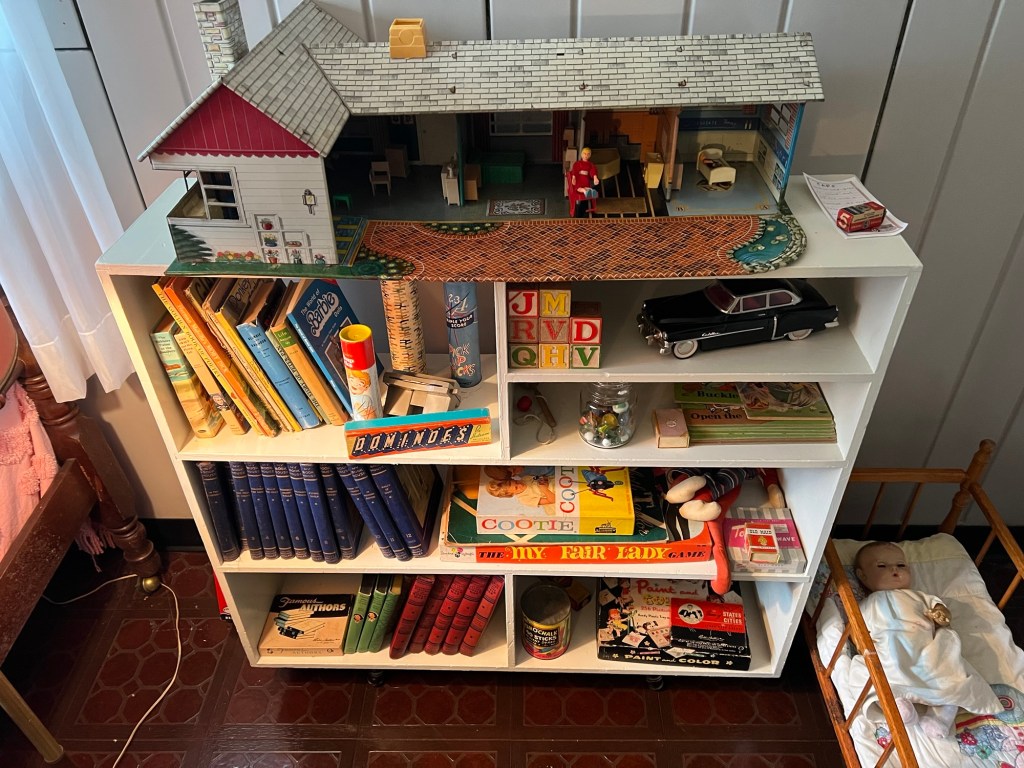
The Children’s bedroom was the first stop. I saw many toys from my childhood.
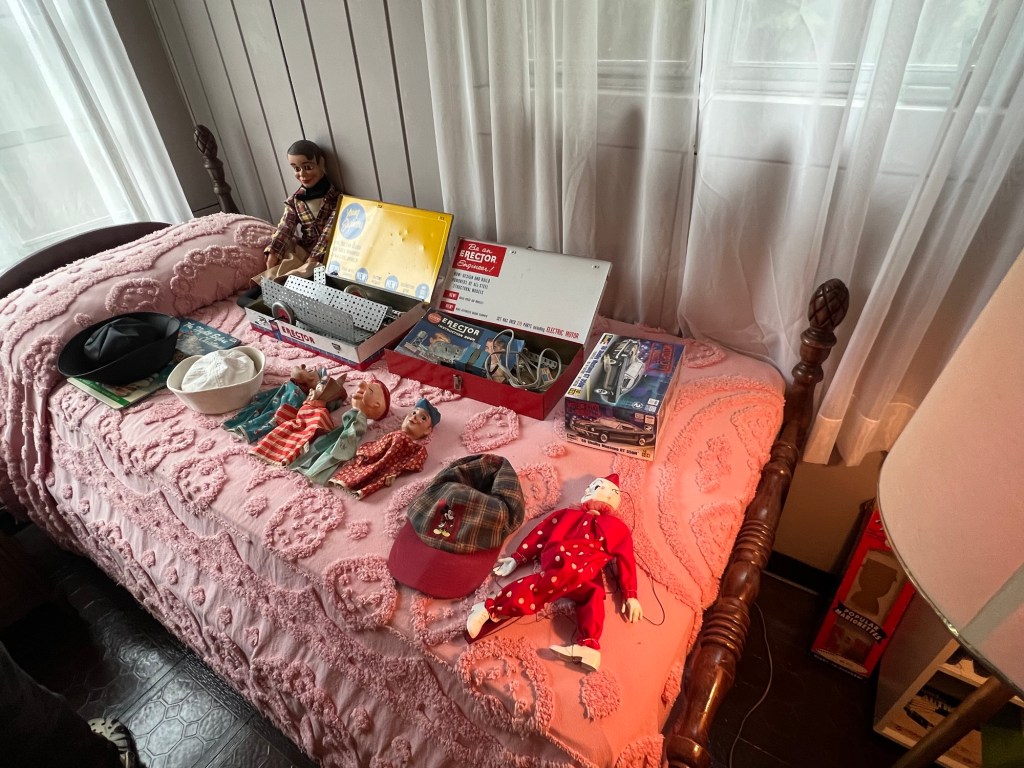
The bed had all sorts of puppets and games on it
The shelves were lined with books and board games from the era of the late 50’s and 60’s
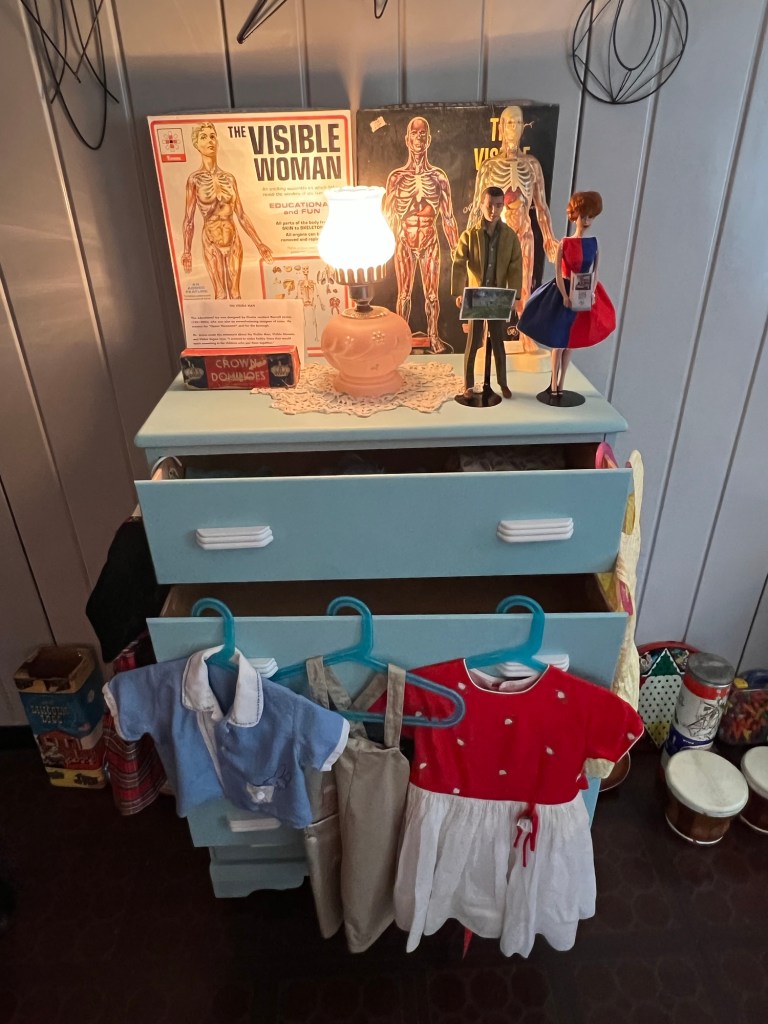
Vintage science sets and clothing were on display in the Children’s room
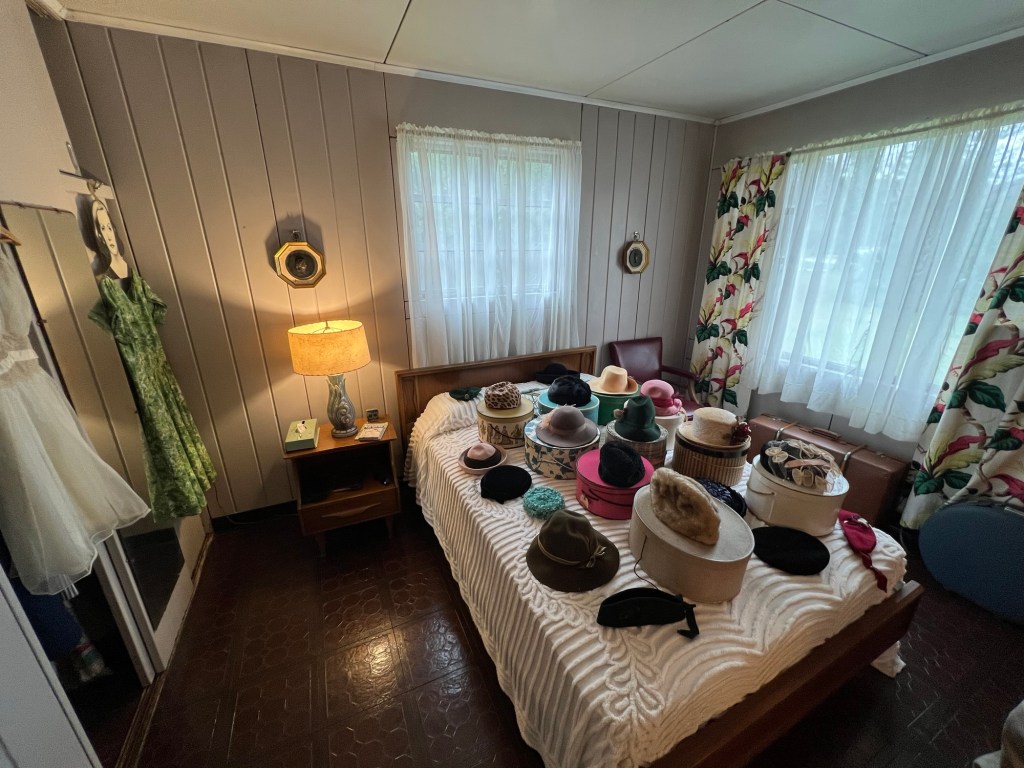
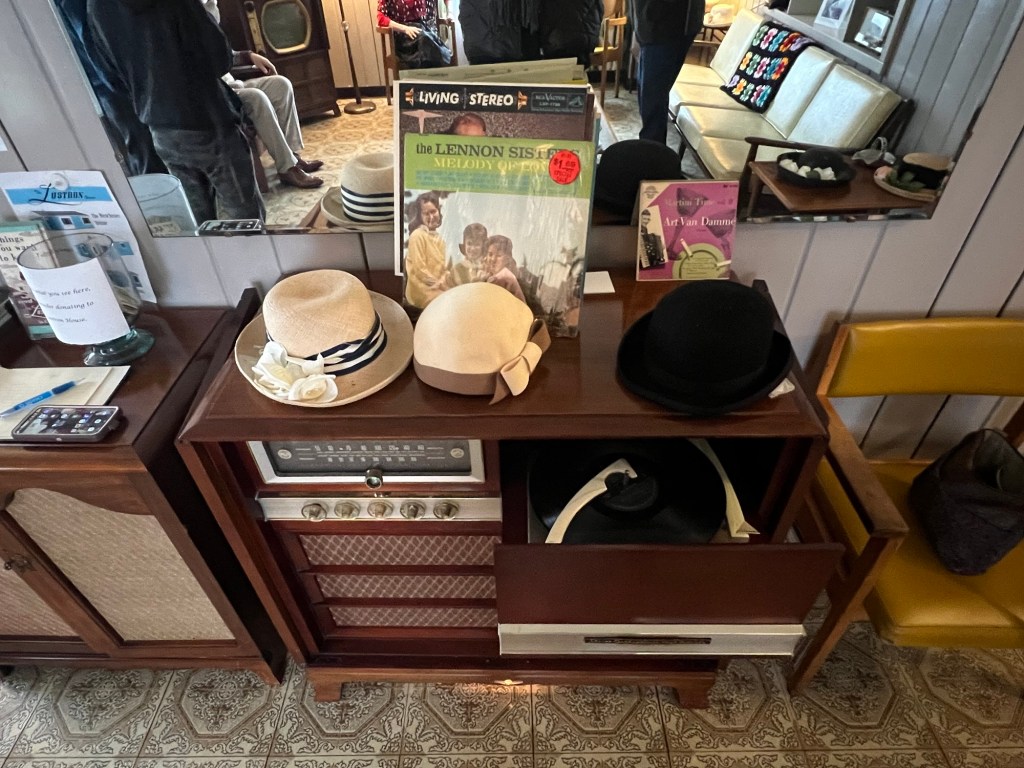
The Master Bedroom had a display of Easter hats
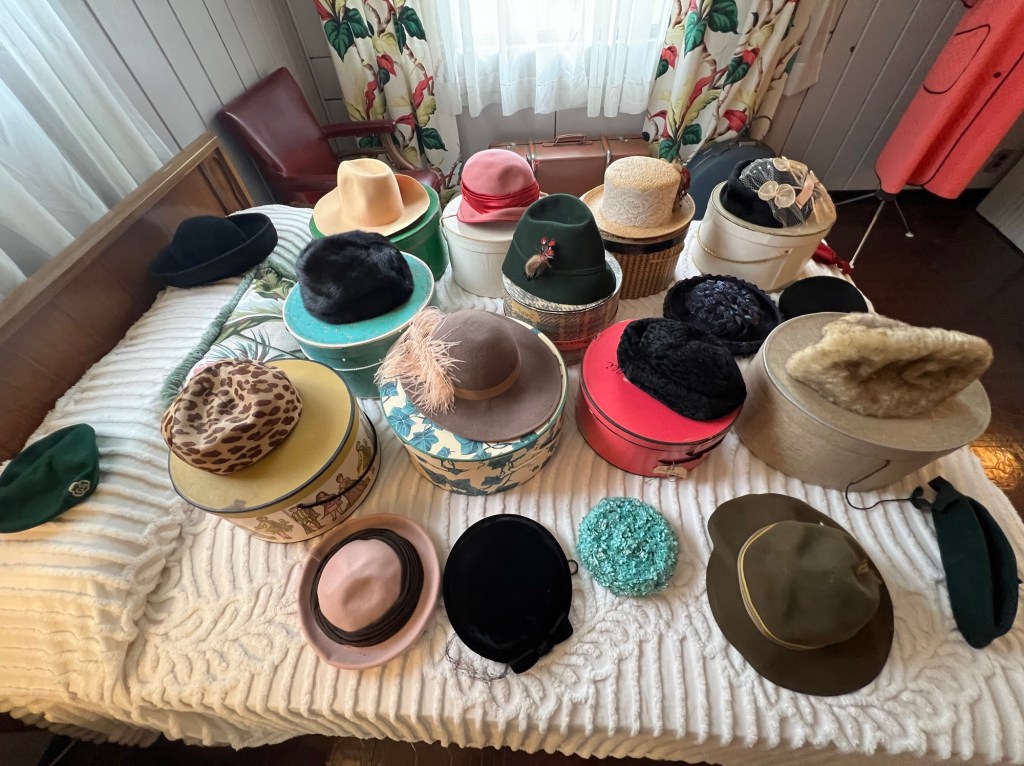
The selection of hats from the 1950’s and 60’s
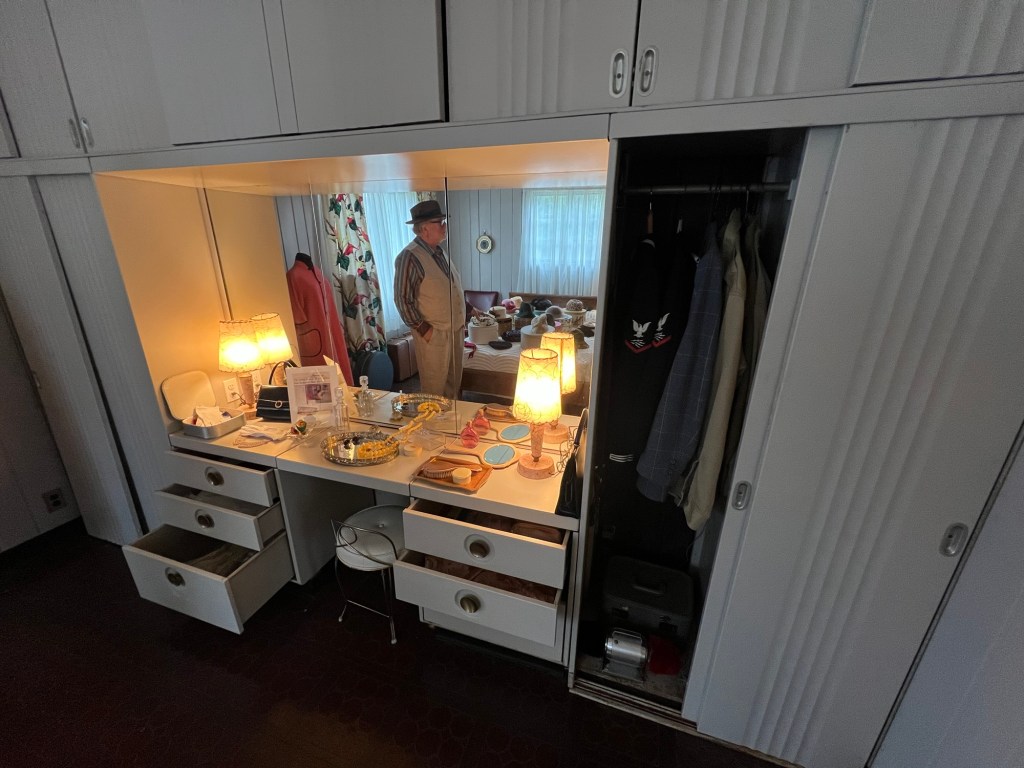
The Vanity was stocked with jewelry and perfume while the drawers were filled with girdles, white gloves and corsets
The advertising for this home offered all the wonderful amenities
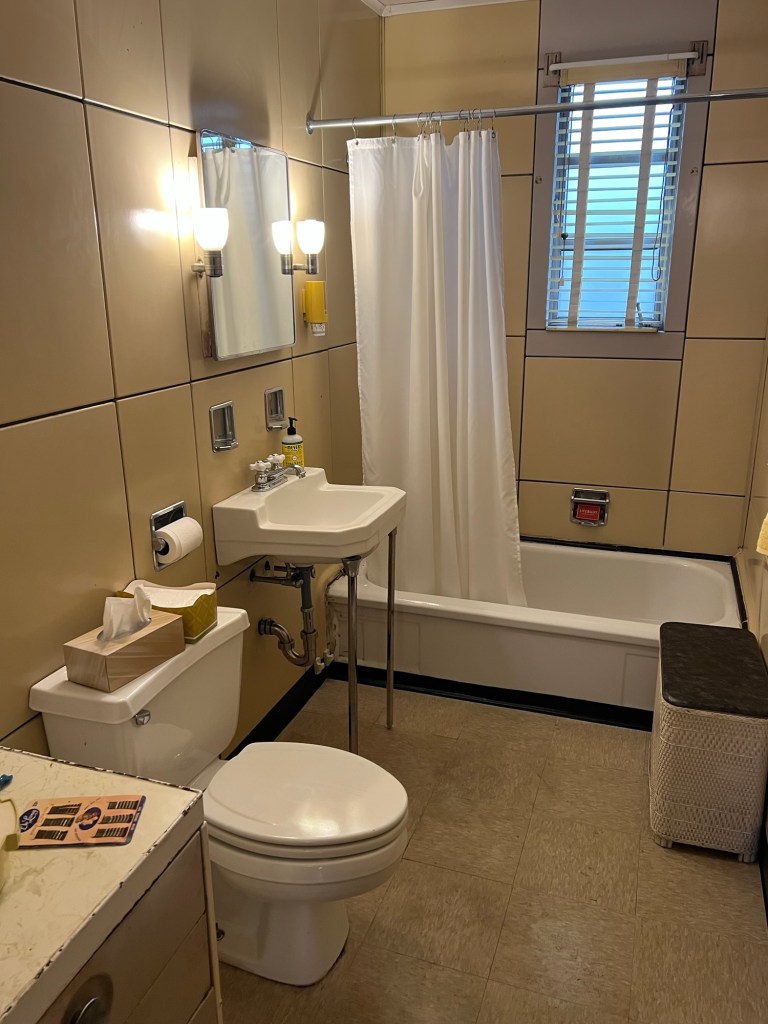
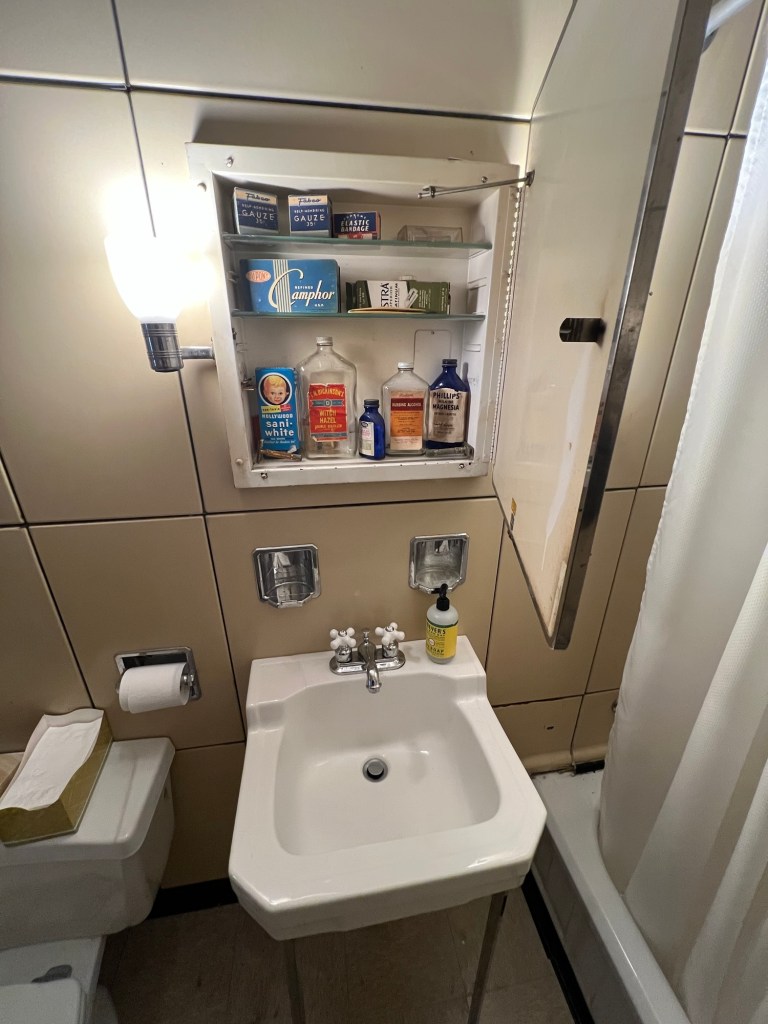
We next moved onto the bathroom which looked like my old bathroom before the renovation
The bathroom
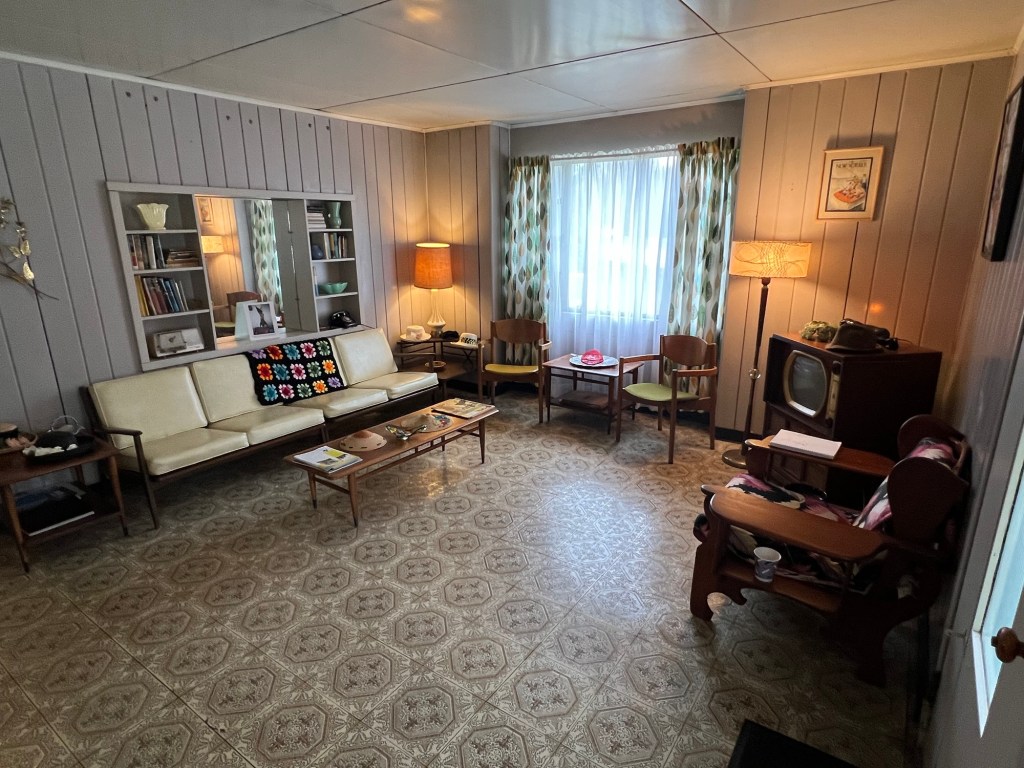
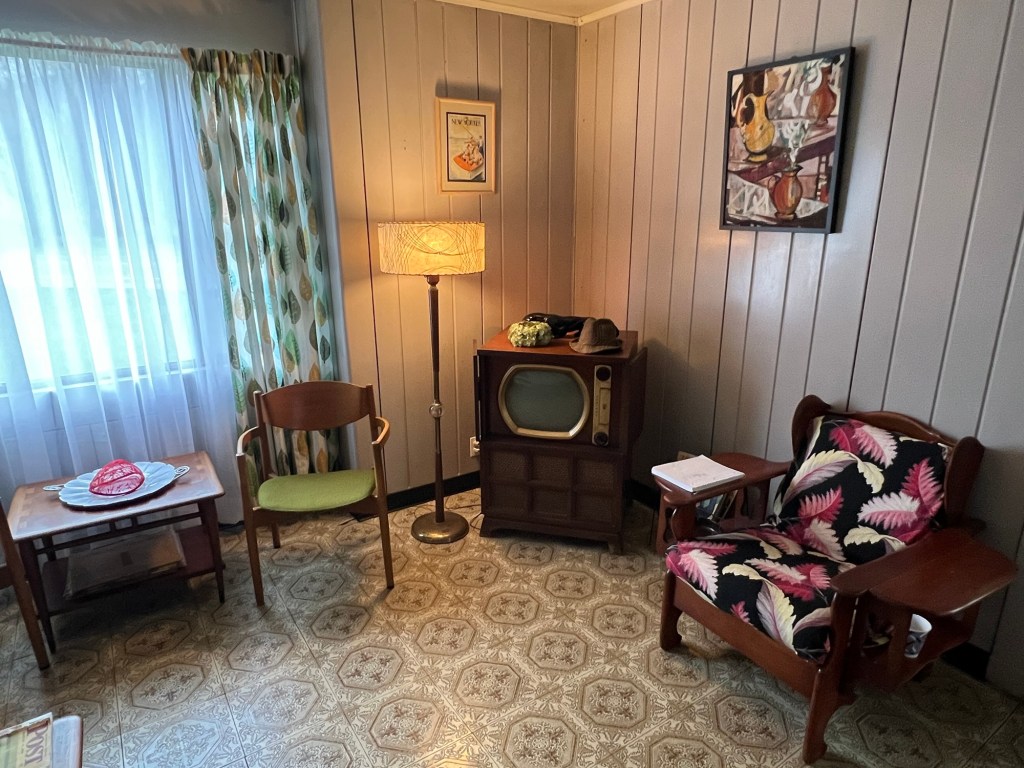
The last room we toured was the Living Room. The room was designed with Danish inspired furniture and clean lines. The room is full of furnishings and decorations from the 1960’s and 70’s done in the Modern Danish look. The room has a very early 1970’s feel about it.
The Living Room
The Living Room
As we finished our tour of the house, we passed through the breezeway again and the patio area. There was an outdoor seating area on the patio.
The Patio just outside the breezeway
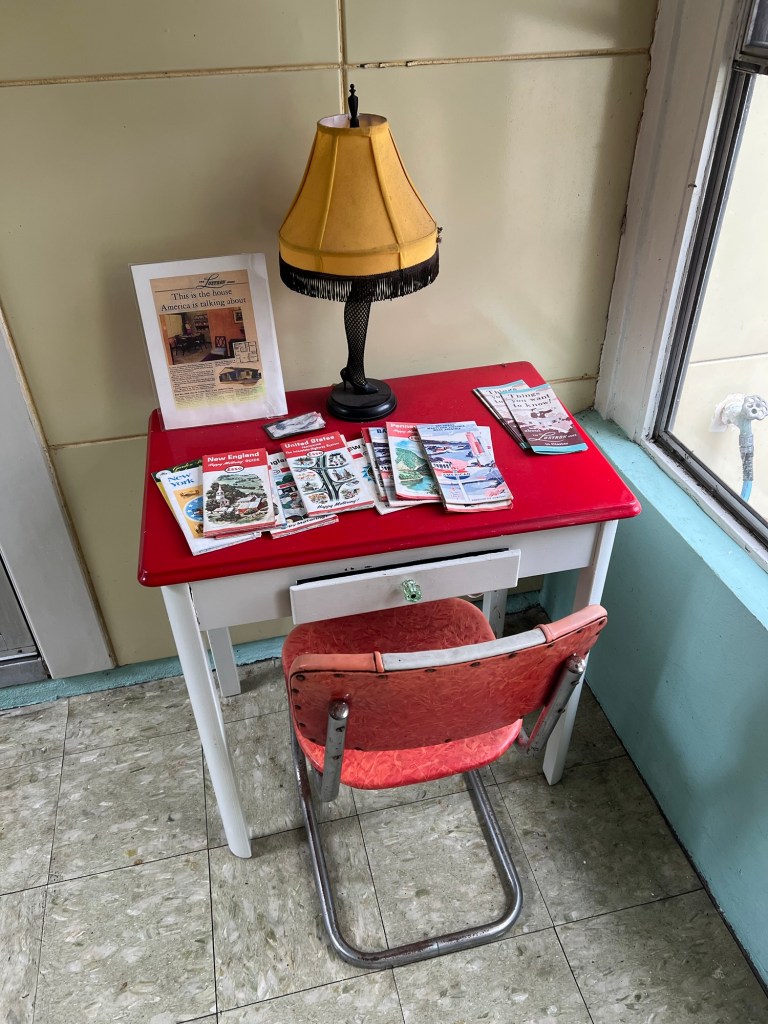
The private desk just outside the breezeway
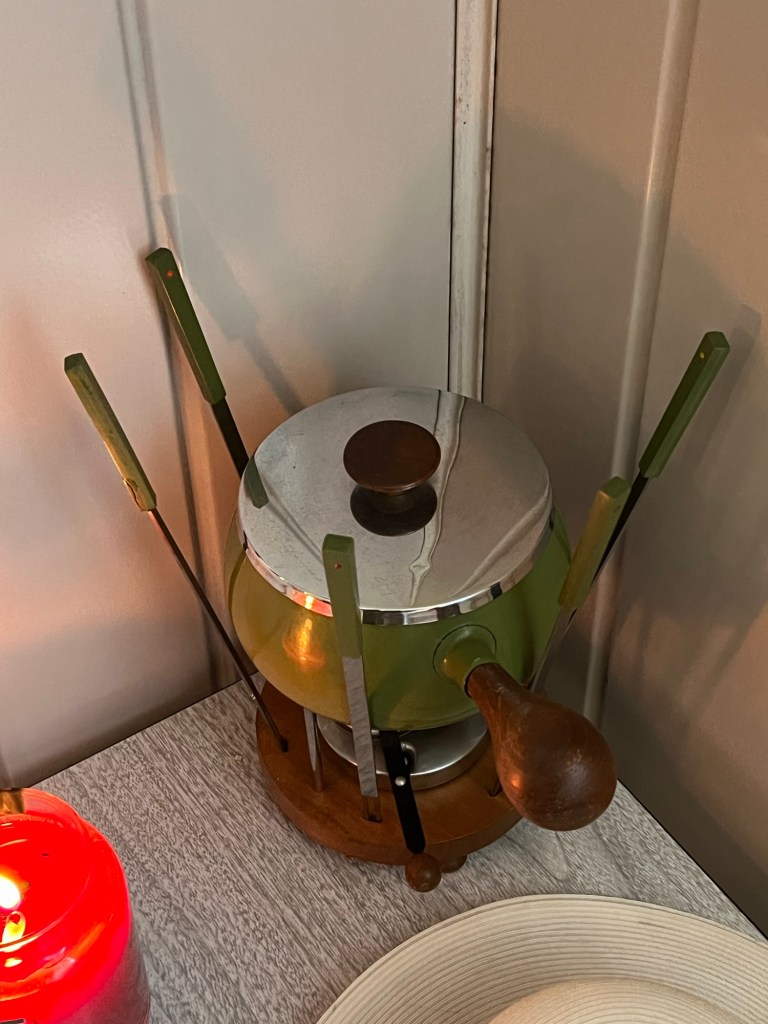
The fondue pot in the corner
The table on the breezeway
When I got back into the house from the outside, I toured one more time and walked around the Living Room. That’s when they showed us the record player.
Seemed like a good place to hide the household’s records
It really was like walking through a time capsule of my past. As I walked through every room, I felt like I was going to see my Grandmother and Great Aunt walking through the door and my mother in her early 30’s yelling at us again to get off her furniture. For a Gen X visitor, it is a step back into our past. What a unique museum.
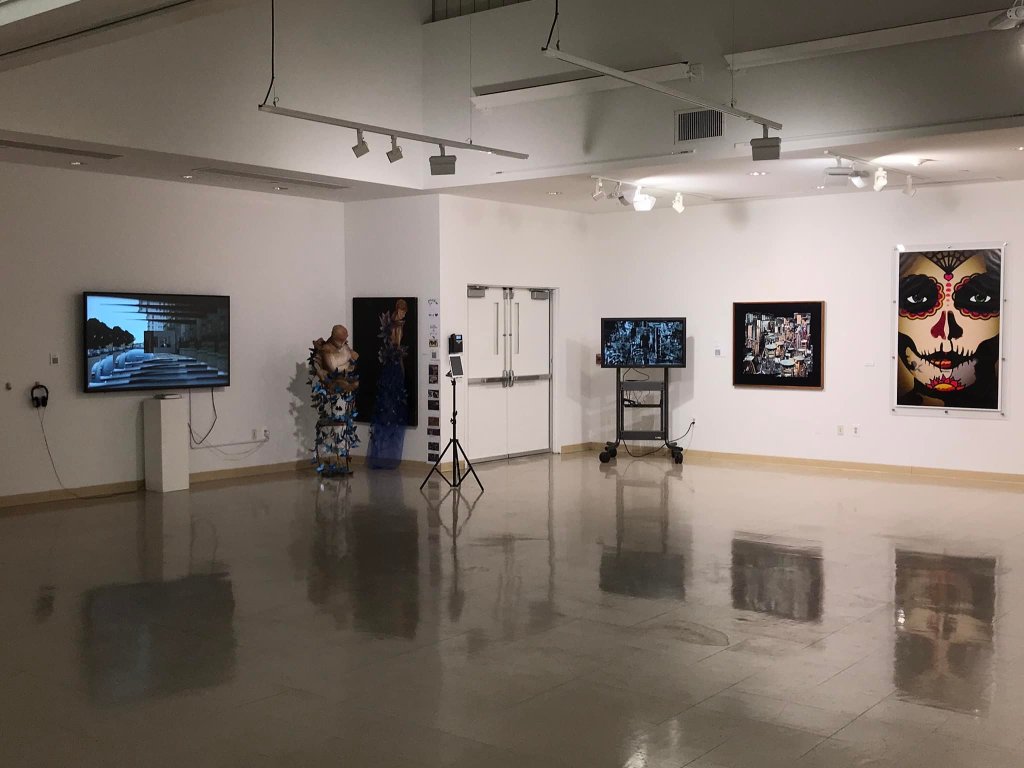
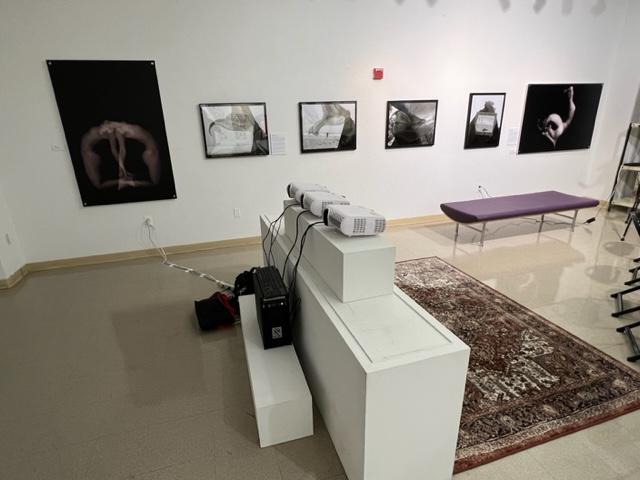
I never realized until just recently that we have an art gallery on the Bergen Community College campus. I have been teaching here since 2013 and just found out about this little ‘gem’ that is tucked in the second floor of West Hall.
This wonderful little gallery can be accessed on the Main Campus of Bergen Community College and is open to the public for viewing. The Art students of Bergen Community College show their works in student shows and the Retailing students show their work outside the Gallery.
Gallery Curator Professor Tim Blunk
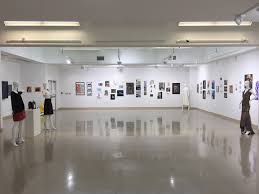
The Gallery is a reasonably sized space and viewing the Gallery Bergen takes a reasonable amount of time that is not over-whelming. It is a nice way to spend the afternoon when visiting the campus.
Please visit the Bergen Community College for future shows. This is the artist Graham Elliott show in 2026.
Gallery Bergen recently showed, “Belongings: Photographs at the Borders of Citizenship” exhibition which is showing the works of Dorothea Lange, Ansel Adams and Clem Albers (1942) and Tamara Merino (2018). This exhibition pairs two sets of photographic records, two tragic experiences of people on two sides of the US border, separated by seventy-five years in America’s cultural and political struggle over who belongs and who doesn’t (Bergen Gallery Press Release).
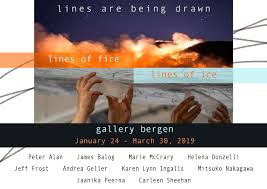
A former exhibition was “Lines of Fire/Lines of Ice” . This exhibition is art being presented to get us to think of our effects on nature. The Gallery Bergen is presenting art that might help us change our views of ourselves in the world (Curator).
Curator’s Statement:
“It is 2019. Fires advance; glaciers retreat. Oceans rise; deserts spread. The Homo sapiens population grows exponentially; entire species of fish, mollusks, insects, amphibians and birds perish each day. Lines are being redrawn on the surface of the earth-lines that can be seen from space. Yes these same lines are often blurred or erased when viewed through the lens of ideology”-Tim Blunk, Curator.
See Performance Artist Jaanika Peerna perform the ‘Glacier Elegy’ similar to the one she did at opening night.
The Gallery is curated by Professor Tim Blunk, Director Gallery Bergen.
In April 2019, the Student Art Show is going on in the Gallery. This was where students were showing off their end of the semester projects.
Student Show at Gallery Bergen
A former show by Hackensack-based artist Lauren Bettini, whose exhibition “On the Mend” was an exploration of the female body, displaying themes of “Women’s work” through accounts of women who bear scars, both physically and emotionally. This unique installation utilizes the entirely of the gallery, literally tying together embroidery of surgical procedures are “mended” through the appearance of the physical act of sewing. The exhibition is a platform to celebrate the beauty of their altered bodies while women stand strong together to share their stories.
It is an interesting take on what we endure in life and how we sometimes hide it from society.
“On the Mend” Exhibition Summer 2019
The mounted three-dimensional castings of woman’s hands are used to symbolize a movement of women joining together, sharing their stories and helping each other heal. This platform to honor women who have survived medical surgeries, celebrates the beauty of their altered bodies and pays homage to centuries of women who have created are in the form of sewing and embroidering (Gallery Bergen Promotional packet).
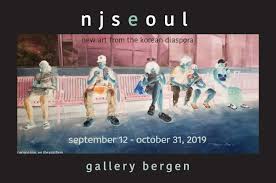
The recent ‘NJSeoul: New Art from the Korean Diaspora’ that opened for the Fall of 2019. The show was a combination of paintings, pictures and visual art from five different Korean artists. The show also features video art and interesting short films.
New show from September 12th-October 31st 2019
Some information of the Exhibition on Studio Bergen
The exhibition that opened for the Fall semester 2019 is the ‘(Pro) Found Objects’, the Bergen Community College Faculty Exhibition. The exhibition features works from 19 different Professor/Artists whose work includes statuary, photos, paintings, video art and clothing construction.
This painting is by Professor Juan Leon
This painting is by artist Juan Leon
This painting is by Professor Ada Goldfeld
The opening night on November 14th 2019 featured a performance by the Music Department and a performance by the head of the Drama Department from the upcoming show “I do, I do”. Then everyone had time to look over the art before a light reception at the end of the evening.
Opening in the Spring of 2020, Gallery Bergen is featuring “Ornithology: Patterns of Flight” that features birds in flight, sound and behavior. I saw the exhibition as man’s perception of birds at play and at rest and our concept of aviation in terms to humans. How do we communicate with the natural world, if we can and how do we relate as humans to the natural world.
‘Moche-Bird Runner’ by Susan Haviland
The art was everything from visual to video and showed the artist’s interpretation of the bird world. This was my favorite piece in the show.
‘Ashes to Gold’ by Caroline Bergonzi
Each artist had a unique take on their art.
‘Deep Song’ by Susan Haviland
During the musical performance part of the opening, one of the artist’s in the exhibition teamed up with another musician and performed their concept of birds in flight. To that our Dance Department created a performance that encompassed the whole gallery.
Our Adjunct Dance Professor’s performed that night
Professor Justin Watrel at Gallery Bergen Opening
Here I am admiring the art that night. It was a wonderful exhibition. The Gallery Openings are an interesting night of art and music. The receptions are not bad either. Our Culinary Department does a nice job with appetizers and desserts.
This time lapse on YouTube is from the opening night of ‘Patterns of Flight’ at Bergen Community College
With the Gallery Bergen closed with campus being closed, Curator Tim Blunk created this YouTube video “20Big20: Quarantine and Protest” on the pandemic and racial strife:
Another exhibition that the College has is BCCAnimation:
In the era of COVID, Gallery Bergen has created new exhibitions via YouTube. This is for the new “Black Lives Matter @BCC: Photographs from the Live Protest”:
These are photos from all over the country during the Summer of 2020 protests.
Gallery Bergen recently hosted the Student Exhibition 2021 virtually:
The creative approach to Gallery Bergen in the era of COVID keeps us active.
When Gallery Bergen reopened in 2021, the first big exhibition was “The Ramapough Nation: Excavating Identity”, the art of the nation.
The exhibition featured works by local Native American artists.
The exhibition contained visual arts by local indigenous artists, panel discussions (see Facebook page) and gallery talks.
The new exhibition that recently opened in the Fall 2021 is “Zoom Out: Works from Bergen Community College Artists”, a faculty show of works from the professors from the art department.
“Zoom Out” exhibition
Works from the Opening Night:
The opening night of “Zoom Out” with works in the visual arts
The “Zoom Out” exhibition was a selection of faculty works in the visual arts, painting, graphics and sculpture. One professor created an interesting piece of video art reworking the movie “Psycho” by Alfred Hitchcock.
The video creation on the movie “Psycho”
New Works from “Zoom Out”
Work by curator and Professor Tim Blunk
In the Spring of 2022, Gallery Bergen has exhibited “Art in History: the photographers of the Great Depression”, with photos from the Depression era of the 1930’s. It was a heart-breaking display of a very dark time in our country’s history. I could see that many people don’t realize that this was only 80 years ago. It gave a view into the lives ordinary people whose lives were affected by the falling economy. Lives were upended by things like the Stock Market Crash and the Dust Bowl.
“Art in History: the photographers of the Great Depression” exhibition
The photographers were part of the WPA where people from the arts part of the government program were to keep artisans working during the Great Depression. The works are a heartbreaking reminder of how fast life can change.
I was lucky that I got to sit in on Professor Tim Blunk’s class that afternoon for the lecture on the exhibition. It is scary how much these students didn’t learn in high school about this time. What amazed me was that how much this is still going on not just all over the world but in our own state as well. I have travelled to parts of the New Jersey that remind me of these pictures.
The BCC Student Art Show 2022 was the first time in two years the students got to showcase their work in the Gallery
Asian Awareness Month in 2022 brought interesting speakers and engaging movies to Gallery Bergen.
The lectures and independent films were very interesting and brought wonderful conversations to Gallery Bergen during the celebrated month of April.
In June of 2022, I attended the opening of the “Reflection/Refraction/Manhattan: Photographs by Jin Hong Kim” exhibition at Gallery Bergen, celebrating this local Korean-American photographer/artist. Each of the works was from a section of Manhattan from the Hudson Yards to Midtown to Lower Manhattan giving a almost surrealist look at the City in the Post-COVID era. It was as if the artist asked us to look at Manhattan again from a different lense or perspective.
The new exhibition by local photographer Jinhong Kim
Each of the pictures looked as one patron said, “like something that Salvador Dali might do.” It gave buildings in Manhattan movement and asked us to look at them a second time.
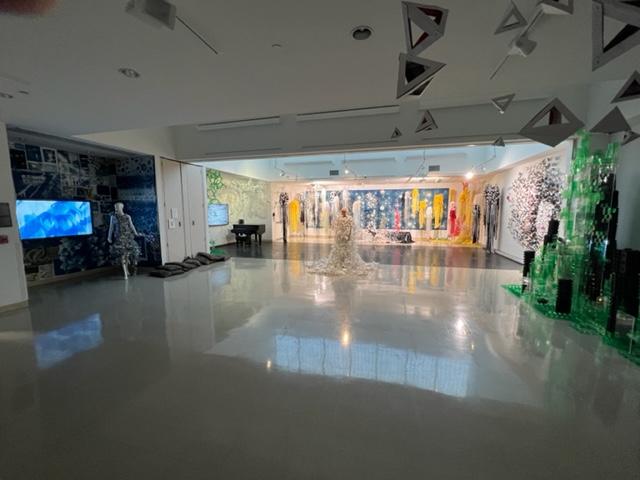
The Exhibition “Pulse: Resonating Earth” by artist Poramit Thantapalit is very engaging and fascinating to walk through.
From the Gallery Bergen Website:
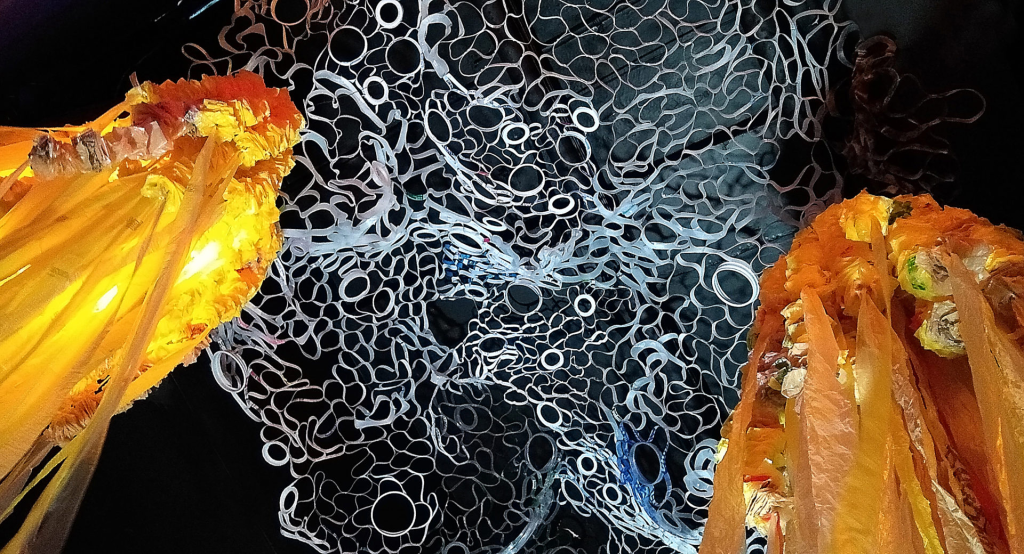
During the fall of 2022, Gallery Bergen will be transformed into an aquatic installation by Thai artist Poramit Thantapalit. His medium is trash – as in found plastic bottles, plastic bags, and other refuse that might have as easily found its way into the Hackensack River, a landfill, or the Great Pacific Garbage Patch. Instead, Poramit breathes life into these materials, shaping luminous organic sculptures that undulate and pulse from the ceiling and wall. They make the viewer forget their origins in their newly aggregated forms.
There is a genre referred to as eco-art, or “trash art,” but this is something very different. “Jackson Pollock painted with house paint, but he wasn’t a house painter,” says Gallery Bergen director and curator Tim Blunk. “Poramit’s deft artistic hand and his understanding of transforming quantity into quality creates work that transcends its materials.” PULSE: Resonating Earth will be embellished with several performance events, including the scheduled opening gala on September 22 and its closing on December 8. Both will include dance performance pieces by BCC faculty member Lynn Needle and her Art of Motion Dance Theatre and Steinway pianist Carolyn Enger. The opening will include excerpts from Needle’s work, The Poseidon Project – An Aquatic Myth – a suite with live music and dance, including narrated choreographed sections, each connecting to aquatic myth, legend, and nature.
Pictures from the Exhibition:
Story from the exhibition on Land Acknowledgement.
The exhibition:
All the art displays of Poramit Thantapalit’s work in Gallery Bergen
Picture One:
Beautiful works
Picture Two:
Picture Three:
Picture Five:
Picture Six:
The colorful interactive art of Gallery Bergen in 2022 of artist Poramit Thantapalit
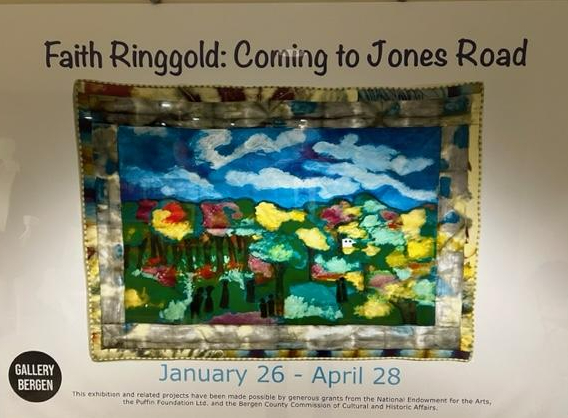
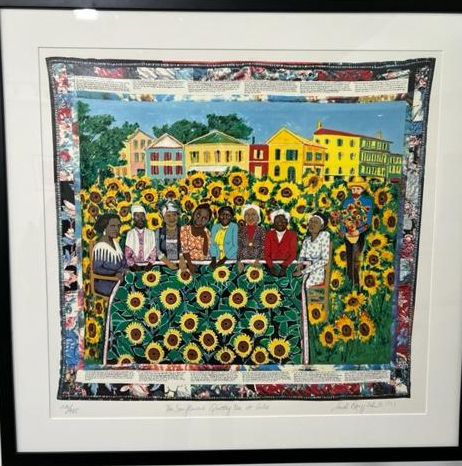
The Faith Ringgold: Coming to Jones Road-Her Exhibition on moving to Englewood, NJ
These were the works by the artist when she moved from Harlem to New Jersey.
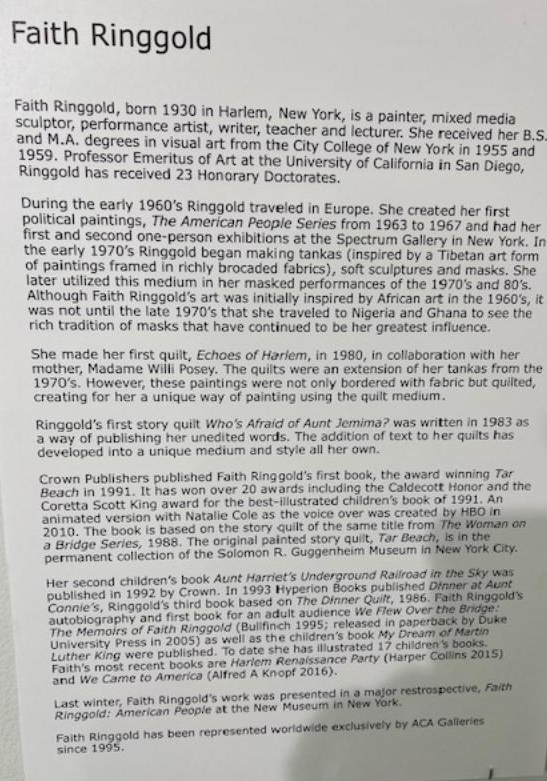
The artist bio with the exhibition.
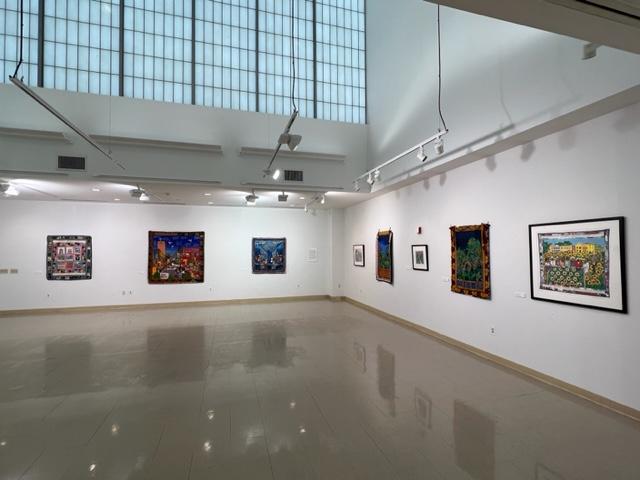
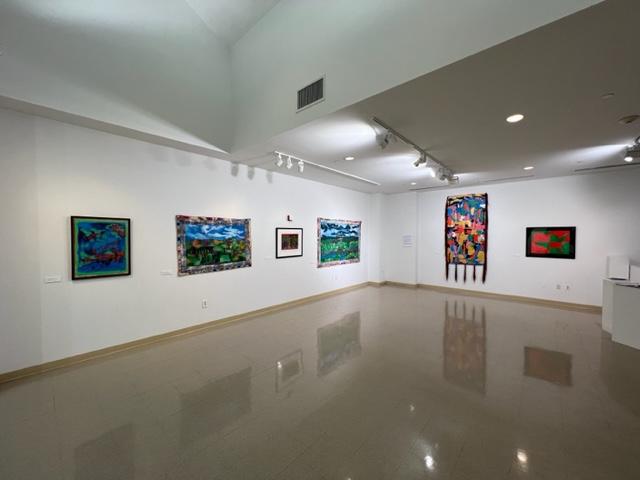
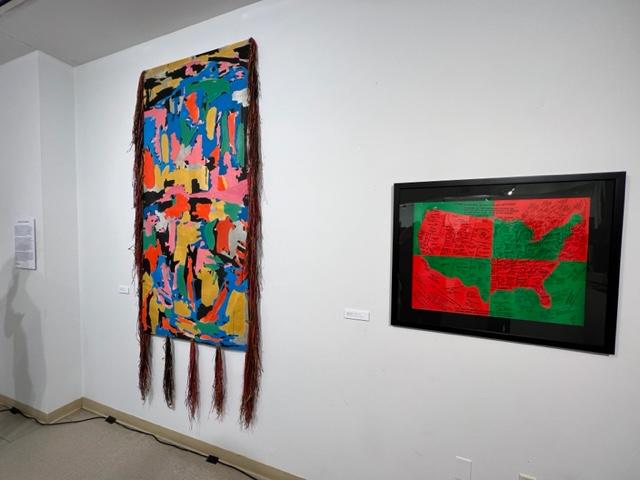
The Exhibition in Gallery Bergen
The Exhibition in Gallery Bergen
Her work based on the George Washington Bridge
Another interesting work
The Gallery Opening of “Faith Ringgold-Coming to Jones Street” at Gallery Bergen
Some of the works in the exhibition
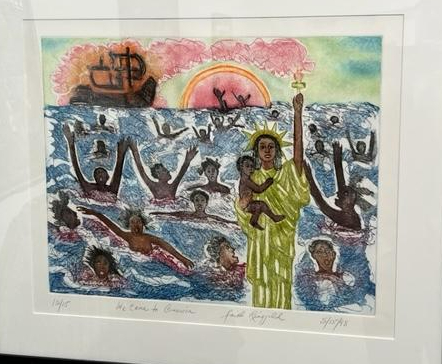
“We come to America” by Faith Ringgold
More works in Gallery Bergen
The Theme of “Coming to Jones Road”
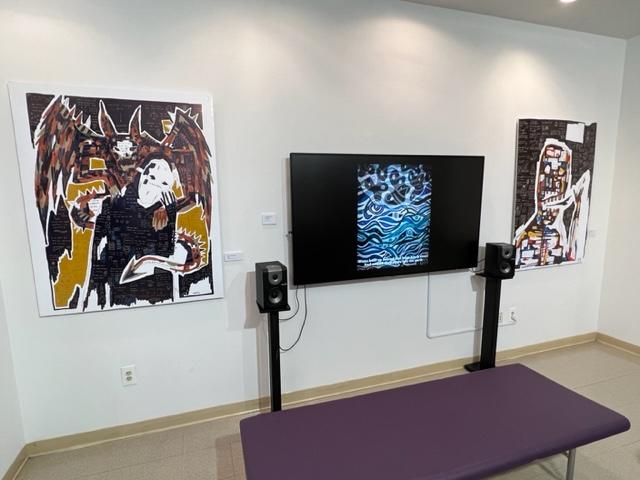
The new exhibition “The Cup Flows Over: Art from the Soul of Iran” starting in October 2023 and runs through the end of November 2023:
The Art from the soul of Iran.
Gallery Bergen: September 21 – November 21, 2023
(From the Gallery Bergen Website)
In Munich, Germany:
Glockenbachwerkstatt Community Center with events at the Bellevue di Monaco Cultural Center in Munich, Germany:
October 24 – December, 2023
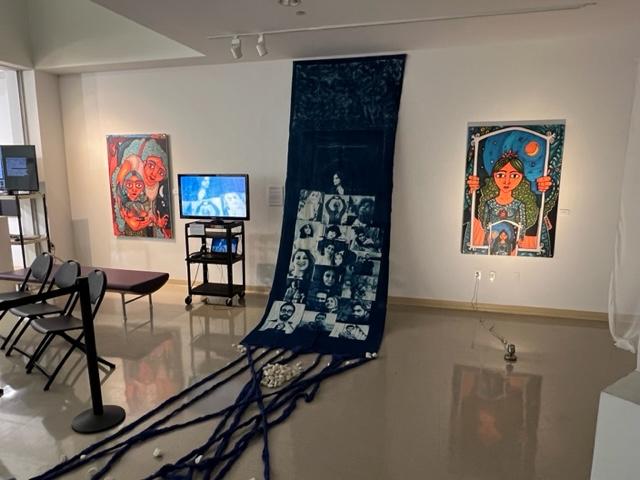
Works from “The Cup Flows over: Art from the Soul of Iran” exhibition
Gallery Bergen announces the opening of a collaborative exhibition of contemporary Iranian artist to take place this fall in two locations – its own gallery on the campus of Bergen Community College in Paramus, NJ and the Bürgerhaus Glockenbachwerkstatt (Glockenbach Townhouse Workshop) located in Munich, Germany. The Cup Flows Over: Art from the Soul of Iran features work by prominent artists such as Berlin-based Parastou Forouhar, younger Iranian artists living and working in California and Berlin, as well as artists living in Iran. The choice of two separate venues divided between Europe and the US speaks directly to the reality of the Iranian diaspora.
Art works from the “The Cup Flows Over: Art from the Soul of Iran”
This exhibition seeks to move beyond the headlines to explore the ongoing and historic struggles of immigration and the diaspora experience, of merging with and simultaneously changing the culture of newly adopted countries. The artists make use of a variety of media including film, video, photography, fabric work and installation while invoking ancient Persian texts to describe their new realities.
Art works from “The Cup Flows Over: Art from the Soul of Iran”
The title comes from an ancient Persian ghazal by the renowned lyric poet Hafez (c. 1365):
“Last night I took my troubles to
The Magian sage whose keen eyes see
A hundred answers in the wine
Whose cup he, laughing, showed to me.
I questioned him, “When was this cup
That shows the world’s reality
Handed to you?” He said, “The day
Heaven’s vault of lapis lazuli
Was raised, and marvelous things took place
By Intellect’s divine decree,
And Moses’ miracles were made
And Sameri’s apostasy.”
He added then, “That friend they hanged
High on the looming gallows tree—
His sin was that he spoke of things
Which should be pondered secretly,
The page of truth his heart enclosed
Was annotated publicly.”
BY HAFEZ
TRANSLATED BY DICK DAVIS
Anonymous work from “The Cup Flows Over: Art from the Soul of Iran” exhibition.
In the art of Iran, reality’s cup overflows.
The curators are organizing several livestreamed events that will connect the two spaces with live music, poetry and discussion. Opening receptions and events are planned for September 21 at Gallery Bergen (US) and for the Bürgerhaus Glockenbachwerkstatt on October 24.
Art works from “The Cup flows Over: Art from the Soul of Iran”.
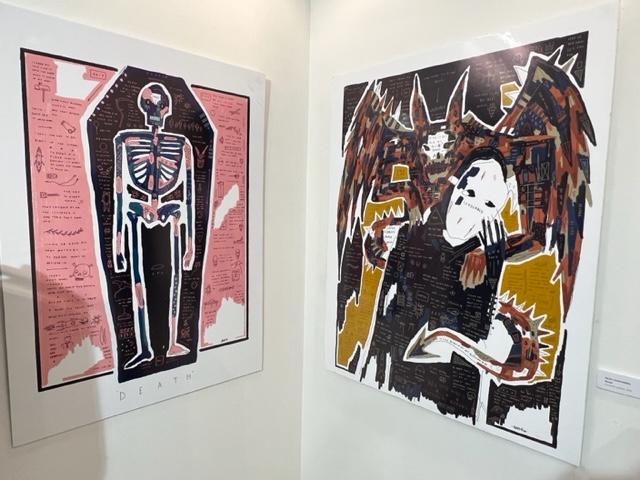
The paintings “Death” and “Devil’s Confrontation” by artist Raven.
The Bürgerhaus Glockenbachwerkstatt (Glockenbach Townhouse Workshop) is located in the cultural and artistic heart of Munich. The “Glocke” is a popular community center with childcare, workplaces, art studios, and a neighborhood café. It is around the corner from the Bellevue di Monaco, a residential and cultural center for refugees. The Bellevue offers diverse culture programming ranging from panel discussions on topics of migration and diversity to films from and about the home countries of their guests, to theater plays and concerts presenting artists from all over the world (Gallery Bergen Website).
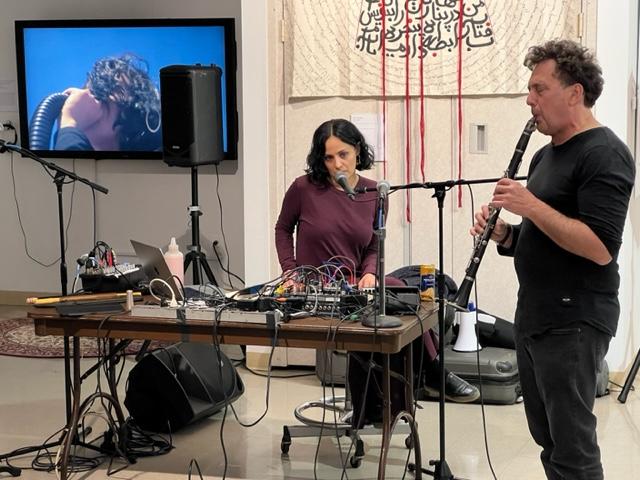
Performance artist Sholeh Asgary and artist David Rothenberg performing “Shabah e Baad”.
As part of the exhibition, Iranian-American sound/performance artist Sholeh Asgary and ECM recording artist/clarinetist David Rothenberg performed on November 3rd, 2023. In the performance of ‘Shabah e Baad’ (Ghost Winds), Asgary vocalizes recordings of water bodies transcribed into notation for voice with the help of electronics and synthesizers for notes beyond human capability (Gallery Bergen press release).
Performance artist Sholeh Asgary and artist David Rothenberg performing “Shabah e Baad”.
Art works from “The Cup Flows Over: Art from the Soul of Iran”
The exhibition in February to April 2024 is “Arrivals/Departures EAST80WEST: The Bicoastal realities of Immigration”. The exhibition’s theme is based on seven contemporary artists from both the West and East coasts that are connected by US interstate 80 and how they examine the bicoastal realities of new immigrants to the United States.
The “Arrivals/Departures East80West: The Bicoastal realities of Immigration”.
The “Arrivals and Departures” exhibition gallery.
Native American art
The exhibition was fascinating in that it looked at different perspectives of how immigration has happened whether forced or not. I think back to European immigration in the 1600 and 1700’s and how this affected the Americas to what is happening today.
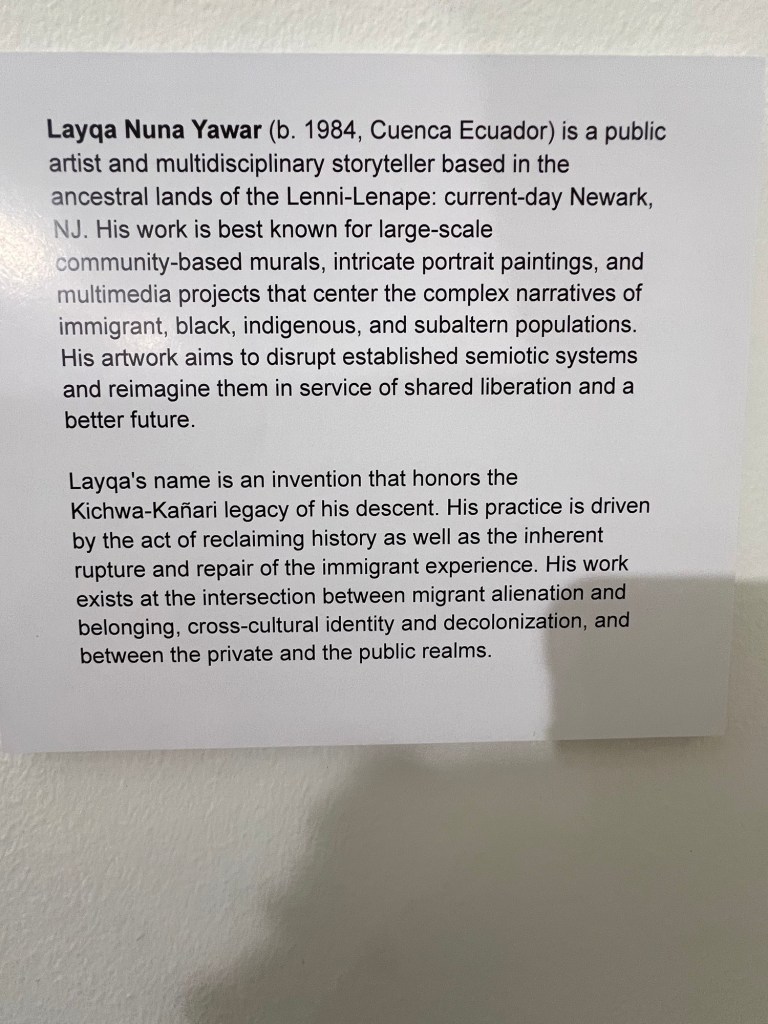
The Yamar Paintings
The biography of Layqo Nuna Yawar and his work.
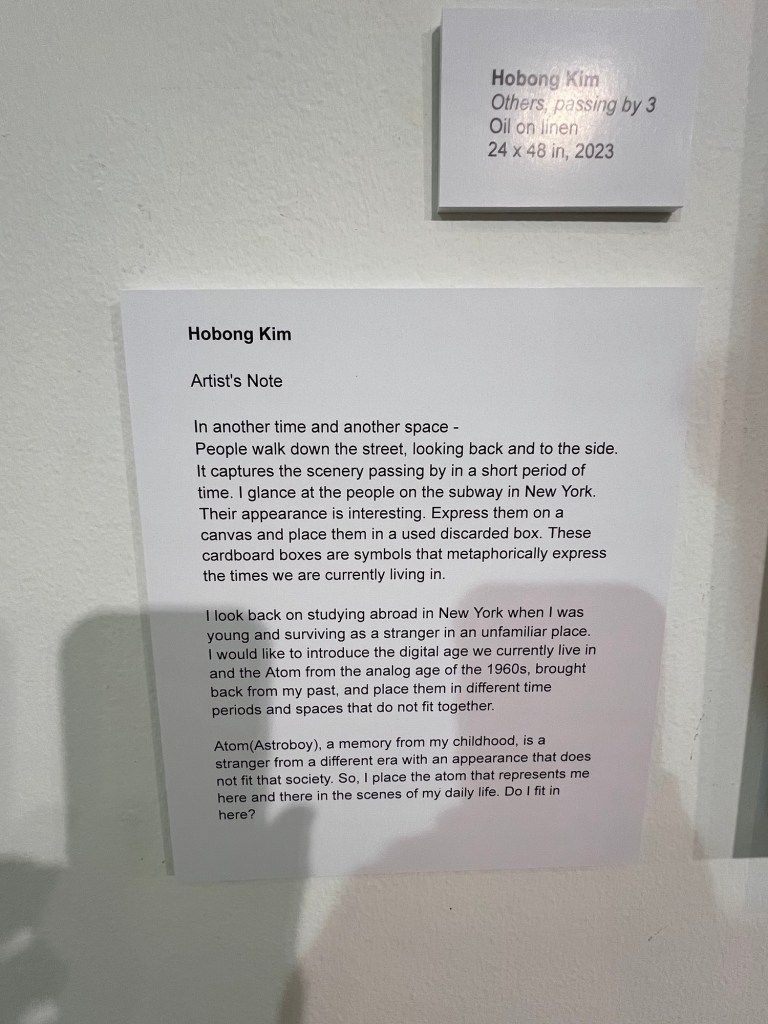
New York scenesThe biography of Hobong Kim
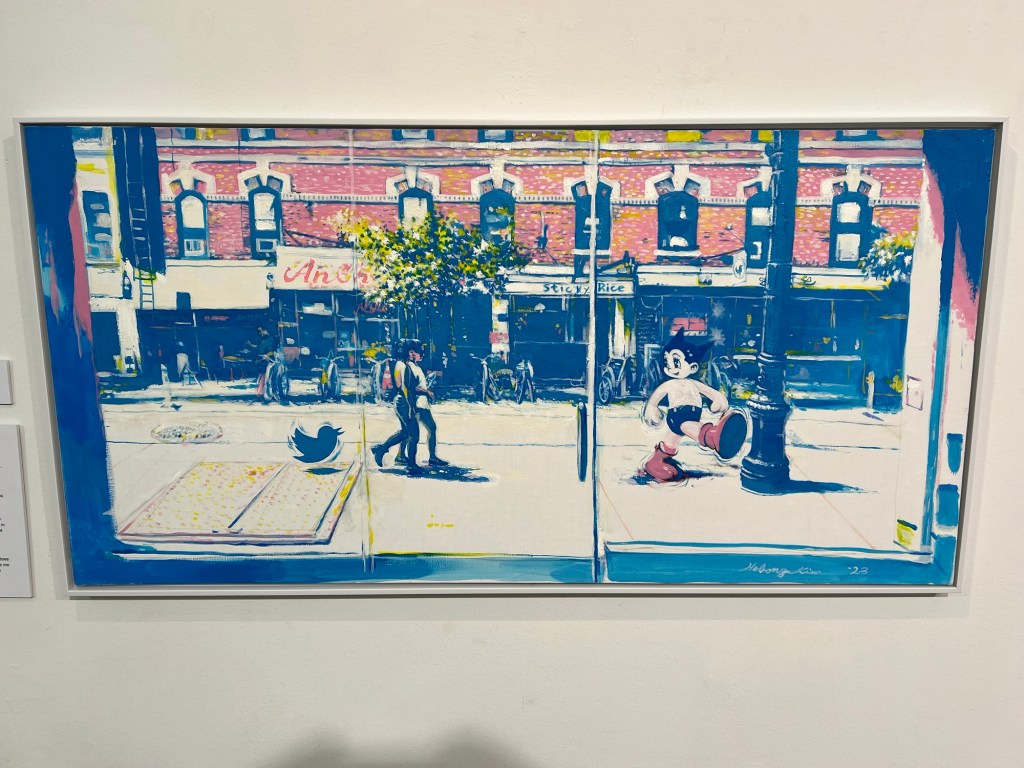
The works of Hobong Kim.
Street scenes by Hobong Kim
The exhibition explored different elements of how environment changes us and shapes us.
Migrant farmers and workers
The exhibition also explores their sense of place in the scheme of life.
More work by Hobong Kim
Do we erase part of ourselves.
Who are you?
It delves into a place of self. What an interesting aspect of life. How much of yourself do you have to give up to fit in?
The exhibition makes you think about this.
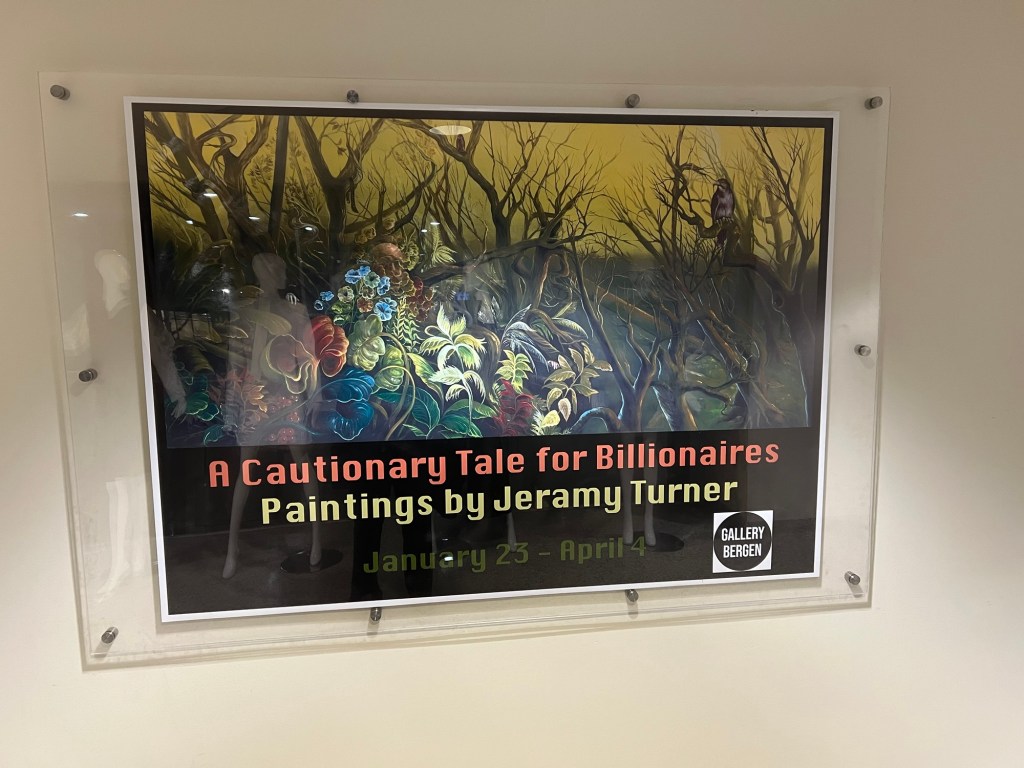
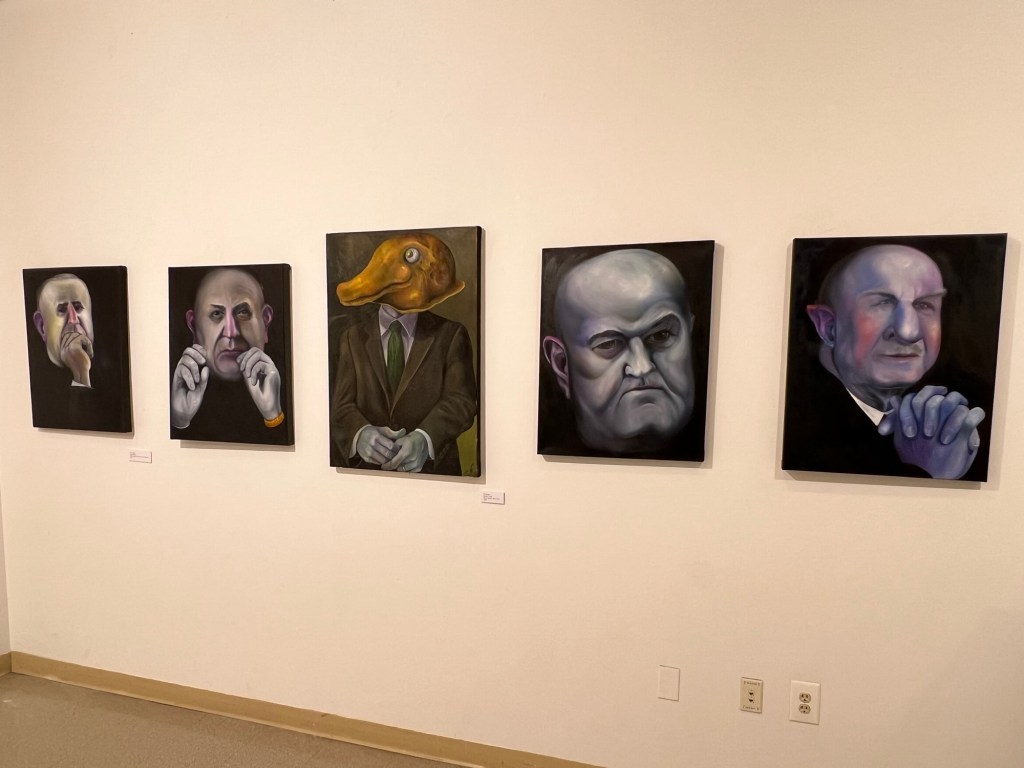
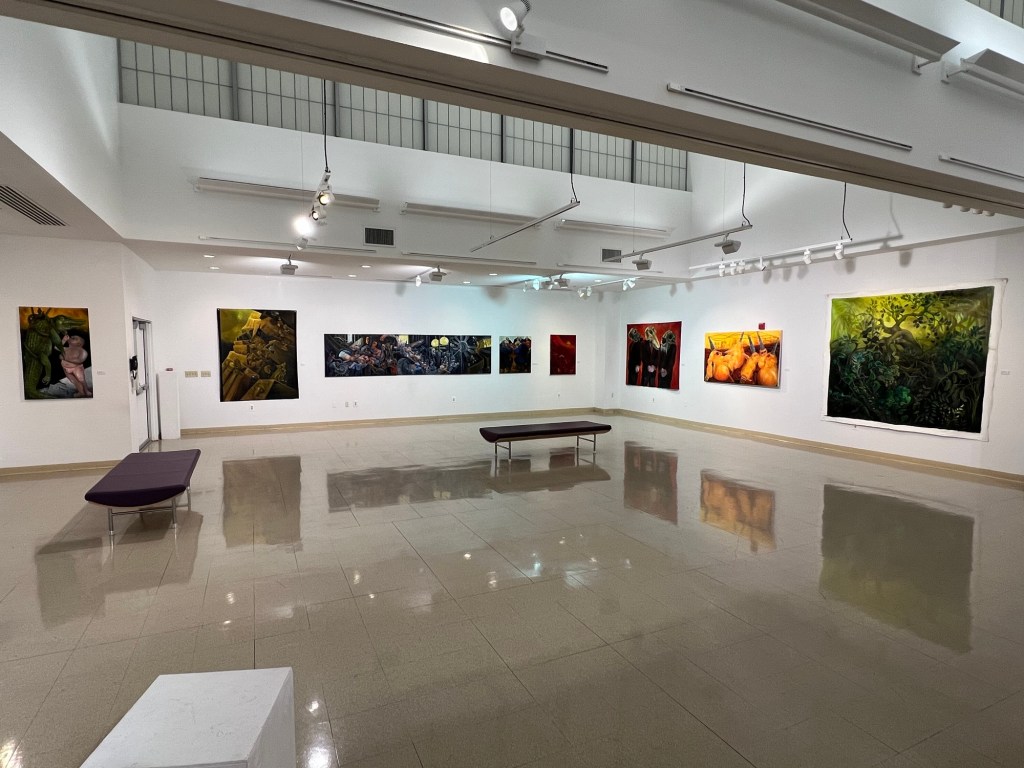
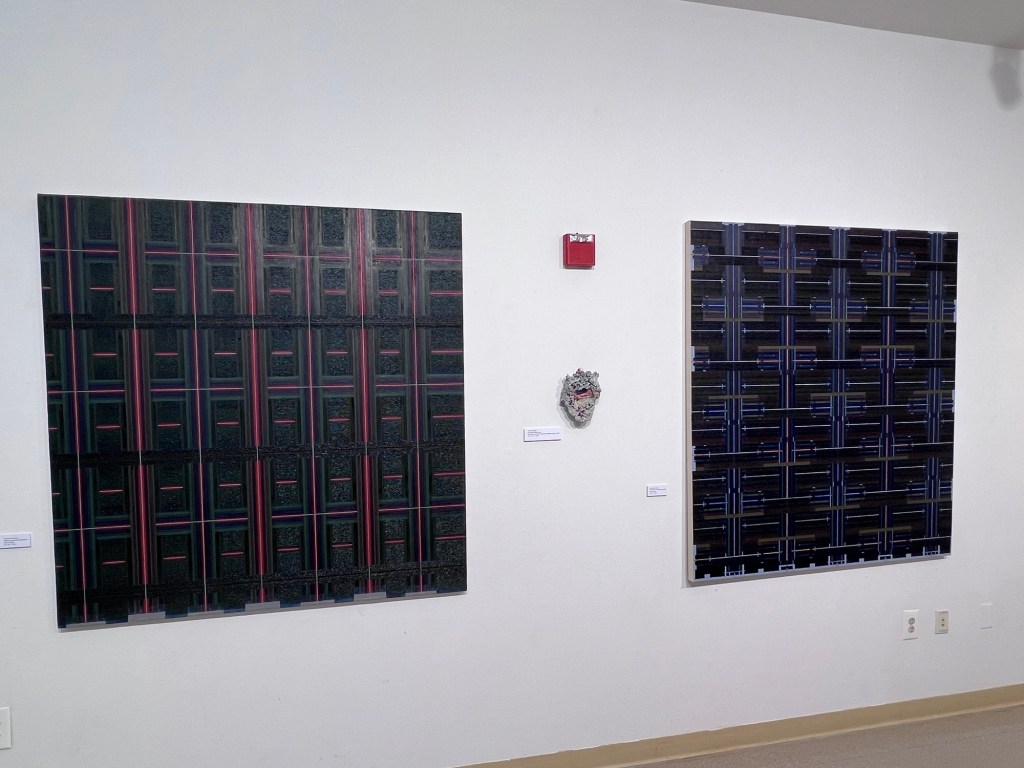
The latest exhibition is by artist Jeramy Turner ‘A Cautionary Tale for Billionaire’s” that opened on January 23rd, 2025.
Jeramy Turner is an American born self-taught painter. In the beginning of 1986 as an attempt to create films, one frame at a time. They were large-scaled to emulate the screen in a movie theater. She began with the intention of using visual art as a tool of protest. Her paintings are most often depictions of capitalists’ vulnerability. Her work often features animals, as symbols of forces of resistance, and terrified bankers (Artist bio)
‘The CEOs” paintings showing the dark side of business
Gallery Bergen on the Bergen Community College campus in Paramus, NJ
The painting ‘Wage Earner’
The sign for “Wage Labor”
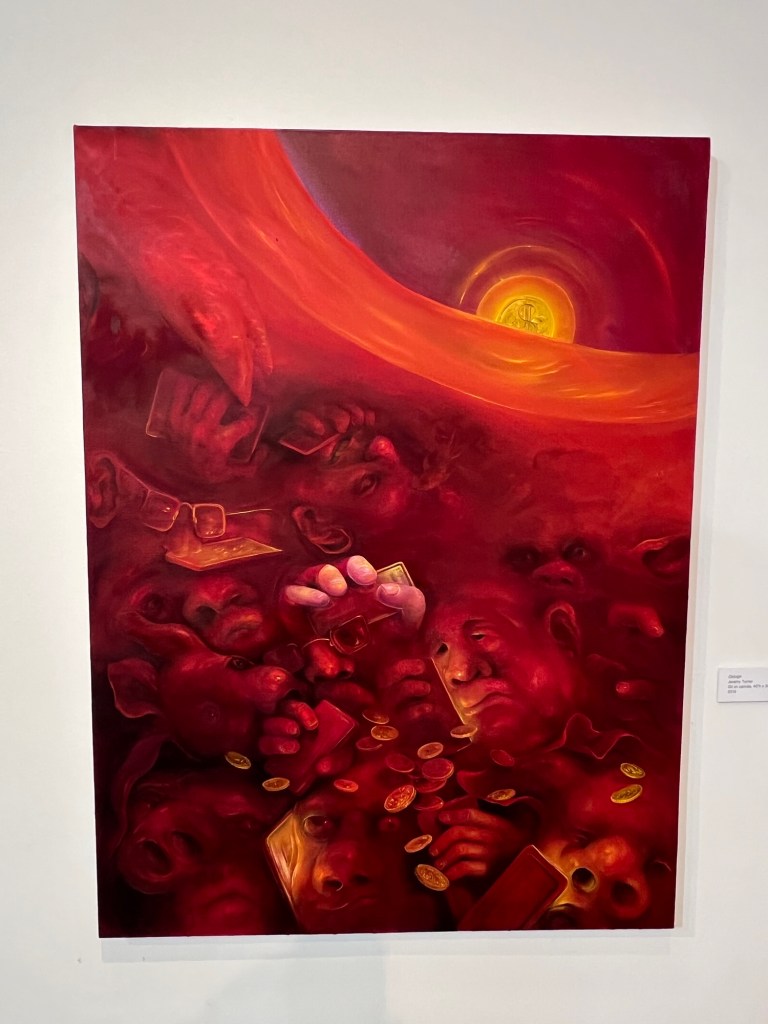
The painting “Deluge”
The sign for “Deluge”
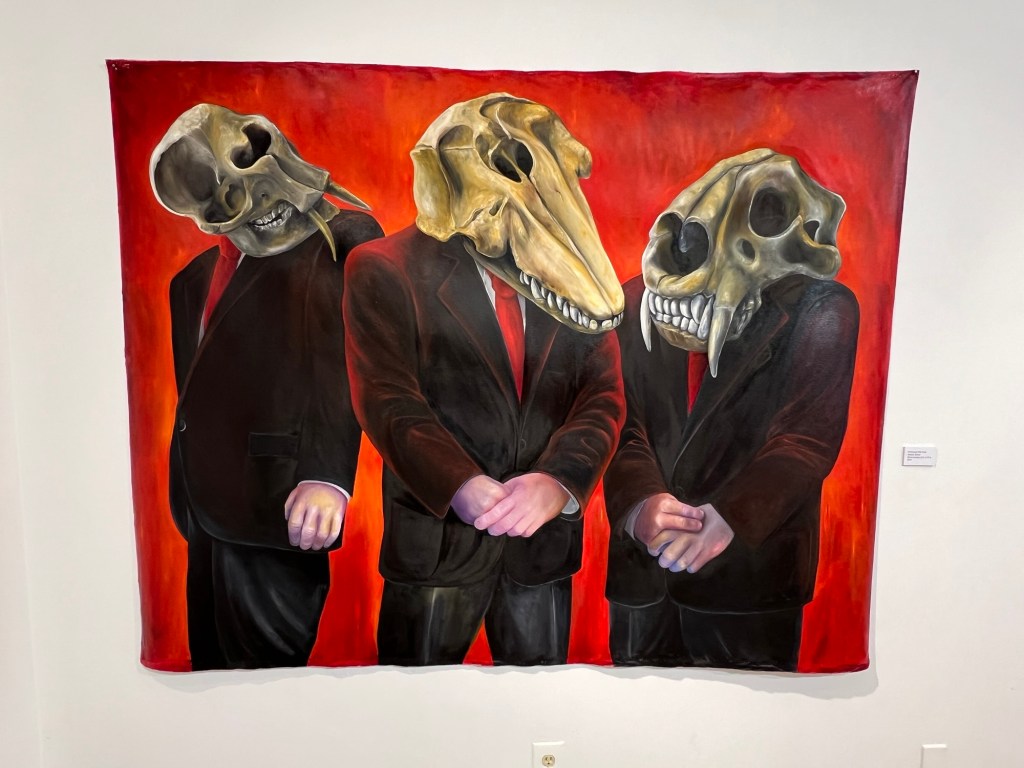
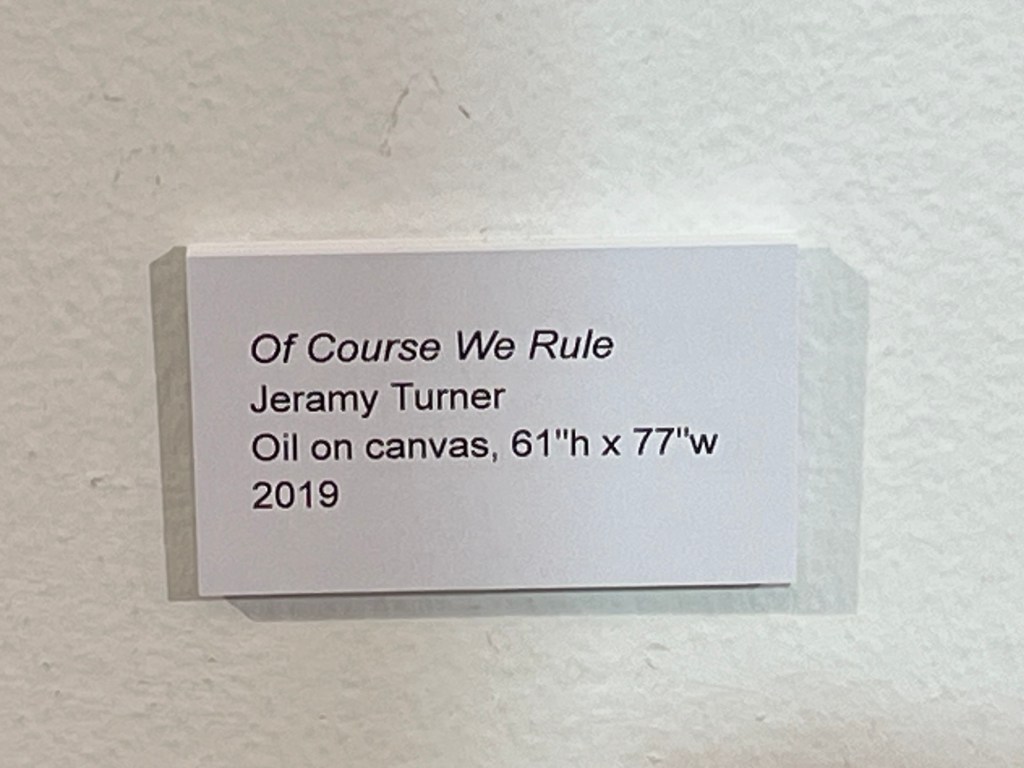
The painting “Of Course We Rule”
The sign for “Of Course We Rule”
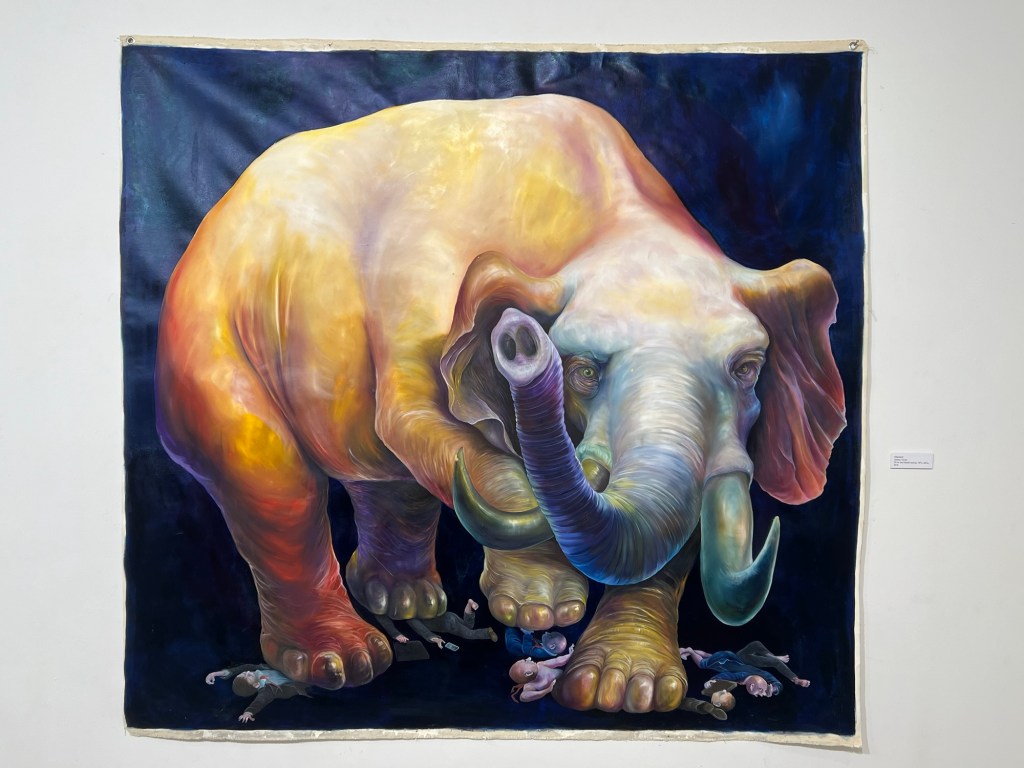
The painting “Elephant”
The sign for “Elephant”
The painting “Crash”
The sign for “Crash”
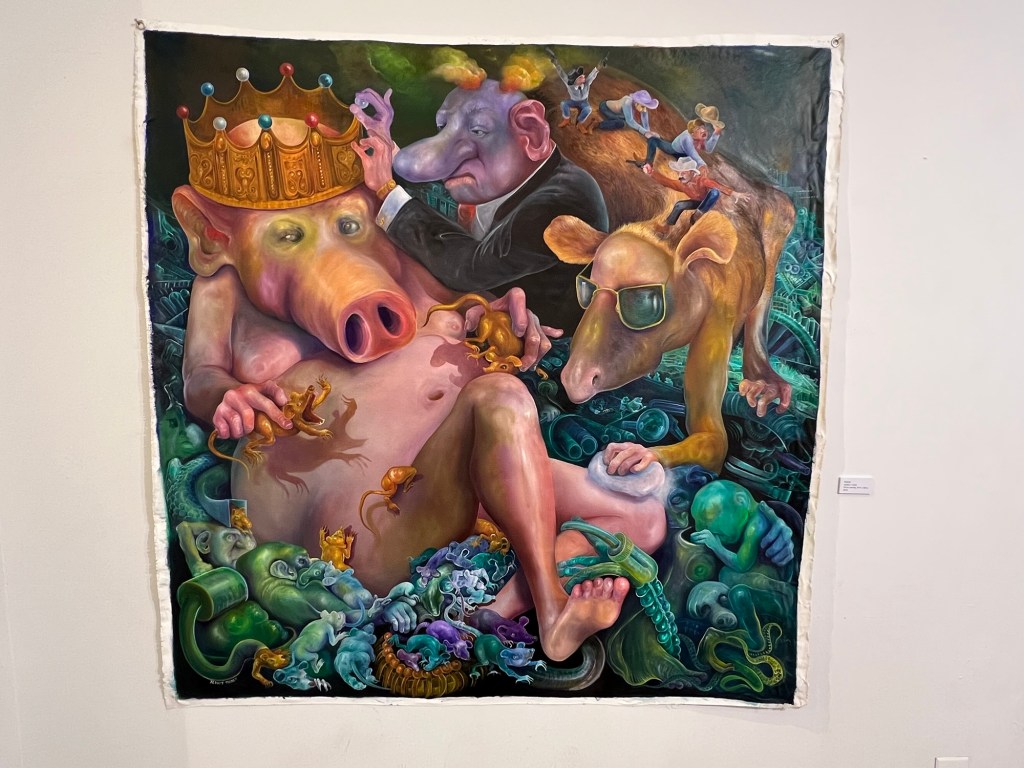
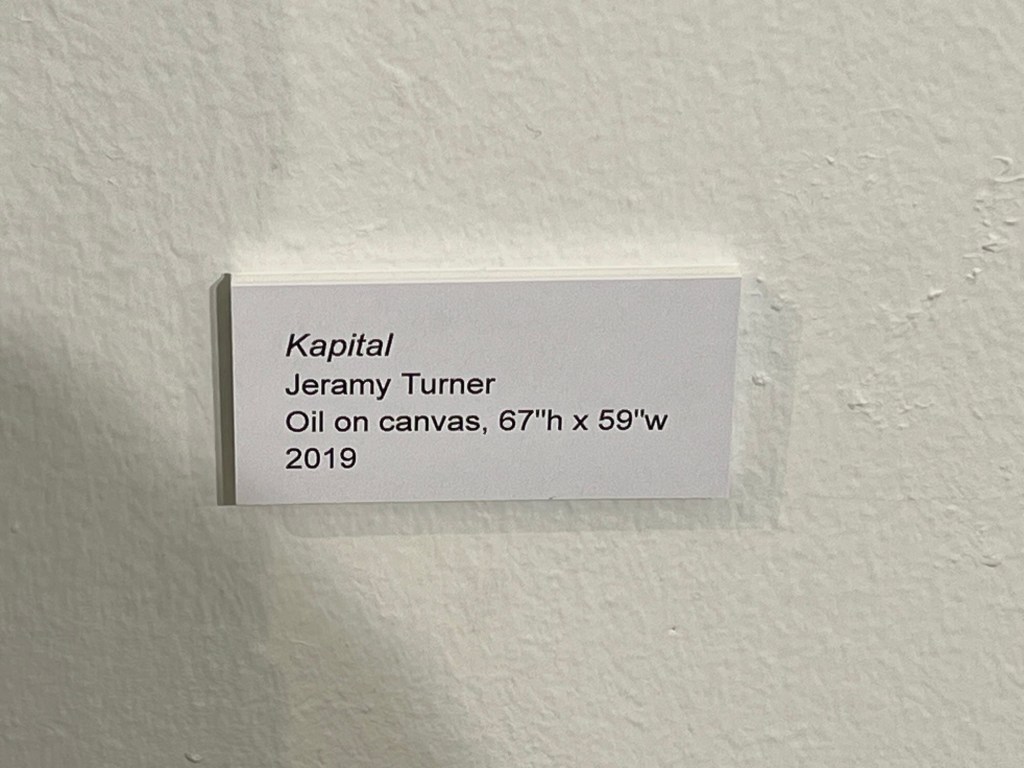
The painting “ Kapital”
The sign for “Kapital”
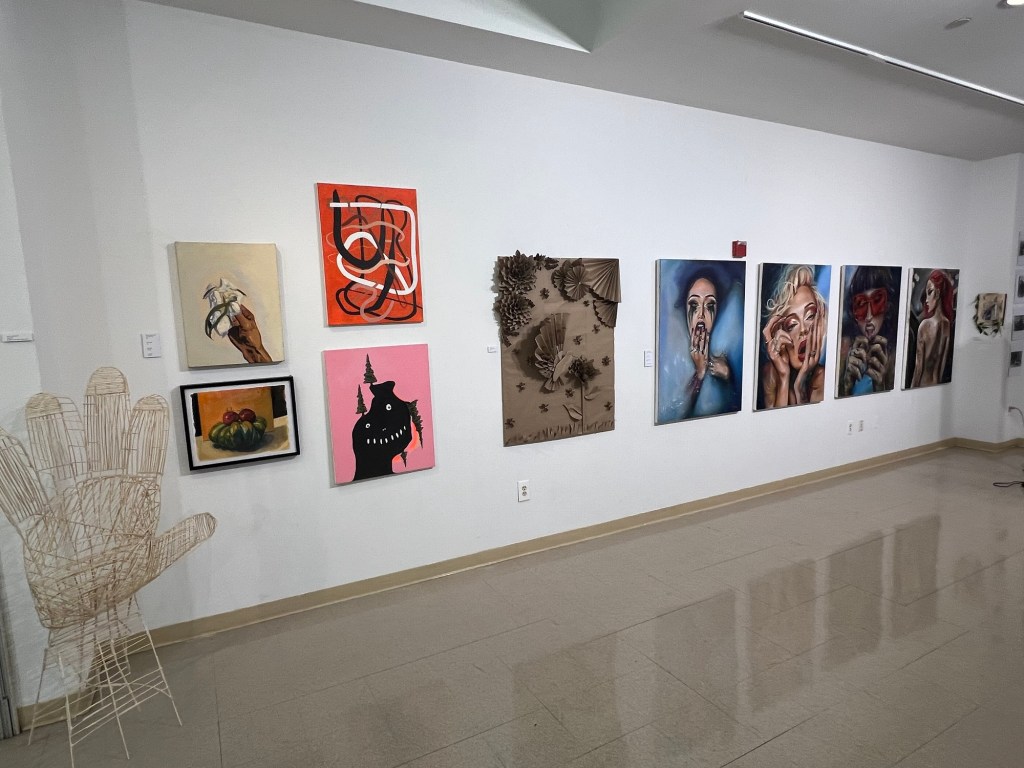
A view of the gallery display for the Jeramy Turner Show for “A Cautionary Tale for Billionaires”
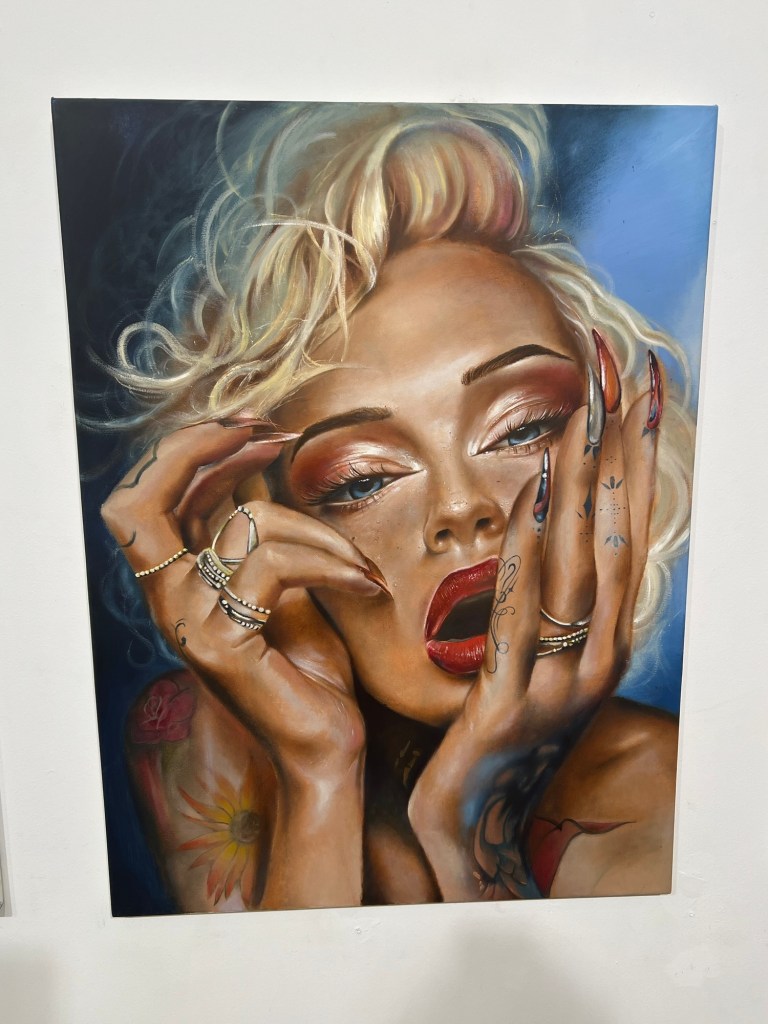
In the Spring of 2025, Gallery Bergen had its Spring Student show and there was some interesting art to see. It was a wonderful Opening on April 24th, 2025.
The Bergen Institute for the Creative Arts (BICA), Fashion at Bergen, and Gallery Bergen:
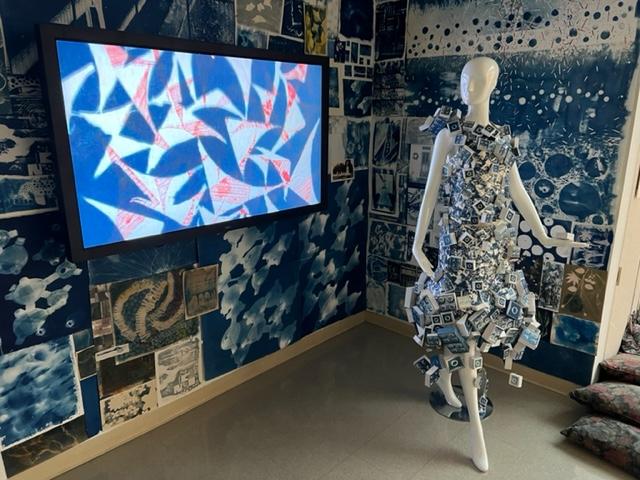
Gallery Bergen presents its annual BCC Student Art Expo 2025 at Gallery Bergen (3rd Floor, West Hall) from April 24 through May 2. The college community and public are invited. All artistic media from BCC students and the Institute for Learning in Retirement are represented, including fashion design, painting, 2D and 3D design, animation, sculpture, and photography.
The reception featured hors d’oeuvres by the Culinary Arts program with a live music performances by BCC music graduates, Kurley Skeletons.
The Gallery Bergen Student Spring 2025
The Spring 2025 Student show
The Spring 2025 Student show
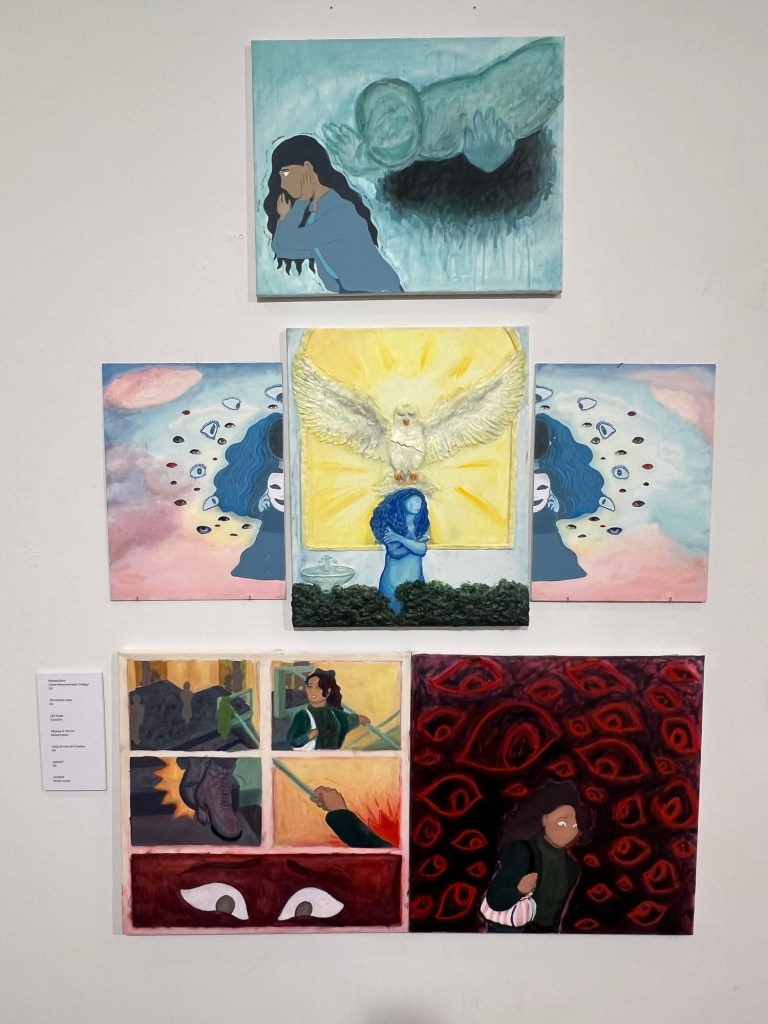
The Student Show has some unique pieces of art that can be admired and debated. Really take time to admire the students works.
Spring 2025 Student show
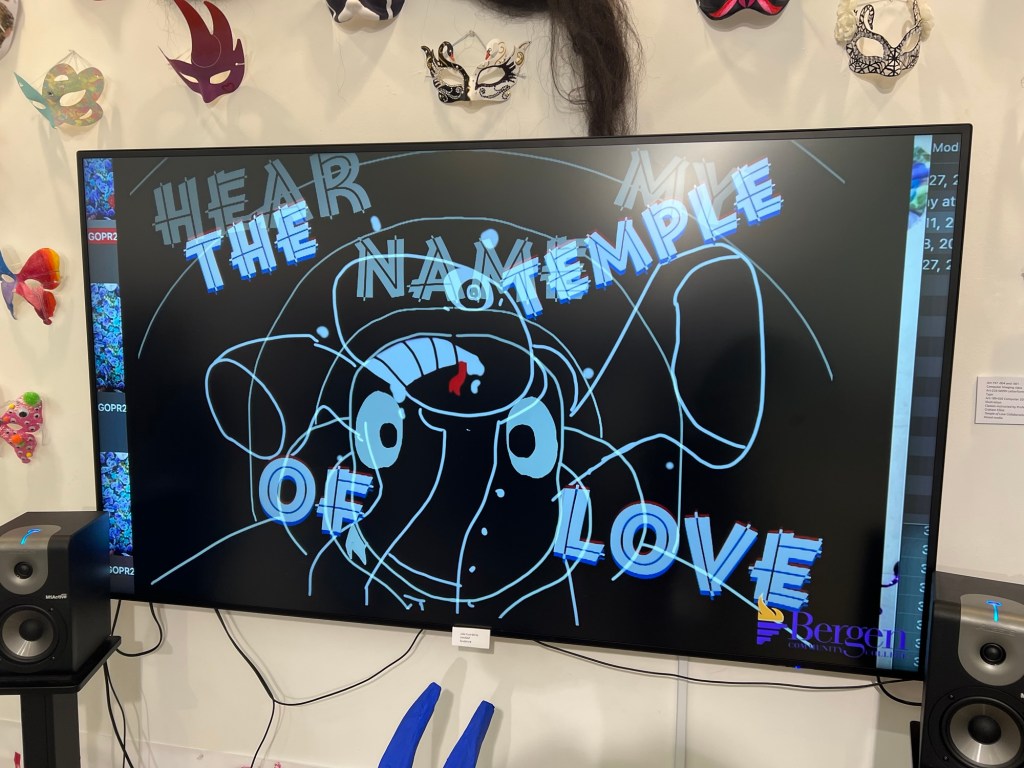
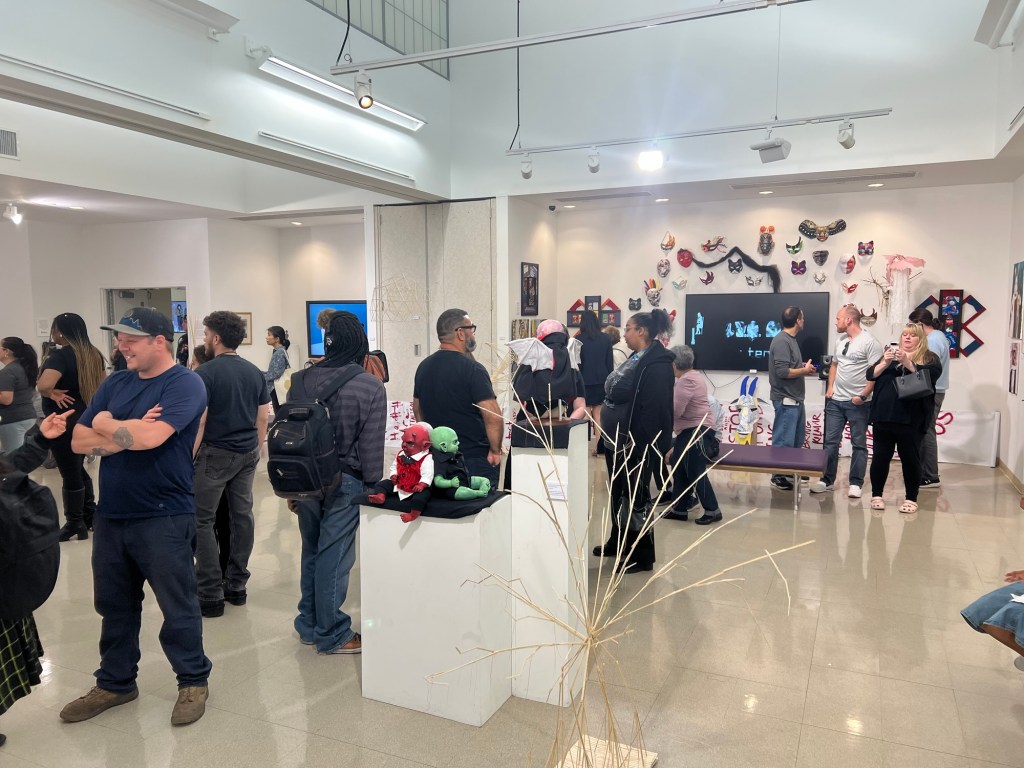
These were some of the standouts that I enjoyed at the show with my favorite being ‘Temple of Love’ video which I thought was very clever.
The Spring 2025 Student show
The Spring 2025 Student show
The Spring 2025 Student show
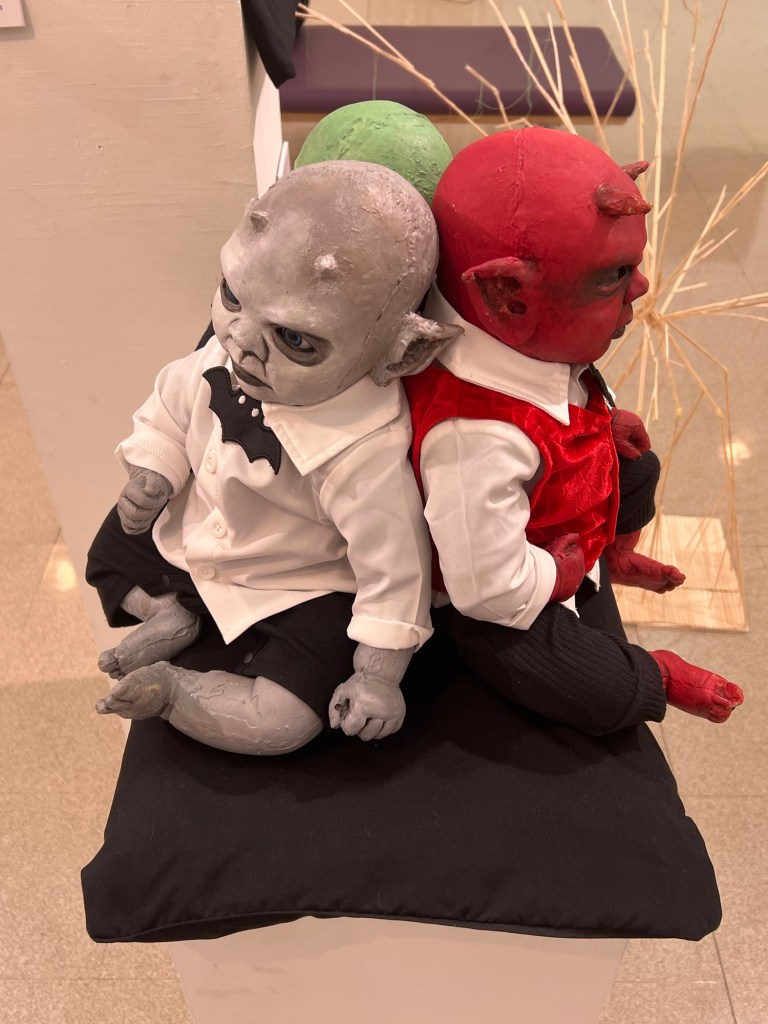
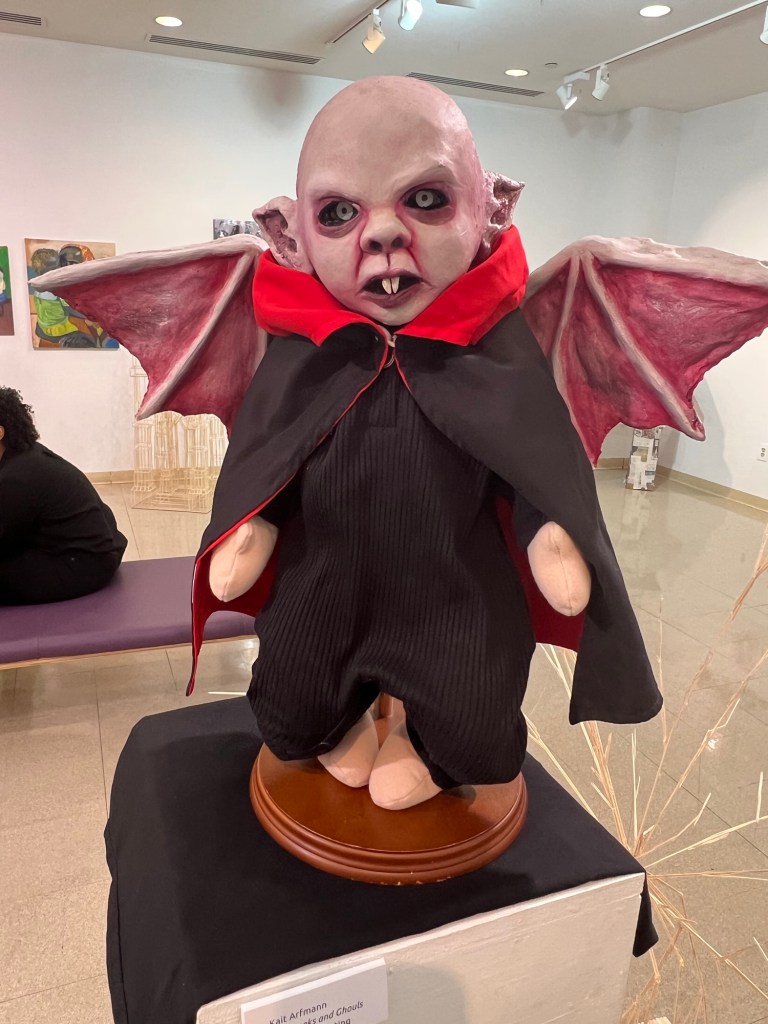
“Little Demons”, one of my favorite pieces at the show.
“Little Demons” sculpture
The “Little Demons” sculpture
The Spring 2025 Student Show
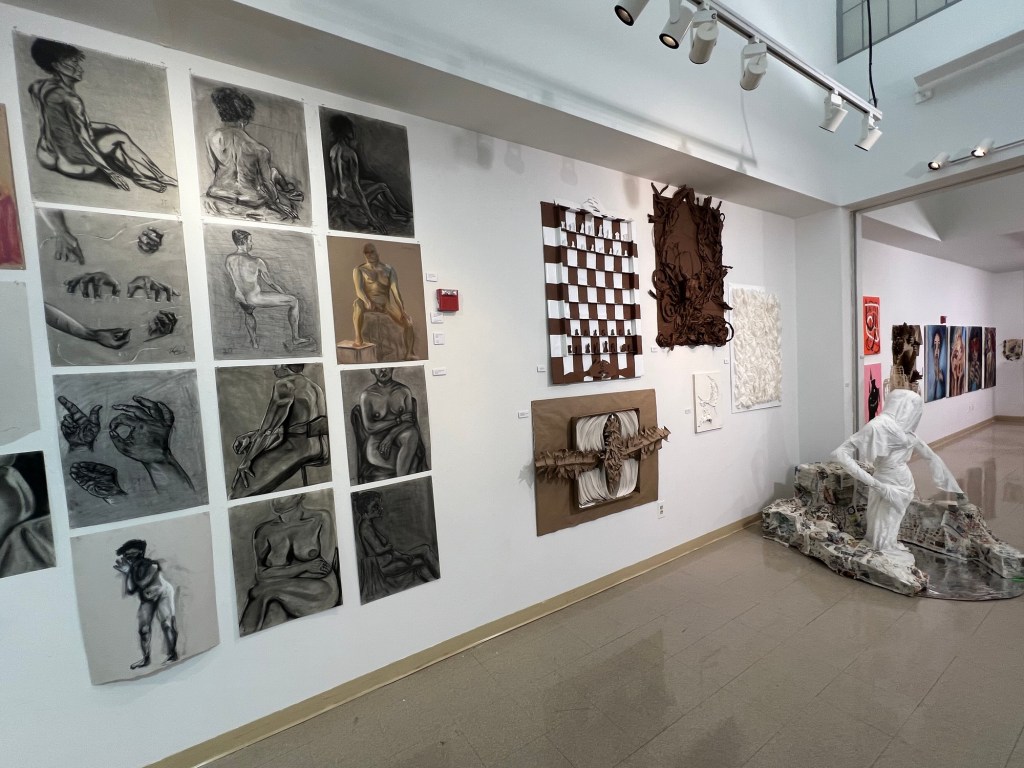
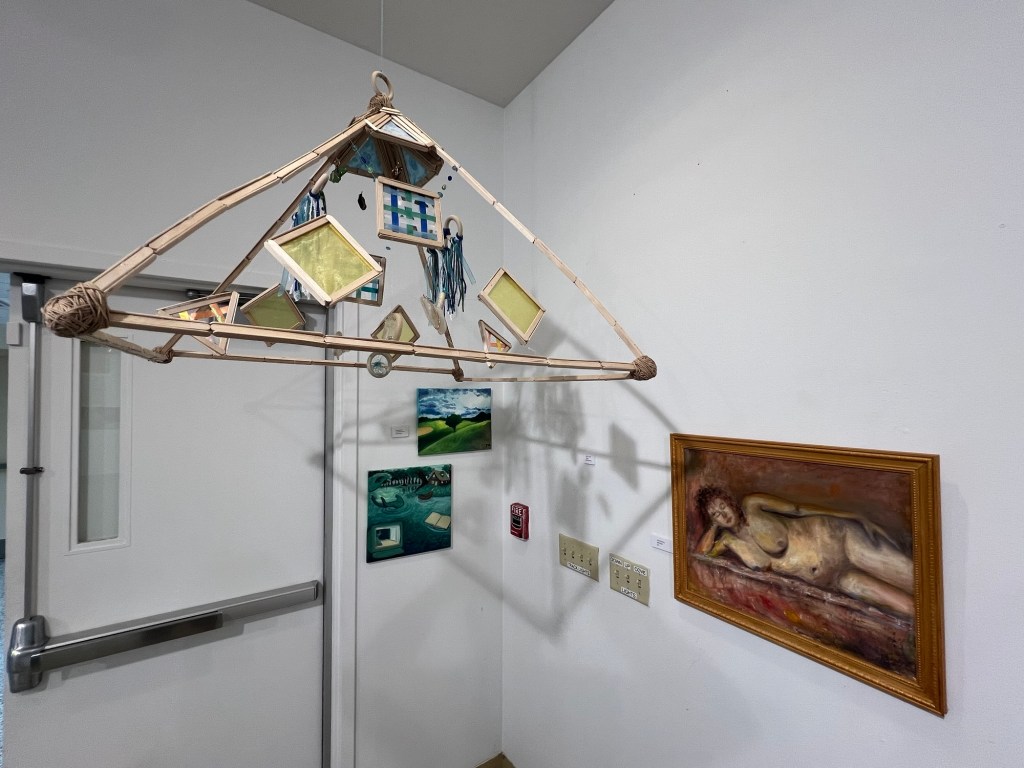
The interesting nudes
The back part of the Gallery
The back part of the museum
The Spring 2025 Student show
The “Harvey” painting
One of the most interesting works at the show was the art music video “Temple of Love” by artist Graham Elliott.
The “Temple of Love” video
The art surrounding them”Temple of Love” video
The “Temple of Love” video”, my favorite piece of the show.
The sculpture “Vibrant Vito Guest” below the video
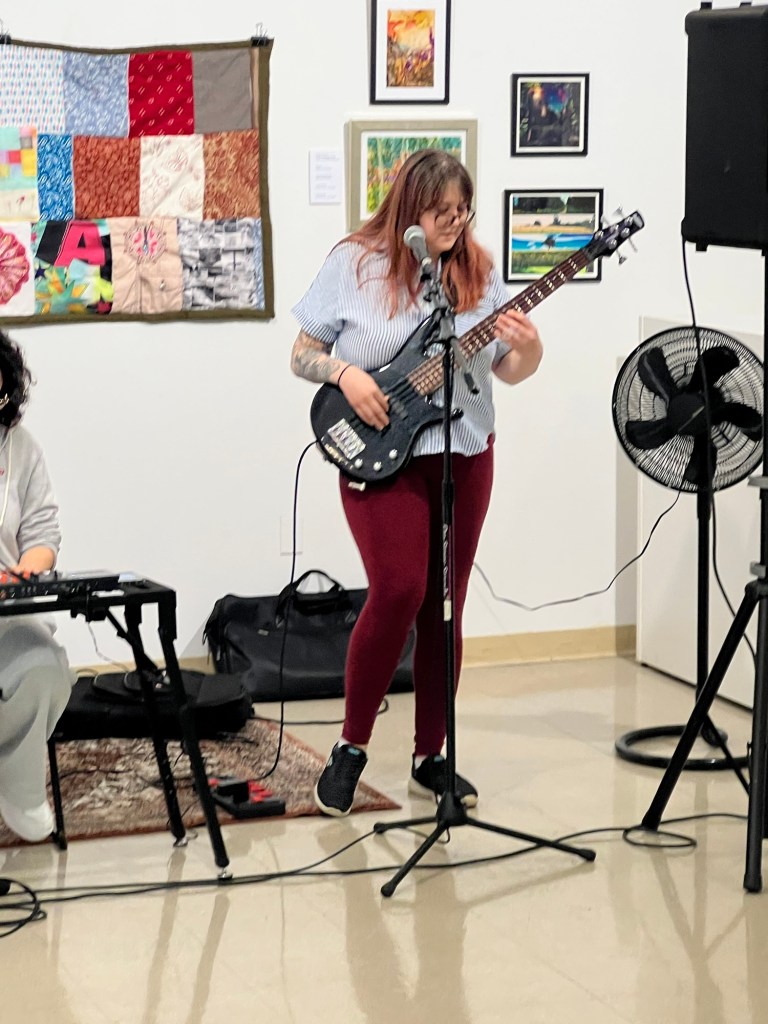
That evening to close out the Opening was the band ‘Kurly Skelatons’, who had graduated from Bergen Community College a few years ago.
The concert was interesting as the music contemporary and rhythmic.
At the end of the evening, there was a light reception and we enjoyed being outside on the patio over looking the golf course.
The patio view
Watching ‘The Temple of Love’ again
It was a nice crowd that evening
The Spring 2025 Student Show offered interesting art and music and equally interesting visuals. The students did a nice job.
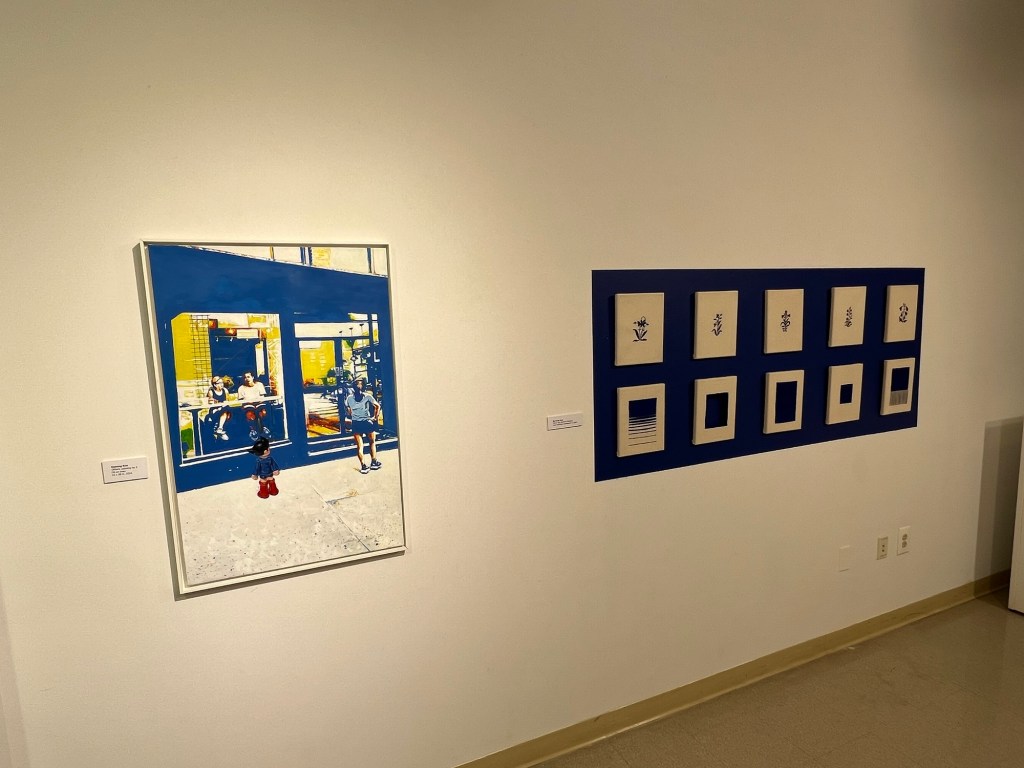
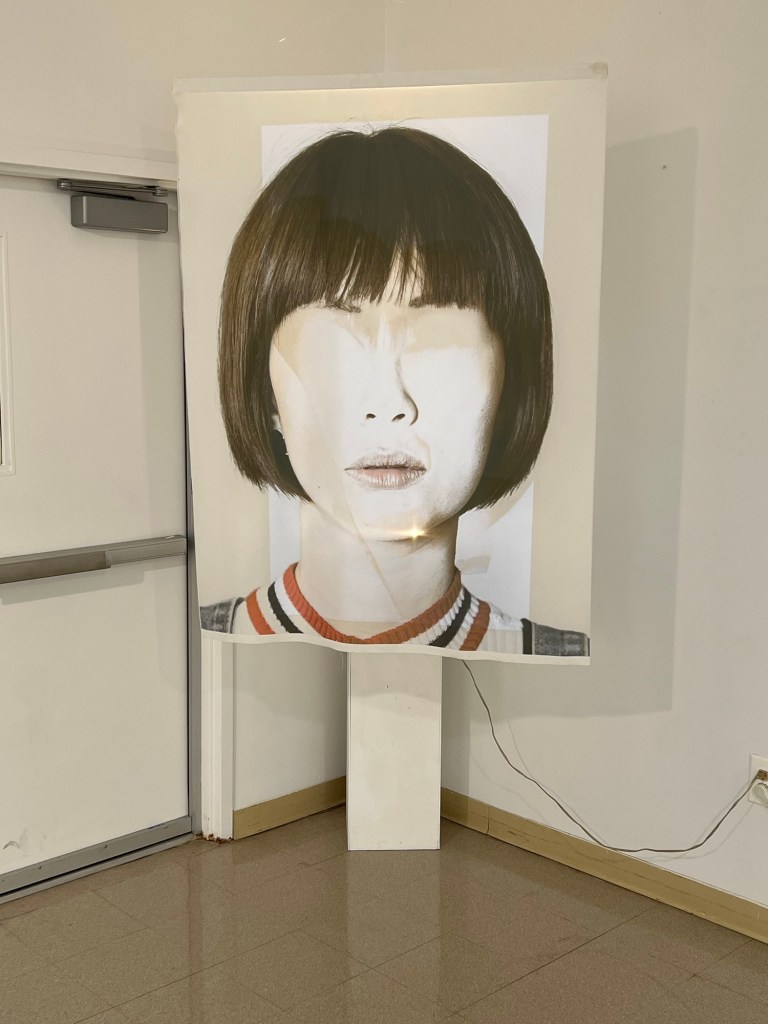
In the Fall of 2025, Gallery Bergen featured the exhibition of Artist Gregg Bormann entitled ‘Personal Effects’. The exhibit featured work by the artist based on Hollywood works that featured the dark and macabre. The works included clips of films done in video collage and surrealist works based on film scenes.
“The full exhibition “I’m Laughing at Clouds”
“Eyes without a Face”
The reception after the opening
It was an interesting take on the movie magic of these films.
In the Fall of 2025, Gallery Bergen exhibited ‘Tesla’s de Solidaridad: Art & Connection to Guatemala ‘, an exhibition of local Guatemalan artist, mostly from Jersey City.
The promotion poster
The exhibition was a celebration of works by Guatemalan artists who live in the United States, especially in the New York City area.
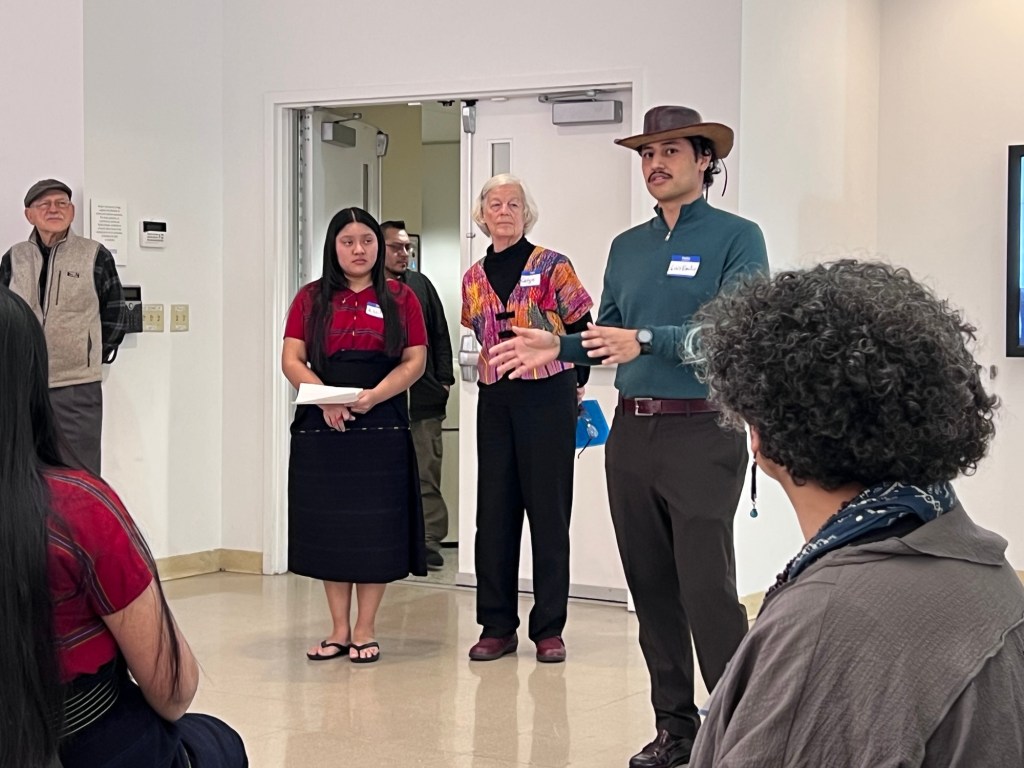
The gallery opening
Works by artist Lucas Emilio Romero
Artist Lucas Emilio Romero explaining his works at the show
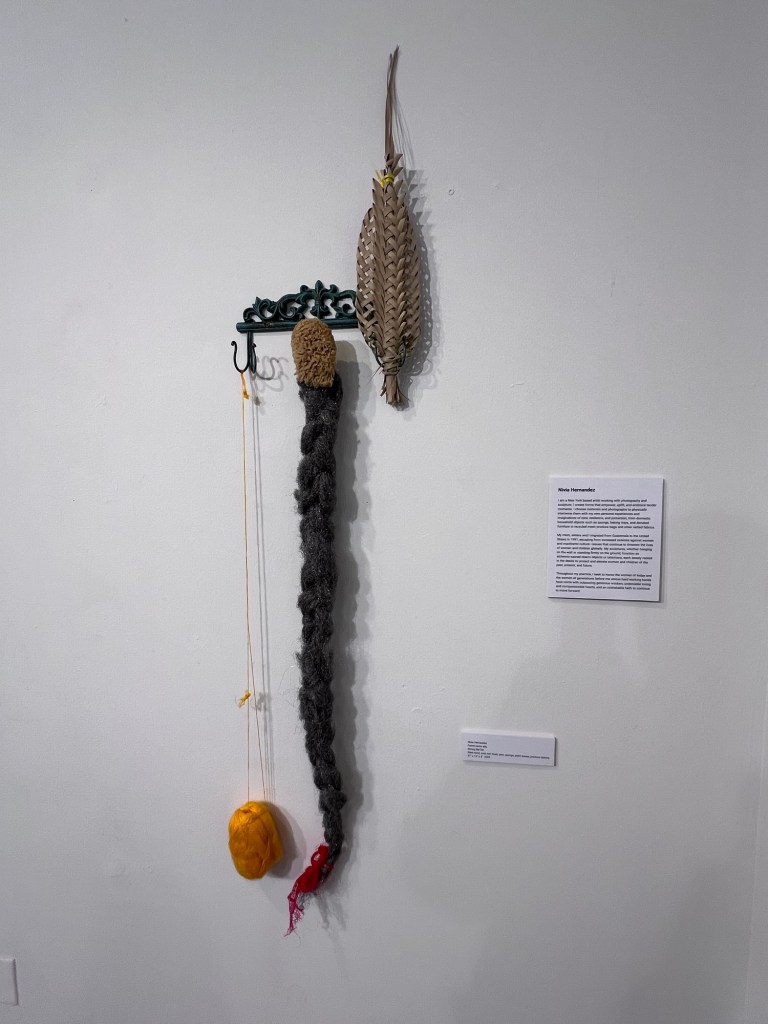
Work by artist Nivia Hernandez
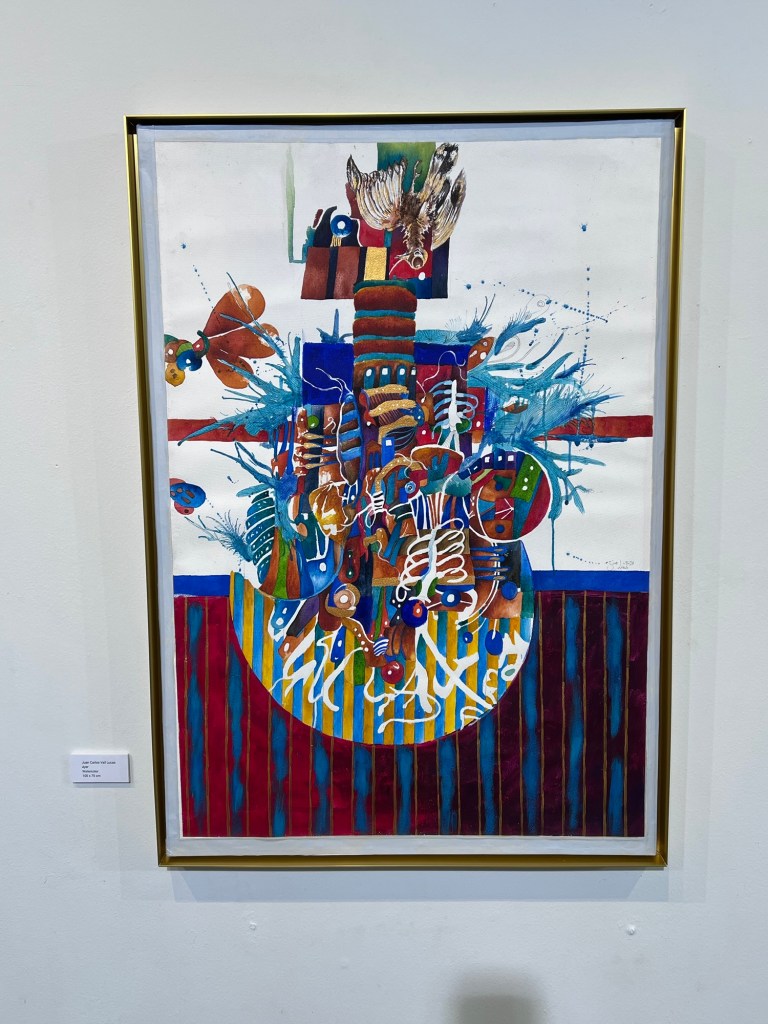
Works by artist Juan Carlos Vail Lucas
The work ‘Ayer’
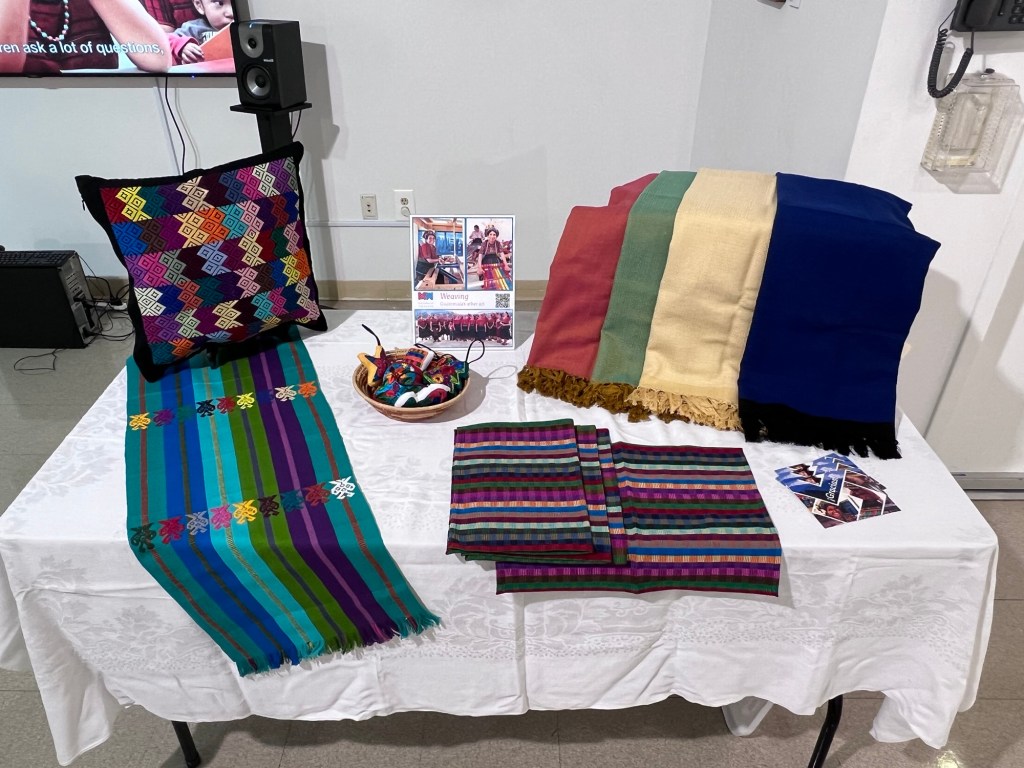
The crafts of Guatemala
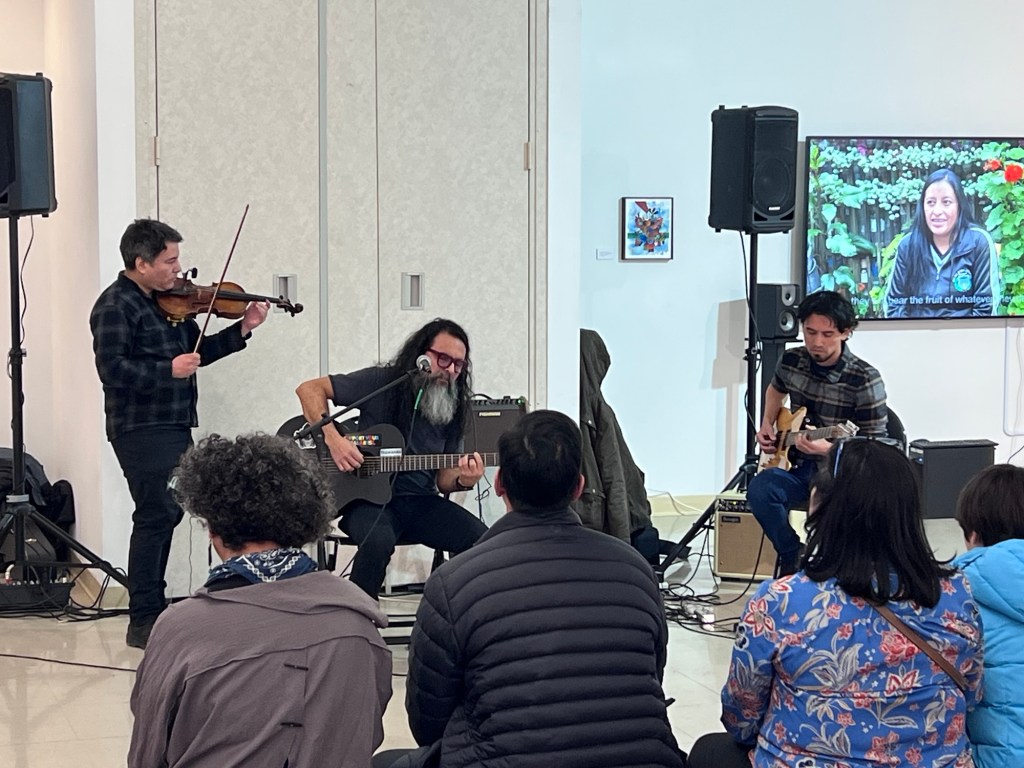
A local jazz band played at the opening with lyrics in Spanish.
The Jazz band performing
Gallery Bergen
The Jazz performance at Gallery Bergen the night of the Opening of the Exhibition

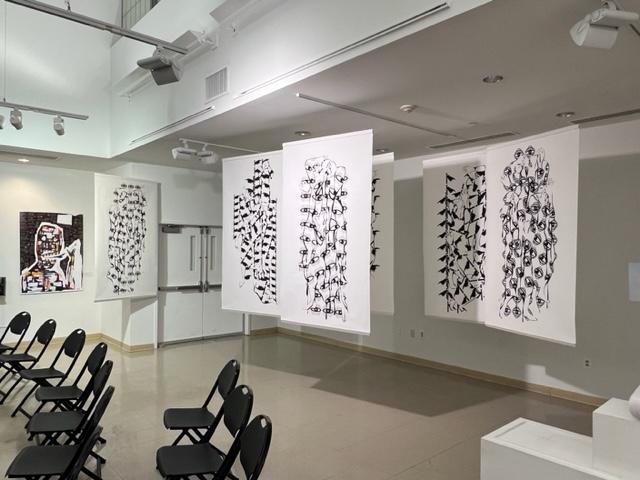
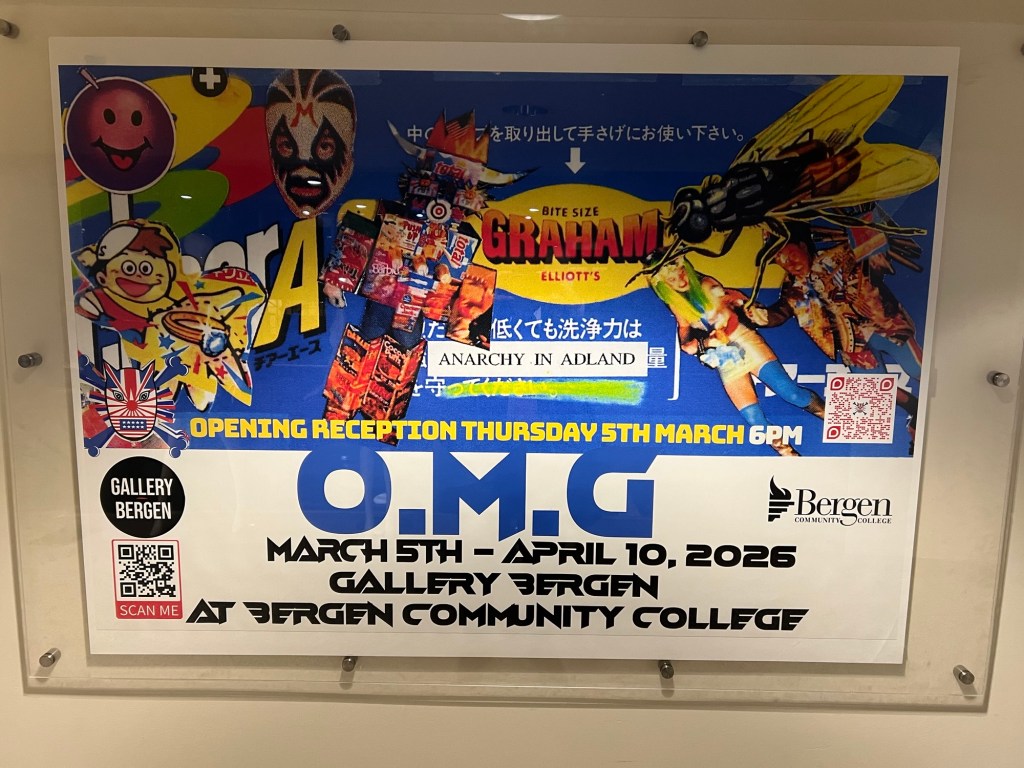
One of the biggest shows of 2026 was faculty member Graham Elliott’s one man show. It was a splash of art that was a cross between Basquiat and Warhol. It was colorful and playful and engaging.
The sign for the gallery opening
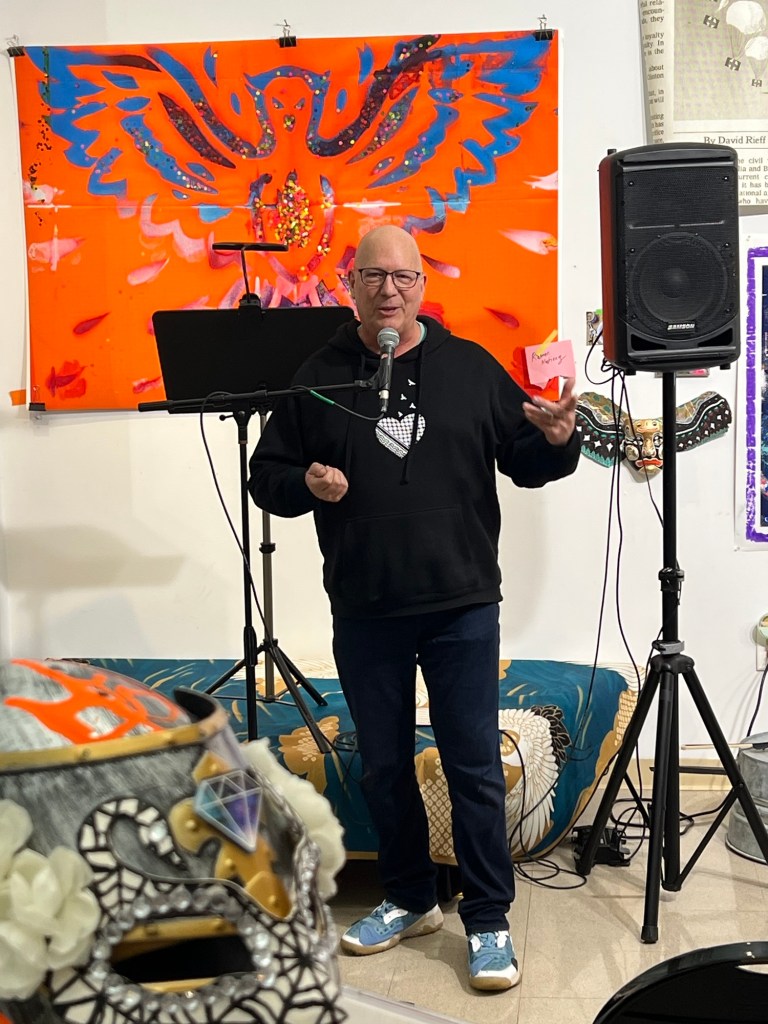
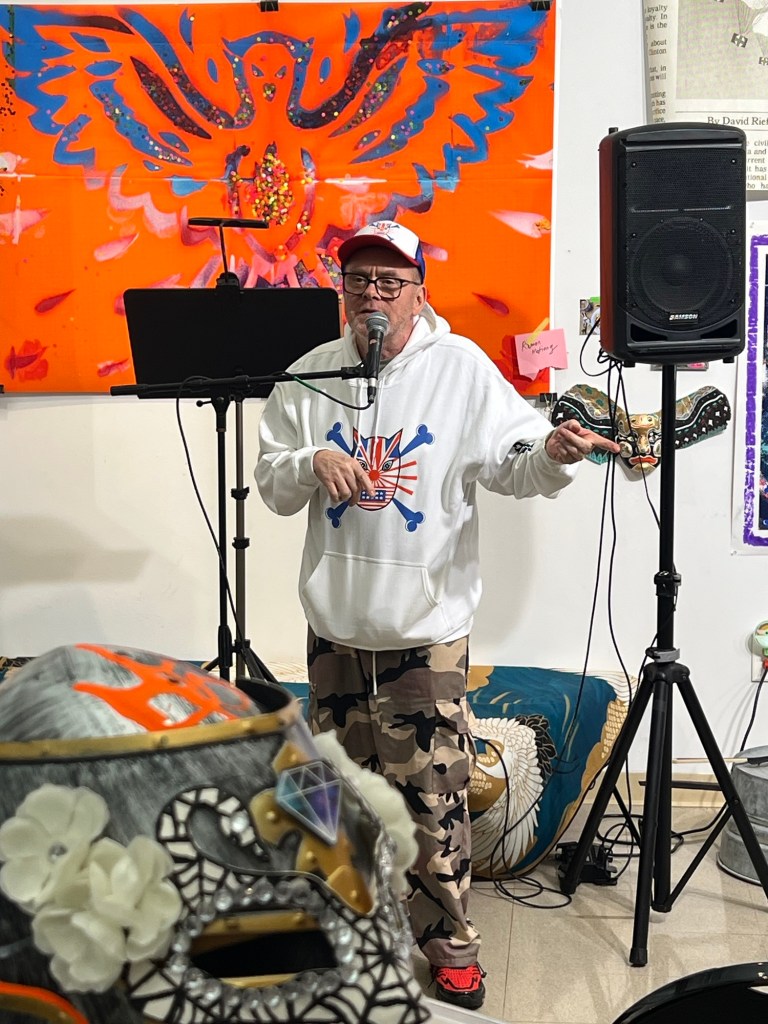
Artist Graham Elliott opening the show
The artist giving his opening remarks at the show. This one man show was a combination of his personal At ex and that of his students.
The Graham Elliott Show at Gallery Bergen:
(from the Gallery Bergen website)
The work of Bergen Community College visual arts faculty member, illustrator and motion graphics artist Graham Elliott will appear in Gallery Bergen this month. The exhibition “OMG! Graham Elliott” will open with a public reception on Thursday, February 26 at 6 p.m. in Gallery Bergen, the College’s art exhibition space located on the third floor of West Hall at its main campus in Paramus (400 Paramus Road). The opening reception will feature performances by flutist Carl Aude and cellist The Modesto Kid and refreshments prepared by the College’s culinary students.
“‘OMG!’ embraces play, humor and improvisation as serious artistic strategies, inviting viewers into a space where curiosity, obsession and sustained looking are treated with care and rigor,” Gallery Bergen Director Timothy Blunk said. “Graham Elliott’s work is disarmingly playful, yet purposeful – using accumulation, motion, and wit as engines for reflection rather than distraction. The exhibition reveals how whimsy is not the opposite of depth, but one of its most precise and enduring tools.”
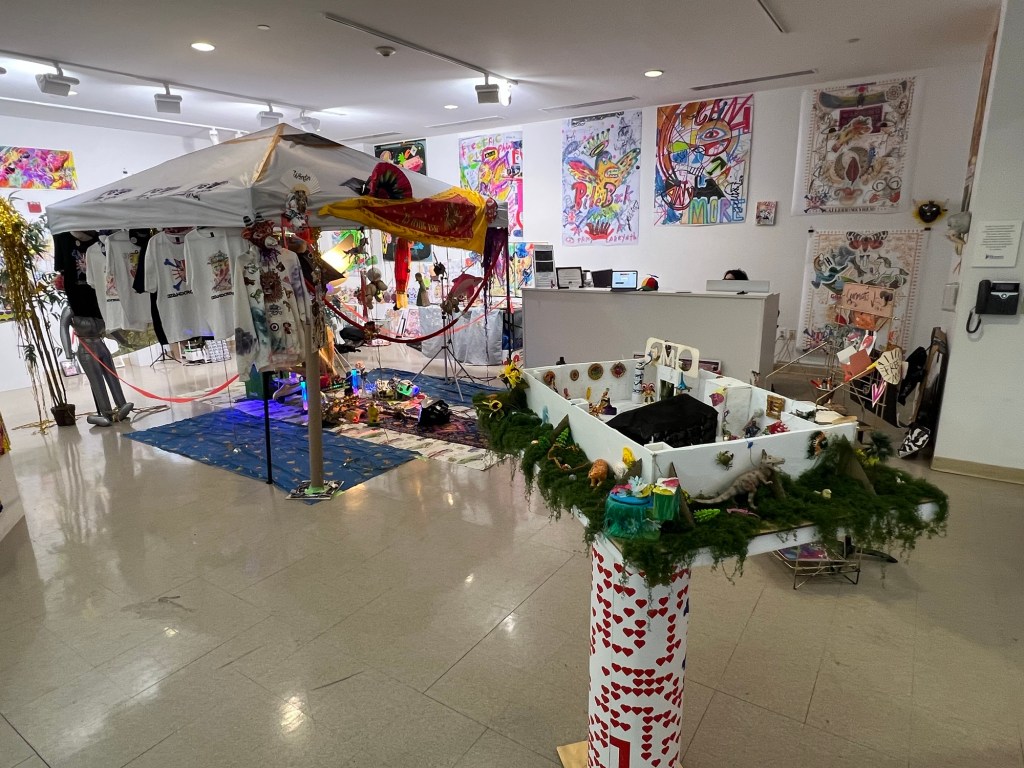
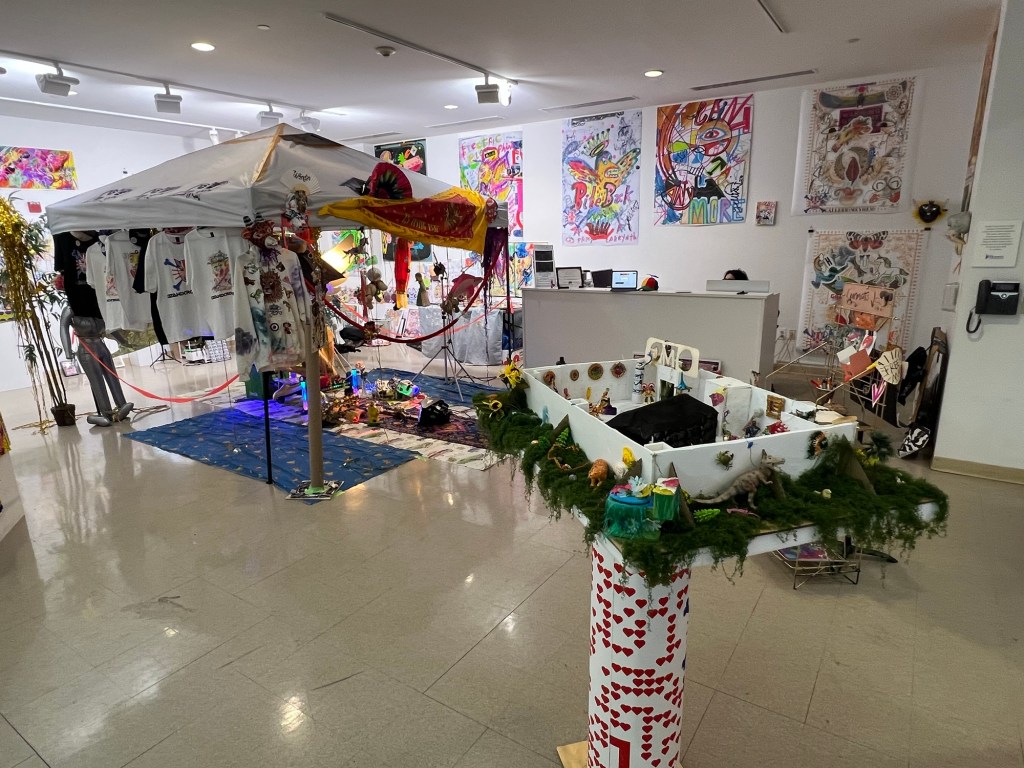
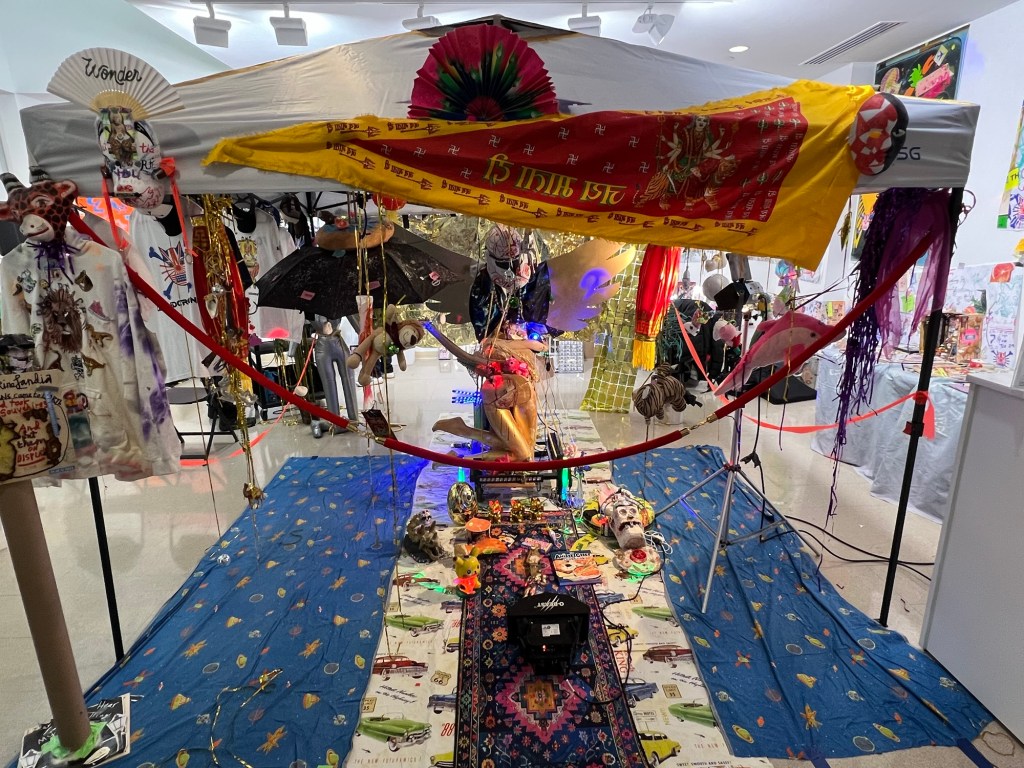
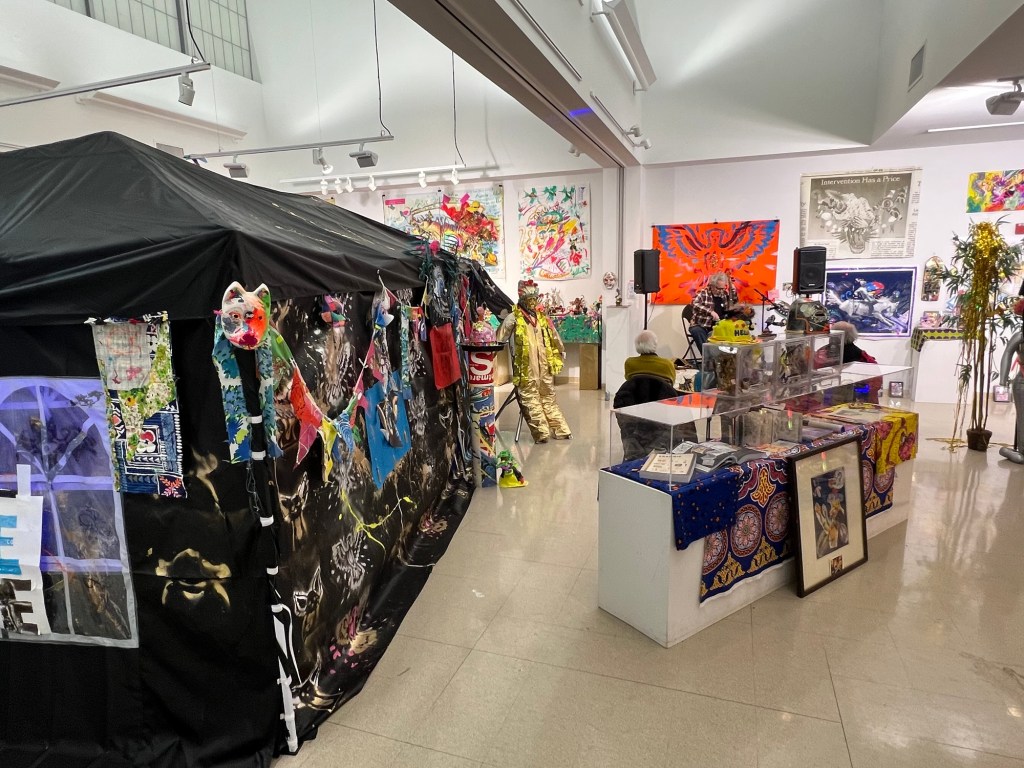
“OMG” will feature two tents inside the gallery to house “shrines” to lost keys, sketchbooks, projections, “wall books,” installations, looped motion graphics and videos. Some pieces include collaborations with Graham’s former and current Bergen students.
“My work meets at the intersection of many art forms: illustration, graphic design, advertising, animation, sculpture, collage, film and storytelling all feeding off each other as if all the animals in a zoo were released and were hanging out, partying,” Elliott said. “I think the process can be more interesting than the finished product.”
During his career, Elliott designed some of the first motion graphics for MTV, illustrated for publications such as The New York Times and collaborated with the Rolling Stones. He has worked for Saatchi and Saatchi, Nickelodeon and the School of Visual Arts in New York. He joined Bergen’s faculty in 2023.
The entrance to the Gallery for the opening of the Graham Elliott show
One of the interactive pieces in the front
The front tent filled with artwork
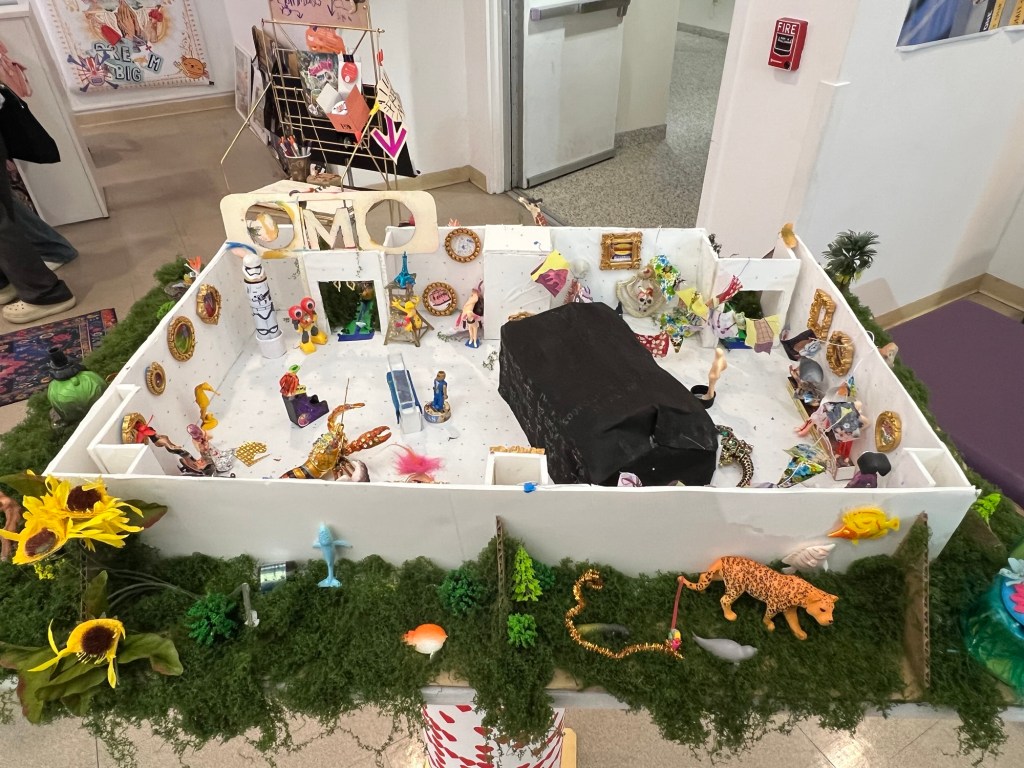
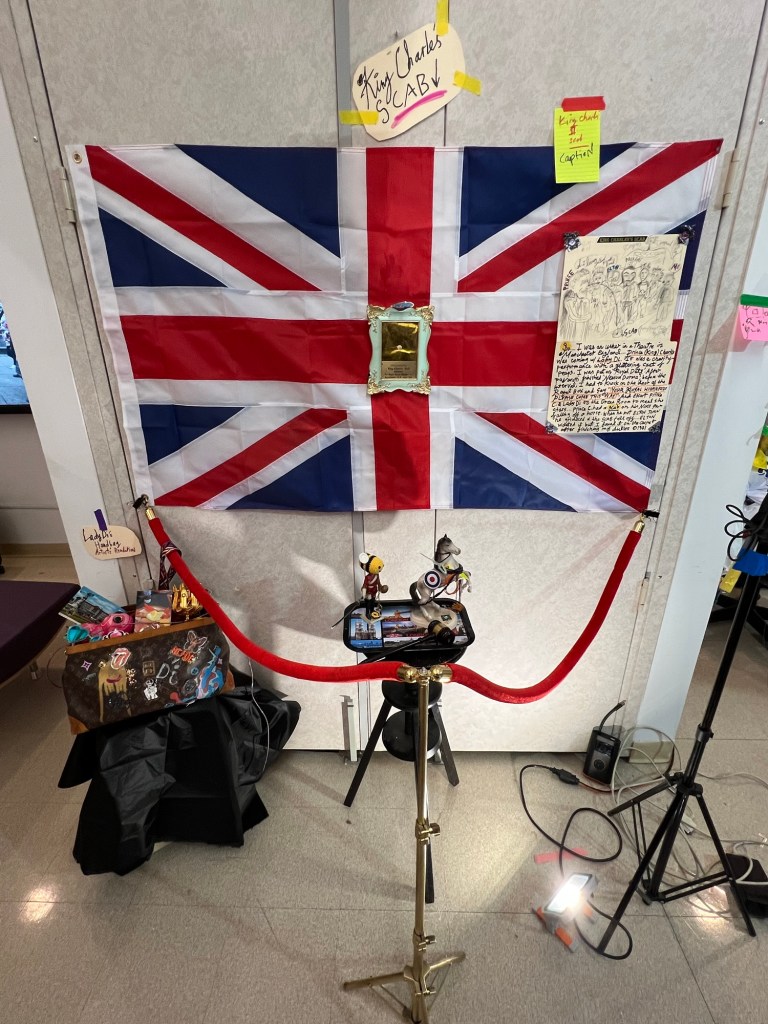
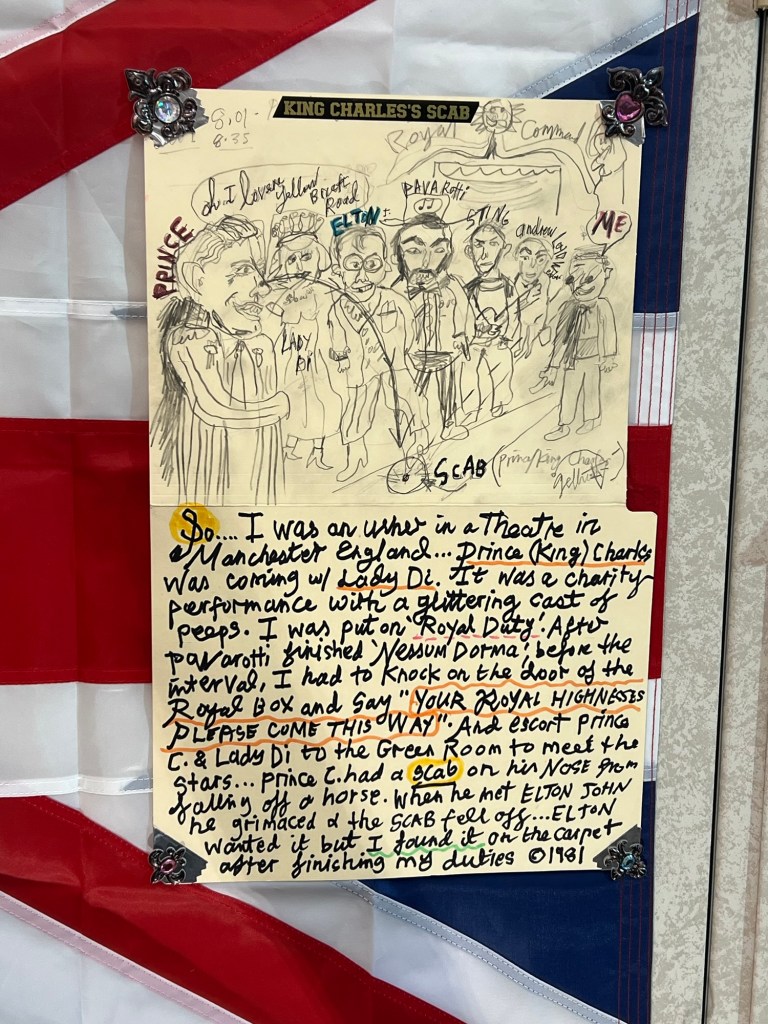
The center of the exhibit with the exhibition. One of the most interesting and odd pieces of art featured the scab of Prince Charles. I thought this was unique.
The Scab of King Charles
The write up as part of the exhibition
The figurines
The figurines
The paintings
The paintings
The paintings
The diagram
The sculptures
The musician Carla Auld played the flute that night
The Pascack Valley Historical Society is now celebrating their 75th Anniversary.
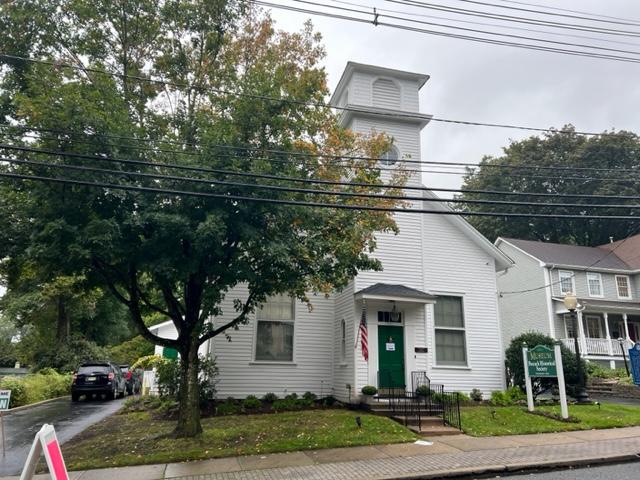
The Pascack Historical Society Museum (John C. Storms Museum), headquarters of the award-winning Pascack Historical Society, is located in the 1873 church building that was dedicated by the Reverend Henry Ward Beecher. The building and all the exhibitions have gone through an extensive renovation and have been reinstalled with more signage and information. Please check out their new displays.
The sign that greets you in the front of the building.
The Historical Marker in front of the building.
As you enter the building, you are welcomed to a comfortable spot.
The extensive exhibits include a general store, colonial kitchen, a Victorian Living Room, dolls, clothing and other displays of American life in the Pascack Valley. The front gallery as you enter serves as a classroom and lecture hall for the society. There you can see a variety of artifacts in the collection from china to guns and clothing.
Artifacts in the front room.
Artifacts in the first gallery.
A collection of antique guns in the front gallery.
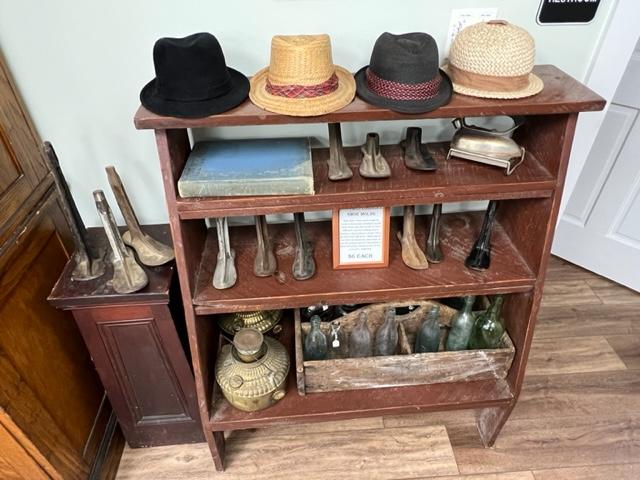
A selection of hats in the front gallery.
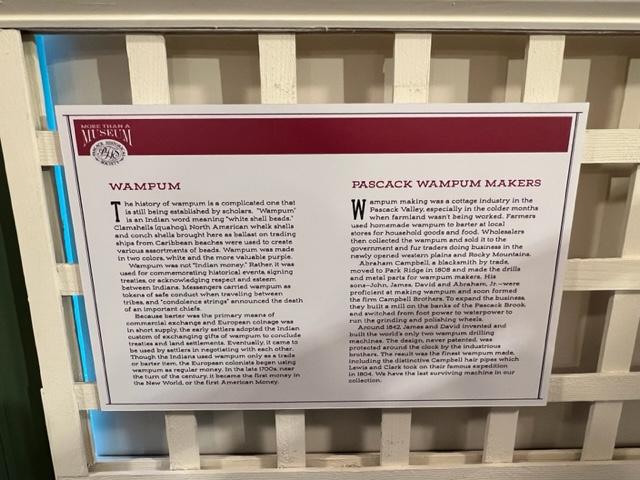
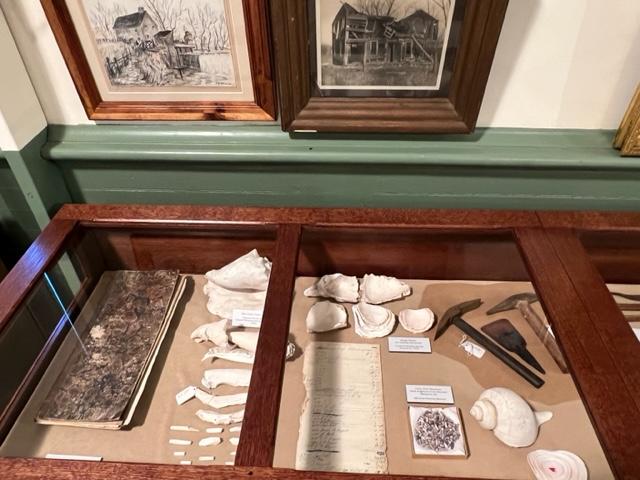
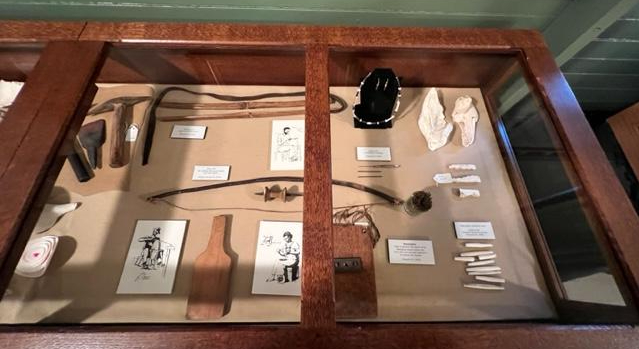
There is also a special exhibition that features the world’s only wampum drilling machine as well as a collection of early colonial currency.
The Wampum Machine sign and how Wampum is made.
Their early Colonial Financial exhibits include an early wampum machine that the tour guide had said that it was the only one of its kind that made a type of rolled wampum from the inner section of a conch shell. Early New Jersey currency is well represented in the collection with several types of dollar bills at a time when states printed their own currency for its citizens. Really take a look at the early detail work of these bills.
The Wampum display of shells and tools.
The uses of Wampum and how it is made.
The oldest working Wampum machine in the world.
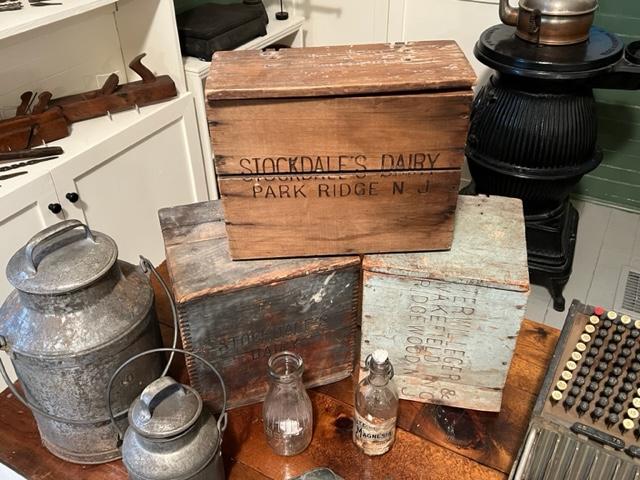
The Van Ripper General Store exhibition features many types of early Colonial artifacts that include weights and measures, food items found in an early grocery store, turn of the last century bottles and many types of appliances for cooking. Several treasures are tucked here and there to create the mood of shopping at the turn of the last century in Bergen County. There are classic groceries, weights and measures to weight groceries and several artifacts from the Van Ripper and Stockdale Farms which used to be located in the area.
The General Store sign
The General Store display.
Stockdale’s Dairy Farm was a popular farm in Park Ridge before the 1960’s.
Tools need on the farm and in the home.
The Tool display at the General Store.
The Toy Collection is extensive and covers several time periods. They have a interesting collection of dolls over the ages that include cloth and china dolls that would cater to children from different economic status. There are also games, wooden and metal pull toys and hobby toys such as marbles and jacks.
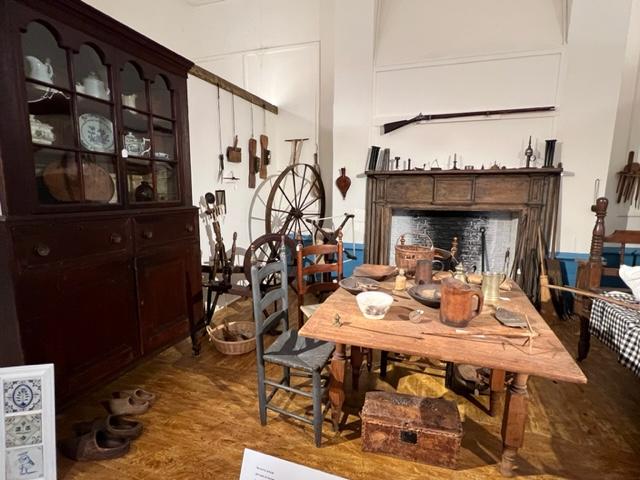
The Early Dutch Farmhouse Kitchen & Dining Room features one of the first beds that has no mattress but constructed by a series of ropes that are tightened. The tour guide explained that this might be where the expression “Sleep tight and don’t let the bed bugs bite” might have come from as the ropes needed to be tightened each evening before the family went to bed.
Early Dutch life sign.
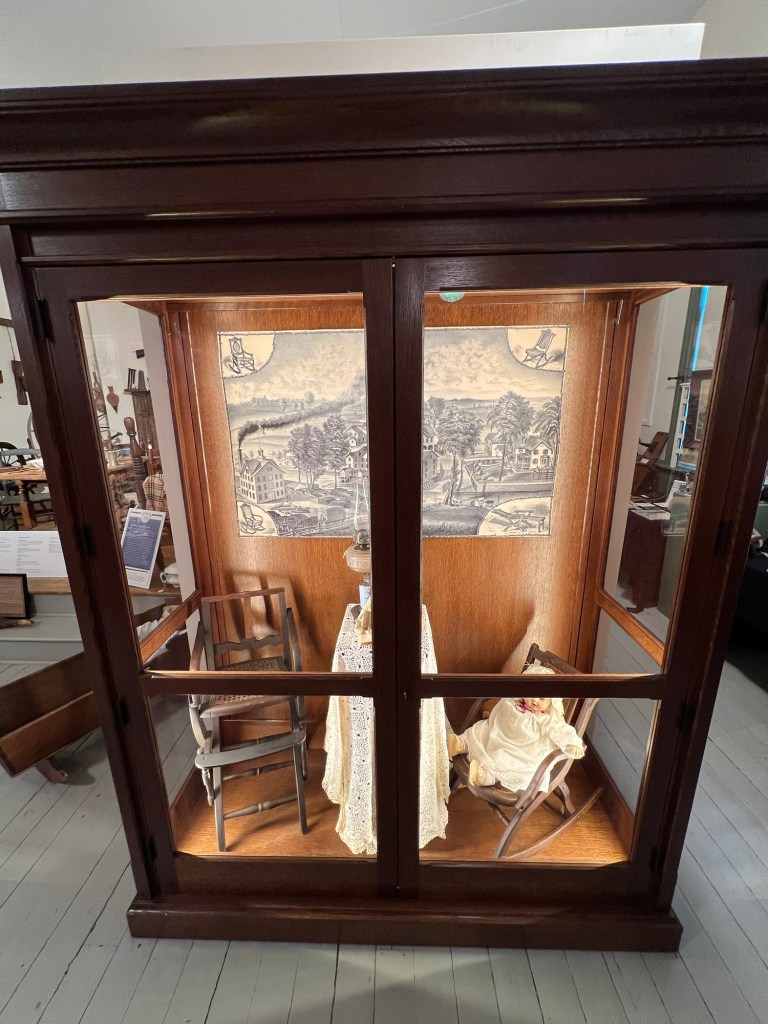
The exhibit also had early furniture hatches, chamber pots, a butter churner, various chairs that were manufactured in the area and several detailed decorative pieces.
The Early Dutch Kitchen and Living Space
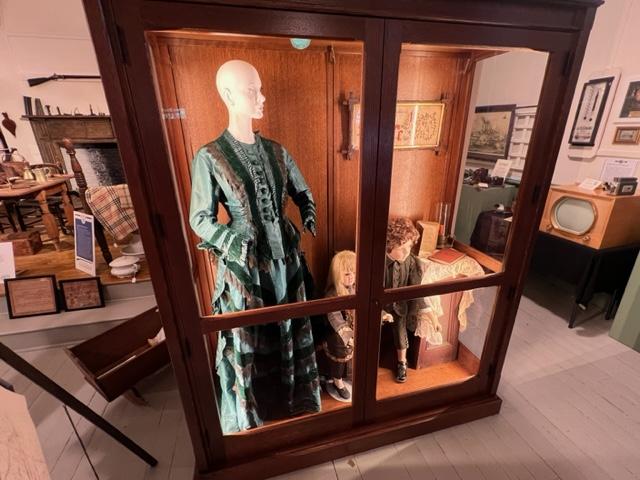
The Victorian Dress of the church visitation.
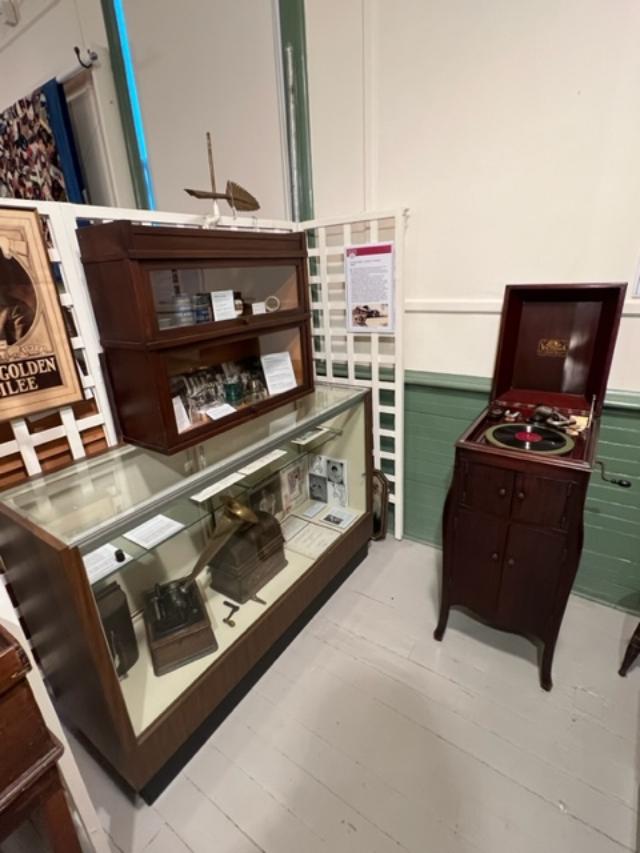
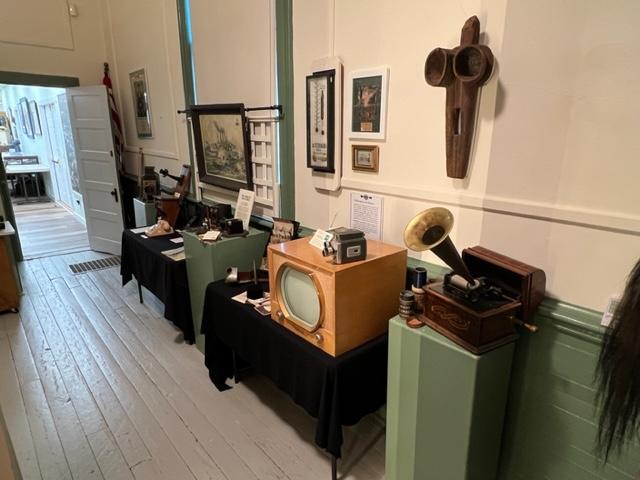
The Victorian Living Room features many plush pieces of furniture, decorative knick-knacks that used to dominate the décor and a graceful piano with mother of pearl keys and decorative carved sides. This model was one of maybe a hundred made for a very elite client. The display also featured one of the early record players that still works.
The ‘Victorian Afternoon’ exhibition in 2024:
The sign for the Victorian home:
The ideal Victorian Home ‘Parlor’
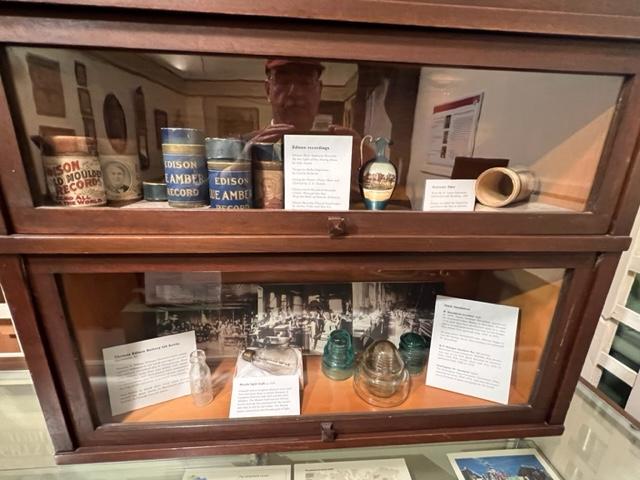
Early Edison products
Early Edison recording equipment was not just musical but decorative.
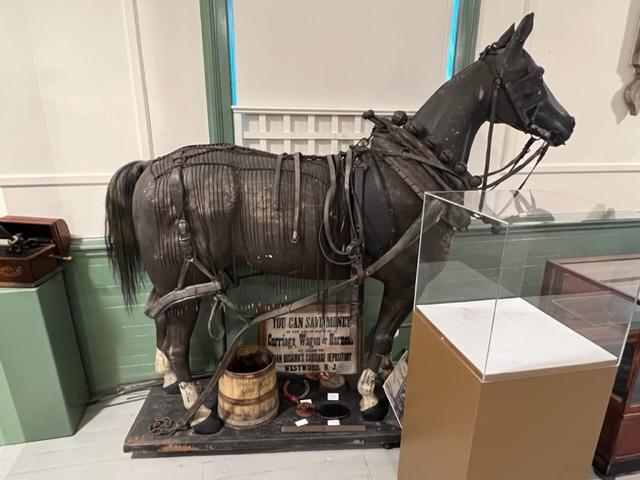
The horse display.
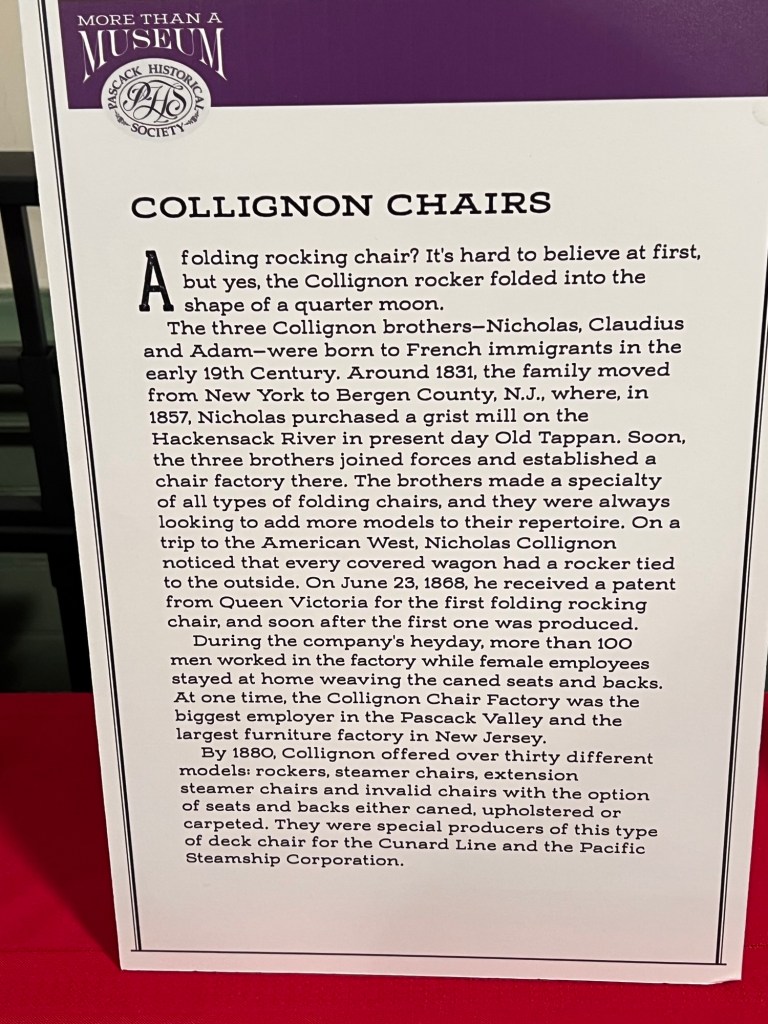
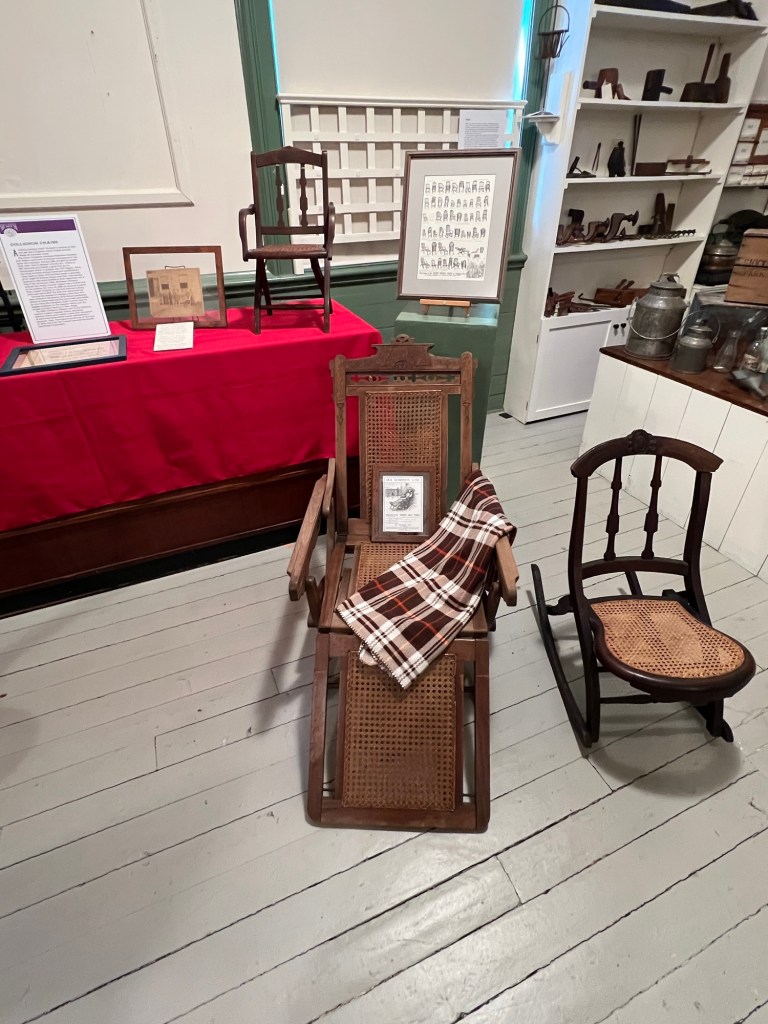
The new exhibition 2025: ‘Collignon Chairs’
The exhibition is on the Collignon Chair factory of River Vale, NJ and the selection of chairs that the factory once manufactured.
The sign from the exhibition
Some of the collection of Collignon chairs on display including the popular deck chair used on streamlines.
The popular folding rocker from the collection
The display of chairs and a drawing of the old factory
Off to the side, there is an early sleigh and horse display, an exhibit of typewriters and carbon paper as I found out the area was once the leading manufacturer for carbon paper and a complete workshop with tools from all eras.
Typewriter collection at the museum.
Early Electronics
The schoolhouse desk of the school master.
The workshop is a very detailed in its artifacts with early saws, hammers and items that even I could not figure out what they were.
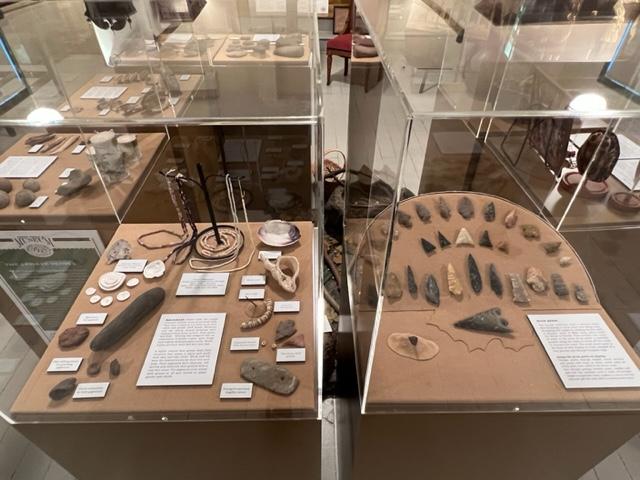
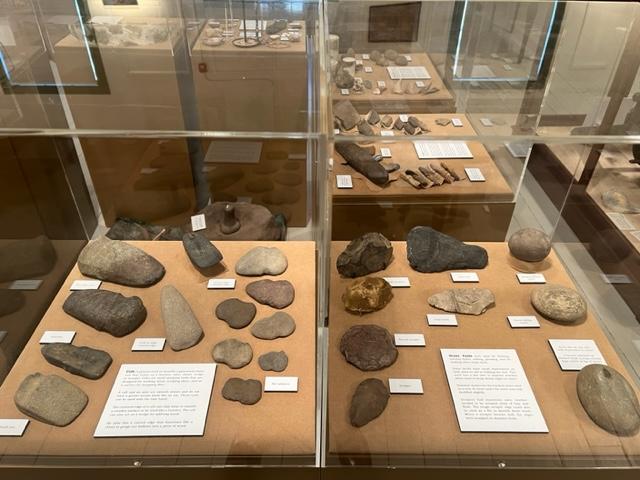
In the main room, there are more cases of toys, Revolutionary items and Native American artifacts to explore.
Native American Artifacts
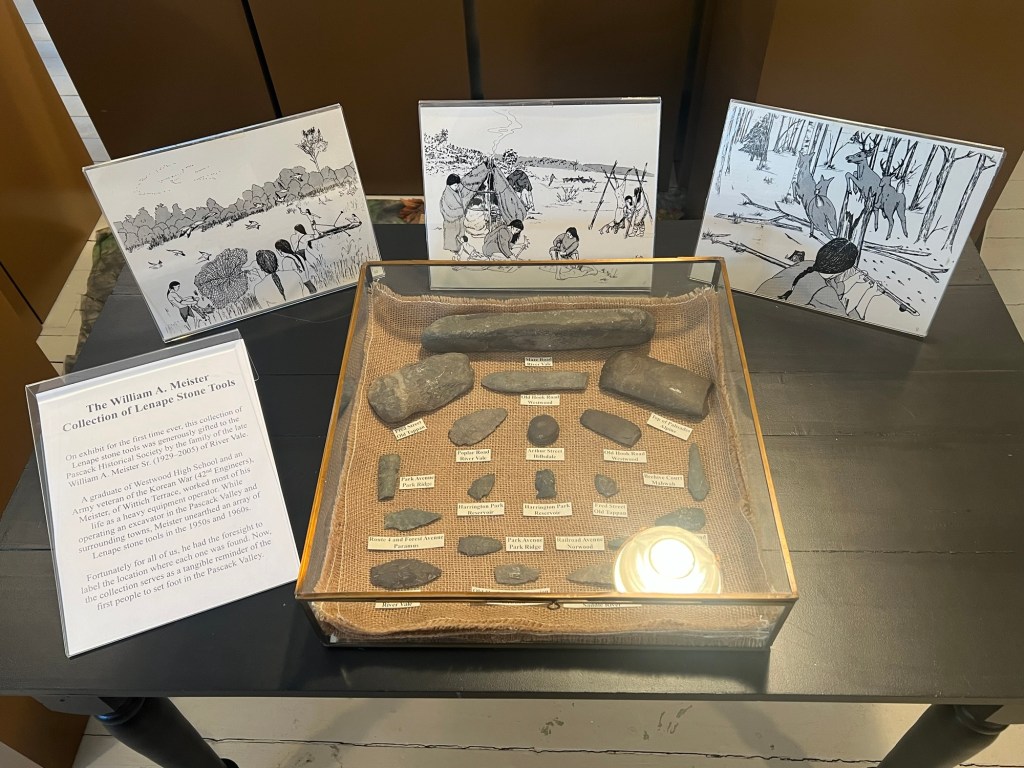
The Lenape display
The Native American display.
A small gift shop is off to the side selling items donated by members.
Become a Friend: From the Friends of the Pascack Historical Society Museum pamphlet:
Pascack Historical Society Information and History:
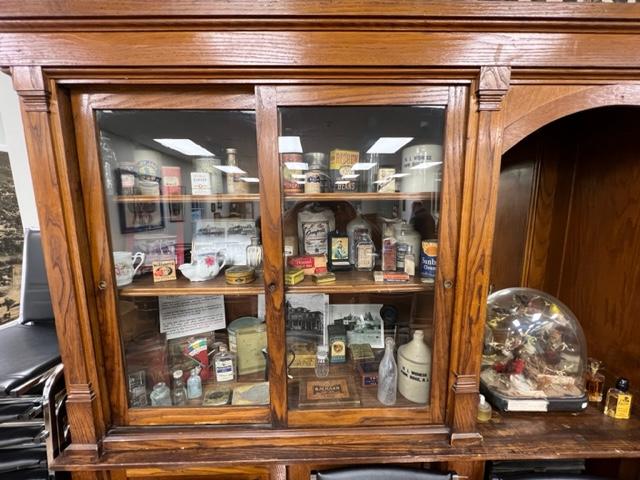
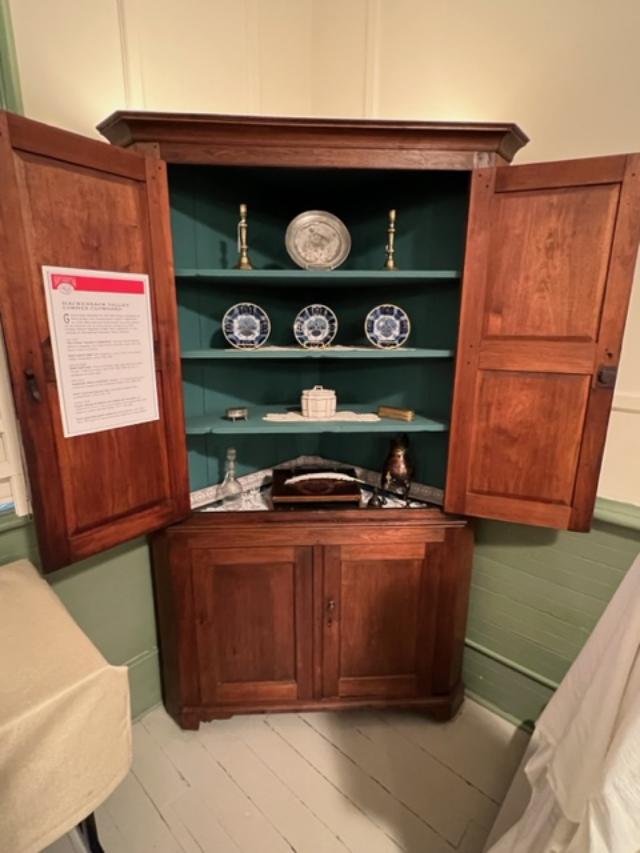
The Corner Cupboard of early American china.
(From their pamphlet):
Membership Benefits:
Become a member of the Pascack Historical Society, a 501C3 organization. Dues are modest and membership has its privileges!
One year of free admission to the museum and most of its activities.
A one year subscription to the Society’s award-winning quarterly newsletter, RELICS.
10% discount on museum gift shop items (Sale items and new books excluded).
50% discounts on programs for children and adults.
You will receive Members Only advance notice mailings and emails about upcoming events and activities.
Members only “behind the scenes tours” of the museum. (By Appointment Only).
You will have the satisfaction of knowing you have joined the ranks of the area’s most passionate historical preservationists, who have a commitment to educate and enrich their neighbors’ lives-young and old.
The Military embellishments
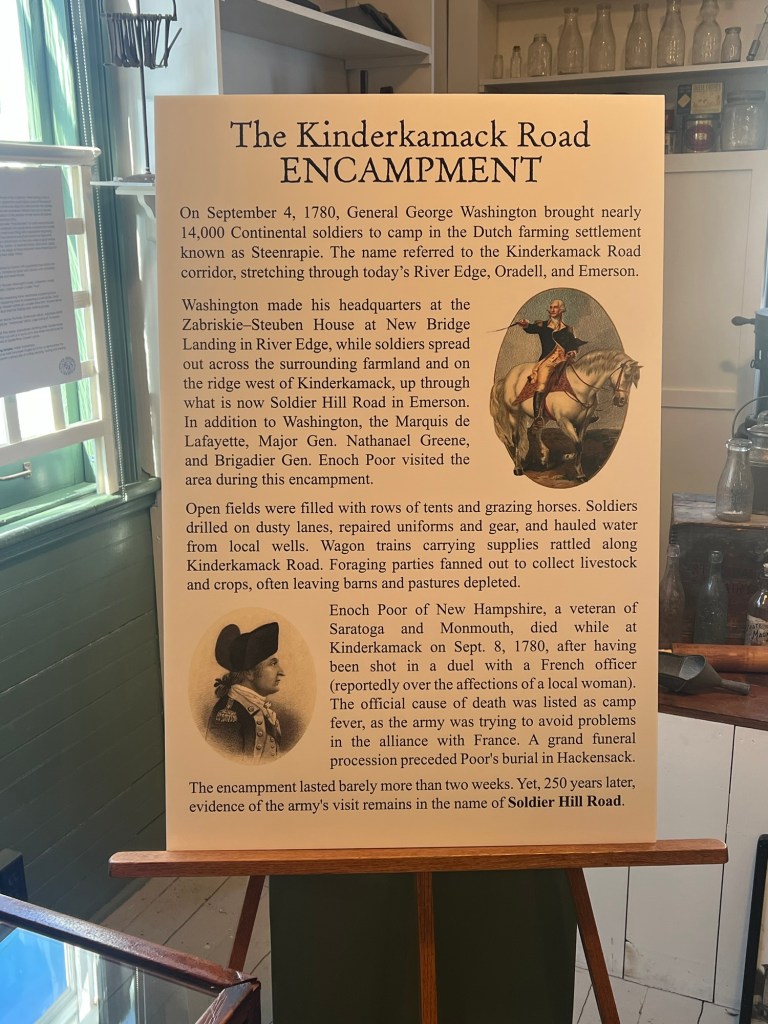
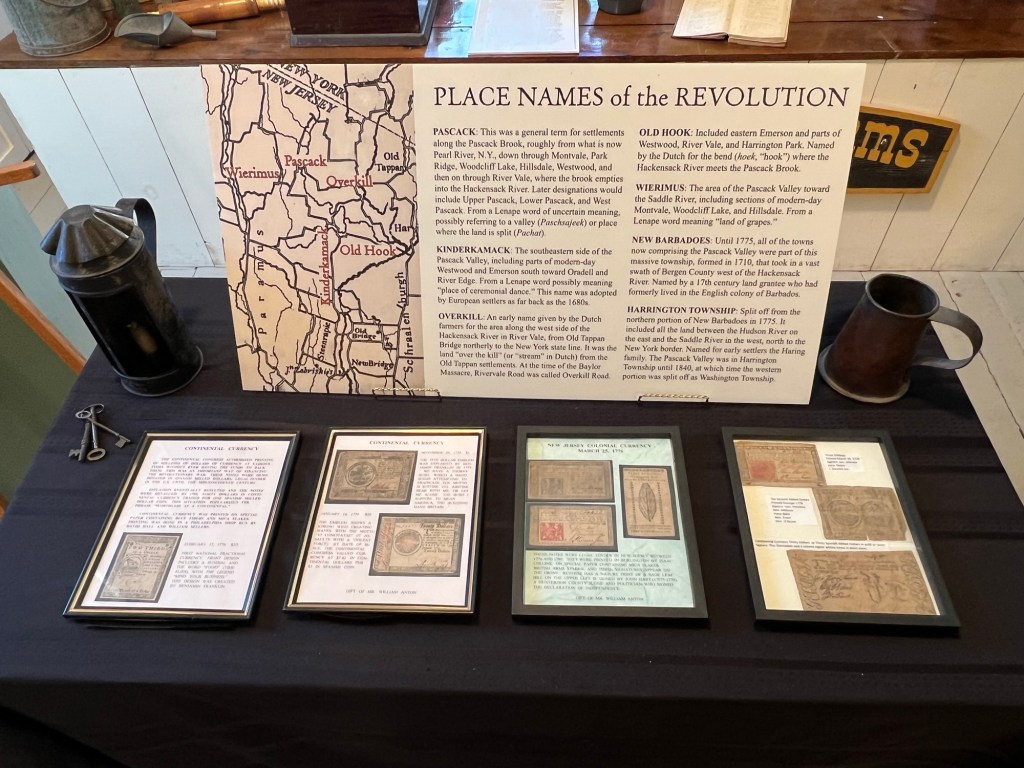
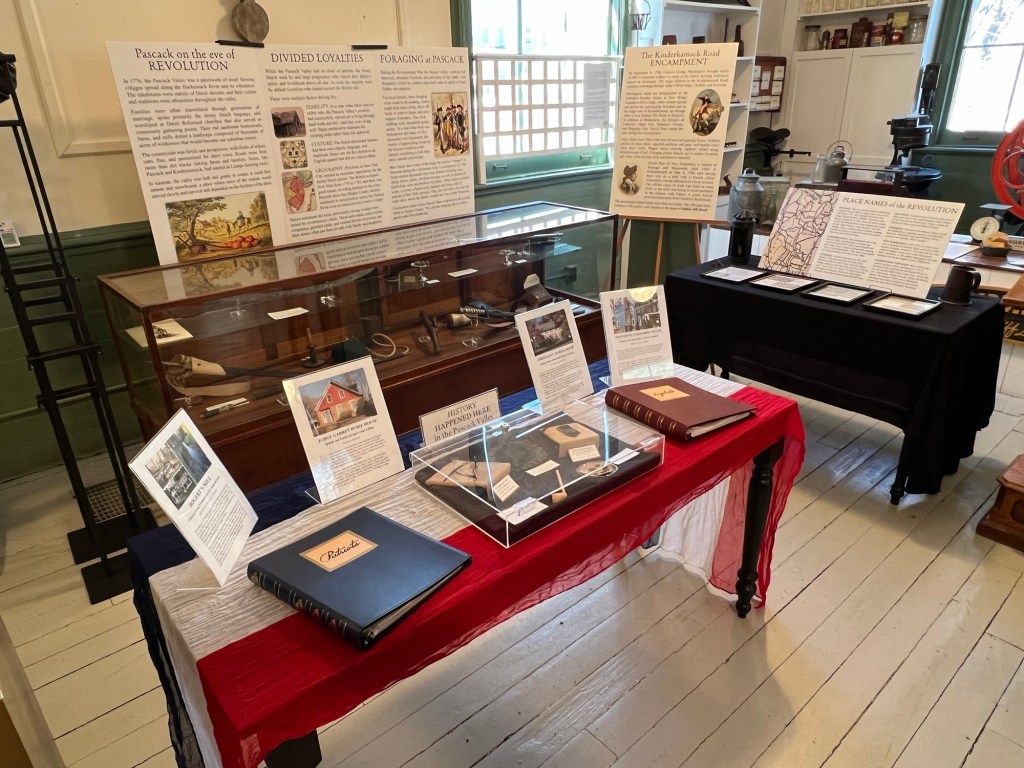
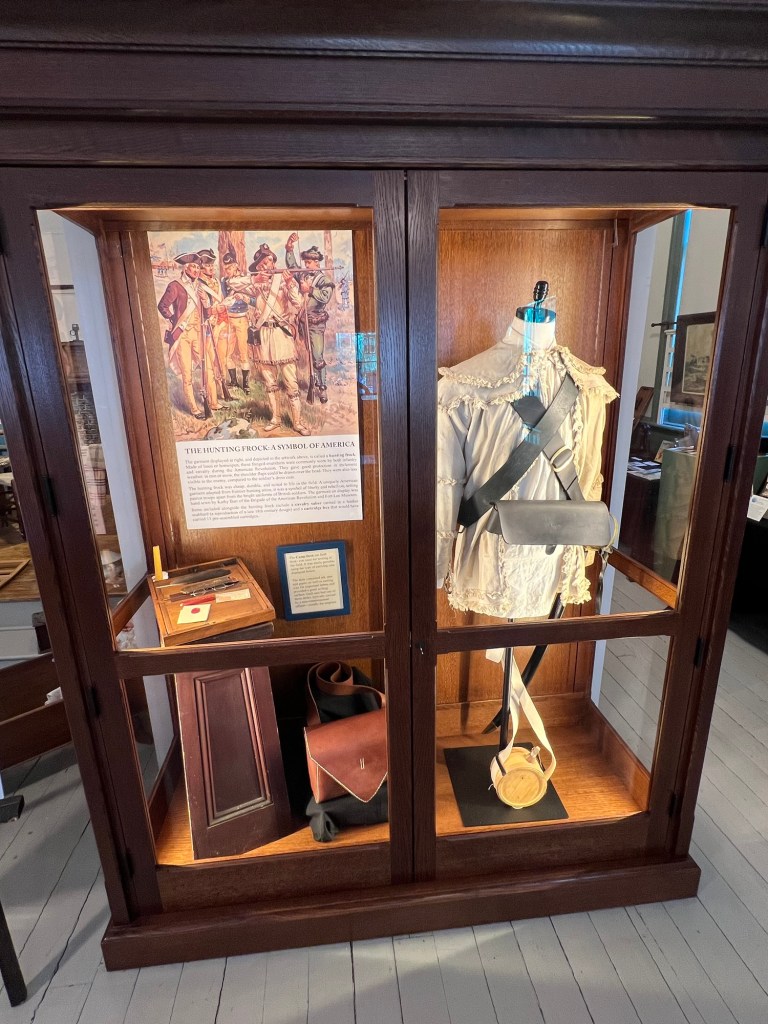
In 2026, the museum was celebrating the ‘250th Anniversary’ of the Revolutionary War and had an exhibition of artifacts from the Pascack Valley.
The ‘250th Anniversary’ of Revolutionary War
This included all the stops that General Washington made in Bergen County, battles and confrontations with British soldiers and family battles by members who were loyalists and patriots.
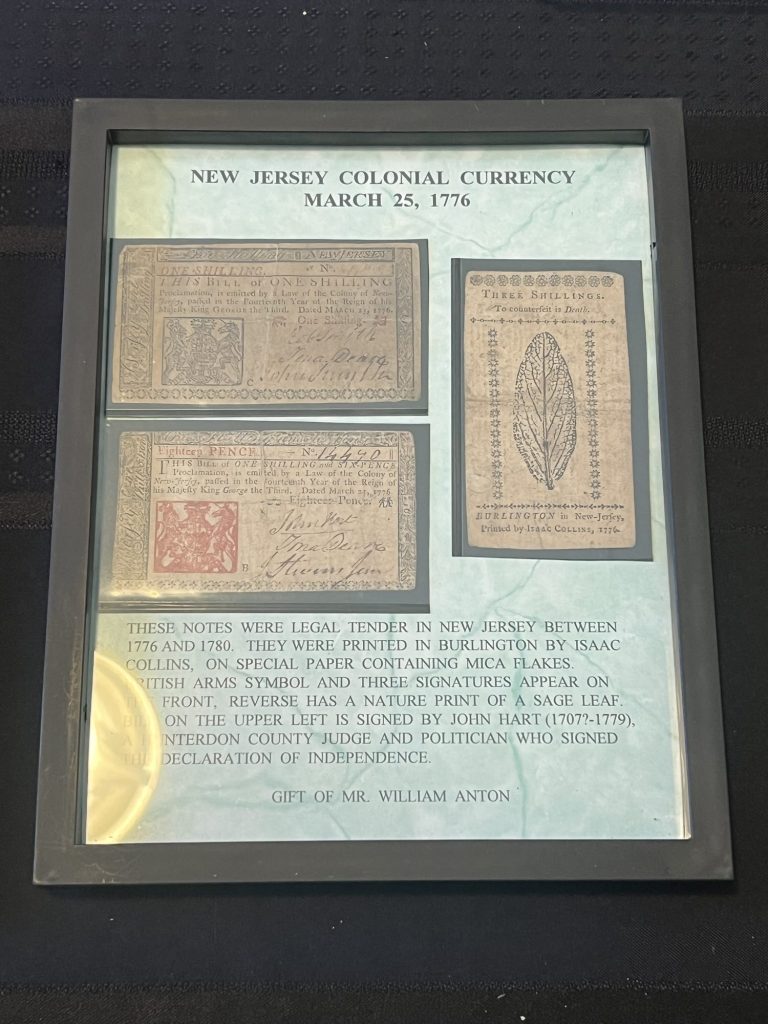
The currency of the war years
The exhibitions shows New Jersey’s contributions to the war effort. This part of the exhibition has Colonial currency from New Jersey.
New Jersey Colonial Currency
The full exhibition of the ‘250th Anniversary’ of the Revolution War
Uniforms and accessories of the War years
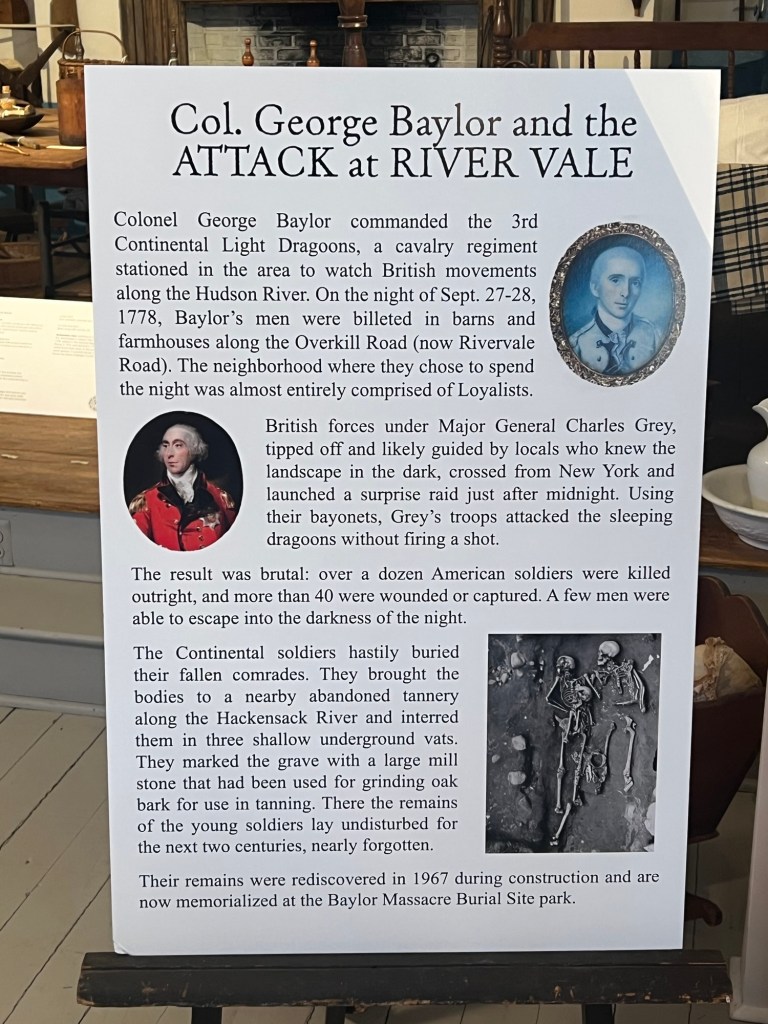
The Baylor Massacre attack
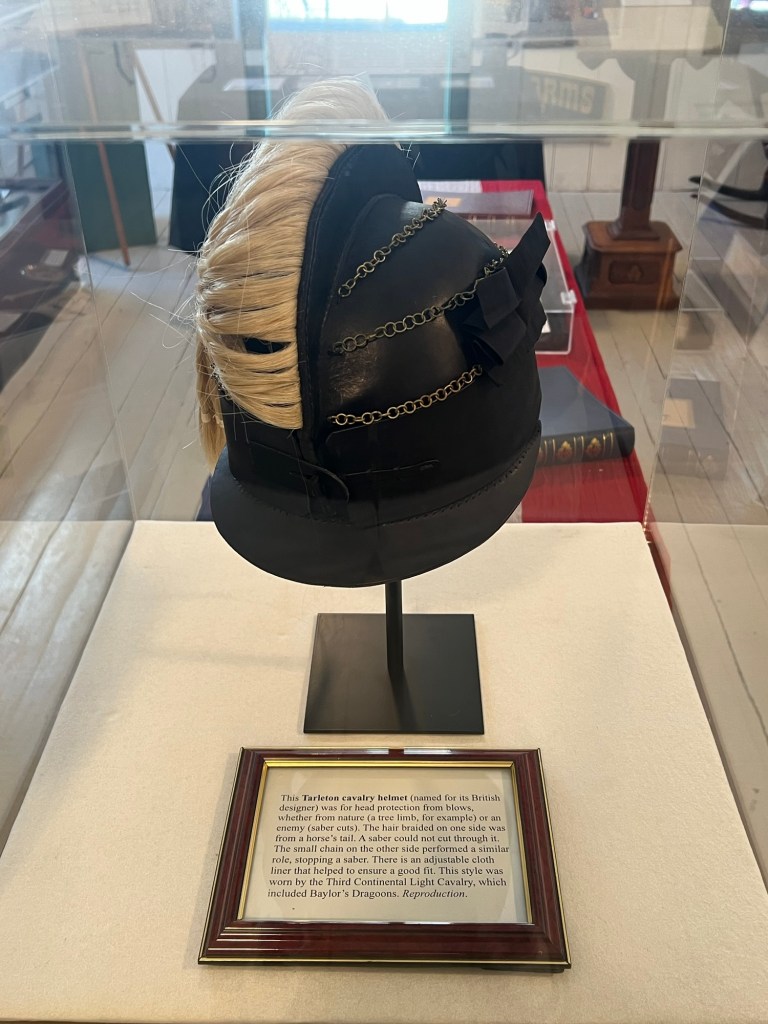
The Tarlatan Calvary helmet
The Lenape artifacts from that era
Membership Opportunities:
Preserving and disseminating local history is a labor of love when you become a PHS member. It is a partnership between you and your fellow members. We encourage you to think about volunteering at some level at the museum or its events. Check out the volunteer opportunities below and give us a call if you would like to participate in any of them.
Docent: Act as a guide when people visit the museum. A simple one-day training session is all it takes.
Researcher: Do you like to wander through books and archives searching for answers to questions?
Archivists: Preserve and catalog the history of the Pascack Valley.
Educators: Work with youngsters and licensed teachers at Society events.
Tech Savvy: Volunteer your time to help with our website or graphic design.
Handy Helpers: Do you like to repair things? Can you sew, do carpentry? This might be for you.
*Disclaimer: Information on Volunteer and Membership opportunities are taken directly from the Pascack Historical Society Museum pamphlet. Most of the descriptions of the displays is what I was able to see in my short time visiting. The museum has a treasure trove of items to look at in detail.
The Reformed Dutch Church with its Colonial cemetery and the Wortendyke Barn is right down the road so take a few hours to explore the area. The members of the Wortendyke family are buried in the church’s cemetery.
Visit from Bergen Community College for the Bergecco- Parc Consulting Inc. on April 9th, 2025: for the ‘Bergen 250’ project:
The project we created for the “Bergen 250: the 250th Anniversary of the Revolutionary War” that was created:
As part of my International Marketing class, I took my students to visit the three sites for our project on the ‘Bergen 250’:
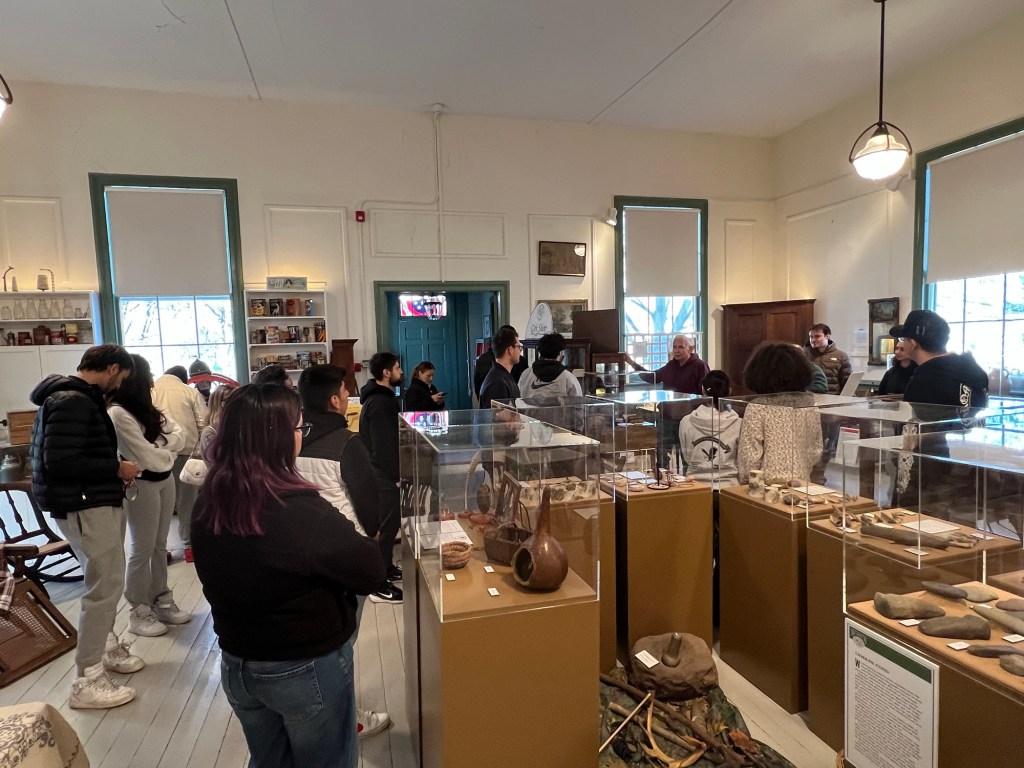
The students toured the museum with the assistance of the Museum’s Board members
As part of the assignment for our ‘Farm to Table Dinner’, the project starts here with a Cocktail Party and tour of the museum. The back room of the museum was where the party takes place and then the guests would tour the museum before heading to dinner at the Wortendyke Barn down the road.
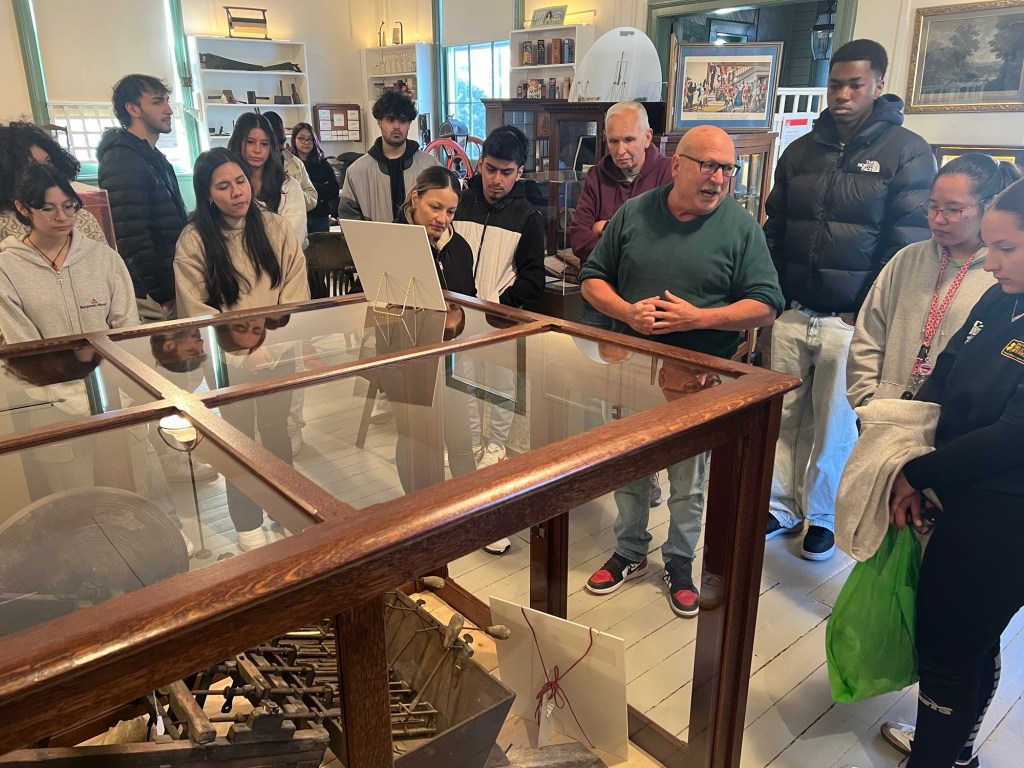
Peter Meany, the First Vice President of the Board explaining the Wampum machine to the students. This form of Native American currency is the only machine in the world like it and is a rare artifact.
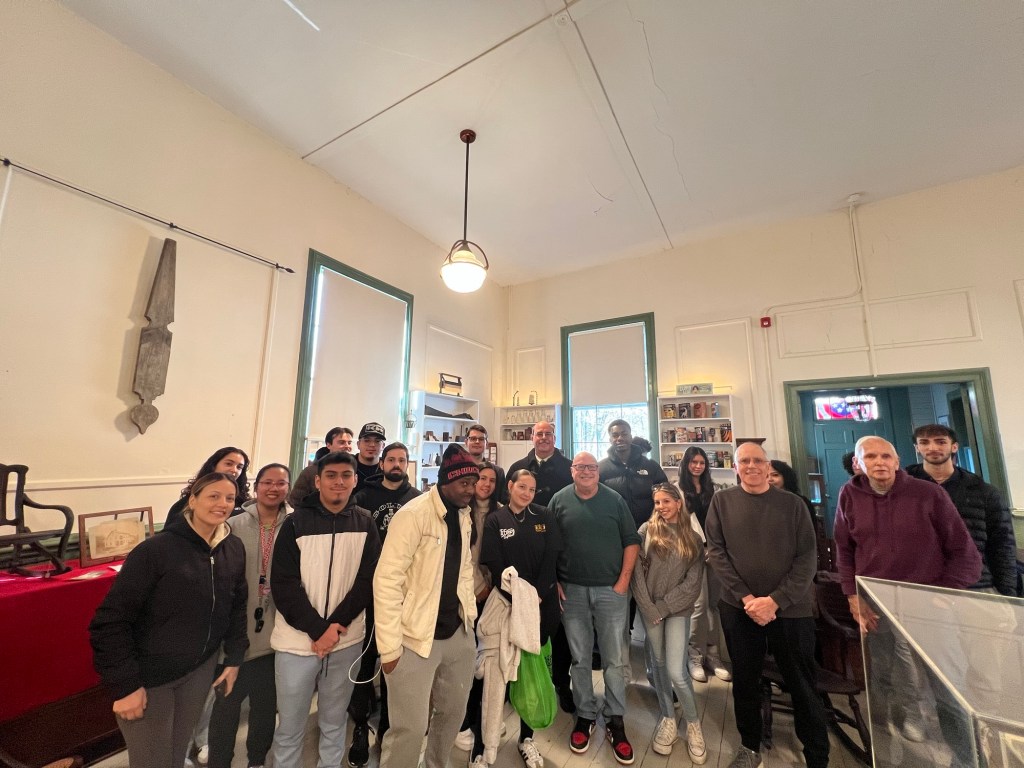
Our Team group picture at the Pascack Valley Historical Society with members of the Museum’s Executive Board Peter Meany, Ralph Donnell Jr. and Christopher Kersting.
We want to thank the Board for taking time out of their busy schedule to support the students on this project.
































































 Visiting a Museum: The Unique, Unusual, Obscure and Historical