Tag: Carl Schurz Park

Carl Schurz Park                                                   East 86th Street and East End Avenue                                    New York, NY 10028

Carl Schurz Park East 86th Street and East End Avenue New York, NY 10028

Carl Schurz Park

East 86th Street and East End Avenue

New York, NY  10028

(212) 459-4455

https://www.nycgovparks.org/parks/M081

https://www.nycgovparks.org/parks/carl-schurz-park/history

Open: Sunday-Saturday 6:00am-12:00am

Admission: Free

My review on TripAdvisor:

https://www.tripadvisor.com/Attraction_Review-g60763-d312015-Reviews-Carl_Schurz_Park-New_York_City_New_York.html

I have been visiting Carl Schurz Park many times while walking the neighborhood for my project, “MywalkinManhattan.com”. You can see the entries from Days One Hundred and Ten, Six, Four and Two. I also visited again when touring Gracie Mansion for this blog, “VisitingaMuseum” (see write up under Gracie Mansion).

Gracie Mansion at East 88th and East End Avenue

The Gracie Mansion tour should not be missed:

https://wordpress.com/post/mywalkinmanhattan.com/7156
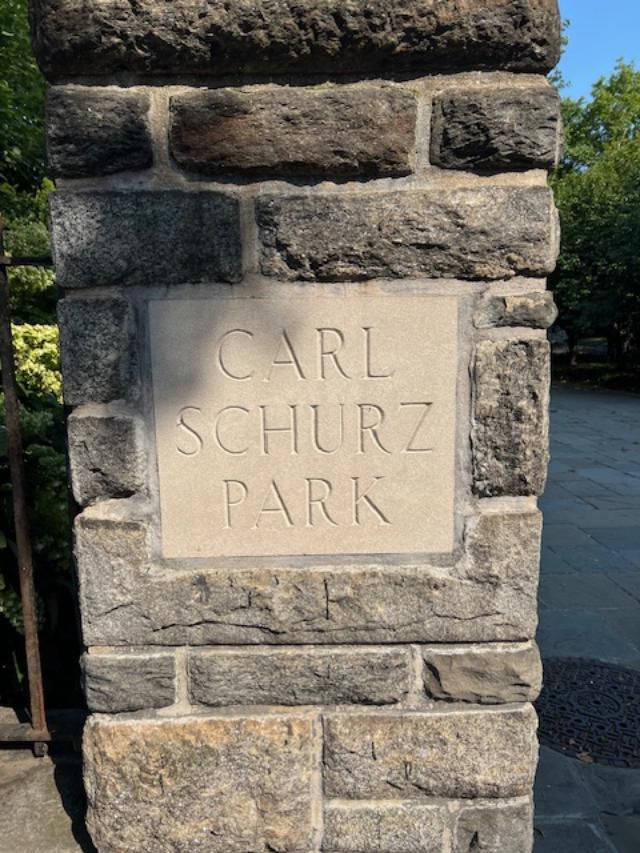
The entrance to Carl Schurz Park in the Summer of 2024

The park is such a nice place to relax in the warmer months. Being so close to the river in the winter months when the wind kicks in from the river can be brutal. In the Spring and Summer, it is one of the nicest parks to just sit and relax in. During the day, it is fun to watch the kids play in the large playground in the middle of the park. On the weekends the place is packed with kids, parents, and nannies all vying for space.
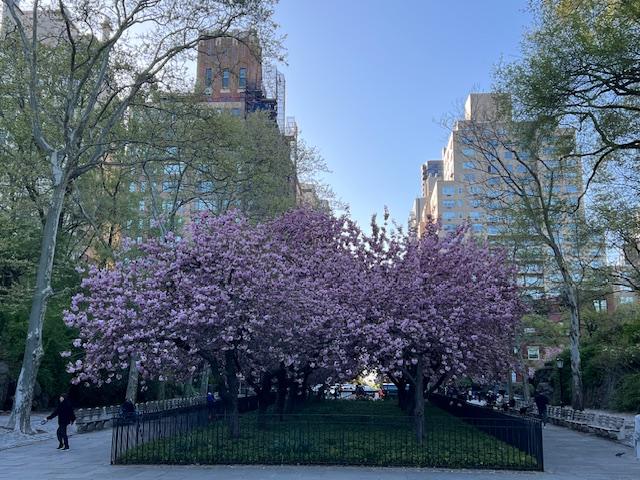
The Cherry Blossoms at the entrance of the park.
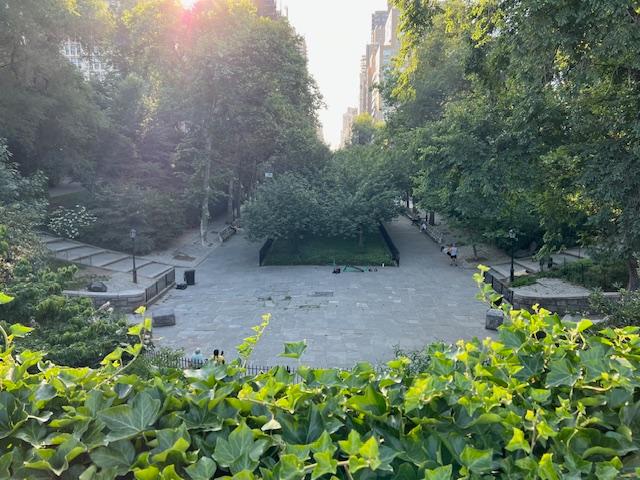
The same spot on the first day of Summer 2024

The gardens are beautiful and are very nicely maintained between the City and the Carl Schurz Park Association, who I have seen members weeding, landscaping and planting in the park during the times of my visits. It is relaxing to just sit by the river and watch the river go by and the boats sail by in the warmer months.

The entrance to the park.

The flowers return during each part of the season almost on cue and the park is awash with colors of daffodils, tulips, irises and tiger lilies. There are many flowering plants in the summer that add to the rainbow of colors that accent all the trees. It is a nice place to sit and read a book while watching people walk their dogs.
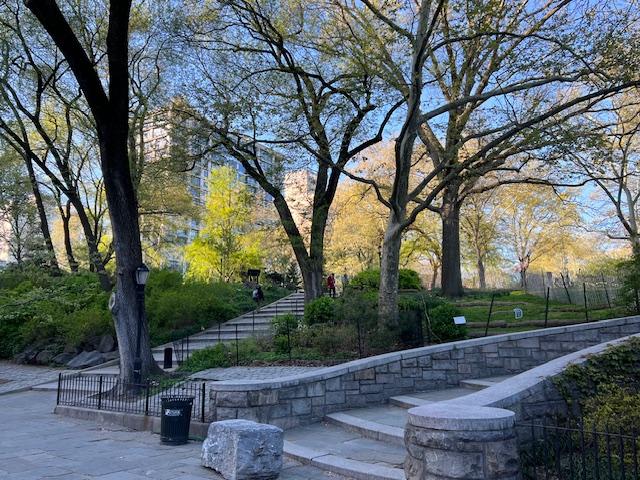
The back of the park in Spring 2024.

At twilight, it is fun to watch the lights go on in Queens across the river and the whole city come to life again in the evening. In the warm summer months, the kids are playing in the park, residents have their dogs running around the Dog Run and you can hear the activity at Gracie Mansion. Trust me, security is tight in that section of the park.

The Tulip Garden at the back of the park.

The same garden in the Summer of 2024

The pathways by the playground in the Summer of 2024

The paths that line East 84th Street to York Avenue

The Polly Gordon Walk sign in the front gardens

The Polly Gordon Walkway in the Summer of 2024

This is a nice residential park to relax in when you visiting the Upper East Side.

The walkways in Carl Schurz Park in the Summer of 2024

The History of Carl Schurz Park:

Carl Schurz Park, named by the Board of Alderman in 1910 for the soldier, statesman and journalist Carl Schurz (1829-1906), overlooks the turbulent waters of Hell Gate. The first known Dutch owner of the land was Sybout Claessen, who was granted the property in 1646 by the Dutch West India Company. Jacob Walton, a subsequent owner, built the first house on the site in 1770. During the Revolutionary War, the Continental Army built a fort surrounding the Walton residence to guard the strategic shipping passage of Hell Gate. After the British attack on September 8th, 1776, the house was destroyed and the Americans were forced to retreat from the fort, which the British retained until the end of the war in 1783.

Looking at the park from the East River walkway.

The land was purchased from Walton’s heirs in 1798 by Archibald Gracie, a Scottish shipping magnate. He built a mansion there in 1799, where his illustrious guests included future United States President, John Quincy Adams and future French King Louis Phillippe. The estate, sold by Gracie in 1819 was acquired by the City from the Wheaton family in 1891. The first home of the Museum of the City of New York from 1924-32, the mansion served as the official residence of New York’s mayor’s since Fiorello LaGuardia moved there in 1942.

Gracie Mansion during my tour of the mansion in 2025

The southern portion of the park was set aside by the City as East River Park in 1876. The former Gracie estate was added in 1891 and a new landscape design by Calvert Vaux and Samuel Parsons was completed in 1902. Maud Sargent re-landscaped the park in 1939 when the East River Drive underpass was under construction. Charles Haffen’s sculpture of Peter Pan, created in 1928 for a fountain in the lobby of the old Paramount Theater was installed in the park in 1975.

Carl Schurz Park in the Summer

The park name honors Schurz, a native of Cologne, Germany. It was strongly supported by the large German community of adjacent Yorkville. After emigrating to the United States in 1852, Schurz quickly made his reputation as a skilled orator and proved to be instrumental to Abraham Lincoln’s 1860 election campaign. His most significant political offices were that of United States Senator from Missouri (1869-1875) and Secretary of the Interior (1877-81) during the Hayes administration. In later years, Schurz was editor of the New York Tribune and an editorial writer for Harper’s Weekly. Schurz is also honored by Karl Bitter’s statue of 1913, located in Morningside Drive and 116th Street.

Carl Schurz

Carl Schurz

https://en.wikipedia.org/wiki/Carl_Schurz

Recent improvements include rebuilding of the stairs, the complete restoration of the playground and the opening of Carl’s Dog Run. These and other projects, including the planting of flowers, have been accomplished through a partnership between the Parks and the Carl Schurz Park Association, which has demonstrated the community’s commitment to restoring, maintaining and preserving this park since it formed in 1974.

(NYC Parks Official Website)

My write up on VisitingaMuseum.com:

https://wordpress.com/post/visitingamuseum.com/2182

Carl Schurz Park in the Spring.

The Gardens that face the East River and Hell Gate were in full bloom on the first day of Summer 2024

The gardens that line the esplanade on the East River
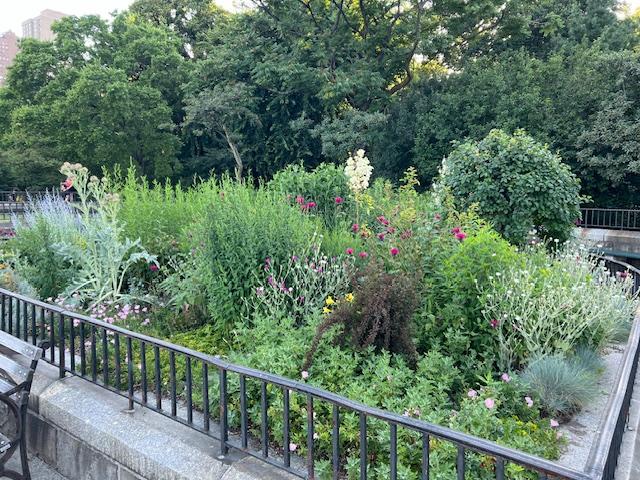
The gardens that line the esplanade on the East River

The Friends group that maintains the gardens does an excellent job with the planting and maintenance of the gardens.

Gracie Mansion Carl Schurz Park East 88th Street and East End Avenue New York, NY 10128

Gracie Mansion

Carl Schurz Park

East 88th and East End Avenue

New York, NY  10128

(212) 570-4773

Hours: Mondays only-10:30am. 12:00pm and 1:30pm. See their website at www1.nyc.gov/site/Gracie/visit/visit page or gracieinfo@cityhall.nyc.gov

http://www.historichousetrust.org

https://www.nycgo.com/events/gracie-mansion-tours

https://www.graciemansion.org/

Admission: $10.00

TripAdvisor Review:

https://www.tripadvisor.com/Attraction_Review-g60763-d136688-Reviews-Gracie_Mansion-New_York_City_New_York.html?m=19905

Hours: There are free house tours at 10:30am, 12:00pm and 1:30pm on Mondays only. Check their website for availability. This is one of the few rare treats of New York if you can snare one of the tours of Gracie Mansion. It is a really interesting tour of the first floor rooms and entrance to the gardens of this historic home and the Mayor of New York City’s residence.

This was really a wonderful tour of the mansion given by a woman who has been a docent for twenty years and has seen the changes of the administrations. We went room by room and discussed how the Gracie’s then the Wheaton’s and the other families who lived here use the house until Robert Moses, the great City Planner, decided this should become the Mayor’s residence.

The front of the mansion at the start of the tour in the Summer of 2025

The formal gardens in front of the house in full bloom

The formal gardens to the side of the house near the parking lot

We started the tour on the front porch of the old Gracie Mansion

The tour consists of the first floor only and you can not take pictures inside with the exception of the Wagner Ballroom. We saw the formal entrance, the Living Room, Library, Dining Room and then the hallway leading to the front of the house to the Susan Wagner Ballroom, the newest extension of the house (the front section is the original section of the home built during the Gracie period).

The front rooms you are not allowed to take pictures so as you tour the Living Room, the Dining Room and Parlor rooms, you can not take pictures. When we left the older section of the home and entered the hallway to the Susan Wagner Ballroom added in the Wagner Administration, then you could take pictures in this room only (outside the gardens).

The inside of the Susan Wagner Ballroom

The Chandelier in the ballroom was from an old mansion downtown

The Bayard Fireplace from the Bayard Mansion once located in lower Manhattan

The Wagner Ballroom details

History of the Mansion and Gracie Family:

Gracie Mansion, built in 1799 by shipping merchant Archibald Gracie, is the last of the elegant county estates that once lined Manhattan’s East River shore. Gracie hosted elegant dinner parties at his country estate for visitors including Alexander Hamilton, Rufus King, Joseph Bonaparte and Washington Irving.

Archiebald Gracie

Archibald Gracie

https://en.wikipedia.org/wiki/Archibald_Gracie

Major losses during the years after the War of 1812 forced Gracie to sell his estate in 1823 to Joseph Foulke. In 1857, the Mansion was bought by Noah Wheaton. After Wheaton’s death in 1896, the City of New York appropriated the estate, incorporating ts 11 acres of grounds into the surrounding park that was renamed Carl Schurz Park in 1910.

After years as a comfort station and ice cream stand, Gracie Mansion became the first home of the Museum of the City of New York. When the museum moved to a larger building, Parks Commissioner Robert Moses convinced  City Authorities to designate the Mansion as the official residence of the Mayor. In 1942, Fiorello H. La Guardia moved into Gracie Mansion.

In 1966, the Mansion was enlarged with the construction of the Susan E. Wagner Wing, which includes a ballroom and two additional rooms. Under the guidance of the Gracie Mansion Conservatory, major restorations to the Mansion were undertaken between 1981 and 1984 and in 2002.

The 2002 restoration transformed Gracie Mansion into the “People’s House” and increased accessibility to the public and City agencies. First Lady Rosalyn Carter and South African President Nelson Mandela are among the many notable visitors.

Gracie Mansion II.jpg

Gracie Mansion at the turn of the last century

Gracie Mansion is owned by the New York City Department of Parks & Recreation, operated by the Gracie Mansion Conservatory and is a member of the Historic House Trust.

(Gracie Mansion Pamphlet)

Gracie Mansion Conservatory:

After years of neglect and continual erosion of any trace of history, Mayor Edward I. Koch and founding Chair Joan K. Davison, established the Gracie Mansion Conservatory in 1981. as a public./private partnership.. Under its guidance, the first major restoration of the house was undertaken between 1981 and 1984. Besides creating a connection between  the original house  and the Wagner Wing, this effort included the display of art, furniture and decorative objects either  purchased or more often, lent by the City’s many cultural institutions. The Charter mandate of the Conservatory was not to seal the residence in the past (especially as there is no record of how it originally appeared inside) but to protect its history while accommodating change and progress by successive generations of New Yorkers.

The Gracie Mansion Conservatory continues to operate as a charitable organization dedicated to enhancing and enlivening its namesake. Its mission is to preserve and honor Gracie Mansion’s Federal Period origins while also making sure it remains as forward-looking and welcoming as the city it serves. An increasing  share of this work focuses on exploring the many different people and cultures whose contributions to Gracie Mansion and the New York at large gone unrecognized for far too long. The Conservatory also works to improve the surrounding landscape and gardens and provide public programming and educational services, including publications and tours for local school students, especially those studying in New York State’s 7th grade social studies curriculum.

(Gracie Mansion Conservatory pamphlet)

Disclaimer: This information was taken from the Gracie Mansion Conservatory pamphlet press kit given on my tour and I give the Conservatory full credit for it. Please check the website for tour information or call them to find out about group tours.

It really is a great tour!