Tag: Bergen 250

Old North Reformed Church                                                                120 Washington Avenue                                                               Dumont, NJ 07628

Old North Reformed Church 120 Washington Avenue Dumont, NJ 07628

Old North Reformed Church

120 Washington Avenue

Dumont, NJ 07628

(201) 385-2243

https://oldnorth.church/

https://www.facebook.com/oldnorthdumont

Open: Sunday 9:00am-1:00pm/Monday-Friday 10:00am-1:00pm/Saturday Closed

My review on TripAdvisor:

The Old North Church at 120 Washington Avenue

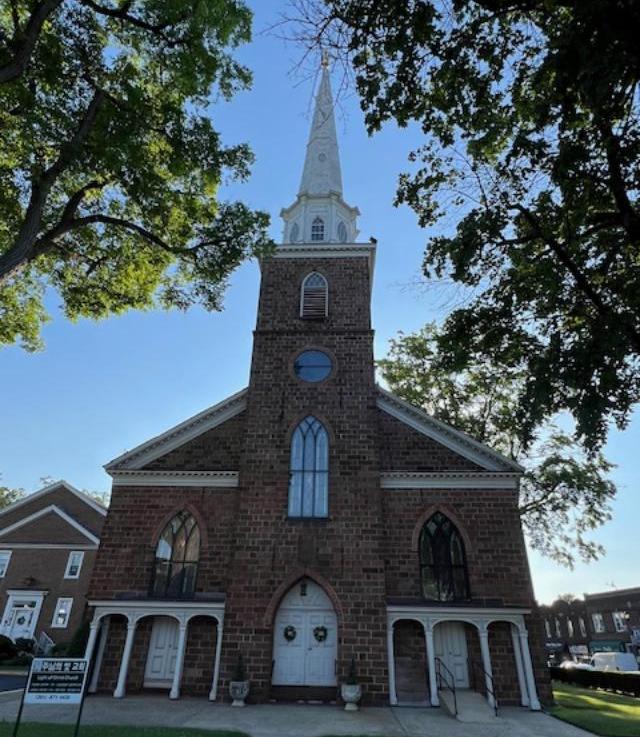
The Old North Church in Downtown Dumont, NJ is one of a series of Dutch Reformed Churches in Bergen County. This stately church still operates on a weekly basis and services are held on Sunday mornings. The cemetery to the back of the church is historic and interns some of the original families of Bergen County, NJ.

The inside of the church

The inside of the church is a well-maintained and the seating is full of the original family pews which can be quite small for a tall person through a hour long service. The church has a wonderful organ used for hymes in service.

The inside pews of the church

The inside of the church

The inside alter at the front of the church

I attended a wonderful church service here recently that was very welcoming and engaging.

The History of the Church:

Old North is a Protestant Church affiliated with the Reformed Church in America. It is the oldest Protestant denomination with a continuous ministry in the United States and is a member of the Presbyterian/Reformed Family of Churches.

The actual Old North congregation dates back to 1724 and was organized in that year. A congregation of the settlers in what was known as Schraalenburgh (Dutch for “low ridge”) was formed at the time under the care of the “Church on the Green” in Hackensack.  In 1725, Schraalenburgh Church built – stood about a city block east of the present South Church, Bergenfield. It was octagonal in shape. The  Parsonage and minister for the church were located in Hackensack.

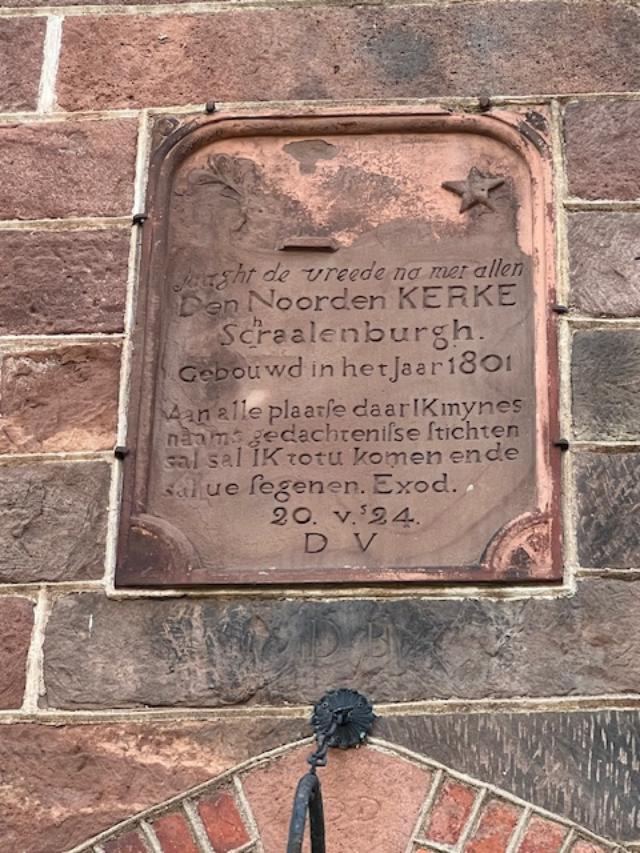
The historic sign of the church’s building

The Church Timeline:

(Taken from the Old North Church website)

1750 (Approximately) Congregation gradually divided into two – under the  leadership of two pastors both meeting in the same building.

1799 One congregation left and built the present South Church. The  second congregation continued to worship in the old church for  about two years.

1801 The second congregation built “North Reformed Protestant Dutch  Church of Schraalenburgh” on the land given by Major Isaac Kipp.  The building was erected by Peter Durie of New York, who later moved to Tenafly to be near the project

The inscription over the front door, in Dutch, reads, 

“Let peace come quickly to all. The North Church at Schraalenburgh built 1801.”

“In all places where I record my name, there shall I come to thee and bless thee.” Exodus 20:24 
1833 Services in Dutch entirely discontinued. 

1834 Parsonage (Pastor’s house) was built.

1836 Stoves were installed in four corners of Sanctuary.

1846 Sunday School is organized and met in the balcony. 

1859 Sanctuary was enlarged eighteen feet. The side walls now had four windows instead of the original three. The back west wall was reconstructed with red brick and the red sand stones that were on the west wall and are now part of the sides blending with the  original stones.

1868 The first furnace was installed in the Sanctuary.  The clear glass panes in the Sanctuary were replaced with colored stenciled glass from Germany.

1888 Organ was installed in front of Sanctuary (attributed to W.H. Davis) powered by a water motor.

1894 Town name was changed from Schraalenburgh to Dumont in honor of Old North parishioner and 1st Mayor, Dumont Clarke.

1911 Town clock installed in the steeple. 

1912 The first Church House built. 

1918 World War I, Church House used almost exclusively by soldiers from Camp Merritt.

1919  Camp Merritt Town Memorial monument placed on church property.  The flagpole (since replaced) made from artillery gun barrels was moved from Camp Merritt to church yard.  

Dr. John Spring began his ministry and served for 34 years. He was formerly Chaplain at Camp Merritt and saw the congregation through the difficult years of the Great Depression. 

During his ministry, Old North became mother church to a number of Reformed churches in  surrounding towns. Mrs. Spring served as organist & choir director.

The entrance to the church from Washington Avenue

1923  Organ rebuilt by Clark & Fenton, Nyack, NY., electrified and moved to the north wall.

1925  Old North charters Boy Scout Troop 64. 

1926  Steeple hit by lightning. The first church house burned.

1949  Old North charters Cub Scout Troop 131.

1954  Major repairs and Sanctuary redecorated.

1962  New Church House dedicated.

1969  Church steeple completely renovated and the clock was removed.

1972  New Tellers 26 rank pipe organ installed. The Choir organ division was given in honor of Mrs.       

          Spring. Sanctuary was redecorated.

1974  Old North celebrates its 250th Anniversary. New windows installed in Church House.

          Dr. Albert Van Dyke retires after 16 years of service.

1980  Complete renovation of downstairs kitchen.

1983  Reverend Richard Vander Borgh becomes 13th Pastor.

1990  The End of the Earth Church Korean Congregation shared usage of church.

1996  150th Anniversary of Sunday School.

1999   275th Anniversary Celebrated.

2000   Air conditioning installed in Sanctuary.

2001   200th Anniversary of Church building.  Church steeple painted.

2002   Cross replaces Reformed Church in America Coat of Arms in the sanctuary chancel.

2006   Light Alliance Korean Church of NJ shared usage of church.

2012   3-year major renovation of steeple and structures are complete.

2013   Installation of a state of the art Carillon–- sending forth music and hymns into the community.

2014   Reverend Richard Vander Borgh retires after 31 years.

2015   Reverend Susan E. Kerr installed as the 1st woman and14th minister of Old North Reformed     

           Church.

2017   Stair lift installed at Chapel entrance to make the Church House and the sanctuary accessible    

           for all. Handicapped bathroom and baby changing station are installed.

2018   Ye Old North Thrift Shoppe community ministry begun.          

           Community Thrift Shoppe begun in Church House ground floor.v. Richard and 

           Joan Vander Borgh. 

           Community Thrift Shoppe begun in Church House ground floor.

           The Light of Christ Church shares usage of space.

2019   Electronic LED sign installed. 

           Memorial Plaque dedicated for new Auditorium chairs.
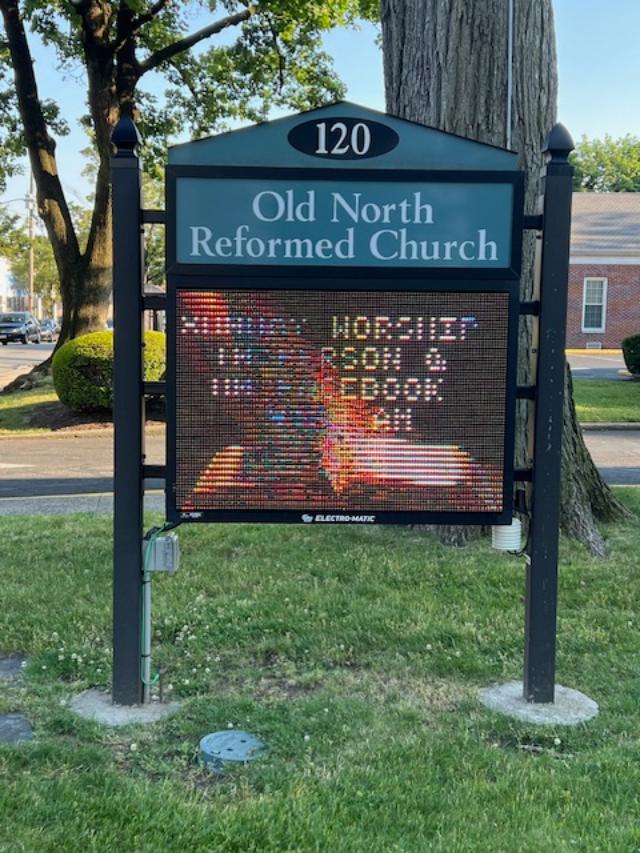
The electronic sign in the front of the church.

2021   Legacy Project Renovations.

My Team Project on the Historical Cemeteries and Graveyards of Bergen County, NJ:

https://visitingamuseum.com/tag/bergecco-parc-consulting-inc-graveyard-and-cemetery-team

The Historical Cemeteries and Graveyards of Bergen County, NJ:

https://visitingamuseum.com/tag/historic-cemeteries-of-bergen-county

The Old North Church Graveyard:

The church graveyard dates back to some of the church has some of the original families of Bergen County buried in their yard. The graves go all the way up to 1911 (Wiki). The graveyard itself dates to before the Revolutionary War and holds the resting place of many veterans of the Revolutionary, War of 1812 and Civil War.

An Eagle Scout created a project around the graveyard and posted who was buried where while fixing the graveyard up. Now you can walk amongst its worn tombstones and pretty much know who is buried where in the lot.

The signage for the Old North Church Cemetery
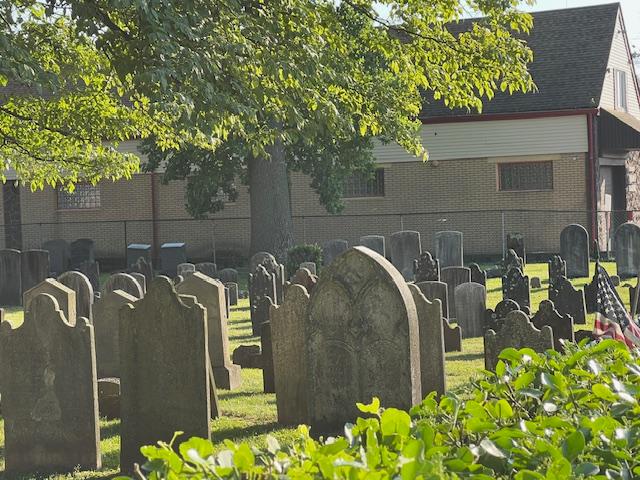
The graveyard contains some of the old families in Bergen County

Some of the oldest graves in the cemetery

Old North Church

Historical sign

The historic cemetery

The historic graveyard

The Church cemetery/graveyard sign

The historic map of the cemetery

Family grave locations

My International Marketing class at Bergen Community College recently did a complete study and marketing plan for the “Bergen250” on the Revolutionary War veterans buried at graveyards and cemeteries all over Bergen County, NJ:

The project:

For a Mapping of all the historic graveyards and cemeteries, I had the students visit all the sites that the Daughters of the American Revolution had researched and I had the students find all the locations, photo the tombstones and create a bio on each of the veterans. I enclosed a copy of their work above.

My blog on the historic graveyards and cemeteries of Bergen County:

https://visitingamuseum.com/tag/historic-cemeteries-of-bergen-county

The full graveyard from the back

The Demarest family plot

Van Voorhies family plot

The Blauvelt/Zabriskie family plot

The grave of Thomas Eckerson

The Banta/Demarest Graves of Wearth and Margaret Banta

The grave of John Lozier, the Revolutionary War veteran

The grave of Issac Kipp, a Revolutionary War Veteran

The grave of Jacob D. Demar, a Revolutionary War veteran

The graves of the Nicoll family, Isaac and Deborah Woodhull Nicoll

The grave of Isaac Nicoll, a Revolutionary War Veteran

The Blauvelt family graves

The graves of the Bogart/Dumott familie

The back part of the graveyard

The veterans of the Revolutionary War graves

The Old North Reformed Church is an interesting place to visit at any season.

The Hopper-Goetschius Museum                                                   363 East Saddle River Road                                                          Upper Saddle River, NJ 07458

The Hopper-Goetschius Museum 363 East Saddle River Road Upper Saddle River, NJ 07458

The Hopper-Goetschius Museum

363 East Saddle River Road

Upper Saddle River, NJ  07458

(201) 327-8644

Open: Please check website for seasonal openings

http://www.usrhistoricalsociety.org

https://www.facebook.com/pages/Hopper-Goetschius-House/131274536912683

TripAdvisor Review:

https://www.tripadvisor.com/Attraction_Review-g46882-d14048029-Reviews-Hopper_Goetschius_Museum-Upper_Saddle_River_New_Jersey.html?m=19905

The Hopper-Goetschius House Museum

Northwest Bergen History Coalition History Day/Summer Open House 2026:

I visited the Hopper-Goetschius House Museum during the 8th Annual Northwest Bergen History Coalition History Day. I had never been here before and it is a real treat. There are many buildings on the property to visit on top of the house and the fact that this was someone’s house into the 1980’s is pretty interesting.

The historic marker in front of the house

The Hopper property in July 2026 for the Weekend Open House

The Gris Mill wheel

The historical tree stump

The historical plaque

The property in the Summer of 2026

Christmas Open House December 2019:

The house still holds many secrets. The best part of the tour of the house is the secret stairs in the kitchen that lead to the old second floor. This  can only accessed behind a panel that leads to a narrow set of steps. You can see it from the new second floor from the top floor.

I attended Holiday Celebration on December 8th, 2019 and it was a beautiful sunny day for an outside event.  It was a really nice afternoon. They had a visit with Santa at the Dutch barn which was decorated with trees surrounding him and presents and a decorated Dutch sleigh. In the schoolhouse, there were all sorts of games and talks to enjoy.

hopper-goetschius-museum-christmas.jpg

Santa in the Dutch Barn at the Hopper museum

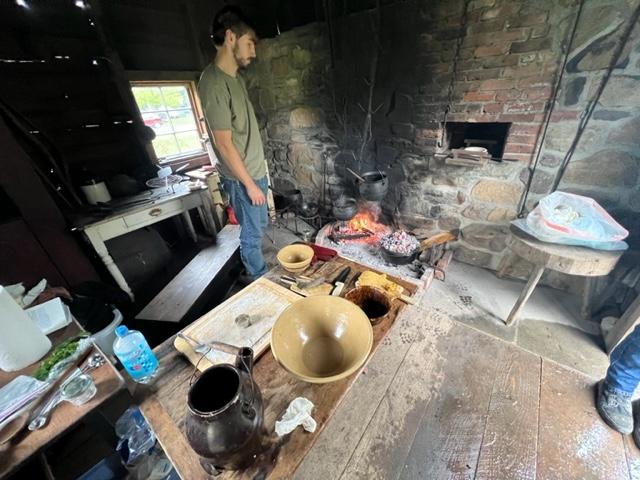
In the outside kitchen, there were chestnuts and fresh popcorn being made that you could munch on while walking around enjoying the festivities and the smells of the cooking food were mouthwatering. The gentleman doing the cooking was doing a demonstration on how the food was cooked and the amount of time it took to make things.

hopper-goetschius-museum-christmas-ii.jpg

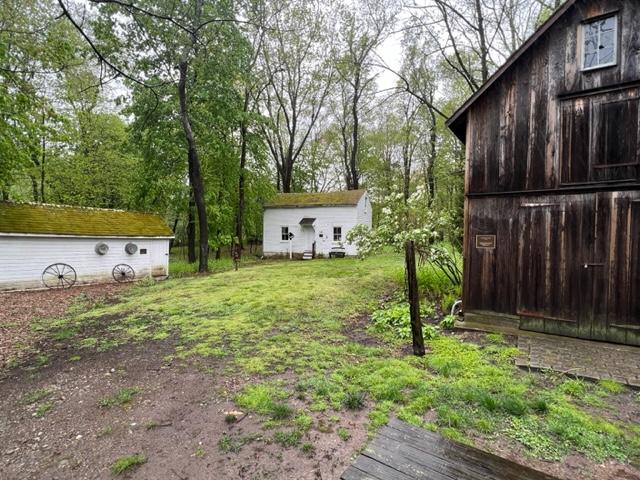
The outside buildings still had a bit of snow left

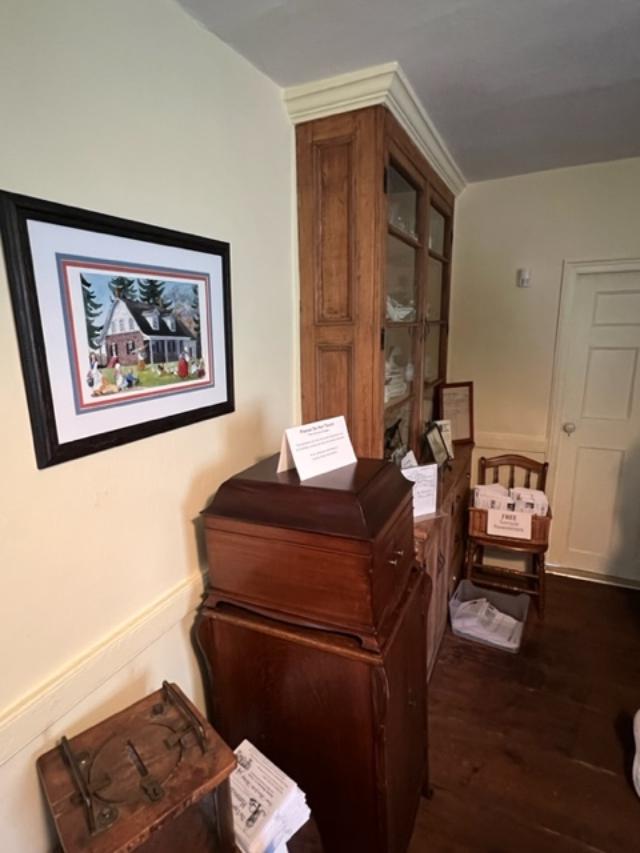
The inside of the house was decorated for the Victorian holidays with a nicely decorated tree in the Living Room and garland all over the place. There was a Victorian music box playing songs and a reading of “The Night Before Christmas” being read on the hour.

In the kitchen of the oldest part of the house, they served hot cider and homemade Christmas cookies of all kinds. They were also selling fresh homemade jam that one of the members made. The kitchen was decorated for the holidays as well. There was an open tour of the house and it was fun to see the upstairs decorated with all sorts of Victorian toys and dolls. The fee was a $5.00 donation and it happens every first week of December at the site.

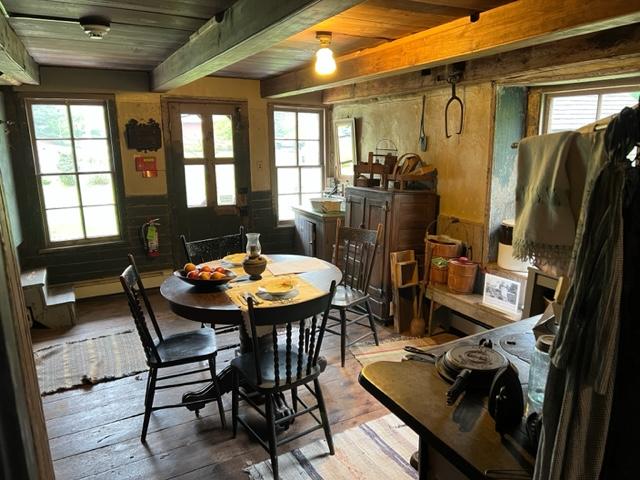
The Hopper House kitchen

The house is a treasure trove of period furniture and family items and on the property there is a schoolhouse, a barn, a blacksmith shop and an outhouse. During the Summer months, the house is open for special tours on the weekends and in the Fall, they have a Harvest Festival and Christmas holiday events. The house is run and operated by the Upper Saddle River Historical Society.

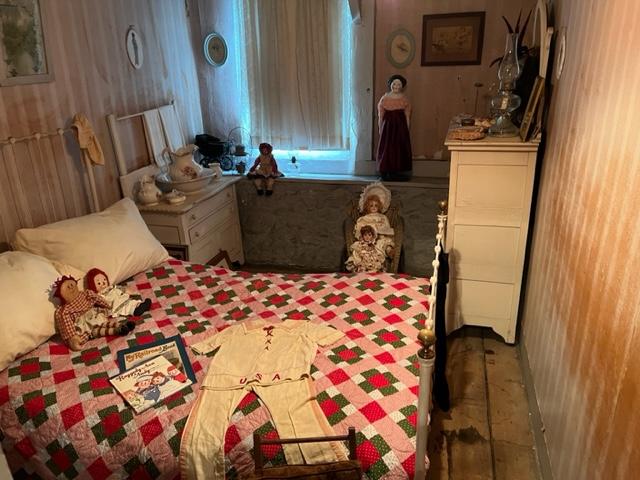
The antique toys in the upstairs bedroom

In April of 2023, I returned to the Hopper-Goetschius House for the Northwest Bergen History Coalition Day for the event. It was a gloomy day with mist and rain but that did not put a damper on the event. There were lots of activities going on in each of the buildings.

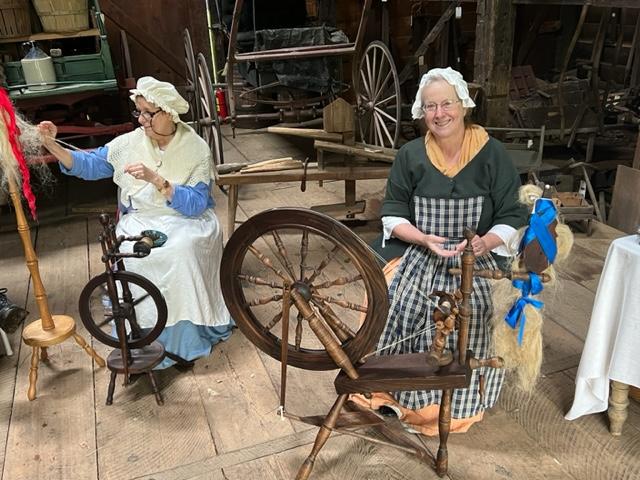
My first stop was at the barn where the ladies were doing a demonstration on spinning thread and we had a conversation of where the expression “Pop goes the weasel” came from (from the spun threat reaching its max and then the machine made a ‘pop’ sound). The ladies were demonstrating the way women spun yarn and made clothes and the work that it entailed.

The yarn spinning demonstration at the Hopper Barn

The ladies explaining how the spinning works

‘Pop goes the weasel’, the weasel at the Van Riper-Tice Barn

When I left the barn, I went over to the school house building to see what was going on. A very bored volunteer took up all my time and would not leave me alone. She had to read from a script and take me all over the house. I just wanted to get out of there. Thank God another person walked in so that I could escape and see the rest of the property.

The Ramsey House was moved to the property to save it from destruction and the society has done a good job transform it to a turn of the century classroom. This is a surprising display in many historical societies as I am sure that people have donated so much of their childhood mementos.

The Ramsey House schoolroom

The schoolroom

The teacher’s seat at the school room. Nothing has really changed.

The farm artifacts at the Ramsey House schoolhouse

After the tour of the Ramsey House, I took the tour of the main house again and its secrets. The Hopper House is a very interesting home as the owner did not want plumbing in the house. Up until 1963, she still used the well. She was forced by her nephew to get a modern bathroom. I thought this was strange that the woman did not want a bathroom. She still used the outhouse into the 1960’s.

The Hopper House kitchen

The home is decorated with all sorts of beautiful antique furnishes and decorations. The house is so well organized and the volunteers do such a nice job telling its story especially at the holidays. I visited all the rooms where the volunteers explained its purpose.

The bedroom upstairs

Bedroom Two

Bedroom Three in the upstairs loft of the house

My last part of the tour was visiting the Smokehouse right behind the house.

The Smokehouse during the Summer Open House

Inside the kitchen during the Open Kitchen

The inside of the Smokehouse

The volunteers were cooking corn bread, homemade potato soup and biscuits in the fireplace. It was interesting to see how food was cooked on the farm in the days before modern kitchens.

The two volunteers working there were so happy to see someone. They told me that no one wanted any soup. On a cold rainy and misty day, I was taking them up on it and it was really good! Talk about warming you up.

The Smoke House on the Hopper estate was cooking away that afternoon

The volunteers were making breads, biscuits and soup that afternoon that warmed me up

The delicious Potato Kale Soup warmed me up on this rainy day

The delicious Corn Bread was cooked with bacon fat and tasted so good! I munched on most of this.

I finished eating and talking with the volunteers about all cooking they were doing. They told me that they were following the recipes that were from the late 1700’s that would have been cooked at the farmhouse at that time. It was a really interesting conversation we had on cooking. It was nice to eat something as well. I was starved at this point.

After the meal, I left to go to the next site. I felt for these volunteers. The Hopper House is off the beaten tract and they must have not gotten the visitors that the other homes had seen. Still it was a wonderful visit with members who care so much about the house and its grounds.

The Hopper estate with the barn, school house and ice house in the distance during the Northwest Bergen Historical Coalition Day

The Hopper House entrance hall

The Hopper-Goetschius house on the corner of Lake Street and East Saddle River Road dates back to 1739. Built by the Hopper family, it is the oldest remaining house in Upper Saddle River. We know it existed in 1739 because it was recorded in surveyor Charles Clinton’s journal and possible it is older.

The picture of Steven Goetschius and his wife,

The other family pictures on the table in the parlor

Rosalie Fellows Bailey in her book on pre-Revolutionary Dutch houses, says it was marked as the home of Gerrit Hoppa on a rough sheepskin map made about 1713.

The Goetschius family, the second owners of the house

The house underwent several changes in the mid 1800’s. The large central chimney with back to back fireplaces was removed. Probably, with more modern forms of heating available such as wood stoves, the fireplace seemed a bit old-fashioned and the owners took it out. Besides, they wanted to use the entrance hall as a room, so the stairway along the east wall was removed and a central staircase added where the fireplaces had once been. The dormers were added in the Victorian era.

The Hopper house in 2023

The Hoppers farmed the land and had a lot of it by today’s standards. The property extended from the Saddle River (Lion’s Park) up the hill almost to Montvale and up the East Road to where Creative Gardens was located.

The antique dolls at the Hopper House bedrooms

(From the Society website)

In 1814, the house became the home of the Reverend Stephen Goetschius of the Old Stone Church. It remained in the Goetschius family for a century and a half, always a place of central importance in town as Stephen Goetschius, the great-great grandson of the Reverend Stephen, served as the borough clerk for over 40 years and conducted his town business from the east room of the house (SRHS.com).

The Hopper House Living Room

The house was without running water until Stephen’s death in 1962. Until improvements were made at that time, Steve’s wife, Lizzie, as those before her, carried water from the well for washing, cooking and shoveled coal for heat (SRHS.com).

The Hopper House Kitchen

The kitchen in the new section of the house

In 1985, the Hopper-Goetschius house was presented to the Borough of Upper Saddle River by Clinton and Grace Carlough. Lizzie Goetschius, the last resident of the house was Clint Carlough’s aunt. The house today serves as a museum, run by the Upper Saddle River Historical Society and offers the public historically related events throughout the year (SRHS.com).

The Hopper House Living Room

The back bedroom Dutch wardrobe

The Patriotic Display for the ‘Bergen 250’

(Upper Saddle River Historical Society)

The Hopper House property also contains:

*The Privy or Outhouse that was in use at the Hopper-Goetschius House until 1962 when plumbing was installed in the house.

The Outhouse

Hopper House estate with all the important buildings in the Summer of 2026

*The Ramsey Sayer House was moved to the grounds in 1999 to become part of the museum complex. This is the oldest existing from house in Upper Saddle River, a good example of a tenant house common on farms in this area. The Ramsey Sayer house belonged to William Ramsey, the grandfather of Kate Fisher Goetschius, mother of Steve Goetschius, who lived in the Hopper Goetschius house for many years.

The Ramsey-Sayre House now serves as the makeshift schoolhouse

The schoolhouse at the turn of the last century

The Native American artifact collection at the Schoolhouse

*The Van Riper-Tice Barn was erected about 1800 by the Van Riper Family on their farm on West Saddle River Road (near the Cultural Center). It was later owned for many years by Harmon Tice.

The Dutch American barn in the Summer of 2026

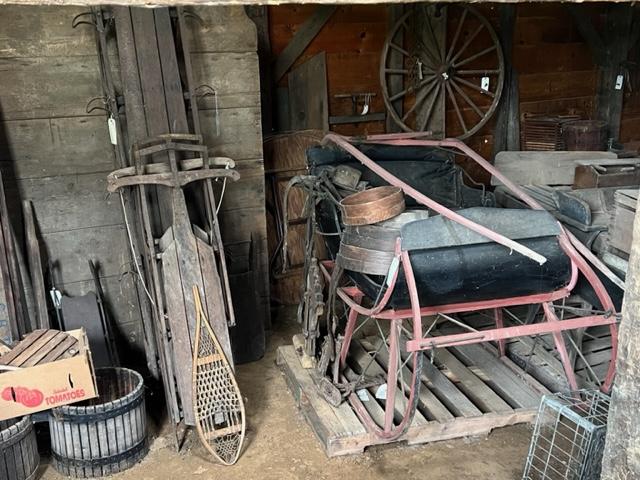
Sleighs and buggies and outdoor equipment

In 1989, it was scheduled to be demolished to make way for a development, the Historical Society dismantled it, moved it to the Museum ground and had it restored and rebuilt on its present location.

The inside of the Van Riper-Tice Barn at the Hopper House estate

Winter transportation at the barn

Transportation and farming equipment

The farming equipment display

More farming equipment

The displays of wool at the Van Riper-Tice Barn

The display of waffle irons

The Apple Cider Press that the Tice and Van Ripper families were so well known for making especially at Thanksgiving

*Snake Fence: a zig-zag fence of split rails once common in this area was added in the property north of the Van Riper Tice barn. The project was completed in 2001 with the help of Will Mazzuto and the vision of John Kroner and Joanne Lombardo.

The Hopper House estate

The Blacksmith Shop

The blacksmith doing a demonstration

The Upper Saddle River Historical Society:

The Upper Saddle River Historical Society was organized in 1977 to collect, preserve and distribute the history of the Upper Saddle River area. The Society is also responsible for the management and restoration of the Hopper-Goetschius House Museum located at 245 Lake Street, Upper Saddle River, NJ.

The Historical Society has over 500 members and is host to nearly 2000 museum visitors each year. The Society holds program meetings throughout the year along with special events such as a Spring Concert, a wonderful Harvest Fair in the fall and an Old Time Holiday Open House in December, featuring mulled cider with chestnuts roasting on an open fire.

The Museum is open for tours every Sunday during July & August from 2:00pm-4:00pm or by appointment. For group or individual tours contact: Althea Gardner @ (201) 327-7807 or Kay Yeoman @(201) 327-2236.

Hopper-Goetschius House Museum Restoration Fund Drive

USR Historical Society.org

Hopper Genealogy Info. http://www.reetree.com

(Upper Saddle River Historical Society)

Disclaimer: This information was taken directly from the Upper Saddle River Historical Society website. Please check the site for the hours and days it is open.

Campbell-Christie House, Historic New Bridge Landing: A Bergen County Historic Site                                                                   1201 Main Street                                                                   River Edge, NJ 07661

Campbell-Christie House, Historic New Bridge Landing: A Bergen County Historic Site 1201 Main Street River Edge, NJ 07661

Campbell-Christie House, Historic New Bridge Landing: A Bergen County Historic Site

1201 Main Street

River Edge, NJ 07661

(201) 343-9492

A County Historic Site

http://www.co.bergen.nj.us

http://bergencountyhistory.org/

Fee: Donations are accepted and there are fees for the special events

Open: Check the website above for special events and times

TripAdvisor Review:

https://www.tripadvisor.com/Attraction_Review-g46776-d7603554-Reviews-Historic_New_Bridge_Landing-River_Edge_New_Jersey.html?m=19905

I recently visited the Steuben House for a Christmas concert which was an evening of Christmas songs, a talk on the history of Christmas before, during and after the Revolutionary War. It was a very lively evening of song and lecture and the ladies who entertained us sang beautifully.

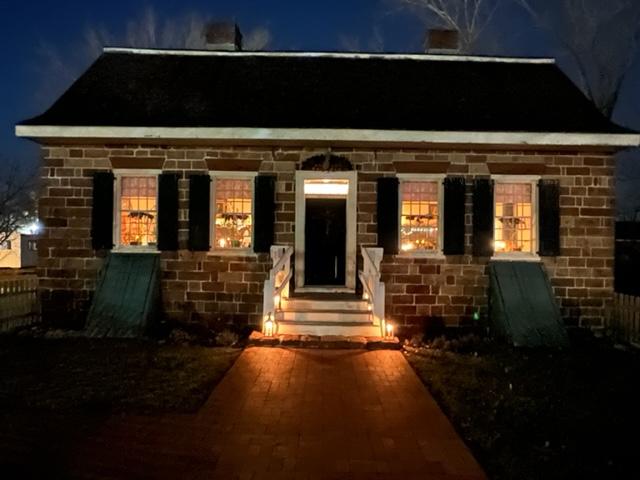
The Campbell-Christie House was used as the ‘pub’ for diners that night

Linda Russell & Company sang Christmas songs of the time and then talked in between about how Christmas was celebrated during the War years. She was a delight in her discussion and her and her daughter and their friend did a wonderful job.

The concert was entertaining, and the talk was interesting in the Van Steuben House

A sample of Linda Russell’s music

It seemed that while the Puritans put a damper on the Christmas holidays in New England the Dutch New Jersey and New York thoroughly enjoyed the holiday season after all their hard work during the Fall harvest months.

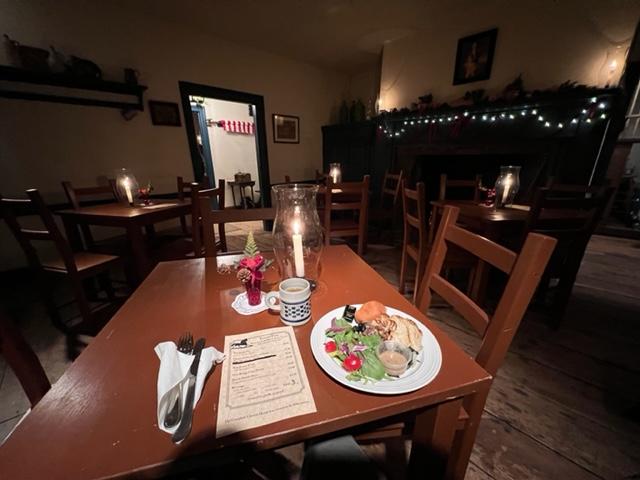
What was really nice was the Campbell-Christie House was open as a pub for dinner and light snacks and you could order things like Shepard Pie, Cheese & Onion Pie and Cake doughnuts and gingerbread for dessert while enjoying conversation by candlelight. It was an interesting and engaging history.

The Van Steuben House for the holidays was where the entertainment was that day

The house is nicely decorated for Christmas circa 1778

BCHS Xmas 2020 VI

The Campbell-Christie House at Christmas 2020 Historical Event

BCHS Xmasw 2020

Singer Linda Russell at the Christmas Tour Event at the BCHS 2020

Don’t miss their historic lectures and reenactments during the year. Check their website above for more activities.

https://revolutionarynj.org/event/sing-we-all-merrily-a-colonial-christmas-at-historic-new-bridge-landing-2/2019-12-15/2/

History of the Site:

BCHS Washington's Birthday X

The historic marker of the Campbell-Christie House

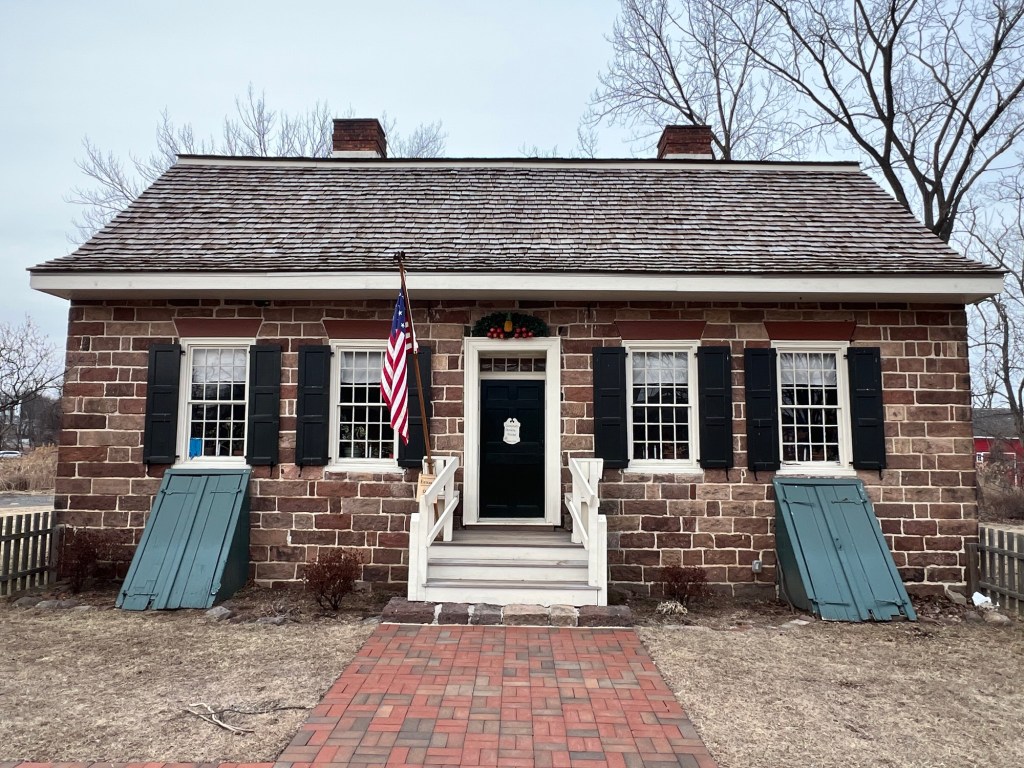
The Campbell-Christie House, an 18th century sandstone structure, is located in Historic New Bridge Landing State Park, River Edge. This historic building originally stood at the intersection of Henley Avenue & River Road, in New Milford, NJ. In 1977, in order to save it from demolition, Bergen County purchased and moved it south to this site next to the Hackensack River.

BCHS Washington's Birthday VIIII

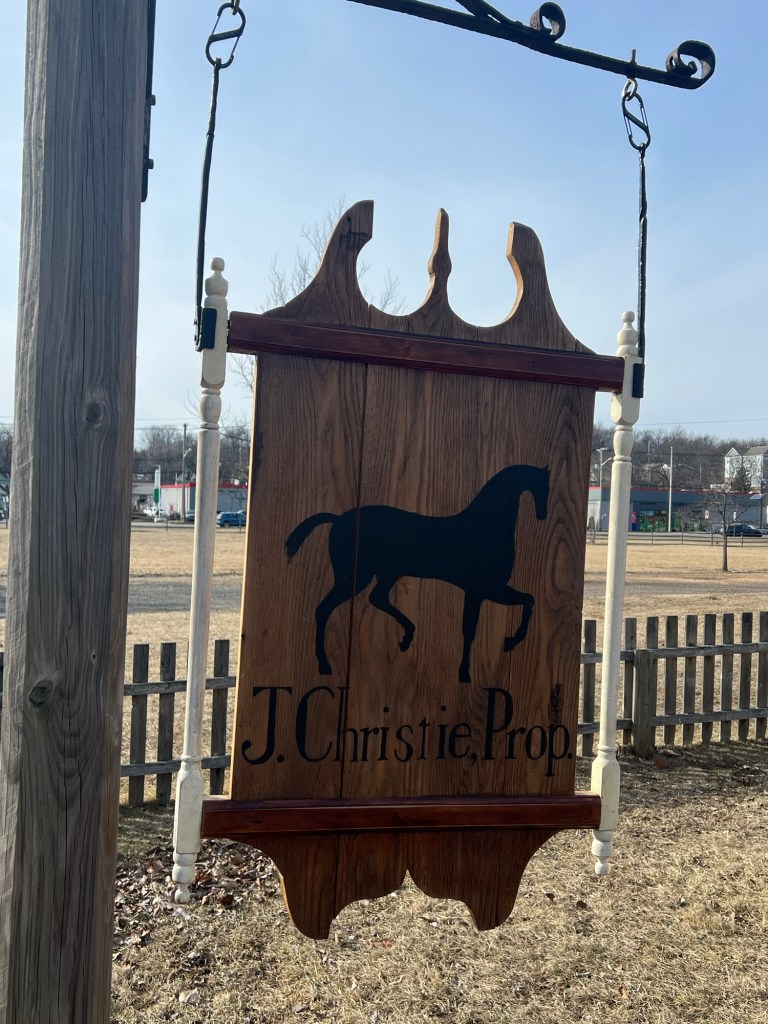
The Christie Family Pub sign

The house was used again for a pub for the Christmas concerts that returned to the site in December 2022. The house was set up as a restaurant with a limited menu before and after the concerts. The light fare was catered in and the menu was similar to what people would have eaten at that time but with a modern twist. The food was really good.

The house was used again for a pub on Christmas 2022 for the concert night

The Campbell-Christie House as the Blackhorse Pub for Christmas dinner

My Shepard’s Pie meal for the Christmas concert at the Blackhorse Pub

The Dutch Sweets dessert plate at the Blackhorse Pub in the Campbell-Christie House Christmas 2022

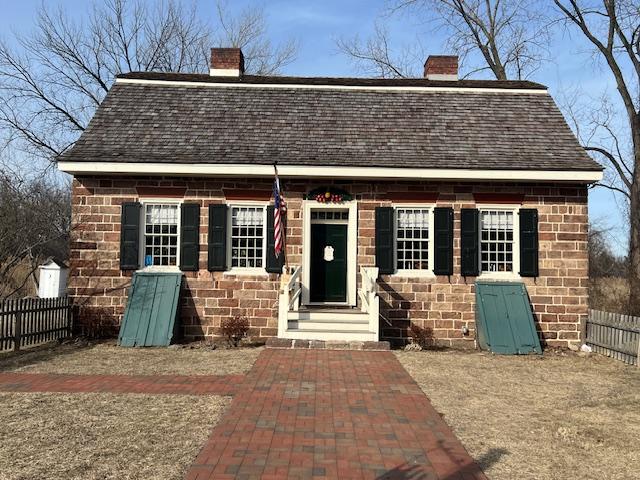
Sandstone houses were built continuously from the Dutch colonization of the 17th century through the founding of the Republic and the early years of the 19th century. The Campbell-Christie House, an outstanding example of this early regional architecture, is a 5 bay, 4 room center all building with two rooms to either side and two interior chimneys. This stone house form seems to have been built mainly after the Revolution and up to the turn of the century. The front wall is built out of well-dressed local sandstone with inset wooden trapezoidal lintels and side composed of roughly coursed sandstone.

BCHS Washington's Birthday VIII

The Campbell-Christie House during Washington’s Birthday Celebration

Historic New Bridge Landing.jpg

The Historic New Bridge Landing Site

Jacob Campbell, at the time of his marriage in 1774 built this house along the road (now Henley Avenue) that led from Old Bridge to the Schraalenburgh Church. Historical evidence records that Campbell, a mason by trade, also ran a tavern in his household. In 1795, the house was sold to John Christie, a blacksmith, who continued as a tavern keeper. Jacob Brinkerhoff-Christie, manager of the Comfort & Lumber Company, eventually inherited this large valuable homestead farm property along the Hackensack River. His son. John Walter, born in the house in 1865, was a famous inventor who built and raced cars (at one time holding the world’s speed record), invented the automotive front-wheel drive and is known as the “father of the modern tank”.

Historic New Bridge Landing Park is located at the narrows of the Hackensack River. Because of its strategic site along a tidal waterway it has been an active area of settlement, trade and commercial activities for thousands of years. The construction of the “New Bridge” in 1744 accelerated development of the area. Because of the nearness to Manhattan, New Bridge Landing was a principal base of operation during the Revolutionary  War and considered an important strategic route, guarded by troops from both sides at different times. General George Washington, who made his headquarters in Zabriske’s house, led his soldiers in retreat across here on November 20, 1776, saving his troops from entrapment by advancing British troops.

On the Hackensack River’s west bank, near the bridge, is the Steuben House. Originally  constructed by Jan Zabriskie in 1753 and doubled in size around 1765, it has been referred to as to as among the five “great houses” of Colonial Bergen County. The third stone house is the 18th century Demarest House, moved to this site in 1956 and owned by the Demarest-Blauvelt Foundation. The Historic New Bridge Landing Park Commission, a partnership of the Bergen County Historical Society, Blauvelt-Demarest Foundation, the County of Bergen, New Jersey Division of Parks & Forestry, New Milford Borough, River Edge Borough and Teaneck Township, operates the New Bridge Landing site.

This site also contains the County-owned 1888-89 Pratt-type, “pony” truss, iron swing bridge, the oldest highway swing bridge in New Jersey. The Campbell-Christie House, along with the other two houses and the bridge, is on the State & National Register of Historical Place. It is the headquarters of the Bergen County Historical Society and furnished with the furniture and collection owned by the Society. Open year round. For the FCHS calendar of event or go to http://www.bergencountyhistory.org.

http://www.co.bergen.nj.us

Kevin Wright’s Lecture on the Site (2015)

(2015 Bergen County Division of Cultural & Historic Affairs)

The Bergen County Division of Cultural & Affairs received an operating support grant from the New Jersey Historical Commission, a division of the Department of the State.

Disclaimer: This information is taken directly form my pamphlet from the Bergen County Division of Cultural & Historic Affairs. The site holds it position in its participation in the Revolutionary War and should not missed. I give them full credit for this information. Please call them for more information.

The reenactment of the Historic Bridge attack during the American Revolution at the Bergen County Historical Society. I give the Historical Society full credit for this information.

The Christie Pub sign

The pub exhibit at the Campbell-Christie House