The Met Breuer is an interesting museum. When it was opened, the museum wanted to have more of focus in recent contemporary artists. The Metropolitan Museum of Art had been known for emphasis in the classical and ancient arts and its collections of art that covered the centuries. Even though it has a very impressive Contemporary Art Collection in the main building at 1000 Fifth Avenue, it was not one of their stronger collections. The Museum of Modern Art had been known more for that. The opening of the Met Breuer was going to change that by showing more of the permanent collection and traveling shows with cutting edge artists of the Twentieth and Twenty-First Century.
I have been to the museum several time for private Member’s Nights and most recently in March 2020 for the Gerhard Richter exhibition “Gerhard Richter: Painting After All” (the exhibition just opened as the New York City closed down for the viral outbreak).
The artist who was born in Germany and raised during the outbreak of World War II began his career as an artist in the 1960’s. He was accepted into the Academy of Arts in the 1950’s and his career has spanned many different mediums and concepts of art as shown in the exhibition.
The abstract works of artist Gerhard Richter
Artist Gerhard Richter in his studio
The Membership was able to walk four of the floors of the artists work and join in discussions with the curators and docents on duty. Each floor that evening was dedicated to a different concept of the artist’s work.
The exhibition has only opened to the membership before the museum shut down due to the virus outbreak.
On the bottom floor basement area of the museum is the restaurant, Florence, named after Florence Whitney, a patron of the museum after which was named after her family. The restaurant which has a very contemporary and expensive menu was packed that night. The restaurant offers nice views of neighborhood street level and has a very nice bar.
On the main floor of the museum is a small gift shop.
The lobby of the Met Breuer
The History of The Met Breuer:
The Met Breuer was the brainchild of philanthropist Leonard Lauder in 2008 when it was announced that the Whitney Museum was moving to a new building downtown. The agreement was signed between the Met and the Whitney for the new museum in 2011.
Gerhard Richter’s work on the third floor of the museum
The Met Breuer opened in March of 2016 in the building that was formerly occupied by the Whitney Museum of American Art. The building was designed by architect Marcel Breuer and completed in 1966. The building was updated by architects Beyer, Blinder Belle in 2014 for the Met.The works of the Met Breuer come from the Metropolitan Museum of Art’s collection and are both monographic and thematic exhibitions.
In 2018, the Met announced that it would be leaving the building in 2020 and that the Frick Collection would be moving in on a temporary basis for the renovation of their building starting in 2020.
(This information was provided by both the Met Breuer History and Wiki)
To all of you history buffs and readers who like architecture, take this Victorian Walking Tour I took last Christmas. It really shows how the City keeps changing.
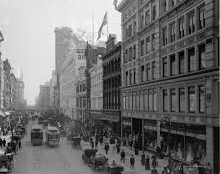
Ladies Shopping Mile in it’s heyday
The Ladies Shopping Mile today
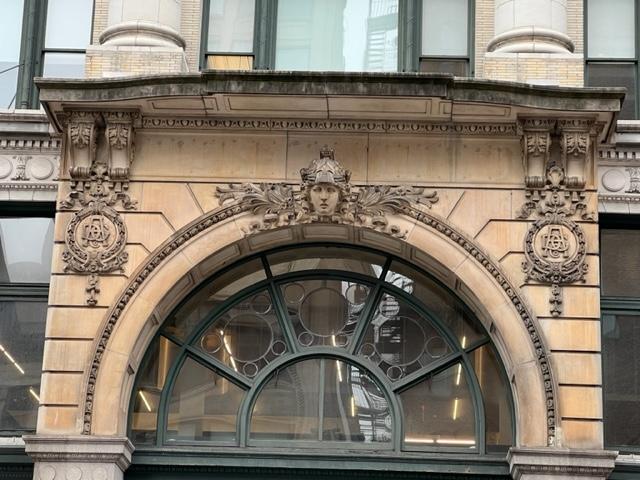
The beauty of the architecture of these stores. This is the Adams Dry Goods store.
On Saturday, December 15th, I met with other members of the Cornell Club to travel back to the Victorian Era and learn about the traditions of the Christmas past. We explored the Gramercy Park, Union Square and lower Sixth Avenue sections of the City to visit where a New York Victorian Christmas would be celebrated and honored.
We would be walking the old “Ladies Shopping Mile” that had been built up right after the Civil War when the disposable income for Middle and Upper Middle Class residents had increased after the Civil War and people wanted to spend their money at the newly built department stores, shops and restaurants. The Industrial Revolution was in full swing and shopping had changed with the development of the department store.
The tour took us past brownstones, parks, restaurants and old department stores that line the streets of Manhattan between East and West 21st Street…
The aquarium’s outside tanks with sea lions, otters and penguins.
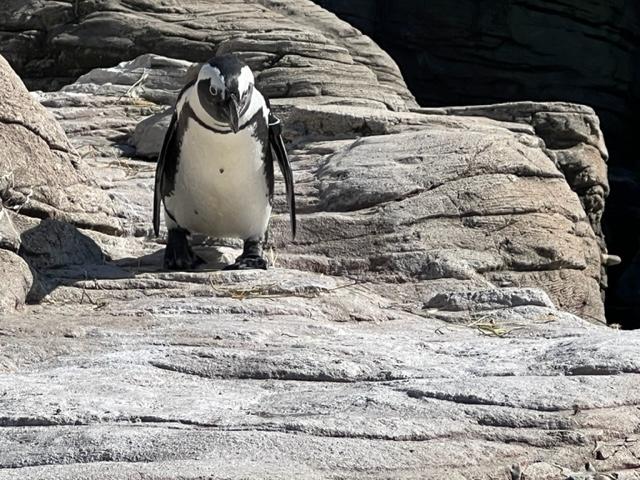
The penguins were very entertaining that afternoon.
The otter just ignored us. They just played amongst themselves.
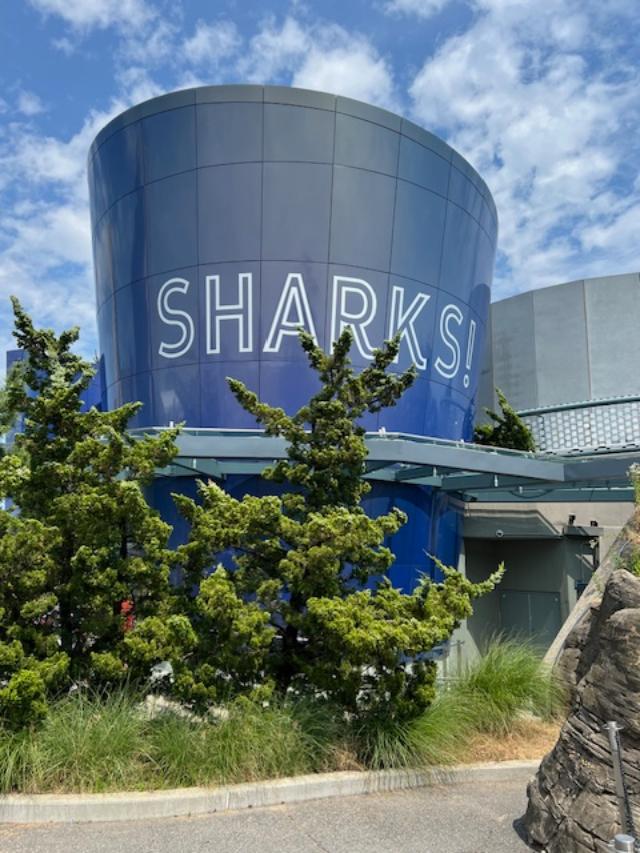
I have been to the NY Aquarium many times since it reopened after Hurricane Sandy and there have been many positive improvements in both the facility and the service. The new Ocean Wonders: Shark! exhibition which has opened up giving an interesting look at the underwater world of the many different types of sharks that dominate the deep.
The Shark Exhibit
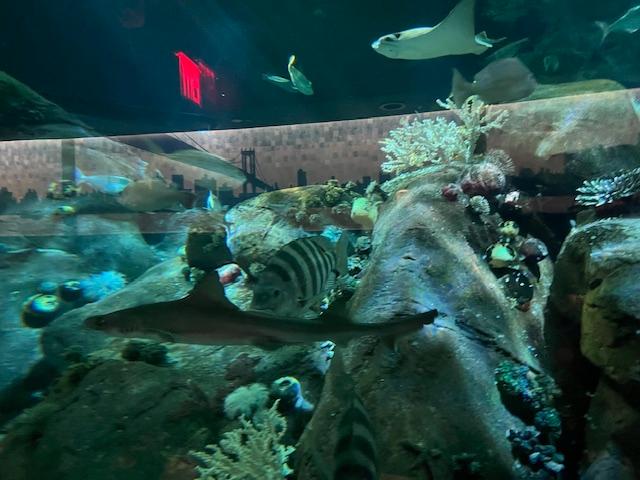
The Shark exhibition
The sharks and string rays
It is not just a display but also a commentary on the conditions of the deep and the treatment of sharks around the world. There contributions as bottom dwellers cleans our oceans and benefits other fish. It was shocking what the treatment is of these animals in Asia when strip these animals of their fins for soup. I like how professionally the aquarium shows this in their displays and videos and doesn’t preach but offer solutions to the problem.
The entrance to the new shark tanks.
That and walking through the tanks themselves in the darkened rooms with music makes for a fascinating and almost ominous trip into the ocean behind the walls with the sharks and other mammals and fish swim past you. There is also a small tunnel that you can climb under to watch the fish swim on top of you and past you.
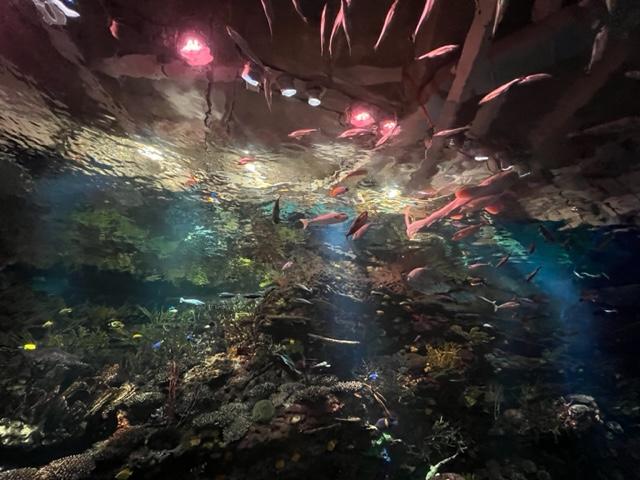
The tropical fish exhibition
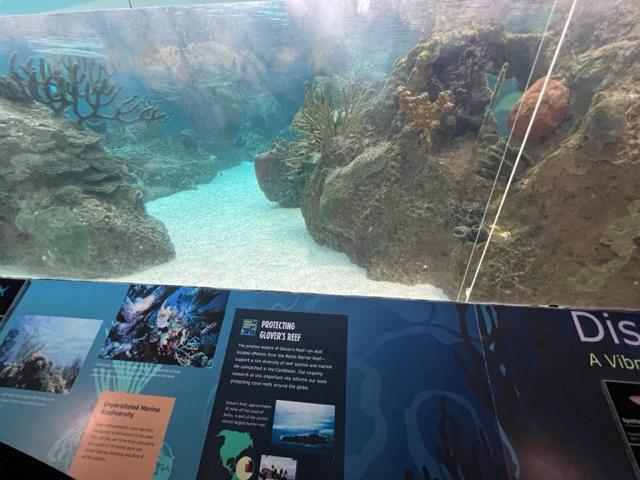
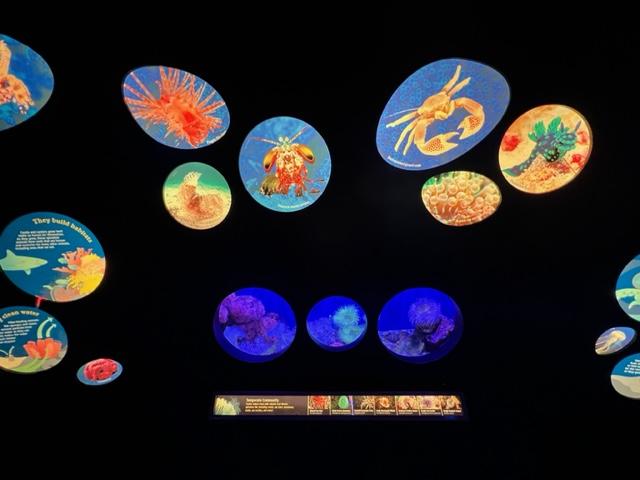
In the Conservation Hall, you will learn all about the fish that dominate and keep our reefs vibrant and what happens when pollution takes over and kills them. Again the aquarium displays this in a positive way, shows how the animals keep the reefs healthy. I point out that there are a lot of colorful fish on display and it is fun to watch the small children yell out to them.
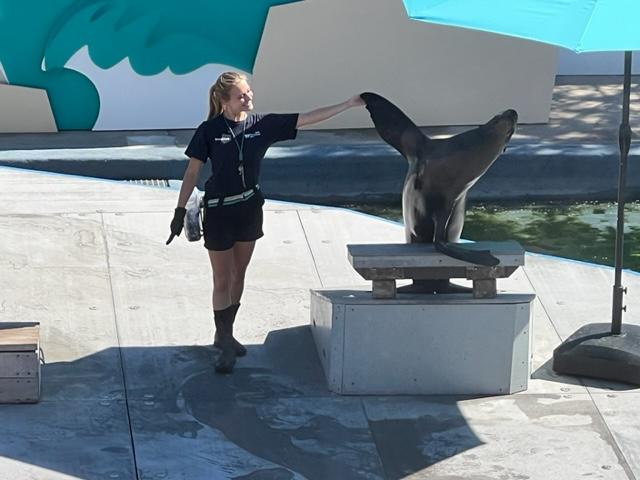
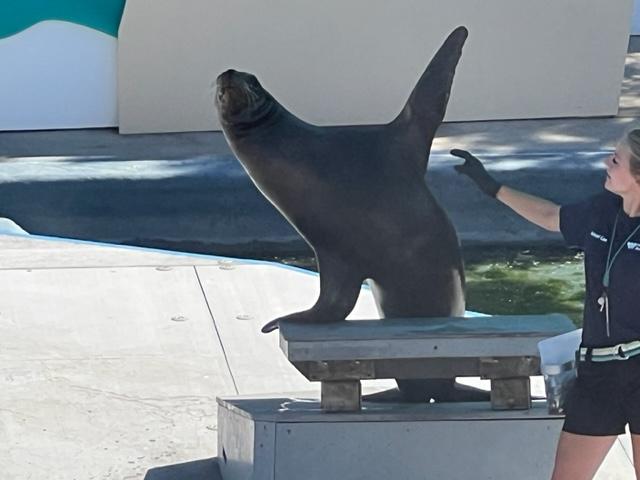
There is a wonderful seal show during the day that you should not miss especially in the warmer months when you can sit in the stands and watch them perform with their trainers. They are more Native New Yorkers than most humans having been born at the aquarium and showing their own pride in their home and abilities.
The Sea lion show at the aquarium is very popular.
The Sea lion show
The Sea lion show
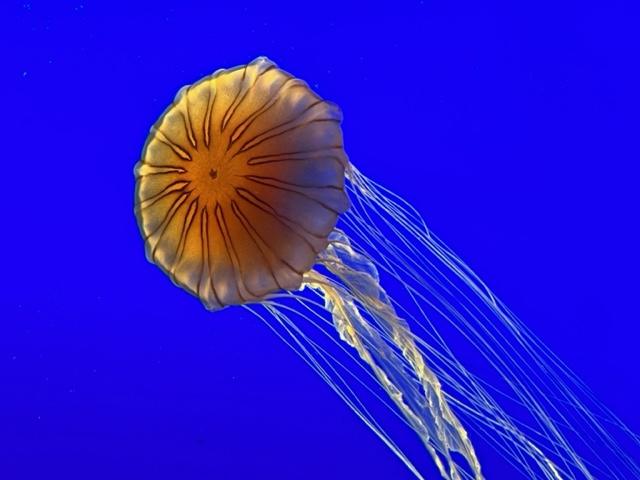
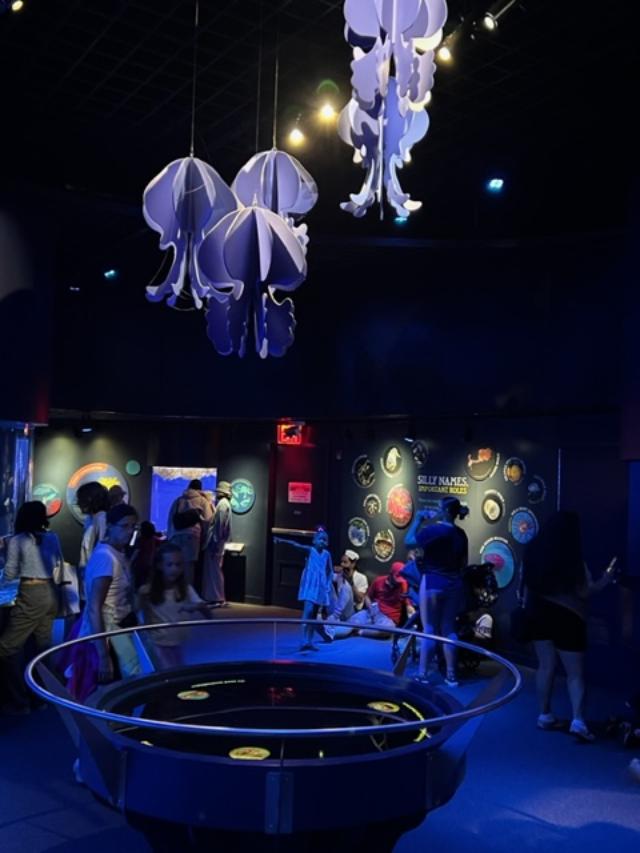
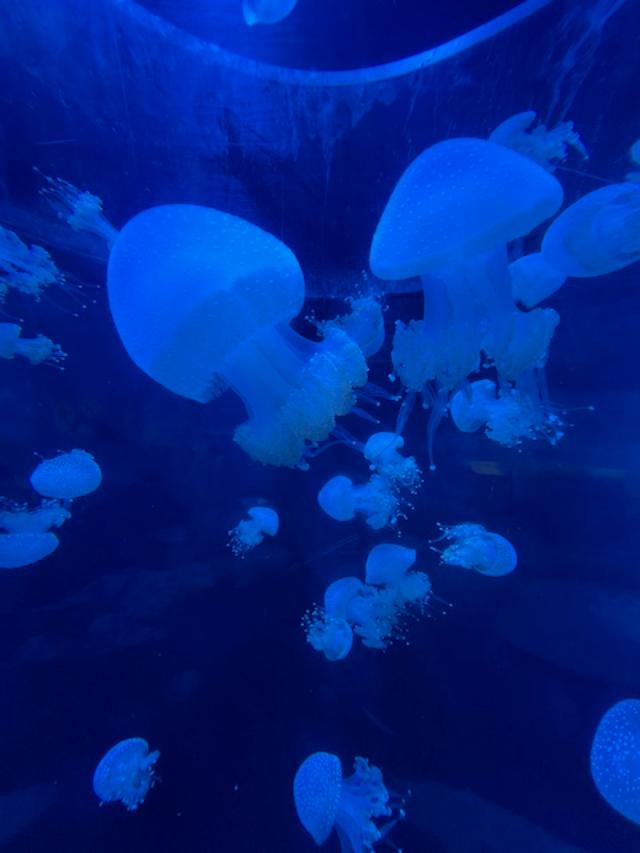
The new “Spineless” exhibition shows all the jelly fish and related species.
The “Spineless” exhibition
The beautiful jelly fish at the aquarium.
The “Spineless” exhibition
The different creatures of the deep.
The Jellyfish tank
The Jellyfish are amazing to look at in the tank
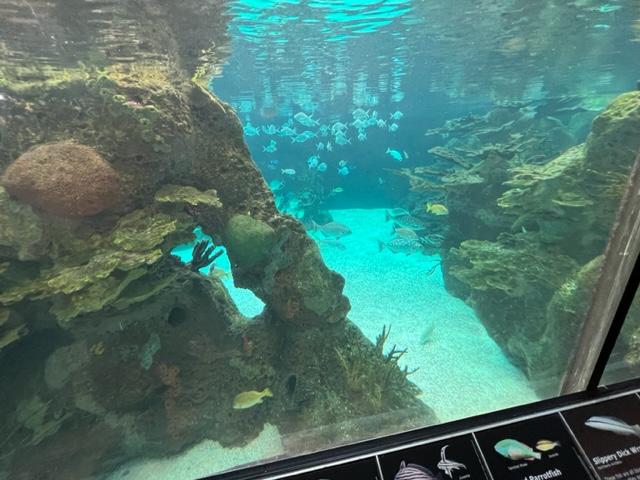
There were all sorts of tanks displaying many different types of tropical fish and corals that are exotic and very much endangered. We are beginning to destroy their habitants.
The fish habitats
As part of the new building there are also several new eating establishments at the aquarium including the new Oceanside Grill that I have not visited yet (it was closed on my last visit) as well as The New York Bite food truck (which was also not opened). The most impressive restaurant is the Oceanview Bites on the second floor of the Ocean Wonders building. This beautiful new restaurant has an interesting but somewhat routine menu with prices usual to an aquarium but offer the most spectacular views of the ocean and of Coney Island. Do not miss just walking up to the restaurant in the circular pathway for the views alone.
The NY Aquarium is a treat in of itself and a great excuse to visit Coney Island. Don’t miss the rest of the island’s amusements and museums while you are there.
The NY Aquarium
History of the New York Aquarium:
(this information is provided by a combination of the NY Aquarium and Wiki and I give them full credit for the information)
The New York Aquarium is the oldest continually operating aquarium in the United States, having opened in Castle Garden in Battery Park in Manhattan in 1896. Since 1957, it has been located on the Reigelmann Boardwalk in Coney Island. The aquarium is operated by the Wildlife Conservation Society (WCS) as part of its integrated system of four zoos and one aquarium, most notably the Bronx Zoo. It is accredited by the Association of Zoos and Aquariums (AZA).
The sea lion tanks
As part of the WCS, the aquarium’s mission is to save wildlife and wild places worldwide through science, conservation action, education and inspiring people to value nature.
The facility occupies 14 acres and boasts 266 species of aquatic wildlife. Its mission is to raise public awareness about issues facing the ocean and its inhabitants with special exhibitions, public events and research. The New York Seascape program, based out of the aquarium, is WCS’s local conservation program designed to restore healthy populations of marine species and protect New York waters, which are vital to the area’s economic and cultural vitality.
The penguin tank
The Penguin exhibition on the outside
On June 6, 1957, the Aquarium opened at its new location in Coney Island. The new site of the New York Aquarium is the home of the WCS New York Seascape program, the society’s research and conservation program focusing on nearby rivers, harbor and ocean from Cape May, NJ to Montauk, Long Island.
The aquarium kept an orca briefly in 1968 and a narwhal in 1969. Both reportedly died of possible pneumonia. The aquarium’s beluga whales were transferred to the Georgia Aquarium in 2007 as part of a breeding program. In September 2011, the aquarium named its new electric eel Wattson and in March 2012, it launched a sea horse breeding program.
In October 2006, the New York Aquarium announced the finalists to a competition to develop a more inviting and visually prominent exterior for the aquarium. In March 2007, the winning design by firms WRT and Cloud 9 was selected, which featured an enclosure resembling a whale over the aquarium. However, in March 2008 that concept was scrapped due to concerns over a new exhibit based on sharks was announced. The massive 784,000 US gallon exhibition, Ocean Wonders: Sharks! was originally scheduled to break ground in November 2012 and open in 2015.
The Penguin exhibition
The Penguin tank
The penguin tanks
A penguin ready to take a dive.
However, the New York Aquarium was significantly damaged by Hurricane Sandy in October 2012, which severely flooded the facility and shut down power. A small group of WCS staff who remained onsite during the hurricane were able to save 90% of the animals in the collection. As a result, the exhibition opened June 30, 2018, becoming the first major exhibition at the New York Aquarium to open after Hurricane Sandy.
The Shark tank’s fish display
Disclaimer: this history of the NY Aquarium is taken from Wiki and I give them full credit for this information.
The Sculptures in the NY Aquarium in 2024:
These sculptures were at NY Aquarium by Washed Ashore
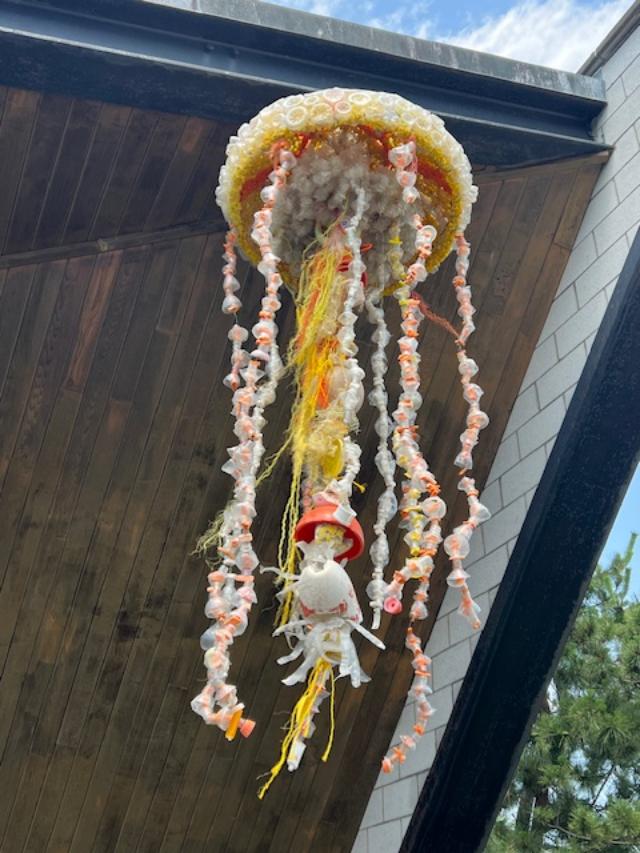
The sign for Leo the Jellyfish
The Leo the Jellyfish sculpture
The Angus the Longhorn Cowfish sculpture sign
The Angus the Longhorn Cowfish sculpture
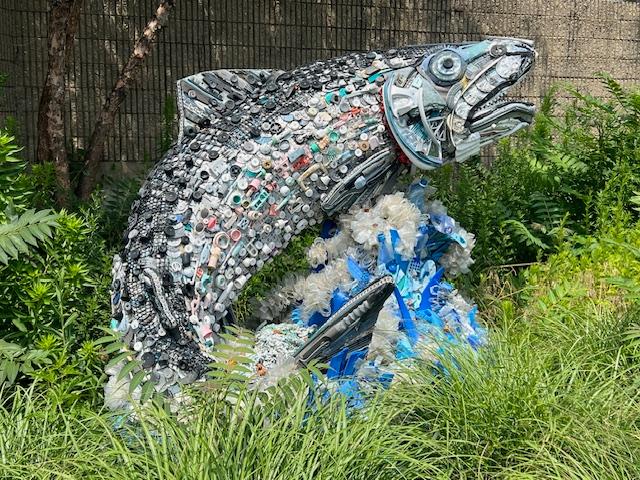
The Nora the Salmon sculpture sign
The Nora the Salmon sculpture
The Maggie and Charlotte Adele Penguins
The Maggie and Charlotte Adele Penguins sculpture
The Chompers the Tiger Shark
The Chompers the Tiger Shark sculptures
The Penguin sculpture
The artworks were all made of items that were thrown in the ocean and plastics that are thrown in the ocean. Washed Ashore created these works to show what is thrown in ocean and how it affects the wildlife in the oceans.
The boardwalk outside the aquarium
The beach outside the aquarium
Private Members Night at the NY Aquarium:
Members Night at the NY Aquarium:
The NY Aquarium held a Private Members Night for the members of the Wildlife Conservatory in July of 2026. Because of the wild fires in Canada, the air in New York City was not that good and that’s what probably kept the crowds away. was pretty bad and the crowds were light outside. Still, the aquarium planned a lot of family events and it was fun to walk through the exhibitions without dealing with crowds.
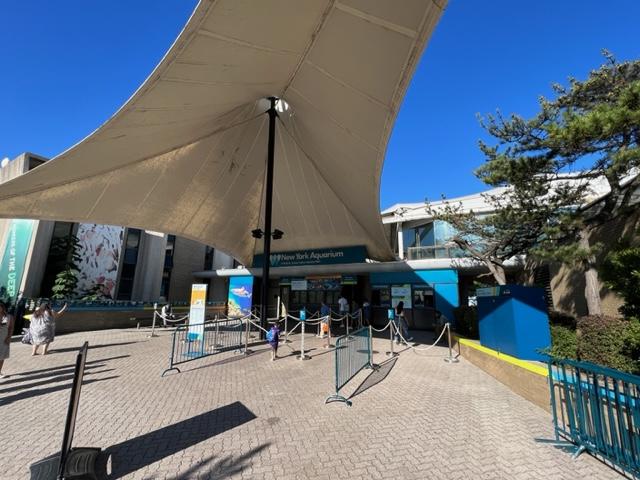
The front of the aquarium the Members Night
The aquarium at the beginning of the night
The crowds were mostly made up of families with small children and a lot of the outdoor activities were geared to them with face painting, chalk art displays and a Mermaid on roller skates who skated the courtyard making colorful bubbles of all sizes. It was fun seeing kids be kids without cellphones.
The Chalk Art that evening was enjoyed by everyone
The creativity of the art
The kids were really creativity
We also had a Mermaid skating around making bubbles that the kids really enjoyed. There were bubbles of all kinds floating around the courtyard. She was having as much fun as the kids who were chasing them around popping them. I thought it was out of the scene of a 1970’s film. It is fun to see those simple things still be so popular.
The Mermaid entertaining the children who attended the event
The Mermaid entertaining the kids
Bubbles were all over the aquarium and it was pretty cool
Then at 6:00pm, we had the Seal Show in the Aquacade but because of the heat and the smoke from the wildfires made the air not so good to stay outside. The breezes were nice and cleared much out but it was still not the best to sit for long periods. The show was fun but was quick.
The Seal Tank that evening
The sealions are actually ‘native New Yorkers’ who were born in captivity in the aquarium and know their stuff
The seals were talented and disciplined and entertained the crowds
After the show was over, I got another chance to walk through the indoor exhibitions to see the Shark exhibition and the Hudson Canyon’s Edge exhibition. Watching the fish, sharks and corals move and sway and it was very interesting to know that it is really down there.
The full tank of fish and sharks. Is this was what was really in the canyon?
The end of the evening we could see the blood moon or was that the sun? The air was so bad from the Canadian wild fires you could see it through the whole City. Being by the shore, the breezes really did help.
Still it was a nice evening and it was fun to walk around the exhibits without the crowds. It was fun to watch the families having a good time and it was a nice evening.
This is why being a Member of the NY Wildlife Conservatory is so much fun. You get to visit all the parks with your membership and get to see the exhibitions on your own time. You also learn a few things about Mother Nature and the affects of the climate on it. I always enjoy a trip to the aquarium.
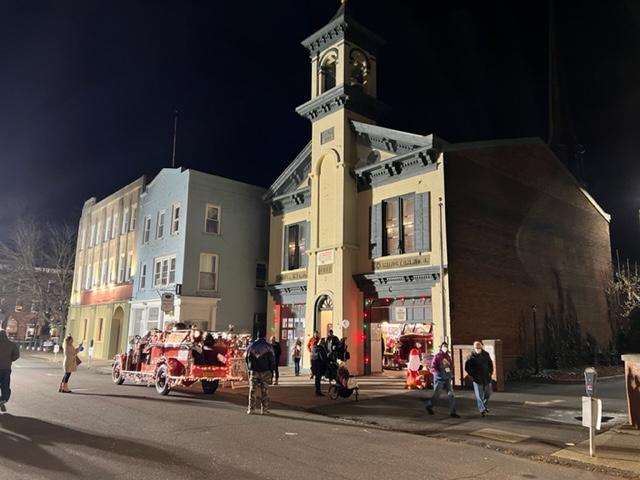
The antique fire truck outside the firehouse during the Kingston “Snowflake Festival”
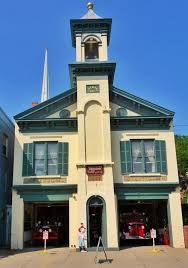
I was recently visiting Kingston, NY for an event and while walking around the downtown the doors of the Volunteer Firemen’s Hall & Museum of Kingston was open for visitors. Even if you are not a fire fighter it is such an interesting museum on the history of fire fighting and the role the Kingston Fire Department had in the formation of the City of Kingston.
The early horse drawn fire equipment
The museum welcoming people to the Kingston “Snowflake Festival” in 2022
On the main floor is four pieces of equipment from various stages of the department. The engines are from the turn of the last century featuring horse drawn ladders and steam engines and then the latest equipment from the early teens and twenties from the automotive stage. Each piece of equipment has been carefully maintained and is in pristine shape.
The museum decorated for Christmas for the recent “Kingston Snowflake Festival”
It is interesting to see how different each rig is at that stage of its history but how much has not really changed with the use of the equipment when fighting a fire.
The bay area of the old firehouse with the antique equipment
One of the more interesting pieces in the collection is the beautifully detailed Parade piece from the late 1800’s (circa around 1890’s) which has gorgeous details and intricate craftsmanship work to it. This interesting piece of equipment was the pride of the department on parade day and is one of the few of its type in the country.
The Fire Department Parade Piece
Along the walls is all sorts of pictures of old fires, men who were once members of the department, ribbons and awards, old systems for calling for firemen from the horns that used to sound the alarms to the more modern telegraph equipment to the current paging systems.
The roster upstairs
The fire department equipment pieces
Upstairs you can visit the furnished headquarters of a firehouse circa 1890’s to 1920 with vintage furniture, decorations and composites of firemen long ago. There is even a mannequin of a fire fighter sliding down a pole that leads to the first floor. Here and there are more decorative equipment pieces, furnishings and awards.
The upstairs of the Kingston Volunteer Museum
The museum has a little something for everyone and if you are interesting in knowing more of the history of the fire service and want to hear the stories by members current and retired from the Kingston Fire Department, then the Volunteer Firemen’s Hall & Museum is the place to visit.
Old decorations from fire equipment at the Volunteer Firemen’s Hall & Museum
History of the Museum and Fire Fighting in Kingston, NY:
Ulster County has a remarkable over 350 year history of noble fire fighting. See it up-close and personal at the Volunteer Firemen’s Hall & Museum of Kingston.
The award case upstairs at the firehouse
When Kingston City Hall burned on June 4th, 1927, the third alarm was sounded from the building’s own bell tower before it crashed to the ground. Fire calls in Kingston today are answered through the 911 system with a three minute response time. Ever watched a TV show about firemen and their firehouse? The ‘squawk’ to a call is unmistakable.
The upstairs in the firehouse
Seven volunteer fire companies and the Exempt Association of Kingston recognized the importance of preserving and protecting firematic artifacts as well as establishing a meeting hall for volunteer fire organizations in Kingston and Ulster County. They were charged with finding a permanent home and signed a lease with the City of Kingston for Fair Street’s historic circa 1850 Wiltwyck Fire Station and the rest is history.
The Ladies Auxiliary and rosters
Walk through the large wooden doors to the home away from home of the 19th century firefighters.
The old Kingston, NY firehouse that now houses the museum
Disclaimer: this information was taken directly from the Volunteer Firemen’s Hall & Museum of Kingston pamphlet and I give them full credit for it. Please check out their website for more information.
The living area upstairs in the firehouse decorated for Christmas