Open Wednesday-Sunday 12:00pm-5:00pm/Monday & Tuesday Closed
Admission: Non-Member Adults $12.00/Seniors (65+) and Students with ID $10.00/Members and Children under 12 Free
My review on TripAdvisor:
The front of the Montclair Art Museum at 3 South Mountain Avenue in the early Fall
I have made many trips to the Montclair Art Museum over the years and have always found it to be a very interesting and engaging museum. The curators mount fascinating exhibitions sometimes from the permanent collection and sometimes from traveling shows.
The statue in front of the entrance of the museum
The galleries are smaller and more compact so the exhibitions are not over-whelming like in the bigger museums. You can see each exhibition in about forty-five minutes to an hour and you will still see a lot. There are also smaller exhibition spaces which specialize in one artist and you might see about a dozen pieces.
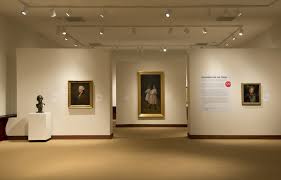
There are two exhibitions going on currently in the museum. One is “Constructing Identity in American”, which is a permanent collection show of more than 80 paintings, sculptures and works on paper that will address a variety of characteristics that contribute to one’s sense of self, including civic, cultural, artistic, religious, professional and sociopolitical identities, sense of place and personal space and non-conformity. This exhibition goes far beyond portraits to explore other aspects of sense of self (Museum pamphlet).
“Constructing Identity in America” exhibit
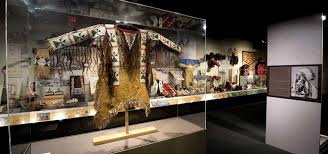
Native American Galleries
The other exhibition is called “Undaunted Spirit: Art of Native North America” which focuses on the Native American culture from Prehistoric times to the modern era. It , seems that by the end of the Civil War the Victorians were collecting art and objects of the Native Americans fearing that their cultural was disappearing. There is a lot of focus on pottery, both modern and pre-colonial, clothing construction, jewelry making with turquoise and silver and basket-making which was all the rage at the turn of last century. I like the modern aspects of the art as they are ushering a new era of artists of the southwest and giving them a voice. Take time to look at the detail work of the show.
“Undaunted Spirit: Art of Native North America” exhibit
Montclair Art Museum Mission Statement:
(This is from the Montclair Art Museum website)
Mission Statement: The Montclair Art Museum, together with its Vance Wall Art Education Center, engages our diverse community through distinctive exhibitions, educational programs and collection of American and Native American Art. Our mission is to inspire and engage people of all ages in their experience with art, including the rich inter-cultural and global connections throughout American history and the continuing relevance of art to contemporary life.
Vision, Values and Diversity Statement:
After 100 years of service, MAM is recognized as the leading American art museum and community art school in Northern New Jersey. As a organization, we value: artistic inspiration, diversity of voices, individual and group creativity and the importance of all arts to a civil, inclusive and forward-thinking society.
We respect and welcome individual differences and strive to maintain an environment that fosters productivity, creativity and individual satisfaction by celebrating the diversity of race, gender, nationality, age, religion, sexual orientation and physical abilities.
During our second century, we will invigorate our collections and curatorial presentations; expand our educational services audience; support artists, their work and connections; pursue productive institutional partnerships and embrace new media and technology. We will also secure MAM’s financial stability and preserve its facilities and other assets in a prudent and sustainable way.
A notable community institution with an international reputation, the Montclair Art Museum (MAM) is still located in the same-though now thrice expanded-building in which it opened in 1914. Situated amid a beautiful tree-lined residential area of Montclair New Jersey, just 12 miles west of New York City, the Museum is esteemed for its holdings of American and Native American Art, its exhibitions, its family and public programs and its art school. It welcomes more than 65,000 visitors annually.
The entrance of the Montclair Museum
The History of the Museum:
(from the museum website)
The Museum was a pioneer: one of the country’s first museums primarily engaged in collecting American Art (including the work of contemporary non academic artists) and among the first dedicated to the study and creation of a significant Native American art collection. This pioneering spirit still reverberates in the Museum’s pursuit and presentation of high-quality art that characterize and celebrates American’s diversity, including the recent launch of its Contemporary Art Program, in 2010, providing MAM an opportunity to showcase dynamic contemporary work and expand the Museum’s contemporary art holdings. A main showcase dynamic contemporary work and expand the Museum’s Contemporary holdings.
A main feature of the MAM program is to explore the interplay between historical and contemporary art to our understanding of the larger historical context in which art is created, presenting work that is being challenging and accessible. A key component of the Contemporary Art Program is it New Direction exhibition series of solo artists, established in 2011. Artists featured in the series include Marina Zurch, Saya Woolfalk, Spencer Finch and Sanford Biggers. Most recently in Spring 2015, MAM presented its largest and most ambitious exhibition of contemporary art to date, “Come as You Are: Art of the 1990’s”.
From its founding, the Montclair Art Museum has maintained a vital presence in its surrounding community. The Museum’s collection began with gifts from prominent Montclair residents that included both American and Native American art, laying the foundation for the Museum’s holdings. MAM’s Inness Gallery is one of the only galleries in the world dedicated to the work of America’s greatest landscape painter, who spent the last nine years of his life in Montclair, from 1885 onward and who drew inspiration from the local landscape. Other well-known artists followed in his footsteps, cementing Montclair’s reputation as an intellectual center and artist’s colony, a reputation its retains to this day.
Mam’s collection has grown to over 12,000 works. The American collection, which started with a gift of 36 paintings from William T. Evan’s, comprises paintings, prints, drawings, photographs and sculpture dating from the 18th century to the present and features excellent works by Benjamin West, Asher B. Durand, John Singer Sargent, Edward Hooper, Georgia O’Keeffe, Andy Warhol and Roy Lichtenstein as well as younger and emerging artists such as Louise Lawler, Chakaia Booker, Whitfield Lovell and Willie Cole.
The museum’s superb holdings of traditional and contemporary American Indian art and artifacts, New Jersey’s largest, represent the cultural achievements in weaving, pottery, wood carving, jewelry and textiles of indigenous Americans. The collection was begun by Annie Valentine Rand and carried on by her philanthropic daughter Florence Rand Lang, one of the Museum’s founders and continues to grow with philanthropic daughter Florence Rand Lang, one of the Museum’s founders and continues to grow with commissioned works, gifts and purchases that celebrate the vitality and modernity of traditional forms and beliefs. Among the contemporary American Indian artists represented are Tony Abeyta, Dan Namingha, Jaune Quick-to-see Smith, Allan Houser , Bently Spang and Marie Watt.
Equally important for its community presence and its reputation are the Museum’s public and family programs and art school, serving everyone from toddlers to senior citizens. Collaborations with numerous cultural and community partners bring artists, performers and scholars to the Museum on a regular basis. Guests have included Holland Cotter, John Elderfield, Bill T. Jones, Jeff Koons, Faith Ringgold, Winfred Rembert, Kiki Smith, Philip Pearlstein, Shirin Neshat and Lorna Simpson. More than 10,000 K-12 students from 190 school districts visit the Museum every year. Free Family Days, a Family Lab, MAM Park Bench, Home School Days and Birthday Art Parties allow families to experience art in variety of different ways. As the New Jersey affiliate of the Scholastic Art & Writing Awards, MAM opens opportunities to creative teenagers to gain national recognition for their work. The Museum also provides programs for seniors and special needs individuals-such as the hearing impaired and people with Alzheimer’s as well as training for teachers in the arts.
MAM’s art school, now the Yard School of Art, has been an integral part of the Museum’s life nearly from the beginning. It was founded in 1924 just 10 years after the Museum itself and has operated continuously since then offering courses year-round to kids, teens, adults and seniors. Courses cross a broad range of the artistic spectrum, including drawing, painting, collage, pastel, printing making and illustration. In 2011, the school launched two new areas: a Ceramics Studio and a Digital Media Lab.
In 2014, MAM celebrated its Centennial with a yearlong program of activities, which included a Birthday Party on January 15, exactly 100 years from the day of its founding that attracted thousands of visitors. In honor of the Centennial the Museum also commissioned internationally renowned artist Spencer Finch to create a site-specific installation that has transformed the Museum’s facade, making it a more inviting point of entry.
The first institution in New Jersey designed as a museum and one of the first in the nation to be accredited by the American Association of Museums, the Montclair Art Museum as it marks its Centennial, continues to seek novel ways, through its exhibitions, educational programs and outreach efforts to inspire and inform its growing and ever more diverse audiences.
(This information on the history of the Montclair Art Museum was taken from their website and I give the Museum full credit for the history of the Montclair Art Museum).
Open: Sunday 1:00pm-3:00pm/Monday & Tuesday Closed/Wednesday 1:00pm-3:00pm/Thursday-Saturday Closed. Closed on all major holidays. Please call in advance or check the website for times as they can vary by season.
Fee: Free New Jersey State Park System/Free Parking on premise
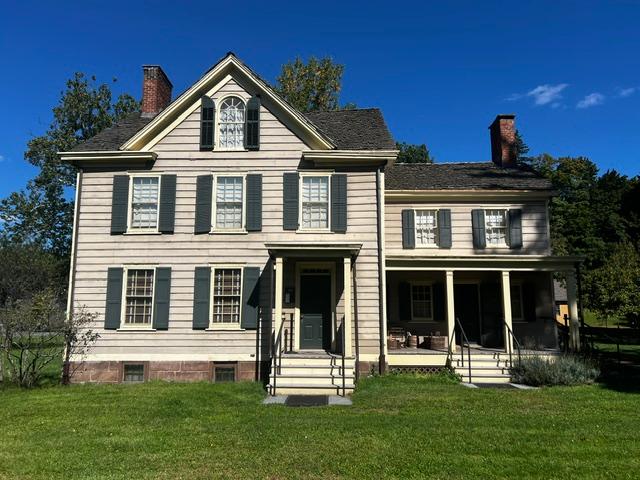
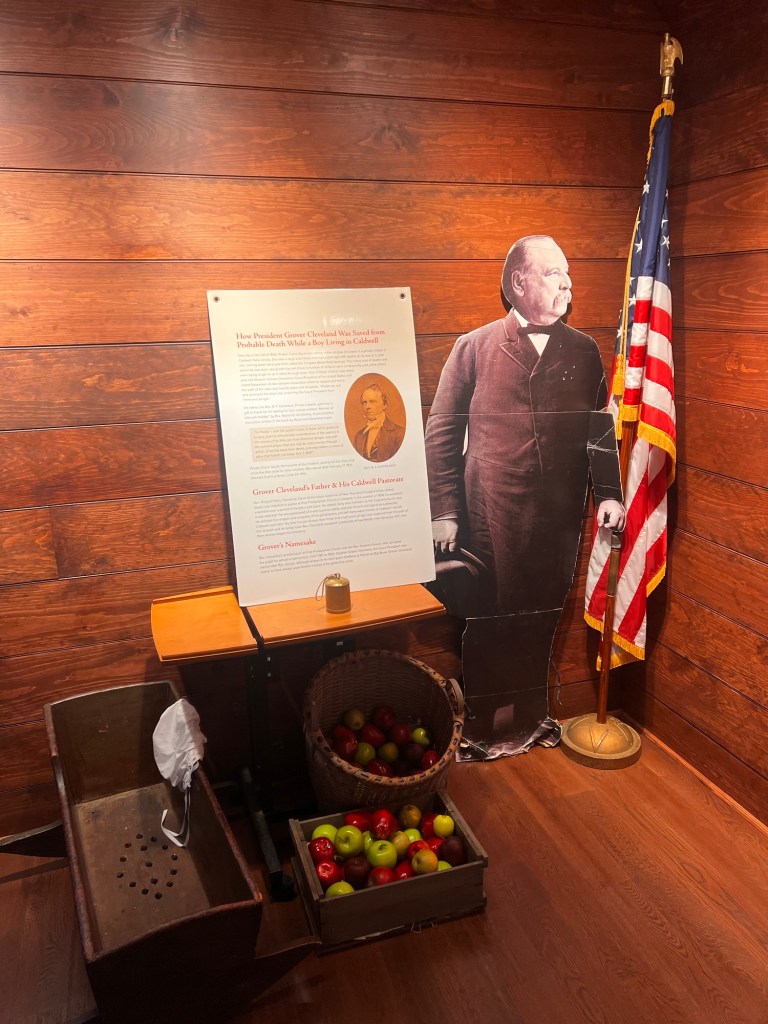
I recently visited the birthplace of of our 22nd and 24th President of the United States of America and it is an interesting look into one man’s past. The Grover Cleveland Birthplace Museum was originally the pastor’s residence for the First Presbyterian Church in Caldwell, NJ. The house sits next to the current church.
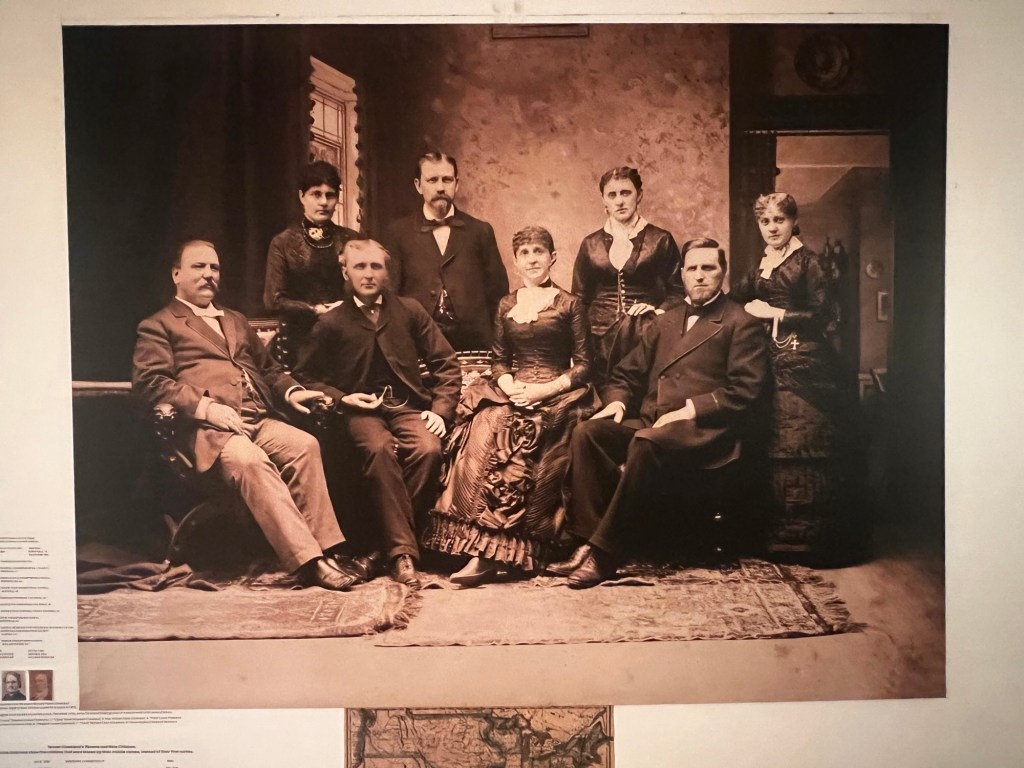
What I found interesting about this historical home is that the President’s sister, Susan, saved everything of the family’s past.
Grover Cleveland with his siblings who all survived into adulthood
Things like furniture, home furnishings, cooking utensils, paintings and photos of the family plus personal items of the President such as his clothes, pipes, shaving kits and traveling cases so there is a lot of interesting items to see and well thought up display cases.
The display in the new Visitors Center
The house is broken up into the kitchen area, the living chambers, the former living room area which has most of the displays and then the front hallway where more family displays are located. In 2026, the house is currently going through a renovation and reorganization of the home so things are currently changing.
When I visited the house for a second time 2026, the main floor was being reorganized as most of the personal items had been moved to the new Visitors Center in the back of complex. The second floor was closed and new displays were being created for the President’s personal items both in the home and in the Visitors Center.
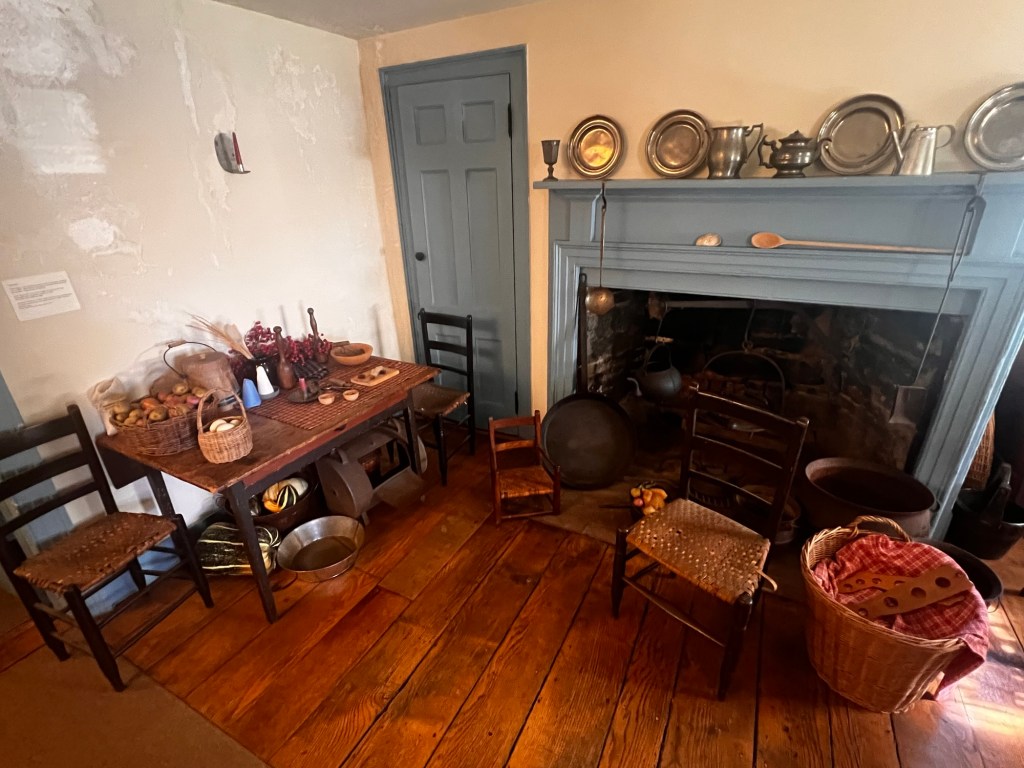
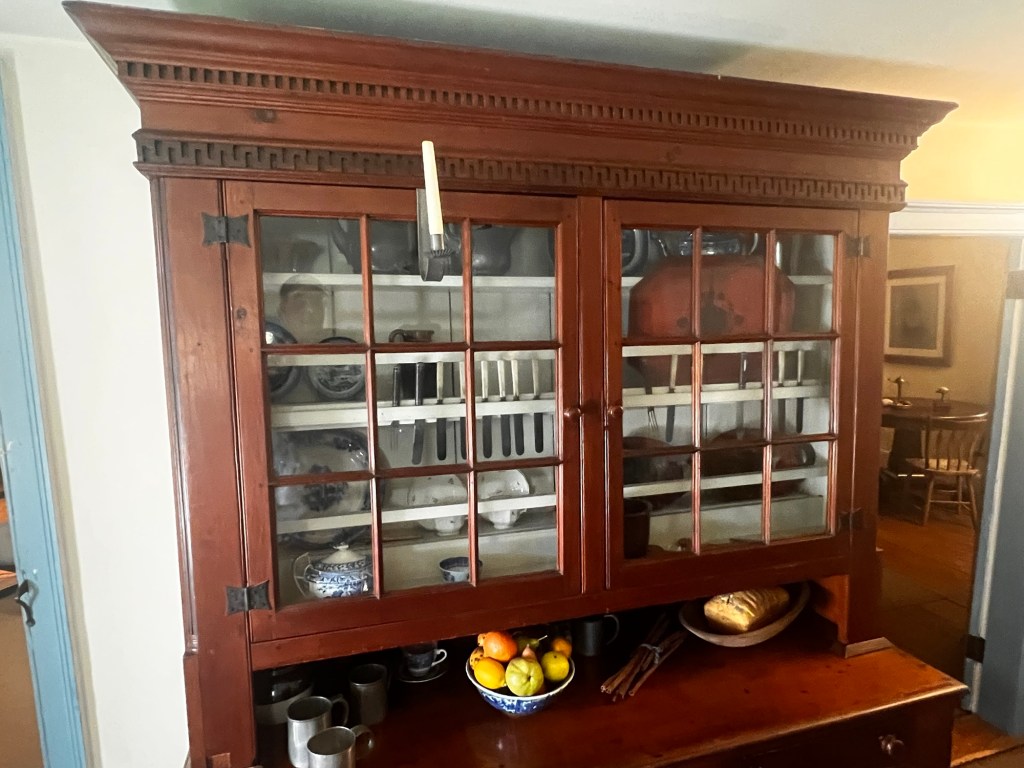
The homes kitchen for the Fall
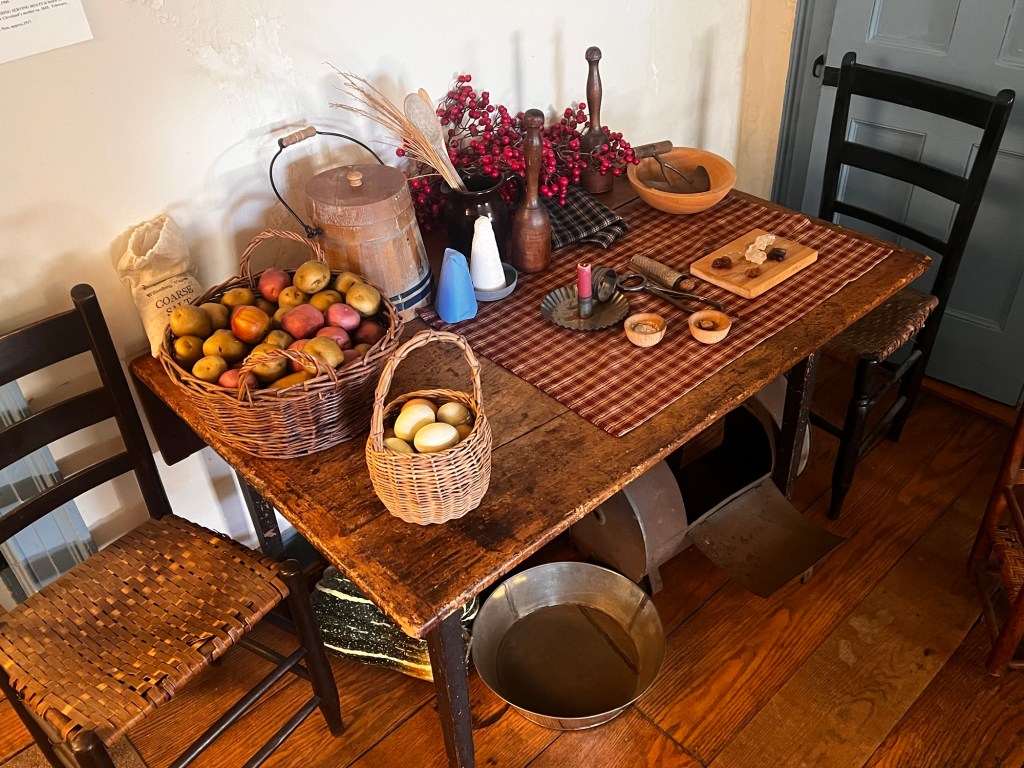
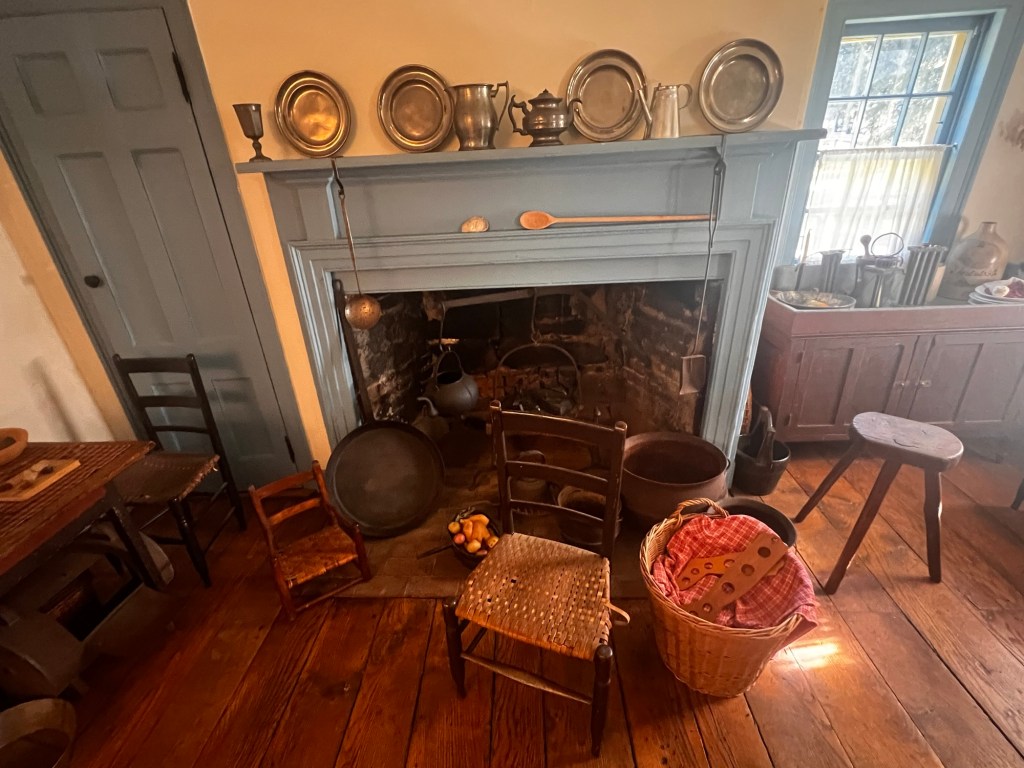
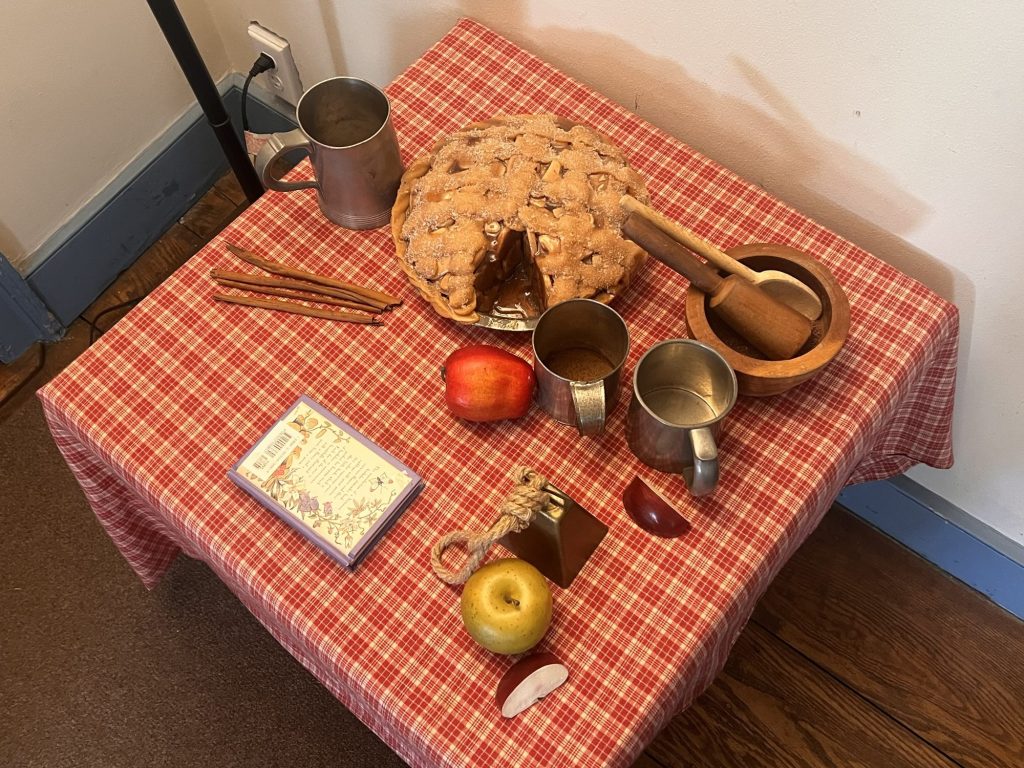
When we toured the home’s kitchen, it was set for the Fall Harvest and a hearty dinner was being cooked. Both the kitchen and fireplace hearth displayed a Fall theme.
The kitchen set from the Fall harvest
The center of the kitchen, the kitchen hearth
The tray and dishes to the right of the cabinet were owned by Grover Cleveland’s mother and were donated back to the museum
The kitchen prepared for a Harvest dinner
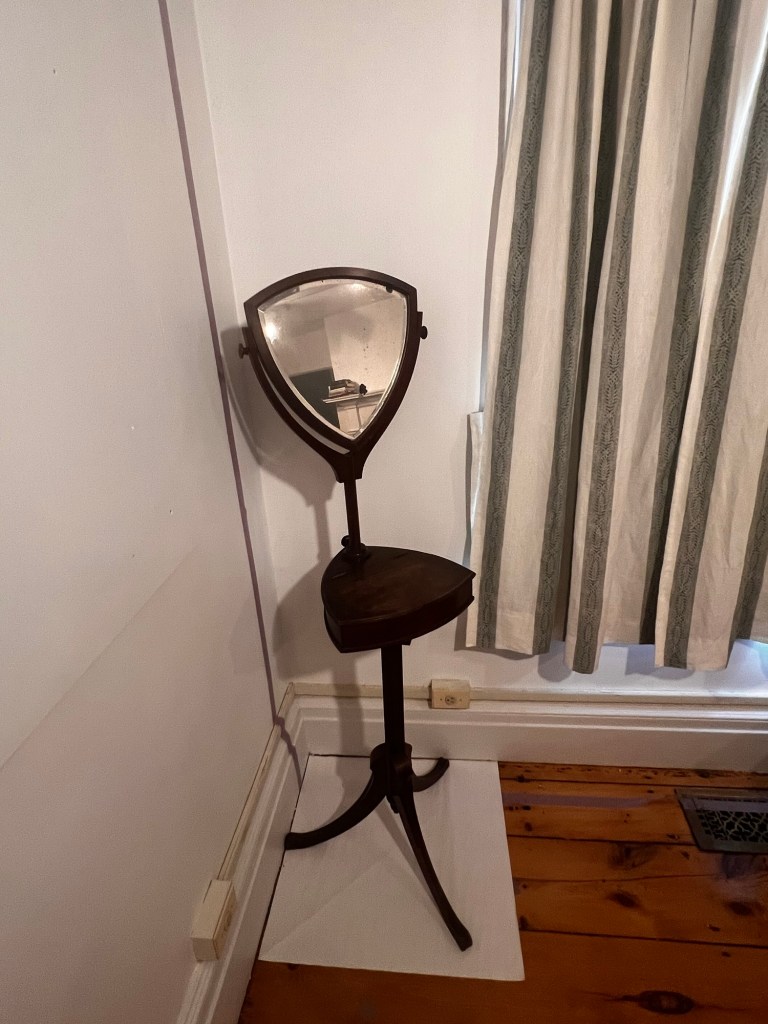
Try to take a tour with the tour guide, Paula, who knows the house backwards and forwards and gives you an interesting take on the family. She will be able to point out all the family objects and personal items that have been donated by family members. Things from formal clothes to the President’s personal shaving kit on display in the front of the house.
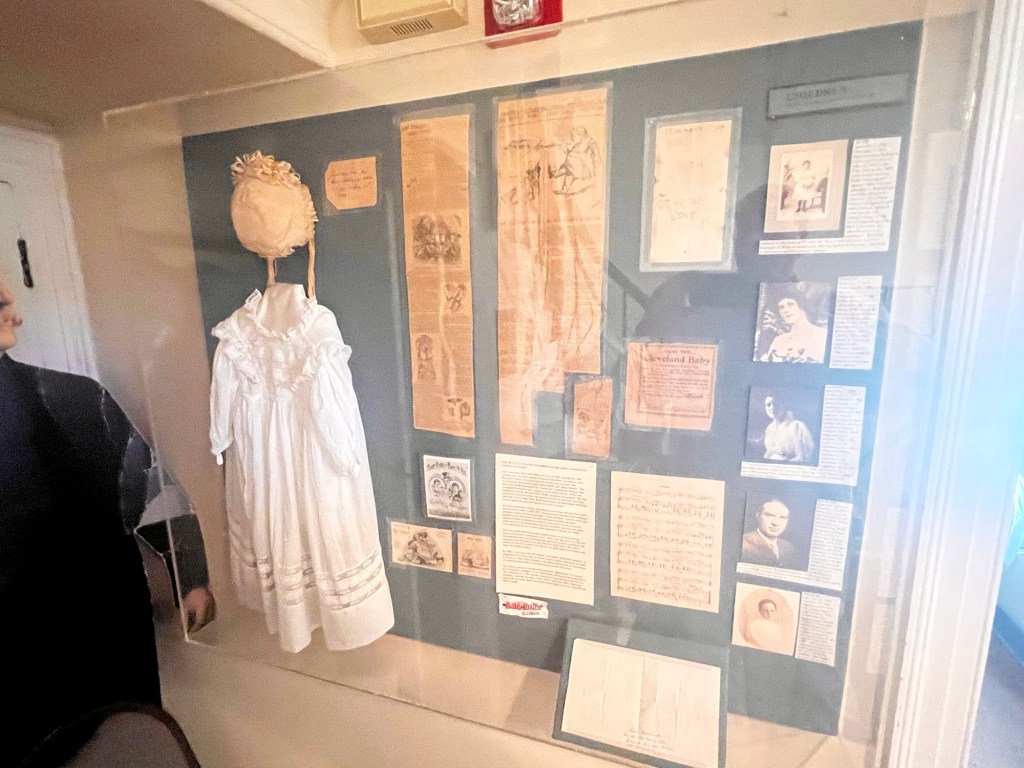
The display to Ruth Cleveland, who the Baby Ruth candy bar was named for
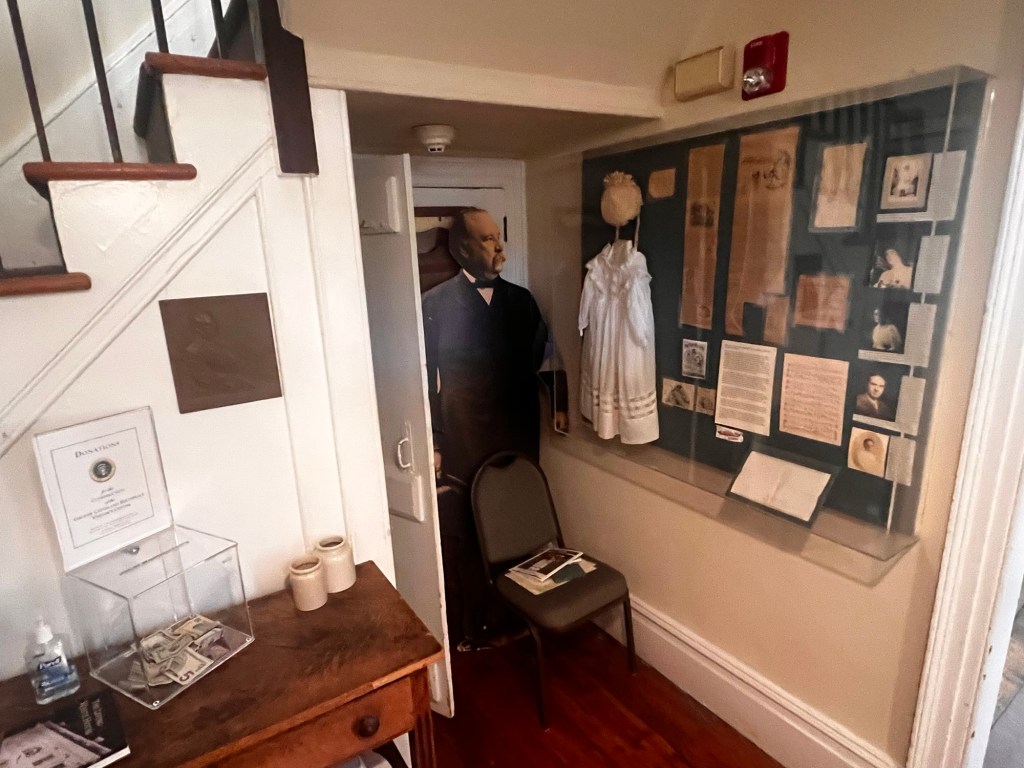
The display on the first floor dedicated to his children
The display by the first floor landing was dedicated to his daughter, Ruth, who died as a child. There is a display of her clothes and personal things along with a Baby Ruth wrapper as her name inspired the candy bar.
The whole tour takes about an hour and you will find yourself memorized by the displays and the family history of the children and grandchildren. It is interesting to see how the family grew when they were living in Caldwell, NJ. Take some time to walk the beautiful grounds and under the shade trees on the side of the lawn. The house was especially beautiful as the foliage arrived in the early Fall.
History of the Cleveland Birthplace Museum:
(from the museum website)
Grover Cleveland’s birthplace was built in 1832 as the Manse or pastor’s residence for the First Presbyterian Church of Caldwell. Cleveland’s father, the Reverend Richard Fally Cleveland was the minister here from 1834-1841.
Grover Cleveland’s early childhood
Originally this frame home had a two-story main section with a one-story kitchen to the east and a one-story lean-to at the rear. It was enlarged several times between 1848-1870 to meet the growing needs of the Presbyterian clergy. The house is a good example of local vernacular architecture (museum website).
The front Birthplace house and the church off to the side
The historical significance of the Manse was first noted in 1881 when Cleveland was running for Governor of New York. As his political star ascended, so did the interest in preserving his birthplace as a museum. A group of Cleveland’s friends and admirers began negotiations to purchase the Manse in 1907. Their efforts culminated in the opening of the house to the public on March 18, 1913 (museum website).
Most of the first floor rooms portray the Manse as it was in 1837, the year Grover Cleveland was born. The decidedly middle-class character of the rooms reflect the day to day life of the Reverend Richard Cleveland and his family. Among the artifacts on display from Cleveland’s early years are his cradle and original family portraits (museum website).
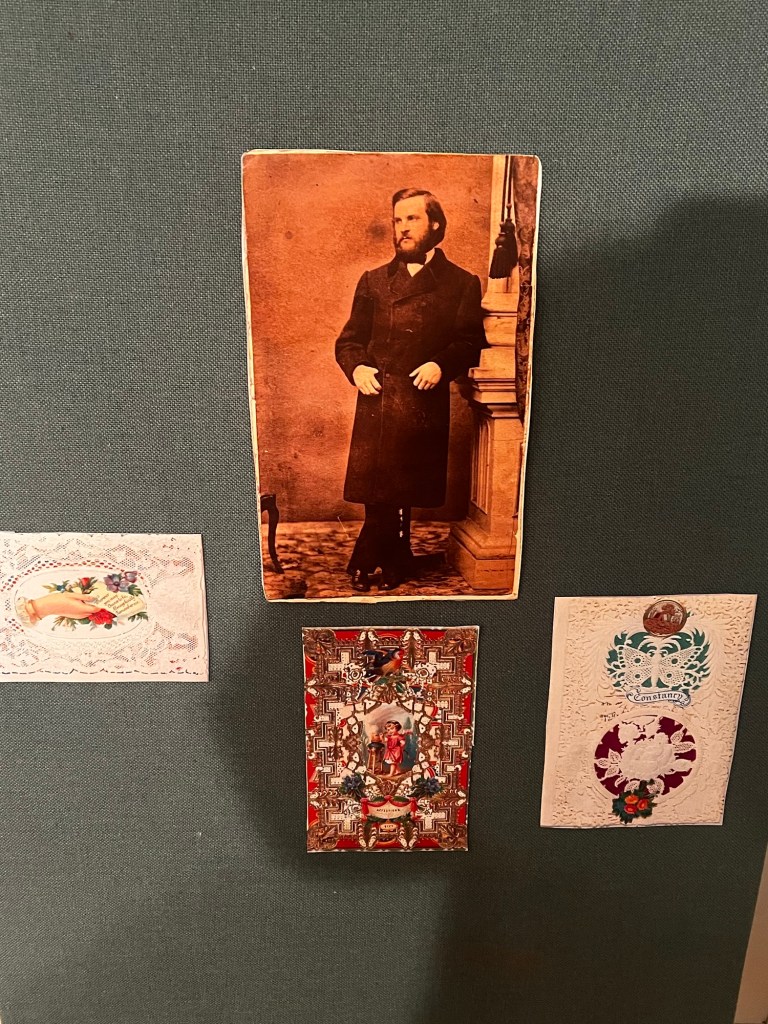
Grover Cleveland as a young lawyer
The President’s shaving table back in the museum
Contrasting sharply with the humble beginnings portrayed in these rooms, the exhibit gallery features a striking display of artifacts that reflect the financial and political success Cleveland achieved during the last quarter of the 19th Century. Here, the mud-slinging campaign of 1884, the public’s intense interest in his wife and children and America’s political climate throughout his split terms of office are explored (museum website).
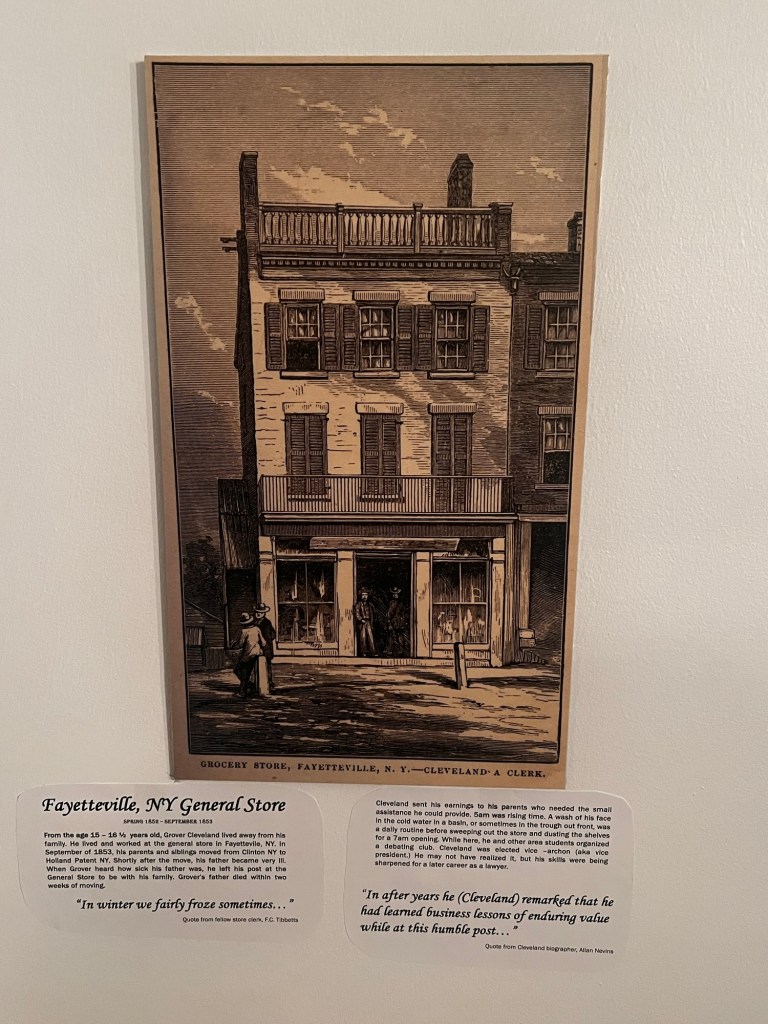
The family home in Fayetteville, NY
The Grover Cleveland Birthplace State Historic Site is the only house museum in the country dedicated to the interpretation of President Cleveland’s life. It is the nation’s leading repository of Cleveland artifacts and political memorabilia. The Grover Cleveland Birthplace is listed on the New Jersey and National Registers of Historic Places (museum website).
The President’s time in New Jersey:
(from the museum website)
Stephen Grover Cleveland was born on March 18, 1837 to the Reverend Richard Cleveland and his wife, Ann. Named for the first ordained pastor of the First Presbyterian Church at Caldwell, he would in time become known by his middle name, Grover.
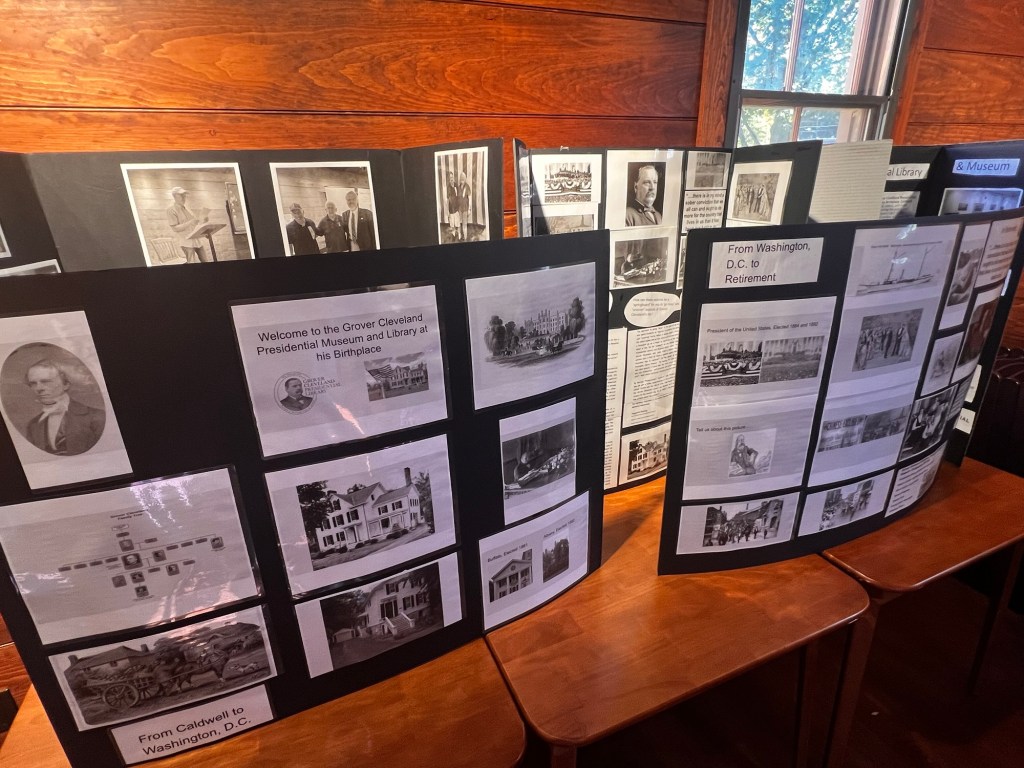
The display on the President’s life in the new Visitors Center
Cleveland was raised in a strict, modest home. As the son of a minister and the fifth of nine children, he had a religious and principled upbringing with few luxuries. When Grover was four, Reverend Cleveland moved his family to Fayetteville, NY.
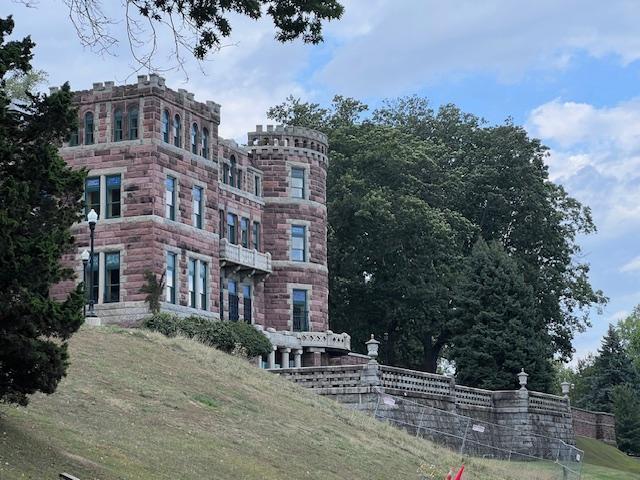
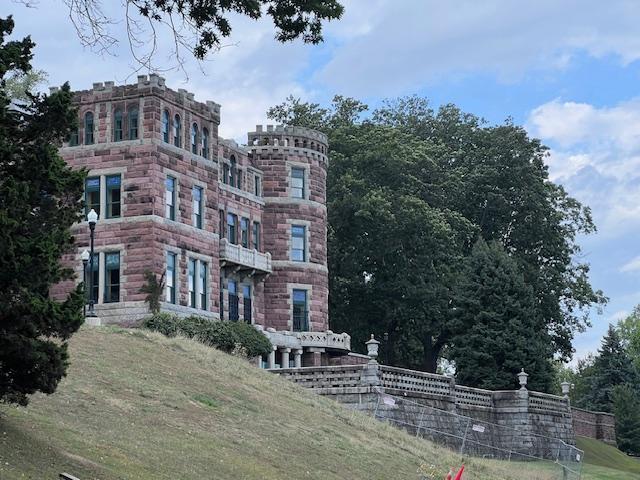
I have visited Lambert Castle a few times, most recently to see the Christmas decorations before they were taken down for the season. I found out from one of the director’s that they had not been put back up since their Holiday Bazaar back in November. I had seen them the year before and they had been very impressive.
Lambert Castle during the renovation in 2025
Right now the Castle is decorated for the Annual Christmas Craft Bazaar and it is just loaded with handmade crafts for the Christmas holidays. There are three floors of crafts and then on the third floor, there is a small restaurant to relax and look over the court of the house. After the bazaar in 2019, the Castle will close for a much needed five year renovation.
The Lambert Castle Christmas Bazaar 2019
I had a chance to visit the floors when they were not decorated for the holidays . The first floor is set up as if the family still lived there with the Billiards Room, Dining Room, Sitting Room, Music Room and Atrium still set as the family resided there. There is period furniture and decorations in all the first floor rooms to give a feel of what it must have been like to live there at that period.
The view of Lambert Castle from the second floor
The second floor galleries hold the collection of the Passaic County Historical Society with all sorts of objects, signs and historical items from all eras of the collection. You are able to see the footprint of the living quarters of the family.
The stained glass windows
The third floor at the time I was there was dedicated to the work of an Italian stone worker and artist who migrated and lived and worked in Paterson.
It is a very interesting way to see life at the turn of the last century in Paterson and the home offers a beautiful view of the City of Paterson and New York in the distance. I have never seen the grounds in the Spring but I am sure that they are quite lovely.
The view alone is worth the visit.
Don’t miss this virtual tour of the Castle and await until the renovations are done to visit again.
Bergecco-Parc Consulting Inc. commercial on Lambert Castle in 2019.
Bergecco-Parc Consulting Inc. Project: “Take me back to Paterson, NJ”.
Catholina Lambert was born in 1834 in Goose Eye, England. In 1851 at the young age of 17, Lambert left home to seek his fortune in the “Land of Opportunity” that was America. After several successful ventures in the silk industry, Lambert decided to build a home that would be reminiscent of the castles he recalled from his boyhood in England. In 1892, he built his own castle on Garret Mountain in Paterson, NJ, then known as the “Silk, City of the New World.”
Catholina Lambert
Lambert’s home was built to showcase his elaborate art collection of fine European and American paintings and sculpture. At one time, his collection was so vast that it was considered to be “the nucleus of an American Louvre.” In 1913, Lambert fell into debt and his fortune started to dwindle. As a result, he was forced to mortgage the Castle and eventually sell much of his art collection. The proceeds allowed him to live comfortably in the Castle until his death at age 89 in 1923.
After Lambert’s death, his son, Walter sold the Castle to the City of Paterson, which later sold it to the County of Passaic. Today the Castle is still owned by the County and serves as the headquarters of the Passaic County Historical Society. The Society, a private not for profit organization, owns the historical artifacts and works of art.
Catholina Lambert and Company
The home and the museum, exist as a reminder of a bygone era and as a tribute to the great accomplishment of the Castle’s creator. Although most of the furnishings today are not original to the Lambert’s home, they represent period furnishings that would have been found in the Castle during the Lambert era.
For more information about the rooms and decor, visit The Lambert Castle Blog at:
The Passaic County Historical Society is a private non-profit educational organization founded in 1926 and dedicated to cultivation of interest in the history and culture of Passaic County and former home of silk magnate Catholina Lambert was built in 1892. The Castle is owned by the County of Passaic and has been the home to the Society since 1934.
Library & Archives:
Located in the lower level of the Castle is the Elizabeth A. Beam Memorial Historical Research Library, operated by the Passaic County Historical Society. Here scholarly researchers, genealogists and historical enthusiasts may find books, manuscripts, maps, photographs, genealogy records and other information that reveals the history of Passaic County. Access to the library is included with regular admission to Lambert Castle.
Membership:
The Society depends upon the support of its membership as well as museum admission to sustain its important mission. Please consider becoming a member and helping to preserve the history of Passaic County.
The Second Floor Galleries:
The Castles’s second floor has several exhibition galleries, each presenting a different historical display from the Society’s collections. To the right of the fireplace on the walls of the second floor balcony is an exhibition of works by noted Paterson artist Julian Rix. On the opposite side are portraits of notable Passaic County residents and a collection of historic engravings of the Passaic Falls. Behind the fireplace are the Lambert’s private rooms. To the left, in the former sitting room and bedroom of Mr. Lambert, are the Curiosities and Local Folk Art galleries and the famous Brass Dog Sculpture that served for many years as an advertising sign for a tinsmith’s shop in nineteenth-century Paterson. In the adjacent room, the former bedroom of Mrs. Lambert, is the Local History Gallery which features historical images of prominent businesses and people.
The Third Floor Exhibition Gallery:
The Third floor of Lambert Castle is reserved for changing or seasonable exhibitions.
Disclaimer: This information comes directly from the Passaic County Historical Society & Museum pamphlet and I give them full credit of it. Rather than transcribing the whole pamphlet with the description of rooms, I attached their website and blog on WordPress.com for more detailed viewing.
I have visited Branch Brook Park many times over the past thirty years and during the Annual Cherry Blossom the park is especially nice. The City of Newark still has the reputation as a rough place and parts of the City I still would not like to walk around in after dark (as are all cities). Branch Book is separated from the rest of the City and sits on the border of Newark sharing the park with the town of Belleville.
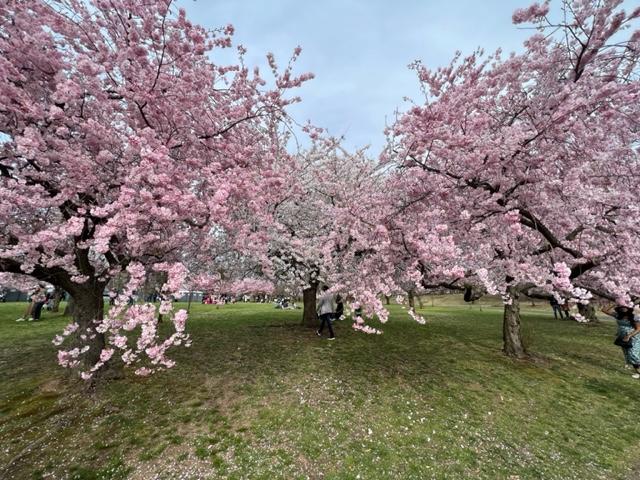
The Cherry Blossoms were in peak blooming today
The Cherry Blossom Festival, which takes place every Spring with the coming of the blooming of all of the Cherry Trees which cover the whole length of the park, is always anticipated by people all over the State of New Jersey. They bloomed a little late this year due to the unseasonably cold weather this year. It was snowing up to two weeks earlier so the buds opened later this year. In come cases, the peak of the blossoms came about two weeks late.
The Cherry Blossom Festival at Branch Brook Park goes on for the two weeks of the blooming of the trees
It was well worth it as spread over thirty two acres of land are over 2,000 cherry trees that bud every year at slightly different times due to the different species of plants. You day will start in the park at the Visitor’s Welcome Center located in the eastern section of the park, where you will read about the history of the park and have a chance to check into the activities of the annual Festival or just relax and go to the bathroom. The Visitor’s Center has just been renovated and is a nice starting point to walk around the park during the festival. There is a lot of public parking in this area and your car will be safe with all the people walking around.
The park was awash with colors
Walking among the paths of blossoming Cherry Trees is quite spectacular. It is Mother Nature showing here best with all sorts of hues of light and dark pink. It is something to walk around the trees as the petals in some cases rain down on you. Because the Festival is such a tradition with visitors some even wear their kimono’s or their wedding gowns in the park for pictures.
Walking along the stream that runs through the park
The park is in the process of a decade long renovation after years of neglect. The Branch Brook Park Alliance in partnership with Essex County Department of Parks, Recreation and Cultural Affairs, is working to restore the park’s historic design and adapt it to today’s lively use. Our park holds claim to many firsts: America’s first county park opened to the public; first to be listed on both the New Jersey and National Registers of Historic Places and the first to surpass Washington DC in the number and variety of cherry trees (Branch Brook Park Alliance).
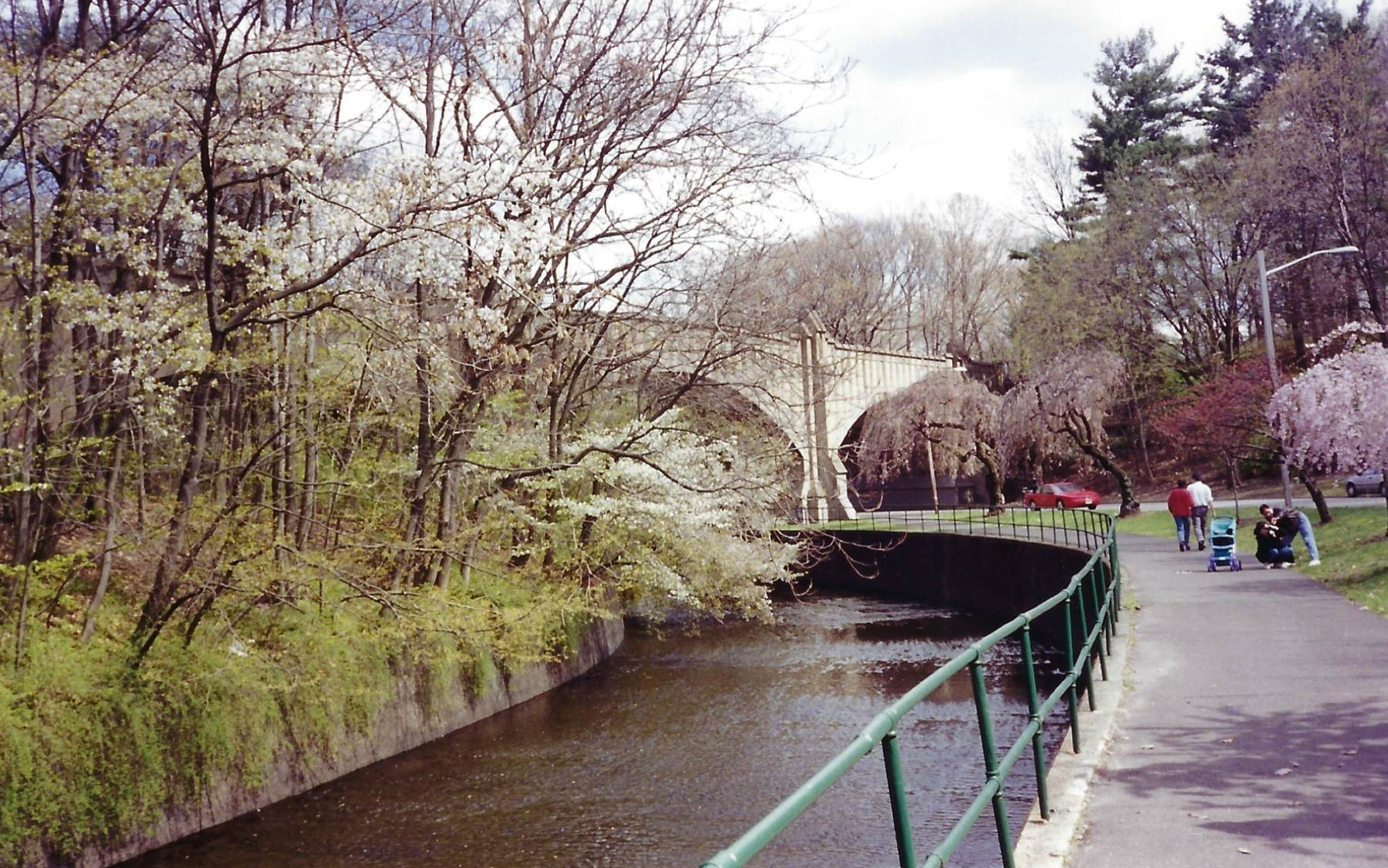
Cherry Blossom Festival in Branch Brook Park Newark, NY 2010
Completed projects set the stage for the park’s full restoration. The County has refurbished historic bridges, renovated the Cherry Blossom Welcome Center and created the Cherry Tree Memorial Grove to promote the “Susan G. Komen Race for a Cure”. Extensive plantings of cherry trees, soon to number 4,000, complement the park’s 78 other tree varieties. Restoration of historic sites include the Octagon Shelter and park entrance ways (Branch Brook Park Alliance).
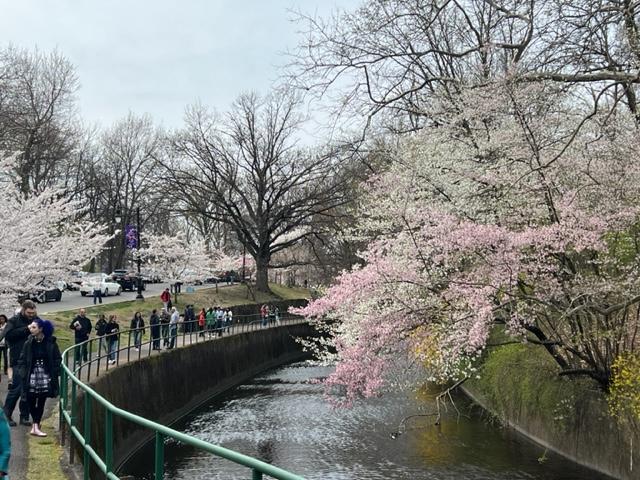
The views by the steam were especially beautiful in 2023
In 2022, the warmer weather that has been coming in earlier in the month keeps moving the blooming up a few weeks. The cherry blossoms seem to be flowering in the three main areas I visited, Newark, Brooklyn and Washington DC came out almost two weeks earlier than usual. With all the rains that we have had in the last three weeks have also done a number on the trees. Most lost their petals earlier than their planned festivals so even in DC they had their cherry blossom festival without cherry blossoms. When I came home from that celebration, even Newark was looking bare compared to my quick trip last weekend when you could not even enter the park. I think more people in these COVID days want to communicate with nature more than ever.
People were taking pictures by this spot for their weddings and parties
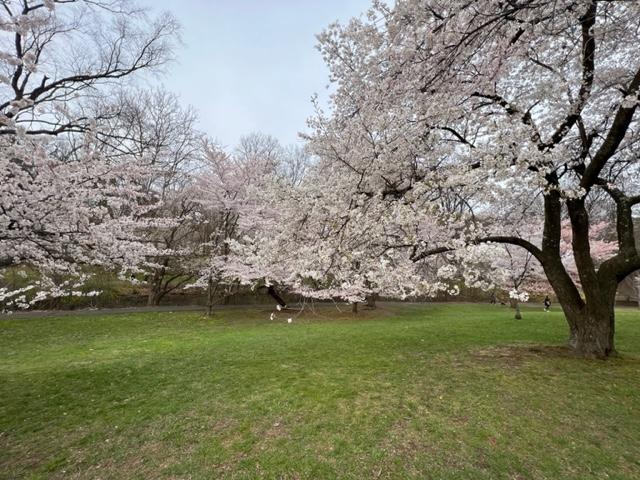
The Branch Brook Park lawn later in the day
When I visited the park in 2023, the place was mobbed with people. The Cherry Blossoms were at their full peak on April 8th, 2023 and I had never seen them this brilliant before. They were gorgeous and such colors of pink, white deep pink and the brilliant yellows from other flowering trees really complimented one another. Walking along the paths through this part of the park was a delight to the eyes.
The brilliance of the flowering trees
The only problem I saw was the visitors behavior towards the trees. People were climbing on the trees, pulling on the branches and tearing off the cherry blossoms. Either it is all the tourism classes that I am taking at NYU or I just am really noticing how obnoxious people are getting. There was so little respect towards nature. People were disrupting the very thing everyone came to see.
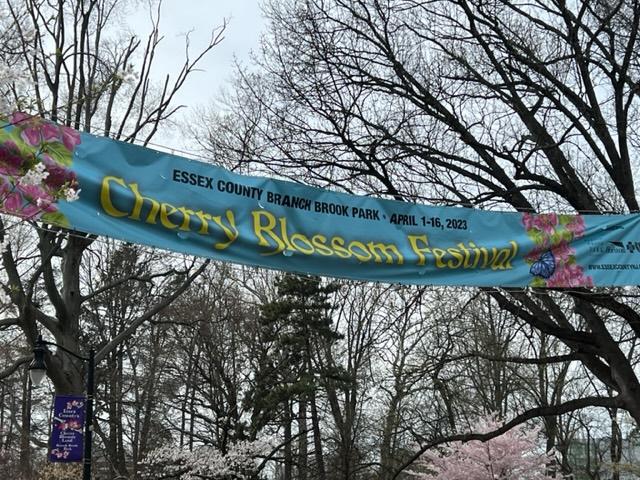
The Cherry Blossom Festival signs lined the park
Still I had a wonderful time and it was nice day to walk around and enjoy Branch Brook Park. It was just disappointing when the skies got cloudy and it got a little cooler. That did not stop people from lining the paths, walking their dogs and just enjoying the day out. I have never seen the park this vibrant before!
There was a nice crowd this afternoon at the park
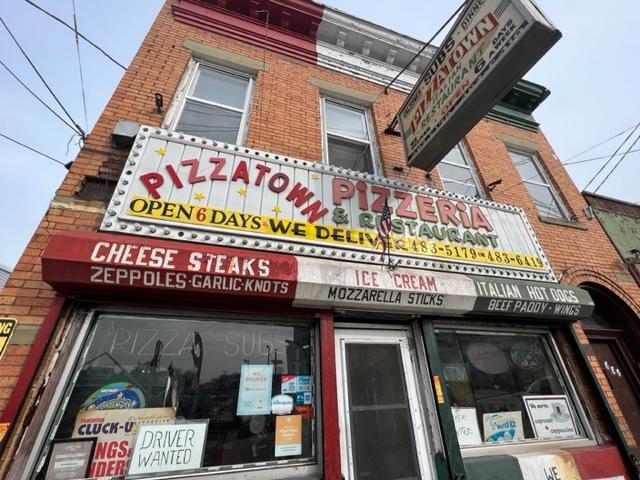
I was able to sneak out of the park for lunch and go to Pizzatown Pizzeria in Newark for lunch. This old pizzeria has been around since about the 1960’s and has the most amazing cheese pizza. I got for a slice when I am visiting the park. The restaurant is a holdover when this was still an Italian enclave (it is now more Spanish) but still popular with the locals.
Pizzatown Pizzeria & Restaurant at 883 Mount Pleasant Avenue in Newark, NJ
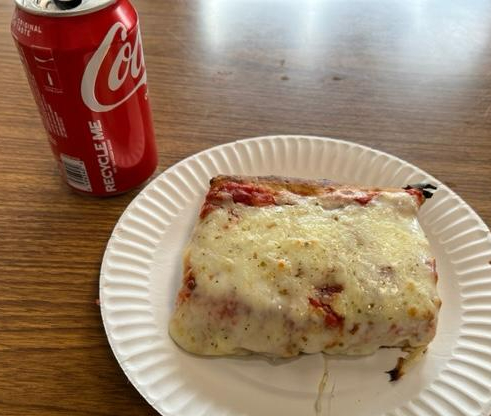
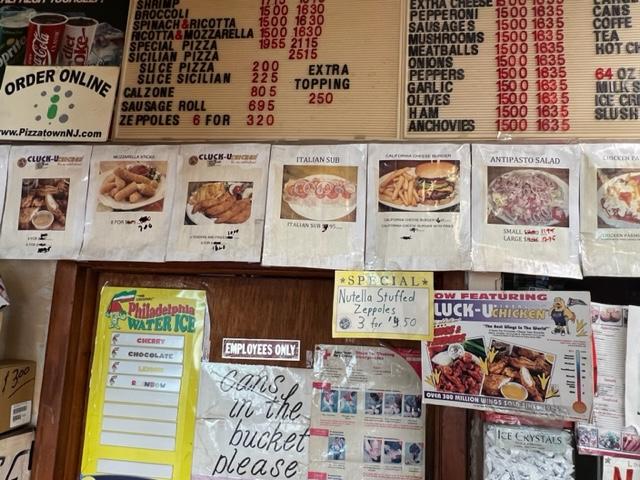
The place is really full of character and the best part is that the pizza is delicious! I always enjoy coming here for lunch or a snack. I had a slice of Sicilian pizza ($3.50) and a Coke and at $4.50 is was a reasonable lunch. This in comparison with the food trucks in the park which are much more expensive. I highly recommend it.
The Sicilian slice at Pizzatown in Newark, NJ
The inside of the restaurant is so old that is looks retro
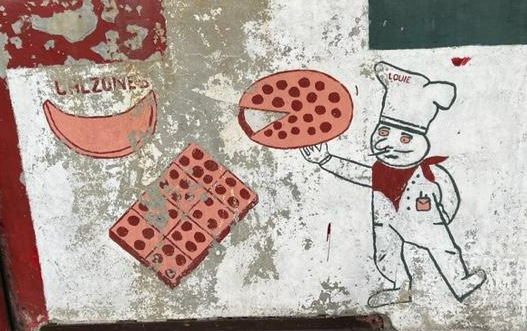
I like the painting on the restaurant. It’s classic.
It was a nice lunch and it gave me the energy to continue walking the length of the park further than I had before. Talk about getting some get pictures. As it got later, the crowds thinned out a bit more so there was more room to take some great shots.
It was a wonderful afternoon!
Branch Brook Park in its prime
The History of Branch Brook Park in Newark, NJ:
The Cherry Blossom Display at Essex County Branch Brook Park:
In 1928, Caroline Bamberger Fuld, after seeing the cherry trees in the Nation’s Capital, offered a gift of 2000 trees for Essex County Branch Brook Park. To showcase the park’s newly acquired Extension, the renowned Olmsted Brothers landscape architectural firm created a planting design using dark evergreen trees as a backdrop for the mix of white and pink cherry blossoms from varieties such as Higan, Yoshino and Kwanzan (Branch Brook Alliance).
The entrance to Branch Brook Park in Newark, NJ
After a 2004 inventory showed 1.000 cherry trees remaining, an ongoing initiative to replace and expand the collection was undertaken by Essex County Executive Joseph N. DiVincenzo Jr. and the Branch Brook Alliance. By 2016, the number of cherry trees was expanded to over 5,000. Cherry trees in 27 varieties now adorn all sections of the park, from the Southern Division at Clifton Avenue in Newark to the park’s Extension at Washington Avenue in Belleville (Branch Brook Park Alliance).
The History of Branch Brook Park (Branch Brook Park Alliance):
1862: The land we know now as Branch was then the property of the Newark Aqueduct Board. Much of that land was commandeered in July of 1862, at the outbreak of the Civil War; known as Camp Frelinghuysen, it was used as a training ground for New Jersey volunteers. Between 1862 and 1864, six regiments encamped there before fighting in every important battle from Antietam to Appomatox.
1867: The New Jersey State Legislature authorized a Newark Park Commission, with a mandate to locate grounds for a municipal park. Fredrick Law Olmsted, the famed landscape architect and designer of Central Park in New York, visited Newark and Essex County and recommended a site encompassing what is now Branch Brook Park, Olmsted and his partner, Calvert Vaux, envisioned Branch Brook Park to be a “grand central park” for the City of Newark. They understood that American cities of the 19th Century were growing quickly and changing rapidly. The parks they designed embodied their view that all people, regardless of their position in society, were entitled to fresh air, quiet places and the beauty that only nature can provide.
The colors were amazing in April of 2023
1889: The Newark Common Council donated 60 acres of the Aqueduct Board property surrounding the circular holding reservoir to “park use”. Known as Reservoir Park, the land was left undeveloped. Much of the surrounding neighborhoods were crowded with bleak, unhealthy tenements. To the north lay a dismal march known as Old Blue Jay Swamp.
1895: The Essex County Park Commission was formed to enable the creation of a county-wide park system, the first in the nation. The City of Newark transferred Reservoir Park, which would become the nucleus of Branch Brook Park to the Commission at ta cost of $350,687. The surrounding properties were acquired by the County while donations of land from prominent Newark families extend the park northward. The Ballantine Family donated 32 acres of their property and another 50 acres were given by Z.M. Keene, William A. Righter and the Messrs. Heller. John Bogart and Nathan Barrett were chosen to provide plans and advise on the development of the park. Their design was gardenesque in style, dominated by the geometrically patterned gardens and numerous architectural elements including arbors, viaducts, gazebos and shelters that shaped the park’s Southern Division.
The drive in the entrance of the park
1896: Demolition and grading began following Bogart and Barrett’s plans.
1898: Dissatisfied with Bogart and Barrett’s work, the Commission hired the Olmsted Brothers firm; John Charles Olmsted and Fredrick Law Olmsted Jr. were Fredrick Law Olmsted Sr’s nephew/stepson and son. While their work continued that naturalistic style of landscape design championed by their father, in Branch Brook Park, they were required to incorporate the elements of Bogart and Barrett’s plan that had already been constructed. This led to the Olmsted firm’s design concept consisting of three divisions: the Southern, from Sussex Avenue to Park Avenue, incorporating the elaborate ‘gardenesque’ elements from Bogart and Barrett’ the middle from Park Avenue to Bloomfield Avenue, which would be a transitional zone, mixing the exotic with the indigenous and as the culmination, the Northern Division, the largest and most naturalistic area of the park.
The views were spectacular in April of 2023
1900: The first Chrysanthemum Show was held in the newly constructed greenhouse in the Northern Division. This annual event brought thousands to the park every fall until 1969.
1903: The United Singing Societies donated the bust of composer Felix Mendelssohn they won in Baltimore, MD at that year’s ‘saengerfest’, the annual, nationwide German singing competition that generated excitement comparable to today’s Super Bowl.
1906: The gran boathouse, designed by the firm of Rossiter and Wright, was added to the southern end of the lake, replacing an earlier structure.
The crowds were large in April 2023
1916: The Essex County Park System build its Administration Building on the parkland that had been set aside to provide a view from Concourse Hill. Designed by New Jersey native Harold Van Buren Magonigle, the exterior has eight different shades of coarse-textured terra brick and expensive terra cotta reliefs especially notable around the main entrance. Under the wide overhang of the tile roof are colorful, allegorical decorations executed by Mrs. Edith Magonigle.
1924: Industrialist and philanthropist Harmon W. Hendricks, owner of a copper rolling mill on the Second River, donated his family home and the adjoining 23 acres to the north of Branch Brook Park. An additional 94 acres were acquired by the county to link Hendricks Field Golf Course and Belleville Park in an unbroken swath of green. This land included what was the first landing site for the U.S. Postal Service where bi-winged airplanes landed on a short field with bales of hay rimming the end of the runway to prevent accidents.
One of the side paths in April 2023
1927: Caroline Bamberger Fuld donates 2,000 Japanese flowering cherry trees to a display in Newark that would rival that in Washington DC. The Olmsted Brothers’ firm laid out the trees naturalistically on the tiered slopes along the narrow valley of the Second River, evoking the way the trees would be seen in Japan and distinguishing Branch Brook Park’s display from all others. Eventually the collection would grow to more than 3,000 trees.
1928: The Morris Canal that ran from Jersey City to the Delaware River and formed the park’s western boundary was abandoned and became the Newark City Subway. Now Newark Light Rail, there are six stops along the park that provide easy access by mass transit.
1940: The Rossiter and Wright boathouse was deemed unsafe and dismantled. A smaller building replaced the grand structure.
1956: More than 3,000 people attended the Fall Chrysanthemum Shoe in the greenhouses.
The crowds along the pathways at Branch Brook Park
1967: Riots broke out in Newark and devastated the community. Many buildings were burned, boarded up and sections of the city were deserted. The National Guard was called in to maintain order and bivouacs in Branch Brook Park, where Civil War volunteers mustered 100 years earlier.
1974: Community members rallied to save their beloved park and the Friends of Branch Brook Park was formed.
1976: The Newark Cherry Blossom Festival was established.
1980: Branch Brook Park was placed on the New Jersey Register of Historic Places.
1981: The Park was placed on the National Register of Historic Places.
1986: The Boathouse was destroyed by fire and replaced by a concrete block structure.
One of my favorite shots of the park in 2023
1999: Branch Brook Park Alliance (BBPA) was formed.
2002: BBPA hired Rhodeside & Harwell (RHI), nationally recognized landscape architects, to produce a Cultural Landscape Report, Treatment and Management Plan, to serve as a blueprint for the park’s restoration.
2003: The lake edge near the boat house in the Southern District was replanted to recreate the original Olmstead plan; this pilot project was designed by RHI and funded by BBPA.
2004: A tree inventory was conducted by BBPA as part of the Cultural Landscape Report and revealed that less than 1,000 cherry trees remained from the original gift of 2,000 trees and subsequent plantings.
2005: Responding to community interest, the first farmers’ market took place, along with other activities to help reactivate the park.
2006: BBPA, together with the Essex County, the North Ward Center and the Newark Boys and Girls Clubs developed the Middle Division ball fields, now home to 7,500 ballplayers annually.
A grant from the Essex County Recreation and Open Space Trust Fund enabled the first planting of what would total more than 3,000 new cherry trees over the next four years.
2007: The Ball fields in the Extension were redesigned and upgraded while the surrounding landscape is restored. The Cherry Tree Demonstration Project showed what a fully restored collection should look like with extensive companion plantings and appropriate hardscaping.
2008: The Octagon Shelter was reconstructed. The Waterway Rehabilitation Feasibility Study was completed, setting forth a path for the restoration of one of the park’s most salient features.
2009: Prudential Global Volunteer Day drew more than 300 participants from diverse sectors of the community. A Maintenance Plan for the park was completed and implementation begun at six volunteer days.
2010: Design work was completed for project that will transform western lake edge in the Southern Division. The rehabilitation of the Octagon Field House in the Middle Division was completed.
The Cherry Blossom Festival in Branch Brook Park, Newark, NJ 2010
(The History of Branch Brook Park in Newark, NJ by the Branch Brook Park Alliance)
Disclaimer: This information was taken from the Branch Brook Park Alliance and I give them full credit for their work. Don’t miss the Cherry Blossom Festival each Spring April/May depending on the weather.
Branch Brook Park in 2025:
I had a chance after work on afternoon when the Cherry trees were in peak form. The park was quiet on a Thursday afternoon and was perfect time to walk around and see the beautiful trees.
I walked along the paths on a gloomy afternoon where the rain always threatened us the whole time but I would not have wanted to miss this display.
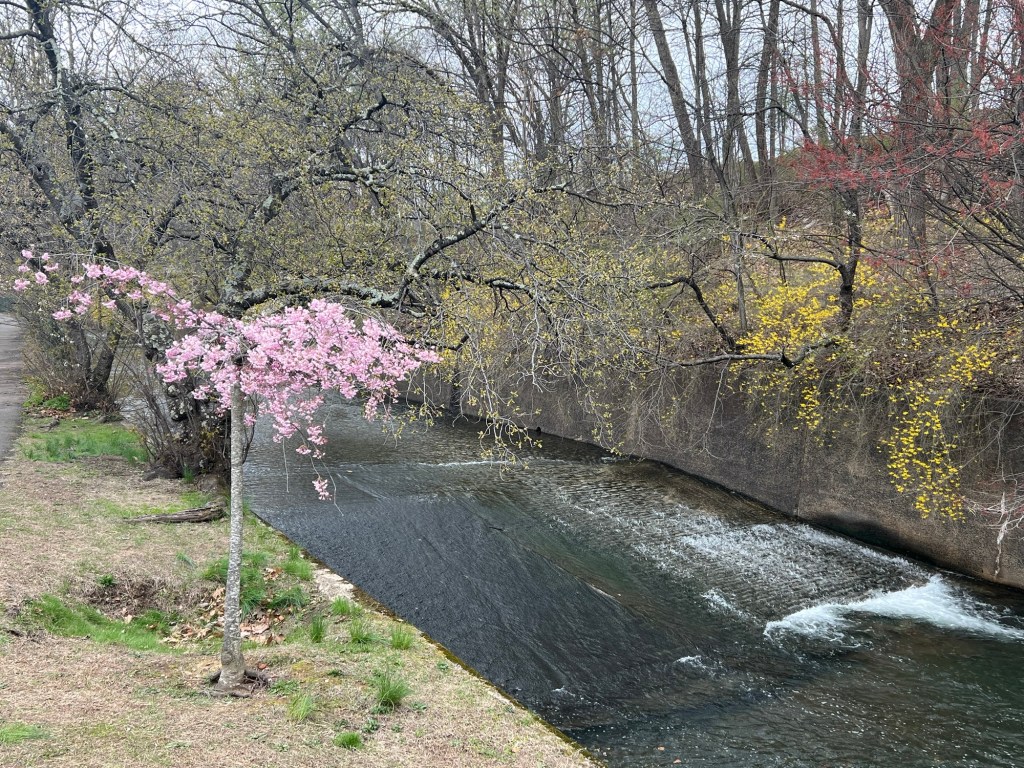
The paths along the stream at Branch Brook Park
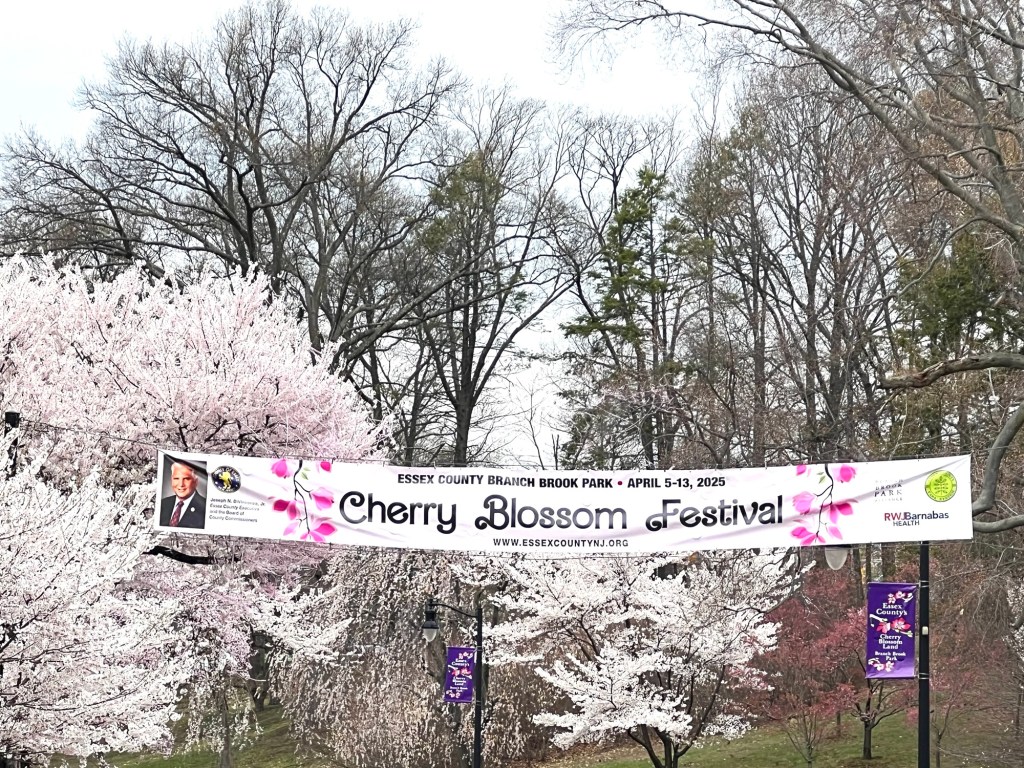
The start of the Cherry Blossom Festival in 2025
Branch Brook Park Cherry Blossom trees at peak in Spring 2025
The banners line the roads in the park for the festival and walking tours in 2025
The Cherry trees on a gloomy day
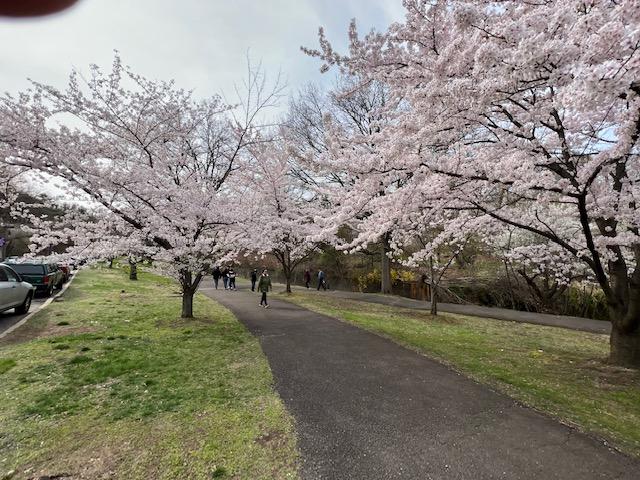
The Cherry Blossoms path
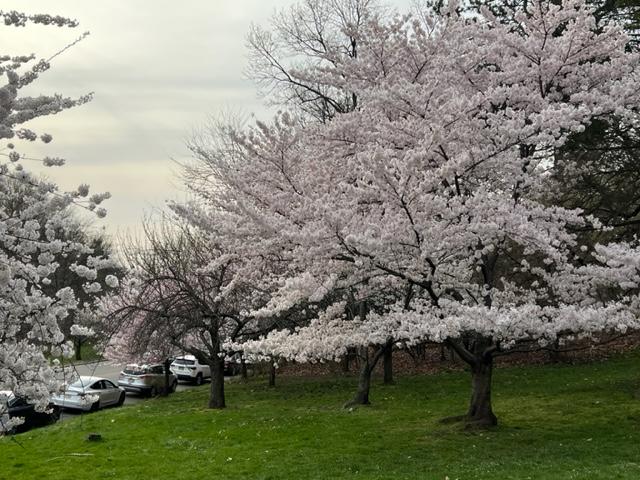
The beauty of the trees in 2025
The river that runs through the park
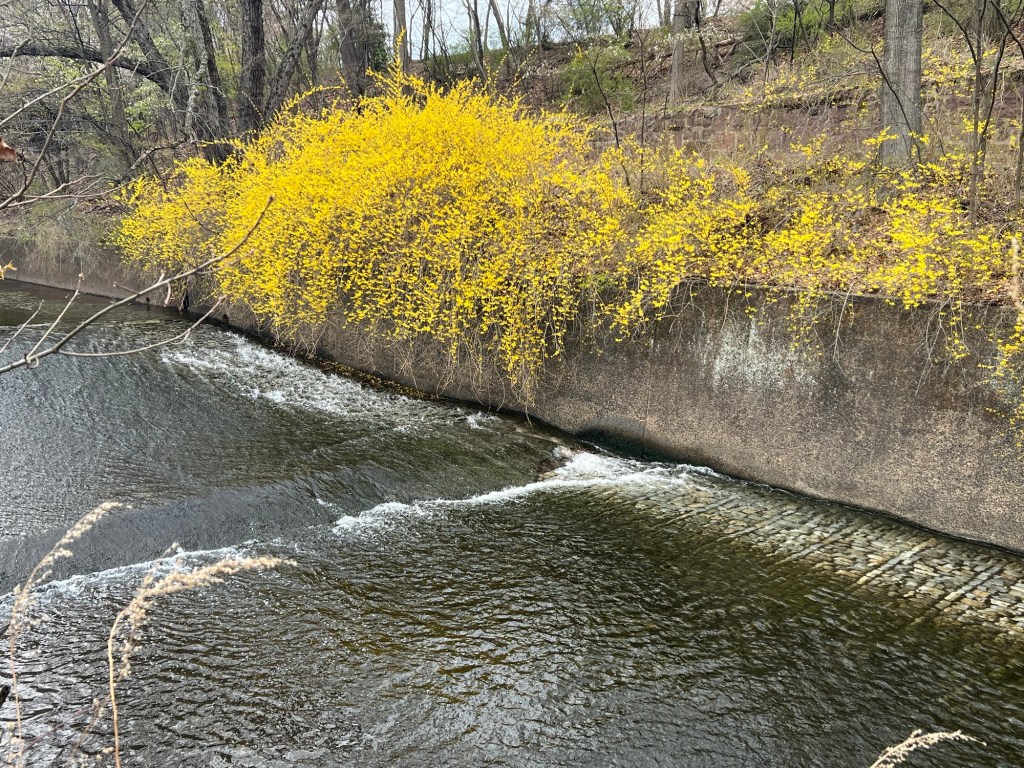
The water rushing through the park
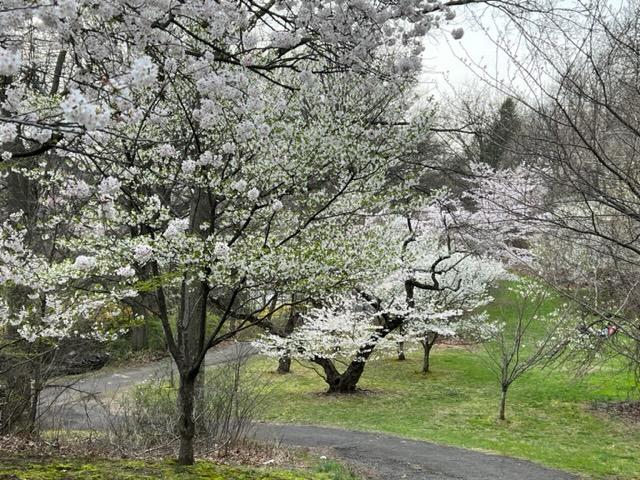
The flowering plants in the park
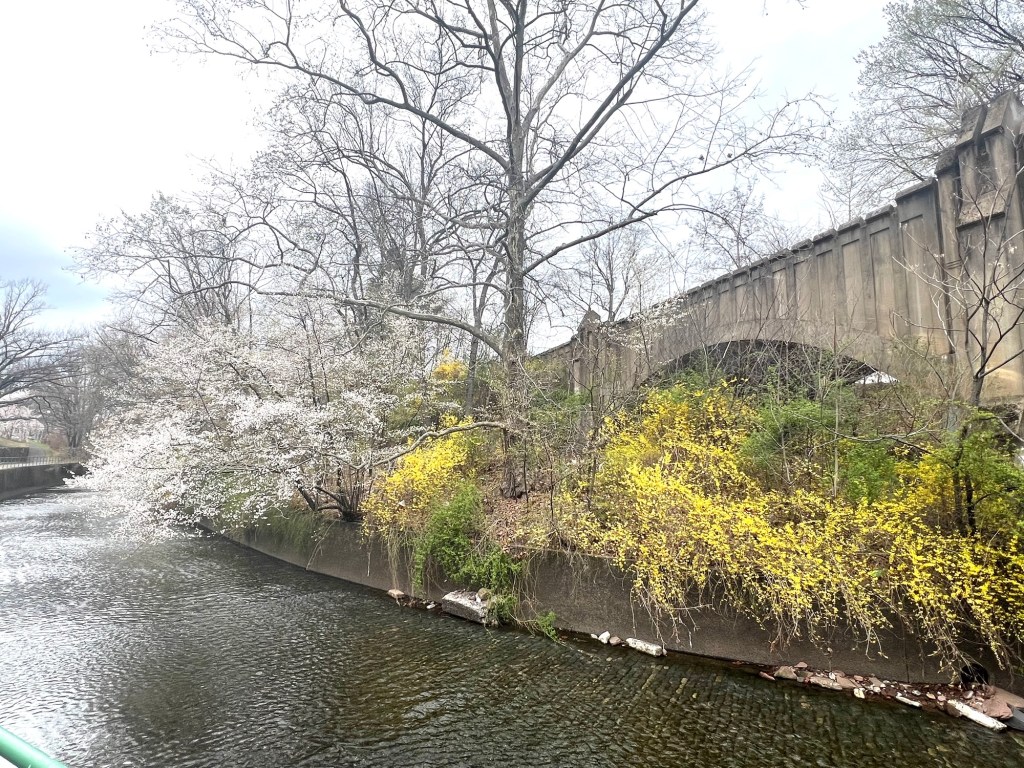
The bridge in the park
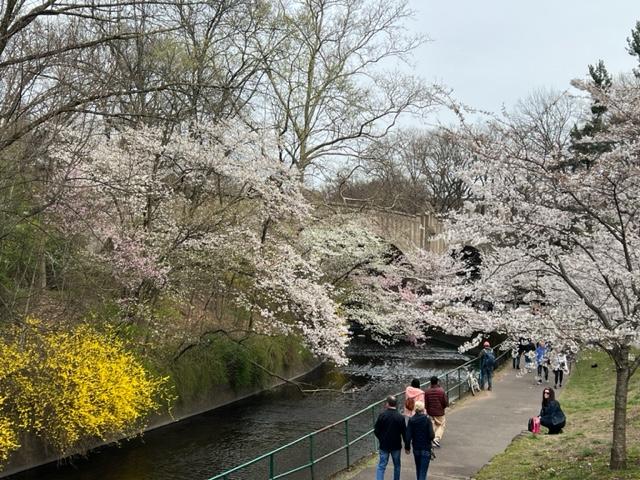
The flowering trees by the river
The paths along the river on a gloomy day
The flowering bushes along the river in 2025
The flowering trees around the river
Entering the core of the park
The County’s Cherry Blossom festival in 2025
The beautiful trees along the paths
The flowering canopy
The flowering Cherry Trees in peak form
The flowering trees in the park
The core of the park in bloom
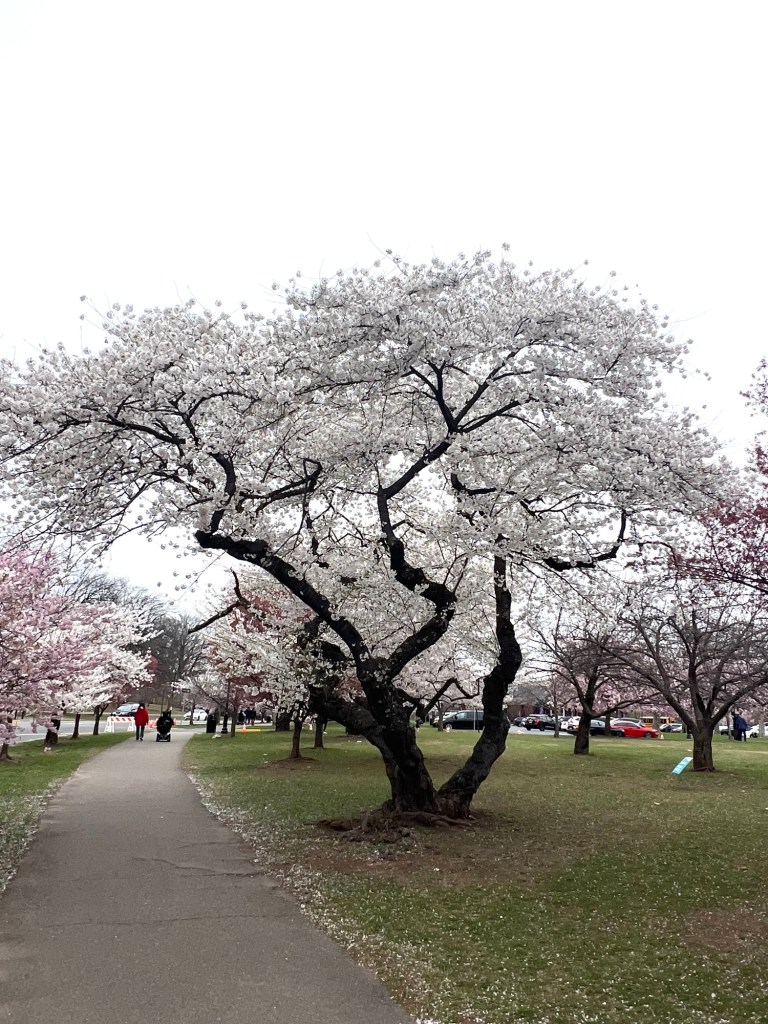
The pathway through the core of the park
The pathway in the park in full bloom
Entering the Visitors Center
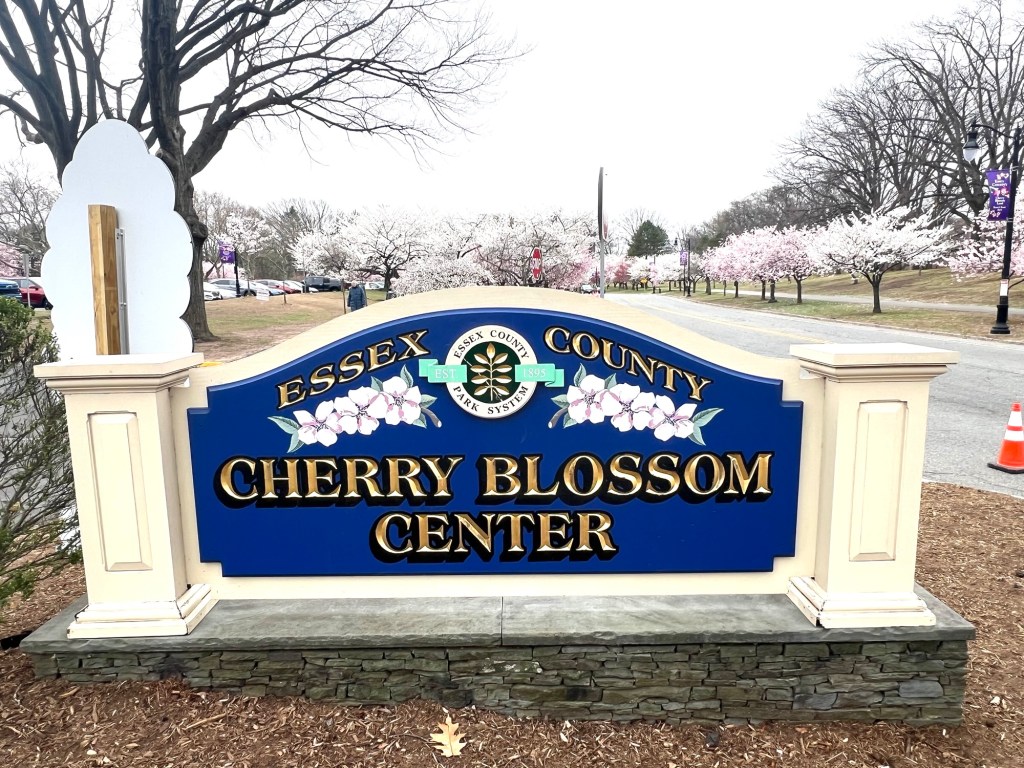
The Cherry Blossom Visitors Center in the park
The unusual trees in Branch Brook Park
I even had time to really walk through this section of Newark and look at some of the old and beautiful mansions that dot this part of the park. With a little TLC, these houses will be spectacular again.
Walking through the Branch Brook Park neighborhood
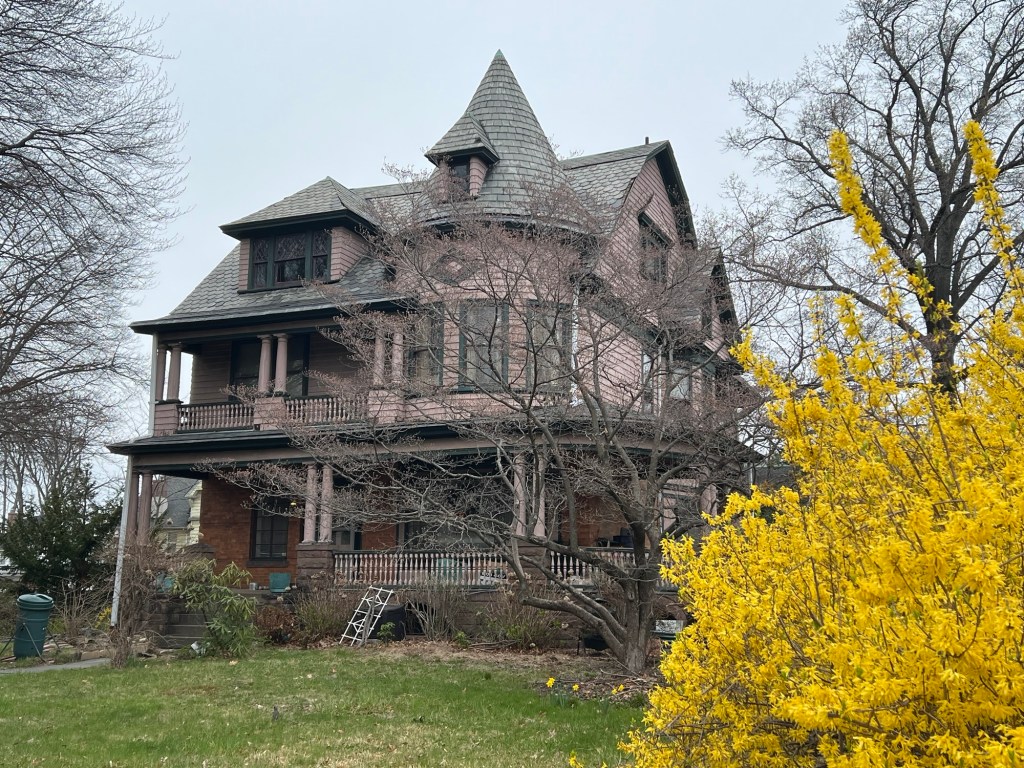
The beautiful old mansions in the neighborhood
The walk back to the car
The pathway back along the river
It was so beautiful on a gloomy day
The walk back through the park
Even on a gloomy day the park was spectacular
Getting back to the car before it started to rain hard that afternoon
After the tour of Branch Brook Park in 2015, it was time for some lunch and I visited Rutt’s Hut at 417 River Road in Clifton, NJ. I was in the mood for a “Ripper”, a deep fried hot dog, and fries. It is the perfect lunch after walking around the park.
I have been coming to Rutt’s Hut since I was 12 years old and I swear that the place has not changed since then. It is a somewhat run down roadside restaurant that has been around since 1928. Today you still have the bar, the sit down restaurant and the walk up stand for hot dogs and fries.
The menu in the walk-up area of Rutt’s Hut
The hot dogs here are amazing! They deep fry their pork hot dogs in hot oil and they come out of the fryer all shriveled and crackly. When you bit into them, they snap and crackle with each bite. They also make their own homemade mustard-relish that you can put on top and it is delicious. You can taste the spicy pork in every bit.
The deep fried hot dogs
The hot dogs here snap when you bite into them
The French fries and onion rings are also cooked to perfection in the fryer and come out golden brown. They snap when you bite into them. For an extra fee, you have them topped with gravy or melted cheese sauce.
The French Fries here are so crisp
I have to admit in the forty years I have been coming here I have never had anything outside the hot dogs, hamburgers, French Fries and Onion rings and that is okay with me. Maybe one day I will venture further on the menu but for right now a hot dog for $2.35, French Fries for $2.20, hamburgers for $2.00 and Onion Rings for $2.85 (2020 prices) is okay with me.
The typical Rutt’s Hut meal of a Ripper (hot dog), French Fries and a Pepsi
I love my trips to Rutt’s Hutt after seeing the Cherry Blossoms. It is a real treat!
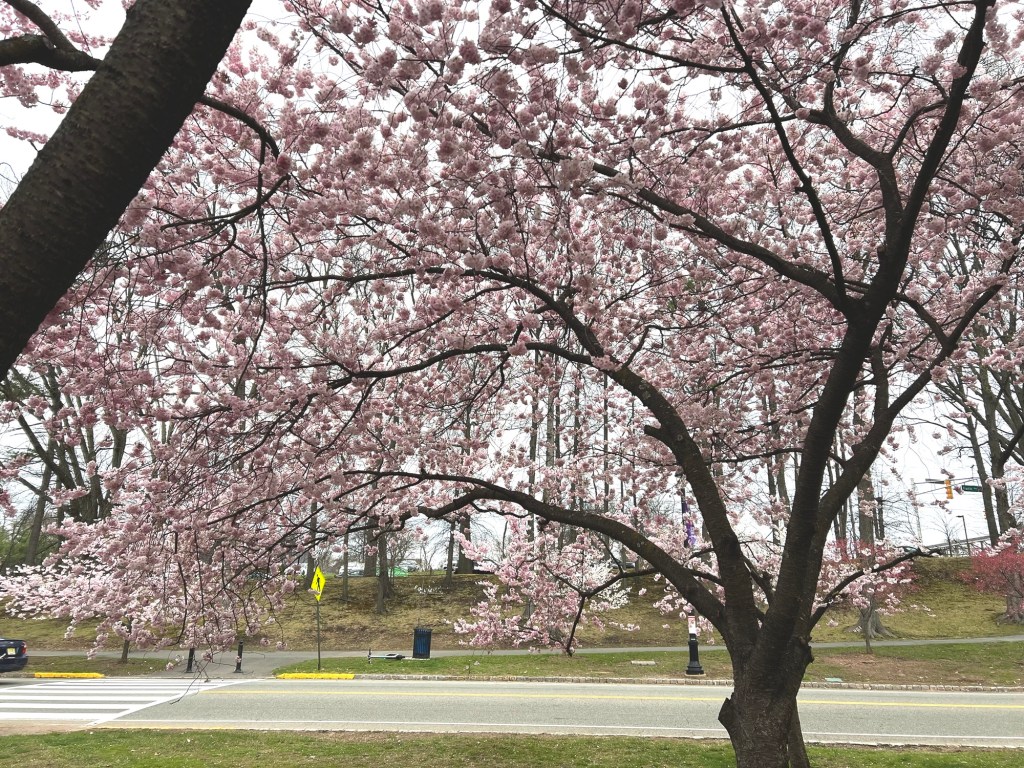
Going to the park on any type of day is spectacular. It is best when it is sunny and warm out. Still it is one of the most impressive displays of Cherry Blossoms in the country.
Touring Branch Brook Park in 2026 for the Cherry Blossom Festival on April 10th, 2026:
a
The Cherry Blossom Festival in Newark in April 2026
I visited the Cherry Blossoms in Branch Brook Park in Newark on a Friday afternoon, thinking the park would be quiet. With the Cherry Blossom trees at peak flowering, the park was packed. People were lining the paths and picnicking and taking pictures.
Walking along the busy paths during a Friday afternoon
The paths at the beginning of the park near Bellville
Walking along the pathways
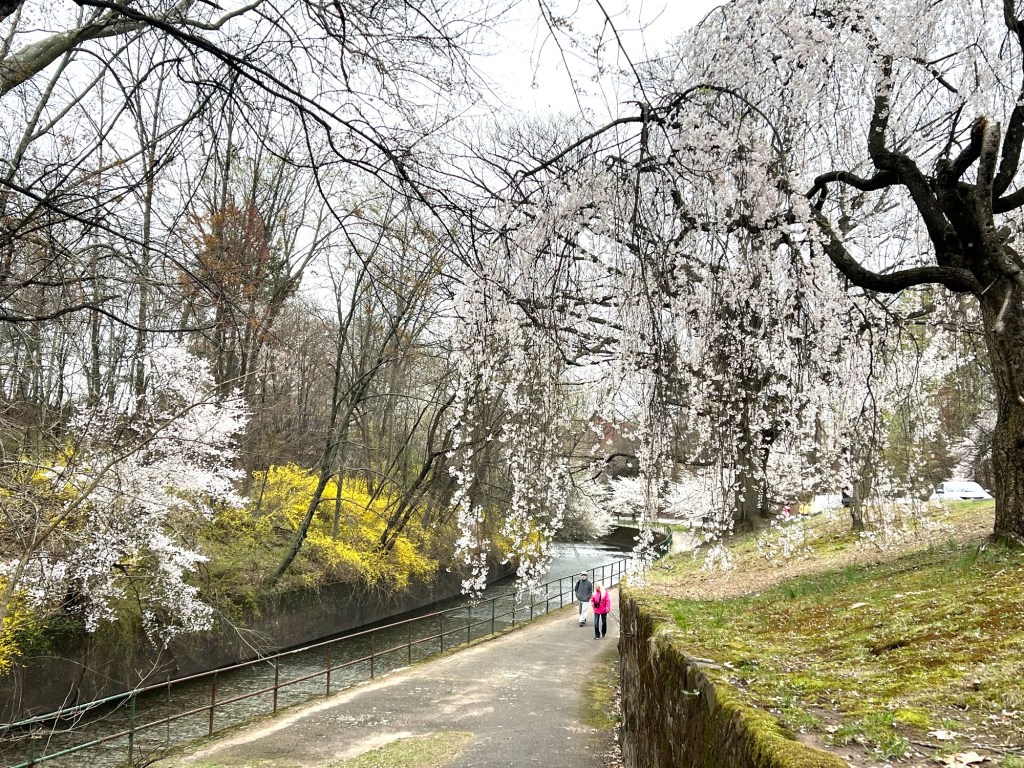
Walking along the catch basin
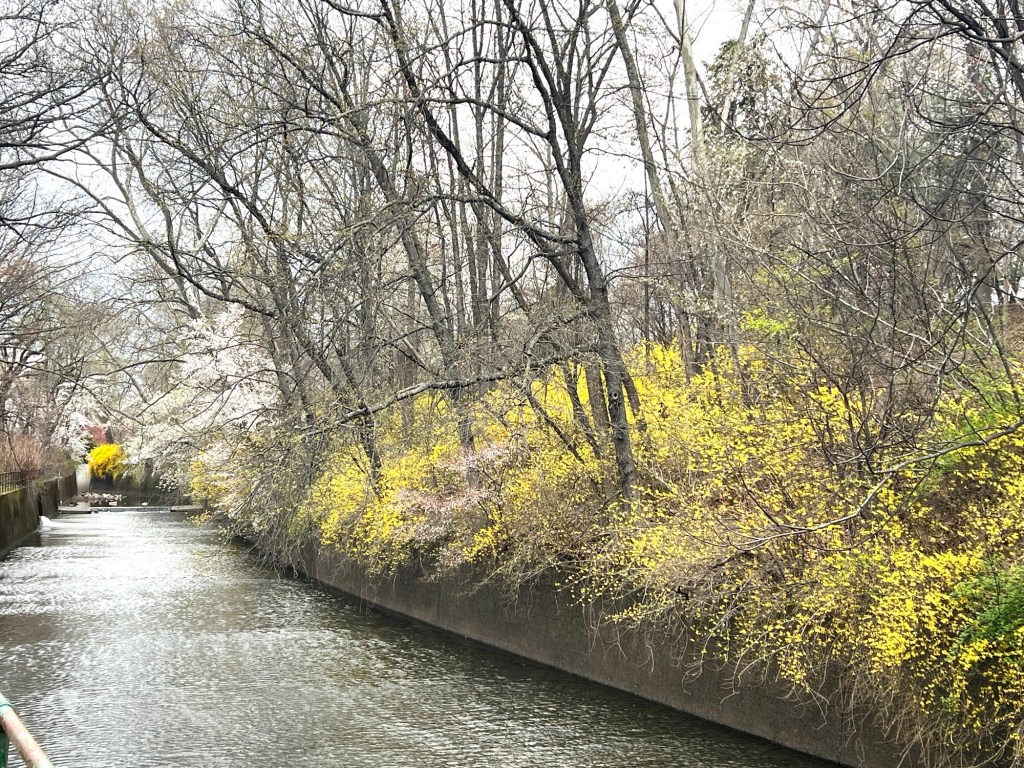
The catch basin of the river is always so picturesque. The trees were just starting to release their petals and yellow flowers were in full bloom.
Walking along the catch basin
Walking along the catch basin
Walking along the catch basin
Walking along the catch basin on my way to the main part of the park was breathtaking.
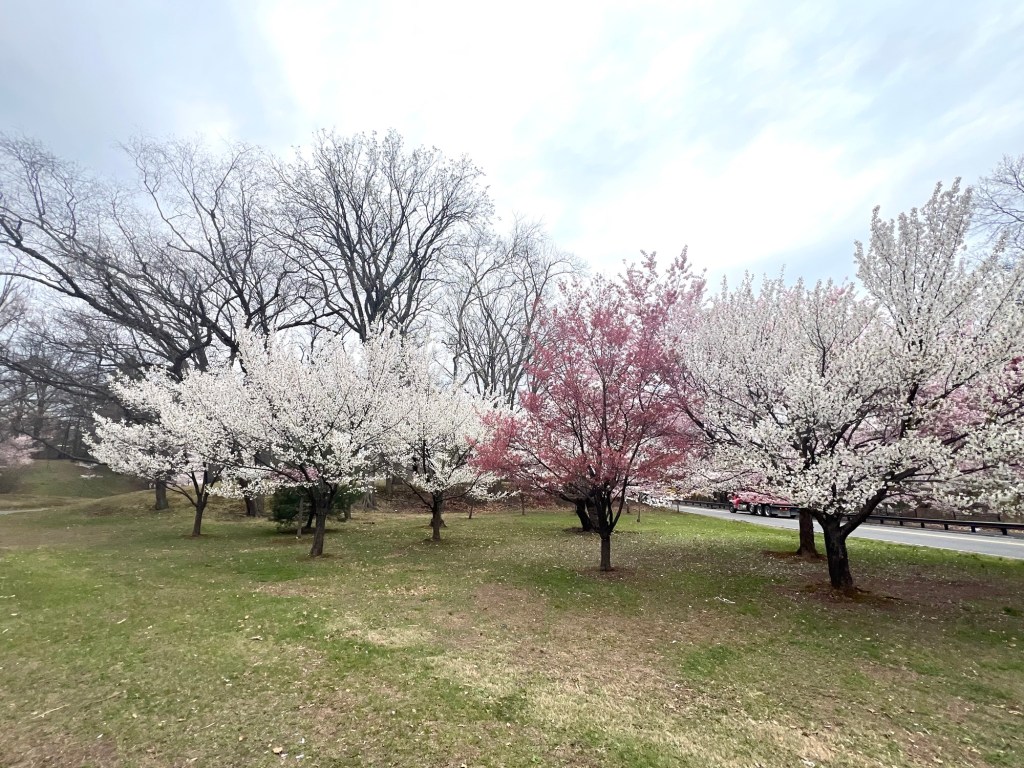
The Cherry Blossoms were at full peak when I visited
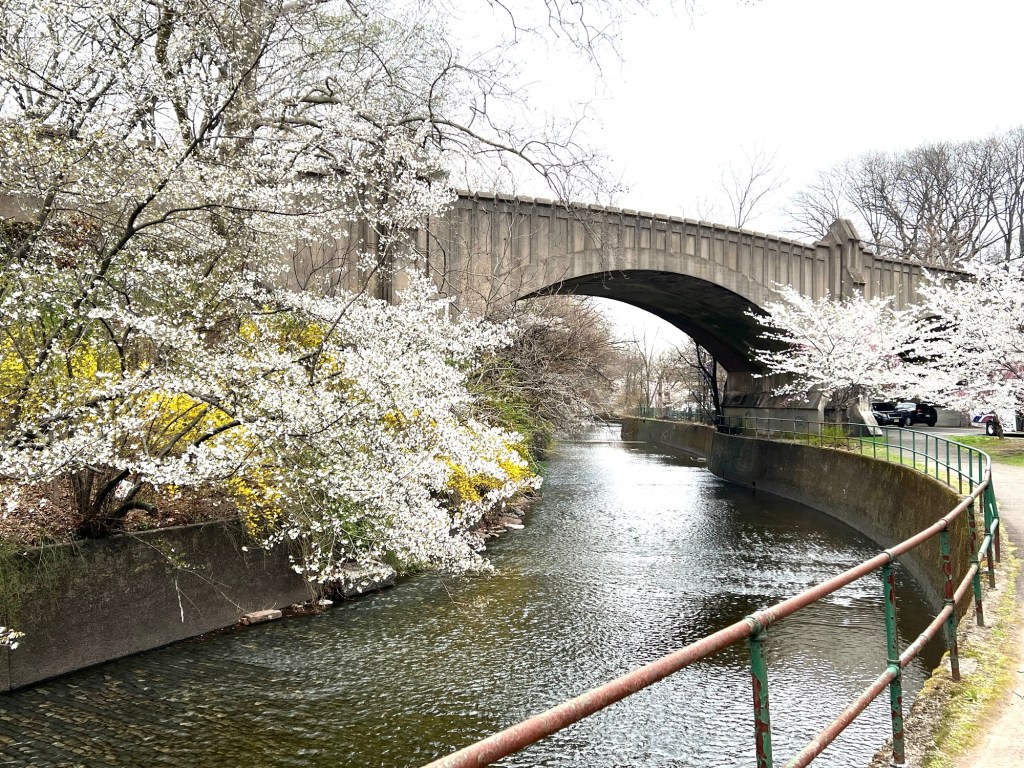
The catch basin in full form
The catch basin in full bloom
These beautiful yellow flowers line the basin
The views are amazing
The basin near the bridge
The rock formations on the other side of the street
The Cherry Blossoms in full bloom
Walking towards the main part of the park
Walking up to the main part of the park
Walking through the pathways of the park
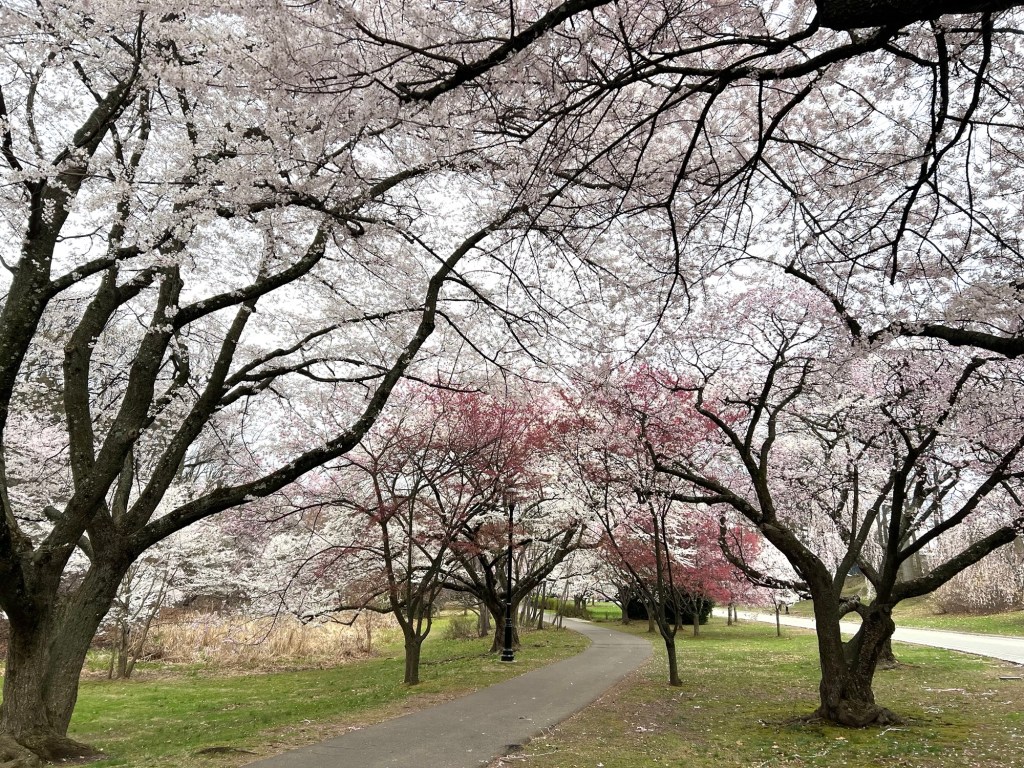
The main part of Branch Brook Park was a dazzling array of colors of the different types of flowering trees.
Walking through the main section of the park
The cherry trees in full bloom in Branch Brook Park
The pathways along park
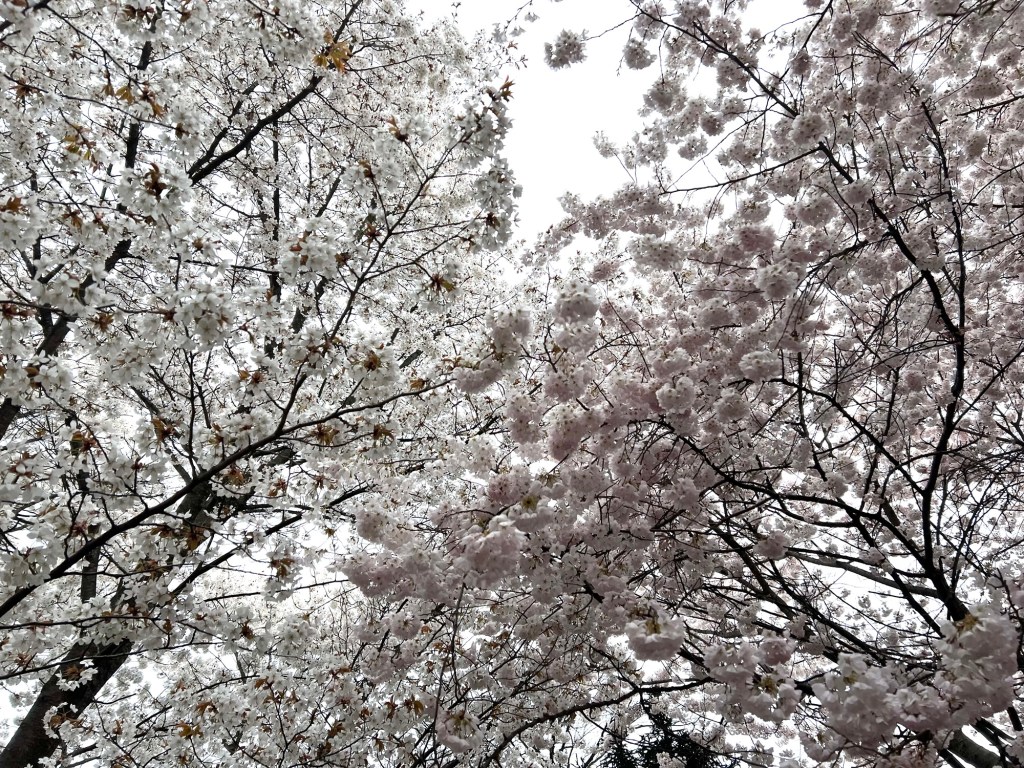
The Cherry Blossoms in full bloom
As I walked back to the car, I passed the bridge again and the views were spectacular. A burst of colors dazzled the pathways.
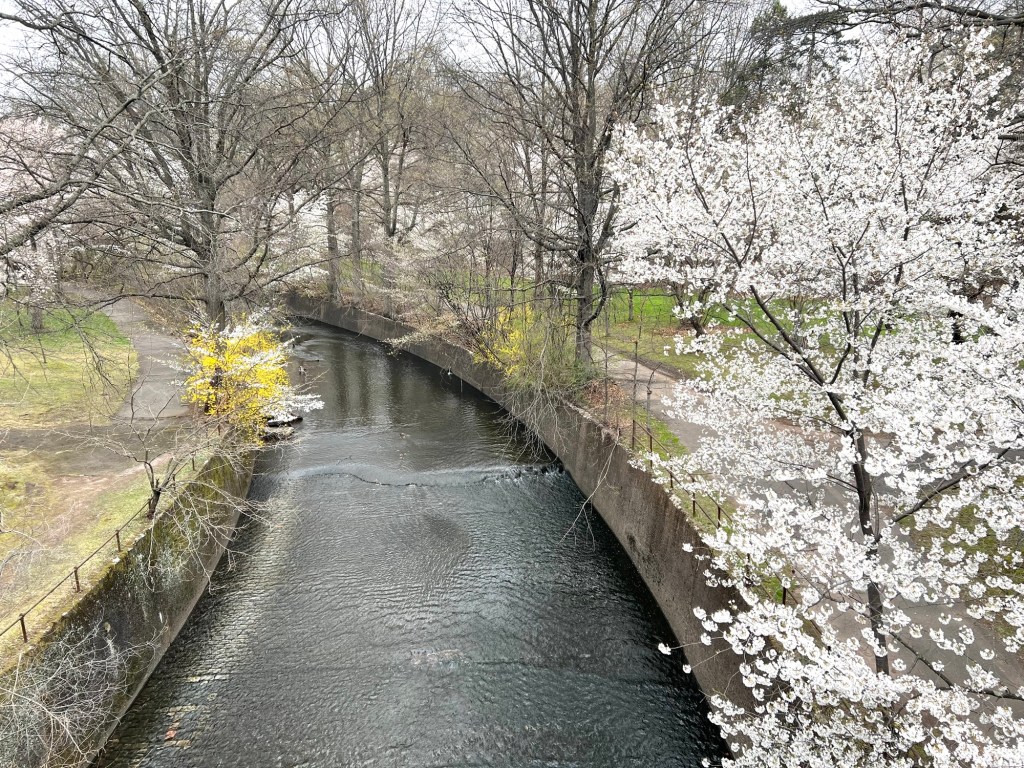
The view from the bridge
The on the walk back to the car
The view under the bridge
The catch basin near my car
I was only in the park for about an hour and a half and the park was getting busier in the early evening. I guess people were like me and did not want to deal with the crowds that would besiege the park in the early evening. I was glad to have the time to take these amazing pictures before the petals start to fall next week.