Category: Children’s Museums & Art Galleries

Matchbox Road Museum                                                                                15 Pearl Street                                                                                 Newfield, NJ 08344

Matchbox Road Museum 15 Pearl Street Newfield, NJ 08344

Matchbox Road Museum

15 Pearl Street

Newfield, NJ 08344

(609) 381-2332

https://www.facebook.com/MatchboxRoadMuseum

Open: Sunday-Friday Closed/Saturday 10:00am-2:00pm or by appointment

My review on TripAdvisor:

https://www.tripadvisor.com/Profile/R4960NKjustinw/mediabatch/14537611?m=19905
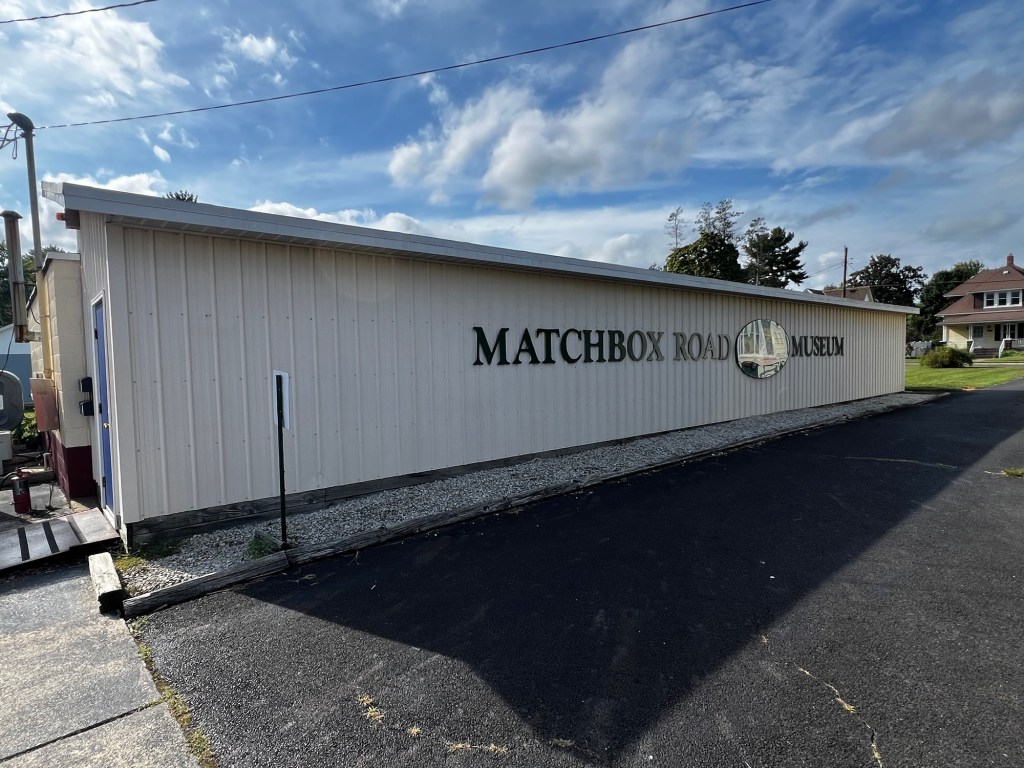
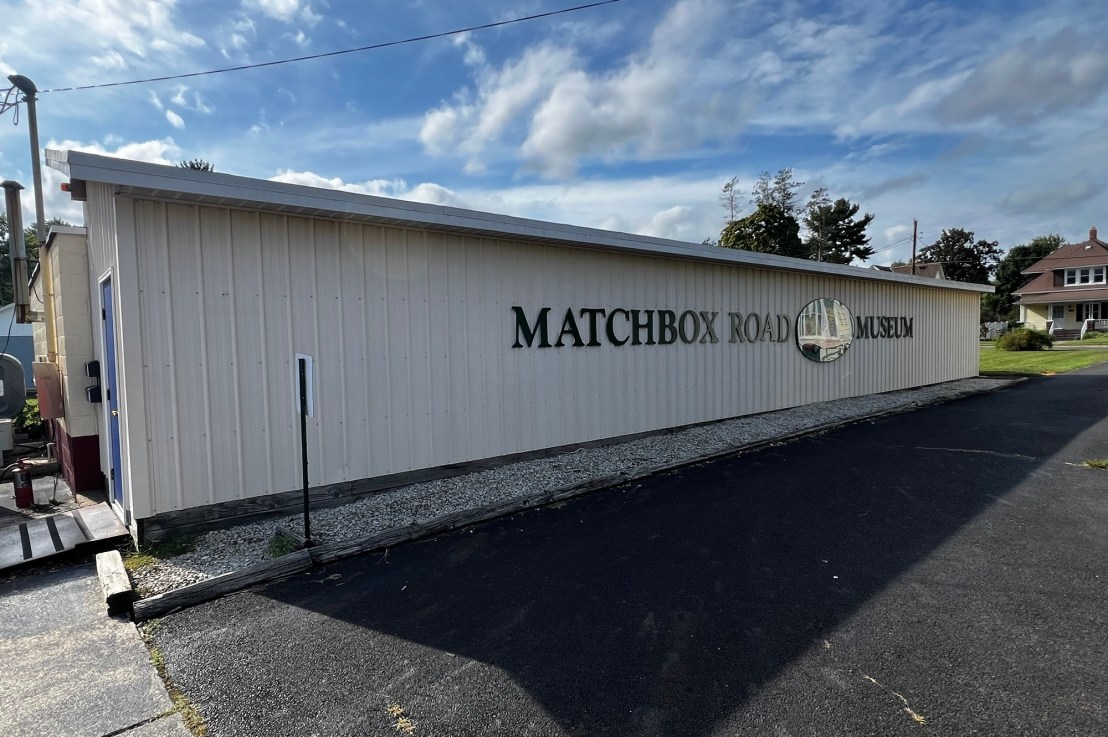
The Matchbox Road Museum at 15 Pearl Street
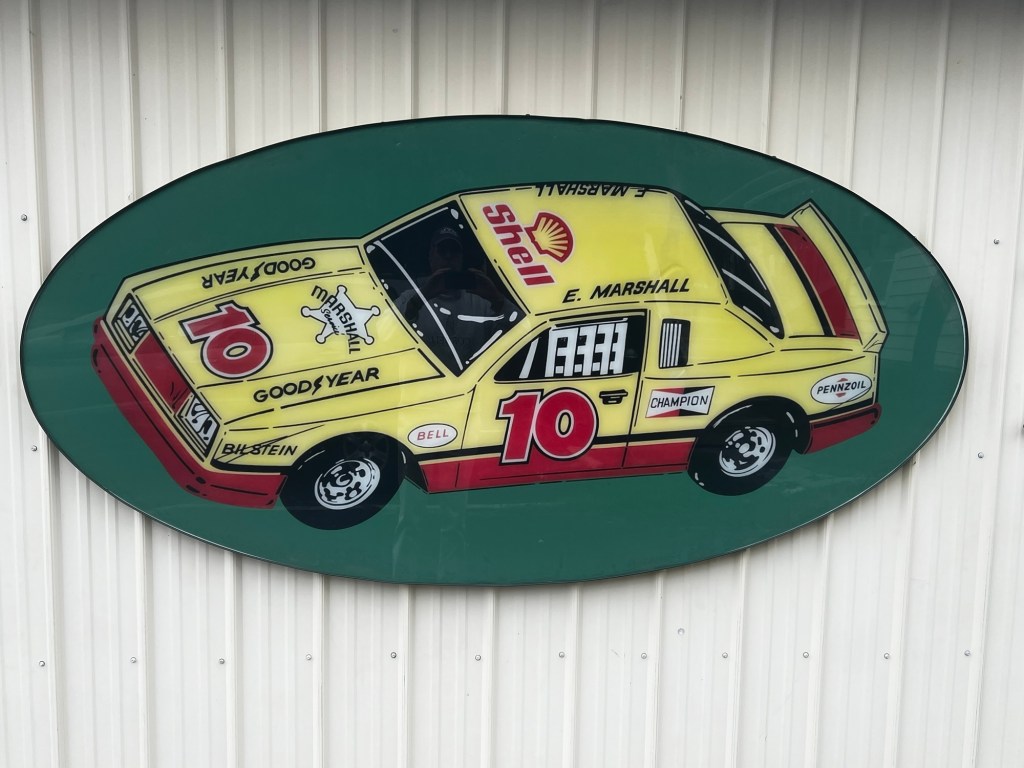
The logo of the museum

I was recently traveling around the Newfield, NJ area, where a small museum dedicated to Matchbox cars was located. I had enjoyed playing with them and collected them when I was little and it sounded fascinating to have a whole museum dedicated to them.

They were not open that day but arranged to visit the museum when I was in the area on my next trip. A few weeks later I arranged a private tour of the museum and got a very interested and detailed tour of the collection, the history of Matchbox cars and the owner of the collection and his collection.
The museum sign at the front of the museum
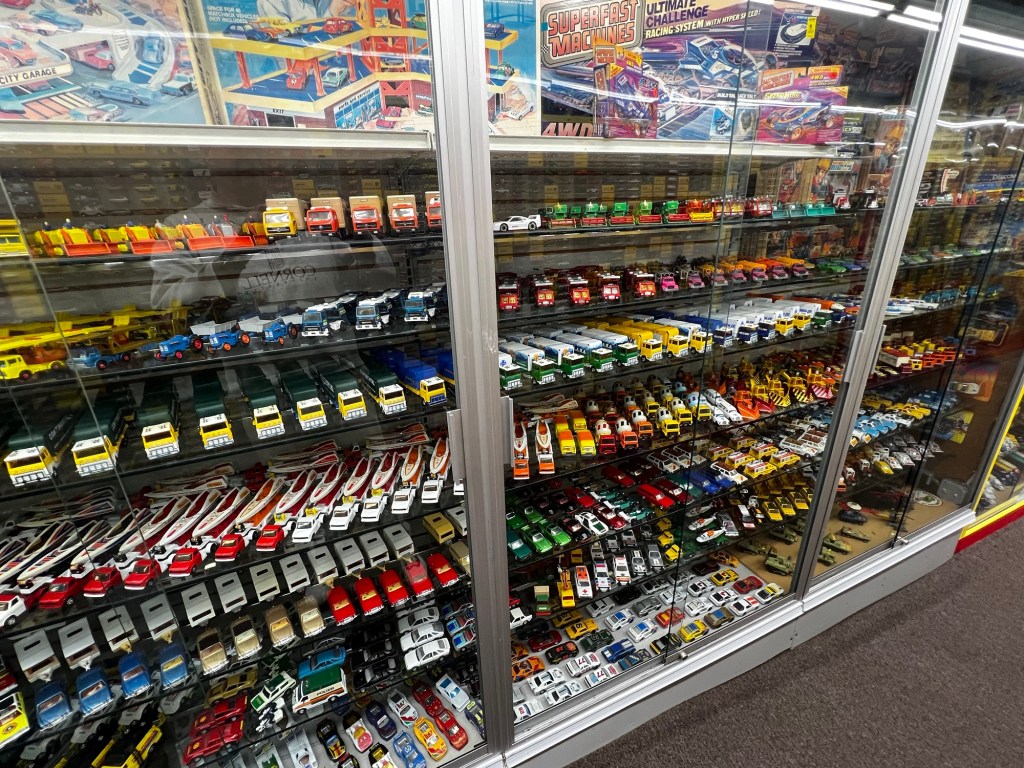
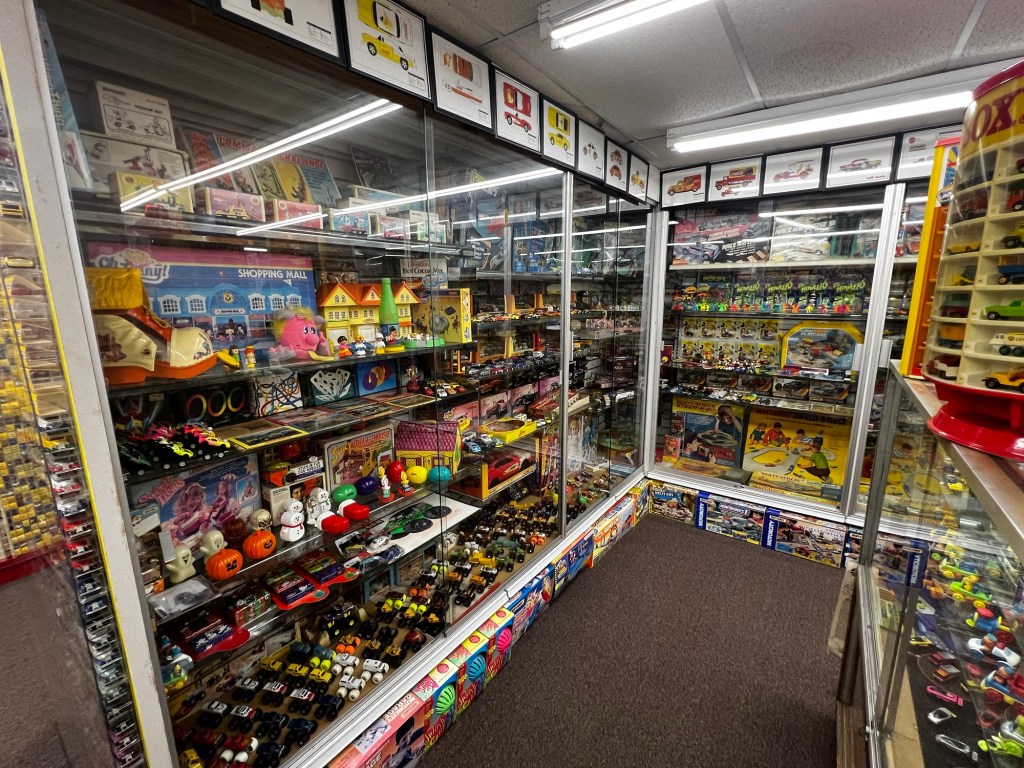
The rows and rows of cars and trucks

The museum houses one of the most extensive and complete collections of Matchbox cars from not just the collectibles but cars that were part of their promotions in Happy meals and in boxes of Kellogg cereal.
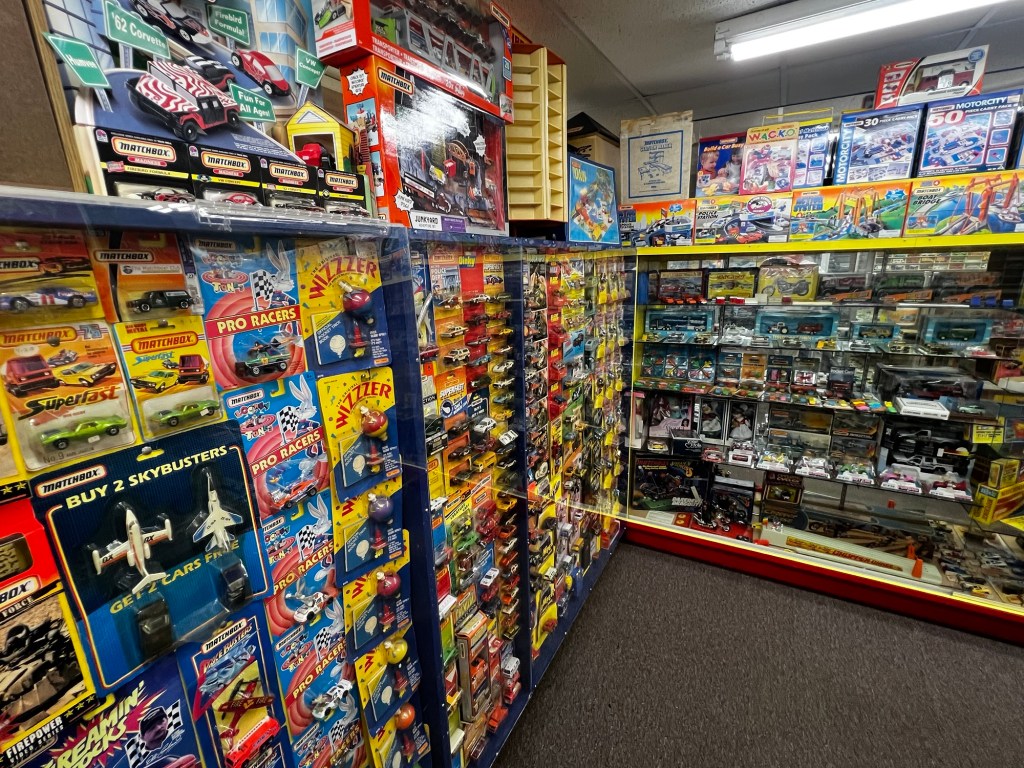
The rows and rows of the collection

The collection also extended out to toys from the company that manufactured the cars from Universal Toys to Tyco Toys to the current owner, Mattel (Wiki.com).

https://en.wikipedia.org/wiki/Matchbox_(brand)
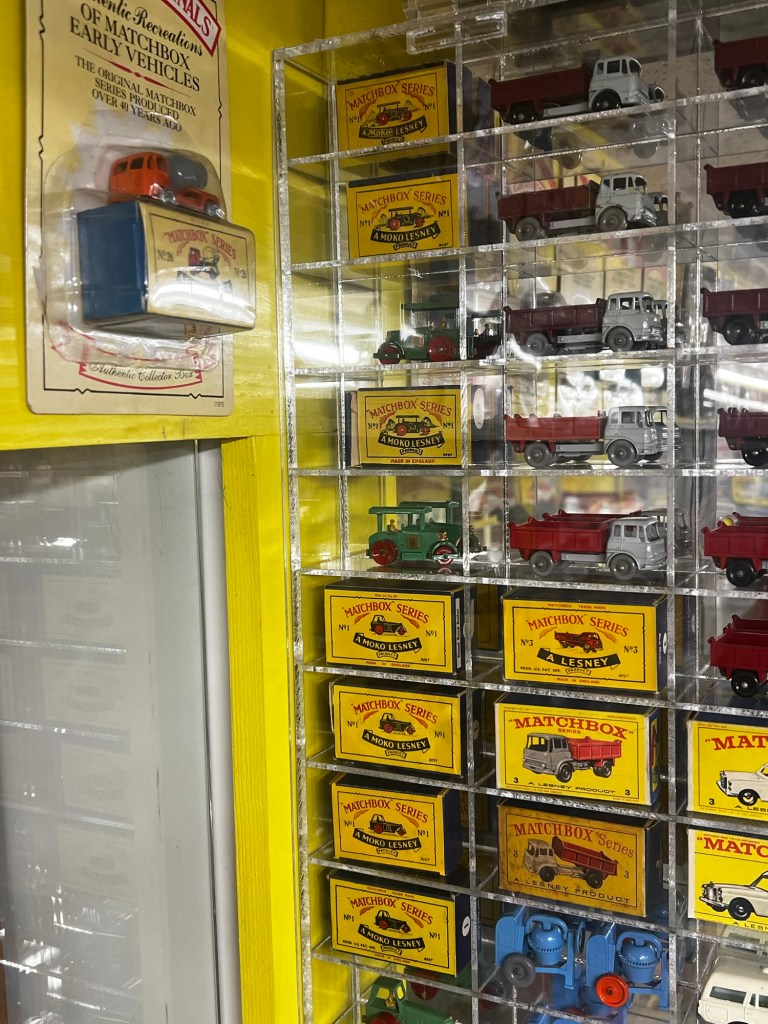
The first car created as part of this vast collection

The collection contained some of the original die cast cars from the first set that were created.
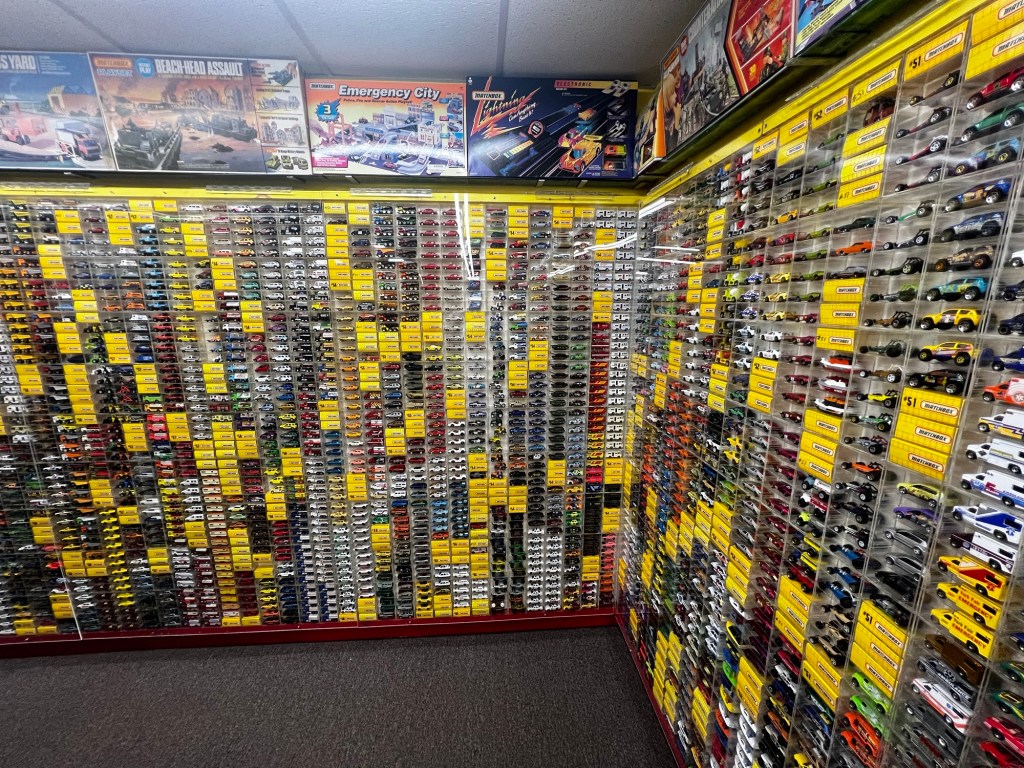
All the cars are so neatly organized

We went row by row and room by room and I was fascinated by the detail and extensive knowledge the docent had on the collection and the history of Matchbox cars. This is a great museum to take kids on just for the sheer collection and for toy collectors who are interesting in Matchbox items.

Our Story, Our Passion

(From the museum website)

The concept of Matchbox Road Museum was formed out of a life-long interest in miniature automotive perfection. The personal collection turned into a well-renowned museum of the preservation of the rare, discontinued and historically important die-cast models. Every item in our assortment symbolizes the art, nostalgia, and cultural impact of the small cars over time.
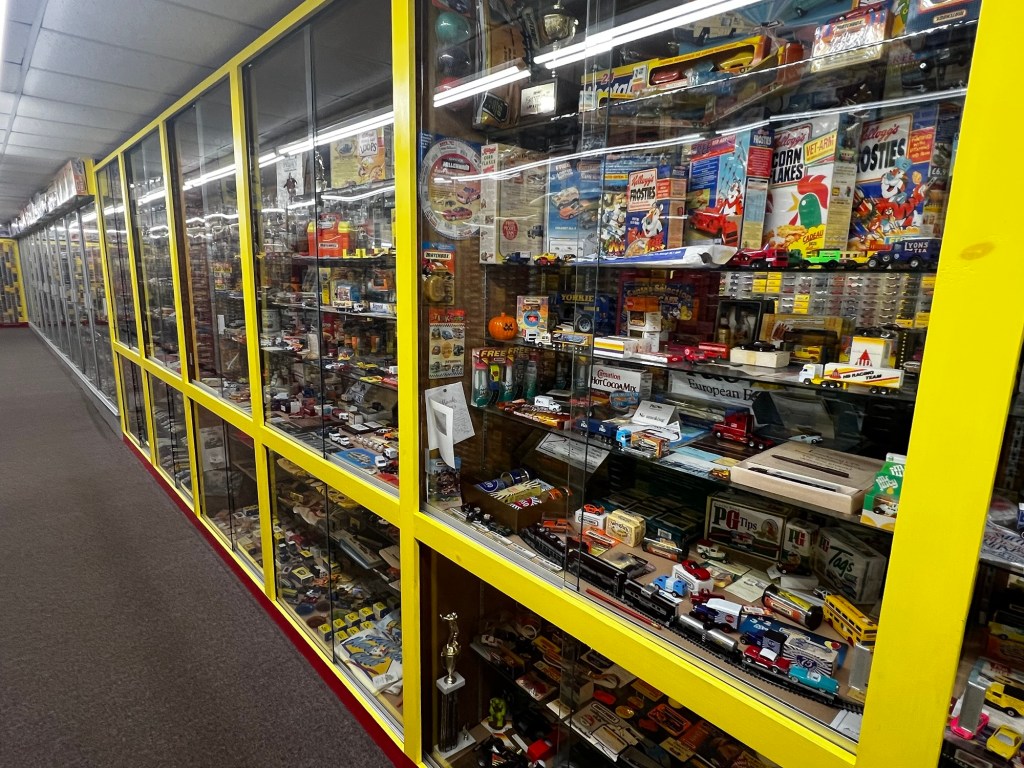
The inside of the Galley

We think such miniature cars are not just collectibles but narrators of innovations, design and childhood fantasy. By means of professional conservation, careful exhibitions and devotion to authenticity, we give our visitors and collectors an experience that is informative and inspirational.
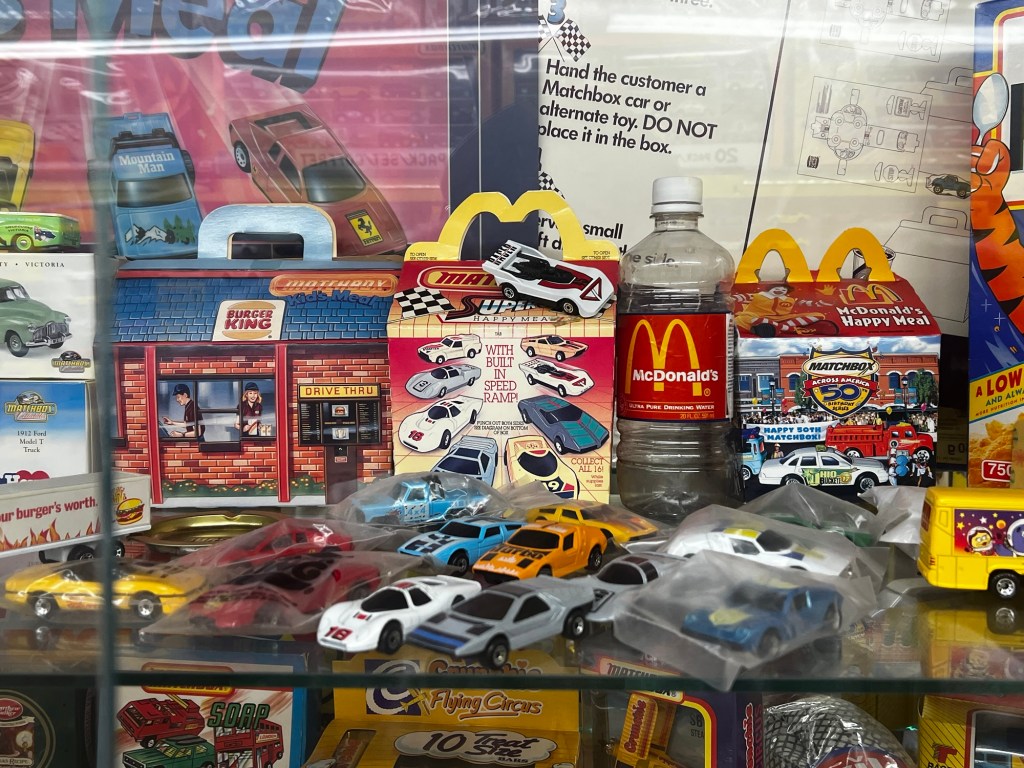
The Matchbox cars in Happy Meals
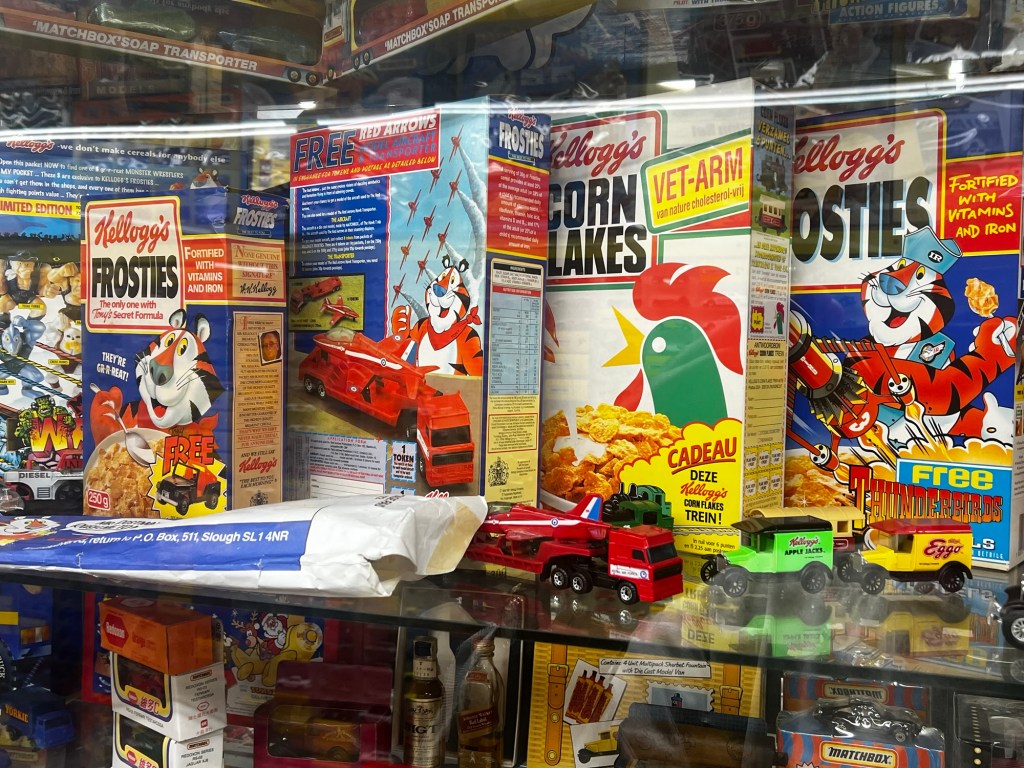
The cars available in cereal boxes
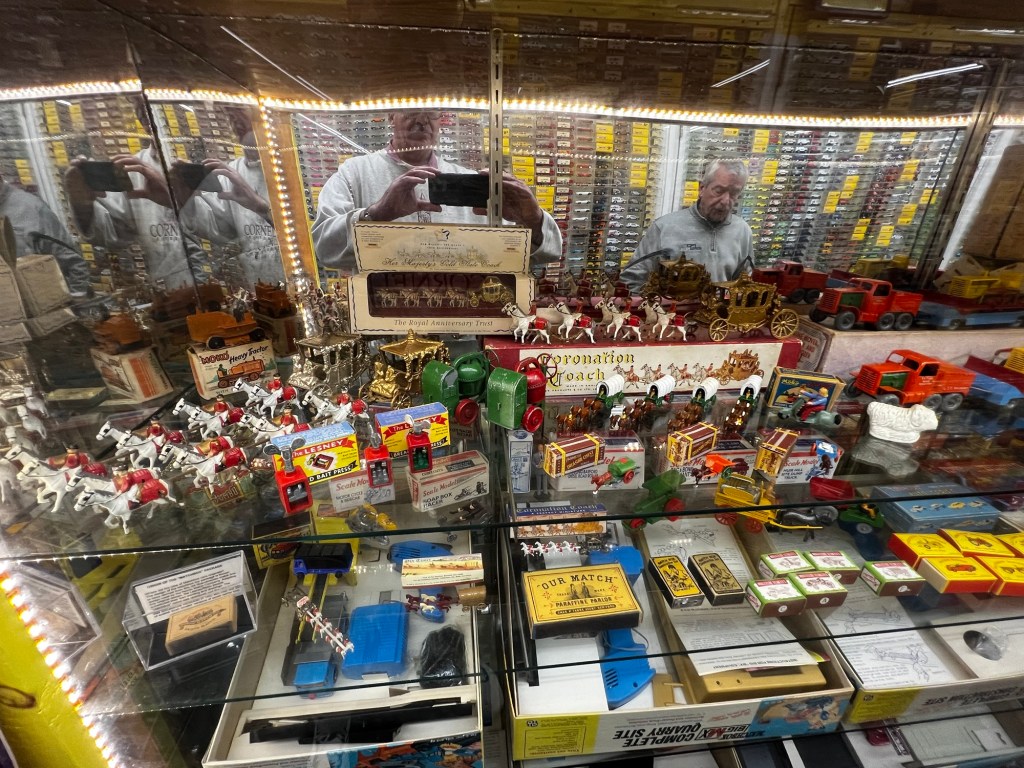
The models of Queen Elizabeth II coronation carriages that helped start the company

We have a very easy mission to fulfill, which is to secure the legacy, celebrate the history and make sure these small cars keep on telling big stories in the coming decades.

The Legacy of Matchbox Cars

(From the museum website)

Since its inception in the year 1953, Matchbox cars have changed the way we view toys as well as the toy industry.

They were not only iconic in size but storytelling. Real-world vehicles. Authentic detail. The palm of your hand Dreams at affordable prices.

These small masterpieces attracted the minds of millions of people during decades. Nowadays, they are not just toys, but a part of history, art of engineering, and culture.
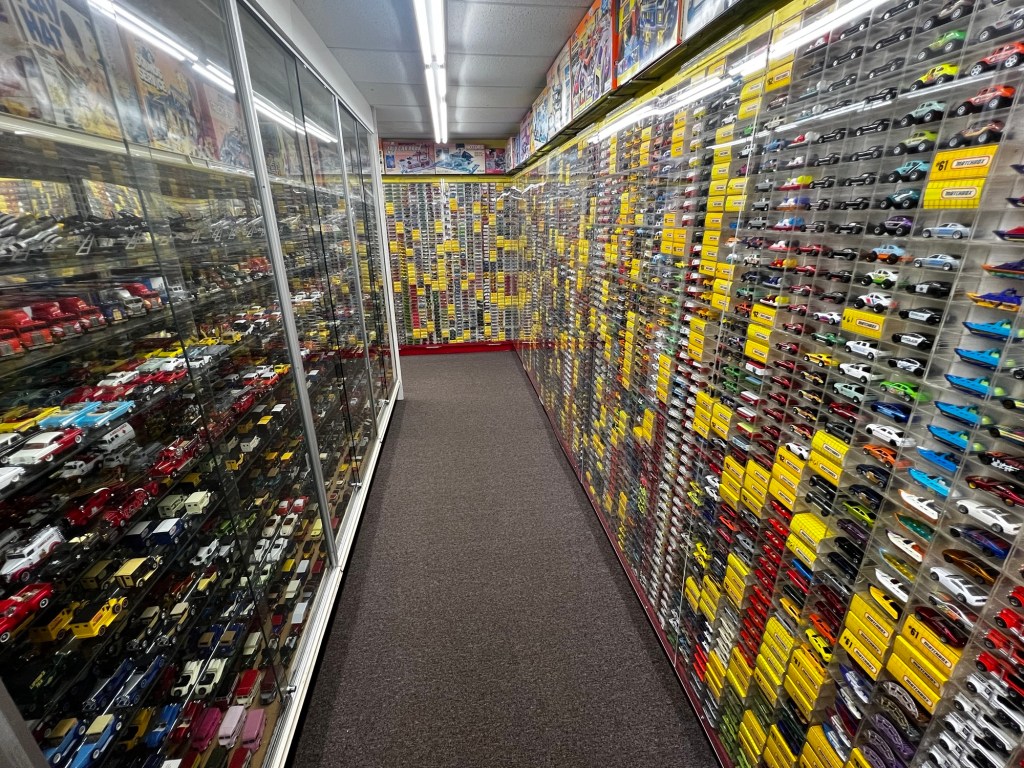
We celebrate that tradition at Matchbox Road Museum.

Video on the tour

The museum also has an extensive collection of toys and playthings on display.
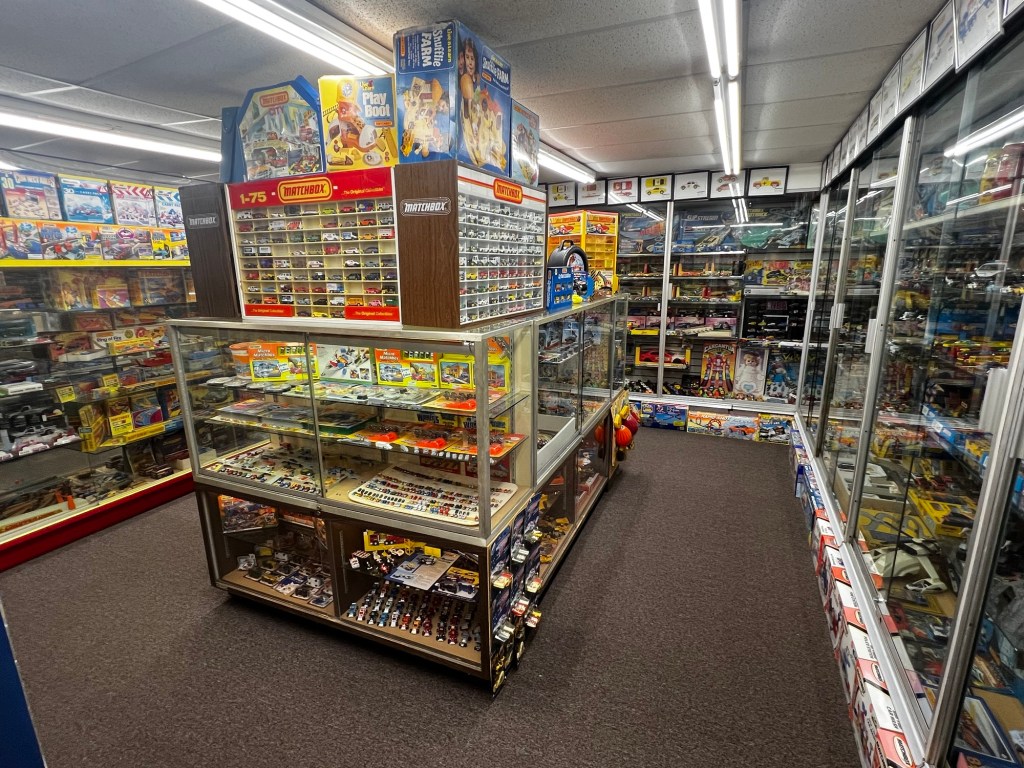
Walking around the extensive collections of cars

About the Founder

(From the museum website)

Every great collection begins with a single spark.
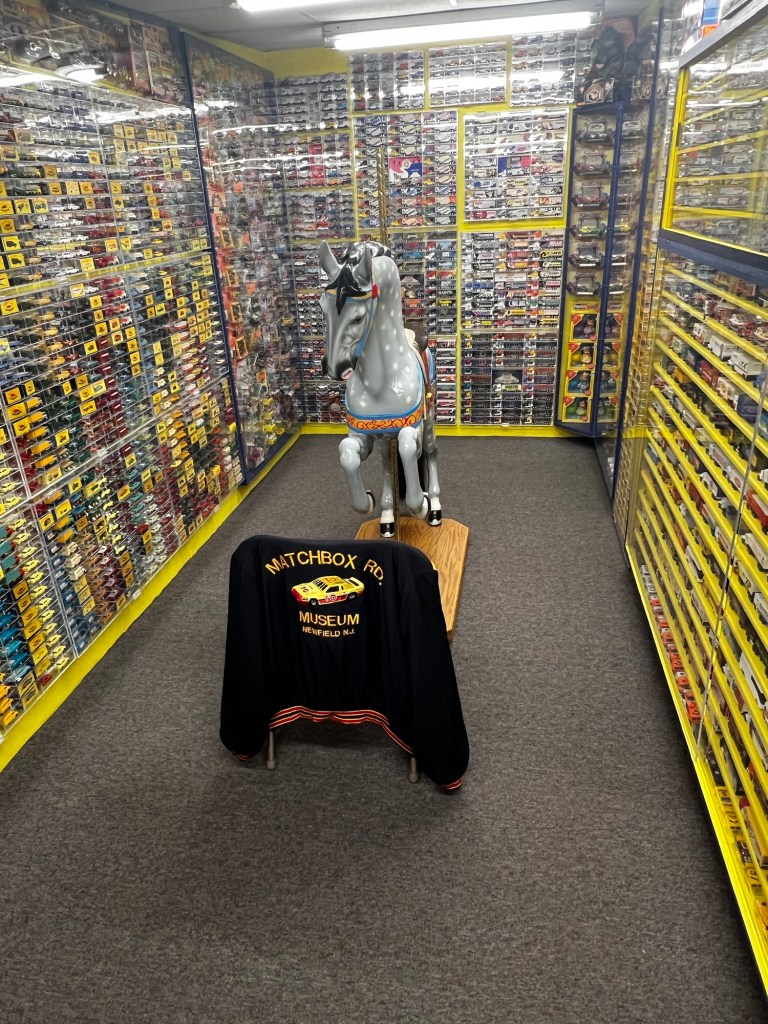
A childhood obsession turned into a lifetime goal – retain the heritage of miniature car perfection to the generations to come. The creator of Matchbox Road Museum devoted several decades to the collection of rare, discontinued, and historically important models.
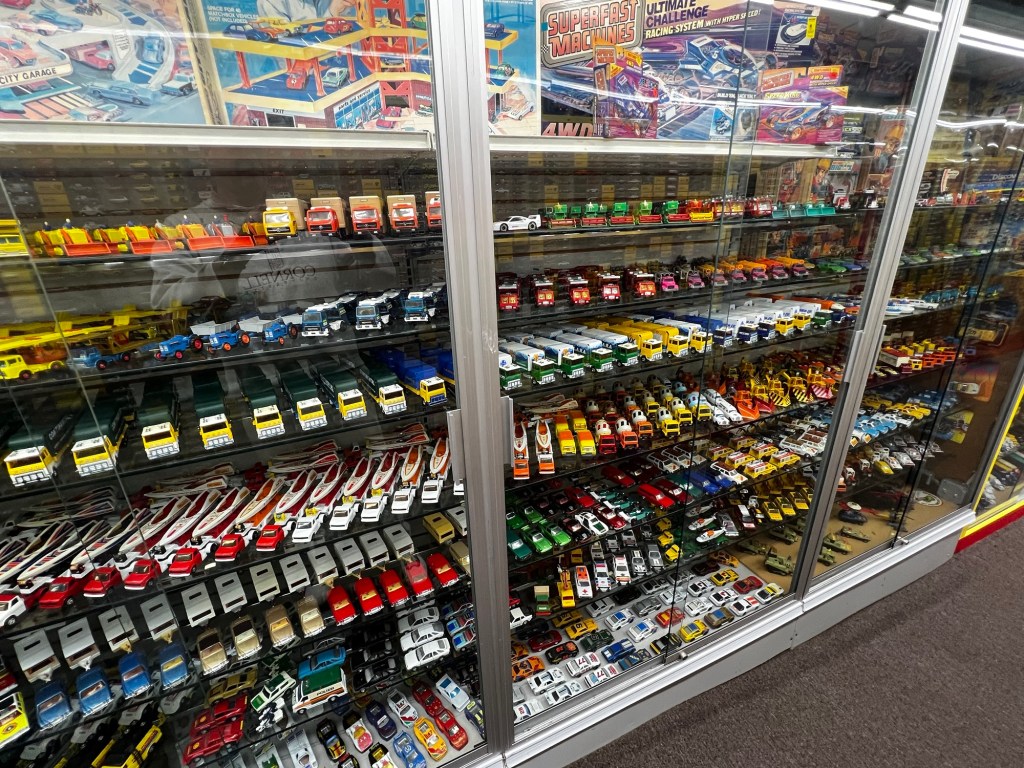
This museum is not constructed using shelves of cars.

It is built on passion. Dedication. Obsession with detail.
And now that heritage open to you is there.

The museum is open for private tours that can be arranged in advance. The tour will take about an hour and you will see a lot. I was taken in by the sheer collection and the walls filled with rows and rows of cars. I really is a fascinating museum.
Beach Haven Library & Museum                                    219 North Beach Avenue                                               Beach Haven, NJ 08008

Beach Haven Library & Museum 219 North Beach Avenue Beach Haven, NJ 08008

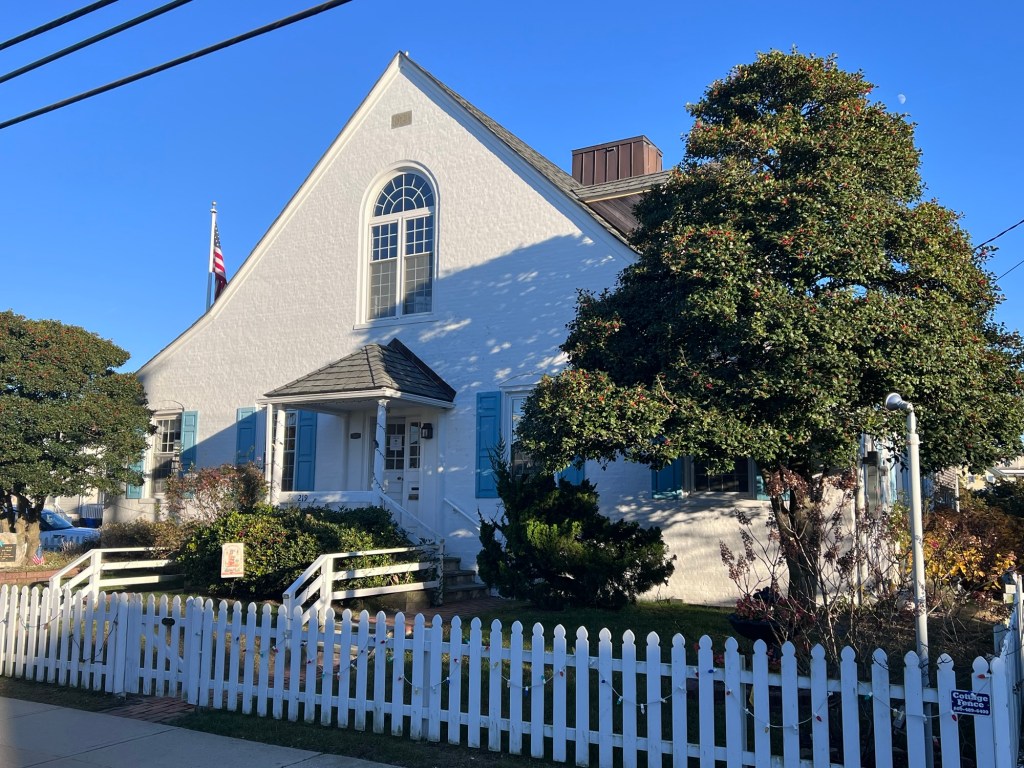
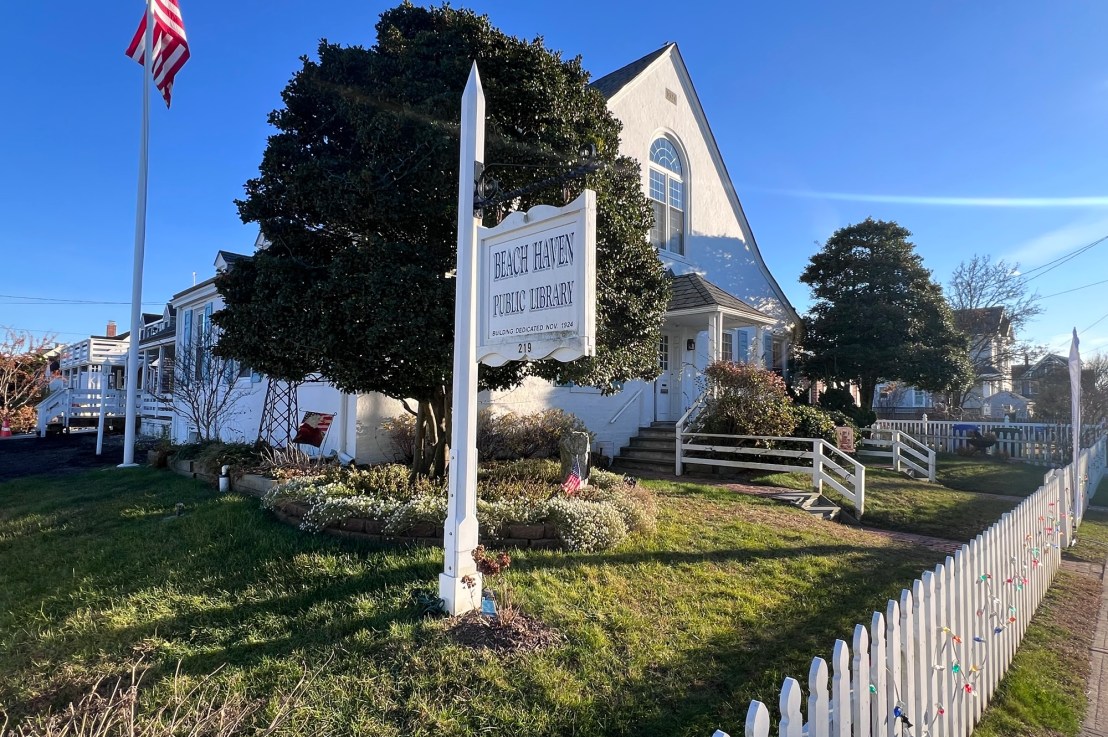
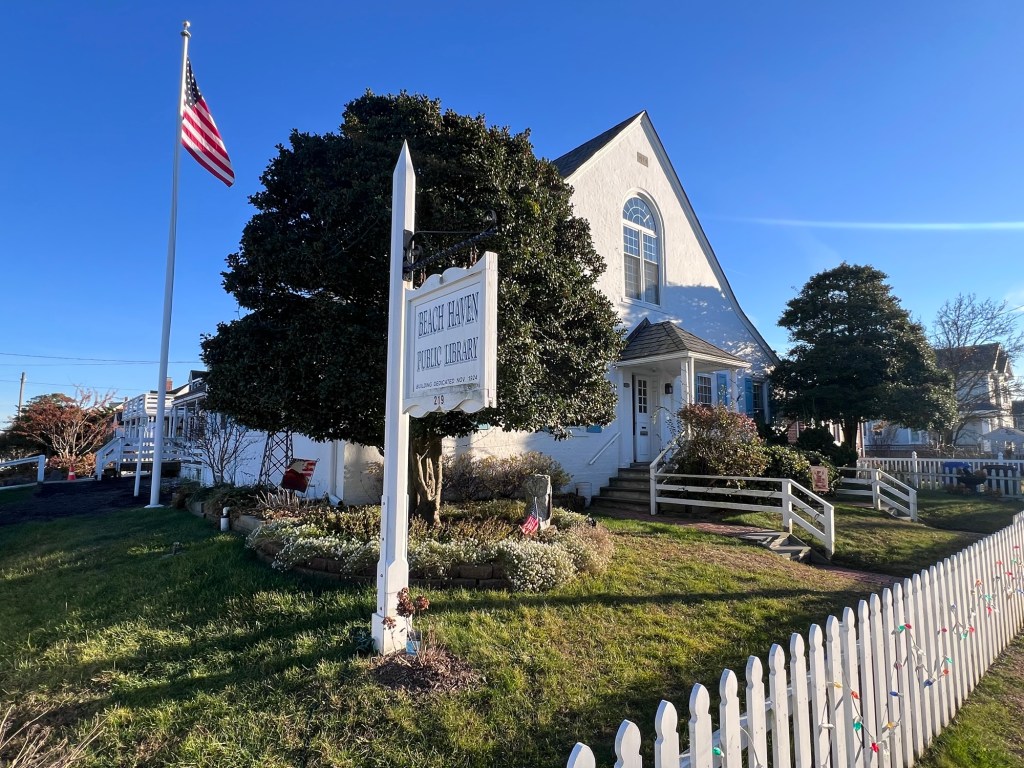
The library at 219 North Beach Haven Avenue

https://www.beachhavenlibrary.org/

https://www.instagram.com/bhpl1924/

My review on TripAdvisor:

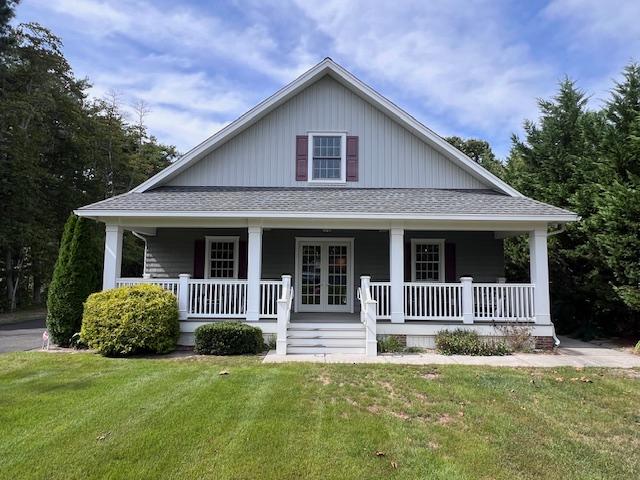
The front of the library and museum in the Fall of 2025

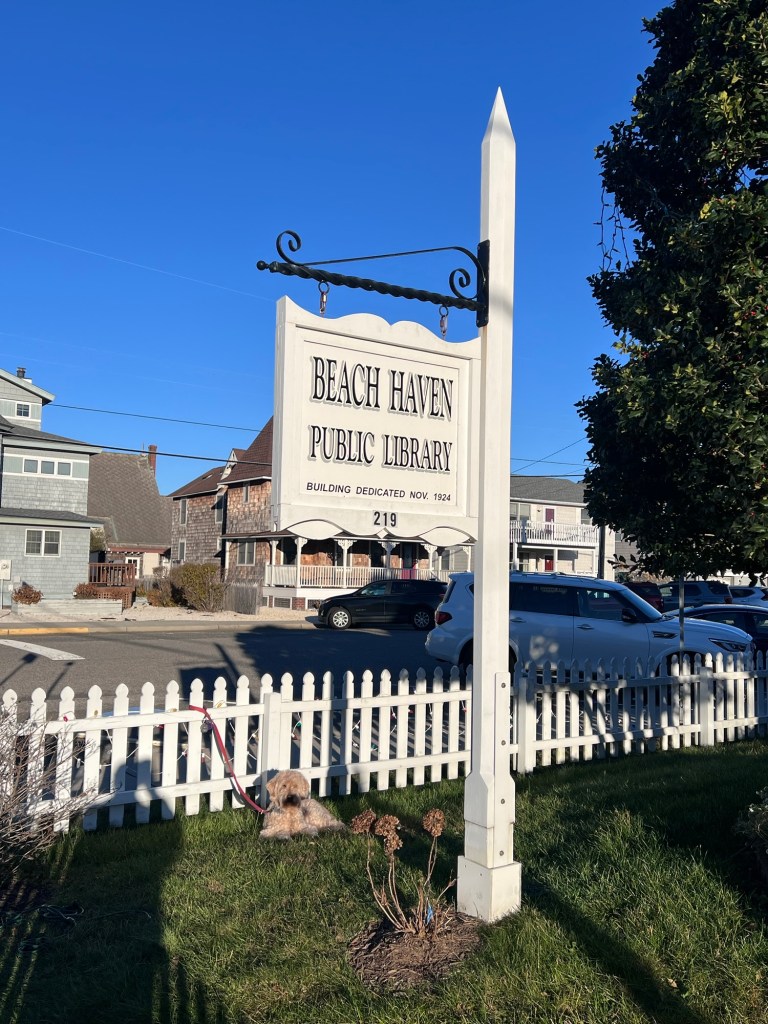
The historic sign

I recently visited the Beach Haven Library and Museum in Beach Haven during the holiday season and discovered a historical library with a rich history in both the community and on Long Beach Island.

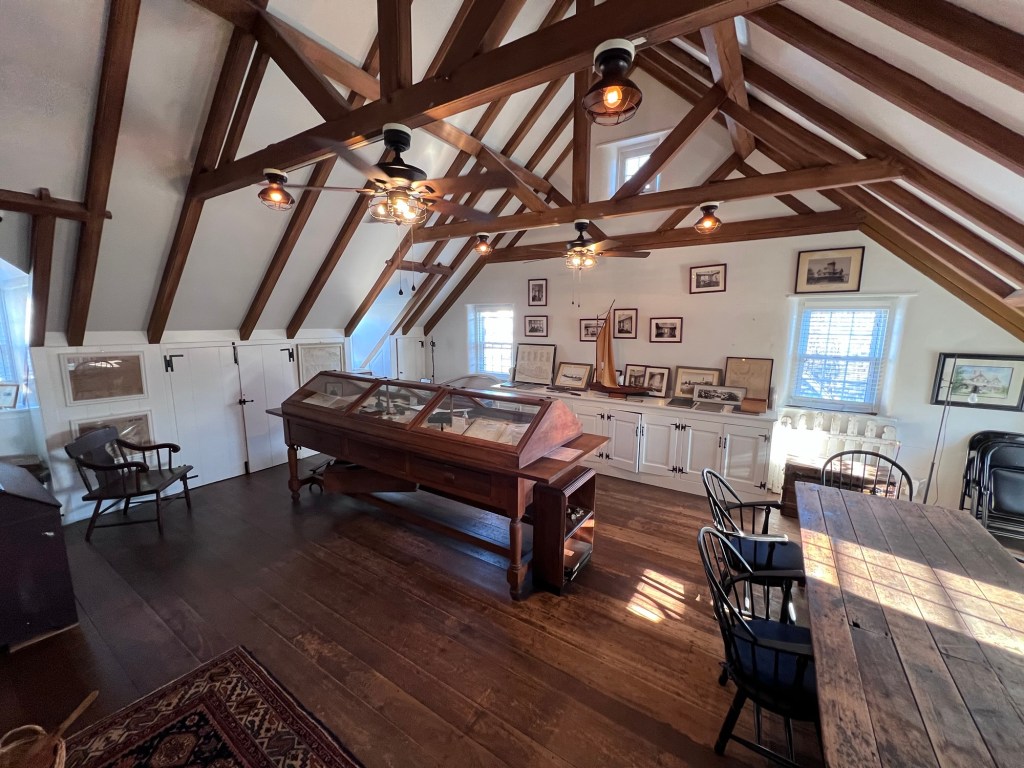
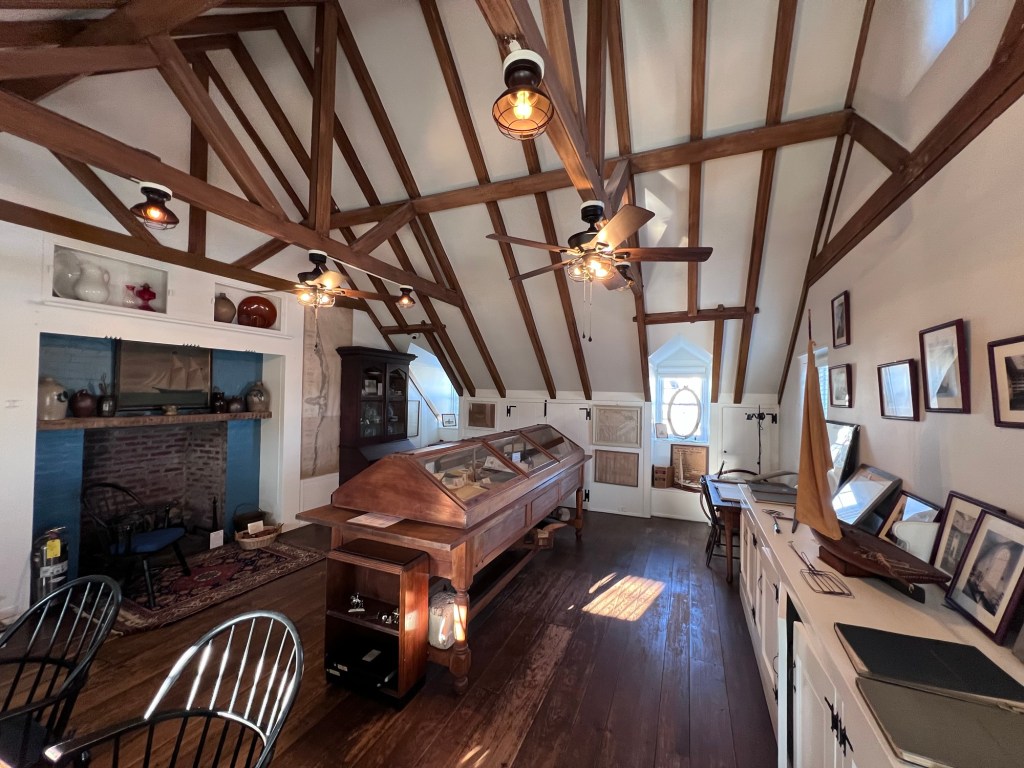
The museum on the second floor

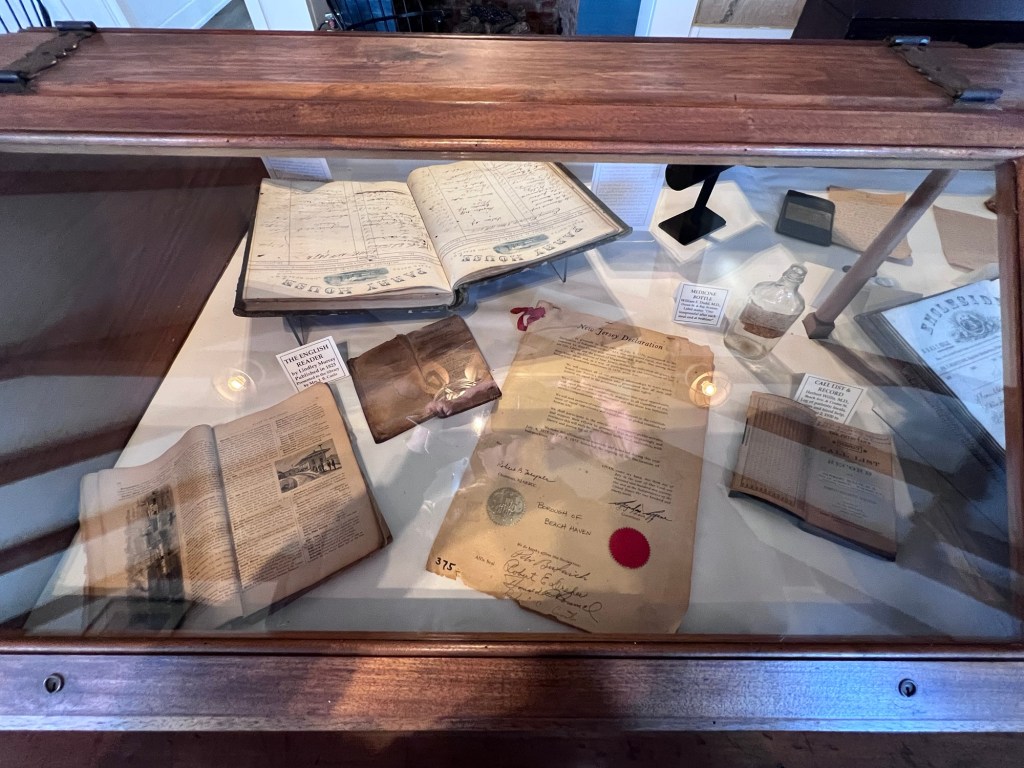
On the second floor of the library is the history room of the Beach Haven Library that contains a collection of historic artifacts and ledgers from hotels and businesses on the island. Each of the case lines tells a different story of the community from the grand hotels that once lined the shore and have since disappeared to the lives of the families that once called the island home. When I talked with one of the librarians, she told me that estates from the area donate these items to the library and this has established their collection.

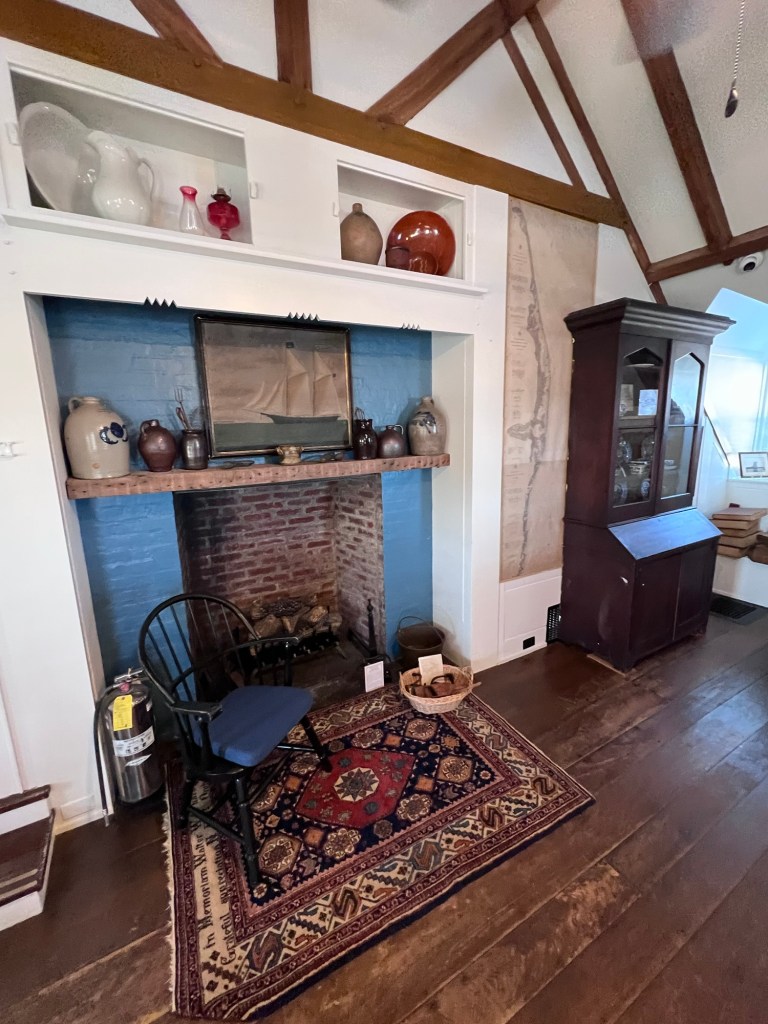
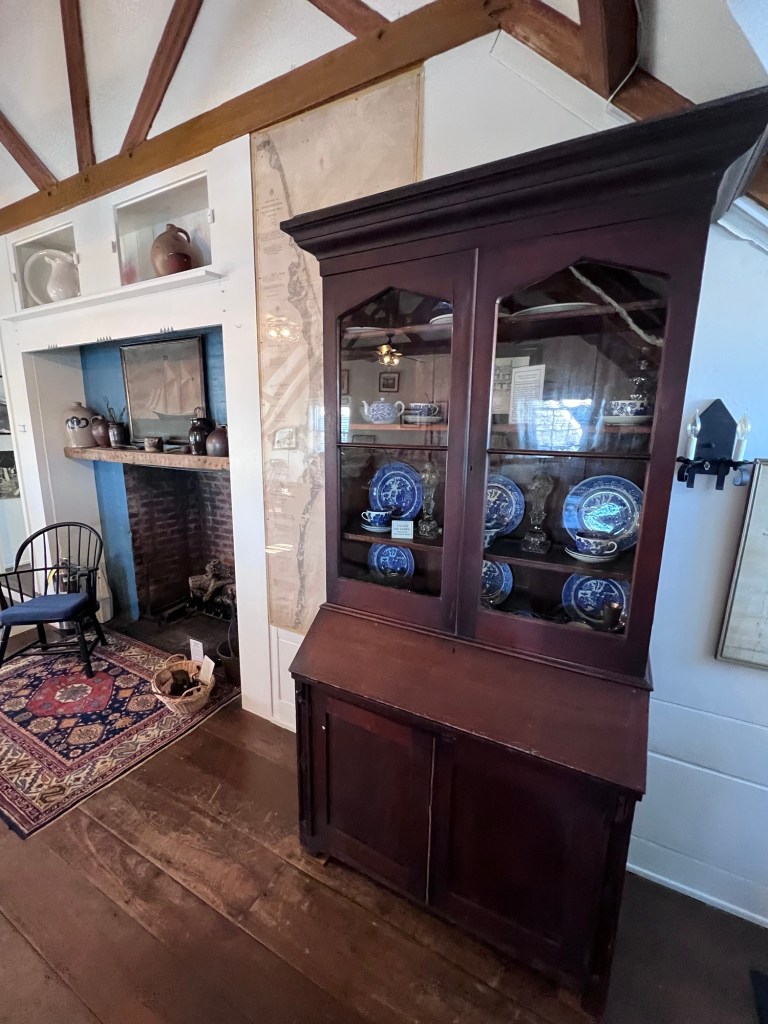
The second floor fireplace

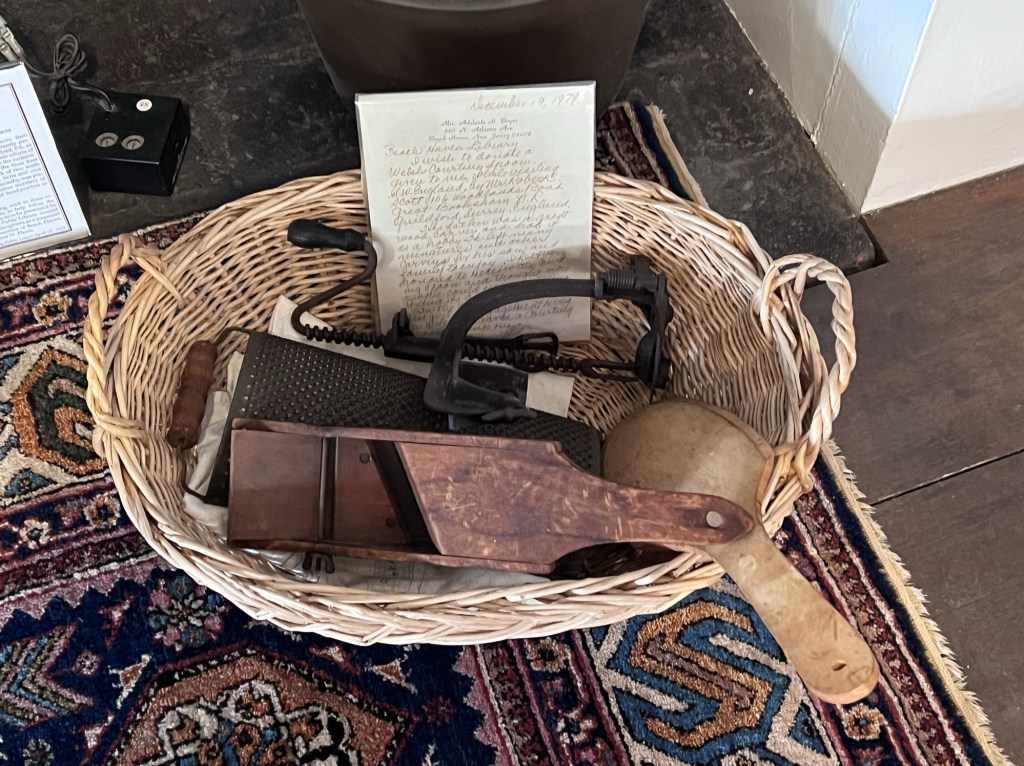
The antique kitchen equipment

The second floor of the library has another fireplace where vintage pottery and kitchen items are on display. There are also decorative pieces of pottery lining the shelves.

Historic China inside the Emily Lloyd Wilson Secretarial desk. Her father designed the Baldwin Hotel in Beach Haven.

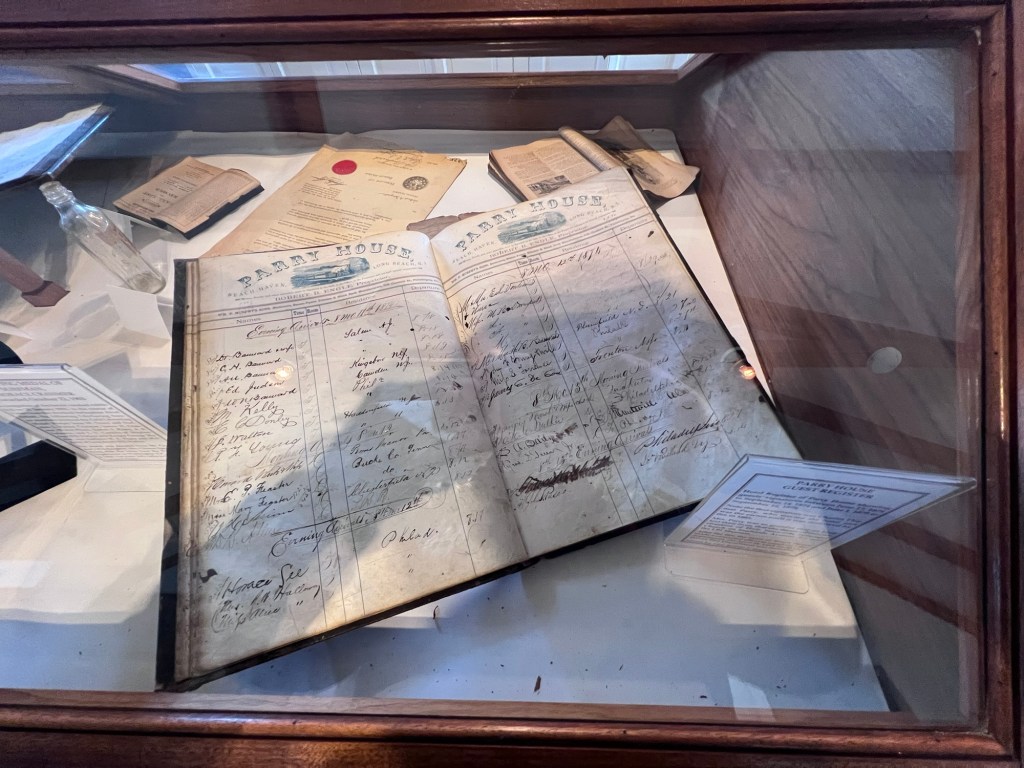
The historic ledger from the Parry Hotel

The library has another fireplace where extensive collection of hotel ledgers and artifacts.

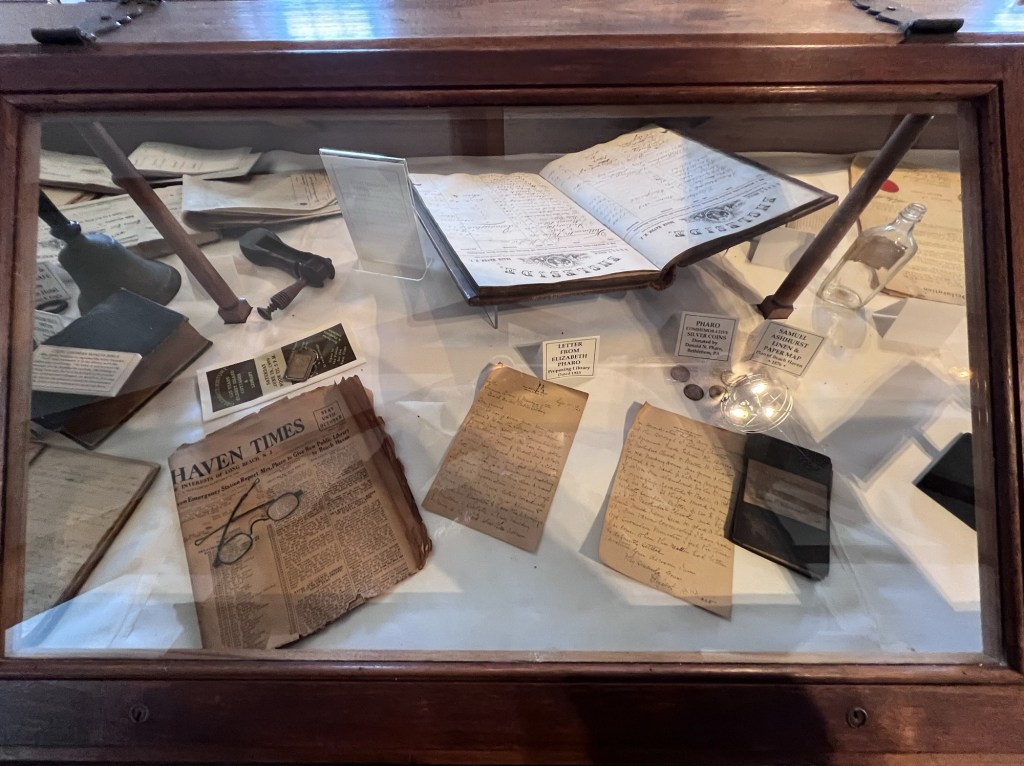
Letters from Elizabeth Pharo proposing the Library in 1923

Short History of the Library:

(From the library pamphlet)

Mrs. Pharo presented to the library board a proposal to build the library entirely at her own expense. She contacted Philadelphia architect, R. Brognard Okie to design the library. He chose the model of a Pennsylvania Farmhouse. The library was completed in the Fall of 1924. The museum is now over a hundred years old.

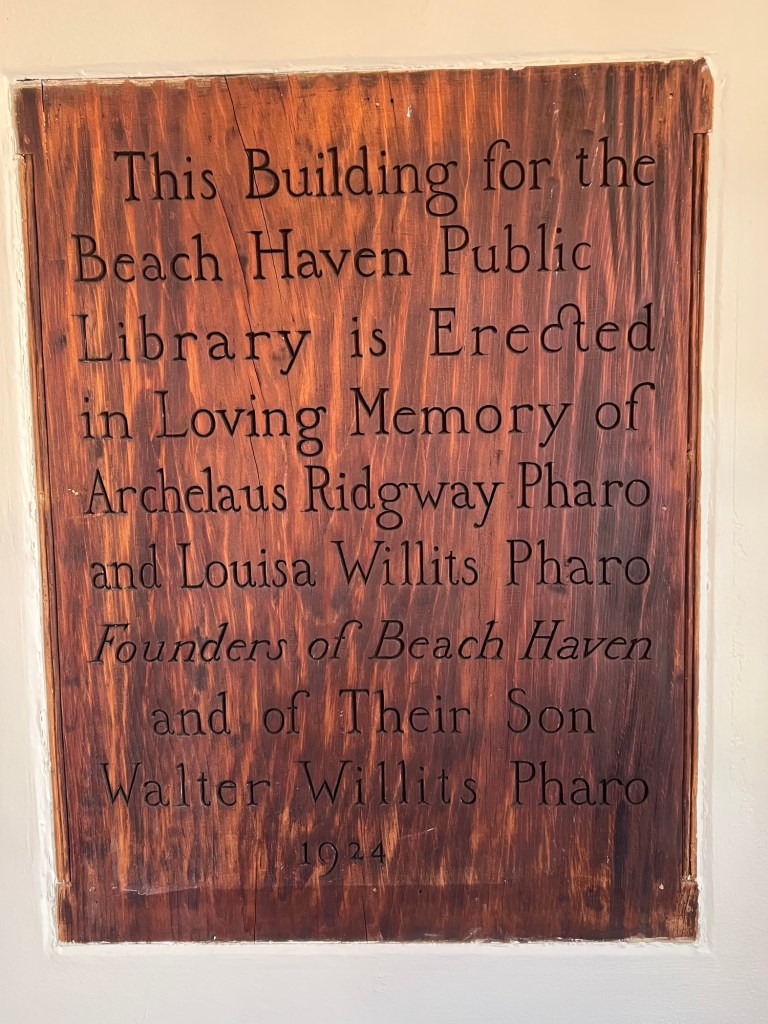
The dedication to Elizabeth Pharo, who dedicated the museum.

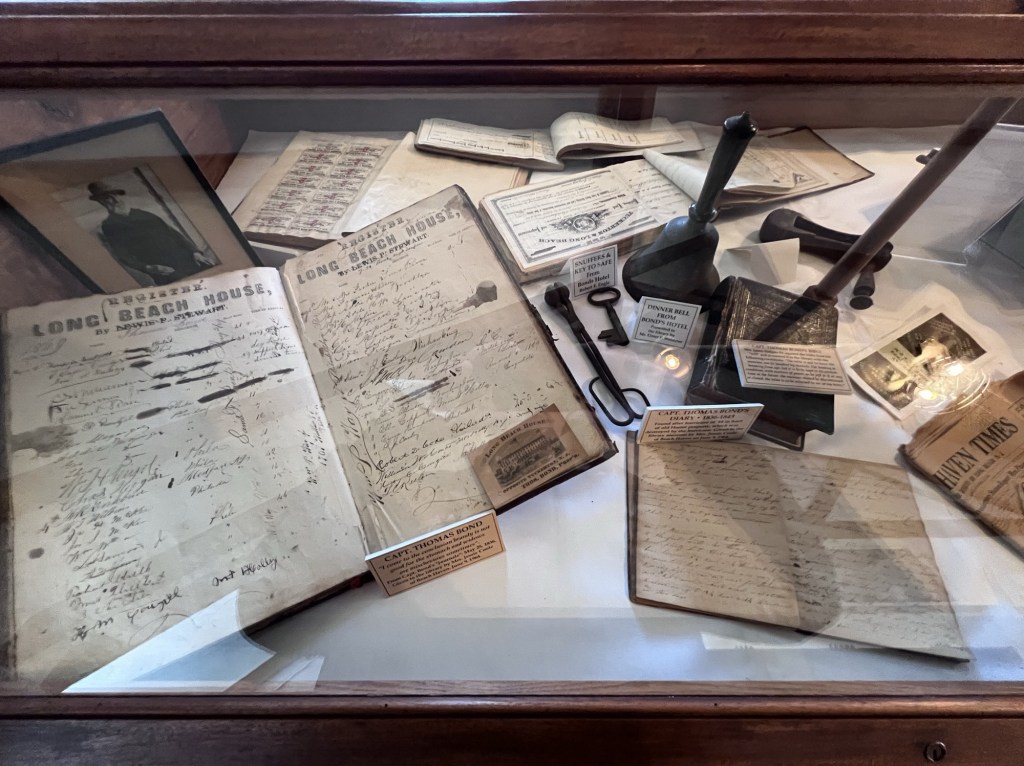
The Long Beach Island House Guest Ledger and historic items from the historic Bond Hotel

The records of the past resort town Long Beach Island used to be with guests coming from New York City, Philadelphia and beyond.

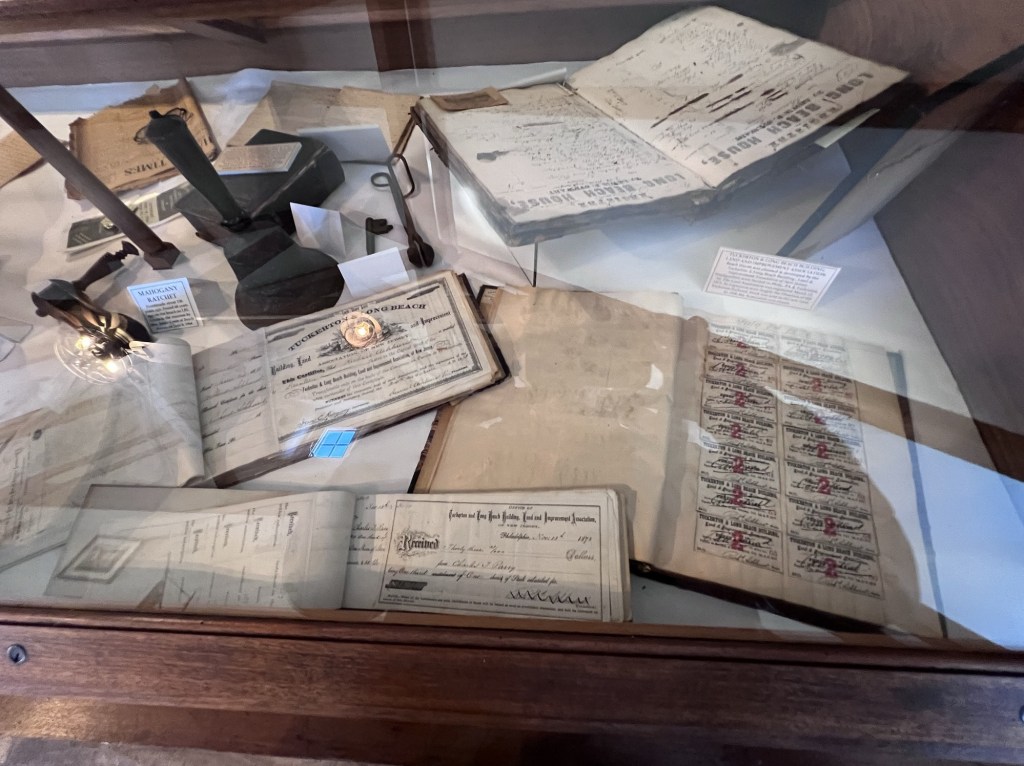
Historic items from the Tuckerton & Long Beach Building Land and Improvement Association

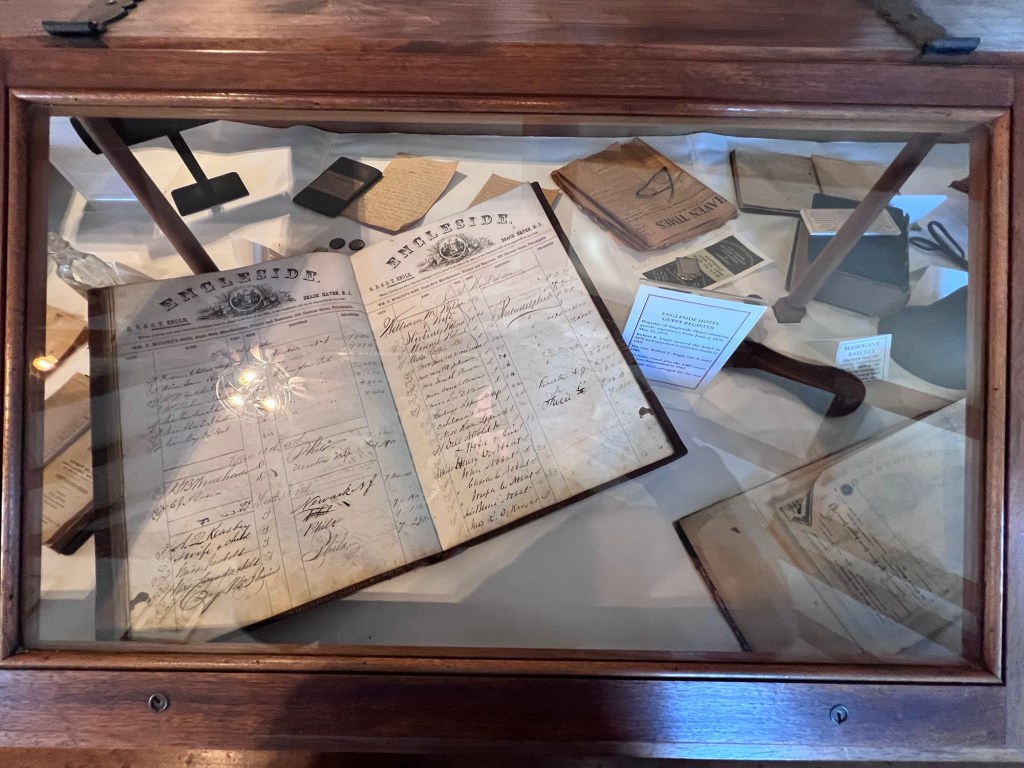
The Engleside Hotel ledger and items from the hotel

The New Jersey Declaration towards the Declaration of Independence

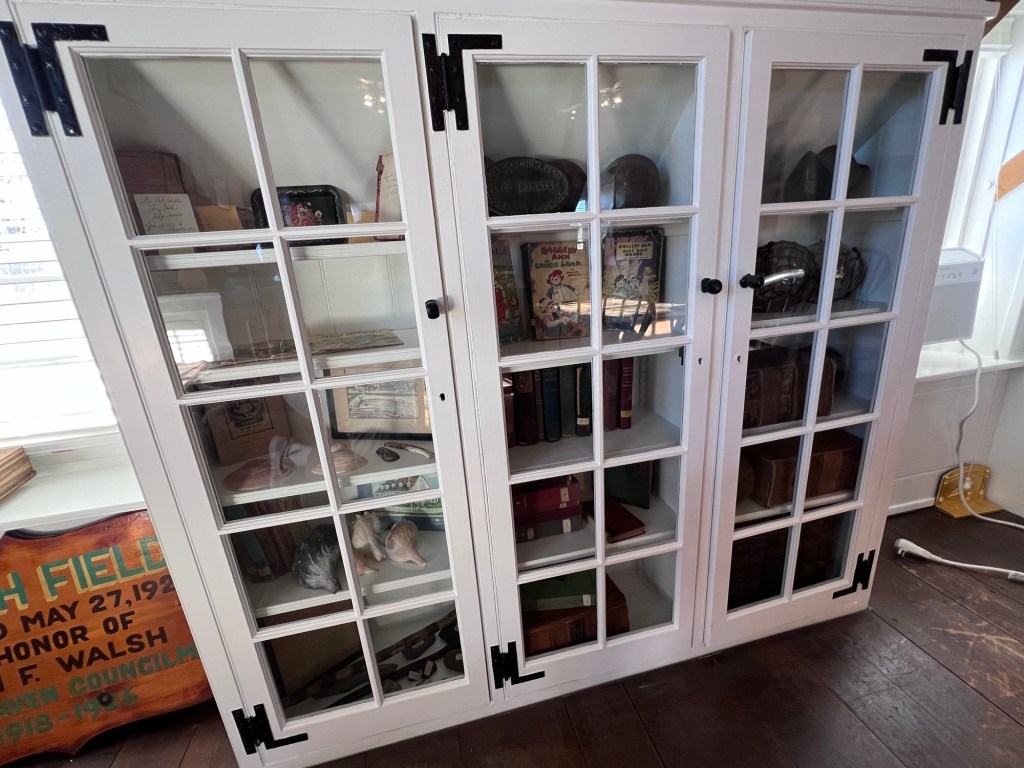
Historic books and periodicals

The library has an interesting collection of vintage and antique books that have been donated to the collection.

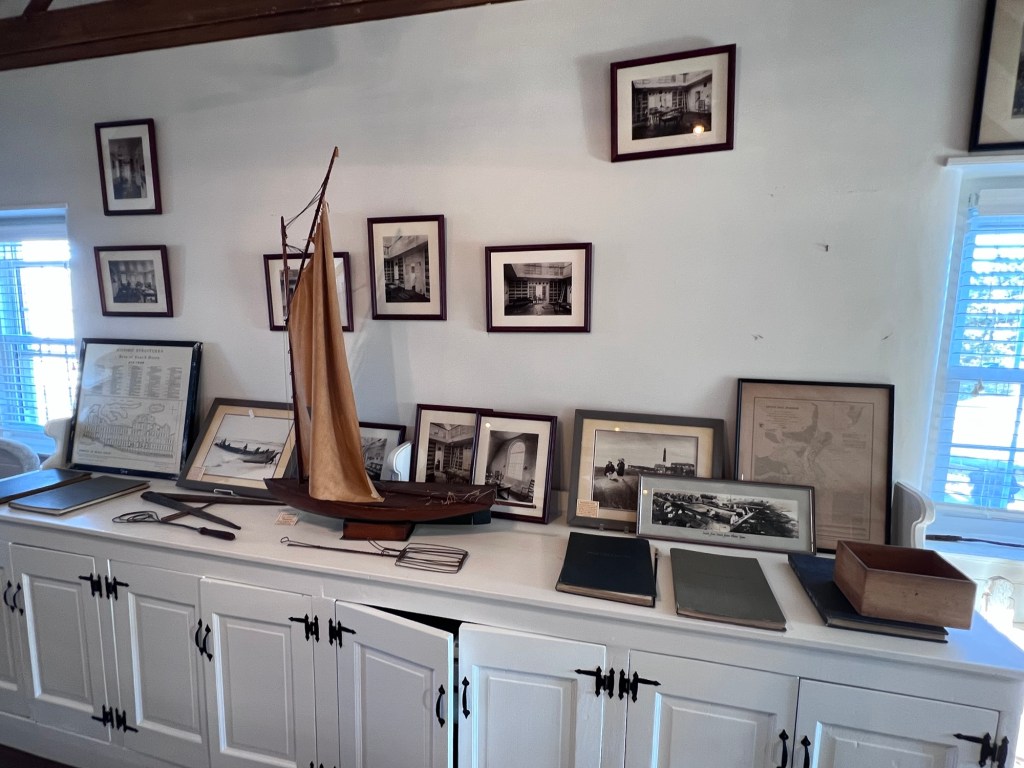
Photo display on historic sites in Beach Haven and pictures of the original library

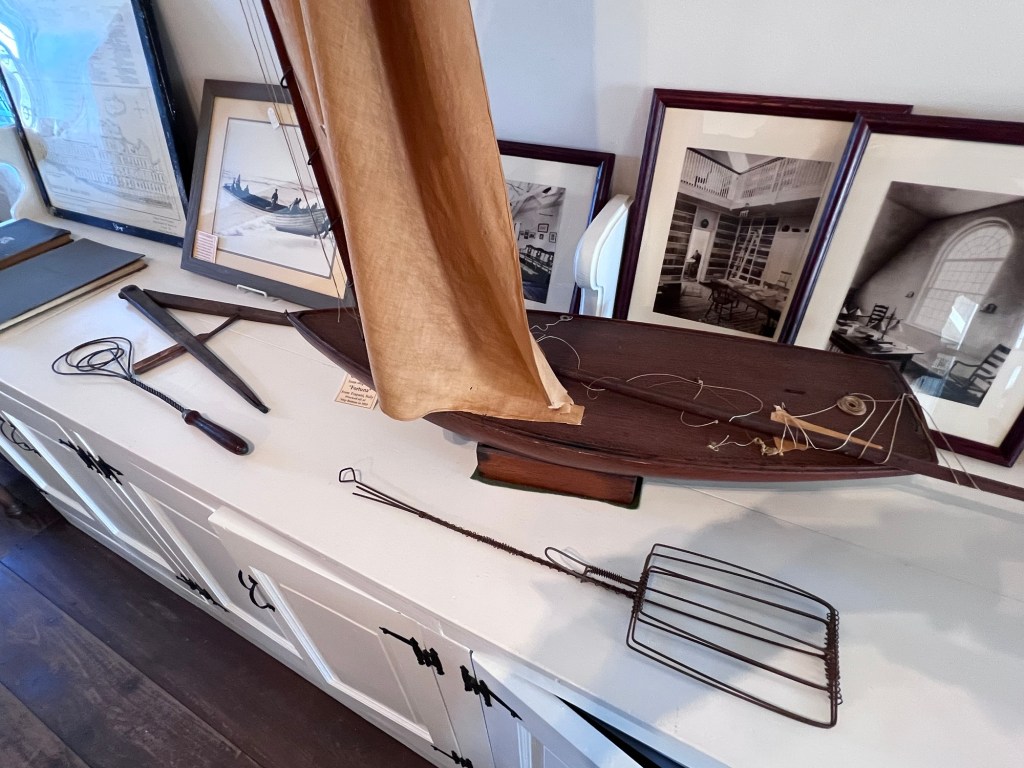
Some of the pictures are from the old library and the artifacts come from ships ground ashore. The library has a diverse collection of items to view.

The Compass from the historic shipwreck ‘Fortuna’ that wrecked off Ship Bottom in 1910 and historic boat

The second floor museum gallery holds the diverse collection of artifacts

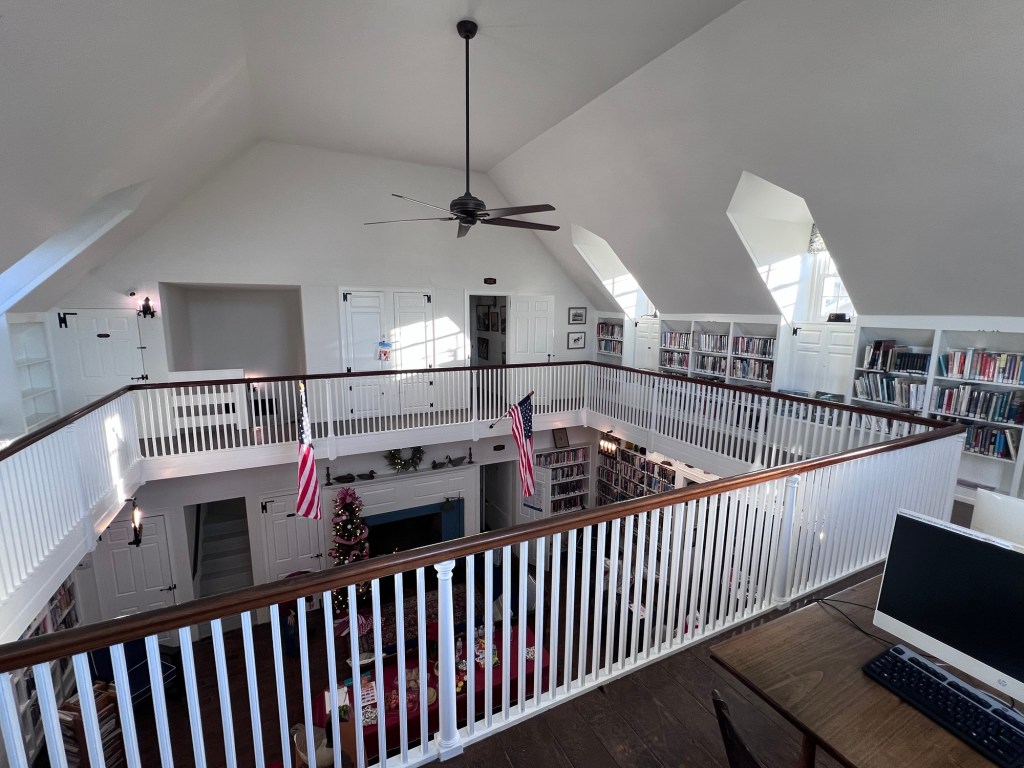
The second floor of the 1928 building

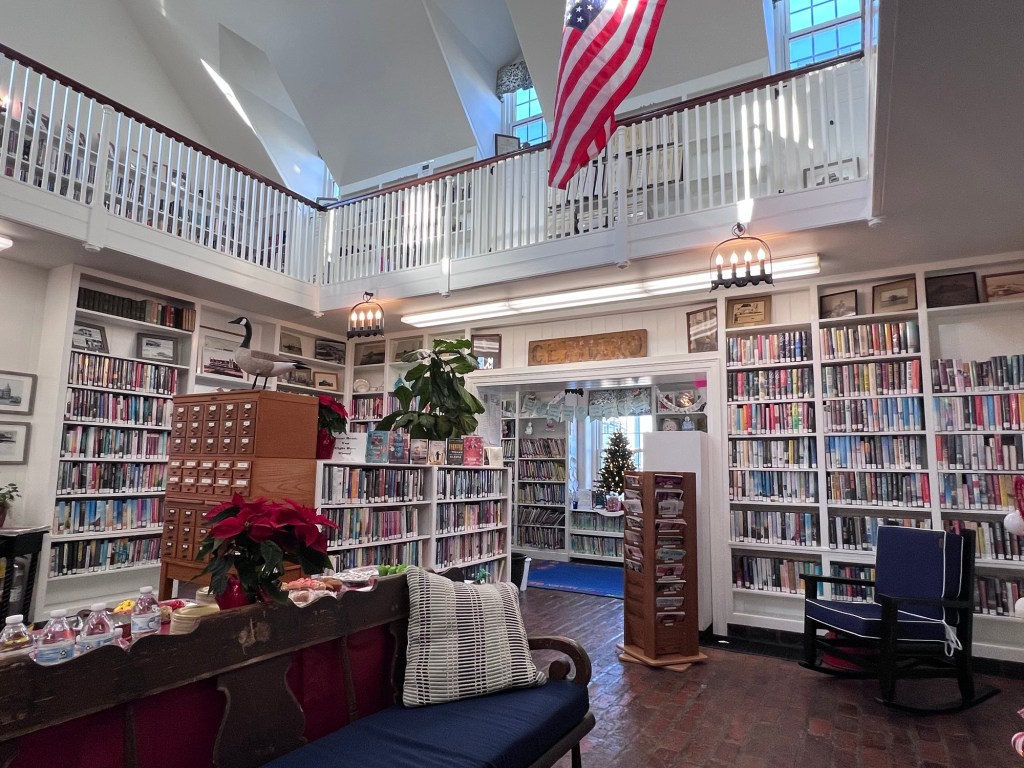
The first floor of the library has all sorts of historical artifacts along the walls

The Holiday Kickoff in 2025:

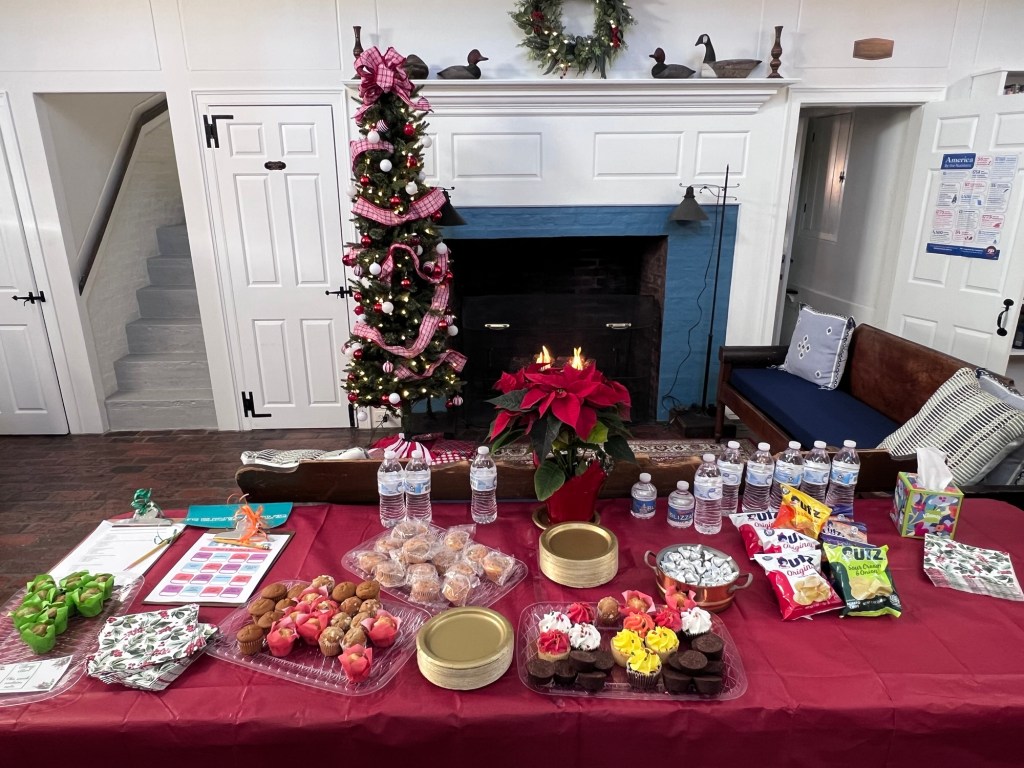
I visited during the library’s Holiday Open House with games, trivia and activities. There was also live music in the afternoon. It was a way that the library gives back to the community. It was a nice family event with good food and nice conversation with people from the community.

The Holiday Open House

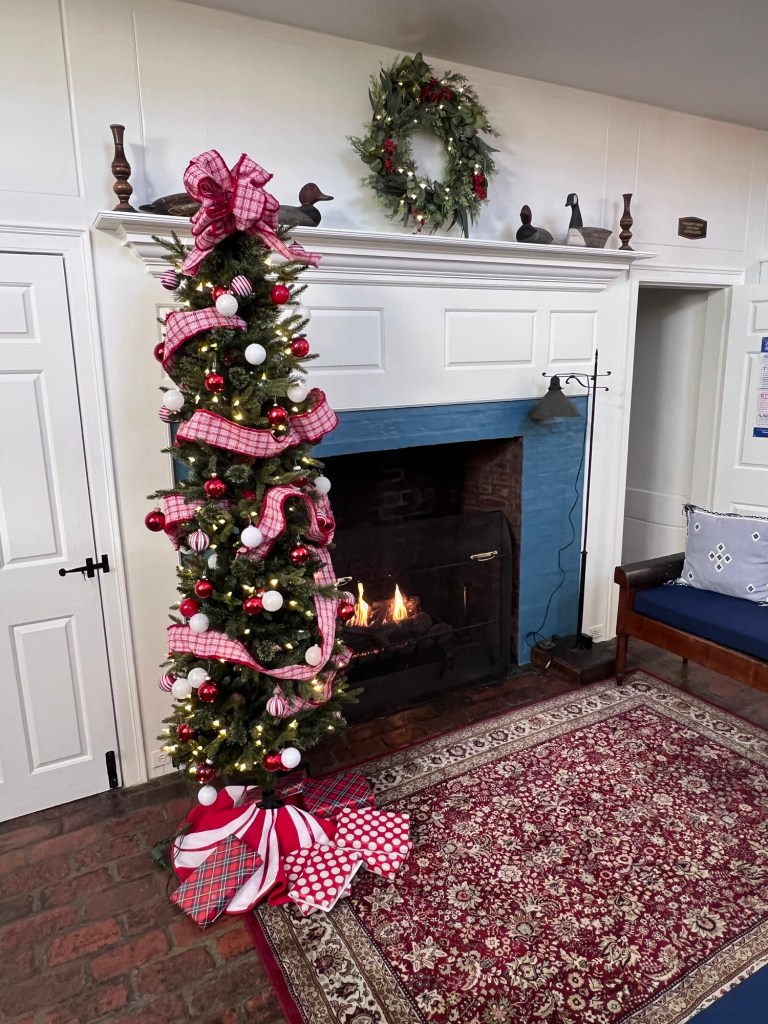
The fireplace was going when I was talking to the librarians

It was a very nice family event where patrons families could relax, have something to eat and play games with their children. The Liberians could not have been more friendly and engaging with the public.

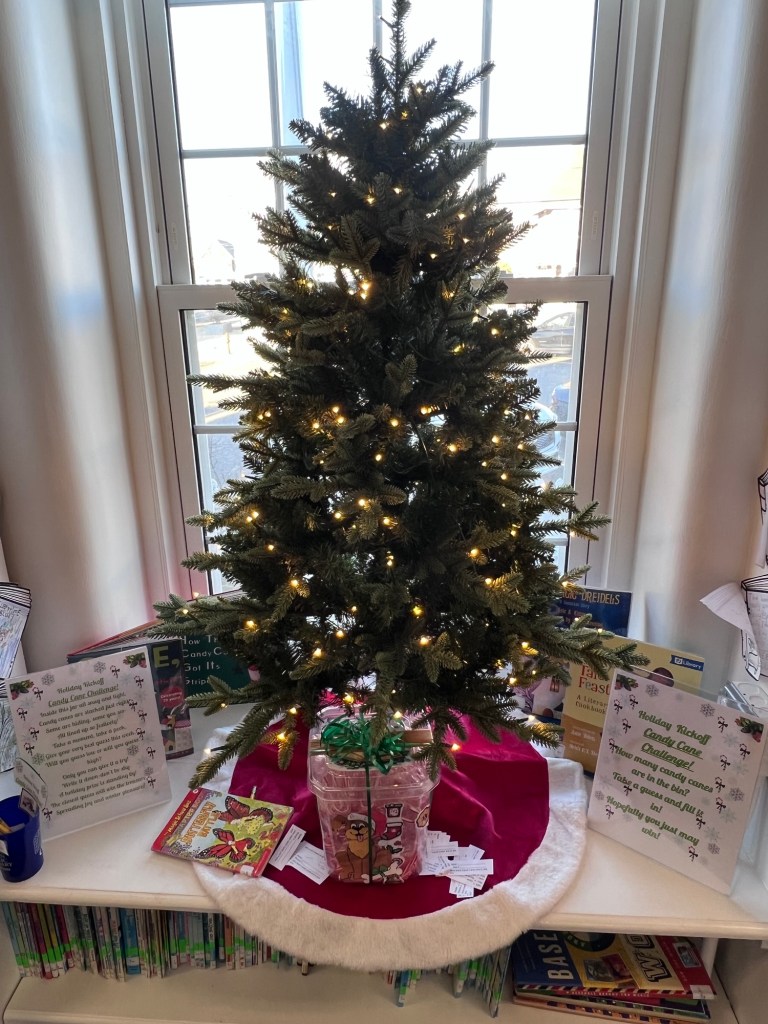
The Children’s Room had a holiday challenge

The museum is a rare gem tucked not just on the second floor but along the shelves and tables of the entire historic library giving visitors a chance to see all these historic artifacts mixed in with the library book collection.

The History of the Beach Haven Library:

(from the library website)

Attempts to establish a library in Beach Haven had begun as early as the 1880’s with a gift of books for the town’s children by Dr. Edward Williams. Williams, along with Charles Parry of the Parry House and the Baldwin Hotel, was a partner in the Baldwin Locomotive Works. The library collection was first housed in the home of Samuel Copperthwaite on Engleside Avenue. It was later moved into one of the Sunday School rooms of the Kynett Methodist Church, which had been built in 1890.

After the old Quaker Meeting House was donated to the town by Walter Pharo, the Reverend Alexander Corson of the Methodist Church began work, with the help of his wife, to turn the former Meeting House into a viable library. By the time they left in 1908, it was well on its way.

In 1923, Walter’s widow, Elizabeth Pharo, presented the library’s board of trustees with a proposal to build, entirely at her own expense, a new library for the town. It would be sited two blocks away from the Methodist church on a corner lot which she owned at Third Street and Beach Avenue. The library would be dedicated to the memory of her husband’s parents, Archelaus Ridgway Pharo and Louisa Willits Pharo–the founders of Beach Haven–as well as to her late husband Walter. 

Mrs. Pharo contracted R. Brognard Okie, one of Philadelphia’s finest architects, to design the new library. He chose as his model a Pennsylvania farmhouse–not an early lifesaving station, as some believed. Unlike a traditional farmhouse, however, it would be constructed entirely of brick and steel and include several stunning features: three working fireplaces, a vaulted ceiling, and an interior balcony encircling the first floor.

Tons of concrete were poured and steel girders for the new, two-story structure were already up by the spring of 1924 on the southeast corner of Beach Avenue at Third Street. Okie moved to Beach Haven to supervise every step of the construction, which was all done by local builder Floyd Cranmer. Ten railcar loads of bricks were used to build the solid outer walls and it was soon evident that the town was to have the finest library on the New Jersey coast.

As the library neared completion in the late fall of 1924, its beauty was already drawing praise. Every window in the structure was framed with long shutters of pale green, which gleamed against the white brick exterior. A sweeping, multi-dormered black roof added a grace seldom seen in a public building. Surrounded by a low, white picket fence and later, a well-kept green lawn, it added an incomparable dignity to what, in that time period, was the town’s main street, Beach Avenue.

There are two large colonial-style working fireplaces on the first floor. One is in the main room and the other is behind it in the long back room on the ocean side of the library. Today this room houses the Mystery collection and its solid, ten-foot table makes it useful as a meeting room. In the early years, however, it served a different function–it was designated as the men’s reading room, and there male patrons could sit in large comfortable chairs to read magazines and newspapers. It was well lit by two tall French windows and it opened out onto the screened porch on the north side.

The main reading room with its vaulted ceiling is encircled with a balcony reached by a spiral stone staircase, its steps topped with thick slabs of slate. The balcony flooring is of oak, as are all of the spindles in the railings. The upstairs walls are lined with books. One great window on the west side rises ten feet to the ceiling. The rest are all set into dormers. On the east wall behind the upstairs balcony there is a door where one may step down into a well-furnished little museum with high, beamed ceilings and a huge stone fireplace. It is filled with old hotel registers, deeds, diaries, photographs and other mementos of Beach Haven’s vibrant history.

The Beach Haven Public Library is a prime architectural treasure on Long Beach Island and a direct link to a colorful past that is the town’s most precious heritage. Mrs. Elizabeth Pharo’s gift to the town, itself now almost 100 years old, is as stunning as the day it was built. The taxpayers who support it are proud of its status as the only independent library in Ocean County and have chosen to keep it that way.

The Endicott-Reardon Family Museum                                   3036 South Shore Road (Route 9)                        Seaville, NJ 08230

The Endicott-Reardon Family Museum 3036 South Shore Road (Route 9) Seaville, NJ 08230

The Endicott-Reardon Family Museum

3036 South Shore Road (Route 9)

Seaville, NJ 08230

(609) 624-0600

https://www.facebook.com/EndicottReardonMuseum/

https://visitnj.org/endicott-reardon-family-museum

Open: Sunday Closed/Monday 10:00am-2:00pm/Tuesday Closed/Wednesday 10:00am-2:00pm/Thursday Closed/Friday 10:00am-2:00pm/Saturday Closed. Seasonal-Seasonal Please see the website.

Admission: Free

My review on TripAdvisor”

https://www.tripadvisor.com/Attraction_Review-g46811-d20911361-Reviews-Endicott_Reardon_Family_Museum-Seaville_Upper_Township_Cape_May_County_New_Jersey.html

The front the museum

The sign welcoming you the the Endicott-Reardon Family museum

The original Endicott-Reardon Homestead that sits in the front of the museum

The entrance to the museum dedicated to the lives of both the Endicott and Reardon families.

The family artifacts and heirlooms at the museum as you enter the museum

The Endicott family display at the entrance

The museum is a real surprise as entire set of displays is dedicated to the lives of the local Reardon and Endicott families and their family items. A fascinating look of the lives of these early New Jersey families for over a hundred years. This is the collection of Harriett Reardon Bailey and her family. All these wonderful items were saved over the last 100 years and now it was time to share them with the world.

The various family items are organized by sections categorized by lifestyle and collection.

I was given a personal tour that I had arranged with the current curator who had known and worked with the owner of this extensive collection. It had been her dream to open a museum to share her collection with the public.

This beautiful, well lit and displayed collection of family heirlooms and personal items gives a glimpse of the lives of an upper middle class family in Southern New Jersey. It is organized and displayed as a household would be at that time. The first section of the museum was dedicated to items from the kitchen and preparations.

The family Living room furnishings and decorations

The family piano that once graced their Living Room

A decorative toy car used in the Living Room

The kitchen area and artifacts of the cooking and washing done in the house

The table set for a formal dinner

The next part of the exhibit was the formal Dining Room and on display were many of the China patterns that the family owned.

All the china collections the family owned plus other decorative pieces

The family collection of China and glass pieces

The family had various collections of China

Mainly of the bedroom items have been preserved too from linens to comforters to every day clothing. There are also a selection of family member’s clothing, jewelry and personal items.

The Bedroom vignette with clothing and accessories

Another view of the bedroom

Harriett Reardon Bailey had been a school teacher like her mother and there were displays of items that reflected her time in the classroom including a classroom setting.

Time on the classroom and family employment

The classroom set up

Activities and programs at the school

More local school items

There were also displays on her father’s time in the army and her uncle’s time working on the railroad with carefully preserved outfits, programs and railroad artifacts from the job.

The Railroad display

School and family items

Work on the railroad

The display on the family contribution to the armed forces

What I thought was interesting was that the founder of the museum, Harriett Reardon Bailey, had been an only child with relatives that had never been married so that she was the only child and a bit spoiled.

The Toy Room

In a separate room off the side held her extensive collection of dolls and games. She had kept all her childhood items in such beautiful shape and with great care. What impressed me was there was a picture of her as a little girl with all her dolls and stuffed animals her room and since she kept everything, they were able to recreate the display.

The picture of the owner of the museum as a little girl in her bedroom

The exact replicated display of toys in the same spots in the display

The collection of tea sets

The collection of toys and playthings are extensive and they are all in wonderful working shape

There was a large collection of dolls plus all their clothes and accessories that were kept together in her collection. Even into adulthood, all of her childhood items were kept in pristine condition.

The collectible dolls and clothing

The extensive collection of childhood dolls

The collection of China and baby dolls

The collection of baby dolls

The collection of cloth and rag dolls

The handmade dollhouse and rag dolls

The fancier imported and collectible dolls

What I thought was interesting during the tour was that the curator had said that the founder of this museum was dedicated in keeping all these items for so long and packing the house with family memorabilia. I think she knew what she was doing.

She was not just preserving memories, she was preserving a past that was fading away and the memories of a different time. As her family died, she kept their memories alive by preserving their past as well. The curator had said that she had always wanted to create a museum with all her family’s items and share them with the public. Now we get to glimpse into her family’s history and everyday life.

The museum shares with the public the day to day happenings and life of the Endicott-Reardon branches of the family and life as a middle class Victorian family. I think she preserved the best items with such care as to share them with future generations of what life was like at that time. When people knew each other and times were slower and quality mattered. I think she loved her beautiful things and wanted to share them with all of us.

The inside of the Endicott-Readon Family Museum

Video on the Museum

Indian River Life Saving Station Museum                  25039 Coastal Highway                                             Rehoboth Beach, DE 19971

Indian River Life Saving Station Museum 25039 Coastal Highway Rehoboth Beach, DE 19971

Indian River Life Saving Museum

25039 Coastal Highway

Rehoboth Beach, DE 19971

(302) 227-6991

https://www.destateparks.com/park/indian-river-life-saving-station/

https://visitsoutherndelaware.com/listing/indian-river-life-saving-station-museum

Open: Sunday 9:00am-3:00pm/ Monday-Saturday 9:00am-4:00pm (Schedule is flexible with the seasons)

Admission: $4.00

My review on TripAdvisor:

https://www.tripadvisor.com/Attraction_Review-g34048-d208535-Reviews-Indian_River_Life_Saving_Station_Museum_at_Delaware_Seashore_State_Park-Rehoboth_Be.html

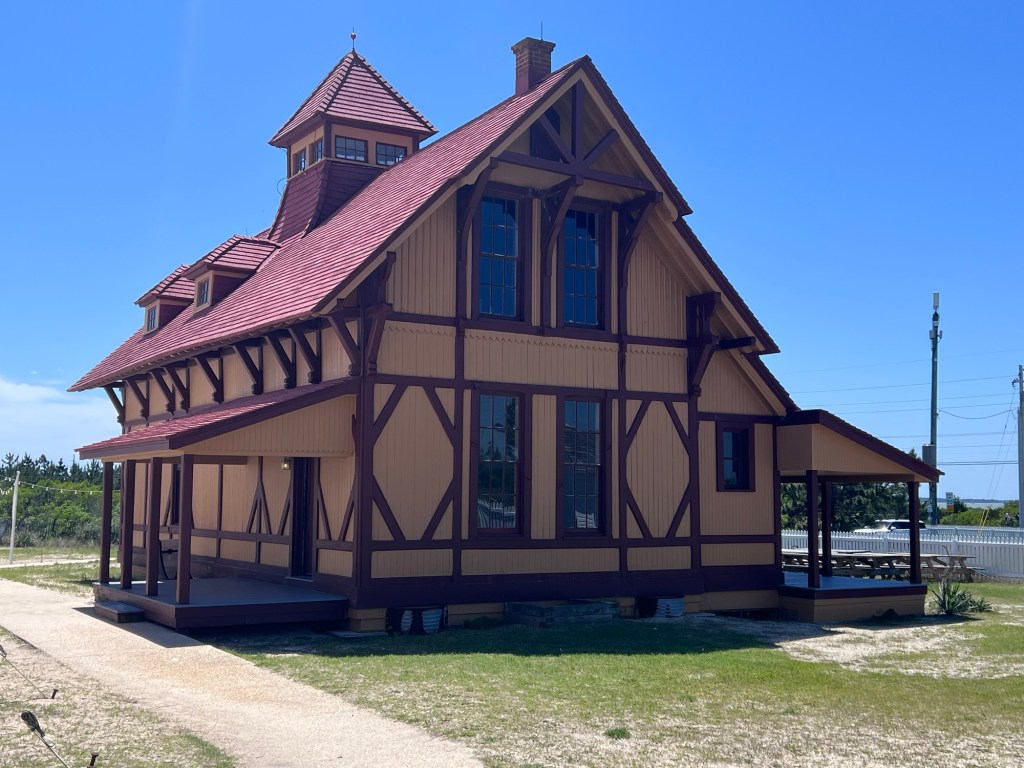
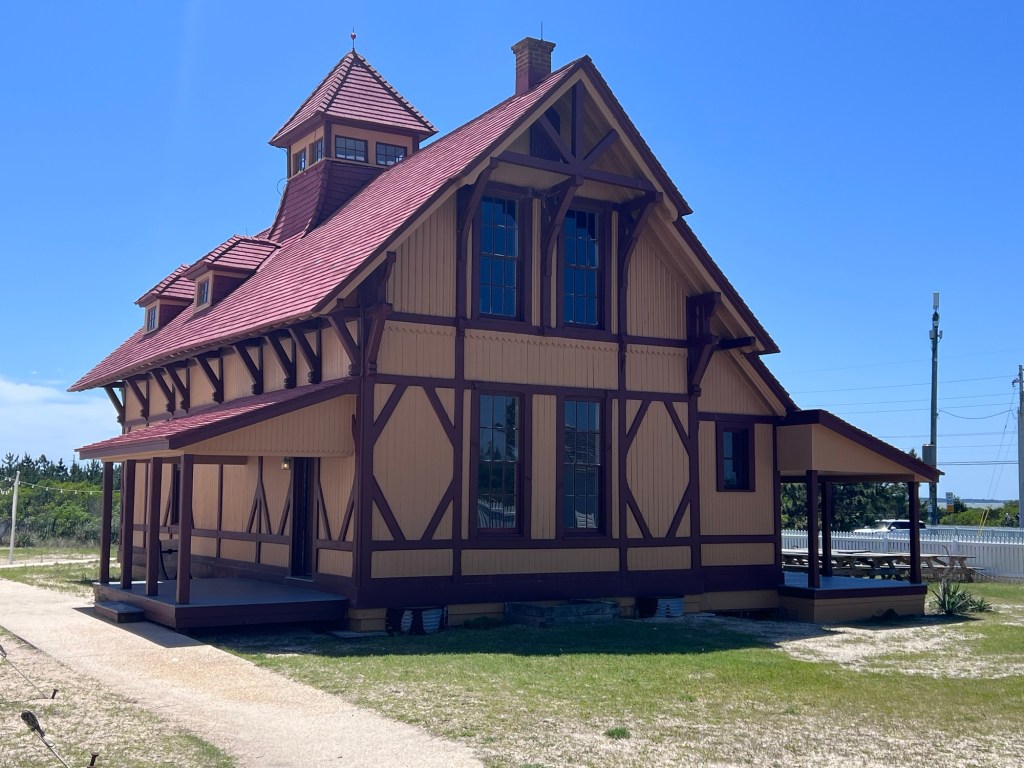
The front of the Indian River Life Saving Museum at 25039 Coastal Highway

History of the Indian River Life Saving Station:

(From the Delaware State Park website)

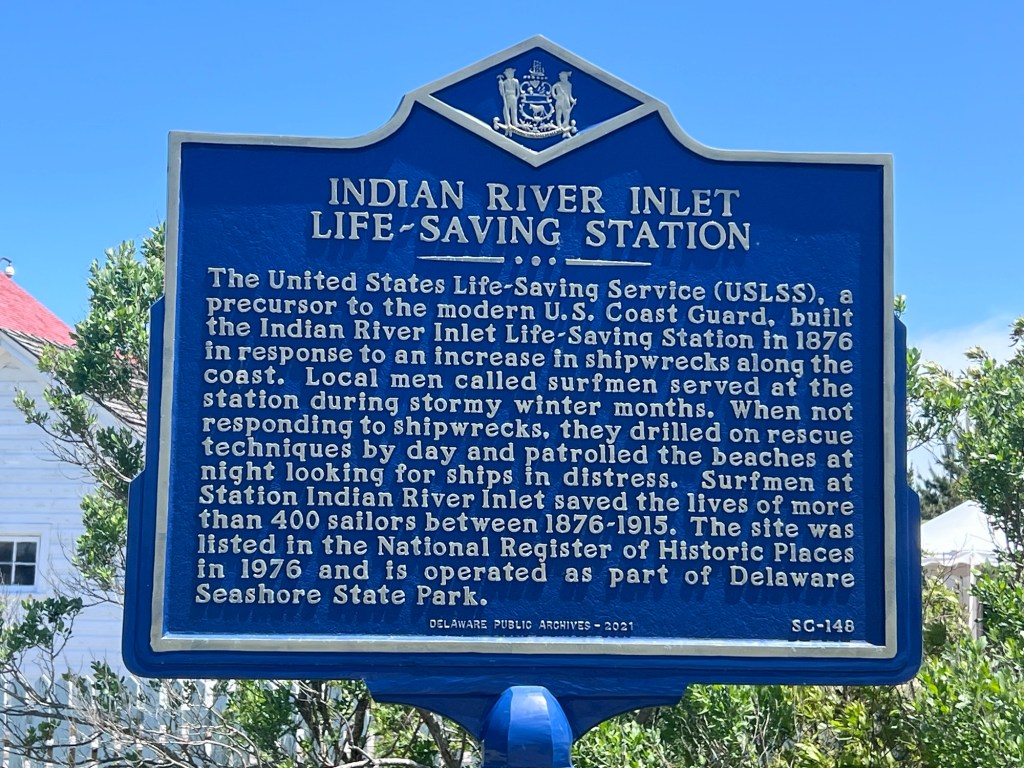
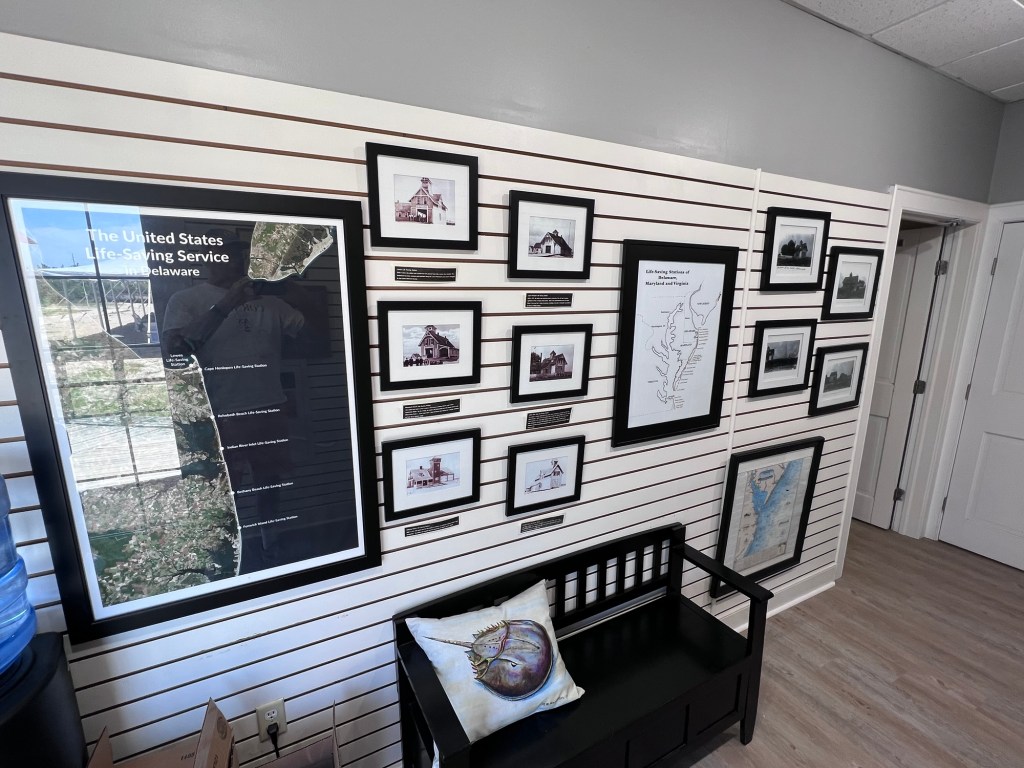
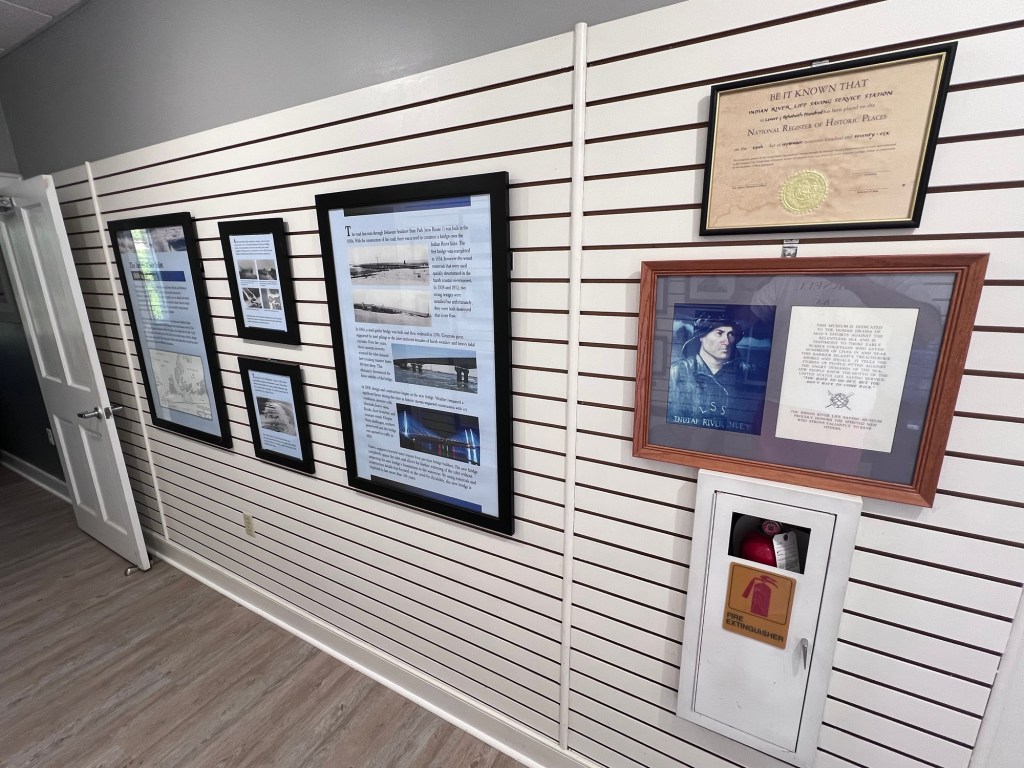
The original Indian River Life-Saving Station was built in 1876 for use by the United States Lifesaving Service, a government organization created to respond to the alarming number of shipwrecks along the coastlines of the United States and the precursor to today’s U. S. Coast Guard. The Life Saving Station today is a maritime museum that honors these courageous sailors and the rich history of their deeds. Listed on the National Registry of Historic Places, it is a must visit piece of Delaware history.

The front of the historical sign describing the park

The recent History of the Museum:

(From the Delaware State Park website)

The building was first located 400 feet closer to the shore, but a sand dune began to form around it almost as soon as it was finished. It was moved to its present location in 1877, and today has been meticulously restored to its 1905 appearance, complete with diamond-shaped trim. The museum is listed in the National Register of Historic Places.

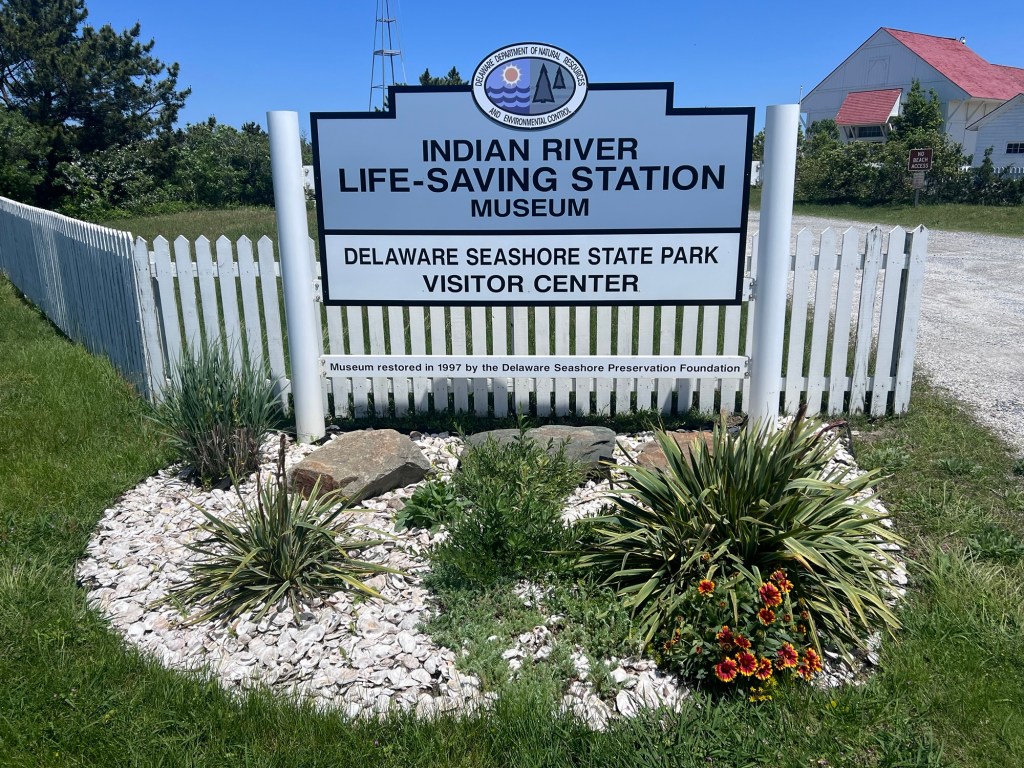
The entrance of the museum

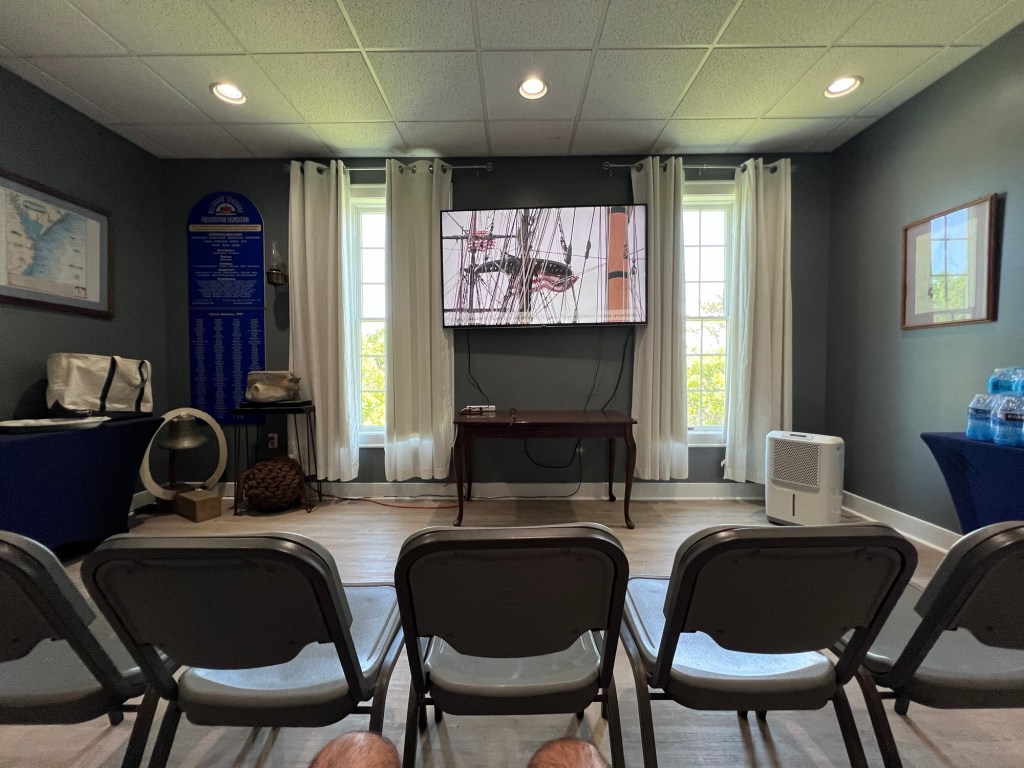
The Screening Room in the Visitors Center where you learn about the Life Saving Center

I started my tour of the Indian River Life Saving Museum at the Visitors Center with a quick video of the history of the building and the men who lived and worked here. The organization was the precursor to the modern Coast Guard. What I thought was interesting is that the way of rescuing people has not changed that much since the 1800’s. It has modernized with equipment and knowledge but the process is still similar to what it was then.

The Screening Room lined with historical pictures

The Screening Room lined with pictures of the history of the area

You can take two audio tours as you start to tour the station building just by calling into your phone, one of the exterior and one of the interior, room by room. Each room and many objects have a number assigned to them and you can listen to a description of the subject matter.

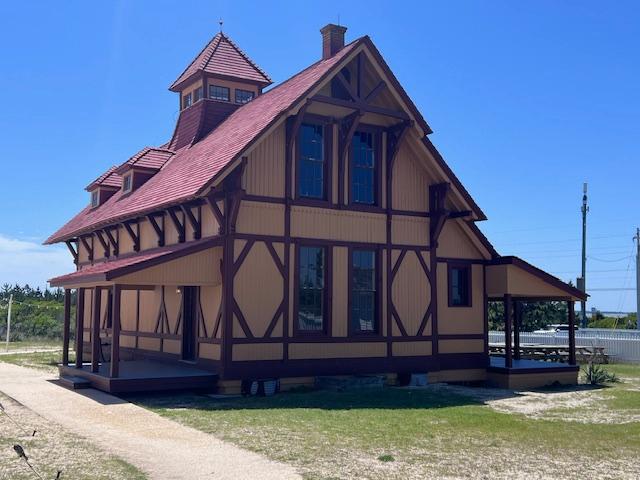
The Rescue Saving Station from the exterior. The building has a Queen Ann design.

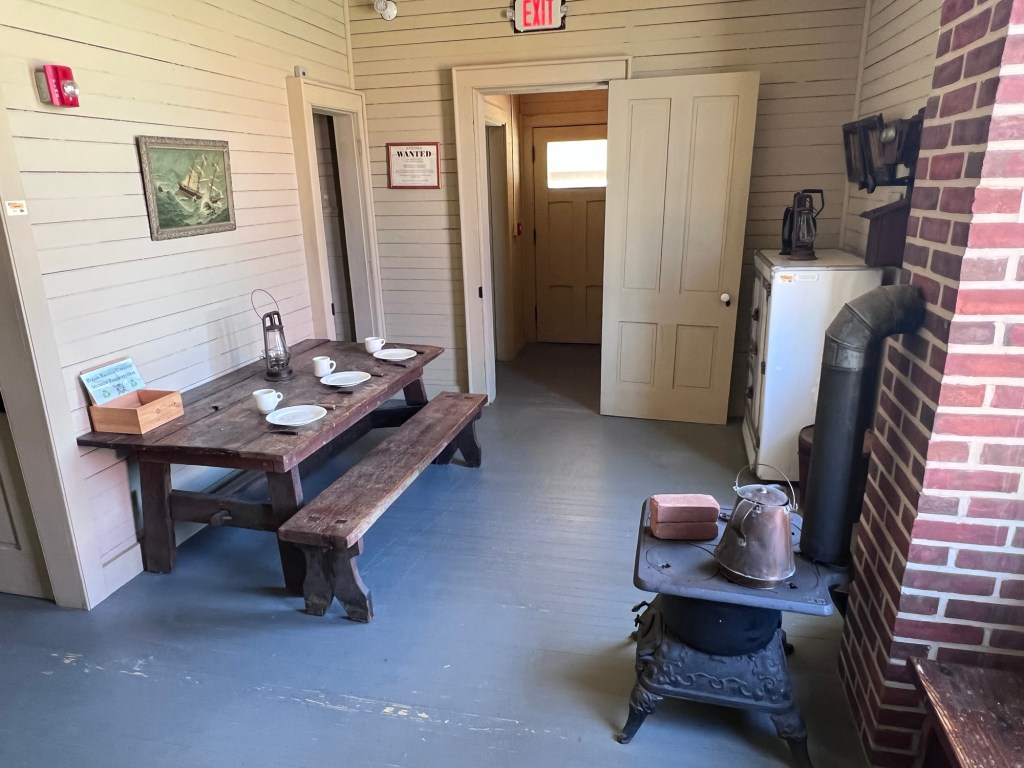
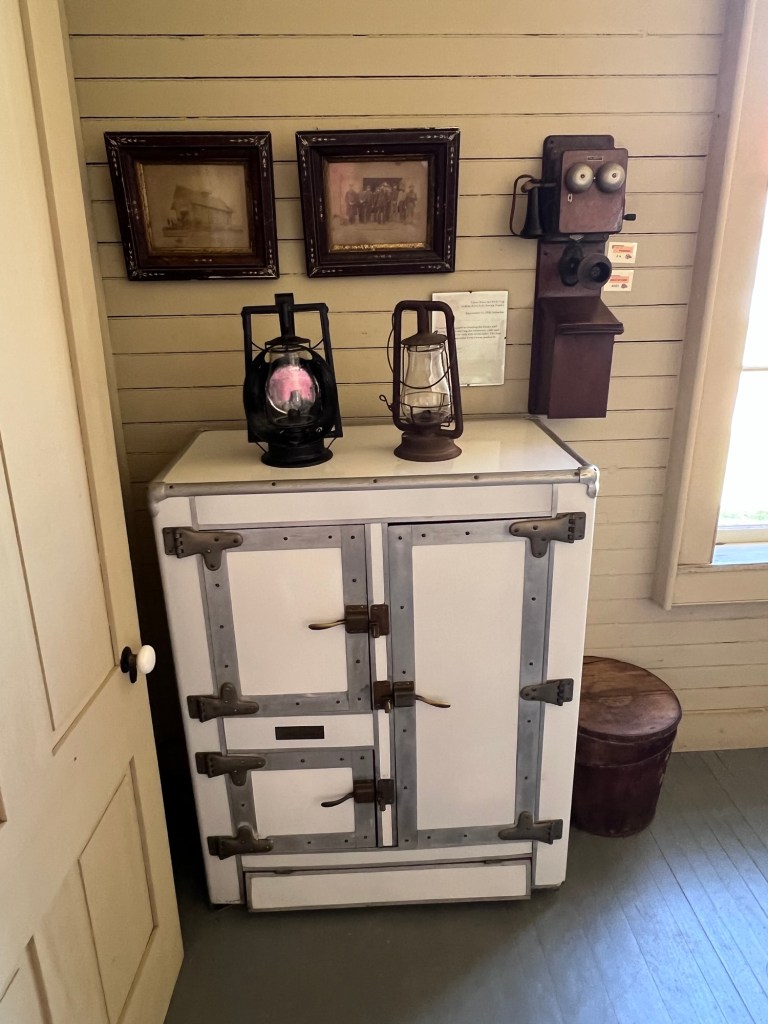
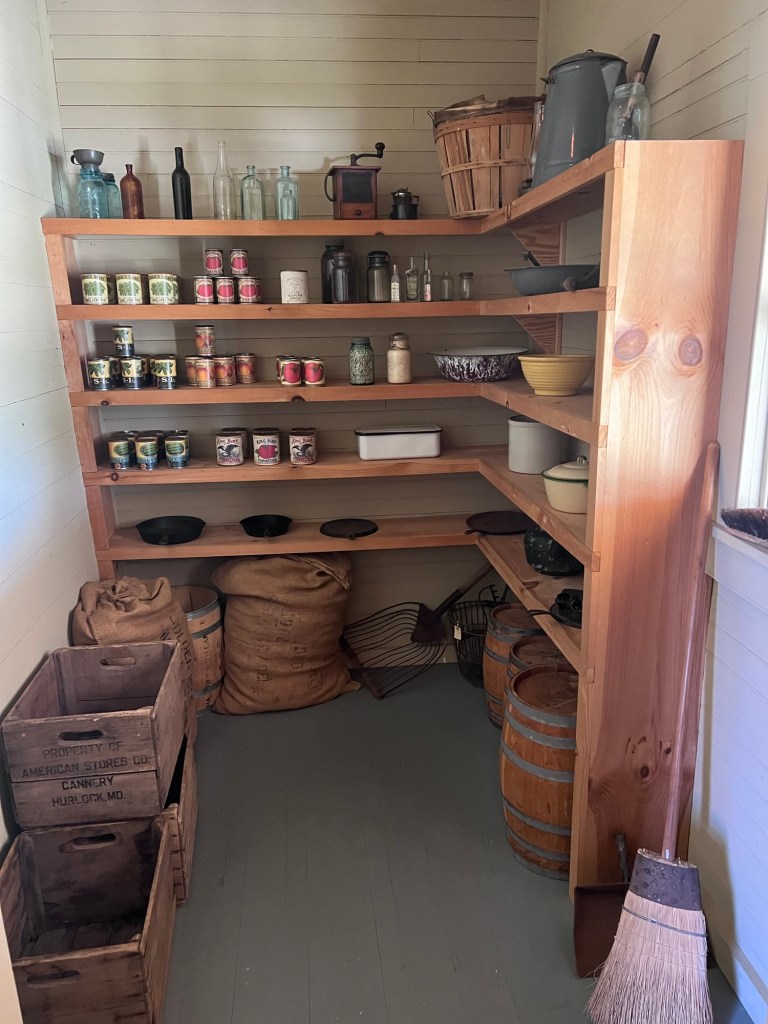
The first room you enter is the kitchen area where all meals were prepared and the men ate their meals. These men could not leave the facility because of the hours and type of work required, supplies were brought in and stored in this area.

The old ice box where foods were stored

The pantry area where all the dry goods were stored

For recreation, the men read, entertained themselves with music and conversation. This room was used for recreation purposes and some down time for the staff.

The first floor downstairs room was used for entertainment and recreation during the downtimes

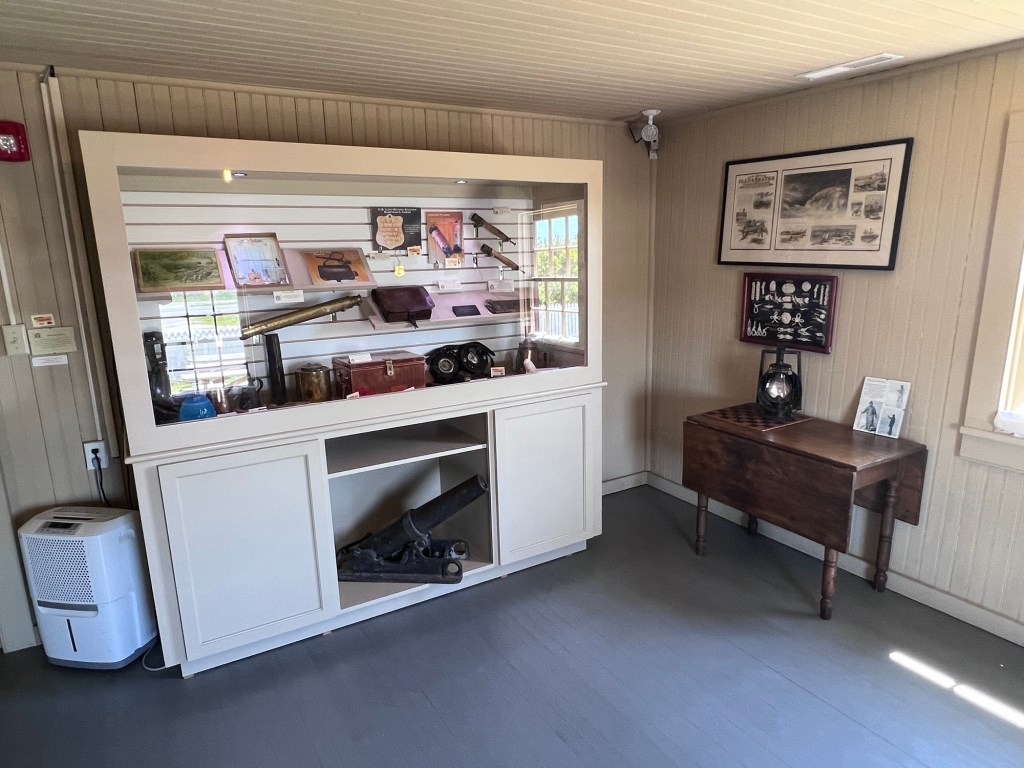
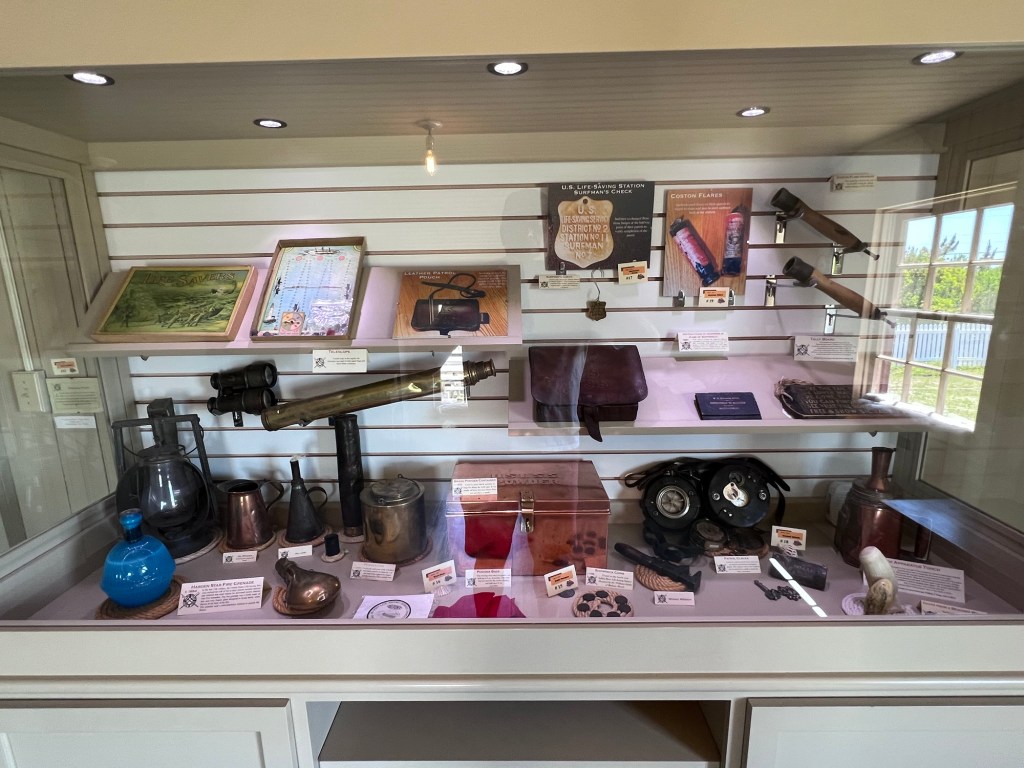
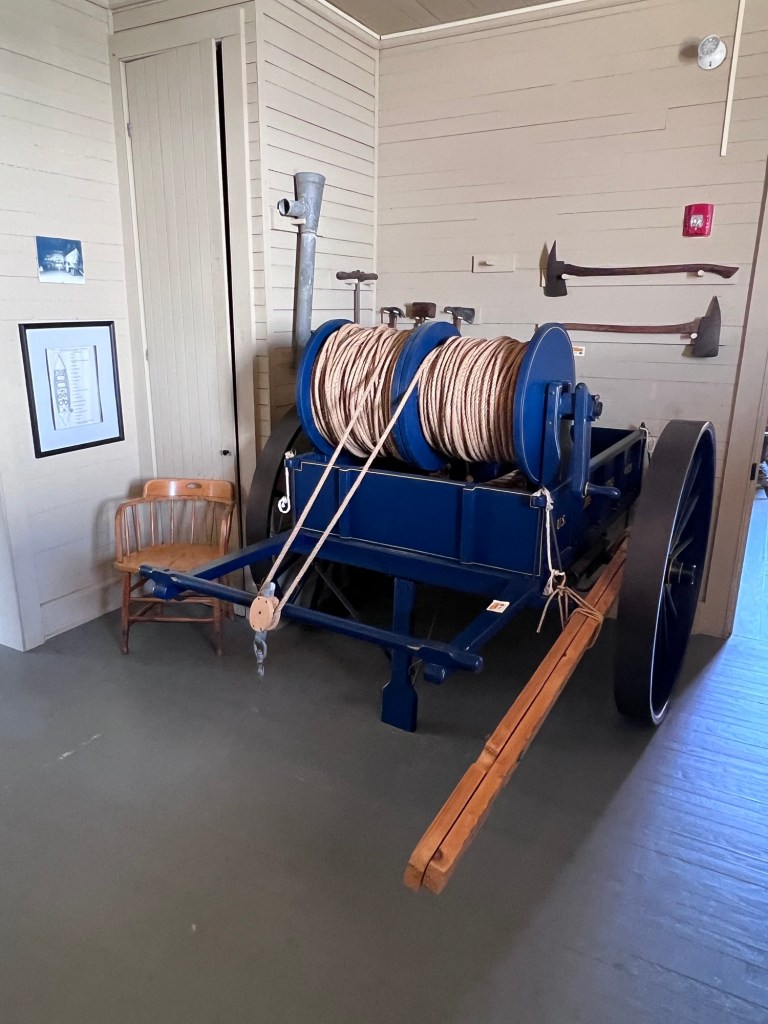
Old equipment and relics on display in the main room

Old equipment used at the station house

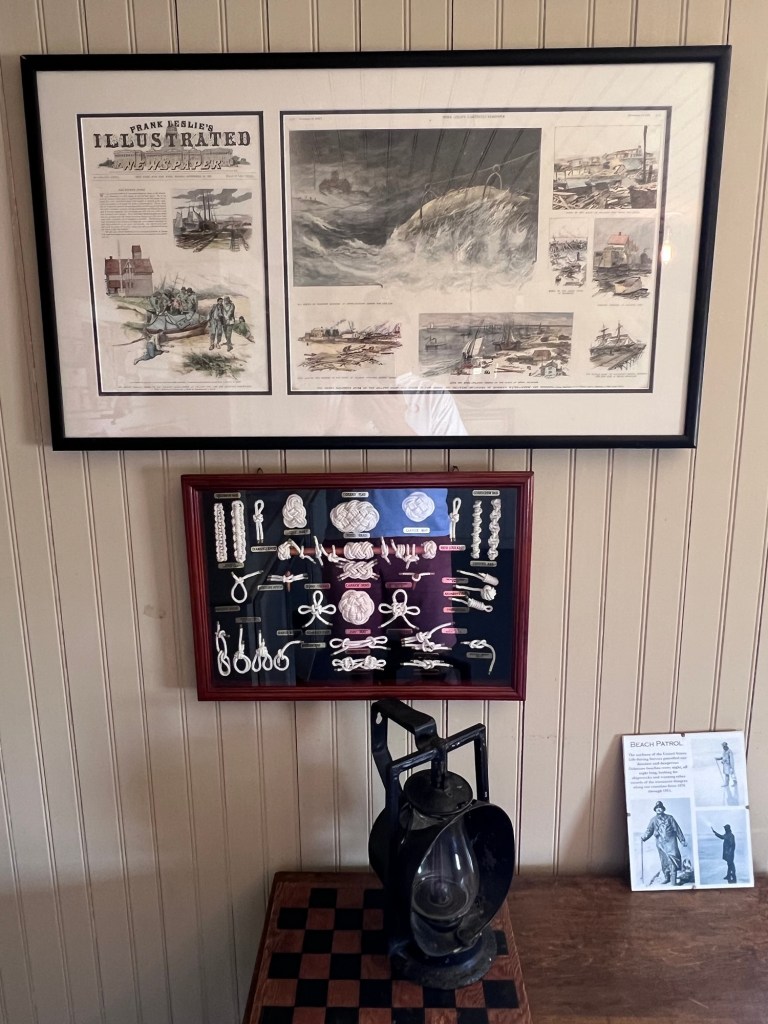
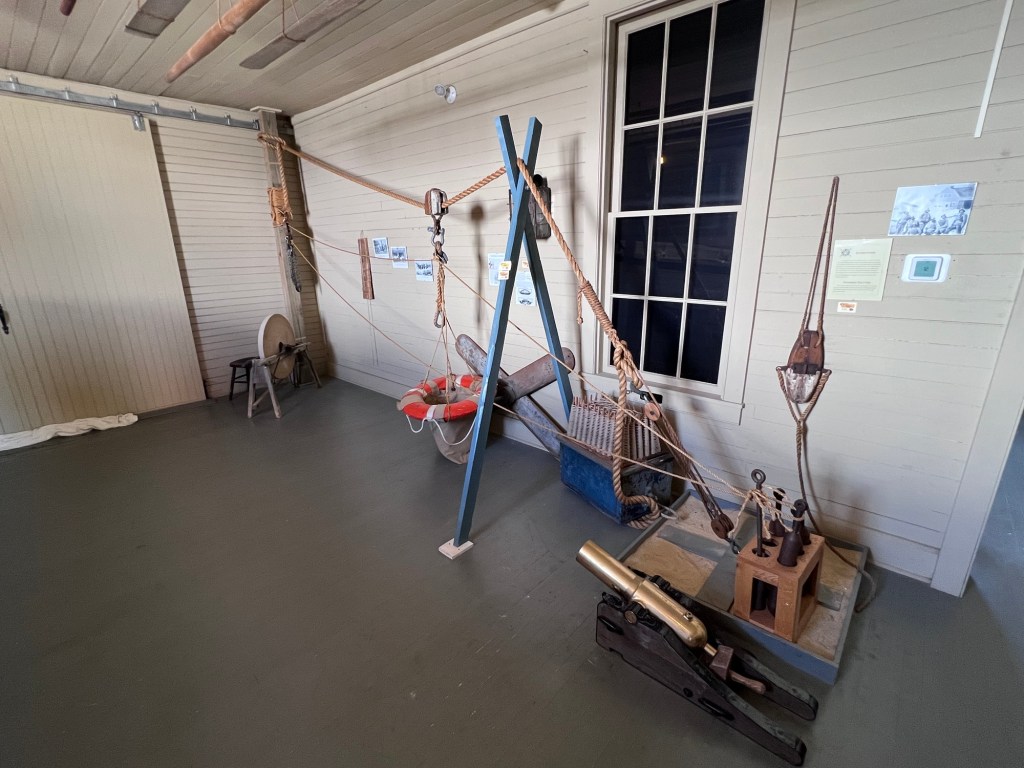
Methods of tying ropes and nautical rescues illustrated

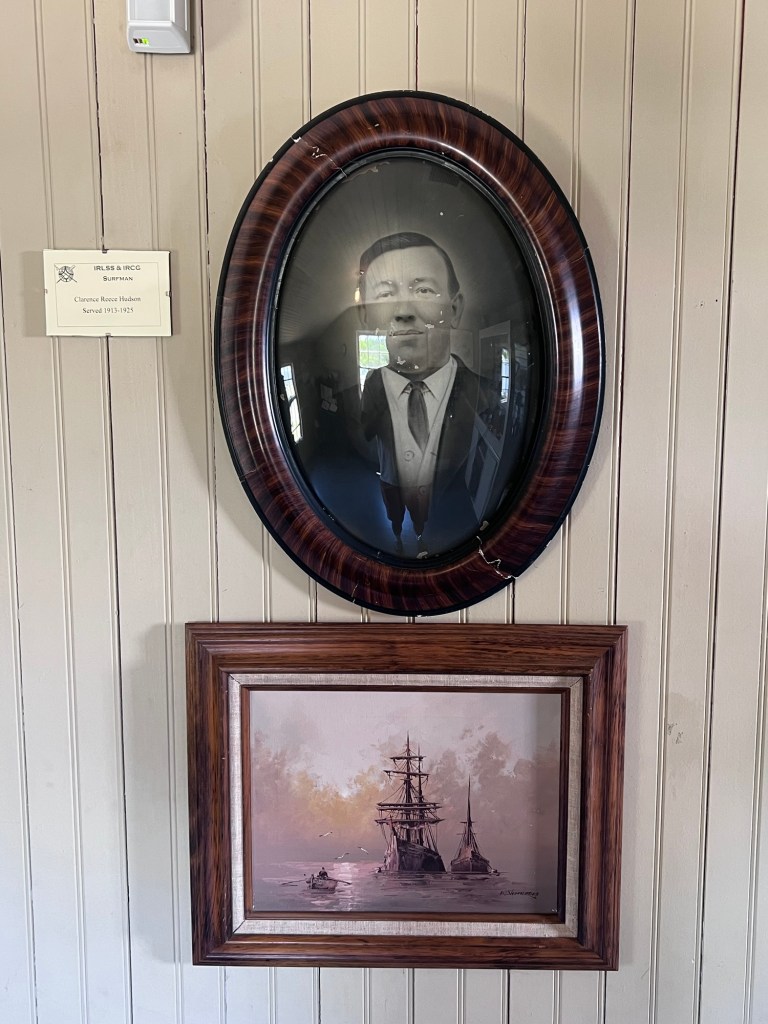
Portrait of one of the old station masters

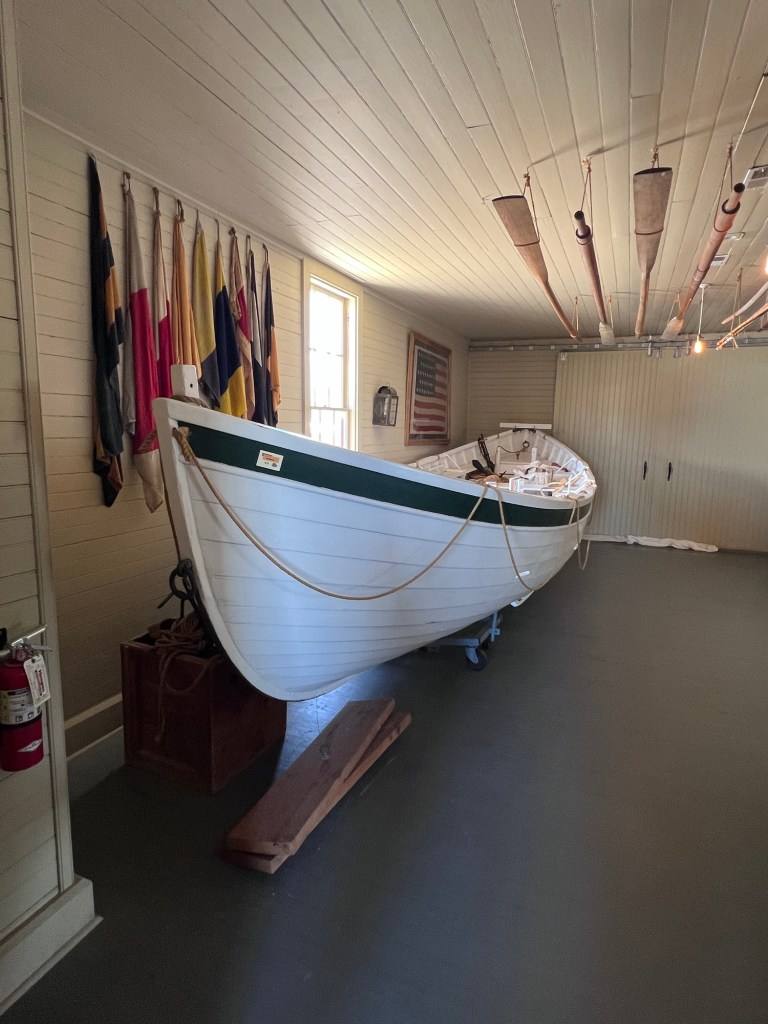
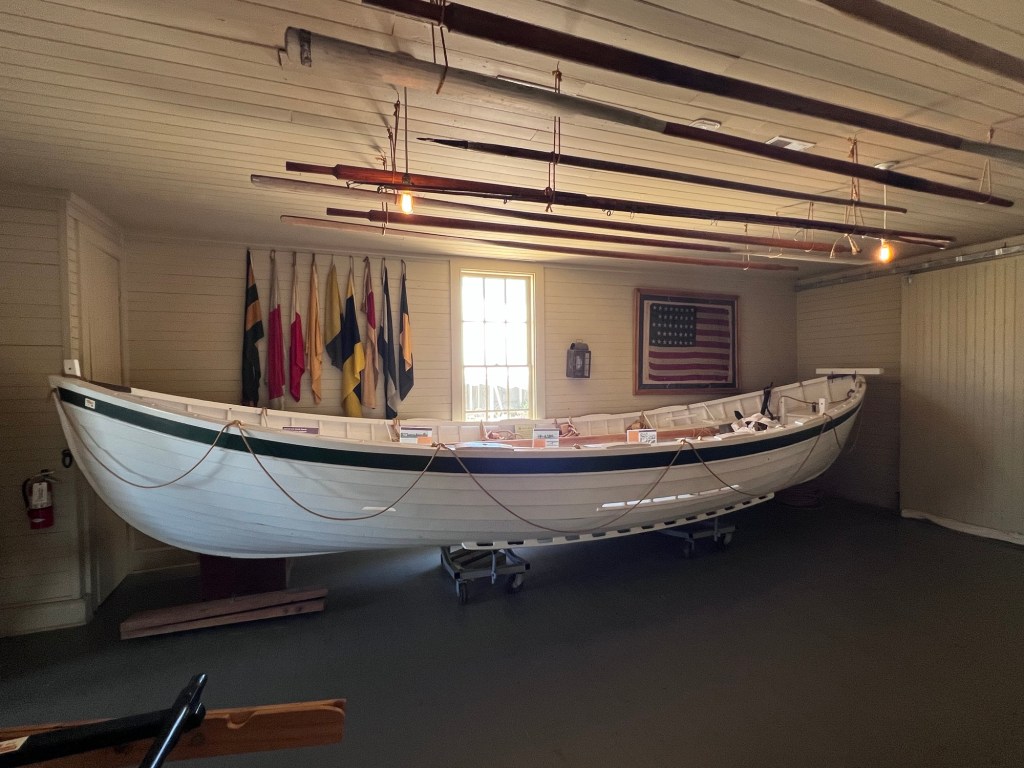
The main room held all the rescue equipment used to save both people and property. This included all the boats, ropes, pulleys and buckets for rescue.

The main rescue boat and paddles

The rescue boat used by the station to save people and cargo

Ropes and wenches to save and pull in damaged vessels

The bucket rescue method

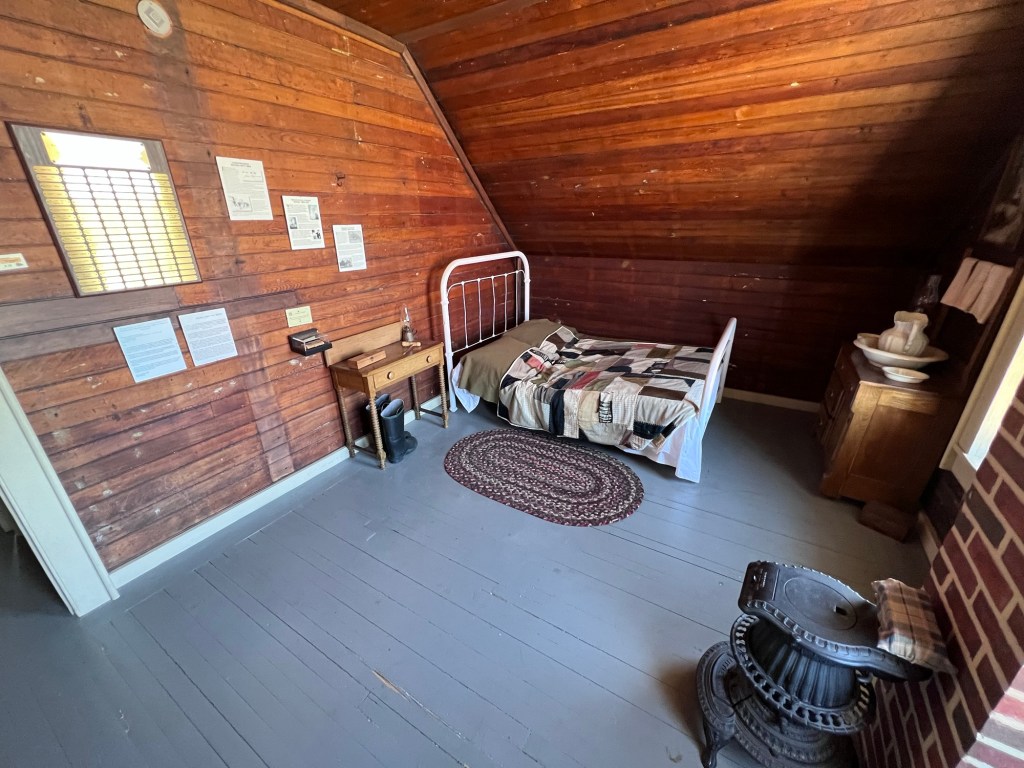
The second floor contained the living quarters. Since the Team worked in shifts, pretty much no one left the building except for small breaks. The men slept in shifts with one man working night duty in four hour intervals to watch the shore for wrecks.

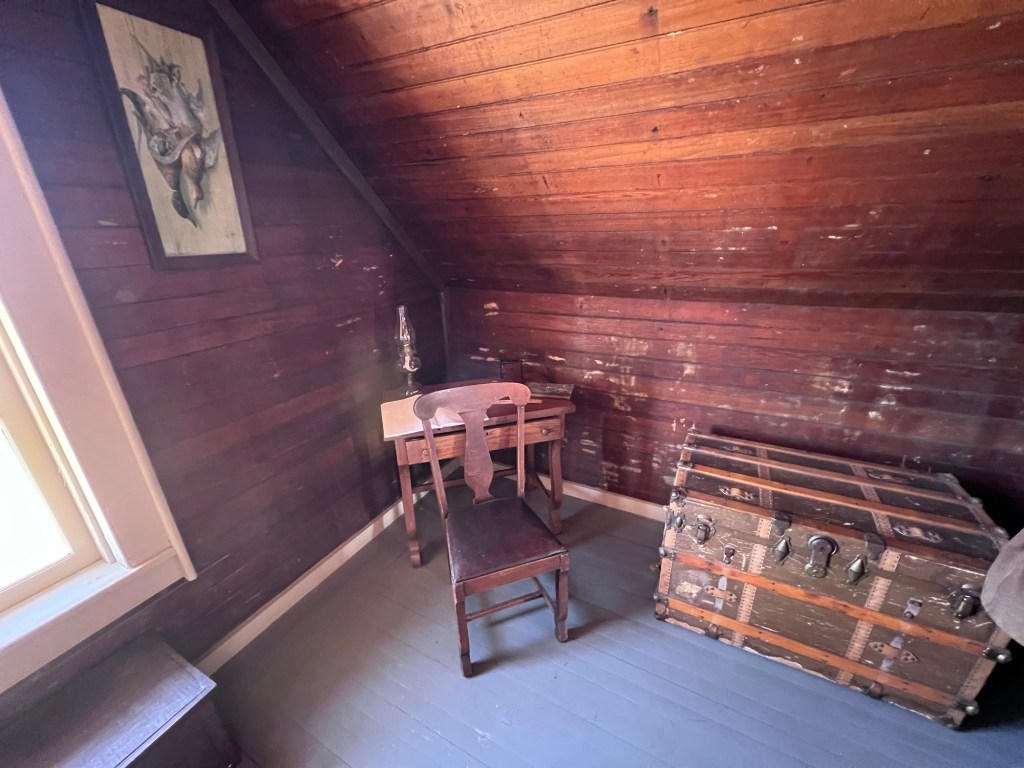
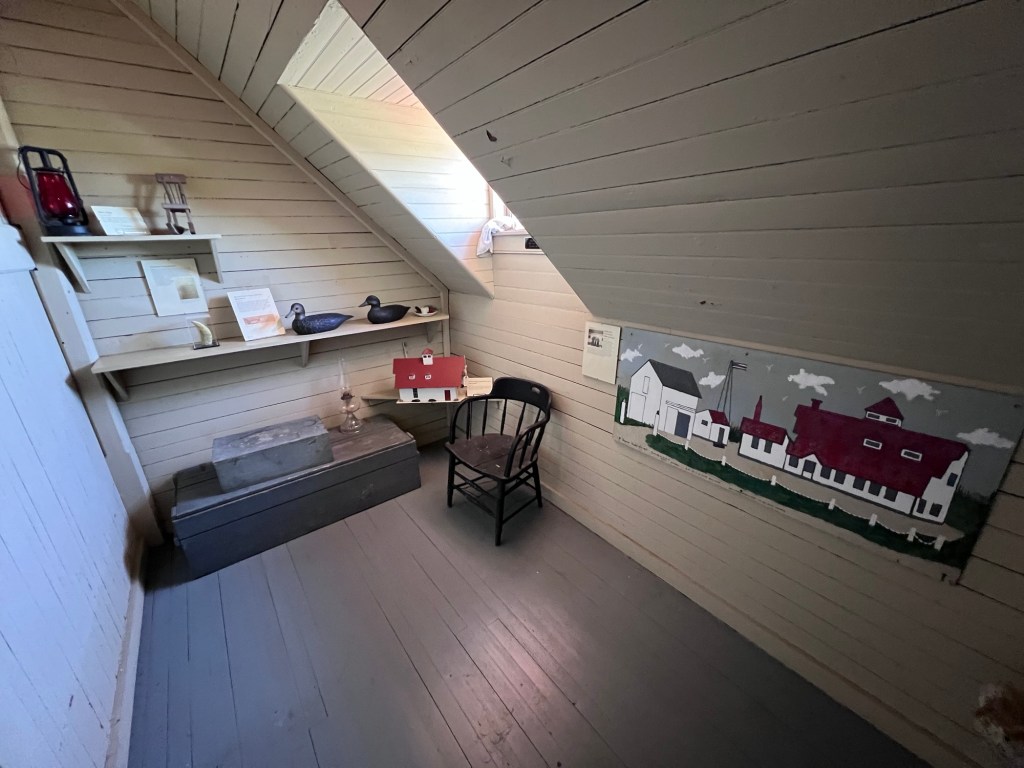
The living quarters for the station master

The small office in the room

The men slept on one room with the window facing the sea in a dorm like setting. The room was equipped with natural light and a view of the sea to watch over the coastline.

The bedroom of the men on duty

The bedroom

Separate room for private time

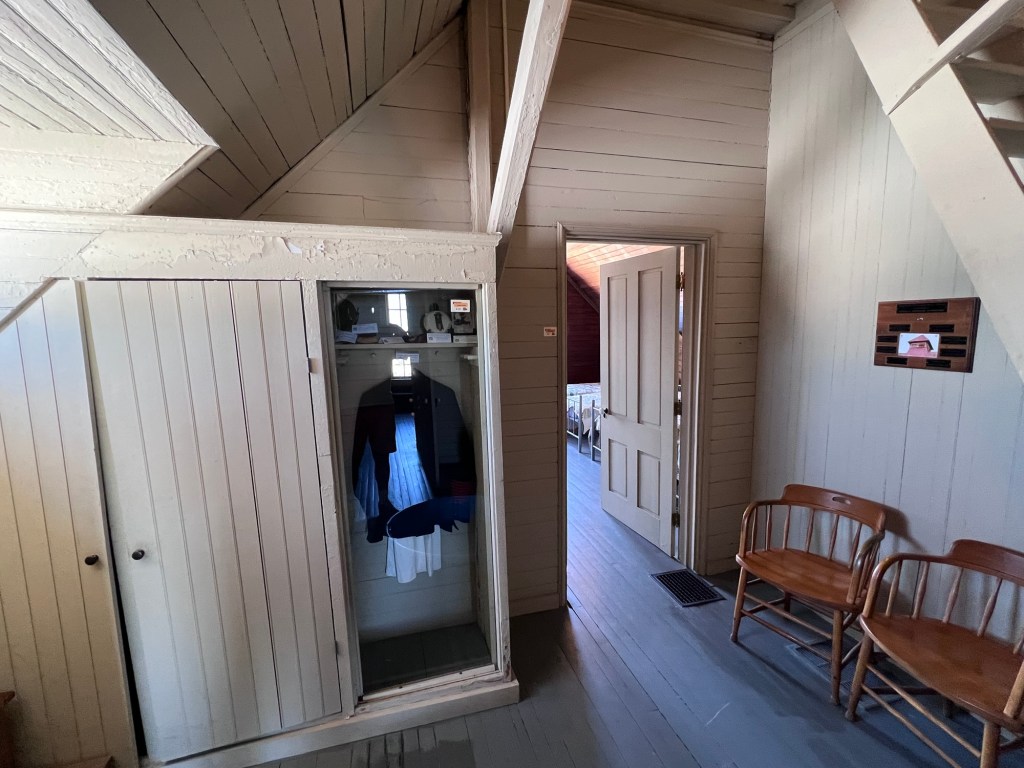
The locker storage area where each man’s personal items

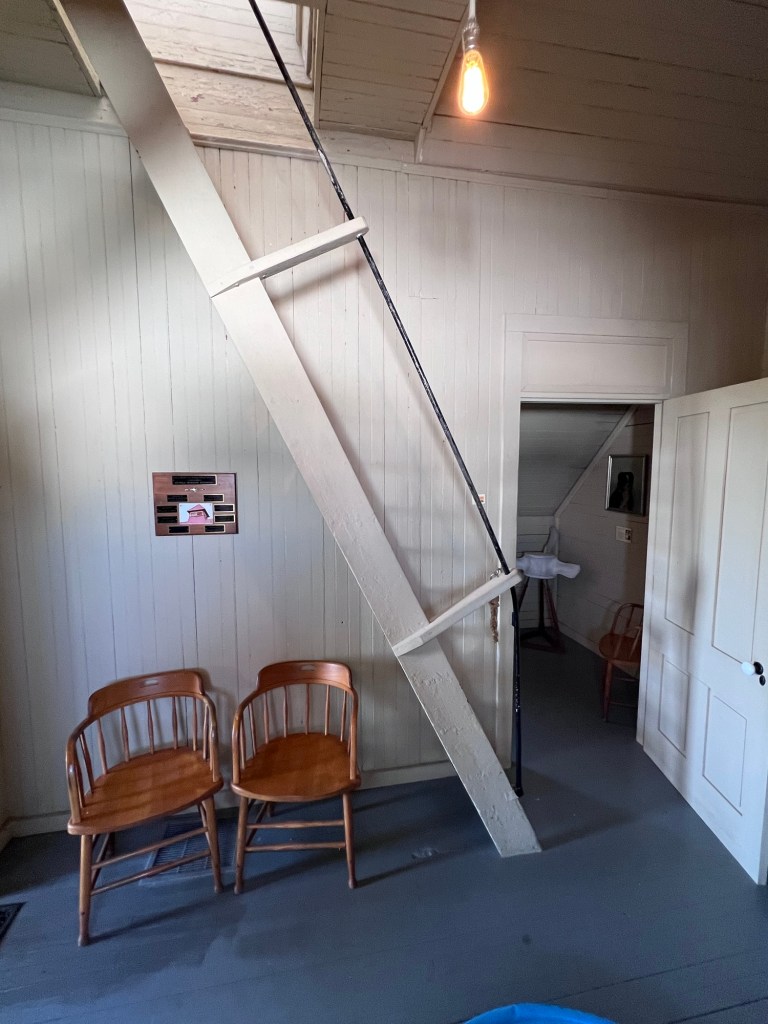
The stairs leading to the portico for lookout duties

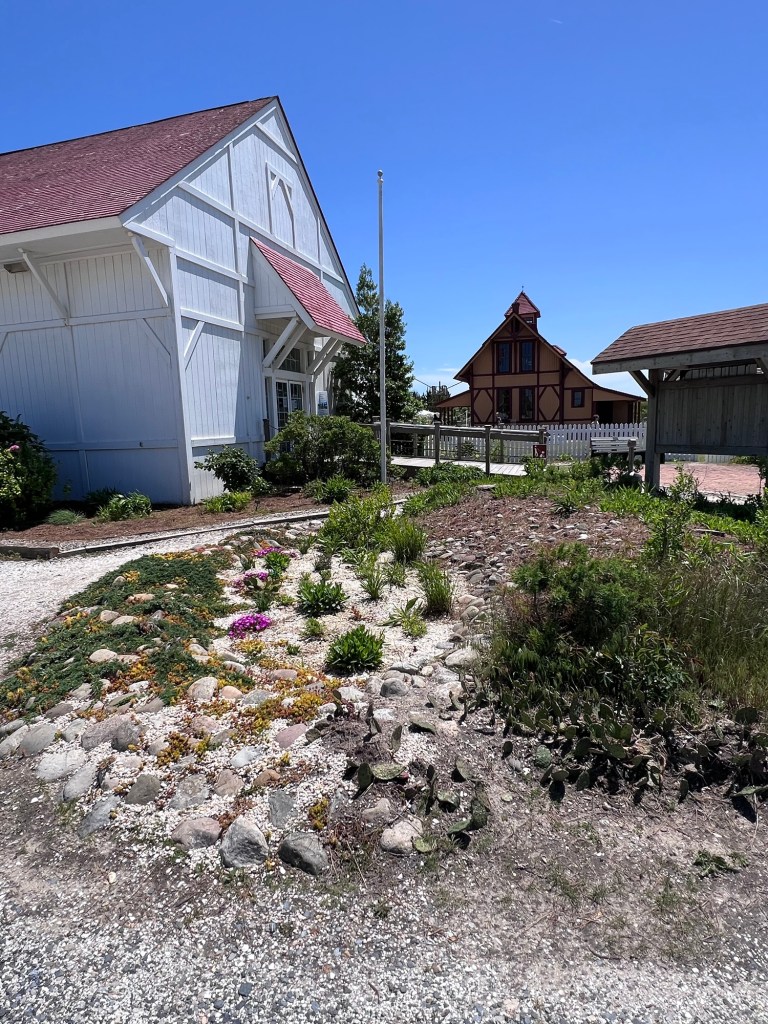
The grounds of the Rescue Saving complex and its location near the beach.

The tour was a lot of fun and gives you a glance of the heroism and isolated life of these men must have been back then. Today there are things like rotations and vacations, opinions that some of the men back then did not seem to have. Still these brave, well trained men kept the beaches and the oceans safe for many seafarers.