Tag: Smile! Your Visiting New Jersey!

The Schoolhouse Museum-Ridgewood Historical Society                                                                  650 Glen Avenue                                                                Ridgewood, NJ 07450

The Schoolhouse Museum-Ridgewood Historical Society 650 Glen Avenue Ridgewood, NJ 07450

The Schoolhouse Museum-Ridgewood Historical Society

650 Glen Avenue

Ridgewood, NJ  07450

(201) 447-3242

RidgewoodHistoricalSociety@Verizon.net

Open: Sunday 2:00pm-4:00pm/Monday-Wednesday Closed/Thursday and Saturday: 1:00pm-3:00pm (please check the websites for changes in the schedule)

Admission: Donation $5.00

TripAdvisor Review:

https://www.tripadvisor.com/Attraction_Review-g46772-d10353516-Reviews-Schoolhouse_Museum-Ridgewood_New_Jersey.html?m=19905

The Ridgewood Schoolhouse museum:

The Front of the museum

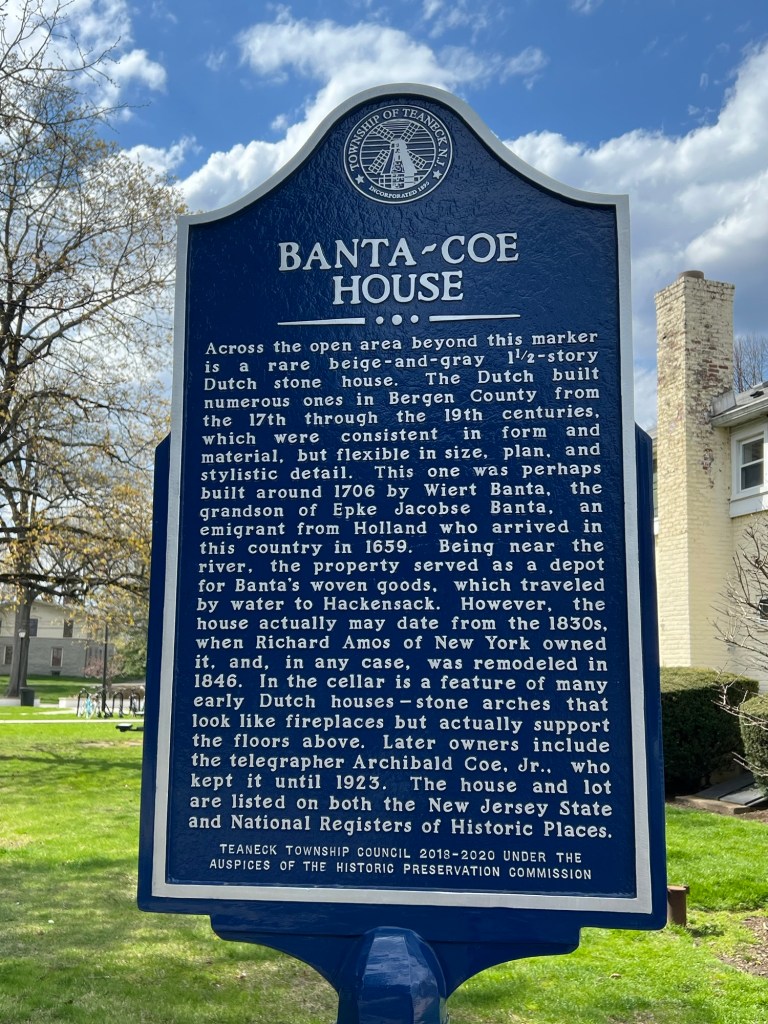
The historical sign

The historic sign

The front of the building

I have visited this interesting small history museum a few times and they do a wonderful job in presenting their displays with interesting facts catering not just to a local crowd, but anyone interested in history and events.
The one-room schoolhouse, built in 1872, operated as a public school until 1905. It was part of the district school system formed in 1864 or 1865, which was geographically defined rather than by township. It was operated as School District No. 45. When the towns incorporated in 1894, that district system was dissolved, and the school became part of the Ridgewood school district.

The Ridgewood Schoolhouse Museum’s permanent collection

Tradition has it that the original land grant to the Dutch Reformed congregation from Pierre Fauconier and his daughter, Magdalena Valleau, stated that room should always be given upon the church land for a school. We know that a small school building opened in 1785. A second stone school was built in 1820 and eventually replaced by a frame structure in 1845.

Eventually the present schoolhouse was built in 1872 at a cost of $4600.00. It is likely that other schools existed on the church property from the time the church was built in 1735 to 1785, for the consistory assumed responsibility for education and the exact time when that responsibility was handed over to the public is not known.

The large bell summoned children from miles away to school each morning. The original belfry is gone but the bell stands in the entryway. It was used in other schools and a church after the school closed in 1905 but was returned to the historical society in 1977.

The original entry was divided into separate entrances and cloakrooms for boys and girls. The potbelly stove is original as are the windows and the two central lamps. The black boards around the room have been removed except for one behind the teacher’s platform.

There is a recreation of the old schoolhouse when you walk into the museum

When the Historical Society started the museum, the privy building was attached to the main building to provide more display area. In their special display area, they have an exhibition space for farming and a local comedian.

The schoolhouse display

In April 2018, they have a very interesting exhibition call “The Thread of Life” which tells the story of family’s progression in home life from the end of the Civil War until the beginning of the Depression and times changed between the Civil War and WWI. Between the Victorian Era, the sinking if the Titanic and the devastation of WWI, the baby boom of the teens and the ‘Roaring Twenties’ with the stock market built changed the attitudes.

The way of life for an entire generation until the Great Depression put a halt on it. You can see the changes of behavior in the displays of clothes and household decor. It is an interesting display.

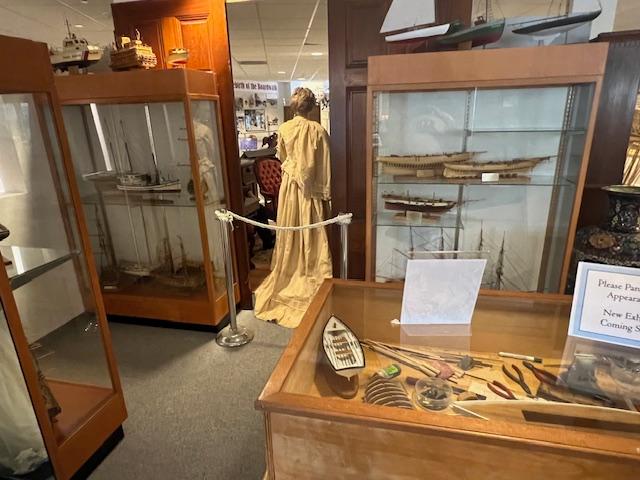
A Morning Outfit during the Victorian Age

Union Army outfits and display for the “Civil War” artifacts

They also have an ongoing exhibition of farm equipment and a continuation of their “Farming in Bergen County” exhibition that just closed before this show. This is how farmers of Bergen County produced their crops.

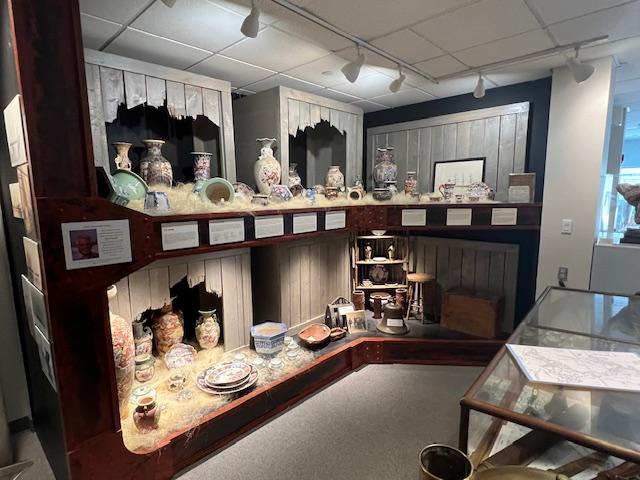
Dutch items in the collection

The Blauvelt, Zabriskie and Haring families are known farming family names in Bergen County and were important in business and politics during the after the Revolutionary War.

The “Farming and Agricultural” display

Also, see their ‘Halloween Cemetery Walk” in my blog, “MywalkinManhattan.com” entry “This is Halloween” Day Ninety-Six, October 31, 2017. Don’t miss it this year!

Day Ninety-Six: This is Halloween-MywalkinManhattan.com:

https://wordpress.com/post/mywalkinmanhattan.com/7062

The Cemetery Walks in October are extremely popular

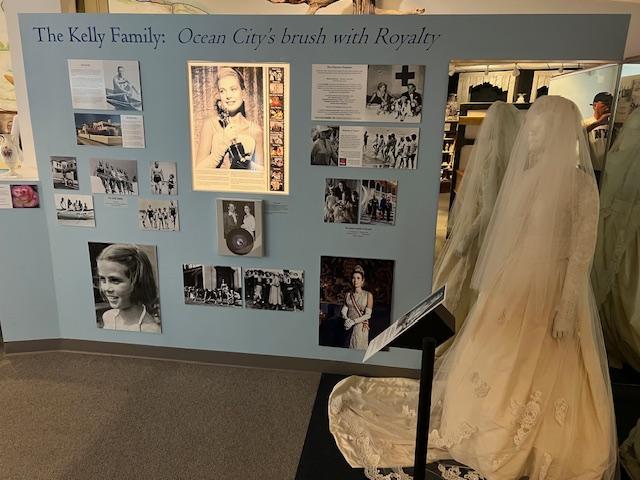
Don’t miss the “Here comes the Brides” exhibition that just opened up in May of 2019. It shows the history of formal wear for weddings along with accessories, menswear, invitations and even cakes toppers.

Schoolhouse Museum II.jpg

‘Here comes the Bride’ Exhibition 2019

In July of 2020, as Phase Three of the Opening in the State of New Jersey, the Museum is now open from 2:00pm-4:00pm for viewing with a new exhibition “A” is for Artistry: Celebrating Centuries of Art, Artists & Creativity”. The exhibit is a combination of local donated art and heirlooms from Ridgewood and the surrounding towns.

The Exhibition “A is for Artistry”

There are interesting displays of early photography and portrait painting as a way of preserving a persons’ image for the future. The use of oil painting, tin and then photo ‘sittings’ came in vogue as the technology changed.

Portraits were the form of imagetry before photography was invented

There was an interesting display of Children’s toys from the handmade farm toys of clay and corn husks to the fancier toys of bisque and cloth when imports and specialty toy stores were created for children’s playthings. They even had a collection of the famous “Punch & Judy Dolls”.

The Punch & Judy Dolls at the “A is for Artistry” exhibition

Children’s playthings over the last two hundred years

Another standout of the exhibition was the display from General Westervelt, a local citizen of Bergen County whose shipping expertise helped the North during the Civil War. His use of navigation and sailing was a detriment to the South and there was a $1000.00 bounty on his head. He died during the Civil War.

The “Object Lessons-Treasures that tell our Stories” exhibition

In 2022, when the Museum reopened after a long closure with COVID, they opened with two exhibitions: One was “Object Lessons-Treasures that tell our stories”, in which household objects, farming equipment and all sorts of artifacts from the pre-Revolution, Revolutionary War and Civil War periods were shown. It showed the progression that life took for families between the Revolutionary War and the beginnings of the Victorian Age.

“American Revolutionary War” display

They had local Dutch family heirlooms such as chests, cabinets, china, clothing and even documents. The average Dutch family kept their family linens, china, silver and bedding in a locked chest as these were valuable family luxuries that needed protection and proper care.

Dutch Chest with family items that were locked up.

There was a “Lincoln display” at the museum. They had a copy of the poster from the night that President Lincoln was assassinated at Ford Theater during the performance of “My American Cousin”. There was a family shot of the Lincoln family and items from the period.

The “Lincoln Display” that showed an original poster from “Our American Cousin” the night Abraham Lincoln was assassinated.

The other exhibition was “Toying with the Past: Antique Toys & Games”:

Toying with the Past was an interesting exhibition in that it showed how much toys have developed and changed over the years and how much they have stayed the same. There was a beautiful collection of china and bisque dolls, some that were made as playthings and others used as marketing tools to show women the latest fashions coming out of Europe. The dolls would be dressed in the dressmakers’ newest designs.

The Doll Collection is beautifully displayed

There were older versions of modern board games, everyday items like marbles and Jaxs. There were kitchen-based items that a little girl might be given to improve her domestic skills and there was even an early version of an “Easy Bake Oven”, with an electric oven that could be plugged in and boil water.

The items a young girl would receive to prepare her for homelife

Fancy rocking horses and dolls

Vehicles and Board Games that sparked children’s imagination

More dolls and vehicles over the last 100 years

There was also all sort of toys on wheels and rocking horses that could entertain a grumpy child for hours. They even had a selection of play clothes and school items to show what classroom work was like at the turn of the last century.

Childhood was changing for young people after the Civil War and during the Victorian Age

The Latest Exhibition that was on display in April 2023 was the “History of Hats” that replaced the Toy exhibiton:

Hats from all ages

Men’s hats through the ages

Military Hats

General’s Hat

Ladies bonnets

‘Fashion of the 1880’s’

Special Events and Lectures at the Museum:

Don’t miss their ‘Cemetery Walks’ during the day. I took one recently at the old Dutch Reformed Church and we discussed the history of the church, the location of the old church versus the building of the new one, which is why the cemetery looks the way it does and the locations of the tombstones as well as how time and advancement in carving went from sandstone, which fades and chips over time when to the production of granite and marble for future tombstones.

The Cemetery Walks in Valleau Cemetery across from the museum

The cemetery is filled with names famous and prominent in Bergen County and North Jersey history which includes participation in the wars and the building of Bergen County including the Westervelt’s, Van Riper’s, Haring’s, Zabriskie’s, Terhune’s, Demerest’s, Blauvelt’s and Tice’s families. It is a fascinating place to learn Bergen County history and its development.

Ridgewood Cemetery Tour

The Cemetery Tours that take place the week before Halloween are interesting as well. The paths of the Valleau Cemetery in Ridgewood are lined with candles and you follow the path with the town historian who takes you on a creepy tour of the famous dead residents of Ridgewood. These include prominent athletes, business people and local laborers. You pretty much tour about a third of the cemetery as you move from one tombstone to another met by costumed actors, who they themselves have to sit in the cemetery in the dark waiting for you. That is a horror movie into itself.

The Valleau Cemetery Walk and Lecture

The best part of the tour is you are greeted at the museum with a tour of the museum and a table laden with fresh apple cider and cider doughnuts that make the perfect refreshment on a cool fall evening. Make sure to take the 7:00pm tour when it is dark out and make the reservation well in advance as these tours fill up fast.

Taking the Cemetery Tours is interesting!

Don’t miss their upcoming tours for Halloween, Christmas and their lecture series.

Please check out the museum’s website for all their very original special programming.

The museum’s latest acquisition, a Native American on horseback

For the 2024 Northwest Bergen Historic Coalition Day, I visited the museum again and they were having an exhibition entitled “It’s Personal-100 years of obsolete Everyday Essentials”. It made me feel old when I saw a rotary phone, ink well and some of the other items that were in the exhibit. Some of them were from my generation and I do not consider myself old.

The sign from the “It’s Personal” exhibition.

The entrance to the Ridgewood Schoolhouse Museum for the “It’s Personal” exhibition

The Ridgewood Schoolhouse Museum “It’s Personal” exhibition.

The Ridgewood Schoolhouse Museum “It’s Personal” exhibition.

The Inkwell display at the “It’s Personal” exhibition to be replaced by the modern pen.

The Sewing Kit at the “It’s Personal” exhibition to be replaced by the modern sewing machine than by Ready to Wear clothing.

The Vanity which is still in use depending on the person in the “It’s Personal” exhibition.

The development of the phone and then the change to the modern cell phone in the “It’s Personal” exhibition.

The exhibition was interesting because its takes the modern perspective of the development of objects and their use over the last 100 years and show them with a modern twist on how times continue to change.

Pascack Historical Society Museum                                                (John C. Storms Museum)                                                                     19 Ridge Avenue                                                                                Park Ridge, NJ 07656

Pascack Historical Society Museum (John C. Storms Museum) 19 Ridge Avenue Park Ridge, NJ 07656

The Pascack Historical Society Museum (John C. Storms Museum)

19 Ridge Avenue

Park Ridge, NJ  07656

Phone: (201) 573-0307

Open on Sundays from 1:00pm-4:00pm; Admission is Free. Gift Shop hours are when the museum is open. (Holiday Excepted).

http://www.pascackhistoricalsociety.org

http://www.facebook.com/pascackhistoricalsociety

TripAdvisor Review:

https://www.tripadvisor.com/Attraction_Review-g46713-d12610386-Reviews-Pascack_Historical_Society_Museum-Park_Ridge_New_Jersey.html?m=19905

The Pascack Valley Historical Society is now celebrating their 75th Anniversary.

Pascack Historical Society IV

The Pascack Historical Society Museum (John C. Storms Museum), headquarters of the award-winning Pascack Historical Society, is located in the 1873 church building that was dedicated by the Reverend Henry Ward Beecher. The building and all the exhibitions have gone through an extensive renovation and have been reinstalled with more signage and information. Please check out their new displays.

The sign that greets you in the front of the building.

The Historical Marker in front of the building.

As you enter the building, you are welcomed to a comfortable spot.

The extensive exhibits include a general store, colonial kitchen, a Victorian Living Room, dolls, clothing and other displays of American life in the Pascack Valley. The front gallery as you enter serves as a classroom and lecture hall for the society. There you can see a variety of artifacts in the collection from china to guns and clothing.

Artifacts in the front room.

Artifacts in the first gallery.

A collection of antique guns in the front gallery.

A selection of hats in the front gallery.

There is also a special exhibition that features the world’s only wampum drilling machine as well as a collection of early colonial currency.

The Wampum Machine sign and how Wampum is made.

Their early Colonial Financial exhibits include an early wampum machine that the tour guide had said that it was the only one of its kind that made a type of rolled wampum from the inner section of a conch shell. Early New Jersey currency is well represented in the collection with several types of dollar bills at a time when states printed their own currency for its citizens. Really take a look at the early detail  work of these bills.

The Wampum display of shells and tools.

The uses of Wampum and how it is made.

The oldest working Wampum machine in the world.

The Van Ripper General Store exhibition features many types of early Colonial artifacts that include weights and measures, food items found in an early grocery store, turn of the last century bottles and many types of appliances for cooking. Several treasures are tucked here and there to create the mood of shopping at the turn of the last century in Bergen County. There are classic groceries, weights and measures to weight groceries and several artifacts from the Van Ripper and Stockdale Farms which used to be located in the area.

The General Store sign

The General Store display.

Stockdale’s Dairy Farm was a popular farm in Park Ridge before the 1960’s.

Tools need on the farm and in the home.

The Tool display at the General Store.

The Toy Collection is extensive and covers several time periods. They have a interesting collection of dolls over the ages that include cloth and china dolls that would cater to children from different economic status. There are also games, wooden and metal pull toys and hobby toys such as marbles and jacks.

The Early Dutch Farmhouse Kitchen & Dining Room features one of the first beds that has no mattress but constructed by a series of ropes that are tightened. The tour guide explained that this might be where the expression “Sleep tight and don’t let the bed bugs bite” might have come from as the ropes needed to be tightened each evening before the family went to bed.

Early Dutch life sign.

The exhibit also had early furniture hatches, chamber pots, a butter churner, various chairs that were manufactured in the area and several detailed decorative pieces.

The Early Dutch Kitchen and Living Space

The Victorian Dress of the church visitation.

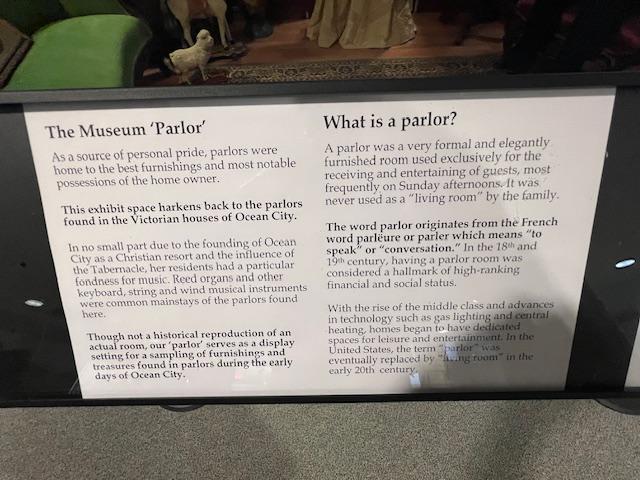
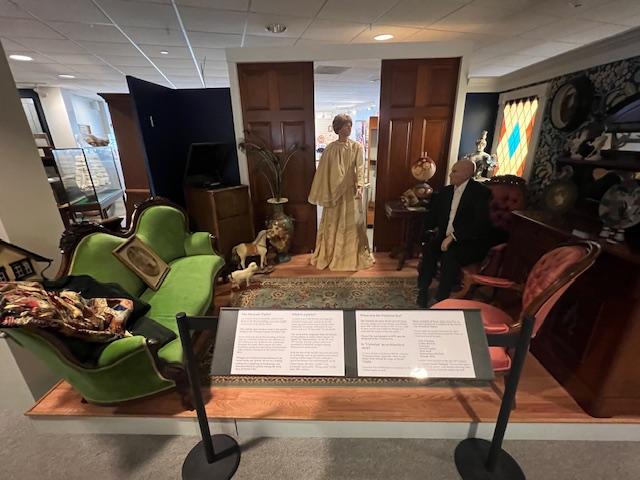
The Victorian Living Room features many plush pieces of furniture, decorative knick-knacks that used to dominate the décor and a graceful piano with mother of pearl keys and decorative carved sides. This model was one of maybe a hundred made for a very elite client. The display also featured one of the early record players that still works.

The ‘Victorian Afternoon’ exhibition in 2024:

The sign for the Victorian home:

The ideal Victorian Home ‘Parlor’

Early Edison products

Early Edison recording equipment was not just musical but decorative.

The horse display.

The new exhibition 2025: ‘Collignon Chairs’

The exhibition is on the Collignon Chair factory of River Vale, NJ and the selection of chairs that the factory once manufactured.

The sign from the exhibition

Some of the collection of Collignon chairs on display including the popular deck chair used on streamlines.

The popular folding rocker from the collection

The display of chairs and a drawing of the old factory

Off to the side, there is an early sleigh and horse display, an exhibit of typewriters and carbon paper as I found out the area was once the leading manufacturer for carbon paper and a complete workshop with tools from all eras.

Typewriter collection at the museum.

Early Electronics

The schoolhouse desk of the school master.

The workshop is a very detailed in its artifacts with early saws, hammers and items that even I could not figure out what they were.

In the main room, there are more cases of toys, Revolutionary items and Native American artifacts to explore.

Native American Artifacts

The Lenape display

The Native American display.

A small gift shop is off to the side selling items donated by members.

Become a Friend: From the Friends of the Pascack Historical Society Museum pamphlet:

Pascack Historical Society Information and History:

The Corner Cupboard of early American china.

(From their pamphlet):

Membership Benefits:

Become a member of the Pascack Historical Society, a 501C3 organization. Dues are modest and membership has its privileges!

  1. One year of free admission to the museum and most of its activities.
  2. A one year subscription to the Society’s award-winning quarterly newsletter, RELICS.
  3. 10% discount on museum gift shop items (Sale items and new books excluded).
  4. 50% discounts on programs for children and adults.
  5. You will receive Members Only advance notice mailings and emails about upcoming events and activities.
  6. Members only “behind the scenes tours” of the museum. (By Appointment Only).
  7. You will have the satisfaction of knowing you have joined the ranks of the area’s most passionate historical preservationists, who have a commitment to educate and enrich their neighbors’ lives-young and old.

The Military embellishments

In 2026, the museum was celebrating the ‘250th Anniversary’ of the Revolutionary War and had an exhibition of artifacts from the Pascack Valley.

The ‘250th Anniversary’ of Revolutionary War

This included all the stops that General Washington made in Bergen County, battles and confrontations with British soldiers and family battles by members who were loyalists and patriots.

The currency of the war years

The exhibitions shows New Jersey’s contributions to the war effort. This part of the exhibition has Colonial currency from New Jersey.

New Jersey Colonial Currency

The full exhibition of the ‘250th Anniversary’ of the Revolution War

Uniforms and accessories of the War years

The Baylor Massacre attack

The Tarlatan Calvary helmet

The Lenape artifacts from that era

Membership Opportunities:

Preserving and disseminating local history is a labor of love when you become a PHS member. It is a partnership between you and your fellow members. We encourage you to think about volunteering at some level at the museum or its events. Check out the volunteer opportunities below and give us a call if you would like to participate in any of them.

  1.  Docent: Act as a guide when people visit the museum. A simple one-day training session is all it takes.
  2. Researcher: Do you like to wander through books and archives searching for answers to questions?
  3. Archivists: Preserve and catalog the history of the Pascack Valley.
  4. Educators: Work with youngsters and licensed teachers at Society events.
  5. Tech Savvy: Volunteer your time to help with our website or graphic design.
  6. Handy Helpers: Do you like to repair things? Can you sew, do carpentry? This might be for you.

*Disclaimer: Information on Volunteer and Membership opportunities are taken directly from the Pascack Historical Society Museum pamphlet. Most of the descriptions of the displays is what I was able to see in my short time visiting. The museum has a treasure trove of items to look at in detail.

The Reformed Dutch Church with its Colonial cemetery and the Wortendyke Barn is right down the road so take a few hours to explore the area. The members of the Wortendyke family are buried in the church’s cemetery.

Visit from Bergen Community College for the Bergecco- Parc Consulting Inc. on April 9th, 2025: for the ‘Bergen 250’ project:

The project we created for the “Bergen 250: the 250th Anniversary of the Revolutionary War” that was created:

https://mywalkinmanhattan.com/tag/bergen-250-the-250th-anniversary-of-the-revolutionary-war-in-bergen-county-nj/

As part of my International Marketing class, I took my students to visit the three sites for our project on the ‘Bergen 250’:

The students toured the museum with the assistance of the Museum’s Board members

As part of the assignment for our ‘Farm to Table Dinner’, the project starts here with a Cocktail Party and tour of the museum. The back room of the museum was where the party takes place and then the guests would tour the museum before heading to dinner at the Wortendyke Barn down the road.

Peter Meany, the First Vice President of the Board explaining the Wampum machine to the students. This form of Native American currency is the only machine in the world like it and is a rare artifact.

Our Team group picture at the Pascack Valley Historical Society with members of the Museum’s Executive Board Peter Meany, Ralph Donnell Jr. and Christopher Kersting.

We want to thank the Board for taking time out of their busy schedule to support the students on this project.

The Mahwah Museum                                                                               201 Franklin Turnpike                                                               Mahwah, NJ 07430

The Mahwah Museum 201 Franklin Turnpike Mahwah, NJ 07430

The Mahwah Museum

201 Franklin Turnpike

Mahwah, NJ  07430

(201) 512-0099

Home

https://mahwahmuseum.org/the-museum/

Open: Wednesday-1:00pm-4:00pm/Saturday & Sunday 1:00pm-4:00pm/Closed Monday-Tuesday Thursday-Friday

Fee: Non-Members $5.00/Members Free

TripAdvisor Review:

https://www.tripadvisor.com/Attraction_Review-g46590-d9819566-Reviews-Mahwah_Museum-Mahwah_New_Jersey.html?m=19905

 The front of the Mahwah Museum at 201 Franklin Turnpike

I visited the Mahwah Museum over the weekend and found a very engaging suburban museum that had interesting exhibitions on the subjects of Women’s Rights, Mahwah history, Les Paul memorabilia and train sets that would delight any child or the child within. There were a lot of small children that were getting a kick out the trains in the basement going around and around. For a small museum, it is packed with information both on local history and state history as well.

Mahwah Museum IV

The Mahwah Museum is open during the Northwest Bergen History Coalition Weekend

The staff is very nice and very engaging with the visitors. They will walk you through some of the exhibitions, explain the concepts and make up of the exhibits. You can see most of the museum in one day but there is a lot to read so try to make a few trips to this interesting little museum in the middle of Mahwah, New Jersey.

Les Paul Exhibition is one of the most famous exhibitions of the artist’s work

The Mahwah Museum history:

(This information comes from the Mahwah Museum website)

The mission of the Mahwah Museum Society is to preserve and present the history of the community and its connection to the region. Museum exhibits display information about the history of Mahwah and the surrounding community. The Museum’s collection of artifacts, photographs, historical records and documents is carefully preserved, documented and cataloged and is available by appointment to historians and researchers. By encouraging discovery, understanding and appreciation of the region’s heritage, the Museum provides perspective for the present and the future.

The History of Mahwah and its Business District exhibition.

The Society is comprised of the Mahwah Museum at 201 Franklin Turnpike and the Old Station Museum and Caboose at 1871 Old Station Lane. The Mahwah Museum opened in 2001 and hosts several permanent exhibitions and a main exhibit on two levels. Permanent exhibits include: Les Paul in Mahwah, The Donald Cooper Model Railroad, the Who’s Who of Mahwah, the Lee Vold Gallery and a topographical model of Mahwah Township. The main exhibit changes periodically.

The Caboose sits in the back of the Old Station Museum in Mahwah

The Old Station Museum and Caboose opened in 1967. The restored Erie cupola caboose shows the daily operations of train crew life. The Old Station Museum was the original Erie Station in Mahwah built in 1871. Many Erie Railroad artifacts and photos related to passenger trains are displayed. The Museum is a great resource for adults and children. Educational programs are offered frequently.

The Old Station Museum is part of the Mahwah Museum

The historical sign of the Old Station Museum

The Trains of the Mahwah Museum:

The Mahwah Museum has an extensive collection of model trains representing all scales. This collection has been made possible by generous donations from the Cooper-Darboe and Margolis families.

The Donald Cooper Model Train Railroad

The Donald Cooper Model Railroad:

Located in the lower level of the museum, the Donald Cooper Model Railroad is a DCC powered, 28″ x 13″ operating HO gauge model railroad. Designed as a walk-in layout, the visitor can experience the sights and sounds of a real operating railroad.

The Model Train collection display

The collection that makes up the railroad was donated to the museum by Renee Cooper-Darboe of Mahwah, New Jersey. Donald Cooper lived in Mahwah on Island Road. He went to work for the Erie Railroad in Buffalo, New York as a Yard Supervisor. He was employed by the railroad until the 1960 merger with the Delaware, Lackawanna and Western. After he left the railroad, he moved back to Mahwah and began installing security systems.

The detail work on this collection is amazing!

It was during this time he met and married his wife, Renee and learned his electrical skills. After retiring, he and Renee decided to construct a model railroad representing the trains that went through his yard in Buffalo. From 1990 to 1995 Don worked constructing the tracks and doing the electrical work while Renee built the buildings and carefully placed the people in the railroad cars. Sadly, Don passed away in 1998 and the railroad sat unused for 8 years. Renee contacted the museum in 2006 and asked if we would like a “train set”. The rest, as they say, is history.

The railroad consists of four levels, a subway, two mainline tracks and a fully operational train yard. We also have a logging railroad and a trolley line. The Donald Cooper Model Railroad is a permanent exhibit of the Mahwah Museum and open during its regular operating hours on Saturday and Sunday. Volunteers are always welcome. No experience is needed. Please visit our museum website for more information.

Jerome Margolis Lionel Collection:

Jerome Margolis was an avid collector of Lionel “O” gauge trains. He was also the owner of one of the most popular pizza restaurants in the area, Kitchley’s Tavern. People visiting his restaurant were treated to three large display cases filled with his trains. What they didn’t know was that he had many more stored away. Thanks to his son, George, they are no longer out of view.

Kinchley’s Tavern at 586 North Franklin Turnpike in Ramsey, NJ

https://www.kinchleyspizza.com/full-menu.html

My review on TripAdvisor:

https://www.tripadvisor.com/Restaurant_Review-g46762-d540429-Reviews-Kinchley_s_Tavern-Ramsey_New_Jersey.html?m=19905

Our museum was the lucky recipient of the remainder of this collection. Currently they are in static display in out layout room for our visitors to enjoy. The collection represents many of Lionel’s most popular models from the 1970’s through 2005. The famous Santa Fe, red and silver “War-Bonnet” F7, Union Pacific “Big-Boy articulated locomotive and Pennsylvania “Mountain” steam locomotive are just a few pieces in the collection. Come and enjoy this wonderful collection of some of America’s best known locomotives.

The Les Paul Collection:

Musician Les Paul

https://en.wikipedia.org/wiki/Les_Paul

The Les Paul display

The Les Paul in Mahwah exhibit showcases many of Les’ innovations in solid body electric guitar design and multi-track sound recording.  Les called Mahwah home for nearly 60 years and is the only person to be elected to both the Inventor’s Hall of Fame and the Rock and Roll Hall of Fame.

The Les Paul exhibition of recording equipment

On display are items from Les’s home studio where many of his and Mary Ford’s hits were recorded.  The Mahwah Museum is honored to house this landmark equipment which includes his recording console, an Ampex eight track stack, an Ampex 300 deck, the “Wally Box” and part of the studio wall that was expressly designed to create an echo chamber.   Also on display is Les’s disk-cutting lathe used to record sound onto acetate disks.  Among Les’s guitars on display are one of his “Klunkers” and a replica of “The Log” (an early prototype of the solid body guitar).

The Les Paul recording equipment display

Visitors may play many of the guitars through our Play a Les Paul Guitar program.  (Reservations are required.)

Ramapough Legacy ~ Heritage Exhibition:

The Ramapough Lenape exhibition

The Ramapough Lenape people have a long and complex history in the Ramapo River Valley communities of Mahwah, Ringwood, and Hillburn. Explore and learn about this Indigenous people’s history, folklore, art, craft, tools, herbs and medicines, costume, and culture.

The Native American exhibition

The Native American display

The Palisades Amusement Park exhibition:

The Palisade Amusement Park sign

This miniature depicts the legendary Palisades Amusement Park as it would have looked in the mid 1930s. The scale of this model is 1:12, a common dollhouse scale. The original builder of the model was Joe Prisco, a longtime park employee. His estimated cost for the initial build was $40,000. Over 3,700 light bulbs and 15 power transformers were used to illuminate the rides and attractions. It was displayed at several locations in Ocean County, New Jersey in the 1990s. Prisco died in 2006.

In 2018, Vince Gargiulo, Executive Director of the Palisades Amusement Park Historical Society, traced the whereabouts of the model. The Prisco family donated what was left of the model to the historical society. To date, twenty-five pieces have been restored, including as seen in this exhibit, the Tunnel of Love, the World’s Largest Outdoor Salt Water Pool, the Ferris Wheel, the Carousel, the Free Act Stage, the Bumper Cars and much more.

The Palisades Park mini display at the Mahwah Museum

The Mahwah Museum Society is a nonprofit corporation under the laws of New Jersey and has qualified as a 501(c)(3) tax exempt entity under the Internal Revenue Code. It is governed by a volunteer Board of Trustees.

The Palisades Park display

*This information was taken from the pamphlets provided by the museum on my visit. Take the full afternoon to explore this interesting museum and their exhibitions.

*Please contact the museum for any changes in exhibitions or schedule of times.

Lucy the Elephant:                                                                                   A National Historical Landmark                                                            9200 Atlantic Avenue                                                                      Margate, NJ 08402

Lucy the Elephant: A National Historical Landmark 9200 Atlantic Avenue Margate, NJ 08402

Lucy the Elephant: A National Historical Landmark

9200 Atlantic Avenue

Margate, NJ  08402

(609) 823-6473

http://www.LucyTheElephant.org

https://www.facebook.com/elephantlucy/

Open: The hours for the structure change throughout the year, so please check the website for time availability of the park and structure.

Admission: $8.00 Adults/$4.00 Children/Children under 2 free

Group Tours & Information:

Lucy is available year round for groups of 10 or more by appointment. For special holiday hours and weather closings, please call or check our website.

How to get to Lucy:

It is best to check the website for your location to the structure. For detailed instructions, please visit http://www.lucythe elephant.org.

TripAdvisor Review:

https://www.tripadvisor.com/Attraction_Review-g46600-d518065-Reviews-Lucy_the_Elephant-Margate_City_New_Jersey.html?m=19905

Lucy from the beach side view

The welcome sign

I visited Lucy the Elephant in the fall of 2015 right before Christmas on a tour I was taking of Southern New Jersey and the shoreline. This unique structure was built to attract people to the shore to buy land and for development.

The view from the parking lot

There were two other ‘Lucy’s’ built one of them being the former ‘Elephant Hotel’ in Coney Island that burned down in the last century.

The front view of the elephant

This well preserved building has been renovated and part of the Jersey shore lore. It is well worth the visit in the off season on a nice day. I unfortunately visited on a rainy day in 2015 and was not able to go to the top and still have a free pass to go whenever I want to visit again. 

Entering the elephant through the winding stairs

Still I was able to take the spiral staircase to her belly to learn the history of the structure and that is very interesting.

Lucy the Elephant in its full glory

I started my tour in 2025 at the door of her base

I visited Lucy again in 2025 and was finally able to visit the top of the statue, the howdah, and able to take in the view of the ocean and the surrounding area. Try to visit “Lucy” when it is a sunny day out. You will be able to take in the spectacular view of the ocean.

The tour starts in her inside, looking over the displays and where the bar was located where the owner would ply investors with liquor to have them invest in beach real estate.

Inside of Lucy the Elephant: the history and displays

The inside of Lucy on a recent tour

Touring the inside of Lucy

I was able to take my time because I visited in the off season on a nice day and since J was the only one on the tour, I got to take my time and talk with the tour guide.

I got to look through Lucy’s eyes and see the views of the ocean and of the surrounding areas was interesting.

Lucy’s eyes and truck

Lucy’s left eye

Lucy’s right eye

The former bathroom inside of Lucy

The inside displays of Lucy

The skylight that illuminates the inside

Then it was time to walk up to the howdah and enjoy the view. It was a somewhat over cast day but you could still enjoy the view.

The view from the howdah on the top of the elephant

The roof of the howdah

The view of the beach from the howdah

The view of Margate from the howdah

The view from the howdah showcases the view of both the beach and the City of Margate. You can see from mikes around and on a hot day, the breezes are amazing.

The restored wood work

The video of the views

The tour of Lucy is about an hour but the history of this shore landmark and its influence in shore real estate and the development of these towns is so interesting.

Leaving the elephant we could see her behind

The History of Lucy the Elephant:

Lucy was built by a real estate speculator who owned a great many parcels of open land at the Jersey shore. In order to attract visitors and potential buyer, he built Lucy as a novelty amusement. He patented his idea, ensuring that Lucy would remain a unique piece of architecture.

Eventually, a popular hotel business was built around Lucy. Presidents and royalty came from around the world to stay at the neighboring Elephant Hotel and climb the stairs to Lucy’s howdah.

Lucy facing the ocean

During her history, Lucy has survived hurricanes, ocean floods and even a fire accidentally stated by some inebriated party-goers when she served as tavern. However, by the 1960’s, it became apparent there was one disaster Lucy could not overcome-neglect. By that time, the once proud jewel of the South Jersey Isles had become an almost hopeless, condemned structure.

Eventually a developer purchased Lucy’s lot and intended to build a new condominium building on the site. The beach and the ocean could stay-but the elephant had to go!

Lucy the Elephant III.jpg

Lucy the Elephant near the wrecking ball

To the rescue came the Save Lucy Committee. Within weeks, this small, concerned group of ordinary citizens had raised enough money to move the entire decaying structure two blocks away to a new site owned by the city. Thirty years and over one million dollars later, Lucy has been completely restored to her original splendor, inside and out.

In 1976, Lucy was designated a National Historic Landmark by the United States Government as the oldest surviving example of a unique form of “zoomorphic” architecture. Today, she is every bit as popular and beloved as she ever was.

The history of the elephant

The history of the park

The history of Lucy

The history of the park and who saved it

About the Park:

Lucy the Elephant is located along the beach in Josephine Harron Park (named for our co-founder) in Margate, NJ. Lucy is six stories high and is listed on the National Park Registry of Historical Landmarks. Our park is fenced and contained, making child supervision easy. Picnic tables are on site for eating outdoors. We also have friendly, trained volunteers and staff to assist you during your visit. On the tour, you will learn about Lucy’s unique architecture and her colorful history.

Lucy facing the sea

You will get to climb a spiral staircase through her insides and all the way up to the howdah on her back, providing a spectacular 360 degrees view of the surrounding shore area. Kids and adults alike are sure to enjoy visiting the only elephant in the world “you can walk through and come out alive”.

Lucy is also available by appointment for schools, groups and special events such as weddings or birthday parties. There are guided tours, a gift shop, free parking and all major credit cards are accepted.

Lucy the Elephant symbol of the town

Lucy from the front of the parking lot

Lucy from the ticket booth across the street

This information was taken from the pamphlet from The Save Lucy Committee.  For more information, visit the online website at http://www.LucyTheElephant.org

*Disclaimer from author: All this information is located both on the pamphlet and on the website. Visiting Lucy is a treat and should be visited by all residents of New Jersey.

The gift shop the supports raising much needed funds for restoration.

Visit downtown Margate for lunch after your visit

Downtown Margate after my tour

I went to Pierre’s Pizza at 7 North Washington Avenue for lunch. Their cheese pizza is wonderful. The restaurant is two blocks from Lucy.

Pierre’s Pizza at 7 North Washington Street in Margate, NJ

https://www.pierrespizzamenu.com/

My review on TripAdvisor:

https://www.tripadvisor.com/Restaurant_Review-g46600-d475155-Reviews-Pierre_s_Pizza-Margate_City_New_Jersey.html?m=69573

The inside of the pizzeria

Their delicious cheese pizza is over-sized, crisp and has a nice tasting sauce.