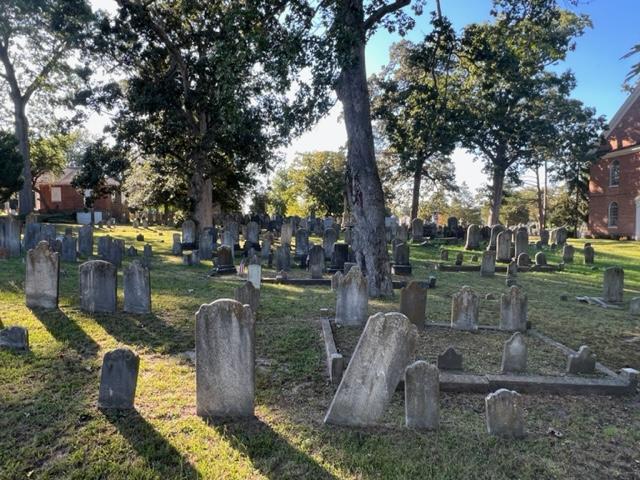
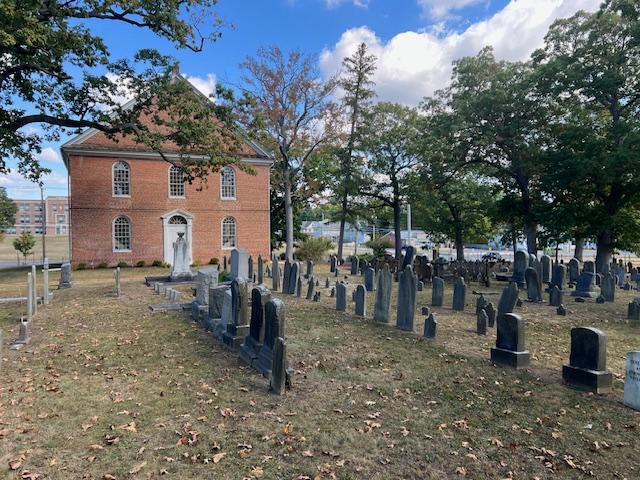
The three times I have visited the Gethsemane Cemetery, it was a very quiet place to reflect on the people who are buried here. Located by a stretch of Route 46 West, you would hardly notice it was there. Sitting on a small hill above the highway lies some of our Counties most prominent Black citizens as well as just ordinary people and freed slaves who were denied entry into other church cemeteries. They were interned here in their own cemetery.
Gethsemane Cemetery is located west of the Hackensack River in southwest Bergen County on a one acre sandy hill located in Little Ferry, NJ. The 1860 deed of sale identifies it as a “burial ground for the colored population of the Village of Hackensack.” In 1901, it was turned over to seven African-American trustees and incorporated as Gethsemane Cemetery.
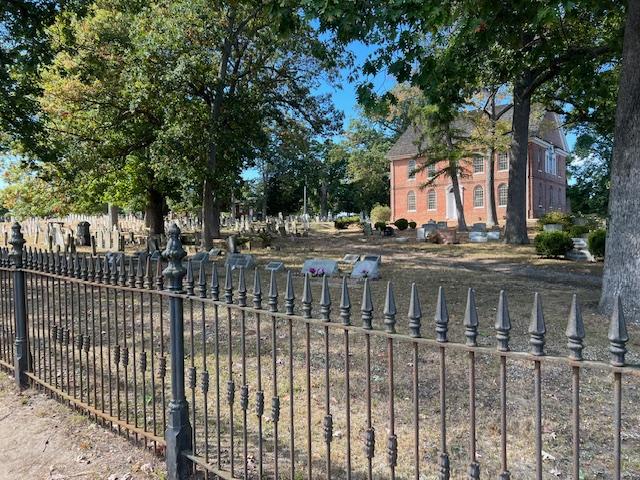
The entrance to the Gethsemane Cemetery in Little Ferry, NJ
Although there are only 50 graves stones, the graves of over 500 people have been documented, including that of Elizabeth Dulfer, who was born a slave (c 1790), freed in 1822 and died in 1880. She became one of the wealthiest business owners and landholders in Bergen County. Three Civil War veterans, Peter Billings, Silas M. Carpenter and William Robinson are also buried here.
Gethsemane Cemetery figured the center of controversy surrounding the burial of Samuel Bass, sexton of Hackensack’s First Baptist Church. When he died on January 22, 1884, his family wanted to bury him in the Hackensack Cemetery but was refused due to his race. Mr. Bass was then buried in Gethsemane Cemetery.
New Jersey Governor, Leon Abbett, protested the denial: “The Legislator should see that the civil and political rights of all men, whether white or black are protected…It ought not be tolerated in this State that a corporation whose existence depends on the Legislature’s will…should be permitted to make a distinction between a white man and a black man.” Two months later in March 1884, New Jersey’s “Negro Burial Bill” was passed desegregating cemeteries in New Jersey.
In 1985, Bergen County acquired the neglected cemetery and dedicated it as a County Historic Site. It was entered into the New Jersey and National Registers of Historic Places in 1994 for the historical significance it played in the enactment of N.J.’s early Civil Rights legislation and for containing evidence of West African burial customs.
The County of Bergen marker
In 2003, the county celebrated the dedication of new meditation areas and historic interpretive panels that tell Gethsemane’s story and lists the names of 515 people known to be buried here.
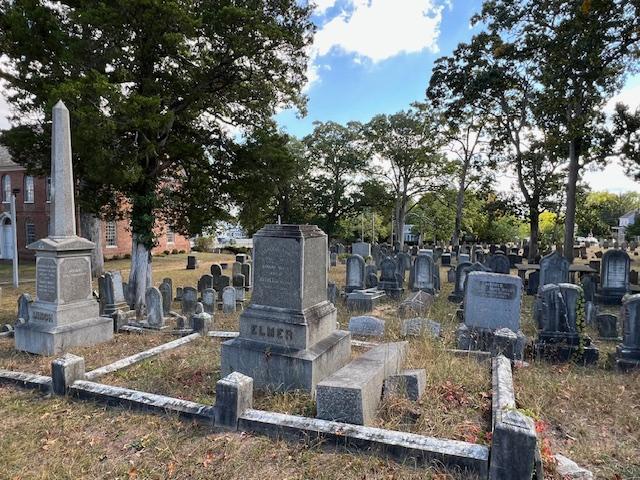
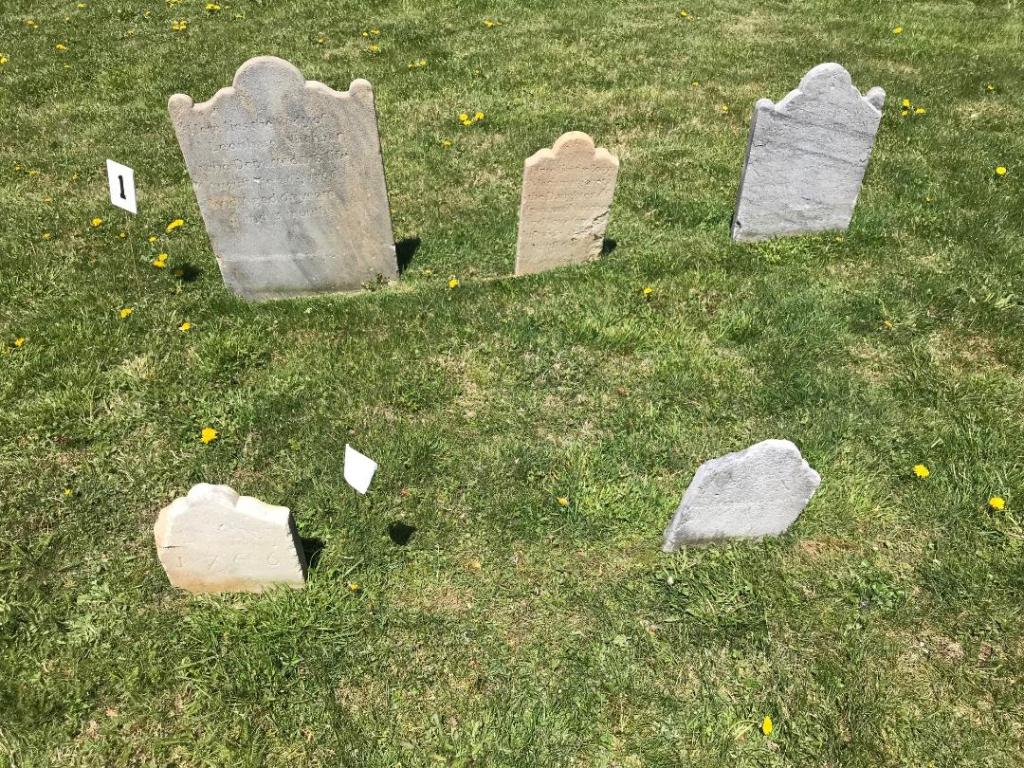
The cemetery markers
New mediation areas and historic panels tell the story of the cemetery and list the names of 515 people who were buried here.
The cemetery is open only a few times a year to the public for special holidays and events. I came for the Juneteenth Celebration of the emancipation of slavery from the Union on June 19th. There was an independent tour on your own of the cemetery and the panels. If you had any questions, there are County representatives to guide you through.
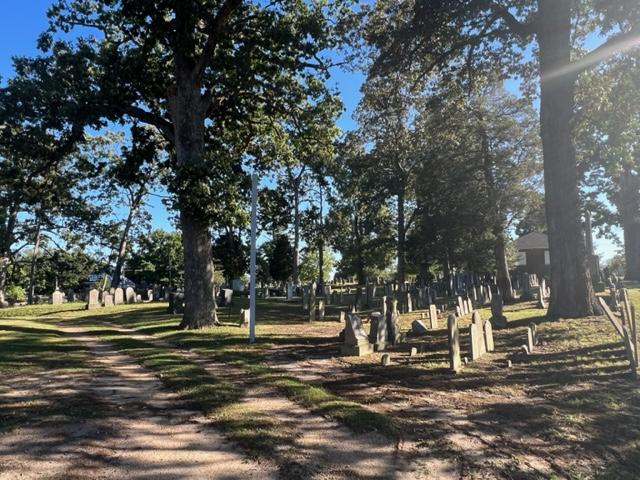
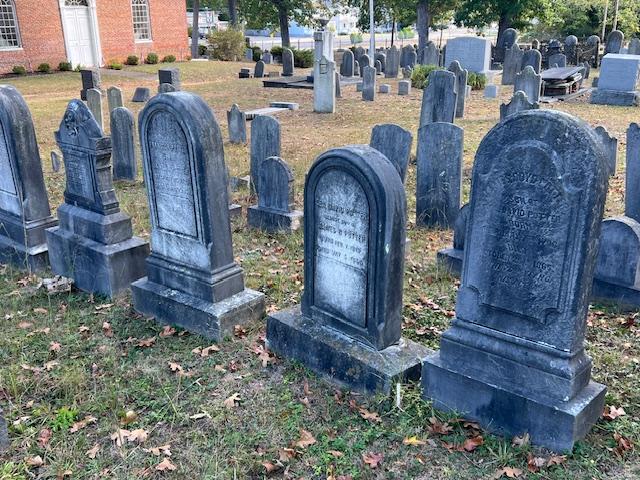
The Gethsemane Cemetery in the Fall
(Information taken from the Bergen County Parks System guide).
Disclaimer: This information was taken directly from the Bergen County Parks Directory. Please call or email the above information for more details on visiting the cemetery. It can be opened for private tours.
The Van Allen House in 2023 during the next History Coalition
I visited the Van Allen House on my first trip on the Northwest Bergen History Coalition 6th Annual History Day tour of Upper Bergen County in 2016 and in 2019. It is mentioned on ‘Day Forty-Three’ of my blog, ‘MywalkinManhattan.com’. It had been my last stop of the day. The historic home is currently closed due to renovations on the house and will open in the Fall of 2019.
The Van Allen House during the renovation in 2023 with the added dormers
Of all my stops that day, I found that the Van Allen House was in need of a renovation. From the outside, it is very quaint. On the inside, the house needed a lot of fixing up and restoration work. The upstairs had water marks all over the ceilings. The gardens also needed some serious weeding and planting. IN 2023, the renovations of the upstairs had been completed and the home was replastered and painted. Most of the artifacts were stored in a few rooms that were being finished.
The kitchen is as you enter the home
During the renovation, a lot of the artifacts were being stored in the addition to the house that took place in the early 1800’s. Many of the things that had been donated were showcased in this room off the kitchen and shows the wide variety of the society’s collection. There were all sorts of items from the home, decorative pieces and a variety of things that would have been used at the house as it being a working farm. There were also many Native American artifacts.
Some of the artifacts in the downstairs room
Artifacts in the room downstairs
Household items donated to the society
More household items of the Van Allen House
More artifacts of the Van Allen House Collection
The vast array of items in the downstairs addition of the house will be used all over the house once the renovation is completed sometime in the next two years. There was still a lot to do around the house. There had been so much damage to the house over the years that it needed a major renovation.
The upstairs had been finished with the addition of the domers which a few of the society members had said that these were not part of the original house. They can debate about it but the house looks really nice with them and makes the house look realistic. Still from what the people said that they were not part of the original design.
You could see the vast improvement in the house over the last three years and the extent of the work that had been done already. All the outstairs rooms had been plastered and painted. The rooms looked very modern,
The upstairs has been nicely restored
The upstairs rooms now house many of the home furnishings of the collection along with clothes and personal items of families that have donated them over the years. The upstairs is just finishing the renovation so things will have to be organized in the future but at least you can see the things that the Historical Society has in the collection.
Household items in the collection upstairs
Clothing and bedding items at the Van Allen House
The smaller bedroom of the Van Allen House
One of the best things of the house is its gift shop. It has some of the most unusual handmade gifts that it was worth the trip out to the house. One of the members makes handmade cloth dolls for $5.00 that are just quaint and make a beautiful gift.
The Oakland Historical Society, who operates the house, was putting a lot of time and effort in the renovations of the house and their volunteers I was told would be working on the gardens. Either way, it is an interesting house to visit and it is steeped in history.
The upstairs beams leading to the bedrooms
The toy collection at the top of the stairs
The History of the Van Allen House:
The Van Allen House was built around 1740 as the home of farmer Hendrik Van Allen. During the Revolutionary War, it served as the headquarters for George Washington on July 14, 1777. At the time, he moving his troops from Morristown, NJ to New York (Wiki).
In 1778 and 1779, Bergen County used the house as a court. Edward Day Page, a dairy farmer, businessman and Oakland’s second mayor, owned the house as well as the northern fourth of Oakland in the late nineteenth and early twentieth century (Wiki).
Household items at the Van Allen House
It was saved from demolition by the Oakland Historical Society with aid from the Woman’s Club of Oakland. It is now maintained as a museum displaying colonial Dutch life. The house was added to the National Register of Historic Places on July 24, 1973. There were several branches of the family in the Paterson, Passaic and Bergen Counties in New Jersey (Wiki).
Items in the family collection
The Oakland Historical Society:
The mission of the Oakland Historical Society (Oakland, NJ) is to bring to life and help maintain the history of the Borough of Oakland by activating and preserving especially the Van Allen House site, with the Vygeberg Farm Office Building and by keeping a museum there showing living displays and memories of Oakland’s past. We support living displays and memories of Oakland’s past. We support the Borough’s efforts to continue and complete the renovations of both buildings with the help of the Bergen County Office of Historic Preservation (OHS).
The Children’s bedroom at the Van Allen House
During the year we offer opportunities from people to visit the Van Allen House and experience local life as it was in the 18th and 19th Centuries on a farm settlement in northern New Jersey. The Lenni-Lenape Indians are known to have used the path which followed the Ramapo River Valley north and south and has now become an interstate roadway, Route 202, which goes from Maine south into Maryland and beyond. Copies of letters George Washington wrote at the House are available there during open-houses, usually the 3rd or 4th Sunday afternoon many months during the year. Please check our events page to see when the house will be open (OHS).
The Van Allen House on that gloomy Saturday morning
The site also has a building from 1902, built by Edward Page, one of the industrialists who settled along Route 202 to develop agricultural for the growing cities of Northern New Jersey, such as Paterson or Newark (OHS).
The Van Allen House Marker
The house was really interesting to visit during the Northwest Bergen Historical Coalition. The docents were really nice and they gave some interesting insights about the family and the house itself.
The Christmas holiday eventcelebrating Sinterklaas and the Dutch Christmas:
The outside of the house decorated for Christmas
The front door wreath
The wreath
In December of 2025, I visited the historical site for the Sinterklaas celebration for the Christmas season. It was a nice festival with making in the hearth and gingerbread man decorating for the kids. These were delicious.
Baking in the hearth
Decorating gingerbreadmen
Indulging in freshly baked gingerbreamen
There was a woman playing Christmas songs on the harpsichord to the group of patrons in the main room of the house and an old fashioned Christmas tree decorated for the holidays.
The colonial woman playing the harpsichord
The performance
Sinterklaas, the Dutch version of Santa Claus was on hand to talk to the children and give out well wishes to everyone.
Sinterklaas talking to the guests
The jolly man greeting all of us
The house both inside and out was decorated for the Christmas holidays and had that early colonial look about it. Back then things were not as elaborate as the Victorian era and were simple pines, green and berries.
The simple table tree
The pines and greens decorating the mantle
The wonderful artifacts that are part of the collection
In the gift shop area there were very reasonably priced handmade dolls and ornaments made by one of the members. These one of a kind pieces are a perfect gift for the holidays. These are a very special gift for a lucky child.
The handmade items in the gift shop area
The grounds of the house and outside doors were decorated with wreaths and greens as well.
The wreath outside the Dutch doors
It was a nice event and the perfect way to start the holiday season. These Oakland Historical Society did a nice job with popular family event. It was a nice way to start the holiday season. The house was beautifully decorated for the season and the Society was planning all sorts of events for the Spring.
The “Brides and Mother’s” exhibition and tour of the home in May of 2026:
I went to visit the Van Allen House for a special exhibition they were having during Mother’s Day of 2026 entitled “Brides and Mothers”, a show displaying the bridal mementos of residents of Oakland, NJ.
The exhibition of “Brides and Mothers”
Family wedding pictures
George and Martha Washington marriage
The Washington’s pictures
Family bridal pictures of local residents
Some of the bridal gowns from the exhibition
The bridal gown and accessories of a local resident
The Spoon Collection hanging on the wall
The Bridal and baby items including blankets and dolls
The baby items for a new family
One of the antique China dolls from the exhibit
The wedding pictures and announcements of local couples, mostly from the 1960’s and 70’s
The display of wedding gowns and hats plus some children’s items
The hats on display
A closer look at the wedding gowns
The bridal gown on display with a wedding registration
The very fancy wedding registration
After touring the exhibition and talking with the docents on the display, I toured the rest of the museum whose displays were being remounted by the current board members.
The refreshed historical kitchen
The historic kitchen
The history of the Cast-iron stove
The display of farm equipment
The antique voting box from Oakland, NJ
The antique toy display
After touring the rest of the displays in the house, I visited their small gift shop filled with home cloth dolls and glass pieces that were stamped with George Washington’s face.
The beautiful handmade dolls
The glass coasters
I then had enough time to tour the grounds on this beautiful afternoon. Some of the volunteers were cleaning up the gardens while I was there and the lawn had been freshly cut.
The front of the Van Allen House in the Spring of 2026
The side lawn and woods on the outside
The steam and bridge on the side of the property
Historic memorial on the edge of the property of the Red Oak Freedom tree that used to be there
The historic sign outside the house with its history
Another historic sign outside the house
The entrance of the house during the Spring of 2026
The front of the house in the Spring of 2026
The outside of the house was in full bloom in the Spring of 2026 and the grounds were nicely landscaped. It really was a nice tour.
*The Museum is currently closed for the season yet it was open for this event. It will reopen in late June. Admission to the museum is $3.00 per person over the age of 16 and is free for kids under 16 years of age.
TripAdvisor Review:
The front of the Old Station Museum in Downtown Mahwah, NJ
The historic Marker for the Old Train Station
As part of my tour on the Eighth Annual Northwest Bergen History Coalition Day, I visited the Old Station Museum, which is partnered with the Mahwah Museum (mentioned in this blog also) and its concentration is on the history of trains and the trains that serviced the area.
They had an interesting exhibition on the trains that used to run in the area before they consolidated years ago, the companies that ran them and a full train display (as well as there is a complete train set in the lower level of the Mahwah Museum that you should not miss. It will bring the kid out in you).
The Old Caboose in the back of the museum is open for touring in the summer months
One of the displays that I really liked was the Pullman Car exhibition of menus, china and other things that were used on the car to make service the best it could be. Like they mentioned in the display, food was a loss leader to the company which was made up in the ticket itself but it is what made the experience for the passenger. It what was brought them to the train in the first place. All I could keep thinking of was Eve Marie Saint in ‘North by Northwest’ when she was dining with Cary Grant.
The inside of the Caboose at the Old Station Museum in Mahwah.
The best part of the museum is when you tour the museum’s caboose that is located in the back of the museum. There are displays of the men that worked the line and their role in the railroad as well as a display of their living conditions. With new technology the caboose went out of service and there are very few left now. You really see the caboose from inside out and its purpose on the train.
The historical sign in front of the museum
I revisited the museum during the Northwest Bergen Historical Coalition. The museum was closed but I got to see the museum from the outside.
The outside of the Caboose
The outside sign
The inside Station Manager’s display
The inside train set
The Museum’s History:
(from the Mahwah Museum website):
The exhibition at the station this season features several models built by former Mahwah resident, Hollis C. Bachmann. Mr. Bachmann constructed a model of N.Y.C. #999 and several other trolleys. We are fortunate to receive a donation of this balance of Mr. Bachmann’s collection from his niece, Kay Doody. Mr. Bachmann had built out model of the North Jersey Rapid Transit interurban car (trolley) that ran from Suffern to Paterson. You may remember seeing that model in our main museum building. It was constructed of tin cars, was two feet in length and included a detailed interior, having taken Mr. Bachmann six months to build. Please come by and see these really nicely detailed creations that are the offspring of that trolley.
The Old Station Museum established in 1967 is located in a building that was the original station on the Erie Railroad in Mahwah. It was rescued from destruction, first by the Winters family and later by the Mahwah Historical Society. It contains many interesting artifacts given to the museum by collectors of railroad memorabilia. It also features a 1929 Erie cupola caboose which has been recently restored. There is a scale model of the Erie system and photos of the early days of railroading in Mahwah and along the rest of the mainline.
In 1848, the Paterson and Ramapo Railroad was built through Mahwah to carry passengers and freight from New York City via Paterson to the mainline of the Erie Railroad located in Suffern, New York. From there, connections could be made to upstate New York then Chicago and on to the west.
In 1871, the leaders of Mahwah petitioned the Erie to allow a stop at a new station in Mahwah. The 1871 station remained in service until 1904 when the Erie expanded to four tracks and raised the roadbed from the ground level. The second station remained until 1914 when it was destroyed by fire. The current station was built in 1914 and still serves commuters today.
Disclaimer: This information was taken directly from the museum’s website and I give them full credit for all of the work. The museum will be reopening in June so be on the lookout for more information on events at the museum. It is a great place for kids.
I recently revisited the African Museum of Art on the SMA Father’s and on this trip really took my time to learn about the Mission and study the art in the various displays. Each country that the Mission is involved with is represented here with detailed information on the meaning of the art and its purpose. It is an interesting approach to understanding the culture of each of these countries.
The beautiful stained glass windows line the ceiling and walls and has a beautiful effect in the room on a sunny day.
The sculpture in the middle of the main hall
The History of the Museum:
(From the museum website)
This museum was established in 1980 and is one of the only rare few in the United States dedicated solely to the arts of Africa. Its permanent collections, exhibited on a rotating basis, offer a unique advantage in the study and research of sub-Saharan sculpture and painting, costumes, textiles and decorative arts, religion and folklore.
The main hall of the museum
The history of the Mission
The African Art Museum of the SMA Fathers is one of five museums around the world founded and maintained by the Society of African Missions, an International Roman Catholic missionary organization that serves the people of Africa.
The display case that line the main hall
The art works up close
The descriptions of the works
The display case that line the main hall
Some of the works up close
The description of the masks
The display case that line the main hall
The museum is the continued vision of SMA’s founder, Bishop Melchior de Marion Bresillac (1813-1859). The French-born clergyman urged his Society to respect and preserve the culture of the peoples they serve, the unique among the missionaries of his time. (This information is provided by the museum).
Some of the works being featured in the exhibition
Their current exhibitions is on the “Africanizing of Christian Art” which shows the 20th Century encounter between Catholic Christianity and the visual culture of the Yoruba, a prominent west African people of southwest Nigeria under the conditions of late colonization (This information provided by the museum).
The hallway off the main room
Linking the walls of the main room are wooden carved doors from a palace in Africa. The interesting detail work tells it own story.
The description of one of the doors
Panel One
Panel Two
Panel Three
Panel Four
The collection contains many works in the form of masks, textile work, religious figurines and decorative arts. Each display case shows a different theme in the art.
The works of art in the cases
The puppets in the case
The works of art lining the cases
The engaging Mask collection
The museum is the main hallway of the church. I found it a quiet place where you could really concentrate on the beauty of the art. It grounds are also nice to walk around in in the nice weather.
The Chapel just off the museum is interesting to visit. I wondered how many people came to serve here and how the service was performed.
The main chapel of the mission
The beautiful stained glass windows in the chapel
The museum is a true hidden gem of wonderful and interesting testimonial and contemporary art. An inspiring museum if you take the time to really enjoy it.