Tag: Small Historical Societies in New Jersey

The American Labor Museum/Botto House Museum National Landmark                                                                               83 Norwood Street                                                                       Haledon, NJ 07508

The American Labor Museum/Botto House Museum National Landmark 83 Norwood Street Haledon, NJ 07508

The American Labor Museum/Botto House Museum National Landmark

83 Norwood Avenue

Haledon, NJ  07508

Phone: (973) 595-7953/7291

Email: labormuseum@gmail.com

http://www.labormuseum.org

https://labormuseum.net/

https://labormuseum.net/?p=about-us

Open: Wednesday-Saturday-1:00pm-4:00pm/Sunday-Tuesday-Closed/All other times are by appointment. Closed major holidays but Open on Labor Day.

Fee: Free

TripAdvisor Review:

https://www.tripadvisor.com/Attraction_Review-g46485-d15087067-Reviews-The_American_Labor_Museum_Botto_House_National_Landmark-Haledon_New_Jersey.html?m=19905

 The Botto House at 83 Norwood Avenue

I recently visited The American Labor Museum/Botto House National Landmark for the afternoon and learned a lot about the American Labor Union formations and the rights we now take for granted.

A group of us took the tour of the Botto House and learned of its history and its place in the Paterson Silk Strikes of 1913. The first floor which serves as the meeting room has pictures of the Paterson Silk Strike which lasted just over five months and since the Mayor of Paterson at the time would not let the strikers meet, the Botto’s agreed to let the strikers meet at their home which at the time was in a isolated section of Haledon.

The history of the Silk Strike in Paterson

The Mayor of Haledon was sympathetic to the Union cause and let them meet in the town. Their house was situated in the middle of a field so that the strikers could gather around the home and listen to speakers.

The Botto House during the Paterson Silk Strikes

From their balcony, speakers could talk to the strikers and keep everyone abreast of the situation. Here people gathered and picnicked together and worked together to get their rights heard.

From the main display room, you will tour the home of Pietro and Maria Botto. First stop is the kitchen where Mrs. Botto ran her household. She made extra money selling food to the strikers and arranging meals for Mr. Botto’s co-workers. The family family did what it could to make money for the family.

Mrs. Botto’s kitchen

The sink area

Here she made meals for her family, did her jarring and preserving and the washing was done. Then a tour of the dining room, bedroom and the palour area where the family met and greeted people. The upstairs was formerly two apartments that were built to help ‘pay the bills’.

The Botto House Kitchen

The upstairs is now the display space where a display on the Dock Workers Union is currently being shown. We got to stand on the second floor balcony where so many speeches were made.

The backyard area

We took the back stairs to the backyard where the family had the grape arbor, root cellar where the preserves were kept and the boccie ball court. It seemed the family was very social at the time and self-sufficient.

The root cellar and Vineyard

Things turned bad for the family when both Mr. And Mrs. Botto both passed away two years after the strike. The strike could have taken its toll on the family or the fact that Mr. Botto could not find a job after the strike was over. No one knows.

It is an interesting tour of how one family opened their home to an important cause and it made a difference in the success of the strike and getting it resolved.

The history of the Botto’s:

The museum headquarters was the home of an immigrant family of industrial workers whose story is a fascinating one. In many ways, the telling of their saga is a doorway for museum visitors to step through and make connections with their own ethnic backgrounds.

The European Heritage:

Pietro and Maria Botto hailed from the region of Biella, Piedmonte, Italy. This area, at the foothills of the Alps, was a leading textile producer of linen and wool. The mountainous area was home to a fiercely independent people who, for centuries, wove cloth in their homes on looms which they owned.
The Industrial Revolution forced weavers to give upon cottage-based production to seek employment in large shops or mills. the displacement of workers by mechanized looms and weavers’ lack of economic independence caused people in Biella (as in other European textile areas where Paterson’s workforce originated) to embrace new ideas about worker rights and to be a vocal workforce wherever they roamed.

Pietro decided to leave Italy because he was made eligible for a second draft into the army at the recently united Kingdom of Italy (Italy had quadrupled its army at that time to strengthen unification and to acquire African colonies). A skilled weaver who also painted church interiors, Pietro brought his wife, Maria and daughter, Albina (born 1889) on the long voyage to America in 1892.

The Botto’s settled in crowded West Hoboken, New Jersey (today’s Union City), where they worked in silk mills for 15 years until they had saved enough money to afford a home for their growing family. The family now included three more daughters, Adelia (born 1894), Eva (born 1895) and Olga (born 1899). In 1908, the Botto’s moved to Haledon, a tiny community, growing up along the streetcar line from Paterson, where many other country folk from Biella had already settled.

The Botto’s home became a focal point for a dramatic slice of history in 1913 when the epic Paterson Silk Strike broke out. Pietro was on strike with 24,000 fellow silk workers when massive and constant arrests forced the workers to consider the independent borough of Haledon as a location for great outdoor rallies. Mayor William-Brueckmann guaranteed the safety of the workers and Pietro offered his home as a meeting place for the strikers.

The Botto’s courageous stand allowing their home to be so closely identified with the strike stemmed from a belief in the rights of the common man. During the strike, Pietro and his family played host to the social and labor leaders who were the idols of the working person at that time. After the strike, the family had to very circumspect about employment in the mills, with one of the daughters denying her family name to avoid blacklisting by an employer.

The large house and spacious hillside gardens are a tribute to the family’s combined labor. Pietro and his daughters worked 10-12 hour days, 5 1/2 days a week in the mills. The eldest daughter began mill work at age 11 and the youngest at age 13.

On Sundays, the usual day of rest, the girls helped their mother serve patrons of the resort aspect of the property. Maria ran a large household, feed boarders during the week and the scores of people on Sunday and did piecework from mills; she died in 1915 at the age of 45.

Pietro lived until 1945, a beloved father and grandfather to a growing clan.

History of the House and Land:

The house in Haledon, NJ

The total environment of the Botto House National Historic Landmark reflects the ethic origin of this family of silk workers from the Piedmonte (Biella) area of Italy and the development of housing in early streetcar suburbs. It is representative of the sensitive use of small landholdings in American urban areas by various European immigrant groups.

The Botto family purchased Block X, Lots 38, 39 and 40 in 1907 from Alexander King, a real estate speculator. King himself purchased a large parcel of land from the Cedar Cliff Land Company, a group of Paterson industrialist and business leaders who were quick to see the advantages of selling cheap land to workers in Haledon. The completion of a horse-drawn trolley line in 1872 allowed for expansion of residential and recreational areas outside  of the City of Paterson, a major American industrial center.

The Botto House sign

(Information from American Labor Museum: Botto House National Landmark, a Brief History)

The Period Rooms:

The Front Hall

The front entrance hall light fixture is original to the house. One of the restoration tasks yet to be carried out is the replacement of embossed wallpaper on the walls which was made to look like the carved leather coverings in the homes of the rich.

The front hallway

The Kitchen:

The kitchen was a major center of activity in the household. The large coal and gas range dominates the room. It was used as a heating source as well as for cooking foods. A table provided the space for food preparation; a cupboard stored pots, pans and dishes; an icebox kept food items cold (the root cellar, located in the garden was also used for cold food storage) and a sink for dishes and a tub for laundry utilities indoor plumbing-certainly a recent innovation for working class households.

The kitchen

Even with the convenience of indoor plumbing and the gas range, the kitchen was the scene of virtual non-stop labor for Maria Botto and her daughters. In addition to meals prepared for the family, the Botto’s fed a noon meal to extra people during the week, there were workmen without families, who rented rooms and come from the mills for a hot dinner.

On Sundays, the Botto women prepared food for as many as 100 people who came to recreate on the property. This, of course, provided on additional income for the family.

The Botto family’s foodways reflected their home region of Biella, Piedmonte, Italy. Piedmontese cooked scorned tomato sauce, preferring wine and chicken broth to accompany such staple foods as polenta (corn meal), risotto (rice) and tortellini, a pasta. Generally, rosemary, sage, and other herbs were used in cooking and grown outside in the garden. The herbs also had medicinal uses.

The kitchen sinks

Some of the artifacts placed around the kitchen are the copper put used to cook polenta (purur), meat grinder, fish scale, orange juice squeezer, coffee grinder (from a German immigrant household), rug beater, mousetrap and wall calendars which were used by working people as decorations.

The Botto women were generally charged with kitchen duties. Maria Botto hired a German woman to do the wash. One special job was reserved for Pietro, stirring the polenta and cutting it with a string.

The Dining Room:

The dining room was another work area for the family. Here the family and the ‘boarders’ dined. Here Maria ‘picked’ silk on a frame, located in the corner of the room under the window, examining the bolts of broadsilk brought from the mill for imperfections.

The Dining room

This was another task to bring income to the household. Maria used the sewing machine to make clothes. The table reflects a setting for the family and ‘boarders’, placed with dishes, silver-plated utensils and a condiment set.

The Dining Room

The sideboard, table chairs and sewing machine are family pieces. The lighting fixtures in this room as in the rest of the house were powered by gas. As is typical in the area, paintings were hung by string from a picture rail as the walls were made of plaster.

The Sideboard

The small painting shows sheep, which provide the wool upon which textile manufacture was based, against the backdrop of the Alps. The large sketched portrait of Pietro Botto in later years was produced by his grandson and professional artist, Richard Botto. On the side of the room hang pictures of the Botto daughters in their wedding attire.

The Dishes in the sideboards

The Bedroom:

This room, which was actually the girls bedroom has been recreated to resemble where Maria and Pietro slept. The dresser is set with brushes, combs and mirrors that are from the period. The Botto’s slept in a brass bed.

The bedroom at the home

Swimsuits and other clothing hang in the wardrobe. A travelling trunk rests on the floor next to the wardrobe. Next to the window hangs a photograph of Mr. and Mrs. Guala of Biella, Italy. Next to the wardrobe hangs the elaborately framed photograph of Adalgiso Valle of Paterson, NJ, a jacquard card cutter.

The Bedroom

The Parlor:

The most formal room in the house, the parlor was used for guests, weddings and wakes. Dominating is the oak mantle with its columns and mirror top. It surrounds a fireplace where, in the winter, a gas heater was attached to a pipe behind the hearth. The clock had to be wound every day and chimes on the half-hour.

The parlor

The photographs on the shelf are Maria’s sisters in Italy (right) and the three eldest Botto daughters (left). Members of the Bocchio family of Biello, Italy are pictured in the photograph to the left of the mantle.

The Parlor and decorations

The furnishings in the house

Other Rooms:

The area making up the library on the first floor was a sitting room and bedroom for the family. The Botto daughters rented the two apartments upstairs when they first married and started their families and other non-family members served as renters through the years. The bathroom on the first floor is the approximate size of the original but today has modern fixtures and is not meant to be part of the restoration.

(From the American Labor Museum/Botto House National Landmark)

The Labor Day display of the Union history:

Labor display

Labor Display

History of Paterson:

The City of Paterson was founded in 1792 as America’s first planned industrial city. Alexander Hamilton, Elias Boudinot and other members of The Society for the Establishment of Useful Manufactures chose the Great Falls of the Passaic River as the ideal site for a manufacturing center.  The Falls provided water power, while the river provided transportation upstream and down.

During the 19th Century, Paterson flourished. It became known as “Silk City” and “The City” with an Arm of Iron in a Sleeve of Silk for the silk mills and locomotive works that made their homes here. Immigrants flocked to the city at first from England, Switzerland. Germany and France and later from Southern and Eastern Europe. Many found jobs in the mills and a few took their place among the captions of industry.

(Mill Worker…Mill Owner-Botto House Museum)

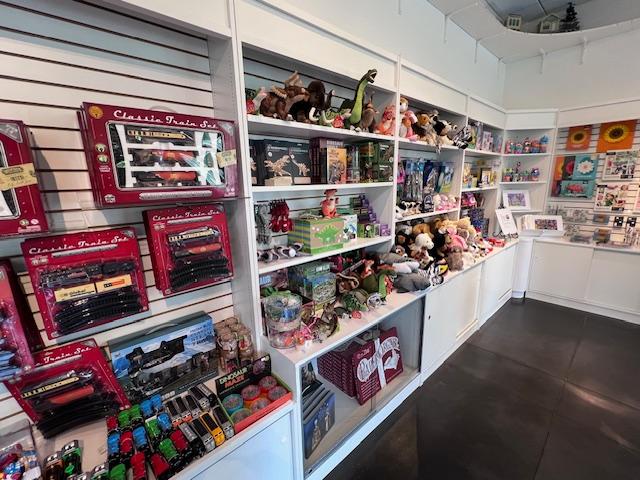
The gift shops

Disclaimer: This information was taken directly from The American Labor Museum/Botto House National Landmark pamphlets. This museum is one of the few historical sites dealing with the Labor Unions in the United States and plays a huge role in workers rights today.


The African Art Museum of the SMA Fathers (Society of African Missions)                                                                             23 Bliss Avenue                                                                              Tenafly, NJ 07670

The African Art Museum of the SMA Fathers (Society of African Missions) 23 Bliss Avenue Tenafly, NJ 07670

The African Art Museum of the SMA Fathers (Society of African Missions)

23 Bliss Avenue

Tenafly, NJ  07670

(201) 894-8611

http://www.smafathers.org/museum

https://smafathers.org/museum/

https://smafathers.org/museum/about-us/

Open: 8:00am-5:00pm Seven Days a week

Please contact us for group tours.

Fee: Free admission but a donation is suggested.

TripAdvisor Review:

https://www.tripadvisor.com/Attraction_Review-g46863-d3967225-Reviews-African_Art_Museum_of_the_Society_of_African_Missions-Tenafly_New_Jersey.html?m=19905

I recently revisited the African Museum of Art on the SMA Father’s and on this trip really took my time to learn about the Mission and study the art in the various displays. Each country that the Mission is involved with is represented here with detailed information on the meaning of the art and its purpose. It is an interesting approach to understanding the culture of each of these countries.

The beautiful stained glass windows line the ceiling and walls and has a beautiful effect in the room on a sunny day.

The sculpture in the middle of the main hall

The History of the Museum:

(From the museum website)

This museum was established in 1980 and is one of the only rare few in the United States dedicated solely to the arts of Africa. Its permanent collections, exhibited on a rotating basis, offer a unique advantage in the study and research of sub-Saharan sculpture and painting, costumes, textiles and decorative arts, religion and folklore.

The main hall of the museum

The history of the Mission

The history of the Mission

The history of the Mission

The African Art Museum of the SMA Fathers is one of five museums around the world founded and maintained by the Society of African Missions, an International Roman Catholic missionary organization that serves the people of Africa.

The display case that line the main hall

The display case that line the main hall

The art works up close

The descriptions of the works

The display case that line the main hall

Some of the works up close

The description of the masks

The display case that line the main hall

The museum is the continued vision of SMA’s founder, Bishop Melchior de Marion Bresillac (1813-1859). The French-born clergyman urged his Society to respect and preserve the culture of the peoples they serve, the unique among the missionaries of his time. (This information is provided by the museum).

Some of the works being featured in the exhibition

Their current exhibitions is on the “Africanizing of Christian Art” which shows the 20th Century encounter between Catholic Christianity and the visual culture of the Yoruba, a prominent west African people of southwest Nigeria under the conditions of late colonization (This information provided by the museum).

The hallway off the main room

Linking the walls of the main room are wooden carved doors from a palace in Africa. The interesting detail work tells it own story.

The description of one of the doors

Panel One

Panel Two

Panel Three

Panel Four

The collection contains many works in the form of masks, textile work, religious figurines and decorative arts. Each display case shows a different theme in the art.

The works of art in the cases

The puppets in the case

The works of art lining the cases

The engaging Mask collection

The museum is the main hallway of the church. I found it a quiet place where you could really concentrate on the beauty of the art. It grounds are also nice to walk around in in the nice weather.

The Chapel just off the museum is interesting to visit. I wondered how many people came to serve here and how the service was performed.

The main chapel of the mission

The beautiful stained glass windows in the chapel

The museum is a true hidden gem of wonderful and interesting testimonial and contemporary art. An inspiring museum if you take the time to really enjoy it.

Meadowlands Museum                                                               91 Crane Avenue                                                         Rutherford, NJ 07070

Meadowlands Museum 91 Crane Avenue Rutherford, NJ 07070

Meadowlands Museum

91 Crane Avenue

Rutherford, NJ  07070

Phone: (201) 935-1175

Email: meadowlandsmuseum@verizon.net

https://www.meadowlandsmuseum.com/

https://www.facebook.com/MMusRutherford/

Open: Most Wednesdays and Saturdays from 10:00am-4:00pm

TripAdvisor Review:

https://www.tripadvisor.com/Attraction_Review-g46796-d2403380-Reviews-Meadowlands_Museum-Rutherford_New_Jersey.html?m=19905

Both Curator & Chronicler

The entrance of the museum

The Meadowlands Museum is the main steward of the history and culture of the Meadowlands region and one of its leading storyteller.

The sign welcoming you

Its mission and collection, which resides in the Yereance-Berry House in southern Bergen County in Rutherford, NJ are distinctive and unique. The house too is a historic treasure and landmark and was built in 1804 by the Berry family, who were among the county’s earliest European settlers.

The front of the museum in the Spring of 2026

Rooms in the three-level American Dutch farmhouse are alive with permanent and temporary exhibits and sometimes include loaned objects from other museums and private collections.  Historical artifacts like archives and photographs are mingled with textiles, furniture, housewares and artwork.

The display on the history of area

There is even correspondence by the daughters of John Rutherfurd, a close confidant of George Washington.

The display in the local artifacts

The gardens outside in the Spring of 2016

Grounds include the William Carlos Williams Poetry Garden, which acknowledges the legacy of Rutherford’s most famous native and the town’s history as a cultural center.

The everyday products of the Meadowlands Museum

Founder in 1961 as the Rutherford Junior Museum by parents of school age children to help connect them to their community, the museum is staffed by professionals assisted by dedicated volunteers and involved trustees. Interns add to the rich resource of individuals who contribute to its present and future.

A recent commercial developed by my Business 101 Class for the Meadowlands Museum for the project “Rocking it in Rutherford: Being a Tourist in your own Town”

The location of the Yereance-Berry House suggests a colonial farm dating to 1740. The oldest house in south Bergen County in close to original condition, it was part of the Historic American Building Survey project of the 1930’s. The building is also listed on the state and national registers of historic places and the Bergen County Stone House Survey.

The Yereance-Berry House is the now the Meadowlands Museum

Affiliated organization include the American Alliance of Museums, American Association for State and Local History, Meadowlands Regional Chamber of Commerce, New Jersey Association of Museums and The National Trust for Historic Preservation.

Programming & Community Service:

Free and reasonably priced services for individuals, community groups, businesses, government bodies and educational institutions are available.

*Educational programs, lectures and traveling exhibits.

The ‘Historic Rutherford Homes’ exhibition at the museum in 2026

The Historic Homes exhibition

The Historic Homes exhibition

*Customized on and off site programs.

*Collaborative ventures with a wide range of partners.

*Assistance with academic research and other archival support.

Special Events:

Special events, which often are made possible by partnerships with businesses and other organizations, are an additional way for visitors of all ages to enjoy the museum. Public and private events occur on a regular or one-time basis; many are fundraisers. Call or email for a current calendar and sponsorship possibilities. The house hosts both permanent and special exhibits.

Our permanent exhibits include:

*Yereance Berry House: During the Spring of 2026.

The outside of the museum

*Pre-electric kitchen: This unique kitchen in the basement shows off the collection of equipment that would be used in the kitchen from the Civil War to the 1950’s. There are coffee grinders, whisks, wash boards and such. It showed how much effort was put into preparing the family meal through the ages.

The Farm Kitchen of Bergen County

The Farm Kitchen at the Turn of the Century

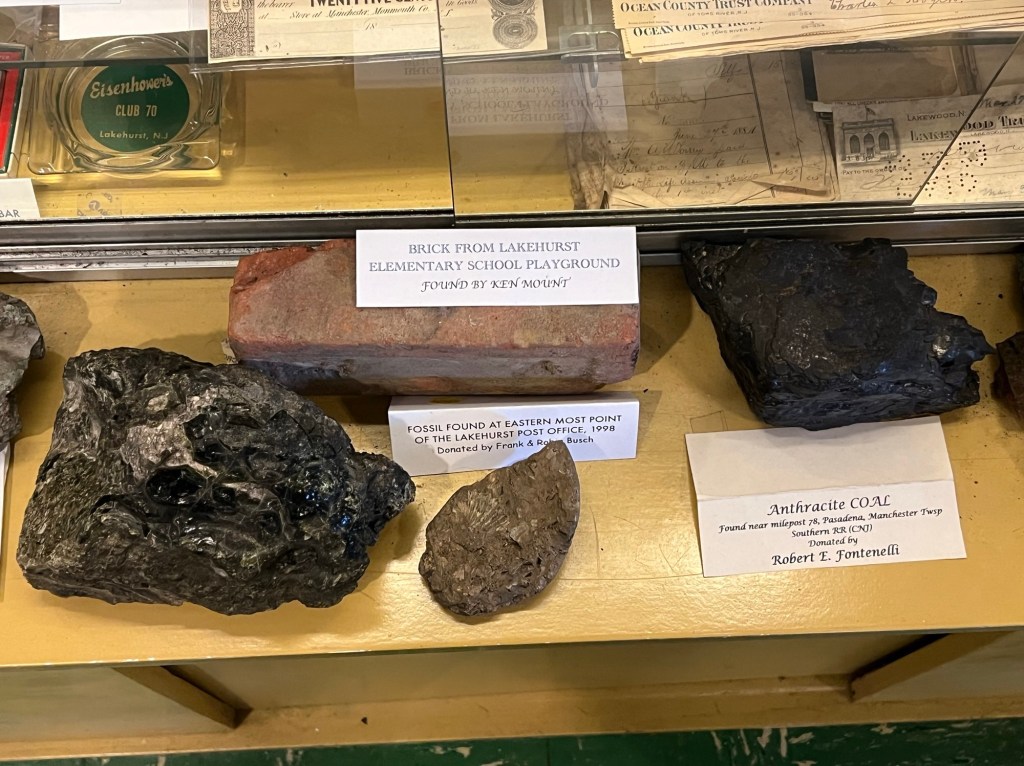
*Meadowlands Geology: there are all sorts of rocks and gems not just from the area but all over the state. There are two different rooms one of the specimens locally and there is a separate room for glowing stones. It is very interesting to see when the lights are out.

The Mineral Collection at the Meadowlands Museum

The fluorescent Zinc display

The Mining Display

*Mining in South Bergen: This is how the county has changed when we mined ore.

The Mining Display at the Meadowlands Museum

The Mining Display

The Mining Display

*19th century Laundry Room: The Laundry room that is located in the basement has many of the things our grandparents would have used. The washboards,  scrub bushes, old washing machines and ringers. Washing clothes was much harder back then.

The Wash Room of the Turn of the Century

*The wonderful Toy Exhibition of turn of the last century toys and from the 1960’s 70’s and 80’s. This contains Dolls, Board Games, play things and instruments:

The Toy Collection fascinates kids of all ages

The Factory Toys display

Meadowlands Museum Scarecrow Day III

The wonderful toy factory in Kearny, NJ that used to produce all these wonderful toys.

The Toy Display

The Toy Display

The Doll display

The Doll display

The ‘Brownies’ display in the Toy Room

*The Bergen County Farm display:

Farming in the County in the past

The Farm display

The home Spinning Wheel display

Spinning Wheel display

The new Turn of the Century Furnace display

*Horse elevator

Recent special exhibits have included:

*High school football

*Needlecraft

*Steampunk

*Medical Innovations

*Maps of the region

*Civil Rights

*Dr. Williams’ Babies

Dr. William’s display

Dr. Williams display

Dr. William’s display

Dr. William’s display

Dr. William’s display

*World War I

Special Events:

Scarecrow Day 2018:

I went to the recent Scarecrow Day on October 20, 2018 where guests of the museum created their own scarecrows using their own creativity. All the scarecrows were lined up facing the street with their interesting clothes and accessories.

Each person got to use their own clothes and each one had its own style to it. It was fun watching the families show their creativity at this annual event.

Image result for scarecrow day at meadowland museum

Scarecrow Day at the museum in 2018

Meadowlands Museum Scarecrow Day

Scarecrow Day in 2021: the winners of the contest for best Scarecrow

I also stopped by for the Dutch Christmas decorations. The museum was decorated for the holidays with garland and trees. On December 1st, they had a Dutch Christmas festival (I could not attend) with food and entertainment.

Celebrating the Easter Holidays in 2026

Help tell the story…

(from the museum website)

Individuals who value the purpose and work of the Meadowlands Museum remain its inspiration and abiding spirit. Donations, memberships, sponsorship’s, grants and fundraisers are crucial elements of the museum’s financial well-being.

Admission to the museum is free but donations are greatly appreciated. Fees for events and other services vary. A personal letter to the appropriate person acknowledges a gift made in the name of an individual. Donations to provide for the buildings and grounds are valuable links to the future and a kind of giving that is among the museum’s top priorities.

Disclaimer: This information was taken directly from the Meadowlands Museum’s pamphlet. For information on the site, please call or email the museum for more information.

My Bergen Community College Team Project in 2022:

Bergecco-Parc Consulting Inc.-Rocking it in Rutherford:

My Business 101 class at Bergen Community College Lyndhurst branch visit in the Spring of 2022 for the project “Rocking it in Rutherford: Be a Tourist in your own Town”.

For Spring Semester in 2022, my Business 101-Introduction to Business class made a weekend visit to the Meadowlands Museum for the project “Rocking it in Rutherford-Be a Tourist in your own Town”. We were promoting the museum to increase tourism with a fundraiser and a barbecue. So on the weekend, I took my Team to the museum to tour it for extra credit. They ended up learning a lot about not just the museum but the history of Rutherford and Bergen County, NJ.

The project was promoting the Town of Rutherford for Domestic and Foreign Tourism and created a fundraiser and modernization of displays for the museum. This is a copy of the project, presentation and Commercials.

The Team Project “Rocking it in Rutherford: Be a Tourist in your own Town”:

Video’s of the Presentation:

The video presentation promoting the museum:

The Project showcased the museum in such a professional and creative way.

The Schoolhouse Museum-Ridgewood Historical Society                                                                  650 Glen Avenue                                                                Ridgewood, NJ 07450

The Schoolhouse Museum-Ridgewood Historical Society 650 Glen Avenue Ridgewood, NJ 07450

The Schoolhouse Museum-Ridgewood Historical Society

650 Glen Avenue

Ridgewood, NJ  07450

(201) 447-3242

RidgewoodHistoricalSociety@Verizon.net

Open: Sunday 2:00pm-4:00pm/Monday-Wednesday Closed/Thursday and Saturday: 1:00pm-3:00pm (please check the websites for changes in the schedule)

Admission: Donation $5.00

TripAdvisor Review:

https://www.tripadvisor.com/Attraction_Review-g46772-d10353516-Reviews-Schoolhouse_Museum-Ridgewood_New_Jersey.html?m=19905

The Ridgewood Schoolhouse museum:

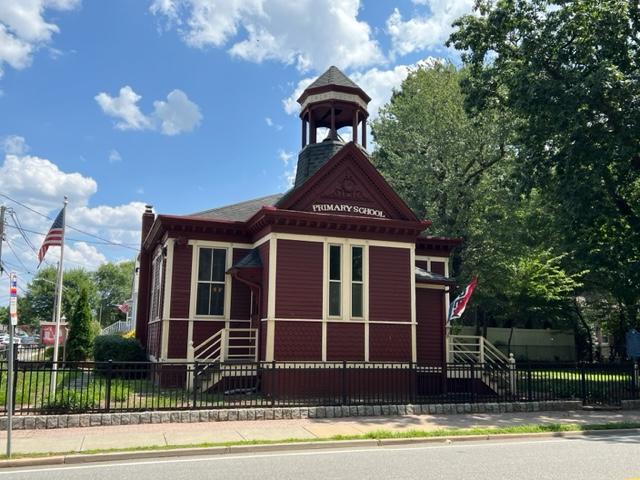
The Front of the museum

The historical sign

The historic sign

The front of the building

I have visited this interesting small history museum a few times and they do a wonderful job in presenting their displays with interesting facts catering not just to a local crowd, but anyone interested in history and events.

The one-room schoolhouse, built in 1872, operated as a public school until 1905. It was part of the district school system formed in 1864 or 1865, which was geographically defined rather than by township. It was operated as School District No. 45. When the towns incorporated in 1894, that district system was dissolved, and the school became part of the Ridgewood school district.

The Ridgewood Schoolhouse Museum’s permanent collection

Tradition has it that the original land grant to the Dutch Reformed congregation from Pierre Fauconier and his daughter, Magdalena Valleau, stated that room should always be given upon the church land for a school. We know that a small school building opened in 1785. A second stone school was built in 1820 and eventually replaced by a frame structure in 1845.

Eventually the present schoolhouse was built in 1872 at a cost of $4600.00. It is likely that other schools existed on the church property from the time the church was built in 1735 to 1785, for the consistory assumed responsibility for education and the exact time when that responsibility was handed over to the public is not known.

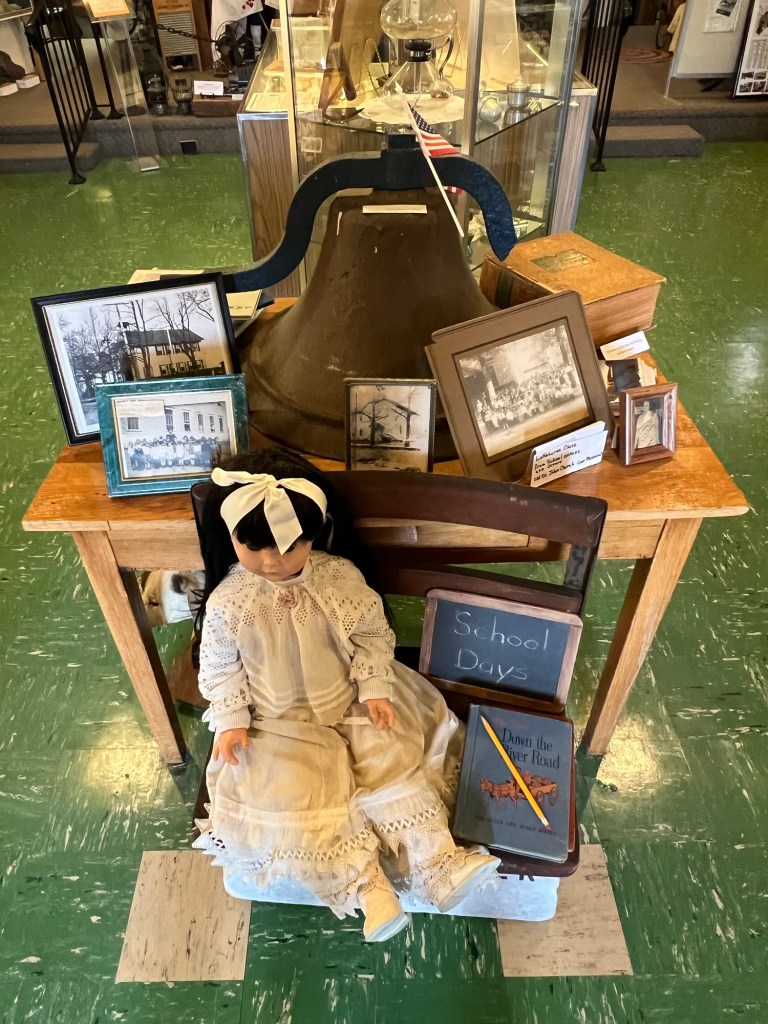
The large bell summoned children from miles away to school each morning. The original belfry is gone but the bell stands in the entryway. It was used in other schools and a church after the school closed in 1905 but was returned to the historical society in 1977.

The original entry was divided into separate entrances and cloakrooms for boys and girls. The potbelly stove is original as are the windows and the two central lamps. The black boards around the room have been removed except for one behind the teacher’s platform.

There is a recreation of the old schoolhouse when you walk into the museum

When the Historical Society started the museum, the privy building was attached to the main building to provide more display area. In their special display area, they have an exhibition space for farming and a local comedian.

The schoolhouse display

In April 2018, they have a very interesting exhibition call “The Thread of Life” which tells the story of family’s progression in home life from the end of the Civil War until the beginning of the Depression and times changed between the Civil War and WWI. Between the Victorian Era, the sinking if the Titanic and the devastation of WWI, the baby boom of the teens and the ‘Roaring Twenties’ with the stock market built changed the attitudes.

The way of life for an entire generation until the Great Depression put a halt on it. You can see the changes of behavior in the displays of clothes and household decor. It is an interesting display.

A Morning Outfit during the Victorian Age

Union Army outfits and display for the “Civil War” artifacts

They also have an ongoing exhibition of farm equipment and a continuation of their “Farming in Bergen County” exhibition that just closed before this show. This is how farmers of Bergen County produced their crops.

Dutch items in the collection

The Blauvelt, Zabriskie and Haring families are known farming family names in Bergen County and were important in business and politics during the after the Revolutionary War.

The “Farming and Agricultural” display

Also, see their ‘Halloween Cemetery Walk” in my blog, “MywalkinManhattan.com” entry “This is Halloween” Day Ninety-Six, October 31, 2017. Don’t miss it this year!

Day Ninety-Six: This is Halloween-MywalkinManhattan.com:

https://wordpress.com/post/mywalkinmanhattan.com/7062

The Cemetery Walks in October are extremely popular

Don’t miss the “Here comes the Brides” exhibition that just opened up in May of 2019. It shows the history of formal wear for weddings along with accessories, menswear, invitations and even cakes toppers.

Schoolhouse Museum II.jpg

‘Here comes the Bride’ Exhibition 2019

In July of 2020, as Phase Three of the Opening in the State of New Jersey, the Museum is now open from 2:00pm-4:00pm for viewing with a new exhibition “A” is for Artistry: Celebrating Centuries of Art, Artists & Creativity”. The exhibit is a combination of local donated art and heirlooms from Ridgewood and the surrounding towns.

The Exhibition “A is for Artistry”

There are interesting displays of early photography and portrait painting as a way of preserving a persons’ image for the future. The use of oil painting, tin and then photo ‘sittings’ came in vogue as the technology changed.

Portraits were the form of imagetry before photography was invented

There was an interesting display of Children’s toys from the handmade farm toys of clay and corn husks to the fancier toys of bisque and cloth when imports and specialty toy stores were created for children’s playthings. They even had a collection of the famous “Punch & Judy Dolls”.

The Punch & Judy Dolls at the “A is for Artistry” exhibition

Children’s playthings over the last two hundred years

Another standout of the exhibition was the display from General Westervelt, a local citizen of Bergen County whose shipping expertise helped the North during the Civil War. His use of navigation and sailing was a detriment to the South and there was a $1000.00 bounty on his head. He died during the Civil War.

The “Object Lessons-Treasures that tell our Stories” exhibition

In 2022, when the Museum reopened after a long closure with COVID, they opened with two exhibitions: One was “Object Lessons-Treasures that tell our stories”, in which household objects, farming equipment and all sorts of artifacts from the pre-Revolution, Revolutionary War and Civil War periods were shown. It showed the progression that life took for families between the Revolutionary War and the beginnings of the Victorian Age.

“American Revolutionary War” display

They had local Dutch family heirlooms such as chests, cabinets, china, clothing and even documents. The average Dutch family kept their family linens, china, silver and bedding in a locked chest as these were valuable family luxuries that needed protection and proper care.

Dutch Chest with family items that were locked up.

There was a “Lincoln display” at the museum. They had a copy of the poster from the night that President Lincoln was assassinated at Ford Theater during the performance of “My American Cousin”. There was a family shot of the Lincoln family and items from the period.

The “Lincoln Display” that showed an original poster from “Our American Cousin” the night Abraham Lincoln was assassinated.

The other exhibition was “Toying with the Past: Antique Toys & Games”:

Toying with the Past was an interesting exhibition in that it showed how much toys have developed and changed over the years and how much they have stayed the same. There was a beautiful collection of china and bisque dolls, some that were made as playthings and others used as marketing tools to show women the latest fashions coming out of Europe. The dolls would be dressed in the dressmakers’ newest designs.

The Doll Collection is beautifully displayed

There were older versions of modern board games, everyday items like marbles and Jaxs. There were kitchen-based items that a little girl might be given to improve her domestic skills and there was even an early version of an “Easy Bake Oven”, with an electric oven that could be plugged in and boil water.

The items a young girl would receive to prepare her for homelife

Fancy rocking horses and dolls

Vehicles and Board Games that sparked children’s imagination

More dolls and vehicles over the last 100 years

There was also all sort of toys on wheels and rocking horses that could entertain a grumpy child for hours. They even had a selection of play clothes and school items to show what classroom work was like at the turn of the last century.

Childhood was changing for young people after the Civil War and during the Victorian Age

The Latest Exhibition that was on display in April 2023 was the “History of Hats” that replaced the Toy exhibiton:

Hats from all ages

Men’s hats through the ages

Military Hats

General’s Hat

Ladies bonnets

‘Fashion of the 1880’s’

Special Events and Lectures at the Museum:

Don’t miss their ‘Cemetery Walks’ during the day. I took one recently at the old Dutch Reformed Church and we discussed the history of the church, the location of the old church versus the building of the new one, which is why the cemetery looks the way it does and the locations of the tombstones as well as how time and advancement in carving went from sandstone, which fades and chips over time when to the production of granite and marble for future tombstones.

The Cemetery Walks in Valleau Cemetery across from the museum

The cemetery is filled with names famous and prominent in Bergen County and North Jersey history which includes participation in the wars and the building of Bergen County including the Westervelt’s, Van Riper’s, Haring’s, Zabriskie’s, Terhune’s, Demerest’s, Blauvelt’s and Tice’s families. It is a fascinating place to learn Bergen County history and its development.

Ridgewood Cemetery Tour

The Cemetery Tours that take place the week before Halloween are interesting as well. The paths of the Valleau Cemetery in Ridgewood are lined with candles and you follow the path with the town historian who takes you on a creepy tour of the famous dead residents of Ridgewood. These include prominent athletes, business people and local laborers. You pretty much tour about a third of the cemetery as you move from one tombstone to another met by costumed actors, who they themselves have to sit in the cemetery in the dark waiting for you. That is a horror movie into itself.

The Valleau Cemetery Walk and Lecture

The best part of the tour is you are greeted at the museum with a tour of the museum and a table laden with fresh apple cider and cider doughnuts that make the perfect refreshment on a cool fall evening. Make sure to take the 7:00pm tour when it is dark out and make the reservation well in advance as these tours fill up fast.

Taking the Cemetery Tours is interesting!

Don’t miss their upcoming tours for Halloween, Christmas and their lecture series.

Please check out the museum’s website for all their very original special programming.

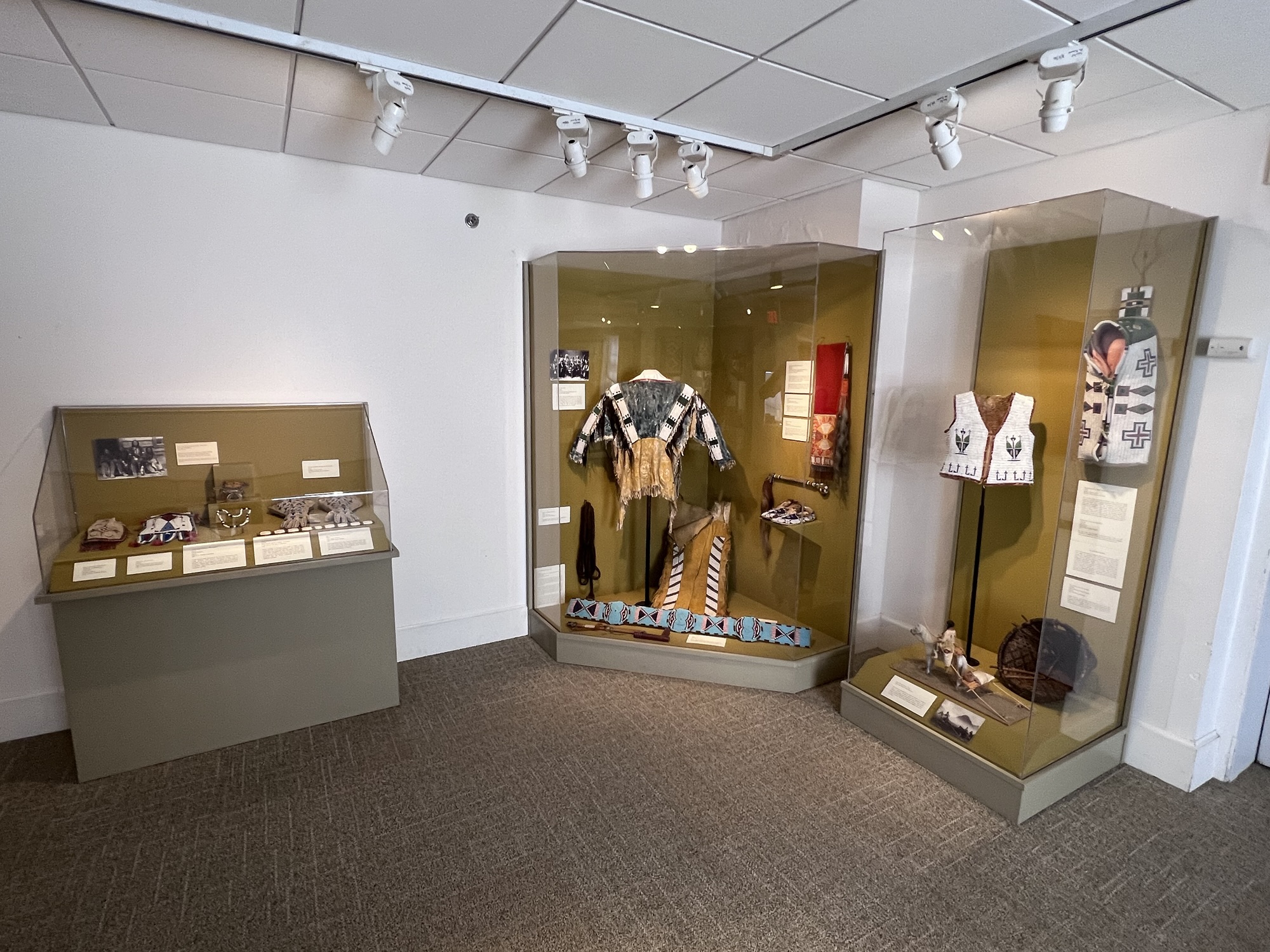
The museum’s latest acquisition, a Native American on horseback

For the 2024 Northwest Bergen Historic Coalition Day, I visited the museum again and they were having an exhibition entitled “It’s Personal-100 years of obsolete Everyday Essentials”. It made me feel old when I saw a rotary phone, ink well and some of the other items that were in the exhibit. Some of them were from my generation and I do not consider myself old.

The sign from the “It’s Personal” exhibition.

The entrance to the Ridgewood Schoolhouse Museum for the “It’s Personal” exhibition

The Ridgewood Schoolhouse Museum “It’s Personal” exhibition.

The Ridgewood Schoolhouse Museum “It’s Personal” exhibition.

The Inkwell display at the “It’s Personal” exhibition to be replaced by the modern pen.

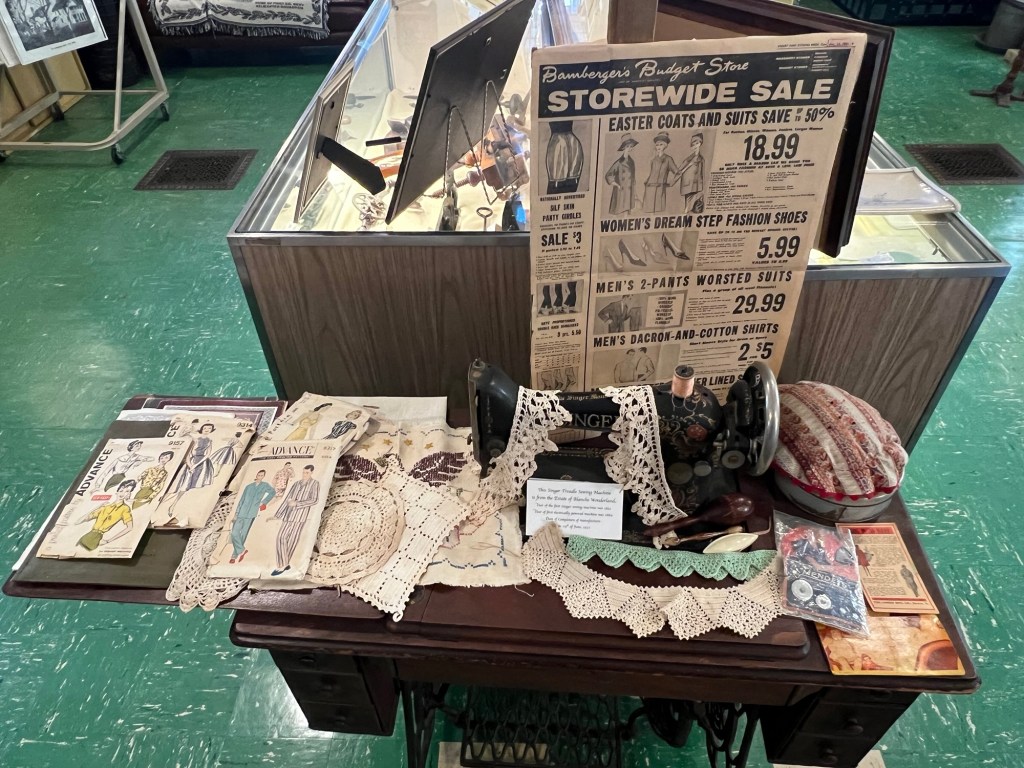
The Sewing Kit at the “It’s Personal” exhibition to be replaced by the modern sewing machine than by Ready to Wear clothing.

The Vanity which is still in use depending on the person in the “It’s Personal” exhibition.

The development of the phone and then the change to the modern cell phone in the “It’s Personal” exhibition.

The exhibition was interesting because its takes the modern perspective of the development of objects and their use over the last 100 years and show them with a modern twist on how times continue to change.