I was recently travelling through Saugerties, New York recently and saw the small sign for the historical Saugerties Lighthouse and decided to take the road path down to the river. This interesting little site is hidden behind a wetlands area and neighborhood of homes and a Coast Guard station.
The Historical Saugerties Lighthouse in Saugerties, NY
I walked through the wetlands park through a pathway of bridges and paths and suggest by the walk do not go after it has just rained. Also do not go after dark as the path is not lite. Still it is fascinating walk through the wetlands passing streams and patches of beautiful flowers and trees.
In the summer the path is full of wildflowers, birds, dragonfly’s and the sounds of the Hudson River swaying across the shore. The views are just beautiful.
Take your time to admire the flowers and plants along the paths and look at the views of the river as you exit the paths.
The pathway to the lighthouse
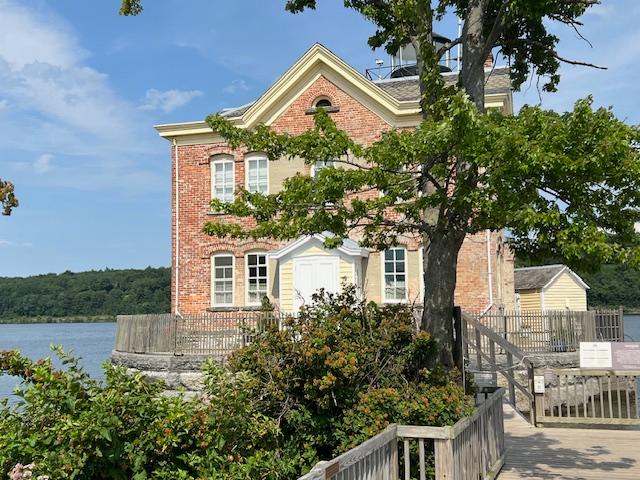
The lighthouse itself needs some work but it is elegant old building that sits stately against the mountain views. In the middle of the summer, all the colors are bright and vibrant. You can walk around most of the building but the walkway in the front offers a nice view of the whole structure.
Pathway to the lighthouse
The pathway to the lighthouse
The only way to go inside is to book a room at the B & B so check the website out.
The beautiful views of the Hudson River along the pathway and the tiny beaches
The History of the Saugerties Lighthouse:
(From the Friends of the Saugerties Lighthouse)
The Saugerties Lighthouse on a sunny afternoon in July
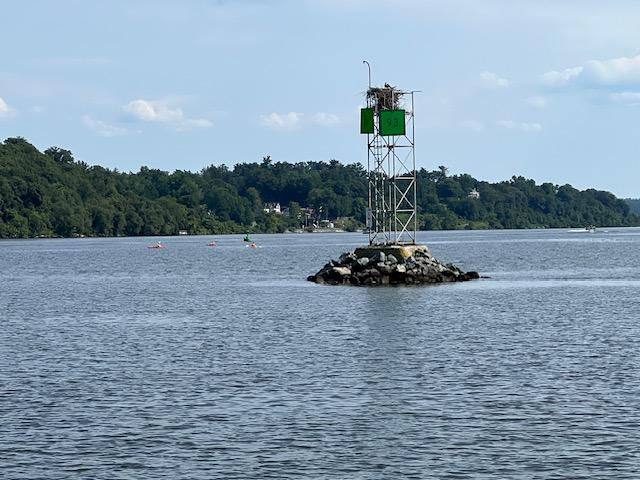
Looking down the Hudson River
The lighthouse was practically a pile of crumbling bricks poised to tumble into the Hudson River, the Saugerties Lighthouse barely escaped the demolition ball in the 1960’s. Today, completely renovated and delighting B & B guests, it stands as a testament to the perseverance and hard work of many dedicated individuals.
The historic sign for the 1896 Lighthouse
The name Saugerties is derived from the Dutch “Zager’s Killetje”, meaning a sawmill on a creek and in fact, there was a mill built on Esopus Creek to harness the creek’s waterpower. The mill formed the cornerstone of a thriving paper industry, which produced as much as eight tons of paper daily, making it one of the leading producers of paper in the 1800’s.
The walkway to the lighthouse from the road near the Hudson River
On June 30, 1834, Congress appropriated $5000 for the construction of a lighthouse at the mouth of the creek to guide mariners past the nearby shallows and into Esopus Creek and the busy port of Saugerties. Charles Hooster built the lighthouse on a forty by fifty foot timber-framed pier and its light, produced by five whale oil lamps set in parabolic reflectors, commenced operation in 1835 with Abraham Persons as its first keeper.
The historic sign at the lighthouse
A fire in 1848 destroyed the original lighthouse but it was rebuilt on the old site by 1850 at which time four lamps were being displayed from atop the two-story structure. Light lists described the second lighthouse as a “light on keeper’s house.” A sixth-order Fresnel lens replaced the array of lamps and reflectors in the lantern room in 1854.
Ice floes and tidal currents took their toll on the foundation pier and on March 2, 1867, Congress appropriated $25,000 to build a replacement lighthouse just a few yards closer to the shore. This structure, still standing today, was built on a circular granite crib, with a depth of twelve foot and a diameter of sixty feet that rests on fifty-six pilings sunk into the riverbed and topped with three layers of six-inch timbers. The two story lighthouse has twenty-inch thick natural colored brick cavity walls and a sixth-order Fresnel lens cast its beacon from the lantern room. No longer needed, the old wooden lighthouse was sold.
Saugerties Lighthouse was considered a plum assignment due to its proximity to town. In 1888, Saugtegies Harbor was enlarged through the construction of jetties and the keeper’s jaunt to town was made easier when a small road was built along the north jetty to the lighthouse.
The lightkeepers were friendly with their neighbors and even enlisted their help. A neighbor downriver would hand a bed sheet out their window whenever they saw the lighthouse tender coming upriver, giving the lightkeeper about a half-hour notice before the inspector arrived.
Daniel Crowley was serving as keeper of the light when the current brick lighthouse was built. He had been placed in charge of the light in 1865, replacing his father Dennis, who was removed from service after just three months. Daniel’s sister, Katie, grew up at the lighthouse and seemed to be amphibious. She would often venture out into the river along in a skiff and when her little craft was upset, there were no worries as she could swim like a duck. Katie was made the official keeper of the light in 1873 and her lack of fear of the water lead to some remarkable rescues.
Around the turn of the century, the boathouse, located atop the foundation of the first lighthouse, a small island east of the current lighthouse was moved to the circular lighthouse pier. In 1910, a wooden platform was extended from the top of the tower to support a fog bell and an enclosed shaft was mounted below the platform to protect the suspended weights that powered the bell striking mechanism.
Conrad Hawk’s twenty-six year stint as keeper, lasting from 1914 to 1940 was far longer than that of any other keeper of Saugerties Lighthouse. In 1916, his son Earl and daughter Ilal were playing with a small battery and brought it into contact with the large battery used for the station’s fog bell. The resulting short-circuit caused an explosion that blew the battery to pieces, cutting Ilal’s face and produced a current that burned Earl’s arms. Earl nearly lost a big toe in 1922 when his foot came into contact with a boat’s propeller as he tried to climb aboard while swimming near the lighthouse.
Through they both had a few scars, Earl and Ilah survived at Saugerties Lighthouse. Earl Hawk graduated from the Navy’s school at Annapolis and entered the submarine service, while Ilal attended Cortland State teacher’s College and became a physical education instructor. Just before Christmas in 1939, Keeper Hawk’s went to the hospital to receive treatment for stomach ulcers but the treatments failed and he passed away on January 8th, 1940.
When electricity was extended to the lighthouse in the 1940’s, the dwelling was “modernized” with steam heat, plumbing and a telephone. In February 1954, Keeper Ed Pastorini was informed his light would be automated come spring. Wanting to leave the station in tip-top shape, he lovingly painted the three large upstairs bedrooms. Tears flooded his eyes when he closed the door and left the lighthouse for the last time.
The Historic Saugerties Lighthouse in all its beauty
The lighthouse tender soon arrived and its crew tore out the plumbing, furnace and fixtures. In stark contrast to Keeper Pastorini’s care, gallons of water were drained out on the floors and left to soak through the floorboards. The building was sealed up and left to deteriorate which it did quickly.
A decade later, the Coast Guard planned to demolish the vandalized and dilapidated lighthouse, when it stepped Ruth Reynolds Glunt, wife of Chester B. Glunt, a former Coast Guard light attendant stationed at Turkey Point near Saugerties. Mrs. Glunt a longtime friend of many lighthouse keepers along the Hudson River, carried a passion for saving lighthouse and mounted a campaign to halt the demolition. Through her efforts and those of architect Elise Barry, the structure was placed on the National Register of Historic Places in 1978.
The Saugerties Lighthouse Conservancy was established in 1985 with the mission to restore and maintain the lighthouse and the following year the conservancy was able to purchase the lighthouse and surrounding wetlands for $1.00. The conservancy received a building on the verge of tumbling down but managed in just a few years to turn it into a beautifully restored lighthouse.
Roughly 10,000 old bricks, which had crumbling after being penetrated by moisture, were replaced. The lantern room was removed and refurbished. Stairs, handrails, floors and walls were completely reconstructed. To top of the transformation, a solar powered light installed in the lantern room by the Coast Guard was activated on August 4th, 1990.
Saugerties Lighthouse furnished in 1920’s decor is now open to the public and welcomes overnight guests as a bed and breakfast. Visitors can walk to the lighthouse along a one half mile long through the Ruth Reynolds Glunt Nature Preserve, where they will be greeted by a modern day resident keeper who runs the bed and breakfast and maintains the lighthouse.
The pathway to the lighthouse
A big thank you to the Friends of the Saugerties Lighthouse for their dedication in this important site
*This is just a portion of the blog from the Friends of Saugerties Lighthouse. Please see the attached website for more information.
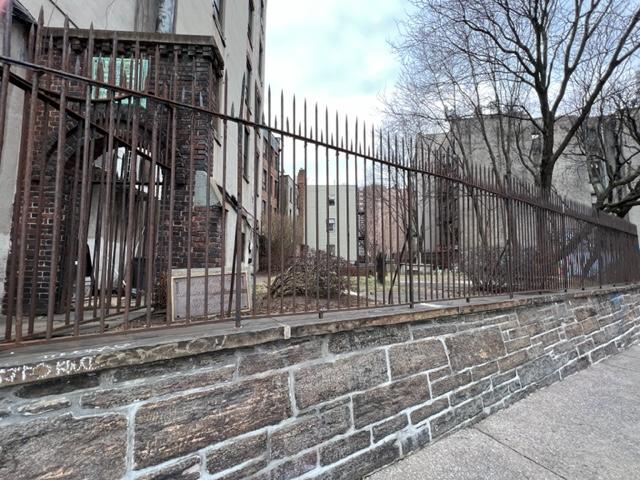
There are times that I walk around Manhattan and things just pop out at you. Tucked inside small pockets of the City are small community gardens, detailed statues, street art and sometimes a small cemetery. I had passed the First Shearith Israel Graveyard or also known as the Chatham Square Cemetery many times when visiting Chinatown since I was a kid. This tiny elevated pocket square of land is located next to a building and locked behind a gate just off St. James Place right at the end of Mott Street strip of Chinatown.
You really have to look for this at the side of 55-57 St. James Place
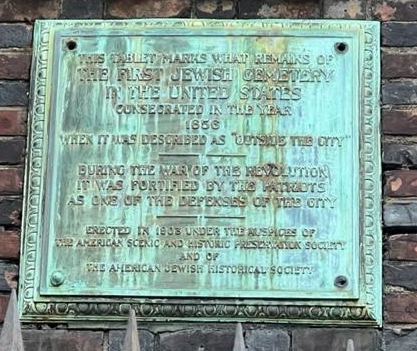
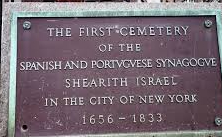
This is the oldest Jewish Cemetery in Manhattan that was in use from 1683 to 1833. The site of the cemetery was originally on a hill overlooking the East River in an open area at the northern periphery of the British-Dutch colonial settlement. The plot was purchased in 1682 by Joseph Bueno de Mesquita and the cemetery’s first interment was for his relative, Benjamin Bueno de Mesquita. The cemetery expanded in the 1700’s from Chatham Square to the upper part of Oliver Street to Madison Avenue (Wiki).
The original map of the Dutch Colony (New York Historical Society)
In 1823, a City ordinance prohibited burials south of Canal Street and the congregation opened a second burial spot at West 11th Street. A third cemetery was opened at 21st Street west of Sixth Avenue. The size of the cemetery has been reduced over the years because of development and most of the bodies were removed and moved to the other cemeteries. In 1851, the City again prohibited burials below 86th Street and the congregations again opened a fourth cemetery in Ridgewood, Queens. In 1855, with more development changing the area again and over two hundred graves were removed from the site. Only about hundred remain (Wiki).
The inside of the cemetery
Two of the most notable people buried here are Reverend Gershom Mendes Seixas (1745-1816), the first American born Jewish spiritual leader and Dr. Walter Jonas Judah, the second person of the Jewish faith to attend an American Medical School (now Columbia University) and the first native born one. (Wiki). There are also 18 Jewish Revolutionary War era veterans and patriots buried here.
History of the Jewish Settlement in Dutch New York:
In September of 1654, just after the Jewish New Year, twenty-three Jews, mostly of Spanish and Portuguese origin arrived in Manhattan. These people had been living in Recife, the former capital of the 17th Century Dutch Brazil. When the Portuguese defeated the Dutch for control of Recife and brought with them the Inquisition, the Jews of that area left. Some returned to Amsterdam, where they had originated and others moved around the Caribbean to other islands. These twenty-three arrived in New York due a series of unseen events (Big Apple Secrets).
Governor Peter Stuyvesant did not want to permit them to stay but these settlers fought for their rights and won permission to remain. In 1655, the Jewish settlers applied to the Dutch authorities for permission to purchase a parcel of land as an exclusive place to bury their dead. In February of 1656, appealed “that consent may be given” for the purchase. In 1644, the British took New Amsterdam and renamed it New York and the Jews were granted more civil rights. In 1706, they had organized their own congregation, Shearith Israel (Big Apple Secrets).
The cemetery for the most part is pad locked but you can view the outside from the street level. The cemetery is open on Memorial Day for services to the members of the armed services but for the most part you have to view the cemetery from the street level.
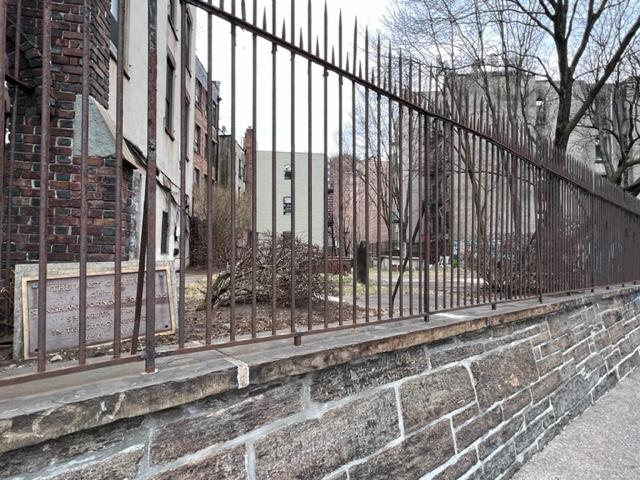
The plaque that you can see at eye level just inside the cemetery.
This unique plot of land is easy to miss so look for the plaque at eye level as you pass it.
The lawn and formal gardens on the Brooklyn Parkway entrance.
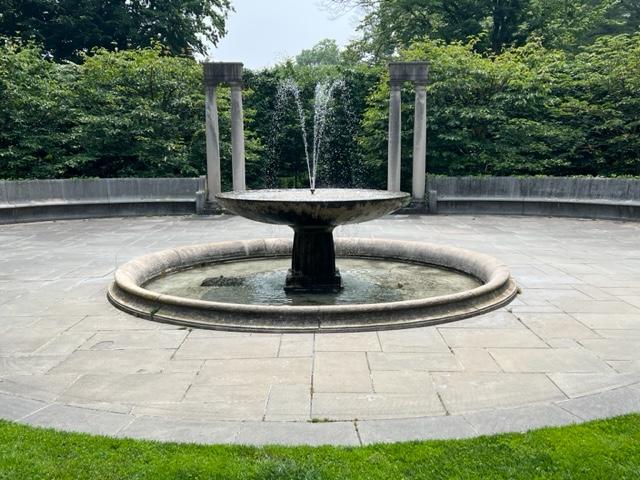
The beautiful fountain at the end of the formal gardens at the main entrance.
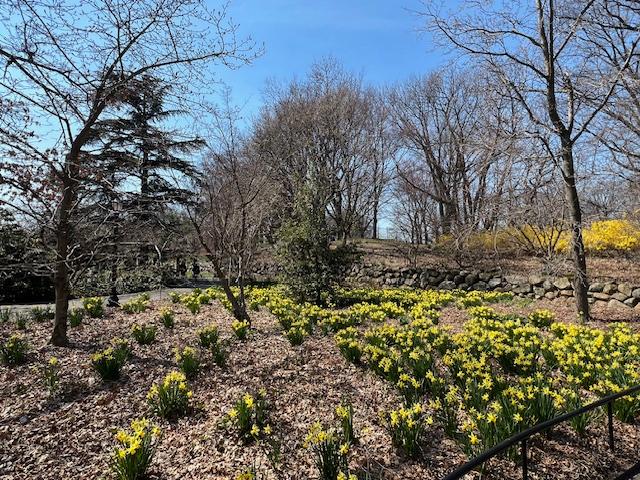
The daffodils in full bloom at the entrance of the gardens.
I have been a member of the Brooklyn Botanical Garden since 2002 and have never been bored on a trip to the gardens. In every season there is something new to see.
On a recent trip to the Gardens in 2024, the Garden was ablaze with the colors of almost a thousand purple crocuses that lined the hills on the Prospect Park side of the lawns. Beautiful purple and while colors were in full bloom and Mother Nature shined in the COVID era with all of us socially distanced but still enjoying the park.
Crocus Hills ablaze in purple in 2024
The purple crocuses in full bloom in 2024.
The beautiful purple crocuses in full bloom.
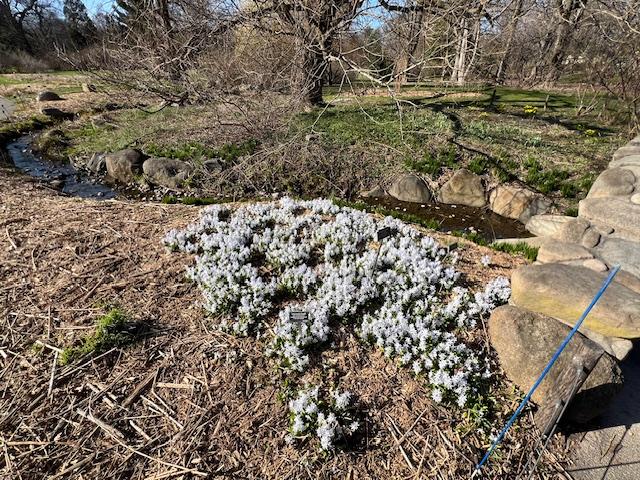
The crocuses only last about a week or two and with the inconsistency with the weather in 2024, they lasted only about ten days and then the weather went back down to the low 40’s. While I was taking pictures of the crocuses, I walked around the gardens and came across the Snowdrops and the Ironweed flowers were also in bloom. These sensitive flowers are only in bloom for just about two weeks.
The Snowdrops in full bloom in the gardens in 2024.
The Snowdrops up close.
The Ironweed just as beautiful. To see these graceful flowers in bloom are a real treat.
The Ironweed flowers in bloom right by the stream.
The Ironweed flowers in full bloom.
An Azalea that was early blooming in the garden in 2024.
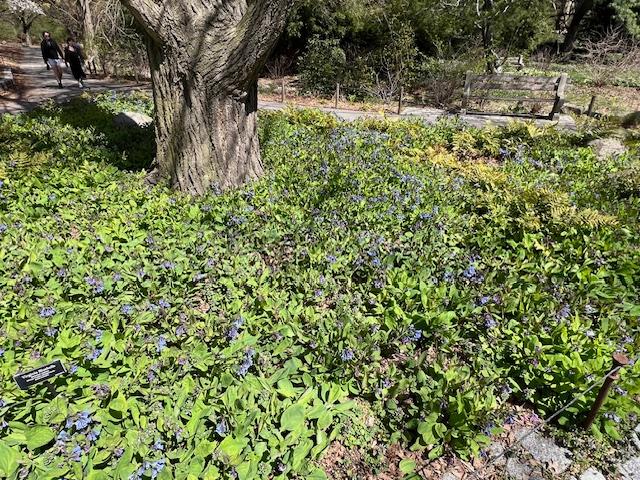
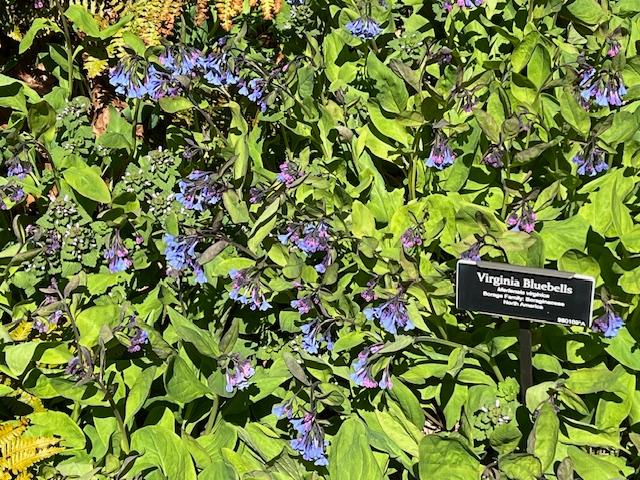
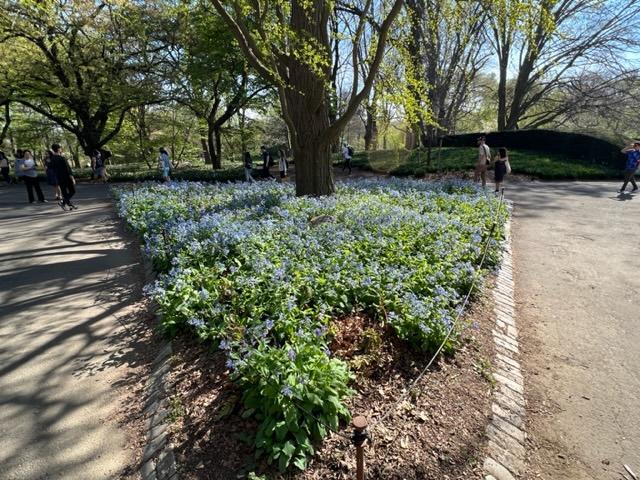
The Virginia Bluebells came out just as the Daffodils were at their peak in bloom. When you walked around this part of the Gardens, it was quite spectacular with colors.
The Virginia Bluebells at their peak during the Eclipse.
The Virginia Bluebells in bloom in early April.
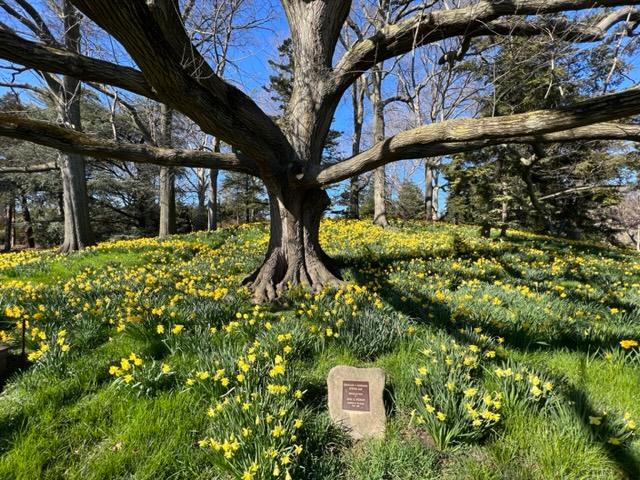
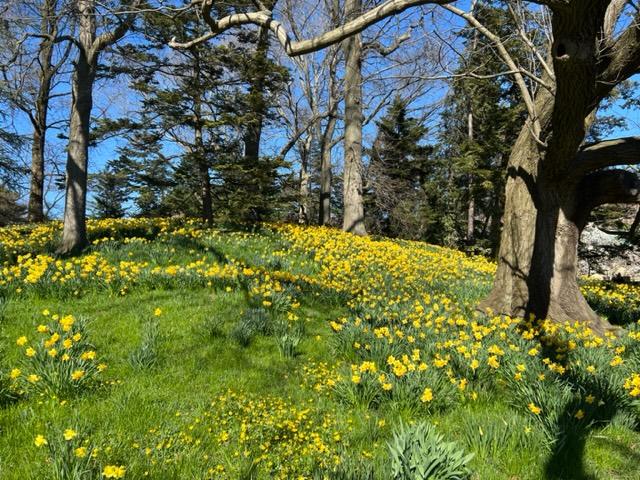
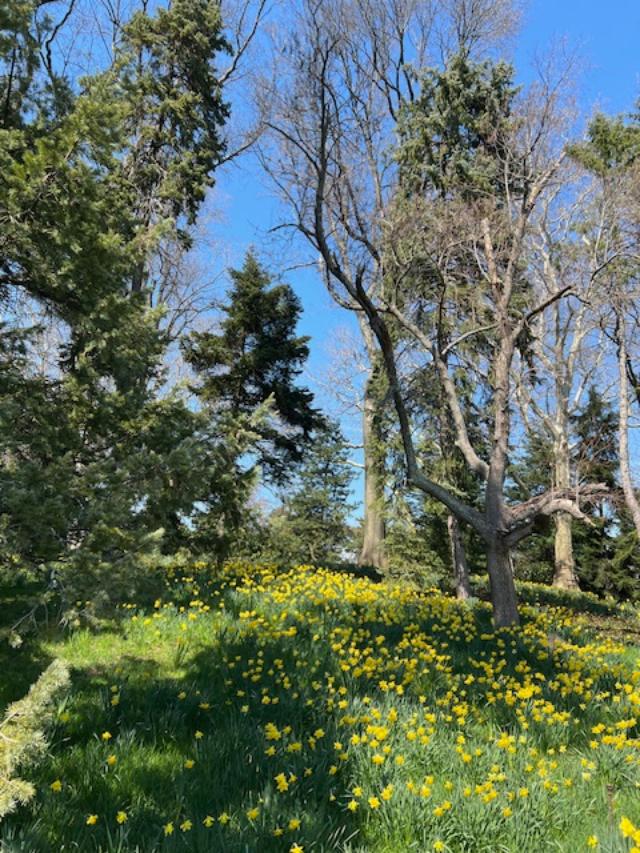
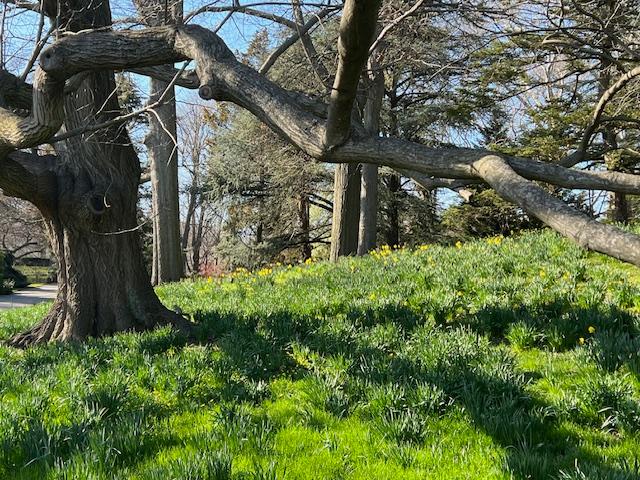
In the beginning of the Spring, Daffodil Hill is in full bloom and is a very impressive site. Hundreds of trumpet Daffodils line the hill of this side of the gardens surrounding the old oak trees.
Daffodil Hill in the Spring of 2023
The Hybrid Oak plaque of this gracious oak tree.
There are fields of yellow on yellow and yellow on orange flowers surrounding the paths against the backdrop of the green lawns. The whole hill is a sea of yellows and whites against the trees which are bursting with new buds. This beautiful scene lasts only about a week to two weeks at full bloom in the first weeks of April.
Daffodil Hill in Spring 2023
Daffodil Hill with the Magnolia Plaza in the background
Daffodil Hill in 2024
Daffodil Hill in March 2024 was in full bloom even in the cold weather.
The beauty of Daffodil Hill in March of 2024.
The Daffodil Hill plaque in the garden.
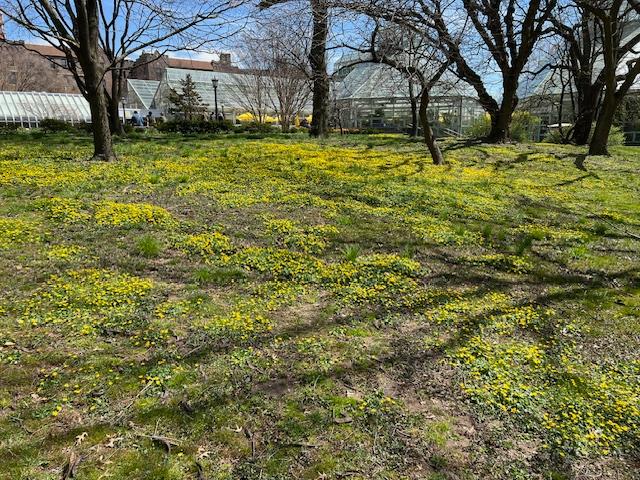
Another beautiful flower was in full bloom all over the garden on the hill across from Daffodil Hill. I was not sure what these tiny flowers were called but they blanketed the hills and lawns around the greenhouses during the Solar Eclipse in 2024.
The tiny yellow flowers in bloom during the Solar Eclipse.
These tiny yellow flowers were in full bloom on the day of the Solar Eclipse in 2024.
I visited the Brooklyn Botanic Garden in March of 2024 and took the 1:00pm ‘Highlights” tour of the garden. The tour guide was shocked that we had almost twenty people on a tour on a cool Friday afternoon but we were an enthusiastic bunch. We got to see most of the garden and the one hour tour went from one hour to an hour and a half.
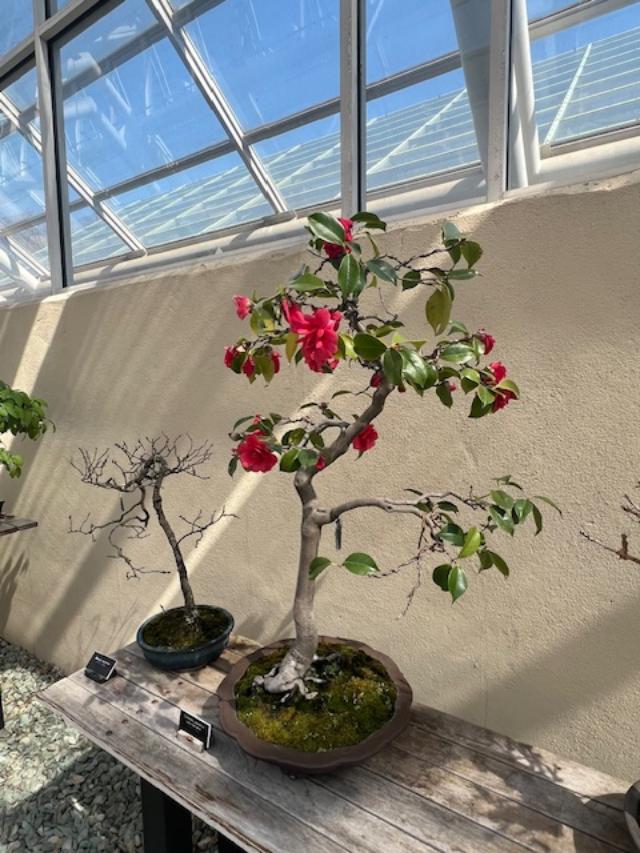
We toured the Bonsai Garden first and we admired these well pruned trees some of which are over thirty years old.
The Bonsai Tree display in March of 2024.
The beautiful flowering trees of the Bonsai display.
The flowering and well pruned trees of the Bonsai gallery.
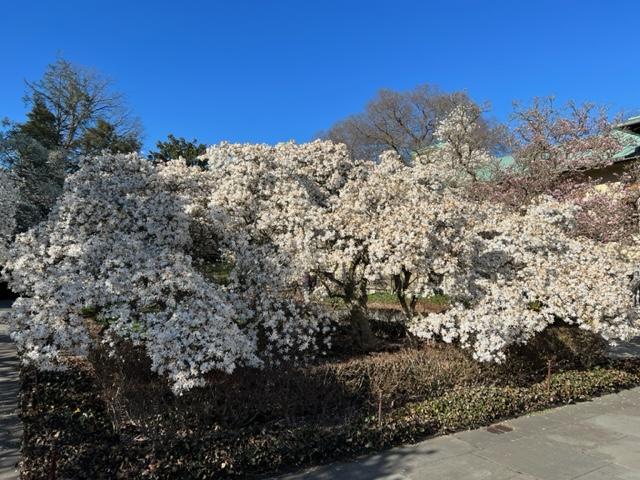
Magnolia Plaza where all the old flowering Magnolia trees bloom in full force in the Spring. The bright white and pink flowers are quite brilliant in colors and the sweet smell of the trees is wonderful. All the trees were just bursting with colors of pink, mauve and white.
Magnolia Plaza in the Spring of 2023
When it comes to the end of the season, you will be walking into a snow shower of colorful petals practically ‘snowing’ on you. You can smell the sweet petals on the flowering trees, and it is the most amazing site with the daffodils on the hill in the background. The scents of everything are just enjoyable. It is Mother Nature at her best.
The beauty of the Magnolia trees in the Magnolia Plaza
The next beautiful display is the Cherry Blossoms’ that bloom at the end of April. It is ablaze in all sorts of shades of pink and white. It brings the whole city out to see Mother Nature’s display of art.
Day Seventy-Four “Cherry Blossom Festival-Sakura Matsuri”:
The big Japanese festival happens during this time and the park is full of all sorts of artists, dancers and musicians who have come to perform for the many members entering the park.
The Cherry Blossoms in 2023
The Cherry Blossoms were just blooming in April of 2023
In 2021, the growing season on the Cherry Trees was hit with many days of rain that knocked the petals off the trees early. Still, I was able to get into the gardens by the end of the first week of May and they were still spectacular but limited in their petals. There are many species of Cherry Trees, so they are timed differently in flowering.
The Cherry Blossoms in the Japanese Gardens in Spring 2023
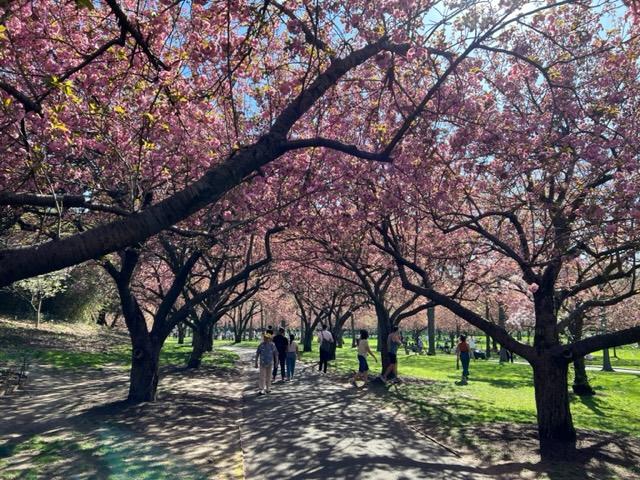
In 2022, the fluffy cherry blossoms were in full bloom, like a graceful wish. When I went to visit them in early May, they were in full bloom and all the paths in the main garden were awash with pink and green. With the lawn being a deep green, the effect was really beautiful, and people were all over the place taking pictures and smelling the flowers. This was the same at the height of their blooming in 2024.
The Cherry Blossom Lawn in 2024.
The lawn was packed with visitors that afternoon in early April 2024.
The beautiful canopy of blossoms that afternoon were just breathtaking.
People like myself just relaxed on the lawn and enjoyed the sunshine and the blossoms.
Spring has arrived in the gardens in April 2024.
The Cherry Blossom canopy path.
The canopy of trees.
The blossoms were amazing this year
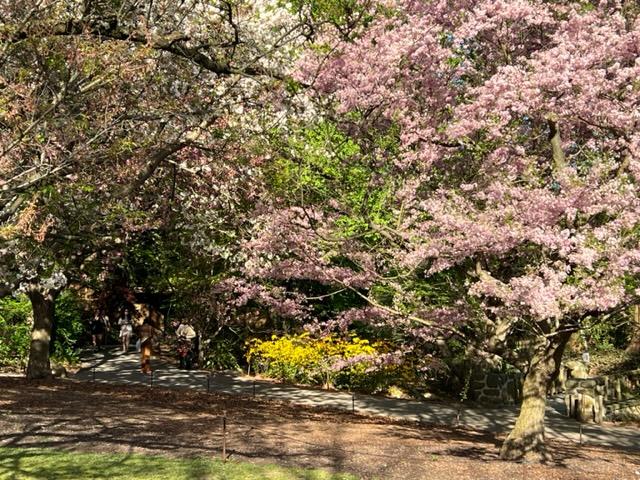
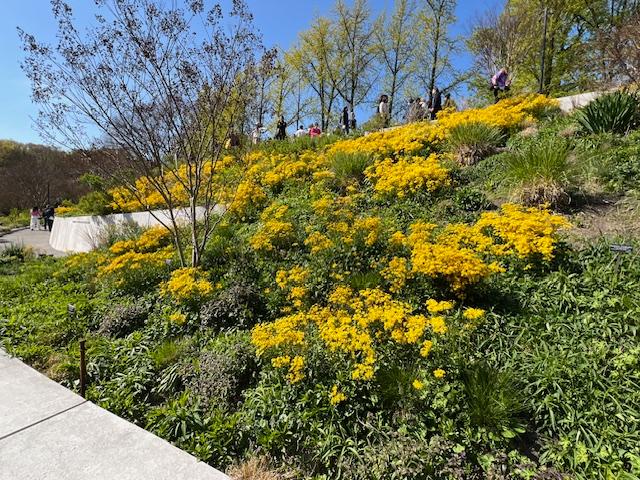
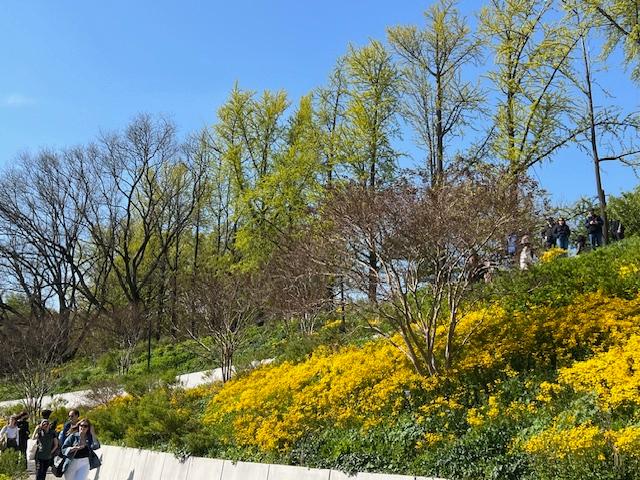
The Golden Rods were also in full bloom when the Cherry Blossoms were and it made quite a site.
The beauty of ‘Golden Rod Hill’ in the early Spring April 2024.
I had not seen the Cherry Blossoms in full bloom in Brooklyn in over three years, concentrating on seeing the ones in Newark, NJ’s Branch Brook Park and Washington DC Tidal Basin. All three are quite amazing in their own way.
I had to walk through the main lawn, the Japanese Garden and the back paths several times just to take it all in. The next rainstorm they would be gone again but for now you could bask in these gorgeous blossoms.
The Japanese Gardens in Spring 2023
The Japanese Garden in the Spring of 2023
Later in 2023, the gardens sponsored an open-air art show with artist Jean-Michel Othoniel entitled “The Flowers of Hypnosis-The Gold Rose”. These interesting golden globe sculptures were located in different parts of the gardens especially in the Japanese Gardens and pools.
The Jean-Michel Othoniel exhibition
One of the sculptures in the Frangrance Garden
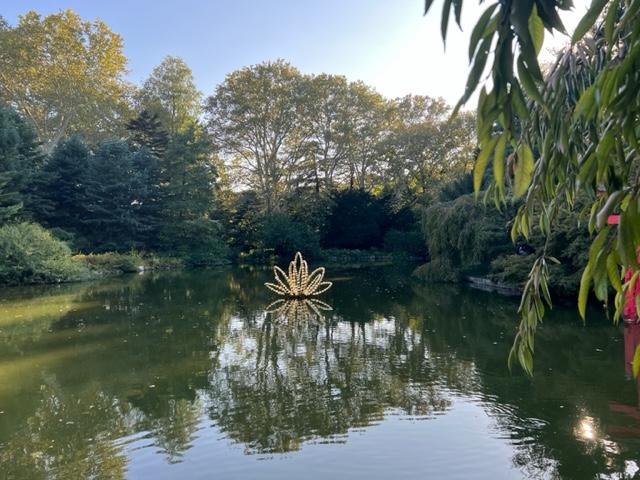
The sculpture “The Golden Lotus” in the Japanese Garden Pond
The sign on the event
The “Golden Lotus” sculptures at the Japanese Gardens.
“The Gold Rose” sculptures in the Japanese Gardens.
When the Brooklyn Botanic Garden is in full bloom with these trees, there is nothing like it. The Japanese Festival had been cancelled and the blooms in Washington DC had bloomed two weeks early and Branch Brook Park in Newark had already peaked so this is where to be at to see Cherry Trees at their finest.
In 2023, the Cherry Blossoms in the gardens were the last ones to bloom behind both Washington DC and Newark, NJ. The species that is dominate in the gardens are the last to bloom and the big pink fluffy flowers were just sprouting in April of 2023.
The bluebells were blooming at the same time and showed their beauty in the gardens just as the trees started to sprout their buds. It was natures way of welcoming in the Spring. It is amazing to see all of this knowing that I was just in the gardens five months ago walking through the Christmas Light Show.
The Bluebells and Ironweed are in full bloom in April 2023
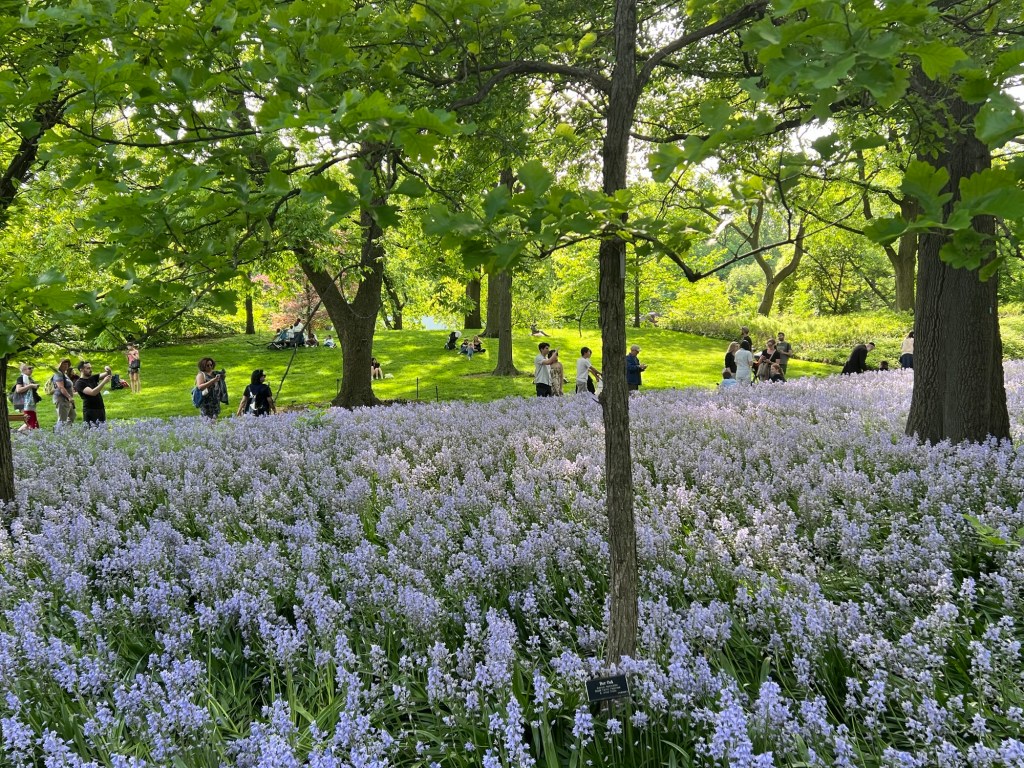
Right off the Cherry Tree Arcade is the paths leading to the back part of the gardens and you will see all the purple and blue Bluebells and Ironweed as well as the purple corn flowers lining the paths. It is quite spectacular as you see hundreds of these flowers surrounding the trees and walkways. I had never seen this before.
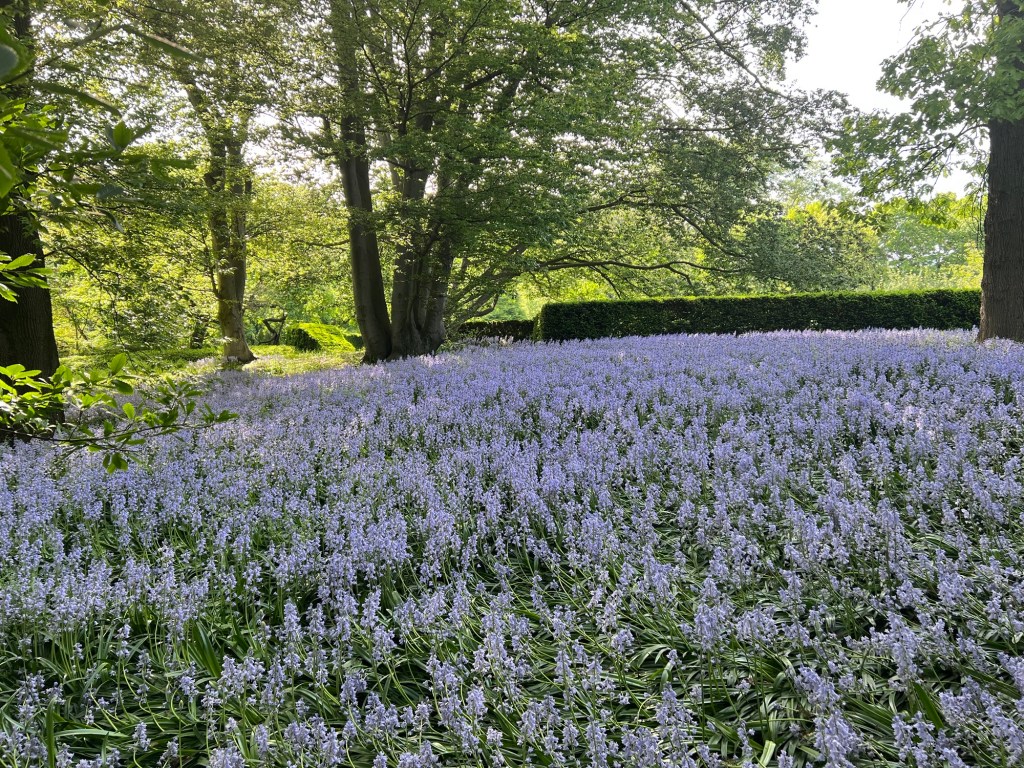
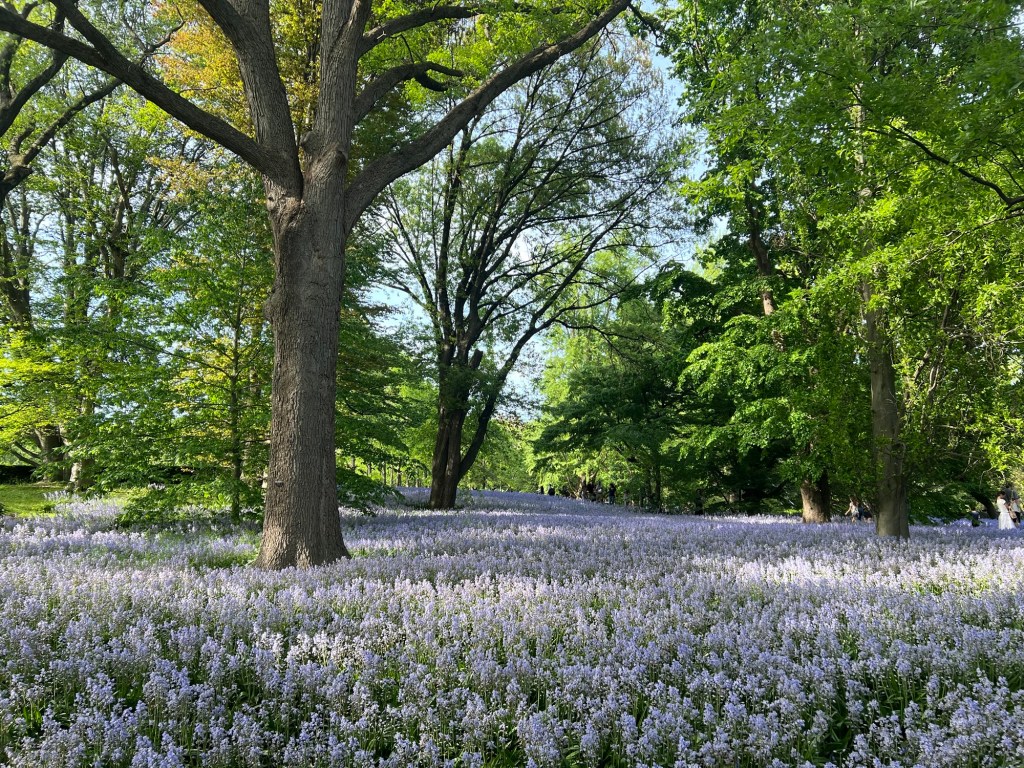
In May 2025, the Bluebells had really spread through this section of the gardens and had taken over this corner of the gardens.
The sea of light purple was spectacular
The crowds really enjoyed looking at the flowers
It was a gorgeous day
These flowers really spread
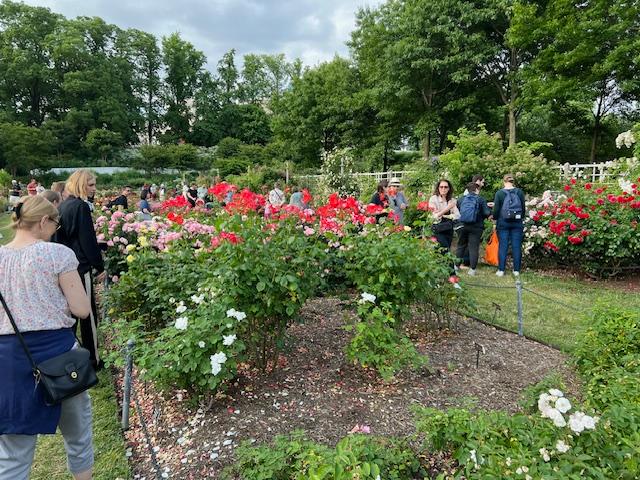
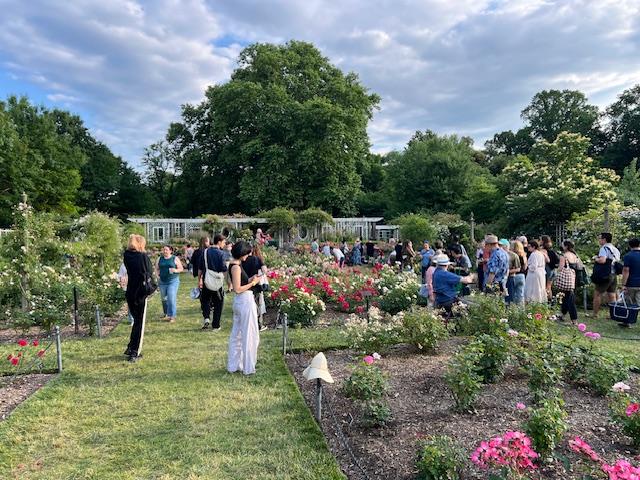
In June, The Rose Garden festival takes place with hundreds of types of roses blooming in the same time period. This is when the members Rose Night happens with an evening of music, cocktails and looking over the flowering bushes all over the gardens. They even create a Rose Petal cocktail for the event that is interesting.
Recently in May of 2021, the Garden sponsored “An Evening of Remembrance and Reflection” with the anniversary of the George Floyd incident and New Yorkers came out to show their support. It was an evening of jazz that brought members out on this warm spring evening.
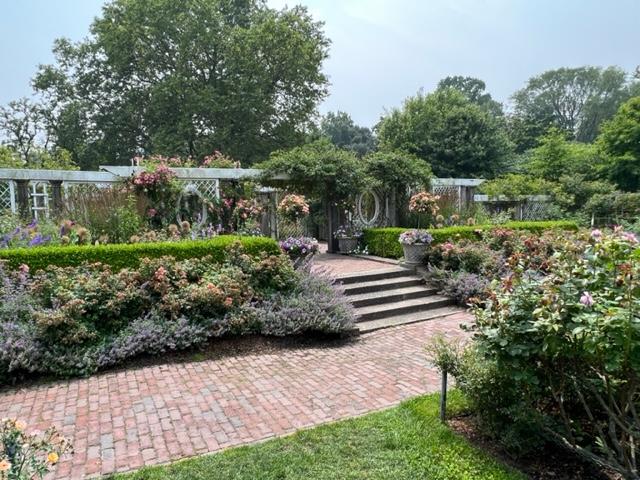
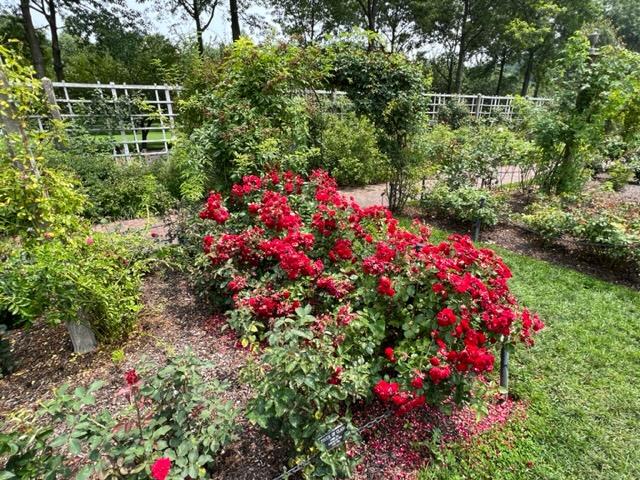
It also gave everyone a chance to walk through the Cranford Gardens which were in full bloom and perfumed the gardens with sweet scents of the flowers. There were roses of all colors in full bloom about two weeks ahead of schedule. So it was nice to see all the flowers at full peak lining the pathways.
Rose Garden Rose Night in 2017 and at “An Evening of Remembrance and Reflection” in 2021
In July 2021, as the Gardens have opened to the public since the COVID pandemic rules have lifted, there have been weekly Jazz Concerts in the Cherry Tree lawn. Recently I attended the concert of the Brownstone Jazz Ensemble who performed with a few guest singers. It was a cool sunny summer night and the perfect evening to have a picnic in the Gardens and enjoy the music.
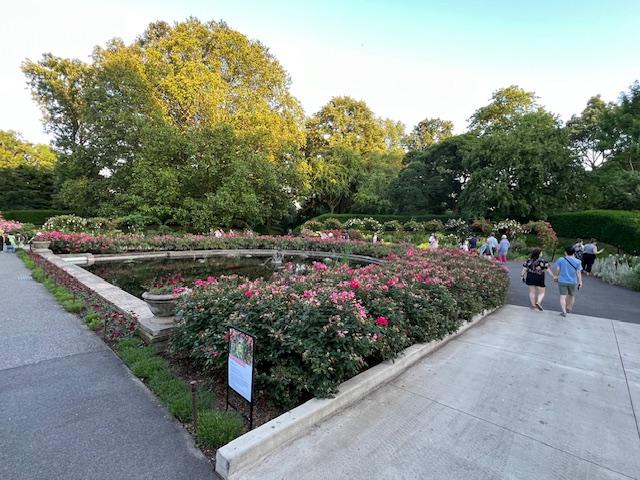
The Cranford Rose Garden in bloom
The Cranford Garden shows its true colors in early June and pre-COVID, Rose Night was when all the roses were supposedly at their peak. They were at their peak about two weeks earlier but the display was still amazing.
Becoming a member of the Brooklyn Botanical Garden has its advantages too. In August, in the height of the summer they have the member’s movie night where members from all over the area sit in the Cherry Blossom field to watch an outdoor movie. I have seen family films “Willy Wonka and the Chocolate Factory”, “The Goonies”, “Moonstruck”, “The Fabulous Mr. Fox” (which was not too fabulous of a film) and in 2023 “The Muppets take Manhattan”.
Day Eighty-Seven “Members Movie Night 2017 and 2022:
It is a nice evening of relaxing on the cool grass, eating a light picnic dinner and sitting under the stars watching a film. Could there be any other New York moment to enjoy?
Willy Wonka and the Chocolate Factory was the best film in the gardens.
“The Goonies” was another popular hit with the members.
“The Moonstruck” trailer
The “Muppets take Manhattan” trailer
“A Bugs Life” Trailer
The Fall months bring the changing of the leaves on the trees and all the late flowers that come out in September and October. During the holiday season there is not much to see in the park, especially during the winter months outside but there is a tropical display under glass in the enclosed buildings on the property and the Bonsai Garden display of plants also in the glassed-in enclosure. There are lots of walking tours of the new water gardens, rock gardens and of the Japanese Gardens.
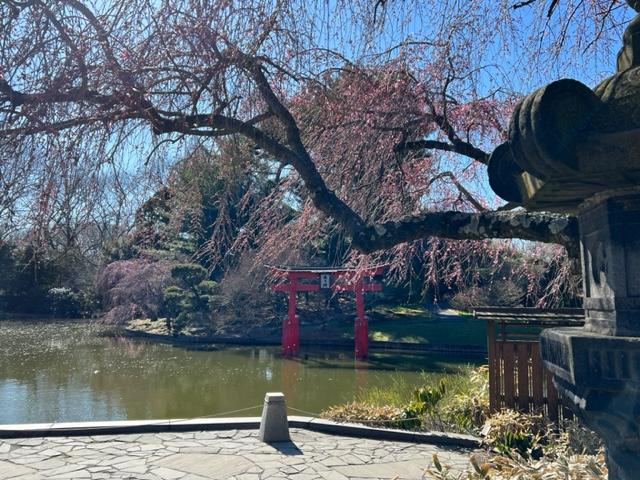
The Japanese Gardens at the Brooklyn Botanical Garden
In the winter months though, there is a quiet elegance to the gardens. It is so quiet with all the plants in hibernation that it is nice to just walk through the gardens and imagine what they will look like in four months when Spring arrives again. Most of the gardens were shut due to COVID in December of 2020 but still you could walk around most of the gardens.
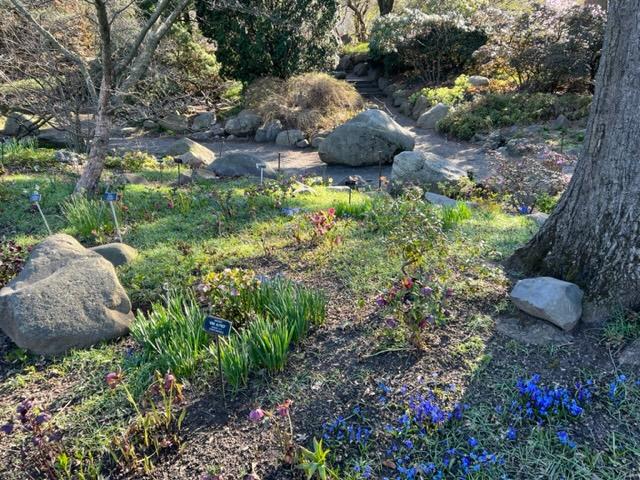
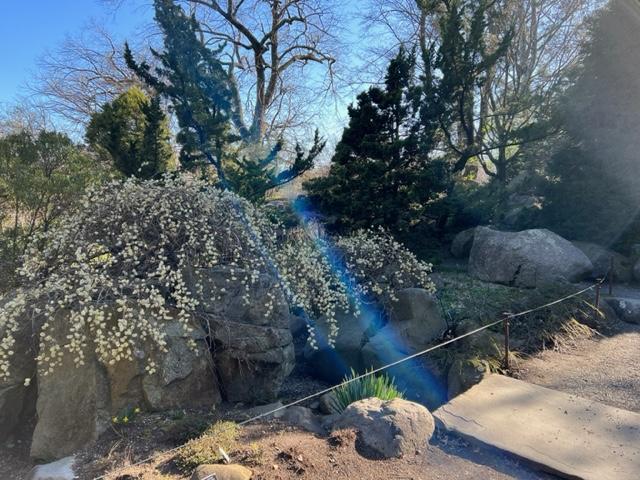
The Rock Garden in the Spring 2023
The Rock Garden at the Brooklyn Botanic Gardens
The robin’s arrival in the garden means that Spring in on its way
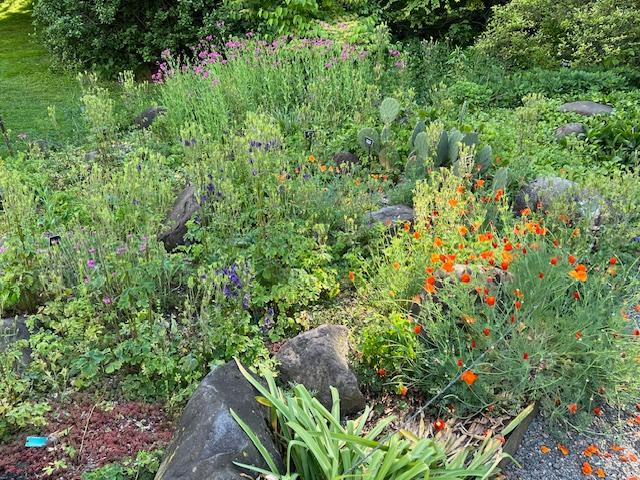
The Rock Garden in the June 2024
The Rock Garden in June 2024
Don’t miss the Japanese Garden’s during the winter months as the pine trees and green bushes add a little Spring to the cold months of the Winter. There is still so much green in this area of the gardens. There is something to be said about walking around the gardens in the cool weather.
The Cherry blossoms as you enter the Japanese Gardens
The Japanese Garden in Summer 2023
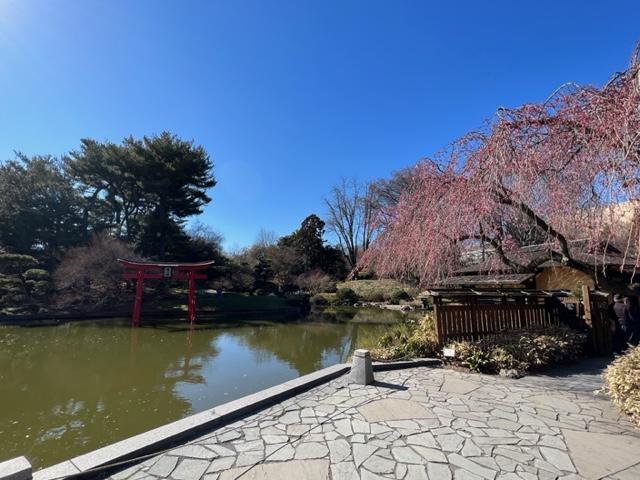
In March of 2024, the tour took us through the late Winter/early Spring Japanese Garden. Things were just coming into bloom.
The Japanese Gardens just starting to bloom in March of 2024.
The Japanese Gardens just coming into bloom.
The Japanese Garden in the middle of the afternoon.
White Cherry Tree in the late Winter/early Spring
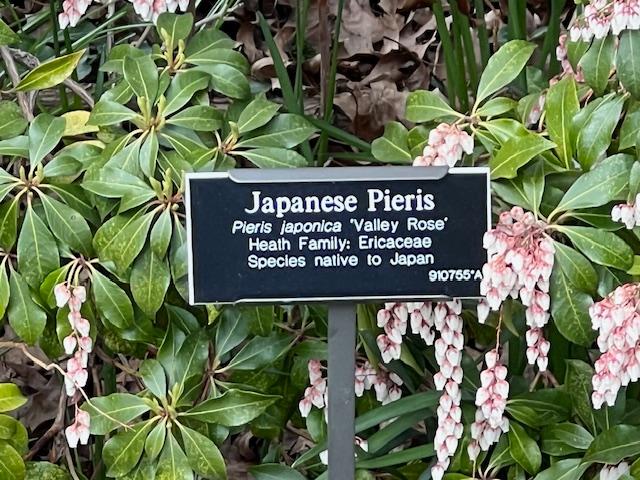
The Japanese Pieris Tree in the gardens was in full bloom on this early Spring day
The Japanese Pieris tree was in full bloom in March 2024.
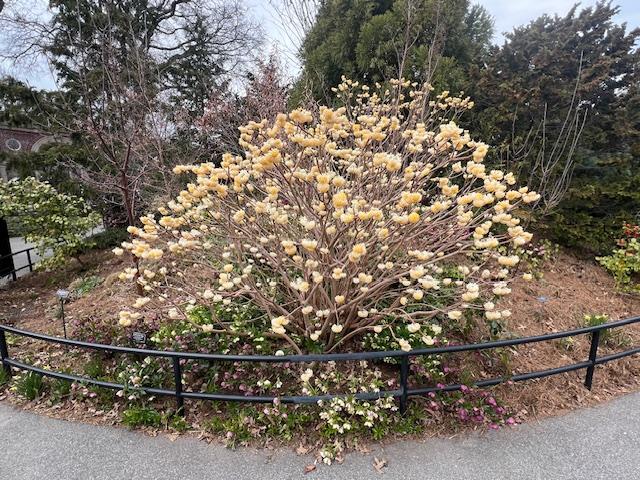
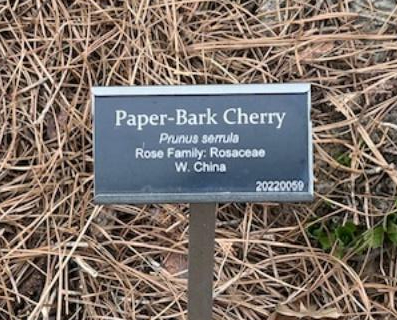
The Paper Bark Cherry Tree was in full bloom too and smelled of Butter and Lemon. It had the most amazing fragrance.
The Paper Bark Cherry Tree has the most amazing smell.
I passed this little bird chopping away at the berries left on this tree.
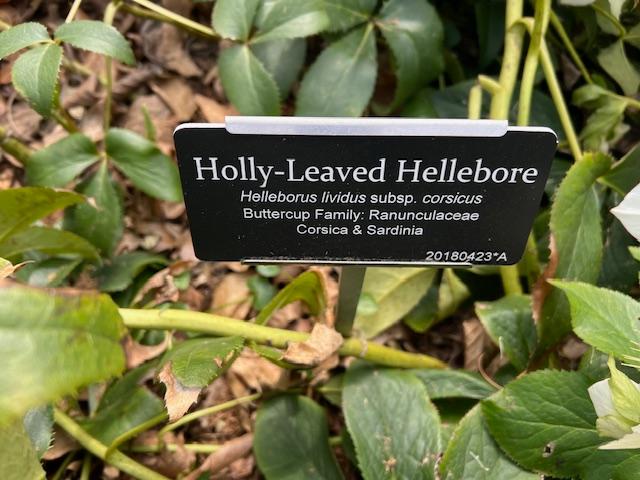
The Holly-Leaved Hellebore in full bloom by Daffodil Hill.
The Holly-Leaved Hellebore was in full bloom at this time.
The complexity of the gardens shows their true beauty from season to season when flowers and trees come into bloom and show their true beauty.
The beauty of the Spring at the Brooklyn Botanic Gardens
The Frangrance Garden was in full bloom both in the Spring and later summer months. The beauty of this garden is the array of flowers and plants that make a perfect design in the small space flanked by a small fountain of a boy who always looks so mysterious.
The Frangrance Garden in the late summer
The Frangrance Gardens in the Spring
The beauty of the Frangrance Gardens.
The mysterious little boy in the fountain.
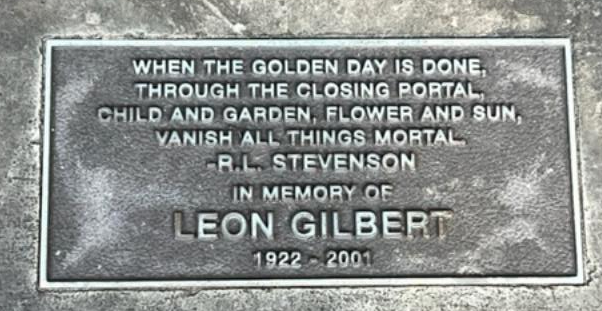
The plaque near the fountain dedicated in Memory to Leon Gilbert.
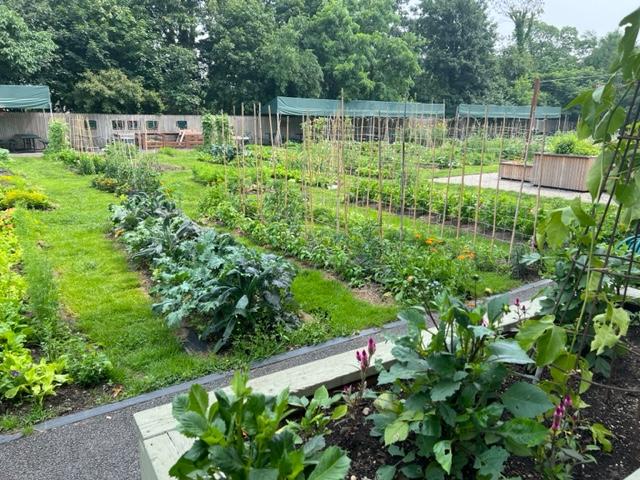
Walking through the Children’s Garden when it was at the end of the season and harvest time, you could see the last of the summer vegetables being picked and some fall vegetables coming up.
The Children’s Cottage where the magic happens.
The Children’s Gardens in the Summer months.
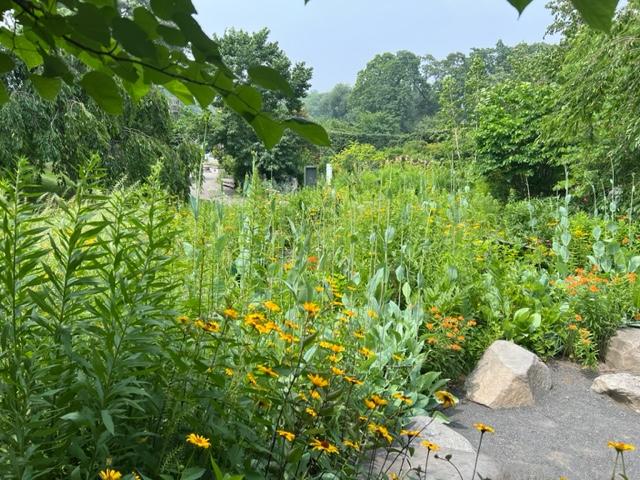
The Marsh Gardens
The Marsh Gardens
The Marsh Gardens
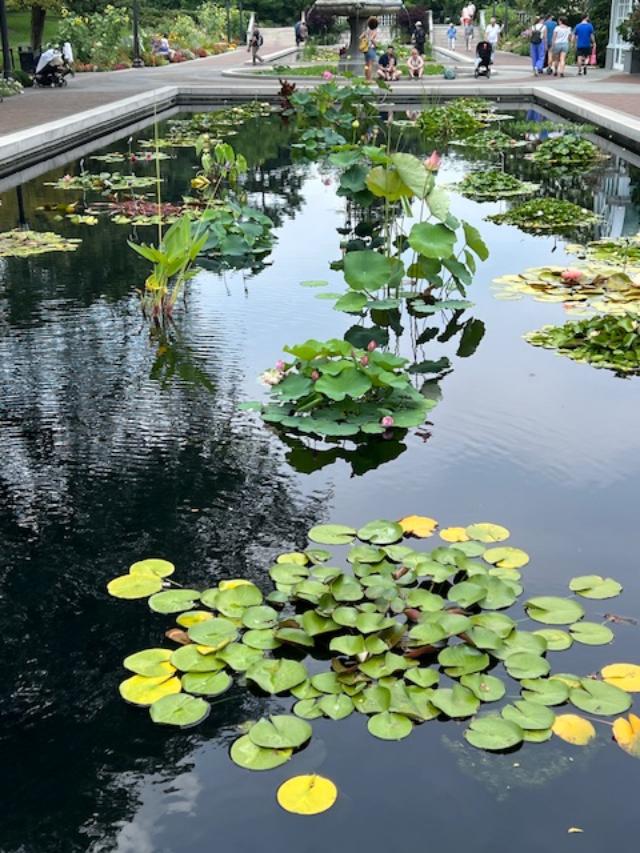
The flowers by the Lilly Pond in the summer of 2023.
The Lotus Pools are in full bloom in late July and the pools were wash with pinks, purples and yellows both in the main pools and the fountain by the Rose Garden. This was in the summer of 2024.
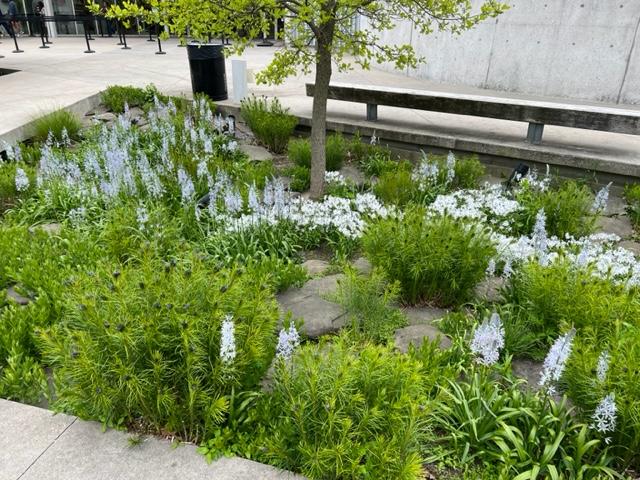
The Rain Garden by the Washington Avenue entrance.
Being a member also has its privileges. You have a great restaurant in the late Spring and Summer months, the Magnolia Cafe, which has been closed because of COVID but will reopen soon. The Cherry Blossom Festival and Rose Garden Nights for members and the August Movie night which is really a treat. Hundreds of people picnicking on the lawn watching family friendly films like ‘The Goonies’ and ‘Willy Wonka and the Chocolate Factory’.
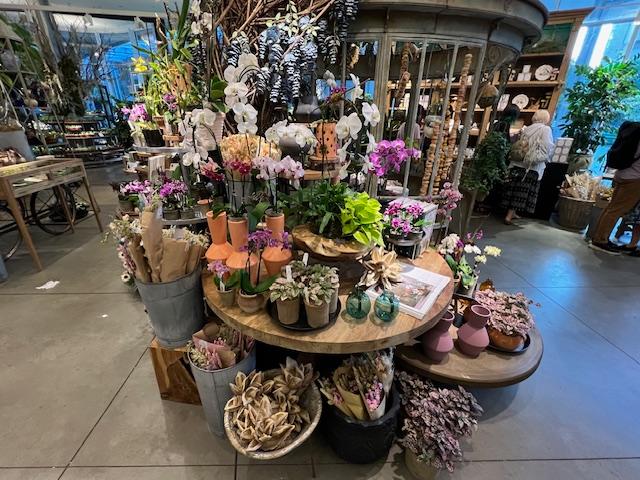
The gift shop at the Brooklyn Botanic Gardens
The gift shop on Rose Night 2024
The gift shop on Rose Night 2024
The Lightshow in December 2022
The Lightshow in December of 2022
The Japanese Gardens during the Lightshow in December 2022
The lightshow during the holidays is an experience.
During the Summer of 2023, the Gardens had a wonderful exhibition in the greenhouses “Plants of Little Caribbean”, which highlights the important culinary plants that grow in the region. Some of these plants are staples of the Caribbean food supply.
The “Trees of Little Caribbean” exhibit
Plants of the Caribbean
Plants of the Caribbean
Plants of the Caribbean
Plants of the Caribbean
Plants of the Caribbean
The greenhouses are home to many exotic plants and trees.
Another special event that happened in 2024 was the viewing of the Solar Eclipse. The Gardens were packed with people viewing the first major Eclipse in almost 100 years.
I finally settled in and sat in a small incline across from Daffodil Hill so I could admire the flowers in between the glimpses of the solar eclipse. We lucked out and it started off as a sunny day. We had some cloud coverage during the show but with the glasses on, it was an interesting show.
The sun as the celestial show begun.
The problem with the eclipse was that we were too far away from the path to really see the show so you could only see it through the glasses. The sun still looked like it was shining.
Just as the moon started to cross the sun.
The clouds kept rolling in and out, but it was not as gloomy as they thought the weather would be that afternoon.
The start of the show as the moon started to cross the sun.
Only through the glasses could see the passing which took a little over two hours to finish and it was not a complete eclipse from our viewpoint. It was still interesting to see.
The crowd was really getting into it and everyone was becoming the experts by the end of the afternoon.
In between the moon crossing the path of the sun (you could not look at this all the time), I admired the flowers blooming around us.
The Magnolia Gardens right across from the incline where we were all sitting.
It was a nice break from looking at the sun. I picked the best location in the garden to both view the eclipse and the flowers.
The moon crossing the sun at the midpoint. You could see nothing without the glasses.
The sun was totally covered by about 3:20pm and then started its movement away from the sun.
The moon moving away from the sun.
By 4:20pm, the eclipse was over, and most people left the gardens by that point. Others just relaxed and enjoyed the beautiful sunny afternoon that we were finally having. It had been such a cold early Spring (so much for Phil’s prediction). with temperatures in the low 40’s until just recently.
Some of the crowd lingering at the end of the show.
I left the gardens around 5:00pm after most of the crowds left and enjoyed one more walk around the gardens. Some of the flowers were at their peak and would not be in bloom when I returned the next time. I wanted to enjoy them now.
Leaving the Magnolia Garden.
Passing the Japanese Gardens when the crowds were gone, I finally got to enjoy the paths.
The path by the Japanese Garden
The Magnolia trees around the corner from the Frangrance Gardens.
The Cherry trees in the Japanese Gardens were in full bloom and were quite a show themselves. It was so colorful reflecting off the pool.
The beauty of the Cherry trees in full bloom.
The paths around the Japanese Gardens pool were crowed.
The vibrant light and dark pinks and mauve of the trees.
The Japanese Gardens at their peak bloom.
I went to the “Lightscape” show again during the Holidays in 2024 and they were even more amazing than the last time I went:
On the Sunday of the last day of the Christmas season, I visited the Brooklyn Botanic Garden to see their lightshow ‘Lightscape’ which I had seen a few years earlier. It was the last night to see it and it was crowded and really cold.
The problem was that the weather had turned really cold and it was in the low thirties even in the early evening. So I really had to bundle up for these visits. The show itself was well worth the trip.
The map would take us all over the gardens
The lit tree army the entrance of the gardens
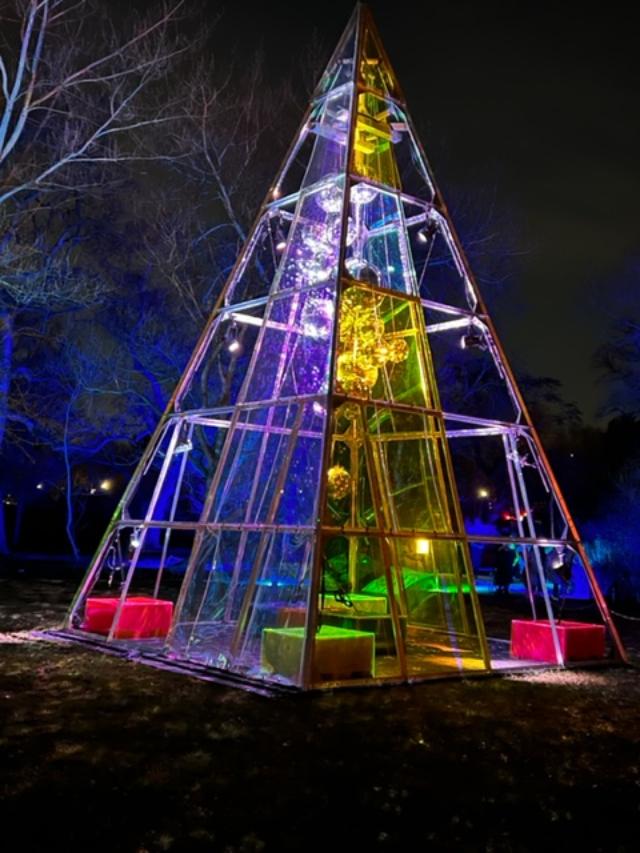
Then I entered the ‘Canopy of Light’ with its magical lights and music
At the entrance of the show was the breathtaking ‘Canopy of Light’
The beautiful multi lights with music
The lights moved to ‘Let it Snow’
I continued down the path to the Japanese Garden and saw the most spectacular light and water show in the lake of the garden.
The colors and fountains swayed to the music
What gorgeous colors
The movements and music were wonderful
The amazing water show in the Japanese Garden
The end of the show was beautiful
I ended up seeing the water show twice because I knew they would not let me turnaround to see it again. The I turned down the path.
The lights in the trees were amazing
The field of white lit roses
A closer look at the white roses
I continued down the path to the next display
I next moved on to the main lawn where the sculpture ‘Singularity’ was displayed. You could not stare at it too long or it could hypnotize you.
The sculpture ‘Singularity’
The sculpture ‘Singularity’
I walked around the Water Lilly ponds whose flowers would bloom again in the summer but had sculptures of Butterflies floating around in them.
These were called ‘Butterfly Effect’
The ‘Butterfly Effect’
I love the way the sculptures swayed and moved in the pond to the music. The Yellow Magnolia, the Garden’s restaurant was open that evening and was packed with people eating dinner. There was no way of getting in so I moved on down the path.
The pathways were lit with all sorts of colors
The next sculpture was ‘One Small Thing’ and the sculpture ‘Halo’ that lit the way in the back of the Gardens.
‘One Small Thing’
The lights alone the path for ‘One Small Thing’
The came the sculptures for ‘Halo’
The next interactive and musical sculpture was ‘Alumine’ which looked like trees in a Dr. Seuss book. Colorful and fun!
Walking through the ‘Alumine’ sculptures
The experience of walking through ‘Alumine’ is like walking through ’Whoville’ in the winter
The lights here changed color every minute and were so amazing.
As I left ‘Alumine’, the next series of sculptures were light shows with dazzling colors and music. This is what made this show stand out more than the shows of the past.
The beautiful lights lit the path through dormant trees
The colors kept changing
As I walked down the path, I entered ‘Rainbow Road’ with it colorful disco lights and energetic soundtrack.
The outdoor lights and music makes you feel like you are in a discotheque
I stayed here the longest to listen to the 70’s soundtrack
The music was fantastic that night
I moved on to the area of the gardens between where the crocuses will grow in two months and near Daffodils Hill was another amazing display entitled ‘Anemonia’. These sculptures looked like futuristic lamps.
The ‘Anemonia’ sculptures
The ‘Anemonia’ lit beautifully
The next light display rivaled the ‘Happy Waters’ was ‘Interface’, a display of memorizing lights and music. I stayed for three shows as it was so dazzling.
The ‘Anemonia’ sign
The lights and sounds of ‘Interface’
The sights and sounds of ‘Interface’
The show ended with some of the spectacular lights
I then walked through the ‘Neon Network’ to get to where the Cherry Blossom Esplanade dazzled everyone in April with its beautiful, fluffy pink blossoms. It was other bright colors showcasing this part of the gardens.
The ‘Neon Network’ sign
Walking through the ‘Neon Network’
The ‘Neon Network’
Walking through the ‘Neon Network’
The ‘Neon Network’ led to the last spectacular displays of lights in the Cherry Blossom Esplanade, ‘Winter Reflection’, a celebration of lights, trees and snowflakes.
The colors of ‘Winter Reflections’
The colors of ‘Winter Reflections’The
Video on ‘Winter Reflections’:
The tree brightly lit in ‘Winter Reflections’
The dazzling colors of ‘Winter Reflections’
To really appreciate the shoe of ‘Winter Reflections’ you had to walk up the pathways overlooking the Esplanade.
The pathway through the Cherry Esplanade was spectacular
The lightshow for ‘Winter Reflections’ was most entertaining from the top of the hill
The video of the show from the top of the hill show it’s true beauty and entertainment:
One of the most memorable show off ‘Lightscapes’
After I saw the show twice before I headed out of the gardens. I walked through the ‘Winter Cathedral’ which had been the biggest part of the light show a couple of years ago. This is most impressive.
The ‘Winter Cathedral’ at the end of the tour
The lights are so spectacular in the evening
The last display before I left the park was the ‘Lantern Garden’ at the original area of the gardens entrance.
The sign for ‘The Lantern Garden’
The ‘Lantern Garden’ at the end of the garden
The ‘Lantern Garden’
I exited the gardens after almost two hours of walking around and it started to get cold outside. It was still really busy in the gardens as the later ticket holders will still coming in.
The exit of the show at the Eastern Parkway entrance
In January of 2025, I attended a talk about the plants associated with the Lunar New Year by member Sabrina Lee. Ms. Lee who is a docent at the Gardens pointed out all the plants that were part of the Chinese New Year tradition.
Docent Sabrina Lee giving the talk on Chinese New Year at the Brooklyn Botanic Garden
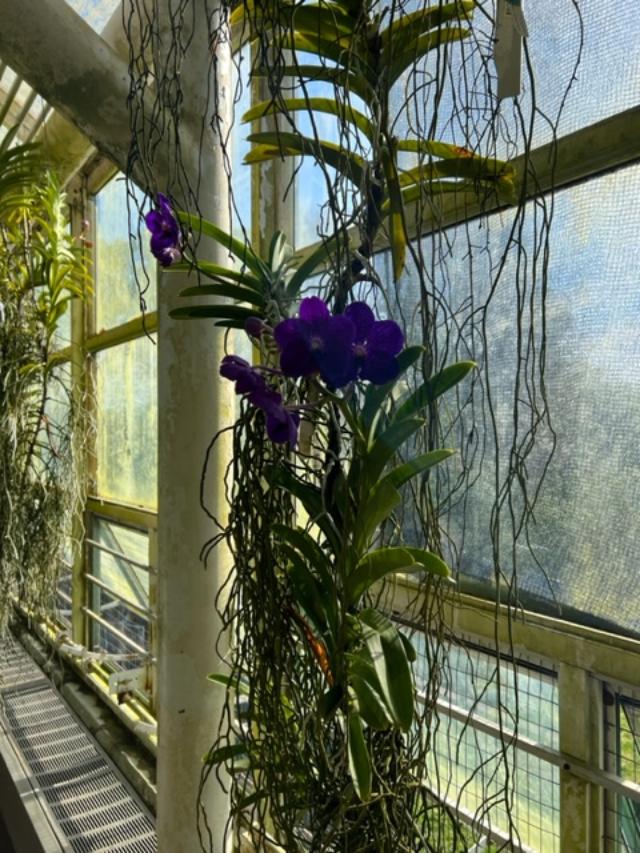
The Orchid and Clementine plants for gift giving
The Bamboo plants which are part of the celebration
What I learned from the talk was the symbolism that comes from these plants and why they were they were so important to the holiday.
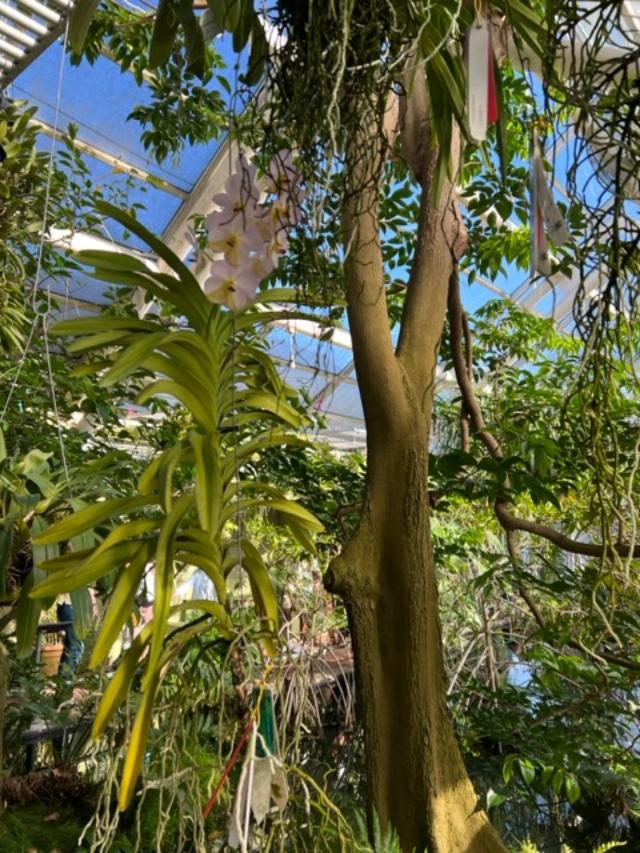
Then she gave us about forty-five minutes to travel to through the various exhibits in the Steinway Conservatory and visit the various plants associated with the New Year which were marked with special red Snake signs.
The Chinese Rain Bell plant
The Banana Tree
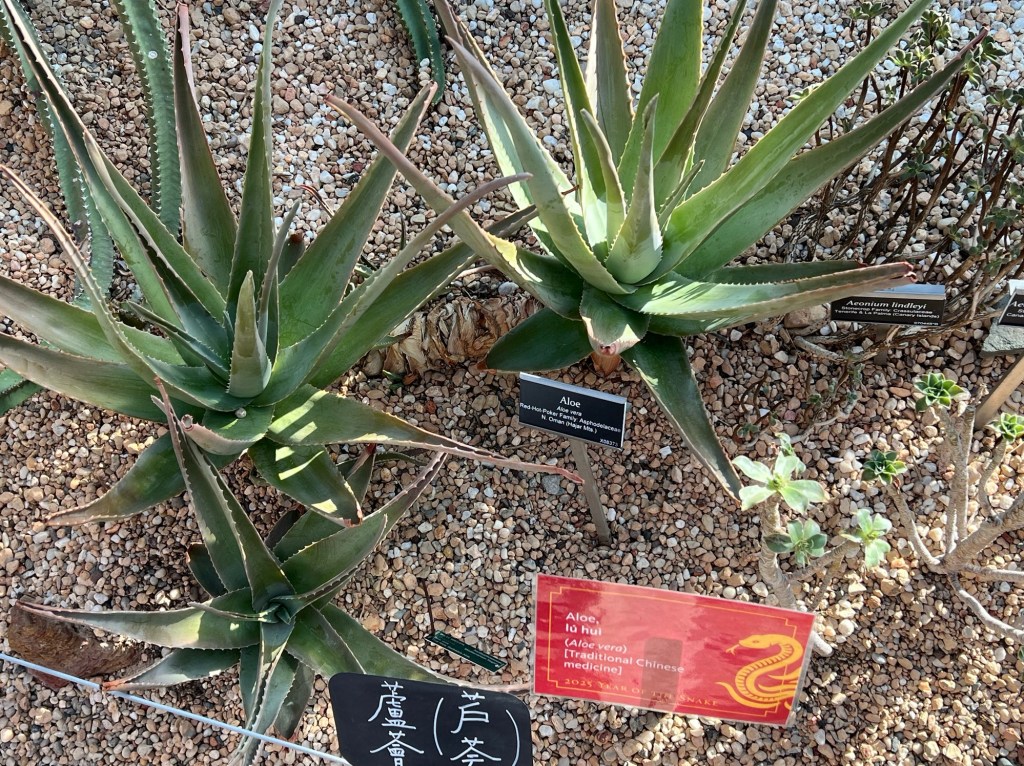
The Aloe plant for healing
The Banana tree
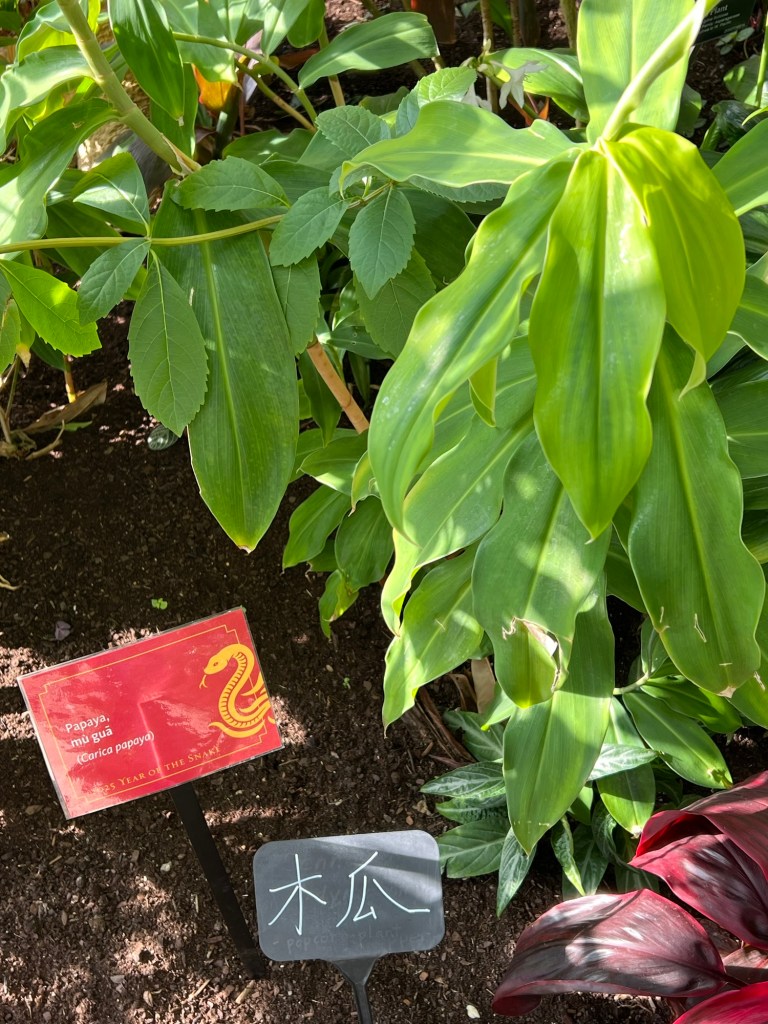
The Papaya tree
The Golden Shrimp Lollipop plan
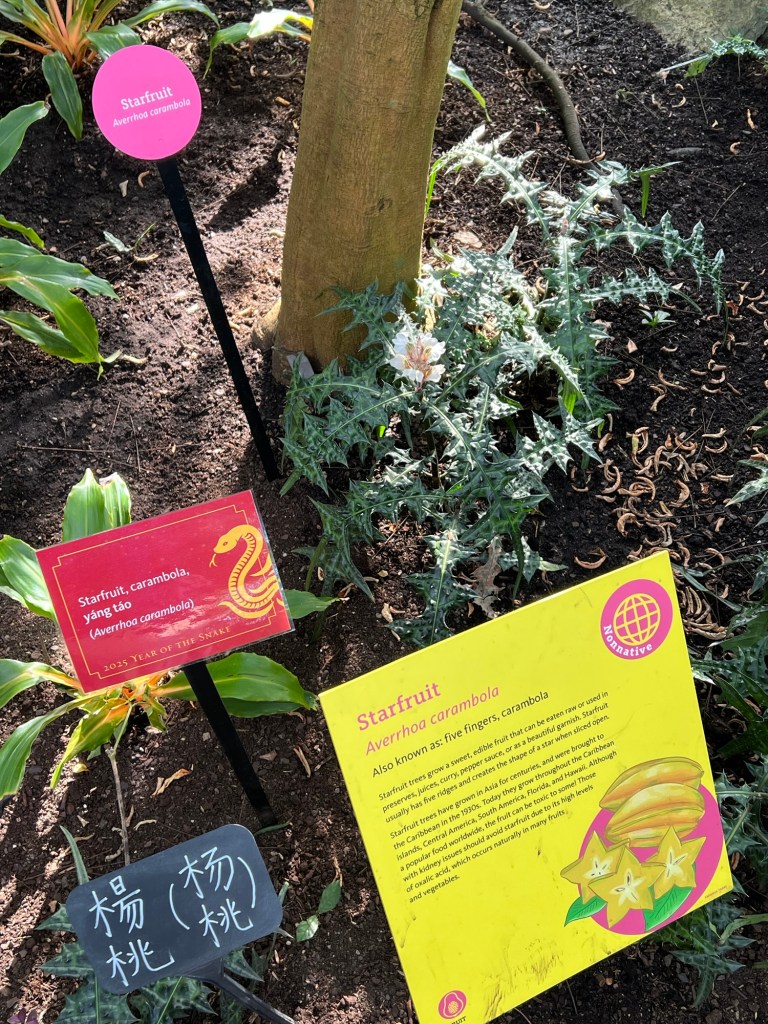
The Starfruit plant
As we walked through the various halls of the Conservatory with the warm tropical halls, we got to see other plants in bloom and growing in the temperature controlled climate.
The Cactus display
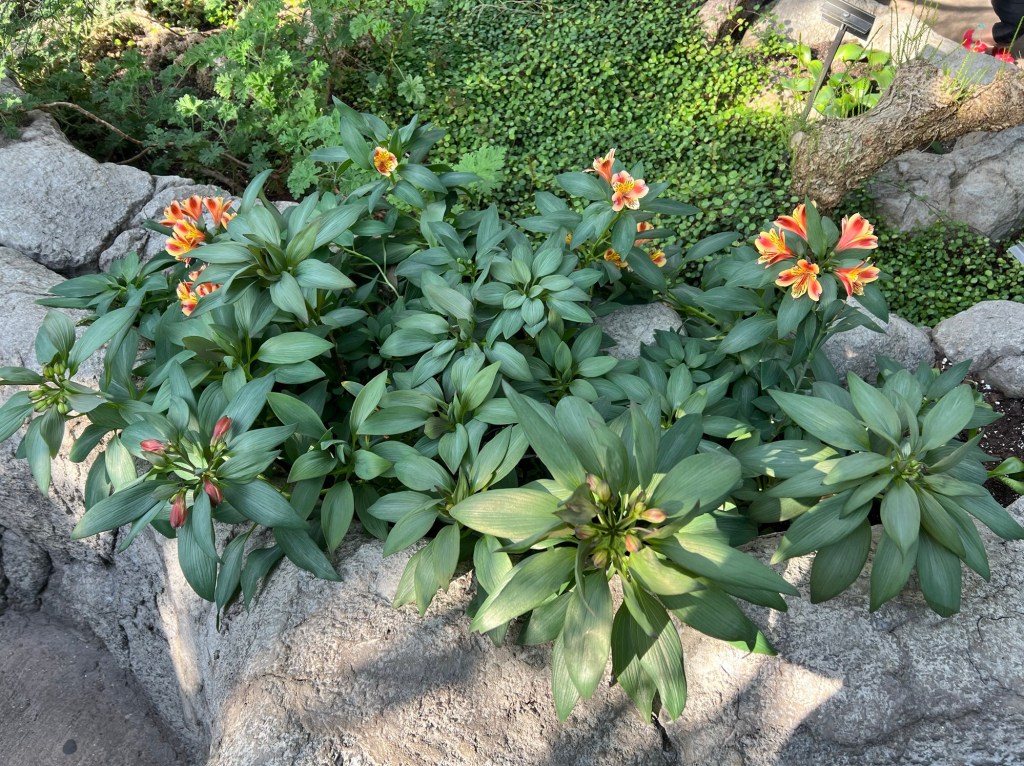
The beautiful tropical flowers
The lushness of the Tropical exhibition
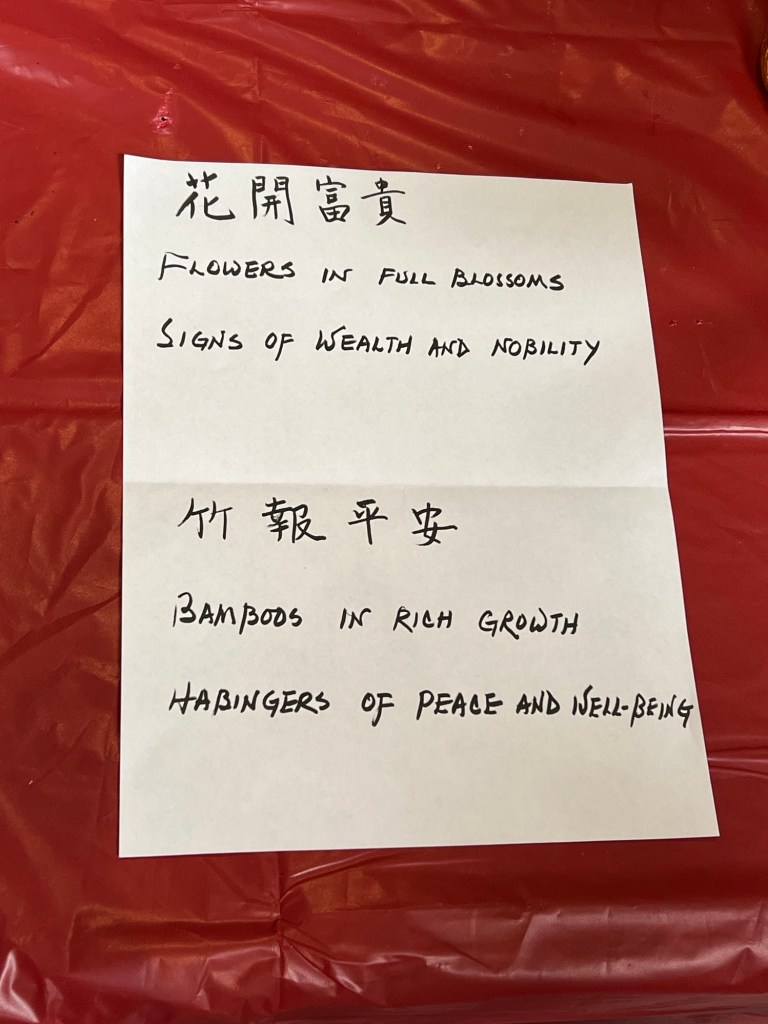
Ms. Lee even gave a beautiful calligraphy page with the symbols of the New Year After the Tour was over, I walked around the gardens which were still covered with snow from the recent storm. It made all more beautiful.
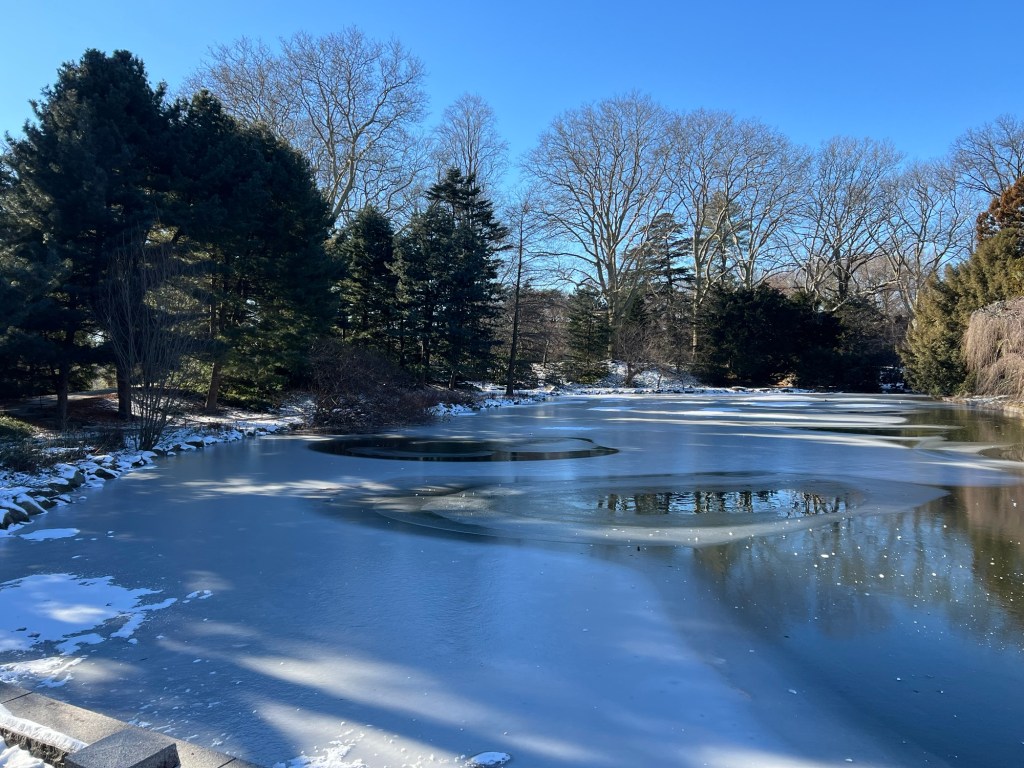
The beauty of the Japanese Garden in the Winter
The Japanese Garden during the Lunar New Year
The pond at the Japanese Garden
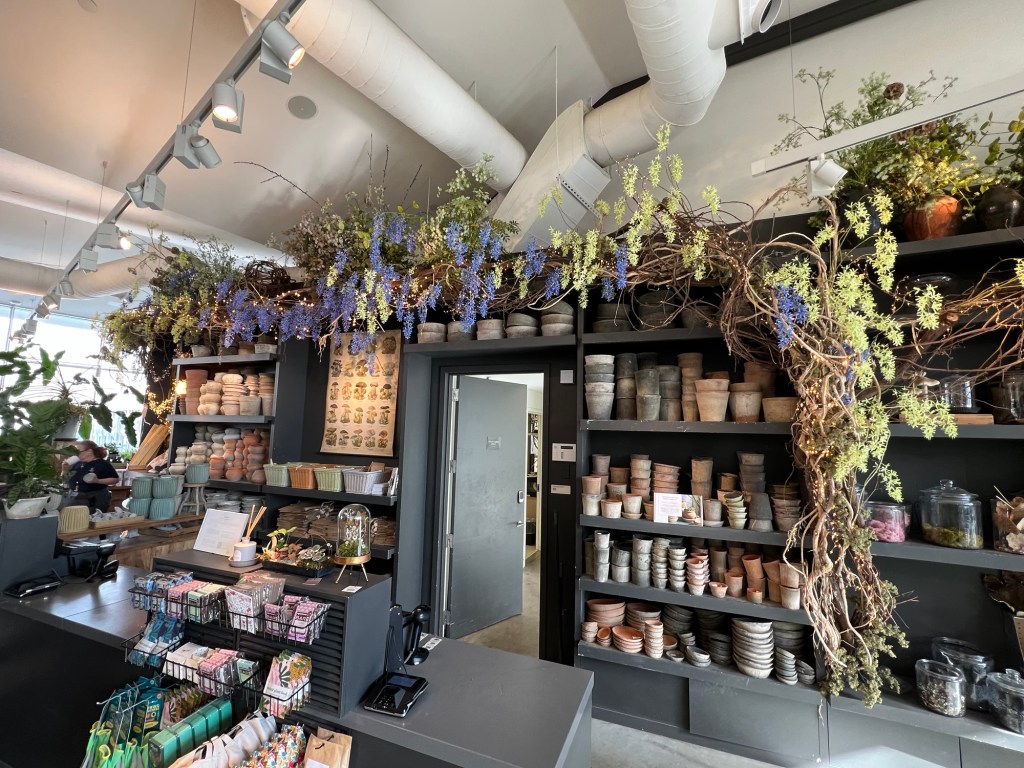
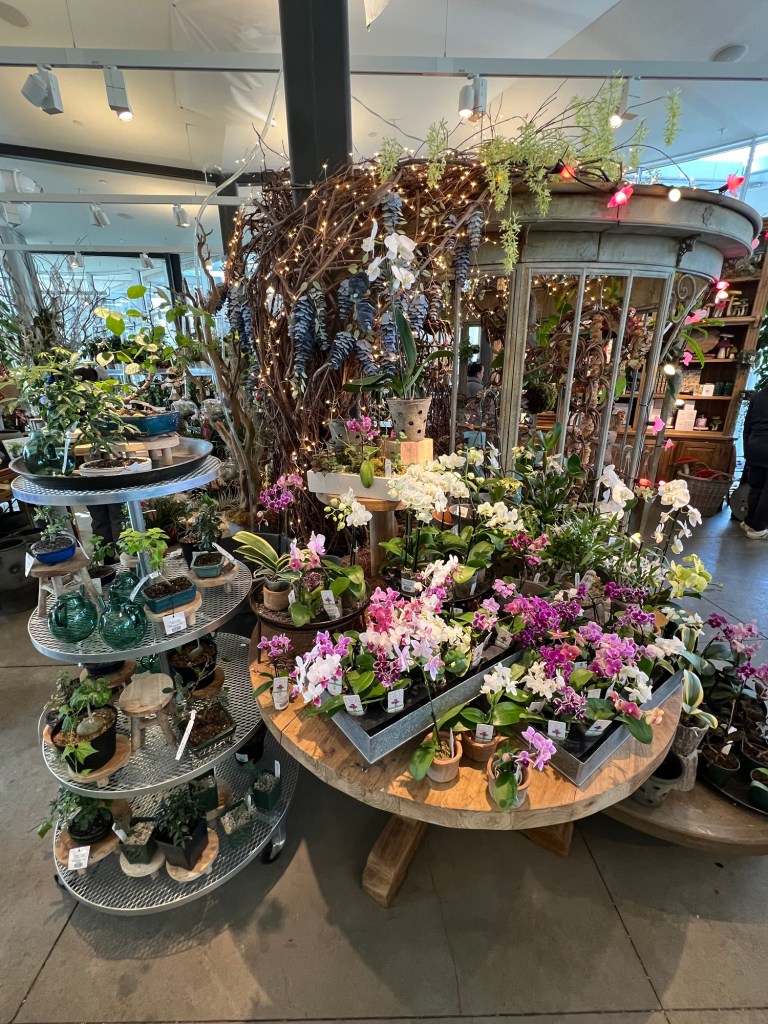
Then I visited the gift shop at the Gardens that was decked out for the Spring.
The new ‘Terrarium’ gift shop
Even the gift shop was in full bloom that day
I am always amazed by these Gardens. Even in the dead of Winter there is always something
The summer months offer all sorts of activities but the weather has been a pain. Either it is too hot or it rains. They have cancelled two evenings concerts on us.
This is when it is great to be a member of the Gardens!
History of the Brooklyn Botanical Garden:
Early plans for Prospect Park called for the park to straddle Flatbush Avenue. The City of Brooklyn purchased the land for this purpose in 1864. When Fredrick Law Olmsted and Calvert Vaux brought their final plans to the city for approval in the 1860’s, they had eliminated the problematic decision along Flatbush. The northeast portion went unused, serving as an ash dump (WIKI).
Legislation in 1897 as the city moved toward consolidation reserved 39 acres for a botanical garden and the garden itself was founded in 1910. The garden was initially know as the Institute Park. It was run under the auspices of the Brooklyn Institute of Arts and Sciences, which included (until the 1970’s) the Brooklyn Museum, Brooklyn Children’s Museum and Brooklyn Academy of Music. It opened as the Brooklyn Botanical Garden on May 13, 1911 with the Native Flora Garden being the first established section (WIKI).
Harold Caparn was appointed as the landscape architect in 1912. Caparn designed most of the rest of the grounds over the next three decades, including the Osborne Gardens, Cranford Rose Garden, Magnolia Plaza and the Plant Collection. Construction of the Laboratory Building and Conservatory began in 1912 and the building was dedicated in 1917. The building-now simply the Administration Building-was designed in the Tuscan Revival style by William Kendal for McKim, Mead & White, the architectural firm that built the Brooklyn Museum, Manhattan Municipal Building and many other prominent New York City buildings. It was designated a New York City Landmark in 2007 (WIKI).
The cherry blossoms starting to bloom
The Magnolia trees in full bloom in 2023
The Specialty Gardens & Collections include:
The Cherry Trees
Japanese Hill-Pond Collection
Cranford Rose Garden
Native Flora Garden
Alice Recknagel Ireys Fragrance Garden
Children’s Garden
Water Garden
The Water Garden in April 2023
The Water Garden in April 2023
Other Gardens:
Plant Family Collection:
The Bonsai Collection
The Bonsai Collection
The Bonsai Collection
Steinhardt Conservatory
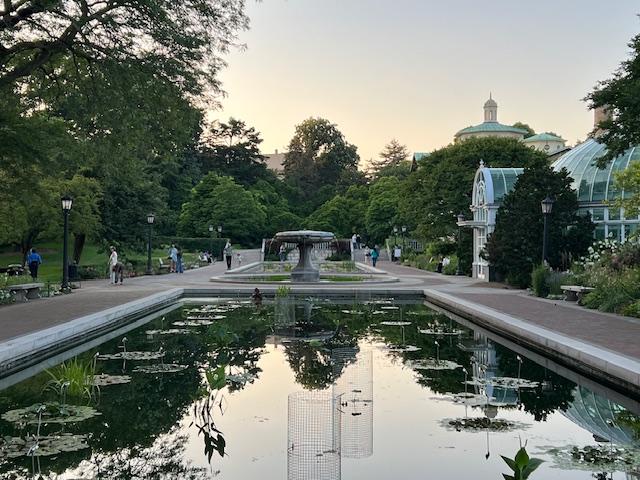
The Reflection pool by the Steinhardt Conservatory
The Garden Fountain
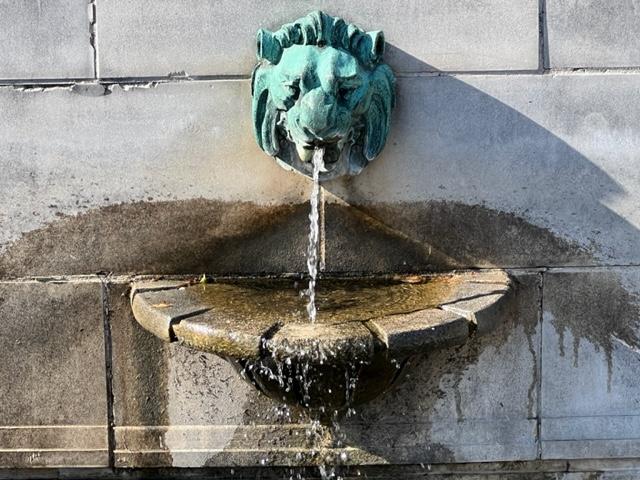
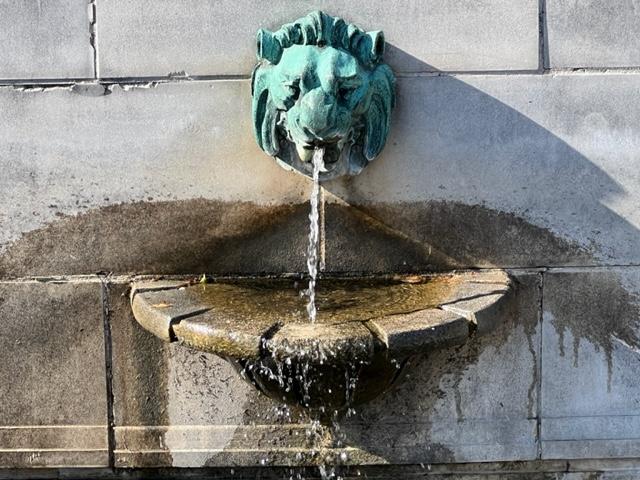
The Lion Fountain
The beautiful tulips in bloom by the reflection pool
The magnificent Fish Fountain by the reflection pool
Fighting Developers trying to build around the gardens perimeters:
Fight For Sunlight!
Text Sunlight to 484848 to help protect Brooklyn’s Garden from new buildings that would block vital sunlight to our plants.
bbg.org/sunlight
Brooklyn Botanic Garden’s Fight for Sunlight!
Brooklyn Botanical Garden’s Fight for Sunlight!
Brooklyn Botanic Garden’s plant collections are under serious threat from a proposed massive building development including two 39 story towers at 960 Franklin Avenue (the spice factory site) just 150 ft from the Garden.
The buildings for the ‘Fight for the Sunlight’ proposal (The proposal was struck down in 2022!)
Towers of this size would block hours of sunlight to the Garden’s 23 conservatories, greenhouses and nurseries. These facilities grow plants for the entire 52 acre Garden and serve as a hub for community and educational programs.
Current zoning protects the Garden’s access to sunlight by capping building height at this location. These laws must remain in place to prevent irreparable damage to the Garden. Join us in signing a petition to City officials to protect the integrity and beauty of Brooklyn’s Garden.
Three ways to take Action!
Enroll in mobile updates by texting SUNLIGHT to 484848. We’ll text you new ways to get involved and important upcoming campaigns dates.
Sign the Garden’s petition at bbg.org/sunlight urging elected officials to protect the irreplaceable assets of Brooklyn Botanic Garden and oppose high-rise construction at this location. While you’re there, opt in to receive campaign updates so you can make sure your voice is heard on this issue.
Check out our Fight for Sunlight exhibit in the Conservatory to learn more about this project and why it has to be stopped. Share your support on social media using #FightFor Sunlight to tag your photos taken at the Garden.
Magnolia Plaza and Daffodil Hill in Spring 2023
bbg.org/sunlight
Disclaimer: Please call the Brooklyn Botanical Garden for more information on the gardens. The “Fight for the Light” campaign can be found online and on the Garden’s website for more information.
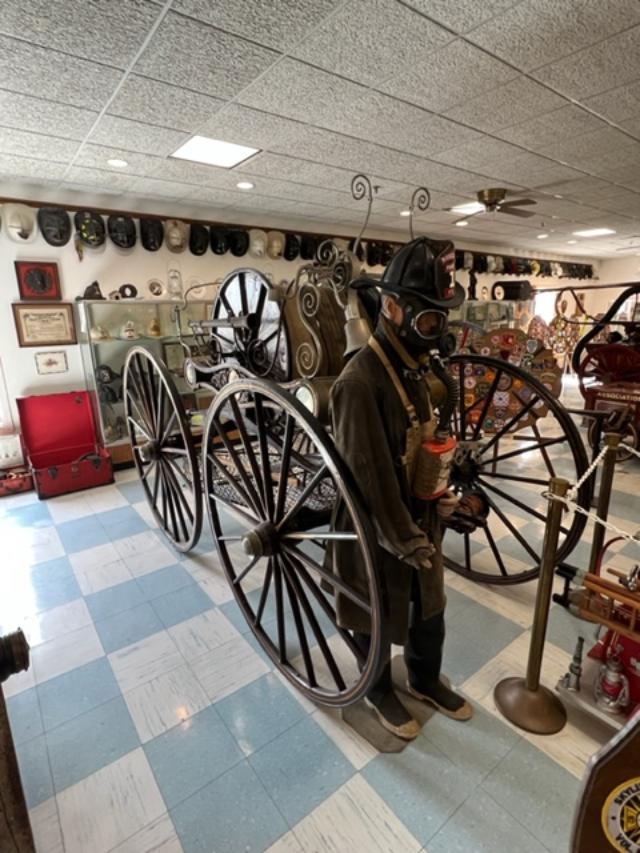
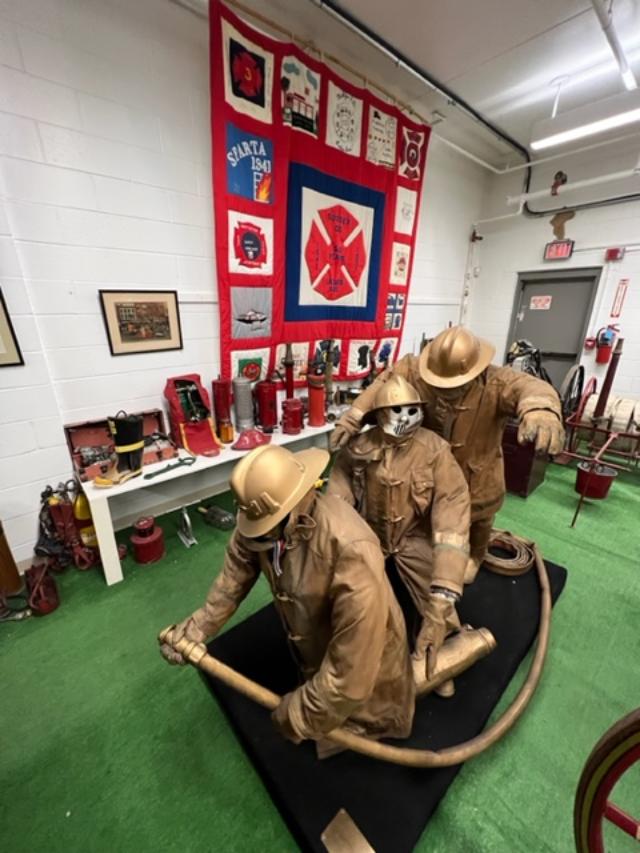
Located inside the Boonton New Jersey Firemen’s Home, The New Jersey Firemen’s Museum is an 8000 square feet, two story museum that houses steamers, ornate hose carts and antique fire trucks from all eras.
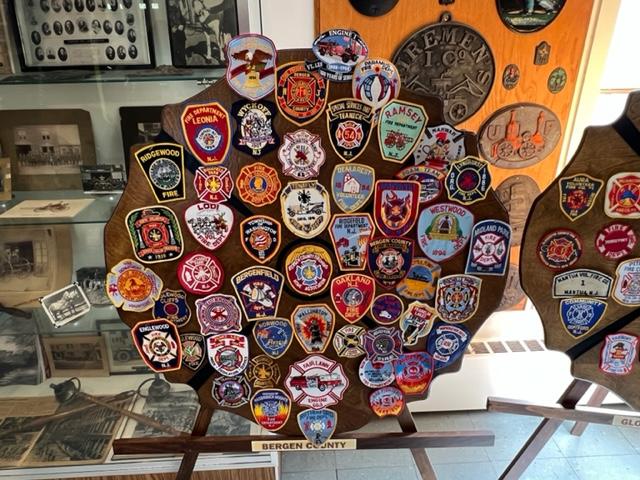
The museum was established in May of 1985 and is home to many fire department in New Jersey’s memorabilia. It seems like everyone fire department in the State of New Jersey is represented here with old fire department pictures, patches from the fire companies, fire trucks from all eras and pictures of department fires from all over the state.
Filling the cases is antique fire equipment, badges from officers in many departments, figurines of fire equipment and ribbons from conventions of the past. There are old fire buckets from the beginnings of the fire service, horns to sound the alarms from the turn of the last century and helmets that retired chiefs from many departments donated with much honor.
Many companies donated their department pictures from fires of their past that were fought with much bravery. People forget that this job is very dangerous and we have to watch ourselves in every step.
The fire trucks are from every era from the carts that were dragged by hand to horse drawn engines to the original steam engines that were introduced with the advent of technology. All of the equipment has been carefully restored and shined to almost new. Much care has been taken to show the transition of the fire service over the years.
The tours are on your own and the admission is free. You don’t have to be a fire fighter or visiting a resident here to visit the museum. If you are a serious fire buff or have children that are really into fire fighting or being a fireman, this museum will give you all sorts of perspectives on the fire service and its development not just in New Jersey but all over the county as well.
Don’t miss the memorial to the victims of 9/11 off to the side. It is very touching and shows the support of the fire service to the members of the FDNY and their families.
9/11 is still fresh in all our minds
It is a nice afternoon out. The museum is free to the public. These pictures are just a glimpse of the collection of the NJ Firemen’s Home Museum. It is two floors of donated equipment, memorabilia, awards, dedications and department antiques that are so well preserved. If you love the history of firefighting, this is the museum for you.











































































 Visiting a Museum: The Unique, Unusual, Obscure and Historical