Tag: MywalkinManhattan.com

Fort Delaware                                                      5516 NY Route 97                               Narrowsburg, NY 12764

Fort Delaware 5516 NY Route 97 Narrowsburg, NY 12764

Fort Delaware

5516 NY Route 97

Narrowsburg, NY  12764

(845) 252-6660

http://sullivanny.us/Departments/ParksRecreation/FortDelaware

Open: Last Weekend in June until Labor Day Weekend (repairs will be made on the facility after that until next year) Friday-Sunday 10:00am-5:00pm (last tour at 4:00pm) and Monday (Labor Day) 10:00am-5:00pm

Fee: Adults $7.00/ Seniors (62+) $5.00/ Children 4-12 $4.00/Veterans with ID and Children under 5 with adults Free. Special rates for school groups and group tours

My review on TripAdvisor:

https://www.tripadvisor.com/Attraction_Review-g48227-d3386995-Reviews-Fort_Delaware_Museum-Narrowsburg_Catskill_Region_New_York.html?m=19905

 The front of the recreation of Fort Delaware

Fort Delaware is a recreation of an old fort that used to be located on the Pennsylvania side of the Delaware River. It is a great place to take children who like to learn from ‘hands on history’ and watch Blacksmiths, Candle makers and farmers wives perform chores and show the way of life at a time before the Revolutionary War.

Fort Delaware historic sign

According to one of the actors I was talking to who was the Blacksmith, this type of fort would not be one people would have lived in full time. It was meant more for when the Native Americans would have attacked the settlement, which he said only happened once and for the most part the settlers and the Native Americans got along well.

As you tour the fort, you will see all the things that were done to support the settlement from  raising poultry and cows, candle stick making, the process to weave wool and flax from the raw materials, to weaving and spinning yarn to the process of making clothes and the work of the Blacksmith in making nails, axes and shoeing for horses.
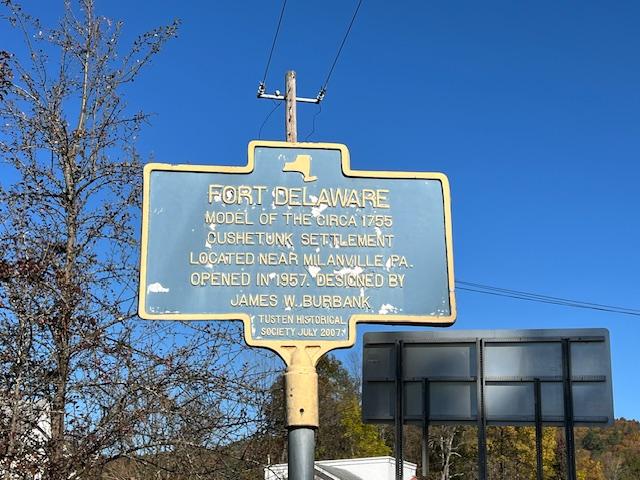
The historic marker of the fort

Inside each of the little cabins, it will show the life inside and outside the fort at that time period including living quarters, a small school, workman’s shops and where the members of the fort did their business for trade. You can also walk the outside  decks that overlook the river to see how the gunneries worked and where the munitions were held.

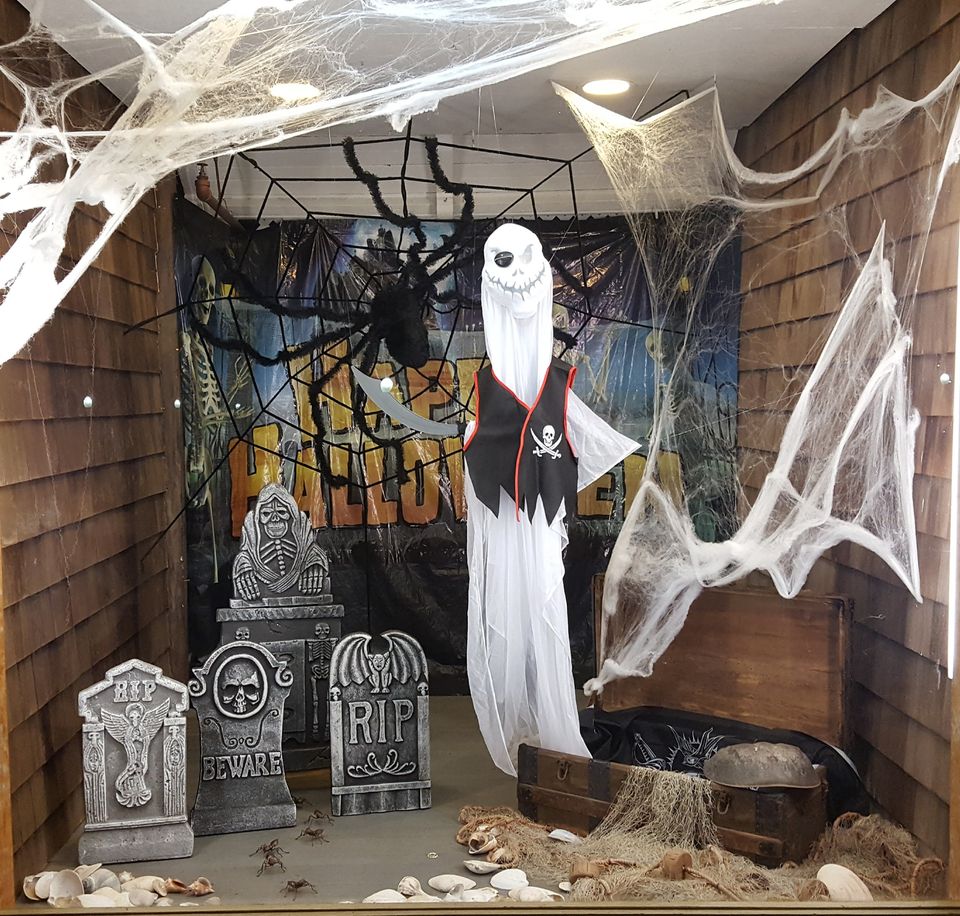
The front of the fort being decorated for Halloween

You can see the entire fort in about an hour and for small children, I think they would find it fascinating. For teenagers, unless they like history, I don’t think they would find it that interesting.  Leave yourself about an hour for touring.

Fort Delaware III

The inside living quarters


History of the Museum:

The Fort Delaware Museum is a recreation of the original fort and was built in 1957 by James W. Burbank, the second Sullivan County historian. Burbank was fascinated with the history of the settlement which at the time was called Cushetunk. He was influenced by the Davy Crockett craze at the time in the 50’s and wanted the fort to be a money making venture. He added things like pillories and stocks which were popular at the time. He ran Fort Delaware from 1957 to 1970 when he sold it to the County. The County of Sullivan runs it under the Department of Parks, Recreation and Beautification (History of Fort Delaware-RecordonLine.com).

The sign that welcomes you to the fort

History of the Fort:

(From the County of Sullivan Parks & Recreation Department)

Much attention is paid to the people who settled the main cities of New York but those who decided to take on the wilderness are often forgotten. At Fort Delaware, the daily life of the wilderness settler is explored through exhibits, crafts, demonstrations and tours. The Fort is a reconstruction of the original frontier settlement of the Cushetunk settlement on the Delaware River, with its stockades and stout log homes, which offered the only protection from hostile Native Americans and later English troops. The Fort consists of a small settlement entirely surrounded by high log walls or stockades. During your visit, you will see the blockhouse (where arms and ammunition were stored), settlers cabins, a spinning, weaving and barn loom area, blacksmith shop, candle-making shed and much more. Period-dressed interpreters demonstrate 18th century life skills, including: cooking, baking bread, animal care, dipping candles and the firing of a 1/2 pound British swivel cannon.

Background of the Fort:

Fort Delaware is a representation of the first white settlement on the Upper Delaware River called Cushetunk. Today’s Fort represents the development of the settlement over a thirty year period. The original settlers were farmers who came primarily from Central Connecticut and were of English descent. They were searching for more land because it had become too crowded in Connecticut to suit colonial farming techniques. A group of Connecticut men formed “The Delaware Company” and became proprietors. In the traditional New England way of land distribution they owned the land and either sold or leased it to farmers moving into this frontier, these proprietors moved their families to the frontier and never sold their land. The Delaware Company purchased land from the Lenape Indians, with the first deed signed in 1754.

The land purchased was a 10 mile long strip along both sides of the Delaware River (situate in modern day New York and Pennsylvania). Procedures for filing land claims were very different in the 18th Century. Also at that time, the States of Pennsylvania and New York were engaged in a boundary dispute , disputes of other colonies really didn’t matter much to those early Connecticut farmers, so they claimed the land for Connecticut! They called their community “Cushetunk”. To those white settlers, it sounded like what the Lenapes were calling the place. KASH-ET-Unk or “a place of red stone hills”.

By 1760, there were thirty cabins, a gristmill and a sawmill. Each spring saw the arrival of more people willing to hack a new life out of the frontier. These people faced hardships they probably never conceived of in Connecticut. Indian attacks, the remote wilderness, rough winters and the possibly that farming this land would not sustain them. They came into the area during the French and Indian Wars (1755-1763). In 1761, a stockade was erected around three homes to serve as protection for the entire settlement against attack. In 1763, the settlement was attacked by a Lenape war party. The lower part of the settlement was destroyed with no known survivors. By the time the war party moved up the settlement, people had gathered into the Fort for protection. The attackers were held off with two casualties among the settlers.

It is this Fort, which is represented today at Fort Delaware even though it was known as “the lower fort” during the 18th Century. Another Fort was situated in the upper part of the settlement. The Fort was never used as a Military post, only for civilian protection. In 1764, a rafting business was introduced into the community and became very successful. It brought cash into the community on a steady basis and Cushetunk experienced a lot of development. In the years between the French and Indian Wars and the American Revolution, the fort was abandoned as the threat of Indian attack decreased and people began building what they called “fair houses”. The period of the American Revolution (1775-1783) was a turbulent time for the people of Cushetunk. Generally, the inhabitants were “Tories” (or those who were loyal to the Crown). However, there were also a handful of patriots or Whigs as well.

As time went on neighbors became hated enemies. Many residents of Cushetunk took up arms for the British and Continental armies. Some fought with local militias. In some instances families were torn, brothers fighting on opposing armies. There were many occurrences in the settlement of neighbors (who once depended on each other for survival) fighting, looting and even murdering each other. Some of the Patriots from the settlement fought not far from their homes at the Battle of Minisink on July 21, 1779. After the Revolution, the Patriots returned victorious to reclaim their land and many loyalists left to settle in Canada. Today the descendants of these early settlers can still be in the area.
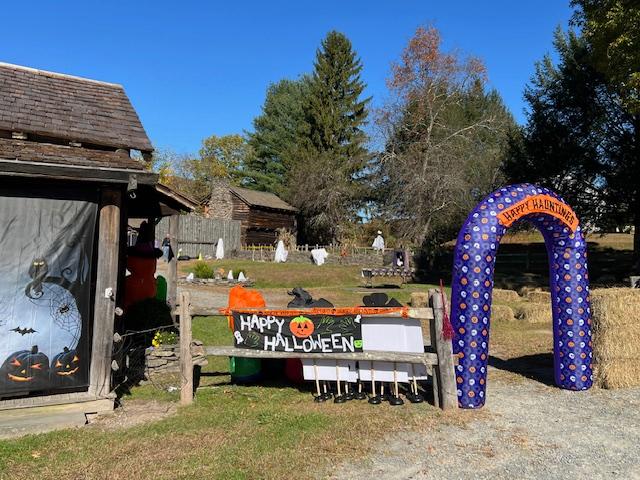
The fort being decorated for a Halloween event

(This information on the history of Fort Delaware and the settlement was taken from the County of Sullivan Department of Parks and Recreation and I give them full credit on the information. Please see the attached website for more information on the Fort).

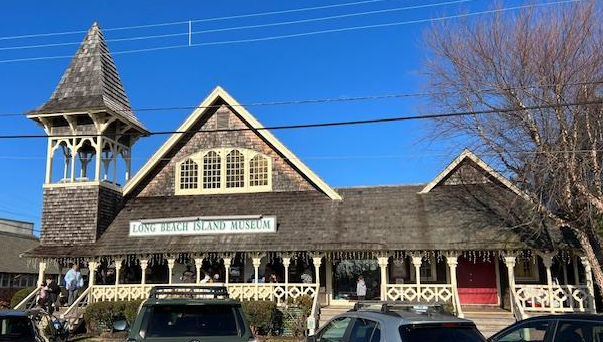
 

Long Beach Island Historical Association Museum            129 Engleside Avenue                                      Beach Haven, NJ 08008

Long Beach Island Historical Association Museum 129 Engleside Avenue Beach Haven, NJ 08008

Long Beach Island Historical Association Museum

129 Engleside Avenue

Beach Haven, NJ  08008

(609) 492-0700

http://www.lbimuseum.com/

Open: July and August Sunday-Saturday 10:00am-4:00pm/June & September Saturday & Sunday 12:00pm-4:00pm. Special Appointments can be made at other times of the year and the museum is open for special events held by the town and for the holidays.

Fee: Adults: $5.00 donation/Children under 12 years old Free

My review on TripAdvisor:

https://www.tripadvisor.com/Attraction_Review-g46292-d11444615-Reviews-Long_Beach_Island_Historical_Museum-Beach_Haven_Long_Beach_Island_New_Jersey.html?m=19905

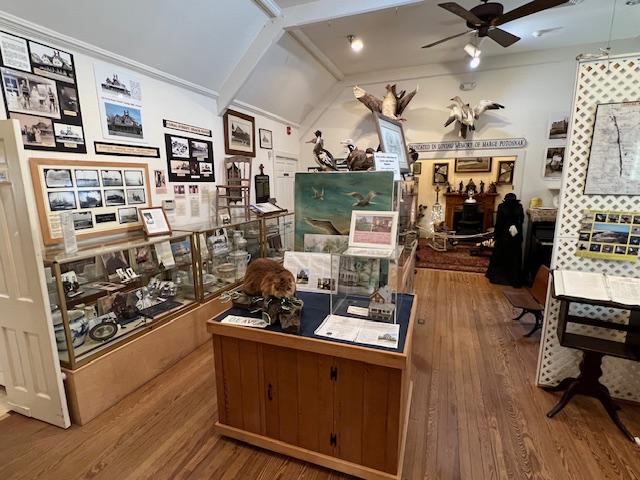
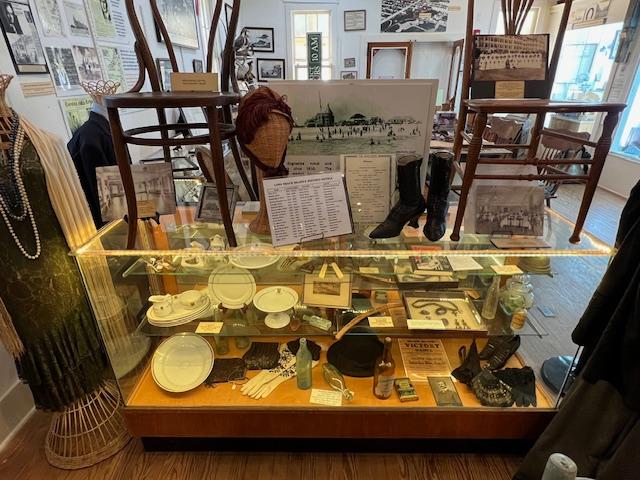
This seasonal museum is a ‘must see’ on Long Beach Island when visiting the town of Beach Haven. It is the perfect rainy day place to visit. The museum covers all aspects of the history of the island from its time when the Native Americans lived and fished here to the coming of the English. The museum shows in pictures and artifacts how the island was developed into a Summer resort retreat catering to middle class and wealthy tourist mostly from Philadelphia.

The Long Beach Island Historical Society at 129 Engleside Avenue.

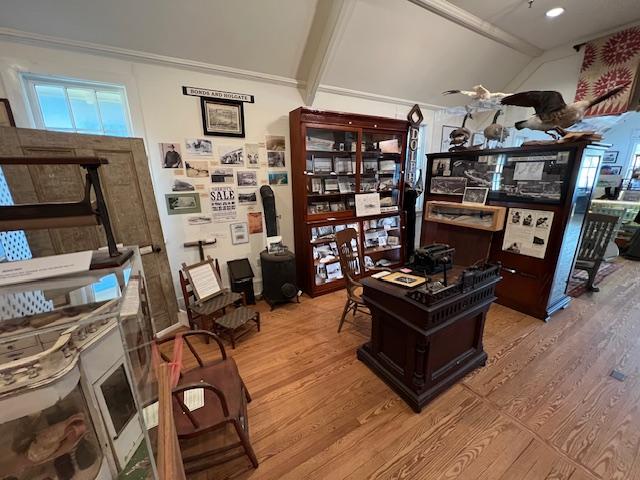
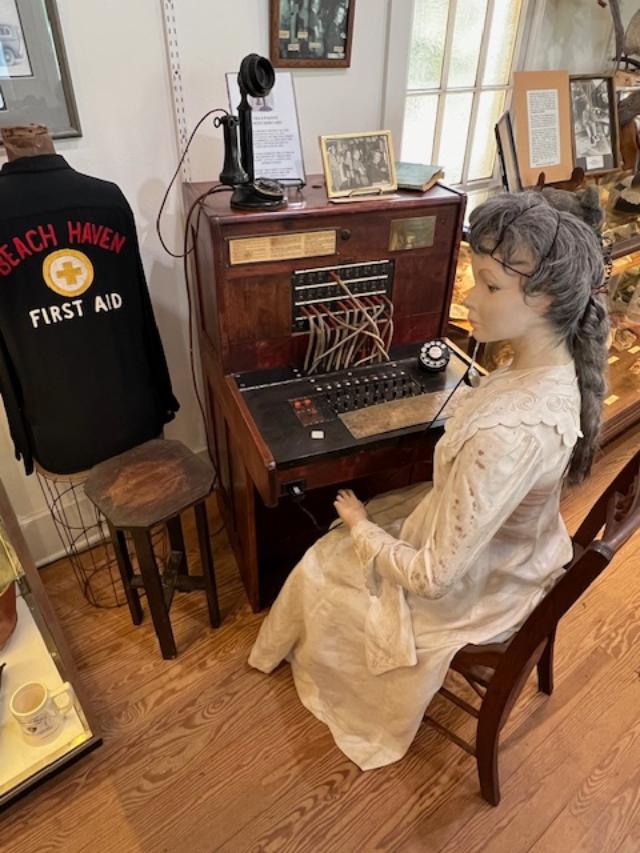
The artifacts range from arrowheads and fishing equipment that the Native Americans left behind to a recent discovery of an old wooden boat created by the Leni-Lenape  tribe. The museum describes in detail life in the Victorian Age on the island with a series of pictures of the old resort hotels, most of which have burned down over the last 100 years, to artifacts that from this time including china, silver and menus from the hotels. There is also a creation of a Victorian room, a telephone operator office, rail office and a children’s toy display from that time.

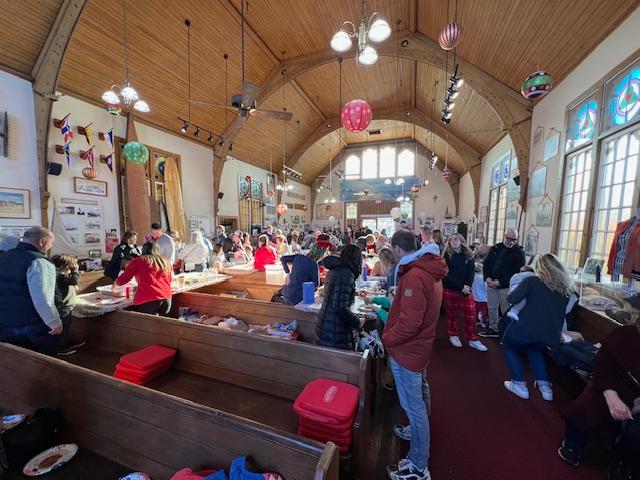
The Front Room of the museum during the Elf Workshop in 2023.

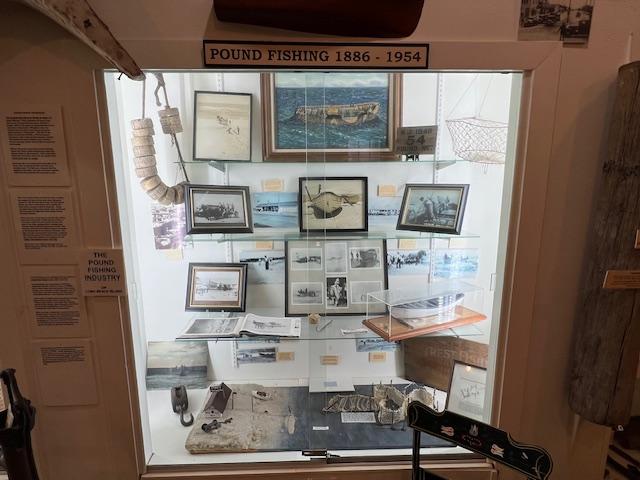
This is an interesting display of the fishing industry on the island as well. There is all sorts of equipment that has been used over the last 100 years and the progress that has been made in the industry. There are exhibits on the whaling industry and its lasting affects on the island.

The nautical display at the Long Beach Historical Society.

There is also the story of the shifting of the tides and the disappearance of Tucker’s Island, a small island to the south of Long Beach Island that has since disappeared underwater due to the shift in the currents. Each area of the museum contains interesting pieces of the island’s past and you should take the time to look at each section carefully.

The disappearance of Tuckerton Island and the rise of the railroads in the area.

For such a small museum, it is packed with interesting facts and a fascinating story of the development of the New Jersey shoreline and the role it is playing in our ever changing life down the shore.

The Lucy Evelyn exhibition.

Pound Fishing at the museum.

The back room display with the history of the community.

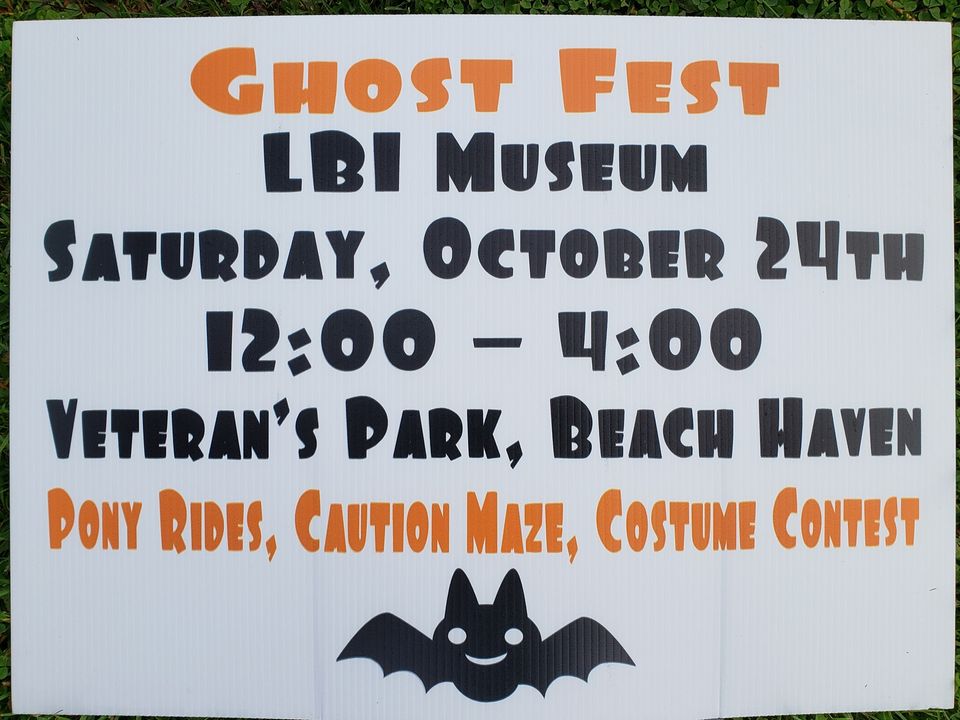
I stopped in for a recent special event that the Society was having to celebrate Halloween. The museum was having an ‘Ghost Fest-Open House” event for families and what a nice program they had for the kids and their family members that was socially distanced and safe.

The ‘Ghost Fest’ Halloween Festival at the museum.

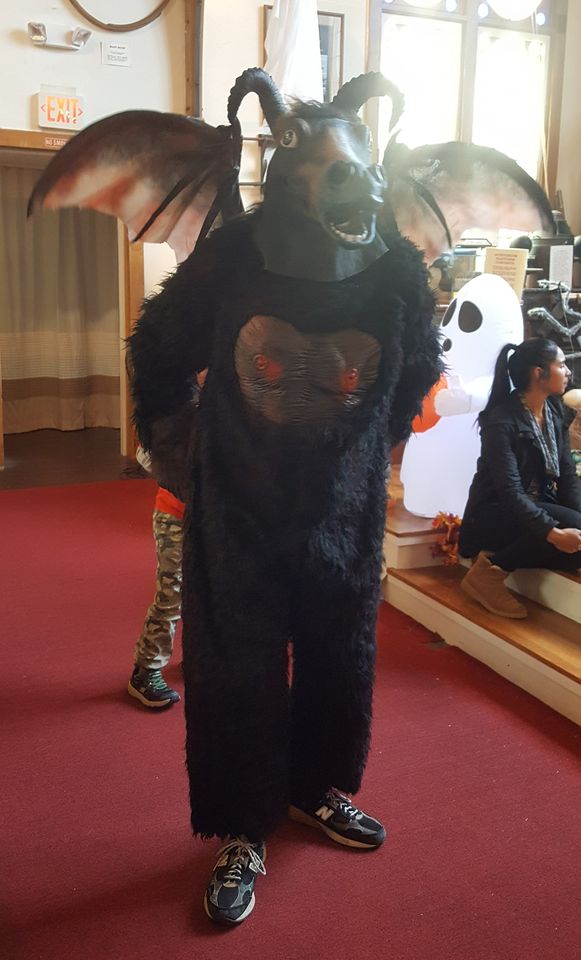
There were pony rides, a maze to explore, marshmallow toasting by the fire to make smores, corn hole tossing, games of chance, a gift store for the kids and even a costume parade with the “Jersey Devil” which the kids seemed to get a kick out of when he came out.

The Jersey Devil lead the Halloween Parade

There were also self-guided tours of the museum which were a lot of fun as well as people were coming in and out looking at the holiday displays. It was a nice that the museum had a safe program for the patrons and members of the community.

The Museum was decked out for Halloween

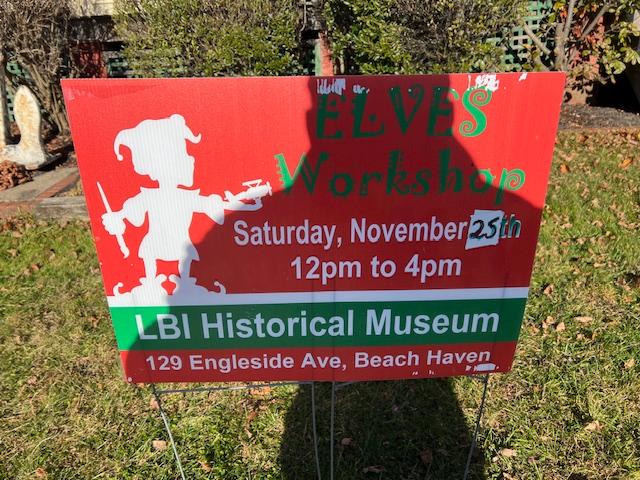
In November of 2021, the museum had the nicest little Christmas festival. They had tables around the front hall of the museum called “The Elves Workshop” with stations that the kids could create arts and crafts for the Christmas holidays with cookie decorating, gingerbread house creating and making a jewel covered Christmas tree among other things. The museum was decorated for the upcoming holidays.

Santa is on his way to Long Beach Island is the front display of the museum

The community involved in the Christmas activities.

From 4:00pm to 6:00pm that evening, the participants went the park across the street to roast marshmallows and Smores over open fire pits while Christmas music played in the background and the gazebo was lit with Christmas lights as it got dark. It was quite a site.

The Museum really puts you in the Christmas spirit with events like these.

It really put you in the holiday spirit.

The Christmas window at the Historical Society.

Mission Statement:

The Long Beach Island Historical Association collects, preserves and interprets the history of Long Beach Island through its educational programs, guest lecturers, walking tours, special events and an ever growing research center. The museum, situated at the center of Beach Haven’s Historic District, showcases 24 exhibits which include over 450 photographs and hundreds of artifacts for the sole purpose of encouraging the public to not only understand out island’s rich history but also to appreciate the people and events who helped in shaping its character (Museum Website).

The front section of the historical society.

History of the Museum and Town:

Before the colonial period the native Lenape tribes in the local area travelled in wooden dugout canoes to the island seasonally, to escape the heat, fish, gather clams to eat and shells for jewelry and trade. The early local colonists used the barrier islands much the same, seasonally to fish, whale (semi-permanent campus were established as early as 1690), gather salt hay, bayberry & beach plum and make sea salt.

The Victorian Room display.

The Victorian Room display.

As the settlers became more established, ports such as Clamtown (later Tuckerton) were established about 1700 on the mainland and roads improved. Cattle were grazed on Tucker’s Island by 1735. Permanent seasonal accommodations were built on the island for men coming to fish and hunt; such as the Philadelphia Company House (started as Horners in 1815, became Bonds from 1851-1909) near Tuckers Island just south of what is now called Holgate and the Mansions of Health in Surf City (1822-1850). There was a “boarding hotel” at Barnegat inlet from about 1820 and the first manned lighthouse was built at the inlet in 1834. A manned lighthouse was built on Tucker’s Island in 1848, where a community, later called Sea Haven was springing up.

The hotel display and the office displays.

The island’s “modern” history begins as the railroads reached south to Toms River and Barnegat; with the Tuckerton Railroad reaching Manahawkin and Tuckerton by 1872. The railroad allowed visitors (and goods needed for comfortable living) to reach the shore quickly and also allowed for shore products to be shipped to Philadelphia & New York all year. The first year-round life-saving stations were were established in 1871. Land Development companies laid out Beach Haven in 1872 and Barnegat City (now Barnegat Light) in 1878, with sailboats and steam launches begin used to transfer visitors and goods from mainland railroad to the island. The Parry House, Engleside and later the Baldwin hotels. were built in Beach Haven and the Oceanic & Sunset in Barnegat City.

The Tuckerton & Long Beach Land & Improvement Co. principals were also major stockholders in the Baldwin Locomotive Co., the Tuckerton Railroad and the Pennsylvania Railroad. After they and their wealthy Philadelphia friends built houses in Beach Haven, the PRR was convinced to build a railroad trestle to LBI which opened in 1886 (abandoned 1935) leading to an extended property boom from the 1880’s-1920’s, especially in Beach Haven. Other smaller communities such as: Spray Beach (1889), Beach Haven Terrace, Brant Beach, Surf City (Inc. in 1899) and Harvey Cedars (Inc. in 1894) were established along the railroad.

The hotel display of objects.

Although most of the houses built were still seasonal, the presence of the railroad (and later the 1914 automobile bridge) made permanent business & year round living on the island feasible. Census records show that the island’s permanent population was 33 people in 1880, increasing to 522 in 1910 and 1827 in 1930.

The Toy display at the museum.

After the Depression of the 1930’s and the Second World War, development resumed in the “Cape Cod” period 1846-1962; assisted by the completion of the Garden State Parkway to Manahawkin in 1954 and the opening of the four-lane causeway (to replace the old two-lane wooden bridge) in 1956. The 1962 storm and early 70’s economic problems temporarily delayed development. By the late 70’s, the island was essentially “built out”. Most recent building boom of the period 1980-2007 consists of teardown/replacement of existing homes.

The telephone operator.

Because of early erosion in Barnegat City, Surf City and elsewhere and the extensive tear-downs of the 1980’s and 1990’s, the majority of the surviving 19th century and early 20th century structures on LBI are in Beach Haven. The Beach Haven Historic District (running from 5th to Chatsworth, east of Bay Avenue/LBI Boulevard) was created in 1983 in response to the increasing loss of historic structures and conflicting building styles. As of 2012, it is the only historic district on LBI.

The Shark Attack in 1916.

(From the Museum website: I give full credit to the Long Beach Island Historical Association Museum for this information)

Cooper-Hewitt Smithsonian Design Museum              2 East 91st Street                                                New York, NY 10128

Cooper-Hewitt Smithsonian Design Museum 2 East 91st Street New York, NY 10128

Cooper-Hewitt Smithsonian Design Museum

2 East 91st Street

New York, NY  10128

(212) 849-8400

Home

Open: Sunday-Saturday 10:00am-6:00pm

Fee: Adults $18.00/People with Disabilities & Seniors $10.00/Children Under 18 Free/Students $9.00. Check the prices online as they change.

My review on TripAdvisor:

https://www.tripadvisor.com/Attraction_Review-g60763-d106188-Reviews-Cooper_Hewitt_Smithsonian_Design_Museum-New_York_City_New_York.html?m=19905


Cooper Hewitt Museum II.jpg

The Second Floor Design floor

I recently visited the Cooper-Hewitt Smithsonian Design Museum for the first time. I can’t believe that all those years visiting the Met just down the road I had never stopped in the museum to take a peak. I went into see the “Nature-Cooper Hewitt Design Triennial” exhibition that was showing on all three floors of the museum. It was an interesting look on how nature plays a role in design and there is a beauty in the unusual shapes and colors that nature provides us.

Cooper Hewitt Museum IV.jpg

Third Floor studio

The first floor was composed of design found in nature. You will see blood samples that move and shiver, electric movements and the role of it in nature and how plants and animals can be shown in simplest terms. On the second floor, you will see the prints in clothing and in home décor and see how color and design enhance beauty in an every day environment. The third floor will show more home décor and design objects.

Cooper Hewitt Museum III.jpg

The First Floor Elements

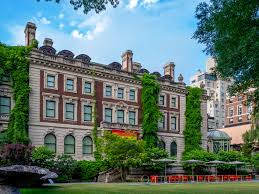
What is unique about the museum is how the mansion was converted into display areas and the use of the interior was blended into fabric of the museum. Take time to look at the areas around the staircases to admire the ceiling and the walls. It must have been a very grand home in its day.

Cooper Hewitt Museum V.jpg

The stairs of the mansion

Purpose of the Museum:

The Cooper Hewitt Smithsonian Design Museum is a design museum located in the Upper East side’s Museum Mile in Manhattan. It is the only museum in the United States devoted to historical and contemporary design. Its collections and exhibitions explore approximately 240 years of design aesthetic and creativity. In June 2014, the museum changed its name from Cooper-Hewitt, National Design Museum to Cooper Hewitt, Smithsonian Design Museum and reopened to the public that December (Wiki).

Cooper Hewitt Museum.jpg

History of the Museum: (Provided by Wiki)

The Cooper-Hewitt Museum was founded in 1896. It was originally named Cooper Union Museum for the Arts of Decoration and it fell under the wing of the Cooper Union for the Advancement of Science and Art. In 1895, the granddaughters of Peter Cooper, Sarah Cooper Hewitt, Eleanor Garnier Hewitt and Amy Hewitt Green, asked the Cooper Union for a space to create a Museum for the Arts of Decoration. The museum would take its inspiration from the Musee des Arts Decoratifs, Paris. The museum would serve as a place for Cooper Union students and professional designers to study decorative arts collections. Cooper Union trustees provided the fourth floor of the Foundation Building. It opened in 1897. It was free and open three days a week (Wiki).

The museum and the art school started to distance themselves from on another in regards to programming. Other departments of the Cooper Union were making financial demands and the Cooper Union announced that they would close the museum. This led to the museum being closed on July 3, 1963. Public outcry was strong against the closing. A committee to Save the Cooper Union Museum was formed by Henry Francis Du Pont (Wiki).

The American Association of Museums developed a case study about the future of the museum. Negotiations then began between the Cooper Union and the Smithsonian Institution. On October 9, 1967, Smithsonian Secretary S. Dillon Ripley and Daniel Maggin, the chair of the Board of Trustees signed an agreement turning over the collection and library of the museum to the Smithsonian. On May 14, 1968, the New York Supreme Court transferred to the Smithsonian and the museum was renamed the Cooper-Hewitt Museum of Design. The following year, 1969, it was renamed as the Cooper-Hewitt Museum of Decorative Arts and Design. In October of that year, Lisa Taylor became the Director (Wiki).

The museum, which was the first Smithsonian museum outside of Washington DC, moved to its home at the Andrew Carnegie Mansion in 1970. The Mansion was renovated and the museum opened to the public on October 7, 1976 with the exhibition “Man transFORMs”. A conservation laboratory was opened in July 1978. The Samuel H. Kress Foundation funded the lab and it focuses on textile and paper conversation. Lisa Taylor retired in 1987 and in 1988 Dianne H. Pilgrim took her place as Director. In 1994, the museum’s name was changed again to Cooper-Hewitt, National Design Museum. Pilgrim retired from the museum in 2000. In 2000, Paul W. Thompson became Director. On June 17, 2014, the museum’s name was changed again to Cooper Hewitt, Smithsonian Design Museum. A new graphic identity, wordmark and new website was launched on this day. This identity was designed by Eddie Opara (Wiki).

The building is located in the Andrew Carnegie Mansion. The Georgian style mansion was built over the course of years 1899 to 1902 and has sixty rooms. The home served as not only the home for Andrew Carnegie, his wife and daughter but also as his office for his philanthropic work after his retirement. The mansion was designed by  Babb, Cook & Willard. It was the first private residence in the United States to have a structural steel frame. It was the first home in New York to have an Otis elevator (Wiki).


The Greater Cape May Historical Society                         6531/2 Washington Street                                                      Cape May, NJ 08204

The Greater Cape May Historical Society 6531/2 Washington Street Cape May, NJ 08204

The Greater Cape May Historical Society

6531/2 Washington Street

Cape May, NJ  08204

(609) 884-9100

http://www.capemayhistory.org/

http://www.capemayhistory.org/about-us.html

Open: Colonial House Museum hours:

Wednesday-Saturday, 1:00pm-4:00pm June 15th-September 15th

Open during Victorian Weekend in October. Special exhibits at Halloween and Christmas.

My review on TripAdvisor:

https://www.tripadvisor.com/Attraction_Review-g46341-d286395-Reviews-The_Colonial_House-Cape_May_Cape_May_County_New_Jersey.html?m=19905

The Historical Society at Christmas time.

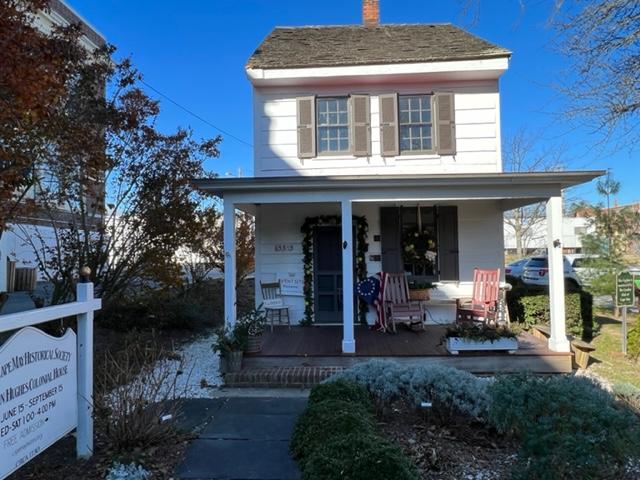
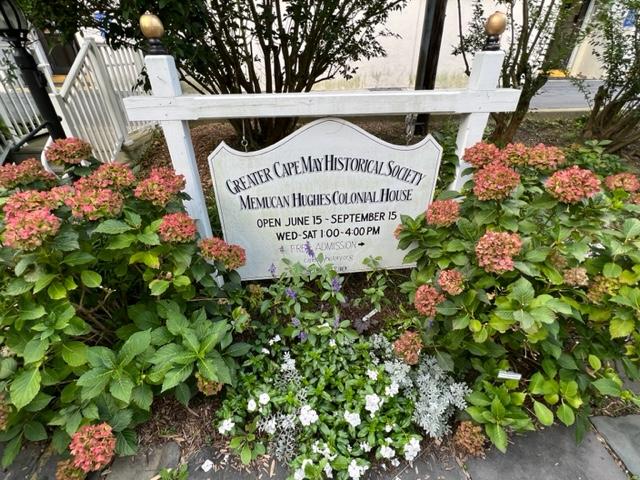
The Cape May Historical Society in the summer of 2023.

What an interesting visit I had to the Cape May Historical Society’s Memucan Hughes Colonial House. This tiny museum is only open between June 15th-September 15th and after that only for special events.

It is an fascinating little home that was built somewhere between 1730 to 1760. The original house no one is too sure if it had been built for the original owner or had been there and added on to as the records for the age of the house are unclear.

The welcoming sign at Christmas

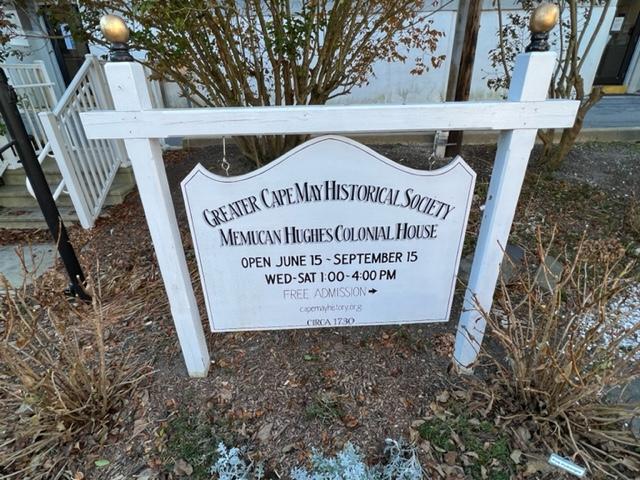
The sign in the summer of 2023.

The home consists of two small downstairs room filled with period furniture and decorations and there is an upstairs with three small rooms that have just opened up to the public. The front room Mr. Hughes used as a tavern that he kept open until almost the 1800’s. He had catered to a growing whaling industry that needed some form of entertainment in this quiet town that was isolated from the rest of the state.

The Pub in the front room of the house for meals and conversation.

The Front Room of the house served as a pub for visiting travelers.

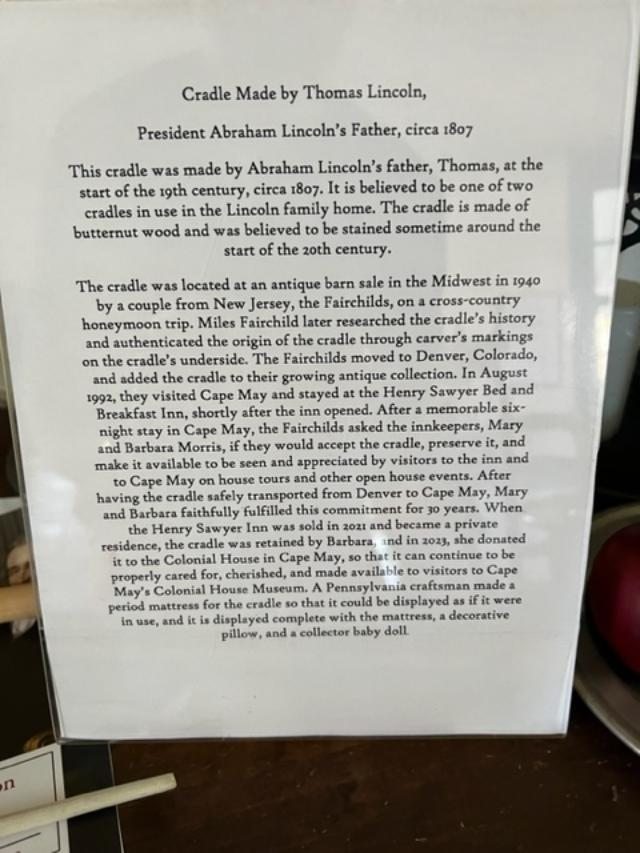
The room was set up for dining and amusements. The Lincoln Crib is in the background.

The Lincoln crib was built by Abraham Lincoln’s father.

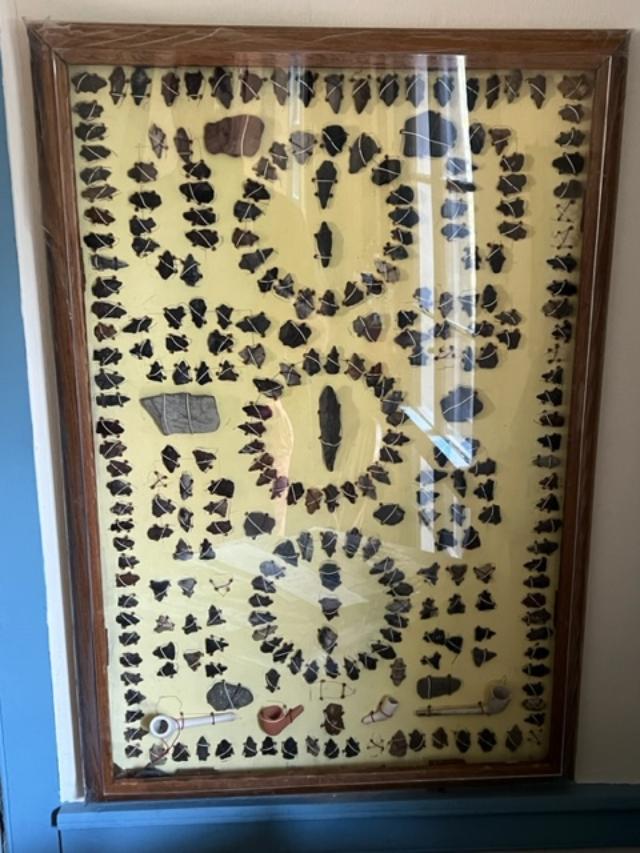
The Arrowhead and Pipe collection in the Pub Room.

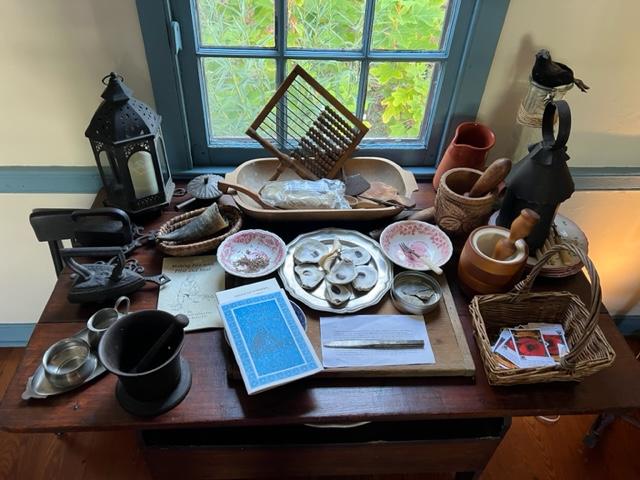
The front of the house is decorated as tavern to greet guests. There were tables filled with games and items that would have catered to the trade but still you knew you were in someone’s home. There are vintage card tables, board games and some household items.

The Living room at the Cape May Historical Society

The back room is a closed off kitchen with a fireplace and spinning wheels and wash tubs, all the things to run a household. There were also children’s toys, kitchen and garden gadgets and family items to personalize the house.

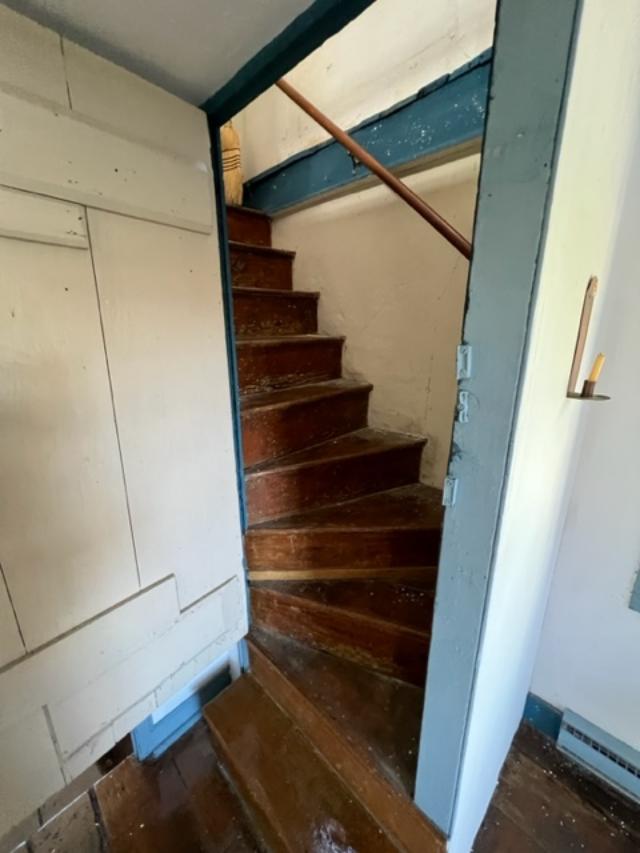
The narrow stairs lead to the upper bedrooms and the attic loft.

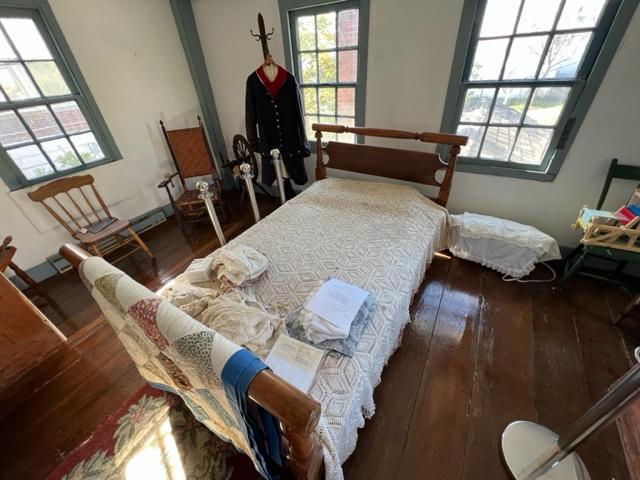
The upstairs bedrooms and the attic room were open in the summer of 2023, and I got to see the whole house. The upstairs is supposedly haunted, but I did not see anything. What I did see was how large the house really was and why the family of eight were able to live in this small house.

The upstairs bedroom

The upstairs bedroom

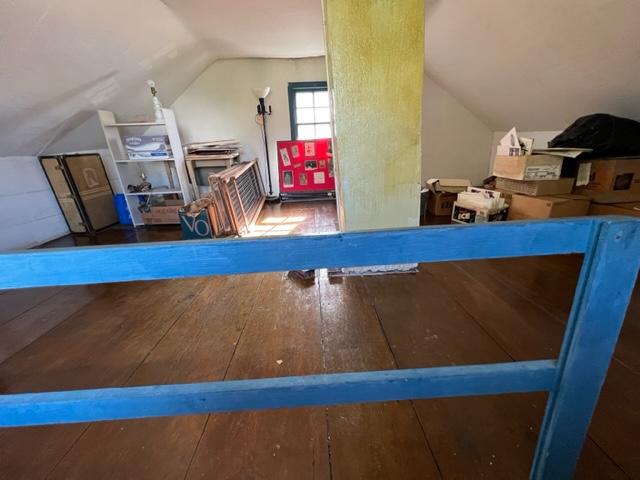
The attic loft room was supposed to be haunted but I saw nothing.

During the Victorian Age, the family came into a more prosperous life and built the big house in the front of the home.

The Hughes mansion in the Victorian times sits right in front of the old house and is now a B & B

The Hughes family lived in the house until the Victorian age and then they built the house on the front of the property and moved the smaller house to the back of the grounds. The house had been moved three times since its original location on the main road a few blocks away.

The tour itself is only about a half hour long and the guides do a nice job explaining the history of the house. On the gloomy day I visited, the museum was very busy with people visiting the house and with its connection to colonial history and the popularity of the musical, “Hamilton”, it is making it a popular destination when visiting Cape May.

History of the Museum:

The sign outside the house

The mission of the Greater Cape May Historical Society is to collect, preserve, document, interpret and share the history of Greater Cape May and to enhance the appreciation of that history through the Society’s historic site, The Colonial House Museum, collections, research, exhibitions, educational programs and publications.

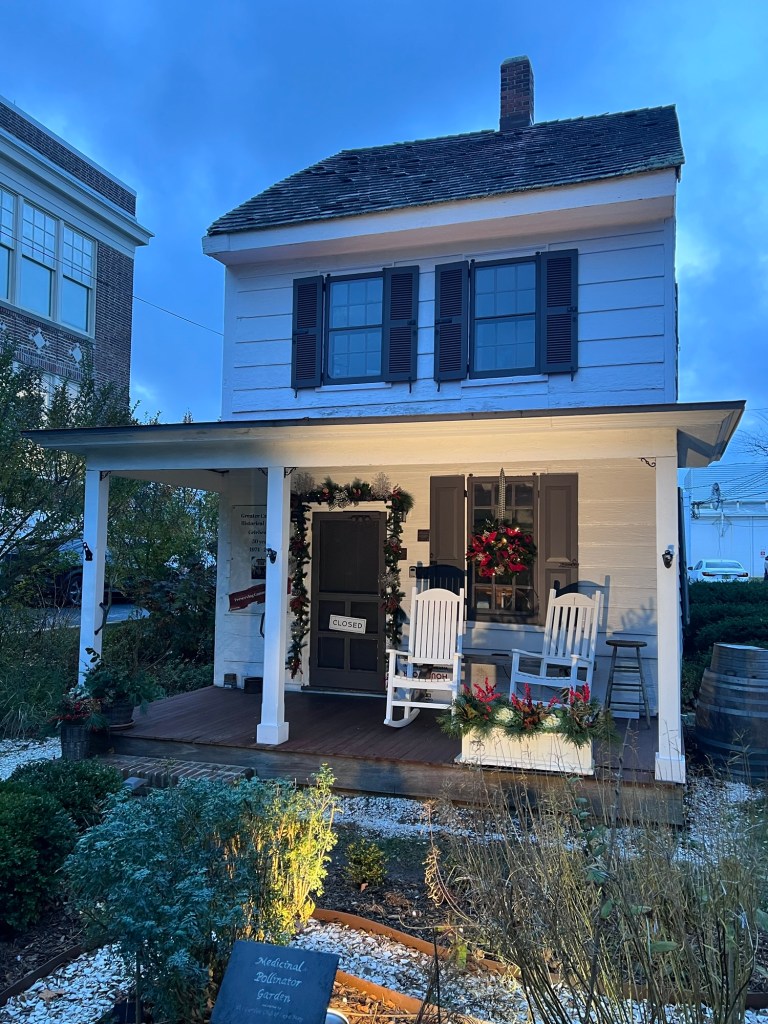
The Hughes family home during the Christmas Holiday season 2022

All are invited to visit the Colonial House Museum, a 1700’s era house. The house was moved to its present site next to City Hall when the Hughes Family built the grand Victorian that is now a Bed & Breakfast.

The Hughes family home of the 1700’s at Christmas time.

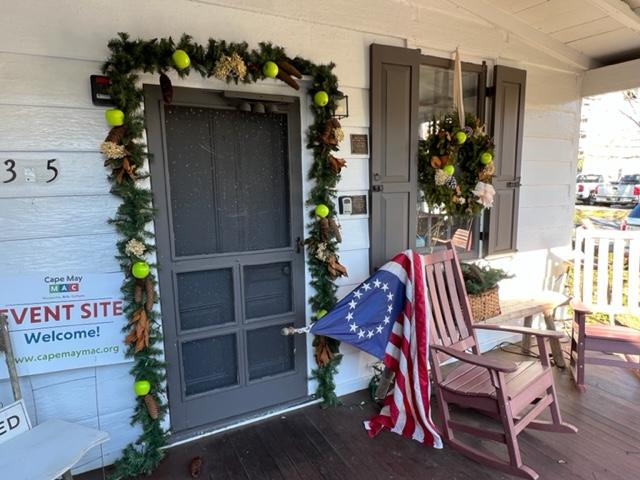
The house decorated for the holidays in 2025

Th Ed front of the house decorated for the holidays

Come visit us and see the House as it was with a Tavern Room and a Common Room when it was owned by Memucan Hughes. On display are period furnishings and other period household items.

The Hughes family home of the late 1800’s

The Society presents an annual exhibit dedicated to an unique chapter of Greater Cape May History along with special events for Halloween and Christmas.

Disclaimer: This information was taken directly from the Greater Cape May Historical Society’s pamphlet, and I give them full credit for it. Please call the above number for more information and selected openings.

The Cape May Historical Society in the summer of 2023.