To all of you history buffs and readers who like architecture, take this Victorian Walking Tour I took last Christmas. It really shows how the City keeps changing.
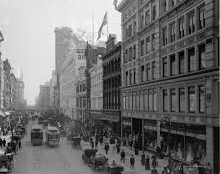
Ladies Shopping Mile in it’s heyday
The Ladies Shopping Mile today
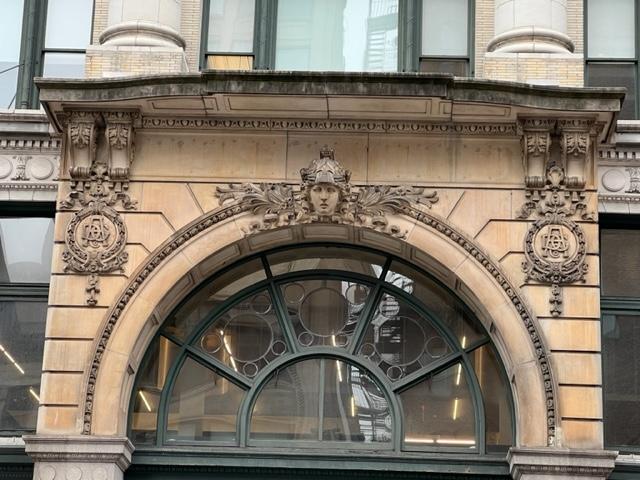
The beauty of the architecture of these stores. This is the Adams Dry Goods store.
On Saturday, December 15th, I met with other members of the Cornell Club to travel back to the Victorian Era and learn about the traditions of the Christmas past. We explored the Gramercy Park, Union Square and lower Sixth Avenue sections of the City to visit where a New York Victorian Christmas would be celebrated and honored.
We would be walking the old “Ladies Shopping Mile” that had been built up right after the Civil War when the disposable income for Middle and Upper Middle Class residents had increased after the Civil War and people wanted to spend their money at the newly built department stores, shops and restaurants. The Industrial Revolution was in full swing and shopping had changed with the development of the department store.
The tour took us past brownstones, parks, restaurants and old department stores that line the streets of Manhattan between East and West 21st Street…
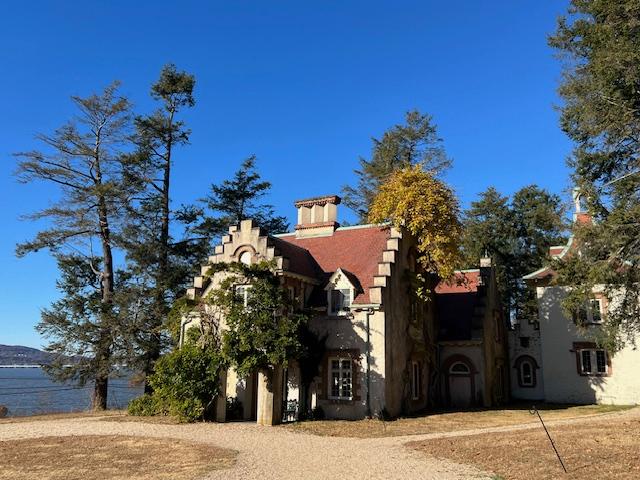
Washington Irving’s home, Sunnyside is open during the warmer months of the year, closing at the end of October. The house looks like a enchanted cottage with almost a fairy like appearance right on the banks of the Hudson River with the most spectacular views of the river valley and the Tappan Zee Bridge in the distance.
Sunnyside during the Fall of 2024
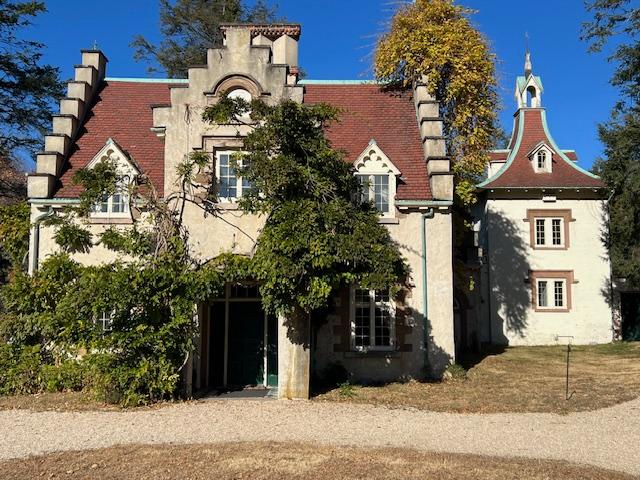
The house was designed by architect George Harvey and reflects the Dutch Colonial Revival, Scottish Gothic and Tudor Revival influences with wisteria growing up and around it and a jagged crow stepped gable.
The front of Sunnyside in the Fall of 2024
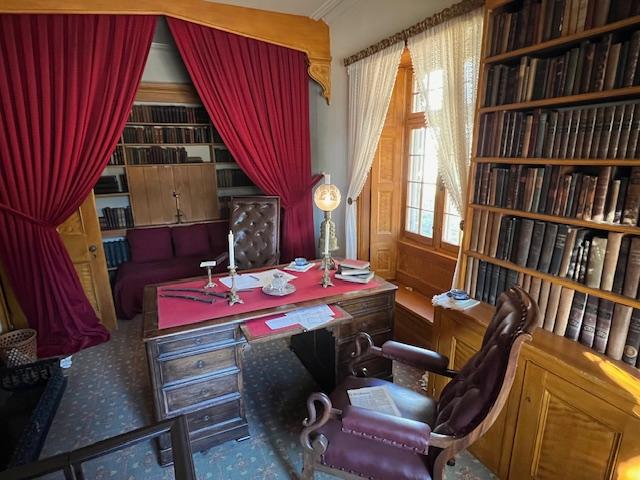
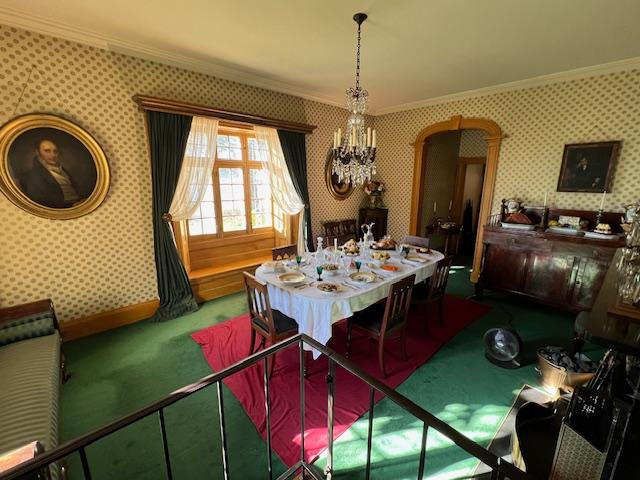
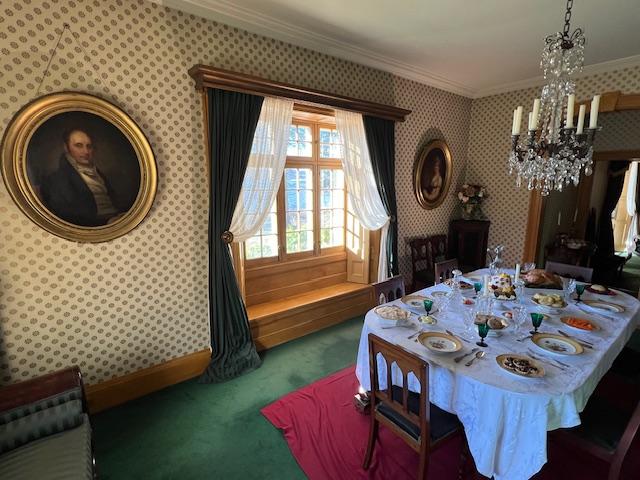
When walking through the home, you will see the study where Washington Irving conducted the business of the house and did his writing. To the other side of the house, you will see the living room and small dining room where the family used to entertain.
Washington Irving’s Study
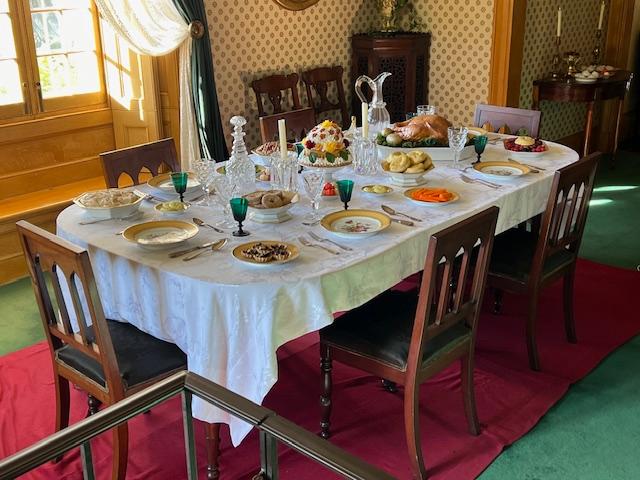
The Dining Room set for a formal lunch
The Dining Room in the Fall of 2024
The formal meal at the afternoon
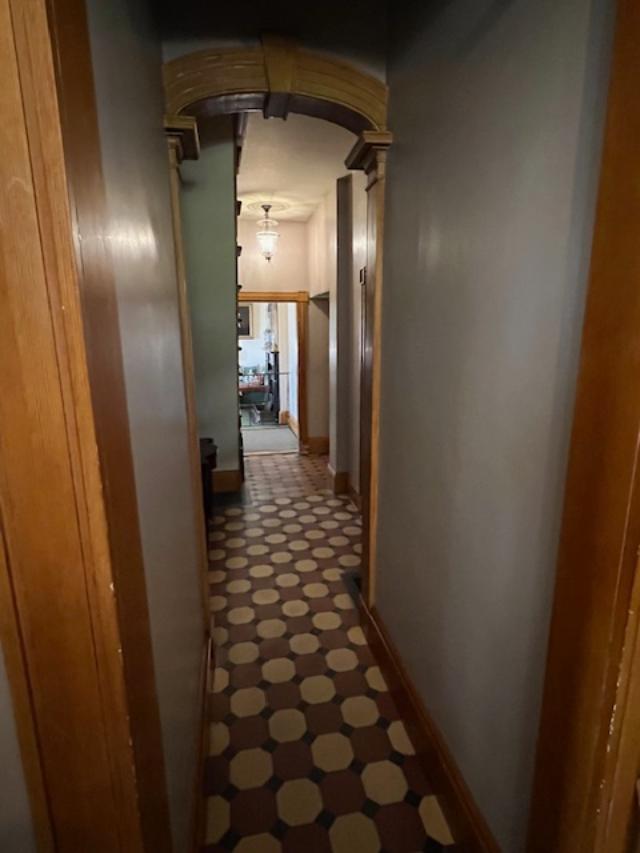
The hallway between the Dining Room and the Living Room
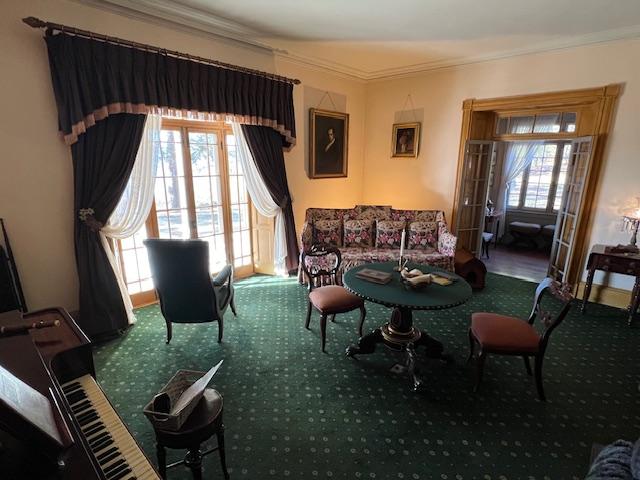
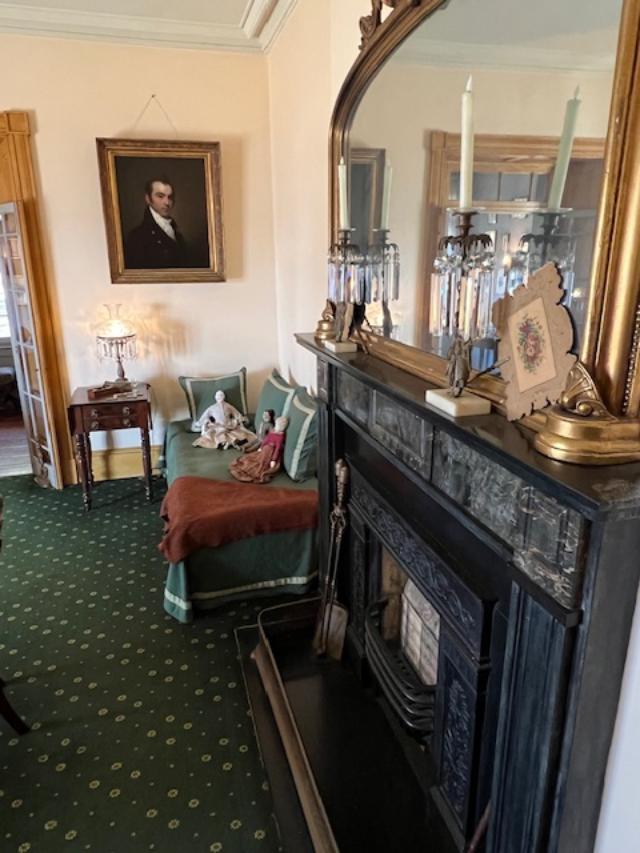
The Living Room where the family gathered and entertained visitors
The Living Room of Sunnyside
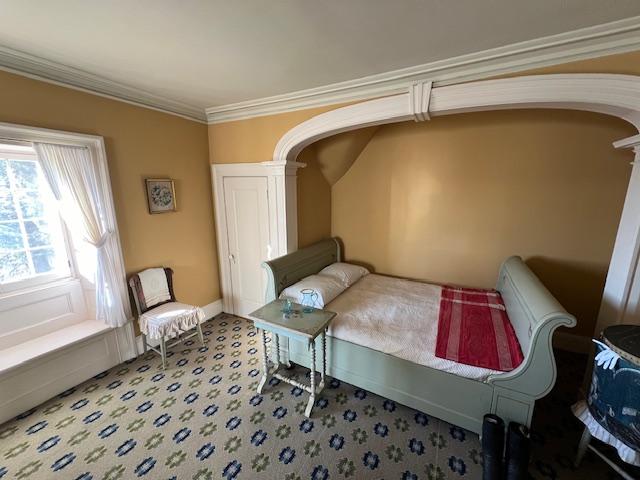
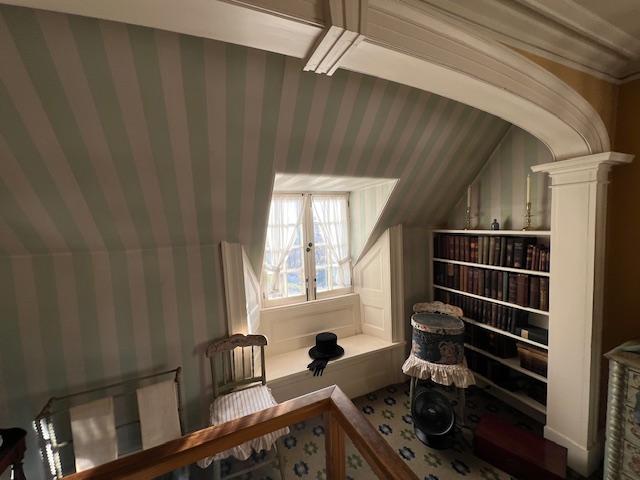
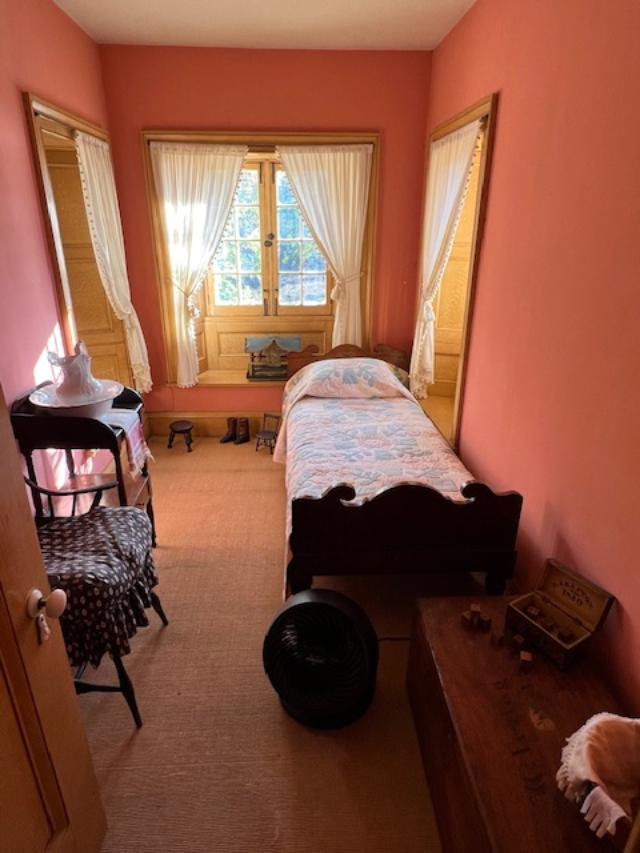
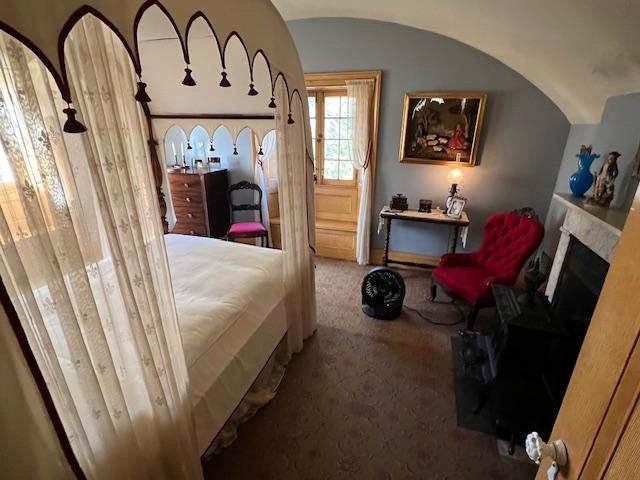
The upstairs contains small bedrooms where Washington Irving, his brother, Ebeneezer and his five nieces lived on and off when they were living at the house. Washington’s brother’s business had failed and the family came to live with him. Two of the nieces never married and ran the home for their uncle.
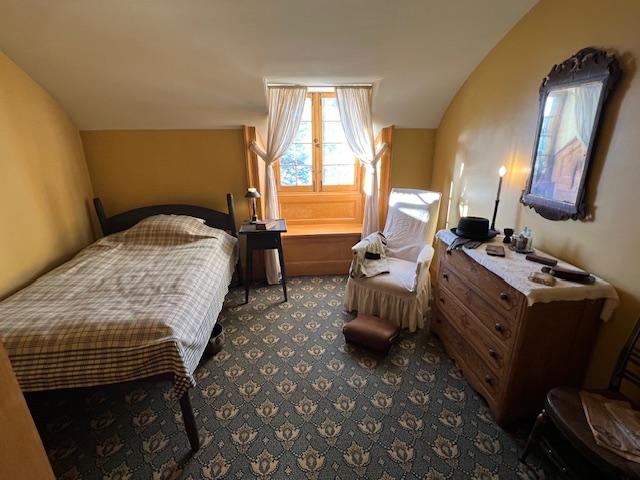
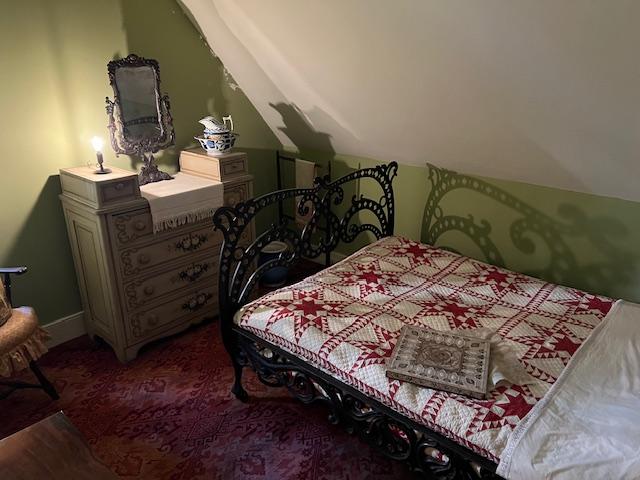
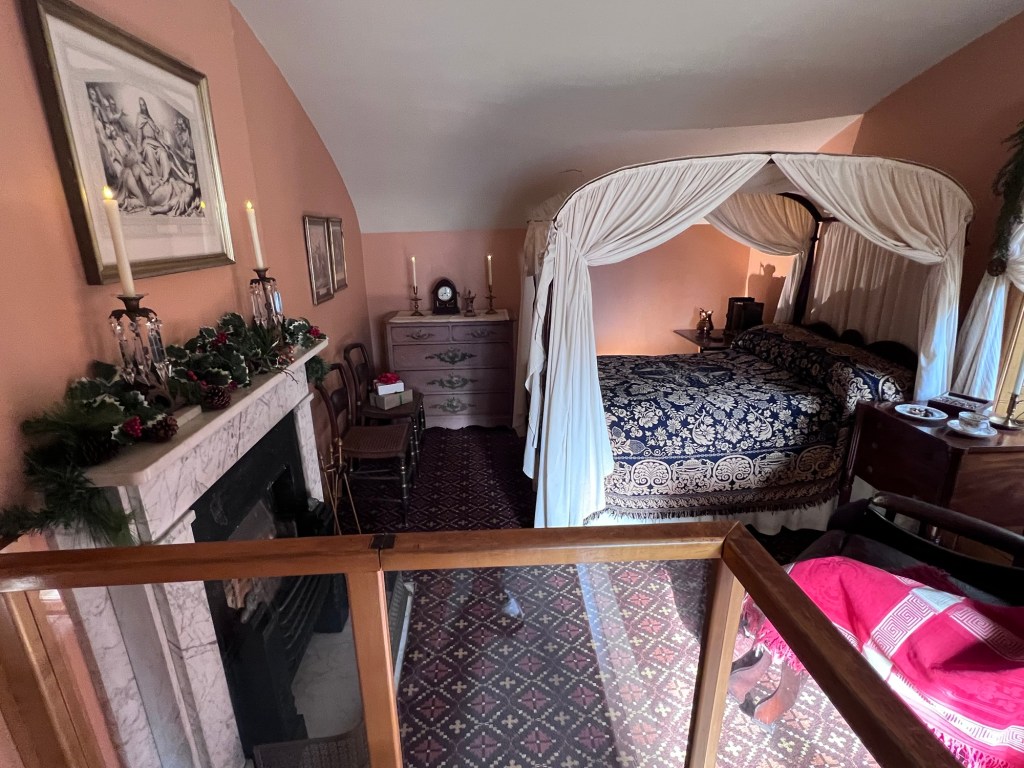
The Guest bedroom at Sunnyside
The Guest Bedroom
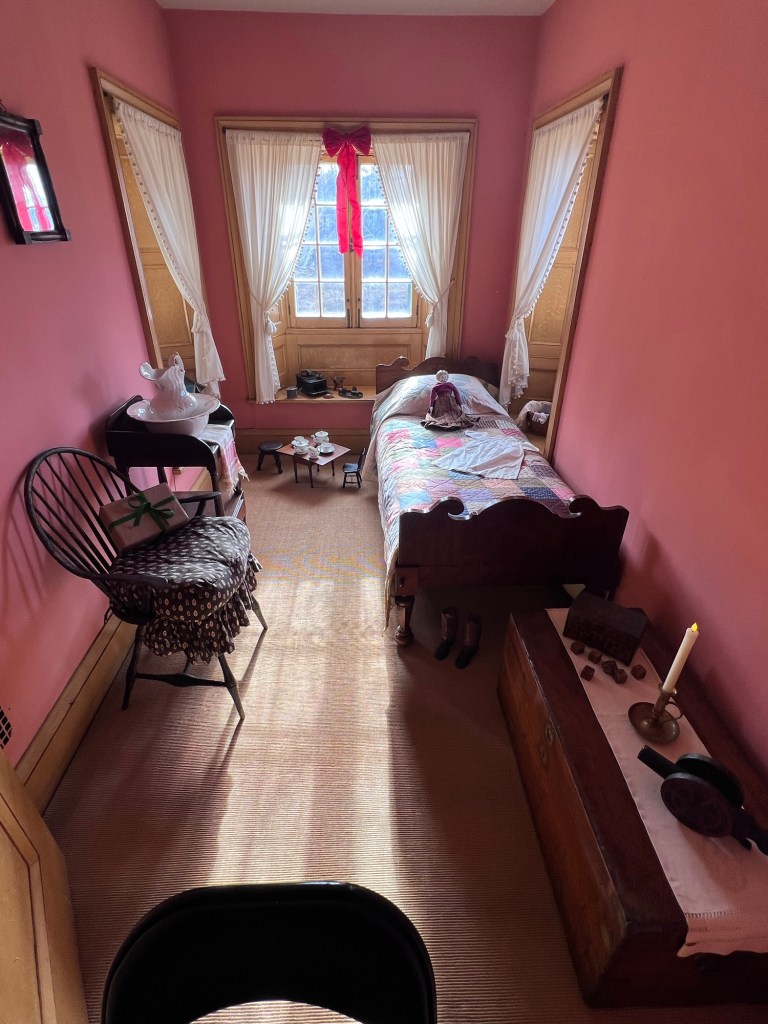
The Children’s Bedroom that catered to the little guests
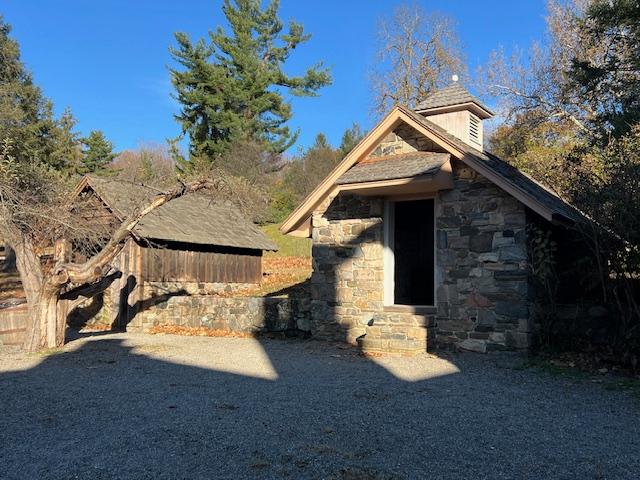
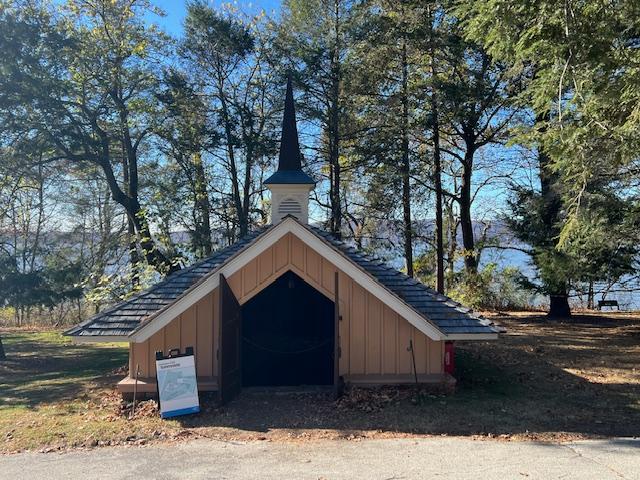
The house is nicely furnished in the most modern decor of its time but is not an elaborate house. It is a home and not a weekend mansion and this ten acre estate was a once a working farm. In the back of the house, there is an ice house and a barn show where the people who worked on the estate kept the house running.
Ebenezer’s daughter’s room
Ebenezer’s Room in Sunnyside; Ebenezer was Washington Irving’s Older Brother
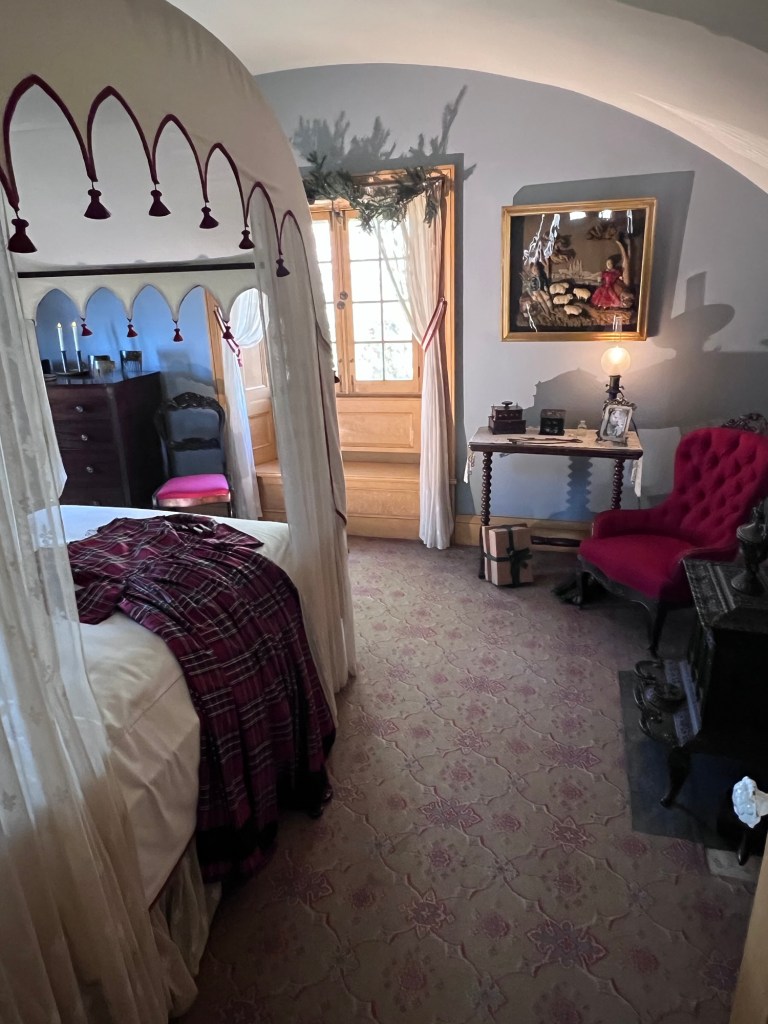
Washington Irving’s bedroom
Washington Irving’s bedroom
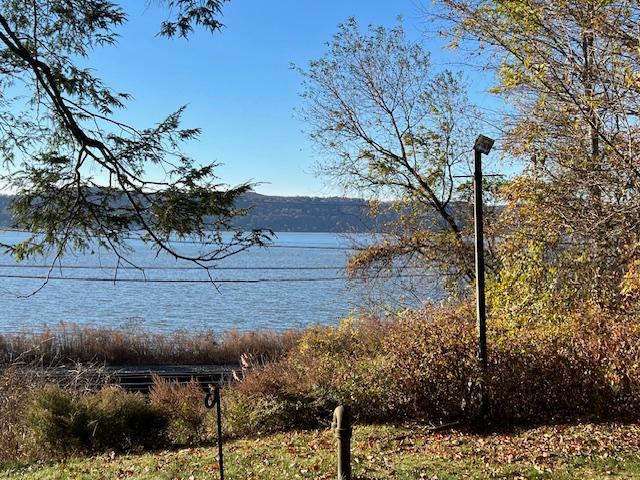
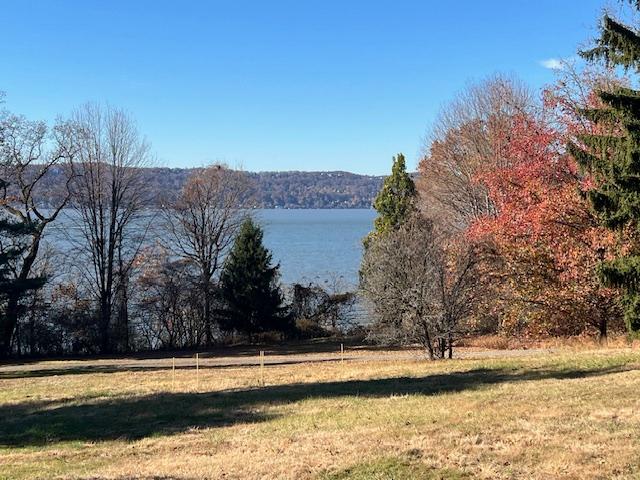
The view of the river is one of the most spectacular in the Hudson River Valley as its at the widest part of the Hudson River. You can see the cliffs of New Jersey on the other side with views of Nyack and the Tappan Zee Bridge in the background.
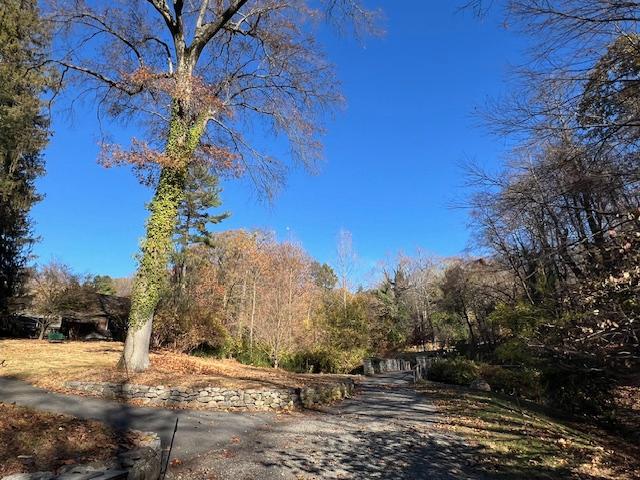
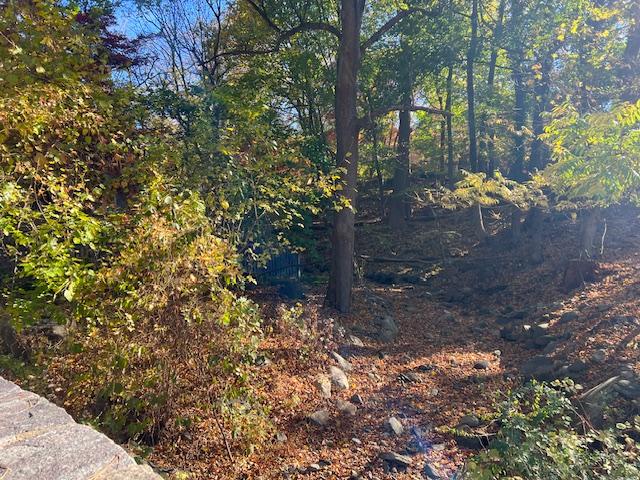
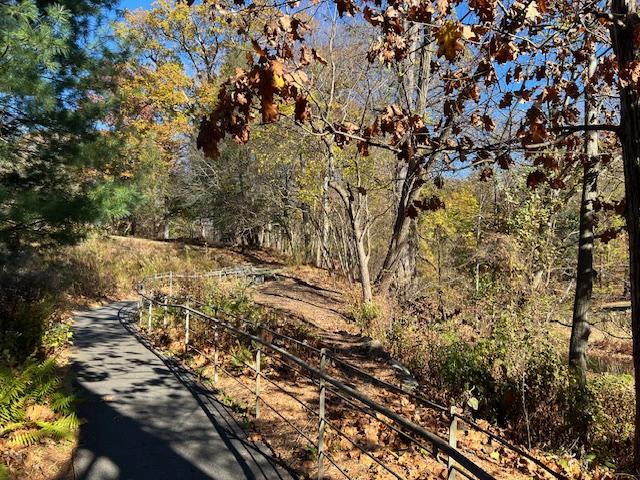
The grounds of Sunnyside
The grounds of Sunnyside
During the Fall season there are all sorts of activities going on at the estate and the tours are a very interesting look at life at that time. The Kitchen staff ran the home for social calls and main family meals as well as all the things it took to run the household.
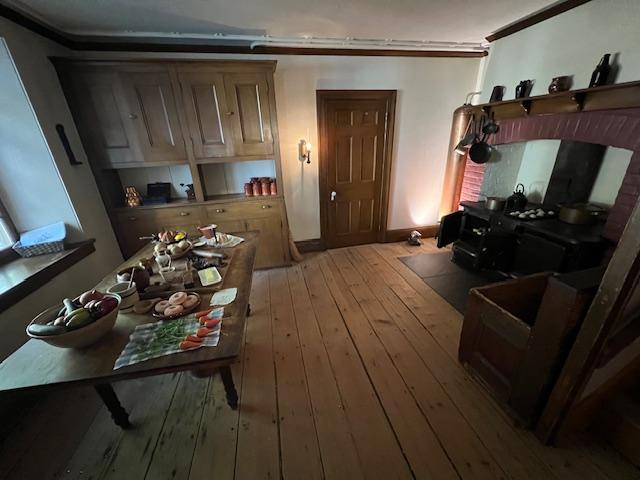
The Sunnyside Kitchen
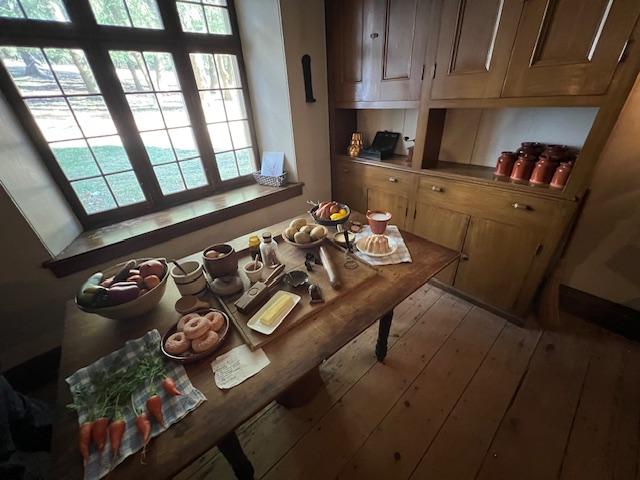
The kitchen and pantry area
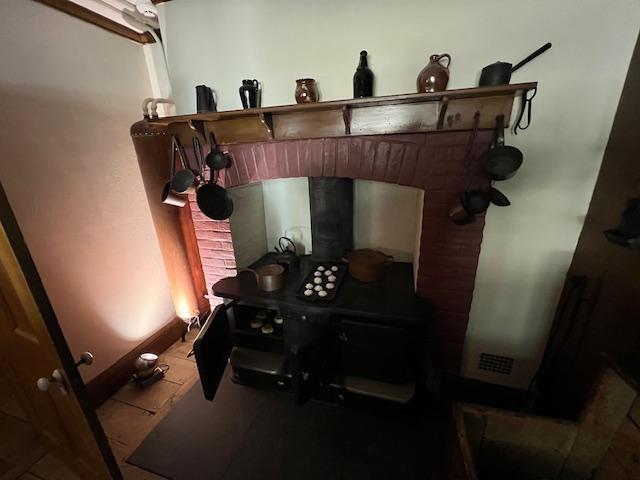
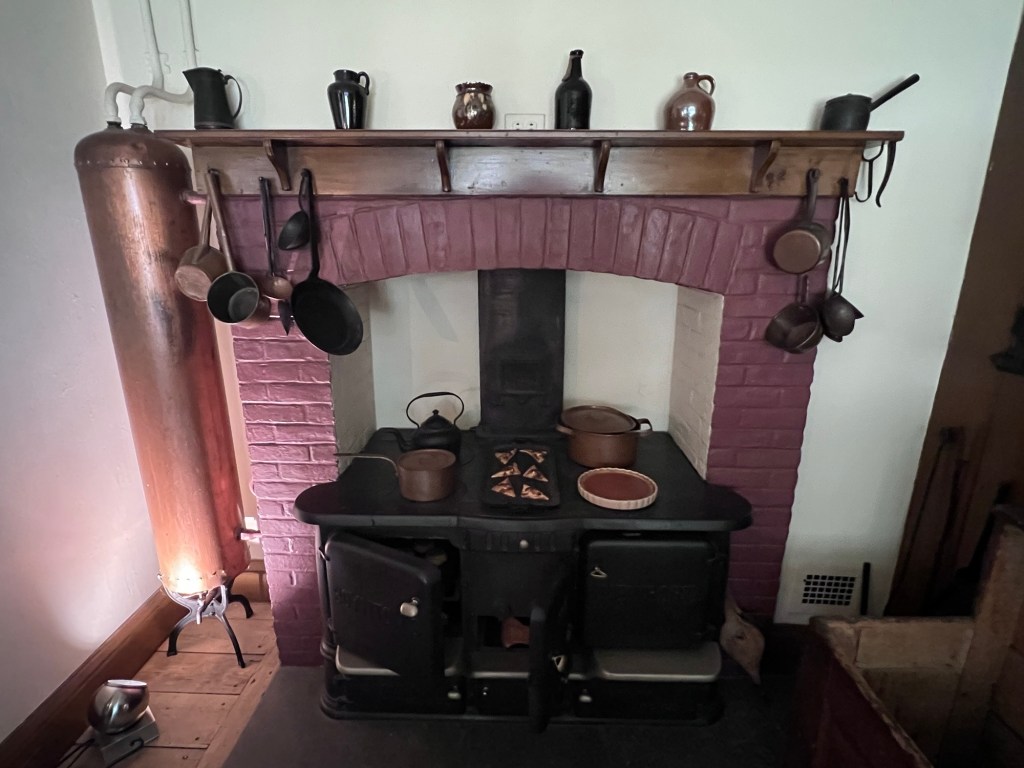
The stove in the kitchen
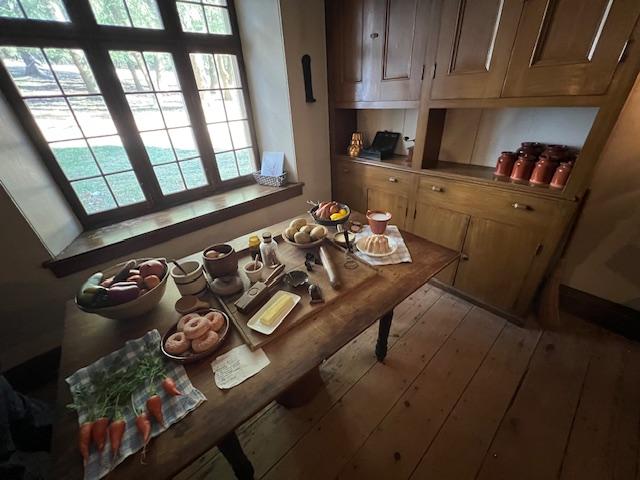
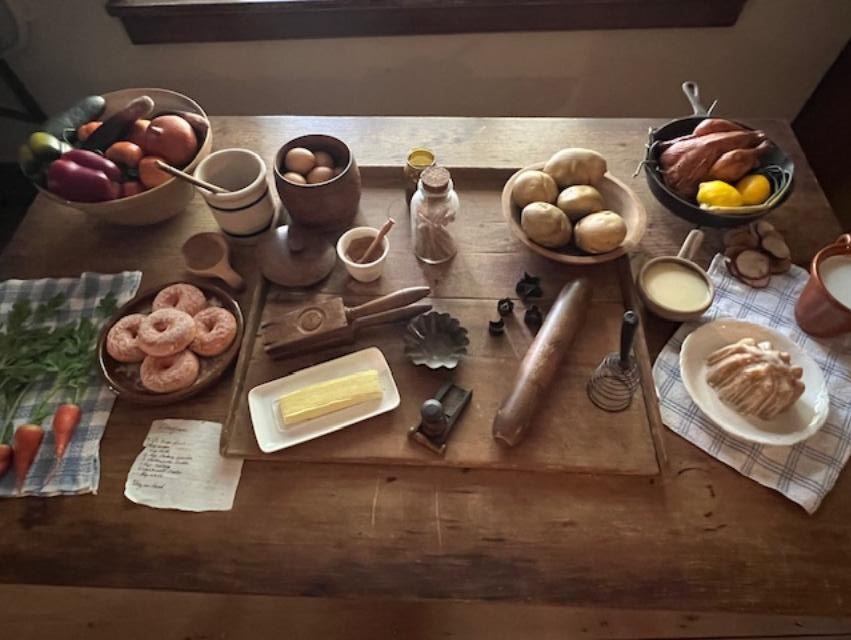
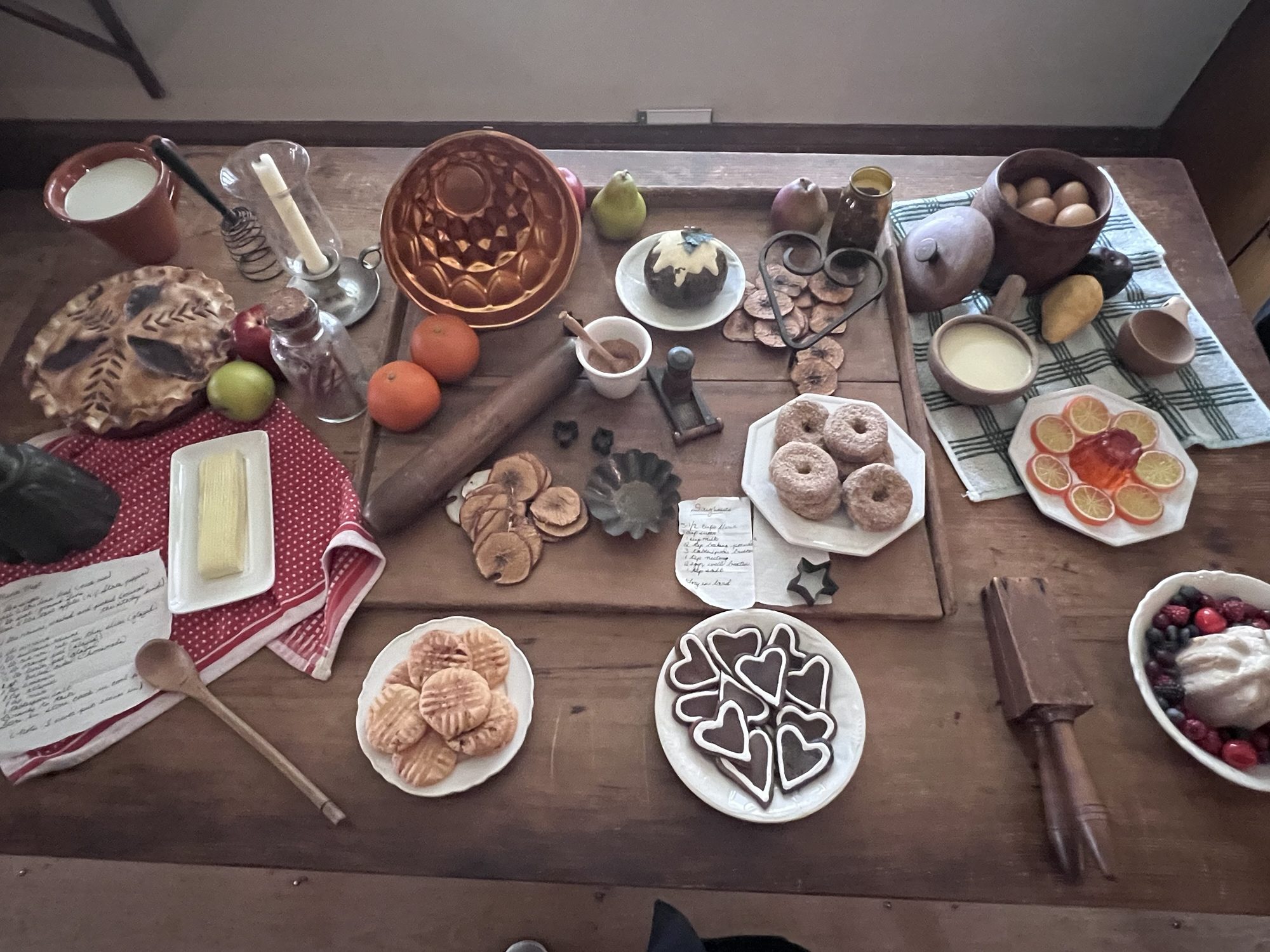
The delicious items that were prepared in the Country kitchen
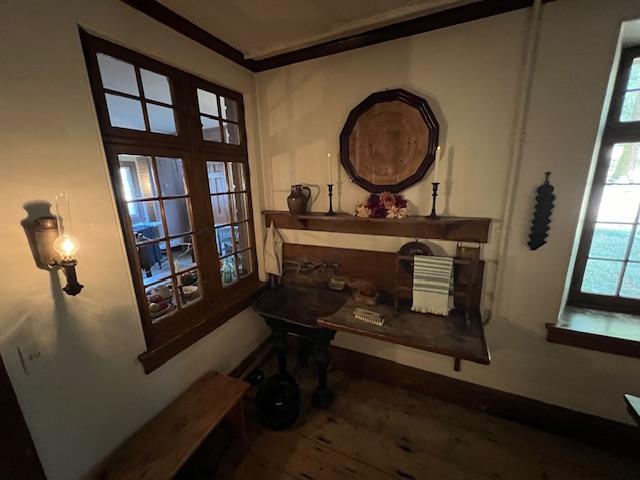
The sink area of the kitchen
The Cooks Kitchen
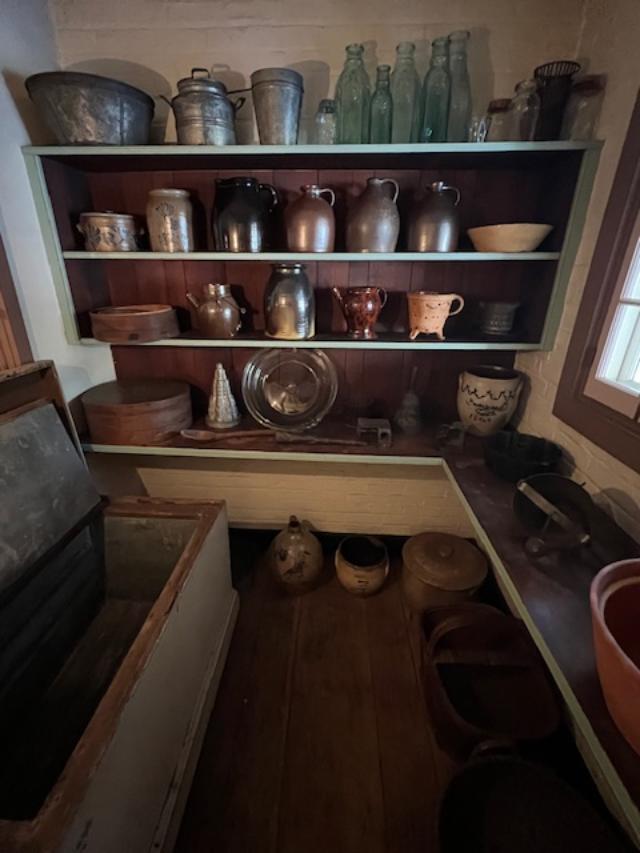
The Pantry
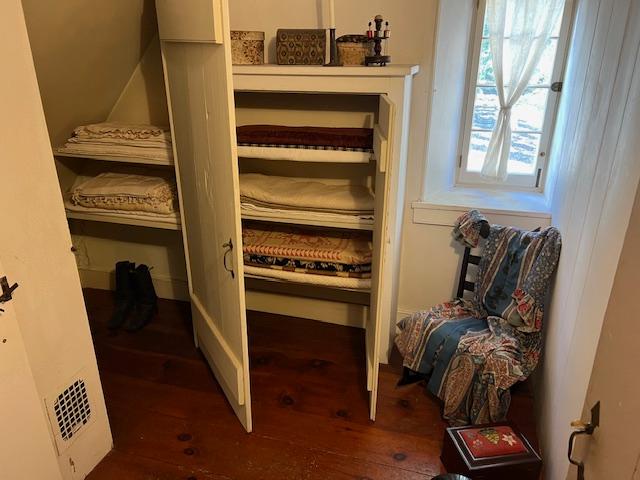
The Linen Room
The Sewing Room for the family
The History of Sunnyside:
The estate was once the home of Wolfert Acker called Wolfert’s Roost and was part of the Manor of Philipsburg and this home was once a simple two room stone tenant farmhouse built around 1690.
The patio view from the back of the house
The property came into the hands of the Van Tassel family, who were married into the Eckert family and owned it until 1802. That year, 150 acres were deeded to the family of Benson Ferris, one time clerk of the Old Dutch Church of Sleepy Hollow, whose wife, Maria Acker, was a descendant of Wolfert Acker’s.
The grounds of Sunnyside
In 1832, Washington Irving visited his nephew, Oscar Irving, who lived near the old stone farmhouse and was looking for a home at the time. He purchased the property on June 7, 1835 and would add to the property.
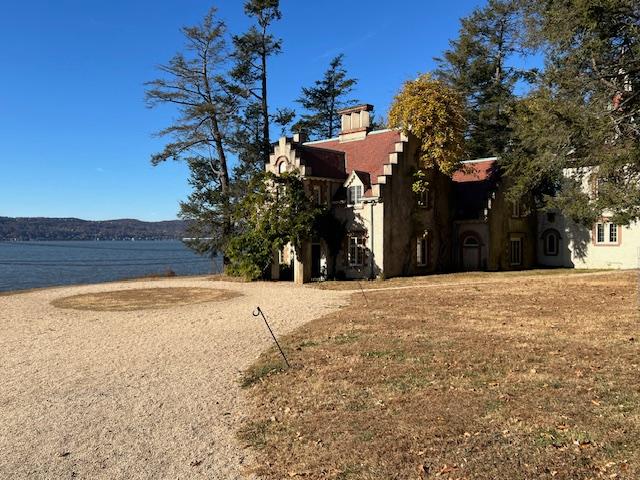
The view of the house of the Hudson River
Irving wrote a story, “Wolfert’s Roost”, about Acker and the site. In a letter to his brother Peter, he described it as “a beautiful spot, capable of being made a little paradise…I have had an architect up there and shall build upon the old mansion this summer. My idea is to make a little nookery somewhat in the Dutch style, quaint but unpretending. It will be of stone.” He asked his neighbor to help him remodel the house and landscape the grounds in Romantic style adding a brook and waterfall.
The grounds of Sunnyside
The house became a major spot of people visiting the area to meet the author. In 1842, he was appointed to be the Ambassador of Spain and left the estate in the care of his brother and four daughters. He returned in 1846 and added to the home the ‘Spanish Tower” in 1847. This added four more bedrooms to the home.
The Smokehouse
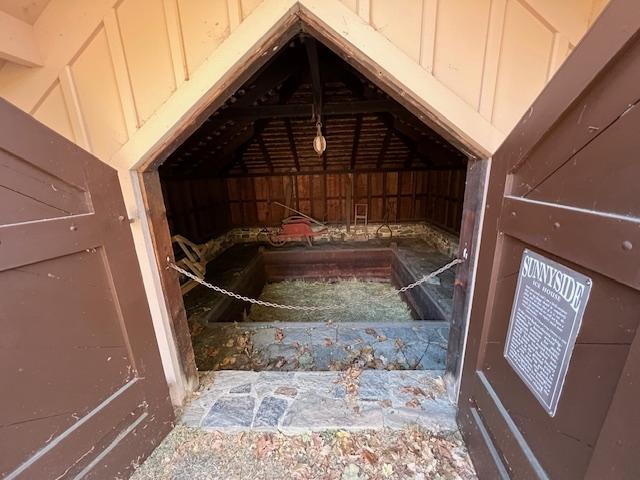
The Ice House at Sunnyside
The Ice House
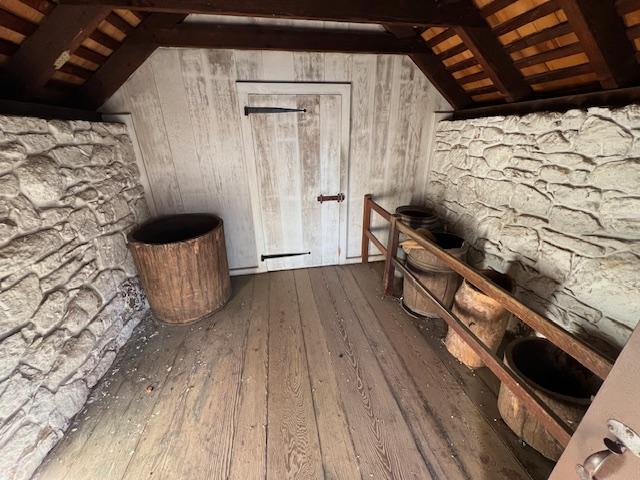
The Fruit Cellar
Irving died in the house in 1859 of a heart attack at age 76.
The house was purchased from Louis Irving by John D. Rockefeller Jr. and was restored for historic preservation. It was opened to the public in 1947.
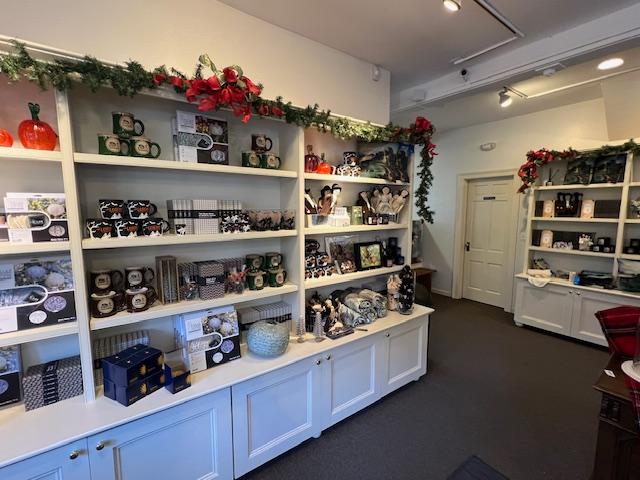
The grounds has a very nice gift shop
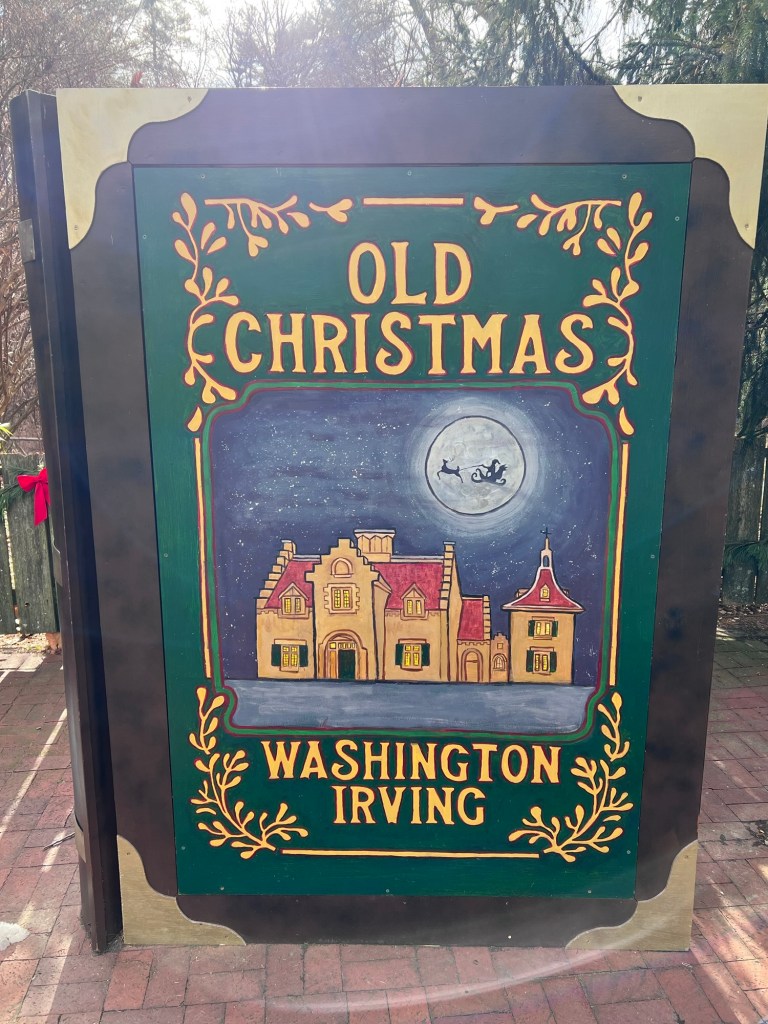
In 2025, I visited Sunnyside during the holidays to see what Christmas would have been like in the pre-Civil War era. These were not the elaborate times of the Victorian era but still the life of an Upper Middle Class families who celebrated the spirit of the holiday.
I visited the estate for a special Victorian event with refreshments, creating crafts and a special open tour of the home decorated for the Christmas holidays.
The property decorated during the holidays
The holiday events at the estate
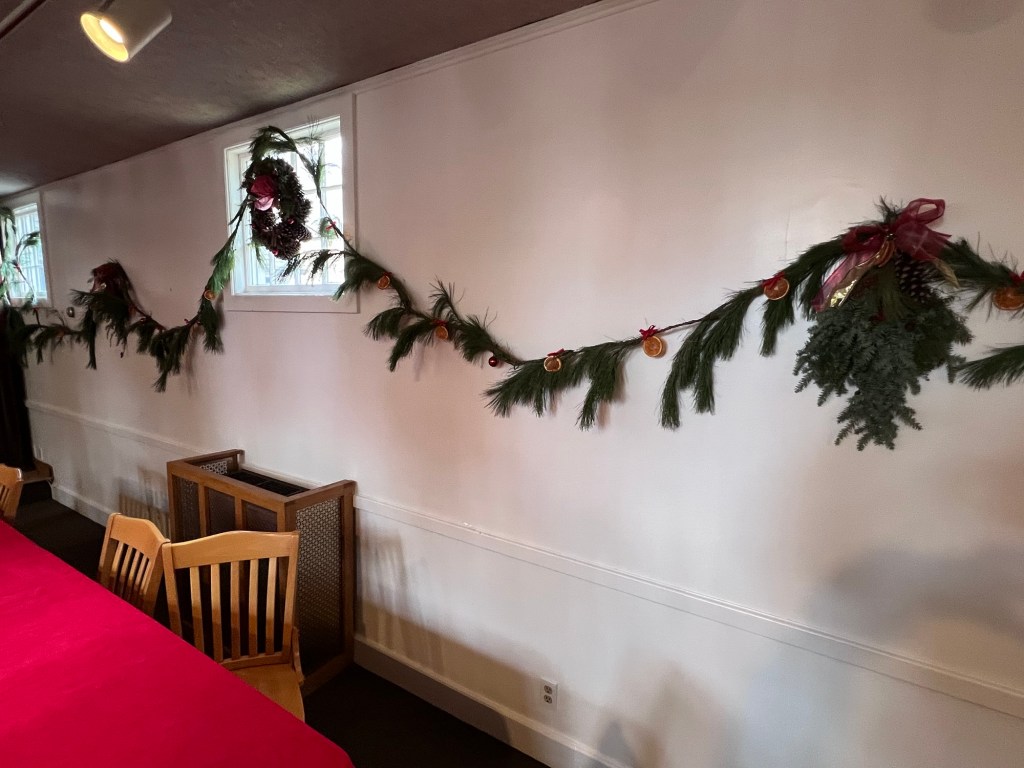
The meeting room was decorated for the holidays for refreshments and good conversation
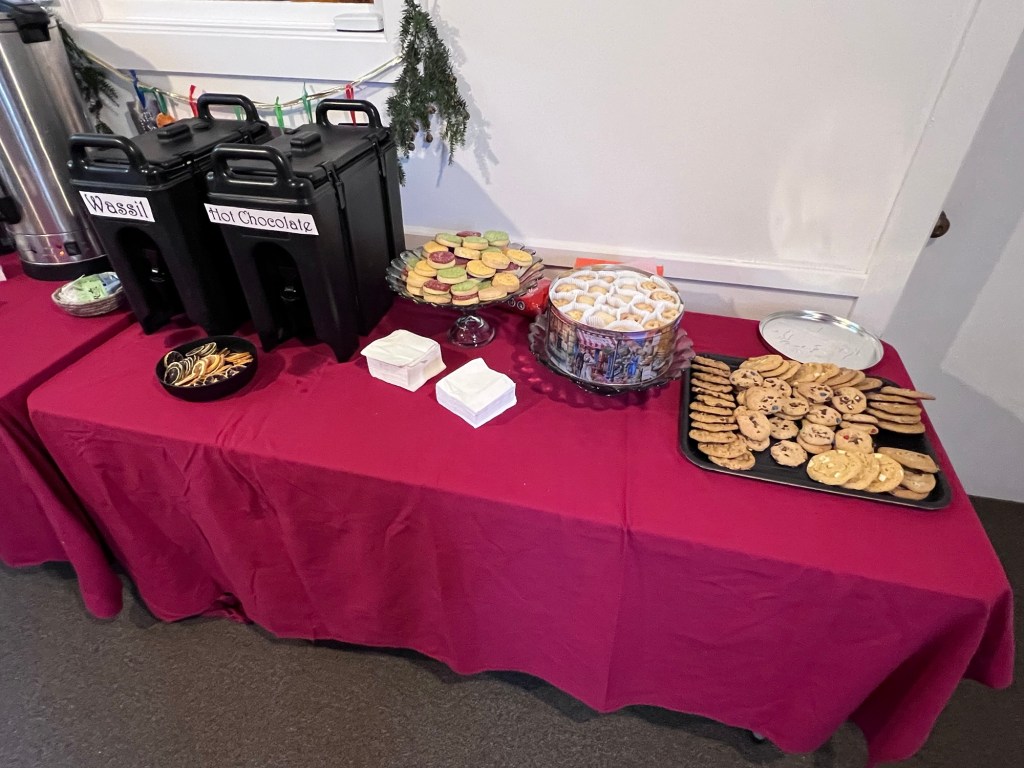
The refreshments at the Open House included cookies, candies, Hot Cider Wassil and Hot Chocolate and Tea
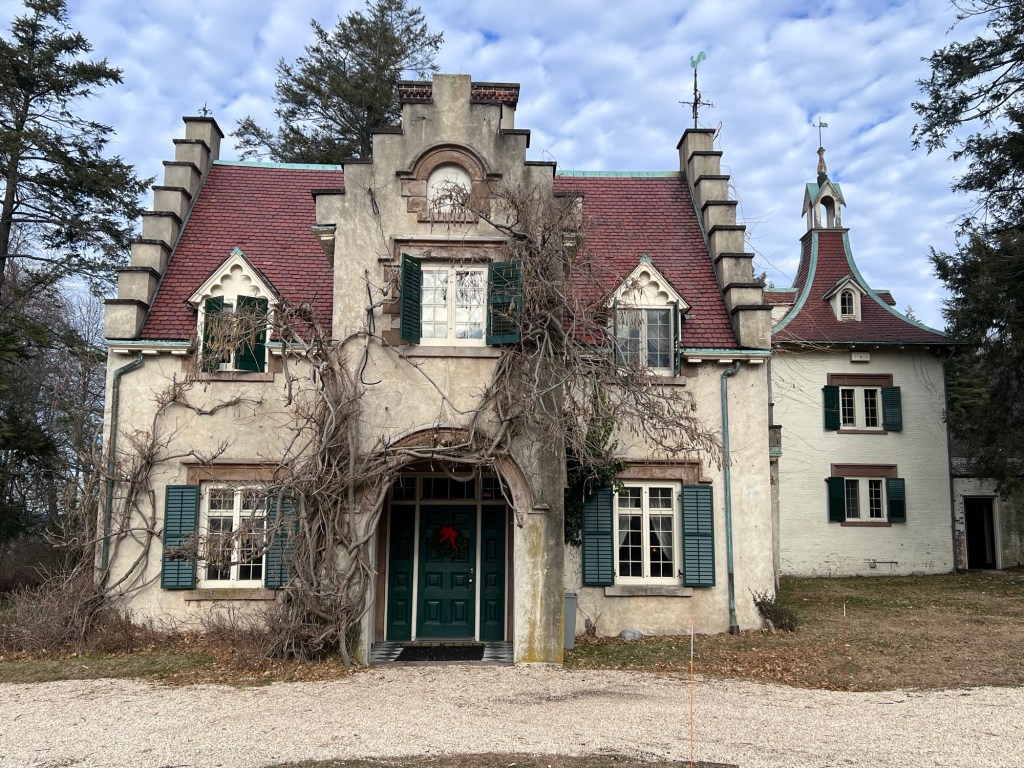
Sunnyside at Christmas time
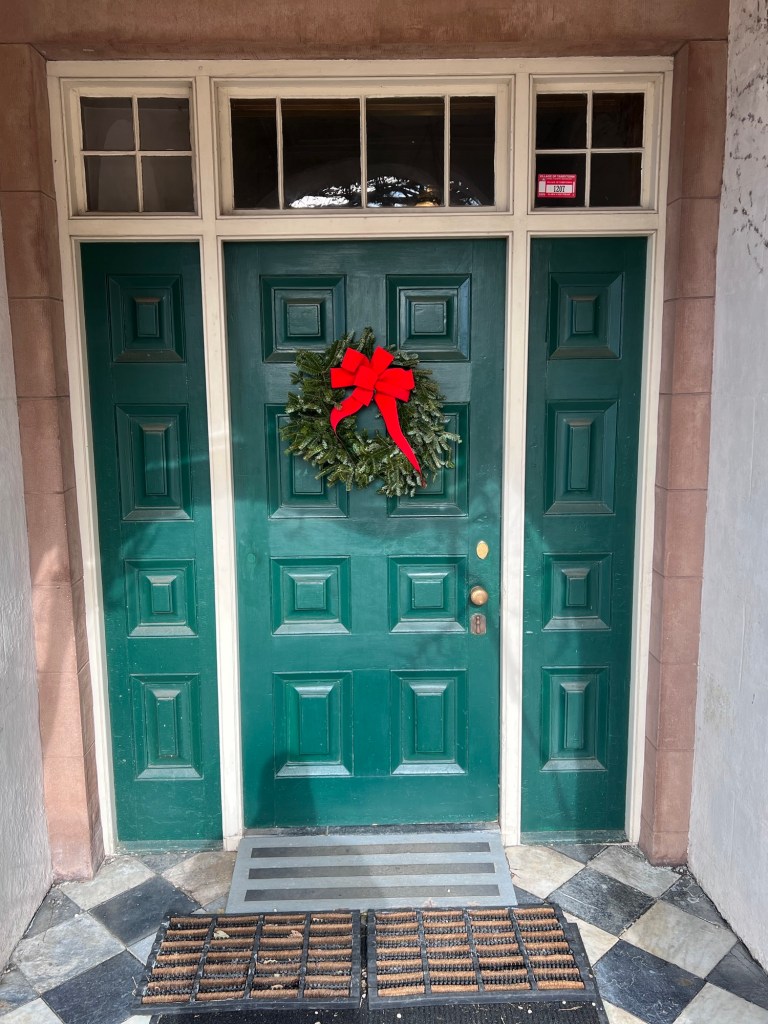
The Sunnyside front door at the holidays
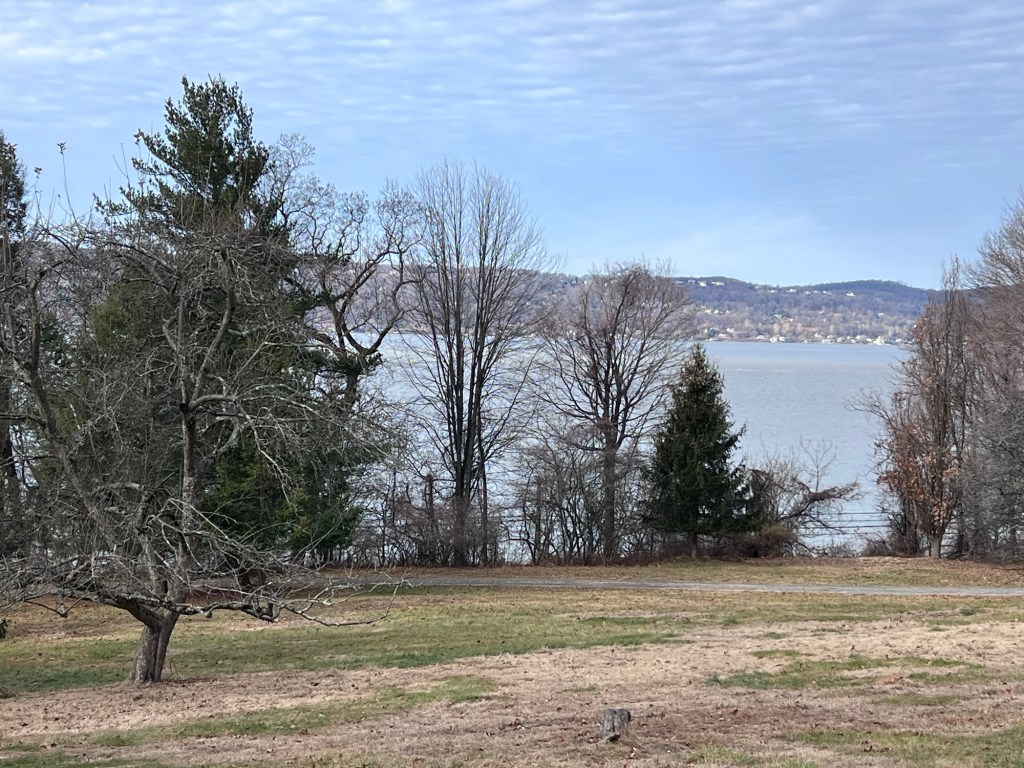
The beautiful view of the estate overlooking the Hudson River
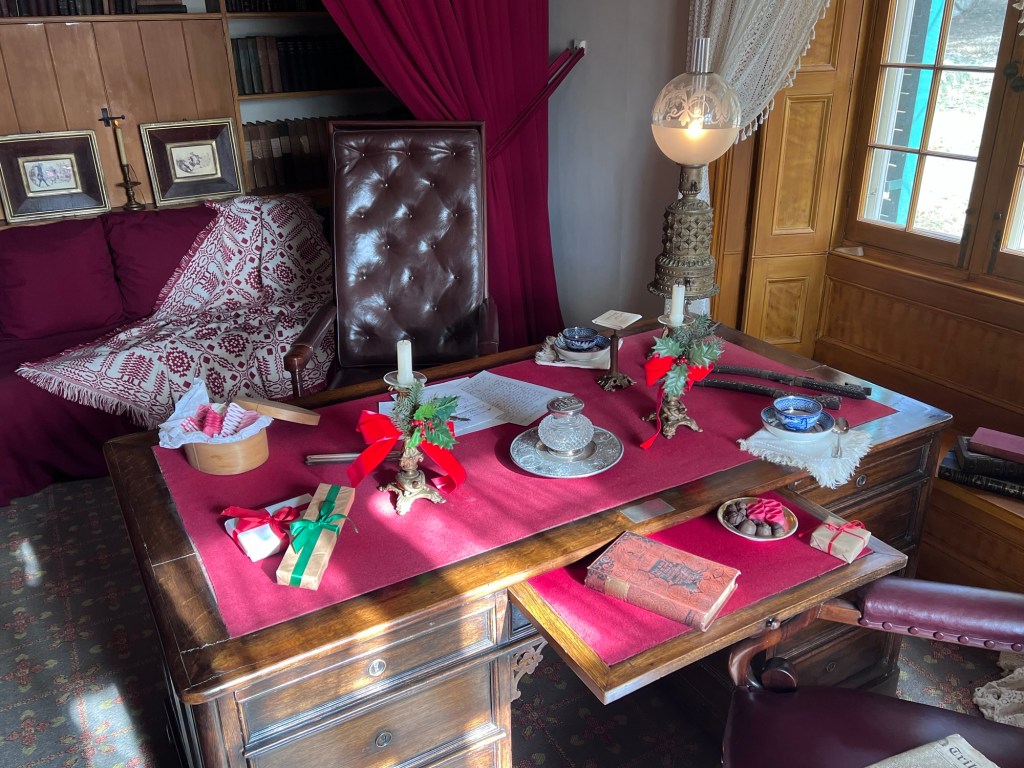
When you enter the house, the first room to the left is the office of Washington Irving. There was a bed in the room for last night work and the room decorated for the holidays.
Washington Irving’s office during the holidays
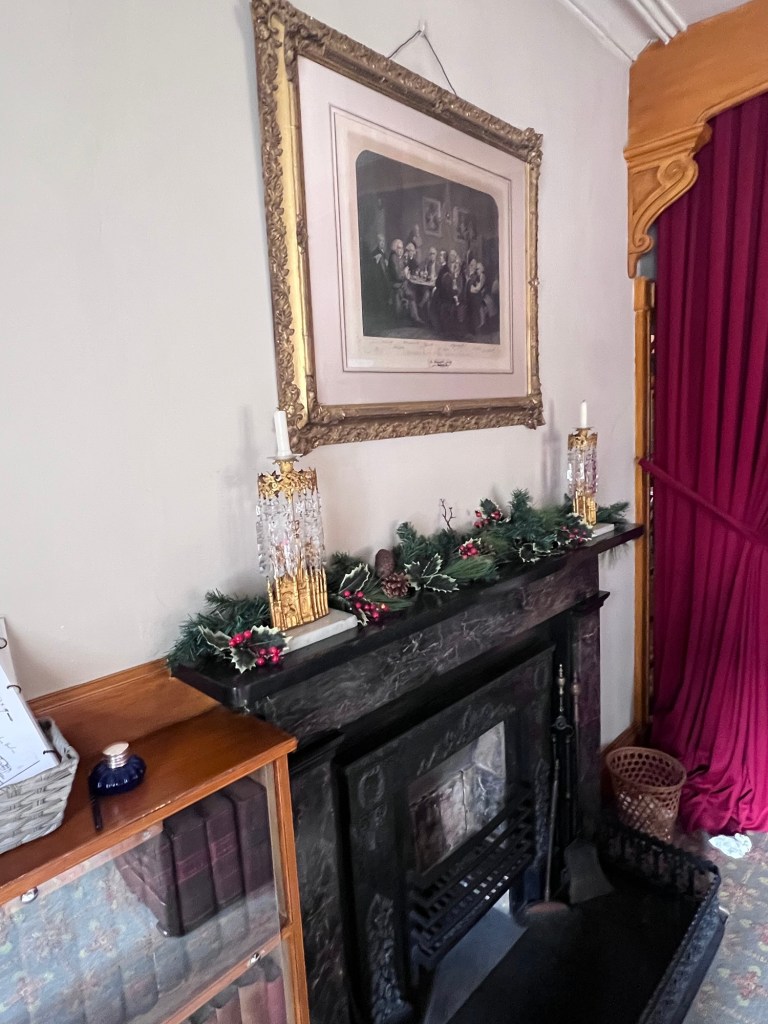
The fireplace in the author’s office
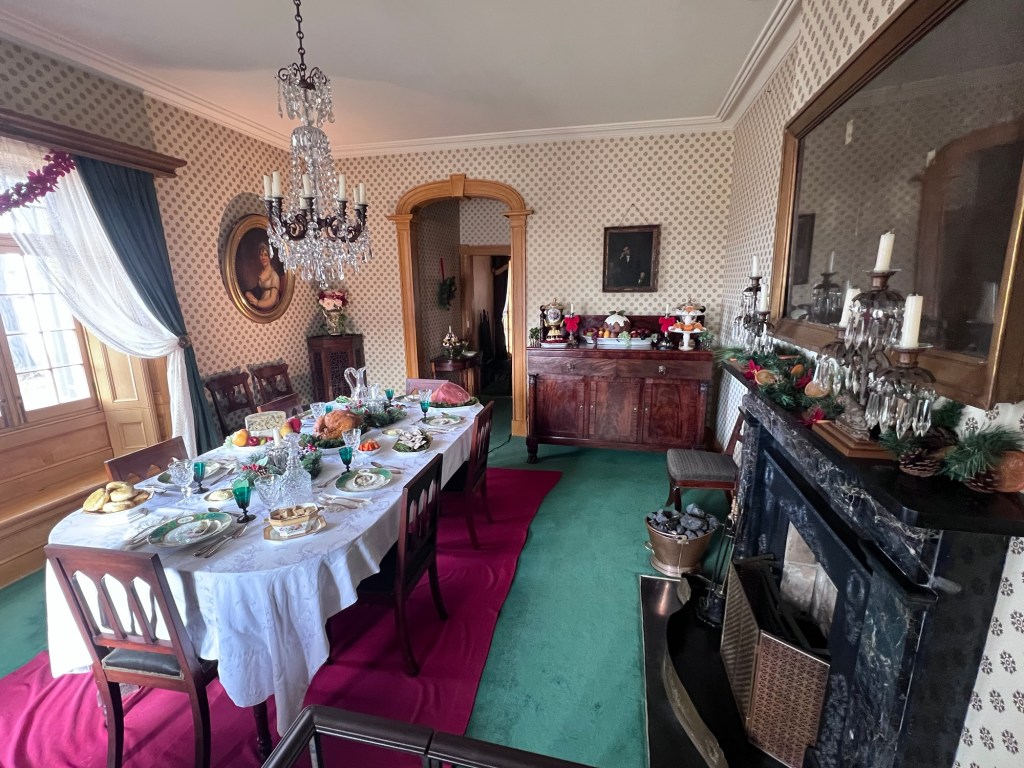
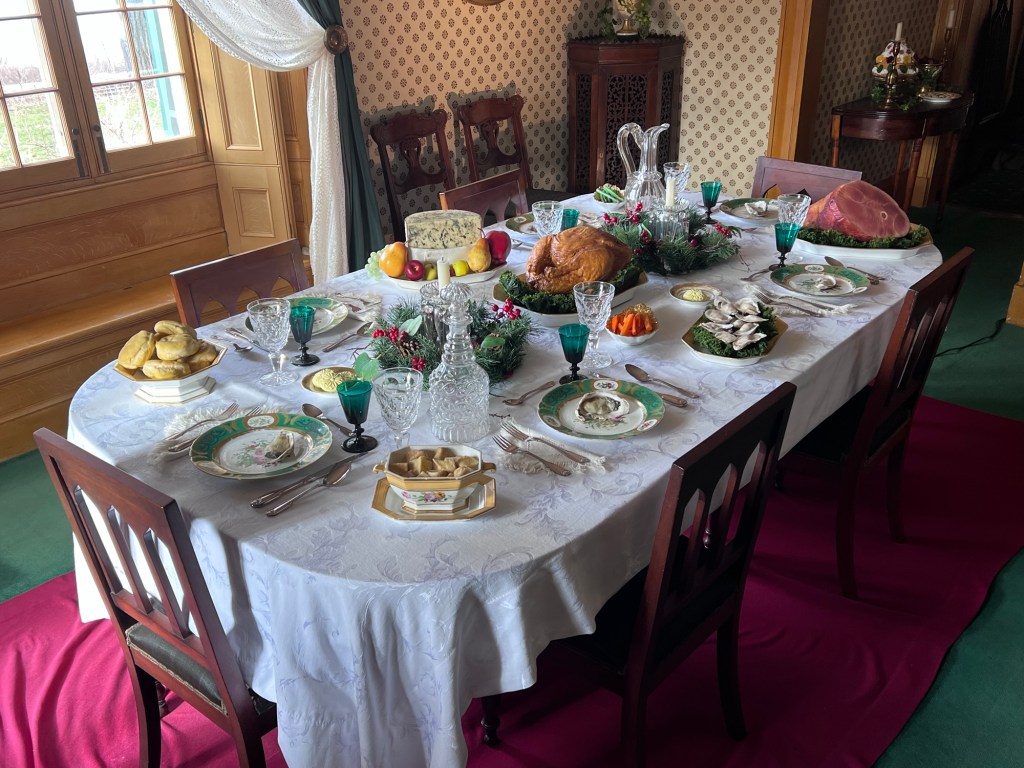
Nothing says entertaining than the dining room with a holiday lunch set with family china and all the delicacies of the time.
The Dining Room set for a holiday lunch
The Dining Room table set for Christmas lunch
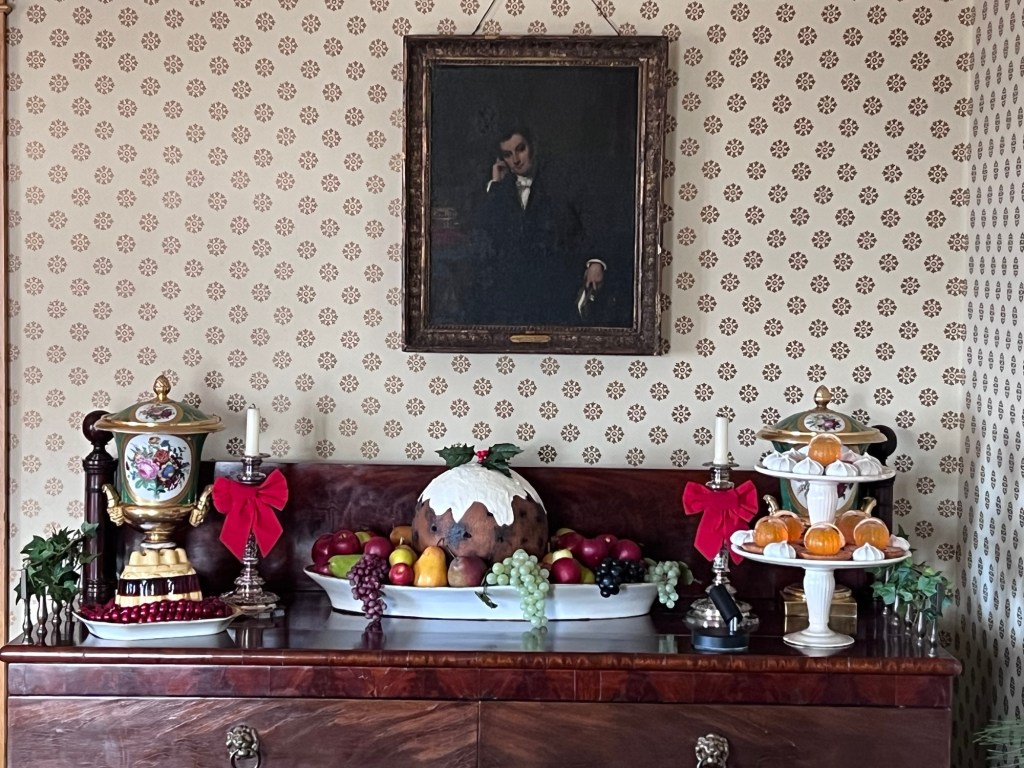
The Christmas desserts showcasing the Christmas pudding
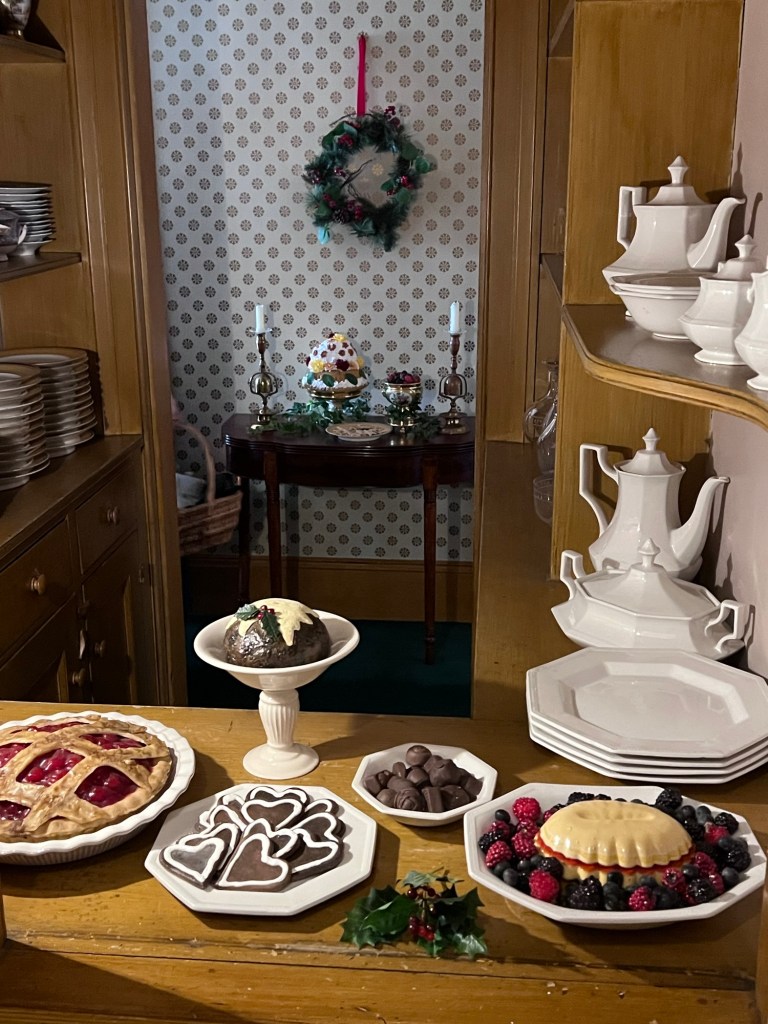
The pantry set for Afternoon Tea
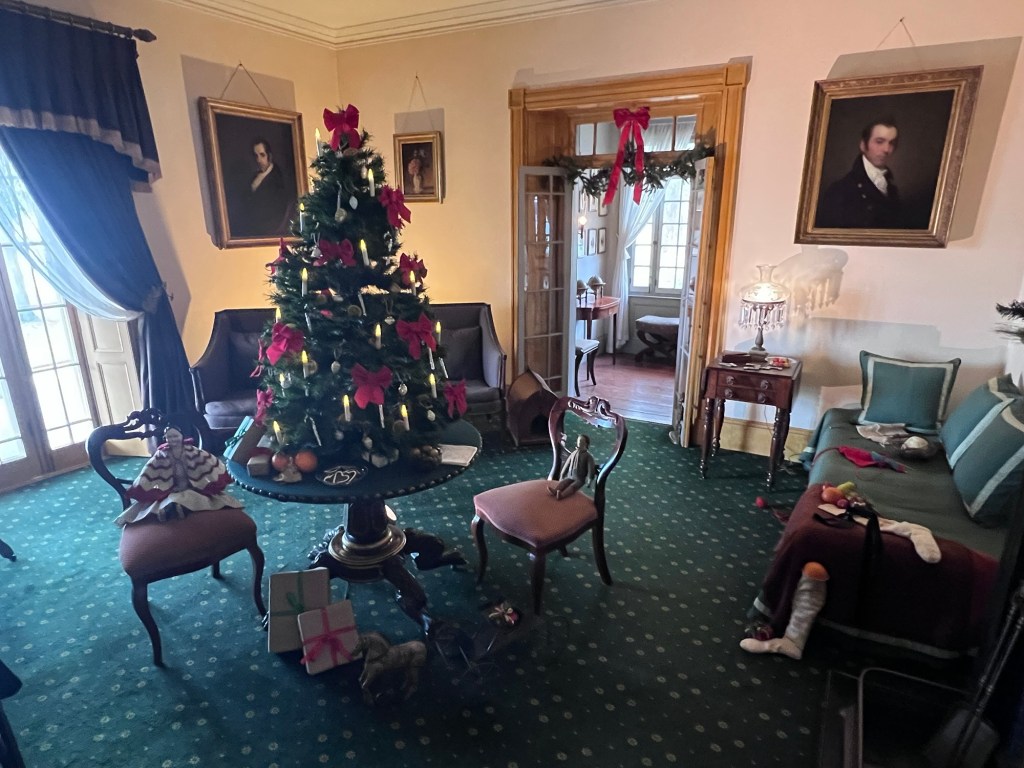
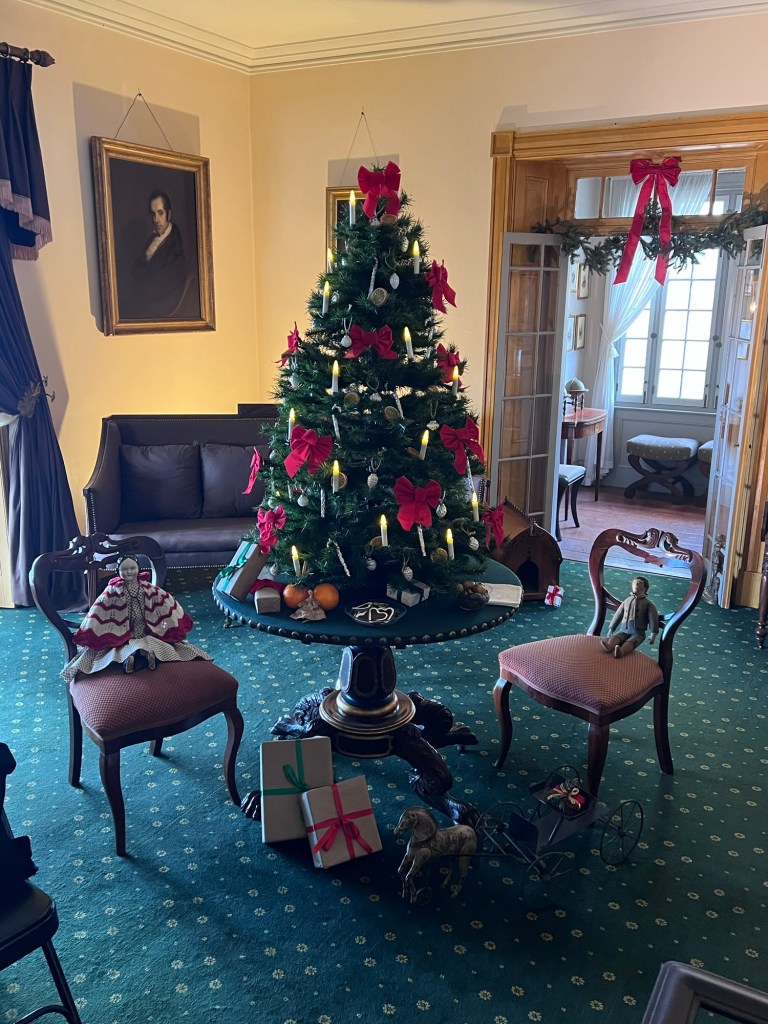
The Living Room decorated for the holidays with a Table tree, fashionable for the times.
The Table tree in the Living Room
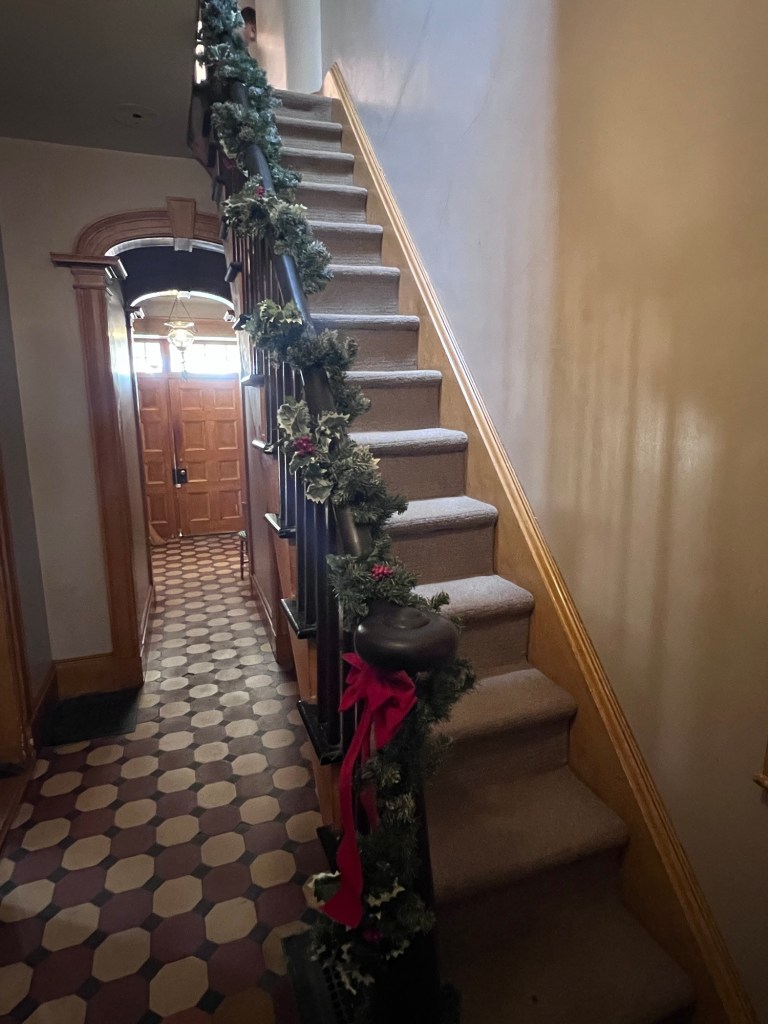
The hallway and stairs decorated for the holidays
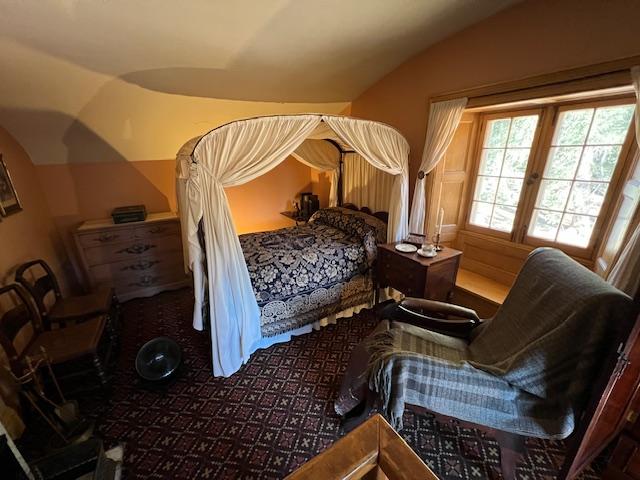
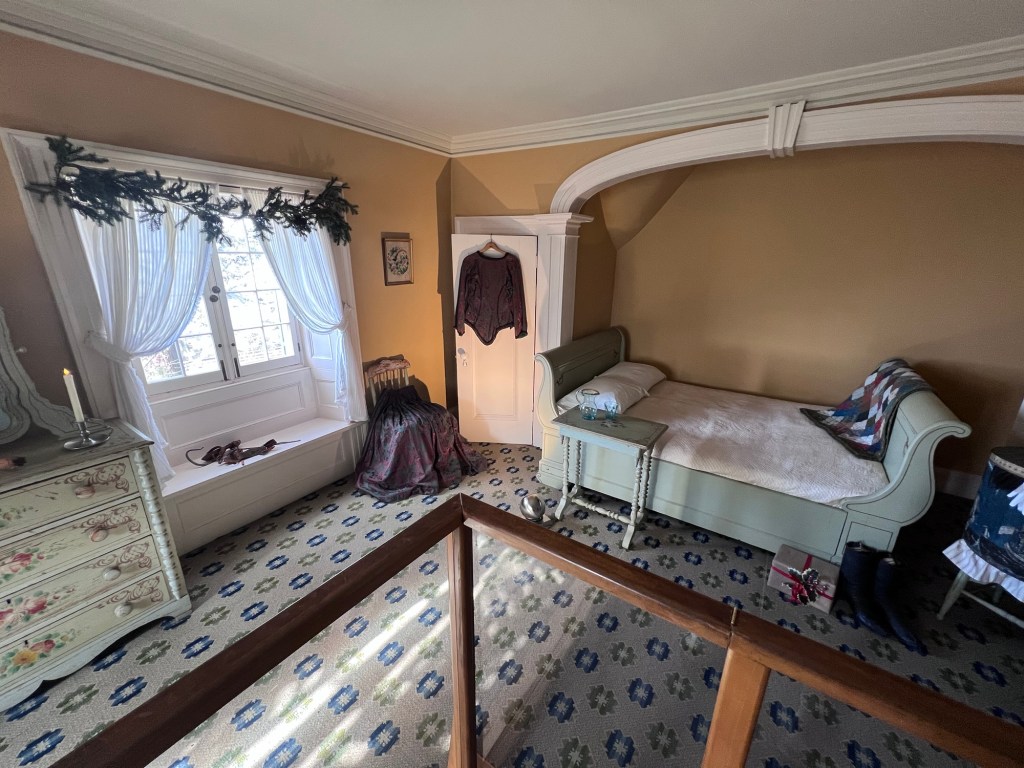
The French inspired bedroom
The Children’s room of a visiting niece
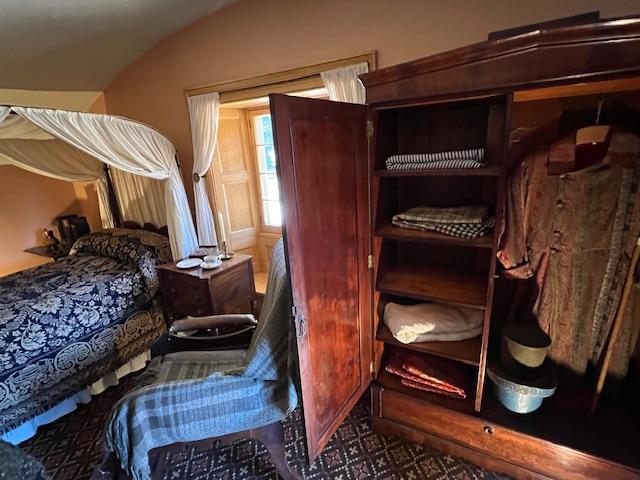
Washington Irving’s bedroom
The niece’s bedroom of those that lived with him
My last part of the tour led to the behind the scenes of how the household runs with the kitchen, washrooms and sewing room.
The Christmas dinner being prepared for the family
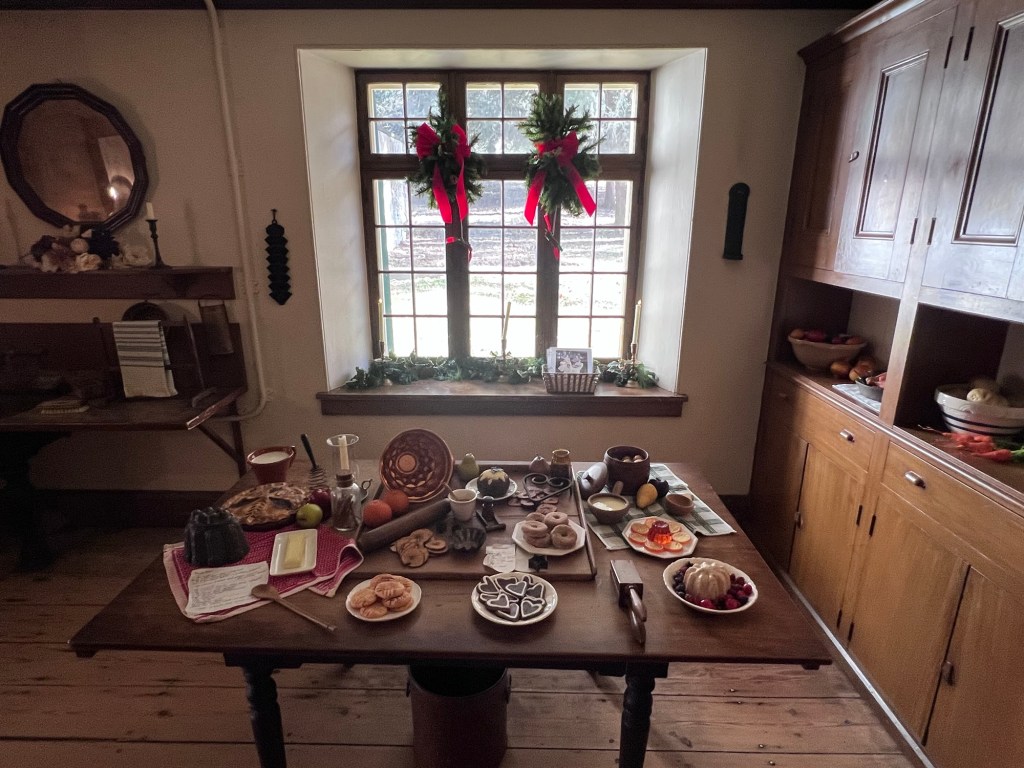
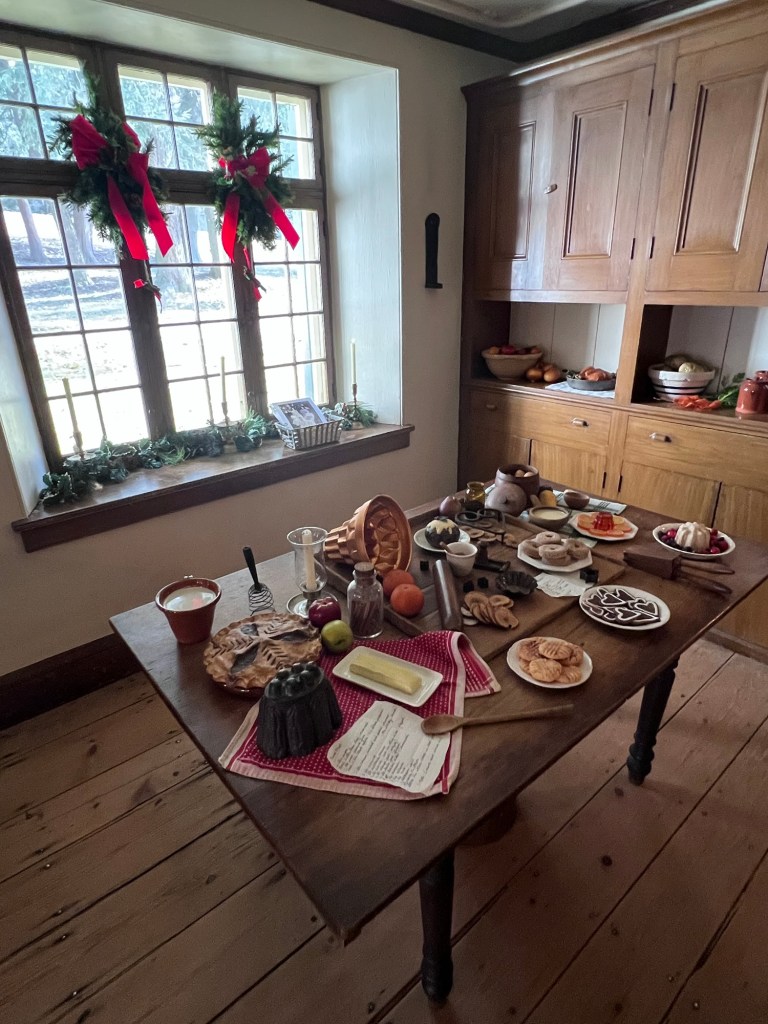
The delicious foods prepared for the family meals including cookies, pies and a favorite treat, doughnuts
The kitchen stove where all the family meals were cooked
The house kitchen is decorated for the holidays
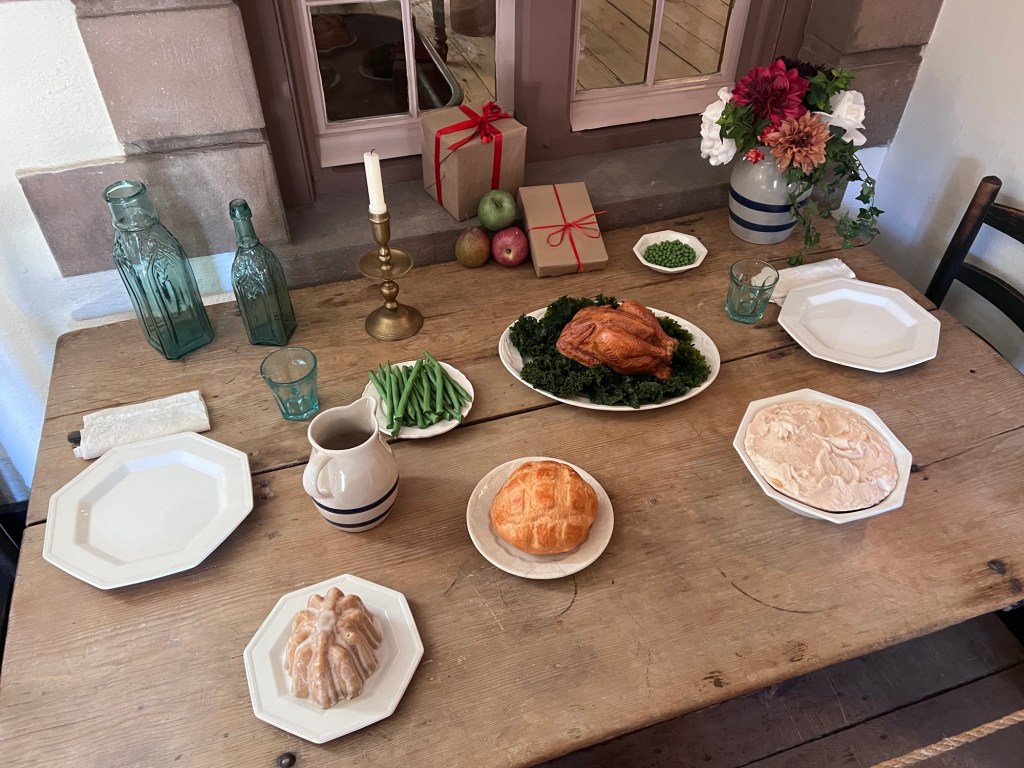
The staff holiday dinner was less elaborate but still very festive
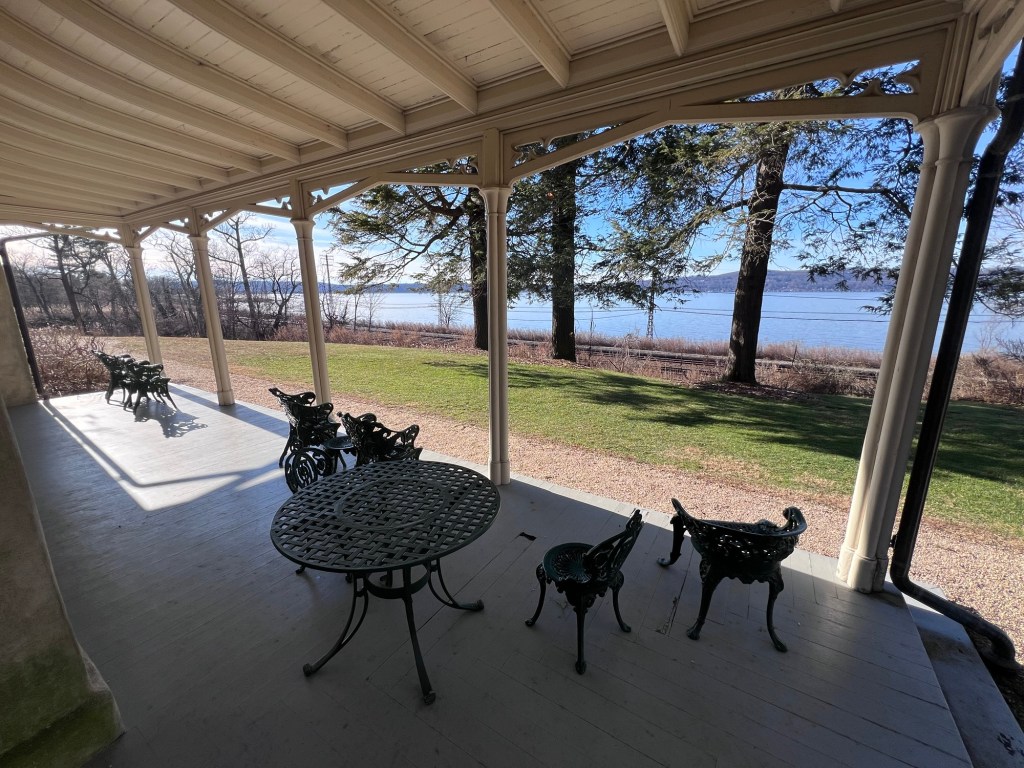
The patio off the kitchen overlooking the Hudson River
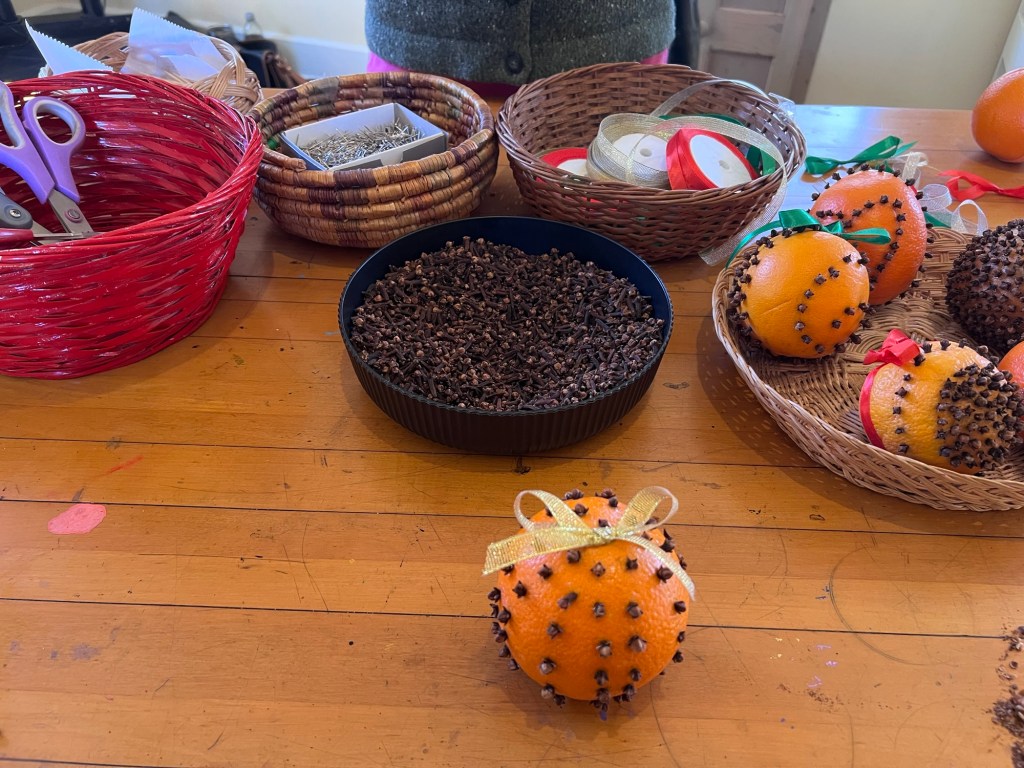
After the tour was over, I joined other guests making crafts such as Christmas crackers, creating ornaments and making pumices, the oranges studded with clovers.
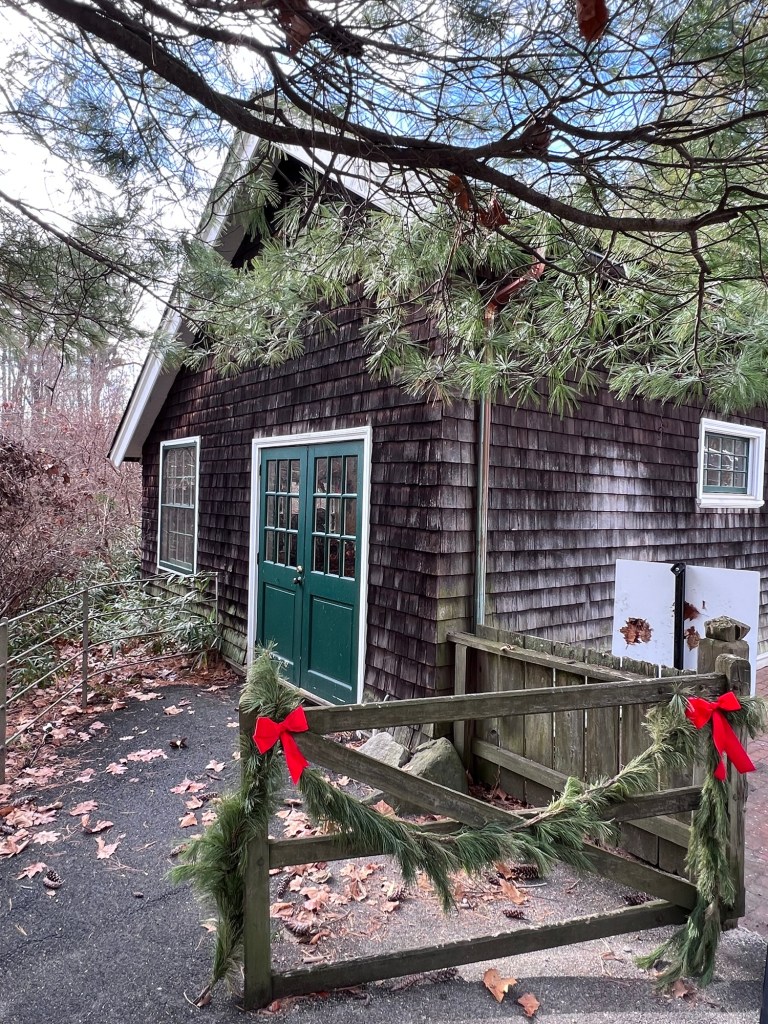
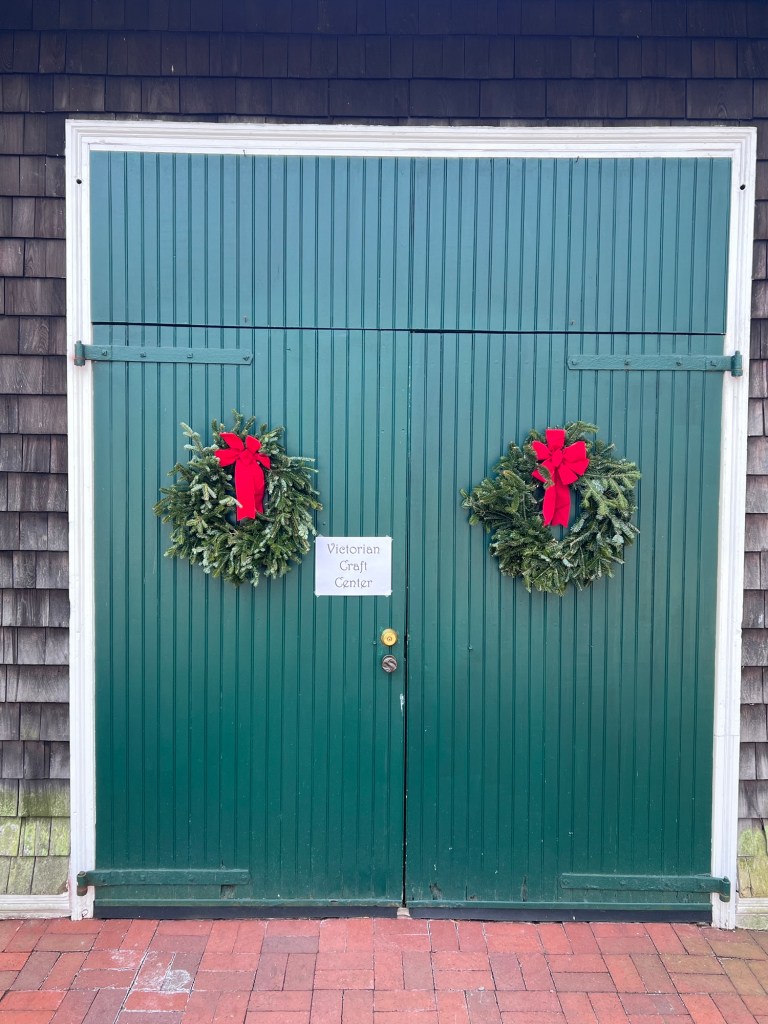
The festive barn where crafts were created
Me making my pumice for the holidays
Visiting Sunnyside during the holidays is a special trip to the past to join the Irving family in their celebration. Not as elaborate as some of the Victorian mansions of the Hudson River Valley but a look at a family whose celebration was similar to our own. Their traditions are the basis of our own of food, family and fun.
A trip to the Van Cortlandt Manor in Croton-on-the-Hudson is an interesting step back into the Colonial history of this country. During the summer, there is an interesting walking tour of the home offered usually from the end of July to Labor Day. Then the house is closed to prepare for the huge ‘Pumpkin Blaze’ during the months of October and November and then the house is shut down until the spring.
The house tour is interesting because it shows the home as a working farm and place of commerce for the family. This was not a weekend home for the family working in the City but crops being grown for shipping, vibrant gardens that supplied the house and a small tavern for travelers along the Albany Post Road as well as a place for shipping goods down the rivers.
Van Cortlandt Manor
The home is furnished in the most modern furnishings of the time and you can see how the house reflected the needs of the family at that time. It was more of a home than a luxurious place to entertain. The furnishes are practical, very in fashion of the time and nicely decorated.
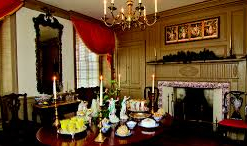
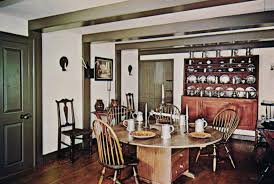
The Dining Room
The tour of the kitchens and storage areas show that even in what was the modern era was not such easy living without servants. The estate was somewhat self-contained with animals and provisions being raised on the land and there is even an area where fabric such as flax and cotton where spun and made into clothing.
The kitchen dining area
The upstairs bedrooms show that the linens were under lock and key even with the servants and that the rooms were well-appointed and comfortable. A lot of the family heirlooms still reside in the house and it gives you a perfect look at what life must have been like when the family lived here.
Don’t miss the gardens as well. Some have been over-grown because of the lack of volunteers but still you can see the beauty of the flowers and trees around the house. The house sits right on the cross between the Croton and Hudson rivers and even though it is now grown in, you can see that the house stood at one of the busiest sections of Upstate commerce.
The Pumpkin Blaze-Hudson Valley Historical Association:
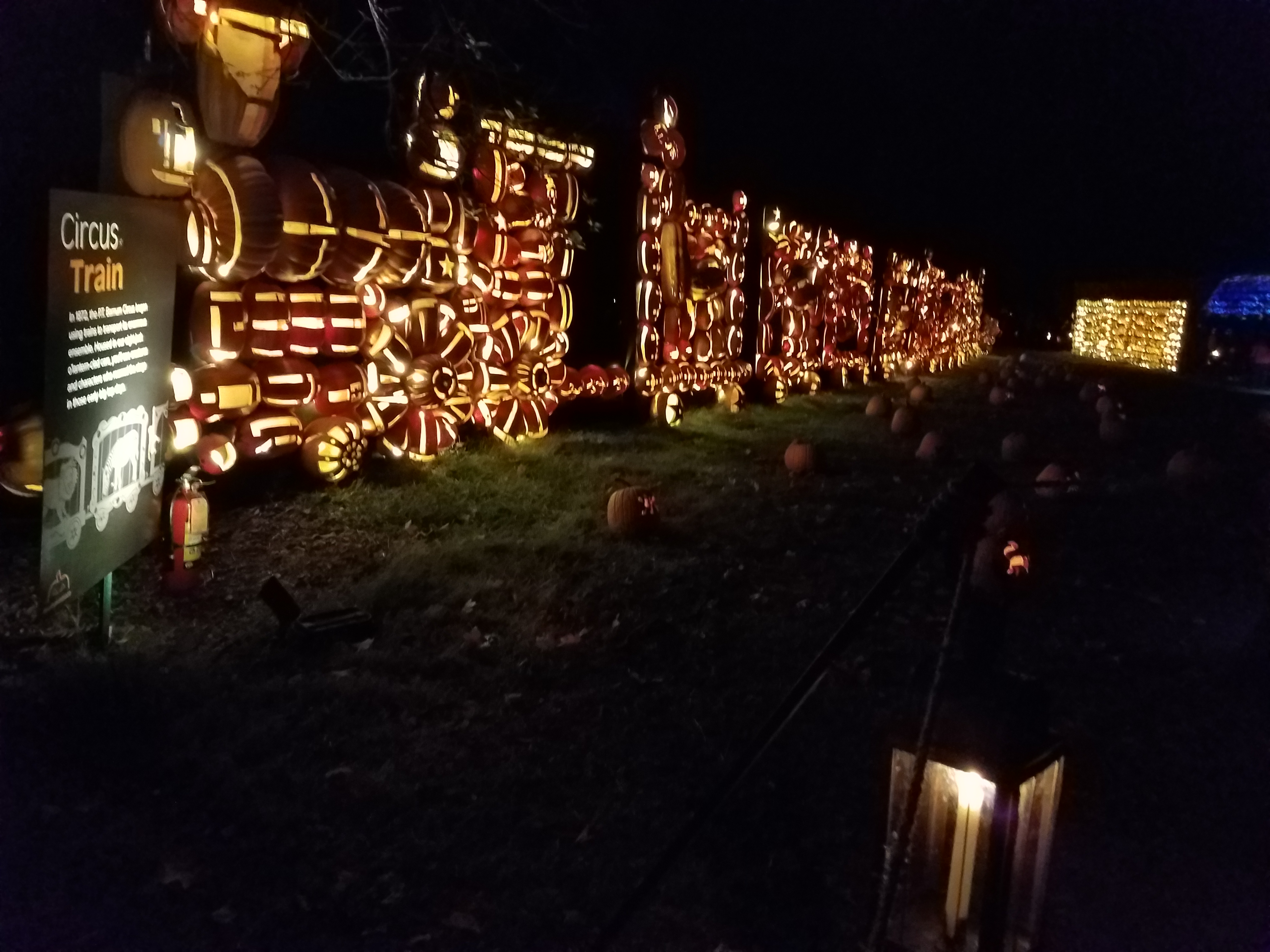
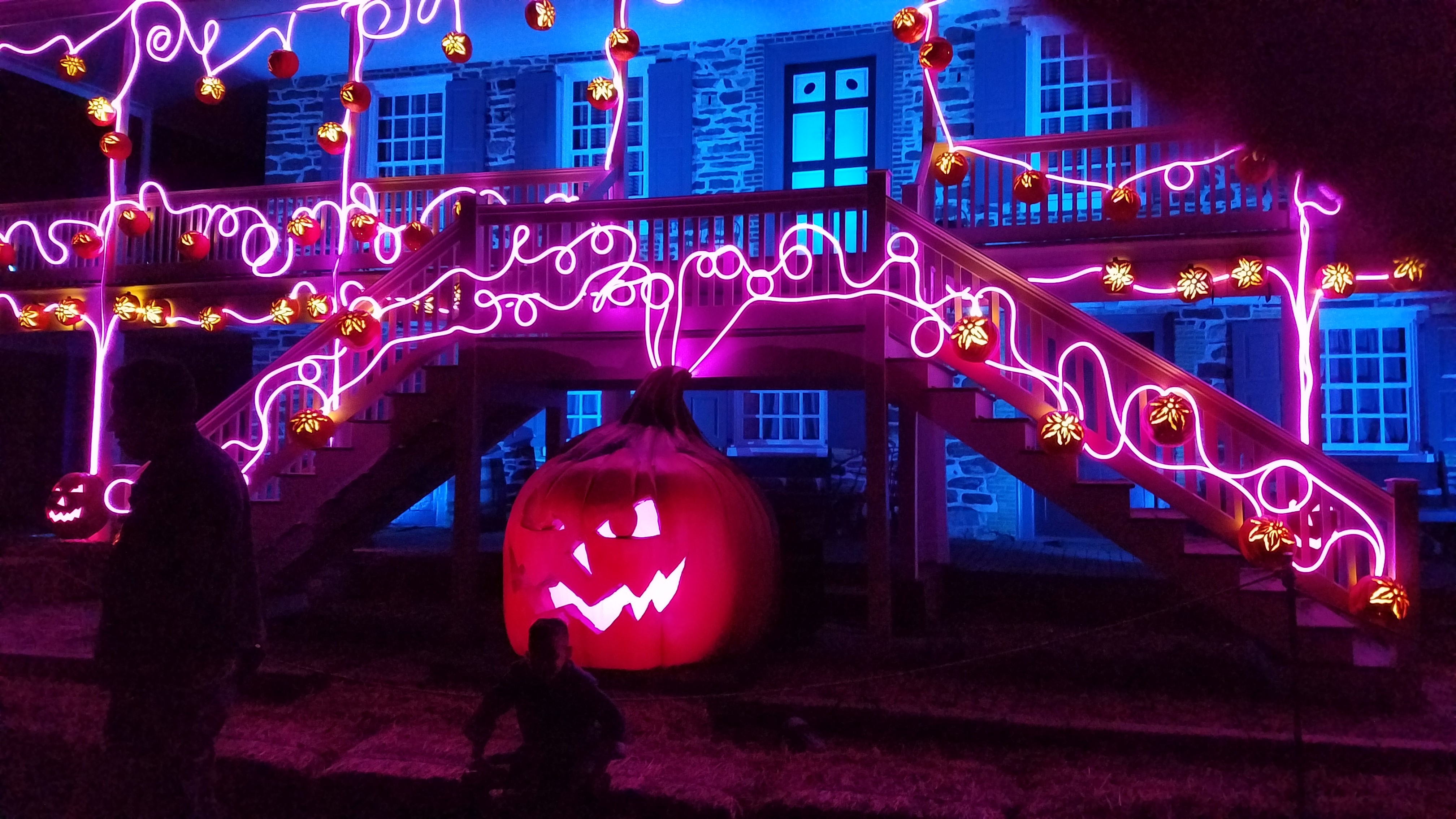
During the months of Halloween, there are thousands of pumpkins that line the walks and beautiful displays to see along the paths of the estate and the river. This event is sponsored by the Hudson Valley Historical Association and is one of their biggest fundraisers. Don’t miss this annual event every fall.
The Blaze is amazing!
The Pumpkin Blaze in 2019:
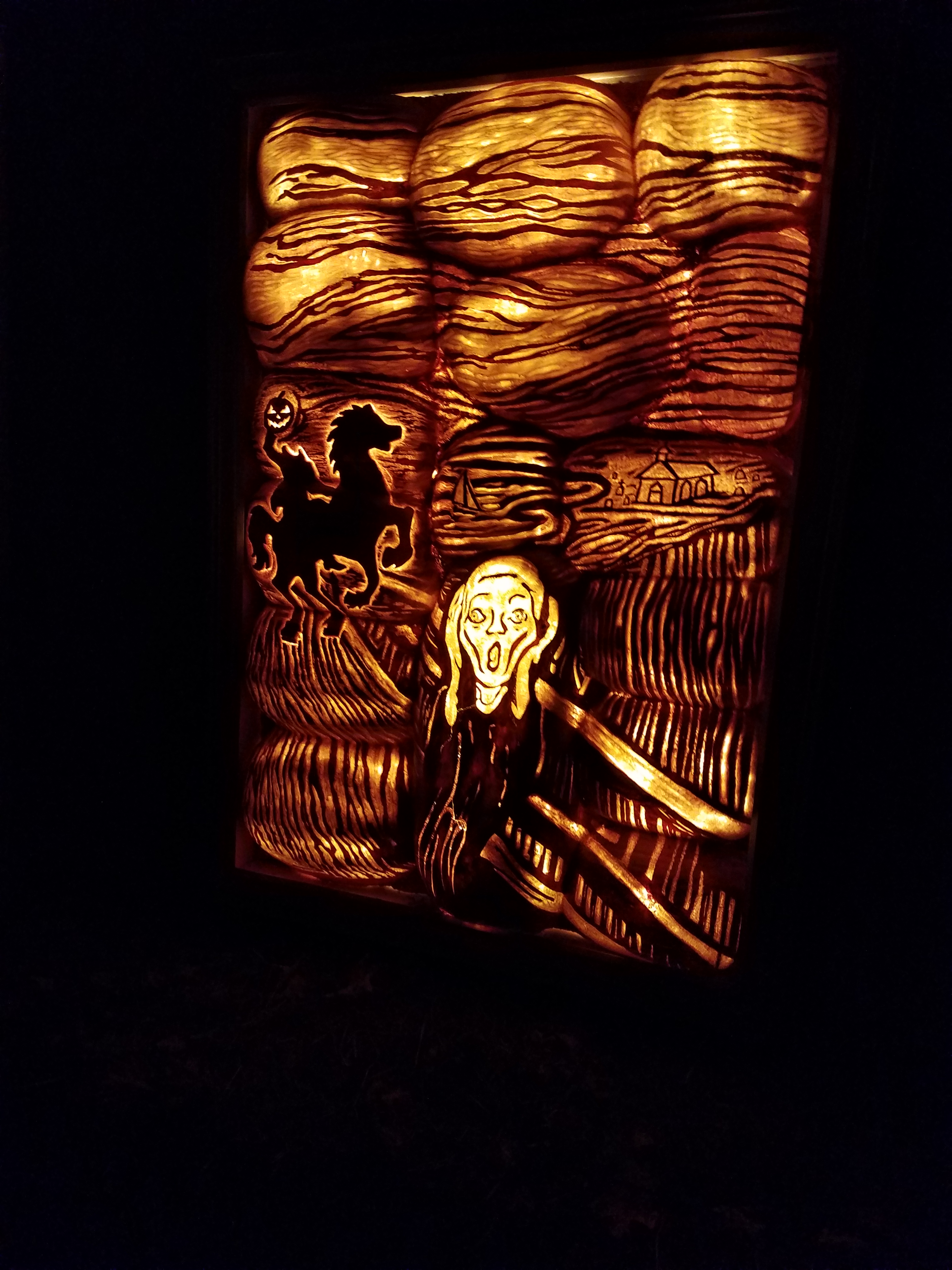
Some pictures from the MoMA Pumpkin Museum:
Their version of “The Scream”:
The Van Cortlandt Manor ablaze with lights and sounds
Justin Watrel at the Pumpkin Blaze
My Aunt and I at the Pumpkin Blaze in 2019
The Pumpkin Blaze in 2022:
Entering the Pumpkin Blaze in 2022
Pumpkins greeting you in all shapes and sizes
The Pumpkin Planetarium at the Pumpkin Blaze
Pumpkin Bee Hive
The “Terror Zee Bridge” at the Pumpkin Blaze
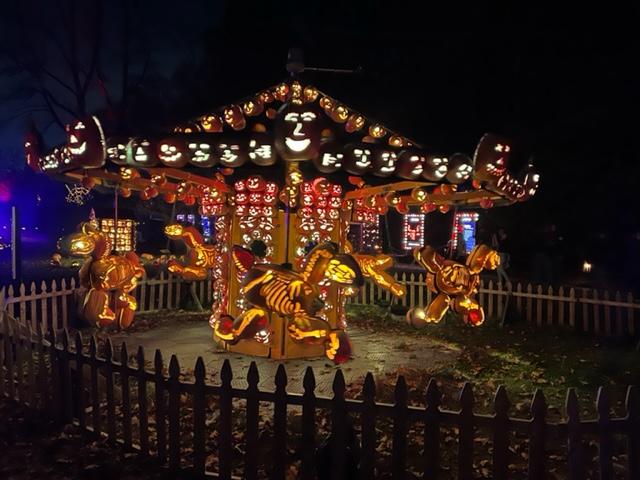
The Pumpkin Carousel
The Pumpkin Fire Services
The Headless Horseman is the theme of many October festivals in the Hudson River Valley
The History of the Van Cortlandt Manor:
By Royal Charter, Van Cortlandt Manor was originally a 86,000 acre tract granted as a patent to Stephanus Van Cortlandt in 1697 by King William III, stretching from the Hudson River on the west to the first boundary line between the Province of New York and the Colony of Connecticut, on the east, twenty English miles in length by ten miles in width in shape nearly a rectangular parallelogram forming, “The Manor of Cortlandt”.
The massive holding was acquired by direct purchase from the Indians, in part by Stephanus van Cortlandt, a native born Dutch gentleman of New York and in part by others whose titles he subsequently bought, this tract together with a small tract on the west side of the Hudson River opposite the promontory of Anthony’s Nose, which he also purchased from the Indians.
The Manor House was built sometime before 1732 but was not any owner’s principal residence until a grandson, Pierre Van Cortlandt, moved there in 1749. At the time the manor house was on a 1000 acre portion of the original tract.
Pierre brought his family to the estate in 1749 and established the manor into it most vibrant days, according to some. During this period, the manor was operating an apple orchard, dairy farm, a bee house, a kiln, a tavern and a carpenter and blacksmith shops. Van Cortlandt Manor was a self-sustaining community while Pierre and his family resided in the estate. At this time, tensions leading to the Revolutionary War were building and the manor would become a place of wartime retreat.
Pierre sided with the colonies and the manor was used to assist the Continental Army, using its resources to make food and supplies. Pierre was involved with military legislature and his son Philip was a soldier for the Continental Army. Eventually Pierre and his family vacated the manor in the thick of war. The manor was ransacked by the British Army and left in poor standing. Philip, becoming a brigadier general by the war’s end, returned and along with his sister, Catherine, brought the manor back to working order.
Van Cortlandt Manor became an essential stop on the route from New York to Albany in the years that followed the war. The mills were once again thriving and provided the community and travelers with food, supplies and lodging. Pierre and his wife did not return until 1803 once the manor was in full working order again. The manor was passed down in the family until it was sold to a non-relative, Otis Taylor in 1945. By this time, the property had lost its luster and was not the flourishing estate it had once been.
In 1953, John D. Rockefeller Jr. purchased the property and began restoring the manor to previous prominence. In 1961, Van Cortlandt Manor became registered as a National Historic Landmark.
Disclaimer: This information on the history of the house was provided by Wiki and I give them full credit on the information.
Places to Eat:
Located in the ShopRite Mall next to the Blaze:
The food at New Happy Garden in the Shoprite Mall is excellent and you can sit down in the restaurant. It is the perfect place for lunch or dinner before or after the Blaze. Their Lo Mein and General Tso’s Chicken are excellent. Please read my reviews on TripAdvisor.
I recently visited the Cooper-Hewitt Smithsonian Design Museum for the first time. I can’t believe that all those years visiting the Met just down the road I had never stopped in the museum to take a peak. I went into see the “Nature-Cooper Hewitt Design Triennial” exhibition that was showing on all three floors of the museum. It was an interesting look on how nature plays a role in design and there is a beauty in the unusual shapes and colors that nature provides us.
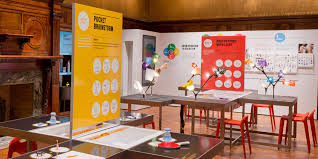
Third Floor studio
The first floor was composed of design found in nature. You will see blood samples that move and shiver, electric movements and the role of it in nature and how plants and animals can be shown in simplest terms. On the second floor, you will see the prints in clothing and in home décor and see how color and design enhance beauty in an every day environment. The third floor will show more home décor and design objects.
The First Floor Elements
What is unique about the museum is how the mansion was converted into display areas and the use of the interior was blended into fabric of the museum. Take time to look at the areas around the staircases to admire the ceiling and the walls. It must have been a very grand home in its day.
The stairs of the mansion
Purpose of the Museum:
The Cooper Hewitt Smithsonian Design Museum is a design museum located in the Upper East side’s Museum Mile in Manhattan. It is the only museum in the United States devoted to historical and contemporary design. Its collections and exhibitions explore approximately 240 years of design aesthetic and creativity. In June 2014, the museum changed its name from Cooper-Hewitt, National Design Museum to Cooper Hewitt, Smithsonian Design Museum and reopened to the public that December (Wiki).
History of the Museum: (Provided by Wiki)
The Cooper-Hewitt Museum was founded in 1896. It was originally named Cooper Union Museum for the Arts of Decoration and it fell under the wing of the Cooper Union for the Advancement of Science and Art. In 1895, the granddaughters of Peter Cooper, Sarah Cooper Hewitt, Eleanor Garnier Hewitt and Amy Hewitt Green, asked the Cooper Union for a space to create a Museum for the Arts of Decoration. The museum would take its inspiration from the Musee des Arts Decoratifs, Paris. The museum would serve as a place for Cooper Union students and professional designers to study decorative arts collections. Cooper Union trustees provided the fourth floor of the Foundation Building. It opened in 1897. It was free and open three days a week (Wiki).
The museum and the art school started to distance themselves from on another in regards to programming. Other departments of the Cooper Union were making financial demands and the Cooper Union announced that they would close the museum. This led to the museum being closed on July 3, 1963. Public outcry was strong against the closing. A committee to Save the Cooper Union Museum was formed by Henry Francis Du Pont (Wiki).
The American Association of Museums developed a case study about the future of the museum. Negotiations then began between the Cooper Union and the Smithsonian Institution. On October 9, 1967, Smithsonian Secretary S. Dillon Ripley and Daniel Maggin, the chair of the Board of Trustees signed an agreement turning over the collection and library of the museum to the Smithsonian. On May 14, 1968, the New York Supreme Court transferred to the Smithsonian and the museum was renamed the Cooper-Hewitt Museum of Design. The following year, 1969, it was renamed as the Cooper-Hewitt Museum of Decorative Arts and Design. In October of that year, Lisa Taylor became the Director (Wiki).
The museum, which was the first Smithsonian museum outside of Washington DC, moved to its home at the Andrew Carnegie Mansion in 1970. The Mansion was renovated and the museum opened to the public on October 7, 1976 with the exhibition “Man transFORMs”. A conservation laboratory was opened in July 1978. The Samuel H. Kress Foundation funded the lab and it focuses on textile and paper conversation. Lisa Taylor retired in 1987 and in 1988 Dianne H. Pilgrim took her place as Director. In 1994, the museum’s name was changed again to Cooper-Hewitt, National Design Museum. Pilgrim retired from the museum in 2000. In 2000, Paul W. Thompson became Director. On June 17, 2014, the museum’s name was changed again to Cooper Hewitt, Smithsonian Design Museum. A new graphic identity, wordmark and new website was launched on this day. This identity was designed by Eddie Opara (Wiki).
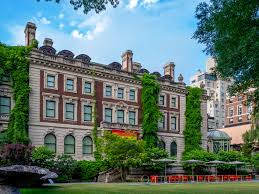
The building is located in the Andrew Carnegie Mansion. The Georgian style mansion was built over the course of years 1899 to 1902 and has sixty rooms. The home served as not only the home for Andrew Carnegie, his wife and daughter but also as his office for his philanthropic work after his retirement. The mansion was designed by Babb, Cook & Willard. It was the first private residence in the United States to have a structural steel frame. It was the first home in New York to have an Otis elevator (Wiki).














 Visiting a Museum: The Unique, Unusual, Obscure and Historical