Tag: Exploring New York City by Foot

Ringwood Manor-A New Jersey State Park                                     1304 Sloatsburg Road                                                                          Ringwood, NJ 07456

Ringwood Manor-A New Jersey State Park 1304 Sloatsburg Road Ringwood, NJ 07456

Ringwood Manor-A New Jersey State Park

1304 Sloatsburg Road

Ringwood, NJ  07456

Phone: (973) 962-7031/Fax: (973) 962-2247

http://www.ringwoodmanor.org

http://www.ringwoodmanor.org/

http://www.ringwoodmanor.org/tours.html

Fee: Adults $3.00/Children 6-12 $1.00/Children 5 and under Free

Donation for the holidays: $10.00

Open: Please see website for details during the seasons.

Review on TripAdvisor:

https://www.tripadvisor.com/Attraction_Review-g46774-d9564482-Reviews-Ringwood_Manor-Ringwood_New_Jersey.html?m=19905

Ringwood Manor in Ringwood Park at Christmas time:
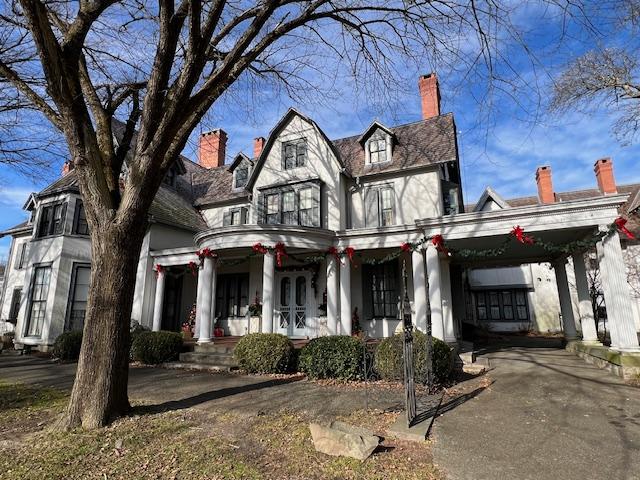
I have visited the Ringwood Manor during the Christmas holidays over the last four years and it keeps getting better. Each room in the house is tastefully decorated for the holidays. The West Milford Garden Club does an excellent job decorating every year and in the post-COVID environment, it is nice to see such a beautiful and well thought out display for Christmas.

The outside of the house was decorated with garland and ribbons and welcomed visitors with Christmas cheer.

The entrance of Ringwood Manor.
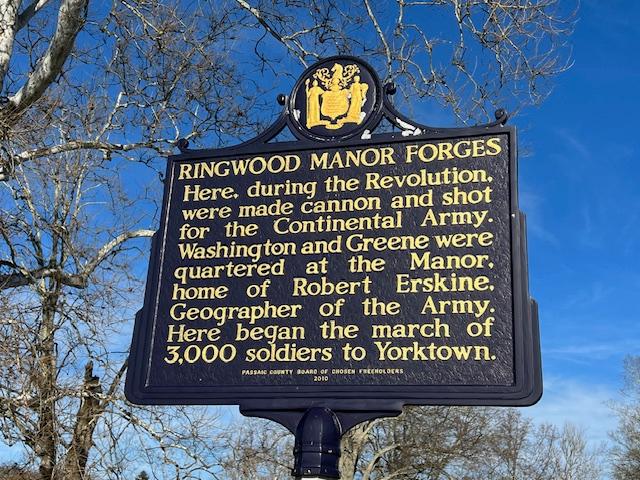
The entrance to the estate.
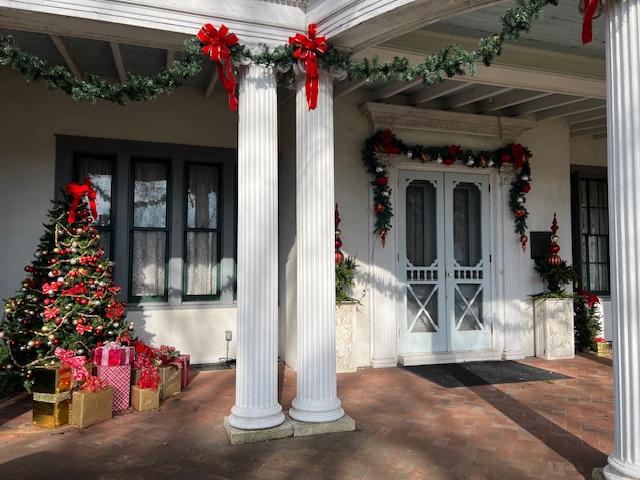
The patio of Ringwood Manor.

The outside of the house was tastefully decorated in garland and bows.

The decorated front door on the Ryerson side of Ringwood Manor.

History of Ringwood, NJ:

Colonial Ringwood:

Long before the Forges & Manor of Ringwood existed this property was occupied by the Native American people. Prehistoric artifacts found on the grounds confirm their inhabitants back to the Archaic and Woodlands periods. Living in a hunting and farming paradise, these Munsee-speaking Lenape peoples dwelled at the head of the Topompock or Ringwood River Valley. This paradise attracted colonial prospectors, who by 1740, came for the iron ore found in the ground. Recognizing the rich magnetite ores, Cornelius Board settled here in 1739 and first utilized the property for iron mining. He was followed shortly thereafter by the Ogden family who established the Ringwood Company and built the first blast furnace here in 1742.

After twenty years of production, a German promoter, Peter Hasenclever, organized the American Iron Company to exploit the resources in colonial North America, purchasing the Ringwood area in 1764. He would also develop forges at Long Pond and Charlotteburg but made Ringwood the center of his iron empire. Hasenclever established iron plantations and developed the production of flax and timber across 50,00 acres of land stretching through New Jersey and New York, from present day Butler to New Foundland and Nova Scotia. The iron was said to have been “the best iron in the American colonies.” Robert Erskine, the last ironmaster of the American Iron Company, was sent from England in 1771 and would manage the company during the Revolutionary War.

(History of Ringwood, NJ)

The decorated carriage house.

When you walk into the home, the first rooms is decorated tastefully around a collection of antique guns and hunting equipment. The Great Hall was decorated with garland and ornaments with a large tree in the corner.

The Great Hall of the Ringwood Manor when you enter for Christmas.

The Great Hall upon entering.
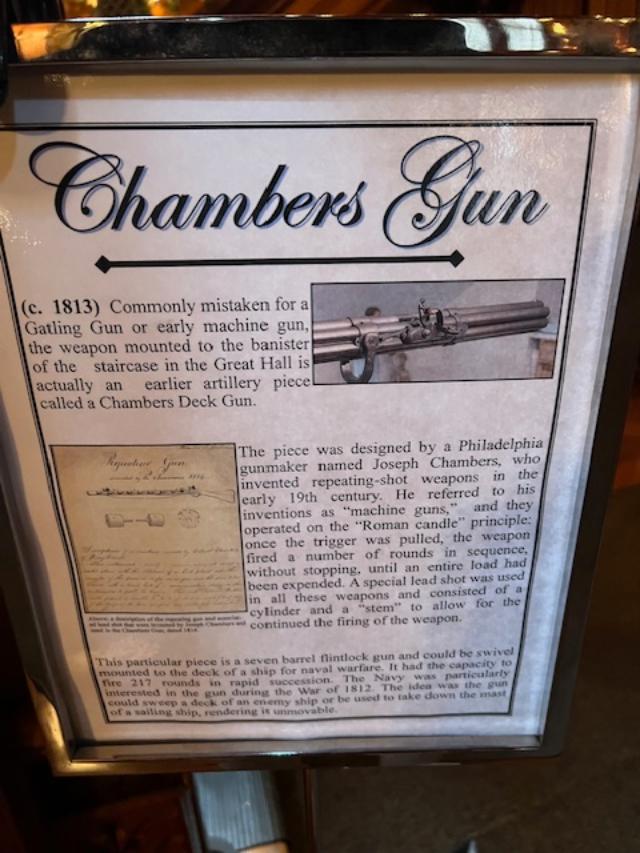
The Chamber Gun display.

The Chamber Gun display in the Great Hall of Ringwood Manor.

The Great Hall fireplace decorated for the holidays.

The formal dining room was set for Christmas dinner for the family after church. The elegant china was set on the table with poppers and small Christmas gifts for the guests. The side boards were set with the dinner entrees and sides for the family meal. There was a little discussion of how the Hewitt family would entertain during the holidays and in 2019 and in 2023, they opened up the kitchen and Butler’s pantry for touring.

The Hallway leading to the formal Dining Room.

The decorated staircase in the Great Hall
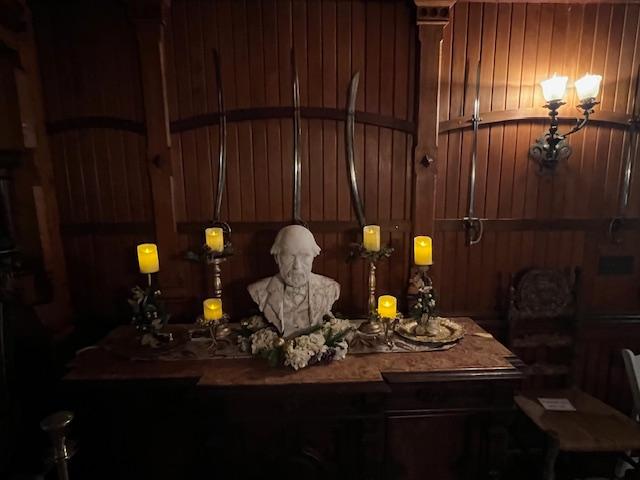
The Great Hall hallway
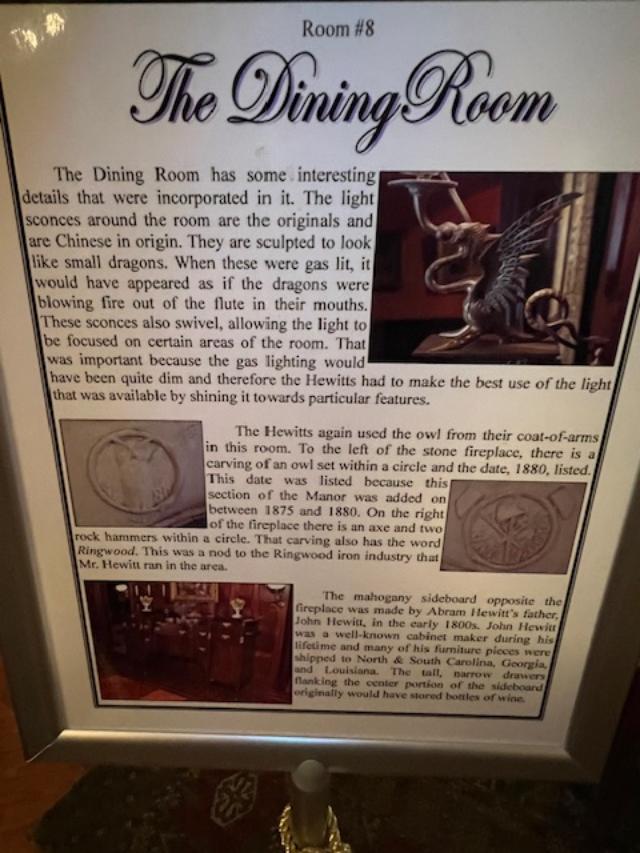
The Dining Room sign

The Dining Room at the Ringwood Manor.

The Dining Room set for Christmas dinner.

Dining Room set for Christmas dinner beautifully.

The details of the Dining Room
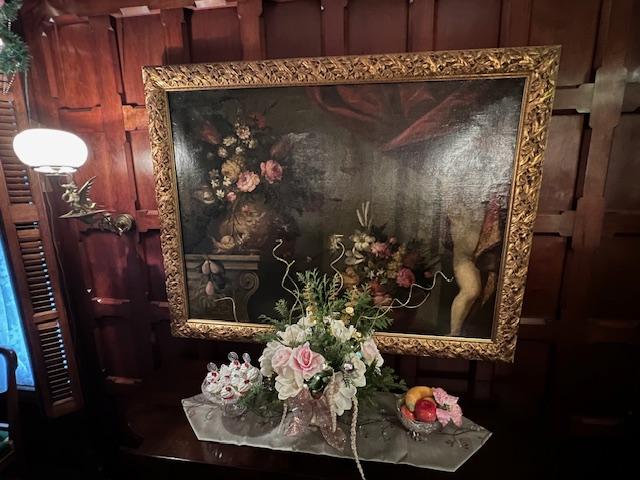
The Dining Room paintings and details.

Preparing for the holidays in the Dining Room
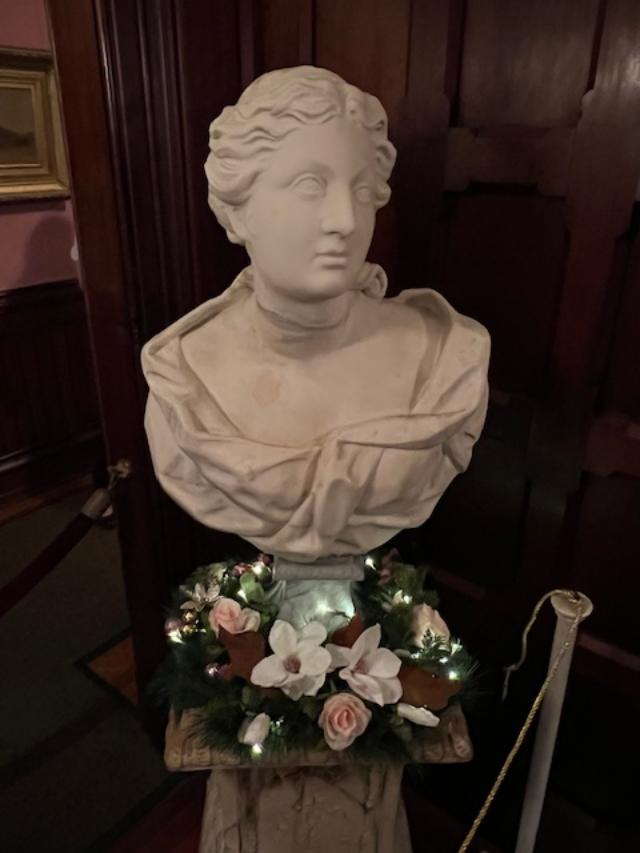
The statuary of the Dining Room

The lighting fixtures of the Dining Room.

Each room was set for the holidays with garlands, trees and decorations. As it was explained to me on another house tour during the holidays, the Victorians would normally only decorate one or two rooms for the holidays and not the whole house. The whole house might be decorated based on the wealth of the family and the amount of servants to take care of the home. Needles would have to cleaned up and the trees would have to be attended to on a daily basis.
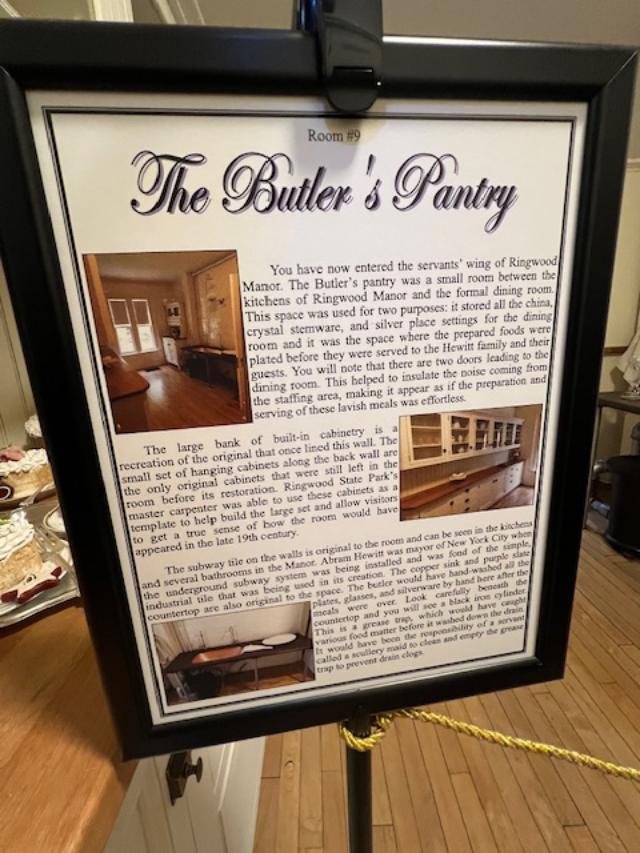
the Butler’s Pantry just off the Dining Room
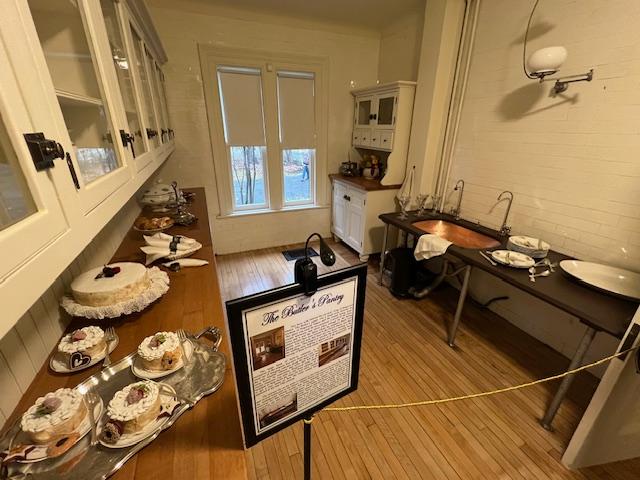
The Butler’s Pantry in preparation for Christmas dinner

The Christmas treats in the Butler’s Pantry.

I then walked back through the house and passed by the Office on my way to the social rooms of the first floor. The office is where business was taken care by Mr. Hewitt when he was in residence.
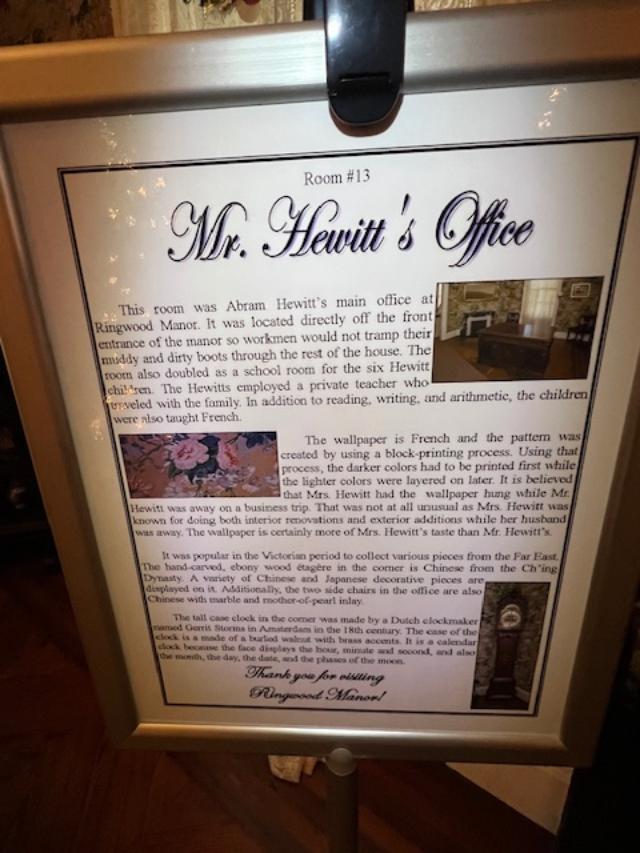
Mr. Hewitt’s Office decorated for Christmas

Mr. Hewitt’s office at Christmas time.

The Christmas tree in Mr. Hewitt’s office.

Before I left this part of the house, I passed the Breakfast Room which is just off the Dining Room. It had beautifully decorated for a Christmas breakfast.

The Breakfast Room sign

The Breakfast Room was decorated with desserts and sweets for the Christmas holidays.

The Breakfast Room beautifully decorated for the holidays.

The Breakfast Room for a Christmas feast.

The Christmas tree in the Breakfast Room.

Before entering the Great Hall, I visited the Receiving Room, where guests waited until dinner was served.
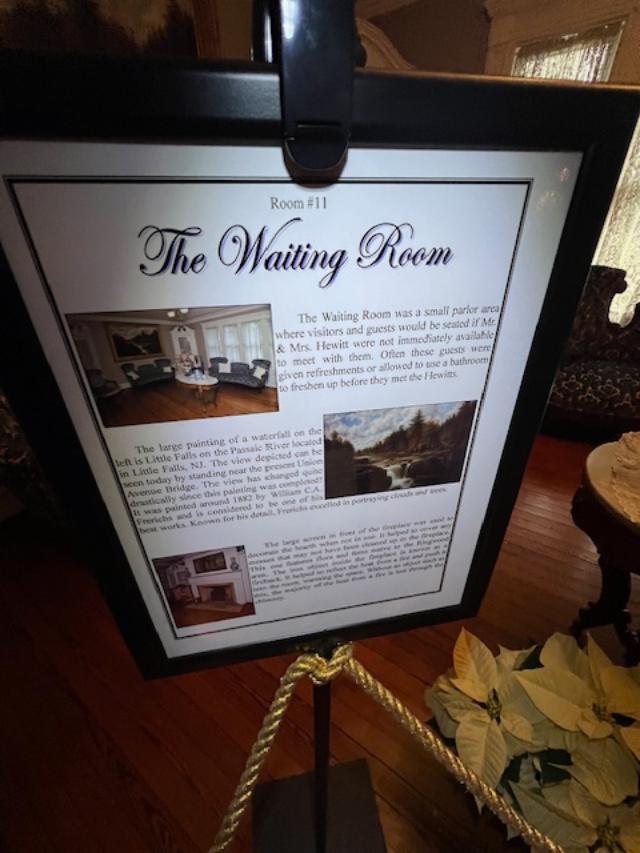
The Waiting Room
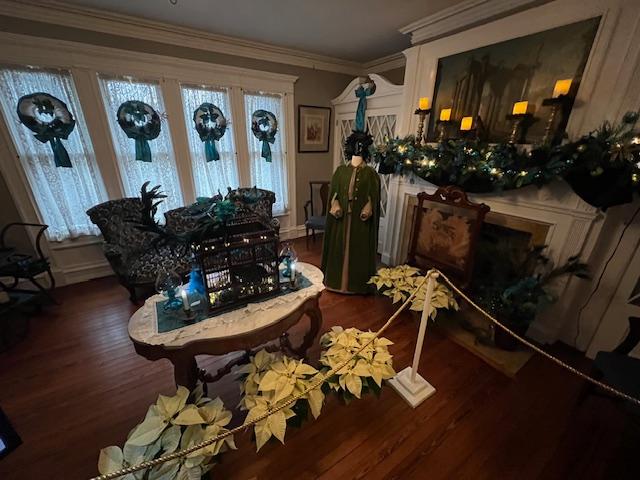
The Waiting Room was for guests to relax and wait for Mr. & Mrs. Hewitt.
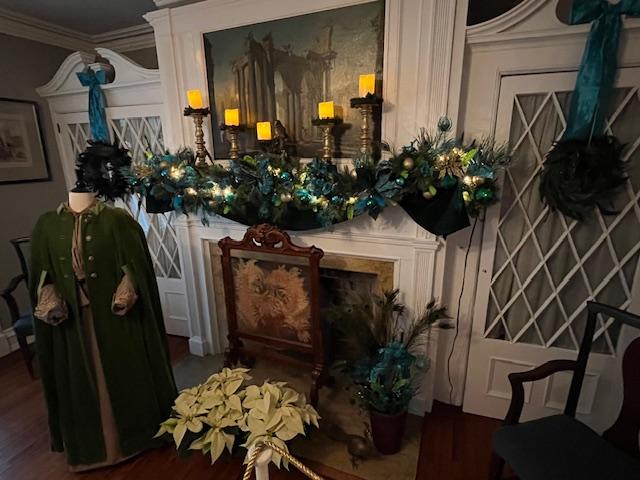
The Waiting Room fireplace is nicely decorated.

The ‘Birdcage’ in the Waiting Room

Passing through the Great Hall again, I entered what had once been the original Ryerson House built in the early 1800’s. The first room on the tour of this side of the house was the French Drawing Room decked out for the holidays. This room was used by the ladies after dinner was over to converse and get away from their husbands, who would have still been in the dining room.

French Drawing Room, the “Withdrawing” room.

The French Drawing Room

The French Drawing Room in all its Christmas glory.
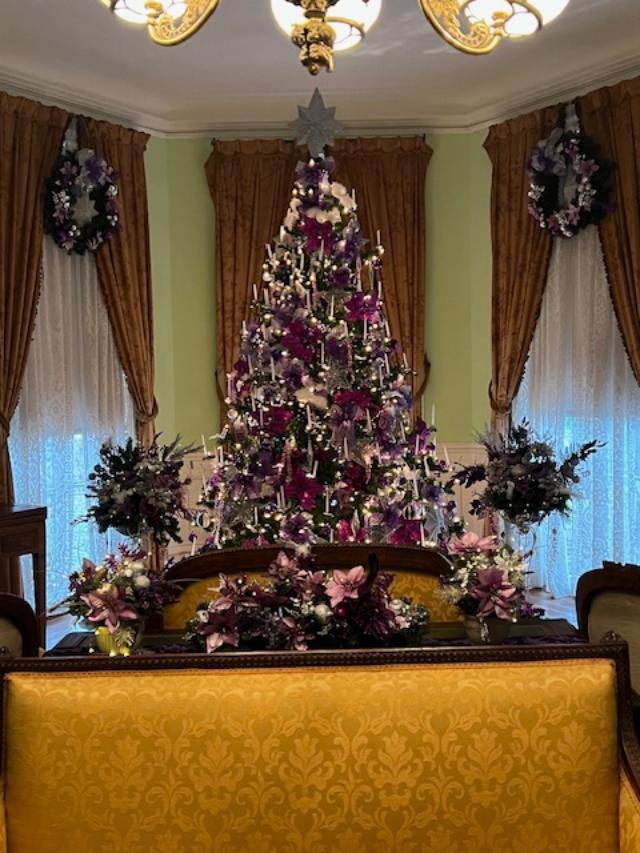
The Christmas tree in the French Drawing Room

The fireplace in the French Drawing Room.

On the other side of the house is the original Ryerson mansion that was added on by the Hewitt’s when they bought the house. The older house had the original moldings and windows from the early 1800’s and that side of the house had a different feel to it starting with the original entrance and staircase.

The Ryerson Staircase and foyer sign
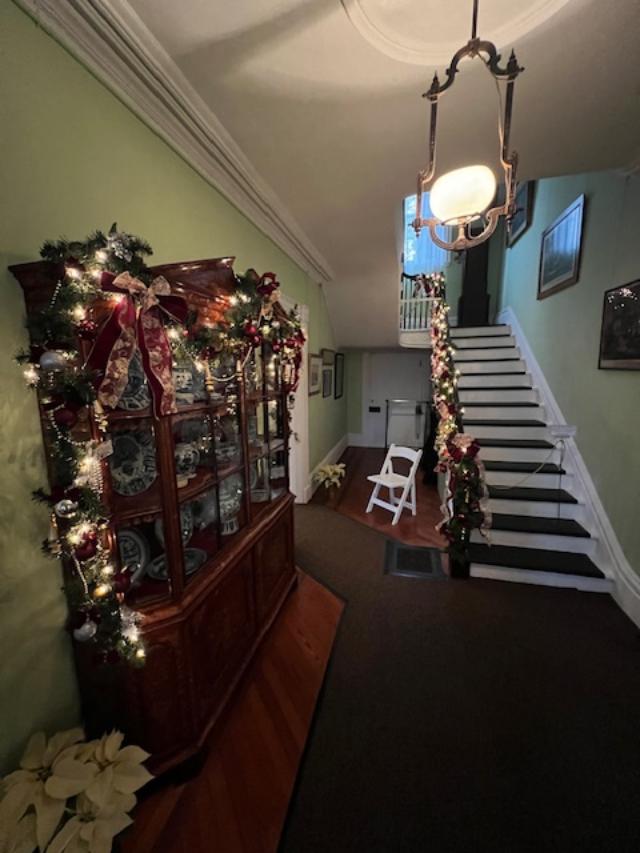
The Ryerson Staircase and foyer

The decorated Ryerson staircase.

One of the nicest rooms that was decorated was the screened in porch. Here there was a tree set with presents, hot house flowers and garland lining the room. The sunlight shined throughout the room and the decorations sparkled.
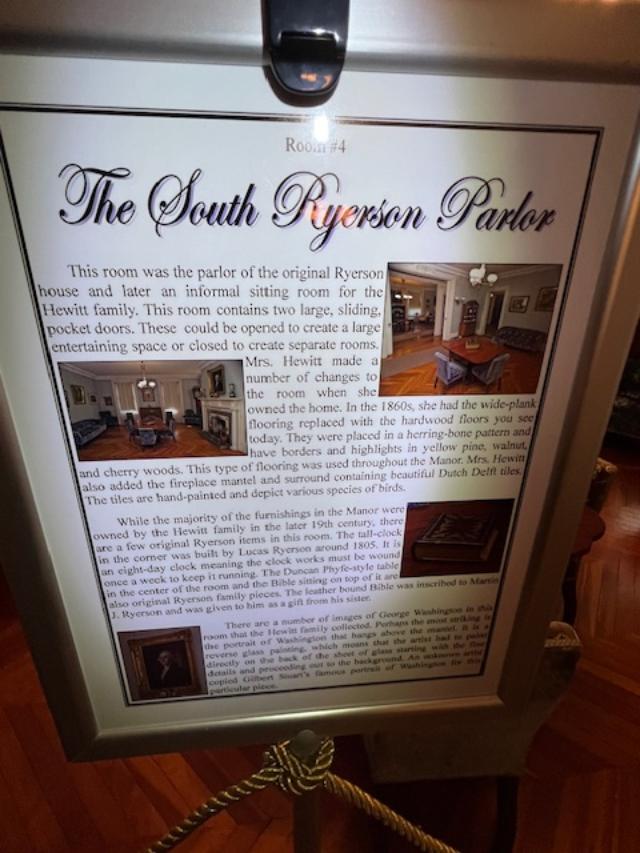
The South Ryerson Parlor
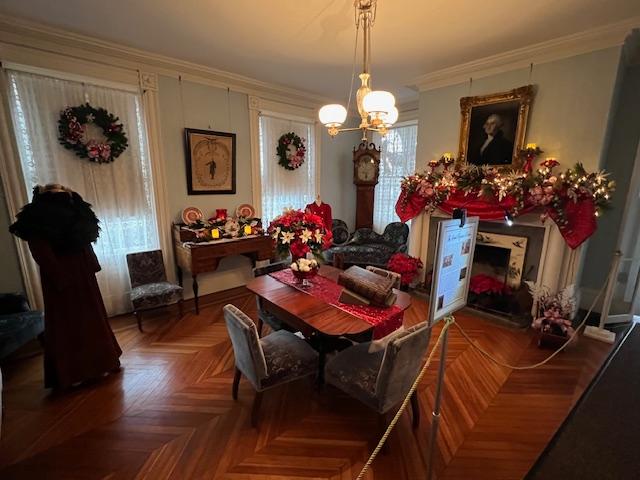
The South Ryerson South Parlor

The fireplace in the South Parlor.

The latest addition to the house was the screened in porch, The Glass Piazza, of the house which was used in the summer months for rest and relaxation. The screen in porch was beautifully decorated for the holidays with all sorts of Christmas trees and decorations.

The Glass Piazza, the screened in porch of the main house.

The Glass Piazza decked out at Christmas time.

The doll mini tea service in the Glass Piazza.

The Glass Piazza set for tea at the holidays.

The Glass Piazza at Christmas time.

The beautiful Christmas tree in the Glass Piazza in 2023.

When you leave the Glass Piazza, you enter the original part of the house again with the North Ryerson Parlor. This room was used by the family for less formal affairs but it was still decked out of the holidays.
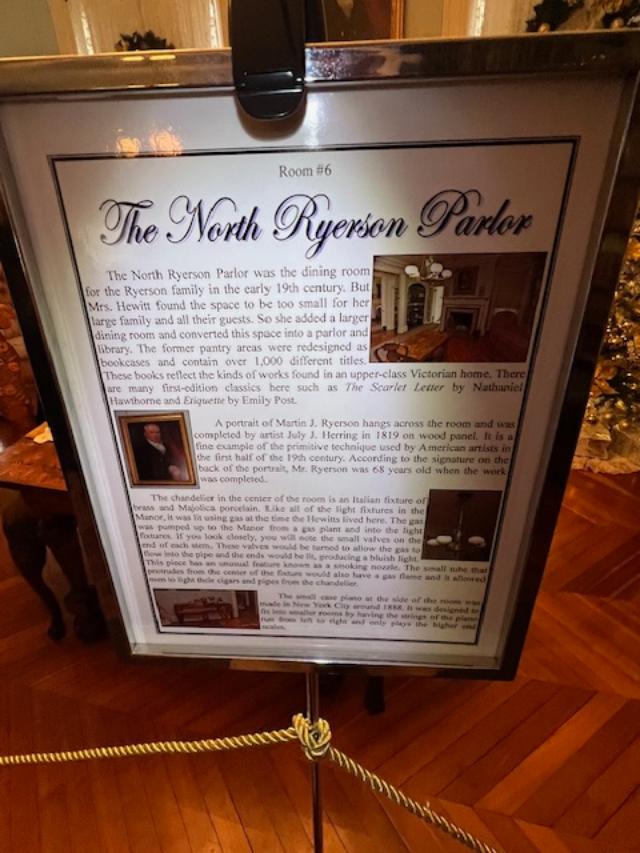
The North Ryerson Parlor

The Ryerson North Parlor decorated for tea.
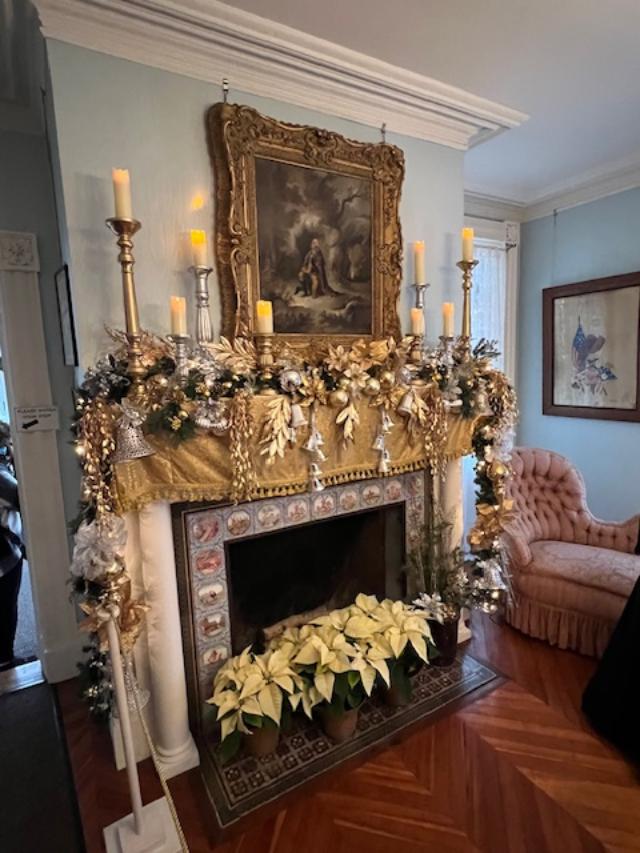
The Ryerson North Parlor fireplace decorated for Christmas time.

The last room I visited on the tour was the Music Room in the original Ryerson House. The room was used by both the Ryerson’s and the Hewitt’s for social occasions and the Hewitt’s were all musically inclined.
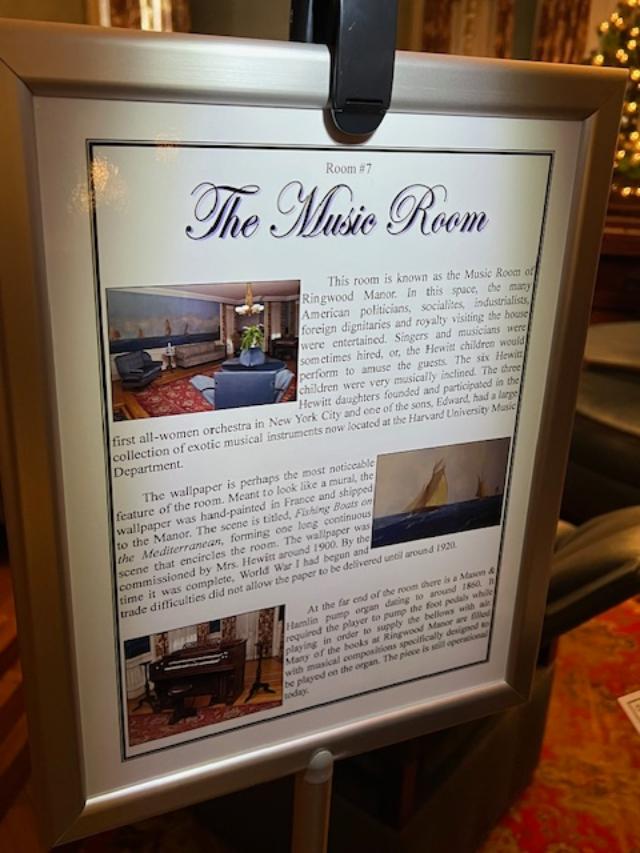
The Music Room at the Ringwood Manor
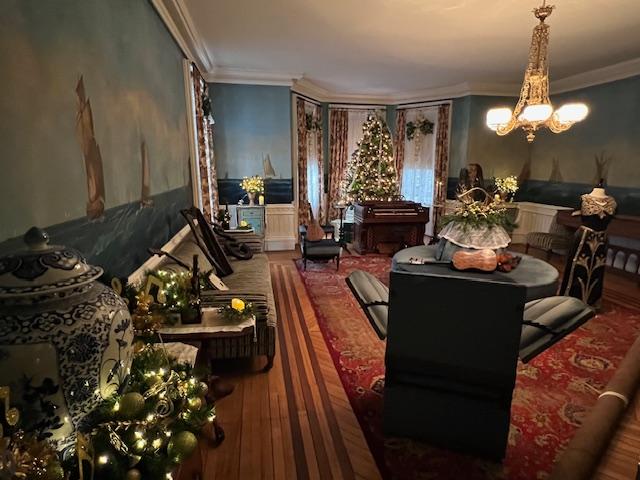
The Music Room at the Ringwood Manor.

The Music Room at the Ringwood Manor.
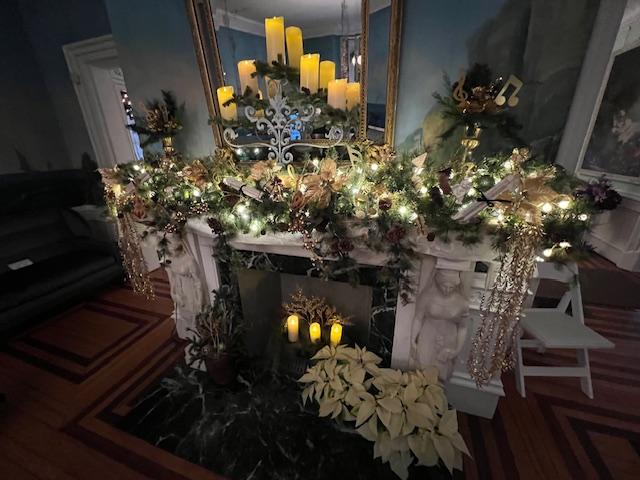
The fireplace in the Music Room decked out for the holidays.

The Music Room during Christmas time.

Each room had a docent to explain the decor or what the room’s use had been in the family’s time. A visitor can roam the house at their leisure and see the rooms as many times as they want. There is also a gift shop in a room off the formal dining room that contains some beautiful Christmas crafts for sale by the Women’s Club of New Milford. Some of these women are very creative and sell the most amazing Christmas ornaments made of glitter, wood, branches, walnuts and moss.

The decor of the home changes over time and there are different things to see every year. The barn also on the property as you drive in has more artwork and crafts. In the Gardener’s Shed next to the house, the Society has a small cafe with sandwiches, desserts and coffee/tea/hot chocolate.

The Carriage House was used as a gift shop and a place to get something to eat.

The tour of Ringwood Manor is wonderful during the holiday season and the rest of the house opens up during the warmer months of the year.

History of the House:

This 582 acre historic site is open to the public year round. The historic house museum, Ringwood Manor is open Wednesday to Sundays year round.

History of 19th Century Manor House and Landscape:

The present manor house was begun by Martin J. Ryerson in 1807. He and his sons controlled not only the iron mines and forges on the property but also operated productions at four other locations in the area. The Ryerson family resided in their 10 room Federal style home for almost 50 years.

The entrance to the historical home.

In 1853, the Ryerson’s house and property were purchased by business partners Peter Cooper and his son in law Abram S. Hewitt. The 22,000 acre ironworks and the Ryerson’s home were purchased for a sum of $100,000. Their company, Cooper-Hewitt & Company, grew to be the fifth largest corporation in the United States. The Hewitt’s, one of the most influential and wealthiest families of the 19th century, fell in love with the Ringwood estate.

The expanded Ringwood Manor estate in the winter months.
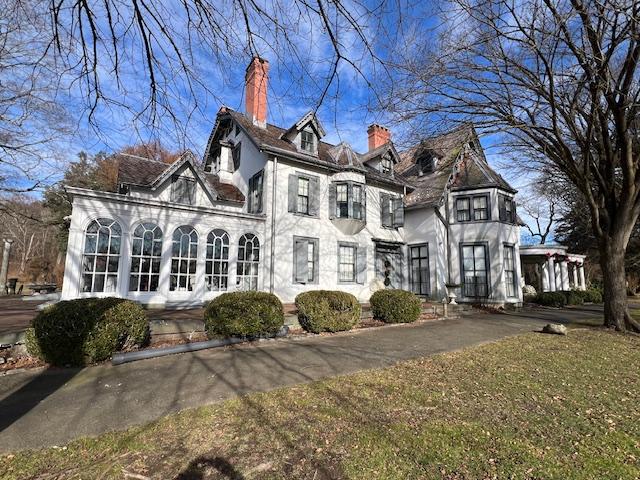
Ringwood manor at the holidays.

They decided to make this site of their summer home, naming it The Forges and Manor of Ringwood. They enlarged the home of the Ryerson’s, constructing major additions or renovations in 1864, 1875, 1900 and 1910. The completed 51 room house is 226.5 feet long and features 28 bedrooms, 24 fireplaces and 13 bathrooms and more than 250 windows. The house was built in an eclectic style, typical of the Victorian period. In 1875, the Manor House was an excellent example of the Gothic Revival style of architecture. By 1900, the Hewitt’s changed the exterior facade to its present appearance, adding the neo-classical portico and columns of the front porch and affixing white stucco to the exterior walls. The furnishings of the house reflect the varying tastes and styles of the family and time period.

Ringwood Manor during the holidays.

(From the Ringwood Manor website)

The formal gardens surrounding the Manor House were developed by Mrs. Hewitt and her daughter, Eleanor around 1900. Their design was influenced by the Hewitt’s many trips overseas. The gardens possess a mysterious old world charm that captivates visitors as they enjoy the serenity of reflecting pools and the progression of blooms from early spring to late fall. Placed throughout the garden are French and Italian statuary and garden ornaments as well many interesting architectural items from New York City acquired while Abram Hewitt served as Mayor and Congressman. Examples of these features include columns from the old New York Life building, gates from the Astor family’s home and gate posts from Columbia College. Relics from the iron company that are found on the grounds include a trip hammer and anvil, cog wheel and a Dictator-class mortar the base of which was created by the Hewitt’s company and used at the Battle of Vicksburg in Mississippi during the Civil War.

The Ringwood Manor in the Fall of 2026:

I visited the park again in October of 2026 after taking a tour of the NJ Botanical Gardens down the road at the Skylands Manor. The grounds were just changing colors during all the cool weather we were having and the grounds could not have been more picturesque.

The lawn of the estate in the early Fall in 2026

Walking through the walkways and driveway of the estate

Walking up to the Manor House at Ringwood Park

The pond by the house overlooking the barns

The marble walkway up to the house

The Manor House in the Fall of 2026

The estate lawn from the house

The gardens and landscaped gardens on the estate

In the barn which is used as a Art Gallery, hosts a Jazz Concert on some weekends during the Fall. We had a nice time listening the music.

The Jazz Concert in the afternoon

Video of Jazz in the Barn:

October 2026

The Jazz Concert at the barn

The grounds are so beautiful at any time of the year.

The Wildwood Historical Society George F. Boyer Museum                                                                      3907 Pacific Avenue                                                                    Wildwood, NJ 08260

The Wildwood Historical Society George F. Boyer Museum 3907 Pacific Avenue Wildwood, NJ 08260

The Wildwood Historical Society George F. Boyer Museum

3907 Pacific Avenue

Wildwood, NJ  08260

(609) 523-0277

http://www.z.com

Open: Sunday-Saturday-9:00am-2:00pm/Check with the museum in the off season

Fee: Free but they do ask for a donation

TripAdvisor Review:

https://www.tripadvisor.com/Attraction_Review-g46931-d1862508-Reviews-George_F_Boyer_Historical_Museum-Wildwood_Cape_May_County_New_Jersey.html?m=19905

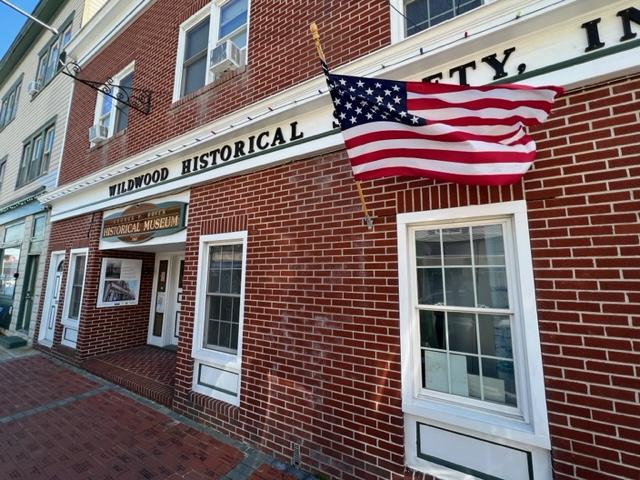
The Wildwood Historical Society at 3907 Pacific Avenue

I visited the Wildwood Historical Society George F. Boyer Museum (See review on TripAdvisor) when I was visiting Wildwood, NJ for a convention. It was a gloomy morning, and the museum is open from 9:00am-2:00pm. It is the perfect place to visit on a rainy day at the beach. When I revisited the museum in the summer of 2023, the museum was crowded with members of the fire service and their families visiting after the convention meetings.

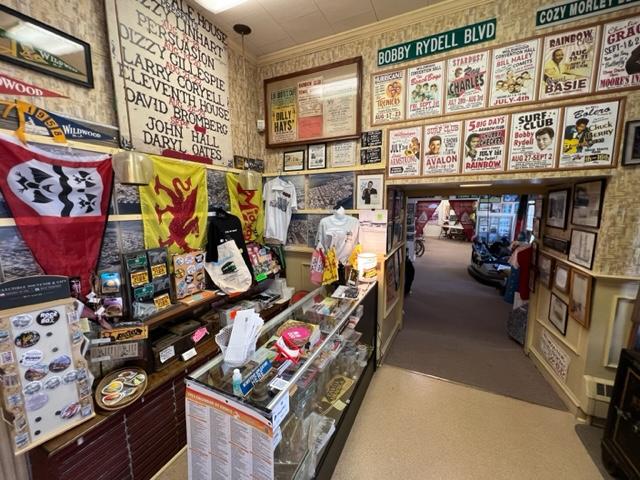
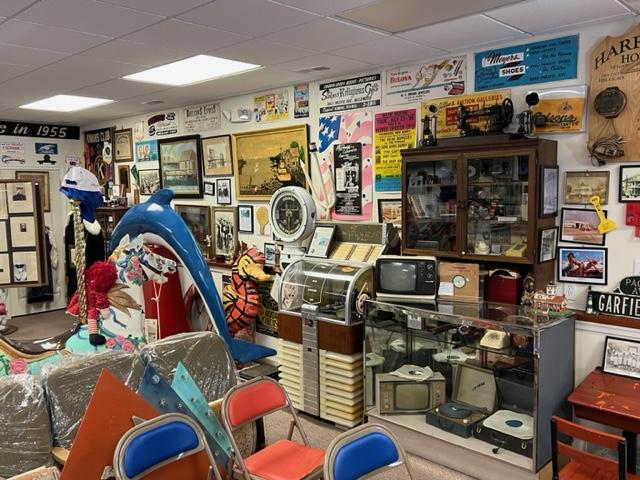
The Front Gallery

The central gallery on the Wildwood businesses.

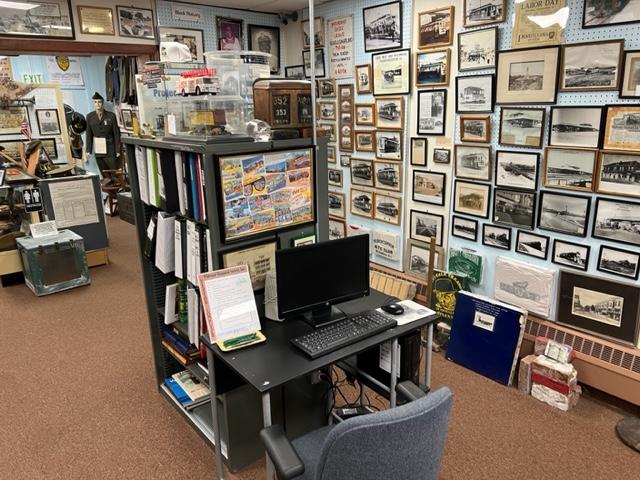
The back gallery of the museum

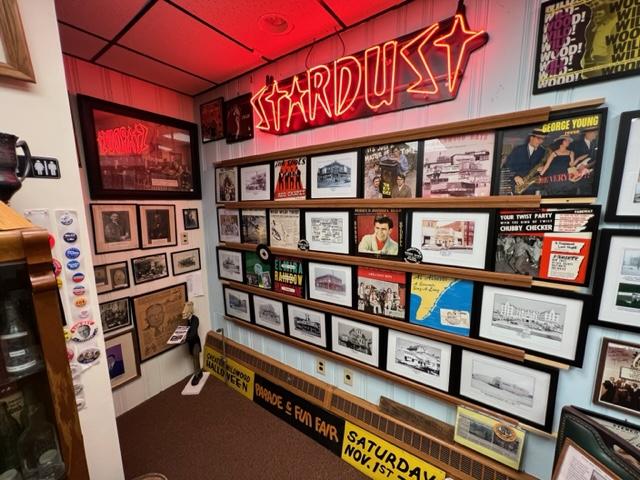
The museum is a treasure trove of artifacts of the history of the three towns, North Wildwood, Wildwood and Wildwood Crest. The history covers the original inhabitants when the Native Americans lived and fished in the area, the rise as a resort community especially its heyday in the 1950’s and 60’s as a solid middle class resort town and an extensive history of the police, fire department and schools as well as the town and its council people.

The Military display

The Fire display at the museum.

The fisherman’s display at the museum.

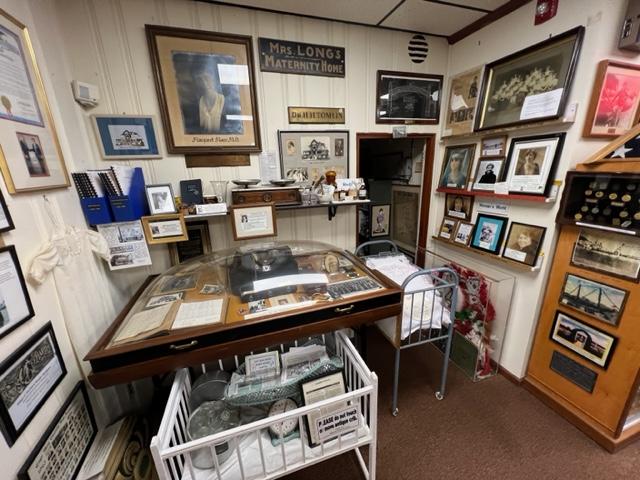
The doctor’s office display at the museum.

Each room of the museum is stacked with information, artifacts in case lines and the walls are lined with books, manuscripts and albums. The school history shows how integration worked even as far back as the turn of the last century and the development of the school system. There were books of graduation pictures, sporting events and band involvement.

The high school and public-school display.

There is a very interesting display of firefighting pictures especially of the amusement fires of the past and the rebuilding of the parks and piers. Take time to look at the artifacts in the hallways and pictures of the development of the parks. There are interesting pieces saved from the old parks.

The Dracula’s Castle display before the big fire at the park.

The Dracula’s Castle display

The Amusement Park and Dracula’s Castle display at the museum.

The artifacts from Dracula’s Castle

The display by Dracula’s Castle

There is even a section of restaurant menus and dishware from the well-known establishments of the past and many pictures of the hotels and motels of the ages. It showed how it went from a Victorian resort to the modern times of the sixties theme motels with art deco architecture. There was a real change after the war to a more middle-class customer who was depending on the automobile instead of the train system.

Popular businesses of the past

The Wildwood businesses of the past.

Artifacts from businesses from Wildwood’s past from restaurants to hotels.

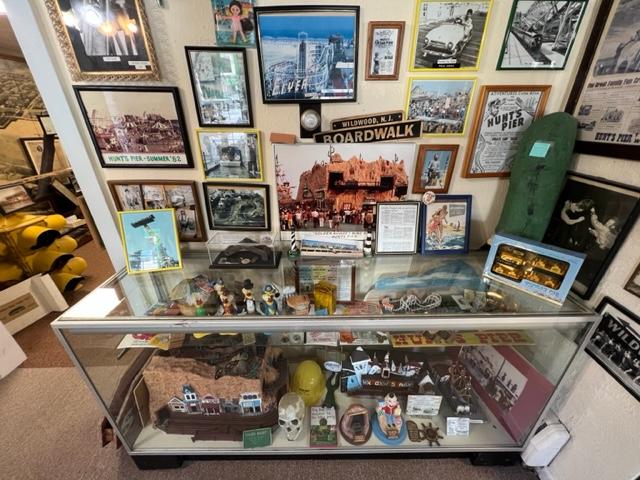
There is also a large section on the old amusement piers with pictures and artifacts from the old “Dracula’s Castle” park that burned down in the early 2000’s. There are signs, old tickets, small ride cars and prizes from the games from the piers. There is extensive detail to the display, and you have to look at all the pictures of the amusements at various points of history.

The Amusement gallery by Dracula’s Castle

The Amusement Park display of artifacts in fun and interesting. The museum admits they were lucky to save these items.

The “Dracula’s Castle Fire” was one of the biggest in Wildwood history.

Plan about two hours as you will lose track of time when looking at all the pictures and displays. It is a little packed in here but there is so much to see and take time to watch their videos which are fascinating and informative on the history of the town of Wildwood.

Artifacts and pictures from the old amusement parks that were once part of Wildwood’s glory.

Who was founder George F. Boyer:

George F. Boyer was born in Philadelphia in 1904. He came to Wildwood around 1932 and earned his living as a butcher, a merchant and a fireman. His real local fame, however, came from his role as the City of Wildwood’s first and only official historian. While serving with Wildwood fire department in 1959, he came across the stump of a tree (now known as the “W” tree) in the old city hall.

Running down the origin of the tree, sparked a tsunami of information as he talked to local residents and researched and collected old records. One thing led to another and in January of 1962, Boyer was appointed in the city’s newly established historical commission and became the first president of the Wildwood Historical Society.

The Wildwood music and ‘Doo Wop’ display.

The entertainer Mario Lanza exhibit when he used to visit here with his parents

https://en.wikipedia.org/wiki/Mario_Lanza

https://music.youtube.com/channel/UC9rfSEz9xUS39k_C6QJMYDg

Tireless in his efforts to collect and preserve local artifacts, Boyer spoke to school and church groups as well as civic organizations, urging them to “act now. To gather those irreplaceable links with the past and preserve them for generations to come.”

A model of Wildwood in the Business Gallery at the museum.

Founded by Boyer, Wildwood’s first historical museum opened in 1963, on the second floor of the Municipal Building in October 1976, the City of Wildwood honored Boyer for his “long and devoted service” by renaming the museum, the George F. Boyer Historical Museum.

The museum sits proudly in Downtown Wildwood.

He passed away a month later but his legacy lives on. The museum, now located at 3907 Pacific Avenue, continues to welcome visitors and locals alike, just as it did a half century ago under Boyer’s care.

Household items of the past.

The town bell

The non-profit museum is made possible thanks to volunteers who dedicate time to our cause. We always need volunteers. To learn about volunteering, drop in during our open hours, call us or fill the contact form on the website.

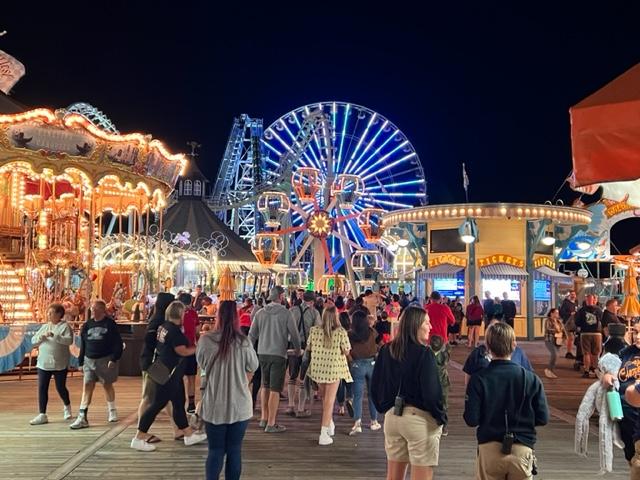
The Wildwood Boardwalk and amusements today.

Disclaimer: This information was taken directly from the History of the Wildwood Historical Museum website, and I give them full credit for the information. Remember that the museum has limited hours and the resort is seasonal so please call the above number for the times and dates when the museum is open.

Fearless Girl Statue                                                                         Bowling Green Park  (now on Wall Street)                                          New York City, NY 10004

Fearless Girl Statue Bowling Green Park (now on Wall Street) New York City, NY 10004

Fearless Girl Statue

Bowling Green Park (Now on Wall Street)

New York City, NY  10004

TripAdvisor Review:

https://www.tripadvisor.com/Attraction_Review-g60763-d13109380-Reviews-Fearless_Girl-New_York_City_New_York.html?m=19905

*The statue has been moved since this blog has been written and it on Broad Street near the New York Stock Exchange.

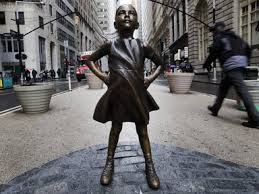
The ‘Fearless Girl’ statue is the latest addition to the street art in lower Manhattan. Placed next to the statue of the ‘Charging Bull’, she portrays a defiance and a look that almost says, “I am standing up to the power and I am standing up to fear’. She has a look of determination on her face that clearly shows that she is standing her ground. She was designed by artist Kristen Visbal.

The statue is located at the northern tip of Bowling Green Park in Lower Manhattan both statues are an easy find on the Broadway side of the park. Be aware that this is a big tourist area for pictures so there will be a crowd.

Kristen Visbal artist

Artist Kristen Visbal

http://www.visbalsculpture.com/

There has been some controversy from Arturo Di Modica the creator of ‘Charging Bull’ who says that it takes away from the meaning of his own work. Di Modica has challenged that the piece exploits his work and distorts the meaning of his own work by turning the ‘Charging Bull’ into a villain instead of the his true meaning for the work which is a ‘symbol of prosperity and for strength’. Both statues are being planned to be moved by the NYC Parks Department in the future (Wiki and the New York Times 2018).

The Charging Bull

History of ‘Fearless Girl’:

The statue was installed on March 7, 2017, the day before International Women’s Day, by State Street Global Advisors, in a campaign developed by advertising agency McCann New York. SSgA was celebrating the first anniversary of its “Gender Diversity Index” fund that “invests in U.S. large-capitalization companies that rank among the highest in their sector in achieving gender diversity across senior leadership. The concept for the statue was developed by Senior Art Director Lizzie Wilson and Senior Copywriter Tali Gumbiner. Wilson and Gumbiner established both the idea for the statue as well as the overall look of the girl using countless mood boards  and imagery, which Visbal referenced (Wiki).

Fearless Girl was originally given a one week City Hall permit that was later extended to 30 days. Later, it was announced that the statue would remain in place through February 2018. Among those advocating for the statue to stay longer was U.S. Representative Carolyn Maloney of New York’s 12th congressional district who stated, “This statue has touched hearts across the world with its symbolism of the resiliency of women. New York City Public Advocate Letitia James wrote a letter that supported keeping the statue, “Fearless Girl stands as a powerful beacon, showing women, young and old, that no dream is too big and no ceiling is too high” (Wiki).

A petition on Change.org asking for the statue to be made permanent gathered 2,500 signatures in the first 48 hours. Efforts to make the statue permanent continued after the statue was granted a one-year permit. In April 2018, after ‘Fearless Girl’ had been in place for thirteen months, New York City Mayor Bill de Blasio announced that both ‘Charging Bull’ and ‘Fearless Girl’ would be moved to a location facing the New York Stock Exchange. The move would occur before the end of 2018 (Wiki).

The plaque below the statue states: “Know the power of women in leadership. SHE makes a difference.” (Wiki)

The statue is available to be seen 24 hours a day.

Disclaimer: The history of the statue was taken from Wikipedia and I give them full credit on the information. The rest is my personal opinions on the statue.

Charging Bull                                                 Bowling Green Park                                            New York, NY 10004

Charging Bull Bowling Green Park New York, NY 10004

Charging Bull

Bowling Green Park

New York City, NY  10004

http://www.chargingbull.com/

TripAdvisor Review:

https://www.tripadvisor.com/Attraction_Review-g60763-d1605557-Reviews-Charging_Bull_Wall_Street_Bull-New_York_City_New_York.html?m=19905

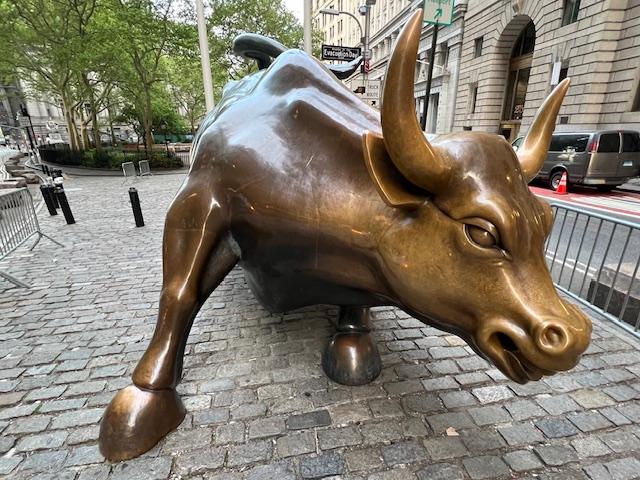
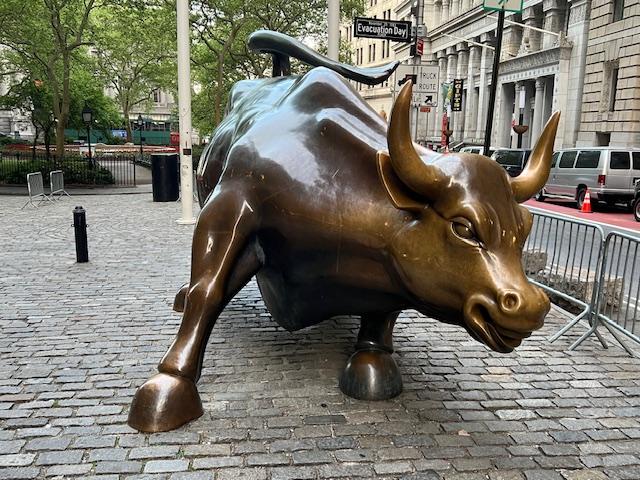
When you are in lower Manhattan and are visiting the Battery Park and/or Wall Street area don’t miss the Charging Bull statue by artist Arturo Di Modica. The artist created this piece of ‘guerrilla’ art after the Crash of 1987, when we were about to enter the depths of another major recession, one that went from the end of 1987 until the summer of 1995.

This interesting piece of New York history is actually a recent addition to the street art of New York City. The statue was created and cast in 1987 following the Crash and made its first appearance outside the New York Stock Exchange on December 15, 1989.

The bull according to the artist, “represents the symbol of the strength and power of the American people’ following the Crash. It has taken on many meanings since such as the power of Wall Street and the progressiveness of money and power in the Financial industry.

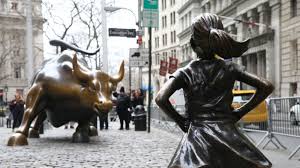
During the high tourist season expect to see the statue surrounded by tourist taking pictures in all directions. The statue of ‘Charging Bull’ is now paired with ‘Fearless Girl’ by artist Kristen Visbal. Some have commented that it has changed the meaning of the statue but I think it is how you interpret both works. Its best to visit and make your own opinion.

Fearless Girl Statue II

The ‘Charging Bull’ with ‘Fearless Girl’

While you are visiting the statue, take time to visit this historic section of Manhattan and visit the other sites that include Bowling Green Park, the Museum of the Native Americans, Frances Tavern and Stone Street as well as the boats to Governor’s, Ellis and Liberty Islands. It is a wonderful way to spend the afternoon.

Please refer to my blog, ‘MywalkinManhattan.com’- “Day One Hundred and Thirteen Tour of Historic Pubs and Bars in Lower Manhattan with the Cornell Club” for a full list of things to see in this section of the City.

History of Charging Bull:

Construction and installation:

The Bull by Bowling Green Park in the early morning hours.

The bull was cast by the Bedi-Makky Art Foundry in Greenpoint, Brooklyn. Di Modica spent around $360,000 to create, cast and install the sculpture following the 1987 stock market crash as a symbol of the ‘strength and power of the American people’. The sculpture was Di Modica’s idea and in an act of ‘guerrilla art’, Bedi Makky Art Foundry and Di Modica trucked it to Lower Manhattan. On December 15, 1989, they installed it beneath a 60 foot (18m) Christmas tree in the middle of Broad Street in front of the New York Stock Exchange as a Christmas gift to New Yorkers. That day, hundreds of onlookers stopped to admire and analyze it as Di Modica handed out copies of a flier about his artwork (Wiki).

NYSE officials called the police later that day and the NYPD seized the sculpture and placed it into a impound lot. The ensuing public outcry led the New York City Department of Parks & Recreation to reinstall it two blocks south of the Exchange in the Bowling Green, with a ceremony on December 21, 1989. It faces up Broadway at Whitehall Street (Wiki).

Confusion over ownership:

The sculpture technically has a temporary permit allowing it to stand on city property since the city does not own the sculpture but the temporary permission has lasted since 1989, when city officials said the new location would not be permanent. Art on loan is usually limited to a year’s display and although the city does not buy art, it does accept donations. A writer in the New York Daily News wrote in 1998 that the statue’s placement was ‘beginning to look a mite permanent.’ According to an article in Art Monthly, Di Modica as well as officials and New Yorkers, ‘view it as a permanent feature of Lower Manhattan (Wiki).

In 2004, Di Modica announced that the bull sculpture was for sale, on condition the buyer does not move it from its present location. Di Modica continues to own the artistic copyright to the statue. In 2006, Di Modica sued Walmart and other companies for illegally benefiting from his copyright, by selling replicas of the bull and using it in advertising campaigns. In 2009, Di Modica sued Random House for using a photo of the bull on the cover of a book discussing the collapse of financial services firm Lehman Brothers (Wiki).

Artist Arturo Di Modica:

Arturo Di Modica artist

Artist Arturo Di Modica

http://www.artnet.com/artists/arturo-di-modica/

Arturo Di Modica first conceived of the Charging Bull as a way to celebrate the can-do spirit of America and especially New York, where people from all over the world come regardless of their origin or circumstances and through determination and hard work overcome every obstacle to become successful. It’s this symbol of virility and courage that Arturo saw as the perfect antidote to the Wall Street Crash of 1987.

The artist was born in Vittoria, Italy in 1941 and studied at the Academia Del Nudo Libra in Florence, Italy in 1960. In 1973, he relocated to New York City to a Lower Manhattan space. ‘Charging Bull’ is his most famous piece (Artnet).