Tag: Exploring Brooklyn Block by Block

Prospect Park Zoo                                                 450 Flatbush Avenue                                  Brooklyn, NY 11225

Prospect Park Zoo 450 Flatbush Avenue Brooklyn, NY 11225

The Prospect Park Zoo

450 Flatbush Avenue

Brooklyn, NY 11225

(718) 220-5100

https://prospectparkzoo.com/

Open: Sunday 10:00am-5:30pm/Monday-Friday 10:00am-5:00pm/Saturday 10:00am-5:30pm

Admission: Adults $9.95/Seniors $7.95/Children from 3-12 $6.95/Children under 3 are Free/Members Free

My review on TripAdvisor:
https://www.tripadvisor.com/Attraction_Review-g60827-d283820-Reviews-Prospect_Park_Zoo-Brooklyn_New_York.html?m=19905

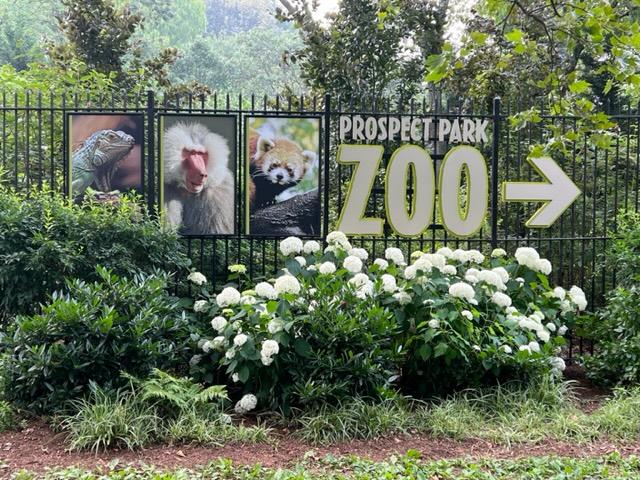
The entrance to the Prospect Park Zoo

The Prospect Park Zoo is one of my ‘go to’ places along with the Brooklyn Museum and the Brooklyn Botanical Garden when visiting Brooklyn. The three popular destinations are all in the same neighborhood and if you have a full day is worth the subway ride from Manhattan to visit.

On a nice day, the best place to start is the Brooklyn Botanical Garden at opening, then head over through the back part of the garden to Prospect Park and walk to the entrance near Flatbush Avenue and go past the carousel and enter the Zoo past the old Leffert’s Homestead. The Zoo is just past that.

My review on TripAdvisor:

https://www.tripadvisor.com/Attraction_Review-g60827-d103505-Reviews-Lefferts_Homestead-Brooklyn_New_York.html?m=19905

My review of the Leffert’s Homestead on VisitingaMuseum.com:

https://wordpress.com/block-editor/post/visitingamuseum.com/2864

The grounds of the Lefferts Homestead grounds
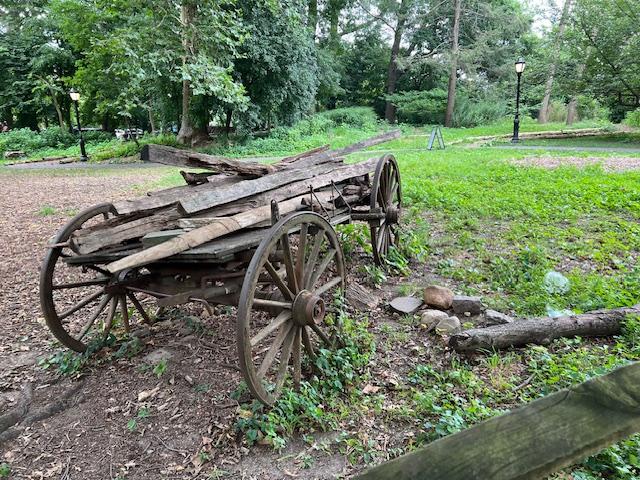
The old cart outside of the Lefferts House

The best part of the Prospect Park Zoo is that like the Central Park Zoo it is small enough to see in one day and be able to enjoy the exhibitions in one afternoon and still have time for lunch.

The Map of the Zoo

The Zoo has gone through a lot of improvements since COVID and reopened. There is a unique sculpture garden when you walk inside.

The Prospect Park Zoo Sculpture Garden at the entrance

Fish Sculptures at the entrance

The sculptures at the entrance of the zoo by artist Mags Harries

Artist Mags Harries

https://www.magsharries.com/maybe-home

https://smfa.tufts.edu/directory/mags-harries

Artist Mags Harries is an Wales born artist who graduated the Leicester College of Art with a Diploma in Art and Design and Illinois University, Carbondale with a Master of Fine Arts. She is known for her creative sculptures and their use in enhancing public spaces (Artist bio/Tufts.edu).

The main focus of the zoo when you walk through the gates is the seal tanks. These playful animals spend most of their time swimming around or sunning themselves on a warm day. During the feeding schedule, it is interesting to see how they interact with the trainers.
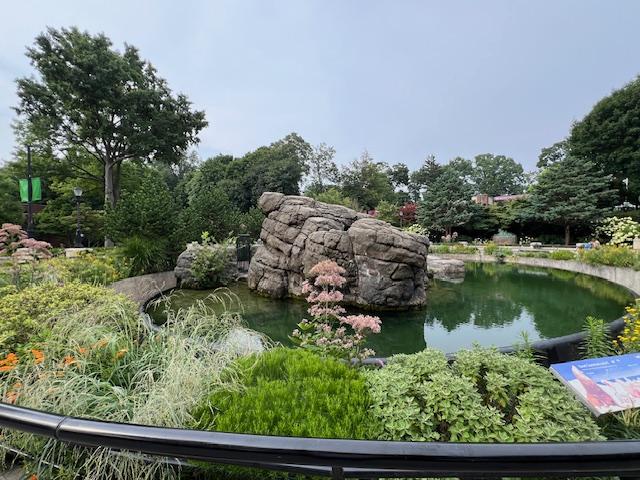
The Seal Tanks at the entrance of the Zoo

The Seal tanks when you walk in are very active

Walking further into the zoo you will walk past the Hall of Animals, where all the smaller animals and amphibians like frogs, snakes and turtles are located. These are a lot of fun for the smaller children who may not see these things in their backyards or even in the parks anymore.
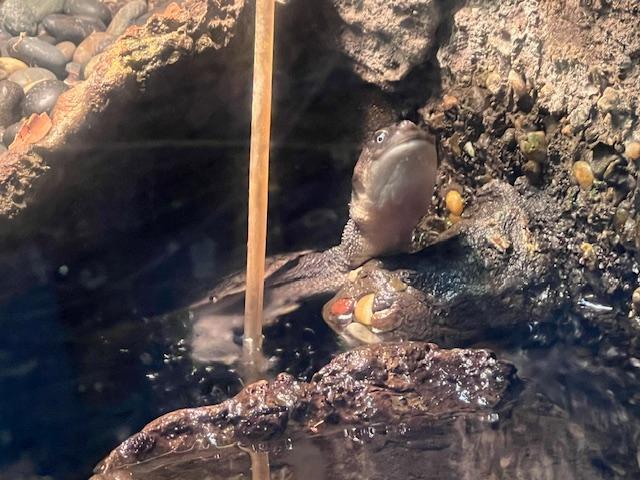
The rare Longnecked Turtle in the Small Animals exhibition
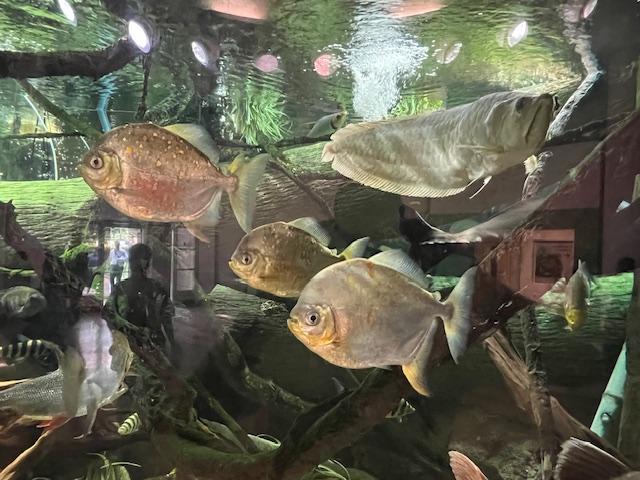
The Fish tank at the Small Animals exhibition
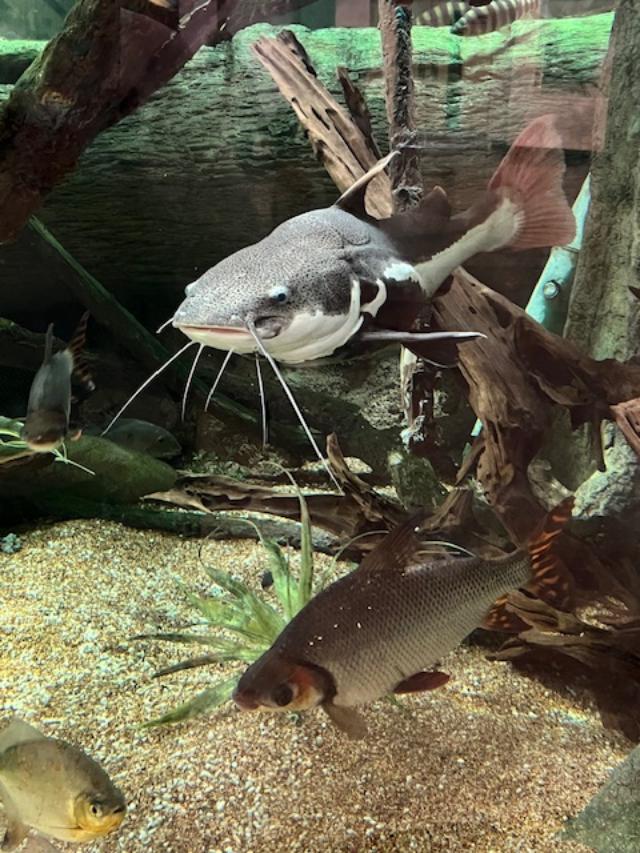
The catfish in the Fish Tank at the Small Animals exhibition

I went to the Bird Cages and saw a Kookaburra bird from Australia. He looked at me like I looked at him. He had the most inquisitive look on his face.

The Kookaburra looking at me

The Kookaburra looking around the cage

The Victorian Pigeons with their beautiful colors and feathers

The tropical hornbill birds

As I sat down to rest after visiting both the Brooklyn Museum and the Brooklyn Botanic Garden, a peacock walked past me looking for food. It must be very used to humans because he just ignored me and kept on walking.

The peacock at the zoo just does his own thing

Beyond that is the Barn, where your horses and cows are located and they even have a pair of turkeys, which makes for interesting conversation for children who wonder where they come from at Thanksgiving. The turkeys here are more bred than the wild ones you will see in the woods. They also have sheep, pigs and lambs that you can feed.

The gardens leading to the Barn area

The gardens leading to the Barn area

The different barnyard animals were in the process of being feed and taken care of by their trainers. If you put food in front of them though, they cam running. The kids were having a ball feeding them snacks.

The Barn pens at the zoo

Lambs and calf’s in the Barnyard at the zoo
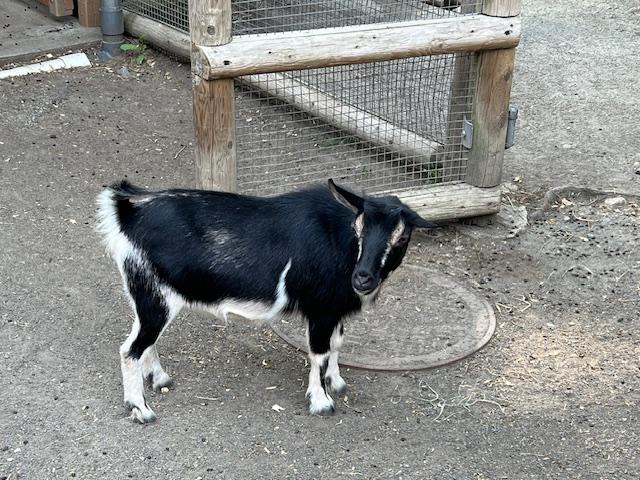
The lambs hoping they would be fed by the visitors

The friendly lamb in the pens

The sheep at the barnyard
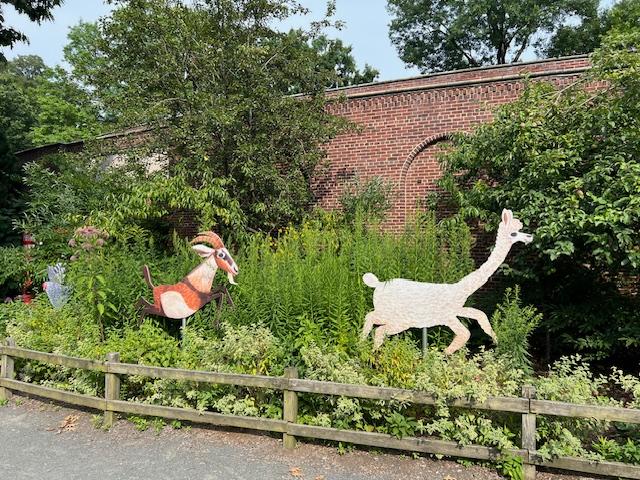
The animal sculptures just outside the Barnyard display

Next to the Hall of Animals is the Animal Lifestyle exhibition where a lot of the gorillas and monkeys are located. It is funny to watch their mannerisms and see ourselves and out behaviors in them. I guess a couple of thousand years never really separated us that much and we still are a lot alike.
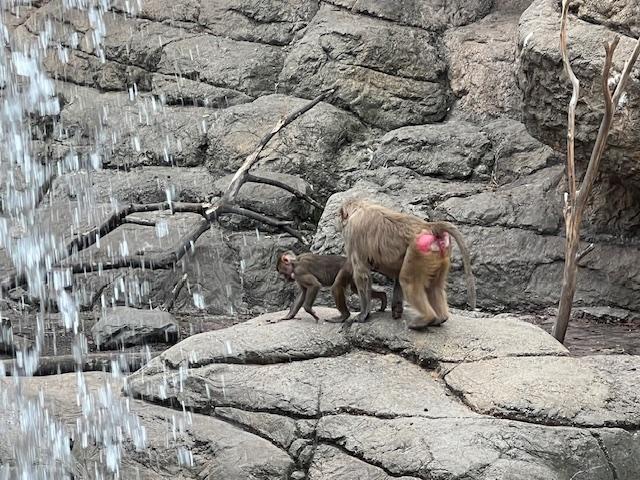
The Baboons at the Hall of Animals

From there you will take the Discovery Trail to see more familiar animals that you might see in every day nature such as deer, foxes, porcupines, ducks and geese in a more natural habitat where they can roam free. The space is limited but they look a lot happy to move around than some of the other animals.

The swans on the Discovery Trail
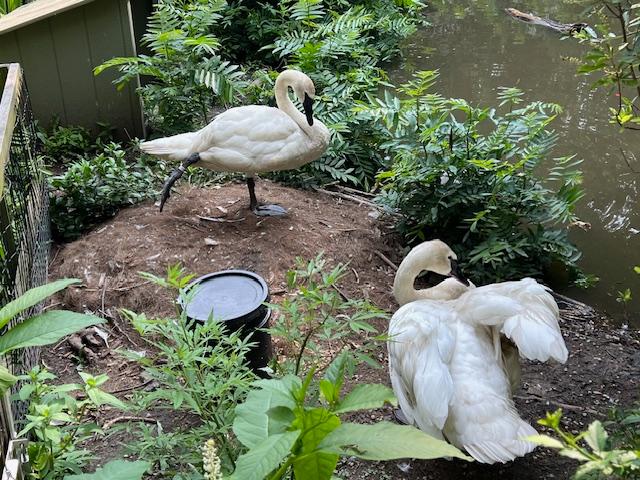
The swans on the trail

All trails lead back to the Seal Tanks where the popular feeding time gathers a crowd and you will see the care that many of the trainers and zoo keepers give to their residents. There is a lot of love for these animals that is given and I can see a lot of respect.

Relaxing by the Seal Tanks

I got to sit and relax by the Seal Tanks and just enjoy the afternoon. The landscaping around the main Seal Tanks were in full bloom. I also never noticed the statuary around the pool.

The landscaped stairs leading to the zoo from the main road
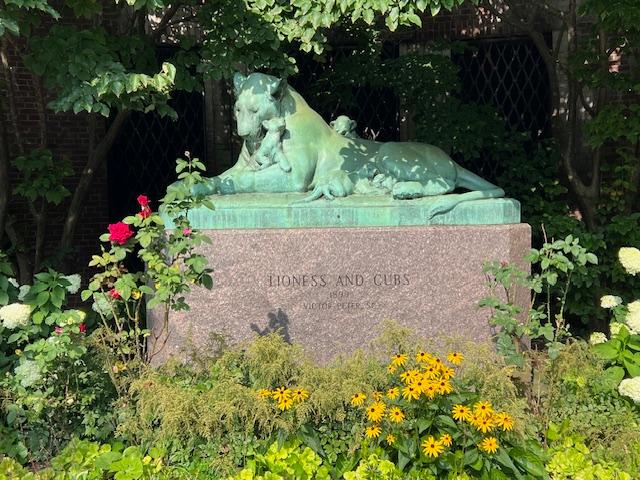
‘Lioness and Cubs’ by French sculptor Victor Peter

https://www.nycgovparks.org/about/history/zoos/prospect-park
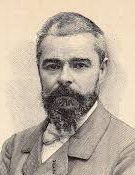
Artist Victor Peter

https://www.metmuseum.org/art/collection/search/208856

Artist Victor Peter is a French born artist known for his realistic sculptures.

A trip to the snack shop and gift shops at the zoo are expensive and cater to the tourists. They are not as nicely merchandised as the Bronx Zoo or the Central Park Zoo. Still they are fun to visit once or twice.

The Prospect Park Zoo is still a nice afternoon out for families and a nice way to communicate with nature.

The History of the Prospect Park Zoo:

The Prospect Park Zoo is a 12 acre zoo located in Prospect Park, Brooklyn and as of 2016 houses 864 animals. The zoo was originally part of the plan of Prospect Park as a “Zoological Garden” in the western part of the park. The zoo was not part of the finished plan in the park in 1874 by designers Fredrick Law Olmsted and Calvert Vaux.

The original zoo layout

The park design included a Wild Fowl Pond in the northern part of the park that was stop off for water birds and a Deer Paddock in the southern part of the zoo where deer lived in a penned area.

In the 1890’s, gardens were created for park enjoyment and a informal Menagerie was created by the Brooklyn Parks Commission, George V. Brower, when the donation of small bear, white deer, seven seals, a cow and twelve peacocks came into the possession of the park.

In 1934, Parks Department head Robert Moses set a plan to reconstruct the City’s Parks and under the Works Progress Administration started to revamp the park system. In March of that year architect Aymar Embury II set to design the new zoo with six new buildings and centered by a Seal Pool.

By the 1970’s, the zoo faced disrepair and was neglect for the animals. It was considered one of the worst zoo’s in the country according to the press and finally in 1980, the Koch Administration signed a 50 year agreement with the NY Zoological Society, now called the Wildlife Conservation Society, which was also administrating the Central Park and Queens Zoo.

The park closed in 1988 for a five year, 37 million dollar renovation that gutted all the pits and cages but saved the historic buildings and statuary. The new zoo opened in 1993 with a new name, “The Prospect Park Wildlife Conservation Center” and a philosophy of educating children. The zoo along with the Queens Zoo have had some shortfalls in the past but have the full support of the Society and the public since the early 2000’s. Still the zoo remains popular with families from all over Brooklyn and the world.

The main view of the zoo

(This information is provided by Wiki and the Wildlife Conservatory website and I give them both full credit for the information)
New York Aquarium                                                                 602 Surf Avenue                                                                          Brooklyn, NY 11224

New York Aquarium 602 Surf Avenue Brooklyn, NY 11224

New York Aquarium

602 Surf Avenue

Brooklyn, NY 11224

(718) 265-3474

http://www.nyaquarium.com

https://nyaquarium.com/

Open: Sunday & Saturday 10:00am-5:30pm/Monday-Friday 10:00am-5:00pm

Fee: Adults $25.00/Children $20.00/Seniors $27.00 (see their website for more details on pricing and times)

My review on TripAdvisor:

https://www.tripadvisor.com/Attraction_Review-g60827-d107414-Reviews-New_York_Aquarium-Brooklyn_New_York.html?m=19905

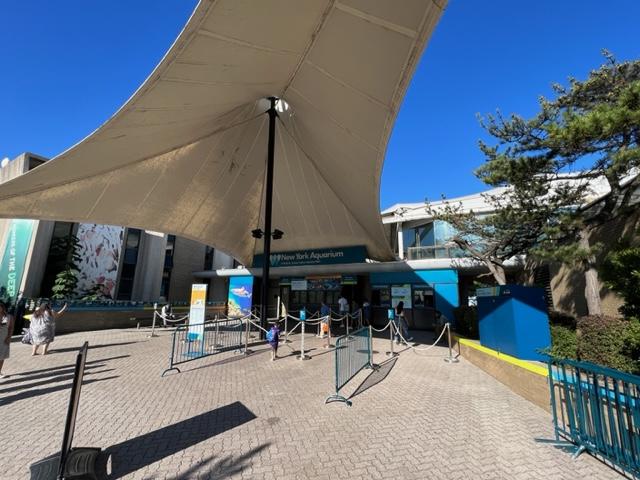
The New York Aquarium at 602 Surf Avenue.

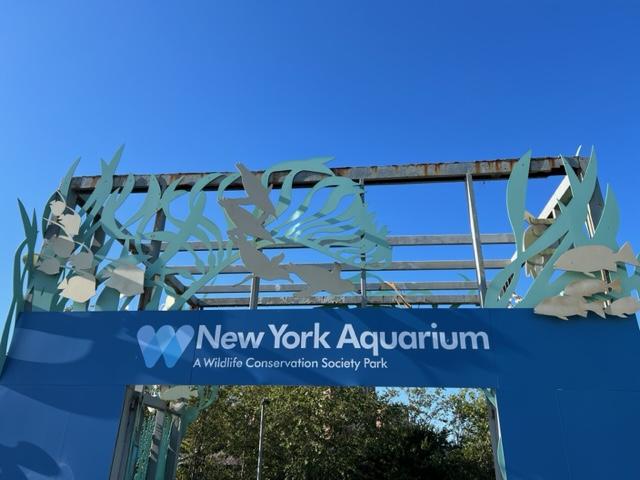
The aquarium entrance at the boardwalk.

The aquarium’s outside tanks with sea lions, otters and penguins.

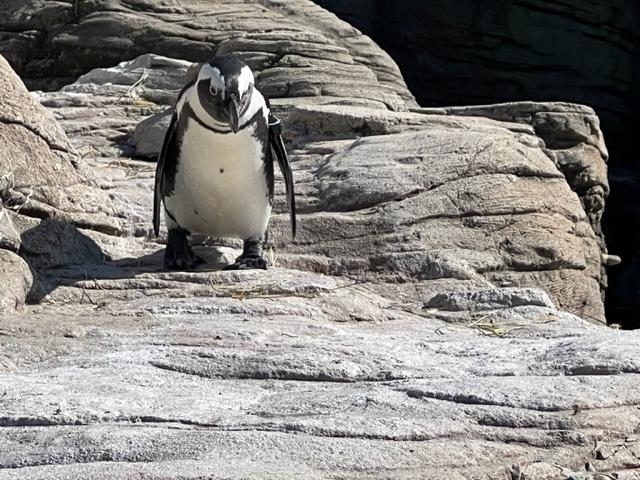
The penguins were very entertaining that afternoon.

The otter just ignored us. They just played amongst themselves.

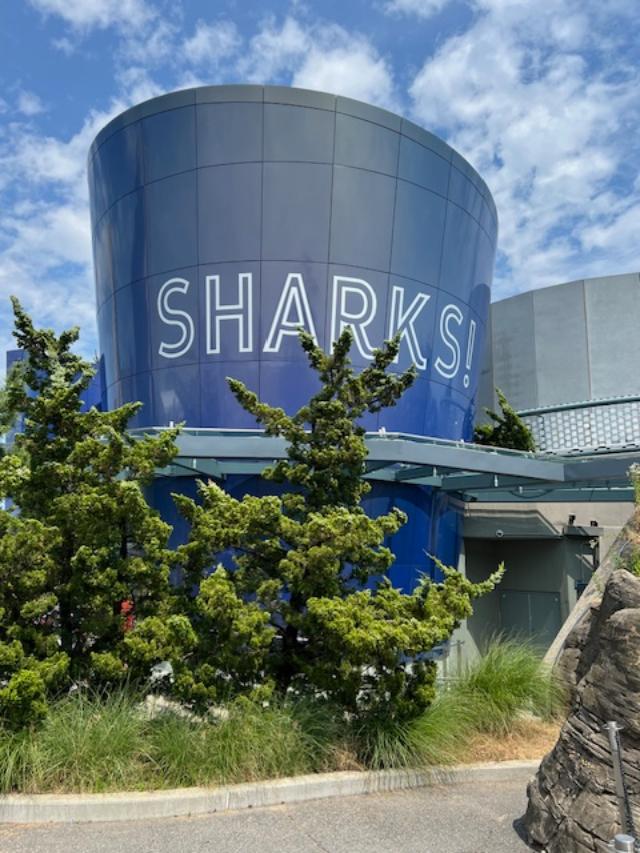
I have been to the NY Aquarium many times since it reopened after Hurricane Sandy and there have been many positive improvements in both the facility and the service. The new Ocean Wonders: Shark! exhibition which has opened up giving an interesting look at the underwater world of the many different types of sharks that dominate the deep.

The Shark Exhibit

The Shark exhibition

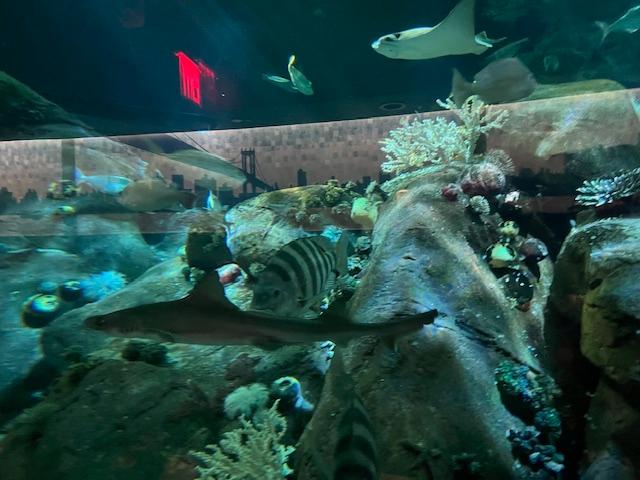
The sharks and string rays

It is not just a display but also a commentary on the conditions of the deep and the treatment of sharks around the world. There contributions as bottom dwellers cleans our oceans and benefits other fish. It was shocking what the treatment is of these animals in Asia when strip these animals of their fins for soup. I like how professionally the aquarium shows this in their displays and videos and doesn’t preach but offer solutions to the problem.

The entrance to the new shark tanks.

That and walking through the tanks themselves in the darkened rooms with music makes for a fascinating and almost ominous trip into the ocean behind the walls with the sharks and other mammals and fish swim past you. There is also a small tunnel that you can climb under to watch the fish swim on top of you and past you.

The tropical fish exhibition

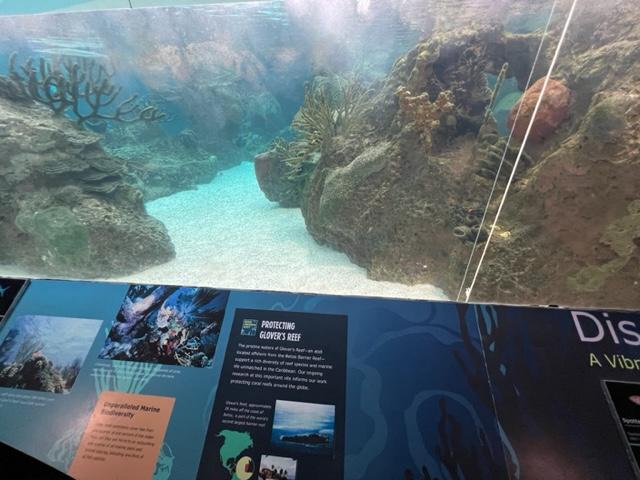
In the Conservation Hall, you will learn all about the fish that dominate and keep our reefs vibrant and what happens when pollution takes over and kills them. Again the aquarium displays this in a positive way, shows how the animals keep the reefs healthy. I point out that there are a lot of colorful fish on display and it is fun to watch the small children yell out to them.

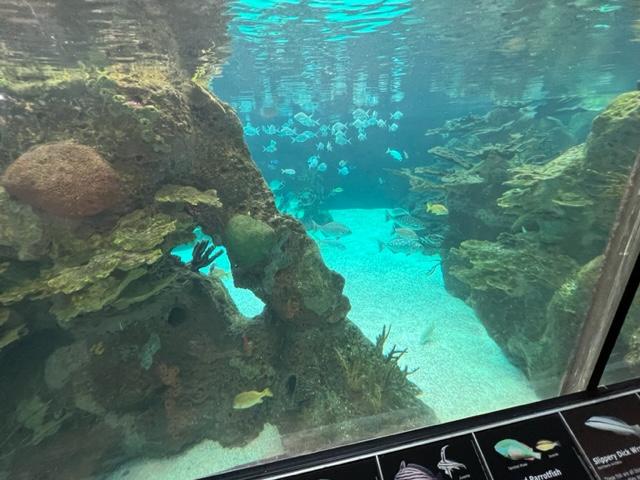
The coral reef exhibition

The Coral Reef Exhibition

The fish in the Coral tanks

a

The Hudson Canyon Edge exhibit

https://nyaquarium.com/things-to-do/events/hudson-canyon

People looking at the tanks

The stingrays in the tanks

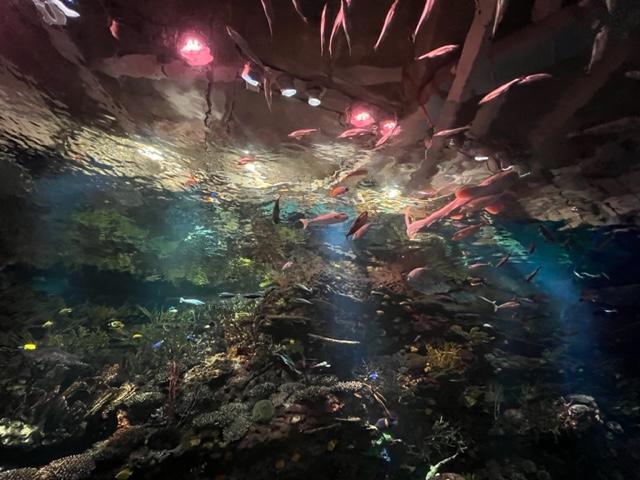
The wild life in the canyon

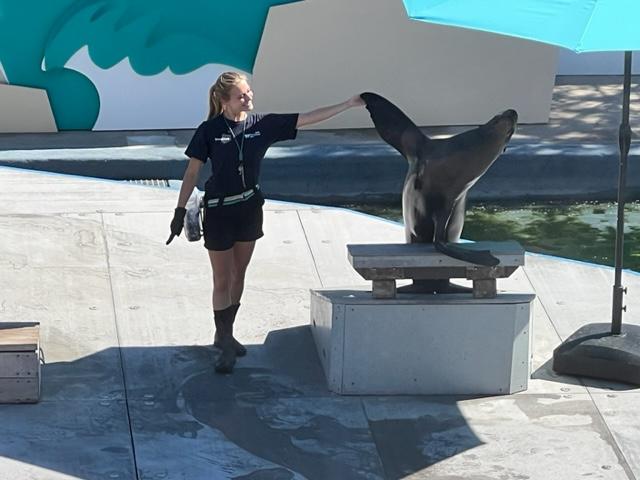
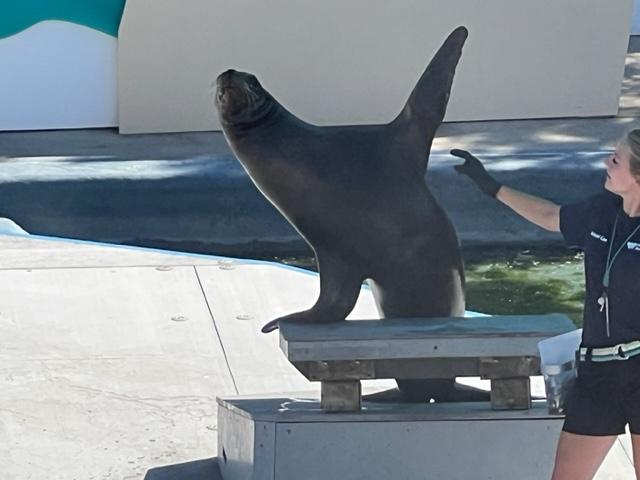
There is a wonderful seal show during the day that you should not miss especially in the warmer months when you can sit in the stands and watch them perform with their trainers. They are more Native New Yorkers than most humans having been born at the aquarium and showing their own pride in their home and abilities.

The Sea lion show at the aquarium is very popular.

The Sea lion show

The Sea lion show

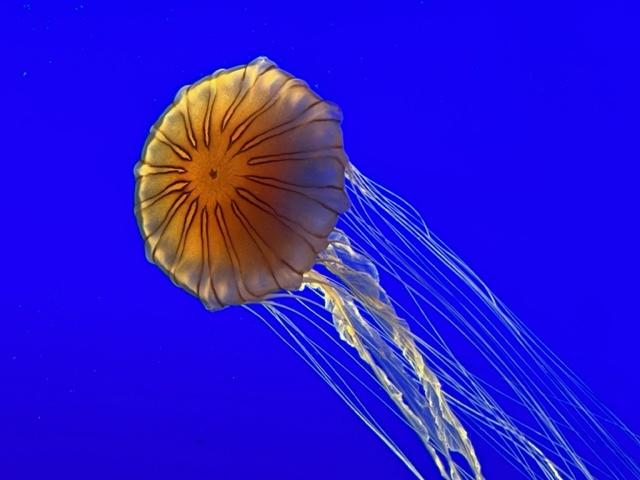
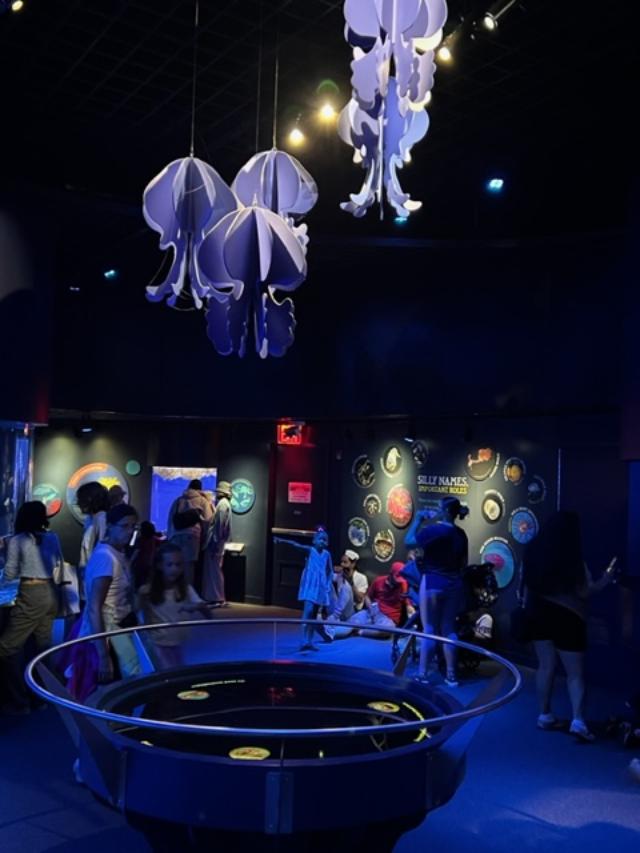
The new “Spineless” exhibition shows all the jelly fish and related species.

The “Spineless” exhibition

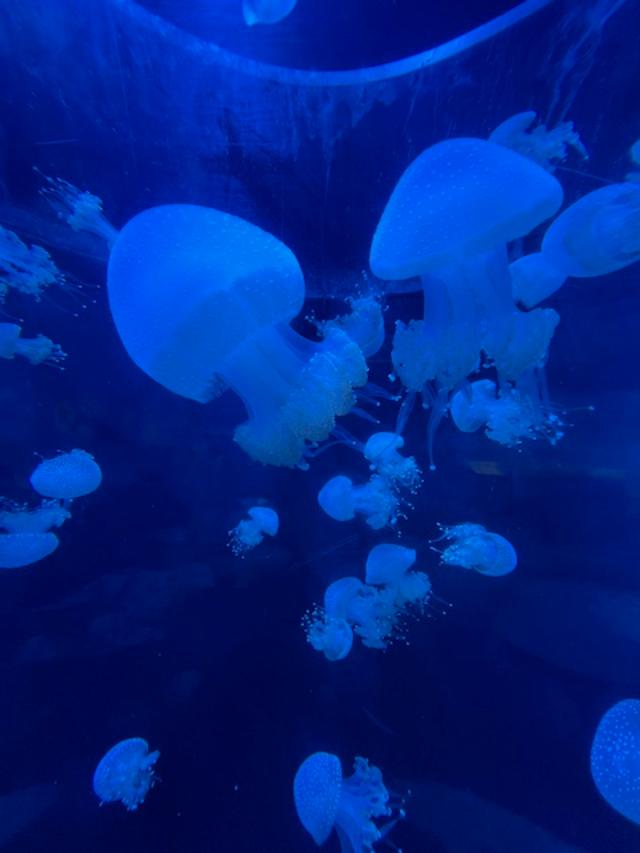
The beautiful jelly fish at the aquarium.

The “Spineless” exhibition

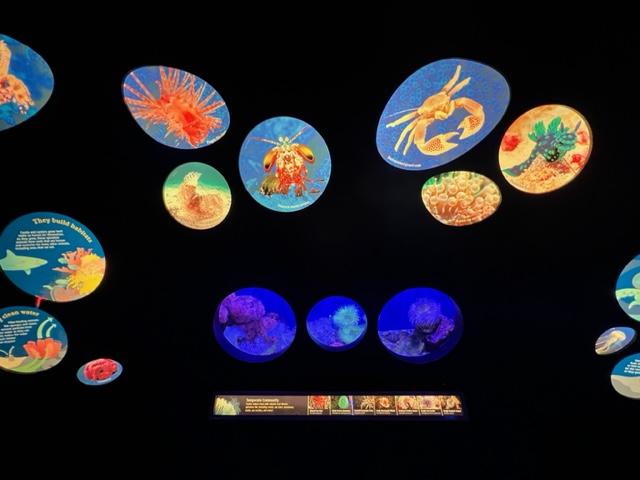
The different creatures of the deep.

The Jellyfish tank

The Jellyfish are amazing to look at in the tank

There were all sorts of tanks displaying many different types of tropical fish and corals that are exotic and very much endangered. We are beginning to destroy their habitants.

The fish habitats

As part of the new building there are also several new eating establishments at the aquarium including the new Oceanside Grill that I have not visited yet (it was closed on my last visit) as well as The New York Bite food truck (which was also not opened). The most impressive restaurant is the Oceanview Bites on the second floor of the Ocean Wonders building. This beautiful new restaurant has an interesting but somewhat routine menu with prices usual to an aquarium but offer the most spectacular views of the ocean and of Coney Island. Do not miss just walking up to the restaurant in the circular pathway for the views alone.

The NY Aquarium is a treat in of itself and a great excuse to visit Coney Island. Don’t miss the rest of the island’s amusements and museums while you are there.

The NY Aquarium

History of the New York Aquarium:

(this information is provided by a combination of the NY Aquarium and Wiki and I give them full credit for the information)

The New York Aquarium is the oldest continually operating aquarium in the United States, having opened in Castle Garden in Battery Park in Manhattan in 1896. Since 1957, it has been located on the Reigelmann Boardwalk in Coney Island. The aquarium is operated by the Wildlife Conservation Society (WCS) as part of its integrated system of four zoos and one aquarium, most notably the Bronx Zoo. It is accredited by the Association of Zoos and Aquariums (AZA).

The sea lion tanks

As part of the WCS, the aquarium’s mission is to save wildlife and wild places worldwide through science, conservation action, education and inspiring people to value nature.

The facility occupies 14 acres and boasts 266 species of aquatic wildlife. Its mission is to raise public awareness about issues facing the ocean and its inhabitants with special exhibitions, public events and research. The New York Seascape program, based out of the aquarium, is WCS’s local conservation program designed to restore healthy populations of marine species and protect New York waters, which are vital to the area’s economic and cultural vitality.

The penguin tank

The Penguin exhibition on the outside

On June 6, 1957, the Aquarium opened at its new location in Coney Island. The new site of the New York Aquarium is the home of the WCS New York Seascape program, the society’s research and conservation program focusing on nearby rivers, harbor and ocean from Cape May, NJ to Montauk, Long Island.

The Shark Exhibition

The new “Shark” exhibition tunnel

The New York Aquarium:

The Shark exhibition

https://nyaquarium.com/things-to-do/exhibits/ocean-wonders-sharks

The Shark tanks

The shark tanks

The shark tanks

The shark tanks

The importance of sharks in nature

The Shark Tank

The aquarium kept an orca briefly in 1968 and a narwhal in 1969. Both reportedly died of possible pneumonia. The aquarium’s beluga whales were transferred to the Georgia Aquarium in 2007 as part of a breeding program. In September 2011, the aquarium named its new electric eel Wattson and in March 2012, it launched a sea horse breeding program.

In October 2006, the New York Aquarium announced the finalists to a competition to develop a more inviting and visually prominent exterior for the aquarium. In March 2007, the winning design by firms WRT and Cloud 9 was selected, which featured an enclosure resembling a whale over the aquarium. However, in March 2008 that concept was scrapped due to concerns over a new exhibit based on sharks was announced. The massive 784,000 US gallon exhibition, Ocean Wonders: Sharks! was originally scheduled to break ground in November 2012 and open in 2015.

The Penguin exhibition

The Penguin tank

The penguin tanks

A penguin ready to take a dive.

However, the New York Aquarium was significantly damaged by Hurricane Sandy in October 2012, which severely flooded the facility and shut down power. A small group of WCS staff who remained onsite during the hurricane were able to save 90% of the animals in the collection. As a result, the exhibition opened June 30, 2018, becoming the first major exhibition at the New York Aquarium to open after Hurricane Sandy.

The Shark tank’s fish display

Disclaimer: this history of the NY Aquarium is taken from Wiki and I give them full credit for this information.

The Sculptures in the NY Aquarium in 2024:

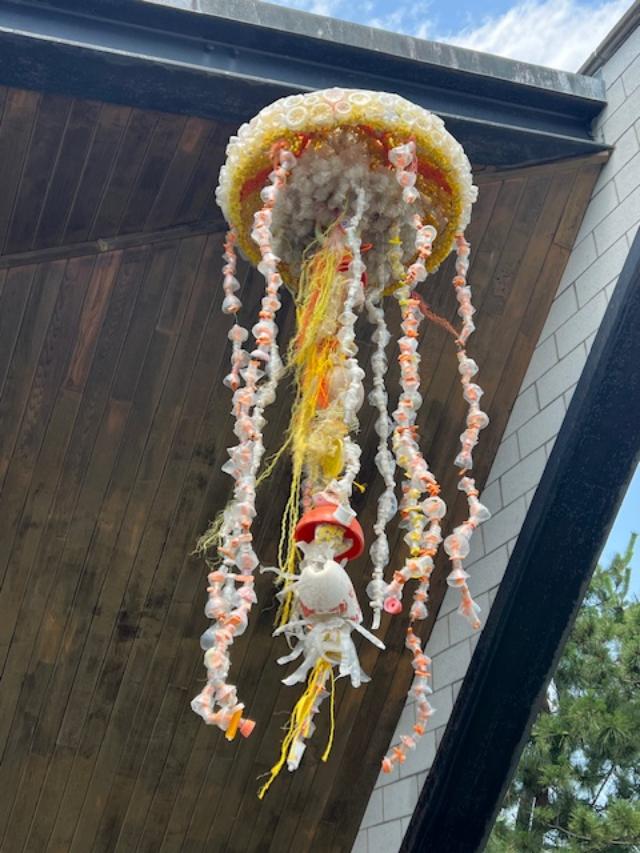
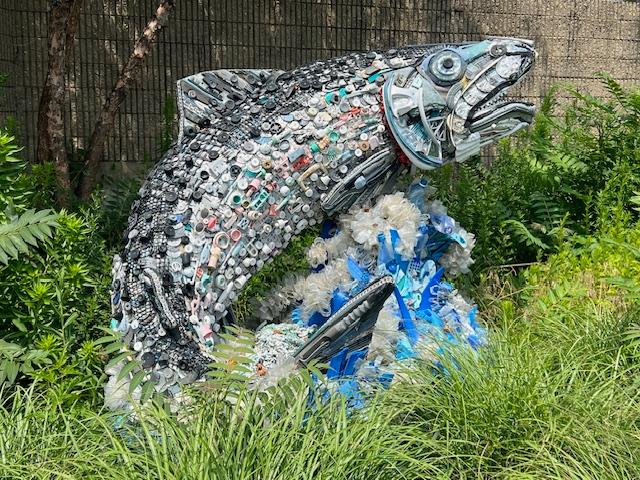
These sculptures were at NY Aquarium by Washed Ashore

The sign for Leo the Jellyfish

The Leo the Jellyfish sculpture

The Angus the Longhorn Cowfish sculpture sign

The Angus the Longhorn Cowfish sculpture

The Nora the Salmon sculpture sign

The Nora the Salmon sculpture

The Maggie and Charlotte Adele Penguins

The Maggie and Charlotte Adele Penguins sculpture

The Chompers the Tiger Shark

The Chompers the Tiger Shark sculptures

The Penguin sculpture

The artworks were all made of items that were thrown in the ocean and plastics that are thrown in the ocean. Washed Ashore created these works to show what is thrown in ocean and how it affects the wildlife in the oceans.

The boardwalk outside the aquarium

The beach outside the aquarium

Private Members Night at the NY Aquarium:

Members Night at the NY Aquarium:

The NY Aquarium held a Private Members Night for the members of the Wildlife Conservatory in July of 2026. Because of the wild fires in Canada, the air in New York City was not that good and that’s what probably kept the crowds away. was pretty bad and the crowds were light outside. Still, the aquarium planned a lot of family events and it was fun to walk through the exhibitions without dealing with crowds.

The front of the aquarium the Members Night

The aquarium at the beginning of the night

The crowds were mostly made up of families with small children and a lot of the outdoor activities were geared to them with face painting, chalk art displays and a Mermaid on roller skates who skated the courtyard making colorful bubbles of all sizes. It was fun seeing kids be kids without cellphones.

The Chalk Art that evening was enjoyed by everyone

The creativity of the art

The kids were really creativity

We also had a Mermaid skating around making bubbles that the kids really enjoyed. There were bubbles of all kinds floating around the courtyard. She was having as much fun as the kids who were chasing them around popping them. I thought it was out of the scene of a 1970’s film. It is fun to see those simple things still be so popular.

The Mermaid entertaining the children who attended the event

The Mermaid entertaining the kids

Bubbles were all over the aquarium and it was pretty cool

Then at 6:00pm, we had the Seal Show in the Aquacade but because of the heat and the smoke from the wildfires made the air not so good to stay outside. The breezes were nice and cleared much out but it was still not the best to sit for long periods. The show was fun but was quick.

The Seal Tank that evening

The sealions are actually ‘native New Yorkers’ who were born in captivity in the aquarium and know their stuff

The seals were talented and disciplined and entertained the crowds

After the show was over, I got another chance to walk through the indoor exhibitions to see the Shark exhibition and the Hudson Canyon’s Edge exhibition. Watching the fish, sharks and corals move and sway and it was very interesting to know that it is really down there.

Hudson Canyon’s Edge

https://nyaquarium.com/things-to-do/events/hudson-canyon

The corals of the sea being grown at the aquarium

The view of the sea

The full tank of fish and sharks. Is this was what was really in the canyon?

The end of the evening we could see the blood moon or was that the sun? The air was so bad from the Canadian wild fires you could see it through the whole City. Being by the shore, the breezes really did help.

Still it was a nice evening and it was fun to walk around the exhibits without the crowds. It was fun to watch the families having a good time and it was a nice evening.

This is why being a Member of the NY Wildlife Conservatory is so much fun. You get to visit all the parks with your membership and get to see the exhibitions on your own time. You also learn a few things about Mother Nature and the affects of the climate on it. I always enjoy a trip to the aquarium.

Van Cortlandt Manor                                                                  5 Riverside Avenue                                                           Croton-on-the-Hudson, NY 10502

Van Cortlandt Manor 5 Riverside Avenue Croton-on-the-Hudson, NY 10502

Van Cortlandt Manor

5 Riverside Avenue

Croton-on-the-Hudson, NY  10502

(914) 366-6900
Open: See website for seasonal hours

My review on TripAdvisor (Manor and Pumpkin Blaze):

https://www.tripadvisor.com/Attraction_Review-g47560-d116391-Reviews-Van_Cortlandt_Manor-Croton_on_Hudson_New_York.html?m=19905

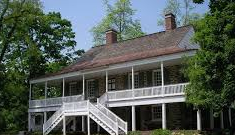
A trip to the Van Cortlandt Manor in Croton-on-the-Hudson is an interesting step back into the Colonial history of this country. During the summer, there is an interesting walking tour of the home offered usually from the end of July to Labor Day. Then the house is closed to prepare for the huge ‘Pumpkin Blaze’ during the months of October and November and then the house is shut down until the spring.

The house tour is interesting because it shows the home as a working farm and place of commerce for the family. This was not a weekend home for the family working in the City but crops being grown for shipping, vibrant gardens that supplied the house and a small tavern for travelers along the Albany Post Road as well as a place for shipping goods down the rivers.

van-cortlandt-manor-1.jpg

Van Cortlandt Manor

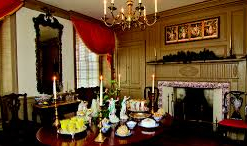
The home is furnished in the most modern furnishings of the time and you can see how the house reflected the needs of the family at that time. It was more of a home than a luxurious place to entertain. The furnishes are practical, very in fashion of the time and nicely decorated.

van-cortlandt-manor-ii.jpg

The Dining Room

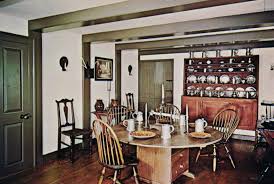
The tour of the kitchens and storage areas show that even in what was the modern era was not such easy living without servants. The estate was somewhat self-contained with animals and provisions being raised on the land and there is even an area where fabric such as flax and cotton where spun and made into clothing.

Van Cortlandt Manor III.jpg

The kitchen dining area

The upstairs bedrooms show that the linens were under lock and key even with the servants and that the rooms were well-appointed and comfortable. A lot of the family heirlooms still reside in the house and it gives you a perfect look at what life must have been like when the family lived here.

Don’t miss the gardens as well. Some have been over-grown because of the lack of volunteers but still you can see the beauty of the flowers and trees around the house. The house sits right on the cross between the Croton and Hudson rivers and even though it is now grown in, you can see that the house stood at one of the busiest sections of Upstate commerce.

As of 2026, the home is still under renovation and is still not open for inside tours.

The Pumpkin Blaze-Hudson Valley Historical Association:

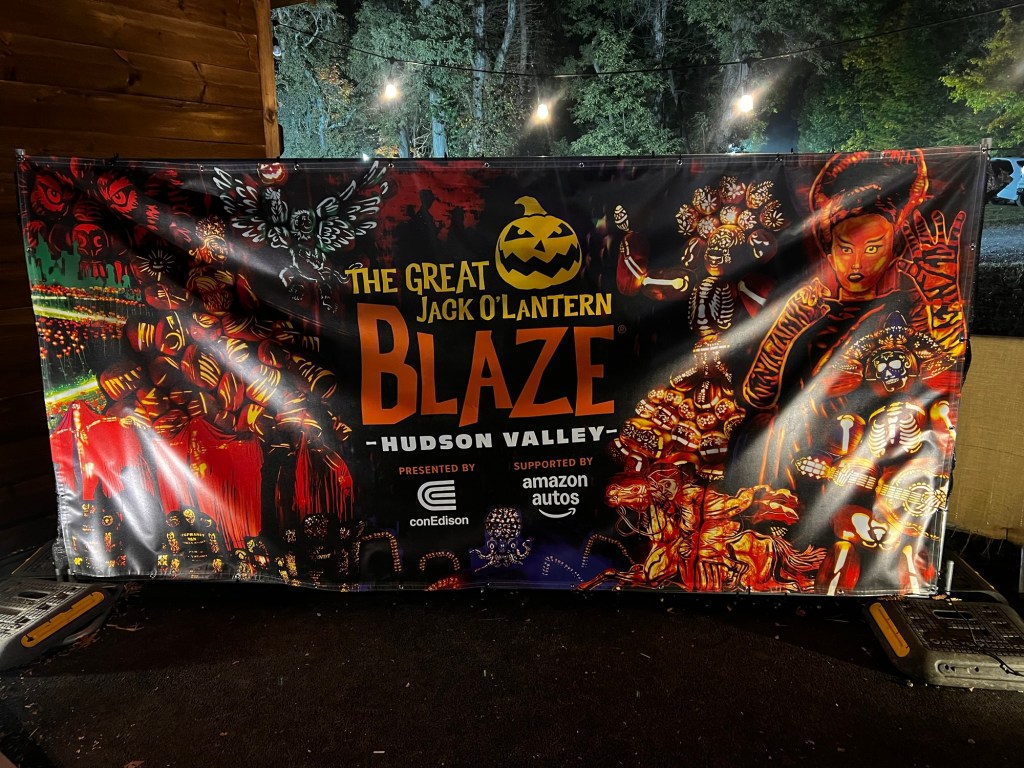
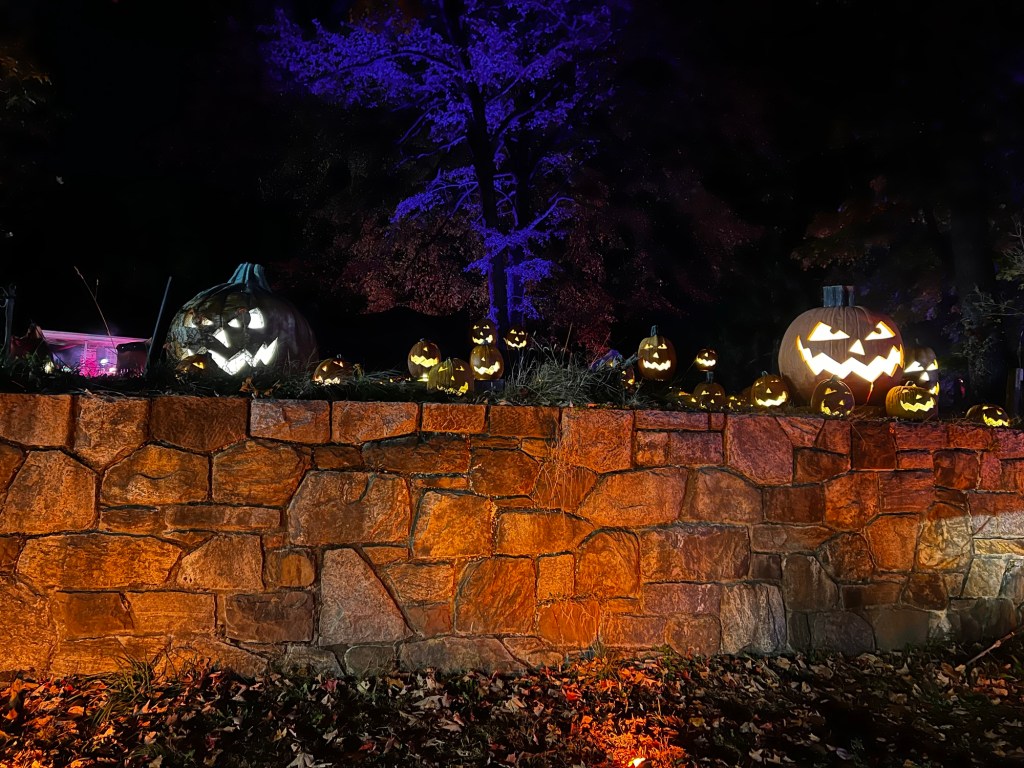
During the months of Halloween, there are thousands of pumpkins that line the walks and beautiful displays to see along the paths of the estate and the river. This event is sponsored by the Hudson Valley Historical Association and is one of their biggest fundraisers. Don’t miss this annual event every fall.

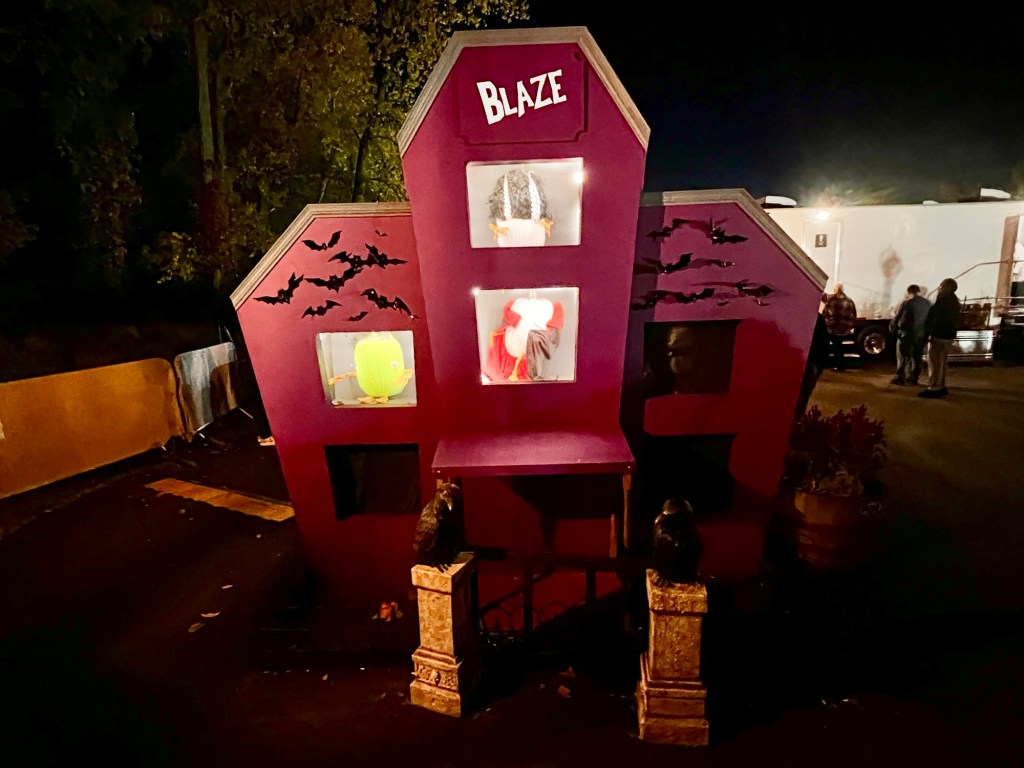
The Blaze is amazing!

The Pumpkin Blaze in 2019:

Some pictures from the MoMA Pumpkin Museum:

368

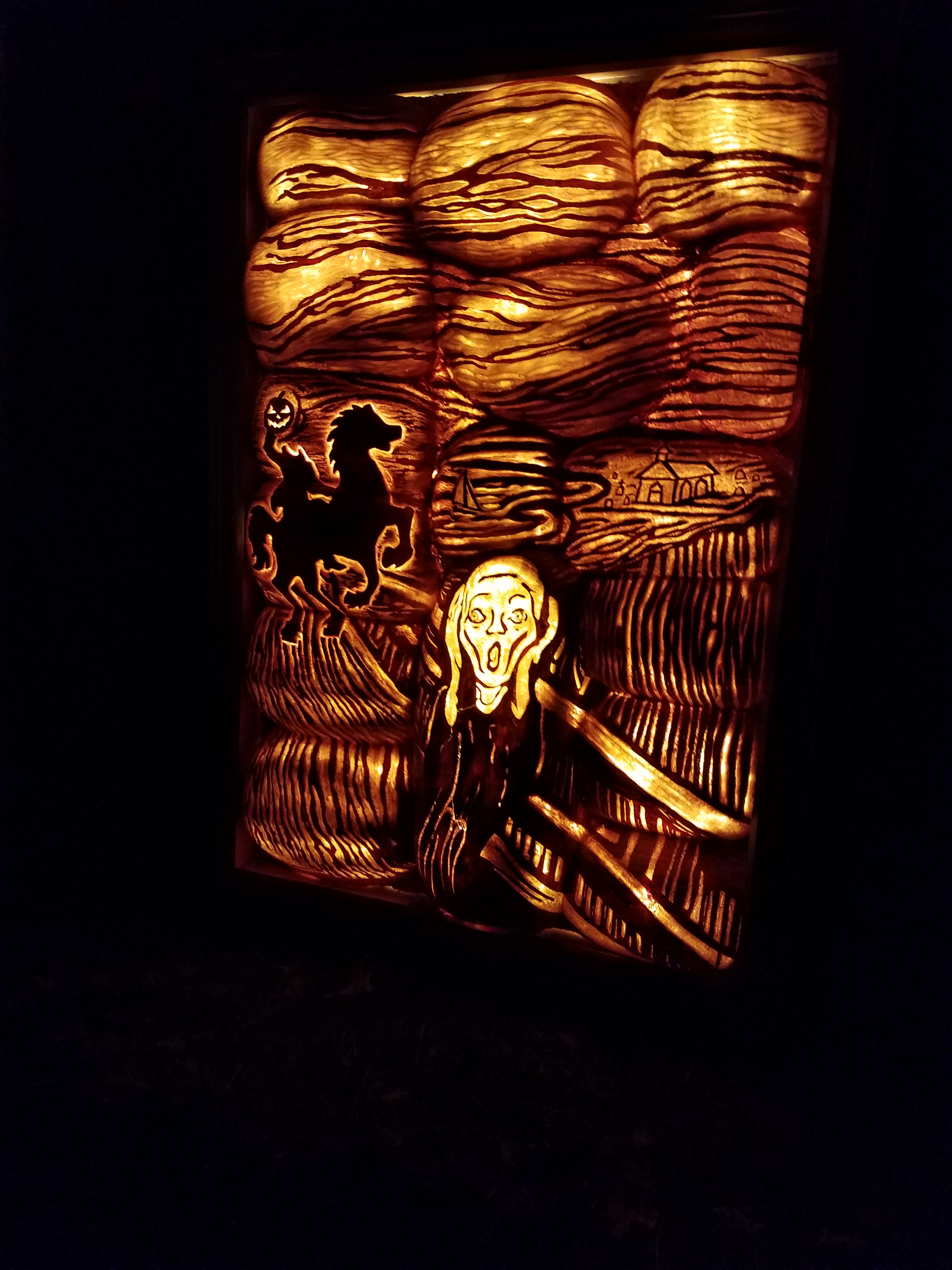
Their version of “The Scream”:

366
393

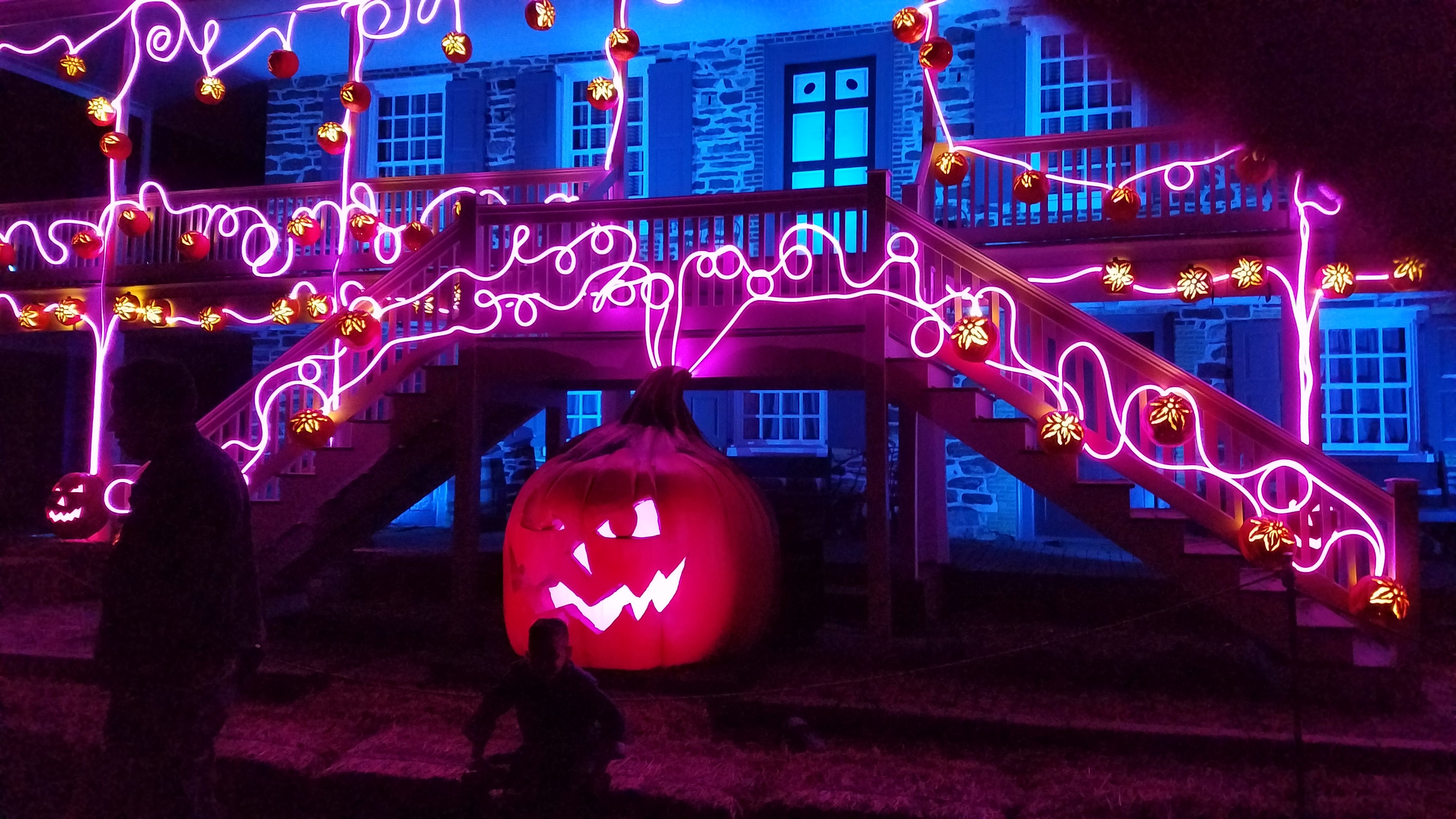
The Van Cortlandt Manor ablaze with lights and sounds

406

Justin Watrel at the Pumpkin Blaze

412

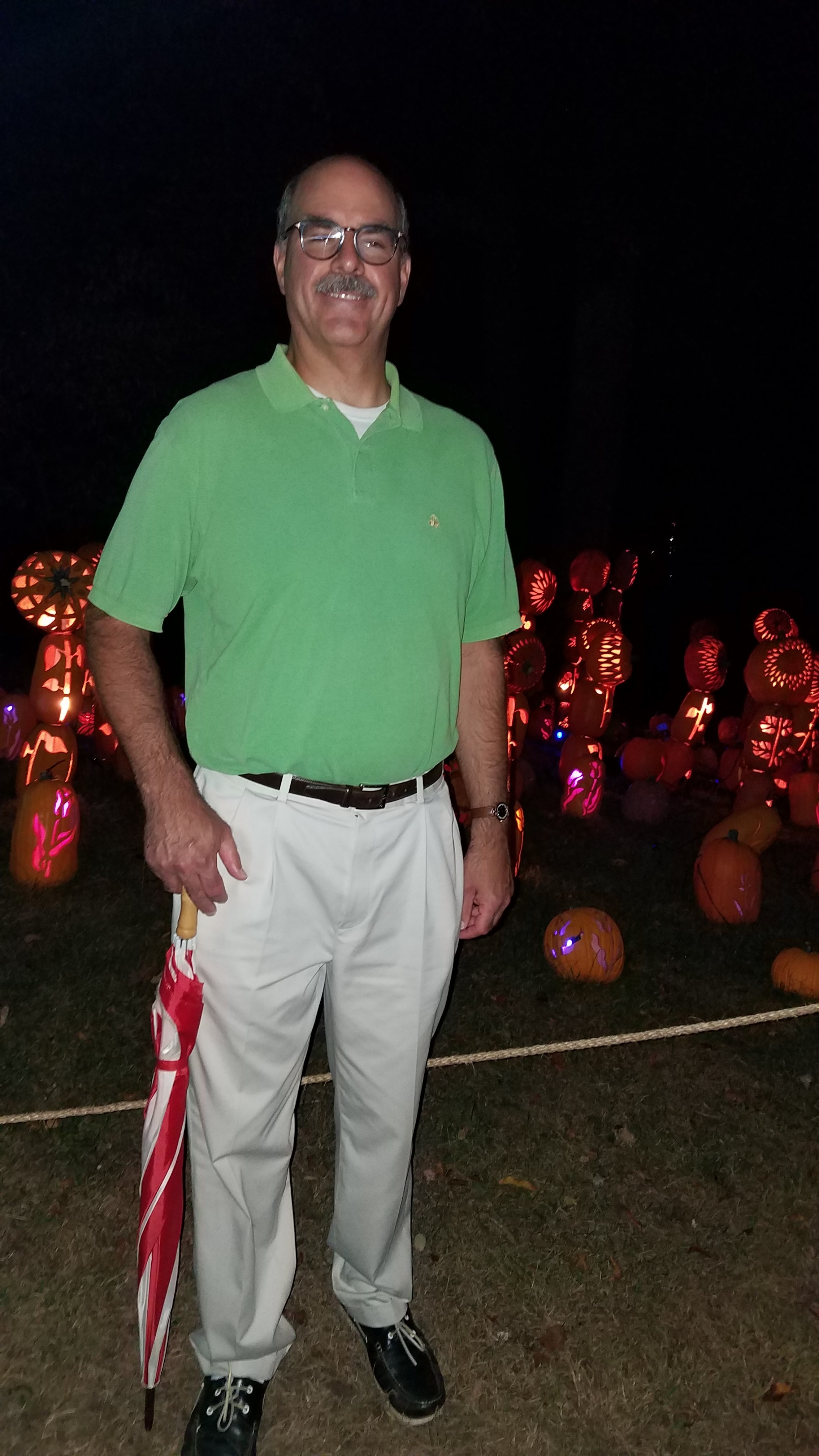
My Aunt and I at the Pumpkin Blaze in 2019

The Pumpkin Blaze in 2022:

Entering the Pumpkin Blaze in 2022

Pumpkins greeting you in all shapes and sizes

The Pumpkin Planetarium at the Pumpkin Blaze

My video walking inside

Pumpkin Bee Hive

The “Terror Zee Bridge” at the Pumpkin Blaze

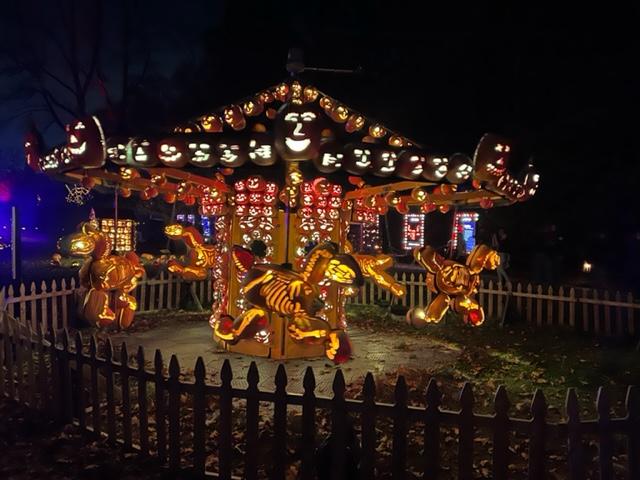
The Pumpkin Carousel

My video on the Carousel

The Pumpkin Fire Services

The Headless Horseman is the theme of many October festivals in the Hudson River Valley

The Pumpkin Blaze in 2026:

The Blaze this year I noticed had less carved pumpkins and more props which led me to believe they have less people to carve pumpkins. Still there were a lot of new displays and new music. Here are some of the things I saw on the Blaze in 2026:

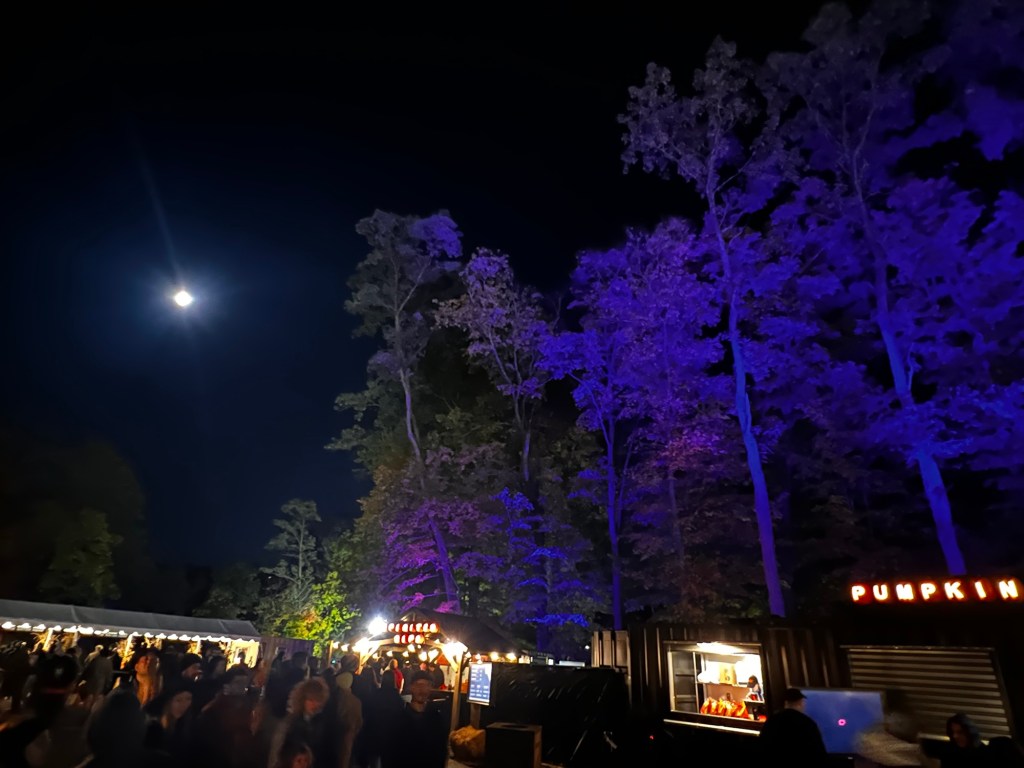
Arriving at the Blaze the weekend before Halloween

I noticed one thing about the Blaze and that is the crowds are much bigger before Halloween than after and the weather is much warmer. When I got there, it was 60 degrees and sunny. When I left at 9:30pm, it was 40 degrees. Quite the drop, so always dress warmly.

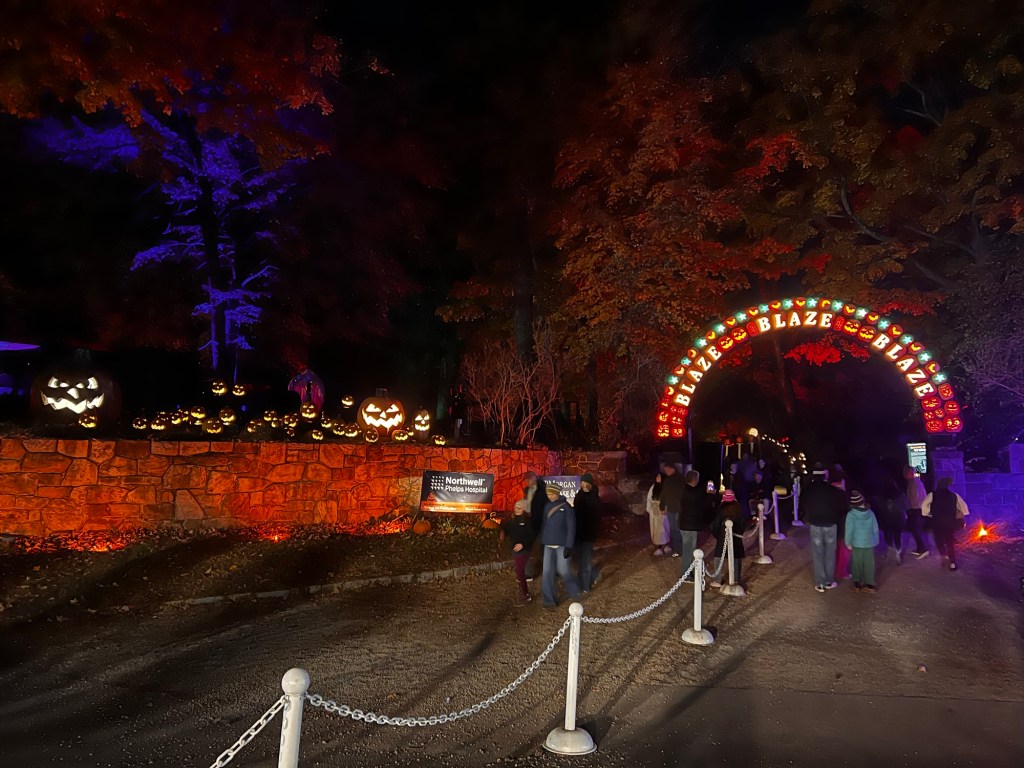
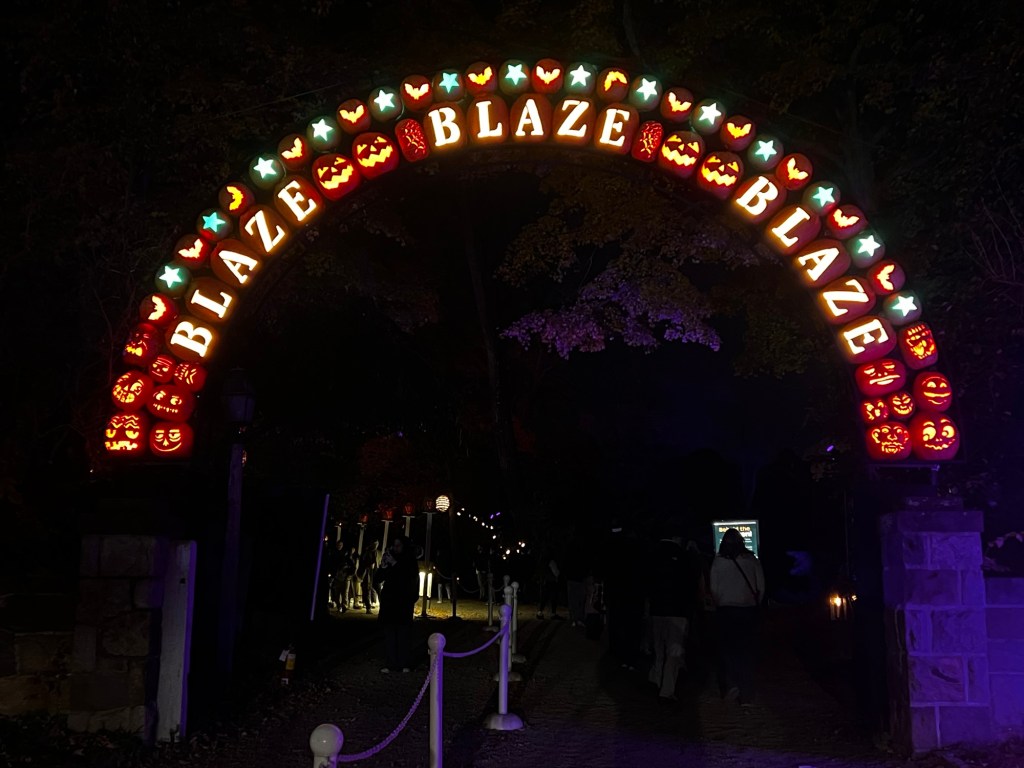
The entrance to the Blaze in 2026

The entrance to the Blaze

The shoe has gotten very popular over the years and the crowd was really big when I got there at 8:00pm. All the times from 8:00pm and before were completely sold out.

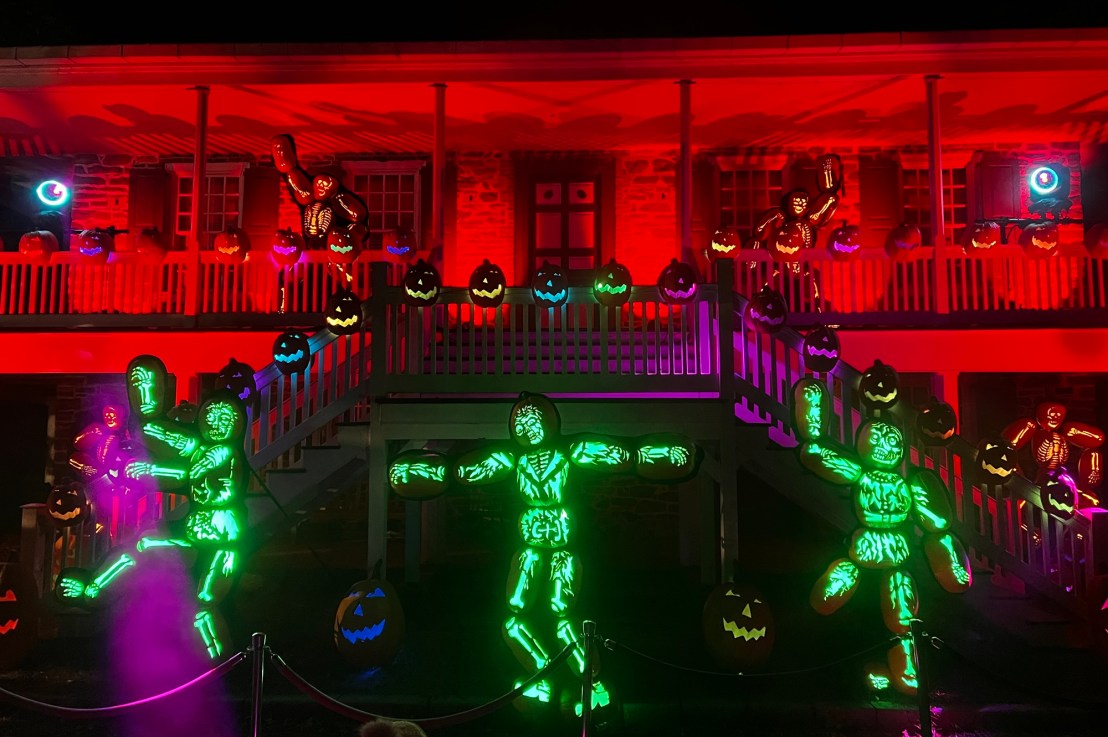
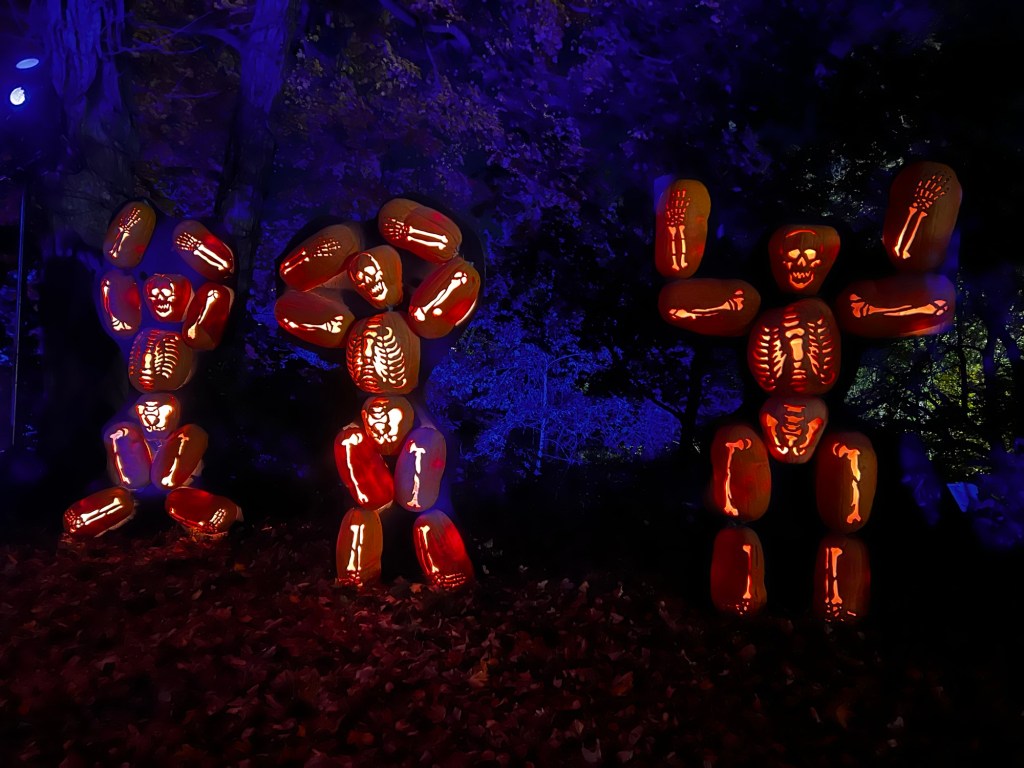
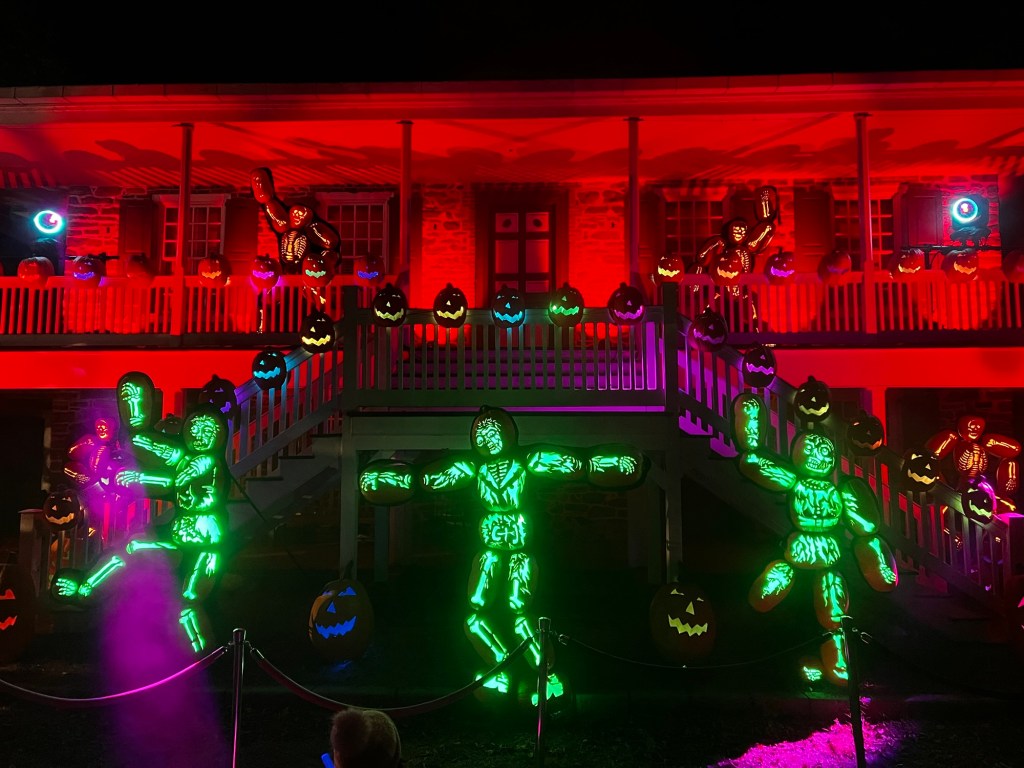
The dancing Skelatons

The video on the Skelatons

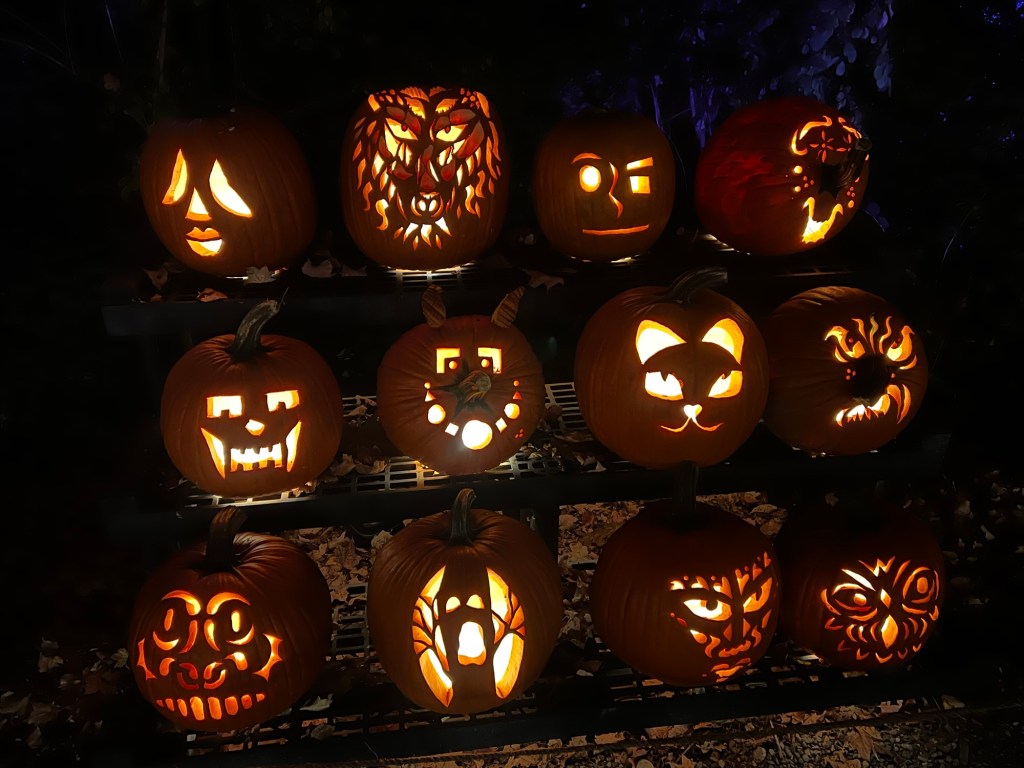
I walked through the exhibition and the carved pumpkins are mostly in this part of the display. After I left this area, it was mostly props.

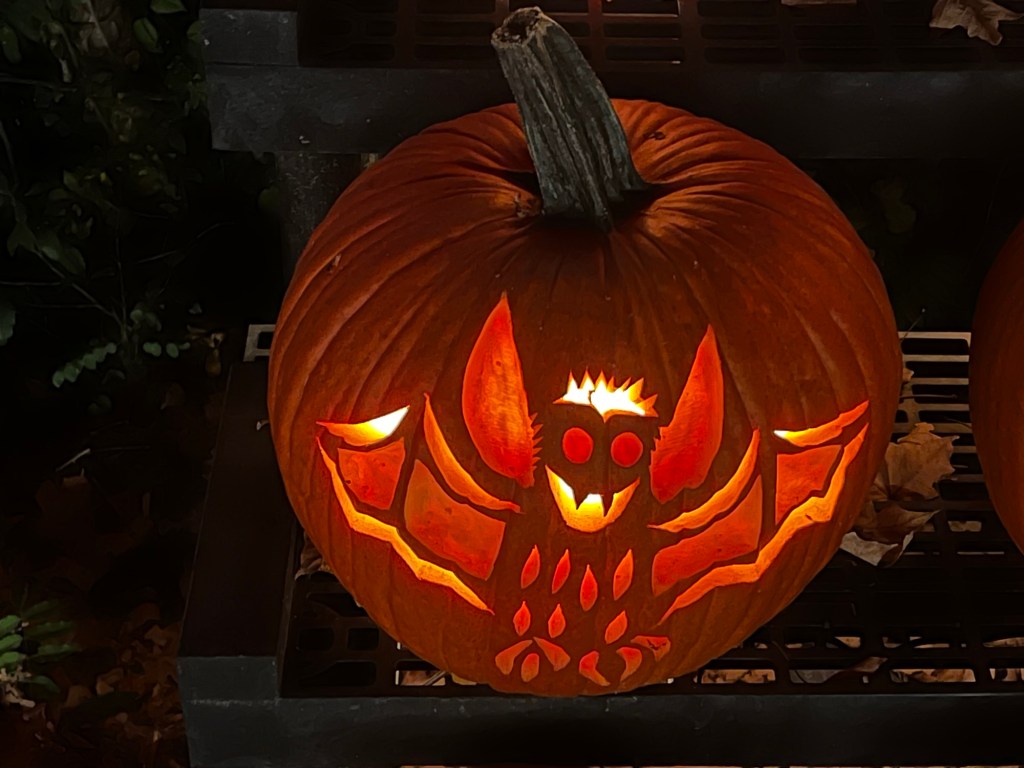
The carved pumpkins on display

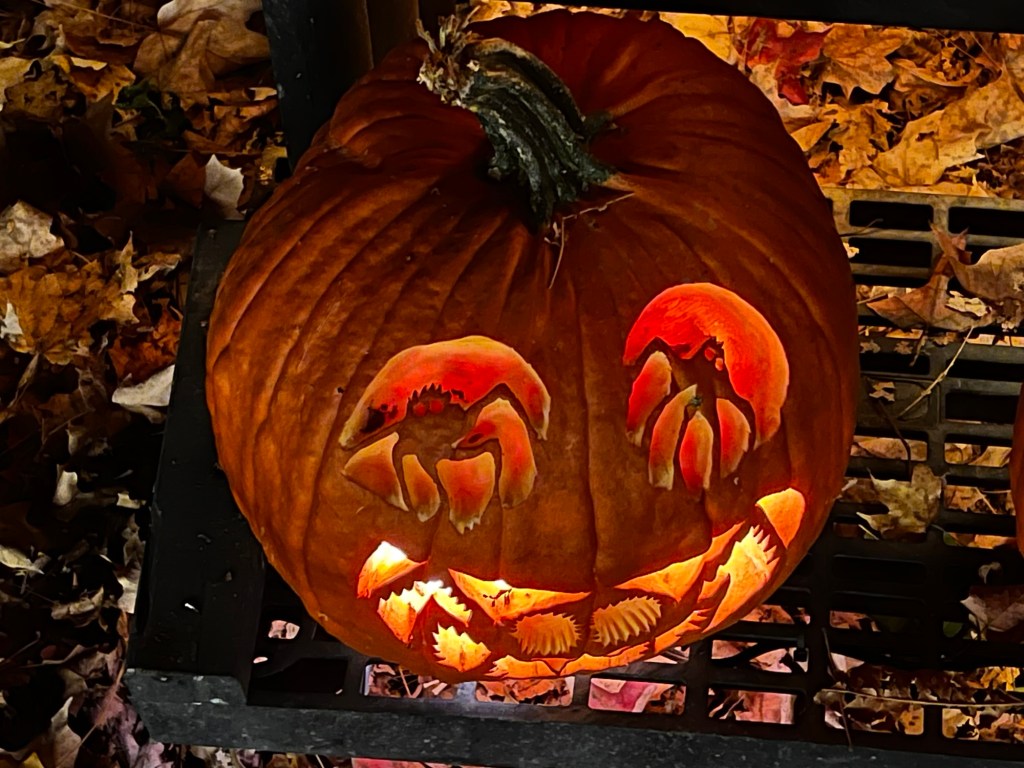
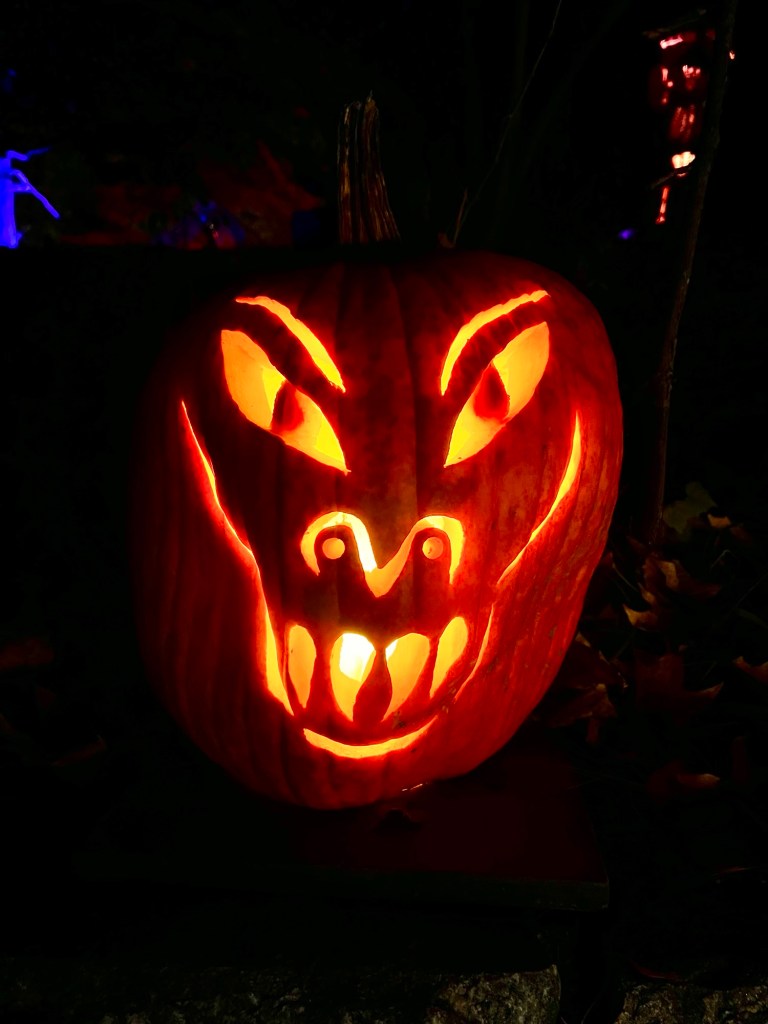
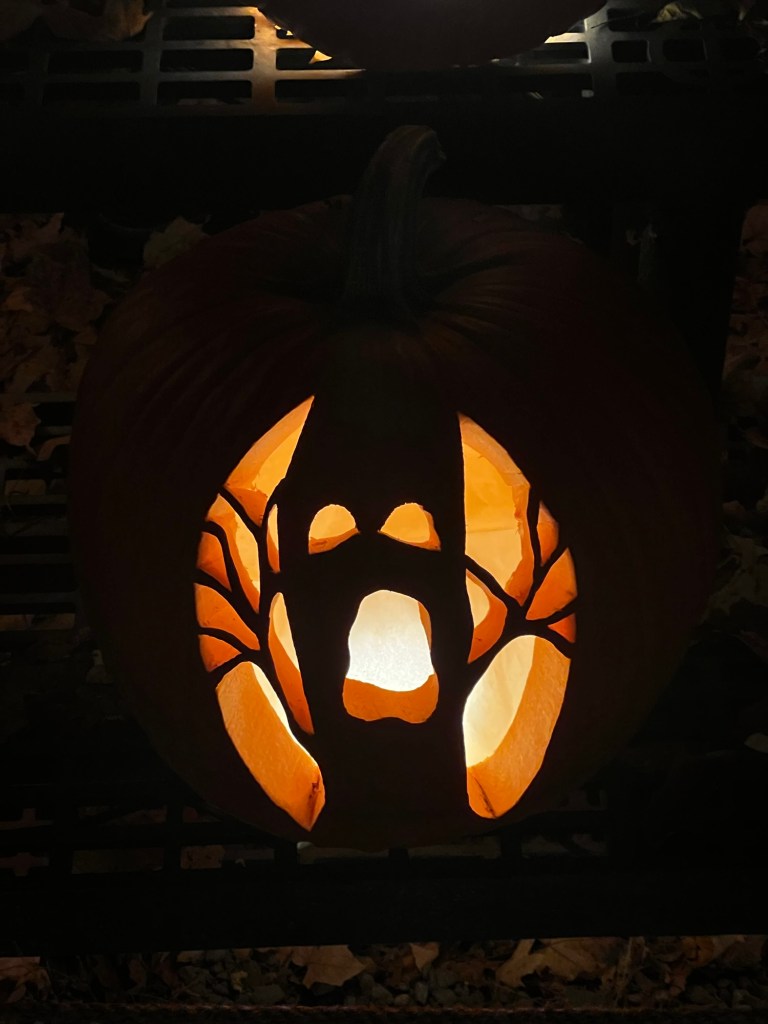
My favorite pumpkin of 2026

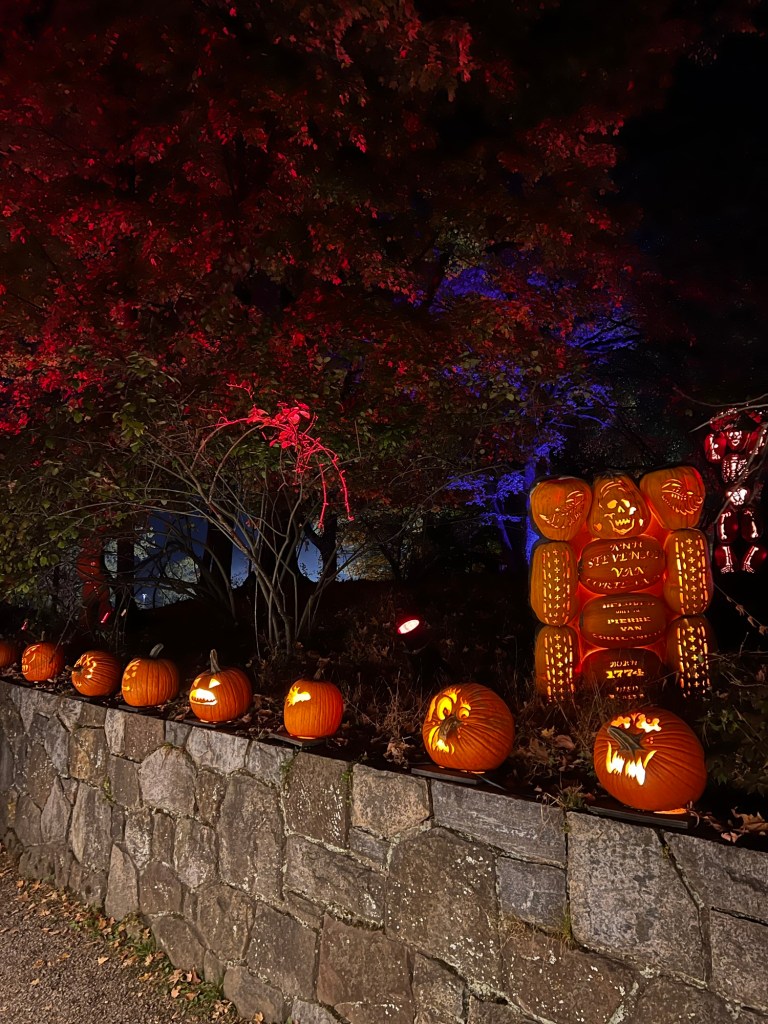
The pumpkins lining the entrance to the inside of the Blaze

Some of the pumpkins were really creative

I thought this was very clever

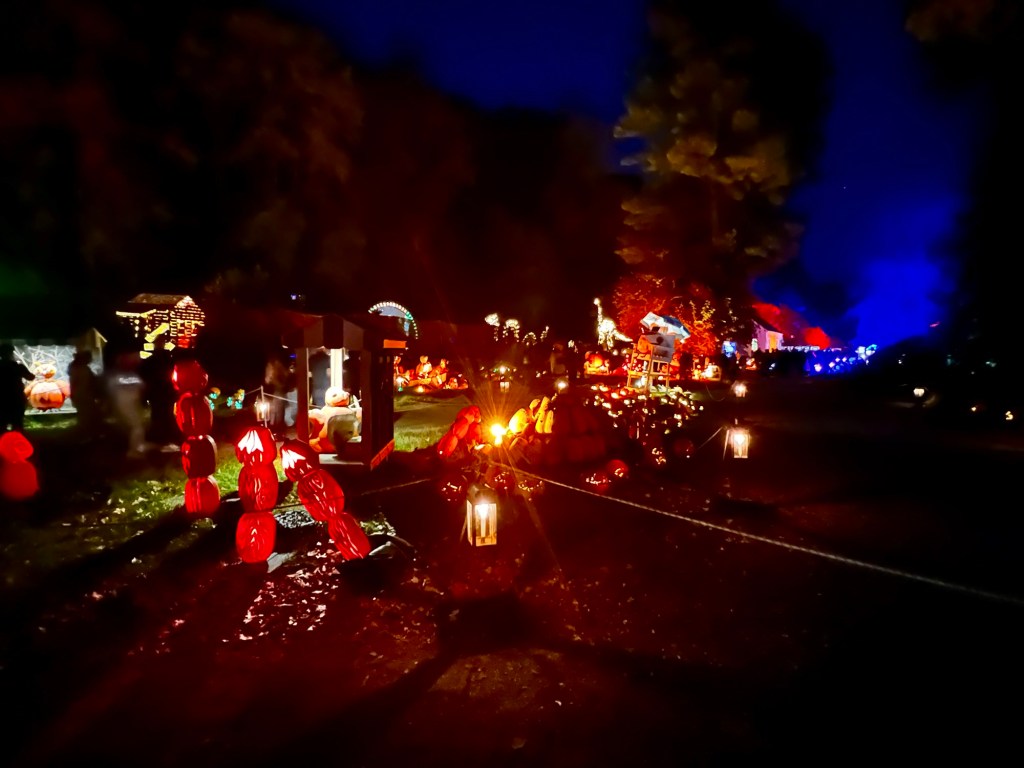
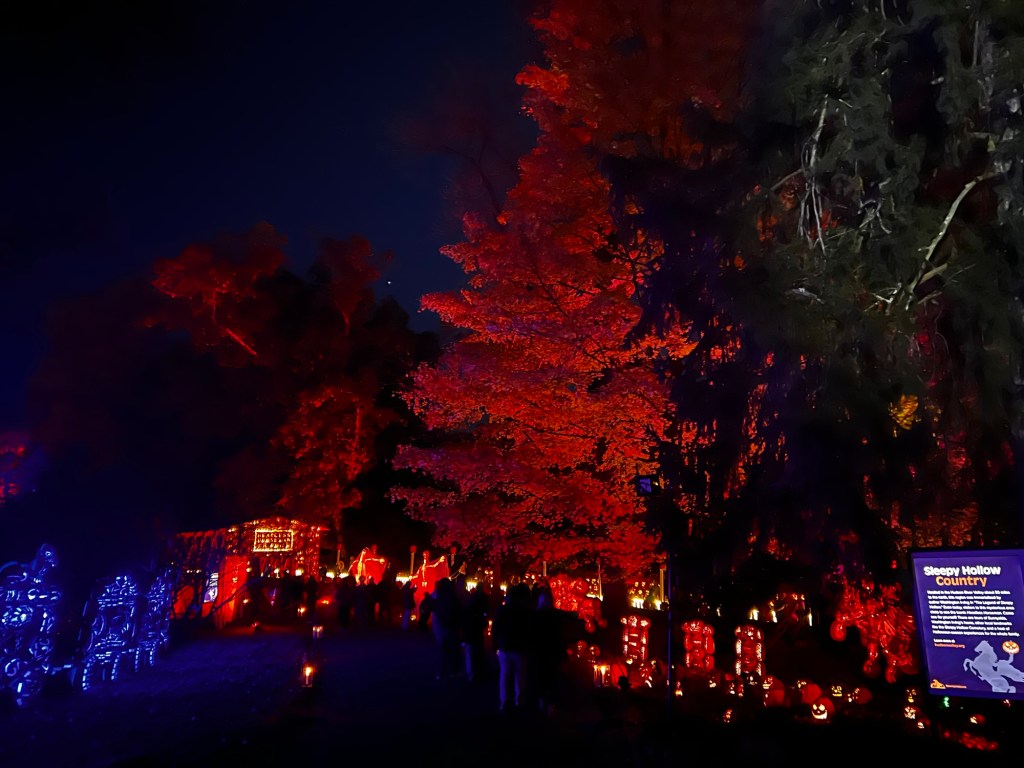
The inside of the Blaze at night

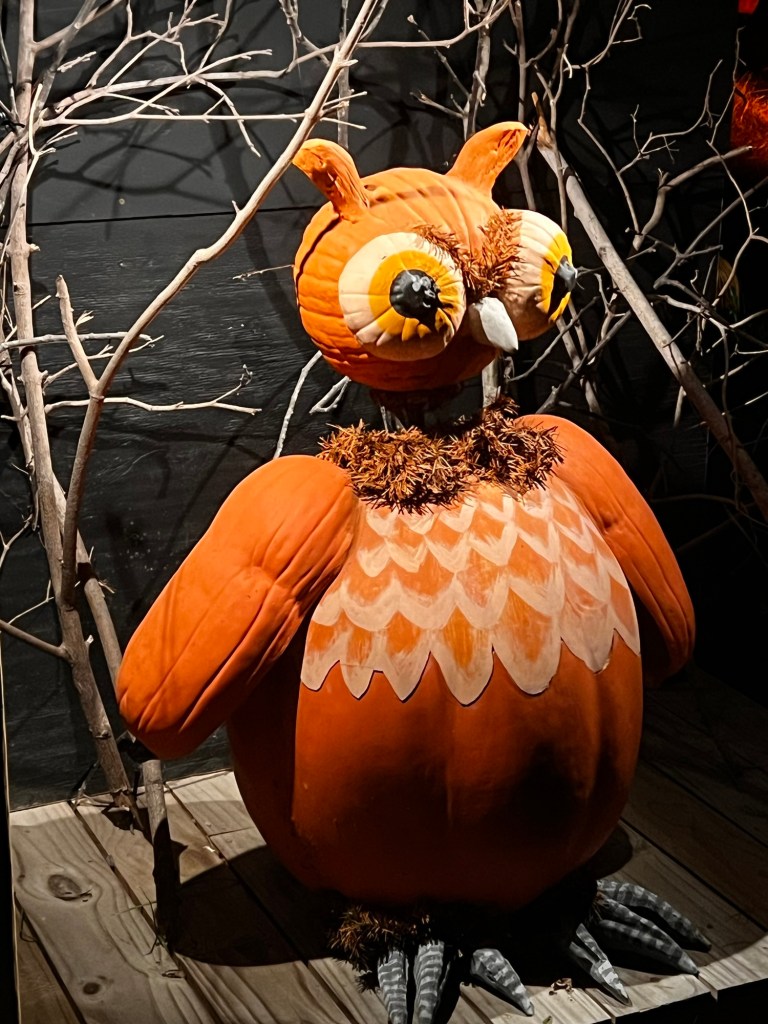
This clever owl was part of the new displays in 2026

My video of the owl

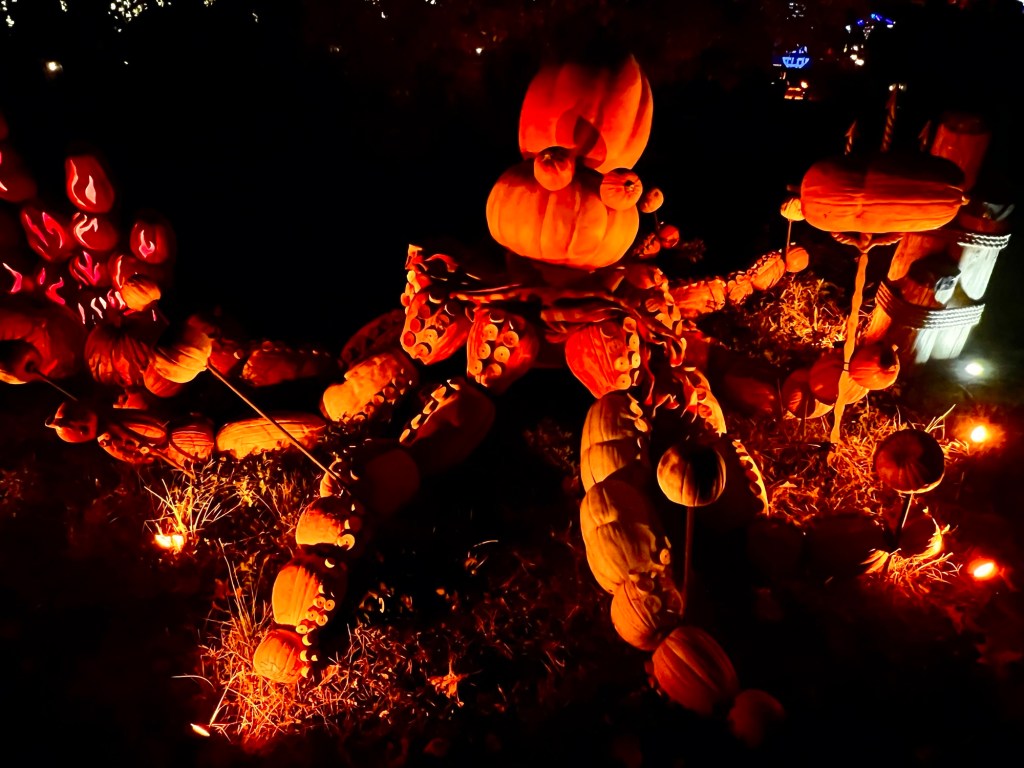
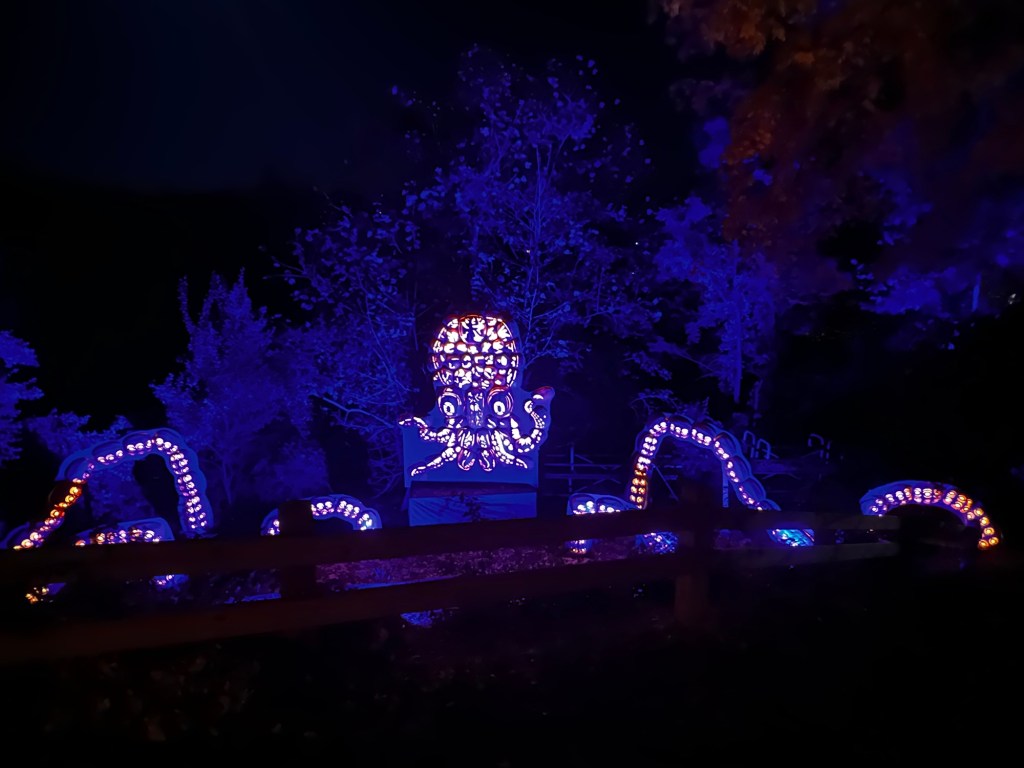
The octopus was new

So was this octopus

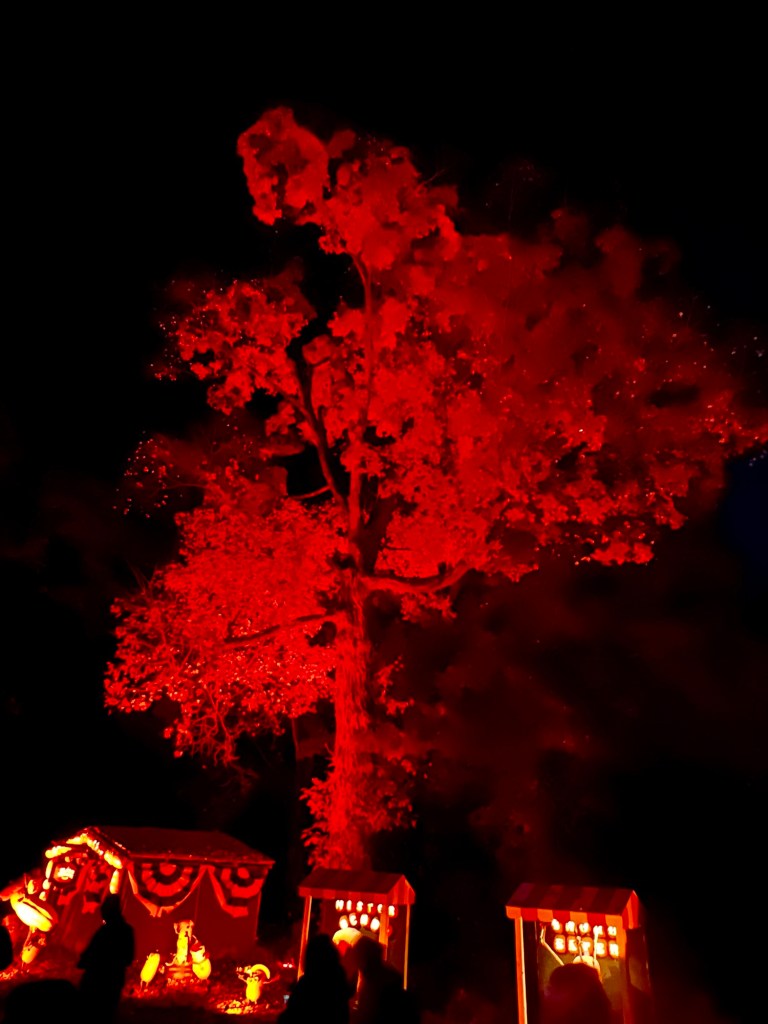
The way they lit the grounds was colorful and eerie

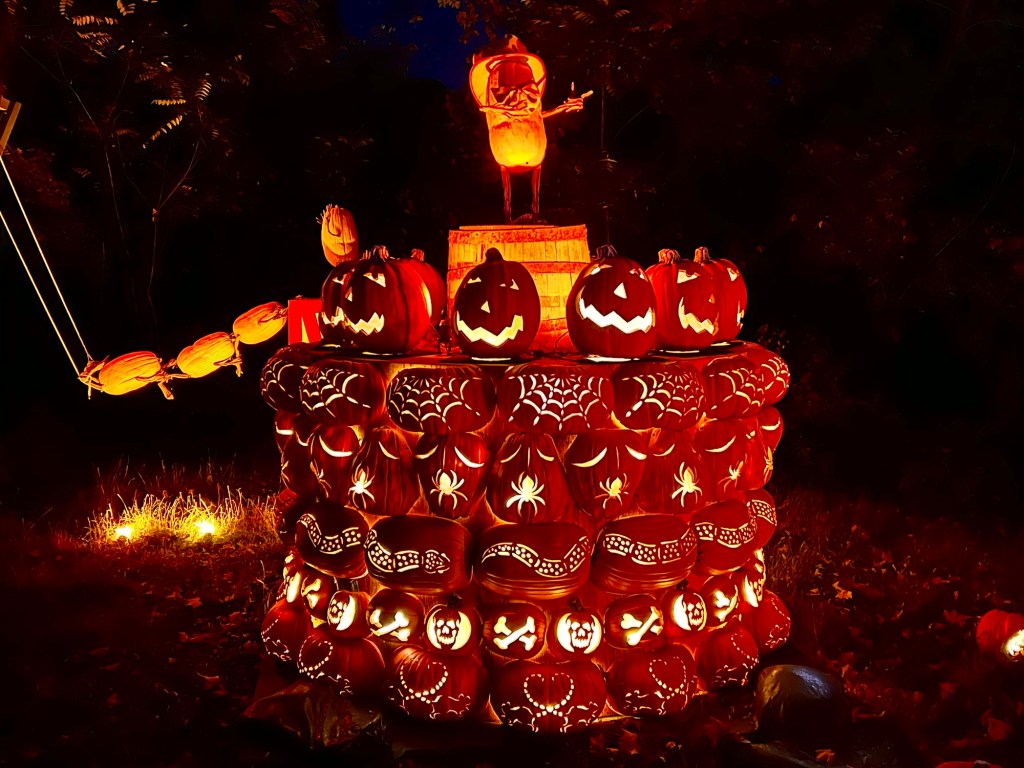
The birthday cake was new

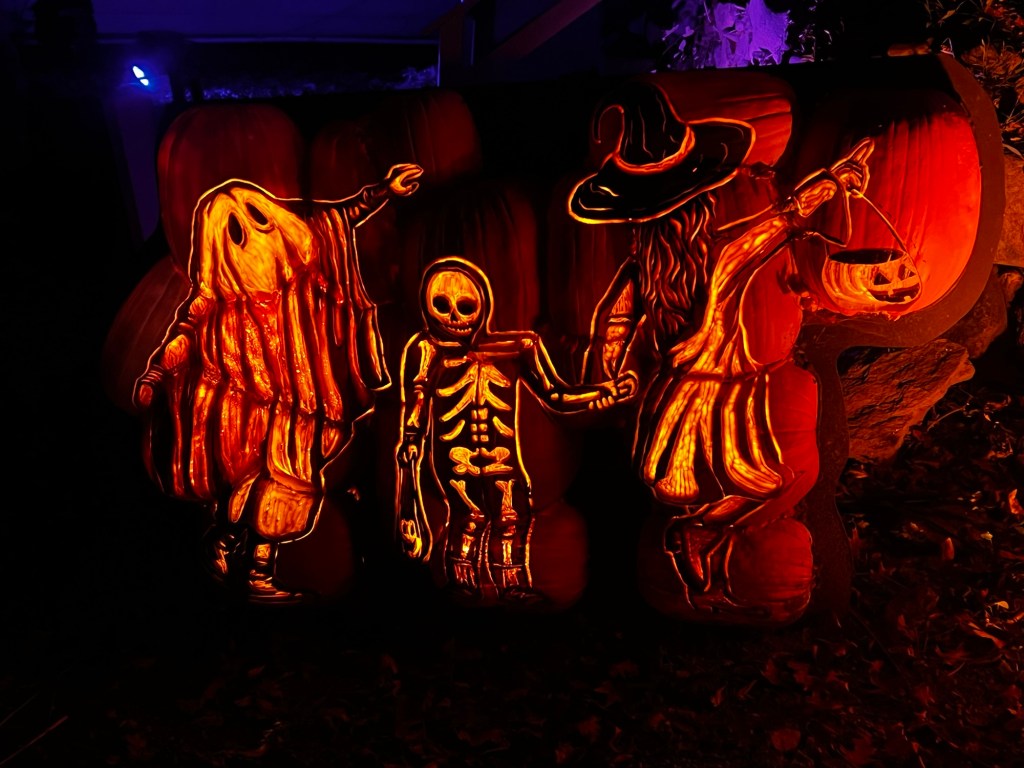
The trick or treaters were new and I thought very clever

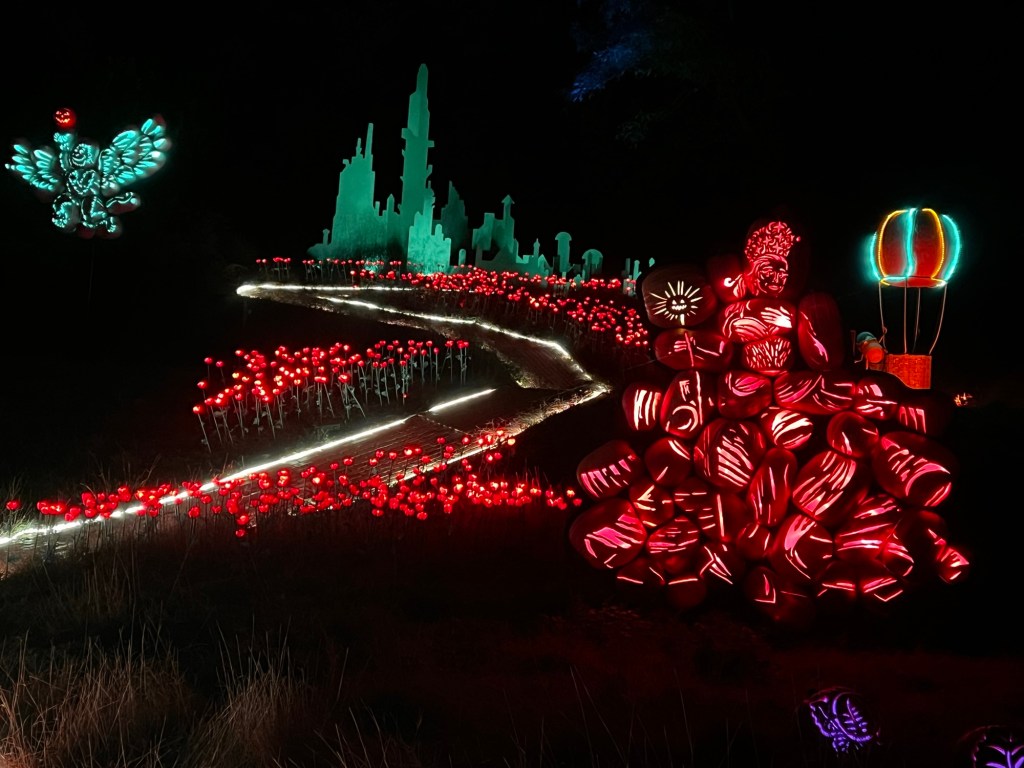
The Wizard of Oz display

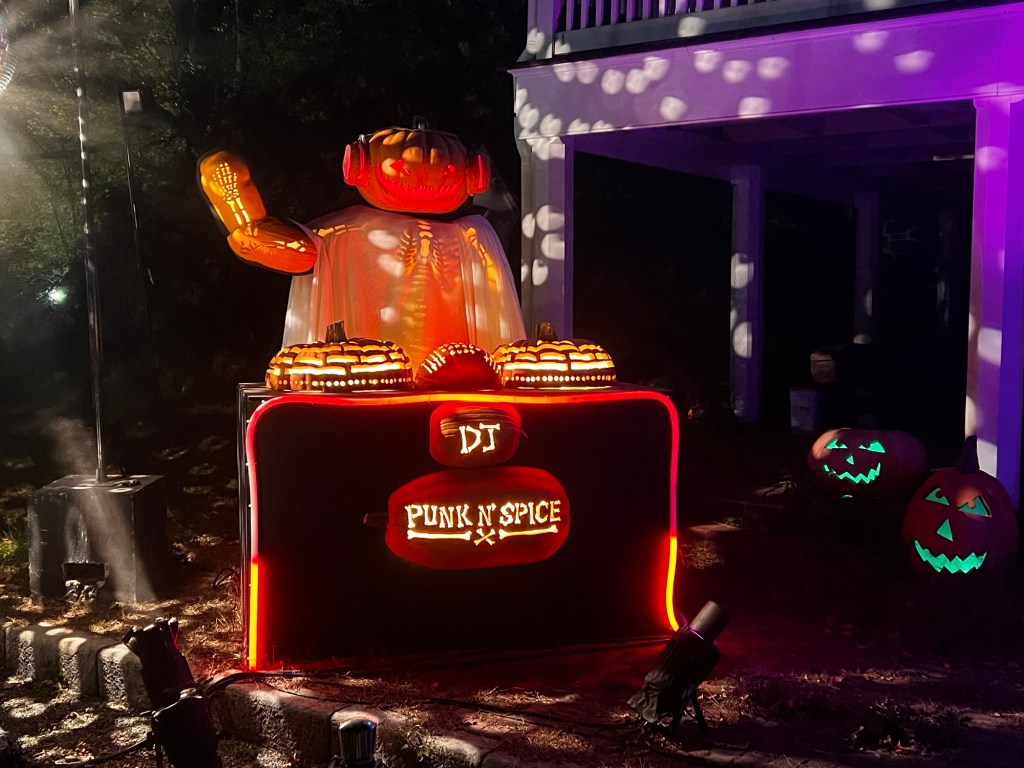
Van Cortlandt Manor was a disco dance that evening. This was led by a pumpkin DJ

My video on the dance

The Pumpkin DJ

My video on the Pumpkin DJ

I thought this was very clever. The music was a lot of fun and people really got into it. There were a lot of lights and sounds.

The Blaze from a distance in 2026

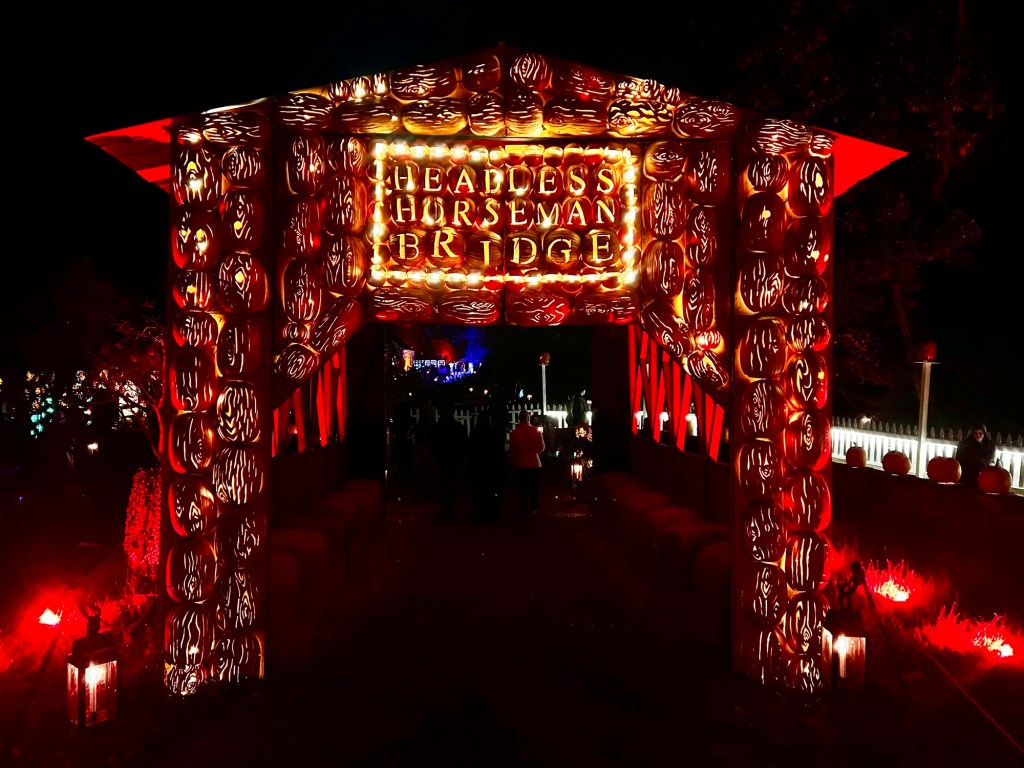
The Headless Horsemen Bridge kept with the theme of the event

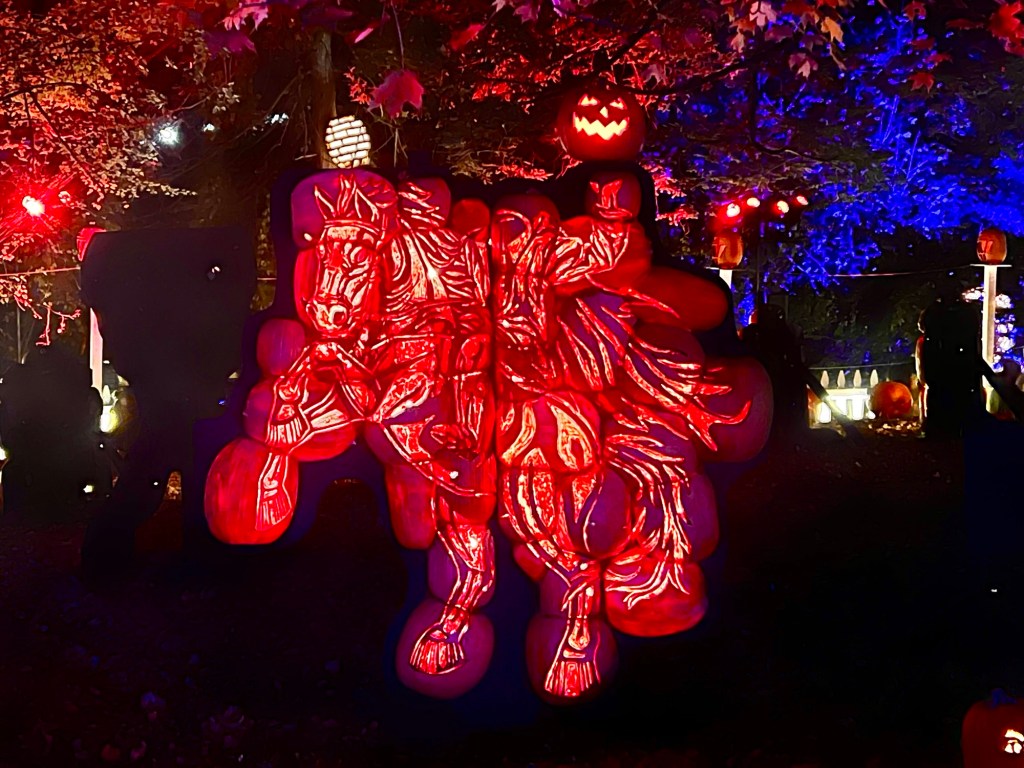
The Headless Horseman at the other side of the bridge

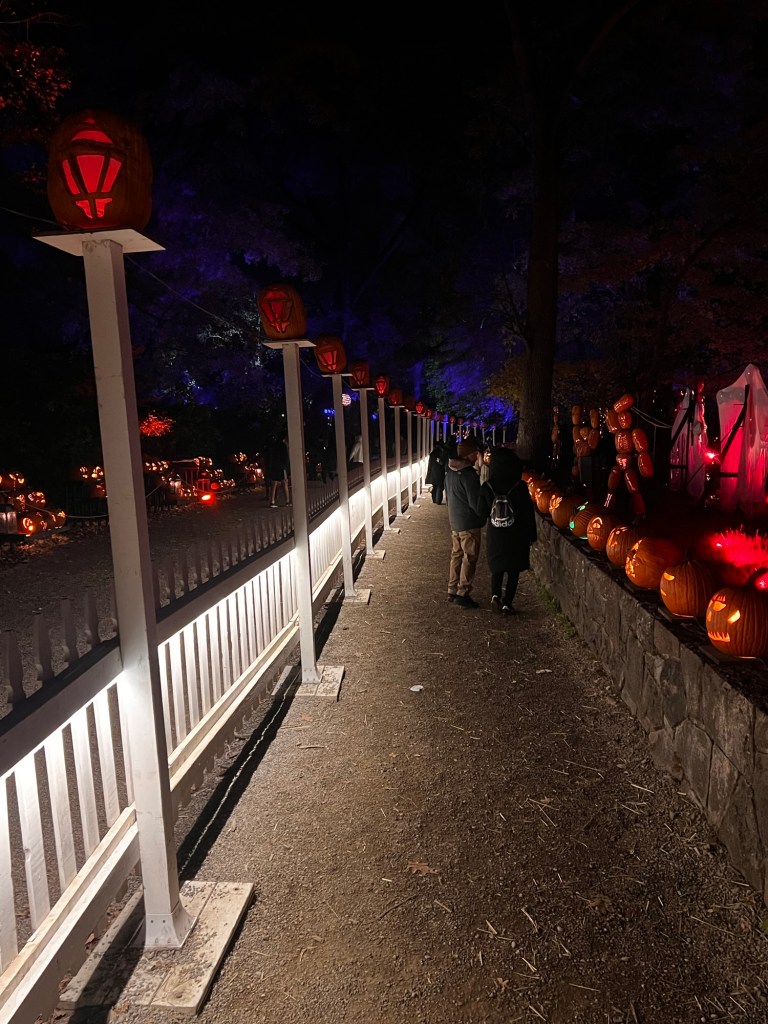
Ghosts and ghouls and gravestones lined the paths

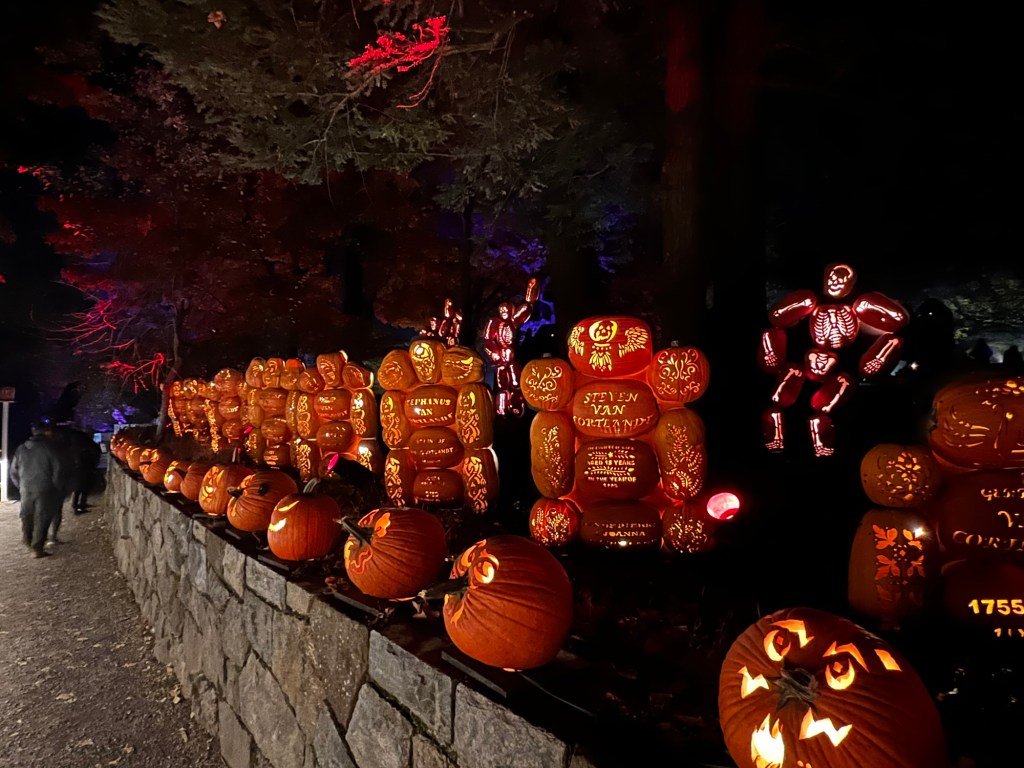
The carved pumpkins stare at you as you leave for the evening

The pumpkins staring and saying goodbye at the end of the Blaze

If you dare!

The family displays to take pictures at the end of the Blaze

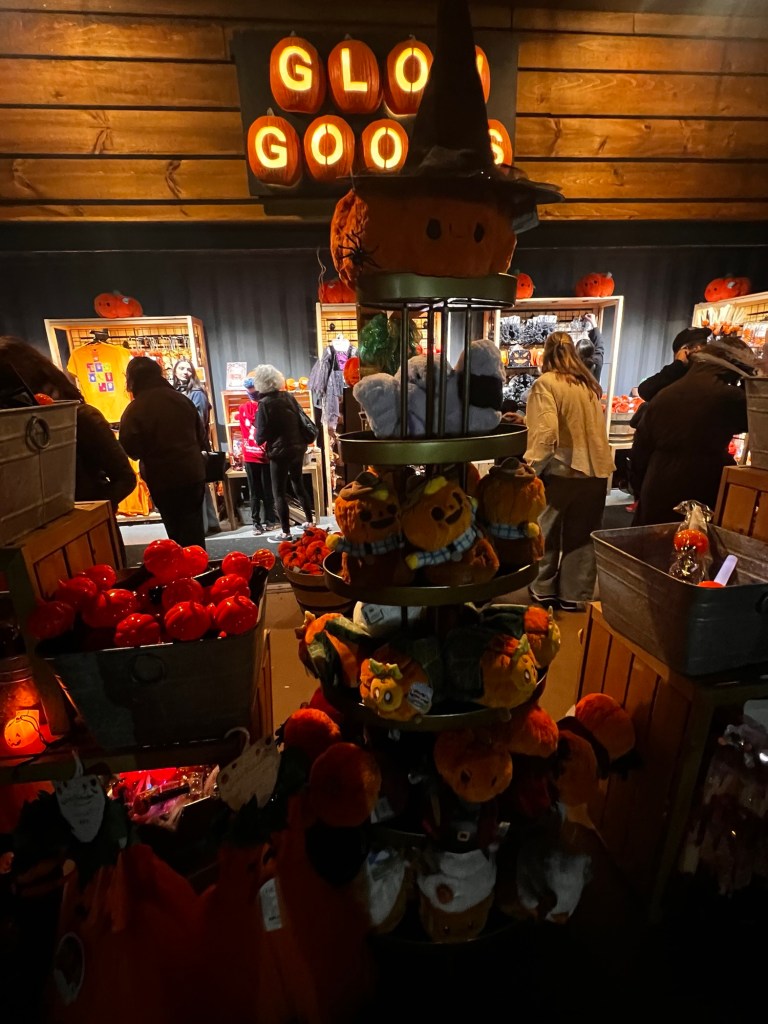
The ever popular gift shop which raises money for these much needed sites

The annual Pumpkin Blaze takes place each year from the first weekend in October until the second weekend in November. Trust me I have gone many years on the last night of the Blaze and it gets cold by that weekend so plan the visit accordingly.

It is also always busier before Halloween so if you want good picture taking, plan to go after Halloween and late in the evening. On the 9:00pm time slot, you get great pictures.

The event raises money for the upkeep and maintenance of all the organization’s sites. I wonder if the Van Cortlandt’s ever thought a hundred years ago that this would go on at their home?

The History of the Van Cortlandt Manor:

(from the museum site website)

By Royal Charter, Van Cortlandt Manor was originally a 86,000 acre tract granted as a patent to Stephanus Van Cortlandt in 1697 by King William III, stretching from the Hudson River on the west to the first boundary line between the Province of New York and the Colony of Connecticut, on the east, twenty English miles in length by ten miles in width in shape nearly a rectangular parallelogram forming, “The Manor of Cortlandt”.

The massive holding was acquired by direct purchase from the Indians, in part by Stephanus van Cortlandt, a native born Dutch gentleman of New York and in part by others whose titles he subsequently bought, this tract together with a small tract on the west side of the Hudson River opposite the promontory of Anthony’s Nose, which he also purchased from the Indians.

The Manor House was built sometime before 1732 but was not any owner’s principal residence until a grandson, Pierre Van Cortlandt, moved there in 1749. At the time the manor house was on a 1000 acre portion of the original tract.

Pierre brought his family to the estate in 1749 and established the manor into it most vibrant days, according to some. During this period, the manor was operating an apple orchard, dairy farm, a bee house, a kiln, a tavern and a carpenter and blacksmith shops. Van Cortlandt Manor was a self-sustaining community while Pierre and his family resided in the estate. At this time, tensions leading to the Revolutionary War were building and the manor would become a place of wartime retreat.

Pierre sided with the colonies and the manor was used to assist the Continental Army, using its resources to make food and supplies. Pierre was involved with military legislature and his son Philip was a soldier for the Continental Army. Eventually Pierre and his family vacated the manor in the thick of war. The manor was ransacked by the British Army and left in poor standing. Philip, becoming a brigadier general by the war’s end, returned and along with his sister, Catherine, brought the manor back to working order.

Van Cortlandt Manor became an essential stop on the route from New York to Albany in the years that followed the war. The mills were once again thriving and provided the community and travelers with food, supplies and lodging. Pierre and his wife did not return until 1803 once the manor was in full working order again. The manor was passed down in the family until it was sold to a non-relative, Otis Taylor in 1945. By this time, the property had lost its luster and was not the flourishing estate it had once been.

In 1953, John D. Rockefeller Jr. purchased the property and began restoring the manor to previous prominence. In 1961, Van Cortlandt Manor became registered as a National Historic Landmark.

Disclaimer: This information on the history of the house was provided by Wiki and I give them full credit on the information.

Places locally to eat before the Blaze:

Located in the ShopRite Mall next to the Blaze:

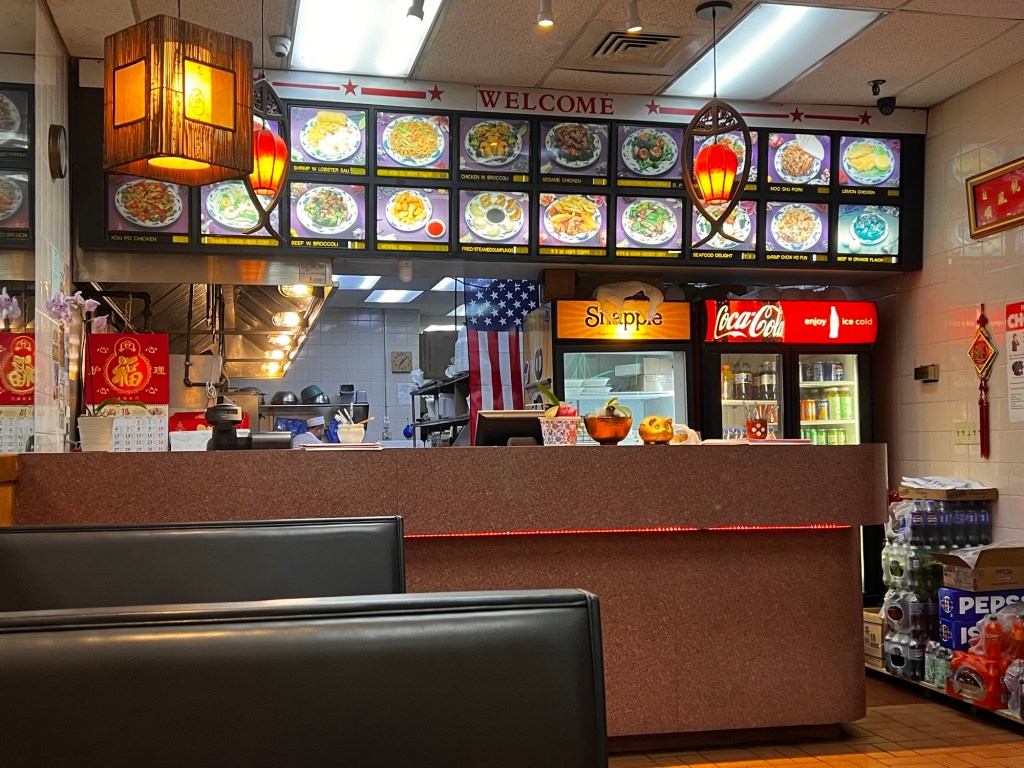
The inside of Dong Happy Gardens

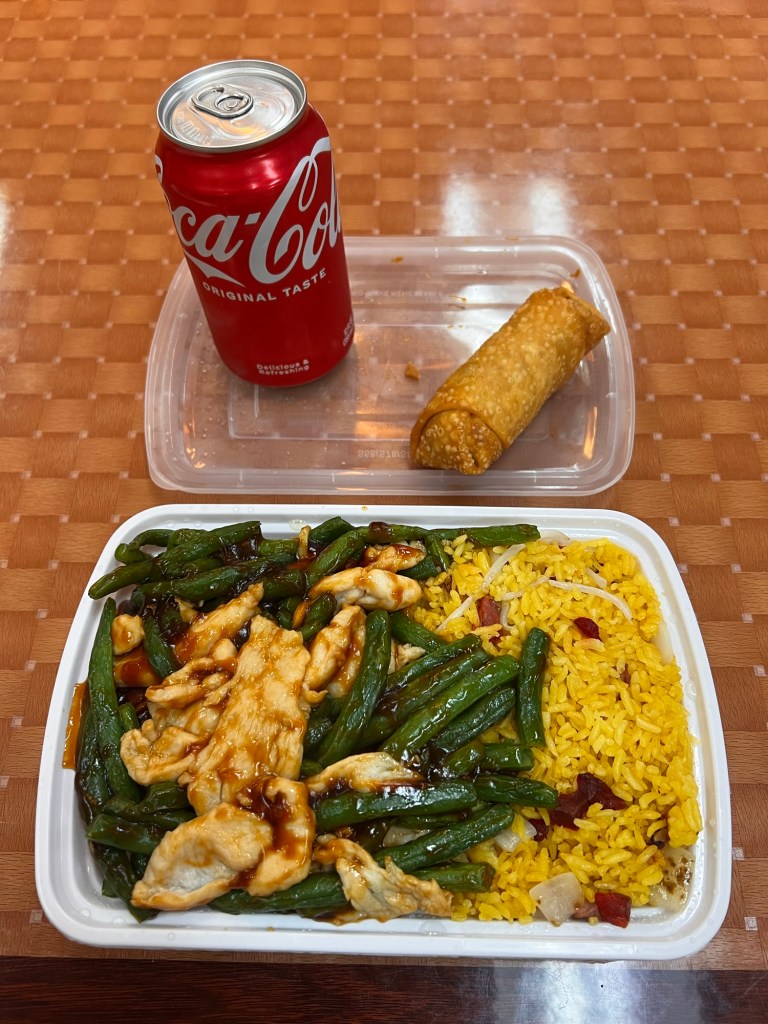
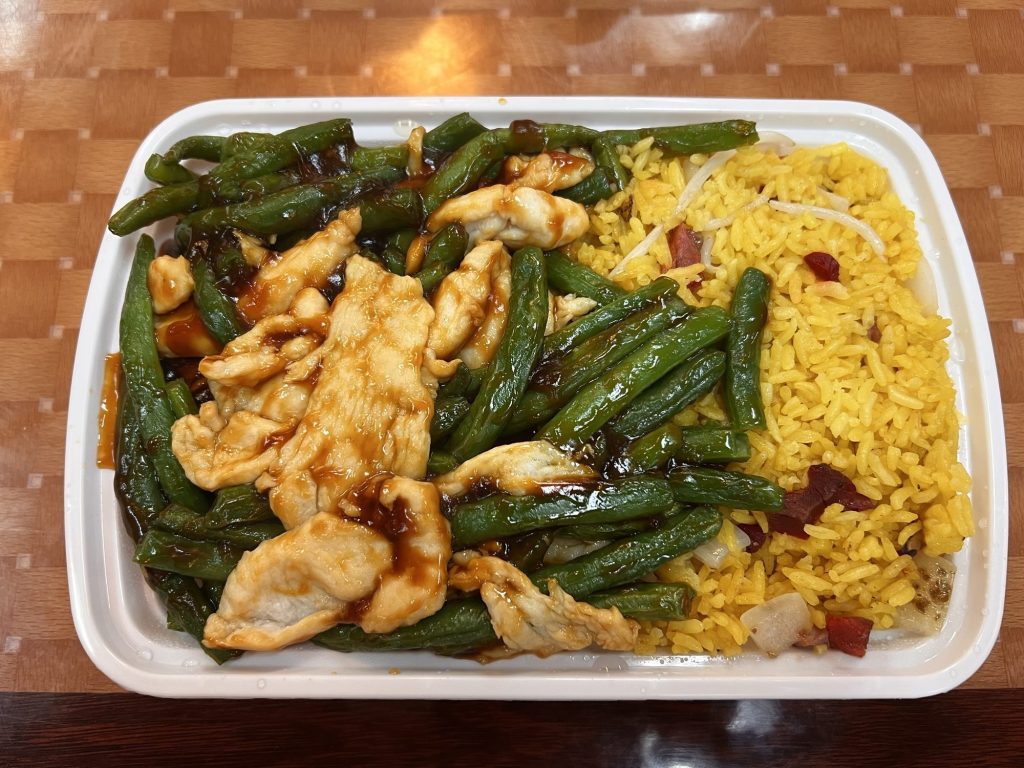
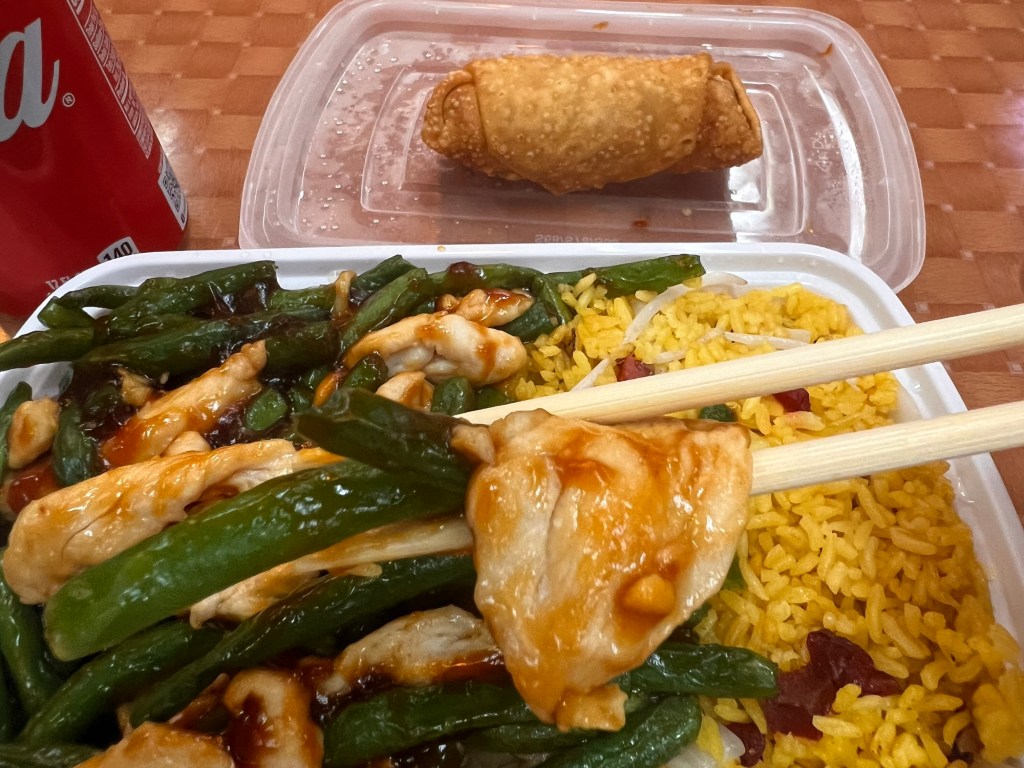
The food at Dong Happy Gardens in the Shoprite Mall is excellent and you can sit down in the restaurant. It is the perfect place for lunch or dinner before or after the Blaze. Their Lo Mein and General Tso’s Chicken are excellent. On this trip, I had the Chicken and String beans with an egg roll. Please read my reviews on TripAdvisor.

The Chicken and String beans combination meal

The Chicken and String beans was delicious

The food here is so good and you can eat inside

Dong Happy Garden

440 South River Side Avenue

Croton on the Hudson, NY  10520

(914) 271-7888/8268

https://www.menupix.com/westchester/restaurants/3212099/Dong-Happy-Garden-Menu-Croton-On-Hudson-NY

Open: Sunday 12:00pm-9:00pm/Monday Closed/Tuesday-Saturday 11:00am-10:00pm

My review on TripAdvisor:

https://www.tripadvisor.com/Restaurant_Review-g47560-d4616434-Reviews-Dong_Happy_Garden-Croton_on_Hudson_New_York.html?m=19905

My review on DiningonaShoeStringinNYC@Wordpress.com:

Even the local ShopRite in the mall got into it

Lefferts Historic House                                         452 Flatbush Avenue                                  Brooklyn, NY 11225

Lefferts Historic House 452 Flatbush Avenue Brooklyn, NY 11225

Lefferts Historic House

452 Flatbush Avenue

Brooklyn, NY  11225

https://en.wikipedia.org/wiki/Lefferts_Historic_House

Open: Sunday 12:00pm-5:00pm/Monday-Wednesday Closed/Thursday-Saturday 12:00pm-5:00pm

Admission: Suggested $3.00 fee towards the renovation of the house

My review on TripAdvisor:

https://www.tripadvisor.com/Attraction_Review-g60827-d103505-Reviews-Lefferts_Homestead-Brooklyn_New_York.html?m=19905

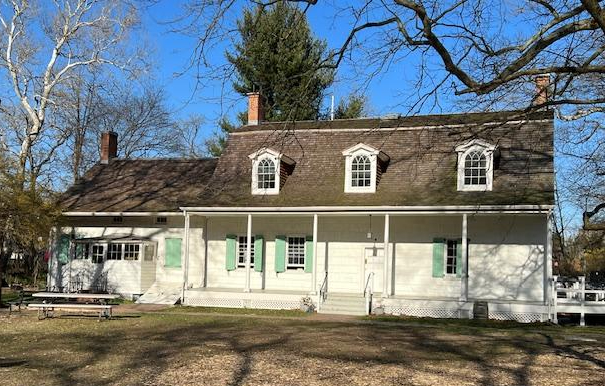
Leffert’s Homestead in Prospect Park, Brooklyn

I have visited the Lefferts Historic House a few times when visiting the Brooklyn Botanical Gardens, The Brooklyn Museum and the Prospect Park Zoo, all of which are in the same cultural district of the neighborhood. The house is located near the entrance of Prospect Park just behind the Brooklyn Botanical Garden and right next to the zoo and the carousel.

The Lefferts Homestead in 2023

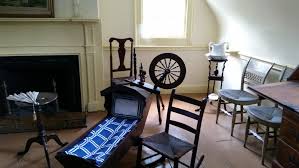
The house sits on a plot of the park to give it the look of the house when it sat in a rural setting in Brooklyn about twelve blocks away. When walking into the house, there are a few rooms that are furnished and have period pieces in them to show what the house must have looked like in the late 1700’s and early 1800’s. Most of the house is used for touring and for groups doing projects and games. You can’t go upstairs anymore. The house will be going through a renovation soon so watch the website for more information on that.

Lefferts Historic House II.jpg

The historic objects of the house

The outside of the house has wooded grounds with a working garden, an outside oven and historic objects that bring the period back to tourists and residents alike of what life must have been like when it was a working farm. When in season, you can walk amongst the vegetable and flower gardens and talk to the docents about the history of the house.

The grounds of the Lefferts Homestead with the stables and smokehouse

The house is part of the Historic House Trust and part of the Prospect Park Alliance.

History of the Lefferts Historic House:

The Lefferts family was one of the original settlers in Brooklyn with Lefferts Pieterson buying 58 acres of land here in 1687 and built the original homestead on that property. In 1776, the house was destroyed by American troops before the Battle of Brooklyn so that the British could not use it. The house was rebuilt in 1783 by one of his descendants (Prospect Park Alliance).

Lefferts Historic House III

The Lefferts Family

The current house was the home of Continental Army Lieutenant Pieter Lefferts and was built in 1783. It was originally located on Flatbush Avenue near Maple Street. When Pieter died the house was passed onto his son, John and then when John passed, the house was inherited by his daughter, Gertrude Lefferts Vanderbilt. The house was lived in by four generations of the Lefferts family.

The Lefferts Homestead

The cart on the front of the property

With impending development of the area around the house at the end of the 19th century, John Lefferts estate offered to donate it to the City on the condition that house be moved to City owned property for historic preservation and protection. It was opened as a museum in 1920 by the Fort Green Chapter of the Daughters of the American Revolution (Wiki).

The history of the house

The house is currently used as a Children’s Museum and Cultural site and open year-round.

The Lefferts House in the winter 2024.