Tag: europe

The Sam Azeez Museum of Woodbine Heritage 610 Washington Avenue Woodbine, NJ 08270

The Sam Azeez Museum of Woodbine Heritage

610 Washington Avenue

Woodbine, NJ 08270

(629) 626-3831

https://woodbinemuseum.org/

https://visitnj.org/sam-azeez-museum-woodbine-heritage

https://www.facebook.com/p/The-Sam-Azeez-Museum-of-Woodbine-Heritage-of-Stockton-University-100085580916230/

Open: Sunday-Tuesday Closed/Wednesday-Saturday 10:00am-4:00pm/Saturday Closed

My review on TripAdvisor:

https://www.tripadvisor.com/Attraction_Review-g46938-d3915473-Reviews-The_Sam_Azeez_Museum_of_Woodbine_Heritage-Woodbine_Cape_May_County_New_Jersey.html

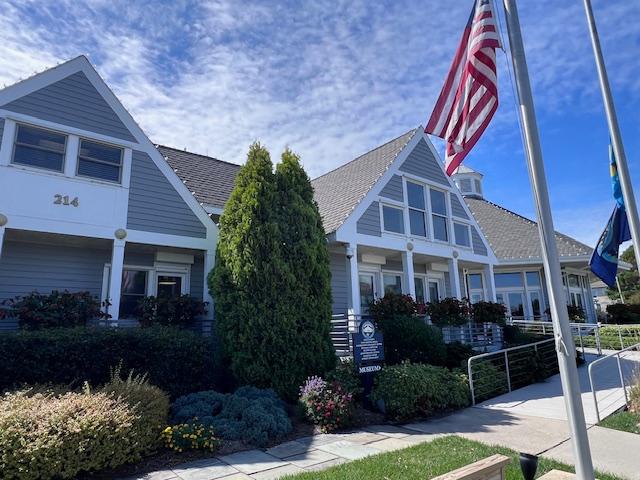
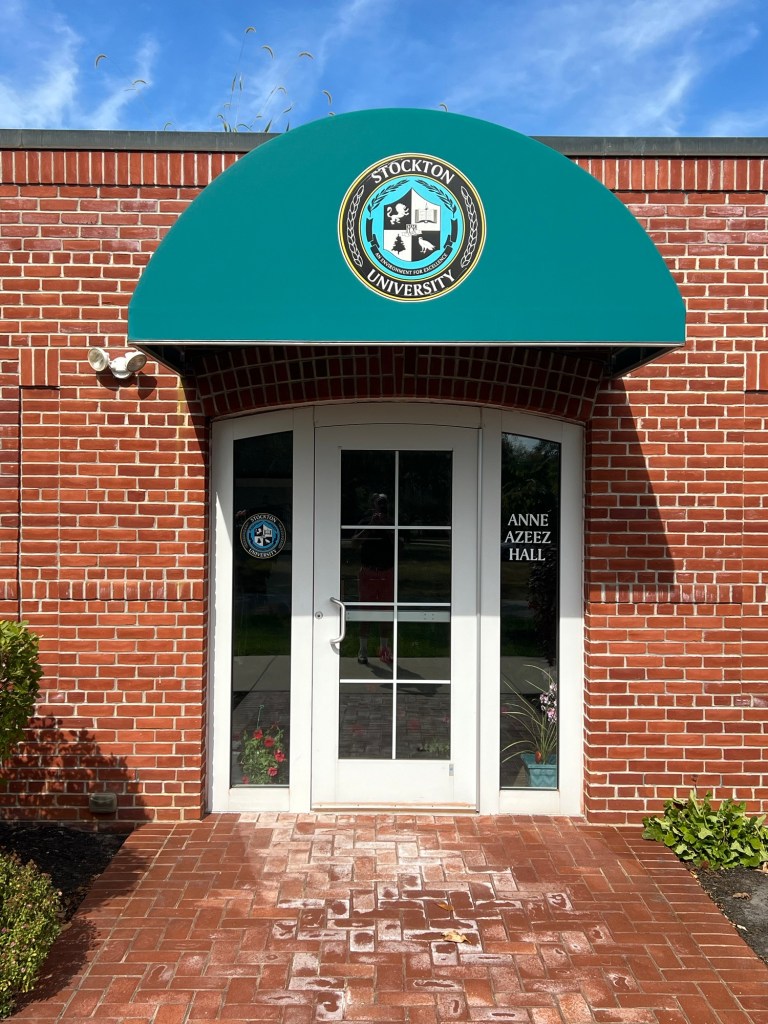
The front of the Sam Azeez Museum of Woodbine Heritage

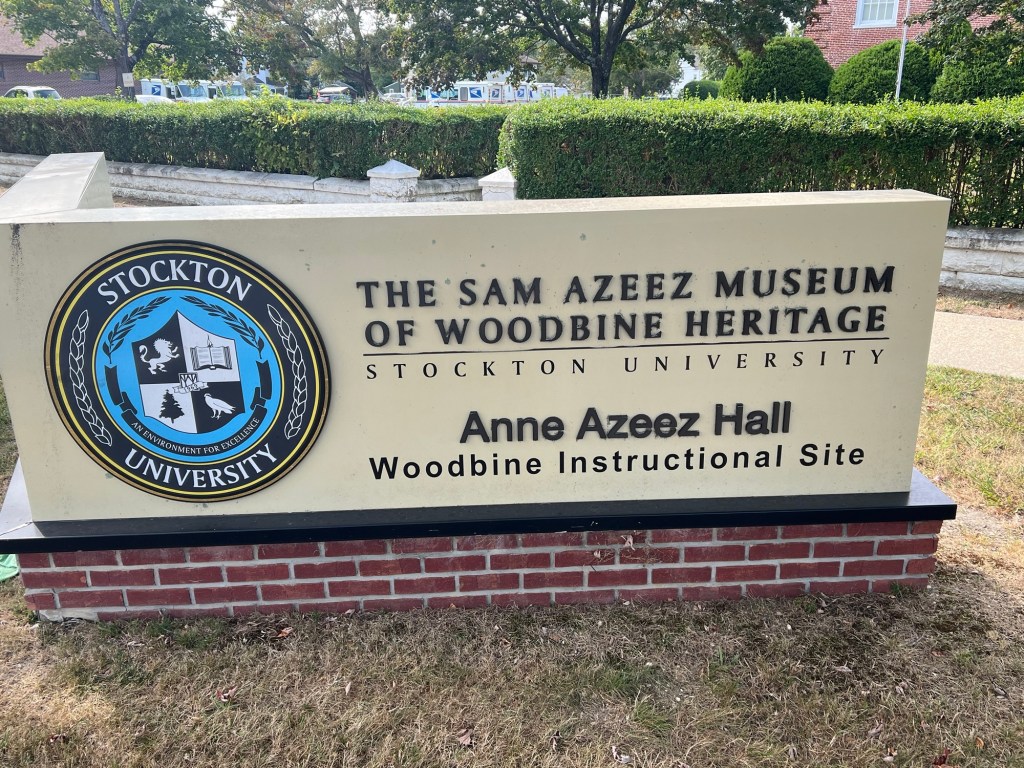
The entrance sign that welcomes you

The History of the Sam Azzez Woodbine Museum:

(from the museum’s website):

The Sam Azeez Museum of Woodbine Heritage is an independent non-profit charitable organization preserving the unique history of Woodbine, NJ.

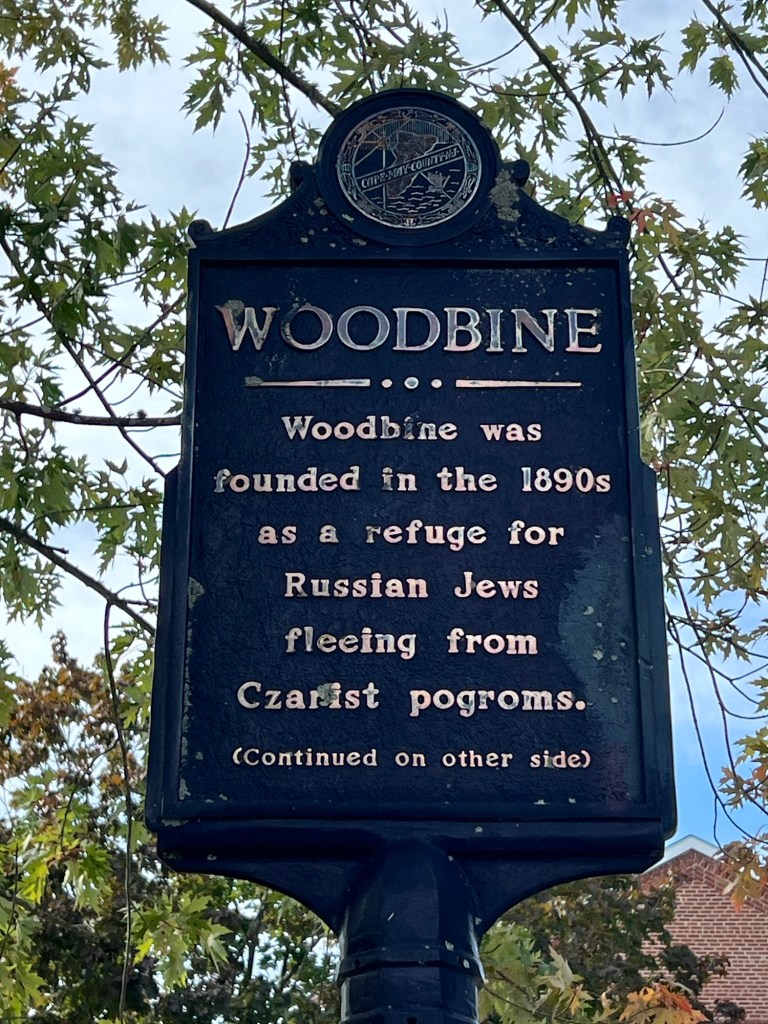
Established in the 1890’s through Baron de Hirsch’s philanthropy, Woodbine began as an agricultural colony for Russian Jewish immigrants seeking freedom denied in their homeland. As poor soil conditions limited farming, Woodbine evolved into Cape May County’s manufacturing center while maintaining founding values of education, religion and inclusion.

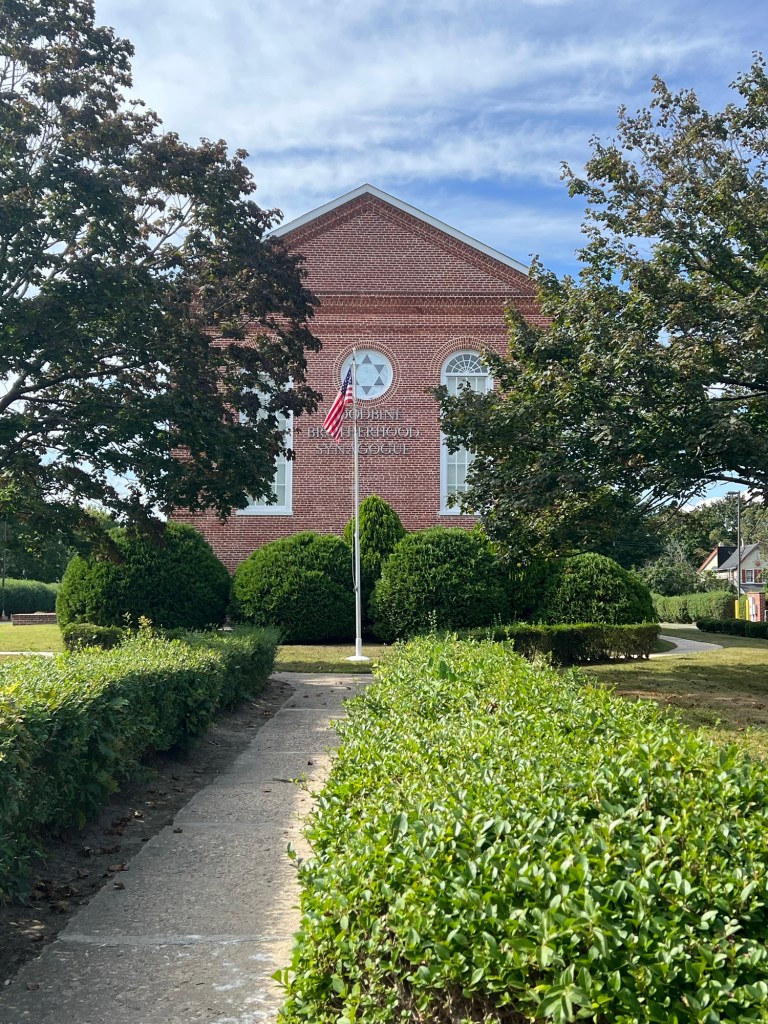
The museum occupies the historic Woodbine Brotherhood Synagogue, listed on the Natural Register of Historic Places. The restored sanctuary hosts special services, while the Brotherhood Hall houses exhibitions including the community-contributed Collective Memory Wall.

The historical significance of of the Town of Woodbine

The entrance to the museum

The museum is another interesting look at New Jersey history and the development of the immigrant story of assimilation into American society.

I was given a personal tour by the Assistant Curator and she explained the resettlement of Russian Jewish immigrants by a wealthy patron into this South Jersey community.

The main gallery of the museum

The panels tell the story of how these community came into being and how these people built a community through agricultural and eventually manufacturing and small businesses that supported the community around it. It established a town that was self sustaining and grew to the community center.

The panels show the growth of Woodbine as a community

The residents established their own sports teams, community organizations and civic groups like the councils and fire and police departments.

The records of the many town organizations of Woodbine

Display of one of the first families to settle in Woodbine

Display of the religious faith of the community

One of the most touching displays is of survivors of the concentration camps during the holocaust. These pictures represent these women as children and them today.

The display of the women who survived the camps

The history of the community and the growth of diverse businesses in Woodbine

Creating and building the Synagogue in the community

On the second floor of the building is the old synagogue of the community which is only used during the high holidays. This is used by descendants of the community and family members of theirs.

The inside of the synagogue on the second floor of the building

The front of the temple

The chandelier is original to the temple

The space was being prepared for the Jewish New Year and the crowd of people who would be attending.

The Memorial Wall

The traditions of the religion being practiced in the community

The self-government of the community

Still the younger generation was all American and wanted to assimilate into society with an all American past time of things like baseball.

The Woodbine youth baseball team

The uniform of the old baseball team for youths in the town

The last display is of the famous alumni who once lived in the community. These are the men and women who once lived here and went on after all odds to do great things and make our country better.

The Hall of Fame

The museum I thought had a bit of an identity crisis as I really did not know what the museum was about.

I was pleasantly surprised to find an interesting part of New Jersey history I had never known. It just goes to show you how a museum can educate you with just one visit. The Assistant curator said there will be more to come in the future.

Coney Island History Project c/o Deno’s Wonderful Wheel Park                                                    3059 West 12th Street                                         Brooklyn, NY 11224

Coney Island History Project c/o Deno’s Wonderful Wheel Park 3059 West 12th Street Brooklyn, NY 11224

Coney Island History Project

C/O Deno’s Wonder Wheel Park

3059 West 12th Street

Brooklyn, NY 11224

https://www.coneyislandhistory.org/

Open: Sunday-Saturday 1:00pm-7:00pm (summer months only-May 24th-September 1st)

My review on TripAdvisor:

https://www.tripadvisor.com/ShowUserReviews-g60763-d4777489-r1014119112-Coney_Island_History_Project_Walking_Tour-New_York_City_New_York.html?m=19905

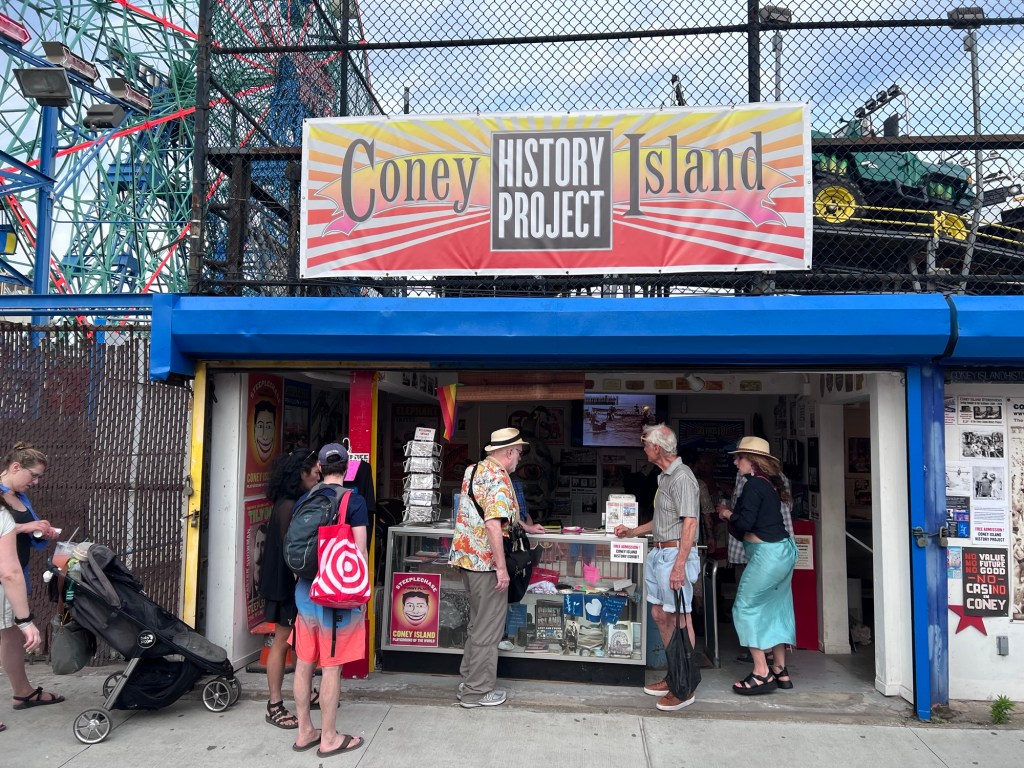
The front of The Coney Island Project

I came across this interesting museum/gallery when I was walking around Coney Island. The museum is a few small rooms located in one of the buildings in Deno’s Wonder Wheel Park. The museum is not related to the Coney Island Museum on Surf Avenue.

The small gallery space has a wealth of information and some interesting artifacts on Coney Island’s history both past and present.

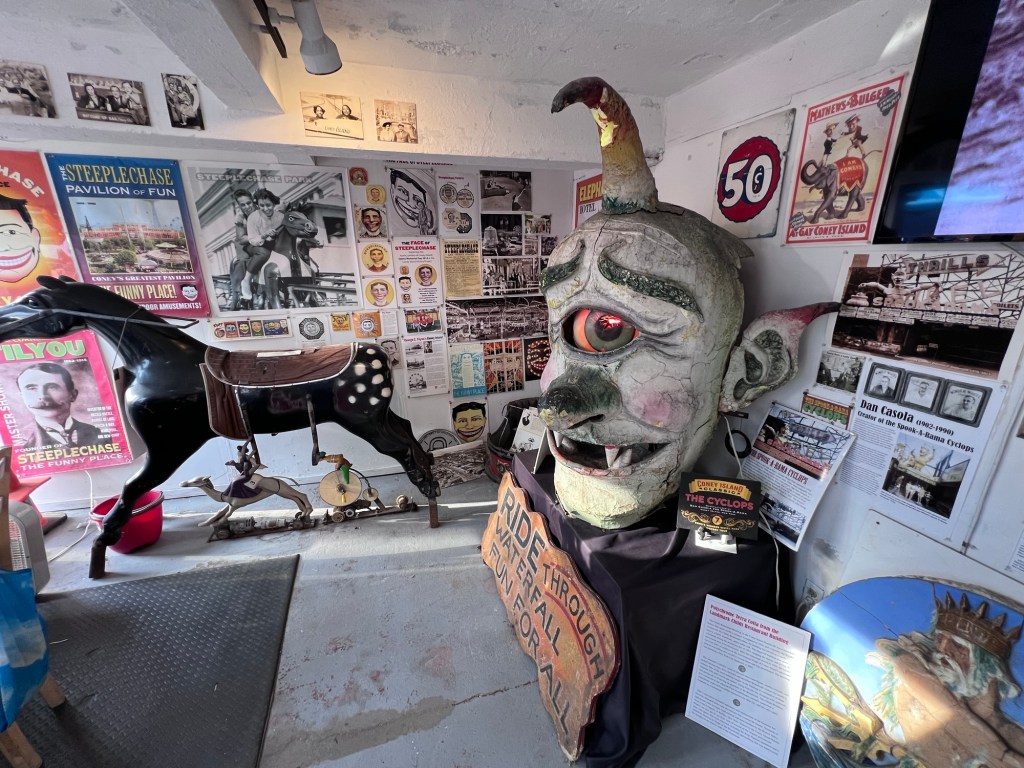
The main room had artifacts and pictures of Coney Island’s past amusement history. There were many photo’s of the old parks, especially Steeplechase Park before its closing in 1965. It shows its development, growth and changes after the 1907 fire that destroyed the park.

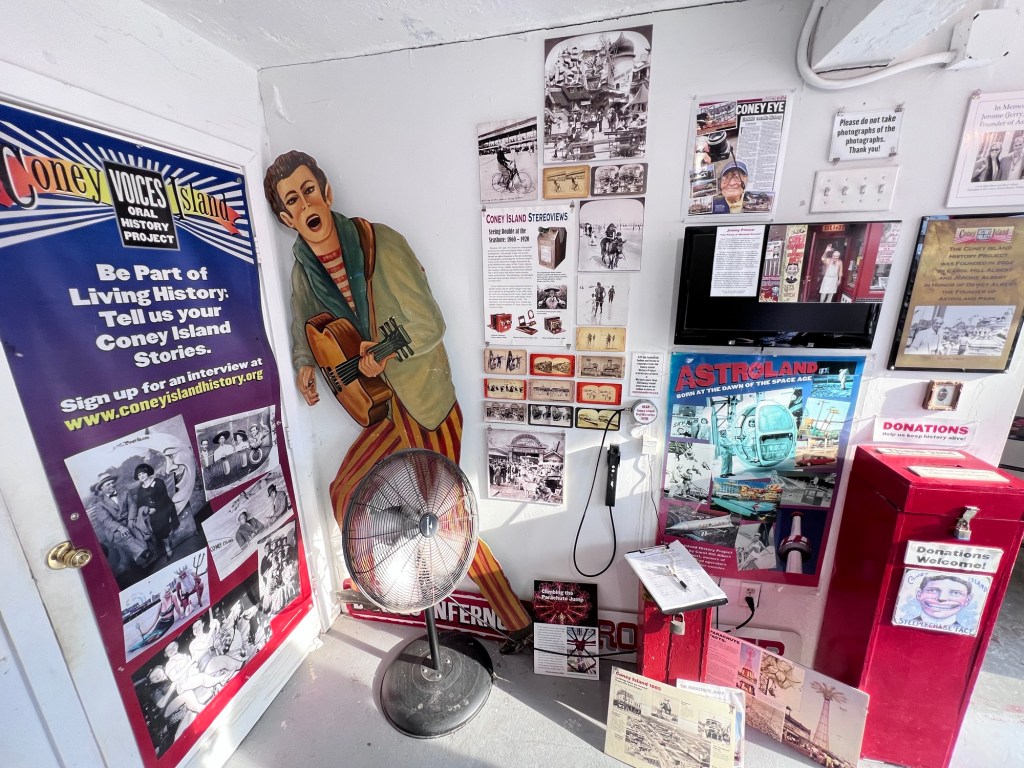
There was all sorts of artifacts from that time as well as the former Astroland that was replaced by the new Luna Park. If you know the history of Coney Island, this can fascinating to read.

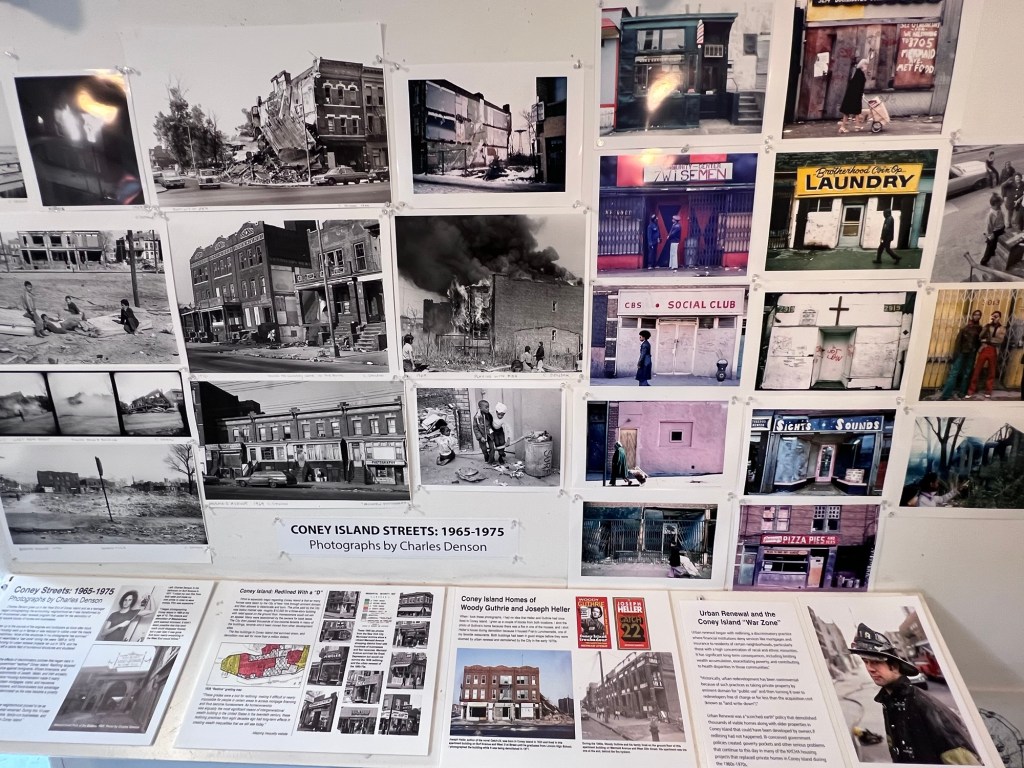
The second room had the later history when the Island’s amusements fell into disrepair and the whole island seemed to fall apart. The pictures show a very run down Coney Island.

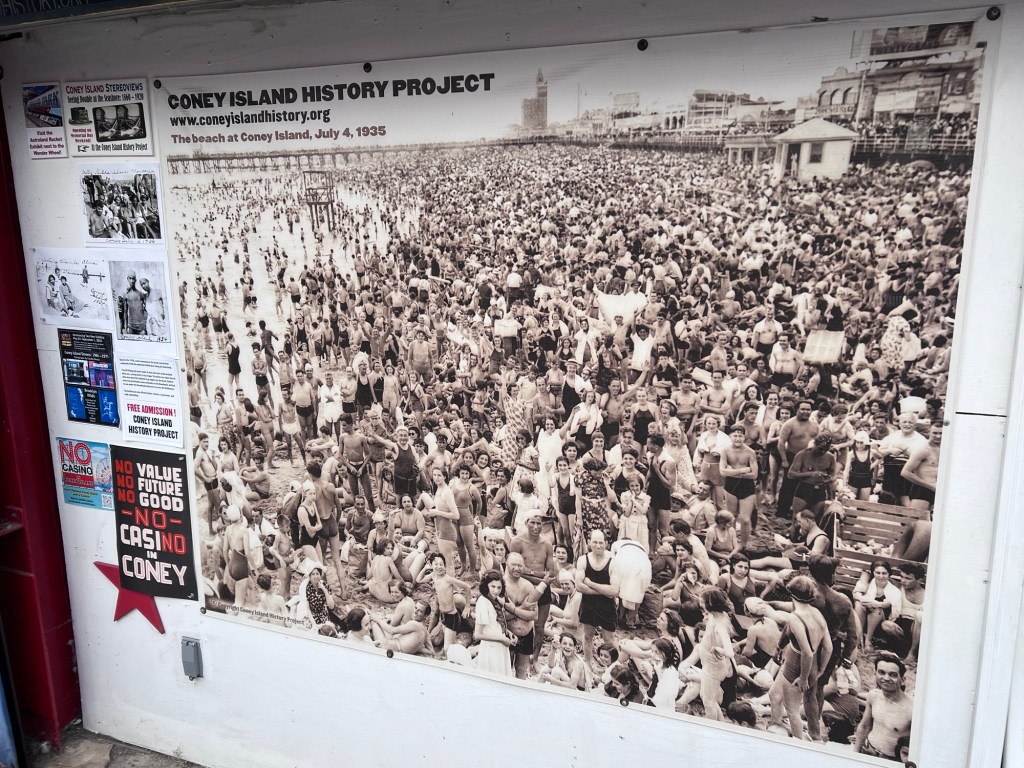
The outside pictures show Coney Island in its heyday when during the 1930’s and 40’s before and during WWII, the island being a place of relief for so many New Yorker’s especially the working class.

The inside of the gallery

The main gallery

The Steeplechase Exhibition

Coney Island in ruin in the 1970’s

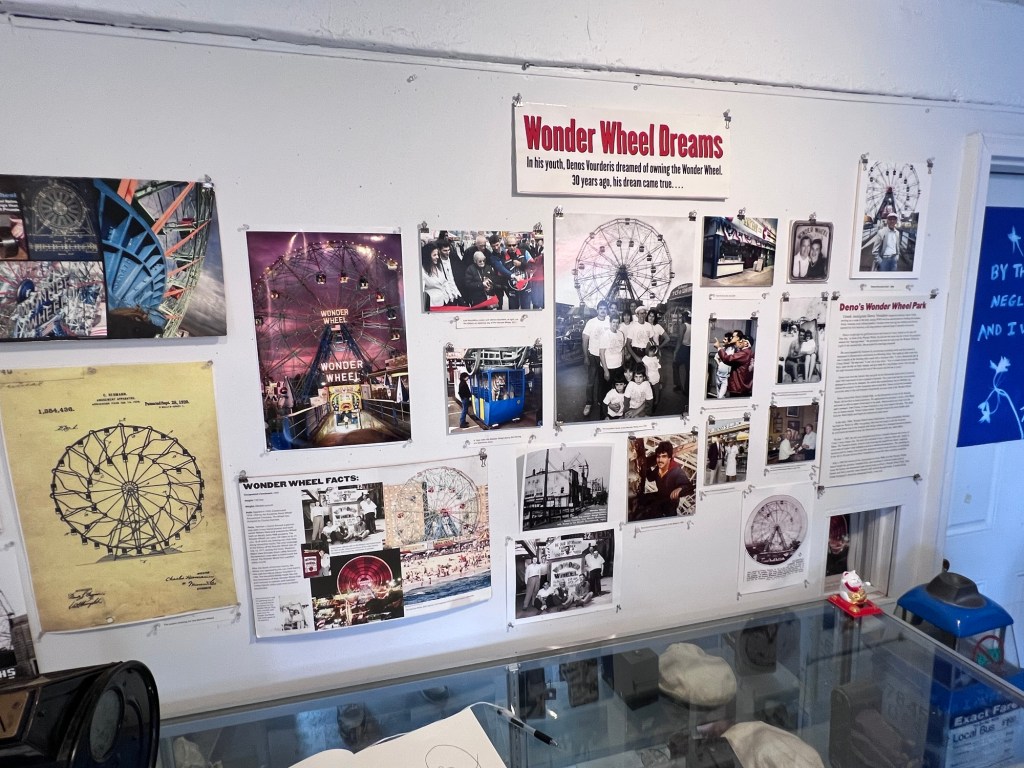
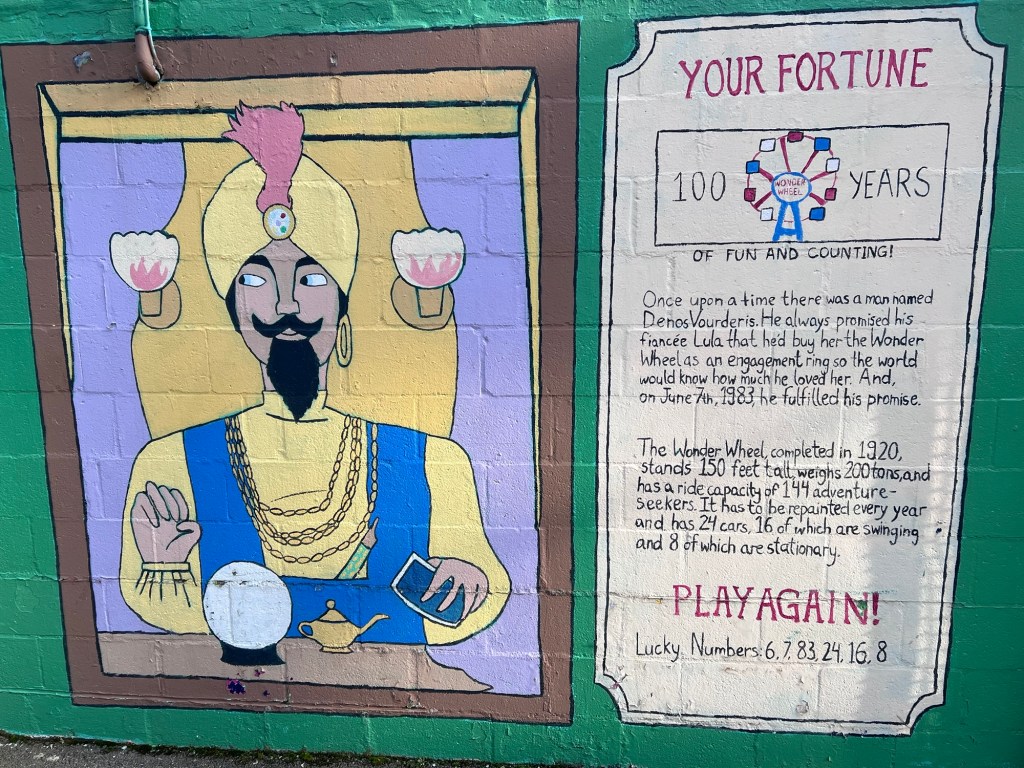
The history of Deno’s Wonder Wheel Park

The display outside the museum

The mechanical display that sings and dances

The Miss Coney Island robot is a throwback to old technology and campy robotics that is fun to watch. For a quarter, you can take an interesting video with this robot.

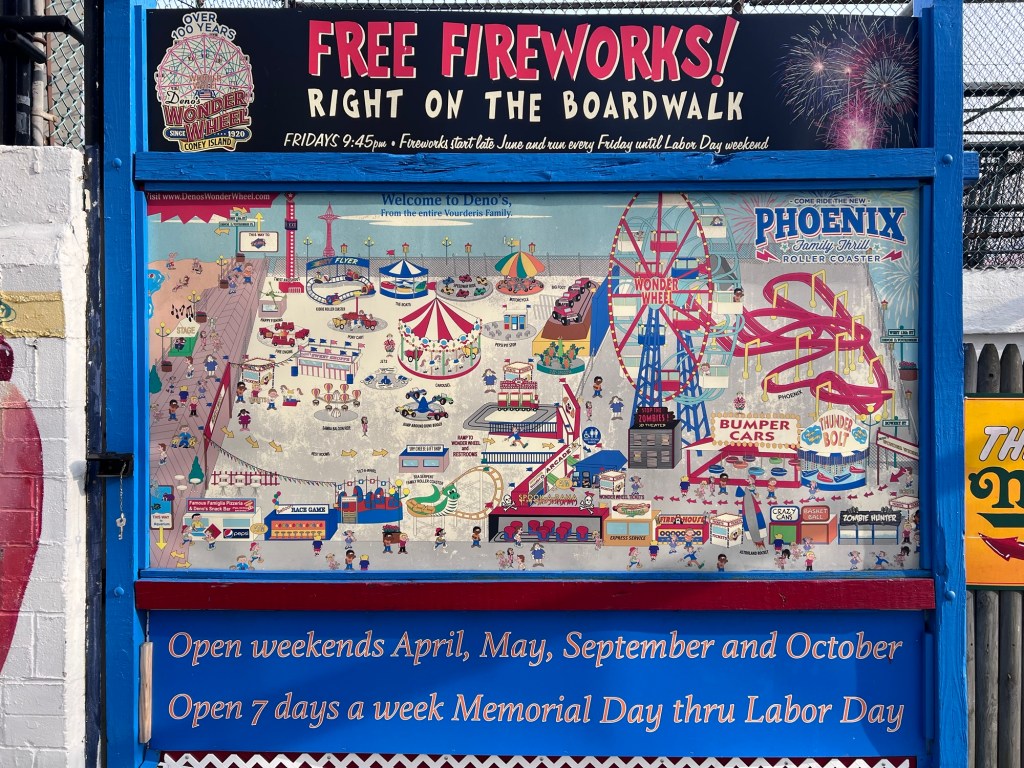
The Deno’s Map of the park

The history of the park

The History of the Museum:

(From the Coney Island Historical Coalition website)

The Coney Island History Project’s 2025 exhibition center season begins Memorial Day Weekend with a combination of free indoor and outdoor exhibits.  Visitors to the exhibition center are invited to take free souvenir photos with Coney Island’s only original Steeplechase horse, from the legendary ride that gave Steeplechase Park its name, and the iconic Cyclops head from Deno’s Wonder Wheel Park’s Spook-A-Rama, Coney Island’s oldest dark ride. 

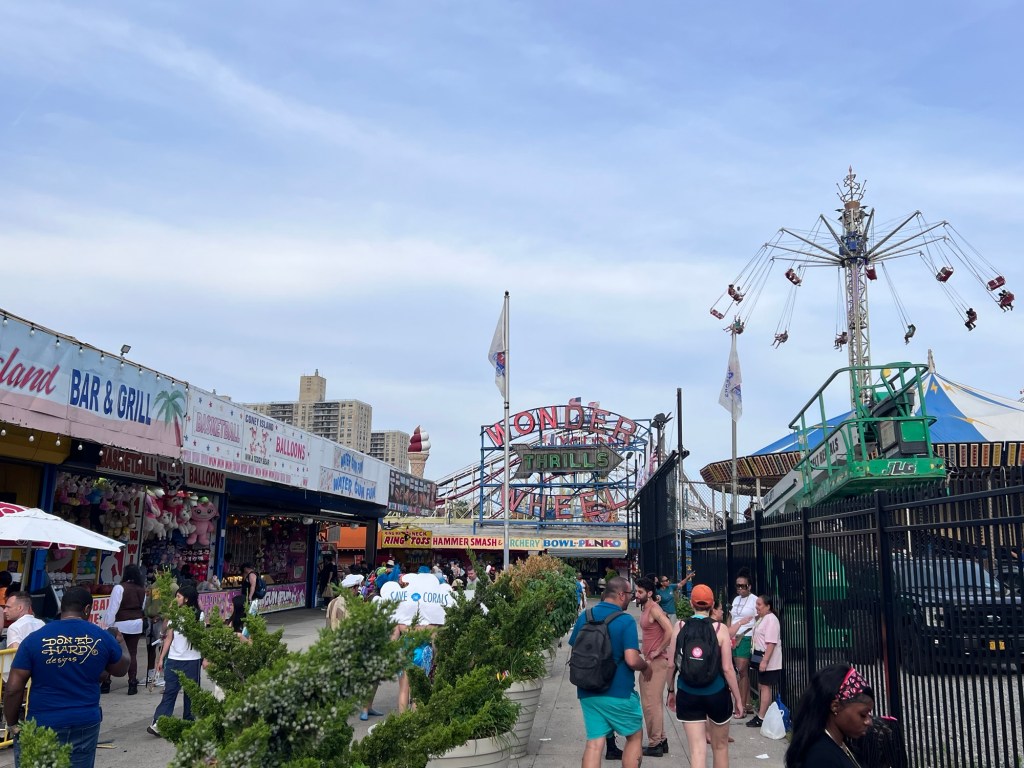
The real Midway

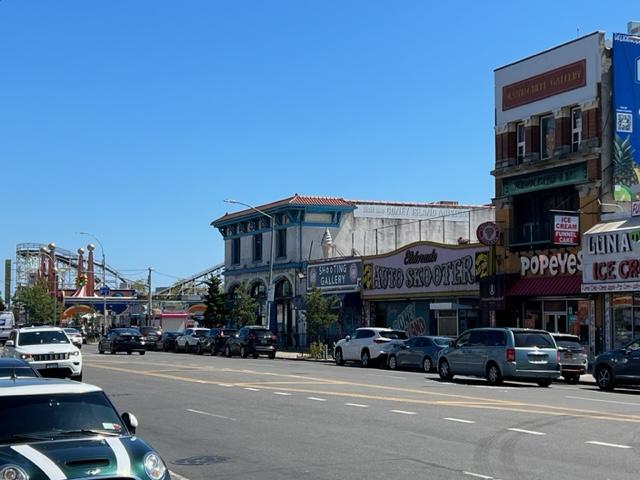
I took pictures after the Mermaid Parade and showed how busy the amusement section was that day. There is so much potential to update the amusements and modernize the area with new rides and concessions. There is so much that can be done here. I already see new luxury apartment buildings being built and the revamping of the main shopping drag.

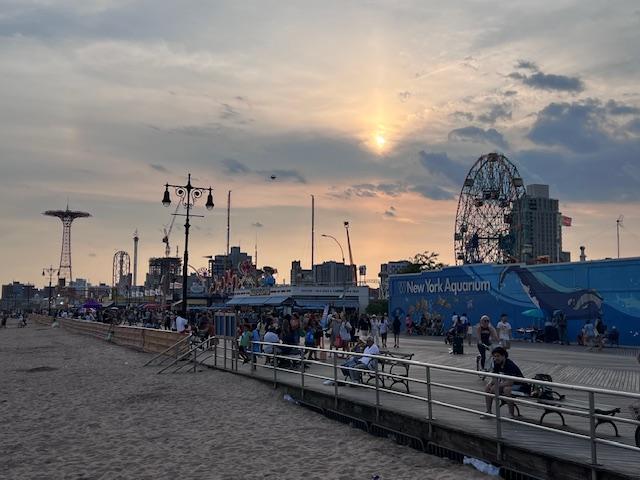
The Boardwalk at the end of the evening.

The Coney Island Boardwalk at twilight

Day Three Hundred and Forty-Two Private Members Nights at the Museum of Modern Art (MoMA) and the Metropolitan Museum of Art (The Met)                                                                          May 27th, 2025

Day Three Hundred and Forty-Two Private Members Nights at the Museum of Modern Art (MoMA) and the Metropolitan Museum of Art (The Met) May 27th, 2025

What also is difficult is when two major museums have their Members Night on the same night. I had to do a lot of coordinating to go to both museums. What made it work is that both museums closed at different times with The Met closing at 10:00pm. I timed it perfectly.

Members Night at the MoMA ‘Behind the Flowers’ for the Hilma af Klint exhibition

The theme that evening was based on the Hilma af Klint exhibition

https://www.moma.org/calendar/exhibitions/5779

Going this evening took a lot of planning as I had to teach in the morning and cut the lawn on the afternoon. I was already exhausted by the time I left for the City at 4:00pm. Even on this gloomy afternoon, the weather held and it was a nice evening.

The area around the museum was in full bloom that early evening

The event opened early at the MoMA with their event from 6:00pm-9:00pm and the Met went from 7:00pm-10:00pm so I was able to enjoy both with a lot of walking in between. It was worth it as I was able to see several exhibitions on my bucket list before they closed. With work and finals, it had been tough to visit both of them.

People were enjoying conversation and cocktails when I arrived at the MoMA that evening.

I decided to start my evening at the Sculpture Garden on the first floor. The weather was cloudy but still it was a warm evening. People were conversing near the fountains and listening to music. The lines for the cash bar never let up and they were about thirty deep the whole time.

The Sculpture Garden at the MoMA

While I walked around the gardens and fountains I noticed a lot of the art that they were featuring was really unique, some of which I had not seen before.

The gardens with the poppies in bloom

This beautiful mosaic of a octopus did not have a name

This metal artwork was towards the back of the sculpture garden

The Met at night is quite dazzling

The entrance to The Met in the evening

Looking down Fifth Avenue at night

The entrance in the Rotunda was filled with fresh flowers and members chatting away. I even saw some of the members I had seen at the MoMA earlier.

The floral arrangements were spectacular

The beauty of the Rotunda in the evening

Maybe because these Members Nights were on a Tuesday evening, they both did not seem as crowded as they had been in the past. The museum was crowded but not as crowded as the past two Member’s Nights. I think that I arrived at 8:00pm most people were starting to leave. What was nice was that the MoMA night went until 9:00pm and The Met Night went until 10:00pm so it gave me the time to run through both museums.

I started my tour of The Met in the Greek Galleries looking at the Cycladic Art. I always loved the looks of these works.

https://www.metmuseum.org/departments/greek-and-roman-art

The entrance to the Cycladic Wing

The Cycladic Gallery in the Greek wing

Some of the interesting cases I admired that night

I then did a quick tour of the Roman Galleries which I had not toured in detail since the galleries opened years ago.

https://www.metmuseum.org/departments/greek-and-roman-art

Touring the Roman Galleries

Touring the Roman Gslleries

Touring the Roman Galleries

After the tour of the Roman Galleries, I headed to the Egyptian Galleries, I wanted to explore the galleries and get a drink at the Members Bar.

https://www.metmuseum.org/departments/egyptian-art

I love the Egyptian Galleries. I have been coming here since 1973 and have loved them ever since.

I love the ancient hieroglyphics

For the last two Members Nights, the Members Bar was in the Temple of Dendur. It is always so well lit and the music was wonderful. It is a nice way to end the evening.

The Temple of Dendur lit for the evening

The Temple of Dendur was the perfect place to relax and have a cocktail

The crowds were rather large at the bar that evening

The Passion fruit cocktail was the specialty drink of the evening

It was another wonderful evening at both museums.

Indian River Life Saving Station Museum                  25039 Coastal Highway                                             Rehoboth Beach, DE 19971

Indian River Life Saving Station Museum 25039 Coastal Highway Rehoboth Beach, DE 19971

Indian River Life Saving Museum

25039 Coastal Highway

Rehoboth Beach, DE 19971

(302) 227-6991

https://www.destateparks.com/park/indian-river-life-saving-station/

https://visitsoutherndelaware.com/listing/indian-river-life-saving-station-museum

Open: Sunday 9:00am-3:00pm/ Monday-Saturday 9:00am-4:00pm (Schedule is flexible with the seasons)

Admission: $4.00

My review on TripAdvisor:

https://www.tripadvisor.com/Attraction_Review-g34048-d208535-Reviews-Indian_River_Life_Saving_Station_Museum_at_Delaware_Seashore_State_Park-Rehoboth_Be.html

The front of the Indian River Life Saving Museum at 25039 Coastal Highway

History of the Indian River Life Saving Station:

(From the Delaware State Park website)

The original Indian River Life-Saving Station was built in 1876 for use by the United States Lifesaving Service, a government organization created to respond to the alarming number of shipwrecks along the coastlines of the United States and the precursor to today’s U. S. Coast Guard. The Life Saving Station today is a maritime museum that honors these courageous sailors and the rich history of their deeds. Listed on the National Registry of Historic Places, it is a must visit piece of Delaware history.

The front of the historical sign describing the park

The recent History of the Museum:

(From the Delaware State Park website)

The building was first located 400 feet closer to the shore, but a sand dune began to form around it almost as soon as it was finished. It was moved to its present location in 1877, and today has been meticulously restored to its 1905 appearance, complete with diamond-shaped trim. The museum is listed in the National Register of Historic Places.

The entrance of the museum

The Screening Room in the Visitors Center where you learn about the Life Saving Center

I started my tour of the Indian River Life Saving Museum at the Visitors Center with a quick video of the history of the building and the men who lived and worked here. The organization was the precursor to the modern Coast Guard. What I thought was interesting is that the way of rescuing people has not changed that much since the 1800’s. It has modernized with equipment and knowledge but the process is still similar to what it was then.

The Screening Room lined with historical pictures

The Screening Room lined with pictures of the history of the area

You can take two audio tours as you start to tour the station building just by calling into your phone, one of the exterior and one of the interior, room by room. Each room and many objects have a number assigned to them and you can listen to a description of the subject matter.

The Rescue Saving Station from the exterior. The building has a Queen Ann design.

The first room you enter is the kitchen area where all meals were prepared and the men ate their meals. These men could not leave the facility because of the hours and type of work required, supplies were brought in and stored in this area.

The old ice box where foods were stored

The pantry area where all the dry goods were stored

For recreation, the men read, entertained themselves with music and conversation. This room was used for recreation purposes and some down time for the staff.

The first floor downstairs room was used for entertainment and recreation during the downtimes

Old equipment and relics on display in the main room

Old equipment used at the station house

Methods of tying ropes and nautical rescues illustrated

Portrait of one of the old station masters

The main room held all the rescue equipment used to save both people and property. This included all the boats, ropes, pulleys and buckets for rescue.

The main rescue boat and paddles

The rescue boat used by the station to save people and cargo

Ropes and wenches to save and pull in damaged vessels

The bucket rescue method

The second floor contained the living quarters. Since the Team worked in shifts, pretty much no one left the building except for small breaks. The men slept in shifts with one man working night duty in four hour intervals to watch the shore for wrecks.

The living quarters for the station master

The small office in the room

The men slept on one room with the window facing the sea in a dorm like setting. The room was equipped with natural light and a view of the sea to watch over the coastline.

The bedroom of the men on duty

The bedroom

Separate room for private time

The locker storage area where each man’s personal items

The stairs leading to the portico for lookout duties

The grounds of the Rescue Saving complex and its location near the beach.

The tour was a lot of fun and gives you a glance of the heroism and isolated life of these men must have been back then. Today there are things like rotations and vacations, opinions that some of the men back then did not seem to have. Still these brave, well trained men kept the beaches and the oceans safe for many seafarers.