To all your history buffs, please visit Bergen County, NJ for interesting experience of visiting our historical sites and restaurants. Check out our Team Project from Bergecco-Parc Consulting Inc. “From Revolution to Renewal-A Historical Tour of Bergen County”.
Professor Justin Watrel, CEO & Co-Founder Bergecco-Parc Consulting Inc.
I had the most interesting semester for Spring Term at the college where I work. Everything started off fine. We had classes in the the afternoon, good discussions on Marketing and had a very successful Team Project marketing the Lyndhurst Snack Shop, the new Bulldog Cafe, for business (See Day One Hundred and Fifty-Nine in MywalkinManhattan.com):
I had just handed out the next Team Project, “From Revolution to Renewal: Exploring the Historic Bergen County”, a major tourism project I wanted to the students to work on for the remainder of the semester the week before the break. I had the students to break up into groups and get to know one another and get their game plans…
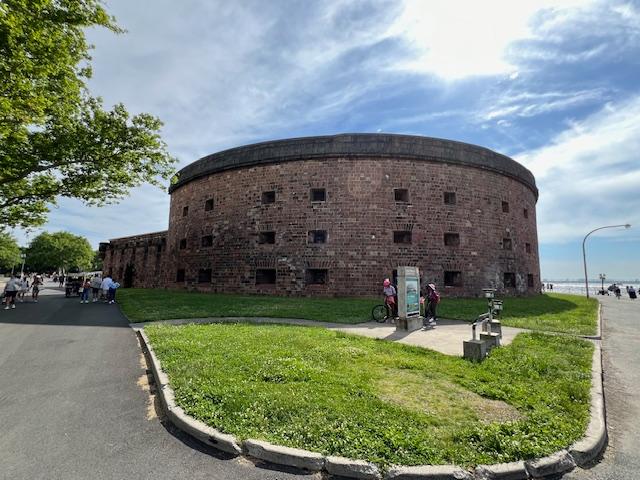
Castle Williams Fort as you enter from the main walkway
I have toured Castle Williams several times when visiting Governors Island over the last two years. The fort sits at a strategic site on the island facing Manhattan. The fort was originally built to protect New York City from the British during the War of 1812. The British knowing that the City had been fortified for battle never attacked New York.
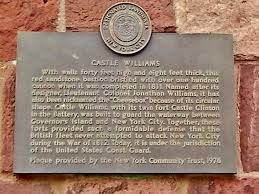
The historic plaque
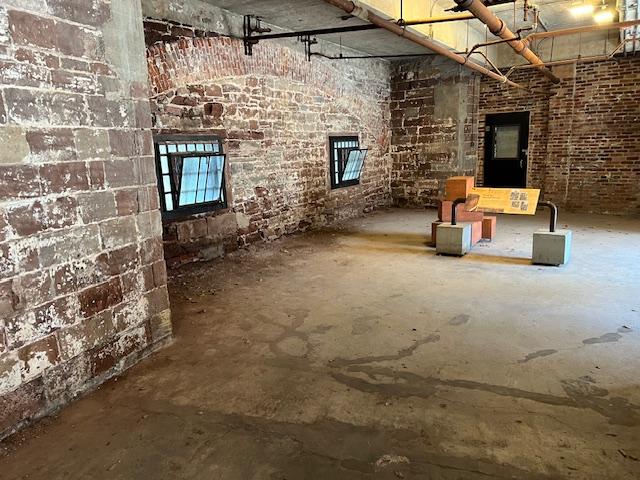
The tour takes place twice a day for about an hour and you tour the first two levels of the fort. There are all sorts of signs around to show the history of the fort and its uses over the years. The one thing they don’t like is you touching the walls as the fort is still pretty fragile.
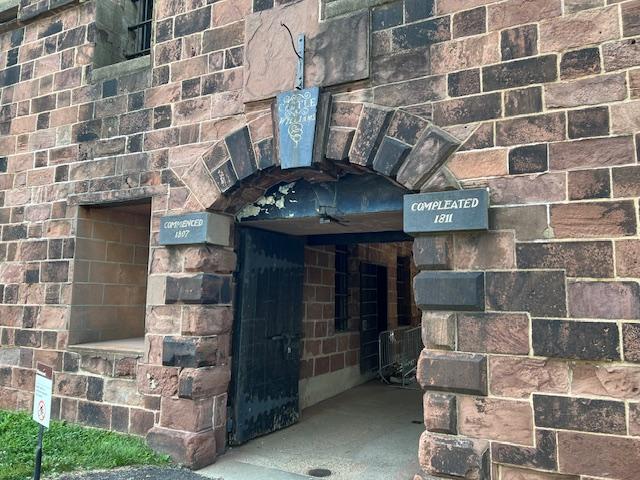
The entrance to this historic fort.
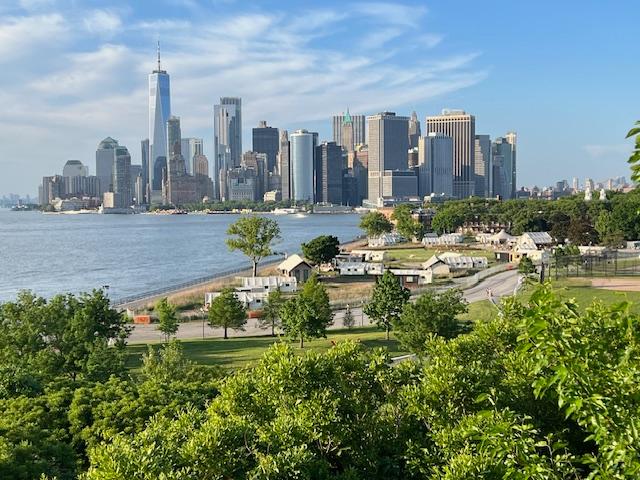
The nicest part of the tour is the observation deck at the top of the fort and the views of the Lower Manhattan skyline. It is a spectacular view of the harbor. You can see by the view why the fort was built where it was built and for its purpose before the War of 1812.
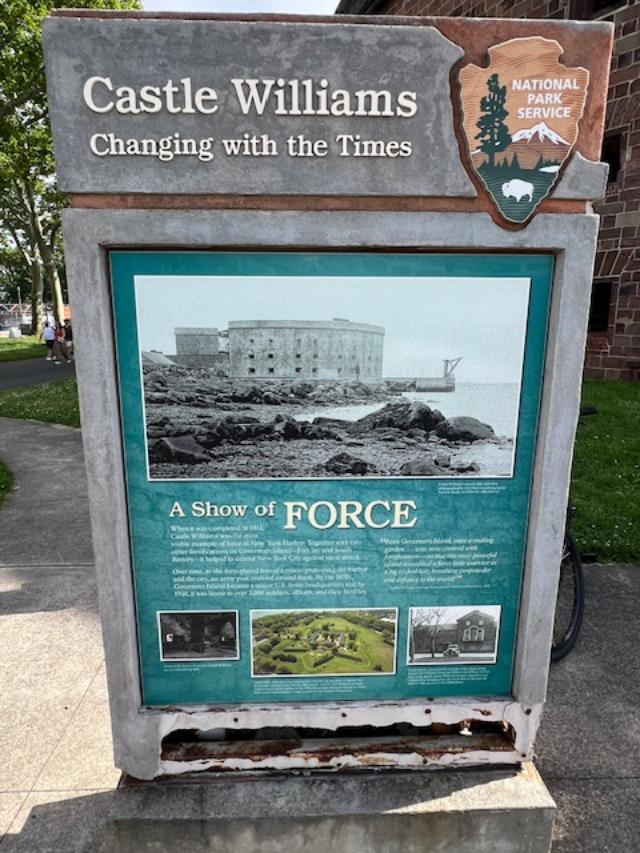
The sign welcoming you to the fort.
It really is a treat to see how fortifications mattered for cities in this time of history in this country.
The History of Castle Williams:
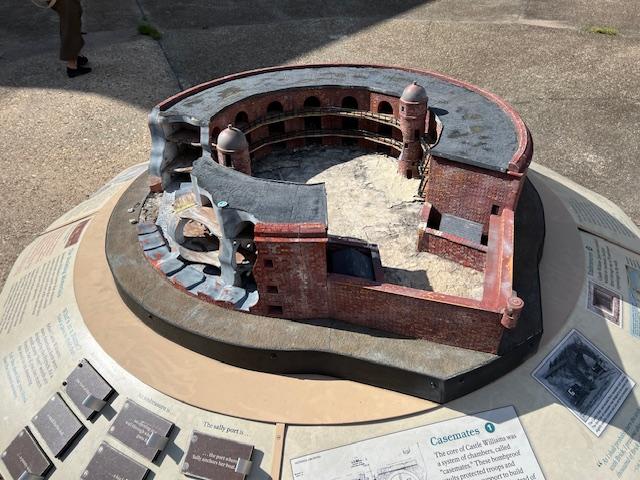
The model of Castle Williams inside the fort.
Castle Williams is a circular defensive work of red sandstone on the west point of Governors Island in New York Harbor. It was designed and erected between 1807 and 1811. It was designed by the Chief Engineer of the U.S. Army Corps of Engineers, Lieutenant Colonial Jonathan Williams for whom the fort was named after. It was considered a prototype for new forms of coastal fortification.
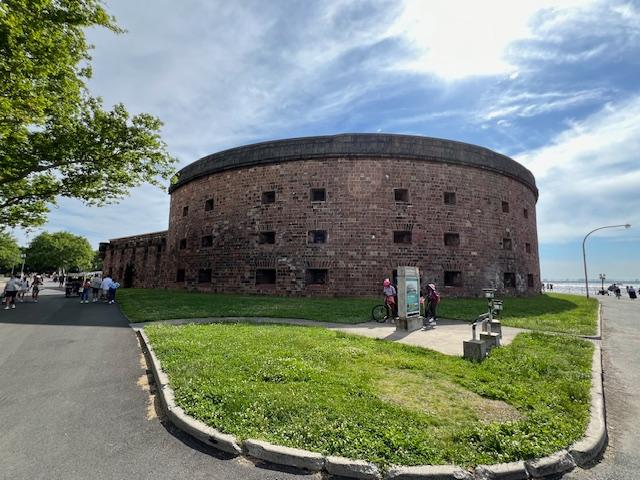
The fort from the outside
The castle was one component of a larger defensive system for the inner harbor that included Fort Jay and the South Battery on Governors Island, Castle Clinton at the tip of Manhattan, Fort Gibson at Ellis Island and Fort Wood, which is now the base of the Statue of Liberty on Liberty Island. This system of forts came to be known as the Second American System of coastal defense and existed to protect harbors like the one in New York from British interference with American Shipping.
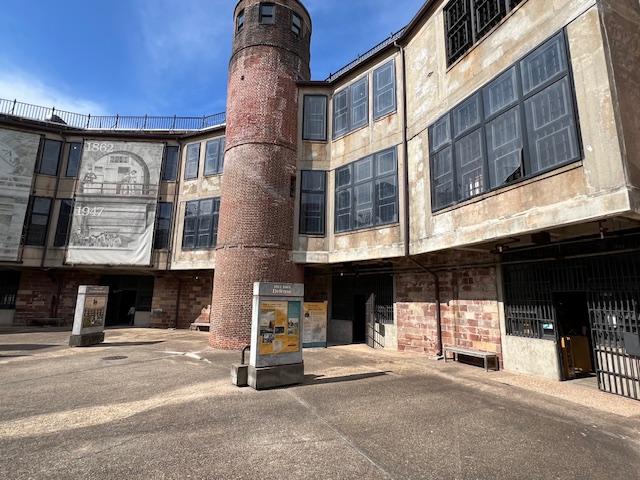
The inside courtyard of the fort.
Its usefulness as a fort began to end in the 1830’s, so Castle Williams subsequently served as barracks for the island’s garrison and new and transient troops. The castle was then remodeled by the U.S. Army for use as a prison in various forms during the Civil War and through the first half of the 20th Century.
In 1901, Secretary of War Elihu Root, who worked hard to modernize the Army, made a commitment to preserve the castle and overruled army leaders who wanted to demolish both it and Fort Jay. By 1903, the castle was fitted up as a model, state of art prison facility. In 1947, extensive renovations were carried out with the wooden catwalks replaced by concrete enclosed walk ways, hiding the beautiful stone arches on the third level and resulting in the industrial appearance of the courtyard today. Castle Williams ceased operations as a military prison in 1965 just before the U.S. Army left Governors Island.
The inside of the prison cell.
The Castle again faced a demolition challenge as Coast Guard officials in Washington DC, who took control of Governors Island in 1966, wanted to demolish it. Instead, the castle was remodeled as a youth community center with a nursery, meeting rooms for Scouts and clubs, a woodworking shop, art studios, a photography laboratory and a museum. By the late 1970’s, the community center moved to another location and the fort became the grounds-keeping shop for the Coast Guard base.
Over time, the roof failed and broken windows allowed serious water damage to occur inside the castle. In the mid-1990s, the roof was replaced and new windows stopped further water damage to the structure but the interior remains closed until it can be made safe for public access. The National Park Service proposes to stabilize and restore the castle and eventually provide access to the roof, allowing the public to admire the harbor and the modern skyline of the great city (this has since opened on my last visit).
The view from the top of the hill on Governor’s Island.
Castle Williams was individually listed in the National Register of Historic Placed on July 31, 1972. It was recorded by the Historical American Buildings Survey in 1983. It was designated a National Historic Landmark in 1985 and the New York City Landmarks Historic District in 1996. It has been part of the Governors Island National Monument by Presidential Proclamations signed in 2001 and 2003.
(This information was provided by the National Park System Division of Cultural Affairs).
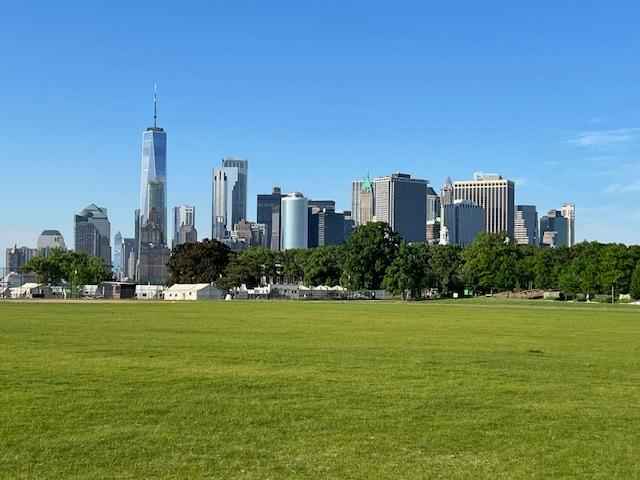
The lawn of Governor’s Island overlooking Lower Manhattan.
The entrance of the Bronx Zoo from the original entrance by Astor Court
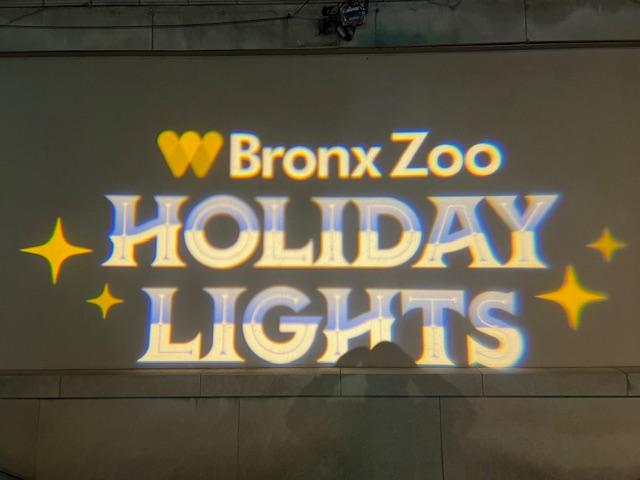
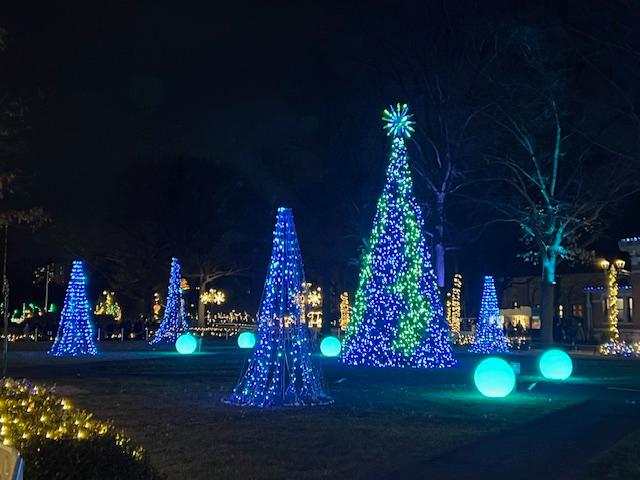
The 125th Sign by the “Holiday Lights” event that evening
I have been coming to the Bronx Zoo since I was five years old, and I never really thought it changed that much over the years. I recently went to a Private Members Night last Fall (See Day One Hundred and in MywalkinManhattan.com) and realized that I had not been there since they opened the Congo Gorilla Forest exhibition and that was in the late 90’s. I had not been in the zoo for over twenty years. A lot has changed since I visited back in 1997. A lot of new exhibitions have opened and renovations made.
My blog on the Private Members Night at the Bronx Zoo on MywalkinManhattan.com:
The Zoo covers about 265 acres of the park in the middle of The Bronx. I took the time to walk all through the park and visiting all the exhibitions, riding on the train and on the monorail system looking over all the animals in their natural habitats set up by the zoo.
I revisited the Congo Gorilla Forest, the Worlds of Birds and Reptiles, exploring the African Plains that I rode past on the monorail system and walked through Jungle World. I really got to visit the park in more detail than I ever had before.
The one thing I really liked about the Zoo was I had never noticed the architecture of the buildings and fountains that I had passed when I was younger and had a real appreciation for them. Most had been around the turn of the last century when the philosophy of looking at animals was different. The graceful stone buildings have beautiful animal carvings all over them.
The Monkey House Building in the old section of the zoo
The best part was since it was a rather gloomy night out there were not that many members in the zoo so I got to ride the rides and walk through the Tree Top Maze with crowds behind me rushing the experience.
I finished the evening visiting the new Dinosaur exhibition and that was creepy. There were dinosaur replications hiding in the woods making sounds and looking at you as you passed. It had been a very popular exhibition that summer.
The Dinosaur display
For dinner that evening, I enjoyed the Dancing Crane Cafe, the main restaurant in the zoo. I was impressed that the food was really good. It was mostly kid staples like pizza and chicken fingers but everything was really fresh, and everything was cooked for us. I returned again for the “Holiday Lights” event in 2024, and the food was just as good as the first time (so many patrons online complain about this restaurant, and I think it very good for what it is).
The outside of the Dancing Crane Cafe during the holiday season at the Bronx Zoo
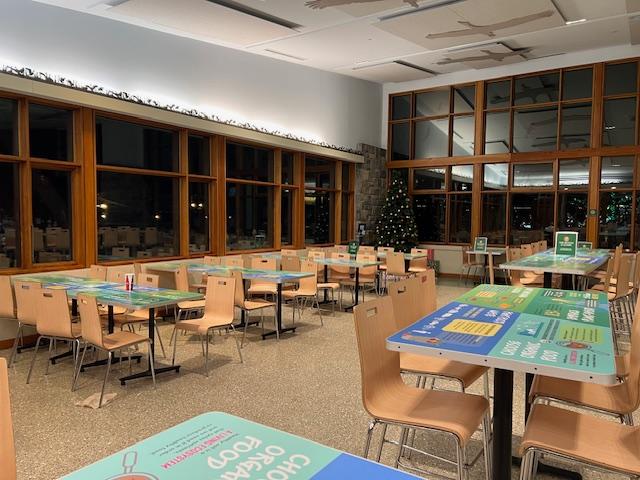
The inside of the Dancing Crane Cafe at holiday time
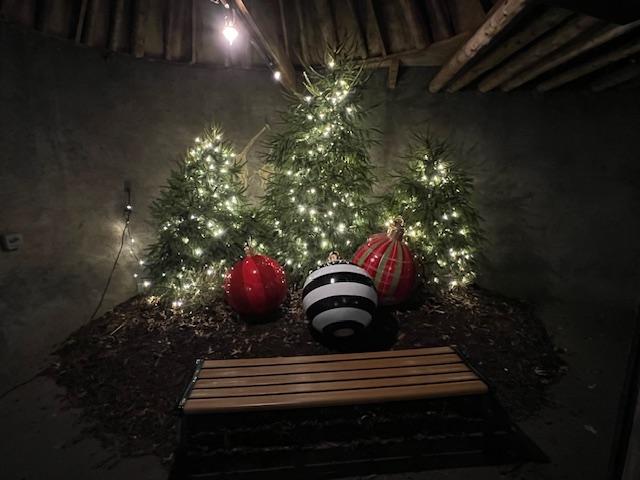
The Christmas tree at the Dancing Crane during the “Holiday Lights” event
I had the Chicken Fingers with French Fries, and it was a nice sized portion. The chicken was a generous portion that was almost a whole breast. The restaurant is pricey but every once in a while, it is a treat. The one thing I have to say about the place is the food is consistent and for a zoo it is pretty good. I thought the quality was excellent.
My Chicken Fingers dinner was really good
The Chicken was so well fried and tasted really good
The Fries were really good as well
I looked over the zoo with a fresh pair of eyes without the throngs of visitors that you normally see there. I enjoyed looking over the animals in a more natural habitat that a lot of zoos don’t offer.
The holiday display at the Bronx Zoo in 2024
The Holiday display in 2024 at the Bronx Zoo
Recently the Zoo has brought back the “Holiday Lights” event for the holidays. I was able to attend the last night of the event on a Sunday night and it was pretty special. In the era of COVID, it really cheered me up. In 2024, I visited the last weekend that the event took place, and it was nice to tour the park after hours and not a lot of people be there. The best time to come to this event is after Christmas. I came the last weekend it was open, and it was the best time to come with no crowds and plenty of time to walk around the park in the dark to enjoy the displays.
Almost all of the Zoo was decorated with lights and there was Christmas music playing the whole night. Even though the holidays had passed it still put me back into the mood.
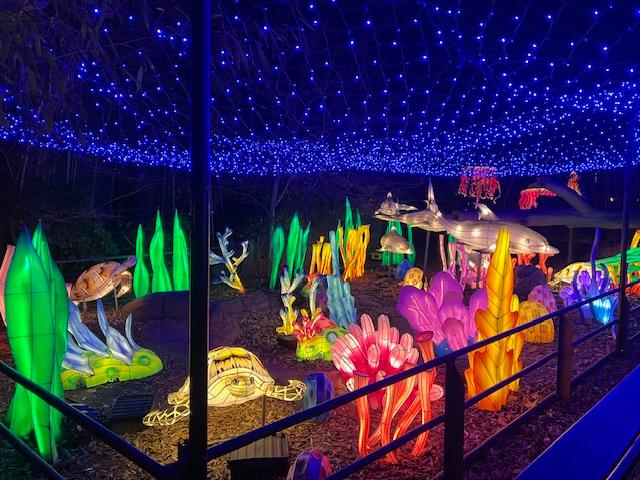
The nautical display at the Bronx Zoo “Holiday Lights”
The Nautical scenes of the display
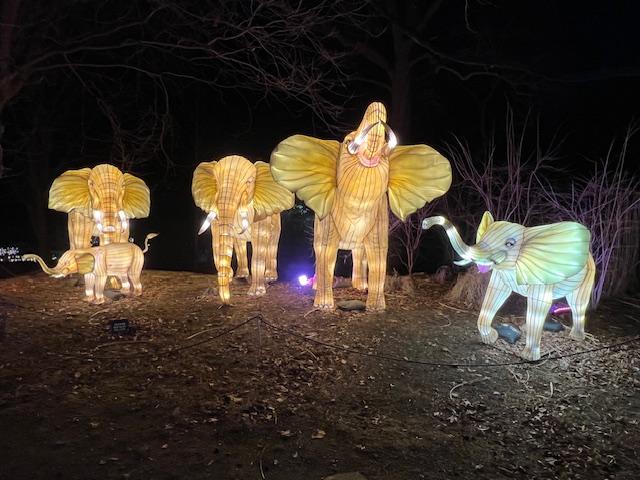
The “African” exhibit at the “Holiday Lights” event
The giraffes in the “African” event
The Elephants in the “African” section
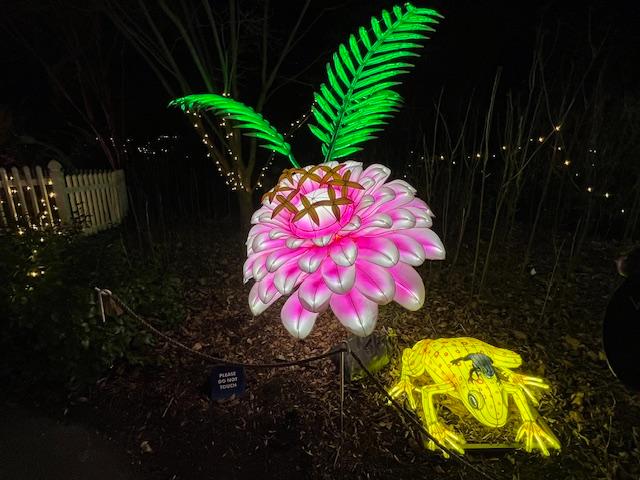
The colorful frog in the “Magical Forest”
The colorful flowers in the “Magical Forest” at “Holiday Lights”
The forest of flowers
More Flowers
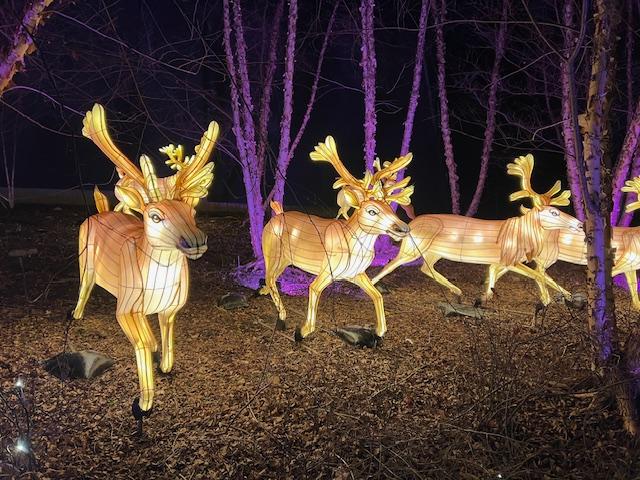
The tribe of Moose at the “Holiday Lights” event
Flock of Parrots in the woods
Path of Rhinos on display
Mother and baby frogs
The Frog family on display
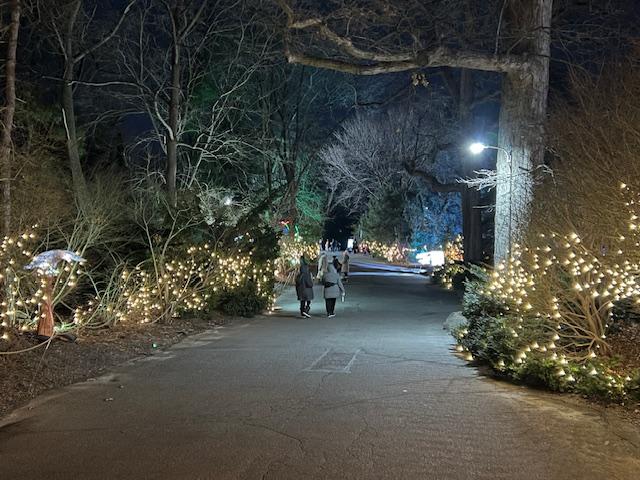
Each of the trails had lighted tunnels that were a sensory excitement to walk through especially as it got darker.
The Circular tunnel
The other lighted tunnel offered a wonder in lights to walk through
All the trees were adorned with white lights and each of the sections of the park were decorated with a theme.
The Snowflake display in the park
There were elephants wondering through the paths, seals and penguins swimming through their displays and all sorts of tinkling snowmen and animals like bears, lions, tigers and giraffes lining the paths.
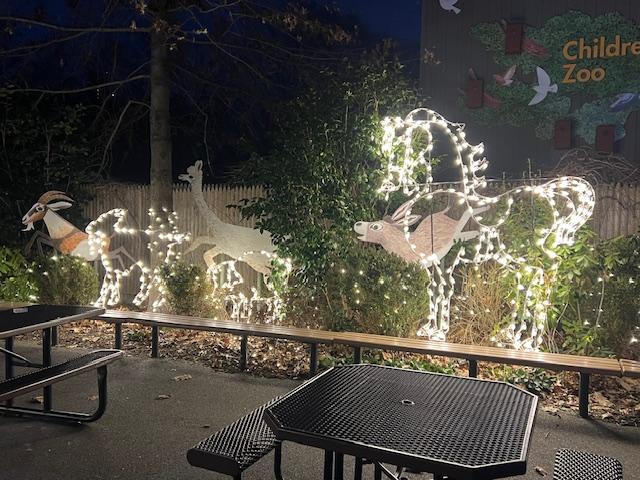
Various animals in white lights
The lightshow paths were lined with all sorts of light
The “Magical Musical Christmas Tree” and show at the “Holidays Lights” event
The musical show that takes place on a continuous basis. You have to see this show once. It is amazing show!
The nicest section that I almost missed was the musical Christmas tree in the old section of the park and the zebras on stilts.
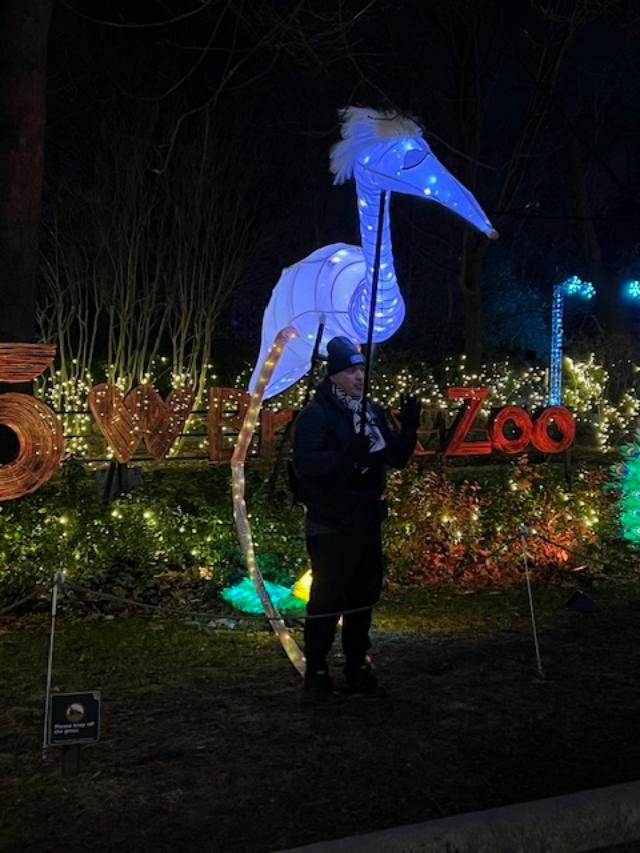
The Illuminated puppets at the zoo during the “Holidays Lights” event
The original section of the park was decorated with multiple lights with contemporary Christmas music playing in the background. There were birds flying, reindeer being chased and seals leading the way for other animals.
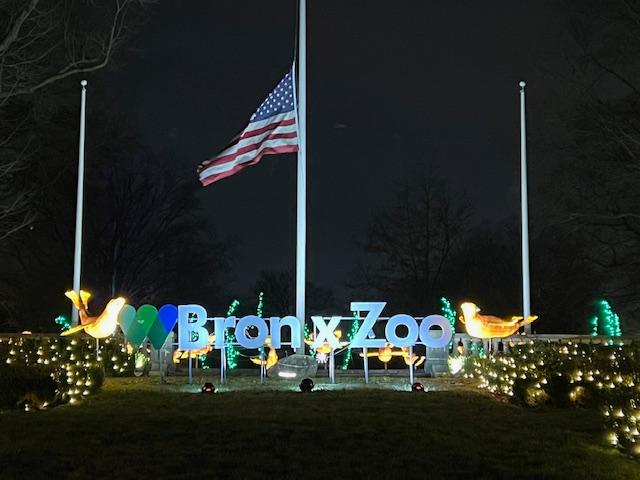
The entrance of the zoo that evening
I was finally able to ride the Bug Carousel which was a little hokey but a lot of fun. I could see why the kids like it so much. There were plenty of adults who were also enjoying the complimentary ride. There was ice sculpture demonstrations, comics performing and all of the food outlets and gift shops were open to a somewhat limited crowd. We had timed tickets, so the crowd was rather small for such a big event.
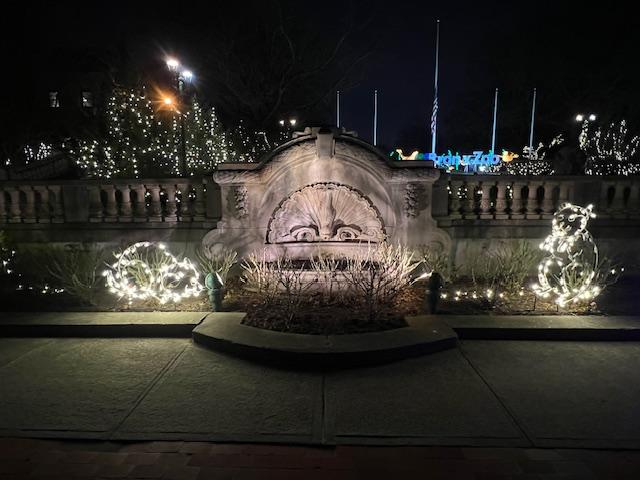
The Rockefeller Fountain and Astor Court decorated for the holidays
The Totem Pole lit up and decorated for the holidays
I got there by 6:15pm and the park display was open until 9:30pm. By the time I left for the evening at 9:00pm, the park crowd had really thinned out and there were very few people walking around. Still it was nice to walk around and feel I had the whole park to myself. It was getting cool that evening but still a nice night to walk around. I will have to remember this for next year.
Leaving for the evening of the Lightshow at the Bronx Zoo for “Holiday Lights”
The History of The Bronx Zoo:
In 1895, a group made up of members of the Boone and Crockett Club founded the New York Zoological Society with the purpose of founding the zoo. The architectural team of Heins & LaFarge designed the original permanent buildings as a series of Beaux-Arts pavilions grouped around the sea lion pool.
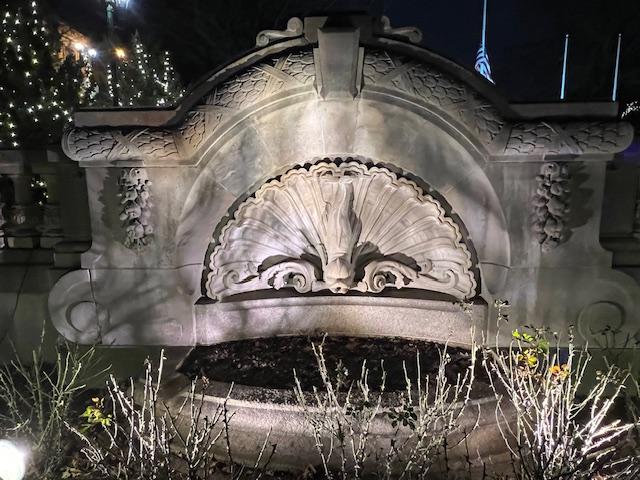
The Astor Court Fountain during the “Holiday Lights” event
The Fountain at night
Jellyfish display by Astor Court
The Jellyfish lightshow inside one of the buildings
The Rockefeller Fountain was bought to the park in 1902 from another part of the park. It had been built in 1872 and was moved to the front of the zoo by the Rockefeller family and is now surrounded by a series of gardens as you enter the park from the parking lot.
The Rockefeller Fountain in Astor Court the night of “Holiday Lights”
When the zoo opened, it featured 843 animals in twenty-two exhibitions around the park. The zoo has been home to many exotic animals many being the first of their kind in a zoo. At various times in its history, the park has featured Komodo Dragons, Andean flamingos and a Sumatran rhinoceros.
Today the park is run by the Wildlife Conservation Society and is accredited by the Association of Zoos and Aquariums. The main exhibitions are the Congo Gorilla Forest, Jungle World, the Wild Asia Monorail, Madagascar!, Tiger Mountain, the African Plains, the World of Birds, the World of Reptiles and the Zoo Center. There are also various restaurants and snack shops throughout the park (that were closed the evening I went there), a carousel and a playground.
The Bronx Zoo Gift Shop the night of “Holidays Lights”
(This information on the park comes from Zoo history and Wiki)
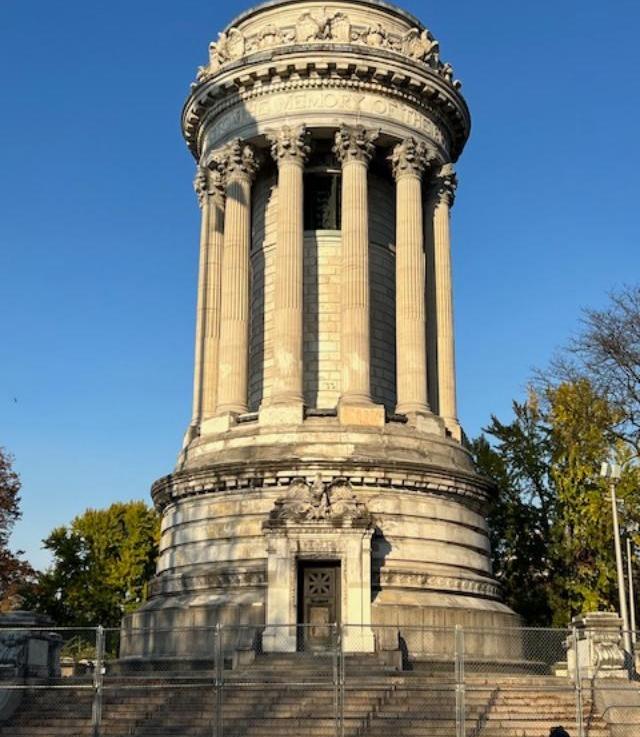
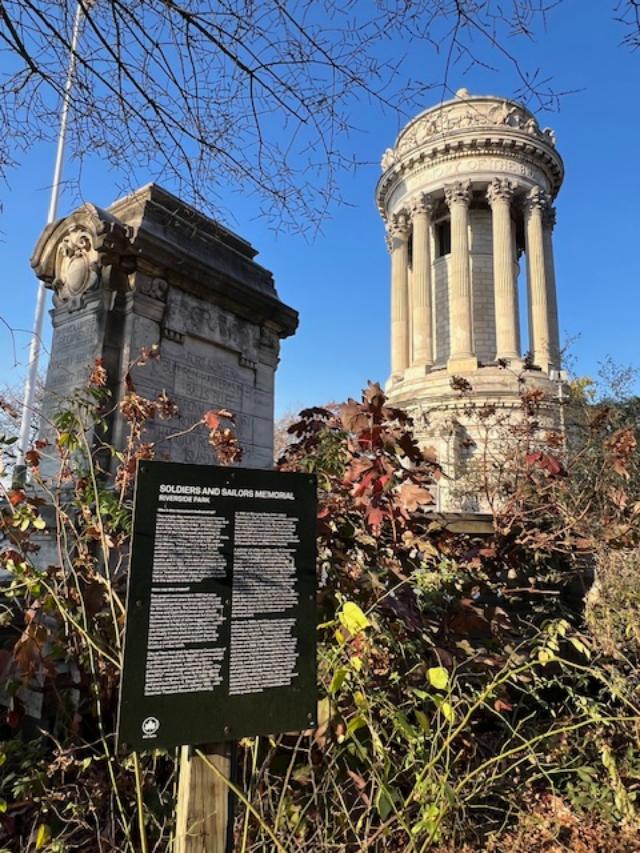
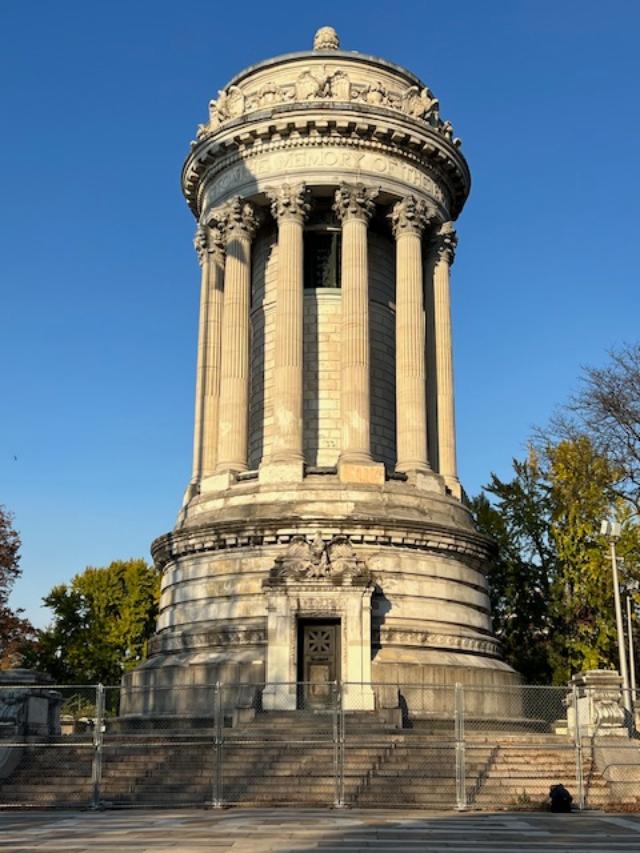
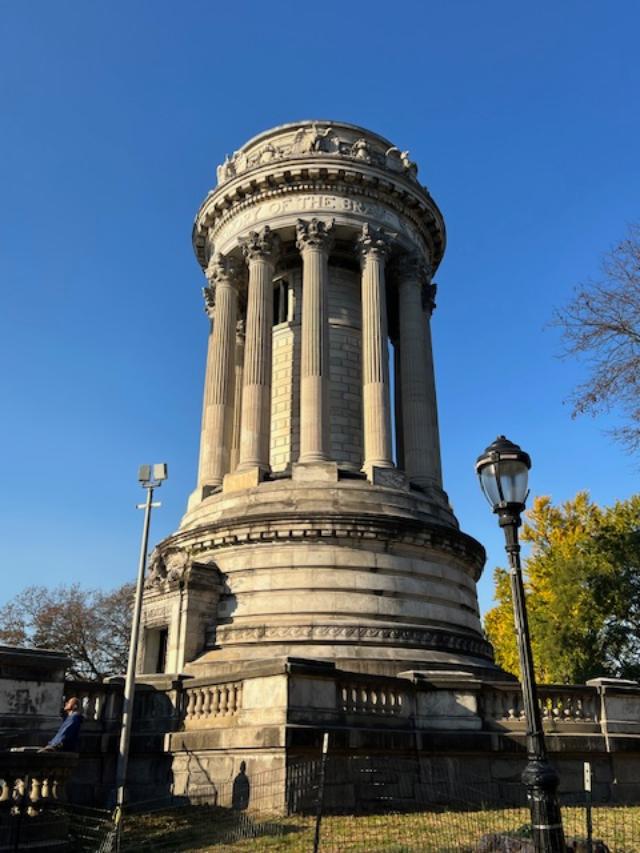
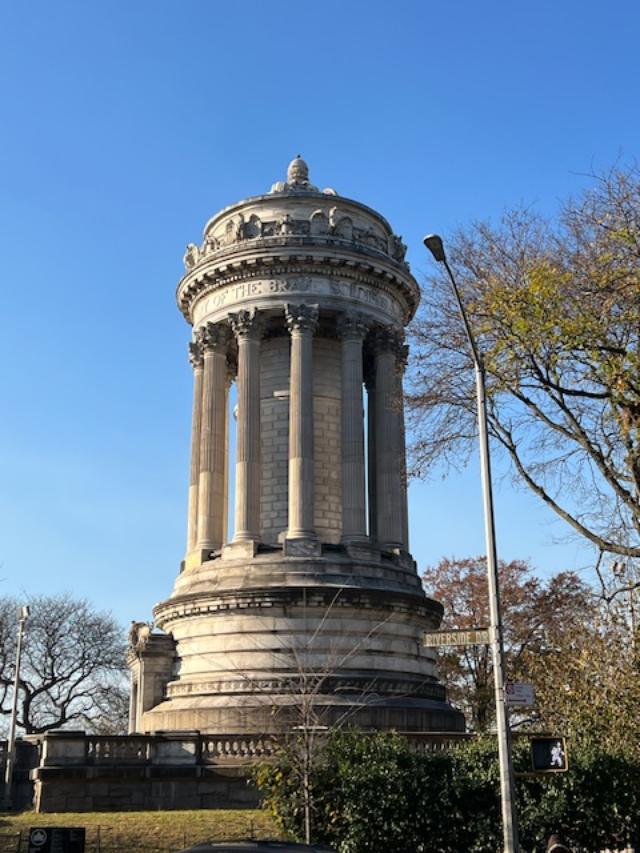
The Soldiers & Sailors Monument in the Fall of 2024
I had passed the Soldier’s and Sailors’ Monument when I was walking the Upper West Side of Manhattan for my blog ‘MywalkinManhattan.com’. It sits in an almost graceful state of disrepair behind fencing protecting it from people. It seems that it had been in a state of decay since the start of construction in 1900.
The monument is still under renovation and you can only walk around it
I walked all around the monument while walking Riverside Park thinking it was a small copy of a Greek Temple or another smaller burial site like Grant’s Tomb. You could see where the gaps in the structure were and the need for repair from the stairs to the platform. Still there is a beauty in its details.
The monument in the late afternoon
Reading in a recent issue of The Spirit, it seems that the New York Landmarks Conservatory and the local government officials want to put money into its repair. This beautiful landmark is going to need a lot of time and care in the future. Let’s hope they agreed to it.
The monument still under renovation
History of the Soldiers’ and Sailors’ Monument:
(from the parks website)
The monument was first suggested in 1869 after the Civil War and was put on the back burner until 1893 when a nostalgia for the Civil War sweep across the country. The State of New York established a Board of Commission to create a monument to the soldiers’ and sailor’s who had served in the Union Army during the American Civil War (Wiki).
The ground was broke for the monument in 1900 and was completed in 1902 and it was dedicated on Memorial Day in 1902 with President Theodore Roosevelt officiating and a parade of Civil War veterans parading up Riverside Drive (Wiki).
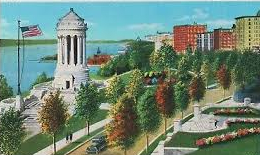
The Monument when it opened
The monument was designed by architects Charles and Arthur Stoughton and the ornamental features were carved by architect Paul E. M. Duboy. The monument takes the form of a peripteral Corinthian temple raised on a high base with a tall cylindrical rusticated cella, that carries a low conical roof like a lid ringed by twelve Corinthian columns. The entrance has the names of the New York volunteer regiments and the battles in which they served as well as the Union Generals . The monument was designed a New York City landmark in 1976 and a State landmark in 2001 (Wiki).
The monument has been plagued with repairs since it was built and according to reports it is in need of desperate repairs. I could tell by the cracks and missing marble that their were flaws in its construction since it had been built.
Still it graces the entrance of Riverside Park with it’s beauty. Look at its details in the carvings and it look of a Greek temple. It is really impressive especially in the summer months with the park behind it in full display. You can’t get too close to the monument in its current state.

























 Visiting a Museum: The Unique, Unusual, Obscure and Historical