Category: Small Historical Societies in New York City

Fort Tryon Park                                                                           Riverside Drive to Broadway                                                                    New York, NY 10040

Fort Tryon Park Riverside Drive to Broadway New York, NY 10040

Fort Tyron Park

Riverside Drive to Broadway

New York, NY  10040

https://www.nycgovparks.org/parks/fort-tryon-park

https://www.nycgovparks.org/parks/fort-tryon-park/history

Open: Sunday-Saturday 6:00am-1:00am

My review on TripAdvisor:
https://www.tripadvisor.com/Attraction_Review-g60763-d2305249-Reviews-Fort_Tryon_Park-New_York_City_New_York.html?m=19905

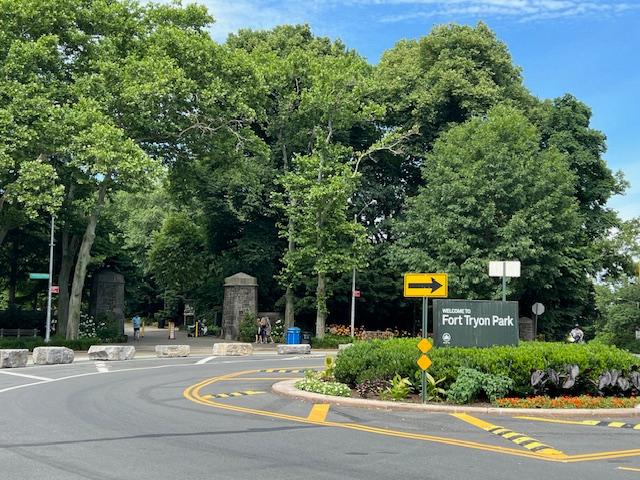
The Front of Fort Tyron Park

The entrance of the park

I love Fort Tryon Park in Upper Manhattan. It is one of the most beautiful parks in New York City. It is a park of rolling hills, stone paths that hug the hills, interesting garden that are ablaze when in season, shady tree sitting areas and is home to many playgrounds and the Cloisters Museum which is part of the Metropolitan Museum of Art. It has so much to offer a visitor coming into Manhattan from exploring the woods that line the path to looking at interesting art at the museum. This 67 acre park is one of the interesting and complex in New York City.
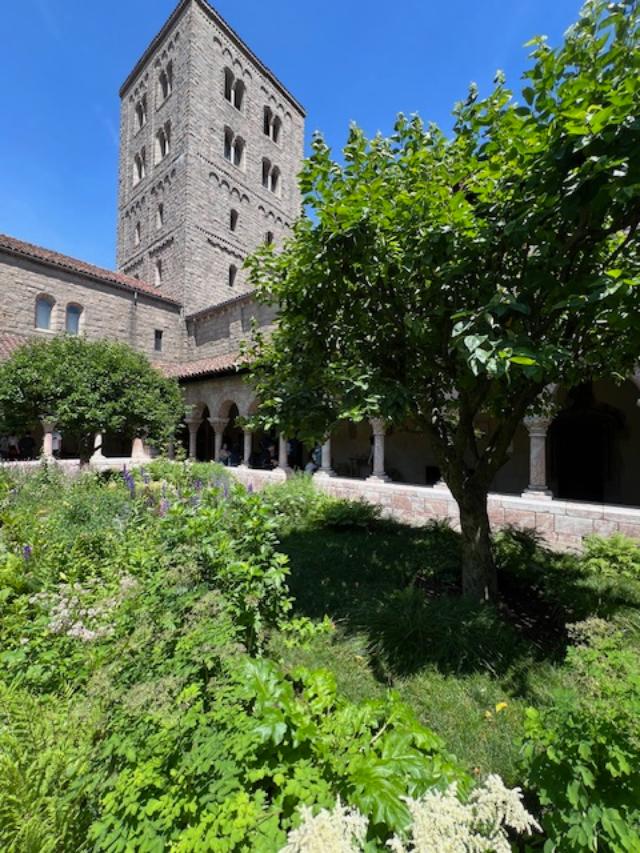
A city view of the beauty of the park by the Hudson River

The view from The Cloisters by the Hudson River

When you enter the park from Inwood by Broadway, you enter through Ann Loftus Park which is named after a local community leader and is one of the popular parks with kids and families in the area. In the summer months, the fountains and water fixtures are going strong and the kids run around them while the parents lie under shade trees talking to one another.

Ann Loftus Playground

https://www.nycgovparks.org/parks/fort-tryon-park/highlights/11234

When taking the path from Ann Loftus Park and winding up the hills of woods and rock formations is the Hudson River looming in the distance with spectacular views of the Palisades and the large cliffs of Fort Lee, NJ on the other side.

The bathrooms in Ann Loftus Playground

Anne Susan Cahill Loftus biography:

At the top of hill like a crown jewel is the Medieval Galleries of the Metropolitan Museum of Art’s Cloisters Museum. Filled with all the Met’s collections of Religious and Medieval art set into themes of old churches, stained glass windows, flowered courtyards and vistas of the river, it is the perfect place to wonder around.

The Met-Cloisters Museum

Don’t miss the “Hunt of the Unicorn” tapestries.
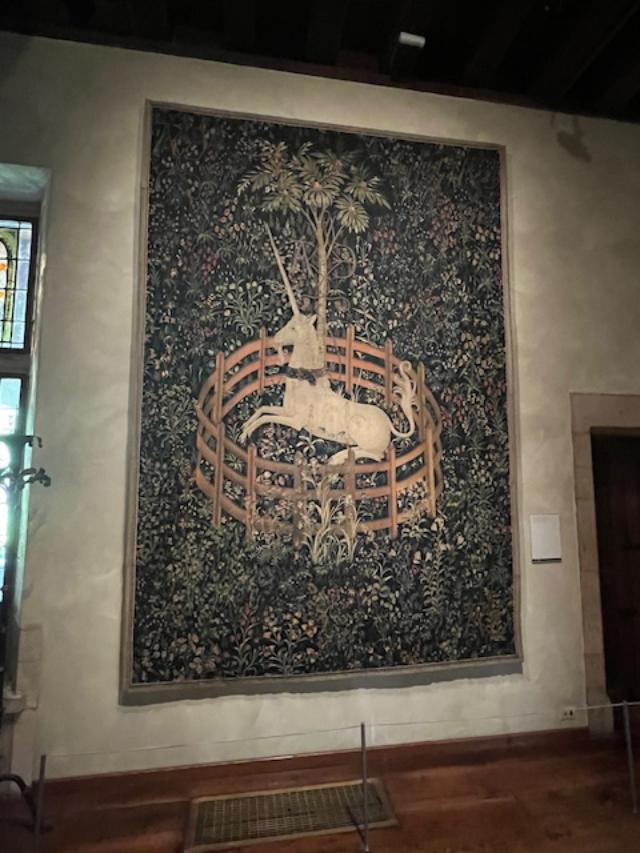
The Hunt of the Unicorn Tapestry

The Cloisters:

https://www.metmuseum.org/visit/plan-your-visit/met-cloisters

My review on TripAdvisor:

https://www.tripadvisor.com/Attraction_Review-g60763-d106609-Reviews-The_Met_Cloisters-New_York_City_New_York.html?m=19905

As you pass the Cloisters and walk further in to the park, there is still so much more to see and do. The Linden Terrace overlooks the Hudson River with its large shade trees over head and its stone benches to sit and just look in the distance or read a book. This was the site of the original Fort Tryon and is the highest location in the park.
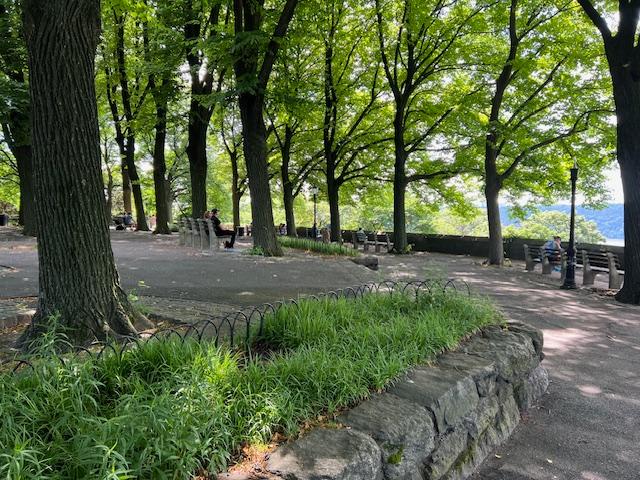
Linden Terrace is a nice place to relax and read a book
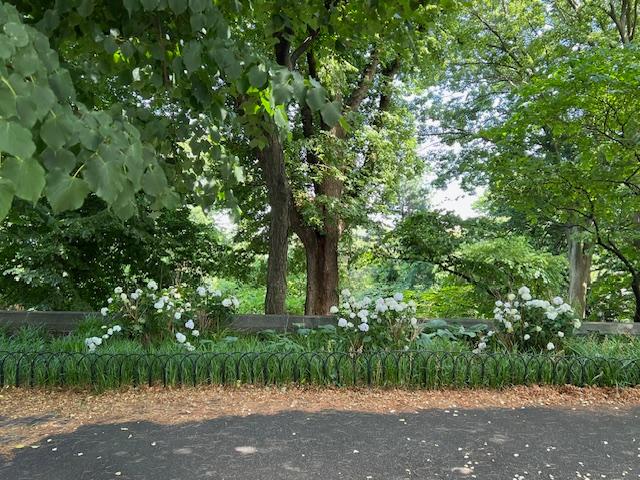
The flowers by the Linden Terrace

Further down in the other entrance of the park is Heather Garden, a large path of flowers , bushes and trees with benches lining it. The garden was the Olmstead Brothers when the park was taking shape and is a beautiful place to walk in the Spring and Summer months when the park is in full bloom.

The stairs leading to the Linden Terrace

The plaque for Fort Tryon

The anniversary plaque

The Stan Michels Promenade
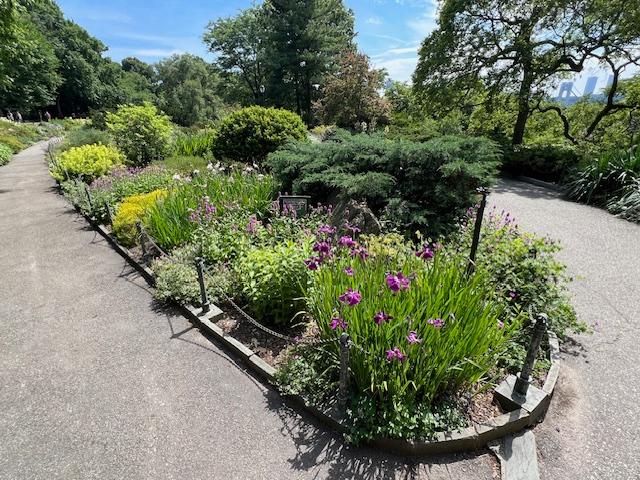
The Heather Garden in the front

The Heather Garden was recently remodeled to follow the original design by the Olmstead Brothers.
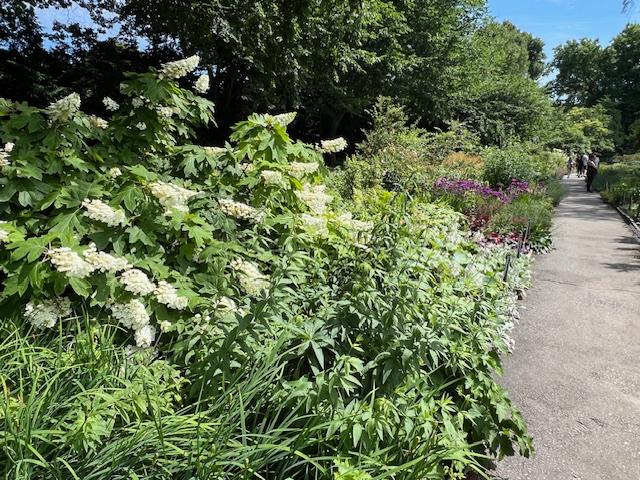
The Heather Gardens

The Heather Gardens in full bloom

The Gardens facing the George Washington Bridge

The Gardens in full view

There is even a terrace restaurant in the middle of the park, the New Leaf Cafe (See review on TripAdvisor-Closed in 2018) which sits off to the side of the Corbin Circle on the other side of the park. The food is over-rated and very expensive. The last time I ate there the menu was pretty standard. It is a great to take out of towners who want a view of something. It is not worth the trip. The views are nice and in the summer months it is pretty but the food and service are standard. Inside the park in 2026, a new restaurant has replaced the former New Leaf Cafe, Le Bonnefont, a Modern French restaurant.

The Bonnefont Restaurant replaced the New Leaf Cafe

https://thebonnefont.com

https://www.facebook.com/groups/432657521042383/posts/1318136805827779

My review on TripAdvisor:

The New Leaf Cafe in Fort Tyron Park (Closed in 2018)

My review on TripAdvisor:

https://www.tripadvisor.com/Restaurant_Review-g60763-d478282-Reviews-New_Leaf_Restaurant_Bar-New_York_City_New_York.html?m=19905

The new Bonnefont Restaurant is open for lunch and brunch

The restaurant was closed that afternoon but I was able to look at the menu online and it is an interesting menu. The cuisine is a mixture of French and Contemporary cooking.

The park has so much to offer in all months of the year especially in the Spring and Summer.

The entrance to Fort Tryon Park
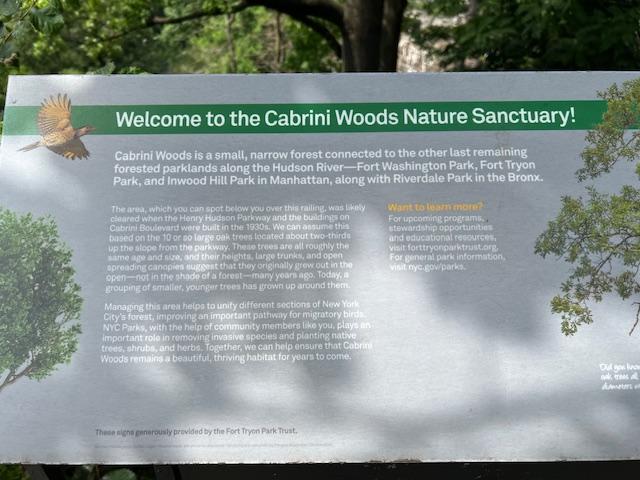
Cabrini Woods Nature Sanctuary in the front of the park
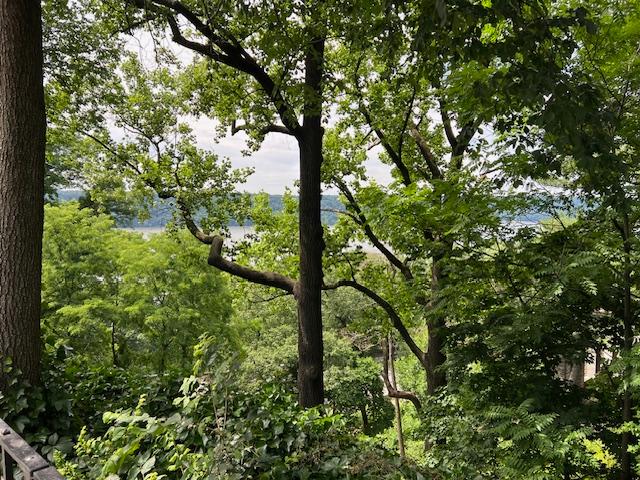
The Cabrini Sanctuary in the Spring 2024

History of Fort Tryon Park:

The area was known by the local Lenape Indians as Chquaesgeck and by the Dutch settlers as Lange Bergh (Long Hill). During the Revolutionary War, the Battle of Fort Washington was fought on this site. The park is built on a high formation of Manhattan schist with igneous intrusions and glacial striations from the last Ice Age (Wiki).
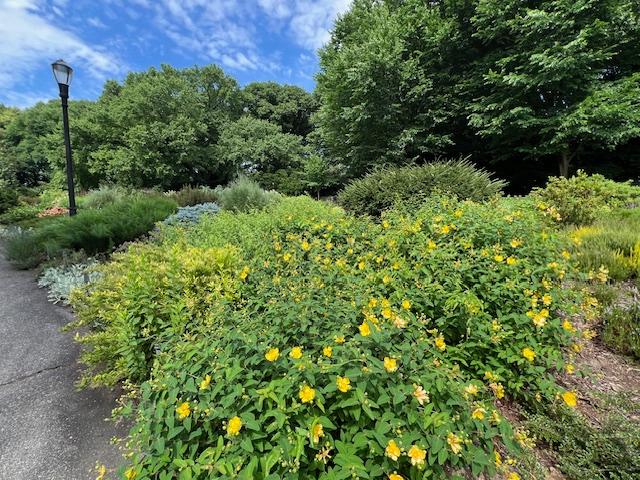
The gardens in the Fort Tryon Park

John D. Rockefeller Jr. bought up most the land in 1917, which by that point had been old estates, to create Fort Tryon Park. He hired the Olmstead Brothers firm, under the direction of Fredrick Law Olmstead Jr., the son of the designer of Central Park,  to design the park and James W. Dawson to create a planting plan. Mr. Rockefeller also bought the collection of Medieval art from sculptor George Gray Barnard and it was the cornerstone of The Cloisters Museum which was built in 1939 (Wiki).

The Fort Tryon gardens in full bloom

The stairs in the park

Through the years the park has seen its ups and downs especially in the 1970’s and 80’s with the decline of finances in New York City. There were extensive renovations when finances got better in the late 90’s and parts of the park were fully renovated. The Fort Tyron Park Trust, a non-profit organization was founded in 1998 to help maintain the park (Wiki).

The Scandinavian Orchestra played in June 2024

Video on the show:

Today it is just an amazing park!

The Jacob Javits Playground is really popular
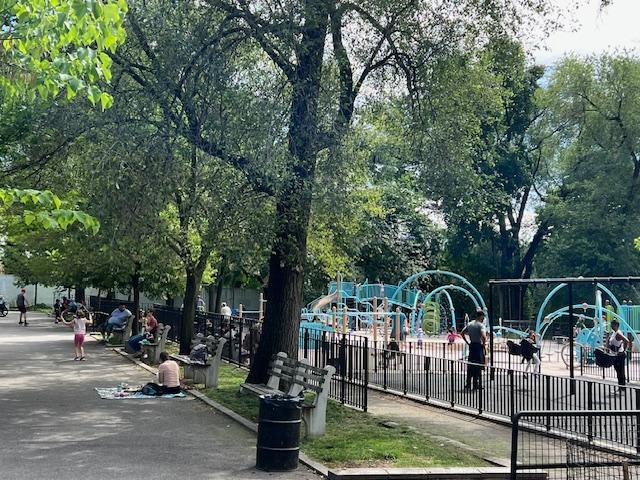
The Javits Playground was very popular

https://www.nycgovparks.org/parks/fort-tryon-park/highlights/8724

On the recent Great Saunter walk in 2025:

When I walked through the park on the recent Great Saunter walk in 2025, they rerouted us through the park when the Riverwalk was closed for renovation. The park was in full bloom and it was the most spectacular day for a visit.
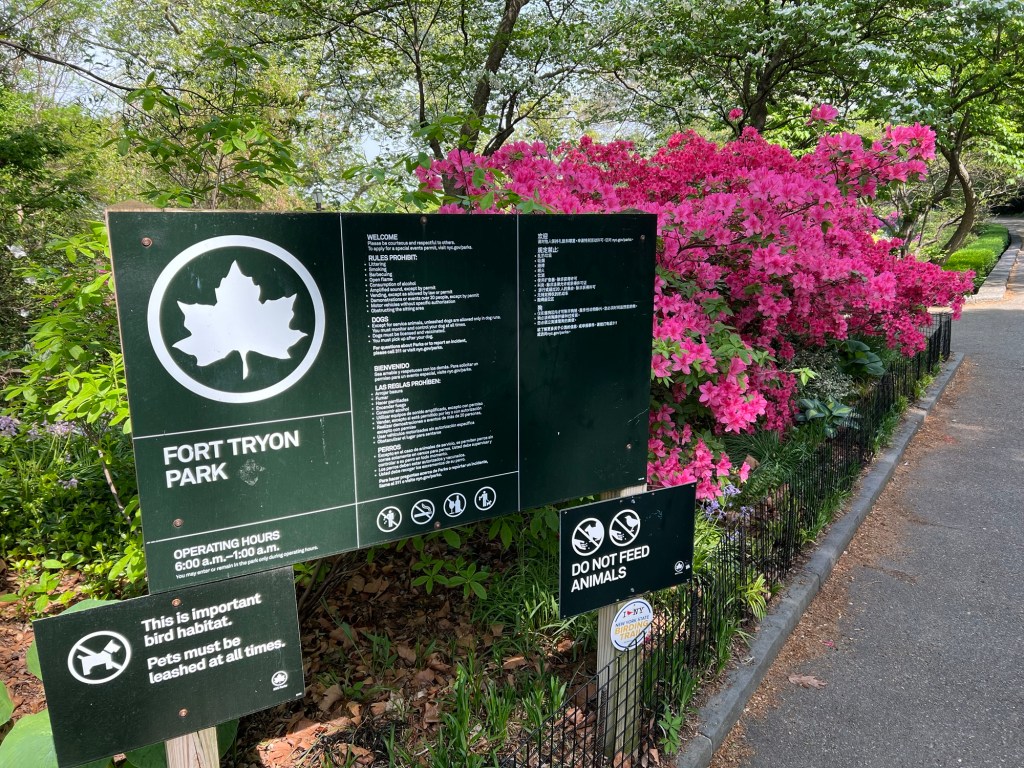
The entrance of the park on that sunny afternoon

The beautiful colorful tulips at the entrance of the park

The colorful gardens were in full bloom

Everyone was routed through the park on the way to Inwood Park for our rest stop. What I found strange was that the park was so beautiful in full bloom and people were not stopping to relax and just enjoy the views. The gardens were amazing and so colorful.

I stopped to look at the beautiful rock garden

The entrance to Heather Garden in the Spring of 2026:

The pathways through the Heather Gardens

Walking through the Heather Garden

The gardens

Walking through The Heather Garden

Walking through the Heather Garden

The other side to Heather Park

Walking through the Gardens

Walking through the pathways of the gardens

Walking around the gardens

Walking back through the gardens to the Fort Tryon location

Walking to the Fort Tryon site

The Fort Tryon site

Walking through Fort Tryon Park during the Great Saunter in 2025:

Welcome to Upstate Manhattan!

I thought this was so clever. One of the volunteers made this sign up which was so funny!

We walked through the park on our way through the park on the way to Inwood Park.
New York Aquarium                                                                 602 Surf Avenue                                                                          Brooklyn, NY 11224

New York Aquarium 602 Surf Avenue Brooklyn, NY 11224

New York Aquarium

602 Surf Avenue

Brooklyn, NY 11224

(718) 265-3474

http://www.nyaquarium.com

https://nyaquarium.com/

Open: Sunday & Saturday 10:00am-5:30pm/Monday-Friday 10:00am-5:00pm

Fee: Adults $25.00/Children $20.00/Seniors $27.00 (see their website for more details on pricing and times)

My review on TripAdvisor:

https://www.tripadvisor.com/Attraction_Review-g60827-d107414-Reviews-New_York_Aquarium-Brooklyn_New_York.html?m=19905

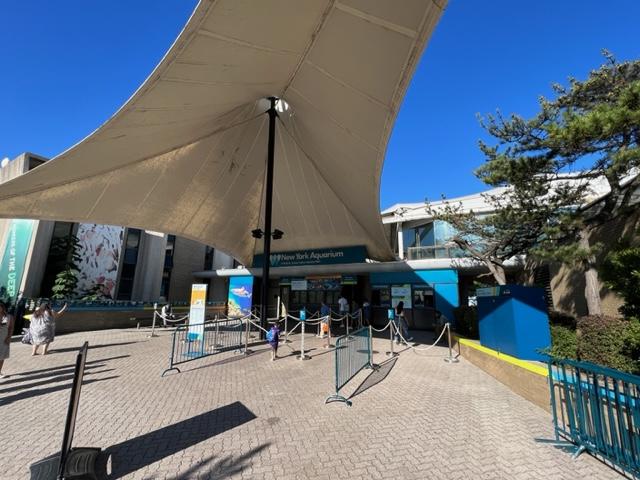
The New York Aquarium at 602 Surf Avenue.

The aquarium entrance at the boardwalk.

The aquarium’s outside tanks with sea lions, otters and penguins.

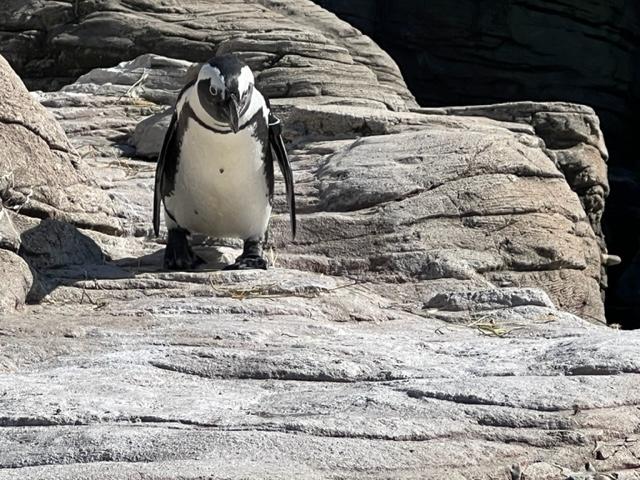
The penguins were very entertaining that afternoon.

The otter just ignored us. They just played amongst themselves.

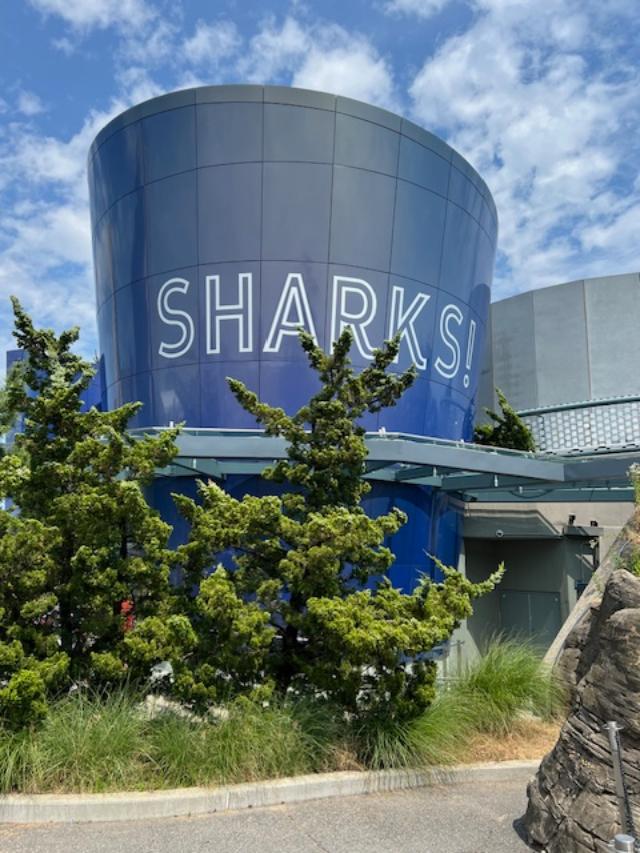
I have been to the NY Aquarium many times since it reopened after Hurricane Sandy and there have been many positive improvements in both the facility and the service. The new Ocean Wonders: Shark! exhibition which has opened up giving an interesting look at the underwater world of the many different types of sharks that dominate the deep.

The Shark Exhibit

The Shark exhibition

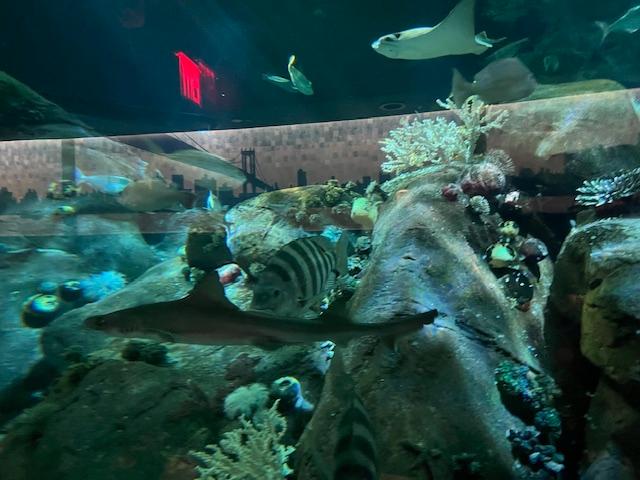
The sharks and string rays

It is not just a display but also a commentary on the conditions of the deep and the treatment of sharks around the world. There contributions as bottom dwellers cleans our oceans and benefits other fish. It was shocking what the treatment is of these animals in Asia when strip these animals of their fins for soup. I like how professionally the aquarium shows this in their displays and videos and doesn’t preach but offer solutions to the problem.

The entrance to the new shark tanks.

That and walking through the tanks themselves in the darkened rooms with music makes for a fascinating and almost ominous trip into the ocean behind the walls with the sharks and other mammals and fish swim past you. There is also a small tunnel that you can climb under to watch the fish swim on top of you and past you.

The tropical fish exhibition

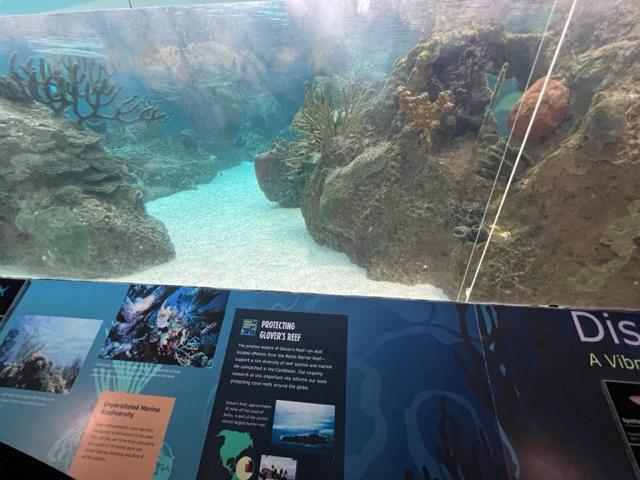
In the Conservation Hall, you will learn all about the fish that dominate and keep our reefs vibrant and what happens when pollution takes over and kills them. Again the aquarium displays this in a positive way, shows how the animals keep the reefs healthy. I point out that there are a lot of colorful fish on display and it is fun to watch the small children yell out to them.

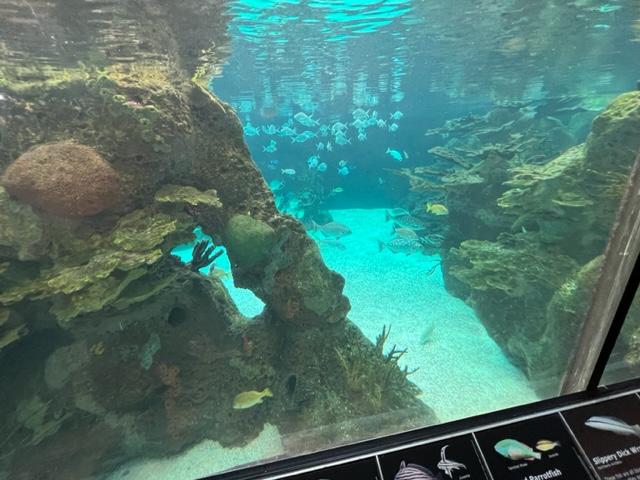
The coral reef exhibition

The Coral Reef Exhibition

The fish in the Coral tanks

a

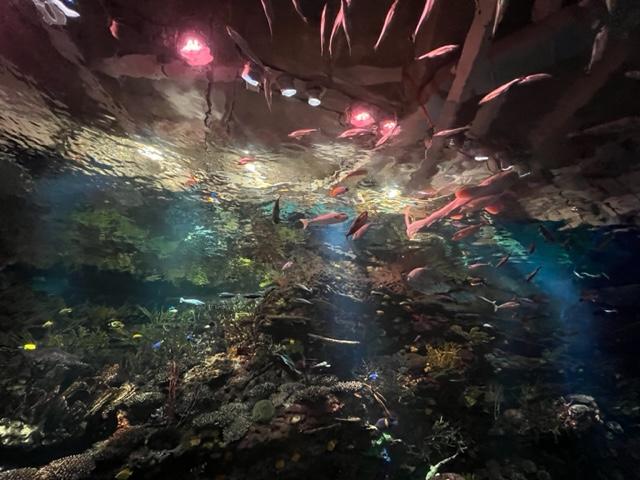
The Hudson Canyon Edge exhibit

https://nyaquarium.com/things-to-do/events/hudson-canyon

People looking at the tanks

The stingrays in the tanks

The wild life in the canyon

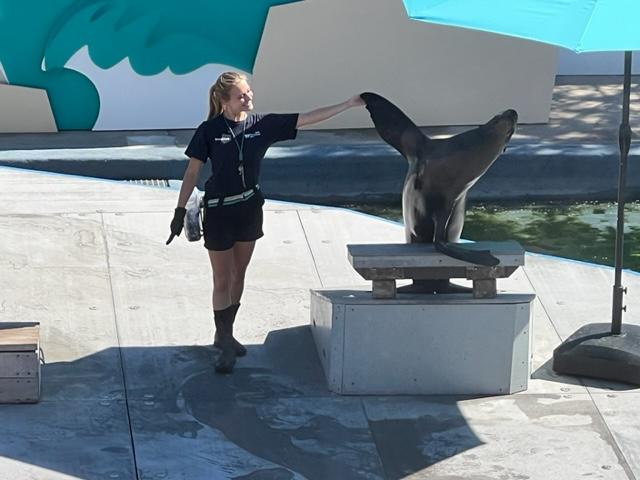
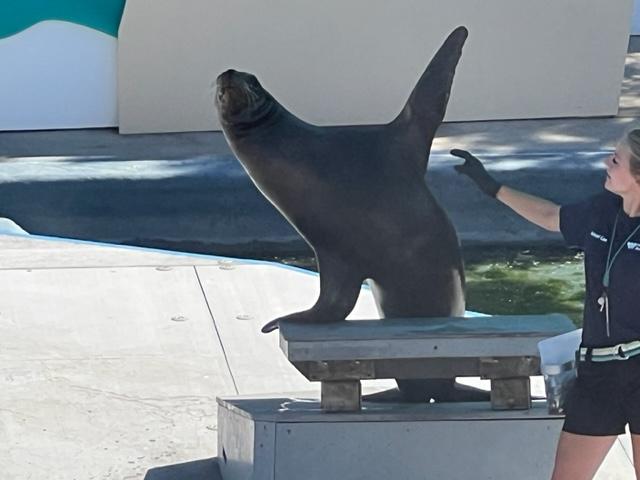
There is a wonderful seal show during the day that you should not miss especially in the warmer months when you can sit in the stands and watch them perform with their trainers. They are more Native New Yorkers than most humans having been born at the aquarium and showing their own pride in their home and abilities.

The Sea lion show at the aquarium is very popular.

The Sea lion show

The Sea lion show

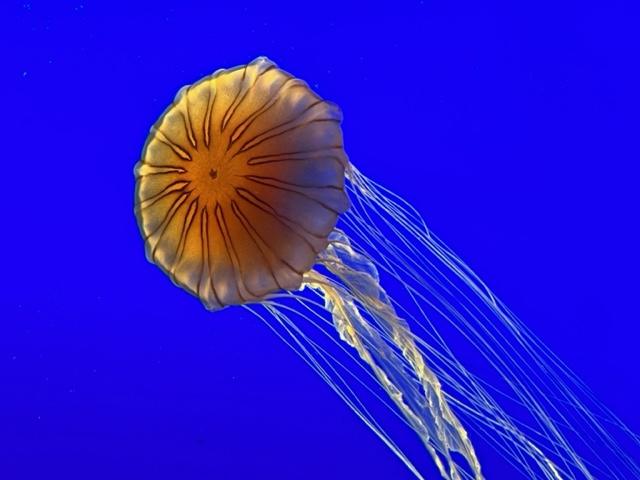
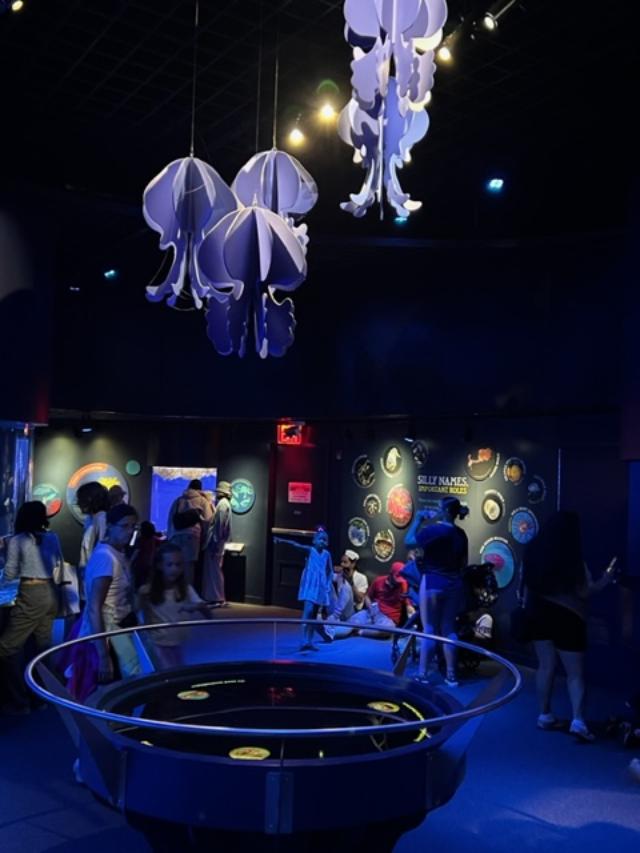
The new “Spineless” exhibition shows all the jelly fish and related species.

The “Spineless” exhibition

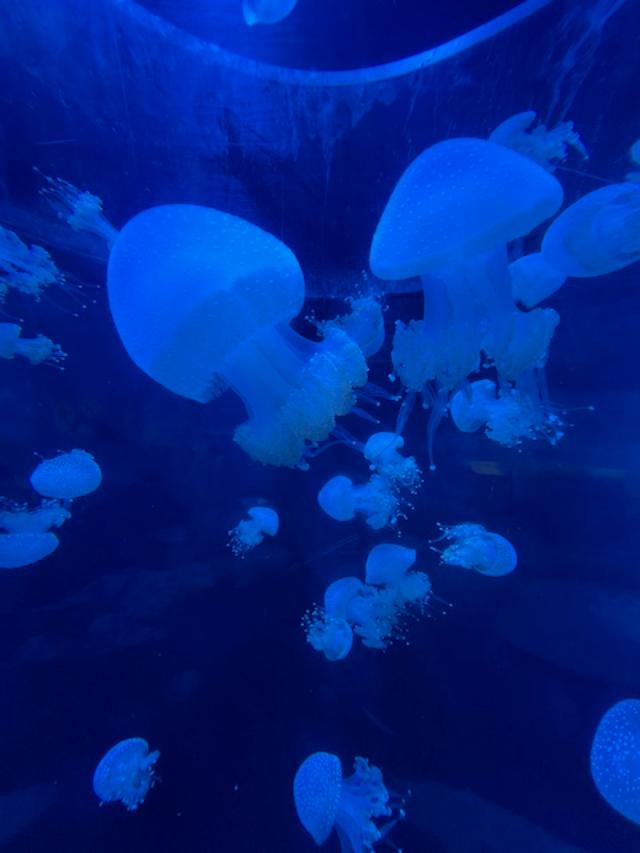
The beautiful jelly fish at the aquarium.

The “Spineless” exhibition

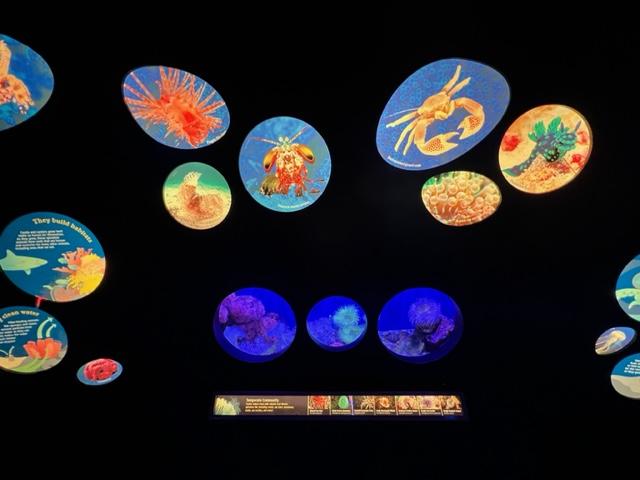
The different creatures of the deep.

The Jellyfish tank

The Jellyfish are amazing to look at in the tank

There were all sorts of tanks displaying many different types of tropical fish and corals that are exotic and very much endangered. We are beginning to destroy their habitants.

The fish habitats

As part of the new building there are also several new eating establishments at the aquarium including the new Oceanside Grill that I have not visited yet (it was closed on my last visit) as well as The New York Bite food truck (which was also not opened). The most impressive restaurant is the Oceanview Bites on the second floor of the Ocean Wonders building. This beautiful new restaurant has an interesting but somewhat routine menu with prices usual to an aquarium but offer the most spectacular views of the ocean and of Coney Island. Do not miss just walking up to the restaurant in the circular pathway for the views alone.

The NY Aquarium is a treat in of itself and a great excuse to visit Coney Island. Don’t miss the rest of the island’s amusements and museums while you are there.

The NY Aquarium

History of the New York Aquarium:

(this information is provided by a combination of the NY Aquarium and Wiki and I give them full credit for the information)

The New York Aquarium is the oldest continually operating aquarium in the United States, having opened in Castle Garden in Battery Park in Manhattan in 1896. Since 1957, it has been located on the Reigelmann Boardwalk in Coney Island. The aquarium is operated by the Wildlife Conservation Society (WCS) as part of its integrated system of four zoos and one aquarium, most notably the Bronx Zoo. It is accredited by the Association of Zoos and Aquariums (AZA).

The sea lion tanks

As part of the WCS, the aquarium’s mission is to save wildlife and wild places worldwide through science, conservation action, education and inspiring people to value nature.

The facility occupies 14 acres and boasts 266 species of aquatic wildlife. Its mission is to raise public awareness about issues facing the ocean and its inhabitants with special exhibitions, public events and research. The New York Seascape program, based out of the aquarium, is WCS’s local conservation program designed to restore healthy populations of marine species and protect New York waters, which are vital to the area’s economic and cultural vitality.

The penguin tank

The Penguin exhibition on the outside

On June 6, 1957, the Aquarium opened at its new location in Coney Island. The new site of the New York Aquarium is the home of the WCS New York Seascape program, the society’s research and conservation program focusing on nearby rivers, harbor and ocean from Cape May, NJ to Montauk, Long Island.

The Shark Exhibition

The new “Shark” exhibition tunnel

The New York Aquarium:

The Shark exhibition

https://nyaquarium.com/things-to-do/exhibits/ocean-wonders-sharks

The Shark tanks

The shark tanks

The shark tanks

The shark tanks

The importance of sharks in nature

The Shark Tank

The aquarium kept an orca briefly in 1968 and a narwhal in 1969. Both reportedly died of possible pneumonia. The aquarium’s beluga whales were transferred to the Georgia Aquarium in 2007 as part of a breeding program. In September 2011, the aquarium named its new electric eel Wattson and in March 2012, it launched a sea horse breeding program.

In October 2006, the New York Aquarium announced the finalists to a competition to develop a more inviting and visually prominent exterior for the aquarium. In March 2007, the winning design by firms WRT and Cloud 9 was selected, which featured an enclosure resembling a whale over the aquarium. However, in March 2008 that concept was scrapped due to concerns over a new exhibit based on sharks was announced. The massive 784,000 US gallon exhibition, Ocean Wonders: Sharks! was originally scheduled to break ground in November 2012 and open in 2015.

The Penguin exhibition

The Penguin tank

The penguin tanks

A penguin ready to take a dive.

However, the New York Aquarium was significantly damaged by Hurricane Sandy in October 2012, which severely flooded the facility and shut down power. A small group of WCS staff who remained onsite during the hurricane were able to save 90% of the animals in the collection. As a result, the exhibition opened June 30, 2018, becoming the first major exhibition at the New York Aquarium to open after Hurricane Sandy.

The Shark tank’s fish display

Disclaimer: this history of the NY Aquarium is taken from Wiki and I give them full credit for this information.

The Sculptures in the NY Aquarium in 2024:

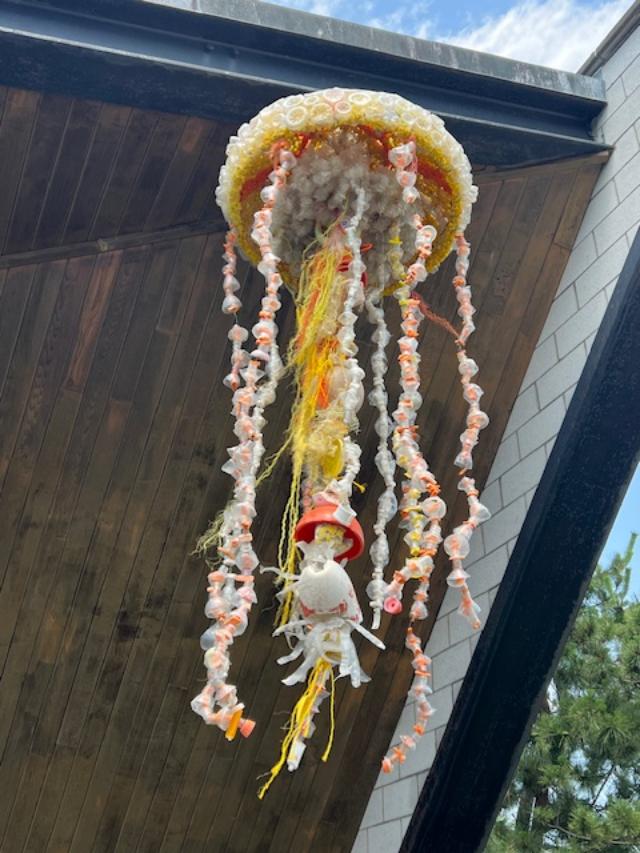
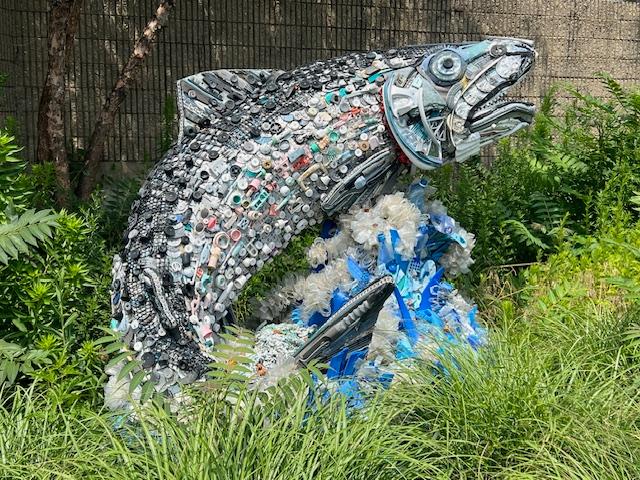
These sculptures were at NY Aquarium by Washed Ashore

The sign for Leo the Jellyfish

The Leo the Jellyfish sculpture

The Angus the Longhorn Cowfish sculpture sign

The Angus the Longhorn Cowfish sculpture

The Nora the Salmon sculpture sign

The Nora the Salmon sculpture

The Maggie and Charlotte Adele Penguins

The Maggie and Charlotte Adele Penguins sculpture

The Chompers the Tiger Shark

The Chompers the Tiger Shark sculptures

The Penguin sculpture

The artworks were all made of items that were thrown in the ocean and plastics that are thrown in the ocean. Washed Ashore created these works to show what is thrown in ocean and how it affects the wildlife in the oceans.

The boardwalk outside the aquarium

The beach outside the aquarium

Private Members Night at the NY Aquarium:

Members Night at the NY Aquarium:

The NY Aquarium held a Private Members Night for the members of the Wildlife Conservatory in July of 2026. Because of the wild fires in Canada, the air in New York City was not that good and that’s what probably kept the crowds away. was pretty bad and the crowds were light outside. Still, the aquarium planned a lot of family events and it was fun to walk through the exhibitions without dealing with crowds.

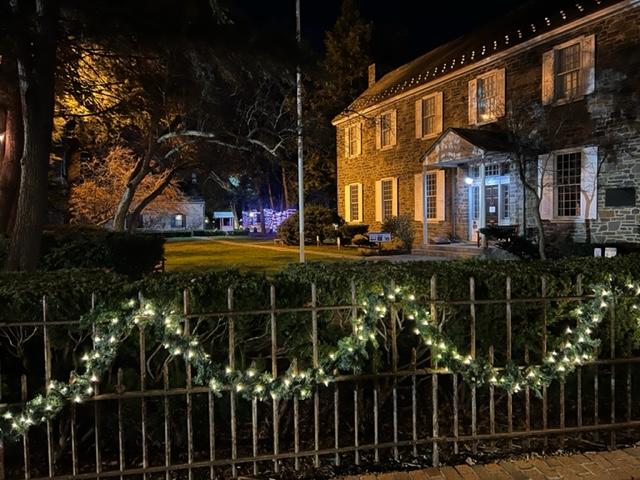
The front of the aquarium the Members Night

The aquarium at the beginning of the night

The crowds were mostly made up of families with small children and a lot of the outdoor activities were geared to them with face painting, chalk art displays and a Mermaid on roller skates who skated the courtyard making colorful bubbles of all sizes. It was fun seeing kids be kids without cellphones.

The Chalk Art that evening was enjoyed by everyone

The creativity of the art

The kids were really creativity

We also had a Mermaid skating around making bubbles that the kids really enjoyed. There were bubbles of all kinds floating around the courtyard. She was having as much fun as the kids who were chasing them around popping them. I thought it was out of the scene of a 1970’s film. It is fun to see those simple things still be so popular.

The Mermaid entertaining the children who attended the event

The Mermaid entertaining the kids

Bubbles were all over the aquarium and it was pretty cool

Then at 6:00pm, we had the Seal Show in the Aquacade but because of the heat and the smoke from the wildfires made the air not so good to stay outside. The breezes were nice and cleared much out but it was still not the best to sit for long periods. The show was fun but was quick.

The Seal Tank that evening

The sealions are actually ‘native New Yorkers’ who were born in captivity in the aquarium and know their stuff

The seals were talented and disciplined and entertained the crowds

After the show was over, I got another chance to walk through the indoor exhibitions to see the Shark exhibition and the Hudson Canyon’s Edge exhibition. Watching the fish, sharks and corals move and sway and it was very interesting to know that it is really down there.
Hudson Canyon’s Edge

https://nyaquarium.com/things-to-do/events/hudson-canyon

The corals of the sea being grown at the aquarium

The view of the sea

The full tank of fish and sharks. Is this was what was really in the canyon?

The end of the evening we could see the blood moon or was that the sun? The air was so bad from the Canadian wild fires you could see it through the whole City. Being by the shore, the breezes really did help.

Still it was a nice evening and it was fun to walk around the exhibits without the crowds. It was fun to watch the families having a good time and it was a nice evening.

This is why being a Member of the NY Wildlife Conservatory is so much fun. You get to visit all the parks with your membership and get to see the exhibitions on your own time. You also learn a few things about Mother Nature and the affects of the climate on it. I always enjoy a trip to the aquarium.

The Senate House                                                                      296 Fair Street                                                                Kingston, NY 12401

The Senate House 296 Fair Street Kingston, NY 12401

The Senate House

296 Fair Street

Kingston, NY  12401

(845) 338-2786

http://www.palisadeparksconservancy.org

http://senatehousekingston.org/

Open: Sunday 1:00pm-5:00pm/Wednesday-Saturday 10:00am-5:00pm (April 15-October 31). Open by Appointment only (November 1-April 14)

Fee: Adults $4.00/Seniors (62+) $3.00/Children under 12 and under Free

My review on TripAdvisor:

https://www.tripadvisor.com/Attraction_Review-g48003-d3225491-Reviews-Senate_House_State_Historic_Site-Kingston_Catskill_Region_New_York.html

The recently reopened Senate House in 2023

I recently spent my afternoon at the Senate House and Museum in Kingston, NY taking a tour of the museum and the House next door. The Senate House itself had just finished its renovation and the gardens were in full bloom in 2023. It was a quiet afternoon, and I was the only patron for most of the afternoon. The grounds were full of beautiful foliage and flowers, so it was nice to walk around the grounds.

The Senate House story board

The Senate House had just reopened in 2023 after almost a four year renovation and because of the closure during COVID. The grounds are very pretty and well-landscaped and the outside has had a lot done to the gardens. The house was built for merchant Abraham Van Gaasbeek and his family. It stayed in the family for generations.

The Senate House at 296 Fair Street

We were able to tour the inside of the house and see the renovations that the State of New York made on this important structure. The home has been renovated by the state but the tour guide told us not with the historical integrity it should have had. It was not to the total interpretation of the life in the house. Still, it told the story about the people that lived there.

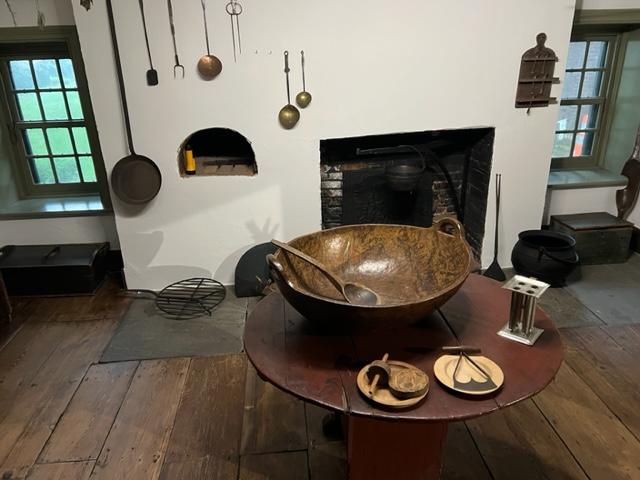
The Senate House Kitchen

Here you see the beehive oven, the working fireplace and many household items including waffle makers, cookie molds and candle making tools. The daily household tasks would be time consuming.

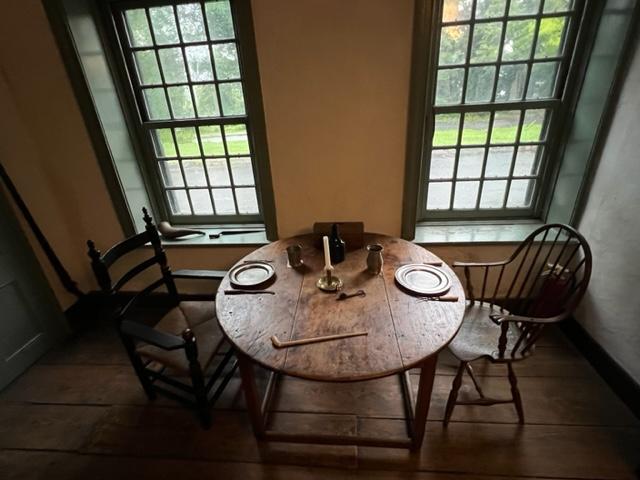
The Dining Space

The bedroom

In the original part of the house, the dining space and bedroom would be in a one room section of the home and as the family got larger, the house was added on to on both sides.

The Parlor

The Parlor was the fanciest room in the house with the best furnishings, decorations and a place of social interactions with guests. This rooms was for adult use at that time.

The Meeting Room for the leaders in change.

This was the room where plans by the patriots were made that changed the course of New York and the rest of the country. Now that the Senate House home is open again, you get a feel for what these people must have went through in developing the country during the Revolutionary War years.

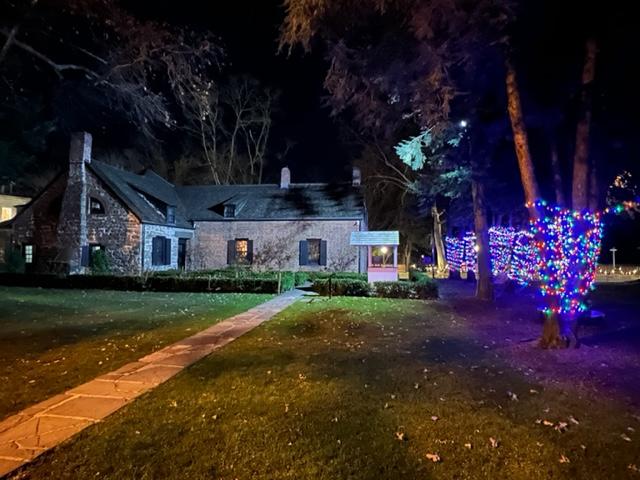
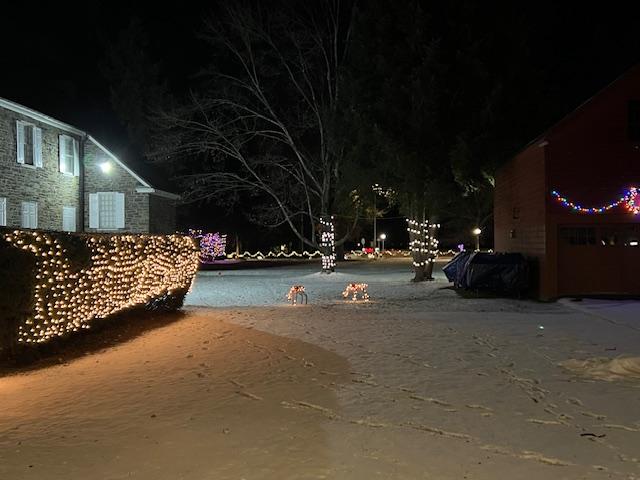
When I visited the Senate House at the holidays for the “Snowflake Festival”, it was still closed for renovation but the grounds were open for touring, music and for a visit with Santa. It was a magical night on the grounds of the historical site and people had a nice time that evening. The grounds and the other buildings were decked out for the holidays.

The Senate House decked out for the Christmas holidays at the “Kingston Snowflake Festival” in 2022

The Senate House property decorated for the Kingston Snowflake Festival in 2022

Santa’s visit at the Senate House property in 2022

The history of the Kingston Stockade section of the city.

The main part of the park is the Senate House Museum, which is broken into three sections. The right side of the museum is the history of the City of Kingston and the matching artifacts. There is a description of manufacturing, merchant class and its military prominence. Here I learned about the growth of Kingston and its founding, its strategic spot on the Hudson River in the early colony, its role as diplomats to the Native Americans, which was not so pleasant and its growth after the war.

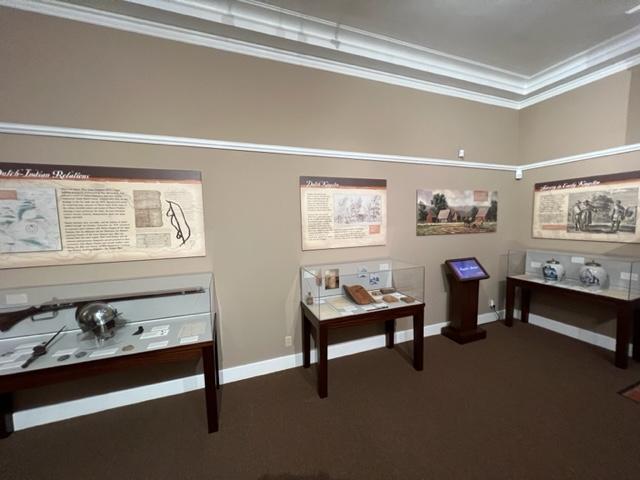
The first floor exhibitions on early life in Kingston

The history of the City of Kingston is described with the Native American settlements and the trade with the Dutch, the unsettling relationships that the two groups had with each other, the War years, the growth of industry and trade in early New York and manufacturing in the area.

The Native American exhibition

Early manufacturing and life in Kingston

The Artist’s sign

The Vanderlyn Exhibition of artist John Vanderlyn’s art

Artist John Vanderlyn’s works are featured on this part of the museum.

The left side of the museum is dedicated to the locally born artist, John Vanderlyn. His paintings line the walls of the museum of the artist at different stages of his career. His work was ahead of its time for the area, and it was noted in the collection that he forced himself to commission portraits to survive. His works advanced for the time because of his studying abroad now line the walls of the best museums in the country.

The exhibition of John Vanderlyn’s portraits

Artist John Vanderlyn’s bio in the museum

Members of the extended Vanderlyn family portraits

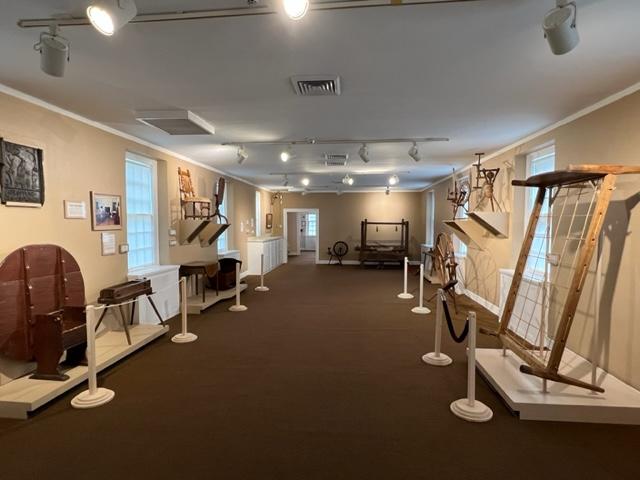
The second floor holds the furniture that is not historically correct with the Senate House and comes from different time periods. There is furniture, beds and chairs, spinning wheels, chamber pots and all sorts of accessories for the home and their uses in everyday life. Vintage furnishings with explanations on their use are a big part of the exhibit.

Artifacts from the past are displayed here

The everyday items used to spin material and create clothing

The Loughran House next door houses more of the furniture of the house and has a new exhibition “Back to the Future: The Evolution of Senate House”. This houses artifacts from the house.

The Senate House property during the “Kingston Snowflake Festival” in 2022

The Senate House property during Christmas 2024

The Senate House property during Christmas 2024

History of the Senate House:

(From Wiki/Office of Parks, Recreation and Historic Preservation pamphlet)

Amidst the turmoil of a British military invasion in the fall of 1777, the elected representations of rebellious New Yorkers met in Kingston to form a new state government. While convened in Kingston in September and October, New York’s first Senate met in the simple stone house of merchant Abraham Van Gaasbeek.

Here they adopted a system comprising of a senate, assembly, governor and judiciary that still exists today. Every one of the assembled delegates risked his life and property by being so openly disloyal to the Crown. Indeed, all were forced to flee for their lives when the British attacked and burned Kingston on October 16th.

While convened in Kingston in September and October, New York’s first Senate met in the simple stone house of Abraham Van Gaasbeek, a prosperous merchant trader who had suffered financial losses as a result of the war and personal losses in the recent deaths of his wife, Sara, his daughter and infant granddaughter. It was Sara’s grandfather, Wessel Ten Broeck, who built the original section of the house in 1676.

At first called Wiltwyck, Kingston was the third “city” established in the Dutch Colony of New Netherland. Planned and developed by the Dutch Governor Peter Stuyvesant in 1656, the town was renamed Kingston after the colony was seized by the English in 1664.

Wessel Ten Broeck’s one room Dutch style house was enlarged by succeeding owners in the 18th century. Each change reflected the increasing fortunes of the Ten Broeck/Van Gaasbeek family and demonstrated a gradual acceptance of English styles and customs over the persistent influence of the early Dutch. Kingston at the time of the American Revolution was still a noticeably “Dutch” town and most of its citizens supported the American cause. British Major General John Vaughan justified his destruction of the city because it was a “nursery for almost every villain in the country.”

In 1887, to recognize Senate House’s role in the formation of New York State, New York State acquired the property, which quickly became a vital community museum. A two-story Museum Building was constructed in 1927 to house and display the site’s burgeoning collection. Among its treasures are: major works by John Vanderlyn and other members of the Vanderlyn family of Kingston. The museum also includes the site’s popular new exhibit: “Kingston Stockage: New Netherlands’ Third City,” discussing Kingston’s early history.

(New York State Park History)

Senate House V

The Kingston Stockade: The City’s formation from the beginning

Japan Society 333 East 47th New York, NY 10017

Japan Society

333 East 47th Street

New York, NY  10017

(212)  832-1155

https://www.japansociety.org

Open: Monday-Friday 10:00am-6:00pm/Saturday & Sunday Closed

Fee: Depends on the event; See the website

The front of the Japan Society on 333 West 47th Street.

I recently visited the Japan Society for the ‘Japan Cuts’ film festival 2019 to see four films as part of the festival. I had visited the Society years ago for a ‘Monsters’ exhibition which coincided with the dropping of the Atom Bomb. It was told to me during the tour of the exhibition that the Godzilla movies were the Japanese reaction to the dropping of the bombs and the effects of nuclear was on nature.

Japan Society III.jpg

The inside lobby  of the Japan Society

This time around it was a little more upbeat. I went to see new films by Japanese directors who are looking at contemporary culture a little more differently that film makers of the past. I was most impressed with “Dance with Me”, a light weight musical that reminded me of 1960’s musicals that came out in the United States and “Whole” about Japanese who come from mixed backgrounds and their role in society. It was nice to sit back and watch the films and participate in the Q & A’s.

Japan Society Film Festival

My favorite scene from “Dance with Me” “Happy Valley”

It was also nice to walk around the building to see the indoor gardens and pools that are located in the lobby area of the building. The building does have a feeling of Ying and Yang. There will be more exhibitions in the Fall.

Japan Society IV.jpg

The inside of the lobby of the Japan Society

The opening film “Dance with Me”

The Q & A at Japan Cuts for “Dance with Me”:

I recently visited the Japan Society for the “Made in Tokyo” exhibition on the development of architecture in the City of Tokyo between the 1962 and the 2020 Olympic Games. The exhibition showed the development and progress of the City since the bombings in WWII and how the City has rethought  the building and rebuilding of the City since.

Japan Society V

“Made in Tokyo”

Just like in the United States old department stores and office buildings are finding new use and older buildings in fringe and outside rural areas are becoming tech hubs. It was interesting so see how they were reworking old turn of the last century buildings and homes as incubators for the ‘computer age’.

Japan Society VII

The “Made in Japan” exhibition is closing at the Japan Society on January 26th, 2020. If you like the history of architecture this is an exhibition not to be missed.

Japan Society VI

The “Made in Tokyo” exhibition at the Japan Society

I recently went to the Japan Society for the screening of the famous movie, “Ringu” which is the original version of the American film, “The Ring”. It is rarely shown, and you can’t find it on YouTube or in the local libraries, so it was a treat to see this film. It was also the first time I had been in the museum since COVID closed everything down and it was nice to visit again.

Guess what I found on YouTube the next morning: “Ringu” the comparison:

Still, it was nice to go to the museum again and just relax for the evening.

The Trailer of “Ringu”

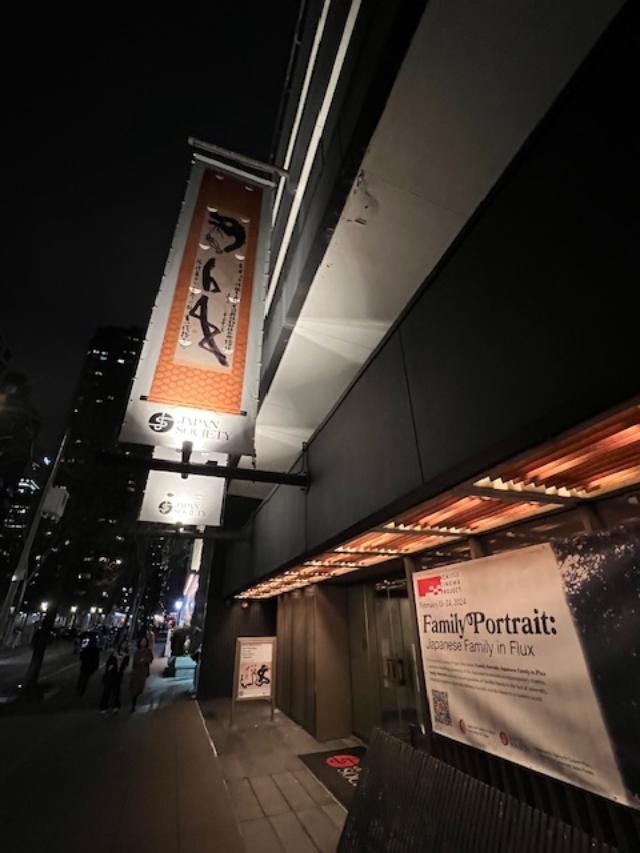
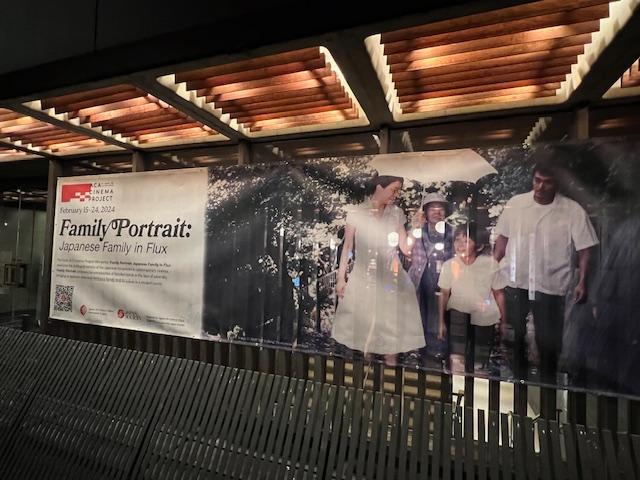
I recently went to see the “Family Portrait: Japanese family in Flux Series” in 2024 on some of the more contemporary films of Japan from the 1980’s and 90’s that are outside the studio system. These films dealt with real issues that most studio films don’t want to touch. I saw a film about a woman with terminal cancer and all the secrets of her past came out and the problems she had to face when the end was coming. Many twists and turns. The films dealt with these issues in a mature way and the series was very successful.

The sign for this amazing series of films.

The Japan Society mission:

The Japan Society is a non-profit organization formed in 1907 to promote friendly relations between the United States and Japan. Its headquarters, the youngest landmark building in New York was designed by Junzo Yoshimura and opened in 1971 at 333 East 47th Street near the United Nations. With a focus on promoting “arts and culture, public policy, business, language and education,” the organization has regularly held events in its many facilities including a library, art gallery and theater since its opening. After suspending all activities during World War II, Japan Society expanded under the leadership of John D. Rockefeller III (Wiki).

History:

In 1907, Tamemoto Kuroki and Goro Ijuin were chosen to represent Japan at the Jamestown Exposition. They attended a welcome dinner in New York with Japanese ambassador to the United States, Shuzo Aoki, where there was talk of forming an organization to promote US-Japan relations in the city. Two days later at a luncheon held by Kuroki, Japan Society was born. The organization would be run by Aoki, then Honorary President of the Japan Society of the UK and John Huston Findley.

Japan Society spent the next forty years hosting events in honor of Japanese royalty, giving annual lectures on a wide range of topics and presenting art exhibits that drew in thousands of New Yorkers. In 1911, Lindsay Russell, another founding member of the society and later president, met with Emperor Meiji and spent his visit to Japan encouraging more societies to form there and throughout the United States.

Japan Society was soon incorporated under New York law and finally found a home near one of Russell’s work offices, though it continued to relocate throughout its history before its current headquarters was opened in 1971. At this time, Japan Society and its members began to express interest in improving teaching about Japan in the United States. The organization began sponsoring trips to the country, publishing books and sent a report to the Department of Education about the portrayal of Japan in American textbooks.

It remained active during World War I, operating as it had for the last seven years but the organization became more political when it began associating with the Anti-Alien Legislative Committee, an advocacy group that spoke out against yellow peril. Russell and Hamilton Holt, another founding member used the organization’s publication to defend all of Japan’s actions at the time. Unbeknownst to anyone at the time, even one of Japan Society’s writers secretly worked for the Japanese government with the task of improving Japan’s imagine in the United States. The organization eventually realized the dangers of taking sides and by 1924 stopped publishing any political commentary.

By the 1930’s, membership had dropped significantly due to financial difficulties and the Second Sino-Japanese War. Following the attack on Pearl Harbor in 1941, Henry Waters Taft immediately resigned as president after serving  from 1922 to 1929 and again from 1934. Russell also stepped down as one of Japan Society’s directors. All activities were suspended and would not resume until the Treaty of San Francisco was signed in 1951.

John D. Rockefeller III served as president from 1952 to 1969 and then as Chairman of the Board until his death in 1978.  He accompanied John Foster Dulles on his trip to Japan that eventually led to the signing of the 1951 treaty. Rockefeller, a supporter of the Institute of Pacific Relations, who visited Japan in 1929 during one of its conferences, wanted to contribute to bettering US-Japan relations after the war and believed there needed to be non-governmental organizations like Japan Society in each country in order for such friendly relations to exist.

Under Rockefeller’s leadership, Japan Society expanded and talk began to find a permanent headquarters for it. It shared offices with another Rockefeller-led organization, Asia Society but as the two organizations continued to grow during the 1960’s,  it became increasingly clear that Japan Society needed its own building. After receiving donations from Rockefeller and other members, construction began on “Japan House” in 1967. Designed by Junzo Yoshimura, whose work also includes Asia Society’s headquarter, it became the first building in New York of contemporary Japanese architecture. On September 13, 1971, it was finally opened to the public after a ceremony attended by Prince Hitachi. He echoed Russell’s first words about Japan Society, calling for “closer people-to-people” contact between countries.

Japan Society II

Japan Society building

(This information was taken from Wiki and I give them full credit for the information. I also included information of Japan Society).