Category: New York City Parks and Playgrounds

Van Cortlandt House Museum in Van Cortlandt Park at Broadway & West 246 Street                                              Bronx, NY 10471

Van Cortlandt House Museum in Van Cortlandt Park at Broadway & West 246 Street Bronx, NY 10471

Van Cortlandt House Museum

Van Cortlandt Park at Broadway & West 246 Street

Bronx, NY  10471

(718) 543-3344

infor@vchm.org

Open: Tuesday-Friday 10:00am-4:00pm/Saturday & Sunday 11:00am-4:00pm

Admission: $5.00 for Adults/$3.00 for Seniors & Students/Children under 12 are free/General Admission is free on Wednesdays. Guided and group tours are available.

Review on TripAdvisor:

https://www.tripadvisor.com/Attraction_Review-g47369-d103501-Reviews-Van_Cortlandt_House-Bronx_New_York.html?m=19905

The Van Cortlandt House:

Welcome:

Van Cortlandt House during Christmas time

The entrance of the Van Cortlandt House decorated for the Revolutionary era Christmas

I visited the Van Cortlandt House Museum for the their Annual Christmas Decorated House event. The mansion was decorated for Christmas in the 1700’s so it was not overdone as it would during the Victorian times. The front of the house entrance was done with sprays of holly, mistletoe above the door and garlands of pine around the banister and fireplaces. The windows had candles in them and the dining room was set for Christmas luncheon in post-Revolutionary War era.

Van Cortlandt House VI.jpg

Van Cortlandt House for Christmas is Post-Revolutionary War in 2019

The entrance hall welcomes you to a Revolutionary era holiday season

While most of the house is represented during the Dutch era with floors with no rugs, vintage furniture and decorations and the second and third floors are set for family entertainment. The first floor is set for entertaining for the holidays with the formal dining room, family parlor and the formal living room for games and dancing. The formal dining room was the only room decorated post-Revolutionary War era.

van cortlandt mansion xmas ii

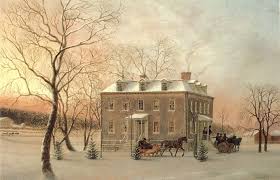
Van Cortlandt Mansion at Christmas 1800’s

The current entrance to the house from the back of the building

Until the Victorian era, Christmas was a more religious affair with church service in the morning and luncheon in the afternoon. Things were formal and less elaborate. The acts of gift giving, sleigh rides, tree decorating and card giving came during the affluence of Queen Victoria’s reign in the post Civil-War era. This is the reason why the house is decorated so simply and elegantly.

Dining Room set for Christmas lunch circa 1780’s

In 2019, the site celebrated the holidays with a Sinterklaas, a Dutch Christmas celebration, a candlelight tour and a reading from Santa Claus. Please check their website for more information on future events. The house was closed for most of the COVID years and nothing had been planned. The house was open in December of 2022 for touring again for the holidays but was not decorated as much as in the past.

In 2022, when the house reopened after a long period of COVID, the self-guided tours were back and you could tour the house at your own pace ($5.00 donation) and tour the three floors of furnished rooms. You can see how the family lived from the three generations that lived in the residence.

The tour starts at the front hallway where guests would be received for formal affairs and for business meetings with the head of the household.

You would be greeted by servants at the entrance of the home

On either side of the front hallway is the East and West Parlors where you would be directed where the family would receive you. The West Parlor would have been used for business calls and more informal meetings when meeting with the Van Cortlandt family. The family’s wealth would be on display with fine furniture, china and bric-a-brac that would show off the family’s merchant roots and business.

The West Parlor

The West Parlor decorated for Christmas

The East Parlor on the other side of the entranceway would have been used for more formal affairs. The East Parlor is where the family would formally entertain guests with dancing, music and card playing. This is where long evenings of entertaining would take place and the family would enjoy their holiday celebrations.

The East Parlor

The East Parlor decorated for the Christmas holidays

The Dining Room was toward the back of the hallway and was decorated in the Empire Design of the late 1700’s to early 1800’s. The look is very similar to styles used today and the wallpaper is a copy from one of the styles used by the family that was imported in from France. The table was set for Christmas luncheon circa the late 1780’s.

The Dining Room

The Dining Room at the Van Cortlandt House

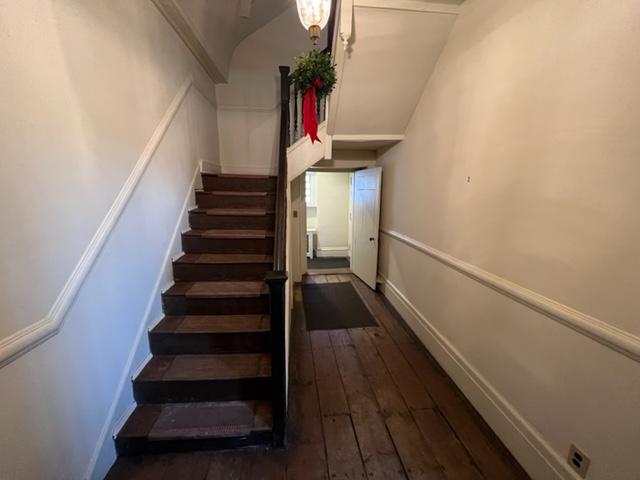
There are two sets of stairs to the second level of the house where the family bedrooms were located. There was the formal stairs and then there was the stairs that the servants used to go from floor to floor so that they would not be seen.

The steps upstairs to the second floor

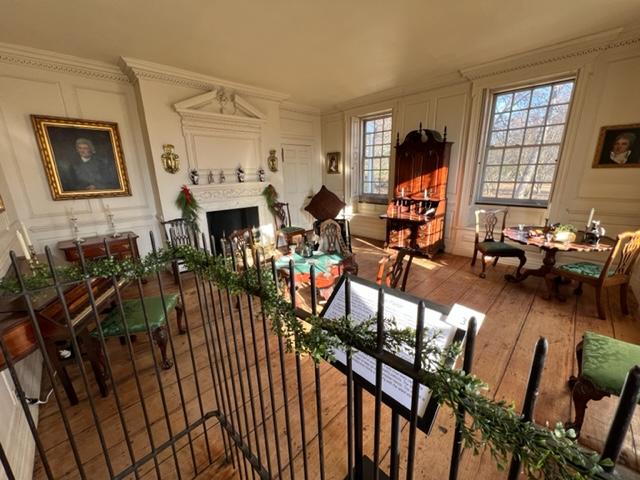
On the second floor of the home are the bed chambers of the family. The main bedrooms for the family were located here and then the nursery and servants quarters were located on the Third floor of the home.

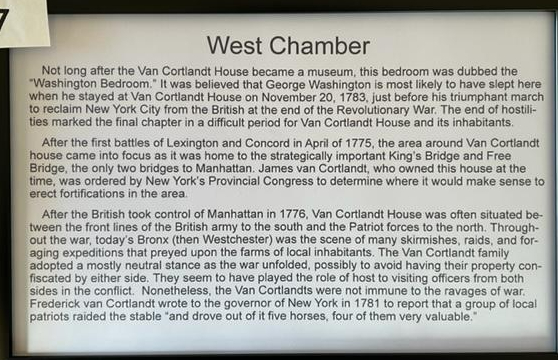
The West Chamber:

The bedroom

The ‘Washington Bedroom’ in the Van Cortlandt House

The East Chamber Bedroom:

The Bedroom:

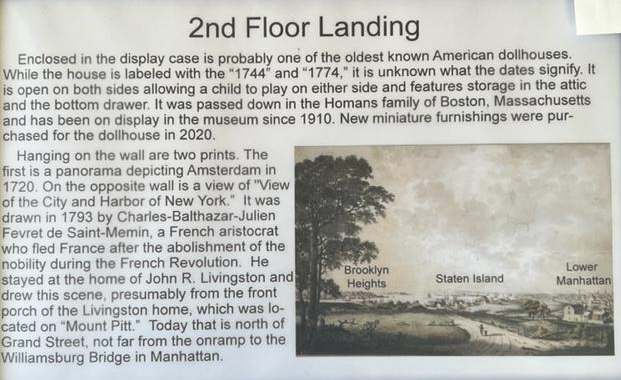
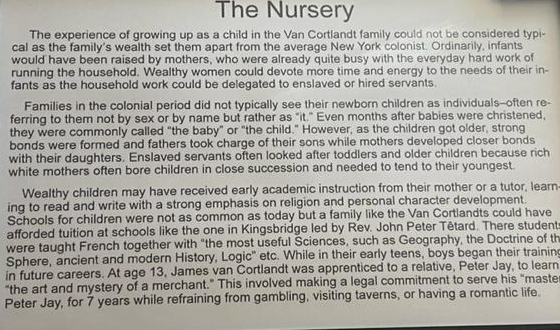
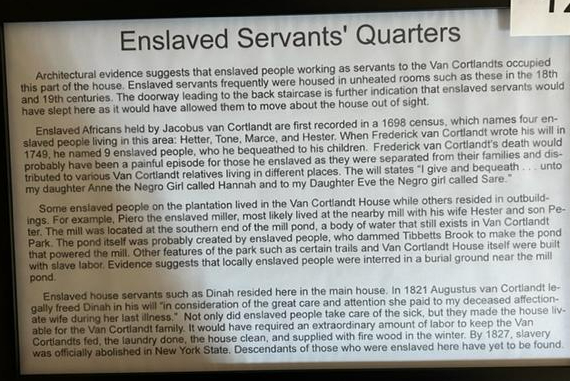
The Landing of the stairs to the third floor lead to the Nursery, an additional guest room and the enslaved servants quarters. These were kept out of site from the other members of the household. It is a reminder of the pecking order of the household and the conditions that people lived under at this time.

The Second Floor Landing leads to the nursery and servants quarters

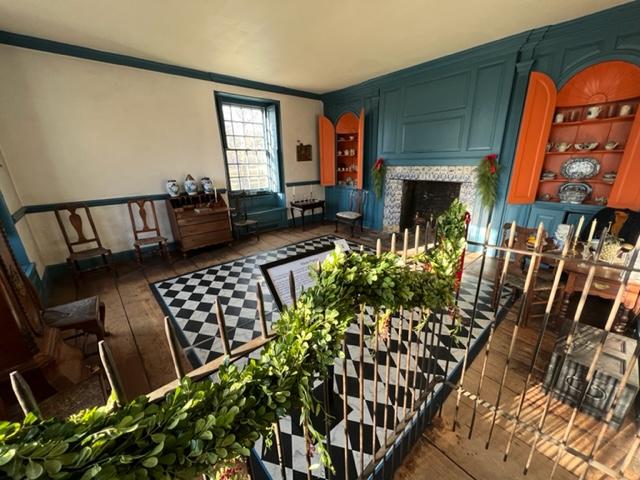
The Dutch Chamber was formerly a guest room that is used to show life in early Colonial New York City:

The Dutch Chamber:

The Dutch Chamber shows early life in Colonial America

The Second Floor Setup:

The Nursery:

The nursery set up room:

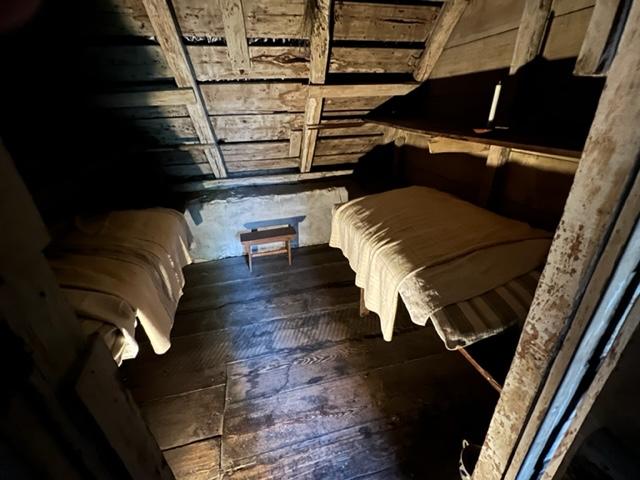
The servants quarters were to the back of the house and were not the most glamorous place to live in the house. There were drafty and not insulated. The amount of time a servant would be here would have been minimal.

The servants quarters:

The servants quarters:

History of the Van Cortlandt’s:

The Van Cortlandt House Museum, also known as Fredrick Van Cortlandt House or Van Cortlandt House, is the oldest surviving building in New York City’s borough of The Bronx. The Georgian style house, begun in 1748, was build of fieldstone by Fredrick Van Cortlandt (1699-1749) on the plantation that had been owned and farmed by his family since 1691. Fredrick intended the house to be a home for him and his wife, Francis Jay and daughters, Anna Maria, 14 and Eve, 13. His sons, Augustus, 21 and Fredrick, 19, were not intended to be permanent residents of the house.

Sadly, Fredrick died before the new house was completed. In his will written in 1759, Fredrick left the house to his son, James Van Cortlandt (1726-1781) and a lifetime tenancy to his widow, Francis Jay Van Cortlandt (1701-1780).

Van Cortlandt House IV.jpg

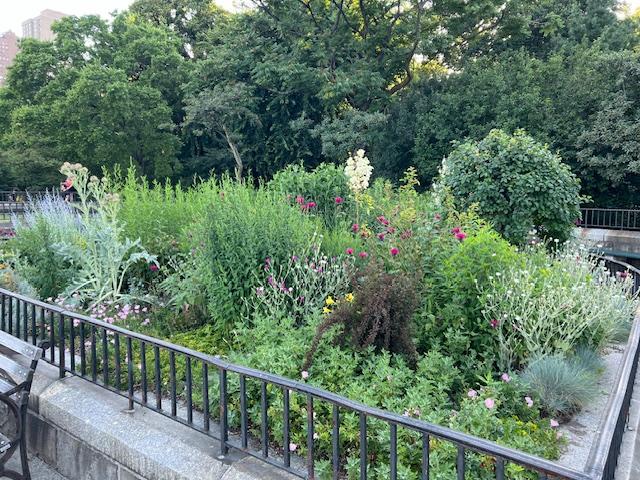
The Van Cortlandt House gardens in the Summer

The Van Cortlandt’s were a mercantile family prominent in New York affairs. Fredrick’s father, Jacobus, established a thriving wheat growing and processing business on the plantation including a grist mill for processing the wheat into flour and a fleet of shallow draft boats to carry the flour from the south end his lake down Tibbet’s Brook and out to the Harlem and Hudson Rivers to market. During the Revolutionary War, the house was used by Rochambeau, Lafayette and Washington.

(From History of Van Cortlandt House and Museum)

In 1887, after 140 years of occupancy by the Van Cortlandt family and the community of plantation workers, the property was sold to the City of New York and made a public parkland. Before the house became a museum, it saw a variety of uses including as a temporary police precinct house and as a dormitory for ranch hands responsible for taking care of a herd of buffalo.

Van Cortlandt House historic marker

By 1895, The National Society of Colonial Dames in the State of New York expressed their interest in restoring the house as a museum open to the public. There was only one obstacle keeping the Colonial Dames from this important project, there was no provision in the New York State Law allowing the stewardship of a publicly owned building by a private organization. Undaunted, the first Society President, Mrs. Townsend, took the Society’s cause to Albany where on May 22, 1896 in the 199th session of the New York Legislature, Chapter 837 was approved by the governor and passed by a 3/5 majority to become law.

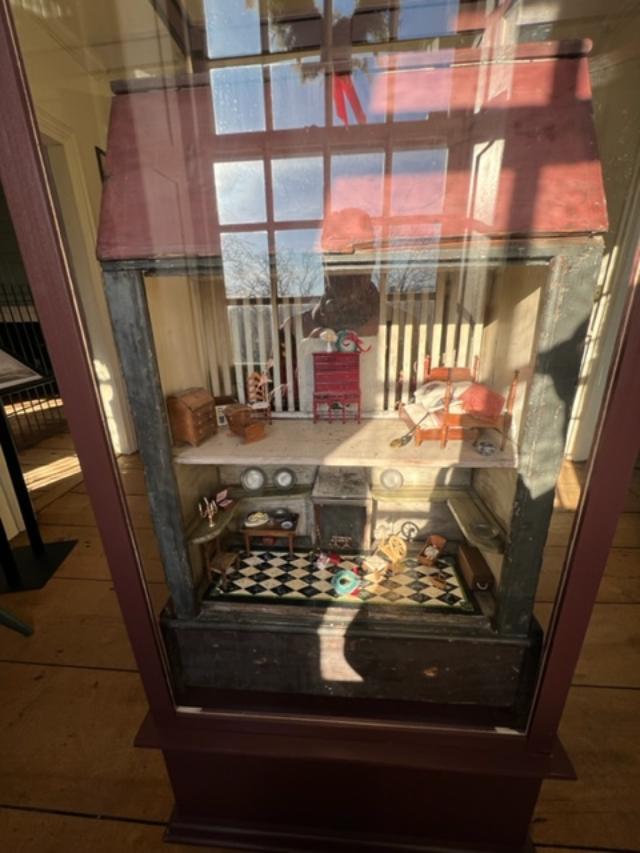
The Van Cortlandt House dollhouse

After nearly a year if repairs and restoration, Van Cortlandt House Museum was opened to great fanfare on May 25th of 1897. The original license agreement grained custody of the house to the National Society of Colonial Dames in the State of New York for a period of 25 years at a ‘peppercorn’ rent of $1.00 per year. Although the Society no longer pays the city rent, they remain, to this day as dedicated to Van Cortlandt House as they were in 1896.

Van Cortland Park.jpg

Van Cortlandt Park in the Summer Months

In 1967, Van Cortlandt House was added to the National Register of Historic Places and was designated a National Historic Landmark in 1967. The house was declared a New York City Landmark on March 15, 1966, recognizing the historic and architectural importance of both the exterior and interior.

(From the Van Cortlandt House Museum NSCDNY)

The Van Cortlandt House gardens during the winter of 2022

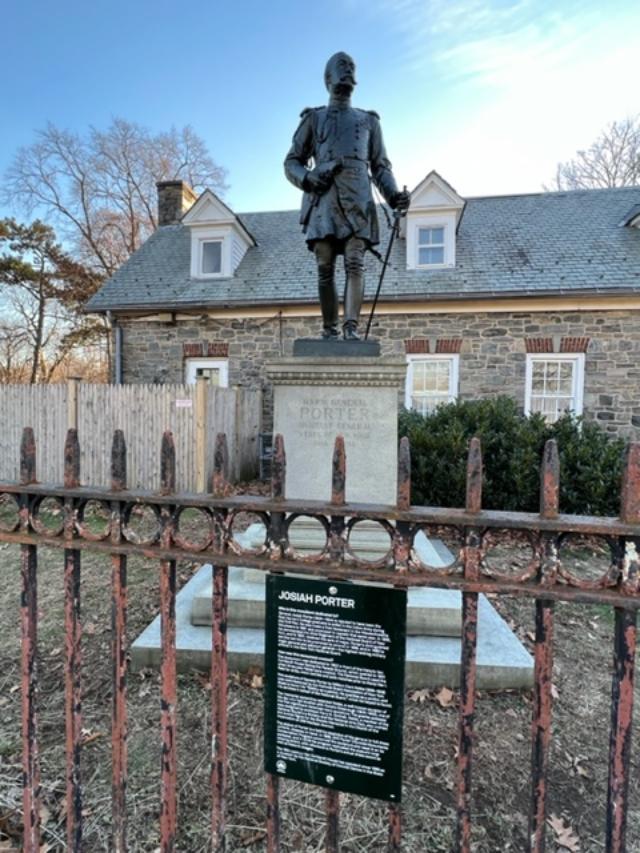
The General Porter Statute in front of the house

Charging Bull                                                 Bowling Green Park                                            New York, NY 10004

Charging Bull Bowling Green Park New York, NY 10004

Charging Bull

Bowling Green Park

New York City, NY  10004

http://www.chargingbull.com/

TripAdvisor Review:

https://www.tripadvisor.com/Attraction_Review-g60763-d1605557-Reviews-Charging_Bull_Wall_Street_Bull-New_York_City_New_York.html?m=19905

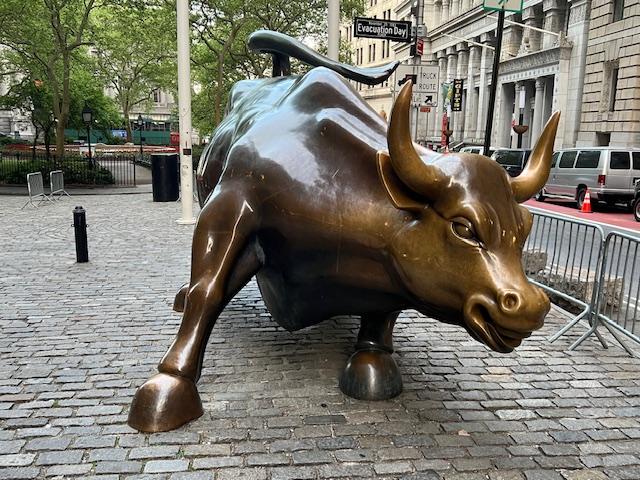
When you are in lower Manhattan and are visiting the Battery Park and/or Wall Street area don’t miss the Charging Bull statue by artist Arturo Di Modica. The artist created this piece of ‘guerrilla’ art after the Crash of 1987, when we were about to enter the depths of another major recession, one that went from the end of 1987 until the summer of 1995.

This interesting piece of New York history is actually a recent addition to the street art of New York City. The statue was created and cast in 1987 following the Crash and made its first appearance outside the New York Stock Exchange on December 15, 1989.

The bull according to the artist, “represents the symbol of the strength and power of the American people’ following the Crash. It has taken on many meanings since such as the power of Wall Street and the progressiveness of money and power in the Financial industry.

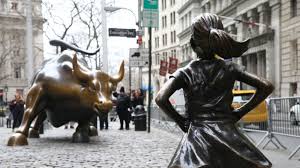
During the high tourist season expect to see the statue surrounded by tourist taking pictures in all directions. The statue of ‘Charging Bull’ is now paired with ‘Fearless Girl’ by artist Kristen Visbal. Some have commented that it has changed the meaning of the statue but I think it is how you interpret both works. Its best to visit and make your own opinion.

Fearless Girl Statue II

The ‘Charging Bull’ with ‘Fearless Girl’

While you are visiting the statue, take time to visit this historic section of Manhattan and visit the other sites that include Bowling Green Park, the Museum of the Native Americans, Frances Tavern and Stone Street as well as the boats to Governor’s, Ellis and Liberty Islands. It is a wonderful way to spend the afternoon.

Please refer to my blog, ‘MywalkinManhattan.com’- “Day One Hundred and Thirteen Tour of Historic Pubs and Bars in Lower Manhattan with the Cornell Club” for a full list of things to see in this section of the City.

History of Charging Bull:

Construction and installation:

The Bull by Bowling Green Park in the early morning hours.

The bull was cast by the Bedi-Makky Art Foundry in Greenpoint, Brooklyn. Di Modica spent around $360,000 to create, cast and install the sculpture following the 1987 stock market crash as a symbol of the ‘strength and power of the American people’. The sculpture was Di Modica’s idea and in an act of ‘guerrilla art’, Bedi Makky Art Foundry and Di Modica trucked it to Lower Manhattan. On December 15, 1989, they installed it beneath a 60 foot (18m) Christmas tree in the middle of Broad Street in front of the New York Stock Exchange as a Christmas gift to New Yorkers. That day, hundreds of onlookers stopped to admire and analyze it as Di Modica handed out copies of a flier about his artwork (Wiki).

NYSE officials called the police later that day and the NYPD seized the sculpture and placed it into a impound lot. The ensuing public outcry led the New York City Department of Parks & Recreation to reinstall it two blocks south of the Exchange in the Bowling Green, with a ceremony on December 21, 1989. It faces up Broadway at Whitehall Street (Wiki).

Confusion over ownership:

The sculpture technically has a temporary permit allowing it to stand on city property since the city does not own the sculpture but the temporary permission has lasted since 1989, when city officials said the new location would not be permanent. Art on loan is usually limited to a year’s display and although the city does not buy art, it does accept donations. A writer in the New York Daily News wrote in 1998 that the statue’s placement was ‘beginning to look a mite permanent.’ According to an article in Art Monthly, Di Modica as well as officials and New Yorkers, ‘view it as a permanent feature of Lower Manhattan (Wiki).

In 2004, Di Modica announced that the bull sculpture was for sale, on condition the buyer does not move it from its present location. Di Modica continues to own the artistic copyright to the statue. In 2006, Di Modica sued Walmart and other companies for illegally benefiting from his copyright, by selling replicas of the bull and using it in advertising campaigns. In 2009, Di Modica sued Random House for using a photo of the bull on the cover of a book discussing the collapse of financial services firm Lehman Brothers (Wiki).

Artist Arturo Di Modica:

Arturo Di Modica artist

Artist Arturo Di Modica

http://www.artnet.com/artists/arturo-di-modica/

Arturo Di Modica first conceived of the Charging Bull as a way to celebrate the can-do spirit of America and especially New York, where people from all over the world come regardless of their origin or circumstances and through determination and hard work overcome every obstacle to become successful. It’s this symbol of virility and courage that Arturo saw as the perfect antidote to the Wall Street Crash of 1987.

The artist was born in Vittoria, Italy in 1941 and studied at the Academia Del Nudo Libra in Florence, Italy in 1960. In 1973, he relocated to New York City to a Lower Manhattan space. ‘Charging Bull’ is his most famous piece (Artnet).


Bowling Green Park                                    Broadway & Whitehall Street                            New York, NY 10004

Bowling Green Park Broadway & Whitehall Street New York, NY 10004

Bowling Green Park

Broadway & Whitehall Street

New York, NY  10004

https://www.nycgovparks.org/parks/bowling-green

https://www.nycgovparks.org/parks/bowling-green/history

TripAdvisor Review:

https://www.tripadvisor.com/Attraction_Review-g60763-d136413-Reviews-Bowling_Green-New_York_City_New_York.html?m=19905

Bowling Green Park in Spring 2024

Bowling Green Park on the first day of summer 2024

I visited this wonderful park for my walking project, ‘MywalkinManhattan.com-Day 113-Walking the Historical Bars & Pubs of New York City’.

The entrance to the park.

This is one of the most fascinating parks in New York City and probably one the most historical in the shaping of the United States. Located on the grounds of the original Dutch settlement, this tiny park placed an important role in the confrontation of the Loyalist versus the Patriots when deciding who to support during the Revolutionary War.

The toppling of the King George Statue was the beginning of a new Republic. Along the historic fence which has been standing in the park since the late 1700’s are the markings where the tiny crowns were sawed off by the Patriots in defiance to the Crown.

Bowling Green Park III

The toppling of the statute of King George (parts of the statue are at the Museum of the American Revolution in Philadelphia, PA-read my blog on this.)

The exhibit at the Museum of the American Revolution in Philadelphia on the King George Statue

Now it is a resting spot for tired tourists off the boats from Ellis and Liberty Islands and for Wall Street workers who need a nice place to eat their lunch. It is still a relaxing little park with tree lined paths and a beautifully landscaped fountain area. In the later summer, the flowers are still in bloom and the colorful highlights of the trees accent all sides of the park and keep it private. Even in this secrete setting it is mind boggling of the fact that people put their lives on the line to establish this country right from this tiny park.

Bowling Green Park IV

Map of Lower Manhattan

Take time to walk through the cool paths of trees to the edges of the park, which are lines with historic buildings with decorative stone work and look at the beautiful statuary work on the old U.S. Custom House that now serves as the Museum of the American Indian. Take a quick tour of Stone Street just a few blocks away and see the development of the New York City after the Great Fire of 1823, which destroyed most of lower Manhattan.

Just at the tip of the norther part of the park is the famous statue of ‘Charging Bull’ a gift to the City by artist Arturo Di Modica to show the ‘strength of the American people’ and the now becoming famous statue of “Fearless Girl” by artist Kristen Visbal which was erected for International Women’s Day. Both statues have created quite the debate since they were both placed here in 1989 and 2017 and their fate is up to the City.
Take time to really see what all these symbols mean to the Bowling Green.

History of the Park:

The beauty of Bowling Green Park in the early morning hours.

The Bowling Green is New York City’s oldest park. According to tradition, this spot served as the council ground for Native American tribes and was the site of the legendary sale of Manhattan to Peter Minuit in 1626. The  Dutch called the area “the Plain” and used it for several purposes including a parade ground, meeting place and cattle market. It marked the beginning of Heere Staat (High Street, now Broadway), a trade route which extended north through Manhattan and the Bronx. In 1686, the site was designated as public property, when the City Charter put all ‘waste, vacant, unpatented and unappropriated lands’ under municipal domain (NYC Parks.org).

The historic marker for the park.

Bowling Green was first designated as a park in 1733, when it was offered for rent at the cost of one peppercorn per year. Lessees John Chambers, Peter Bayard and Peter Jay were responsible for improving the site with grass, trees and a wood fence “for the Beauty & Ornament of the Said Street as well as for the Recreation & delight of the Inhabitants of this City.”

A gilded lead statue of King George III was erected here in 1770 and the iron fence (now a New York City landmark) was installed in 1771. On July 9, 1776, after the first public reading in New York State of the Declaration of Independence, this monument was toppled by angry citizens who dragged it up Broadway, sent it Connecticut, melted it down and recast it as ammunition.

The exhibit at the Museum of the American Revolution in Philadelphia:

My review on TripAdvisor:

https://www.tripadvisor.com/Attraction_Review-g60795-d12163505-Reviews-Museum_of_the_American_Revolution-Philadelphia_Pennsylvania.html

My review on VisitingaMuseum.com:

The pieces of the statue are on display at the Museum of the American Revolution in Philadelphia

The pieces of the statue

Portions of the statue are held by the Museum of the City of New York and the New York Historical Society (which also possesses musket balls made from the statue’s head) (NYC Parks.org).

The park with the buildings in the background.

By the late 18th Century, Bowling Green was the center of New York’s most fashionable residential district, surrounded by rows of Federal-style townhouses. In 1819, the Common Council that neighbors could plant and tend the area in return for the exclusive use of the park by their families. By mid-century, shipping offices inhabited the old townhouses and the park was returned to more public use. Monuments installed in the park in the 19th century include two fountains (now gone) and a statue of New York’s early Mayor and later colonial Supreme Court Judge Abraham DePeyster (1896, by artist George Bissell). DePeyster was moved to nearby Hanover Square in 1976 and finally to Thomas Paine Park in 2014 (NYC Parks.org).

Bowling Green Park Spring 2024

Bowling Green Park Spring 2024.

In the first decade of the 20th Century, Bowling Green was disrupted by the construction of the IRT subway. The park was rebuilt as  part of citywide improvements made in preparation for visitors to the 1939 World’s Fair. Renovations to Bowling Green included removing the fountain basin, relocating the interior walkways, installing new benches and providing new plantings. Mayor Fiorello LaGuardia, Parks Commissioner Robert Moses, members of the Board of Estimate and local businessmen participated in the rededication ceremony held on April 6, 1939. Despite unseasonable late snow, the ceremony included a demonstration of colonial era lawn bowling (NYC Parks.org).

The tulips at Bowling Green Park in Spring 2024.

A 1976-77 capital investment restored Bowling Green to its 18th century appearance. Improvements included the redistribution of subway entrances, the installation of new lampposts and benches and landscaping. Publisher and philanthropist George Delacourte (best known for the Alice in Wonderland statue in Central Park) donated the park’s central fountain (NYC Parks.org).

The Spring time flowers at the Bowling Green Park.

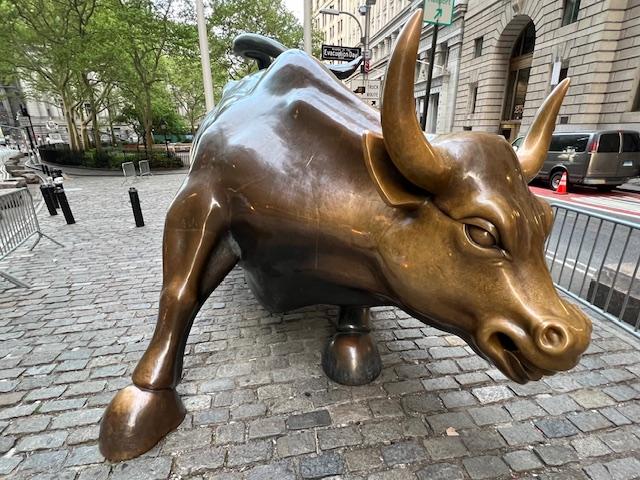
Since December of 1989, the statue of Charging Bull (1987-89) has been on display at the north end of the park. Its sculptor, Arturo Di Modica, says the three ton and a half bronze statue represents “the strength, power and hope of the American people for the future.” It has been linked to the property enjoyed by Wall Street in the past decade.

The park in the Summer of 2025

In 2004, the reconstruction of the park included new perimeter bluestones sidewalks and interior paths, landscaping, plantings and the re-sodding of the lawn. Antique-style gas lamps and hoof benches were also placed in the park with the addition of a new irrigation system for the parks fountain (New York Parks.org).

The “Charging Bull” sculpture.

Disclaimer: This information was taken directly from the New York City Parks.org site and I given them full credit for it. This is one of the special parks of the City so take some time to visit it while on your way to one of the other tourist sites or to Liberty Island or Ellis Island.

Gracie Mansion Carl Schurz Park                                                   East 88th Street and East End Avenue                                          New York, NY 10128

Gracie Mansion Carl Schurz Park East 88th Street and East End Avenue New York, NY 10128

Gracie Mansion

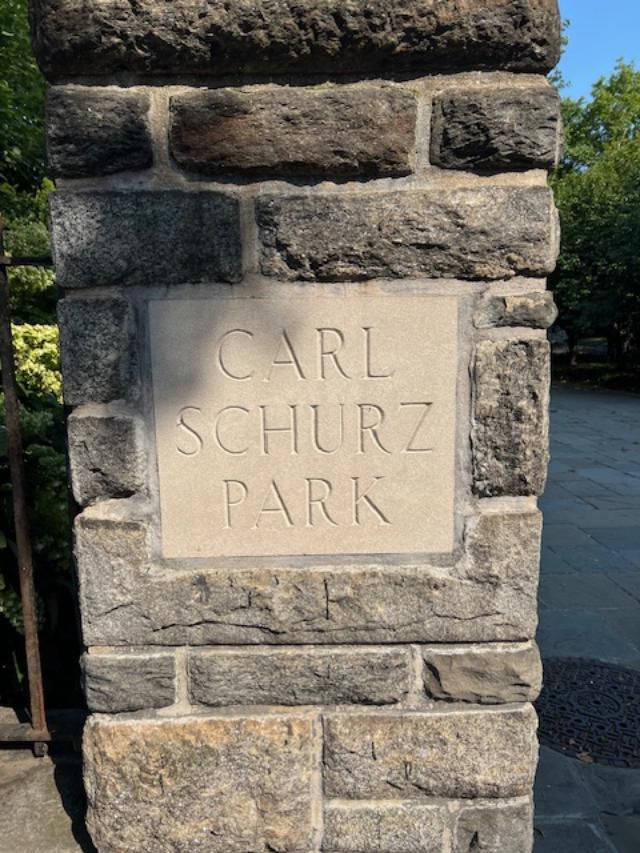
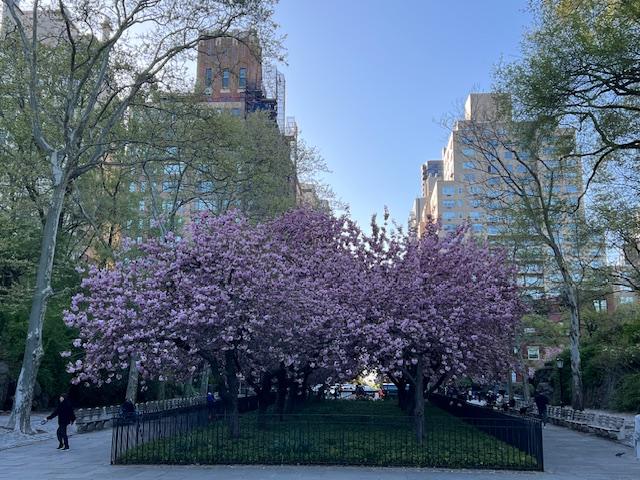
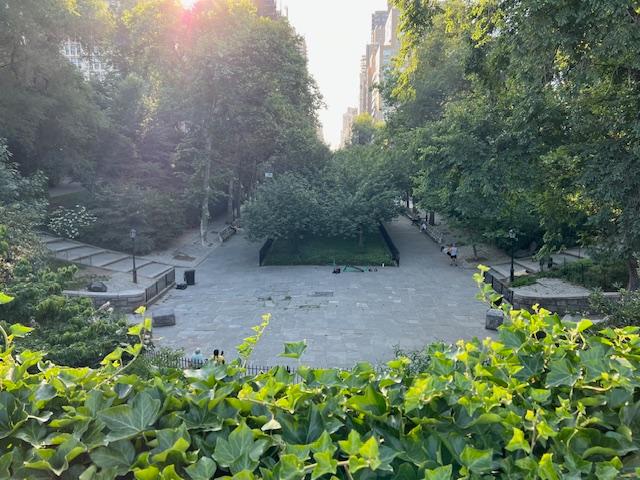
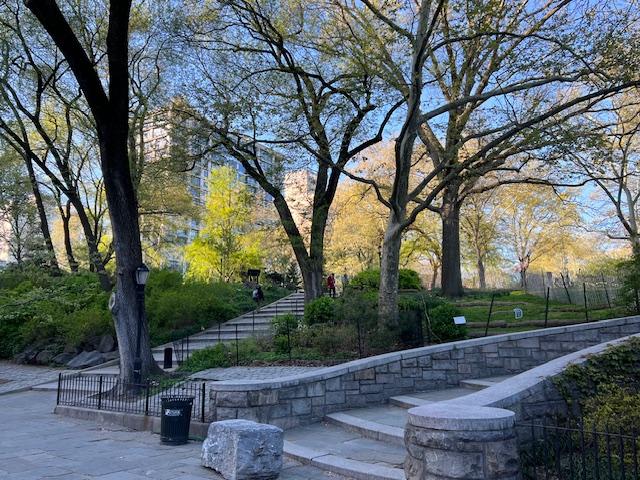
Carl Schurz Park

East 88th and East End Avenue

New York, NY  10128

(212) 570-4773

Hours: Mondays only-10:30am. 12:00pm and 1:30pm. See their website at www1.nyc.gov/site/Gracie/visit/visit page or gracieinfo@cityhall.nyc.gov

http://www.historichousetrust.org

https://www.nycgo.com/events/gracie-mansion-tours

https://www.graciemansion.org/

Admission: $10.00

TripAdvisor Review:

https://www.tripadvisor.com/Attraction_Review-g60763-d136688-Reviews-Gracie_Mansion-New_York_City_New_York.html?m=19905

Hours: There are free house tours at 10:30am, 12:00pm and 1:30pm on Mondays only. Check their website for availability. This is one of the few rare treats of New York if you can snare one of the tours of Gracie Mansion. It is a really interesting tour of the first floor rooms and entrance to the gardens of this historic home and the Mayor of New York City’s residence.

This was really a wonderful tour of the mansion given by a woman who has been a docent for twenty years and has seen the changes of the administrations. We went room by room and discussed how the Gracie’s then the Wheaton’s and the other families who lived here use the house until Robert Moses, the great City Planner, decided this should become the Mayor’s residence.

The front of the mansion at the start of the tour in the Summer of 2025

The formal gardens in front of the house in full bloom

The formal gardens to the side of the house near the parking lot

We started the tour on the front porch of the old Gracie Mansion

The tour consists of the first floor only and you can not take pictures inside with the exception of the Wagner Ballroom. We saw the formal entrance, the Living Room, Library, Dining Room and then the hallway leading to the front of the house to the Susan Wagner Ballroom, the newest extension of the house (the front section is the original section of the home built during the Gracie period).

The front rooms you are not allowed to take pictures so as you tour the Living Room, the Dining Room and Parlor rooms, you can not take pictures. When we left the older section of the home and entered the hallway to the Susan Wagner Ballroom added in the Wagner Administration, then you could take pictures in this room only (outside the gardens).

The inside of the Susan Wagner Ballroom

The Chandelier in the ballroom was from an old mansion downtown

The Bayard Fireplace from the Bayard Mansion once located in lower Manhattan

The Wagner Ballroom details

History of the Mansion and Gracie Family:

Gracie Mansion, built in 1799 by shipping merchant Archibald Gracie, is the last of the elegant county estates that once lined Manhattan’s East River shore. Gracie hosted elegant dinner parties at his country estate for visitors including Alexander Hamilton, Rufus King, Joseph Bonaparte and Washington Irving.

Archiebald Gracie

Archibald Gracie

https://en.wikipedia.org/wiki/Archibald_Gracie

Major losses during the years after the War of 1812 forced Gracie to sell his estate in 1823 to Joseph Foulke. In 1857, the Mansion was bought by Noah Wheaton. After Wheaton’s death in 1896, the City of New York appropriated the estate, incorporating ts 11 acres of grounds into the surrounding park that was renamed Carl Schurz Park in 1910.

After years as a comfort station and ice cream stand, Gracie Mansion became the first home of the Museum of the City of New York. When the museum moved to a larger building, Parks Commissioner Robert Moses convinced  City Authorities to designate the Mansion as the official residence of the Mayor. In 1942, Fiorello H. La Guardia moved into Gracie Mansion.

In 1966, the Mansion was enlarged with the construction of the Susan E. Wagner Wing, which includes a ballroom and two additional rooms. Under the guidance of the Gracie Mansion Conservatory, major restorations to the Mansion were undertaken between 1981 and 1984 and in 2002.

The 2002 restoration transformed Gracie Mansion into the “People’s House” and increased accessibility to the public and City agencies. First Lady Rosalyn Carter and South African President Nelson Mandela are among the many notable visitors.

Gracie Mansion II.jpg

Gracie Mansion at the turn of the last century

Gracie Mansion is owned by the New York City Department of Parks & Recreation, operated by the Gracie Mansion Conservatory and is a member of the Historic House Trust.

(Gracie Mansion Pamphlet)

Gracie Mansion Conservatory:

After years of neglect and continual erosion of any trace of history, Mayor Edward I. Koch and founding Chair Joan K. Davison, established the Gracie Mansion Conservatory in 1981. as a public./private partnership.. Under its guidance, the first major restoration of the house was undertaken between 1981 and 1984. Besides creating a connection between  the original house  and the Wagner Wing, this effort included the display of art, furniture and decorative objects either  purchased or more often, lent by the City’s many cultural institutions. The Charter mandate of the Conservatory was not to seal the residence in the past (especially as there is no record of how it originally appeared inside) but to protect its history while accommodating change and progress by successive generations of New Yorkers.

The Gracie Mansion Conservatory continues to operate as a charitable organization dedicated to enhancing and enlivening its namesake. Its mission is to preserve and honor Gracie Mansion’s Federal Period origins while also making sure it remains as forward-looking and welcoming as the city it serves. An increasing  share of this work focuses on exploring the many different people and cultures whose contributions to Gracie Mansion and the New York at large gone unrecognized for far too long. The Conservatory also works to improve the surrounding landscape and gardens and provide public programming and educational services, including publications and tours for local school students, especially those studying in New York State’s 7th grade social studies curriculum.
(Gracie Mansion Conservatory pamphlet)

Disclaimer: This information was taken from the Gracie Mansion Conservatory pamphlet press kit given on my tour and I give the Conservatory full credit for it. Please check the website for tour information or call them to find out about group tours.

It really is a great tour!