To all your history buffs, please visit Bergen County, NJ for interesting experience of visiting our historical sites and restaurants. Check out our Team Project from Bergecco-Parc Consulting Inc. “From Revolution to Renewal-A Historical Tour of Bergen County”.
Professor Justin Watrel, CEO & Co-Founder Bergecco-Parc Consulting Inc.
I had the most interesting semester for Spring Term at the college where I work. Everything started off fine. We had classes in the the afternoon, good discussions on Marketing and had a very successful Team Project marketing the Lyndhurst Snack Shop, the new Bulldog Cafe, for business (See Day One Hundred and Fifty-Nine in MywalkinManhattan.com):
I had just handed out the next Team Project, “From Revolution to Renewal: Exploring the Historic Bergen County”, a major tourism project I wanted to the students to work on for the remainder of the semester the week before the break. I had the students to break up into groups and get to know one another and get their game plans…
The Old Paramus Reformed Church at 660 East Glen Avenue
I have toured the Old Paramus Reformed Church at 660 East Glen Avenue in Ridgewood, NJ many times during the year. I have been on cemetery walks and talks during the summer. I have had Christmas services at the church during the Epiphany. I have also toured the grounds during Halloween when the Ridgewood Historical Society had lead tours at the church.
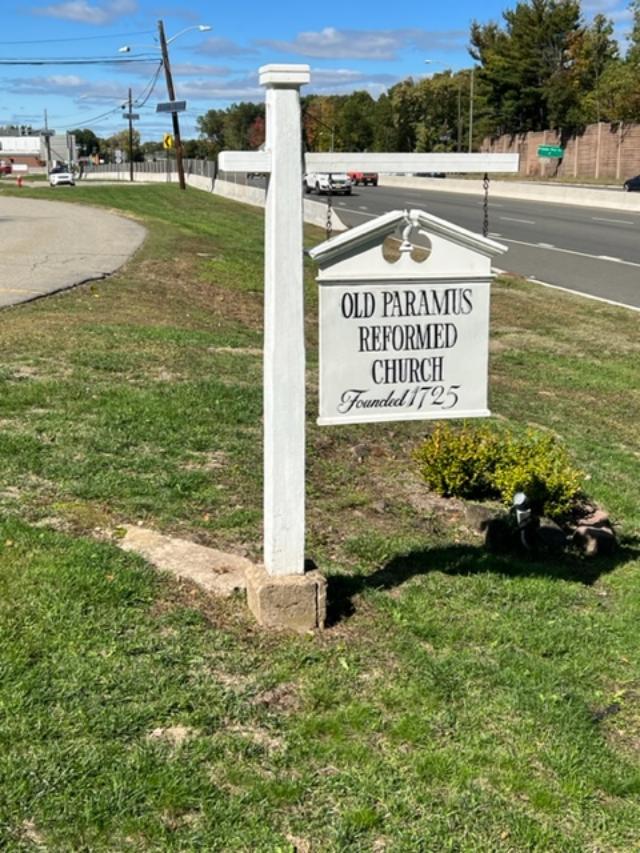
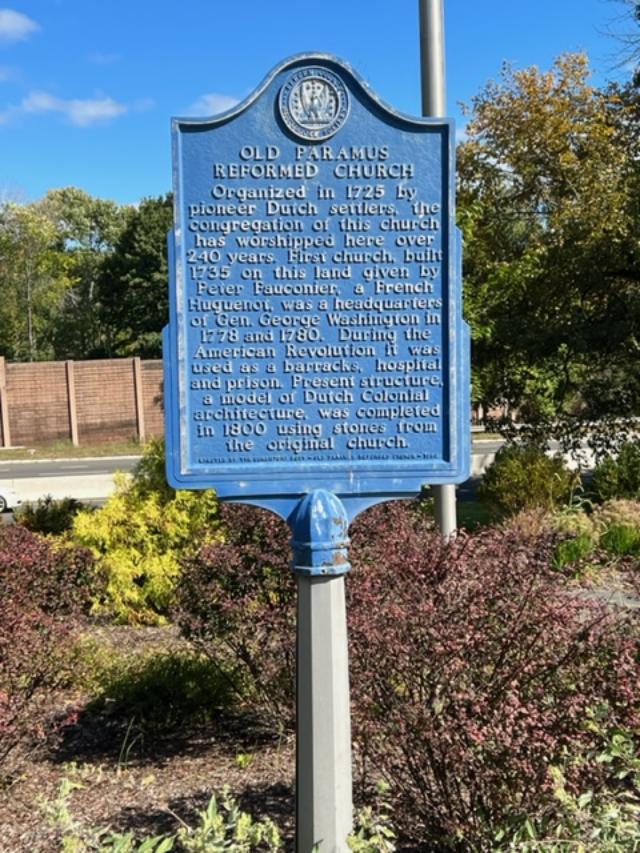
Signage from Route 17
During the Christmas holiday season I was so busy that I was not able to visit my local church. So when I was able to celebrate the Epiphany, I visited the Old Dutch Reformed Church in Ridgewood, NJ. The Church is one of the oldest in both Bergen County, NJ and the State of New Jersey. It is especially beautiful during the holidays. I love coming here because it just reminds you of Christmas and what a church should look like during the holidays. It looks like a Currier & Ives woodcut during the holiday season. The congregation does a nice job decorating it.
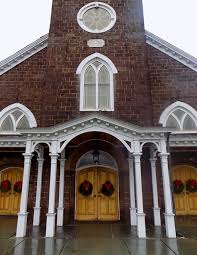
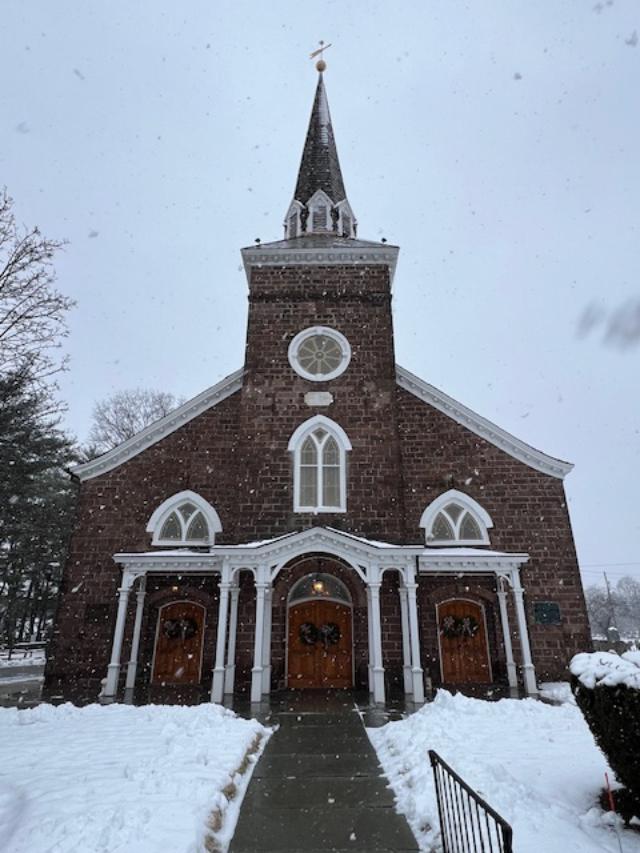
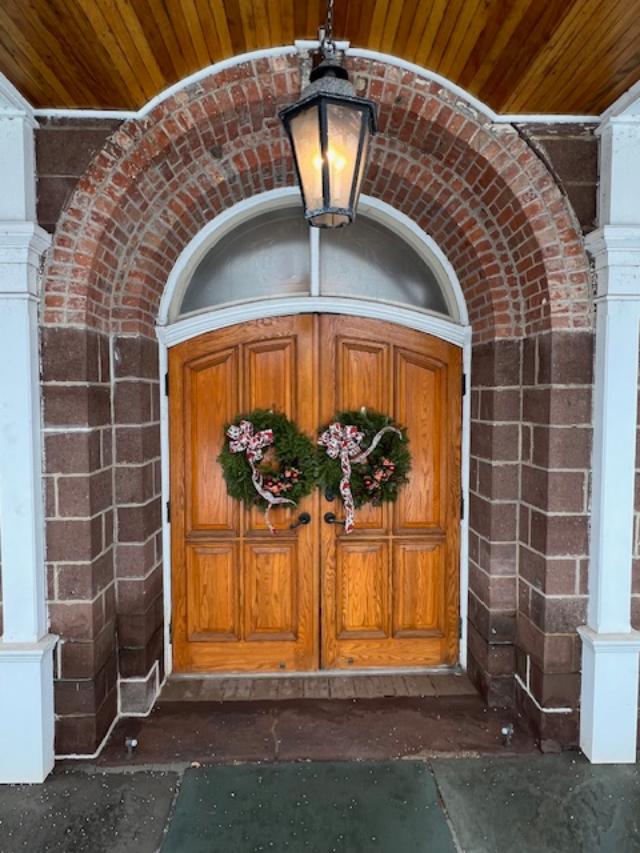
The entrance to the Old Paramus Reformed Church at Christmas time
It really was a nice service with music, the choir singing Christmas hymns and a bell service. It reminded me of my years at the Dutch Reformed Church in Woodstock, NY when I celebrated Christmas there. The whole church was decorated in holly and garland with Christmas trees in the corners and white candles lit in the corner.
The entrance of the church in 2023 for Epiphany services.
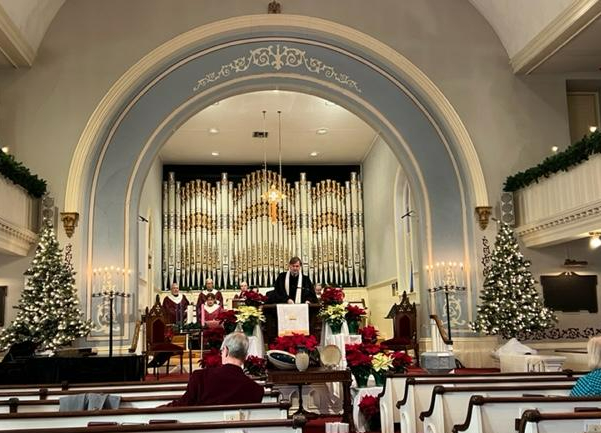
The Inside of the Old Paramus Reformed Church for the Epiphany holidays in 2023.
The interior of the church during Epiphany services 2022
The start of the Epiphany Services January 8th, 2022
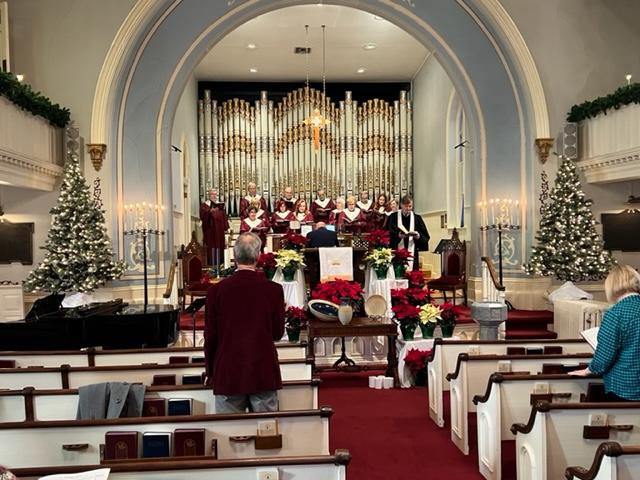
The Choir singing during church services at the Epiphany services
The beautiful decorations at Christmas time at the Paramus Reformed Church
The Front Alter with the Poinsette tree.
The Poinsette tree at the Alter.
What I liked after the service was over was that everyone walked up to me to greet me. I was one of the younger people in the church and I guess that they were happy to see some young blood. The congregation is so welcoming as I think they want newer members to join and I have to say that the services there are very inspiring and though provoking.
The outside of the church during the Epiphany in 2023. It looked like it was out of a Currier & Ives woodcut.
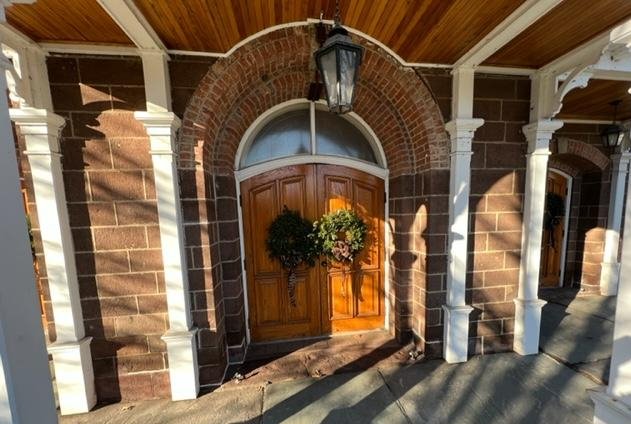
The doorway of the church at Christmas time.
I find that message very positive and very contemporary in an environment that may seem old-fashioned to some. It is called manners, curtesy and a sense of spiritualism that is lacking in the world today. They make the church so welcoming again.
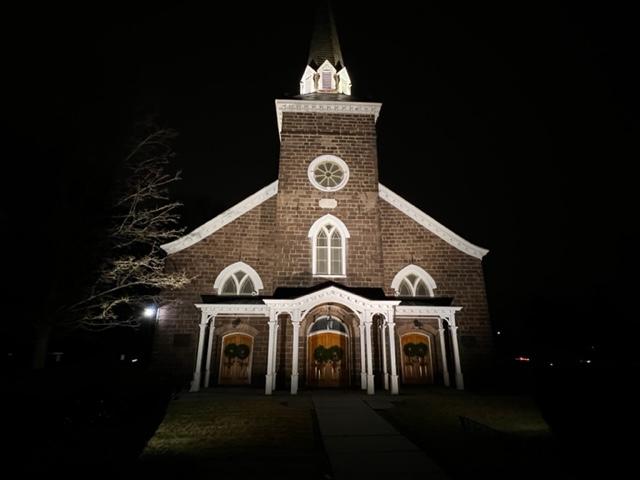
Paramus Reformed Church at nighttime during Christmas 2022
Paramus Reformed Church during night time Christmas services
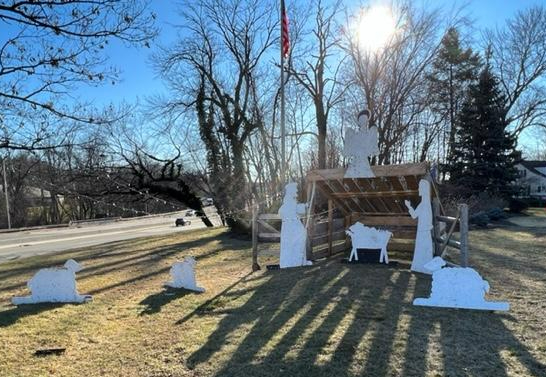
Nativity scene at the Paramus Reformed Church during Christmas 2022 at night
The Nativity scene during the day
The services there are very nice and I thought the church with its wooden benches and older architecture made the service even more special. It was a combination of the decoration, the music, the songs and the friendliness of the congregation that made the last day of the 12 Days of Christmas special for me.
This church makes a statement when passing it on Route 17 South.
I visited in 2024 the Easter service which was a nice change of pace. I really liked the service of the Reformists and the Reverend here is super nice and very inspirational.
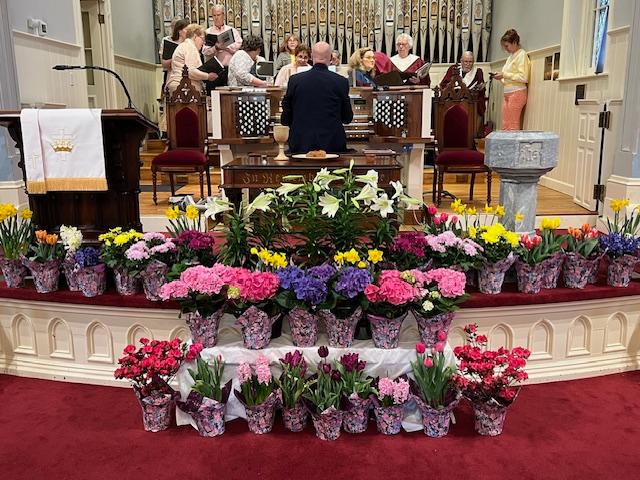
The Choir preparing for the Easter Mass in 2024.
The beautiful flower assortment at the church during the Easter service.
The floral cross on Easter 2024 during the church service.
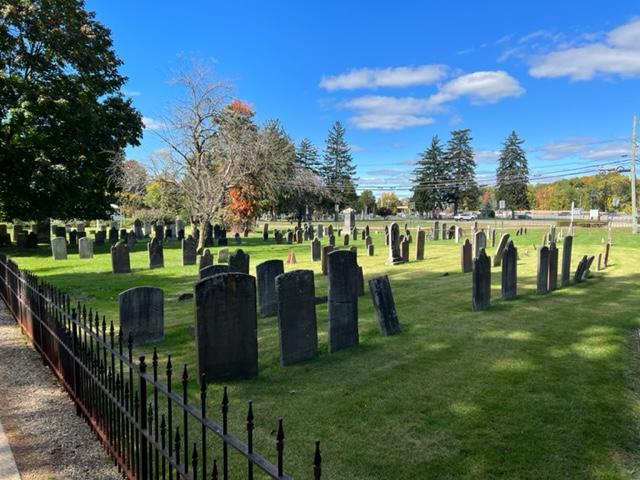
I had also been to the church a few years prior for a private cemetery walk through the back part of the church looking at the old tombstones, The church is the burial place of many of Bergen County’s original settlers so the headstones are very old. Some of the tombstones were made of sandstone and the other of shale. Many had not survived the weather after all these years.
The cemetery at the Old Paramus Reformed Church is an interesting place
The interesting part of the pre-Halloween walk was that the tour guide from the Ridgewood Historical Society told us the reason the cemetery was shaped the way it was today. The cemetery was placed around the original church and when the new church was built in 1800, the newer part of the cemetery was created. It is interesting to walk amongst the graves and look at all the names of the original families of Bergen County that included the Haring’s, Zabriskie’s, Terhune’s, Blauvelt’s, Van Ripper’s and Demarest’s.
The cemetery at the Old Paramus Reformed Church
The cemetery guide at the Old Paramus Reformed Church
Touring through these historical graveyards is a step back in time. History was made by the people buried here who contributions in the shaping of the Revolution and Civil Wars shaped not just Bergen County and New Jersey but the whole country as well.
The Conklin Family
The Banta Family
The Snyder family
If you get a chance to tour the church or the grounds you will know the reason why this is such a special church. Maybe it was the church’s rich history in Bergen County. It is a really special place during all the holidays.
I returned to church services for the Epiphany in 2025 and I always enjoy the welcoming service and the choir at the church. It is also still decorated for the holidays. Some places do forget that there are Twelve Days of Christmas.
The church decorated for the Christmas holidays
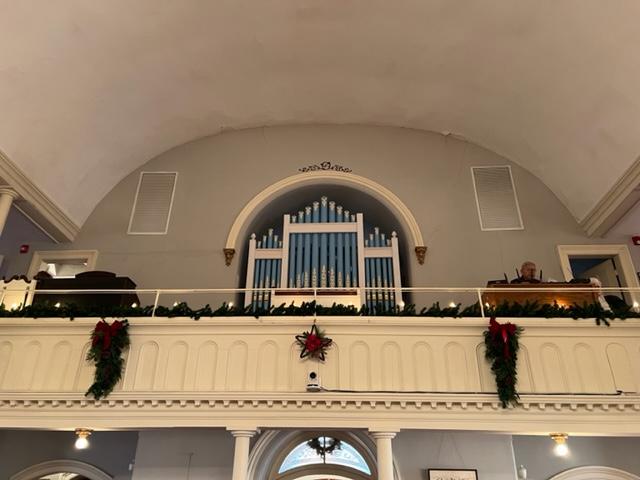
The organ area beautifully decorated
The choir practicing before the service
The History of the Old Paramus Reformed Church of Ridgewood, NJ:
(from the Church website)
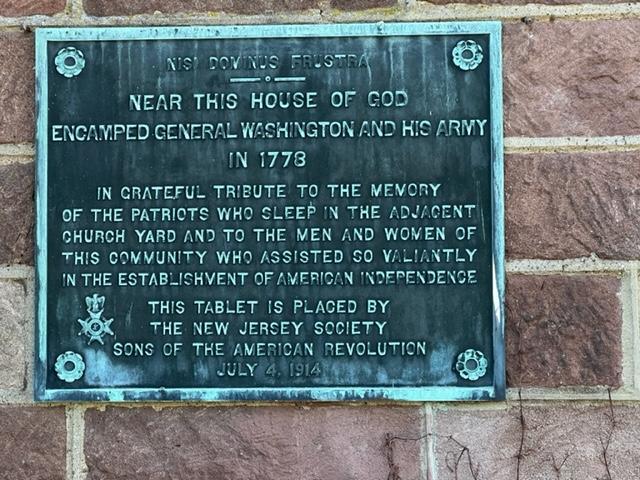
The Old Paramus Reformed Church has a rich past. The congregation was formed in the year 1725. During the American Revolution, the Paramus Church was the site of a Continental Army military post for four years during which clashes between American and British forces tool place. It was also in the original church building that General George Washington held a session of the court-martial of General Charles Lee who disobeyed order at the Battle of Monmouth in 1778. Washington had his headquarters here at the church a total of ten times during various days from 1778-1780.
Other noted Revolutionary War figures such as Alexander Hamilton, the Marquis de Lafayette, Anthony Wayne, Richard Henry Lee and Aaron Burr also were here from time to time during the war. From early colonial times, slaves were members of the church congregation, the upper galleries on both sides being designed for their use during services.
The present church building was built in 1800. An interesting feature is that the pews are numbered. The members of earlier days rented them on an annual basis. The most expensive were numbers 50-57 at $52.00 per year while the least expensive were numbers 38-100 at $4.00 per year> Needless to say, the less expensive pews are at the rear of the sanctuary.
On each side of the pulpit, there are three pews placed at right angles to the rest of the pews in the church. These were reserved for the Elders and Deacons (on the left and right respectively). These persons collectively are known as the Consistory, which is the governing board of the church. It was their duty to sit in these pews each Sabbath with their Bibles and copies of the day’s sermons to check on the “Domine” as to his conduct of the service as well as sticking to his sermon!
That tradition (as to seating) was kept alive for many years in Old Paramus by members of the Consistory who sat in the first pew facing the pulpit each Sunday. The only similar practice in use today is that the Elders serving Communion sit in the first rows on either side of the center aisle.
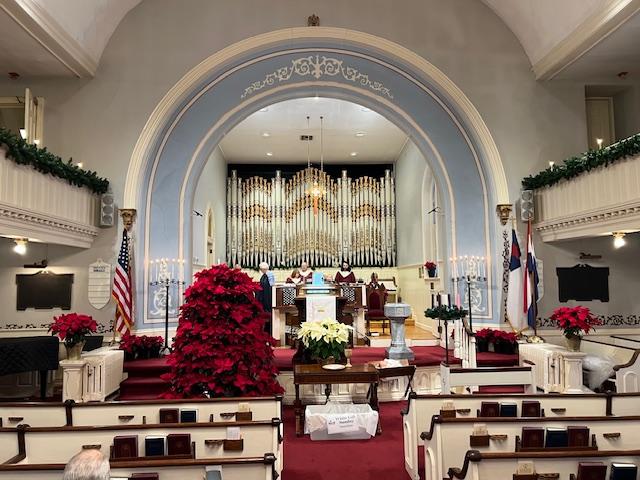
The decorated organ pipes in the rear of the chancel (choir loft) behind the pulpit date back to 1892. In that year, they were installed when the church received the gift of a new organ from a congregation member.
The inside of the Old Paramus Reformed Church
At the top of the arch the pulpit, there is a Dove of Peace. The dove is made of wood and is hand-carved. The exact date of origin of the dove is unknown. One authority claims that, “The bird is an eagle and was a donation by Dr. Garrett D. Banta in 1800.” Records from the Consistory minutes read: 1874, August 3rd: Resolved that the Consistory thankfully recognize the kindness of Mrs. Catherine Wessella for repairing and regilding the Dove, which has been a part of the decoration of the old church.
There are three flags on the pulpit-the American flag, the Christian flag and the flag of The Netherlands, the last representing our Dutch heritage. In a similar vein, for many years the Dutch flag was flown under the American flag on the staff in front of the church. Today only the American flag is flown on the flag pole.
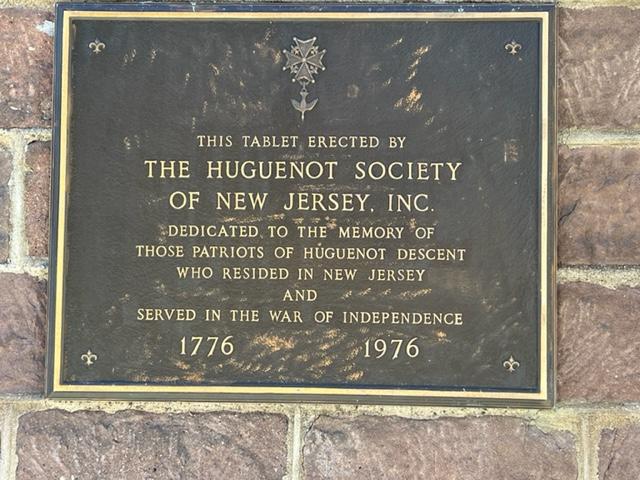
There are several plaques on the inside walls of the church. Some honor the ministers and others honor the various Consistories since 1725. Another just inside the front door notes that this church has been placed on the National Register of Historic Places. In display cases you will find various bits of memorabilia concerning our history.
When attending Old Paramus Reformed Church, you will have come to a warm and comfortable historic church to your whole being.
The Chandelier and the upper pews at the church during Epiphany services in 2024.
On the church campus, you will find modern Educational Building which houses the church offices and facilities need for Christian nurture. Another building is the one-room church like schoolhouse. This building houses the Ridgewood Historical and Preservation Society and is known as The Schoolhouse Museum. It was built in 1872 and was used as a school until 1905. It contains many items of historical note to this area. Make it a point to visit this museum during visiting hours. You should find it to be a very interesting and reward visit.
The signage of the historical landmark status
So what kind of church is Old Paramus Reformed Church? It is affiliated with the Reformed Church in America, the oldest Protestant denomination with a continuous ministry in America. The first church was established in New York City, then known as New Amsterdam in 1628. The Collegiate Churches presently represent the origins of that original Congregational. The best known is Marble Collegiate Church, which is where Dr. Norman Vincent Peale was the minister for fifty-two years. The Reformed Church in America (RCA) is an historic denomination coming out of the Reformation when the Church was “re-formed” and re-organized according to the teachings of the Word of God, the Bible. The Reformed Church of is Biblical in doctrine, semi-liturgical in worship. Presbyterian in government and evangelical in practice.
This year, Old Paramus Reformed Church celebrates 295 years of God’s Loving Spirit. Come join us next Sunday at 10:00am. We would be most happy to see you and you will surely feel rewarded for the experience.
(Disclaimer: This information was taken from the Church’s history and I give them full credit for the information).
My International Marketing class at Bergen Community College recently did a complete study and marketing plan for the “Bergen250” on the Revolutionary War veterans buried at graveyards and cemeteries all over Bergen County, NJ:
For a Mapping of all the historic graveyards and cemeteries, I had the students visit all the sites that the Daughters of the American Revolution had researched and I had the students find all the locations, photo the tombstones and create a bio on each of the veterans. I enclosed a copy of their work above.
My blog on the historic graveyards and cemeteries of Bergen County:
These are the graves of members of the veterans of the American Revolutionary War that I could find recently when I visited the church graveyard:
The grave of Wait Rathbone
The grave of John Van Embury
The grave of Calpares Westervelt
The grave of Johannes Ackerman
The graves of Abraham Hopper and his wife, Mary
It was fitting that we honored these men and their families on the 250th Anniversary of our country. Thank you for your service gentlemen for our freedom and the freedoms we sometimes take for granted in this country.
To all of you history buffs and readers who like architecture, take this Victorian Walking Tour I took last Christmas. It really shows how the City keeps changing.
Ladies Shopping Mile in it’s heyday
The Ladies Shopping Mile today
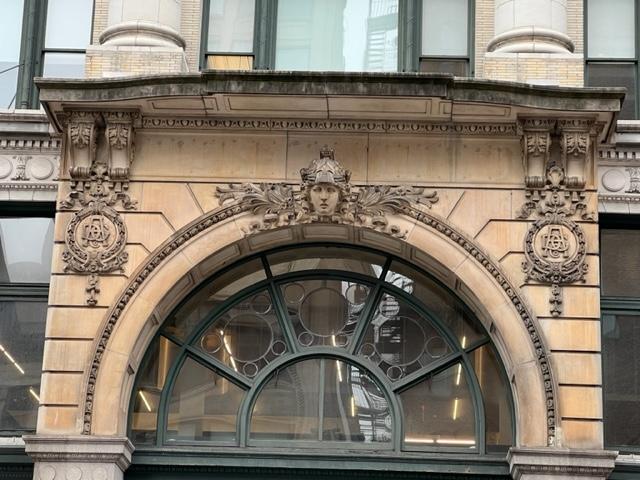
The beauty of the architecture of these stores. This is the Adams Dry Goods store.
On Saturday, December 15th, I met with other members of the Cornell Club to travel back to the Victorian Era and learn about the traditions of the Christmas past. We explored the Gramercy Park, Union Square and lower Sixth Avenue sections of the City to visit where a New York Victorian Christmas would be celebrated and honored.
We would be walking the old “Ladies Shopping Mile” that had been built up right after the Civil War when the disposable income for Middle and Upper Middle Class residents had increased after the Civil War and people wanted to spend their money at the newly built department stores, shops and restaurants. The Industrial Revolution was in full swing and shopping had changed with the development of the department store.
The tour took us past brownstones, parks, restaurants and old department stores that line the streets of Manhattan between East and West 21st Street…
For current information on guided tours, group tour reservations, school groups, special events or accessibility, call (845) 255-1660 or visit http://www.huguenotstreet.org.
The history of Slavery in the area
App:
Our free Walking Tour mobile app features histories of the houses on the street with archival photos as well as photos of the house interiors and the collection pieces within. Mobile users can download the app on both the App Store and Google Play.
The entrance to the site
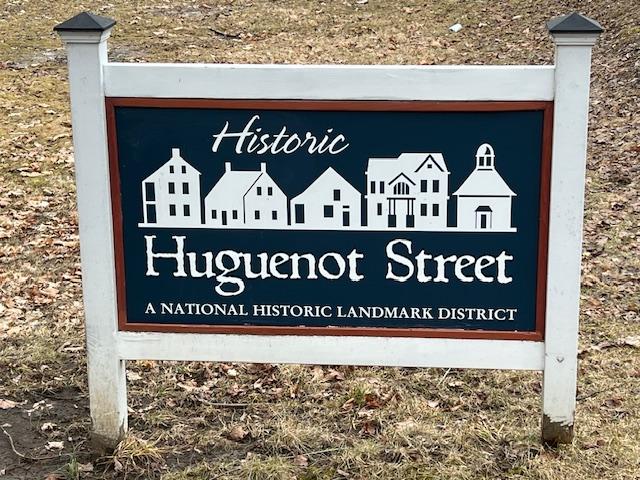
The historic sign at the entrance
History of the site:
At our 10 acre National Historic Landmark District, visitors experience more than 300 years of history through the lens of a French Huguenot community as it evolved over time. Guided tours begin with an introduction to the pre-colonial Munsee Esopus landscape dating back 7000 years and the religion, culture and architecture of New Paltz’s earliest European settlers and enslaved Africans. The experience continues as guests visit fully furnished houses reflecting unique human narratives and changing tastes across the Colonial and Federal periods, through the Gilded Age and into the early 20th century.
(Promotional Materials)
I visited Historic Huguenot Street one afternoon after visiting here about five years earlier during the holidays. The houses are easy to tour and the street is blocked so that you can walk amongst the houses. There are tours every half hour when the site is open. Here you can tour inside the houses instead of just the grounds. On a nice day, it is interesting to look over the architecture of the homes.
Make sure that you take time to look at the historical cemetery by the church at the end of the block. Some of the original settlers are buried here. It is also nice to tour around the Waykill River.
Take the extra time to visit the gift shop and see the information video on the site and look over the literature of the site.
The area has a pretty interesting history.
The map of the site
History of the Huguenot Street Historic District:
The site is owned and operated by Historic Huguenot Street (HHS), which was founded in 1894. In 1899, Historic Huguenot Street purchased the Jean Hasbrouck House as the first house museum on the street. In the 1950’s and 60’s, the organization and related family associations purchased most of the remaining stone houses in the district and subsequently opened them as museums. These acquisitions were funded in large part by descendants of the original Huguenot founders. Their family associations play a key role in supporting the institution today.
The Individual Houses:
Bevier-Elting House:
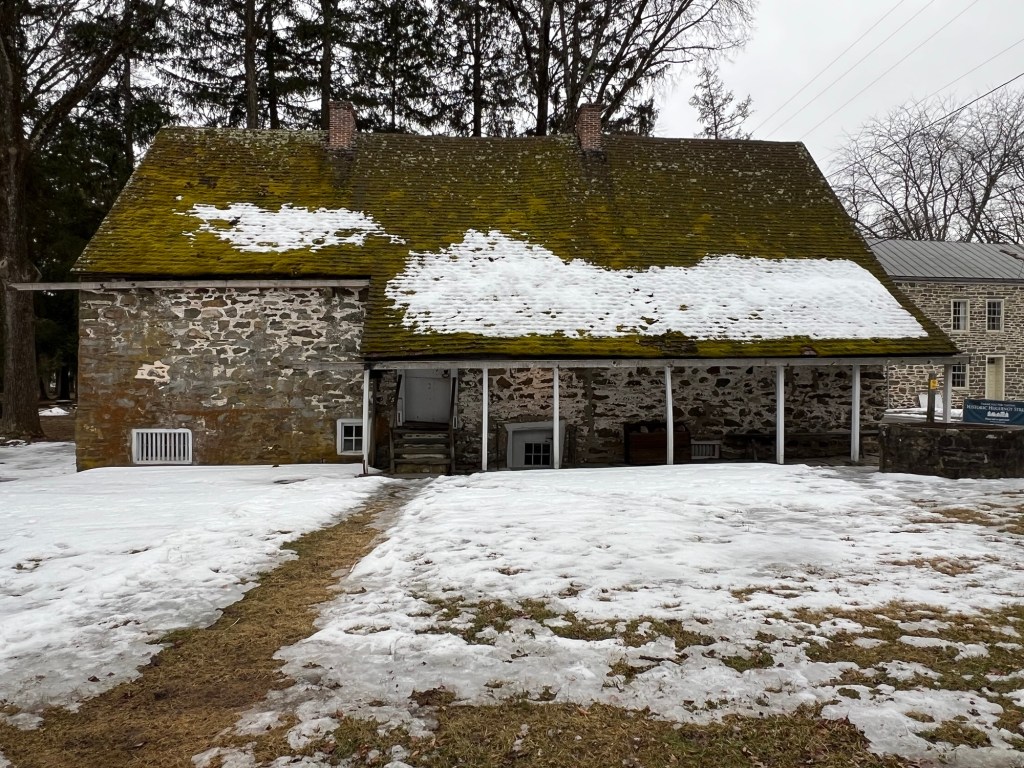
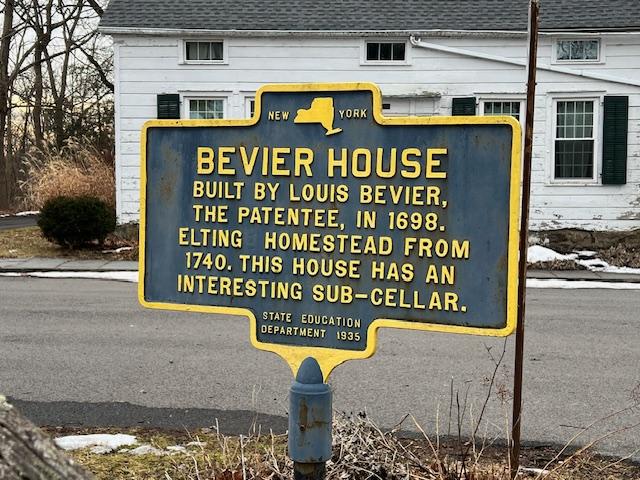
Dating to the early 18th century, the house was originally a one room building built with the narrow or gable end facing the street-then the prevailing style of the low countries of Northern Europe. Two expansions were built later as was a small cellar that was used to house African slaves. The house was built by the Beiver family, one of the founding families and subsequently sold to the Dutch Elting family.
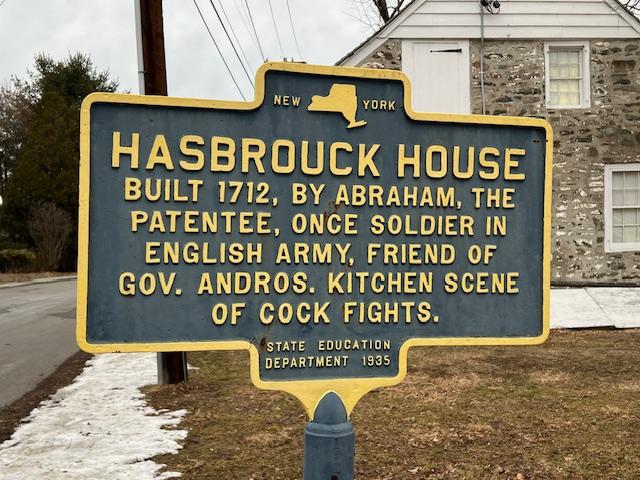
The structure as the Abraham Hasbrouck House was built in three phases in the 1720’s and 30’s. The first of the house-the center room-was constructed in 1721 by Daniel Hasbrouck, the son of Abraham Hasbrouck the patentee. The date 1721 is based on recent dendrochronology, which is a process by which wooden structural members are dated. This house represents a New World innovation in Dutch-style architecture. The initial houses in the Dutch region of New York, such as New Amsterdam, Albany and Kingston were built in the tradition of Dutch cities with the gable-ends to the street, which conserves street frontage. The basic structure of the house consists of a series of H-bents which spread the weight of the house across the entire expanse. The original one room house exhibited several defining elements of Dutch architecture, the jambless fireplace being the principal and most recognized feature in the house. Recently re-opened to the public in July 2012 following a restoration and reinterpretation focusing on the life of Widow Wyntje.
Also built in 1721 by Jean’s son Jacob (and perhaps incorporating elements of an early home built by New Paltz founder Jean Hasbrouck), this home is an excellent example of Hudson Valley Dutch architecture and the showpiece of Historic Huguenot Street. A National Historic Landmark in its own right, it boasts the only remaining original jambless fireplace of any of the Huguenot Street houses and is one of the few surviving examples in what was formerly the New Netherland.
In 2006, the north wall of the house was carefully dismantled, repaired and reconstructed. Reproduction Dutch-style casement windows were installed. Interior restoration followed, resulting in a house that is an excellent example of how a comfortable family in the region lived in the mid-18th century.
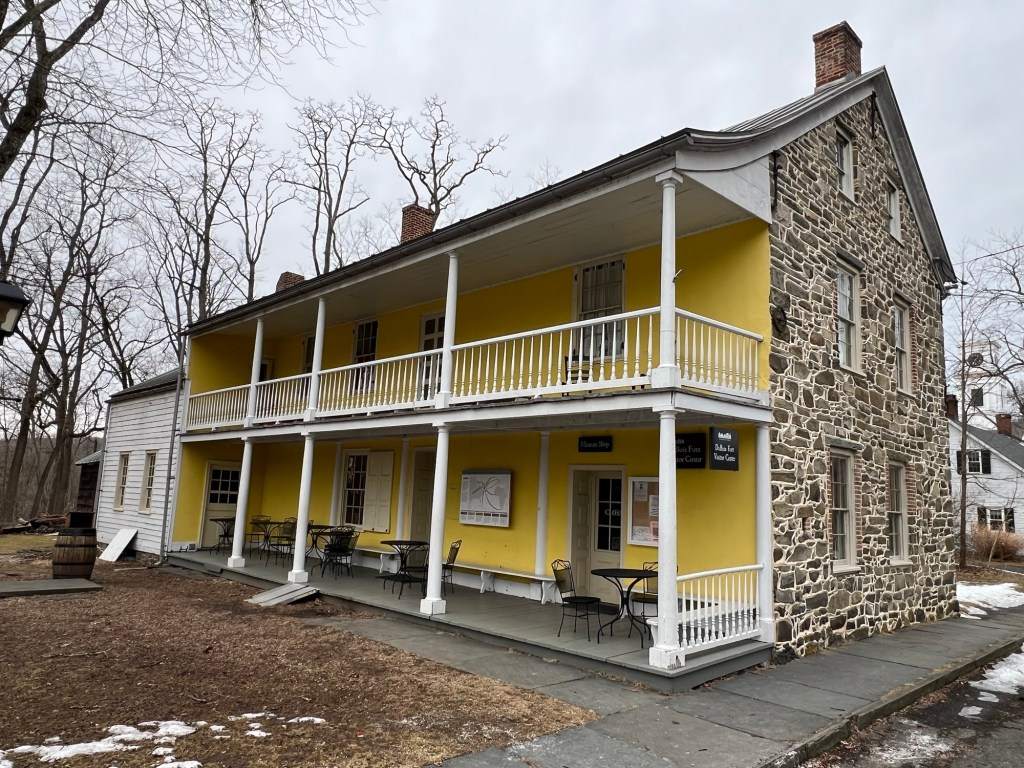
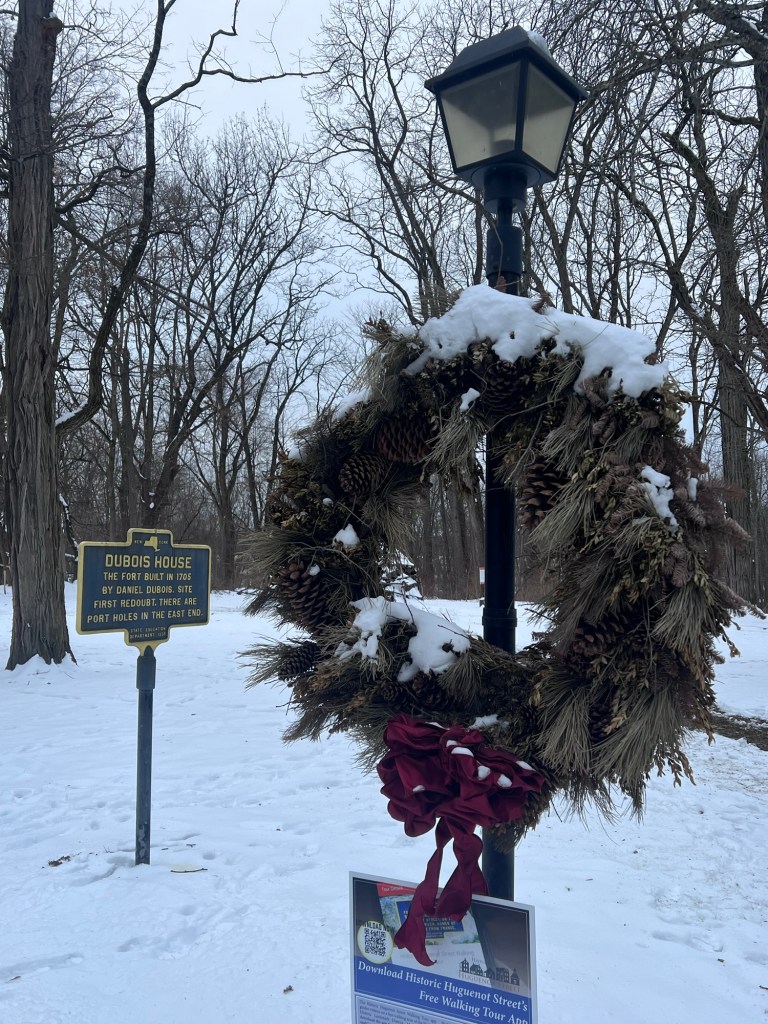
Built circa 1705 for the DuBois family, it might have served as a fortified place for the small community if needed. Originally a smaller 1 1/2 story structure, this building was expanded to its current size in the late 1830’s. Some historians and antiquarians believe that the presence of “gun ports” made it a fort but there is no evidence of the presence of any such portholes before the 19th century. The DuBois Fort currently serves as the orientation center and gift shop as well as a location for special events. Guest can purchase their admission tickets and memberships at this building. Over the last 300 years, it has also been used as a residence and a restaurant.
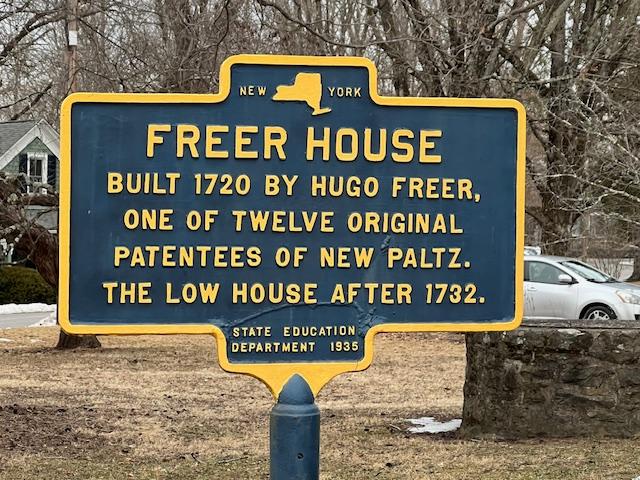
The Freer House is one of the six 18th century stone houses owned by Historic Huguenot Street. It was altered in various points in its approximately 250 years of occupancy with its most recent major alterations occurring in 1943 when it was purchased by Rev. John Wright Follette, a direct descendant of it s original builder, Hugo Freer. Over the years, the interior was modernized into a 20th century idea of a colonial home. This structure is not currently open to the public.
The original portion of the house was built around 1720 by Patentee Pierre Deyo. It began as a one room house was subsequently expanded to two rooms and ultimately to three when a stone addition was added off the rear by Pierre’s grandson Abraham. Circumstances for this house changed dramatically when at the height of the Colonial Revival movement, two descendants of Pierre Deyo, Abraham and Gertrude Brodhead, inherited the house.
The Deyo House at Christmas
Wanting to live on the street of their ancestors but also wanted a modern, gracious home that reflected their affluence, the Brodheads partially dismantled the original stone house and build a grand Queen Anne home around it in 1894. They also significantly changed their surrounding property in essence changing a small village farm into a handsomely appointed and landscaped mini estate.
The house passed out of Deyo family ownership in 1915. It was a private home until 1971, when it was purchased by the Deyo-Family Association and donated in order to be opened to be opened to the public as a house museum. The home was most recently restored in 2003 and features circa 1915 interiors.
The patentee Pierre Deyo died in 1700, so couldn’t have built the house in 1720 as stated. Per the plaque mounted outside the house it was built in 1692.
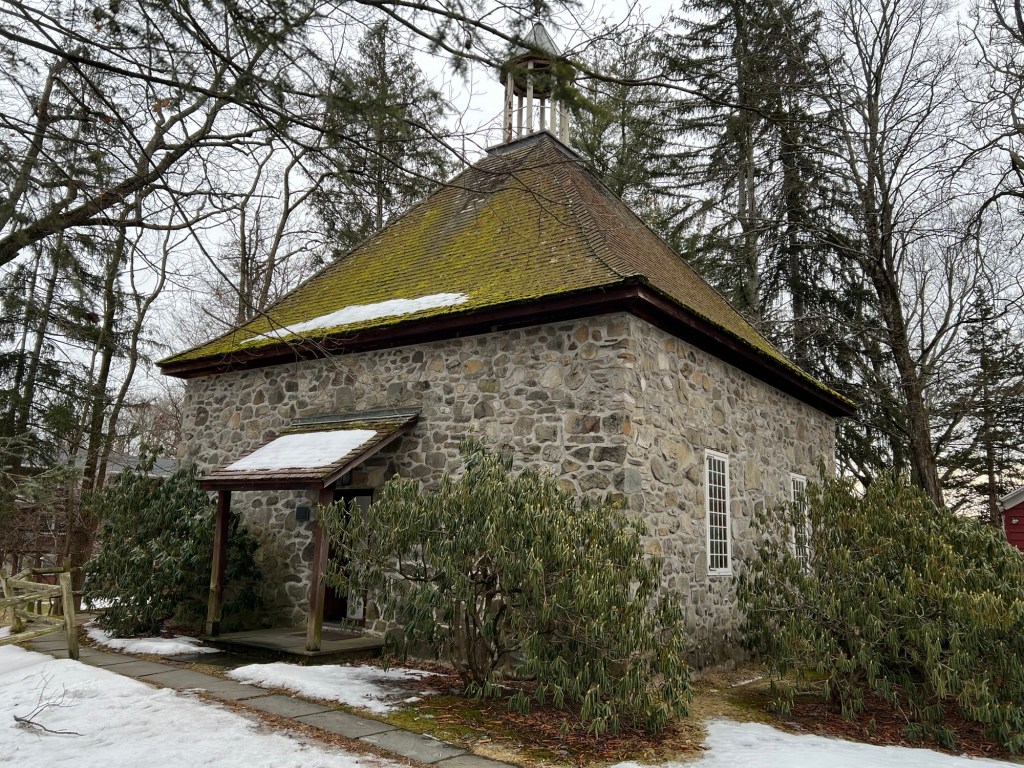
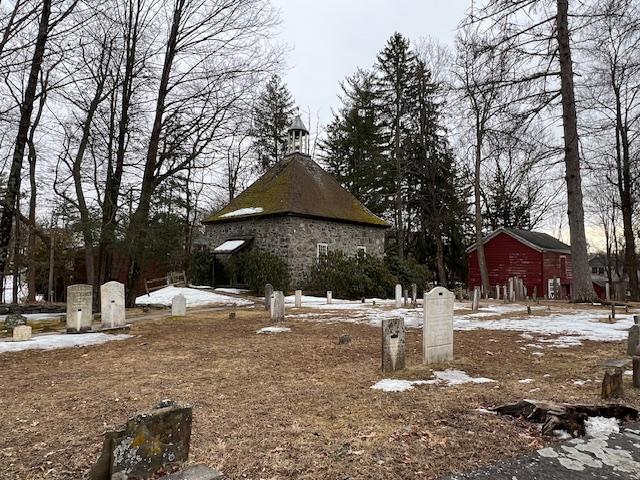
Since the community’s founding, there have been four sanctuaries built on what is today called Huguenot Street. The French-speaking Protestants who settled in New Paltz built their first church in 1683-a simple log building. This was replaced in 1717 with a straightforward, square stone building that reflected the permanence of the settlement. This existing building in the burying ground is a highly conjectural reconstructed of the 1717 building near its original location.
The Historic Walloon Church
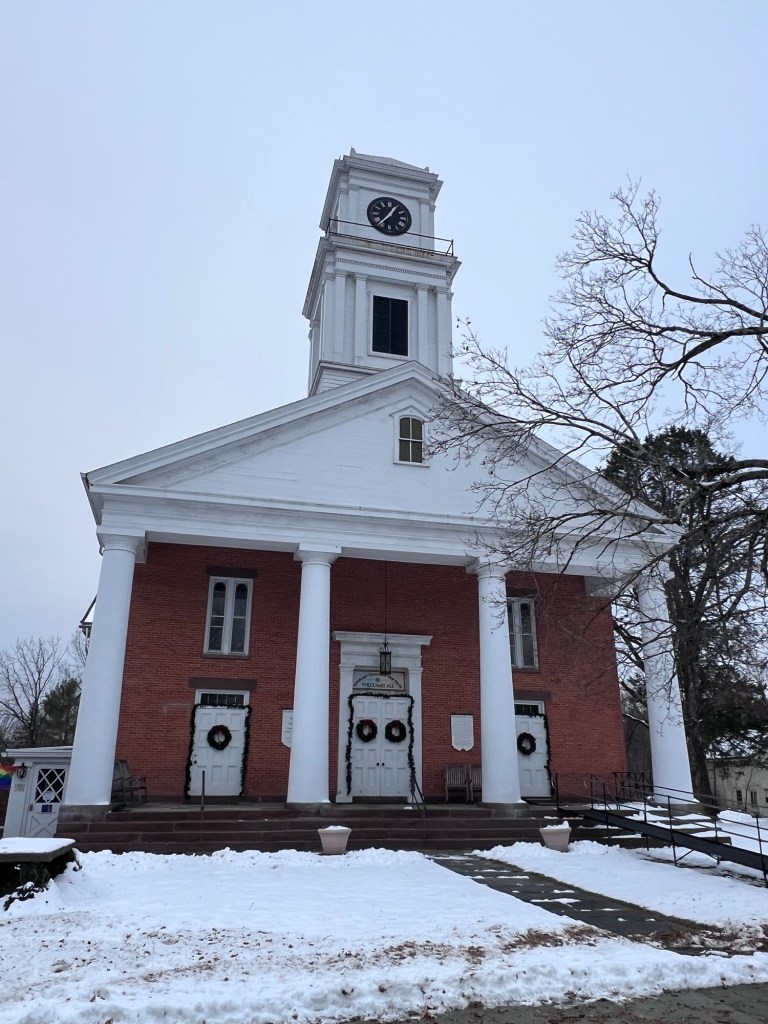
As the New Paltz community increased in size throughout the 18th century, a larger church became necessary. A second stone church was built down the street in 1772. When it became too small, it was demolished and replaced by a third church built in 1839. This church survives today and is home to an active Reformed congregation.
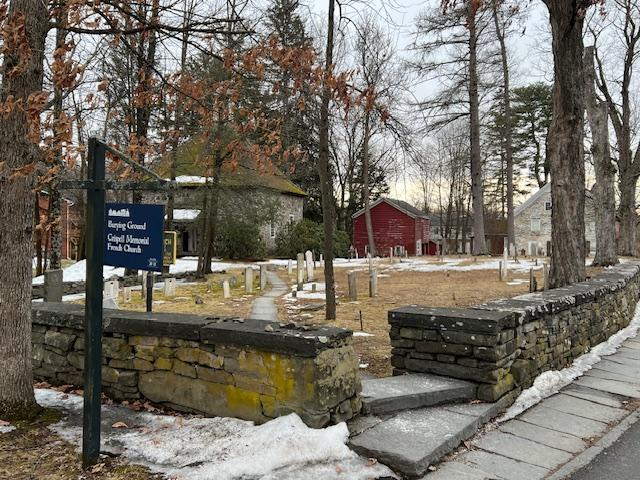
The Church and the graveyard
The reconstructed church is named in honor of Antoine Crispell, one of the twelve founders or patentees of New Paltz and a direct ancestor of Franklin Delano Roosevelt. It was built as the result of a fundraising campaign led by the Crispell Family Association. The Crispell Family Foundation opted to create this reconstruction church in their ancestor’s honor. It was completed in 1972.
The 1717 church was designed to reflect Reform thinking; the pulpit was placed in a central location and the pews were placed so that everyone could see and hear more equally. This expressed the concept that each person had a direct relationship with God, rather than one mediated through a church hierarchy.
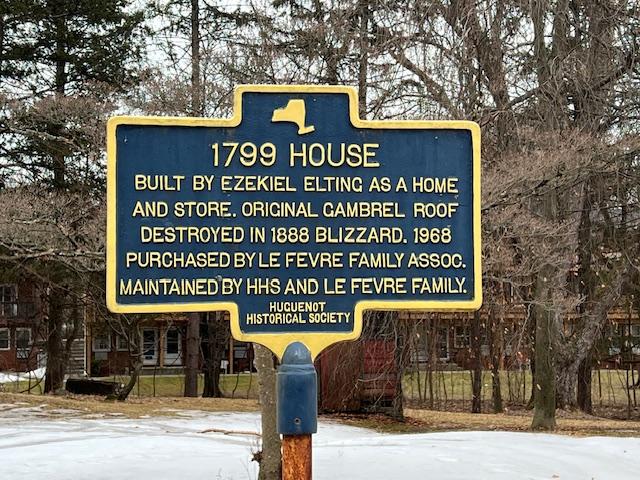
Built int 1799 by Ezekiel Elting, a prosperous merchant who was born in the Bevier-Elting House, this stone and brick building is quite different from the earlier stone houses on Huguenot Street. Its Georgian-style architecture reflects the transition of New Paltz from a French and Dutch settlement to an Anglo-American community and increasing refinement in architecture in this period as settlements matured. The house shows the changes in architectural style from the early 18th century. This house reflects the several changes in the society and home life of New Paltz in the early 19th century.
Located in the Roosa House, the Library and Archives at Historic Huguenot Street is a research facility devoted primarily to the history and genealogy of the Huguenot and Dutch settlers of the Hudson Valley. It also functions as a general repository for local history, regardless of ethnicity or religious persuasion. The collections consist of family genealogies, church, cemetery and bible records, wills and deeds, census records, genealogical periodicals, county histories and publications relating to Huguenot ancestry. Genealogists, local historians and other interested parties can access the collections by appointment. The colorful paint replicates the original colors of the house in 1891.
Native American presence on Huguenot Street:
Historians and archaeologist have learned more about the continuing relations between the Esopus, the original inhabitants of the area and the Huguenots. Some results of research can be found at the HHS site at “Relations between the Huguenots of New Paltz, NY and the Esopus Indians (http://www.huguenotstreet.org/library_archives/exhibits_research/Indian_affairs.html). The “Before Hudson” exhibit, currently on view at the DuBois Fort Visitor Center, shows some of the highlights of archaeological excavation in our area with artifacts dating back 6,000-8,000 years ago.