Category: Exploring the Island of Manhattan

Cape May County Park & Zoo                              707 Route 9                                                       North Cape May Court House, NJ 08210

Cape May County Park & Zoo 707 Route 9 North Cape May Court House, NJ 08210

Cape May County Park & Zoo

707 Route 9

North Cape May Court House, NJ  08210

(609) 465-5271

http://www.cmczoo.com

https://www.facebook.com/capemaycountyparkzoo/

https://www.capemaycountynj.gov/1008/Park-Zoo

http://www.capemaycountynj.gov/1008/ParkZoo

http://www.capemaycountynj.gov/1400/Virtual-Zoo-School

Open:

Park Hours: 9:00am-Dusk

Zoo Hours:

Summer Hours: 10:00am-4:30pm

Winter hours: 10:00am-3:30pm

*The park and zoo are open every day but Christmas (weather permitting) and may have extended hours for special events.

Fee: The zoo is free but they appreciate donations

TripAdvisor Review:

https://www.tripadvisor.com/Attraction_Review-g46342-d268949-Reviews-Cape_May_County_Park_Zoo-Cape_May_Court_House_Middle_Township_Cape_May_County_New_J.html?m=19905

The entrance to the Cape May Zoo

In the Summer of 2024, I entered the zoo on a Sunday late afternoon and it was a nice visit as the zoo was quiet in a Friday afternoon near closing time. The animals were still outside, most being fed before they were taken inside for the evening (this is why so many animal pictures show them eating). Still I got a chance to walk around and enjoy the zoo.

The welcome sign of the Cape May Zoo

In Summer of 2022, I visited the zoo in late September on a very gloomy rainy day, which I do not recommend for visitors. The animals like the humans took cover in their sheds and would not come out until the sun peaked out at the end of my visit. It still is an interesting zoo.

The entrance of the Cape May Zoo

I have to admit that it is a little dated in that the philosophy of zoos continues to change and I think the zoo could use another updating to give the animals some more room and better stimulation in their respected areas. They just need more room to move around. The nice part of the Cape May Zoo is that there is room to move around. The larger animals do have more room here to spread out and live.

The entrance to the zoo and park

The Barnyard animals are in the first part of the zoo. There were pens for Potbellied Pigs and Dairy Cows and they were very content when I visited eating and smiling at the visitors.

The Potbellied Pig sign

The potbellied pigs

The pigs have a good time

The Dairy Cows eating when I was visiting

The Goat pens

The Goat pens at the end of the day

The Animal Safari Animals were towards the back of the park:

The entrance to the back of the zoo with the exotic animals

Inside the Safari walkway around this section of the zoo

This pristine zoo and park features more than 550 inhabitants representing 250 species. Over 200 acres of beautiful, natural wooded areas and open space. Winding trails for hikers, bikers, joggers and wildlife watchers. Picnic areas and a huge playground make the park and zoo your perfect place for a family adventure (Cape May County Zoo and Park).

The Peacocks walk around the park and do their own thing

I finally got to revisit the zoo in 2022 and it was a much more pleasant experience to come to the zoo in the warm sunshine. It gives both me and the animals a different perspective. The place was also mobbed. It was Firemen’s Convention weekend, and the zoo was busy with families visiting the animals displays and taking pictures.

The Giraffe pens during the feeding

There were all sorts to tour guides working that day and docents explaining the animals and their habitats to the visitors. The sad part is that the animals look so bored. The giraffes I thought looked the most bored of all. There is not much land for them to room around and they get to see this area over and over. They have plenty of room to stretch out but not like in the wild.

Walking through the pathways in the African Safari

The weather was nice that afternoon but a little hot and that made the animals so sleepy. Most of them were sleeping when I visited the larger animals in their pens.  The heat must have gotten to them like many of the humans on the benches around the park.

Inside the African Safari

The small displays of reptiles, birds and the smaller monkey family were nice as those displays challenge both the animals and people to really look at the life of these animals. One of the displays that was interesting was the Red Panda display. The docent was talking about like the in the wild for these animals and how they have to breed them captivity as there are not many of the left.

The Zebra pens and these guys are active

The zebras grazing at the zoo

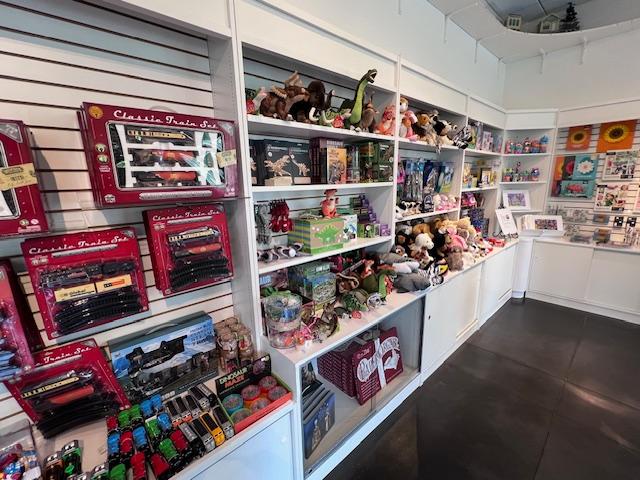
What I also like about the museum is that they have a very nice gift shop with all sorts of stuffed animals and tee-shirts and a very cheery staff that is willing to help you. They also have a very engaging carousel that takes the kids and their older kid parents who enjoy the music and the ride as much as their kids do.

The Watusi eating at the zoo

The Barred Owl sign

The Barred Owl in its home at the zoo

It is a really well maintained zoo where I can tell that the staff really cares and take very good care of the residents here.

The Safari Cafe at the end of the Safari pathway so that you can relax and have something to eat.

Cape May Park & Zoo History:

(History of Cape May Parks & Zoo; Parks System)

The Cape May County Park Central is located two miles north of the heart of Cape May Court House and occupies both the right and left side of Route 9. This site was originally a southern plantation of the Matthews family.

The sign that welcomes you to the zoo

Back in 1763, on Daniel Hand’s plantation in Middletown (now called Cape May Court House), the State Assembly petitioned erecting a courthouse and jail. The petition was granted and the cost was limited to 300 pounds. In 1764, Daniel Hand gave one acre to the county for the purpose of building a courthouse.

During the dame time, just north of the courthouse’s land, was the Matthew’s plantation. The main plantation was located below the lake and tributary waters. Just north of the tributary and small lake, the Matthews had an orchard that was set aside as a family cemetery and for the slaves of the plantation. This site still remains and is part of the park today. For a short period of time during the 1700s-1800s, this site was also used to bury the poor.

In “The 1942 Park Land Acquisition,” approximately forty acres of the Matthews plantation donated to the count to be used as a park and meeting place. Most of the land was wooded but some was lakes and tributary waters and also the cemetery. At this time, very little was done to the land. Later, a building used as a laundry at Crest Haven was moved from that location and converted into a maintenance and supply building with a comfort station and a six grill brick barbecue pit was constructed. It was during this time that the 4-H department, after holding its fair in Cold Springs or the riding club grounds, decided to ask permission to hold the fair at the county park.

The county road department and employees of Crest Haven cleared a section of the grounds of trees and brush, then seeded the ground for grass. This made a clearing for tents and booths, plus a horse ring to be used by the 4-H fair. The telephone company donated light fixtures and wire. Several years later, Pepsi-Cola donated a booth to be sued for refreshments. This was the extent of the county park for many years.

The County of Cape May was approved by referendum in November 1962. The State of New Jersey enabled an act for a park commission of nine residents of the county, which was established on February 5, 1963. The commissioners would serve terms of 1 to 5 years without compensation. A director was appointed in January 1966 and a solicitor was appointed in 1967.

The primary function of the park commission is to plan, acquire, develop, maintain and administer park land and the recreational facilities, thereon, which provide values for the benefit of the entire county. The Park Commission assumed complete responsibility of the County Park Systems on January 1, 1967. The County Park Facilities in 1967 were the same as they had been since the stat of the park! Facilities included maintenance and supply building with a comfort station, a band stand, 3 shelters, 1 six grill barbecue pit and a drinking fountain.

Cape May Zoo IV

The Cape May Zoo layout

Parks facility developments under the commission in the year 1967 were: 2 ten car parking lots, 6 group and organization barbecue pits, 40 picnic tables, 13 picnic grills and 1 playground. In 1968, they added 1 manual pump with shelter, 2 shelter, 2 ten care parking lots, another playground, 10 picnic tables, 6 picnic grills, 2 shuffleboard courts, 3 horse pitching courts, 3 swinging par benches and 8 regular park benches. Also, they added 1 volleyball court, 1 badminton court, 1 croquet court plus a camping area for Boy Scouts and Girl Scout and a foot bridge.

In 1969, a large amount of recreation facilities were added along with some park equipment to better serve the park users. On the recreation additions: 1 horseshoe pitching court, 3 quoit pitching courts, 1 deck tennis court, 1 aerial tennis court, 1 archery range, 1 boccie court, 1 tether ball court, 1 tether tennis court, 1 hopscotch court, a natural trail, 3 swinging park benches, 2 entrance gates, 4 foot bridges, 5 parking lots and 24 shelter picnic tables. All available to the public to use. Also, during this period, the residence of Charles W. Allen was purchases and made into an office fro the Cape May County Park Commission.

It has been close to seventy years since the parks beginning but the facility is still expanding and remains open to the public year round.

History of the Cape May County Zoo:

(History of Cape May Parks & Zoo; Parks System)

The Cape May County Zoo was created in 1978 within the Cape May County Park. The dedication was on May 6, 1978.

At the opening of the zoo, it consisted of an African lion, primates (spider monkeys), various barnyards animals and New Jersey wildlife animals. In the early 1980’s, the zoo gradually incorporated into its displays more exotic animals such as black bears, bison, antelope, primates and birds. All exhibits were constructed by park personnel.

The Snow Leopard Exhibition at the Zoo

Beginning in 1986, a zoo renaissance began. Donations were solicited and major reconstruction was underway. Some of the projects that were completed consisted of a complete perimeter fence, a new lion exhibit, a Bengal tiger exhibit, a cougar exhibit, a giraffe and camel exhibit, a reptile house and a construction of a medical building and diet preparation building. In 1989, the zoo became AZA accredited and has remained an accredited zoo to this date.

Throughout the 1990’s, renovations and new exhibits continued with the construction of an African Savannah, which consisted of 57 acres that display giraffes, zebras, antelopes and ostriches. Reconstruction of a reptile house replaced the original reptile house that was destroyed by fire in 1998, also a “World of Birds” walk through Aviary was constructed.

From the zoo’s beginnings in 1978, the animal population was around 70 animals and today the zoo consists of 550 animals representing 250 species.

The Cape May County Zoo is home to 13 flamingos from Michael Jackson’s Neverland Ranch.

The zoo has recently improved traffic flow, parking and beautified the entrance to the zoo. The zoo is undergoing restroom renovations along with other amenities and necessities.

The Cape May Zoological Society added a train and added an animal themed carousel late in the summer of 2008. The Cape May County Zoo celebrated its 40th birthday in 2018.

Disclaimer: The information of the history of the Cape May County Park & Zoo was taken directly from the Park’s website and I give them full credit for the information. Please call ahead for weather and seasonal conditions to the park. In 2022, the day I visited it was raining and the animals just like the humans ran for cover. In 2024 when I visited again, the zoo was busy at the end of the day on a sunny day.

The Giraffes milling around after a long day

The American Labor Museum/Botto House Museum National Landmark                                                                               83 Norwood Street                                                                       Haledon, NJ 07508

The American Labor Museum/Botto House Museum National Landmark 83 Norwood Street Haledon, NJ 07508

The American Labor Museum/Botto House Museum National Landmark

83 Norwood Avenue

Haledon, NJ  07508

Phone: (973) 595-7953/7291

Email: labormuseum@gmail.com

http://www.labormuseum.org

https://labormuseum.net/

https://labormuseum.net/?p=about-us

Open: Wednesday-Saturday-1:00pm-4:00pm/Sunday-Tuesday-Closed/All other times are by appointment. Closed major holidays but Open on Labor Day.

Fee: Free

TripAdvisor Review:

https://www.tripadvisor.com/Attraction_Review-g46485-d15087067-Reviews-The_American_Labor_Museum_Botto_House_National_Landmark-Haledon_New_Jersey.html?m=19905

 The Botto House at 83 Norwood Avenue

I recently visited The American Labor Museum/Botto House National Landmark for the afternoon and learned a lot about the American Labor Union formations and the rights we now take for granted.

A group of us took the tour of the Botto House and learned of its history and its place in the Paterson Silk Strikes of 1913. The first floor which serves as the meeting room has pictures of the Paterson Silk Strike which lasted just over five months and since the Mayor of Paterson at the time would not let the strikers meet, the Botto’s agreed to let the strikers meet at their home which at the time was in a isolated section of Haledon.

The history of the Silk Strike in Paterson

The Mayor of Haledon was sympathetic to the Union cause and let them meet in the town. Their house was situated in the middle of a field so that the strikers could gather around the home and listen to speakers.

The Botto House during the Paterson Silk Strikes

From their balcony, speakers could talk to the strikers and keep everyone abreast of the situation. Here people gathered and picnicked together and worked together to get their rights heard.

From the main display room, you will tour the home of Pietro and Maria Botto. First stop is the kitchen where Mrs. Botto ran her household. She made extra money selling food to the strikers and arranging meals for Mr. Botto’s co-workers. The family family did what it could to make money for the family.

Mrs. Botto’s kitchen

The sink area

Here she made meals for her family, did her jarring and preserving and the washing was done. Then a tour of the dining room, bedroom and the palour area where the family met and greeted people. The upstairs was formerly two apartments that were built to help ‘pay the bills’.

The Botto House Kitchen

The upstairs is now the display space where a display on the Dock Workers Union is currently being shown. We got to stand on the second floor balcony where so many speeches were made.

The backyard area

We took the back stairs to the backyard where the family had the grape arbor, root cellar where the preserves were kept and the boccie ball court. It seemed the family was very social at the time and self-sufficient.

The root cellar and Vineyard

Things turned bad for the family when both Mr. And Mrs. Botto both passed away two years after the strike. The strike could have taken its toll on the family or the fact that Mr. Botto could not find a job after the strike was over. No one knows.

It is an interesting tour of how one family opened their home to an important cause and it made a difference in the success of the strike and getting it resolved.

The history of the Botto’s:

The museum headquarters was the home of an immigrant family of industrial workers whose story is a fascinating one. In many ways, the telling of their saga is a doorway for museum visitors to step through and make connections with their own ethnic backgrounds.

The European Heritage:

Pietro and Maria Botto hailed from the region of Biella, Piedmonte, Italy. This area, at the foothills of the Alps, was a leading textile producer of linen and wool. The mountainous area was home to a fiercely independent people who, for centuries, wove cloth in their homes on looms which they owned.

The Industrial Revolution forced weavers to give upon cottage-based production to seek employment in large shops or mills. the displacement of workers by mechanized looms and weavers’ lack of economic independence caused people in Biella (as in other European textile areas where Paterson’s workforce originated) to embrace new ideas about worker rights and to be a vocal workforce wherever they roamed.

Pietro decided to leave Italy because he was made eligible for a second draft into the army at the recently united Kingdom of Italy (Italy had quadrupled its army at that time to strengthen unification and to acquire African colonies). A skilled weaver who also painted church interiors, Pietro brought his wife, Maria and daughter, Albina (born 1889) on the long voyage to America in 1892.

The Botto’s settled in crowded West Hoboken, New Jersey (today’s Union City), where they worked in silk mills for 15 years until they had saved enough money to afford a home for their growing family. The family now included three more daughters, Adelia (born 1894), Eva (born 1895) and Olga (born 1899). In 1908, the Botto’s moved to Haledon, a tiny community, growing up along the streetcar line from Paterson, where many other country folk from Biella had already settled.

The Botto’s home became a focal point for a dramatic slice of history in 1913 when the epic Paterson Silk Strike broke out. Pietro was on strike with 24,000 fellow silk workers when massive and constant arrests forced the workers to consider the independent borough of Haledon as a location for great outdoor rallies. Mayor William-Brueckmann guaranteed the safety of the workers and Pietro offered his home as a meeting place for the strikers.

The Botto’s courageous stand allowing their home to be so closely identified with the strike stemmed from a belief in the rights of the common man. During the strike, Pietro and his family played host to the social and labor leaders who were the idols of the working person at that time. After the strike, the family had to very circumspect about employment in the mills, with one of the daughters denying her family name to avoid blacklisting by an employer.

The large house and spacious hillside gardens are a tribute to the family’s combined labor. Pietro and his daughters worked 10-12 hour days, 5 1/2 days a week in the mills. The eldest daughter began mill work at age 11 and the youngest at age 13.

On Sundays, the usual day of rest, the girls helped their mother serve patrons of the resort aspect of the property. Maria ran a large household, feed boarders during the week and the scores of people on Sunday and did piecework from mills; she died in 1915 at the age of 45.

Pietro lived until 1945, a beloved father and grandfather to a growing clan.

History of the House and Land:

The house in Haledon, NJ

The total environment of the Botto House National Historic Landmark reflects the ethic origin of this family of silk workers from the Piedmonte (Biella) area of Italy and the development of housing in early streetcar suburbs. It is representative of the sensitive use of small landholdings in American urban areas by various European immigrant groups.

The Botto family purchased Block X, Lots 38, 39 and 40 in 1907 from Alexander King, a real estate speculator. King himself purchased a large parcel of land from the Cedar Cliff Land Company, a group of Paterson industrialist and business leaders who were quick to see the advantages of selling cheap land to workers in Haledon. The completion of a horse-drawn trolley line in 1872 allowed for expansion of residential and recreational areas outside  of the City of Paterson, a major American industrial center.

The Botto House sign

(Information from American Labor Museum: Botto House National Landmark, a Brief History)

The Period Rooms:

The Front Hall

The front entrance hall light fixture is original to the house. One of the restoration tasks yet to be carried out is the replacement of embossed wallpaper on the walls which was made to look like the carved leather coverings in the homes of the rich.

The front hallway

The Kitchen:

The kitchen was a major center of activity in the household. The large coal and gas range dominates the room. It was used as a heating source as well as for cooking foods. A table provided the space for food preparation; a cupboard stored pots, pans and dishes; an icebox kept food items cold (the root cellar, located in the garden was also used for cold food storage) and a sink for dishes and a tub for laundry utilities indoor plumbing-certainly a recent innovation for working class households.

The kitchen

Even with the convenience of indoor plumbing and the gas range, the kitchen was the scene of virtual non-stop labor for Maria Botto and her daughters. In addition to meals prepared for the family, the Botto’s fed a noon meal to extra people during the week, there were workmen without families, who rented rooms and come from the mills for a hot dinner.

On Sundays, the Botto women prepared food for as many as 100 people who came to recreate on the property. This, of course, provided on additional income for the family.

The Botto family’s foodways reflected their home region of Biella, Piedmonte, Italy. Piedmontese cooked scorned tomato sauce, preferring wine and chicken broth to accompany such staple foods as polenta (corn meal), risotto (rice) and tortellini, a pasta. Generally, rosemary, sage, and other herbs were used in cooking and grown outside in the garden. The herbs also had medicinal uses.

The kitchen sinks

Some of the artifacts placed around the kitchen are the copper put used to cook polenta (purur), meat grinder, fish scale, orange juice squeezer, coffee grinder (from a German immigrant household), rug beater, mousetrap and wall calendars which were used by working people as decorations.

The Botto women were generally charged with kitchen duties. Maria Botto hired a German woman to do the wash. One special job was reserved for Pietro, stirring the polenta and cutting it with a string.

The Dining Room:

The dining room was another work area for the family. Here the family and the ‘boarders’ dined. Here Maria ‘picked’ silk on a frame, located in the corner of the room under the window, examining the bolts of broadsilk brought from the mill for imperfections.

The Dining room

This was another task to bring income to the household. Maria used the sewing machine to make clothes. The table reflects a setting for the family and ‘boarders’, placed with dishes, silver-plated utensils and a condiment set.

The Dining Room

The sideboard, table chairs and sewing machine are family pieces. The lighting fixtures in this room as in the rest of the house were powered by gas. As is typical in the area, paintings were hung by string from a picture rail as the walls were made of plaster.

The Sideboard

The small painting shows sheep, which provide the wool upon which textile manufacture was based, against the backdrop of the Alps. The large sketched portrait of Pietro Botto in later years was produced by his grandson and professional artist, Richard Botto. On the side of the room hang pictures of the Botto daughters in their wedding attire.

The Dishes in the sideboards

The Bedroom:

This room, which was actually the girls bedroom has been recreated to resemble where Maria and Pietro slept. The dresser is set with brushes, combs and mirrors that are from the period. The Botto’s slept in a brass bed.

The bedroom at the home

Swimsuits and other clothing hang in the wardrobe. A travelling trunk rests on the floor next to the wardrobe. Next to the window hangs a photograph of Mr. and Mrs. Guala of Biella, Italy. Next to the wardrobe hangs the elaborately framed photograph of Adalgiso Valle of Paterson, NJ, a jacquard card cutter.

The Bedroom

The Parlor:

The most formal room in the house, the parlor was used for guests, weddings and wakes. Dominating is the oak mantle with its columns and mirror top. It surrounds a fireplace where, in the winter, a gas heater was attached to a pipe behind the hearth. The clock had to be wound every day and chimes on the half-hour.

The parlor

The photographs on the shelf are Maria’s sisters in Italy (right) and the three eldest Botto daughters (left). Members of the Bocchio family of Biello, Italy are pictured in the photograph to the left of the mantle.

The Parlor and decorations

The furnishings in the house

Other Rooms:

The area making up the library on the first floor was a sitting room and bedroom for the family. The Botto daughters rented the two apartments upstairs when they first married and started their families and other non-family members served as renters through the years. The bathroom on the first floor is the approximate size of the original but today has modern fixtures and is not meant to be part of the restoration.

(From the American Labor Museum/Botto House National Landmark)

The Labor Day display of the Union history:

Labor display

Labor Display

History of Paterson:

The City of Paterson was founded in 1792 as America’s first planned industrial city. Alexander Hamilton, Elias Boudinot and other members of The Society for the Establishment of Useful Manufactures chose the Great Falls of the Passaic River as the ideal site for a manufacturing center.  The Falls provided water power, while the river provided transportation upstream and down.

During the 19th Century, Paterson flourished. It became known as “Silk City” and “The City” with an Arm of Iron in a Sleeve of Silk for the silk mills and locomotive works that made their homes here. Immigrants flocked to the city at first from England, Switzerland. Germany and France and later from Southern and Eastern Europe. Many found jobs in the mills and a few took their place among the captions of industry.

(Mill Worker…Mill Owner-Botto House Museum)

The gift shops

Disclaimer: This information was taken directly from The American Labor Museum/Botto House National Landmark pamphlets. This museum is one of the few historical sites dealing with the Labor Unions in the United States and plays a huge role in workers rights today.


Charging Bull                                                 Bowling Green Park                                            New York, NY 10004

Charging Bull Bowling Green Park New York, NY 10004

Charging Bull

Bowling Green Park

New York City, NY  10004

http://www.chargingbull.com/

TripAdvisor Review:

https://www.tripadvisor.com/Attraction_Review-g60763-d1605557-Reviews-Charging_Bull_Wall_Street_Bull-New_York_City_New_York.html?m=19905

When you are in lower Manhattan and are visiting the Battery Park and/or Wall Street area don’t miss the Charging Bull statue by artist Arturo Di Modica. The artist created this piece of ‘guerrilla’ art after the Crash of 1987, when we were about to enter the depths of another major recession, one that went from the end of 1987 until the summer of 1995.

This interesting piece of New York history is actually a recent addition to the street art of New York City. The statue was created and cast in 1987 following the Crash and made its first appearance outside the New York Stock Exchange on December 15, 1989.

The bull according to the artist, “represents the symbol of the strength and power of the American people’ following the Crash. It has taken on many meanings since such as the power of Wall Street and the progressiveness of money and power in the Financial industry.

During the high tourist season expect to see the statue surrounded by tourist taking pictures in all directions. The statue of ‘Charging Bull’ is now paired with ‘Fearless Girl’ by artist Kristen Visbal. Some have commented that it has changed the meaning of the statue but I think it is how you interpret both works. Its best to visit and make your own opinion.

Fearless Girl Statue II

The ‘Charging Bull’ with ‘Fearless Girl’

While you are visiting the statue, take time to visit this historic section of Manhattan and visit the other sites that include Bowling Green Park, the Museum of the Native Americans, Frances Tavern and Stone Street as well as the boats to Governor’s, Ellis and Liberty Islands. It is a wonderful way to spend the afternoon.

Please refer to my blog, ‘MywalkinManhattan.com’- “Day One Hundred and Thirteen Tour of Historic Pubs and Bars in Lower Manhattan with the Cornell Club” for a full list of things to see in this section of the City.

History of Charging Bull:

Construction and installation:

The Bull by Bowling Green Park in the early morning hours.

The bull was cast by the Bedi-Makky Art Foundry in Greenpoint, Brooklyn. Di Modica spent around $360,000 to create, cast and install the sculpture following the 1987 stock market crash as a symbol of the ‘strength and power of the American people’. The sculpture was Di Modica’s idea and in an act of ‘guerrilla art’, Bedi Makky Art Foundry and Di Modica trucked it to Lower Manhattan. On December 15, 1989, they installed it beneath a 60 foot (18m) Christmas tree in the middle of Broad Street in front of the New York Stock Exchange as a Christmas gift to New Yorkers. That day, hundreds of onlookers stopped to admire and analyze it as Di Modica handed out copies of a flier about his artwork (Wiki).

NYSE officials called the police later that day and the NYPD seized the sculpture and placed it into a impound lot. The ensuing public outcry led the New York City Department of Parks & Recreation to reinstall it two blocks south of the Exchange in the Bowling Green, with a ceremony on December 21, 1989. It faces up Broadway at Whitehall Street (Wiki).

Confusion over ownership:

The sculpture technically has a temporary permit allowing it to stand on city property since the city does not own the sculpture but the temporary permission has lasted since 1989, when city officials said the new location would not be permanent. Art on loan is usually limited to a year’s display and although the city does not buy art, it does accept donations. A writer in the New York Daily News wrote in 1998 that the statue’s placement was ‘beginning to look a mite permanent.’ According to an article in Art Monthly, Di Modica as well as officials and New Yorkers, ‘view it as a permanent feature of Lower Manhattan (Wiki).

In 2004, Di Modica announced that the bull sculpture was for sale, on condition the buyer does not move it from its present location. Di Modica continues to own the artistic copyright to the statue. In 2006, Di Modica sued Walmart and other companies for illegally benefiting from his copyright, by selling replicas of the bull and using it in advertising campaigns. In 2009, Di Modica sued Random House for using a photo of the bull on the cover of a book discussing the collapse of financial services firm Lehman Brothers (Wiki).

Artist Arturo Di Modica:

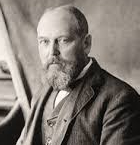
Arturo Di Modica artist

Artist Arturo Di Modica

http://www.artnet.com/artists/arturo-di-modica/

Arturo Di Modica first conceived of the Charging Bull as a way to celebrate the can-do spirit of America and especially New York, where people from all over the world come regardless of their origin or circumstances and through determination and hard work overcome every obstacle to become successful. It’s this symbol of virility and courage that Arturo saw as the perfect antidote to the Wall Street Crash of 1987.

The artist was born in Vittoria, Italy in 1941 and studied at the Academia Del Nudo Libra in Florence, Italy in 1960. In 1973, he relocated to New York City to a Lower Manhattan space. ‘Charging Bull’ is his most famous piece (Artnet).


Bowling Green Park                                    Broadway & Whitehall Street                            New York, NY 10004

Bowling Green Park Broadway & Whitehall Street New York, NY 10004

Bowling Green Park

Broadway & Whitehall Street

New York, NY  10004

https://www.nycgovparks.org/parks/bowling-green

https://www.nycgovparks.org/parks/bowling-green/history

TripAdvisor Review:

https://www.tripadvisor.com/Attraction_Review-g60763-d136413-Reviews-Bowling_Green-New_York_City_New_York.html?m=19905

Bowling Green Park in Spring 2024

Bowling Green Park on the first day of summer 2024

I visited this wonderful park for my walking project, ‘MywalkinManhattan.com-Day 113-Walking the Historical Bars & Pubs of New York City’.

The entrance to the park.

This is one of the most fascinating parks in New York City and probably one the most historical in the shaping of the United States. Located on the grounds of the original Dutch settlement, this tiny park placed an important role in the confrontation of the Loyalist versus the Patriots when deciding who to support during the Revolutionary War.

The toppling of the King George Statue was the beginning of a new Republic. Along the historic fence which has been standing in the park since the late 1700’s are the markings where the tiny crowns were sawed off by the Patriots in defiance to the Crown.

Bowling Green Park III

The toppling of the statute of King George (parts of the statue are at the Museum of the American Revolution in Philadelphia, PA-read my blog on this.)

The exhibit at the Museum of the American Revolution in Philadelphia on the King George Statue

Now it is a resting spot for tired tourists off the boats from Ellis and Liberty Islands and for Wall Street workers who need a nice place to eat their lunch. It is still a relaxing little park with tree lined paths and a beautifully landscaped fountain area. In the later summer, the flowers are still in bloom and the colorful highlights of the trees accent all sides of the park and keep it private. Even in this secrete setting it is mind boggling of the fact that people put their lives on the line to establish this country right from this tiny park.

Bowling Green Park IV

Map of Lower Manhattan

Take time to walk through the cool paths of trees to the edges of the park, which are lines with historic buildings with decorative stone work and look at the beautiful statuary work on the old U.S. Custom House that now serves as the Museum of the American Indian. Take a quick tour of Stone Street just a few blocks away and see the development of the New York City after the Great Fire of 1823, which destroyed most of lower Manhattan.

Just at the tip of the norther part of the park is the famous statue of ‘Charging Bull’ a gift to the City by artist Arturo Di Modica to show the ‘strength of the American people’ and the now becoming famous statue of “Fearless Girl” by artist Kristen Visbal which was erected for International Women’s Day. Both statues have created quite the debate since they were both placed here in 1989 and 2017 and their fate is up to the City.

Take time to really see what all these symbols mean to the Bowling Green.

History of the Park:

The beauty of Bowling Green Park in the early morning hours.

The Bowling Green is New York City’s oldest park. According to tradition, this spot served as the council ground for Native American tribes and was the site of the legendary sale of Manhattan to Peter Minuit in 1626. The  Dutch called the area “the Plain” and used it for several purposes including a parade ground, meeting place and cattle market. It marked the beginning of Heere Staat (High Street, now Broadway), a trade route which extended north through Manhattan and the Bronx. In 1686, the site was designated as public property, when the City Charter put all ‘waste, vacant, unpatented and unappropriated lands’ under municipal domain (NYC Parks.org).

The historic marker for the park.

Bowling Green was first designated as a park in 1733, when it was offered for rent at the cost of one peppercorn per year. Lessees John Chambers, Peter Bayard and Peter Jay were responsible for improving the site with grass, trees and a wood fence “for the Beauty & Ornament of the Said Street as well as for the Recreation & delight of the Inhabitants of this City.”

A gilded lead statue of King George III was erected here in 1770 and the iron fence (now a New York City landmark) was installed in 1771. On July 9, 1776, after the first public reading in New York State of the Declaration of Independence, this monument was toppled by angry citizens who dragged it up Broadway, sent it Connecticut, melted it down and recast it as ammunition.

The exhibit at the Museum of the American Revolution in Philadelphia:

My review on TripAdvisor:

https://www.tripadvisor.com/Attraction_Review-g60795-d12163505-Reviews-Museum_of_the_American_Revolution-Philadelphia_Pennsylvania.html

My review on VisitingaMuseum.com:

The pieces of the statue are on display at the Museum of the American Revolution in Philadelphia

The pieces of the statue

Portions of the statue are held by the Museum of the City of New York and the New York Historical Society (which also possesses musket balls made from the statue’s head) (NYC Parks.org).

The park with the buildings in the background.

By the late 18th Century, Bowling Green was the center of New York’s most fashionable residential district, surrounded by rows of Federal-style townhouses. In 1819, the Common Council that neighbors could plant and tend the area in return for the exclusive use of the park by their families. By mid-century, shipping offices inhabited the old townhouses and the park was returned to more public use. Monuments installed in the park in the 19th century include two fountains (now gone) and a statue of New York’s early Mayor and later colonial Supreme Court Judge Abraham DePeyster (1896, by artist George Bissell). DePeyster was moved to nearby Hanover Square in 1976 and finally to Thomas Paine Park in 2014 (NYC Parks.org).

Bowling Green Park Spring 2024

Bowling Green Park Spring 2024.

In the first decade of the 20th Century, Bowling Green was disrupted by the construction of the IRT subway. The park was rebuilt as  part of citywide improvements made in preparation for visitors to the 1939 World’s Fair. Renovations to Bowling Green included removing the fountain basin, relocating the interior walkways, installing new benches and providing new plantings. Mayor Fiorello LaGuardia, Parks Commissioner Robert Moses, members of the Board of Estimate and local businessmen participated in the rededication ceremony held on April 6, 1939. Despite unseasonable late snow, the ceremony included a demonstration of colonial era lawn bowling (NYC Parks.org).

The tulips at Bowling Green Park in Spring 2024.

A 1976-77 capital investment restored Bowling Green to its 18th century appearance. Improvements included the redistribution of subway entrances, the installation of new lampposts and benches and landscaping. Publisher and philanthropist George Delacourte (best known for the Alice in Wonderland statue in Central Park) donated the park’s central fountain (NYC Parks.org).

The Spring time flowers at the Bowling Green Park.

Since December of 1989, the statue of Charging Bull (1987-89) has been on display at the north end of the park. Its sculptor, Arturo Di Modica, says the three ton and a half bronze statue represents “the strength, power and hope of the American people for the future.” It has been linked to the property enjoyed by Wall Street in the past decade.

The park in the Summer of 2025

In 2004, the reconstruction of the park included new perimeter bluestones sidewalks and interior paths, landscaping, plantings and the re-sodding of the lawn. Antique-style gas lamps and hoof benches were also placed in the park with the addition of a new irrigation system for the parks fountain (New York Parks.org).

The “Charging Bull” sculpture.

Disclaimer: This information was taken directly from the New York City Parks.org site and I given them full credit for it. This is one of the special parks of the City so take some time to visit it while on your way to one of the other tourist sites or to Liberty Island or Ellis Island.