Category: Exploring the Historical Hudson River Valley

Gracie Mansion Carl Schurz Park                                                   East 88th Street and East End Avenue                                          New York, NY 10128

Gracie Mansion Carl Schurz Park East 88th Street and East End Avenue New York, NY 10128

Gracie Mansion

Carl Schurz Park

East 88th and East End Avenue

New York, NY  10128

(212) 570-4773

Hours: Mondays only-10:30am. 12:00pm and 1:30pm. See their website at www1.nyc.gov/site/Gracie/visit/visit page or gracieinfo@cityhall.nyc.gov

http://www.historichousetrust.org

https://www.nycgo.com/events/gracie-mansion-tours

https://www.graciemansion.org/

Admission: $10.00

TripAdvisor Review:

https://www.tripadvisor.com/Attraction_Review-g60763-d136688-Reviews-Gracie_Mansion-New_York_City_New_York.html?m=19905

Hours: There are free house tours at 10:30am, 12:00pm and 1:30pm on Mondays only. Check their website for availability. This is one of the few rare treats of New York if you can snare one of the tours of Gracie Mansion. It is a really interesting tour of the first floor rooms and entrance to the gardens of this historic home and the Mayor of New York City’s residence.

This was really a wonderful tour of the mansion given by a woman who has been a docent for twenty years and has seen the changes of the administrations. We went room by room and discussed how the Gracie’s then the Wheaton’s and the other families who lived here use the house until Robert Moses, the great City Planner, decided this should become the Mayor’s residence.

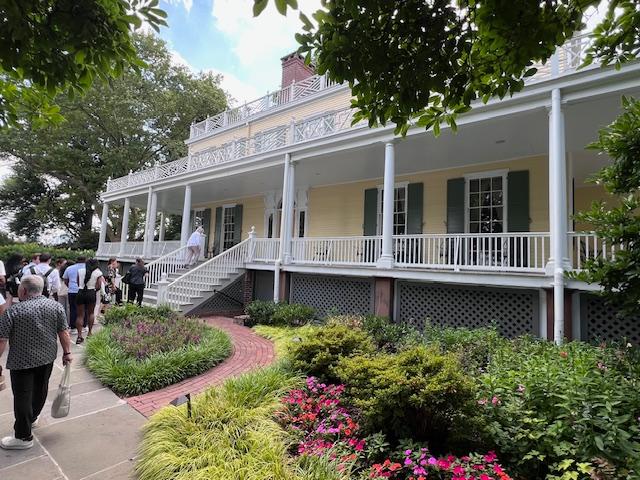
The front of the mansion at the start of the tour in the Summer of 2025

The formal gardens in front of the house in full bloom

The formal gardens to the side of the house near the parking lot

We started the tour on the front porch of the old Gracie Mansion

The tour consists of the first floor only and you can not take pictures inside with the exception of the Wagner Ballroom. We saw the formal entrance, the Living Room, Library, Dining Room and then the hallway leading to the front of the house to the Susan Wagner Ballroom, the newest extension of the house (the front section is the original section of the home built during the Gracie period).

The front rooms you are not allowed to take pictures so as you tour the Living Room, the Dining Room and Parlor rooms, you can not take pictures. When we left the older section of the home and entered the hallway to the Susan Wagner Ballroom added in the Wagner Administration, then you could take pictures in this room only (outside the gardens).

The inside of the Susan Wagner Ballroom

The Chandelier in the ballroom was from an old mansion downtown

The Bayard Fireplace from the Bayard Mansion once located in lower Manhattan

The Wagner Ballroom details

History of the Mansion and Gracie Family:

Gracie Mansion, built in 1799 by shipping merchant Archibald Gracie, is the last of the elegant county estates that once lined Manhattan’s East River shore. Gracie hosted elegant dinner parties at his country estate for visitors including Alexander Hamilton, Rufus King, Joseph Bonaparte and Washington Irving.

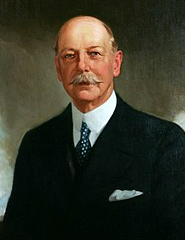
Archiebald Gracie

Archibald Gracie

https://en.wikipedia.org/wiki/Archibald_Gracie

Major losses during the years after the War of 1812 forced Gracie to sell his estate in 1823 to Joseph Foulke. In 1857, the Mansion was bought by Noah Wheaton. After Wheaton’s death in 1896, the City of New York appropriated the estate, incorporating ts 11 acres of grounds into the surrounding park that was renamed Carl Schurz Park in 1910.

After years as a comfort station and ice cream stand, Gracie Mansion became the first home of the Museum of the City of New York. When the museum moved to a larger building, Parks Commissioner Robert Moses convinced  City Authorities to designate the Mansion as the official residence of the Mayor. In 1942, Fiorello H. La Guardia moved into Gracie Mansion.

In 1966, the Mansion was enlarged with the construction of the Susan E. Wagner Wing, which includes a ballroom and two additional rooms. Under the guidance of the Gracie Mansion Conservatory, major restorations to the Mansion were undertaken between 1981 and 1984 and in 2002.
The 2002 restoration transformed Gracie Mansion into the “People’s House” and increased accessibility to the public and City agencies. First Lady Rosalyn Carter and South African President Nelson Mandela are among the many notable visitors.

Gracie Mansion II.jpg

Gracie Mansion at the turn of the last century

Gracie Mansion is owned by the New York City Department of Parks & Recreation, operated by the Gracie Mansion Conservatory and is a member of the Historic House Trust.

(Gracie Mansion Pamphlet)

Gracie Mansion Conservatory:

After years of neglect and continual erosion of any trace of history, Mayor Edward I. Koch and founding Chair Joan K. Davison, established the Gracie Mansion Conservatory in 1981. as a public./private partnership.. Under its guidance, the first major restoration of the house was undertaken between 1981 and 1984. Besides creating a connection between  the original house  and the Wagner Wing, this effort included the display of art, furniture and decorative objects either  purchased or more often, lent by the City’s many cultural institutions. The Charter mandate of the Conservatory was not to seal the residence in the past (especially as there is no record of how it originally appeared inside) but to protect its history while accommodating change and progress by successive generations of New Yorkers.

The Gracie Mansion Conservatory continues to operate as a charitable organization dedicated to enhancing and enlivening its namesake. Its mission is to preserve and honor Gracie Mansion’s Federal Period origins while also making sure it remains as forward-looking and welcoming as the city it serves. An increasing  share of this work focuses on exploring the many different people and cultures whose contributions to Gracie Mansion and the New York at large gone unrecognized for far too long. The Conservatory also works to improve the surrounding landscape and gardens and provide public programming and educational services, including publications and tours for local school students, especially those studying in New York State’s 7th grade social studies curriculum.

(Gracie Mansion Conservatory pamphlet)

Disclaimer: This information was taken from the Gracie Mansion Conservatory pamphlet press kit given on my tour and I give the Conservatory full credit for it. Please check the website for tour information or call them to find out about group tours.

It really is a great tour!

The Frances Lehman Loeb Art Center/Vassar College                                                                  124 Raymond Avenue                                             Poughkeepsie, NY 12604

The Frances Lehman Loeb Art Center/Vassar College 124 Raymond Avenue Poughkeepsie, NY 12604

The Frances Lehman Loeb Art Center/Vassar College

124 Raymond Avenue

Poughkeepsie, NY  12604

(845) 437-5632

fllac.vassar.edu

https://fllac.vassar.edu/

blogs.vassar.edu/fllaceducation

Open: Sunday 1:00pm-5:00pm/Monday Closed/Tuesday-Saturday 10:00am-5:00pm

TripAdvisor Review:

https://www.tripadvisor.com/Attraction_Review-g48443-d2419076-Reviews-Frances_Lehman_Loeb_Art_Center_at_Vassar_College-Poughkeepsie_New_York.html?m=19905

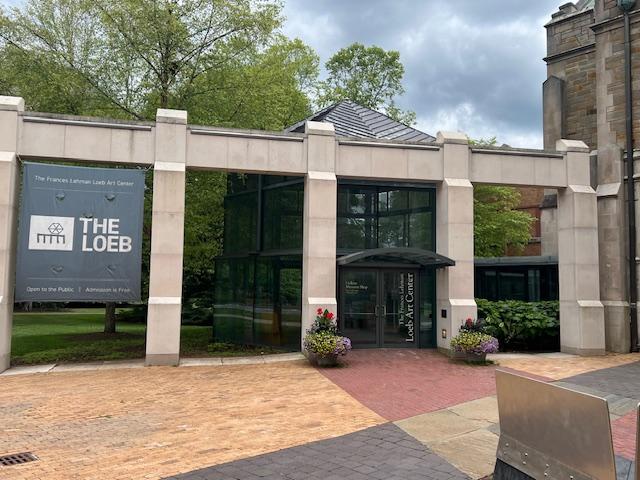
The Loeb Museum at Vassar College

Visiting The Frances Lehman Loeb Art Center is a wonderful afternoon out. Its best to park in the North Campus parking lot. You can walk the campus on a nice day down to the museum and enjoy the campus architecture. The campus is straight out of an Ivy League handbook. The museum is located by the front gate of the campus, and you can tour the whole museum in about two hours comfortably.

Take time to walk the Art Garden next to it and they have a really nice little downtown off North Campus to wonder around the restaurants and shops. See my review of Pizzeria Bacio Ristorante at 7 Collegeview Avenue near North Campus. The food is excellent!

The Art Sculpture Garden at the Loeb Museum

The Frances Lehman Loeb Art Center opened in 1864 as the Vassar College Art Gallery. The founding members of the college’s Board of Trustees understand art to be an integral part of the academic experience. Vassar therefor became the first college or university in the United States to include an art museum as part of its original plan. Since its inception, the museum has remained a significant part of the Vassar experience.

The Contemporary Galleries at the Loeb Museum

The Frances Lehman Loeb Art Center is a cultural destination both for the Vassar College community and for visitors from the region and around the world who are attracted by the breadth and quality of the art on view. It is unique to the region in its combination of stellar temporary exhibitions and an ongoing installation of the permanent collection that features art through the ages, from ancient Egypt to the present.

Ancient Art gallery with items from Egypt, Greece and Rome.

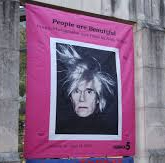
The collection began with an initial gift from Matthew Vassar of 3,800 works of art, including an important group of Hudson River School paintings and British watercolors. Today, the Art Center’s collection has grown to over 18,000 works of art that span antiquity to the present. Notable holdings include the Warburg Collection of Old Master prints and a wide range of works by major European and American twentieth-century painters, including Georgia O’Keeffe, Pablo Picasso, Jackson Pollock, Joan Miro, Mark Rothko and Andy Warhol.

The Andy Warhol exhibition was being shown on my first trip to the museum

https://www.vassar.edu/theloeb/publications/people-are-beautiful-prints-photographs-and-films-andy-warhol

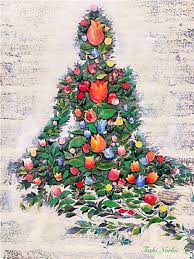
I went to the museum recently before the closing of the “Beyond the Threshold: Tibetan Contemporary Art” and “Mastery and Merit: Art from the Jack Shear Collection” and got to view the galleries before they closed for the evening. Admittingly I am no expert of Buddhist art, but the Jack Shear collection gave you a perspective on the religion.  The art portrayed Buddha in many forms as Divine. The contemporary works were very interesting as it delved into what modern Tibetans all over the world see in the form of current happenings, playing off other famous works of art (such as the modern version of the Mona Lisa) and a contemporary take on the Buddha. 

The modern take on Buddha from a contemporary perspective

https://www.vassar.edu/theloeb/exhibitions/beyond-threshold-tibetan-contemporary-art

The shows revolve on a continual basis and there are shows being mounted at various times of the year.

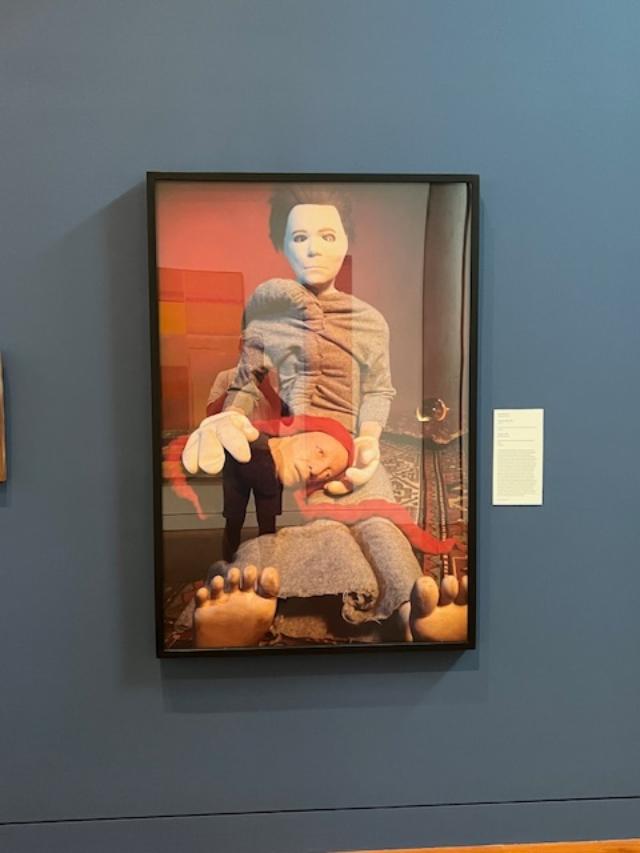
Cindy Sherman Art in the collection

The Art Center is housed in a building designed by Cesar Pelli and completed in 1993. The Hildegarde Krause Baker, class of 1911, Sculpture Garden includes works by Frank Stella, Gaston Lachaise and Anthony Caro, among others.

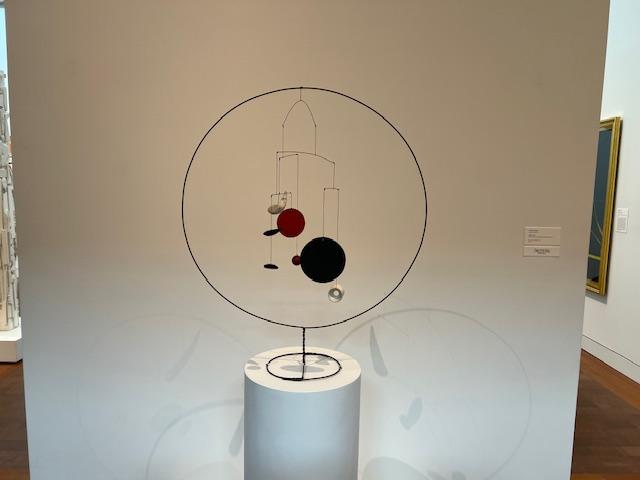
The Alexander Calder work “Mobile” in the collection

Tourism information on the museum:

There are tours for School Groups, Adult Groups, Individuals and Self-Guided for individuals. Please call the museum for more information on this. A centerpiece of the Loeb’s programming is Late Night at the Loeb, held weekly on Thursday evenings. Programming for Late Night is spearheaded by the Loeb Student Committee who organize activities and offerings for students and the general public.

There are creative happens every week. You can also join as a member and there are opportunities to volunteer at the museum.  To learn more about both of these, please call (845) 437-5237.

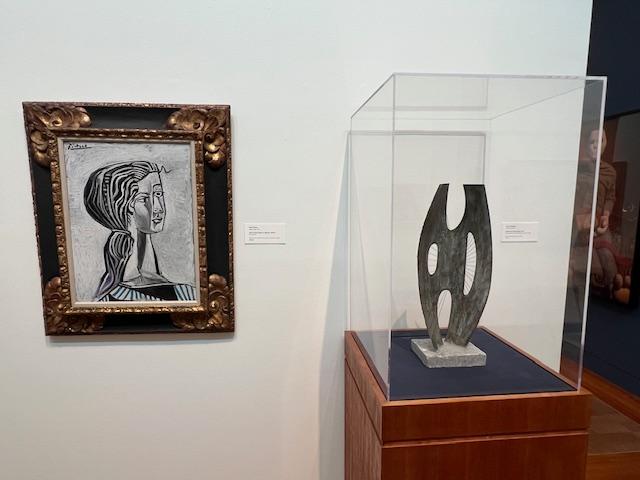
The famous Picasso is to the left

Disclaimer: This information about the museum came from the museum pamphlets. Please call the above numbers for more information or email them. It is a great afternoon out to just tour the museum and then walk around the campus on a nice day.

The “Stokers of the Earth” painting by Roberto Matta

“Stokers of the Earth” sign

Historic Old Dutch Church                                                      272 Wall Street                                                               Kingston, New York 12401

Historic Old Dutch Church 272 Wall Street Kingston, New York 12401

The Historic Old Dutch Church

272 Wall Street

Kingston, New York  12401

(845) 338-6759

Church office Hours 10:00am-3:00pm weekdays (845) 338-6759

http://www.olddutchchurch.org

info@olddutchchurch.org

*Note from the Blogger: this church is where every year the ‘Sinterklaas Committee’ has there annual fundraiser. The inside is beautifully decorated for the holidays and the food is wonderful. Check out the Sinterklaas Rhinebeck, NY website for more special events.

TripAdvisor Review:

https://www.tripadvisor.com/Attraction_Review-g48003-d7232701-Reviews-Old_Dutch_Church-Kingston_New_York.html?m=19905

The Church during the Summer months

The Old Dutch Church cemetery during the day.

I recently attended the Annual “Cemetery Walk” of the Old Dutch Church in Kingston, NY, where they have actors playing famous people who are buried at the church.

The cemetery during the day

The historic plaques outside the entrance to the church

The historic plaque outside the entrance of the church

The Cemetery Walks during Halloween:

We went through the cemetery and one by one we met actors who played the roles of Sadie and Elsie Reher, whose family owned the bakery in the Kingston Roundout, Jenny, slave who was living in Upstate New York at the time of slavery in New York, Calvert Vaux, the famous landscape artist of Central and Prospect Park fame, who also designed many homes and buildings, Emily Chadbourne, the art collector, philanthropist and socialite. To round off the cast there was Rachel Hasbrouck, the landowners and Father Devine, a spiritual leader of the 1930’s.

The Cemetery Walk at the Old Dutch Church in Kingston, NY

We spent about fifteen minutes with each character and than would hear the cow bell and move onto the next character. It is a lot of walking around a cemetery in the dark and a few people could not handle it.

The graveyard is scary but inviting at night

The only problem with the event was that the actors took it upon themselves to relate their characters to modern times and what is going on in the world today and I did not take a tour to hear their political views. That put a damper on the evening. They are supposed to stay in the era their character was born into. The tour covered three centuries of residents of Kingston, NY.

The graveyard at night

Sinterklaas Fundraisers:

Take some time to come to the church during daylight hours and see the cemetery on your own time. It is very interesting and gives you a perspective on the role of the church from colonial to modern times.

I also had been up to the church many times for Sinterklaas fundraisers, where we were treated to Dutch “Sweets & Treats” along with a visit from Sinterklaas (Santa Claus). It was always a nice night of music and entertainment.

The Sinterklaas fundraiser “Sweets & Treats” used to be held at the Old Dutch Church in Kingston, NY.

During the recent “Snowflake Festival” in 2022, the church was the host to many groups of fiddlers. The whole church was decked out for the Christmas holidays. Both inside and outside the church was decorated for the Christmas holiday season. It was just gorgeous.

The front of the church during the Kingston Snowflake Festival in 2022

The Dutch Reformed Church’s Christmas tree was very traditional at the Snowflake Festival.

The fiddlers packed the church for the concert. It was nice to see the church during the Christmas holiday season which was decked out with traditional holiday decorations. The concerts were a lot of fun and the groups were excellent.

The fiddler groups entertained us that night

The History of the Old Dutch Church of Kingston, NY:

(from the church website)

The Front of the Old Dutch Church

Founded in 1659, the Old Dutch Church is often referred to as “Kingston’s Cathedral”. The present structure was designed by Minard LeFever and built in 1852. Architect Calvert Vaux said of this design, “I cannot change a thing without impairing the exquisite unity. It’s ideally perfect.”

The church and the cemetery

Organized in 1659:

*Sixth Oldest Reformed Church in North America.

The Old Dutch Church from the front

*Archives containing Baptism and Marriage Records dating back from 1660 to present.

*The Land on which the church stands was a gift from Peter Stuyvesant.

*Fifty Reformed Churches in the Hudson Valley, New Jersey and Pennsylvania trace their roots to Old Dutch Church, Kingston.

The War Memorial at the Old Dutch Church

*The ancient churchyard is the resting place of 1400 early settlers, including 77 Revolutionary War veterans and first New York Governor and two-time Vice-President, George Clinton.

The churchyard and the George Clinton grave

*Inside in the church: the magnificent Tiffany Window above the pulpit; bronze angels and the spectacular Moeller Organ.

*Visitation site of both Queen Juliana and Queen Beatrix of the Netherlands.

Tours and information talks given by Old Dutch Church guides are available by appointment.

Sunday Morning Worship: 10:30am

Old Dutch Church Kingston NY II

The inside of the church

The church during the recent ‘Kingston Snowflake Festival”

The Church during Christmas in 2024:

The church on a quiet evening during December 2024

The church decorated at Christmas time

The front of the church at night

*Disclaimer: this information was taken from the Old Dutch Church pamphlet. The church is the site of the annual fundraiser for the Sinterklaas festival every November. Please check out the Sinterklaas festival calendar every year for updates. The church cemetery is worth the visit alone with all the unique and historical people buried here.

Locust Grove Estate                                                                 2683 South Road (Route 9)                                    Poughkeepsie, NY 12601

Locust Grove Estate 2683 South Road (Route 9) Poughkeepsie, NY 12601

Locust Grove: A National Historic Landmark

2683 South Road (Route 9)

Poughkeepsie, NY  12601

(845) 454-4500

http://www.lgny.org

https://www.lgny.org/

Open: Seasonal-See Below

Visitor Information: The gardens and grounds are open year round from 8:00am to dusk, weather permitting.

House Tours: Offered May through November, daily from 10:00am-5:00pm and weekends in April & December. Groups tours by appointment.

Visitor Center: Open January through March, weekdays from 10:00am-5:00pm. April through December daily from 10:00am-5:00pm.

Fee: Adults $12.00/Children (6-18) $6.00

TripAdvisor Review:

https://www.tripadvisor.com/Attraction_Review-g48443-d263920-Reviews-Locust_Grove_Estate-Poughkeepsie_New_York.html?m=19905

The Locus Grove Estate

Overlooking the Hudson River, the 180 acre Locust Grove Estate includes an Italianate villa designed in 1851 by architect Alexander Jackson Davis for artist and inventor Samuel F. B. Morse.

The Locus Grove additions of the tower and back rooms

The estate, with miles of carriage roads, landscaped grounds, historic gardens and Hudson River views, was preserved as a museum and nature preserve by the Young family, whose collection of art and antiques is exhibited in the mansion’s 25 rooms.

Entering Locus Grove for the Christmas holidays

I have visited the house twice for Christmas with the mansions elaborate but tasteful displays and once in the last fall when the foliage was in full peak. The house is an interesting example of turn of the century architecture and innovation of both the Morse and Young family’s love of Locust Grove. Each added their own touch to the house.

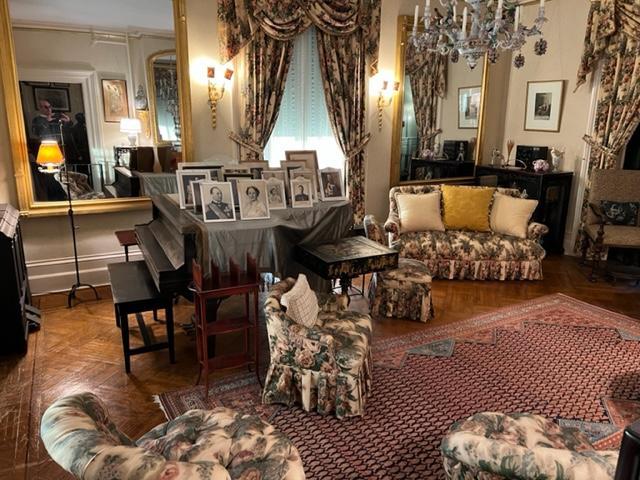
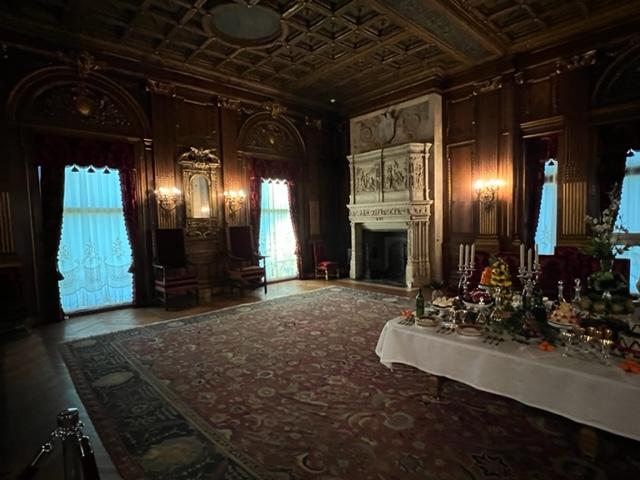
The Library right off the main hallway entrance used to be the original Dining Room when the Morse’s owned the house

The Christmas tree in the Library

The Parlor across the hall from the Library

A closer look at the Christmas tree

During the Christmas holiday season, the house is beautifully decorated both inside and out for the holidays, with a formal tree in the back Living room, smaller trees and garland around the house on the first floor and smaller trees with presents in the bedrooms and in the Billiards room.

The Library at Locust Grove for the holidays

One of the rooms set for Afternoon Tea

One of the back offices

When the Young’s moved into the house, they needed more room for entertaining so they added the larger dining room (The Morse’s added the Tower to the home). So the old Dining Room became one of the reception rooms and a library. Some of the smaller rooms were used for social occasions so the first floor was reconfigured.

The Living Room in the Tower addition of the home

The mirror in the Living Room was the last thing left by the Morses

The larger Living Room held the most beautiful Christmas tree with a gorgeous view of the Hudson River from the back window. The room is elaborately decorated for the holidays and the volunteers created a very festive decor for the room. I do not know if the family would have decorated this much but still the halls were decked perfectly.

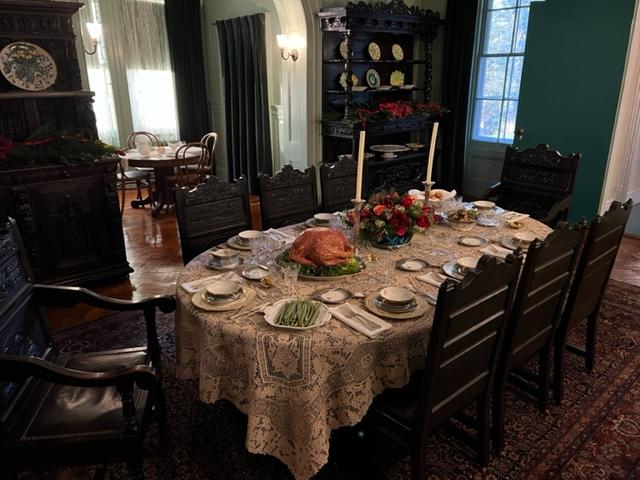
The Dining Room was set for an formal Christmas lunch with the family’s best china, crystal and silver and had displays of fruits and desserts that would have been served during the holidays. The Morse family spent their holidays in New York City so it would have been the Young’s who spent their holidays here.

The Dining Room set for Christmas lunch

The Christmas tree in the Dining Room

The Butler’s Pantry for the Dining Room

The upstairs to the bedrooms

The house had been added onto twice from the small cottage that had been built by the second owners, the Montgomery family. The back tower and wings were built by the Morse family and the formal dining room by the Young’s for their growing family.

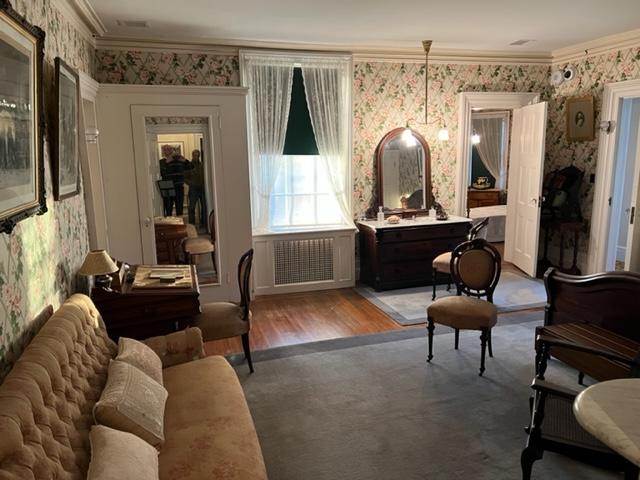
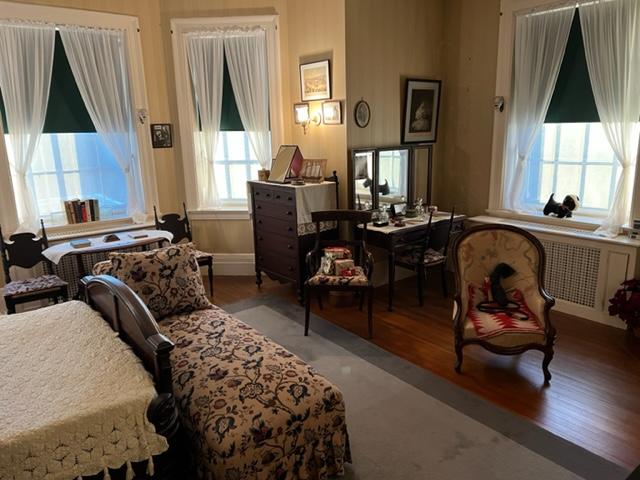
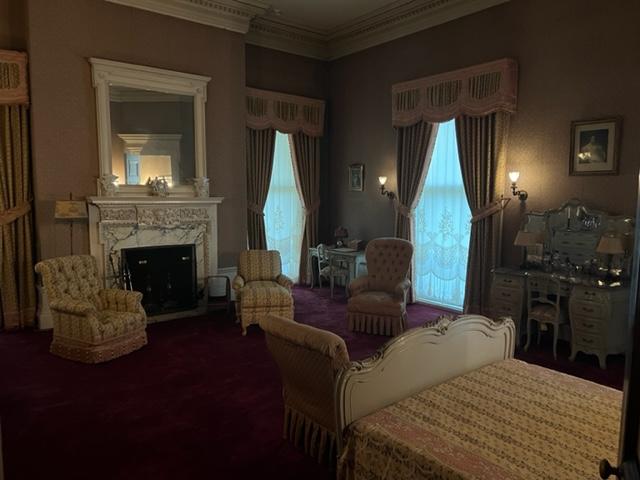
The bedrooms were nicely decorated and the rooms had lots of Christmas decorations that you would not ordinarily see in a bedroom. Each room had its own Christmas tree.

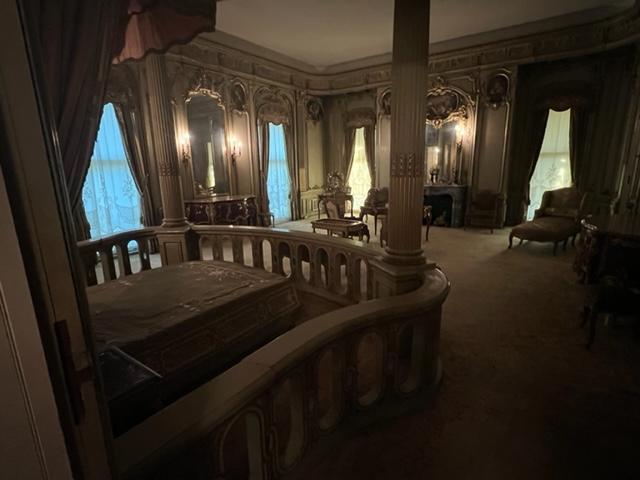
The Master Bedroom with a breakfast nook overlooking the Hudson River

The paintings above the bed are of the Young family

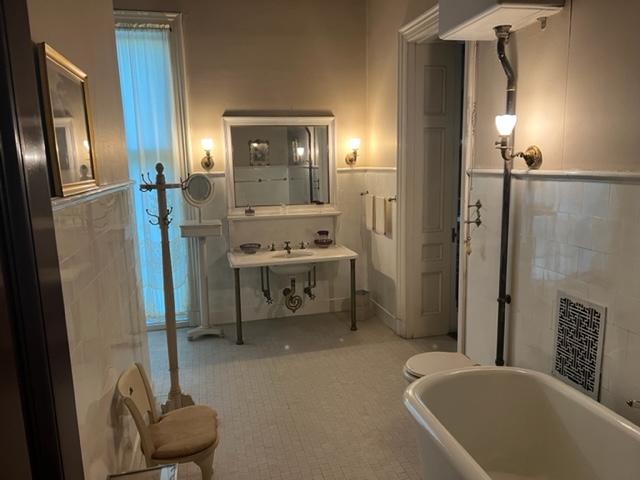
The modern bathroom with hot and cold running water

The Young’s son lived in this room until he died

The Young’s daughter lived in this room until her death

The guest rooms were also nicely decorated

The dollhouse in the guest bedroom

Another guestroom

Guest room

The tour guide told us that the second floor Billiards Room was once a very popular and engaging room in the house for everyone visiting. There was always a lot of action going on in this room.

The Second Floor Billiards Room

The Christmas decorations in the Billiards Room

Our last stop on the second floor was the modern bathroom which was considered extremely innovative for its day. This was the most modern approach to plumbing.

The upstairs bathroom

The last stop on the tour was the downstairs Servants Quarters which were also decorated for the holidays. It showed what the Servants of the household would have been doing on a daily basis to help keep the house running.

The Servants kitchen

The kitchen table in the Servants Quarters

The Servants Dining Room

Our tour guide, Ethel, did a nice job interpreting how each family would have used the house and for what occasions. The Young’s lived here full time until the last owner, Annette, died in 1975 and the Morse family used it as a summer retreat until Samuel Morse died in 1872.

locust-grove-ii.jpg

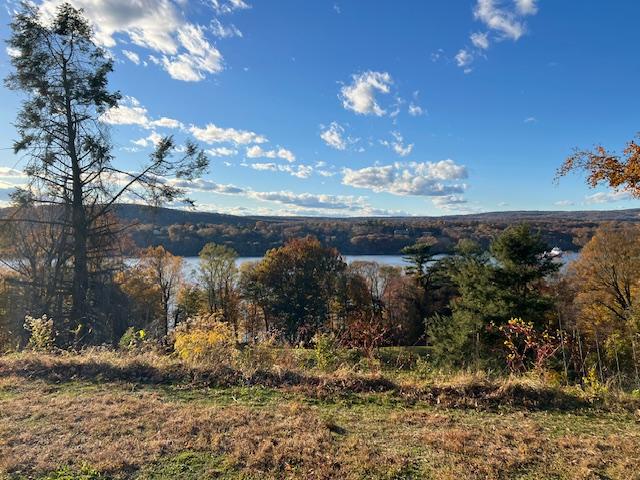
The view from the back of Locust Grove to the Hudson River during the early fall

The view to the Hudson River from the back of the house during Christmas 2022

The house is tastefully furnished both in turn of the last century decor and some more modern pieces. The grounds in the spring and summer months are in full bloom and in the fall awash with colors from the trees.

Also, don’t miss visiting the small museum of Samuel Morris’s paintings and his development of the telegraph system, where the patents is where most of the family fortune came from. Mr. Morse was an artist, educator and inventor and his life’s work is displayed in the galleries.

The Morse Family

Morse Museum: Samuel Morse family in the early Colonies

Samuel Morse with his career in portrait painting

Samuel Morse’s Portraits

Samuel Morse’s inventions and innovations with the telegraph

Samuel Morse’s innovations

The History of Locust Grove:

Locust Grove has an interesting history. The estate was first owned by Henry Livingston Jr. when he purchased the property from his father in 1771. The estate was such named because of the black locust trees that grew on the property. After his death, the estate was sold to John and Isabella Montgomery who built the original cottage on the estate. Mr. Livingston’s home had been torn down by this point.

The main house at Locust Grove is a villa in the Italianate style designed in 1850. Morse had recalled the elegant villas that he had visited years earlier in the Italian countryside and he sketched towers, windows and floor plans. Construction on the villa, sited on a dramatic bluff overlooking the Hudson River began in 1851 and was completed the following year.

He continued to expand the cottage and the gardens during his time and the family continued to use the house as a summer retreat and living in the winters in their brownstone in Gramercy Park. After Mr. Morse’s death, the family used the house occasionally and then sold it to one of their renters, the Young family.

William and Martha Young added modern amenities to the house like central heat and running water and updated the bathrooms. They added the new dining room and guest bedrooms in the new North Wing of the house. They also brought with the many family heirlooms and their decorative art collection which is still on display in the house.

After their deaths, the Young’s children, Annette and Ennis worked to preserved and restore their family’s homes in here, in New Haven, New York City and Ulster County. After the death of her brother in 1953, Annette Young continued to live at Locust Grove and began donating to museums the art, land and historic houses she inherited so that they would be protected. When she died in 1975, she established a not-for-profit foundation to ensure that Locust Grove with its collections and archives would be protected. The house is now available for touring and for weddings.

(Locust Grove History and Wiki: I give both organizations full credit for this information)

Location: Locust Grove is located on Route 9 in Poughkeepsie, NY, two miles south of the Mid-Hudson Bridge or 11 miles north of Interstate 84.

Locus Grove Gift Shop

Disclaimer: this information is taken from the Locust Grove Historic pamphlet. The site is very interesting and should be added to your list of ‘must sees’ in the area. Please call the site for more information.